Every year the day is celebrated by Olympians across the world on 23 June, to rejoice the founding of the International Olympic Committee (IOC) and the modern Olympic Movement by Pierre de Coubertin in 1894.
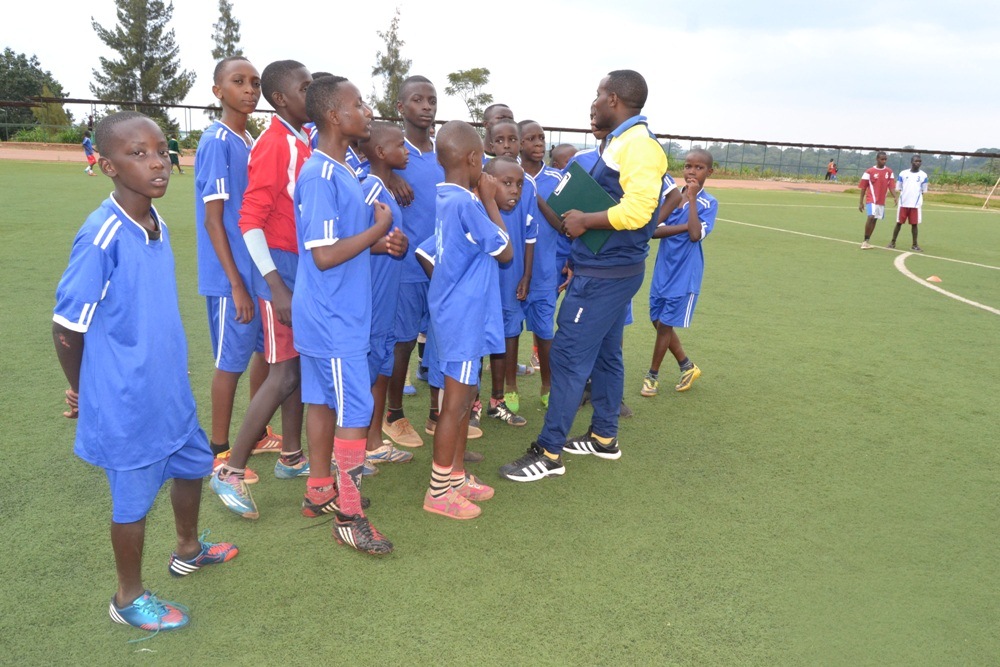
RNOSC First Vice President, Madam Felicite Rwemalika who was present said that to mark the day, the Olympic week celebrations kicked off Wednesday with mini football competitions like this one taking place at Kamena Huye stadium.
“The Olympic week celebration is aimed at ensuring that the positive values of the Olympic Movement, excellence, respect and friendship, are promoted among the children, “She revealed.
In his message, Thomas Bach, the IOC President has reminded the National Olympic Committees that the Olympic day is an excellent way to encourage all people to lead healthy and active lives, while promoting the role of sport in society.
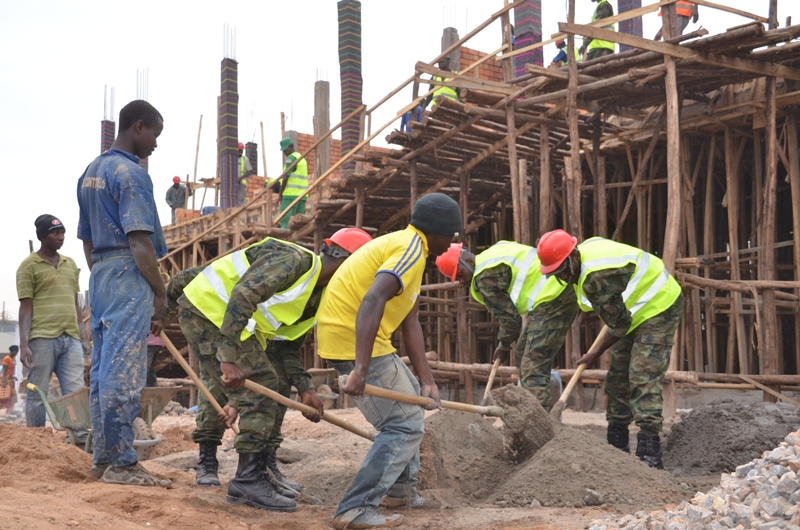
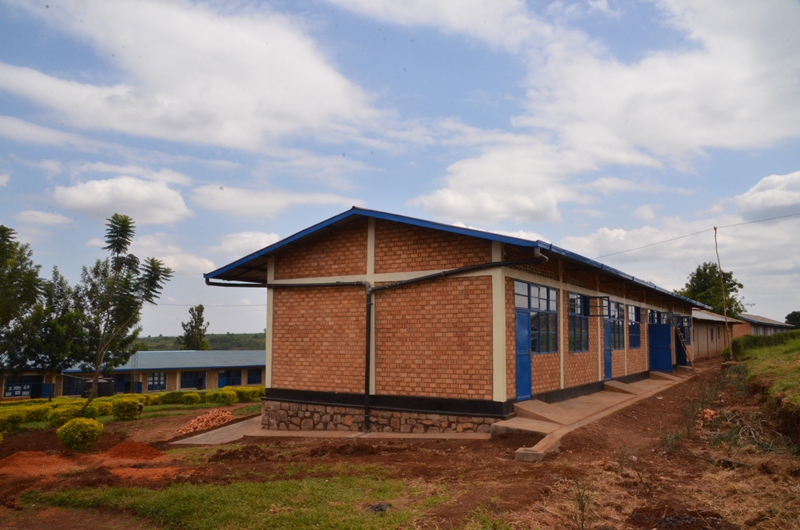
Currently 206 classrooms are under construction across the country and some of them reached the final stage in different districts such as Kayonza, Gatsibo in Eastern Province. Classrooms are about to be finished in Gasabo and Kamonyi Districts.
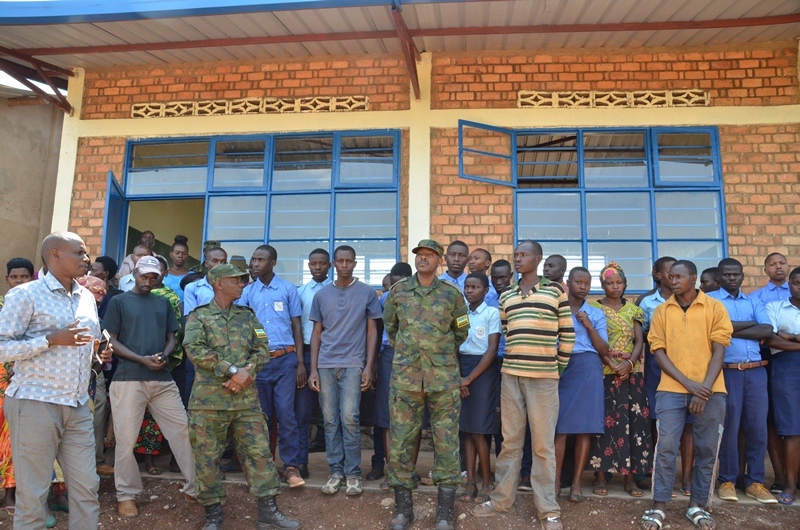
Habanabashaka J Baptist, Director at Groupe Scolaire Kagugu in Gasabo District, told the Press that the joint initiative by RDF and citizens to construct classrooms was very timely. He said that GS Kagugu has 80 students per class and used morning and afternoon shifts to deal with the high number of students.
Currently 12 modern classrooms are under construction at the School.
“This will reduce overcrowded classrooms and impact on quality of our education. RDF is doing us good because the development commences with these young students,” he said.
At Groupe Scolaire Mbati in Kamonyi District, classrooms accommodate from 60 to 70 students. To address this, 7 classrooms are currently under construction and this will reduce the classroom congestion down to 50 students.
The standard and target classroom occupation is 45 students per class in the near future according to School Authorities.
Speaking in a telephone interview with IGIHE, NEC Executive Secretary, Charles Munyaneza said that the commission continues to conduct different preparatory activities.
“Preparatory activities include receiving individual candidates seeking NEC documents allowing them to collect signatures from voters supporting their candidatures. We have issued the documents and we believe that the process is going well. On Tuesday 19th June, we had already received six,” he said.
Munyaneza said that starting from July 12th to 25th, they will be receiving candidatures from both political parties and independent candidates.
“After receiving candidacies, we shall evaluate them and those who will fill the requirements will start to campaign,” he explained.
Munyaneza said that conducting all elections activities will cost Rwf5.4 billion.
He said that currently the number of voters is about 7.2 million people adding that civic education continues and youth and persons with disabilities have already been sensitized on how they will vote their representatives.
“We are organizing meetings with different institutions which play big part in elections. Tomorrow (Friday) we shall have a meeting with diplomats. We are also organizing another meeting with Civil Society Organisations and we will have another one with Political Parties,” he explained and noted that they are receiving election observers.
The Ministry of Education has committed to taking strong sanctions against students at all levels; nursery, primary and high school, that do carry cellphones at school premises as the devices have been known to deter students from concentrating on the academics.
The move was announced by the Minister of Education, Dr. Eugène Mutimura on June 12th 2018 in a news conference in Kigali.
The minister said that inspections have indicated that when students use cellphones at schools affects their concentration on studies.
Despite ruining their concentration, Mutimura said cellphones attract unnecessary attention and interactions that end up leading students into using drugs and unwanted pregnancies.
The decision had been announced two years ago, but later allowed their usage on account of using them for research purposes, according to the State Minister for Primary and Secondary Education, Dr. Isaac Munyakazi.
Munyakazi says that students will continue to access them while at home, but urges parents on stringent control.
“At home, parents should also control them and make sure that they are using them for research purposes. If such restrictions are not adhered to, children would be negatively impacted, compromising their studies,” he said in an interview with IGIHE on Thursday.
{{Some school head teachers back the move}}
Lycée de Kigali head teacher, Martin Masabo says that as the government has distributed computers in all schools, therefore no student should possess a phone at school.
“The government distributed computers in all primary and secondary schools, ICT facilities are available. In a case a student needs communication, the school management facilitates them to talk to parents. Some schools also have public cellphones,” he said.
However, Masabo says banning cellphones at school premises should be backed by individual student commitment.
The Head Teacher of Groupe Scholaire Kagugu Catholique, Jean Baptiste Habanabashaka okays the decision on one side, but urges that when telephones are well used, they bring good impact.
“I have some students at my school with mobile telephones which we keep for them. Because the school has internet, students use the phones in research. A cellphone is like a computer, it should be used at school only when conducting research,” he explained.
“For the ministry to completely ban use of phones at school is not a fair decision. They would allow them for research purposes. I think, there would be no problem,” he said suggesting that this would benefit schools which have no computers.
{{No research constraints}}
According to Minister Mutimura, banning cellphones will not affect research interests as all schools, primary and secondary have computers.
“Currently, a total of 950, three quarters of all primary schools around the country have computers with 100 each. In High Schools, 670 schools have computers. In total 67,000 students’ computers were distributed and ICT teachers, too have their computers,” he said.
For Munyakazi, some schools which do not have computers have other ICT materials they use in teaching ICT subject.
{{Parents back the decision}}
Parents support the decision saying it is in line with promoting the quality of education.
Esperance Kabanyana from Kicukiro District in the City of Kigali says that students should differentiate study times from luxury.
“This is a good decision. With students possessing cellphones at school, they spend much time in unproductive dialogues on social networks like WhatsApp and Facebook. Imagine a student seated in class texting and sending pictures, it affects their concentration and quality of learning,” she said.
Another parent Jean Bosco Nsanzamahoro says since internet has reached all corners of the country, phones should be permitted but with stringent regulations at schools.
“My son uses a cellphone searching for knowledge. It has helped him in learning many new aspects and is now performing better. But for some students that use them in other non academic issues should attract school regulation” he considers.
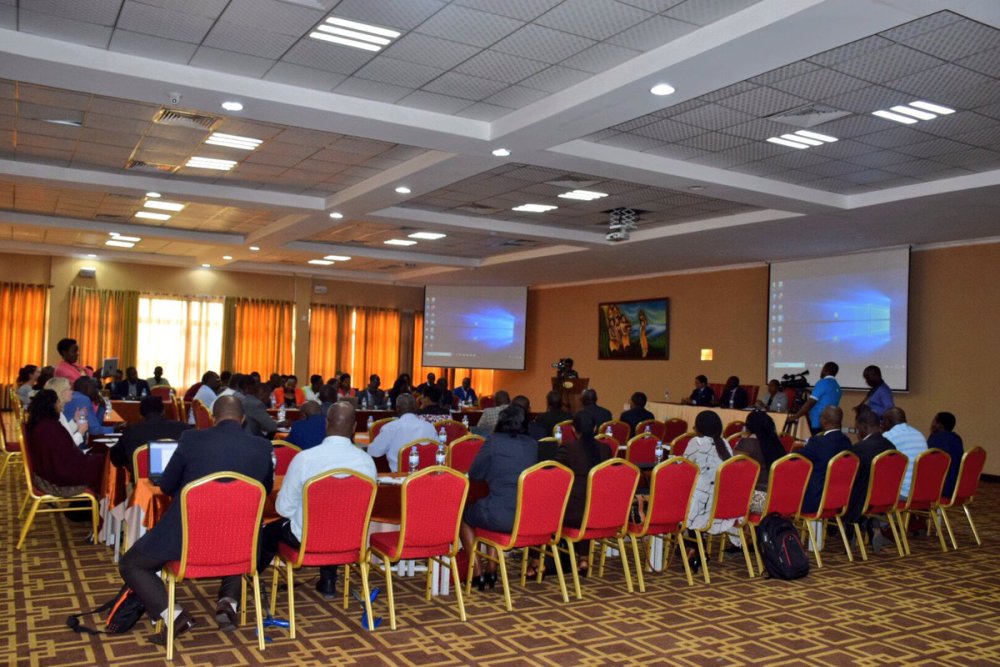
Following the inaugural event in 2016, this year’s Forum brings together leading figures from Africa’s public and private sectors to discuss policies and partnerships that can drive sustainable growth and investment across the continent.
The two-day forum offers an opportunity for the private sector and other non-state actors to engage on ways to help shape the course of economic transformation in Africa.
President Kagame will join the Heads of State panel alongside President Nana Addo Dankwa Akufo-Addo of Ghana and Vice President Daniel Kablan Duncan of Côte d’Ivoire where he will share his vision for Africa’s transformation, including the key role of foreign and domestic investment.
The two Heads of State will later be joined by Chairman and CEO of Dangote Group, Aliko Dangote and the Executive Vice President of Unilever, Yaw Nsarkoh in a panel discussion on the benefits of a strong partnership between the public and private sectors to enact—and maintain—a successful transformation strategy.
During a press briefing, ACET President Dr. K.Y. Amoako commended the event saying “These are exciting times. Too often African economies have missed opportunities to get ahead because they have not worked together or learned from each other. That is changing now, and this Forum is a driving force. It’s a unique event which aims to deliver practical, progressive policies that can drive our economies forward over the next decade.”
The event brings together high-level government officials, CEOs, as well as other leaders from the private sector to discuss solutions and make commitments towards accelerating job growth, boosting investment, and implementing transformation policies.
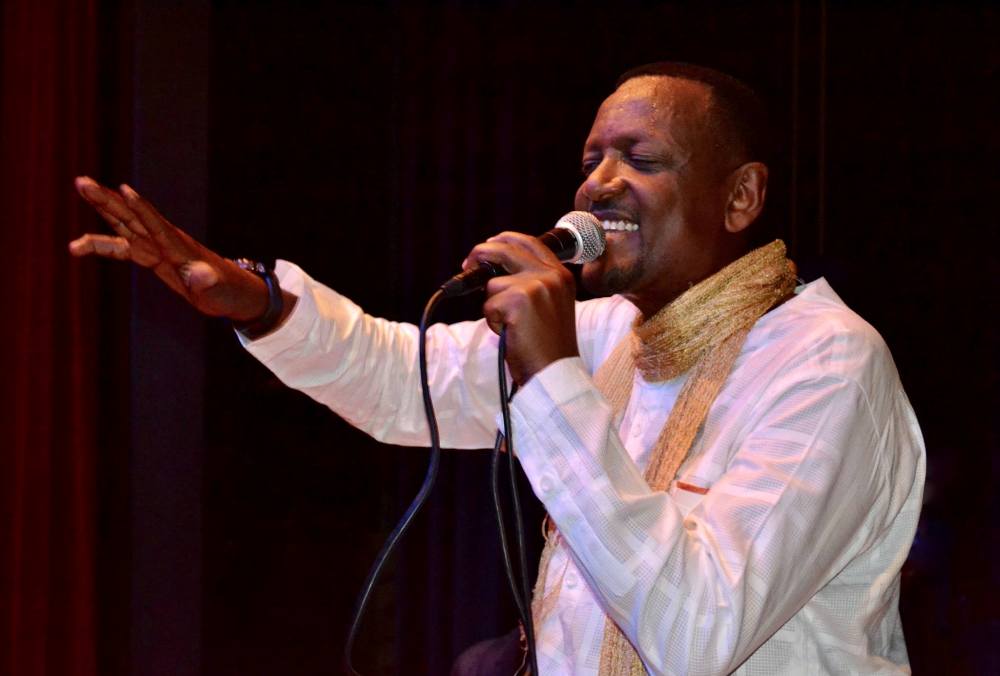
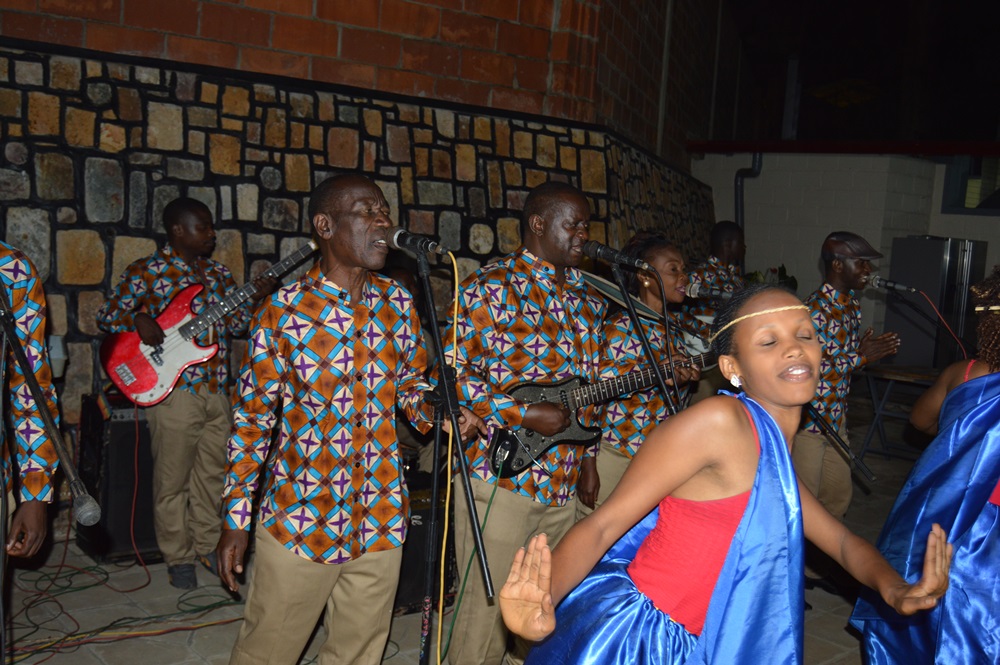
The event has been dubbed ‘Rwanda Cultural Night’ and is expected to be an opportunity to celebrate Rwanda’s unique culture and its role in transforming the country. It will be part of many cultural shows that will serve to spread and celebrate Rwanda’s culture throughout the world.
According to Kagabo Jacques, the Director of Rwanda Updates and organizer of this event, his innate desire is for Rwandans living abroad to put Rwandan cultural values at the centre of their lives and not be taken with Foreign Cultures.
Kagabo Jacques added that these shows will link Rwandans living abroad, give them an opportunity to celebrate the successes of their country, and reflect on their cultural values.
Among those who will be performing at the event, features Knowless Butera, who recently hinted that she would be performing in Mozambique and Zambia; King James, Masamba Intore, Impala Orchestre and Mr Bow, a Mozambican who will be performing at the event.
Speaking with IGIHE, Louis Baziga, a Rwandan living in Mozambique, said that the Rwandan Diaspora was impatiently awaiting for the performers and the show in general.
“Our Culture is what makes us who we are. It is of immense value and pride to have Rwandans united here in Mozambique, as it is a time to put a limelight on what glues us together, and it is none other than our culture,” he said
Baziga added that the show will be a great opportunity to uphold Rwandan Cultural values.
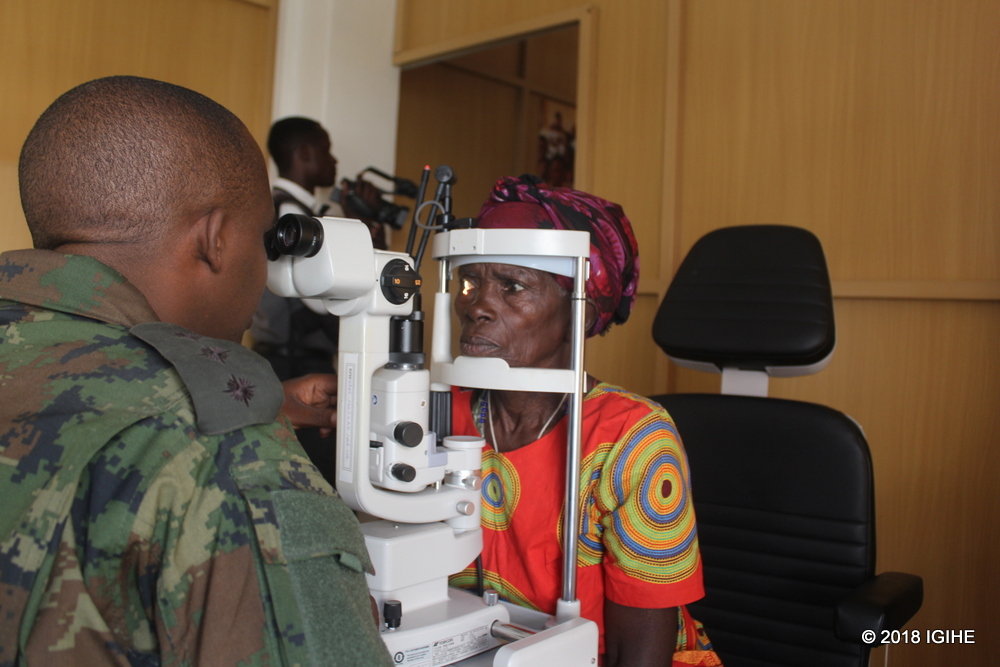
Beneficiaries who spoke to IGIHE hailed the RDF Citizen Outreach Programme (RDF-COP) saying that they could not have been able to afford the cost of medical operation.
Uwizeyimana Jean Baptiste, 28, from Rulindo District who suffered a broken Femur in December 2017, and had spent to the last coin of his savings on treatment was found by IGIHE Reporter in Ruhango hospital, where he was waiting with some other 100 patients to undergo a second phase operation by RDF medics.
“My Femur bone was broken to tiny pieces, and after several attempts with other doctors, I gave up. Now I can now walk, and it’s all because of RDF Doctors,” said Uwizeyimana who is now recuperating, capable of putting to use his limbs.
Ruhango Hospital’s Director, Dr Usabyineza Richard, hailed the RDF activities saying when soldiers go beyond security provision and partner with people, it helps spur the development of the country and welfare of the communities.
“These days, the number of patients we usually receive at our hospital has multiplied. It is obvious that the people have faith in RDF medical personnel. We received a number of specialists that we didn’t have at our hospital which has greatly helped the locals residents,” he said
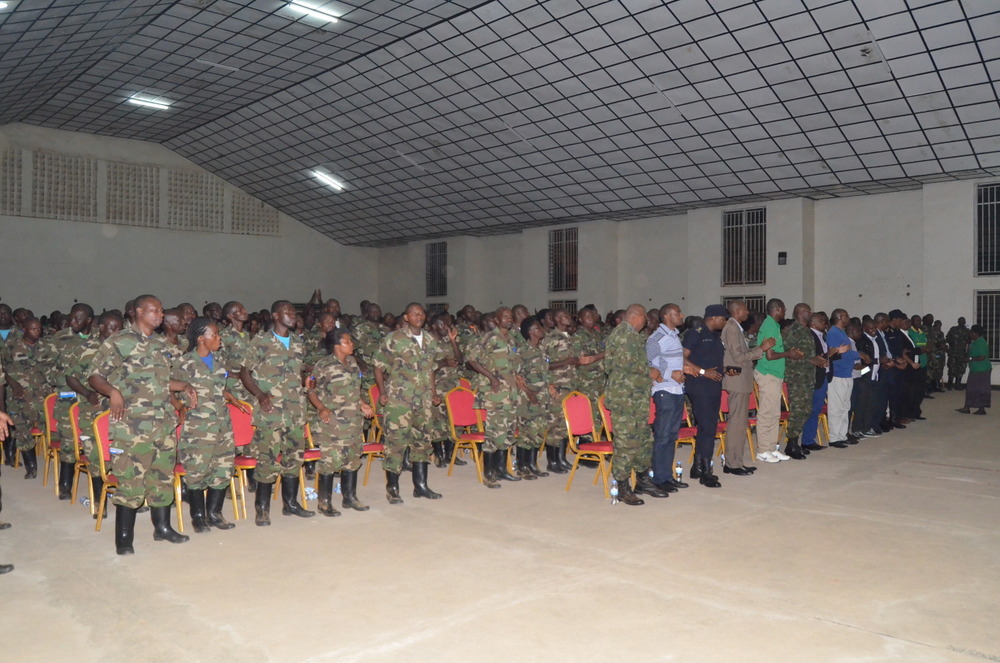
Other RDF Outreach activities carried out in the past two months include building 206 classrooms, 1493 houses for the vulnerable and planted Irish Potatoes at a total of 407.6 hectares.
Over the past nine years, RDF Citizen Outreach Program has benefited communities by providing free health care, infrastructure development, environmental protection and building classrooms across the country.
Started on June 17th, the civic education was organized under the theme ‘Let’s build unshakable economy’.
Speaking to IGIHE, Eastern Province Governor, Fred Mufulukye said that they organized the civic education in order to elaborate the Province development plans ans activities so that traders would contribute in implementing them.
“We have development activities that they could participate in, they are our development partners,” he said.
Mufulukye said that they want to put in place measures that would help traders work in cooperatives.
The Rwanda Private Sector Federation (PSF) Chairman in Eastern Province, Jean Bosco Ndungutse said that they want to remind traders about integrity in business.
The PSF Chairman, Robert Bapfakurera said that Eastern Province has many advantages as it harbors boarders with three countries namely; Uganda, Tanzania and Burundi which can be used to the advantage of enhancing cross-border trade.
The Chairman of National Itorero Commission, Edouard Bamporiki said that the civic education will help traders create networking among themselves.
“This is an opportunity to create business networks among traders. Through this civic education, we want to train them in ways of sharing the available market space,” he said.
The project was announced by the Minister of Justice and the Attorney General, Johnston Busingye in a consultative meeting with justice partners on Wednesday in Kigali.
He said that the project comes to support existing services in justice decentralization and empowering the Office of the Ombudsman.
The project which is expected to get underway next month is aimed at creating awareness of right to different services and where to address their problems as well as taking services close to them in villages.
Busingye said that financial constraints have been limiting reach to villages, with most services ending at Access to Justice Offices (MAJ) at district level.
Under the project, the Office of the Ombudsman staff will be trained on reaching the people and explaining to them about access to information law.
The Deputy Ombudsman, Odette Yankurije said that they usually work closely with people, but it is not efficiently done as they wished to because of limited funding.
“In this project we intend to work closely with our beneficiaries, people, train them and buying new equipment that would help us to serve them efficiently,” she said.
The European Union Ambassador to Rwanda, Nicolas Bellomo said that they will invest Euro 8 million.
“Rule of law and justice descentralization is the cornerstone of development. We believe that it will raise the pride of the country and help attract traders and investors who desire to work in a country with a good justice system,” he explained.
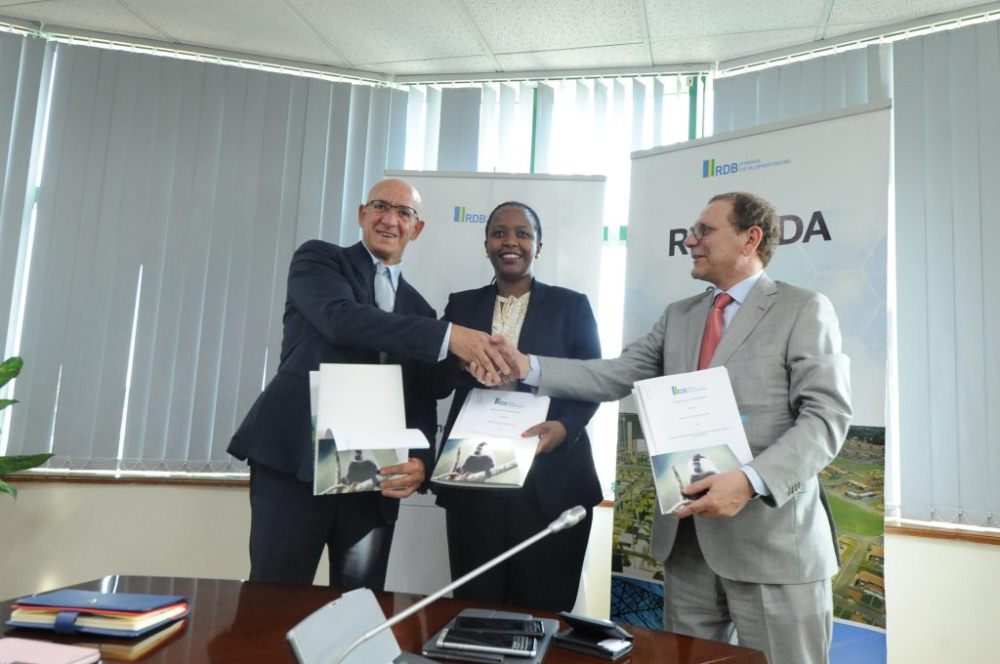
According to the Statement by RDB, Mitrelli Group seeks to construct up to 10,000 housing units in Rwanda, the majority of which will be affordable housing.
Speaking at the signing ceremony, Haim Taib, Founder and President of Mitrelli Group, lauded RDB for its support and partnership.
“This project is a very nice challenge for us. We have the knowledge, the funds, the expertise and the ability to complete this project. I believe that the two sides have the same goal. The goal is being the best project for the people of Rwanda. We have come to Rwanda to stay,” Taib said.
Speaking at the event, the RDB Chief Executive Officer, Clare Akamanzi said that Rwanda is proud to welcome the group.
“Mitrelli Group is the kind of investor that we want in Rwanda. We are happy to work with you in providing housing for the growing housing market,” she said.
Also at the occasion as RDB signed the MoU was Mazen Al Sawwaf was, the CEO and founder of Global Investment Holding Company, a Saudi Arabian holding company.
Access to affordable housing remains one of the key priorities for the Government of Rwanda and there are a number of strategic incentives to attract local and international investors in the sector.