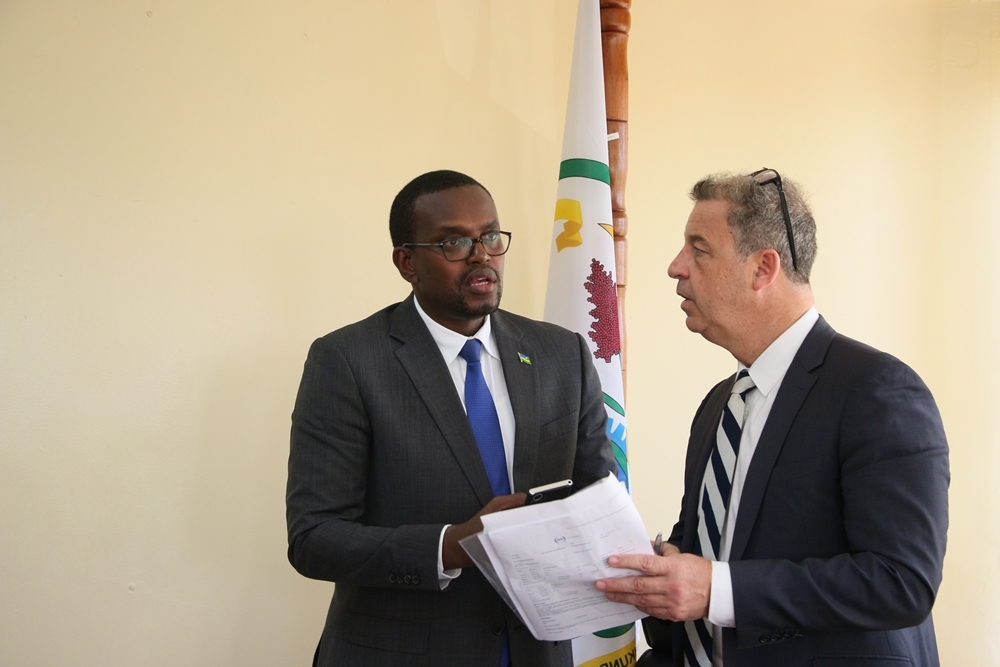
He was speaking at a press conference he held yesterday in Kigali along with Rwanda’s Prosecutor General, Jean Bosco Mutangana.
Brammertz said that early release should follow clear directives and said that Meron’s decisions are inappropriate due to the intensity of genocide crimes.
“Internationally, early release has certain directives. Here, we speak about genocide crime, a crime that had impact to the human being and the country, which is why they need transparency. For me, before releasing any convict, I would make sure whether they don’t negate or trivialize the crimes they had perpetrated,” he explained.
He said that laws releasing people who served two-thirds in prison should go clear.
“Currently, no law compels the Judge to consult any person before granting early release to convicts, that is why my office has embarked on requesting for the establishment of the law, so that it will specify procedures leading to early release. The law should include consulting parties connected with the decision,” he added.
Mutangana said that early release of genocide convicts should reflect impact it would cause to unity and reconciliation of Rwandans.
“Those are Rwandans who were sentenced by international courts, they were tried and sentenced by the United Nations, but,they were not deprived of Rwandan nationality, there are Rwandans and we are still witnessing the genocide effects. That is why early release decisions should be discussed and agreed between UN and the country,” he said.
MICT’s Meron granted early release to Ferdinand Nahimana and Fr. Emmanuel Rukundo who were serving their sentences in Mali.
Meron is also in the process to release Col. Aloys Simba, Dominique Ntawukuriryayo and Hassan Ngeze who have already served two-thirds of their sentences.
Bank of Kigali launched Urumuri initiative last year while marking its 50th anniversary as a way of giving out to the community and in a symbolic way, by helping discover ideas with potential to be the ‘next big thing.’
For this year, Urumuri is targeting entrepreneurs with a unique Made-in-Rwanda brand, which supports the government’s initiatives to develop local products and services for the Rwanda and foreign markets.
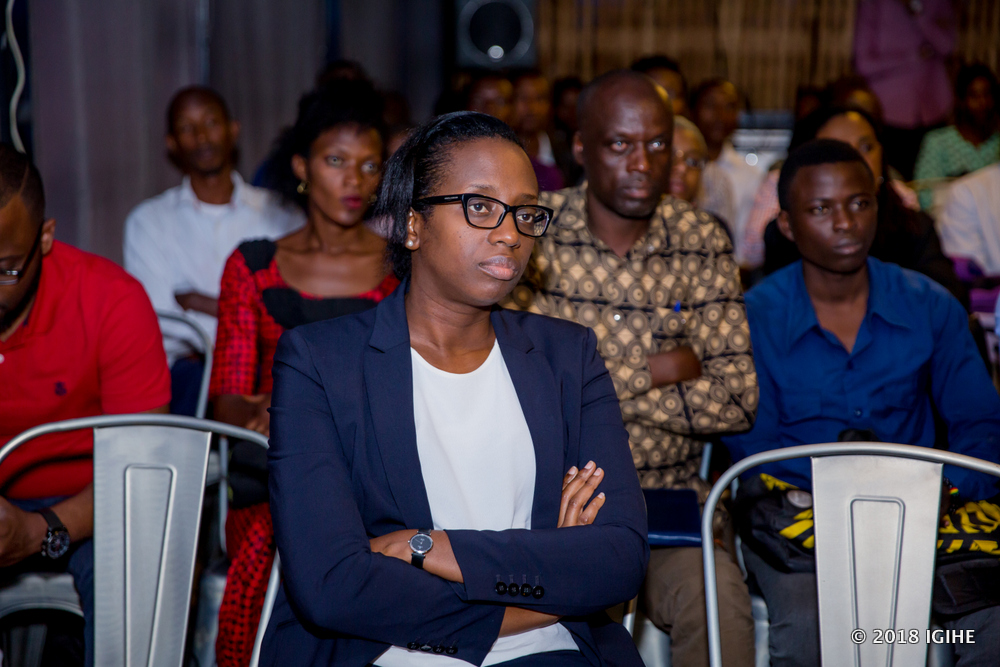
The 25 startups represent the most innovative projects from Made-In-Rwanda businesses that were picked from over 100 applications that were submitted as BK announced yesterday.
Speaking during the event, Diane Karusisi, the Bank of Kigali Chief Executive, said that the Urumuri Initiative, is another way of linking young innovators while supporting them on their journey to forge a bright future.
“The selected 25 startups will undertake six-month training in business support service. From those, we’ll select five startups with the most outstanding projects which will receive zero-interest loans from Bank of Kigali.” she said.
Mugisha Innocent who founded Ibitekerezo Digital Studio, a startup among the 25 selected, expressed his excitement at the prospect of the contest.
“Being part of the Urumuri Initiative will help us grow and develop our business and I am assured that a lot of opportunities await us,” he said.
The 25 selected startups include Moshions, SM SHOWROOM LTD, Ibitekerezo Digital Art Studio Ltd, Sanit Wing Ltd, Imagine We Publishers, Kaya Africa Ltd, Josh Innovation Limited, Lime Fresh Family Ltd, F4390 Specialized Cons. Activities, Iteterogahima Enterprise, Chocolate Point Ltd, Dkunderwear, Get It, RwaBambooBikes, Beyond The Gorilllas Experience, Vermi-Comp ltd, Umubano Leather Product, Bright Energy and Environment Management ltd, Akeza Mutima Ltd, San Company Ltd, Nezerwa Bamboo Products Ltd, Detex Enterprises Ltd, House Of Tayo, STYLEBYJUAN, and Nutrition Advisory Council Rwanda Ltd.
At a yet to be mentioned date and venue, the bank will announce projects that will share the interest free-financing.
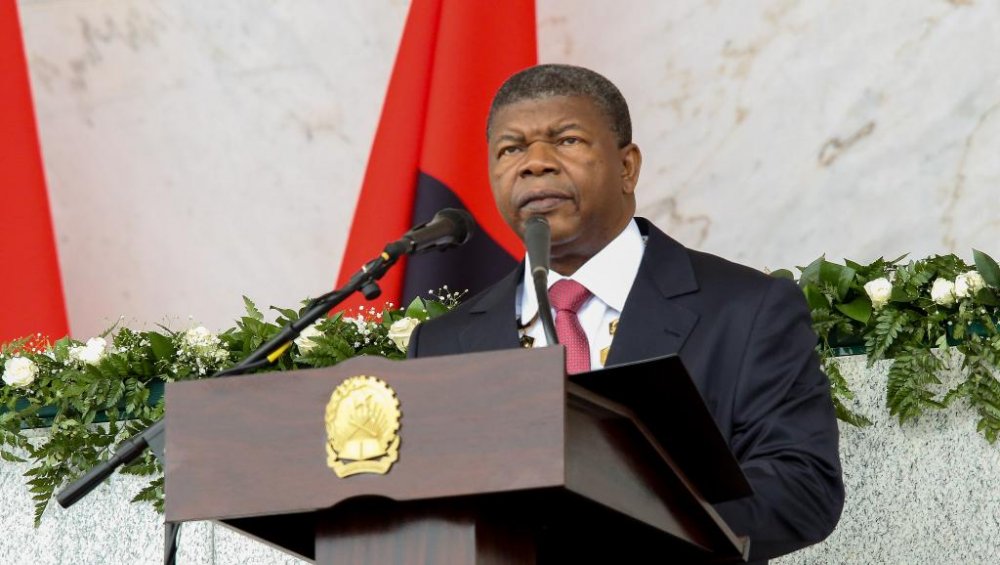
The decision comes from a presidential decree issued on last Saturday which justifies the decision as a result of “excellent level of cooperation relations” between Angola and the two countries, the cooperation which the Angolan Government looks towards strengthening further.
According to the decree, Rwanda and Cape Verde joins the list of African countries whose citizens acquired tourism visa-free entry into Angola, Botswana, Mauritius, Seychelles and Zimbabwe, as well as Singapore in Asia.
Previously, Angola had already entered into reciprocal tourism visa exemption agreements for citizens of South Africa and Mozambique.
Tourism visa exemptions involve staying in Angola up to 30 days per entry and 90 days per year based on the principle of diplomatic reciprocity, according to the Angolan Government.
In addition to these exemptions, the previous law, which entered into force on March 30, established procedures to simplify the process of getting a tourism visa for citizens of 35 other countries, namely the non-compulsory calling card.
Speaking to the press yesterday, the Commissioner General of Prisons, George Rwigamba said that the money was raised through fundraising from officers’ salaries starting in January 2017 collecting 1% from monthly salary.
“Since then, we started collecting monthly contribution until today and the exercise will continue. We are glad to provide this contribution. Our staffs are happy to contribute to Agaciro Development Fund,” he said.
He said that monthly contribution from all RCS officers equals Rwf1.7 million.
Agaciro Development Fund’s Chief Executive Officer, Jack Kayonga hailed RCS senior officers for contributing to national development.
“This is a good gesture which shows us that you think about the fund. We remind Rwandans that saving for the nation doesn’t require big incomes, but it is patriotism and spirit of building the nation,” he said.
He encouraged different institutions to learn from RCS, Rwanda Defence Force and Police as institutions which continue to contribute to Agaciro.
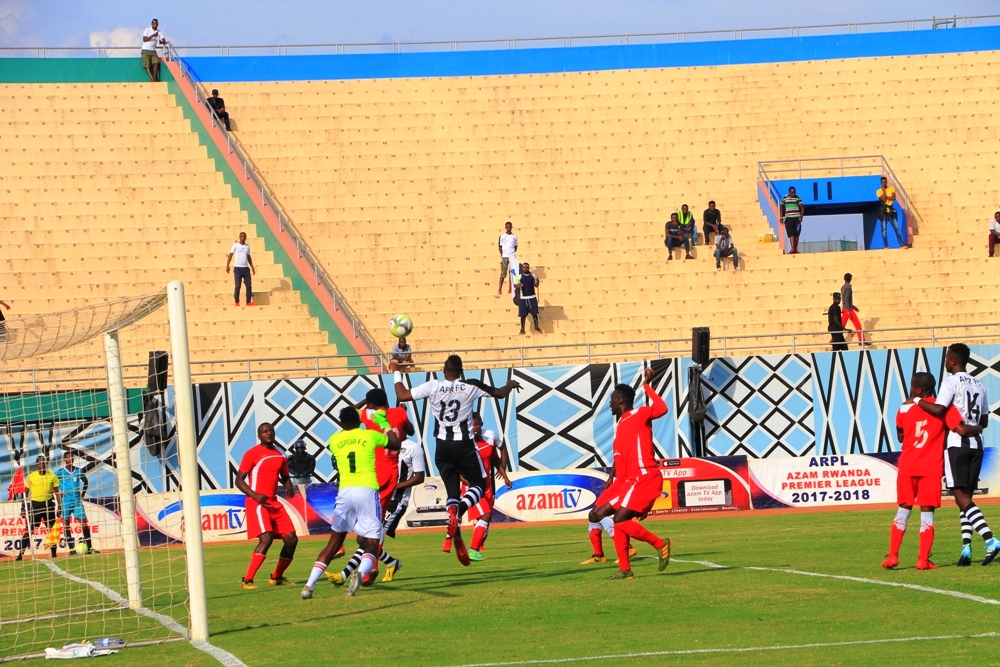
Goals from Aimable Nsabimana and Muhadjiri Hakizimana cemented a record-extending 17th league title for the military side in just 24 years – since their maiden title in 1995.
APR FC went into the final match of the season battling the league title alongside AS Kigali. Both sides were separated by three points with APR FC sitting on top of the league summit going into the final match of the season.
With AS Kigali held to a 1-1 draw by Musanze FC at Stade Ubworoherane in Musanze District, APR FC beat the former by five points, going to 66 while AS Kigali was on 61 points.
The military side climaxed the season having won 19 matches, drawing 9 and losing 2 along the way. The team also scored 51 goals and only conceded 15 goals in 30 matches respectively.
It is worth noting that the military side had previously won 1995, 1996, 1999, 2000, 2001, 2003, 2005, 2006, 2007, 2009, 2010, 2011, 2012, 2014, 2015 and 2016 editions of Rwanda premier league.
Meanwhile, Rayon Sports and Etincelles joined AS Kigali in the top four. Rayon Sports were held to a 2-2 draw by Marines FC while Etincelles’ 1-0 win over Gicumbi FC relegated the Northern Province club to next year’s second division league.
Gicumbi FC was joined by Miroplast Fc who lost 1-2 to Sunrise FC on the final day of the season. The pair will be replaced by Intare FC and AS Muhanga who are finalists in the 2017/18 Second division league which will climax on July 4 at Amahoro Stadium.
AS Kigali’s Burundian Jean Claude Ndarusanze ended the season leading the top scorer’s chart with 15 goals, followed by APR FC’s Muhadjiri Hakizimana who scored 13 goals and Musanze FC’s Wai Yeka and SC Kiyovu Sports’ Moustapha Francis who are both scored 11 goals each.
The crowning ceremony of the 2017/18 Azam Rwanda Premier League champions APR FC will be held at a yet to be announced date and avenue.
APR FC will next year represent Rwanda at the CAF Champions League for the 2018/2019 season.
{{Azam Rwanda Premier League Results
}}
Gicumbi FC 0-1 Etincelles FC
Police FC 3-1 Kirehe FC
Mukura VS 0-0 Bugesera
Espoir FC 0-2 APR FC
Sunrise FC 2-1 Miroplast FC
Amagaju FC 0-1 SC Kiyovu
Marines FC 2-2 Rayon Sports FC
Musanze FC 1-1 AS Kigali
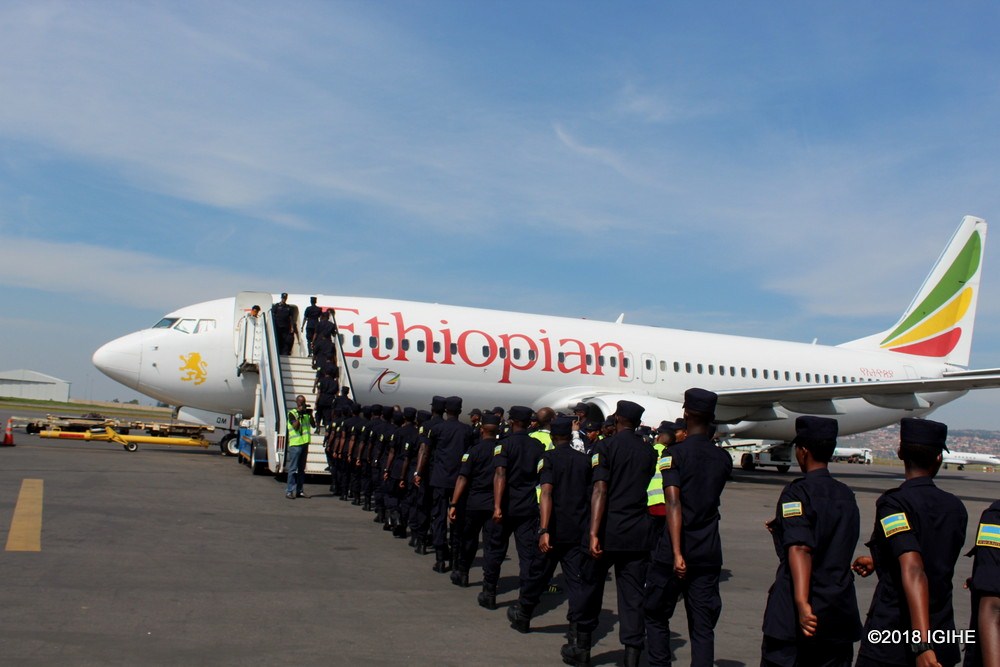
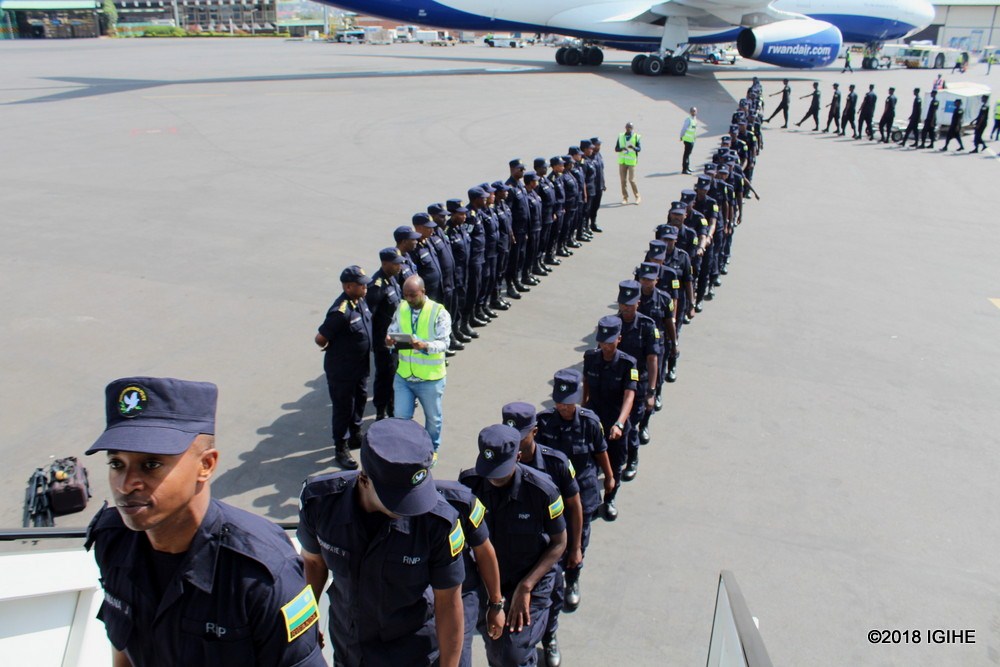
The contingent will participate in peace-keeping operations, and women and child protection activities in particular.
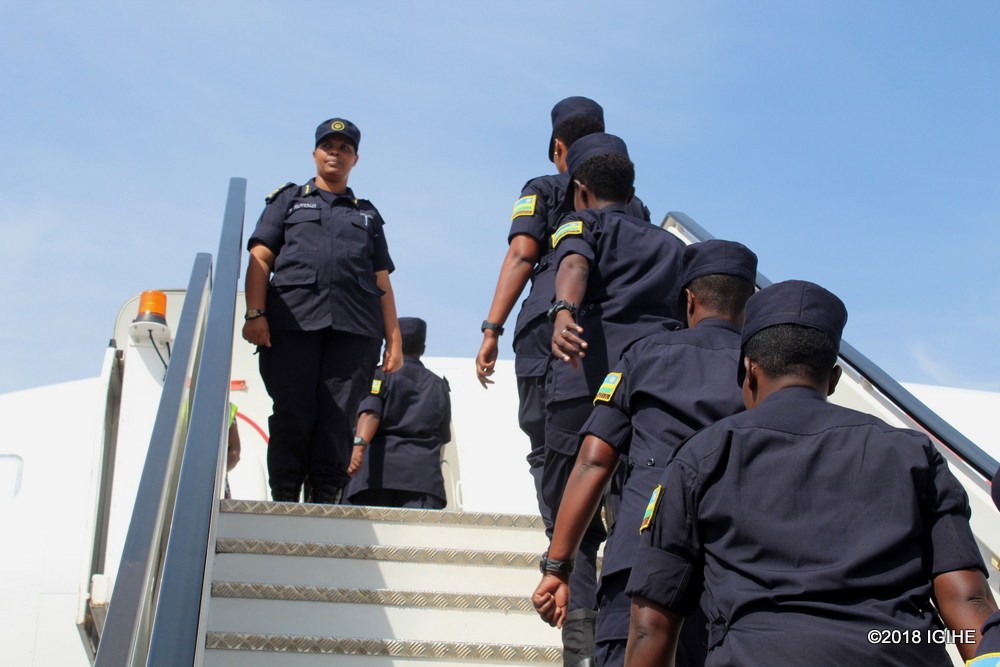
The peace-keepers who will serve under the United Nations Mission in South Sudan (UNMISS) set off at Kigali International Airport Wednesday with 144 female Police Officers joining 16 others who went in advance.
The deployment follows President Paul Kagame’s pledge in the United Nations Leader’s summit on peacekeeping operations that took place in New York in September 2015.
The Contingent Commandant, ACP Teddy Ruyenzi said that having the female formed unit has particular meaning in the mission.
“The responsibilities we will perform are always there for UNMISS, but our special particularity as women contingent will be to help women and children. As you know those categories are the victims of violence and conflicts that are taking place in that country. It also implies that women are capable to perform all jobs,” she said.
The Deputy Inspector General of Police, Juvenal Marizamunda said that South Sudan endures conflicts and people were displaced from their properties to the extent whih they need special protection and security.
“The United Nations needs Army and Police assistance in protecting security of people in camps. Police protect them from external threats and any emerging crimes from inside the camps,” he said.
“The reason behind female contingent is because the camps are dominated by women, children and elderly people, female Police Officers offer them special attention than men can do,” he added.
While briefing the Police Officers yesterday at Police Headquarters in Kacyiru, DIGP Dan Munyuza said that the contingent was well trained and are fully equipped to perform well their responsibilities.
He urged them to maintain discipline of the force and exhibit professionalism in supporting in trouble.
Rwanda has over 1000 Police peacekeepers in different missions including Haiti, Central African Republic and South Sudan.
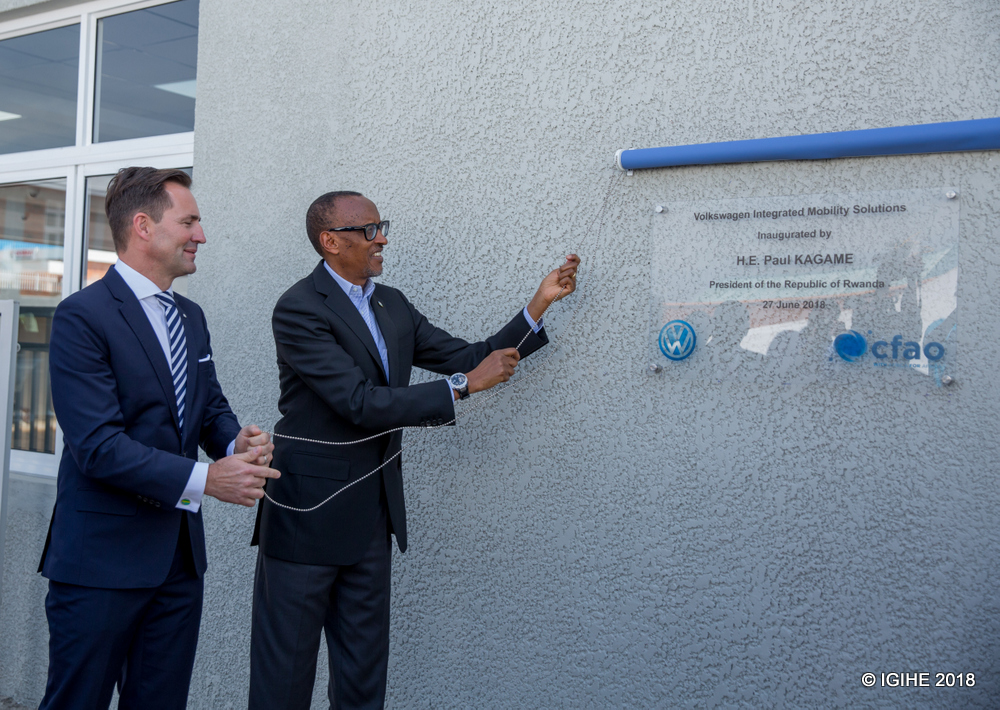
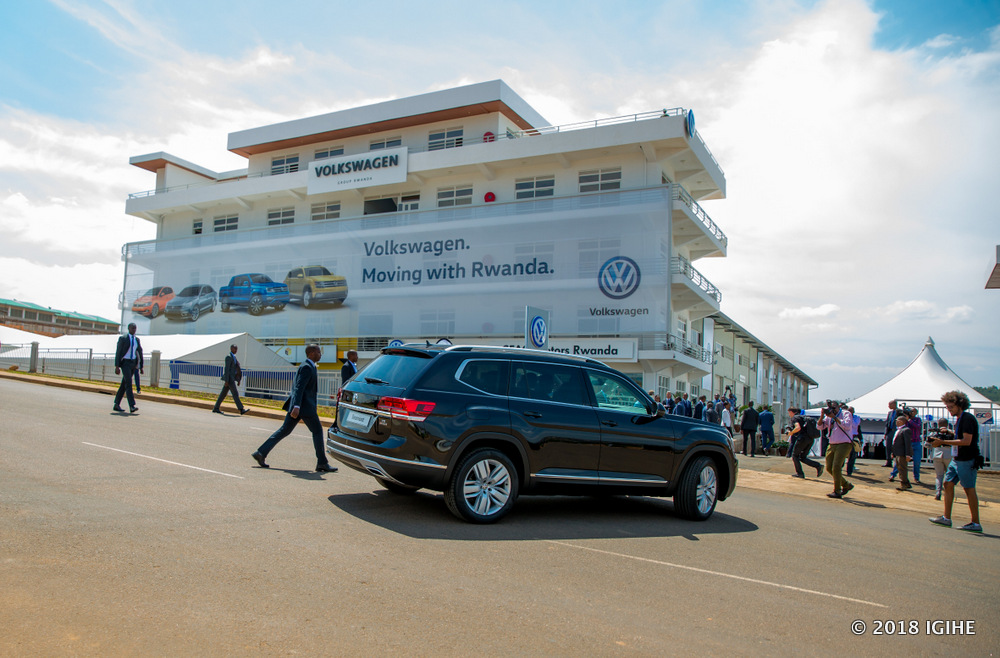
The first initiative for Rwanda automotive industry, Volkswagen Mobility Solutions is the German’s car manufacturing firm.
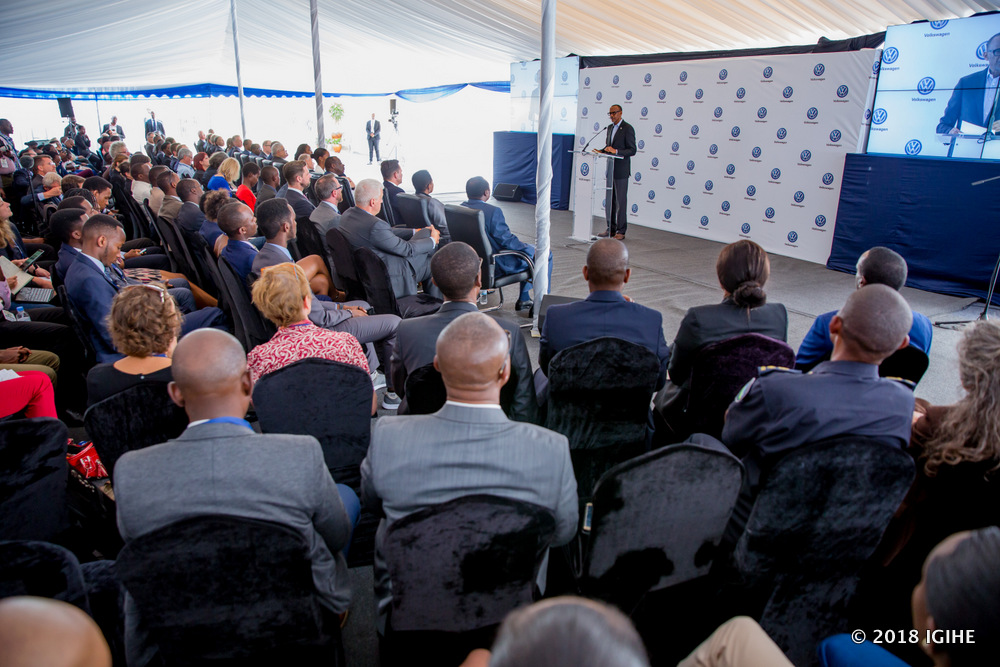
The Head of State said that some people found it hard to believe that German cars could be built in Rwanda. “Yet today, the first vehicles are rolling off the assembly line,” he said.
“This facility undoubtedly represents a new chapter, in Rwanda’s journey of economic transformation. There are also positive implications for Africa more generally. Not only can global brands assemble high-quality products in Africa, they can also find customers here,” Kagame said.
Kagame said that Africa is not merely positioning itself as a new low-cost hub to manufacture goods for export, but African consumers will also be among the biggest contributors to growth in global demand in the years ahead.
He challenged Africans on paying higher price to second hand, and requested them to think about new things.
“Africa does not need to be a dumping ground for second-hand cars, or second-hand anything. In the long run, you end up paying a higher price anyway. If you pay a high price for second hand, why not pay for something new. Africa and Rwanda deserve better and this is one way of showing we can afford it,” Kagame noted.
{{How to move from assembling to manufacturing}}
Kagame said that Volkswagen’s operations in Rwanda reminds of working regionally. He said that Rwanda benefits from Volkswagen’s investment in Kenya and urged East Africa to build a regional manufacturing base.
“In the mid-term, the only way for us in East Africa to move up the industrial value chain from assembly to manufacturing is to build an integrated regional manufacturing base,” he said.
“When we shift from a logic of competition to one of cooperation, we all gain. Success is about partnership and leveraging our strengths,” Kagame tipped East Africa Member countries.
He said that software and technology, combined with innovations in sales and distribution strategies will allow people to have routine access to a new car without the costs of ownership.
{{Volkswagen Services
}}
Speaking at the event, the Volkswagen Integrated Mobility Solutions in Rwanda Chief Executive Officer, Michaella Rugwizangoga said that in July they will start with Cooperate car sharing, a service dedicated to institutions, cooperates and non-government organisations.
“We would start with forty vehicles and look to increase to 140 vehicles. This will be followed by ride-healing with initial fleet of 150 vehicles,” she said.
She said that in 2019, they will have public car sharing, with vehicles available in stations which can be self-driven. She said it will be followed by a charter service and peer to peer car sharing service.
Thomas Schäfer, Volkswagen South Africa Chief Executive Officer said that the launch of the plant cements another pillar into the ground of Volkswagen Sub-Saharan Africa strategy.
“Our goal is to play a leading role in the emerging automotive industry in Africa as we pursue a rapid and flexible expansion strategy over the coming years,” he said.
Schäfer said that Rwandans will buy different models assembled locally like VW Polo, VW Passat, VW Tiguan, VW Amarok and VW Teramont
He said that their facilities in phase one have capacity to assemble 1000 cars per year.
“As demand increases, we will move to phase two where we will increase the capacity up to 10,000 cars and from here we will move to the level of manufacturing,” he said.
He said that that they will spend $USD20 million in phase one.
{{Price per brand
}}
The Volkswagen’s cheaper local assembled car model is VW Polo which is $23 881 (over Rwf20 million).
For VW Passat is $37 674 (Around Rwf33 million), VW Tiguan is $37 719 (Rwf33 million), VW Amarok is $44 559 (over Rwf38 million) and VW Teramont is $48 156 (Rwf42 million) which is the expensive brand.
In an interview with IGIHE, Amb. Mujawamariya said that they want to increase number of beneficiaries of the scholarships from 15 to 70 and possibly to 100.
Figures from the Embassy of Rwanda in Russia indicate that 120 Rwandans pursue their studies there, 75 of who are sponsored by Russian government.
“The Government of Rwanda has requested Russia to increase the yearly number of scholarship for Rwandan students from 15. In September, 15 students will come, but we expect 70 next year because we requested them that number. I am also thinking that we can request them to increase the number to 100 scholarships,” she said.
“We are among countries which use properly those scholarships and our youth need quality education and skills to develop our country,” she added.
Mujawamariya said that they prefer partnership in education with Russia because their education is different from that of the West. She said that Russia teach foreign students on condition that they will go to contribute to the development of their mother countries.
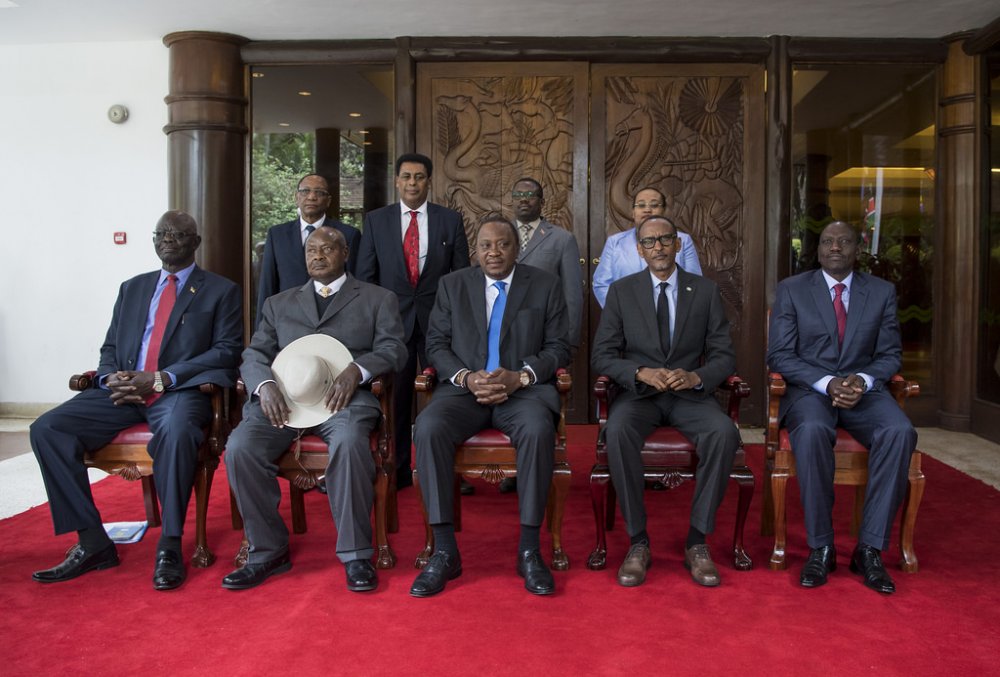
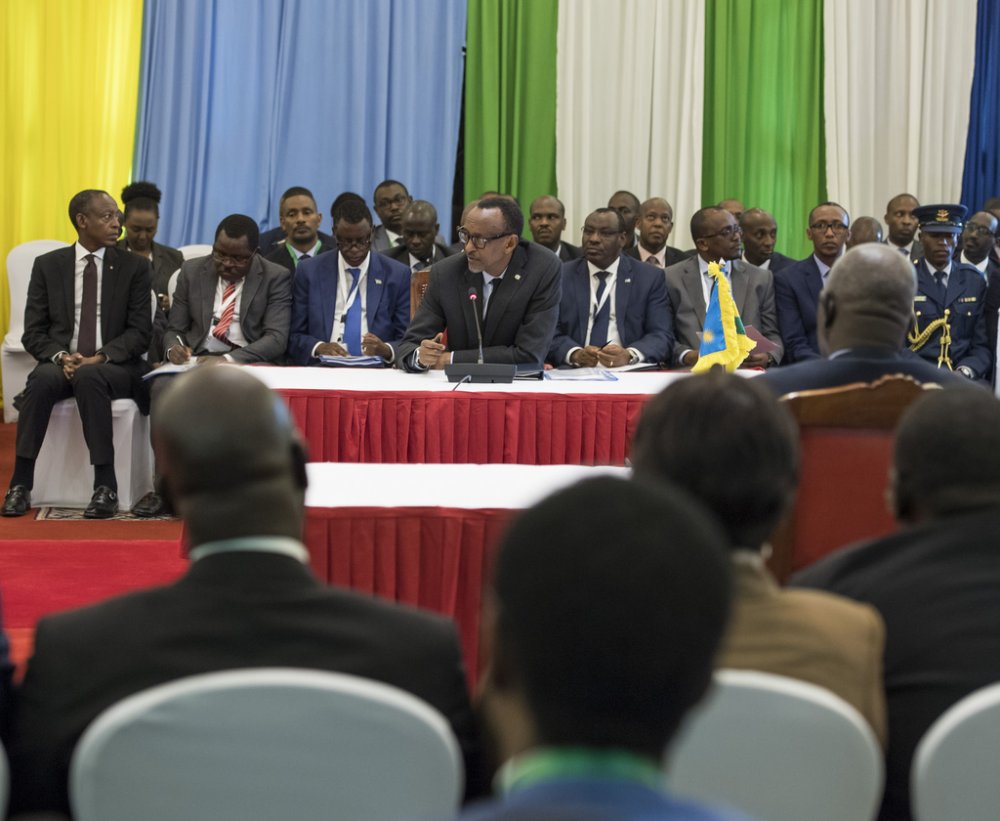
Kagame was speaking in Kenya yesterday during the 14th Summit of the Northern Corridor Integration Projects that was aimed at speeding up development of infrastructure in the East Africa region.
The summit reviewed progress made in the implementation of various resolutions reached during the 13th Summit held in Uganda in April, 2016.
Kagame thanked Kenyan President Uhuru Kenyatta for hosting the summit.
“I thank President Uhuru Kenyatta for hosting and re-convening us after a two-year break to continue with the momentum we had started for our region, coming together and working on joint projects for the benefit of our countries and people. We had made headway in bringing government, businesses, local and foreign investors in partnership to enable these projects that are important to the development of our citizens,” Kagame said.
He noted that there is a lot of work to do towards the projects in the Northern Corridor Integration.
“There is always going to be a lot of work to do but this moment provides an opportunity to rexamine what has been done and what we still need to do,” he noted.
The NCIP is a multilateral development initiative established in 2013 and aimed at speeding up development in the region, particularly the improvement of infrastructure for ease of movement of people, goods and services in the East-African region.
It is also designed to link the land locked countries of Uganda, Rwanda, South Sudan and Burundi to Kenya’s Indian Ocean Port of Mombasa. The corridor also serves the Democratic Republic of Congo and northern Tanzania.
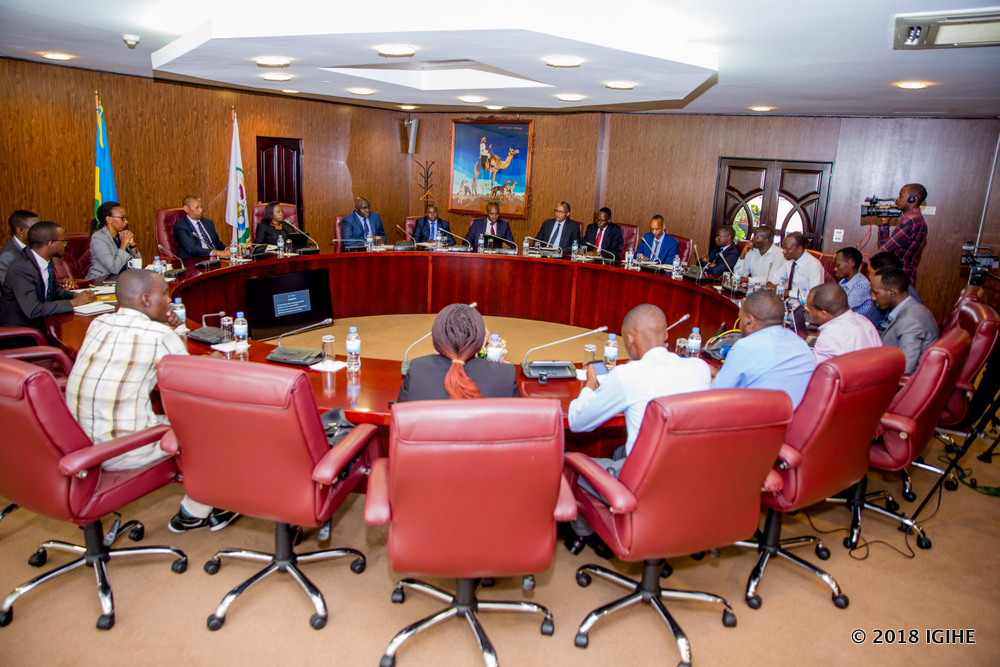
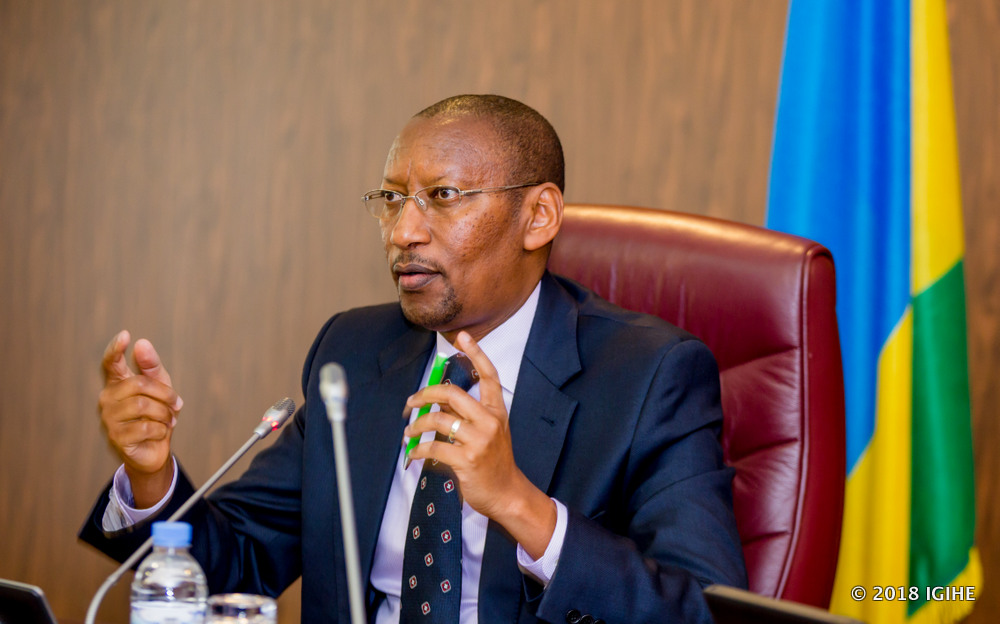
In a media conference Tuesday, the Governor of Central Bank, John Rwangombwa said that the quarterly Monetary Policy Committee found that the Rwandan economy continues to register strong performance.
“The projection by the Ministry of Finance and Economic Planning of 7.2% is quiet possible because the total turnovers grew by 16.5 percent during the first five months of 2018 from 16.2 percent in the same period of 2017,” he said.
The National Institute of Statistic of Rwanda (NISR) recently revealed that in quarter one of this year, GDP grew by 10.6%, a growth which was attributed to the increase in agricultural production by 8%, industries by 7% and services by 12%.
Rwangombwa said that Rwanda’s formal trade deficit reduced by 1.4 percent during the first five months of 2018 compared to the same period of 2017, following an increase in formal exports receipts by 29.0 percent which overweighed the increase in formal imports of 9.0%.
“The value of our exportation like minerals, agricultural products like coffee and tea were remarkably raised,” he said.
He said that consistent with the performance of the external sector, exchange rate pressures remained subdue. Compared to December 2017, the Rwandan Currency depreciated by 1.5% against the USD as at the end May 2018 from 1.0% and 4.0% observed during the same period of 2017 and 2016 respectively.