“I strongly condemn the continued arbitrary detention of 59 UN colleagues and partner personnel, as well as staff from NGOs, civil society organizations, and diplomatic missions,” he told reporters after briefing the Security Council on the situation in Yemen in closed-door consultations. “I call for their immediate and unconditional release, in accordance with international law.”
In recent days, Houthi de facto authorities referred three UN personnel to a special criminal court. This referral must be rescinded, Guterres said. They have been charged in relation to their performance of UN official duties. These charges must be dropped, he said.
“The continued detention of our colleagues is a profound injustice to all those who have dedicated their lives to helping the people of Yemen. The United Nations and its partners must never be targeted, arrested, or detained in connection with their official duties. We must be allowed to perform our work without interference,” said Guterres.
In the press encounter, Guterres called for de-escalation of the tensions in Yemen.
Tensions have been simmering across Yemen, and dramatic new developments in the eastern governorates are turning up the heat, he said. “A full resumption of hostilities could have serious ramifications on regional peace and security, including on the Red Sea, in the Gulf of Aden, and in the Horn of Africa.”
Guterres urged all parties to exercise maximum restraint, de-escalate tensions, and resolve differences through dialogue.
“Yemen needs a sustainable, negotiated political settlement — one that embraces the aspirations of all Yemenis and brings this devastating conflict to an end. Until then, the Yemeni people will continue to pay a terrible price,” he said.
“If the EU and EU Member States insist on continuing to restrict, limit, and deter the competitiveness of U.S. service providers through discriminatory means, the United States will have no choice but to begin using every tool at its disposal to counter these unreasonable measures,” said the USTR in a post on the social platform X.
According to the USTR, potential countermeasures could include assessing fees or imposing restrictions on foreign services. The agency also warned that it could adopt a similar approach toward other countries pursuing what it called an EU-style regulatory strategy in this area.
The USTR alleged that the EU and certain member states have pursued a sustained pattern of discriminatory and harassing lawsuits, taxes, fines, and directives targeting U.S. service providers.
“The United States has raised concerns with the EU for years on these matters without meaningful engagement or basic acknowledgement of U.S. concerns,” the USTR added.
The USTR also said EU service providers have operated freely in the United States for decades, benefiting from access to the U.S. market and consumers, while naming several European technology giants with expansive presence in the country.
The latest remarks reflect growing frustration among U.S. officials over the EU’s tightening technology regulations and lawsuits targeting U.S. tech giants.
The European Commission has recently opened two antitrust investigations into U.S. tech giants Google and Meta, and fined Elon Musk’s platform X 120 million euros (about 140 million U.S. dollars) in its first non-compliance decision under the Digital Services Act.
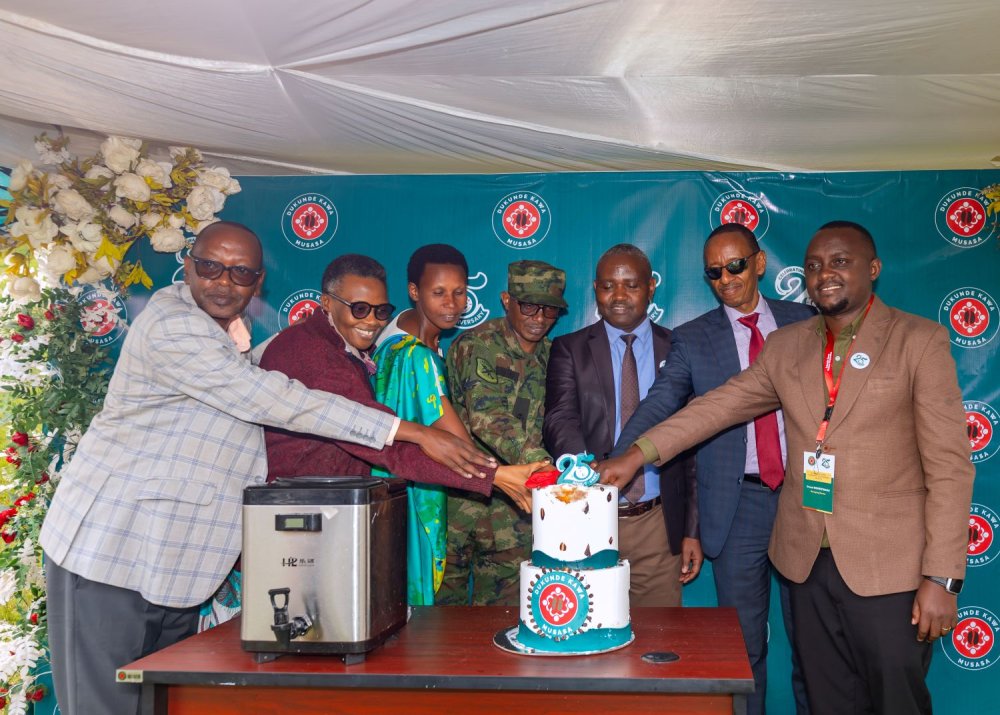
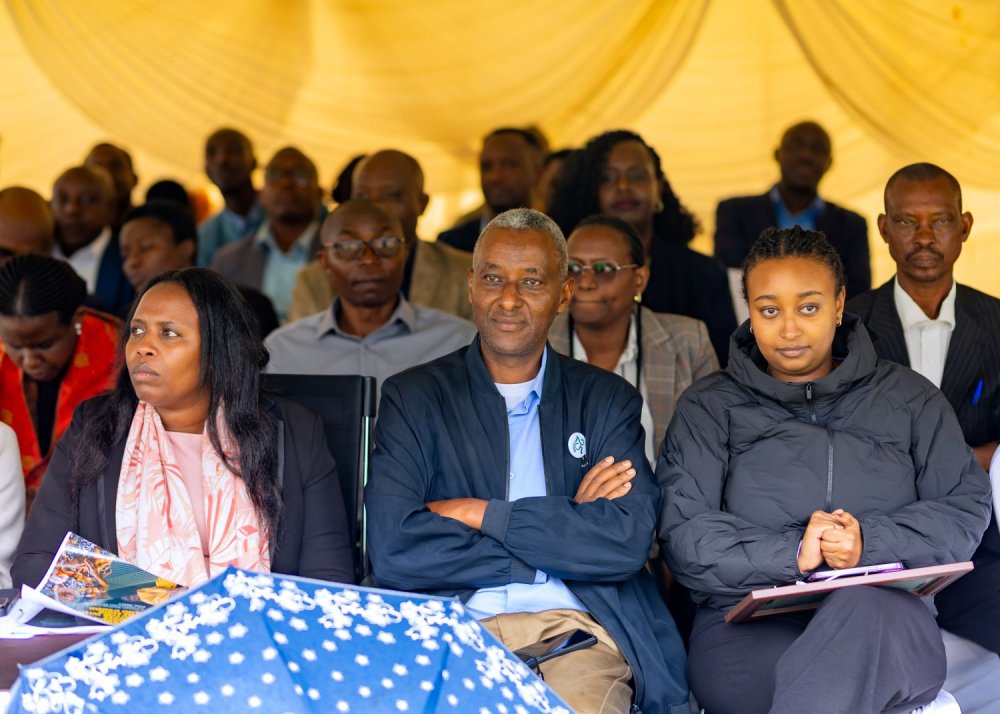
The institution’s leadership disclosed this on Tuesday, December 16, 2025, during a meeting with EADB and its development partners.
Alphonse M. Ngabonziza, CEO of Duterimbere IMF Plc, said EADB’s backing has enabled the institution to expand financial services for small and large businesses, as well as households across Rwanda.
“In 2023, Duterimbere received a Frw 3.5 billion loan from EADB, which strengthened our capacity to finance projects in agriculture, livestock, trade, and service sectors,” Ngabonziza said.
The support allowed Duterimbere to provide loans to 344 clients, positively impacting more than 1,032 people and creating 1,321 new jobs.
Ngabonziza also highlighted the institution’s commitment to gender equality, noting that 93% of beneficiaries were women.
“This support has empowered youth, women, and small traders, helping them grow their businesses and improve livelihoods,” he said.
He added that Duterimbere IMF Plc plans to continue its partnership with EADB and remains committed to opening new opportunities for clients to drive Rwanda’s economic growth.
Margarita Uwantege, a long-time client of Duterimbere, shared how the institution helped her grow her business.
“I started with small savings in 2000, buying a chicken to begin farming. In 2007, I received a Frw 50,000 loan from Duterimbere, which I topped up with my own savings to purchase cows. Today, I trade car and motorcycle parts and have been able to pay for my five children’s university education,” she said.
Duterimbere IMF Plc, a community development microfinance institution, began its partnership with EADB in 2023. With 19 branches across Rwanda, it continues to play a key role in supporting inclusive financial growth in the country.
The TFR, which indicates the average number of children a woman would have over her lifetime, fell from 4.1 in the 2019-2020 survey.
The decline is evident nationwide, with the sharpest drops in the Western Province (from 4.0 to 3.4) and Northern Province (from 4.1 to 3.8).
Urban areas maintained a stable rate of 3.4, while rural areas saw a decrease from 4.3 to 3.9.
The City of Kigali recorded the lowest TFR at 3.1, followed by the South Province at 3.8 and the East Province at 4.0. The trend is largely attributed to rising family planning adoption.
According to the survey, modern contraceptive use among women in unions surged to 78% from 64% in prior surveys, with injectables (34%) and implants (25%) being the most popular methods.
Among married women, about half still desire more children, but preferences have shifted: only 13% want another soon, 37% prefer to delay, and 47% want no more or have been sterilized.
The RDHS7 also highlights broader health progress. Maternal mortality has plummeted from 1,071 deaths per 100,000 live births in 2000 to 149 in 2025, while under-5 mortality stands at 36 per 1,000 live births.
The RDHS7, conducted between June and October 2025, surveyed over 14,500 households across the country, offering comprehensive, nationally representative data on key issues such as fertility, maternal and child health, nutrition, HIV, and mortality.
The survey shows that the proportion of girls aged 15 to 19 who have ever been pregnant has fluctuated over the past two decades. In 2005 (DHS 3), the rate was 4 percent. By 2010 (DHS 4), it had risen to 6 percent, and in 2014–15 (DHS 5) it reached 7 percent. The rate dipped slightly to 5 percent in 2019–20 (DHS 6) but increased again to 8 percent in 2025 (DHS 7), signaling a concerning upward trend in recent years.
Education remains a key factor in teenage pregnancy. Adolescents with no formal education experience the highest rates, with 21 percent having been pregnant. Those who have completed primary education have a lower rate of 13 percent, while teenage girls with secondary education see the rate drop sharply to 4 percent.
“University-level data are not presented due to the limited number of observations in the sample,” the report reads, underlining the protective role of schooling for adolescent girls.
The findings present a contrast within Rwanda’s broader health progress. The same survey reports a declining total fertility rate, now at 3.7 births per woman, down from 4.1 five years ago, alongside record-high use of modern family planning methods among married women.
Maternal care indicators are also near universal, with 98 percent of births assisted by skilled health providers and delivered in health facilities.
The survey further highlights worrying trends among young people, including a decline in comprehensive knowledge of HIV prevention among youth aged 15–24, suggesting the need for renewed awareness campaigns targeting adolescents.
Conducted between June and October 2025, the RDHS7 covered more than 14,500 households nationwide, providing nationally representative data on fertility, maternal and child health, nutrition, HIV, and mortality. The full report is expected to inform future policy interventions aimed at protecting adolescents and sustaining Rwanda’s gains in public health.
Wang Fengli, deputy director of the Office of the Free Trade Port Working Committee of the Communist Party of China Hainan Provincial Committee, made the remarks during the latest episode of China Economic Roundtable, an all-media talk show hosted by Xinhua News Agency.
Hainan will build a more flexible and efficient supervision system to facilitate the free, safe flow of goods. “On the one hand, the range of zero-tariff goods will be expanded to promote the trade of goods. On the other hand, the opening-up of services sectors such as tourism, education and health care will be accelerated in response to the development needs of trade in services,” Wang said.
Regarding investment, the Hainan FTP aims to create a market-oriented, law-based and internationalized business environment with greater transparency. Foreign investment access will be relaxed further, and reforms will be implemented to streamline approval processes, the official said.
The opening-up of the financial sector will be advanced steadily, with efforts to develop cross-border asset management and offshore yuan business, he said.
Restrictions on the free flow of people will also be relaxed, and entry and exit policies will be eased to attract talent and business visitors, according to Wang.
Hainan will adopt a more open shipping environment, optimize vessel inspection policies and establish an efficient, secure mechanism for the cross-border transfer of data, he added.
Throughout the year, Rwanda’s influence on the international stage has continued to grow. The country garnered widespread recognition for its strong governance, diplomatic efforts, and flourishing international trade, particularly in tea, coffee, and minerals.
Additionally, Rwanda’s vibrant tourism industry and its prominent role as a host for international conferences further elevated its global profile. These efforts helped Rwanda attract over 1.15 million visitors during the 2024/2025 period, cementing its position as an increasingly influential global player.
In the realm of diplomacy, Rwanda continued to expand its influence opening new embassies around the world. In return, several countries have also chosen to establish embassies in Rwanda.
One such move took place in Luxembourg, where Rwanda’s first ambassador, Munyangaju Aurore Mimosa, arrived in March 2025. She assumed duties after presenting her credentials to the King of Luxembourg.
Luxembourg, located in the heart of Europe, borders Belgium to the north and west, France to the south, and Germany to the east. Situated over 6,300 kilometers from Rwanda, Luxembourg is not known for its high mountains, with its highest point, Kneiff, reaching only 560 meters above sea level.
With a population of just over 670,000 and an area of 2,586 square kilometers, Luxembourg is more than 10 times smaller than Rwanda. Nearly half of Luxembourg’s population is foreign-born, and its citizens speak three languages: French, German, and Luxembourgish.
{{Rwanda expands relations with Pakistan}}
In April 2025, Rwanda opened a new embassy in Islamabad, Pakistan, with Fatou Harerimana serving as Rwanda’s ambassador to Pakistan. Since the embassy’s opening, several initiatives aimed at enhancing trade and investment between the two countries have been launched.
Key developments include the possibility of direct flights between Rwanda and Pakistan, and exploring potential areas of collaboration.
Pakistan established its embassy in Rwanda in 2021. Following the opening of Rwanda’s embassy in Islamabad, both countries signed a Memorandum of Understanding (MoU) on diplomatic training in April 2025.
{{Growing relations with Algeria }}
In July 2025, Rwanda appointed Vincent Karega as its first ambassador to Algeria.
He presented his credentials in October 2025 to Algerian President Abdelmadjid Tebboune, marking an important step in strengthening bilateral relations between the two countries.
In a message shared on his X account on October 28, 2025, Amb. Karega expressed his delight at becoming Rwanda’s first resident ambassador to Algeria.
“I am honored to officially present to President Tebboune of Algeria my letters of credence as the first resident Rwandan Ambassador. Rwanda and Algeria are determined to elevate our bilateral and continental relations to the highest level,” he noted.
Rwanda and Algeria have maintained cooperation in areas such as security and education, with several Rwandan students pursuing studies in Algeria, a country where Arabic, French, and Tamazight are the official languages.
Since 1982, the two nations have signed various agreements covering economic cooperation, social development, cultural exchange, and other fields.
In December 2023, Algeria opened its embassy in Rwanda, demonstrating a renewed commitment to strengthening diplomatic ties.
On June 3, 2025, President Paul Kagame paid a state visit to Algeria, where he toured the National School of Artificial Intelligence, which also hosts Rwandan students.
During the visit, he held talks with President Tebboune focused on promoting stronger African cooperation in areas such as cross-border trade.
Before his new appointment, Ambassador Karega served as Rwanda’s envoy to South Africa until 2019, after which he was posted to the Democratic Republic of Congo (DRC). He left the DRC in 2022, following heightened diplomatic tensions between the two countries.
On December 20, 2024, he was appointed Rwanda’s Special Envoy for the Great Lakes Region, prior to taking up his current role as Ambassador to Algeria.
{{New embassies in Kigali}}
In 2025, Rwanda’s diplomatic relations expanded significantly, as countries from all over the world chose to open embassies in Kigali. One notable example is Brazil, which decided to appoint its ambassador to Rwanda, ending years of reliance on its embassy based in Kenya.
Irene Vida Gala, Brazil’s first ambassador to Rwanda, expressed that Brazil hopes to learn from Rwanda’s success in reconciliation and peacebuilding. She also shared her vision of seeing “Visit Rwanda” on the shirts of Brazilian football teams.
Ambassador Gala also emphasized that both nations would work together to enhance cooperation in areas such as agriculture, livestock, and tourism.
{{Denmark commits to enhancing trade with Rwanda}}
In August 2025, Denmark opened its embassy in Rwanda, appointing Casper Stenger Jensen as the first Danish ambassador.
After presenting his credentials to President Kagame, Ambassador Jensen outlined his focus on strengthening investment and trade relations between the two nations.
Denmark has embassies in 11 countries across Africa, and Rwanda is now a key part of their diplomatic outreach.
In the same year, Gabon also appointed its first ambassador to Rwanda, with a primary focus on promoting economic, cultural, and educational cooperation.
Gabon is home to over 2,000 Rwandan students who are currently studying at various institutions in Rwanda.
{{Switzerland’s Embassy in Rwanda }}
Although Rwanda and Switzerland have maintained diplomatic relations since 1960, Switzerland officially opened its embassy in Kigali on November 20, 2025.
The embassy’s opening aligns with the country’s ongoing regional development efforts and bolsters Switzerland’s image as a strong advocate for peace and security.
In December 2025, Poland also opened its embassy in Rwanda, following Rwanda’s decision to open its embassy in Poland in 2021.
On November 13, 2024, Rwanda and Poland signed the Basic Air Service Agreement (BASA), which focuses on expanding air cooperation between the two countries.
Education continues to be a cornerstone of cooperation, as the 2022 Rwanda-Poland Education Forum led to agreements between universities in both countries. Poland has hosted over 1,500 Rwandan students, making them the largest group of foreign students from a single country in Poland.
Currently, Rwanda is represented by 49 ambassadors across the globe and has one Consul General. Together, these diplomats oversee Rwanda’s interests across 147 countries, with 37 honorary consuls representing Rwanda’s interests in 17 countries.
Rwanda is an active member of 200 international organizations, and 47 embassies are based in Kigali.
Additionally, there are 31 diplomats representing international organizations in Rwanda, 22 diplomats representing the interests of different countries, while 71 countries are represented by non-resident envoys in Rwanda.
Huang, head of the Chinese Academy of Macroeconomic Research, made the remarks during the latest episode of China Economic Roundtable, an all-media talk show hosted by Xinhua News Agency.
The Thursday launch marks a major milestone in the opening-up drive of the world’s second-largest economy. This move sends a tangible message to the world: China has made a significant decision to open up further, Huang said.
It also aims to set a benchmark for higher-level opening-up, inject new momentum into upholding multilateralism and free trade, and foster inclusive and universally beneficial economic globalization, according to Huang.
“It is a strategic move to align with high-standard international economic and trade rules and steadily expand institutional opening-up,” Huang noted. “This provides an important platform for China to better adapt to and utilize international economic and trade rules while actively participating in their formulation.”
Huang believes that China’s economy has transitioned from rapid growth to high-quality development and is now at a critical stage of transforming growth model, optimizing economic structure, and shifting growth drivers.
As a key testing ground for reform in China, Hainan shoulders the important mission of paving new paths and accumulating fresh experience for building a high-standard socialist market economy, particularly in key areas such as trade and investment, fiscal and financial systems, and government regulation, Huang added.
Huang, head of the Chinese Academy of Macroeconomic Research, made the remarks in the latest episode of China Economic Roundtable, an all-media talk show hosted by Xinhua News Agency.
During the talk show, Huang highlighted several landmark policies, noting that the share of tariff lines covered by zero-tariff treatment at the Hainan Free Trade Port (FTP) will rise to roughly 70 percent, alongside optimized rules that allow duty-free treatment for value-added processing.
According to Huang, the measures are expected to significantly reduce operating costs for industries such as pharmaceuticals and high-end manufacturing, encourage industrial clustering, and accelerate the development of emerging sectors, including offshore wind power and commercial space.
Meanwhile, expanded duty-free shopping options for travelers and improved purchasing policies for island residents are expected to further stimulate local consumption, Huang noted.
Favorable tax policies are also central to the new economic landscape of Hainan FTP. “Preferential income tax rates will attract more companies and skilled workers, creating higher-quality jobs and reinforcing a virtuous cycle between industry development, talent inflows and economic growth,” Huang added.
Beyond the island, the launch of island-wide special customs operations is expected to reshape regional development patterns by easing barriers to the movement of goods, capital, and other factors of production, Huang believes. “Hainan will integrate more closely with surrounding regions, fostering coordinated development across southern China.”
At the national level, Huang described the move as a key step in China’s shift from an opening-up model focused on the flow of goods and other factors to one centered on institutional opening-up.
Hainan is expected to align more closely with high-standard international economic and trade rules, including those governing cross-border data flows and intellectual property protection, Huang said, adding that successful institutional innovations could be replicated nationwide.
“Launched against a backdrop of rising protectionism and headwinds to globalization, the special customs operations could provide international investors and traders a more stable and predictable institutional environment,” said Huang.
Wang Fengli, deputy director of the Office of the Free Trade Port Working Committee of the Communist Party of China Hainan Provincial Committee, made the remarks in the latest episode of China Economic Roundtable, an all-media talk show hosted by Xinhua News Agency.
Following the launch, the Hainan FTP will see a sharp rise in its level of zero-tariff treatment, said Wang. The number of tariff lines eligible for zero tariffs will expand from about 1,900 to around 6,600, lifting the overall zero-tariff ratio from 21 to 74 percent.
Beyond zero tariffs, lower tax rates form another major policy advantage of the Hainan FTP, Wang said, noting that companies can benefit from multiple policies across different stages of production and operation.
He cited the example of a biopharmaceutical company. During the construction and research phase, imported raw materials and equipment can qualify for zero tariffs, reducing import costs by 5 to 10 percent. In manufacturing, products made with zero-tariff imported inputs and meeting a value-added ratio of 30 percent or more can be shipped to the Chinese mainland free of import duties.
Once profitable, the company can also benefit from a preferential corporate income tax rate of 15 percent, while its executives and technical staff may qualify for a 15 percent personal income tax rate, the official said.
Taken together, these measures offer companies opportunities for development across the entire industrial chain, Wang said.
Local residents will also see tangible benefits after the launch of special customs operations, the official added. One key change is access to a wider range of duty-free goods.
Authorities are studying tax policies for imported goods consumed by island residents, with plans to introduce a positive-list system that would allow residents to purchase selected imported products duty-free, according to Wang.
“Increased opportunities for international exchanges and cooperation are expected to make work and daily life on the island more convenient and diverse,” said the official.