The bar located in Nyanza Cell, Busasamana Sector belongs to one Cyprien Ngiruwonsanga who was also arrested.
Bars are among the services that are still closed under the government Covid-19 prevention directives
The Southern region Police spokesperson, Superintendent of Police (SP) Theobald Kanamugire said that the violations were reported by residents.
“Area residents reported at about 9pm, that there were a big gathering at Ngiruwonsanga’s bar with people drinking. When Police officers went there to enforce the government directives, they closed themselves inside and refused to open. Police officers remained outside the bar until they opened it after realizing that they had no other option,” SP Kanamugire said.
“Besides operating the bar and holding prohibited social gathering, this was during curfew hours, the violators had no masks and were congested in a small room easier for one Covid-19 positive person to infect everyone who was there,” he added.
SP Kanamugire warned that the Police will continue to enforce the directives and thanked members of the public who report violators.
The report is based on extensive research and consultation with key civil society organisations, the private sector, government and UN agencies. Across the country, focus group discussions and communities were also included in the consultations.
This National Human Development Report (NHDR) is a flagship product of UNDP. It examines the contribution of innovative policies to sustainable Human Development.
The inspiration for delving into the unique nature of Rwanda’s Home-Grown Solutions came from the remarkable progress in human development that has been achieved since the mid-1990s Rwanda’s progress in human development has been impressive. Between 1990 and 2017, her Human Development Index (HDI) value has more than doubled from 0.250 to 0.524, the highest average growth in the world.
The relevance of the HGSs to the rapid progress that has been made in the spheres of good governance, economic growth, and human development in all its dimensions cannot be overemphasized. A statistical update shows that between 1990 and 2019, Rwanda’s HDI value increased from 0.248 to 0.543, an increase of 119.0 percent.
Over the same period, Rwanda’s life expectancy at birth increased by 35.6 years, mean years of schooling increased by 2.7 years and expected years of schooling increased by 5.5 years. Rwanda’s GNI per capita increased by about 130.9 percent between 1990 and 2019.
The report seeks to draw parallels between the rapid growth in the HDI with the adoption and implementation of HGSs. It also bears testament to the widely accepted ideal that human development is best achieved when it is grounded on locally designed policies based largely on traditional and cultural values which are the guiding imperatives of HGSs. Over the years, Rwanda has gained international recognition as a beacon of progress and hope in a continent that continues to languish at the bottom of global development in nearly all conventional measures.
Speaking at the launch, the UNDP Resident Representative, Mr Maxwell Gomera, commended the Government and the people of Rwanda on the remarkable journey to transform their lives and livelihoods.
“More work lies ahead as we Build Back Better economies and stronger societies post COVID-19 by making sure that the gains made in the past two decades are consolidated, while ensuring that this impressive progress does not leave anyone behind. Of special focus in our collective efforts to forge ahead will be the inclusion of vulnerable groups of society, especially those that are living with disabilities, the destitute, the unemployed, informal workers, women, the youth and the aged,” he said.
Dr. Uzziel Ndagijimana, the Minister of Finance and Economic Planning stressed that the Government of Rwanda is committed to meet its obligations to its people to bring an end to poverty and all other pressing challenges.
“I commend UNDP for releasing this report which will go a long way in buttressing the gains we have so far made in improving the lives of our people through our own innovative programmes, home grown solutions. I want to emphasise to you and reiterate the sentiments of the UNDP Resident Representative, that we still have serious challenges ahead and we must combine our efforts to ensure that the objectives that we have collectively set are achieved,” he said.
{{How have the HGSs contributed to human development? }}
Since 2006, the locally developed HGSs have been institutionalised and scaled-up at the national level. This report selected five HGSs to interrogate as their policy objectives were deemed to be most relevant and impactful on human development outcomes.
They also demonstrate strong innovative potential, having undergone several refinements during their implementation, thereby increasing their capacity to deliver on their objectives. The five HGSs selected are the Girinka Programme (one cow per family), Vision 2020 Umurenge Programme (VUP), Community-based Health Insurance (CBHI), Imihigo (performance contracts) and Umuganda (Community work).
The report reveals that HGSs have had a positive impact on all three dimensions of human development – a long and healthy life, access to knowledge, and a decent standard of living.
Further, there is evidence linking HGSs to reduced gender and geographical inequalities.
The report also establishes that HGSs have positively contributed to social cohesion and resilient human development by creating a conducive environment for enhanced human development.
The statement released last night shows that 449 people have caught the virus out of 11377 sample tests, 10 recovered while 37 are critically ill.
A total of 806,752 people have been vaccinated since Rwanda began countrywide inoculation program on 5th March 2021.
Coronavirus symptoms include coughing, flu, and difficulty in breathing. The virus is said to be transmitted through the mucous membranes of the respiratory tract.
Rwandans are urged to adhere to COVID-19 health guidelines, washing hands frequently using soaps and safe water, wearing face masks and respecting social distancing.
Dr. Sebastiao and his delegation, who were accompanied by Angola’s ambassador to Rwanda, Eduardo Filomeno Leiro Octávio, were welcomed at the RNP General Headquarters in Kacyiru, by the Inspector General of Police (IGP) Dan Munyuza.
IGP Munyuza said that over the years, RNP in partnership with other government agencies, has been at the forefront to enforce Rwanda’s zero corruption tolerance policy, which he said that it has shaped the force’ policing strategies.
“For any country to overcome the adverse effects of corruption; integrity and transparency have to be part of the people’s culture, they have to be taught as societies’ fundamental values.
To ensure this is done, strong enforcement institutions to fight impunity become the very foundation upon which corruption malpractices are dealt with,” IGP Munyuza said, adding that RNP is among the institutions that were entrusted with fighting the vice.
In order to fight corruption, he added, RNP had to start with establishing internal mechanisms to fight the vice with in the force.
“We specifically put much emphasis on eradicating corruption within Police units like Traffic and Road Safety, Testing and Licensing, Automobile Inspection and Territorial Units.”
The Police Chief explained that RNP has strengthened the use of Information Technology in service delivery to partly reduce contacts between officers and the public, which may be the source to solicit or offer bribe.
“The Anti-Corruption Unit was created to fight against corruption within the institution. We have adopted IT such as CCTV cameras, movable cameras which are used by Traffic police officers on duty, offer services online including payment for the offered service online, where applicable,” he explained.
IGP Munyuza said that Rwanda National Police is open to having a Police-Police cooperation with Angola National Police to share best practices and information on the fight against corruption, transnational and organized crimes, terrorism and other areas of mutual interest.
On his part, Dr. Sebastiao said that Angola has since 2017 been devising and implementing stringent strategies against corruption and that Rwanda’s milestones against the vice is another lesson in the right direction.
“We came to Rwanda and the country opened all doors for us to explore more on how to fight corruption and we have benefited a lot in this visit. The zero tolerance is a good initiative which we also started in our country in 2017. We learnt that here you do not consider the quantity of the bribe solicited of offered and everyone involved in corruption, regardless of their status, faces justice,” said Minister Sebastiao
He particularly commended the level of RNP in fighting corruption, experiences shared in that field as well as how community policing plays a great role to report graft related practices.
A-eTrade is a multi-stakeholder group of African professionals and business people with a vision to develop and implement an e-empowerment program that will enhance intra-and inter-African trade.
The group brings together public and private sector partners to develop projects that leverage the power of information and communication technologies (ICTs) for the benefit of Africa’s present and future entrepreneurs.
A-eTrade Group is developing a comprehensive e-commerce platform, Sokokuu, to enhance the role of Africa’s small and medium enterprises in inter and intra-African trade.
The Presidency has also revealed Rwanda will host the Group’s continental headquarters working closely with regional offices.
The digital system called “SARIS” which stands for Student Record Academic Information Systems is a modern Cloud ready system capable of being deployed to unlimited number of universities and managed by these universities in what is called Multitenancy Cloud Systems.
Speaking in a presentation to mark the unveiling of the system; Sparc Managing Director, Wisely Phiri said the development will also help to eliminate cases of fraud where employees manipulate their academic records or certificates to get a job.
“The system is to be used by colleges and universities to manage student records and provide a 360° view of the institutions. From student registration processes, to student time at school to graduation and being able to export transcripts for students records,” he explained.
“The system gives access to students, lecturers, wardens, administration, registrar, principal and others to do their work smoothly through this online system. For the industry the system allows them to search a particular student if they were at the said university to help minimize fraud. The student can also export their transcript to potential employers. This will help reduce time taken for the employers to verify records such as the transcript as these can be verified online” he said.
The system which was developed by Sparc engineers in collaboration with some universities took almost eight months to finalize.
Phiri said the system has been developed with cyber security in mind to make sure that it is free from attacks.
“Of course in cyber security we say there is no system that is 100% fool proof but we have designed this system with security in mind. The system has been designed with role based access control. This means people with specific roles can authorize certain aspect of the system.
For example when a student want to have access to the system, an email is sent to their email address for verification as a security measure.
Then again within the system any change need to be authorized by personel with higher roles so unless there is maneuvering of say up to 10 people to change the records you will not be able to fool this system,” he noted.
Phiri then boasted of having a digital platform which may also be used in other sectors to secure their data digitally.
“Most Universities struggle to produce data for their former students because they are not able to store it digitally. They can’t even tell the total figure of students who have graduated in the past ten years.
“Look, we have developed a system that can manage to keep data for students across a number of Universities in the world. It is therefore possible that other sectors too can have their system. We have capable engineers who can develop systems which are secure and scalable for need of any institution” he said.
” Our system has digitized data and is able to produce reports by the click of the button hence can be modified to help with any kind of aggregation and reporting which are required at higher levels of the organization,” he added.
Sparc systems works in a number of countries in Africa including Rwanda, Malawi and Zambia.
Mighty Popo will be performing at the festival for the second time.
Other artistes confirmed to stage performances include Donné Roberts from Madagascar, Alpha Yaya Diallo (Guinea) and Emde (Mali) among others.
Speaking to IGIHE, Mighty Popo has promised fun-filled performances adding that he will also give the floor to his students to exhibit their talents.
“It is a great honor to perform at this big festival again. I can promise fans and everyone attending that my performance will be very amazing,” he said.
The annual festival, which is the brainchild of the Batuki Music Society in Toronto, Canada, celebrates the uniqueness, wealth and diversity of African music. It features both Canada-based and international artistes.
Batuki Music Society artistic director, Nadine McNulty recently told Music In Africa that the transition from a live audience to a virtual one has presented some challenges for the organisation to adapt to the new situation.
“This is a new environment for many of us because we lost many performances spaces and support systems that come along with producing regular live events. It was challenging to find appropriate venues that could accommodate social distancing, technical gear and staffing,” she said.
Due to unprecedented effects brought by COVID-19, McNulty revealed that the organization is learning new skill sets to continue to present its activities in the virtual world.
Having started his music career in Burundi, Mighty Popo is the man behind “Kigali Up”, a music festival that has been bringing together world-famous musicians for live musical performances and other fun-filled activities in Kigali.
The Kigali Convention Centre will be the setting for the next edition of Africa’s leading conference and exhibition on technology-assisted learning, bringing political leaders, investors and some of the world’s leading experts on education and technology to the Rwandan capital for three days of talks, workshops and a ministerial roundtable.
eLearning Africa’s founder and CEO, Rebecca Stromeyer, said, on Tuesday, that she hoped the conference would help to establish “a new purpose for education” by facilitating in-depth discussions on “what the world will be like after Covid.”
“The pandemic has brought about many changes, some of which will be permanent,” she said. “Now we need a real focus on adaptability, resilience and sustainability in education. And we need an African agenda – not just for Africa itself, but because Africa has so much to teach the world.
“African experience and traditions, such as ‘ubuntu’, will enjoy a new relevance. Equally, African ideas of community and partnership with nature could soon mean that Africa is increasingly recognised as a resource of knowledge, experience and education for the whole world.”
The conference, which will have ‘A New Purpose for Education’ as its main theme will consider issues including:
-* The challenges facing African countries in the aftermath of the pandemic
-* The suitability of global models in the African context
-* How to redirect education to meet African countries’ future needs
-* Using technology to enable African countries to respond to specific needs in
context
-* The single African market and the opportunities and requirements of employers
-* Africa’s contribution to global learning and problem solving
Featuring plenary sessions, seminars, workshops, debates and discussions, eLearning Africa will be accompanied by a major exhibition, showcasing some of the latest EdTech technologies and solutions. The conference will take place from 11 – 13 May at the Kigali Convention Centre in Rwanda.
“I am delighted that eLearning Africa is back on the road and returning to the splendid, state-of-the-art conference centre in Kigali,” said Ms Stromeyer. “It has been a long wait but I hope this conference will show it has been well worth it. It will be wonderful to see the eLearning Africa family – our amazing network of experts, solutions providers, managers and investors – back together again for what will be the most important programme of discussions in our history.”
Founded in 2005, eLearning Africa is the leading pan-African conference and exhibition on ICT for Education, Training & Skills Development. The three day event offers participants the opportunity to develop multinational and cross-industry contacts and partnerships, as well as to enhance their knowledge and skills.
Over 14 consecutive years, eLearning Africa has hosted more than 18,000 participants from 100+ different countries around the world, with over 80% coming from the African continent. More than 3,830 speakers have addressed the conference about every aspect of technology supported learning, training and skills development.
The Fintech Challenge is in line with the bank’s commitment to championing digitization by giving innovative African start-ups the opportunity to promote their fintech solutions. The start-ups can potentially partner with Ecobank to scale their solutions across Ecobank’s 33 African markets as well as its international operations in France.
Applications have opened for entries from all start-ups and developers in any of Africa’s 54 countries and global Africa-centered Fintechs. (https://ecobankfintechchallenge.com/)
All selected Finalists will be inducted into the Ecobank Fintech Fellowship following the Finals and Awards ceremony slated for November 2021. The selected top three winners will receive cash prizes worth US$15,000, US$12,000 and US$10,000 respectively.
All Fellows will however qualify to explore the following opportunities with the bank:
•Multinational product roll out: an opportunity to pursue integration with Ecobank and potentially launch products in parts of Ecobank’s Pan African 33-country ecosystem.
•Service provider partnerships: Ecobank may select start-ups as pan-African service partner within the bank’s ecosystem.
•Access to Ecobank’s Pan-African Banking Sandbox: Fellows will be given access to Ecobank’s APIs to test and improve their products for the pan-African market.
•Mentoring and networking support in the network of global and African partners of the Group.
•Priority Access to Ecobank’s VC partners for funding exploration.
Commenting on the development; Ade Ayeyemi, the Chief Executive Officer of Ecobank Group has reiterated the bank’s dedication to support innovation across the continent.
“The global impact of COVID-19 has accelerated the dire necessity to digitize and transform banking operations. As a banking group, we are convinced now more than ever that innovation and technology are the future of banking and therefore reaffirm our continuous commitment to identify and support Africa’s brightest developers to promote their solutions and help improve our services through the Ecobank Fintech Challenge,” he said.
The Challenge resulted in Ecobank successfully launching the Ecobank Investor App, originally developed by Finance Mobile, a start-up from the 2017 Ecobank Fintech Fellows cohort. Following the successful rollout of the app in 9 Ecobank markets and currently launching in additional countries, Ecobank is working on finalizing other similar partnerships with Fellows from the 2020 Fintech Challenge.
“We are firm believers that Africa’s talent pool is enormous and requires specialized and targeted mentorships to fully crystallize and ready Fintech startups for business engagements. Through the Ecobank Fintech Fellowship, we are creating a learning experience through mentorship sessions with in-house, high-level technical teams and with our global partners to help shape and reshape the strategy and focus of African Fintechs,” said Dr. Tomisin Fashina, Operations and Technology Executive at Ecobank Group.
The Ecobank Fintech Challenge was designed in partnership with the advisory firm Konfidants and is supported by several partners across Africa and globally including ACCION, Catalyst Fund, Nedbank VC and Cellulant. Applications will close on 20 September 2021.
{{About Ecobank Transnational Incorporated (‘ETI’ or ‘The Group’) }}
Ecobank Transnational Incorporated (‘ETI’) is the parent company of the Ecobank Group, the leading independent pan-African banking group. The Ecobank Group employs over 14,000 people and serves about 29 million customers in the consumer, commercial and corporate banking sectors across 33 African countries.
The Group has a banking license in France and representative offices in Addis Ababa, Ethiopia; Johannesburg, South Africa; Beijing, China; London, the UK and Dubai, the United Arab Emirates.
The Group offers a full suite of banking products, services and solutions including bank and deposit accounts, loans, cash management, advisory, trade, securities, wealth and asset management. ETI is listed on the Nigerian Stock Exchanges in Lagos, the Ghana Stock Exchange in Accra, and the Bourse Régionale des Valeurs Mobilières in Abidjan. For further information please visit www.ecobank.com
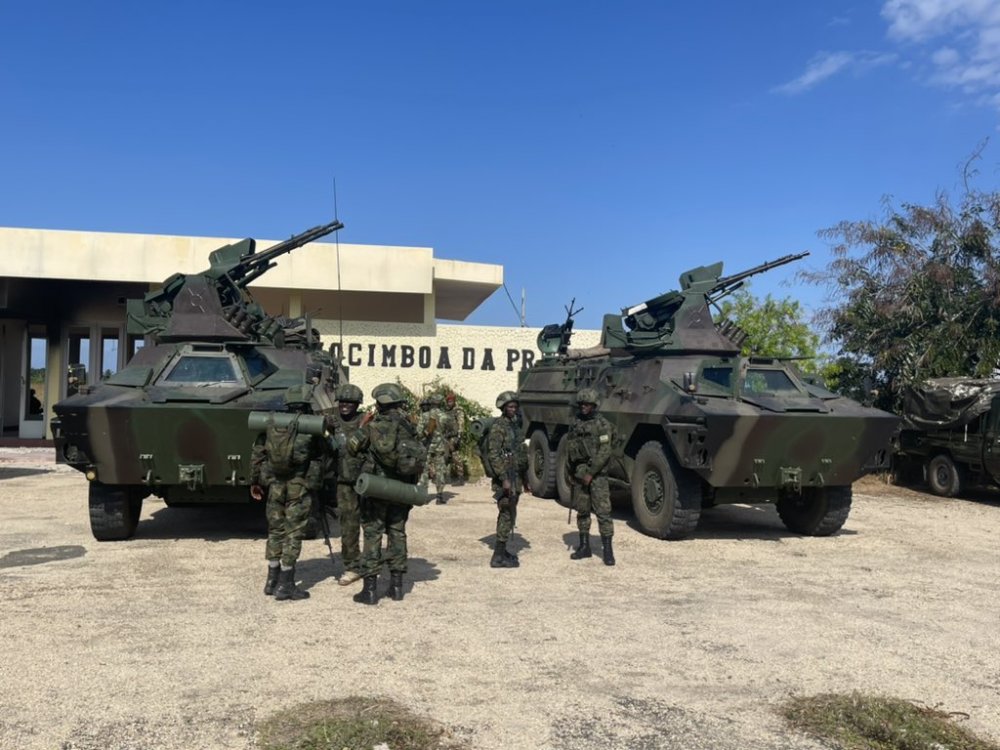
Rwandan and Mozambican troops have been jointly fighting insurgents in Cabo Delgado Province located in the north of Mozambique for one month.
Since the deployment of 1000 joint troops of the Rwanda Defence Force (RDF) and Rwanda National Police (RNP) on 9th July 2021, some of rebels’ major strongholds have been seized and handed over to Mozambican forces.
Speaking to the media after capturing Mocimboa da Praia port town that was previously a major stronghold for rebels, Maj Gen Chume attributed the victory to great collaboration with Rwanda soldiers.
“We have been working together with Rwandan troops almost a month. In the past two days, this place was a major stronghold for rebels. As you have seen today, we are here having a breath freely because it is liberated,” he said.
Maj Gen Chume has said that the progress attained in one month after launching offensive attacks is self-evident, hailed exhibited professionalism and courage of the joint forces from Rwanda and Mozambique during the fight.
“We can see the progress in one month. We started from Afungi working together, the same we did from Mueda. Now, we can say that Rwanda and Mozambique have brave soldiers because they have been fighting together. Our actions are self-evident. As you can see, we are free today,” he stated.
Despite captured strongholds, Maj Gen Chume said that the fight is ongoing because there are more regions to be liberated.
“We have Mocimboa da Praia liberated from insurgents but it is the first stage. The next step is to move forward to conduct offensives to their main strongholds to defeat them so that Cabo Delgado can be freed from terrorists. What I can say is that we are doing a good job together. Rwandan and Mozambican troops have good relations. We have been working together. That is why we are here to show Mozambique and Rwanda that we can achieve great things if we are united,” he noted.
Other main strongholds for rebels include Mbau, Siri One and Siri Two.
Maj Gen Chume explained that the time to end the war is not specific because it requires complex work and intelligence.
The joint operations between Rwandan and Mozambican troops have started yielding where different regions including Palma, Awasse, Mocímboa Da Praia, Quionga, Tete, Zambia, Maputo, Nhica Do Rovuma, Quelimane, Chinda and Mumu have been seized from rebels.
[{{Related story: Rwandan, Mozambican troops seize Mocímboa da Praia}}->https://en.igihe.com/news/article/rwandan-mozambican-troops-seize-mocimboa-da-praia]