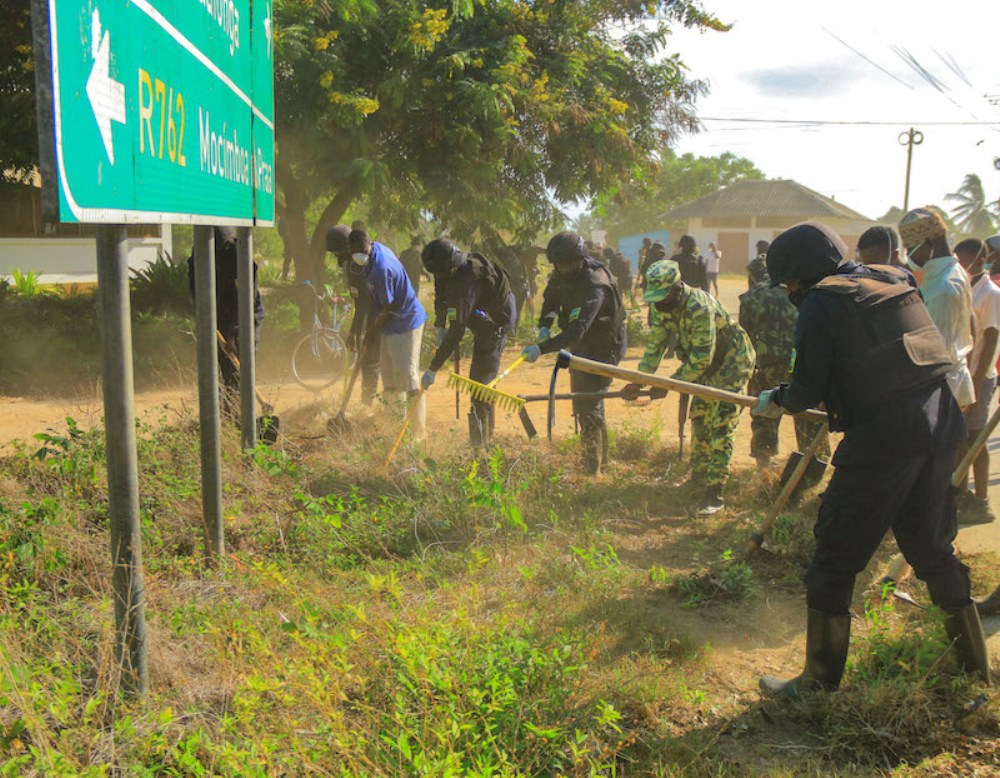
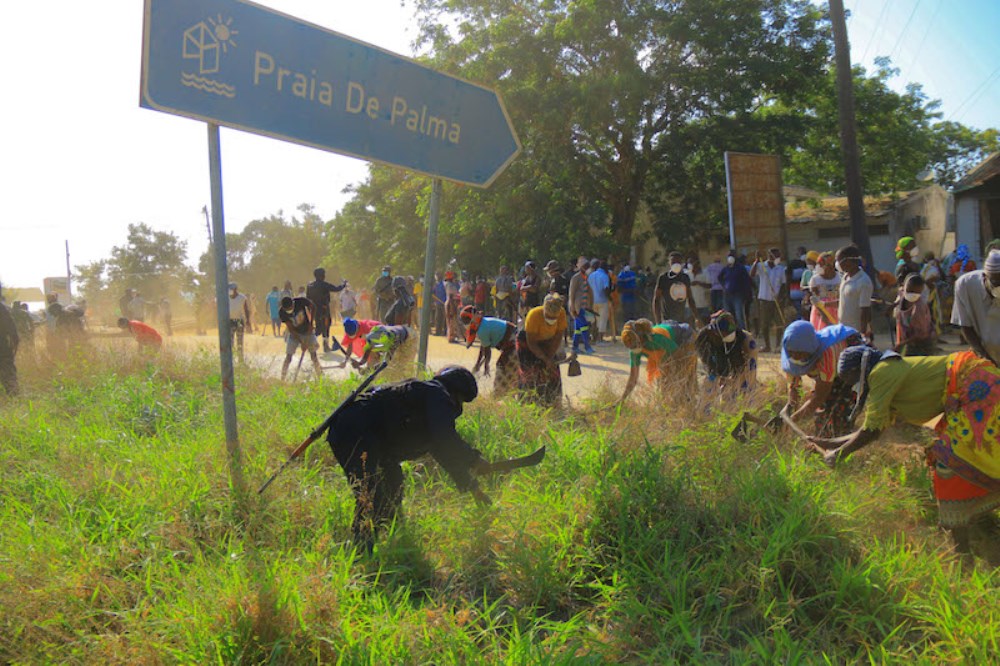
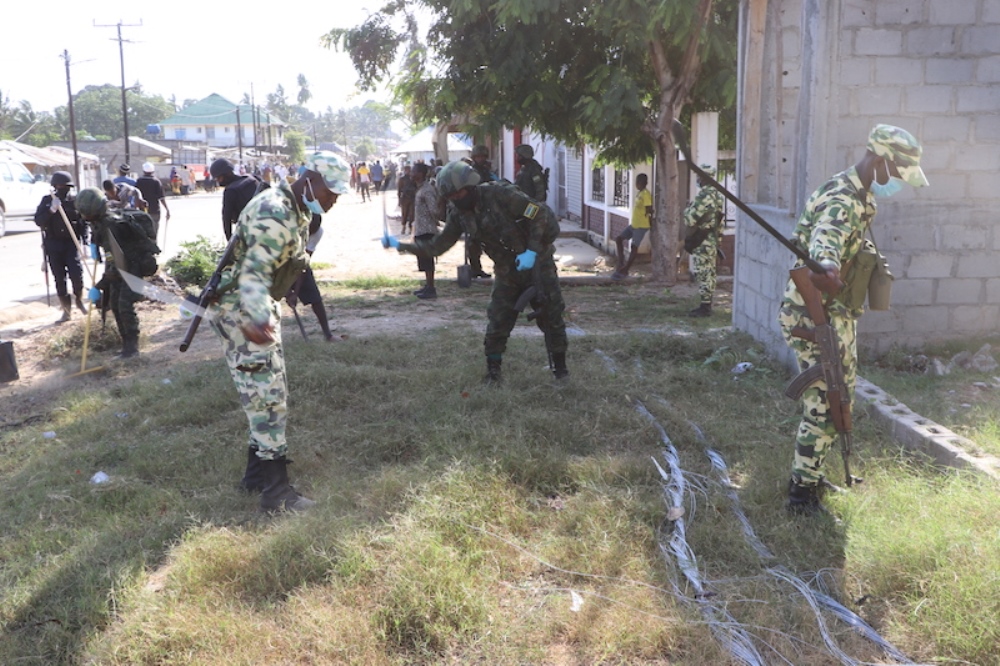
The activity held on Saturday 27th November 2021 was aimed at cleaning the streets of Palma town and enhancing the culture of working together in transforming their community. The activity was conducted jointly with the population and local authorities as well as the Mozambican National Security Organs.
The community work initiated by Rwanda Security Force (RSF) aimed at not only contributing to cleanliness of the town but also bridging the gap between the population and leadership at different levels in enhancing stabilisation efforts.
The inaugural community work attracted about 4,000 residents of Palma town. The activity was attended by the key leaders of the district including Mr. Martins Egidis Nkamate, the Director of Infrastructure in Palma District and local government representatives.
The cleaning activities covered main road, feeder roads, streets, roadside waterways along 3 kilometer stretch of Palma town.
Nkamate who spoke on behalf of the Government of Mozambique, commended the Rwanda Security Force for their support and contribution to the Peace and Security in Mozambique. He also encouraged the local population and leaders to continue participating in community work in order to rebuild and protect infrastructure in the district.
Dubbed “Human Rights and Conservation” , the module will combine social law, conservation related laws, social requirements in efficient natural resources management and protocol to be considered in appropriate land use.
Experts revel that integrating human rights principles in conservation, motivates people to engage in biodiversity conservation.
The Principle of IPRC Kitabi, Richard Nasasira has said that the module was launched drawing an inspiration from a report presented worldwide indicating that some citizens’ rights are violated during conservation efforts.
“Citizens and employees working in parks are sometimes deprived of their rights because of conservation efforts. We have often heard park employees killed [by wild animals]. It is apparent that their rights to live are deprived under such circumstances. We also heard citizens prohibited to consume products sourced from the environment and damages caused by animals in protected areas which deprive them of their rights to food sufficiency among others,” he said.
“Considering our responsibility to impart knowledge in the areas of environment conservation to ensure long-lasting impact, we were interested to introduce this module. Everyone needs a deeper understanding of related components, because conservation is a collective responsibility,” added Nasasira.
The Head of wildlife conservation department at IPRC Kitabi, Isidore Ndagijimana, said that conservation related components were already taught at the college but with no special emphasis.
“We expect to change the existing methodology of teaching related courses to receive attention they deserve because we are convinced that a student shares with parents what he/she learnt from school,” he noted.
Ndagijimana explained that practicing students will have time to enlighten communities surrounding protected areas on their rights, responsibilities and environment related laws.
Speaking to the media, students from the college expressed delight for the new module expected to impart them with deeper knowledge on how human rights and environment conservation should coexist.
“We would learn courses related to human rights in nature conservation but did not go deeper into much detail. The new module will specifically enlighten the relationship between human rights and conservation. This will help people to enjoy better livelihoods and reduce threats on biodiversity,” said Pacifique Sugira.
Aline Dufitumukiza, a finalist student at IPRC Kitabi stressed that the module comes in handy for students to perform well on the labour market in nature conservation.
The launch of new module which took place at IPRC Kigali on Thursday 25th November 2021, brought together students, government officials, representatives from organizations with interventions in conservation while others attended virtually.
Richard Muvunnyi, Head of Wildlife Veterinary Unit, Research and Monitoring at Rwanda Development Board (RDB) commended IPRC Kitabi for the efforts highlighting that it is a great milestone in conservation efforts.
He explained that maintaining equilibrium in nature conservation and human rights has a great impact to sustainable development.
The human rights and conservation module is a result of a partnership with different stakeholders including U.S Fish and Wildlife Services, USAID, US Forest Department of Agriculture, CARPE, RIFFEAC among others.
Based in Nyamagabe district, IPRC Kitabi has an advanced diploma programme in wildlife and conservation technologies.
The World Health Organization (WHO) has declared a new coronavirus variant to be “of concern” and named it Omicron.
The WHO has revealed that it has a large number of mutations, and early evidence suggested an increased reinfection risk.
It was first reported from South Africa on 24th November 2021, and has also been identified in Botswana, Belgium, Hong Kong and Israel.
Considering the severity of the new variant, different countries have banned to and from southern Africa.
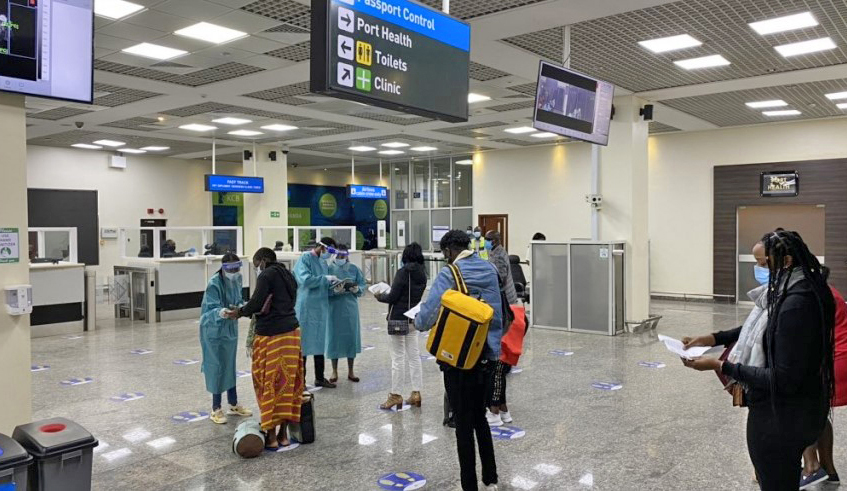
The Ministry of Health has said that the quarantine for arriving passengers takes effect from 28th November 2021.
“Following confirmation of a serious new COVID-19 variant detected in Southern Africa, the Ministry of Health is reinstating the obligatory 24-hour quarantine in designated hotels for all persons arriving into Rwanda, effective Sunday 28th November 2021 at noon,” reads the statement in part.
Rwandans have been urged to continue respecting instituted COVID-19 preventive measures including proper wearing of face masks at all times, ensuring maximum ventilation in indoor spaces (keep doors and windows open as much as possible), avoiding crowds, crowded spaces and unnecessary social gatherings, maintaining physical distance of at least one meter form others as well as washing or sanitizing hands frequently.
“These measures are being taken to limit the spread of the new variant and protect the gains Rwanda has made so far in managing COVID-19 pandemic and reopening the economy. Additional measures will be announced in the coming days,” adds the statement.
Rwanda had removed 24-hour quarantine for all arriving vaccinated passengers on 14th October 2021.
The Minister of Health, Dr. Daniel Ngamije has told RBA that the new variant spreads fast.
He revealed that Rwanda has not yet started considering the imposition of lockdown because research is underway to gather more relevant information about the variant.
So far, different countries including the United Kingdom and the Netherlands among others from Europe have banned flights South Africa, Botswana, Namibia, Zimbabwe, Eswatini and Lesotho.
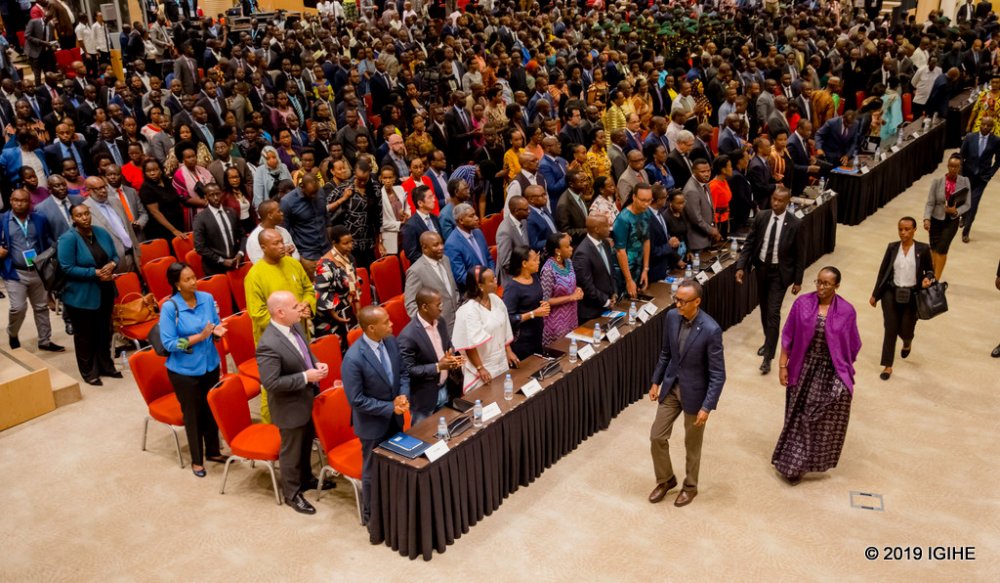
The upcoming Umushyikirano will take place from 20th to 21st December 2021 at Kigali Convention Centre.
It will bring together government officials, parliamentarians, Rwandans within the country and abroad and journalists among others.
Senior government officials are expected to sign performance contracts during the National Dialogue Council.
The 18th National Dialogue Council cancelled in 2020 was scheduled on 16th December 2020. It was cancelled by the cabinet meeting held on 14th December which also postponed all national events.
During the council, the president delivers ‘State of the Nation’ address.
Umushyikirano is Kinyarwanda’s equivalent of ‘dialogue’. During the dialogue, participants exchange ideas, share experiences, peer review and question each other. Today Umushyikirano is known as the National Dialogue Council.
As part of efforts to reconstruct Rwanda and nurture a shared national identity, the Government of Rwanda drew on aspects of Rwandan culture and traditional practices to enrich and adapt its development programs to the country’s needs and context.
The result is a set of Home Grown Solutions – culturally owned practices translated into sustainable development programs. One of these Home Grown Solutions is Umushyikirano.
Governed by the Rwandan Constitution (Article 168), Umushyikirano is a forum where participants debate issues relating to the state of the nation, the state of local government and national unity. The Office of the Prime Minister is responsible for the overall co-ordination of Umushyikirano.
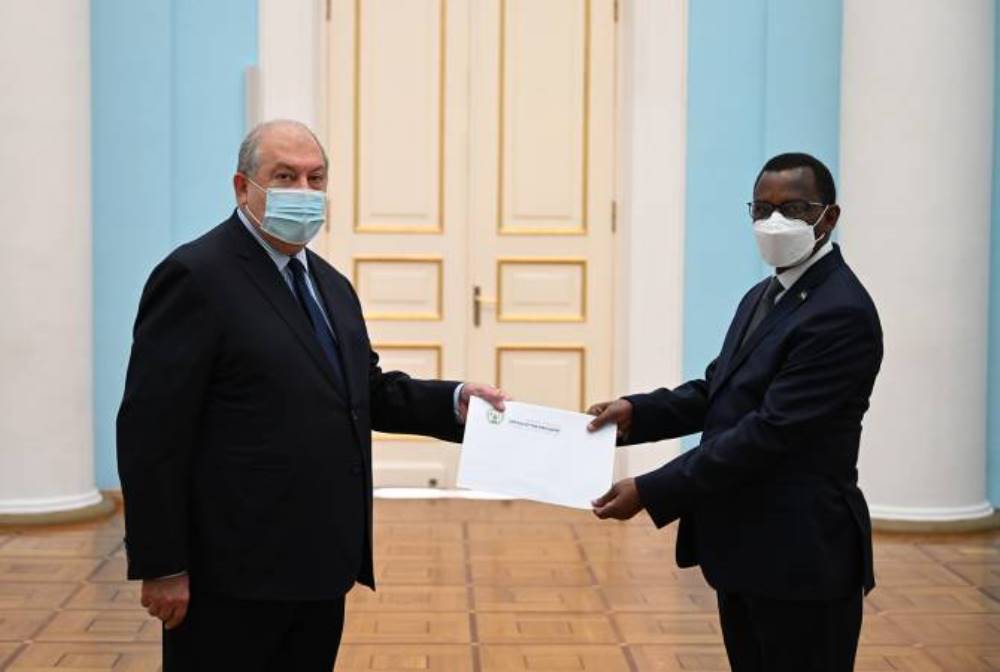
The ceremony took place on Thursday 25th November 2021 at Presidential Palace located in Yerevan, the capital of Armenia.
Amb. Kamanzi will represent Rwanda to the country with residence in Moscow, Russia.
President Sarkissian congratulated the Ambassador on appointment and wished him productive work.
The ambassador also assured that he will make all efforts to promote the relations between Rwanda and Armenia.
Sarkissian said that Armenia and Rwanda have many commonalities, a similar history, where both countries have passed through heavy challenges. He however stressed that they also have many advantages which they can turn into success.
As for the possible directions for cooperation, the Armenian President said that the two countries have coinciding interests, the achievements of Rwanda in electronic governance and new technologies are impressing, and according to him, the partnership in these areas could be promising.
Sarkissian said that he links Armenia’s future with the development of modern technologies, science and education and highlighted implementing joint innovative and research projects, as well as the cooperation in high technologies and innovations.
The suspects; Vedaste Uwimana, 25, and his spouse Jeannette Tuyishimire, 18, were arrested after defrauding a trader in a shop where they bought goods and two mobile money agents, whom they paid fake bills after depositing money on their mobile account.
According to the Eastern region Police spokesperson, Chief Inspector of Police (CIP) Hamdun Twizeyimana, the suspects were apprehended following a tip-off by the victims.
“On Thursday, November 25, Police received information almost at the same time from three different victims, who had been defrauded by the couple,” CIP Twizeyimana said.
“Uwimana had paid a fake bill of Frw5,000 at the shop located in Akabungo cell of Mugesera sector after buying sugar and body lotion.
Shortly after, another report from Nyamugari cell in the same sector indicated that Tuyishimire (wife to Uwimana) had also defrauded two mobile money agents after they deposited Rwf25,000 and 35,000 on her account and she paid them with fake bills in the denominations of Rwf5, 000,” CIP Twizeyimana added.
An operation, he added, was swiftly conducted and the suspects were arrested at their home in Gisenyi Village, Nyamugari Cell and handed over to RIB at Zaza station.
“Law enforcement organs are still working together to find out the source of the fake money and other members of the group that either counterfeit or circulate fake bills.”
Article 269 of Law No 68/2018 determining offenses and penalties in general states; any person who, fraudulently counterfeits, falsifies or alters coins or bank notes which are legal tender in Rwanda or abroad, notes issued by the Treasury with its stamp or brand, either banknotes or alike that have legal tender in Rwanda or abroad, or one who introduces or issues in Rwanda such effects or notes with knowledge that they are forged or falsified, commits an offence.
Upon conviction, he/she is liable to imprisonment for a term of not less than five years and not more than seven years.
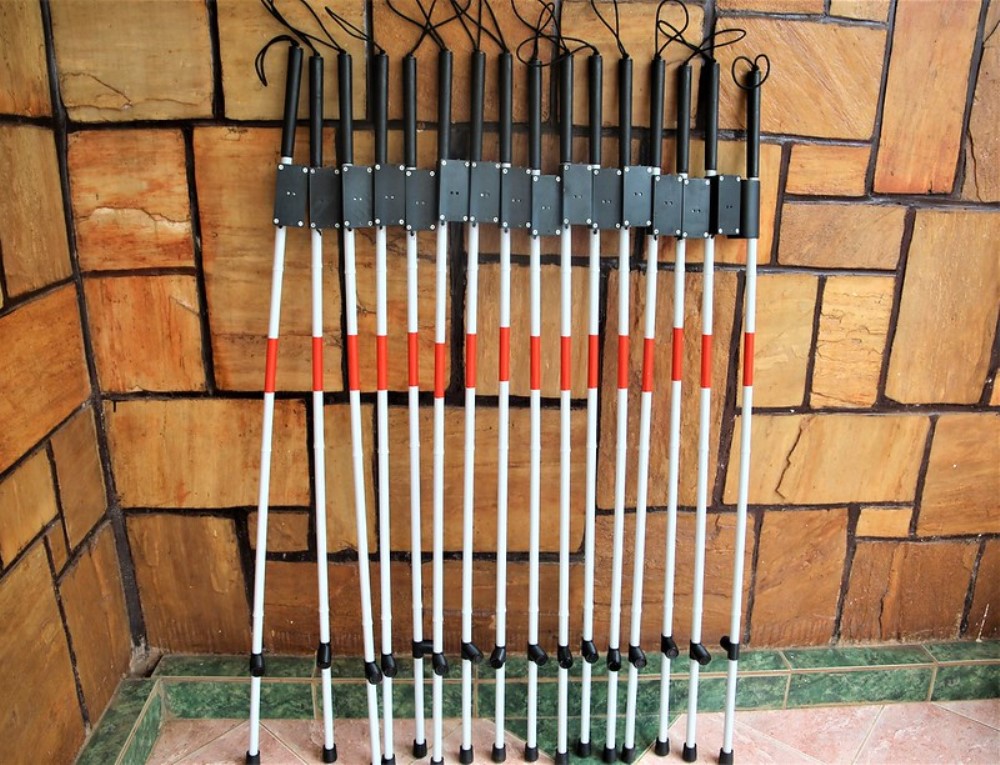
The launch of the Smart White Cane (SWC) took place at Masaka Resource Center for the Blind, where 40 locally developed ‘smart canes’ devices were handed over to persons with visual impairment.
The high-tech white cane is the first of its kind to be made in Rwanda. It uses ultrasonic ranging technology to detect obstacles in a distance of 1.2 meters and alert the user through vibrations and sound. It has sensors, which can help the user to differentiate day and night. The GPS functionality allows to identify the geographic location of the user. This feature also facilitates to track the smart white cane in case it is lost. It has reflectors that inform other road users that the cane user needs special assistance.
The process to develop the SWC was innovative. The United Nations Development Programme’s (UNDP) Rwanda Accelerator Lab partnered with Beno Holdings, a Rwandan technology company, and RUB to design the SWC.
“The Accelerator Lab organized design thinking sessions with members of Rwanda Union of the Blind and the solution provider to deeply understand the challenges and learn how visually impaired persons are trying to address the mobility issue,’ said Christa Munezero Uwamahoro, head of experimentation at UNDP Accelerator Lab
‘Based on discussions with members, they began to experiment on what features could help persons with visual impairment to move freely and safely,” she added.
During the testing, members of RUB verified and previewed the SWC at key points in its development. Their insights focused on easy operability, practicality of use, being light to carry, and waterproof.
“As someone who has both visual and hearing impairments, the digital cane will help me a lot especially that it can vibrate. Additionally, I hope drivers will now stop for me when I am crossing a road. The ordinary stick was good, but it had limitations. It didn’t have lights or vibration to alert other road users of your presence or warn you of obstacles on the road respectively,” said Jean Marie Furaha, member of Rwanda Union of the blind.
Rwanda’s SWC joins a small but growing set of adaptive technologies for persons with disability in Africa. In Rwanda, the UNDP Accelerator Lab is helping to lead the way, through their approach of sensing, exploring and testing solutions, led by people closest to the problem. The solutions and the communities they aim to help deserve our attention and support.
“Persons with visual impairment face many challenges navigating a highly visual world. In Rwanda, we now have access to assistive technology to change that,” said Maxwell Gomera, UNDP representative in Rwanda.
“Through this initiative UNDP wanted to first test if the technology can solve the challenge. The Smart stick we launched today is still a pilot project. We now want to engage our partners to see if we can bring down the cost of producing the smart cane – in order to take it to scale,” he added.
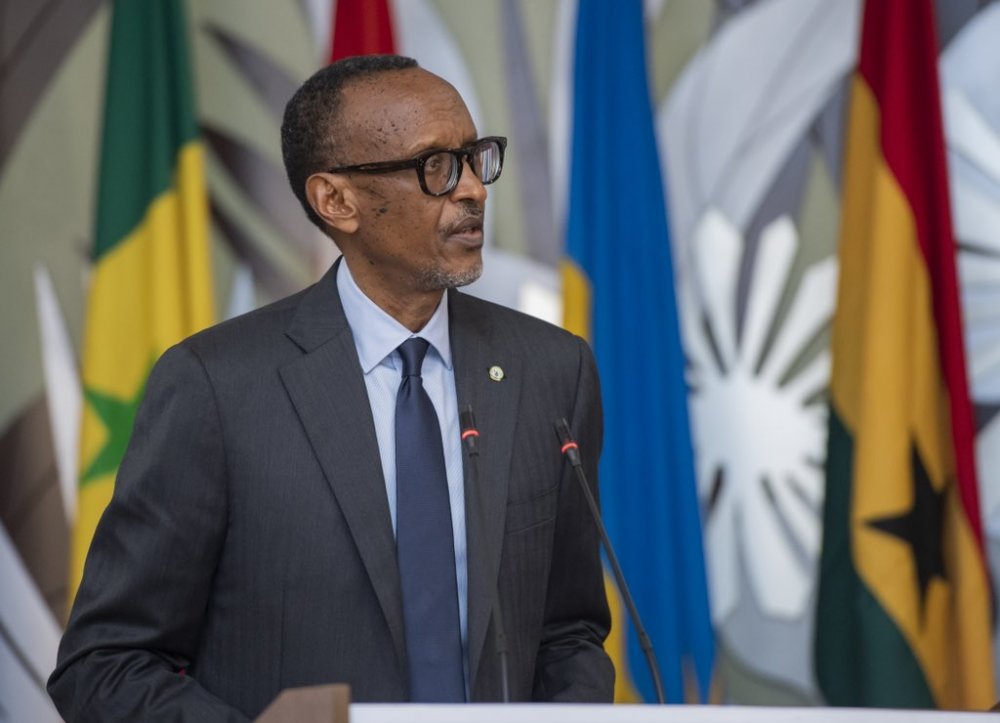
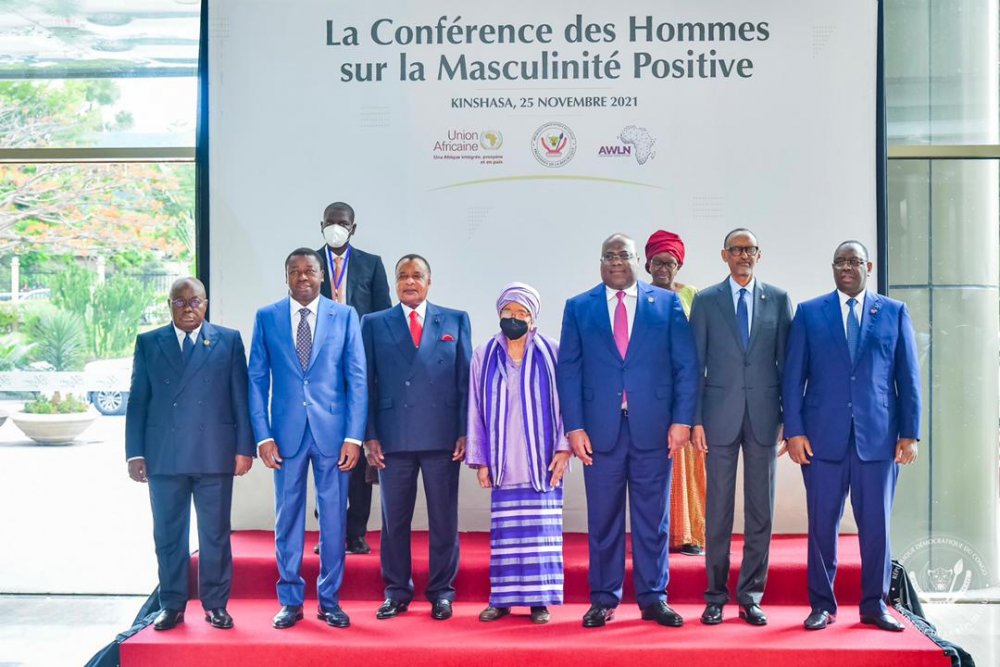
Kagame was speaking on Thursday 25th November 2021 at the men’s conference on Positive Masculinity hosted by his counterpart of the Democratic Republic of Congo (DRC) Félix Tshisekedi, the incumbent Chairperson of the African Union (AU).
The meeting coincided with the International Day for the Elimination of Violence against Women 2021.
Annual activities to celebrate 16 Days of Activism against Gender-Based Violence also kicked off the same day to be concluded on 10th December 2021 on Human Rights Day.
The men’s conference on Positive Masculinity held in Kinshasa, the capital of DRC is considered a great landmark in mobilizing African countries to actively support efforts aimed at eliminating violence against women.
It brought together Heads of State including Kagame, Nana Akufo Addo of Ghana, Macky Sall of Senegal, Denis Sassou-Nguesso of Congo Brazaville, Faure Gnassingbé of Togo and Félix Tshisekedi of RDC.
Other participating dignitaries include Ellen-Johnson Sirleaf, the patron of African Women Leaders Network (AWLN) and former President of Liberia and Moussa Faki Mahamat, the Chairperson of AU Commission among others.
As he addressed participants, Kagame emphasized that Women and girls remain vulnerable to abuse ‘despite our recognition that it is deeply wrong, and harmful to our collective development efforts’.
“There is no denying that men are generally the authors of violence against women and girls. Men have a special responsibility to speak out and take action,” he noted.
“We must act to tackle the structural impediments and deep-seated norms that fuel harmful masculinities, and cultivate instead, in the words of this conference, positive notions of masculinity,” Kagame added.
The President also emphasized that women’s empowerment should be anchored in strong legal and policy frameworks.
He pointed out an example of Rwanda’s efforts to the same cause where the country has established more than 40 Isange One Stop Centres around the country to provide protection and care to victims of gender-based violence, 24 hours a day.
Kagame further stated that it is time for countries to work together towards an African Union convention to eliminate violence against women and girls.
“Gender equality is much more than a moral obligation, it is a right which cannot be abridged. We must commit to tackling the negative mindsets in some men and boys that normalize violence against women and girls. Working together, we can end this scourge,” he said.
The meeting discussed needed actions to eliminate violence against women.
The Chairperson of AU Commission, Moussa Faki Mahamat also said that ending the scourge is a collective responsibility and called for men’s active involvement along the journey.
Ellen-Johnson Sirleaf expressed optimism that the meeting will be more productive compared to previous ones noting that Heads of State can work in their respective capacities to design impactful policies to be implemented towards the common goal.
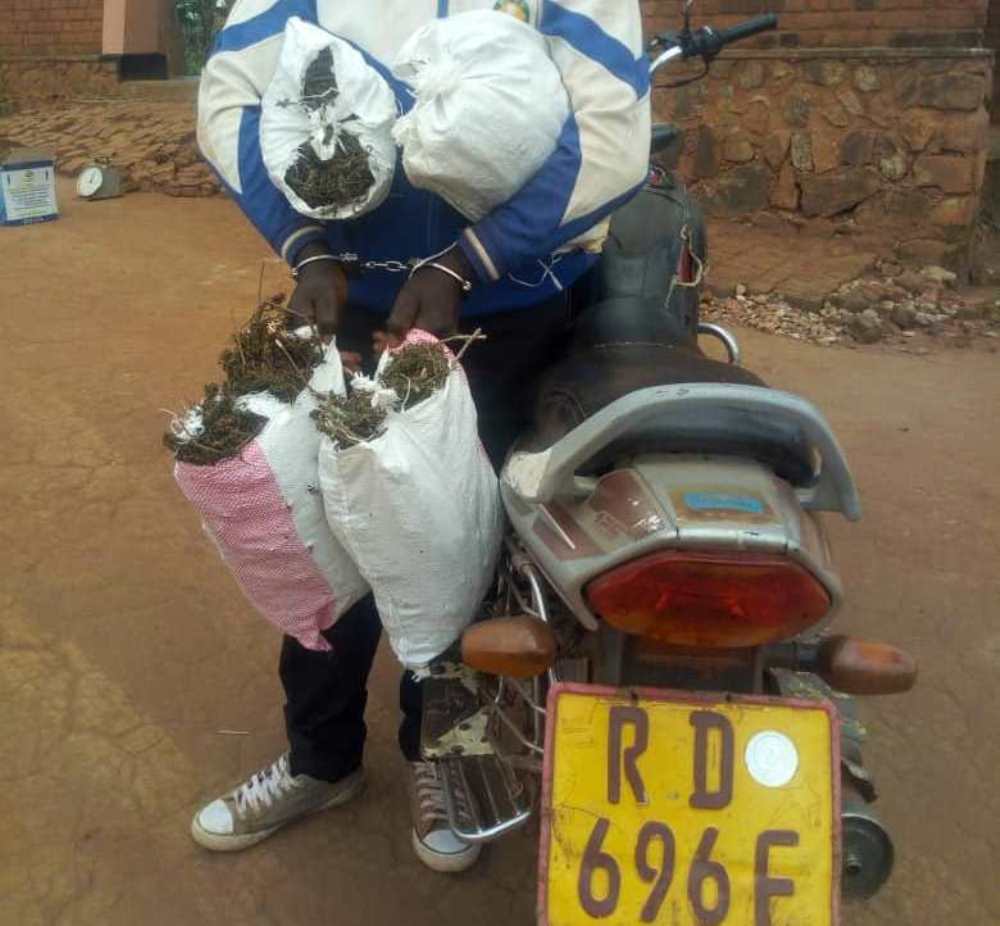
The District Police Commander (DPC) for Rulindo, Chief Inspector of Police (CIP) Pacifique Semahame Gakwisi said that Hafashimana, who was at the time transporting the narcotics on a motorcycle, was heading to City of Kigali from Burera District.
The narcotics were concealed in four small sacks.
CIP Gakwisi said that Hafashimana was reported by residents of Mugote after they got suspicious of what was in the four small sacks that he had on the motorcycle.
“On his way to Kigali, Hafashimana made a stopover in Mugote trading centre. Residents suspected him to be a drug dealer and they called the Police. The deployed officers arrived shortly, checked the luggage and confirmed the residents’ suspicions. The suspect attempted to flee but Police and residents pursued and apprehended him,” CIP Gakwisi said.
Hafashimana, who was handed over to RIB at Murambi station, is a resident of Ruhunde Sector in Burera District, where he allegedly got the narcotics and was at the time heading to Kigali to supply his customers.
CIP Gakwisi lauded the residents for the vigilance. “If you suspect someone to be engaged in criminal activities, just call the Police or other relevant authorities in the area.”
The Ministerial order nº 001/MoH/2019 of 04/03/2019_ establishing the list of narcotic drugs and their categorisation go classifies cannabis in the category of “very severe narcotics.’’
Article 263 of law No. 68/2018 of 30/08/2018 determining offenses and penalties in general states that any person, who unlawfully produces, transforms, transports, stores, gives to another or who sells narcotic drugs and psychotropic substances, commits an offence.
Upon conviction for very severe narcotics, the offender faces between 20 years and life imprisonment, and a fine of between Rwf20 million and Rwf30 million.
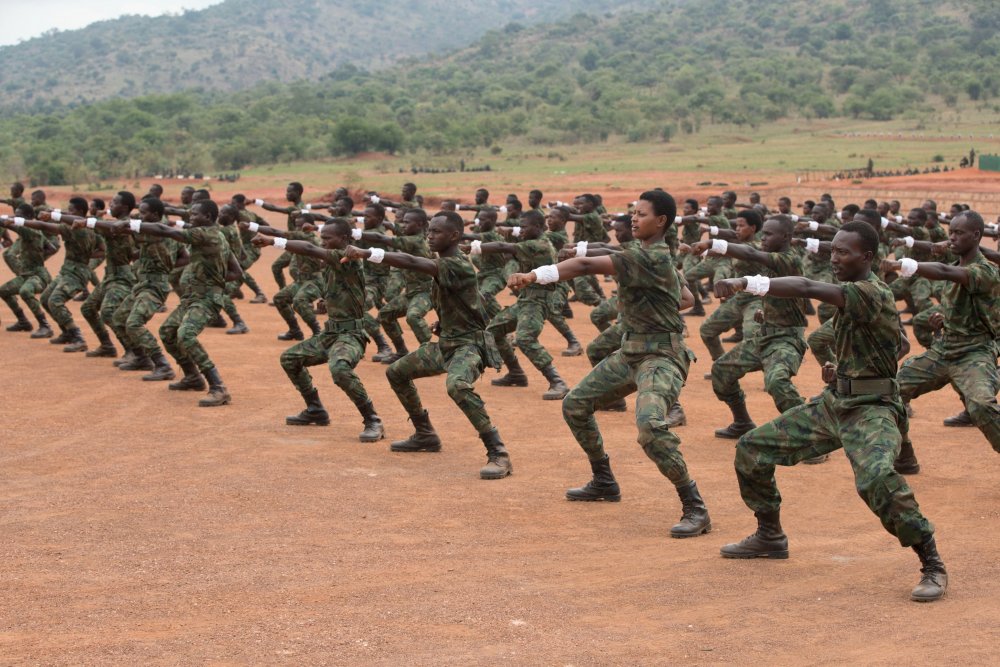
AIT is designed to enhance skills of ordinary infantry to enable them effectively perform infantry tasks while fulfilling RDF missions.
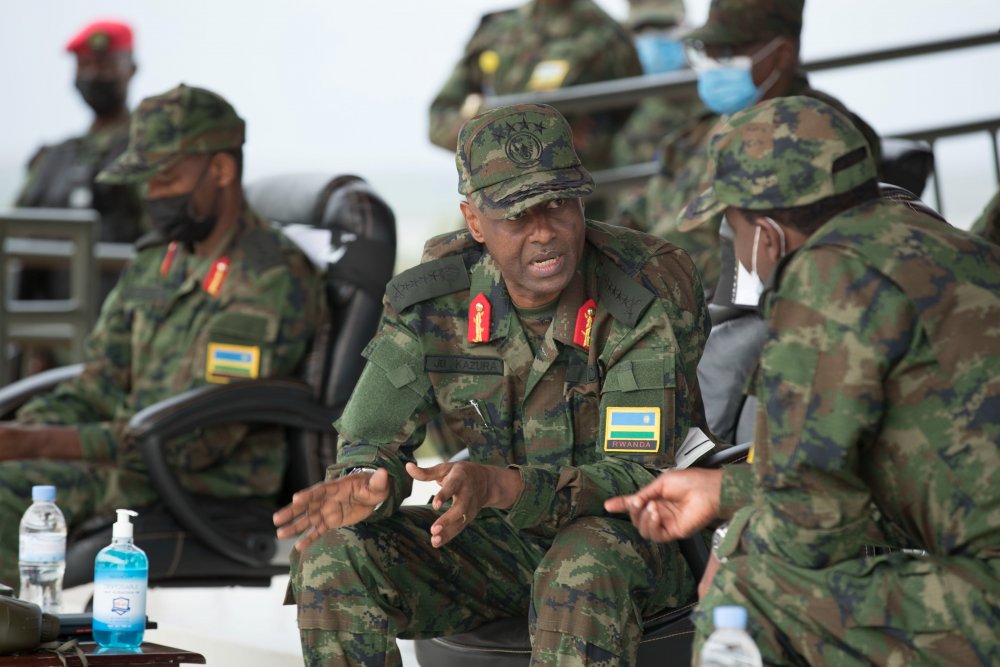
The graduation ceremony was presided over by the RDF Chief of Defence Staff, Gen Jean Bosco Kazura on behalf of the RDF Commander-In-Chief, President Paul Kagame.
Gen Kazura commended the graduates for their milestone achievement, commitment and discipline.
He also appreciated the leadership of the training centre including instructors who work day and night to build their competencies and skills to be effective leaders and soldiers in their respective roles.
The overall best officer, 2nd Lieutenant Fred Rugamba said that the knowledge acquired will help them fulfil their responsibilities.
“As a serving officer, I was able to acquire additional skills that will enable me to serve my institution and country better”, he said.