Superintendent of Police (SP) Hamdun Twizeyimana, the Police spokesperson for the Eastern region, said that four people were arrested during the separate operations, although others managed to flee back to Uganda.
“The rings were trying to sneak into the country cannabis, kanyanga and other assorted banned illicit gins, and plastic bags,” SP Twizeyimana said.
“During the operations, Police seized from the traffickers 5kgs of cannabis, over 40,000 pieces of plastic bags, 115 litres of kanyanga, 750 pieces of African gin and 83 pieces of zebra gin,” he added.
He identified those arrested as Samson Duhabwanayo, 20, who was caught with kanyanga and cartons of plastic bags, Gatanazi Felicien, 61, who was trafficking kanyanga and the duo of Ephraim Maniraguha, 24, and Suzanna Nyiramana, 40, who were also sneaking kanyanga into Rwanda.
“These are successful operations facilitated by credible information provided by the public, especially those residing on the borderline where smugglers and drug traffickers use porous entry points,” SP Twizeyimana said.
Kanyanga and other alcoholic beverages produced without complying with the set standards, are classified as simple narcotic drugs under the Ministerial order Nº 001/MoH/2019 of 04/03/2019 establishing the list of narcotic drugs and their categorisation. Cannabis is classified as a “very severe drug.”
Article 263 of law No 68/2018 of 30/08/2018 determining offenses and penalties in general, states that any person, who unlawfully produces, transforms, transports, stores, gives to another or who sells narcotic drugs and psychotropic substances, commits an offence.
Upon conviction for “very severe narcotics,” the offender faces between 20 years and life imprisonment, and a fine of up to Rwf30 million.
In case of simple drugs, the offender faces between seven and ten years and a fine of not less than Rwf5 million but not more than Rwf10 million.
The court revealed that the decision was reached on grounds of evidences provided by the Prosecution noting that Ishimwe must be remanded for the sake of fair justice awaiting trial in substance.
Ishimwe is facing three charges related to sexual abuse against some of participants of Miss Rwanda beauty pageant which he organized for long.
These include rape, soliciting or offering sexual favours, and harassment connected to sexual relations.
The court has however said that there is no evidence pinning him to this crime.
On offering sexual favours, the court said that the accusation should be maintained since the suspect does not make clear how he would induce happiness to one of girls accusing him.
The court also resolved that the allegation of harassment related to sexual favours must be maintained considering the fact that the suspect went for a trip with a girl and called her during night hours asking for sexual relations.
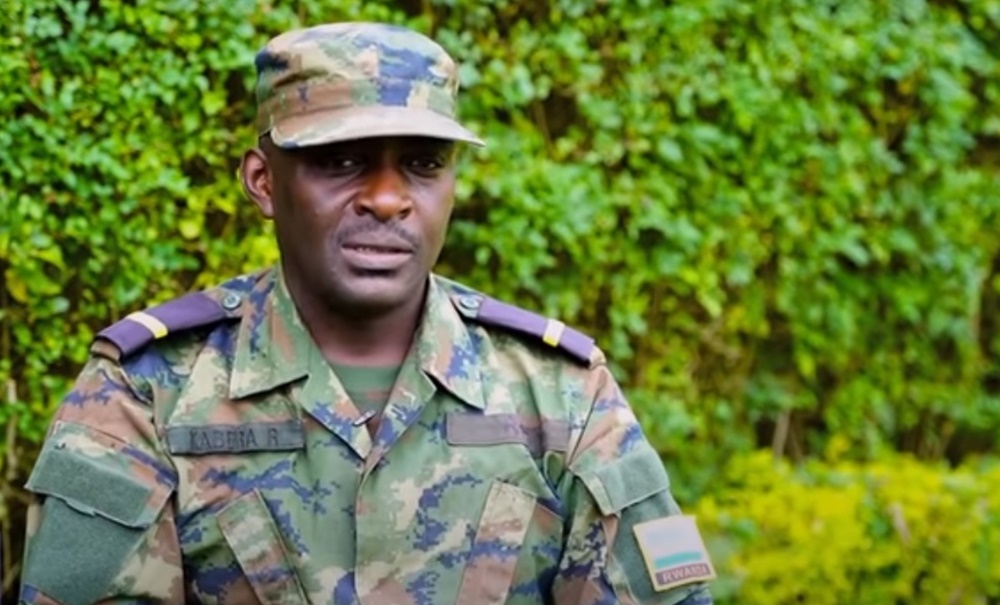
Sgt Kabera is arrested following the search to his home over suspected illegal possession of a gun.
It is said that Sgt Robert has been arrested today morning and detained in Masanafu of Kampala.
Chimpreports has reported that Robert was arrested over allegedly sneaking a gun into Uganda.
Sergeant Major Kabera Robert gained popularity for his stage name ‘Sergeant Robert’.
Before fleeing, he was part of RDF Army Military Band renowned for his song ‘Impanda’ among other songs praising Rwanda’s army.
He fled RDF towards the end of 2020. At the time, it was said that he defiled his daughter aged 15 at his home in Ndera Sector of Gasabo District on 21st November 2020 and disappeared after committing the crime.
IGIHE learnt that Robert was ill-drunk before sexually assaulting his daughter.
Sources reveal that he might be sent to Rwanda, following his arrest, to face justice.
As he arrived in Uganda, Sergeant Robert appeared in an interview with Daily Monitor, Uganda based newspaper in which he confirmed to have escaped to Uganda where he was seeking asylum.
He explained that he fled the country on 18th November along with his wife through Kagitumba peripheral border lines. The former RDF soldier narrated that he left three children and a seven-month old child.
As he left the country with the child, the suspect was obstructed by flooded footpaths and decided to leave her in Rwanda lest she drowns.
His deportation to Rwanda will further evidence collaboration between both countries and efforts to restore relations to normal.
However, it won’t be the first time both countries exchange suspected criminals.
In 2013, Rwanda arrested Namuyimbwa Shanita alias ‘Bad Black’ who had illegally crossed to its land. He was not allowed to leave his country after he was convicted of funds misappropriation.
Before both countries’ relations worsened in 2017, Uganda had received more 26 suspected criminals from Rwanda to face justice at home.
In 2020, Rwanda and Uganda signed extradition treaty to exchange criminals at the 4th Quadripartite Summit of the Heads of state of Uganda, Rwanda, Angola and the Democratic Republic of Congo aimed at mending bilateral relations held at Gatuna One Stop Border.
The extradition treaty constitutes, among others, the legal framework to handle cases of justice including those related to subversive activities practiced by either of the 2 countries’ nationals in the territory of the other party.
The treaty is of great significance as Rwanda accuses Uganda of sheltering suspected criminals and harbouring terrorist activities of rebel outfits including RNC, FDLR and RUD among others intending to threaten Rwanda’s security.
This was indicated in the the Auditor General’s report for the fiscal year 2020/2021 presented to the parliament on 12th May 2022.
WASAC was created in 2014. The Auditor General has indicated that the institution has been making losses since its creation that cumulatively stood at Rwf19.1 billion as at 30th June 2021.
Apart from losses in the management of WASAC, it is reported that the institution has unpaid debts including Rwf17.5 billion from Bank of Kigali to be repaid in 10 years.
The institution is also said to have another debt worth Rwf400 billion from the African Development Bank. The latter will be repaid in 16 years after a grace period of eight years at an interest rate of 2.5% per annum.
According to the report, this was exacerbated by the continued increase in non-revenue water from 44.1 % for the year ended 30 June 2020 to 45.6 % for the year ended 30 June 2021.
The Auditor General’s report showed that WASAC has in some instances paid the fixed cost of water at a treatment plant’s full capacity yet the consumption is below installed capacity.
From 19th January 2021 (being the service commencement date) to 31 March 2022, WASAC Ltd had incurred fixed costs amounting to US$ 3,825,232.66 (Rwf3.8 billion) for unsupplied water of 6,074,469.06 m3.
It has been also observed that WASAC’s water production reduced by 10% (on average, 6,392 m3 per day) which is related to its poor infrastructures.
Due to this reason, distributing water in districts of Kigali City is still a challenge where the institution has been devising water distribution policy from 2018 to March 2022 to the areas of Remera, Kanombe, Gikondo and Nyarugenge to address shortage.
Despite improvements in some areas, some parts of Kigali get water from one to four days per week.
According to Priority Area 5 of the National Strategy for Transformation One (NST1), the country is aiming to move towards a modern Rwandan household by increasing access to sanitation and hygiene from 87.6% in 2017 to 100% in 2024 and waste management systems were to be developed in cities, towns, and rural areas.
To support the realization of the above-mentioned objective, the Government of Rwanda acquired financing of US$ 440,442,000 for key investments from African Development Bank through Rwanda Sustainable Water Supply and Sanitation Projection (RSWSSP).
The City of Kigali has 1.3 million inhabitants but does neither have a centralized treatment facility for sewage nor a system of central sewer networks.
It has been four years since the project of setting up a sewerage system in Kigali City was designed. The Kigali Centralized Sewerage System was supposed to be completed in December 2021 at a tune of cost € 96 million as one of key investments to achieve the NST1 objective.
The completion period was extended to June 2023. However, at the time of the audit in March 2022, WASAC Ltd was still conducting the procurement process.
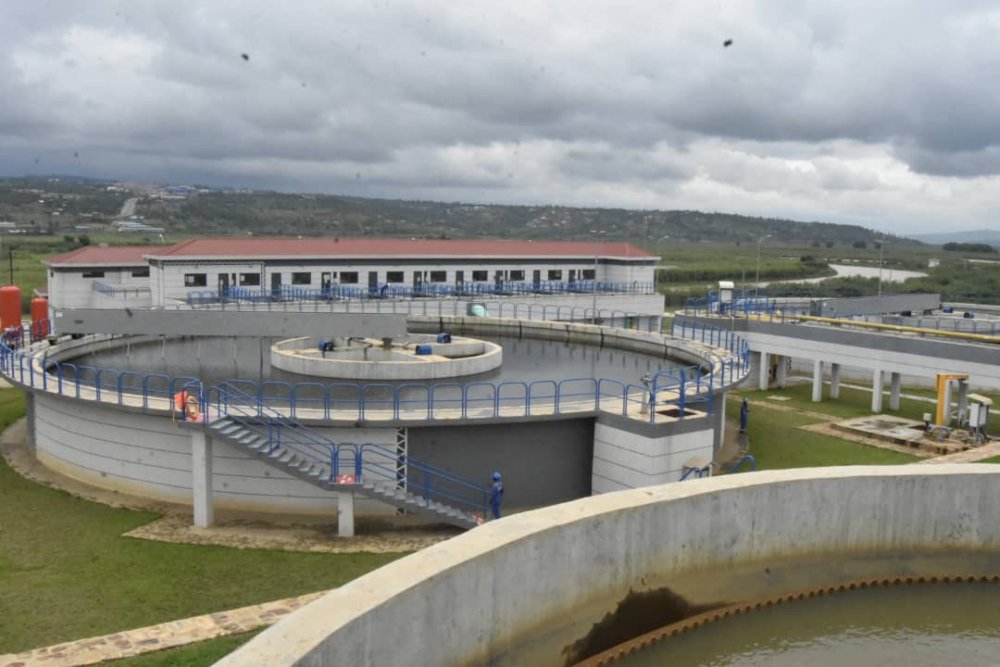
During field visits conducted in March 2022, the audit team observed that some water treatment plants were not operating. These include Cyunyu with the capacity to produce 1200 m3 per day. It was closed in 2017 due to high operating cost.
Another one is Gihengeli with the capacity to produce 3500 m3 per day. The plant does not operate during the rainy season and the infrastructure was old.
There are other plants that need to be rehabilitated with urgency to increase production capacity. These include Rwabusoro in Ngoma District and Nyamabuye in Gicumbi District.
The report also pointed out other anomalies including lack of water in Higiro-Kigembe-Mukindo water supply system along 104.3 kilometers. The system to distribute water to the districts of Gisagara and Nyaruguru was completed at a cost of Rwf3.5 billion. The issue arose five months after the infrastructure’s handover to officials.
{{Gaps in costly electronic management system}}
WASAC was created in 2014 replacing EWSA. To efficiently fulfill its duties, WASAC invested Rwf2.4 billion in a technology meant to facilitate service delivery and oversee water treatment, distribution and renovation of infrastructures.
The technology include the Oracle Enterprise Resource Planning (ERP) system used to enhance resources and projects management among others.
The institution also invested in Customer Management System (CMS), Geographical Information System (GIS) and Supervisory Control and Data Acquisition (SCADA).
The report indicated that the management of these systems are not promising to serve the purpose yet they took huge investments.
Moreover, it has been observed that there are former employees of the company who still have valid passwords granting them access to the systems which might provide loopholes for data leaks.
Among others, a total of 29,981 subscribers were reported to have water meters with similar serial numbers.
Providing false testimonies is among faced charges.
Rwanda’s penal code stipulates that providing false testimonies intentionally attracts a sentence between one year and three years and a fine between Rwf500,000 and Rwf1,000,000.
They are also accused of deviating witnesses helping the judiciary to deliver justice.The crime attracts between one year and two years jail term and a fine between Rwf500,000 and Rwf1 million.
The duo also faces the charge of producing a false statement or using forged document. If convicted, the suspects are liable to a sentence ranging from five to seven years and a fine ranging from Rwf3 million to Rwf5 million or one of these penalties.
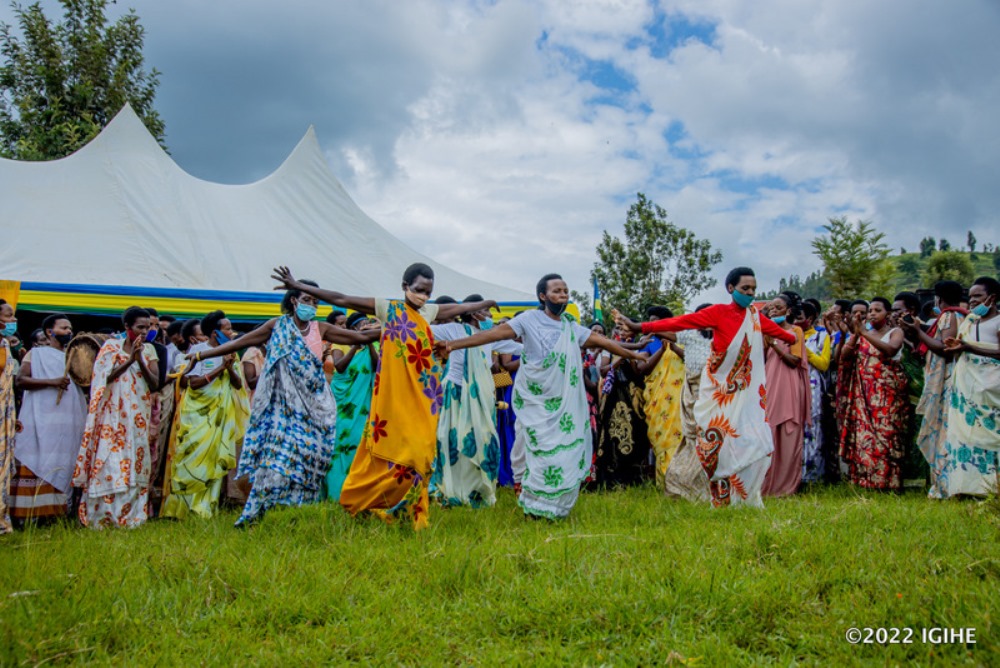
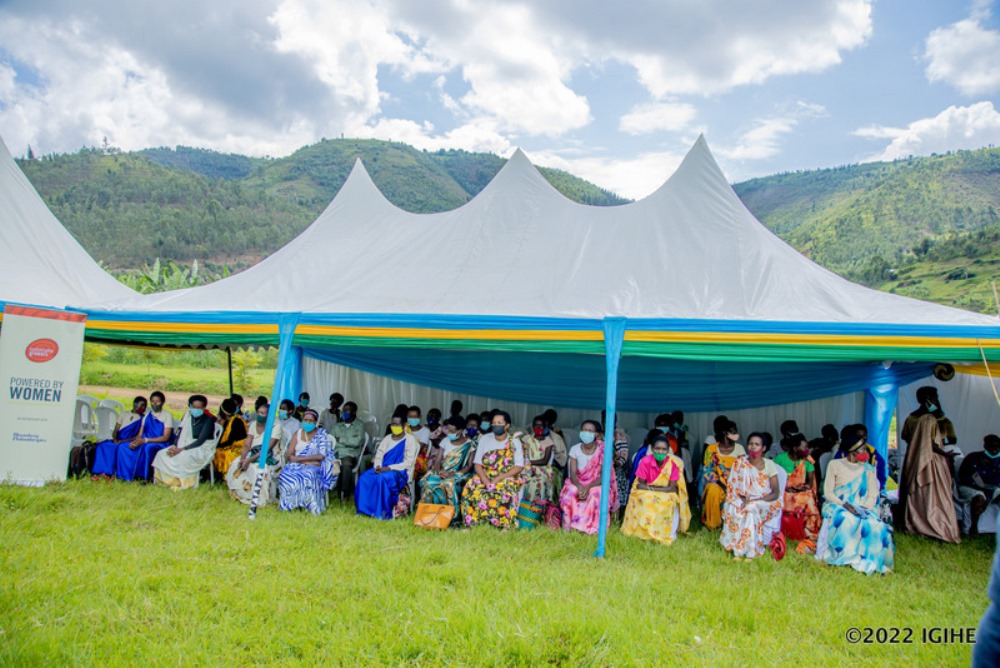
The ceremony took place at the offices of the cooperative in Rwamitembe Village, Cyamuhinda Cell, Muko Sector of Gicumbi District on 11th May 2022.
The training was organized and facilitated by Sustainable Growers Rwanda on the support of Bloomberg Philanthropies’ generous support in collaboration with the National Agricultural Export Development Board (NAEB).
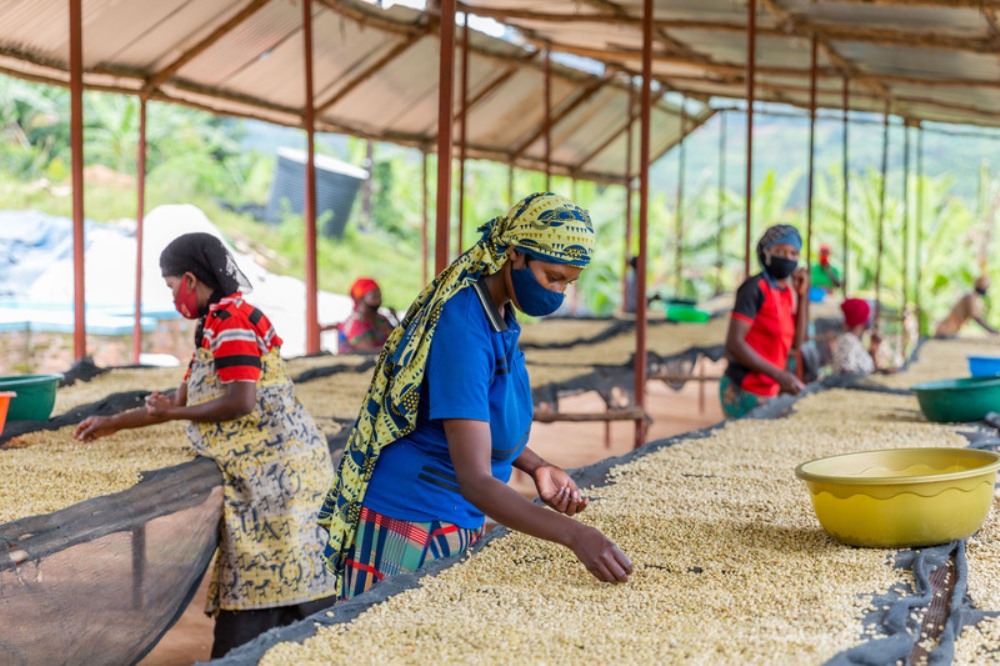
Sustainable Growers helps women coffee farmers to align their efforts with the government’s larger national goals to improve productivity, quality, and build market access for the coffee sector. The effective training, trade, and public-private partnership model promotes the economic inclusion of women farmers and their families.
Since 2014, Sustainable Growers Rwanda has worked in 13 districts and supported 77 cooperatives, 25 coffee washing stations, and 38,056 women coffee farmers, as direct beneficiaries. The farmers received training in teams of 15 led by women extension leaders.
The ceremony held recently was also attended by officials from Gicumbi District, the management of Women for Women Rwanda, Sustainable Growers and coffee farmers.
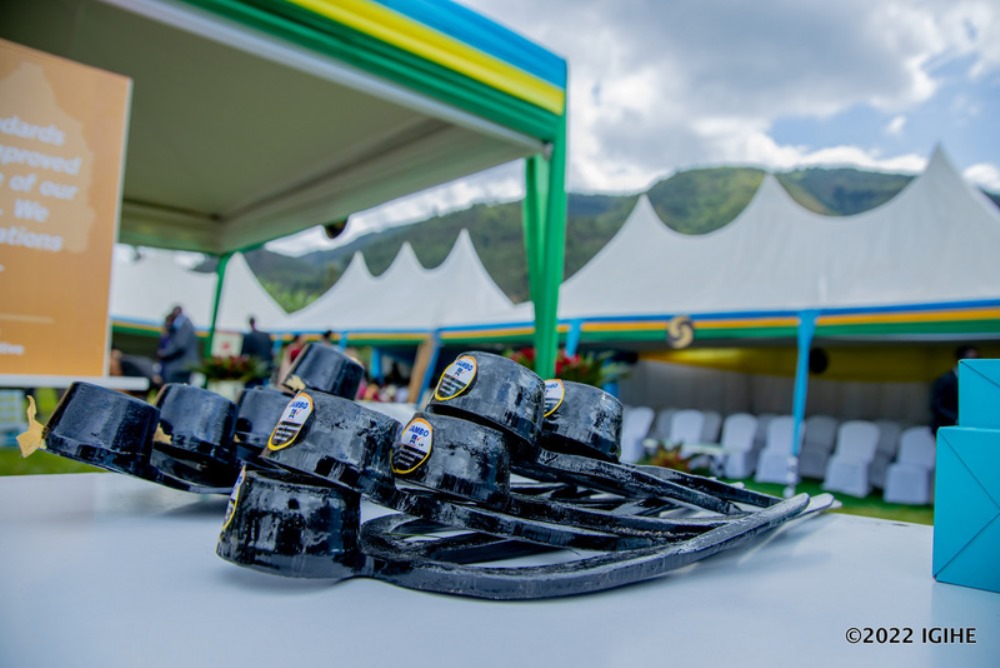
During the graduation ceremony, farmers received certificates of completion while those with outstanding efforts in best agricultural practices among others, were rewarded with different types of assets through ‘Wakoze neza Muhinzi’ program.
These include livestock (cows and goats), specific farm equipment (sprayers, pruning shears, pruning saws, hoes, fork hoes), basic home materials (mattresses, fabrics/ibitenge, radios, and phones).
The prizes include 1 cow, 167 goats, 77 mattresses, 30 hoes, 108 fork hoes, 53 radios and 131 phones among others worth Rwf18 million.
“Through our program called Premium Sharing Rewards (PSR), a program known as “Wakoze neza Muhinzi” in Kinyarwanda, we reward women coffee farmers for implementing Best Agricultural Practices “BAP” and adopting Government Initiatives such as Health Insurance, Establishing Kitchen Gardens, School Enrolment, Clean Home Latrines, and Ejo Heza.
PSR is an important pillar of our program because it is through this program that farmers are monitored and evaluated by our Monitoring and Evaluation team based on individual coffee plantations over a period of 12 months. For each of the training programs, farmers are given scores based on their performance and at the end of the year they receive a certificate of completion and incentives based on their performance as a way of motivating them”; said Mrs. Christine Condo, Sustainable Growers Executive Director.
“We have a heavy agenda to enrich women’s potential with skills and means. Their focus and discipline inspire me greatly. These initiatives impact positively on the entire life-cycle of their respective families and communities,” Mrs. Christine Condo added.
“The graduation festivities mark the accomplishment of a significant milestone by both the women coffee farmers and Sustainable Growers,” stated Lambert, the Sustainable Growers Director.
Mrs. Florence Niyomahoro, a coffee farmer and president of Mayogi Cooperative highlighted that working with Sustainable Growers has contributed to the growth of the cooperative.
“Today, the cooperative members have learned the coffee value chain from seed to cup. Not only do we have a well-managed cooperative, but our members also know all the techniques required to grow good coffee and to process different types of coffee among them Fully Washed Coffee, Honey, or Natural Processed Coffee,” said Niyomahoro.
“During harvesting time, we can cup our coffee using our cupping lab with the support from our professional Quality Control Manager as well as brewing coffee for either our guests or farmers using the coffee-making equipment that is available at the cooperative level. We have been able to do all this due to the support of Sustainable Growers. Thanks to Sustainable Growers, today our coffee can score 90+ SCAA which is categorized as presidential coffee,” concluded Niyomahoro.
The Executive Secretary of Gicumbi District, Moses Kirenga thanked Sustainable Growers for training farmers and handed over prizes.
“I thank Women for Women and Sustainable Growers for close collaboration with different institutions and promoting Rwandan woman. I also want to extend my appreciation to Rwanda’s good leadership for making these efforts possible for the interests of citizens,” he said.
Kirenga urged farmers to take advantage of received training to promote coffee as one of cash crops to grow their income.
The ceremony will continue in more districts of intervention including Gakenke, Kayonza, Nyaruguru, Rusizi and Nyamasheke until 2nd June 2022.
Wanted for his role in the 1994 Genocide against Tutsi, Mpiranya was a presidential guard commander during the Genocide.
UN prosecutors recently announced that he died in Zimbabwe where he fled years earlier, following pulmonary tuberculosis.
He was buried in a cemetery near Harare under an alias, with his family and associates carefully hiding his death.
In a statement released on Sunday, Zimbabwe has refuted media reports that it sheltered the Genocide fugitive.
“The Government of Zimbabwe wishes to clarify some recent media reports that are circulating insinuating that the Government was harbouring the most wanted Rwandese fugitive, Protais Mpiranya,” reads part of the statement.
“Contrary to a smear campaign peddled by both international mainstream media and social media seeking to portray Zimbabwe as aiding, abetting and hiding a fugitive, the government of Zimbabwe actually assisted the UN Prosecutor in the identification of Mpiranya.”
Mpiranya was indicted in 2000 by the International Criminal Tribunal for Rwanda (ICTR) on eight counts of genocide including complicity in genocide, murder, extermination, rape, persecution, other inhuman acts constituting crimes against humanity, and murder.
He was accused of killing Prime Minister Agathe Uwilingiyimana, 10 Belgian peacekeepers charged with protecting her and several prominent politicians, as well as their families and servants.
It is said that Mpiranya fled to Cameroon following the 1994 Genocide against the Tutsi.
In 1998, he returned to Zaire and joined the second Congo war siding with President Laurent-Désiré Kabila with intentions to fight Rwanda.
While in the country, Mpiranya worked with Zimbabwean troops supporting Kabila and later sought refuge in Zimbabwe where he found shelter towards the end of 2022.
Sources reveal that Zimbabwean leaders facilitated him to enter the country along with close allies.
Mpiranya run businesses including transport company carrying goods and people using two vehicles bought from minerals stolen in Congo.
His business did not succeed and according to acquaintances, he health started deteriorating due to poverty.
Mpiranya lived in a standalone villa the first year upon arrival in Zimbabwe but was later hit hard that he was obliged to share a villa with other tenants.
Investigators revealed that Mpiranya used to meet with top leaders on the rehime of President Robert Mugabe who led the country from 1987 to 2017. Mugabe died in 2019.
IRMCT revealed that Mpiranya fell critically ill suffering from pulmonary tuberculosis in 2006 where he was admitted at West End Hospital in Harare.
He died on 5th October 2006 and buried outside Harare under false names of Ndume Sambao.
IRMCT report released between 1st July 2020 and 30th August 2021 indicated that the collaboration with Zimbabwe progressed well unlike the situation at the leadership of Mugabe.
The report revealed that the country’s Prosecution increased collaboration with Zimbabwe and commended the country’s support.
The statement by Zimbabwe indicates that officials had cooperated with investigators seeking Mpiranya, setting up a joint working group, helping to finance the research, sharing investigative reports as well as summaries of interviews with suspects.
“It was the Government of Zimbabwe that authorised and participated in the exhumation of Mpiranya’s remains when it was suspected that he was the one buried under a false name, Ndume Sambao,” the statement added.
The government further said that Zimbabwe would never harbour criminals and welcomes the result of DNA samples taken from the fugitive which “closes a sad chapter in the history of Rwanda and allows the country to move on”.
The suspects were arrested red-handed mining Wolfram using traditional tools in Rukopfu stream.
The Western region Police spokesperson, Superintendent of Police (SP) Bonaventure Twizere Karekezi said that the suspects’ illegal mining practices were also affecting the environment in the area.
“Police had credible information about groups of people that conduct illegal mining activities in Rukopfu stream where they also wash and filter minerals, especially Wolfram. Police conducted an operation on Saturday and caught eleven people in the stream mining using traditional tools,” SP Karekezi said.
“We observed that these unlawful mining activities were affecting the environment, causing soil erosion but also destroying people’s fields,” he added.
The spokesperson warned against such illegal activities and urged the public to continue sharing information on these unlawful acts.
The suspects were handed over to RIB at Rubengera station for further legal process.
Article 54 of the law N° 58/2018 of 13/08/2018 on mining and quarry operations, states that; any person, who undertakes mineral or quarry exploration, exploitation, processing or trading without a licence, commits an offence.
Upon conviction, the offender is liable to imprisonment for a term of between two and six months and a fine of not less than Rwf1 million and not more than Rwf5 million or only one of these penalties.
The court also orders confiscation of any seized minerals or quarry in storage, trading or processing without a license.
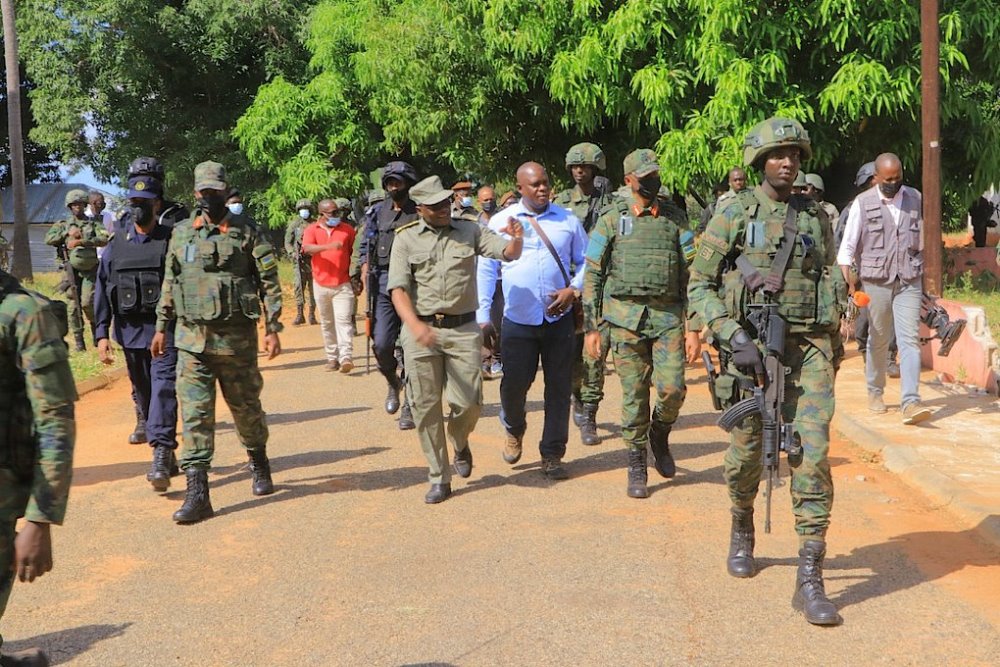
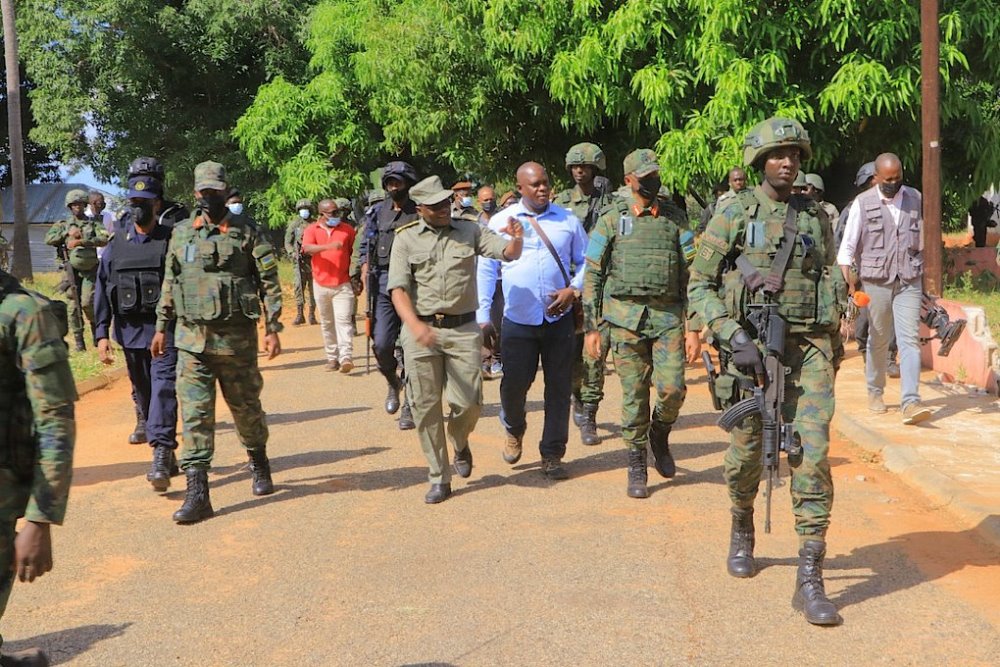
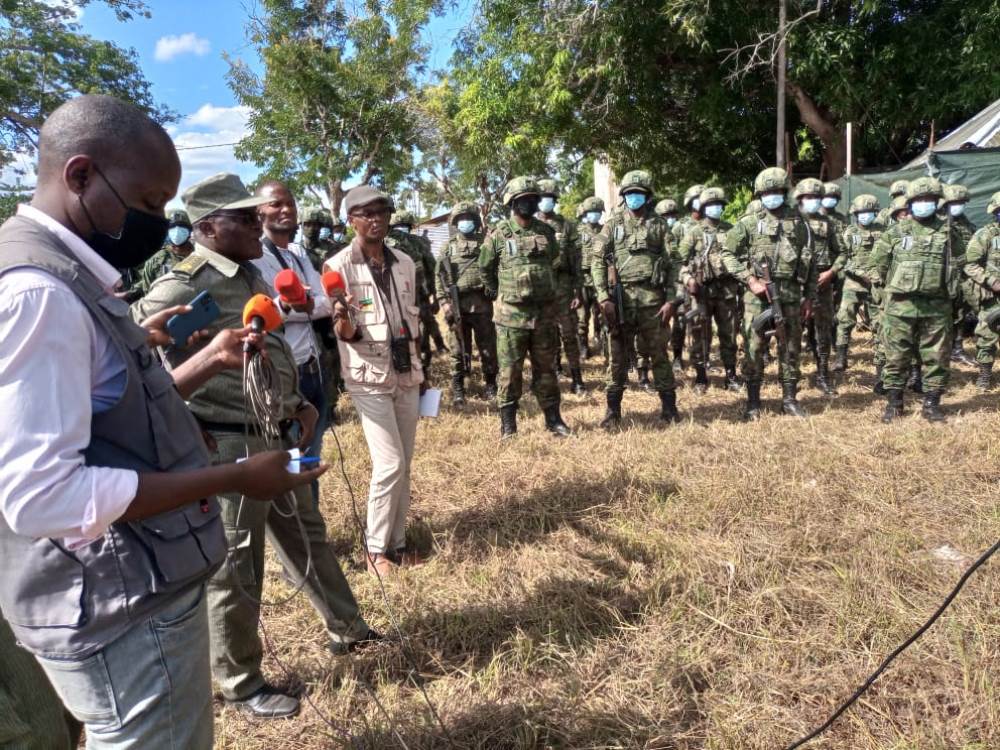
The aim of the visit was to convey a message from the President of Mozambique, Filipe Nyusi Jacinto to the people of Macomia and Rwanda Security Forces. He said that the President highly appreciated and commended the important role and contribution of RSF in bringing peace and security in Mozambique by fighting Terrorists in Cabo Delgado Province.
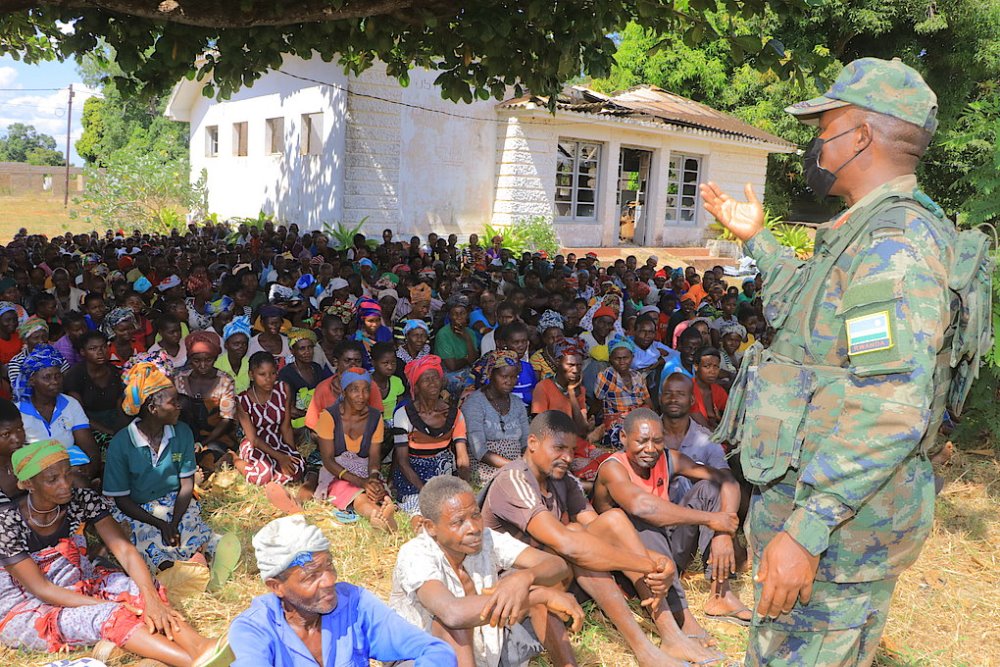
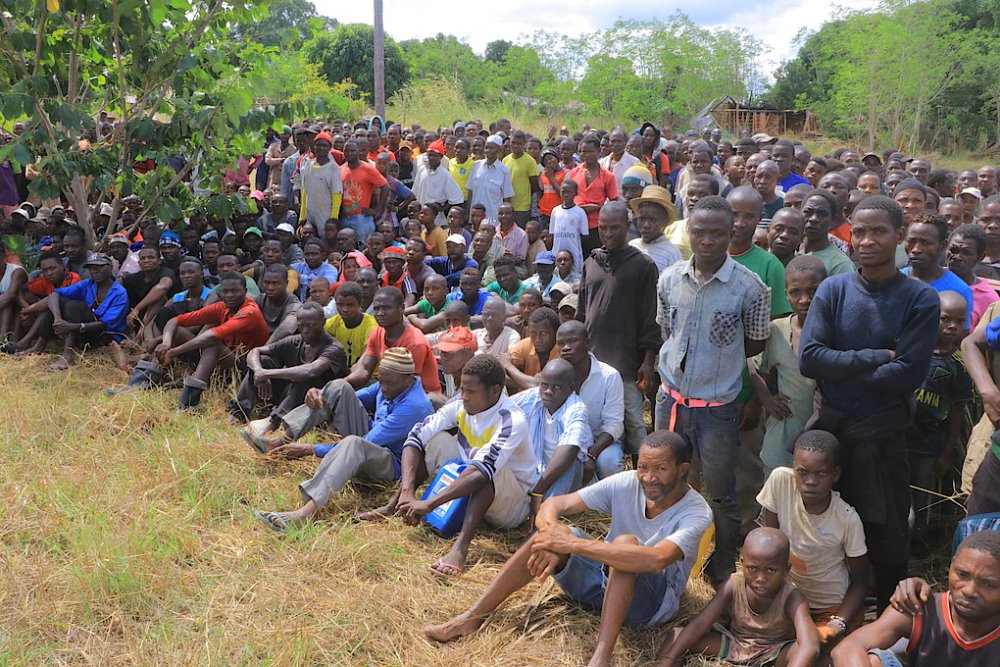
The IGP and the District Administrator met and spoke with over 800 people of Macomia district gathered at the Chai RSF HQs. These people had already been sensitized by the Rwanda Security Force to return to their homes in Chai Township where they fled 3 years ago due to terrorists’ attacks which scattered thousands to bushes.
The local population appreciated and commended RSF leaders for defeating terrorists and creating a secure environment in Chai Township for the local population to return to their homes. They also revealed that there were over 3000 people in the surroundings of Chai.
However, they said that they faced multiple problems such as lack of food and medical service. The District Administrator promised to work with International Humanitarian organizations to provide the needed humanitarian relief.
Rwanda Security Forces have been deployed in Macomia District since 30th March 2022, in Joint Operations with FADM and SADC/SAMIM against terrorists based in Chai forests. Since the operations started in Macomia, a number of local population have returned to their homes in different areas including Owasse, Diaca village and Mocimboa da Praia City.
These villages and Towns were a stronghold of IS-linked Terrorists group (Ansar Al Sunna Wa Jammah) locally known as Al Shabaab before being defeated and fleeing in disarray to Chai forest in Macomia District where they are being pursued by the Joint Forces.
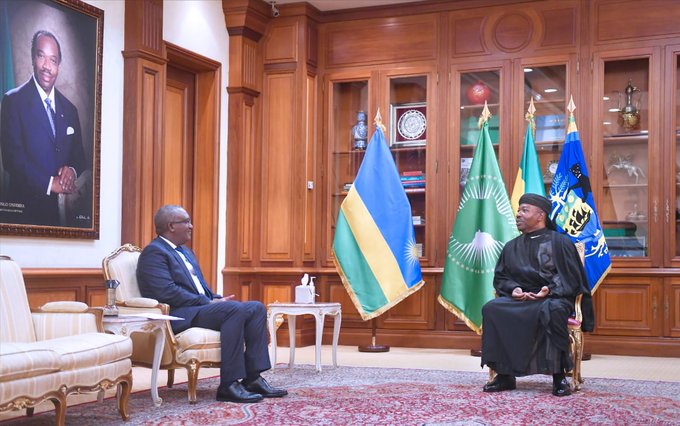
Mutsindashyaka presented letters of credence on Friday 13th May 2022. He also oversees Rwanda’s interests in other countries including Congo Brazzaville, Cameroun, and Equatorial Guinea.
President Ali Bongo Ondimba was last in Kigali in 2018. At the time, he held talks with his counterpart of Rwanda, Paul Kagame on the future of both countries’ relations.
Ali Bongo has been attending different summits in Kigali. He was also among Heads of State who attended the swearing-in of President Paul Kagame after re-election in 2017.
Rwanda and Gabon enjoy existing cooperation through air transport where RwandAir operates flights to Libreville, the capital of Gabon.
Gabon is rich in natural resources. It also has timber-rich and extensive forest resources.
Members of Rwanda’s Private Sector plan to cooperate with colleagues from Gabon to run businesses in the country to promote Made in Rwanda and create new jobs.
Rwanda and Gabon signed cooperation agreements in 1976 that were revised in 2010.