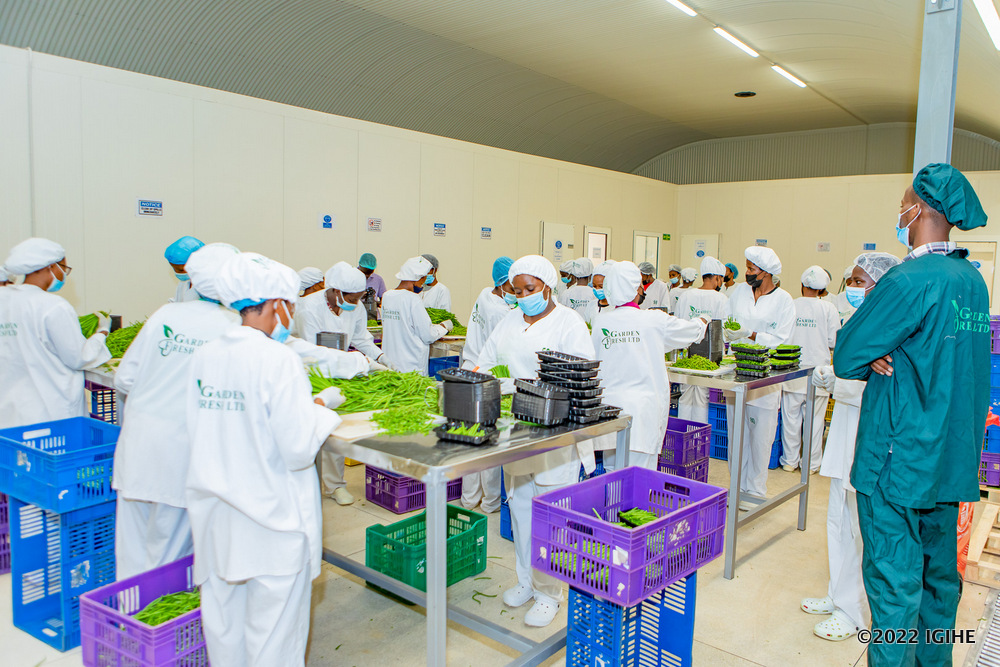
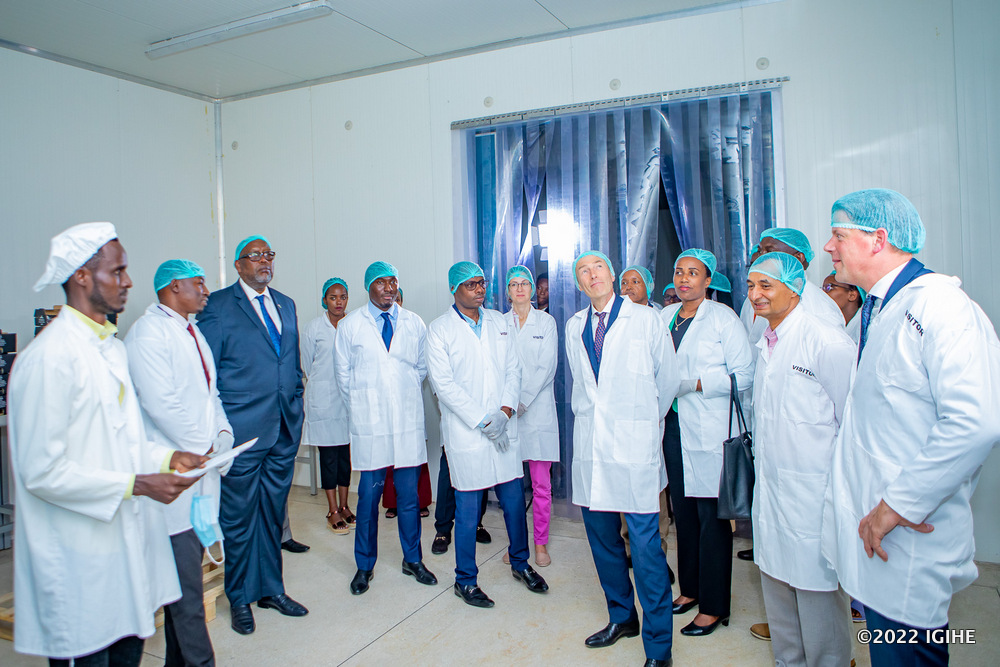
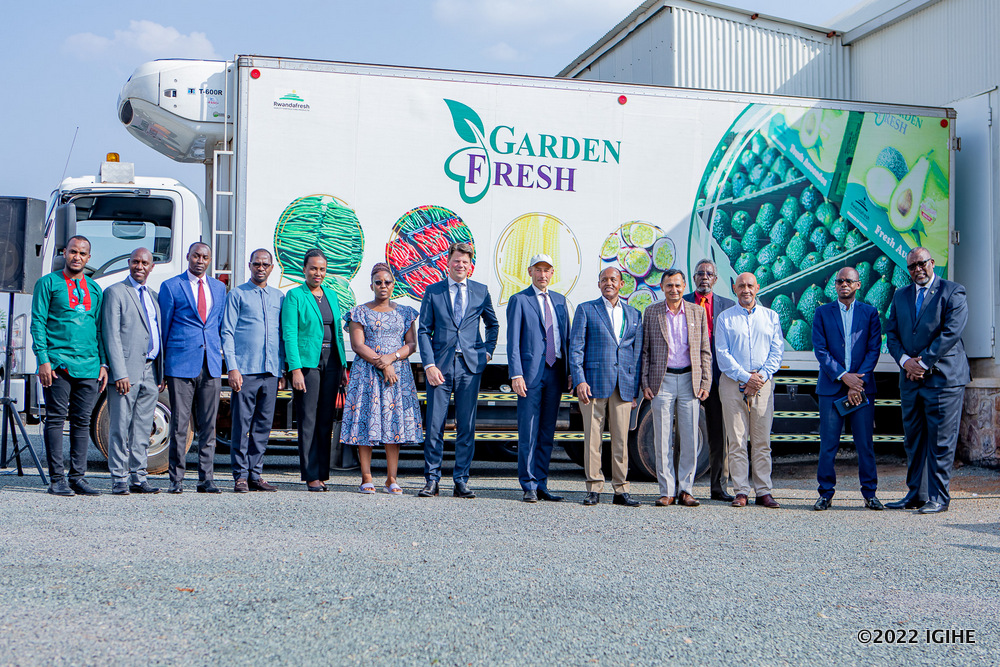
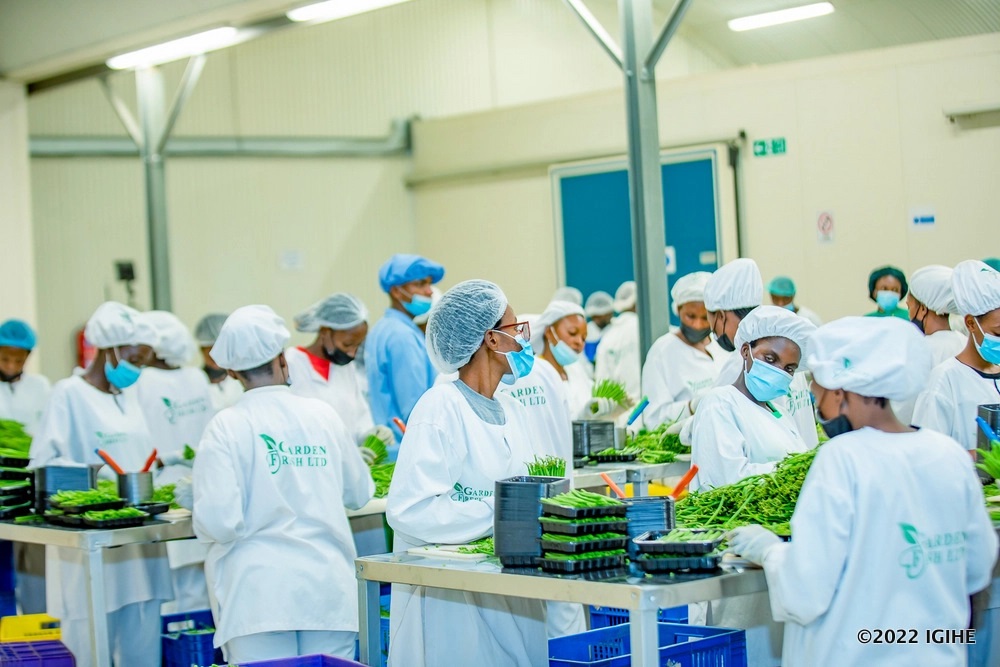
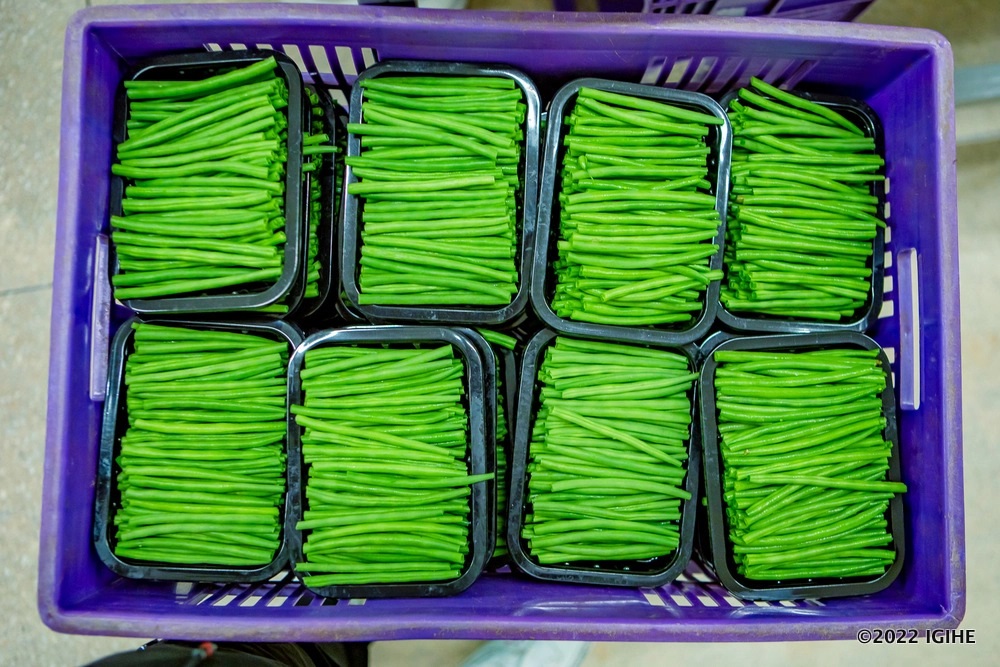
The facility build in the Special Economic Zone in Masoro sits on 600 square meters with the capacity to store between 25 to 30 tons of fresh produce.
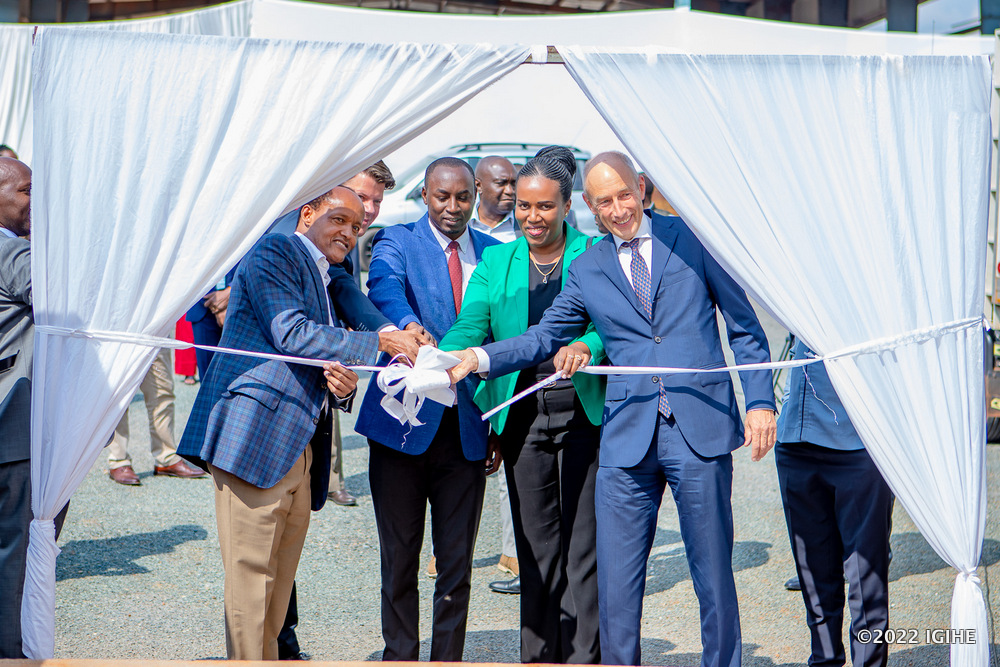
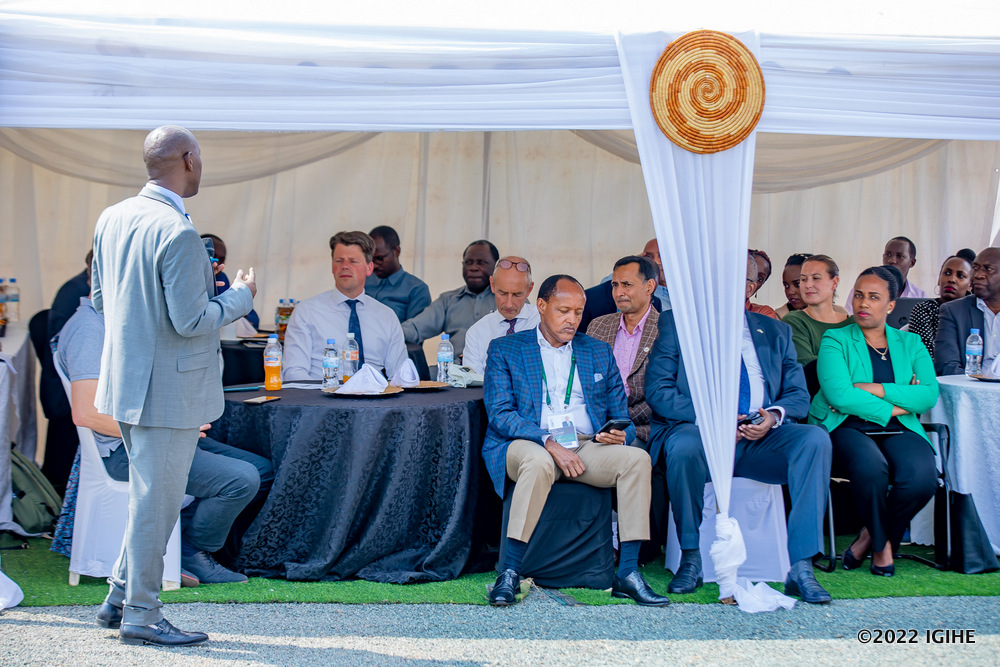
Completed at nearly US$1 million, the packhouse was recently inaugurated officially by the Netherland’s Ambassador to Rwanda, Matthijs Wolters.
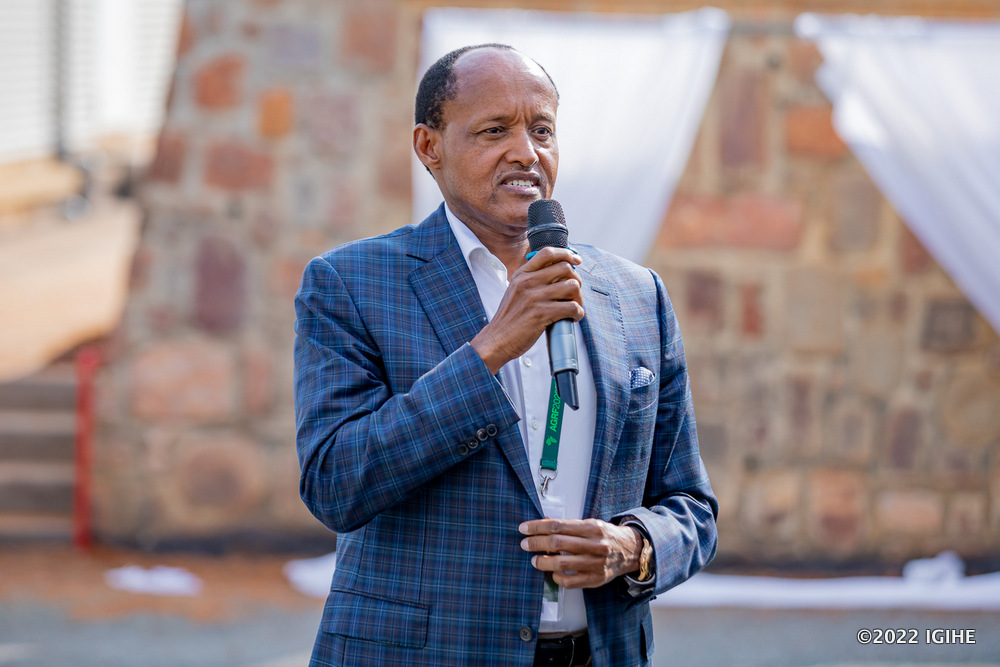
Speaking at the ceremony; Faustin Mbundu, the Chairman of Garden Fresh, Ltd said that the facility comes in handy to give relief to horticulture exporters.
“The agricultural produce is increasing. The country has had only one facility of its kind managed by the National Agricultural Export Development Board [NAEB] despite efforts to expand export markets in collaboration with partners. To continue ensuring uncompromised quality of exports, we need similar facilities meeting international standards,” he said.
The packhouse was built on the funding of the Embassy of the Netherlands to Rwanda through HortInvest project.
It is expected to boost exports as Garden Fresh will share the facility with other exporters.
GB Banjara, the HortInvest project manager said that they do not only allocate funding to such projects but also work with farmers to equip them with best farming practices to increase yields and meet international standards.
He highlighted that agricultural exports particularly delivered to markets in Europe need special packaging and handling to ensure consumers receive quality products.
Sylvie Nirere, the IDH country manager said that having such a packhouse helps to meet consumers’ satisfaction.
IDH is a non-governmental organization which focuses on empowering people within corporations, the global financial sector and governments that have the most influence over value chains.
Agriculture is among major sources of revenues where related exports generated over Rwf640 billion in the fiscal year 2021/2022 up from US$444,862,192 of the previous year.
This saw Rwanda recording a 45 percent increase in revenues from agricultural exports year owing to economic recovery measures.
Fruits and vegetables accounted for 6.7% of total agricultural export revenues 2020/2021. In 2021/2022, revenues from exported vegetables and fruits increased by 63% and 87% respectively.
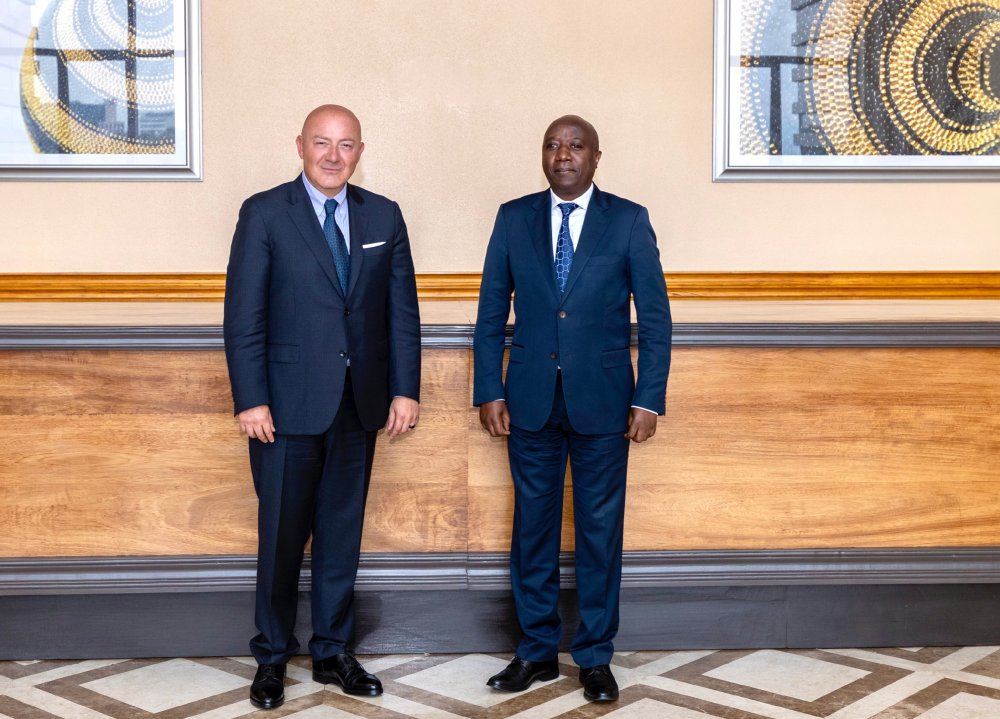
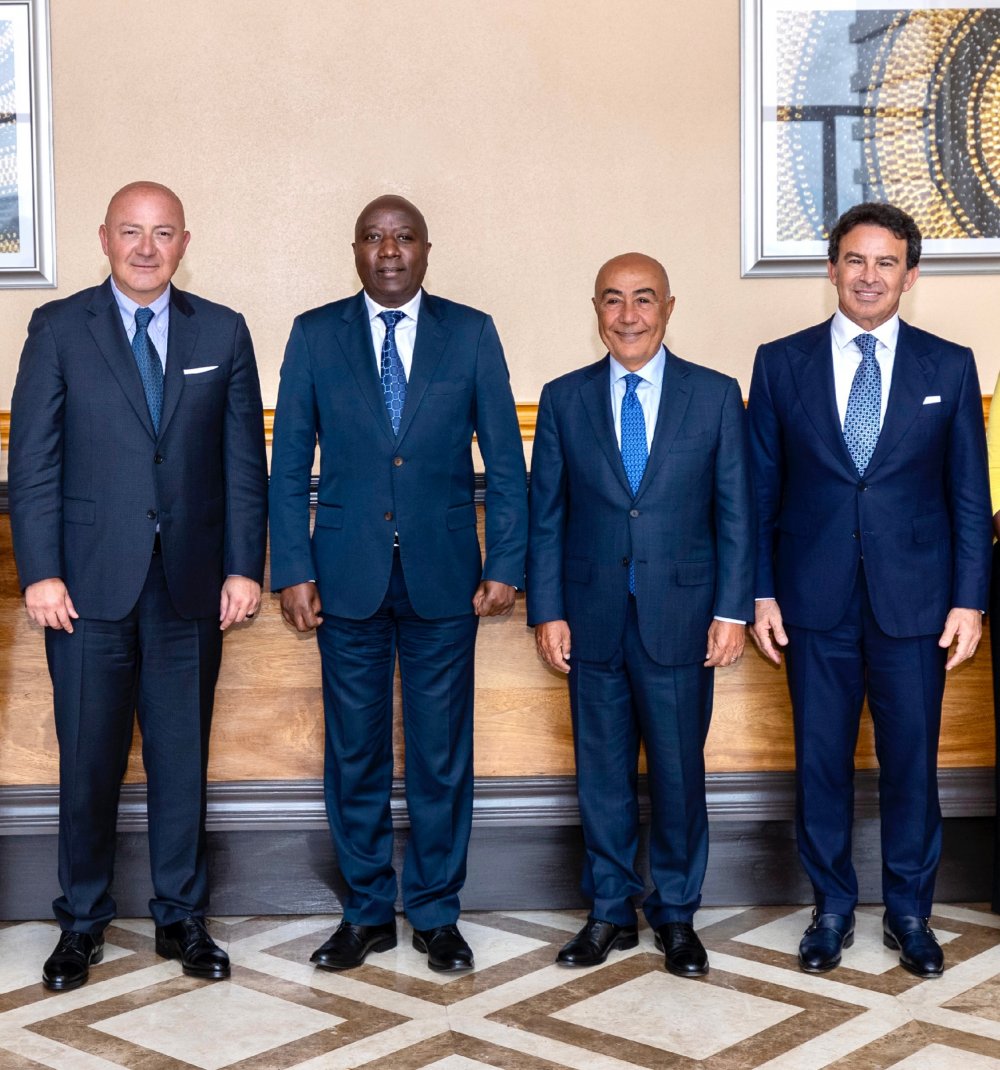
The company is expected to build a luxury wellness resort in Kigali City and Karongi District at the shores of Lake Kivu.
Şahenk has visited Rwanda four times. In March 2022, he was received by President Paul Kagame and discussed investment opportunities in various sectors including hospitality and real estate.
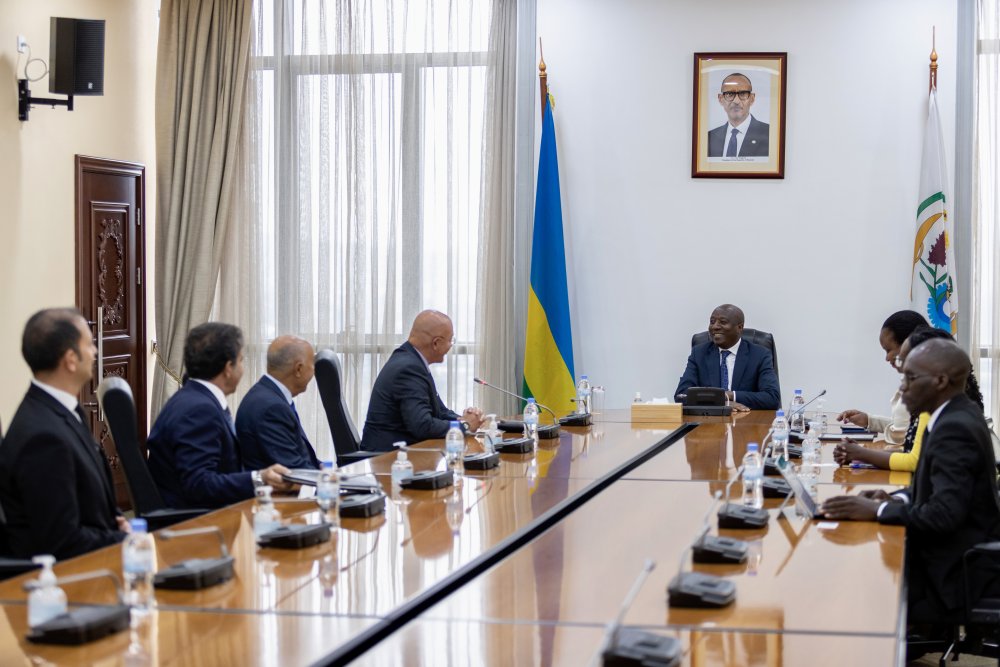
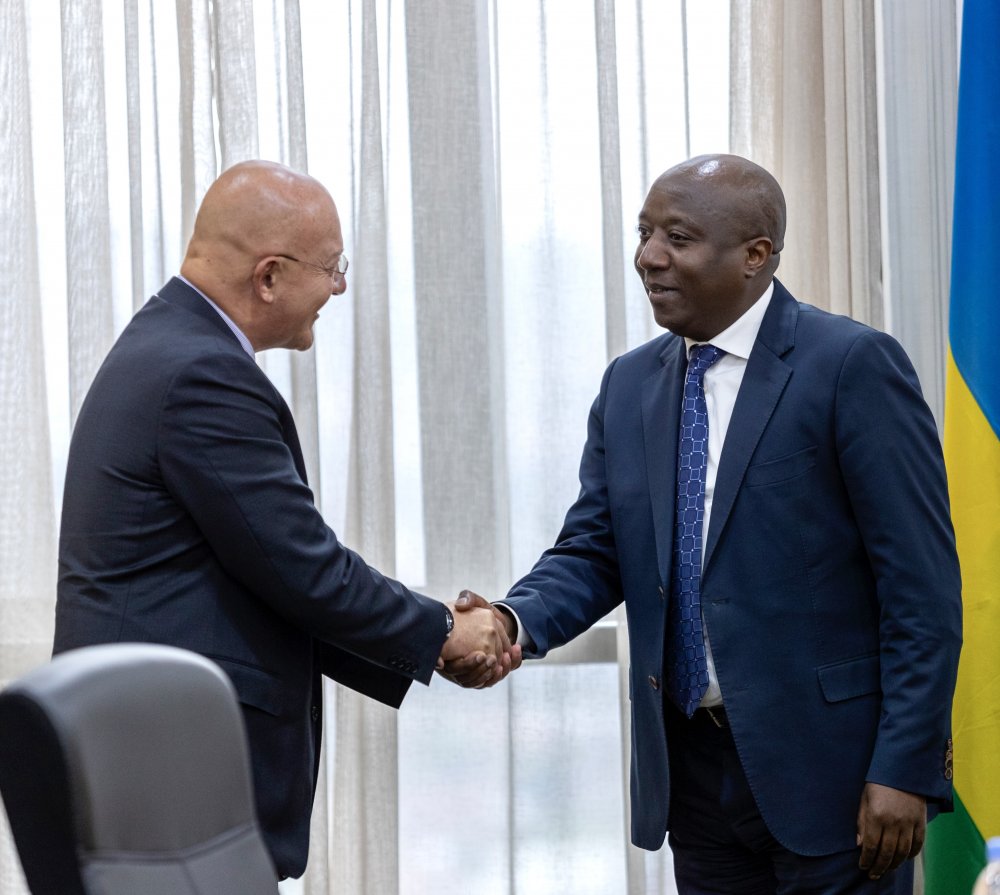
Speaking to the media after holding talks with Premier Ngirente on Tuesday 14th September 2022, Şahenk disclosed that Rwanda attracted him as a favourable investment destination.
He was accompanied by Hüsnü Akhan, the Vice Chairman of Dogus Group; Gur Cagdas, Board Member of Dogus Group and Tolga Akkas, the CEO of Dogus Construction, a subsidiary of Doğuş Group focusing on the construction of roads and residential houses among others.
“First of all, we love the people of Rwanda and the visionary leadership of the President of Rwanda is amazing. We went around Rwanda, we saw the natures, and what Rwanda is offering in the world of hospitality. We were impressed,” he said.
Şahenk explained that they have so far identified three places for investment where businesses are expected to begin in the near future.
“Our first business will be the hospitality in three locations. The first will be in Kigali, the second will be around the beautiful Lake Kivu, and hopefully the third one will be the land of gorillas [at the foothills of volcanoes National Park in Kinigi]. We believe Rwanda will be an amazing destination in coming years and we want to be among the first ones present in Rwanda,” he said.
“We believe the young generation in Rwanda, girls and boys, can be amazing in hospitality. Some of the chosen young people from Rwanda will be taken to Turkey for training in hospitality and bring them back,” added Şahenk.
He also revealed that the company considers establishing a hospitality school in Rwanda.
“Definitely, with our expansion, you can have land or building but what brings value of the brand and service is people. So, we sought an opportunity from the education ministry or ministry in charge of tourism to invest in the future of tourism and hospitality through young boys and girls,” said Şahenk.
The company has a school in the United Arab Emirates which offers training on preparation of Japanese dish known as ‘Sushi’.
Şahenk affirmed that they want to bring more investment in Africa in the area of construction noting that Rwanda is the best gateway for the company’s entry to the continent.
He stressed that the company which has been running operations for over 70 years received a positive feedback from partners welcoming the idea of investing in Africa, particularly in construction sector.
Doğuş Group is a Turkish company that begun its operations in 1951 and is currently one of the largest private companies in Turkey with a portfolio of 300 companies in six sectors namely; automotive, construction, real estate, energy, hospitality, retail and media.
The company also owns Doğuş Hospitality & Retail Group, a subsidiary which operates in the fields of hotels, events management and luxury fashion among others.
It manages over 200 restaurants and nearly 20 hotels in more than 21 countries across the world. The subsidiary also owns some of renowned hospitality icons including D-Hotels & Resorts and Mytha Hotel Anthology.
The CEO of Rwanda Development Board (RDB), Clare Akamanzi said that the investor has expressed willingness to invest in Rwanda where a good progress has been made so far.
“A company with this caliber choosing to look at Rwanda as an investment destination is very important because it shows that Rwanda is attractive to those kinds of investments.
Choosing Rwanda in the whole world signifies that there is something that we are doing, that the investment environment is doing and we should keep doing that, make it easier and even better for investors to do that in Rwanda. I look forward to the first project getting to completion,” she said.
Doğuş Group currently has operations in 29 countries, with operations in different regions such as the Middle East, North Africa, Eastern Europe and Gulf Countries.
The latter is a ground-breaking initiative between the government of Rwanda and Pfizer inc. which aims to provide patented, high-quality medicines and vaccines available in the U.S. or the European Union on a not-for-profit basis to Rwanda among 45 other lower income countries.
The shipment includes 1,500 treatment packs to treat and prevent life threatening infectious diseases, inflammatory diseases and certain cancers.
Commenting on the partnership, the Minister of Health, Dr. Daniel Ngamije described it as a commendable move expected to improve the lives of patients in Rwanda.
“In partnership with Pfizer and ‘An Accord for a Healthier World’, we are proud to provide rapid and affordable access to these Pfizer medicines and vaccines, which have the power to save and improve patient lives all across Rwanda,” he observed.
Minister Ngamije added: “Working together, we are greatly reducing the health inequities that exist between many lower-income countries and the rest of the world.”
As part of the Accord, the Ministry of Health and Pfizer are also providing professional healthcare education and training, exploring partnerships to support Rwandan medical specialists, diagnostic enhancements and the establishment of a telemedicine consultation platform to connect healthcare professionals in Rwanda with experts around the world.
“Everyone, no matter where they live or their income level, should have access to life-saving medicines and vaccines. This delivery is an important milestone on our journey toward closing the health equity gap,” said Patrick van der Loo, Regional President Africa Middle East, Pfizer.
“But this shipment supply is only a first step. We look forward to working in close collaboration with healthcare officials in Rwanda to help get these medicines and vaccines to patients and communities where they are needed most,” he added.
Rwanda is the first of the Accord countries to receive products through the initiative.
Early insights from initial Accord countries, which also include Ghana, Malawi, Senegal and Uganda, will be shared across all 45 Accord countries to support sustainable access and improved health systems.
{{About An Accord for a Healthier World}}
An Accord for a Healthier World aims to provide all of Pfizer’s patented, high-quality medicines and vaccines available in the U.S. or the European Union on a not-for-profit basis to 1.2 billion people in 45 lower-income countries.
The Accord countries include all 27 low-income countries as well as 18 lower-middle-income countries that have transitioned from low to lower-middle-income classification in the last ten years. Pfizer is working with healthcare officials in Rwanda, Ghana, Malawi, Senegal and Uganda to identify early insights and opportunities to ensure all medicines and vaccines can reach those in need.
This will include expertise to support diagnosis, healthcare professional education and training along with supply chain management and other infrastructure enhancements. Learnings from these five countries will be applied to support the roll out for the remaining forty countries.
Pfizer will also collaborate with Accord participants to identify quick and efficient regulatory pathways and procurement processes to reduce the longer amount of time it can take to make new medicines and vaccines available in these countries.
UN Secretary-General Antonio Guterres, in his opening remarks, called for solidarity among member states to address common challenges.
The many challenges that defined the 76th session of the General Assembly are still very much around as the new session starts, he said. “We face a world in peril across our work to advance peace, human rights and sustainable development, from conflicts and climate change to a broken global financial system that is failing developing countries, to poverty, inequality and hunger, to divisions and mistrust.”
“Addressing common challenges will require continued solidarity as we demonstrate the great promise and potential of this organization,” he added.
The United Nations is the home of cooperation. And the General Assembly is the life within that home. The months ahead will continue testing the strength and durability of the multilateral system this organization represents, he told delegates. “And the world is looking to the members of the assembly to use all of the tools at your disposal to negotiate and forge consensus and solutions: debate, deliberation, diplomacy. These eternal tools represent the best pathway to a better, more peaceful world.”
In his opening remarks, Korosi called for solutions through solidarity, sustainability, and science.
The only way to achieve better outcomes is to transform, he said. “The contours of the transformation we need are already known. The 2030 Agenda for Sustainable Development, the Sendai Framework (for disaster risk reduction), the Paris Agreement (on climate change), and Our Common Agenda (proposed by UN Secretary-General Antonio Guterres ), all point us in the right direction. What remains to be seen is whether we will deliver.”
The world is looking to the United Nations for answers. As the world body’s chief deliberative body, the General Assembly bears a special responsibility, he said.
“Having begun my tenure as president, I aim to harness the great talents of this community of member states in forging the systemic solutions needed to transform our world. In accepting this privilege, I vowed to serve as an agent of multilateralism, multiculturalism, and multilingualism,” said the president. “I pledge that impartiality would be the hallmark of our operation. My team and I will do our best to push for ‘Solutions Through Solidarity, Sustainability and Science,’ the motto I’ve chosen for this presidency.”
He vowed to stand firm on the principles of the UN Charter, which brought member states together 77 years ago and hold them together today.
“Encoded in international law, they (the principles of the UN Charter) provide us with a solid foundation from which to build. From here, I wish to pursue integrated approaches and enhance the role of science in our decision-shaping. I will work to foster measurable progress in the sustainability transformation and cultivate solidarity we need to achieve breakthroughs or to avert further crises and disasters,” he said.
He promised to engage closely with the Security Council, the Economic and Social Council, and other relevant UN bodies to further the critical revitalization process, and pursue the ongoing key reforms led by Guterres to make the General Assembly and the United Nations as a whole fit-for-purpose.
The United Nations was created out of the ashes of war and destruction, with the intention of being a well of solutions, said Korosi. “Responding to humanity’s most pressing challenges demands that we work together and that we reinvigorate inclusive, networked and effective multilateralism, and focus on what unites us. It is our mission to come together when there are disagreements, and to build bridges when there are deep divides,” he said.
“This (General Assembly) hall was created as a place to build trust, to bring about peace and security, development, and human rights. We owe it to our 8 billion constituents — the people we are here to serve — to succeed in our aims,” he said.
Korosi was sworn in on Monday at the closing of the 76th session of the General Assembly.
Apart from the General Debate, the high-level week will also see a high-level meeting to mark the 30th anniversary of the adoption of the Declaration on the Rights of Persons Belonging to National or Ethnic, Religious and Linguistic Minorities on Sept. 21, and a high-level meeting to commemorate and promote the International Day for the Total Elimination of Nuclear Weapons on Sept. 26.
On Monday, Sept. 19, two high-level events convened by UN Secretary-General Guterres — the Transforming Education Summit and the Sustainable Development Goals Moment — will be held.
The start of the high-level week coincides with the planned funeral of British Queen Elizabeth II, which is scheduled for Monday.
A UN spokesman said he does not anticipate any changes in the schedule of the UN meetings even though many world leaders will be in London on Monday for the funeral.
“There may be impact on the speakers’ list of who speaks when. But the meetings are going on as scheduled,” said Stephane Dujarric, the chief UN spokesman, on Tuesday.
The satellite, Zhongxing-1E, was launched on Tuesday at 9:18 p.m. (Beijing Time) by a modified version of the Long March-7 carrier rocket and entered the planned orbit successfully. It will provide high-quality voice, data, radio and television transmission services.
This was the 437th mission for the Long March series carrier rockets.
The swearing-in ceremony held on Tuesday 13th September 2022 at Moi International Stadium Kasarani in Nairobi, the capital of Kenya; brought together 20 Heads of State and other dignitaries from across the world.
President Kagame is among leaders who attended the colourful event during which the outgoing President Uhuru Kenyatta handed over power instruments to his successor, Ruto.
After attending the event, he sent congratulations to Kenyans for peaceful power noting that he looks forward to more collaboration between the two countries.
“It was a pleasure to join Kenyans and other leaders at the inaugural ceremony and handing over power to my brother Williams Ruto by his predecessor former President Uhuru Kenyatta. Congratulations to both leaders and Kenyans for peaceful transition. Even more cooperation ahead!!” he tweeted.
As he arrived in Kenya ahead of the power handover ceremony, Kagame held talks with Ruto. Following the discussions, Ruto expressed willingness to promote bilateral relations for the interests of both countries’ people.
“Kenya and Rwanda have a long established relationship based not just on geography but mutual interests and long standing partnerships on economic and security issues. We will seek to build and expand our cooperation for the mutual benefit of the citizens of our countries,” he tweeted.
Ruto becomes the fifth Kenyan President since the country obtained Independence.
He won the August 9 elections, with 50.4% votes over his rival Raila Odinga who obtained 48,9%.
Odinga challenged election results and filed an appeal but ended in vain as the Supreme Court confirmed the victory of Ruto.
During the visit held on Tuesday 13th September 2022, Admiral Mangrasse also appreciated the strong partnership between Rwandan Security Forces and Mozambican Forces which enabled thousands of displaced persons to return to their homes.
Rwanda started the deployment of 1000 troops of the Rwanda Defence Force (RDF) and the Rwanda National Police (RNP) to Mozambique on 9th July 2021, to fight terrorist groups, honoring the request of Mozambique. The troops had increased to nearly 2000 by the end of the year 2021.
The situation in the country had worsened since October 2017 when armed extremists launched an insurgency in the Cabo Delgado Province of Mozambique.
Mozambique Defence Armed Forces battled the extremists but many civilians were killed and displaced by the fighting.
Before Rwandan troop’s intervention, terrorists had killed 3000 civilians while more than 800,000 were displaced. The insecurity had also put to halt all development projects in the area controlled by insurgents.
The joint operations between Rwandan and Mozambican troops yielded big where different regions were seized from rebels.
Rwanda and Mozambique have been enjoying vibrant relations for many years.
On Monday 12th September 2022, President Paul Kagame and his counterpart of Mozambique, Filipe Nyusi met in Kenya ahead of the inauguration of newly elected president, Dr. William Ruto.
Both leaders discussed ways to further strengthen the ongoing bilateral collaboration between Rwanda and Mozambique.
In February this year, Kagame received Nyusi with whom they discussed the good progress that has been made between Rwanda and Mozambique in the ongoing cooperation towards securing Cabo Delgado as well as other areas of bilateral collaboration.
Kagame’s latest visit to Mozambique was in September 2021 where he interacted with Rwandan troops deployed to fight terrorists in the country.
Rwanda and Mozambique have cooperation agreements in different areas including security, trade and investment among others.
The ceremony presided over by the Minister of Interior, Alfred Gasana, was held at the RNP General Headquarters at Kacyiru.
It was also attended by the Inspector General of Police (IGP) Dan Munyuza, and the Deputy IGPs; Felix Namuhoranye in charge of Operations and Jeanne Chantal Ujeneza of Administration and Personnel.
Minister Gasana thanked the retirees for their sacrifice and that the government thanks them for their “role in building the country we want.”
“The commitment, dedication, professionalism and discipline that defined you during your service was not in vain, because they are the basis of the security and development that our country has achieved,” Minister Gasana said.
He reminded them that although they are retiring, their responsibility of maintaining security carries on. “The country will continue counting on you in national development.”
The Minister urged them to continue working with Rwanda National Police and the citizenry in development activities and to sustain the safety and security they fought for.
Ruto took the oath of office in a peaceful handover ceremony attended by 20 Heads of State including Paul Kagame of Rwanda, Evariste Ndayishimiye of Burundi, Felix Tshisekedi of DRC and Yoweri Kaguta Museveni of Uganda among others.
Ruto was born in 1966. He won the August 9 elections, with 50.4% votes over his rival Raila Odinga who obtained 48,9%.
Odinga challenged election results and filed an appeal but ended in vain as the Supreme Court confirmed the victory of Ruto.
During a ceremony held on Tuesday 13th September 2022 at Moi International Sports Centre in Nairobi; Uhuru Kenyatta, the outgoing president, handed over instruments of power to Ruto amid tight security in and around the venue.
The ceremony brought together thousands of Kenyans and dignitaries from different corners of the world in support of the new president.
Ruto took the allegiance and office oaths where he pledged to protect the constitution, defend national integrity and sovereignty, truly and diligently serve Kenyans and the Republic of Kenya and diligently discharge his duties.
He also vowed to deliver justice to all in accordance with the constitution, and the laws of Kenya without fear, favor, affection and ill will.
After signing the two oaths, Ruto received the certificate of inauguration and office instruments from his predecessor, Uhuru Kenyatta.
His deputy, Rigathi Gachagua, was also sworn in shortly after him.
This garden which sits on nearly 3 hectares, has 15 main features all depicting troubles that victims went through during the 1994 Genocide against the Tutsi.
The first section of this garden is named ‘Ubusitani Bwumye’ translated as ‘Airid Garden’.
It is composed of stones representing over a million victims killed in the 1994 Genocide against the Tutsi. The garden also has trees that are normally grown in the desert to represent the soldiers of Rwanda Patriotic Front (RPA) that fought the Liberation Struggle and stopped the Genocide despite hurdles they went through.
The other part is named ‘Ubusitani Butoshye’ translated as ‘Flourishing Garden’. It comprises one hundred trees representing the 100 days of the Genocide during which over 1 million victims were brutally murdered.
Of these trees, one was planted by First Lady Jeannette Kagame while others were planted by Rwanda’s friends and the survivors of the Genocide against the Tutsi. All the types of planted trees hold a great significance to the history of Rwanda.
They include Ficus thonningii used by Rwandans to make different household items.
Other trees include Erythrina planted as a sign of defense and beauty among others.
This garden also features artificial water bodies including rivers and swamp to depict the ordeal endured by Tutsis who were dumped in rivers and others who survived from their hiding places in swamps among others.
Sorghum field is another feature of the garden representing hiding places for Tutsis during the Genocide.
The garden also has a mass grave in memory of Tutsis killed and dumped in holes across the country and a venue for commemoration activities with the capacity to host 6000 mourners.
The inaugural ceremony of this memorial garden was attended by different dignitaries including First Lady Jeannette Kagame who provided funding for its construction, the Minister of the National Unity and Civic Engagement, Dr. Jean Damascène Bizimana and the Mayor of Kigali City, Pudence Rubingisa.
The idea of building this garden surfaced in 2000 but the implementation delayed owing to efforts to gather more ideas to reach the best outcome.
{{Intervention of French visual artist and photographer}}
The idea to construct this garden was introduced by Bruce Clarke who visited Rwanda for the first time as a photographer. Arriving in the country, he got inspiration to show the real image of Rwanda after the Genocide against the Tutsi to the world.
The French photographer and visual artist was also among participants of the inauguration ceremony. The project was implemented in collaboration between relevant stakeholders.
Speaking at the occasion, Clarke revealed how the idea to establish the garden came to his mind.
“I visited Rwanda for the first time in August 1994. That time, I was a photographer. I had been mandated by a certain number of civil societies coordinated by Rwandan community in France to make photo reportage of what life was like after the Genocide,” he said.
Clarke went on to explain that he was sent to Rwanda as a photographer because there was still confusion about the image of Rwanda after the Genocide.
“In Europe, we were getting a lot of images of the aftermath of the Genocide. However, these images weren’t taken in Rwanda. They were coming from Congo, Tanzania and other places outside Rwanda and were basically of the families who escaped with the killers,” he said.
“That is why it is so important to document what was happening inside Rwanda at that time because what we saw from the images coming from Rwanda, were that the victims were absent from the picture. What was actually happening was that history was being re-written in newspapers or on television in Europe,” he added.
After coming to Rwanda, Clarke was touched by the bitter history of the country and mulled ways to showcase it through art.
As Clarke revealed, he started thinking of drawings or sculptures but finally realized that none of them would explain the depth of this history.
“In the first two, three years which followed my first visit, I started thinking ‘what role can art play in a memorial process? What role can art play in posing an act of memory? The challenge was immense at the time because they had seen so many more priorities. There was one thing that motivated me. It was the thought that art symbolically gave back to humanity to people and that was what had been confiscated during the Genocide,” he said.
Clarke also narrated how he first thought the garden would have a million stones representing the number of victims of the 1994 Genocide against the Tutsi which was adjusted after discussions with others. The idea was broadened and resulted into the memorial garden with different sections.
He thanked the people who were involved in the project’s implementation, particularly, First Lady Jeannette Kagame.
“We built this with the help of the First Lady and Imbuto Foundation. At that time, 22 years ago when we were here, we were with Mrs. Jeannette Kagame. I am glad that after all this time, we are together even today,” he said.
The Minister of the National Unity and Civic Engagement, Dr. Jean Damascène Bizimana commended Clarke for his contribution to this project.
He said that the Government of Rwanda will make possible efforts to ensure that the garden is used for the right purpose.
This Memorial Garden is a symbol that will show the hard times that Rwandans went through in the 1994 Genocide against the Tutsi, the country’s resilience journey after the Genocide and the impact of nature which served as a hiding place for hunted victims.
It is considered as a bridge to link Rwanda’s past to its future as it has great significance to remembrance, education on the tragic history endured by Tutsis, how they survived and rebuilt themselves.
It is expected that Rwandans, especially the youth will be visiting this garden for free to learn from their country’s unpleasant history, reconciliation process and resilience journey.