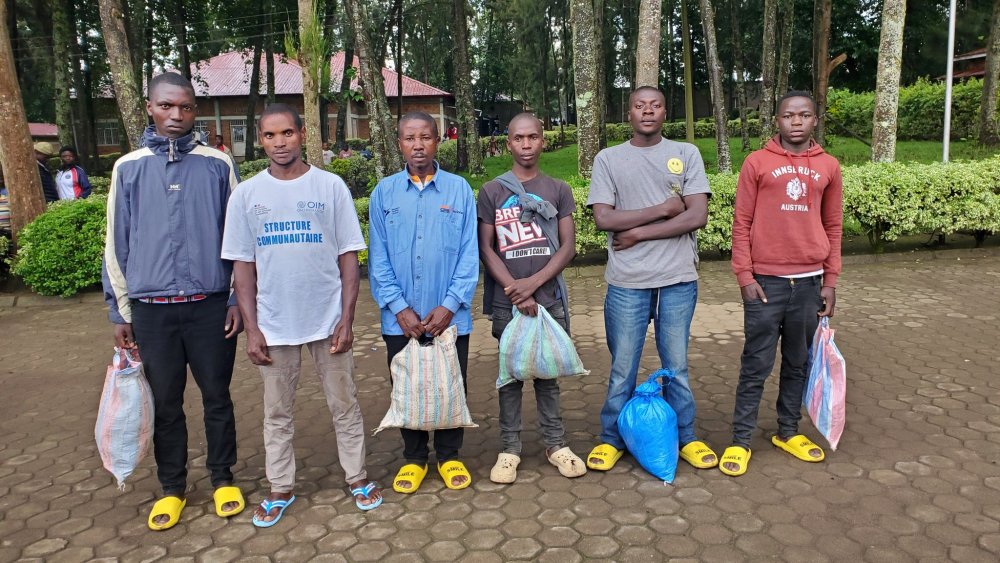
Data from the National Commission for Demobilisation, Reintegration and Rehabilitation shows that between January and May 6, 2026, Rwanda received 159 former FDLR fighters, a militia group formed by the perpetrators of the 1994 Genocide against the Tutsi.
Among those repatriated are six individuals who were part of a group of 317 Rwandans received on April 24, 2026.
The most recent returnees include a 56-year-old man and a 16-year-old minor, all originating from North Kivu in eastern Democratic Republic of Congo.
Since early 2025, when the M23 movement took control of Goma, several Rwandans previously held by the FDLR have voluntarily returned, the majority being women and children.
On some occasions, individuals attempting to disguise themselves as civilians have been identified by Rwandan authorities. Such cases are transferred to Mutobo for civic education and reintegration training before being reintegrated into their communities of origin.
The repatriation of FDLR members has continued in small groups as Rwanda awaits the implementation of planned operations by the Congolese armed forces to dismantle the group, in line with a 2025 peace agreement signed in Washington, D.C.
As of June 2025, the FDLR was estimated to have between 7,000 and 10,000 fighters, with many of its senior leaders based in Walikale and Masisi territories in North Kivu Province.
Data from the National Commission for Demobilisation, Reintegration and Rehabilitation shows that between January and May 6, 2026, Rwanda received 159 former FDLR fighters, a militia group formed by the perpetrators of the 1994 Genocide against the Tutsi.
Epstein’s cellmate stated that he discovered the note in a book after the financier’s failed suicide attempt, several weeks before his eventual death in August 2019.
“They investigated me for month — Found NOTHING!!!” the note reads. “It is a treat to be able to choose one’s time to say goodbye.”
“Watcha want me to do — Bust out cryin!! No fun — NOT WORTH IT!!” it continues.
The handwritten letter, undated and unsigned, has not yet been authenticated and was not included in the millions of pages of Epstein-related documents released earlier this year by the U.S. Justice Department.
U.S. District Judge Kenneth Karas ordered the note’s release following a request by The New York Times, which reported its existence last week and argued that there was no basis for keeping the document sealed.
Epstein pleaded guilty in 2008 to a state charge of soliciting a minor for prostitution. He was arrested again in July 2019 on federal sex trafficking charges and was found dead in his jail cell the following month.
Although federal authorities ruled his death a suicide, questions about the official account have persisted for years.
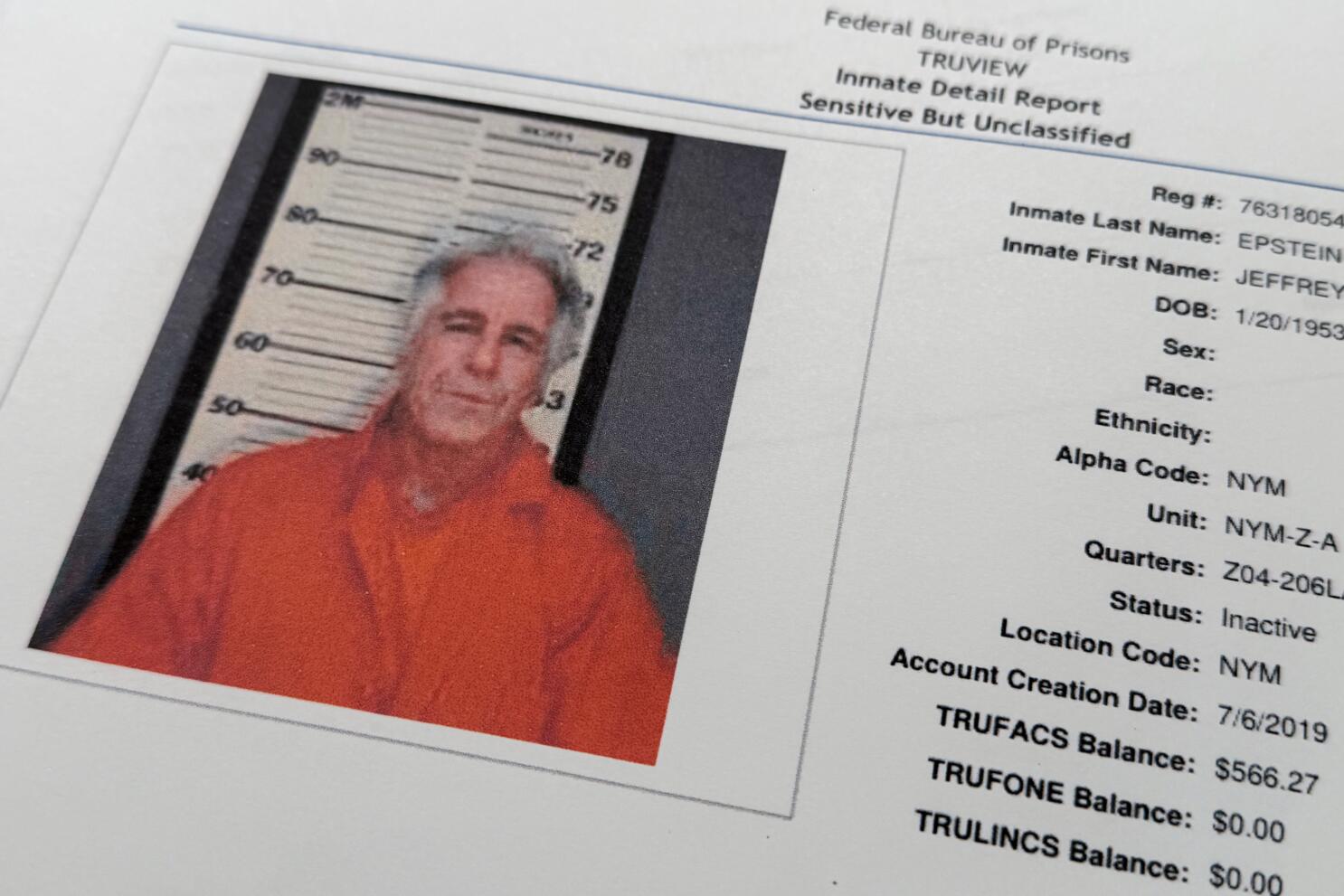
A document that was included in the U.S. Department of Justice release of the Jeffrey Epstein files, photographed Tuesday, Feb. 10, 2026, shows a photo of Epstein on a inmate report from the Federal Bureau of Prisons . (AP Photo/Jon Elswick)
In December 2023, while concluding his campaign for a second presidential term, Tshisekedi had declared that if a single bullet fired by the AFC/M23 coalition landed in the city of Goma, he would seek authorization from both chambers of parliament to launch attacks on Rwanda.
“At present, our army can strike Kigali while stationed in Goma. Kagame will not sleep in his house; he will sleep in the forest. He may play games with others, but not with Fatshi Béton,” Tshisekedi had said to cheering supporters.
He added that if even a small provocation occurred or any territory around Goma was captured, he would convene parliament and request permission to declare war on Rwanda.
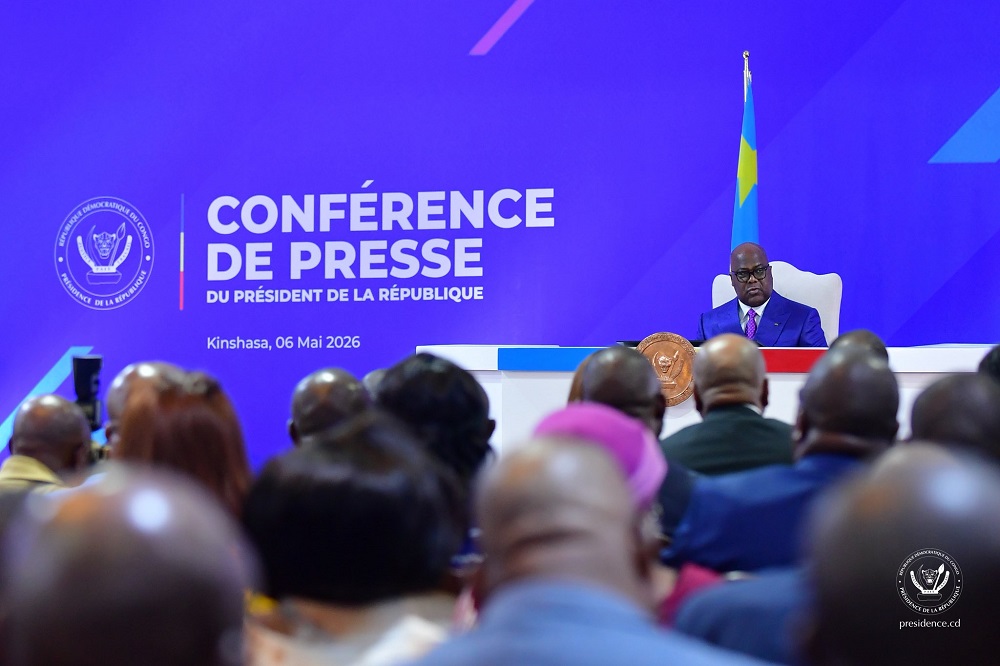
Speaking during a press conference in Kinshasa on May 6, a journalist told Tshisekedi that he appeared to prioritize diplomacy more than military strength, despite many historical thinkers emphasizing the importance of military power in securing peace.
The journalist referenced the famous saying attributed to Vegetius Renatus, “If you want peace, prepare for war,” and cited political philosopher Niccolò Machiavelli as well as comments once made by Barack Obama concerning peace in eastern Congo.
The journalist then asked Tshisekedi when the cities of Goma and Bukavu would be liberated. Responding to the question, Tshisekedi acknowledged that the criticism about his diplomatic approach was understandable.
“You must understand that as a civilian like me, with no military training or background whatsoever, the first instinct when such events happen is diplomacy. But I must also tell you that this comes after an honest assessment of the situation,” he said.
Tshisekedi recalled statements he made during the 2023 election campaign regarding possible military action against Rwanda in response to what he described as provocations.
“Today, I want to take this opportunity to apologize to the Congolese people, not because I was rushed into speaking, but because I had been given false information about our military,” he said. He went on to explain that the Congolese army lacked the capacity to confront Rwanda in the way he had initially envisioned. He revealed that some soldiers and officials are now being arrested and punished over failures within the military structure.
“Today you can see punishments and arrests taking place. These are the consequences. It means we were being kept from the truth about the condition of our army. We could not go to war with a military that lacked direction and was deeply divided,” Tshisekedi said.
He added that the army lacked uniforms, weapons and sufficient ammunition for combat operations.
“How could we enter a war under those conditions? That is not how I think. It is important to face reality and use other available means, and I believe we achieved a lot through that approach,” he stated.
Tshisekedi further claimed that the Congolese military had been infiltrated from within by hostile elements who weakened it under the cover of peace agreements.
“Today we have the information, and that is the good thing. We now know our military had been infiltrated and destroyed from within. There were people inside it whose objective was to seize part of our country. That is the truth,” he said.
According to Tshisekedi, diplomacy became the only viable option available to his government at the time.
“We had no other choice except diplomacy. That became our weapon. There is no debate about it,” he said.
He added that the Democratic Republic of the Congo now has international allies helping it restore peace while also benefiting from the country’s natural resources.
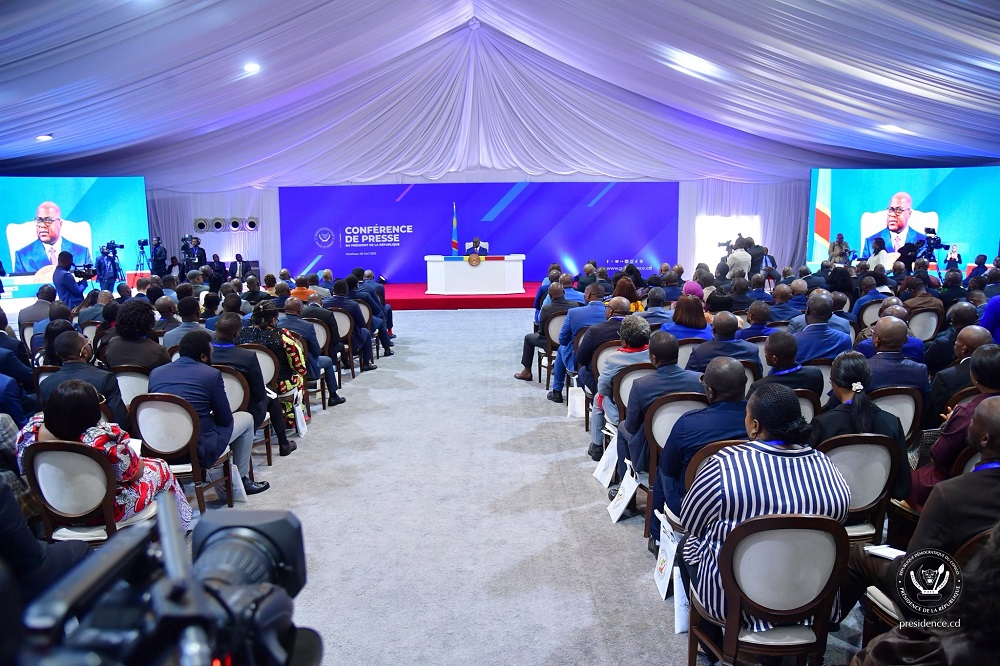
Speaking during a press conference in Kinshasa on May 6, Tshisekedi apologized to Congolese, noting that he abandoned plans to attack Rwanda after discovering that he had been misled about the true capabilities of his country’s military.
This legislation represents a shift in how France manages its public collections, which have long been protected by the legal principle of inalienability. Under that doctrine, any object entered into a state museum becomes the permanent property of the French Republic, previously requiring a specific, separate act of Parliament for every individual return. This new framework creates a permanent administrative mechanism to bypass that requirement for certain categories of contested heritage.
The law specifically targets items acquired through looting, theft, or sales conducted under coercion, a term often applied to transactions made during colonial occupations or under the shadow of military force. While the bill covers a broad 157-year timeframe, it maintains several restrictions that prevent an automatic or total emptying of museum shelves.
Military equipment and specific archaeological finds remain exempt from the streamlined process, and the French state retains final authority over the interpretation of an object’s history via a specialised scientific committee. Furthermore, the law applies only to state-owned museums and does not mandate returns from private collections or galleries.
The legislative move follows years of mounting diplomatic pressure from former colonies, primarily across Africa and Asia. Sub-Saharan nations such as Benin, Senegal, and Mali have been at the forefront of these demands, following the high-profile 2021 return of the Abomey Treasures to Benin.
In the Maghreb, Algeria continues a complex dispute with France regarding archives and artefacts taken during the 132-year colonial period ending in 1962. Similarly, Southeast Asian nations, including Vietnam, Cambodia, and Laos, have identified thousands of artefacts, ranging from religious statuary to royal regalia, held in major French institutions. Indigenous groups in Oceania, specifically in New Caledonia and French Polynesia, have also sought the return of ancestral remains and sacred ritual objects under similar ethical claims.
The version passed on Wednesday was a compromise text drafted by a joint committee of deputies and senators, intended to resolve previous disagreements over the level of parliamentary oversight versus executive power. Critics of the bill have pointed out that while it simplifies the legal path for restitution, it does not guarantee the return of items.
The process remains contingent on a claimant nation initiating a formal request and a French-led committee verifying the illicit nature of the original acquisition. The draft law now moves to the Senate for a final review, and if approved, it will proceed to the President for official promulgation into law.
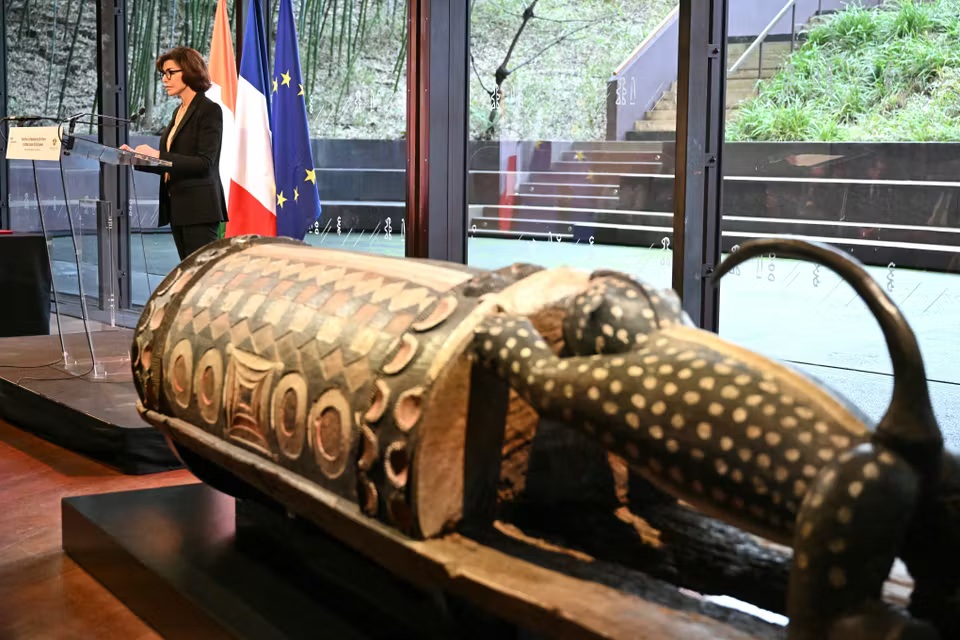
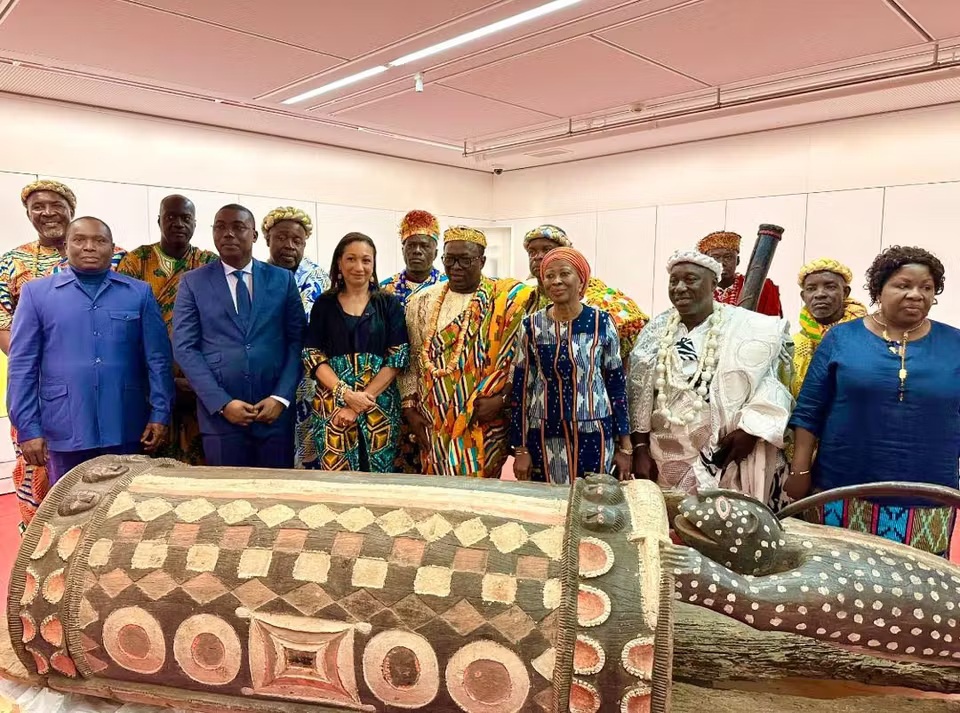
Former culture minister Rachida Dati at a ceremony marking the official restitution to Côte d’Ivoire of the sacred drum “Djidji Ayôkwé,” also known as the “talking drum,” at the Musée du Quai Branly in Paris, on February 20, 2026. The Ayôkwé djidji, nicknamed the “talking drum.”
In its first-quarter earnings report published on Wednesday, Germany’s flag carrier Lufthansa said it had hedged around 80 percent of its jet fuel requirements. Despite these measures, it expects fuel-related costs in 2026 to increase by 1.7 billion euros (2 billion U.S. dollars), nearly 24 percent higher than previously forecast, mainly driven by surging energy prices and disrupted global aviation markets.
The group said it plans to offset the additional burden through higher ticket revenues, network optimization and further cost-cutting measures in the coming quarters.
“The ongoing crisis in the Middle East, combined with rising fuel costs and operational constraints, poses enormous challenges for the global economy, the aviation industry and our company,” Lufthansa CEO Carsten Spohr said.
According to the International Air Transport Association (IATA), jet fuel prices surged 106.6 percent year-on-year in March amid escalating geopolitical tensions. In Europe, prices have climbed to their highest since 2022.
IATA Director General Willie Walsh said that while the industry remains in better shape than during the 2020 pandemic lockdowns, the current fuel crisis has emerged as the most acute shock to global aviation since COVID-19.
According to a study released by Allianz Trade last week, Europe produces only half of the kerosene required by its domestic market, leaving the region’s aviation sector dependent on imports for the remainder of its jet fuel needs.
Several European airlines have already introduced measures to cope with rising fuel costs and concerns over potential supply disruptions.
Air France-KLM said it plans to impose a surcharge of up to 50 euros (58.73 dollars) on long-haul flights, while EasyJet and Ryanair warned that fares could rise further if fuel markets remain tight. Lufthansa said it has already implemented ticket price increases.
Analysts at Allianz Trade painted an equally bleak picture, estimating that international airfares have already risen by between 5 percent and 15 percent.
Lufthansa is also evaluating stopover options for its long-haul routes to Asia and Africa as a contingency measure against potential refueling failures at destination airports. Highlighting the gravity of the supply crisis, Spohr remarked, “We can only fly if we have fuel.”
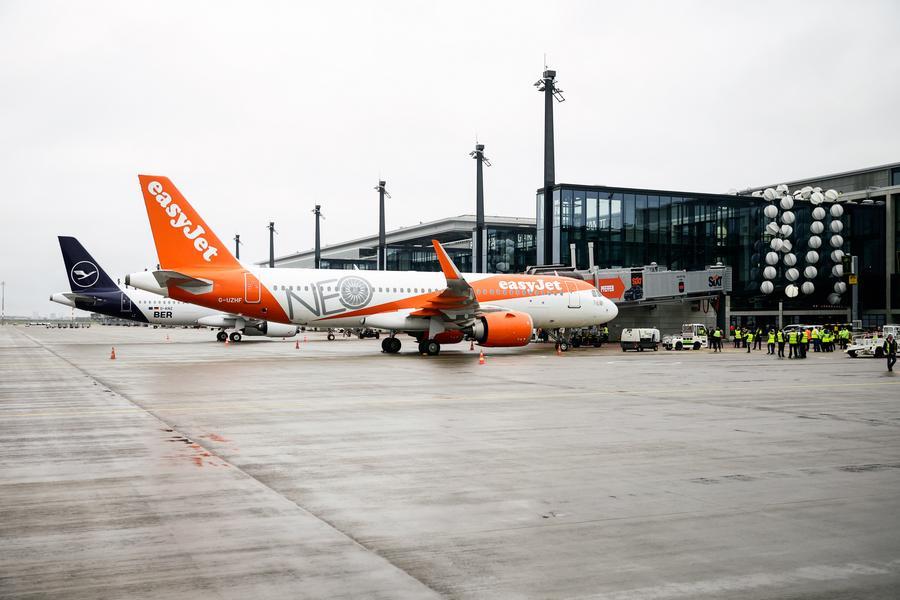
A Lufthansa aircraft (Rear) and an EasyJet aircraft are seen after arriving at the newly-opened Berlin Brandenburg Airport in Schoenefeld, Germany, on Oct. 31, 2020. (Thomas Trutschel/photothek/Handout via Xinhua)
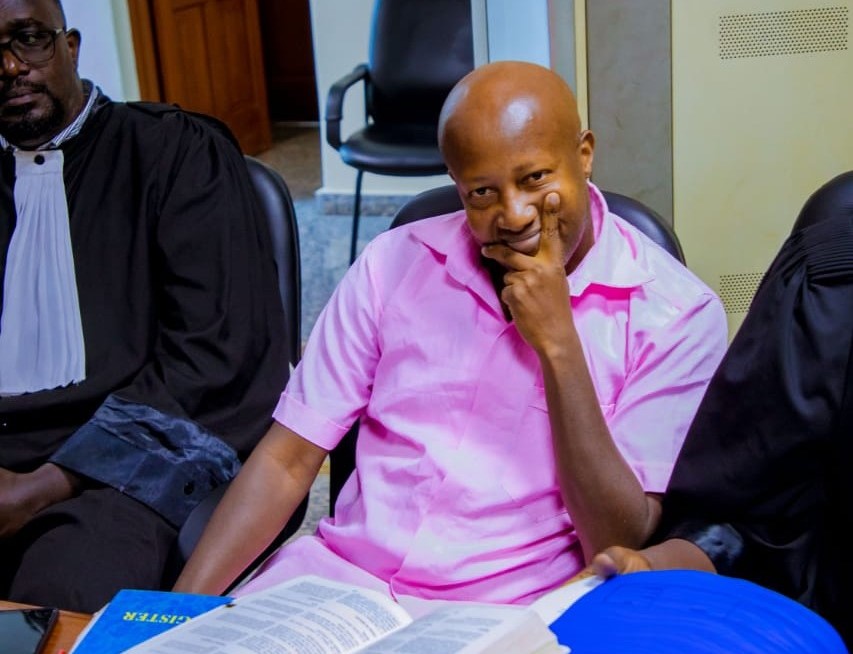
The spokesperson for Rwanda Correctional Service, CSP Sengabo Hillary, told IGIHE that on Wednesday, after all procedures related to Karasira’s release had been completed and only a few hours remained before he could leave prison, he took medication he normally used to manage a mental health condition.
“He would usually take the medicine and sleep for about six hours, as it helped him rest. However, because he took it in what appeared to be a suicide attempt, he consumed a large amount, which resulted in his death. He was taken to Nyarugenge Hospital, but doctors were unable to save him,” Sengabo said.
Sengabo added that Karasira died during the night at around midnight.
A medical report explaining the cause of his death is still expected, but preliminary findings indicate that he died after taking an excessive amount of medication.
Sengabo added, “All procedures required for his release had already been completed. What remained was the final search and exit process. That was the only step left when he took the medication and swallowed a large quantity of it.”
Karasira, widely known as Prof Nigga, had been convicted of inciting divisions among the public. He had completed the five-year sentence handed to him.
The sentence was issued on September 30, 2025, by the High Court Chamber for International and Cross-Border Crimes (HCCIC) based in Nyanza.
Based on the way prison sentence calculations are carried out within the correctional system, Karasira officially completed his sentence on May 6, 2026.
He had been charged with offenses including genocide denial, inciting divisions, and spreading false information.
Other charges included money laundering and failure to explain the source of his wealth, including cash found in his possession and funds held in various bank and Mobile Money accounts.
The prosecution had appealed the court’s decision to sentence him to five years in prison, but the appeal case had not yet been heard.
The correctional service stated that when releasing an inmate, it only follows the sentencing decision recorded in the electronic system used by the institution.
RCS has confirmed that Karasira Aimable died hours before scheduled release.
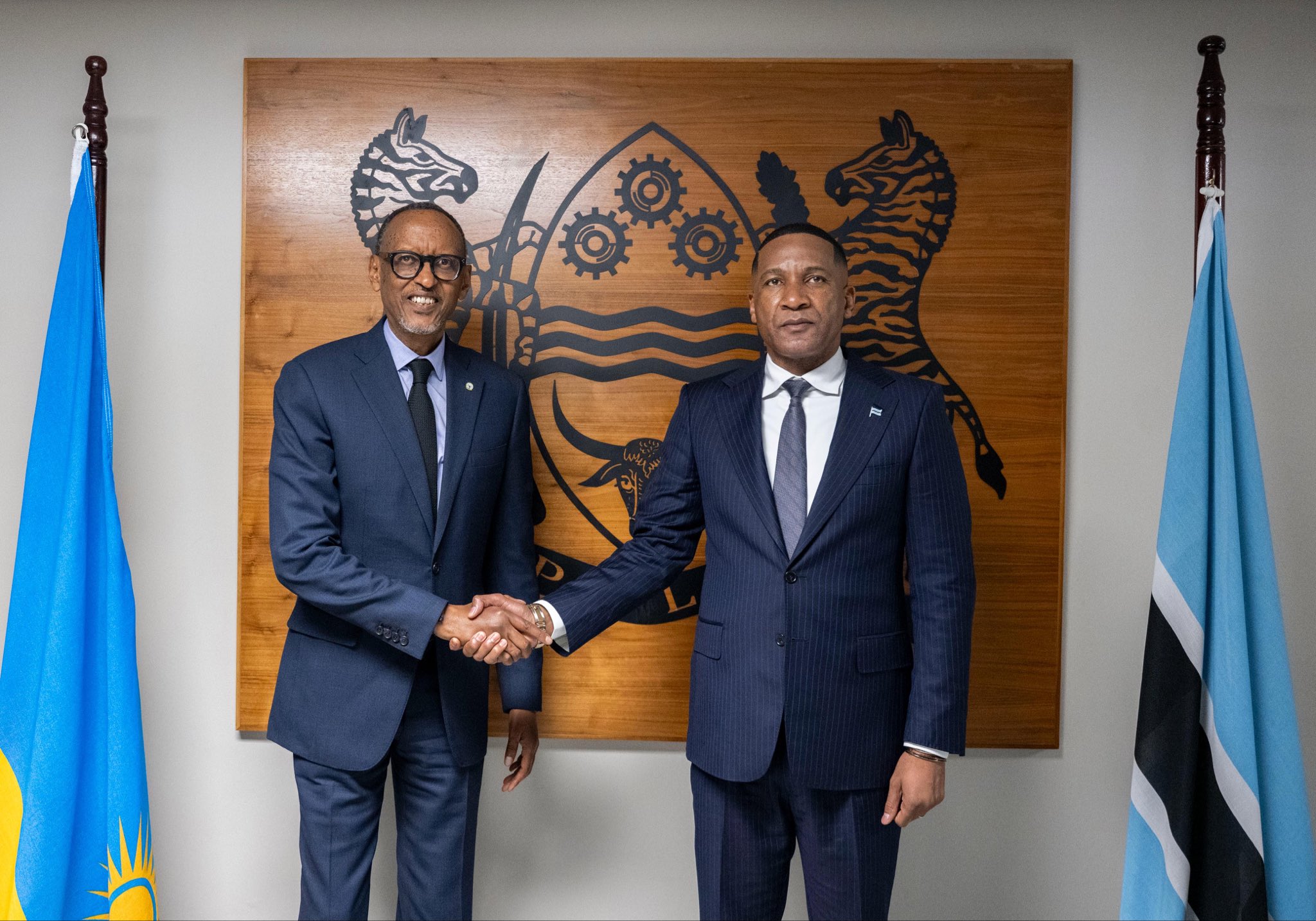
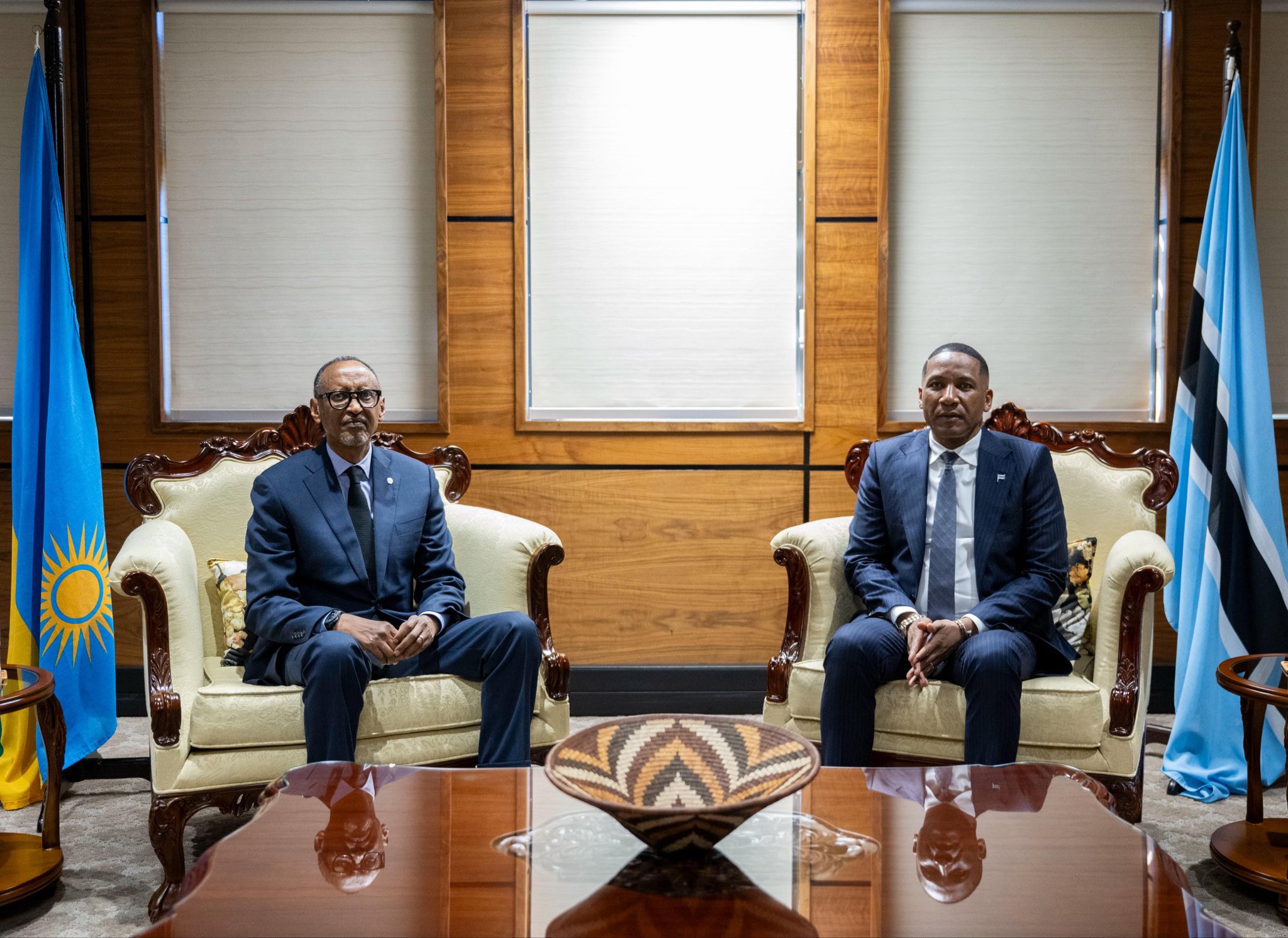
The engagements took place at the State House in Gaborone, where President Kagame is on a State Visit, his first since 2019, when Rwanda and Botswana agreed to establish the Joint Permanent Commission on Cooperation (JPCC) as a framework for structured bilateral engagement.
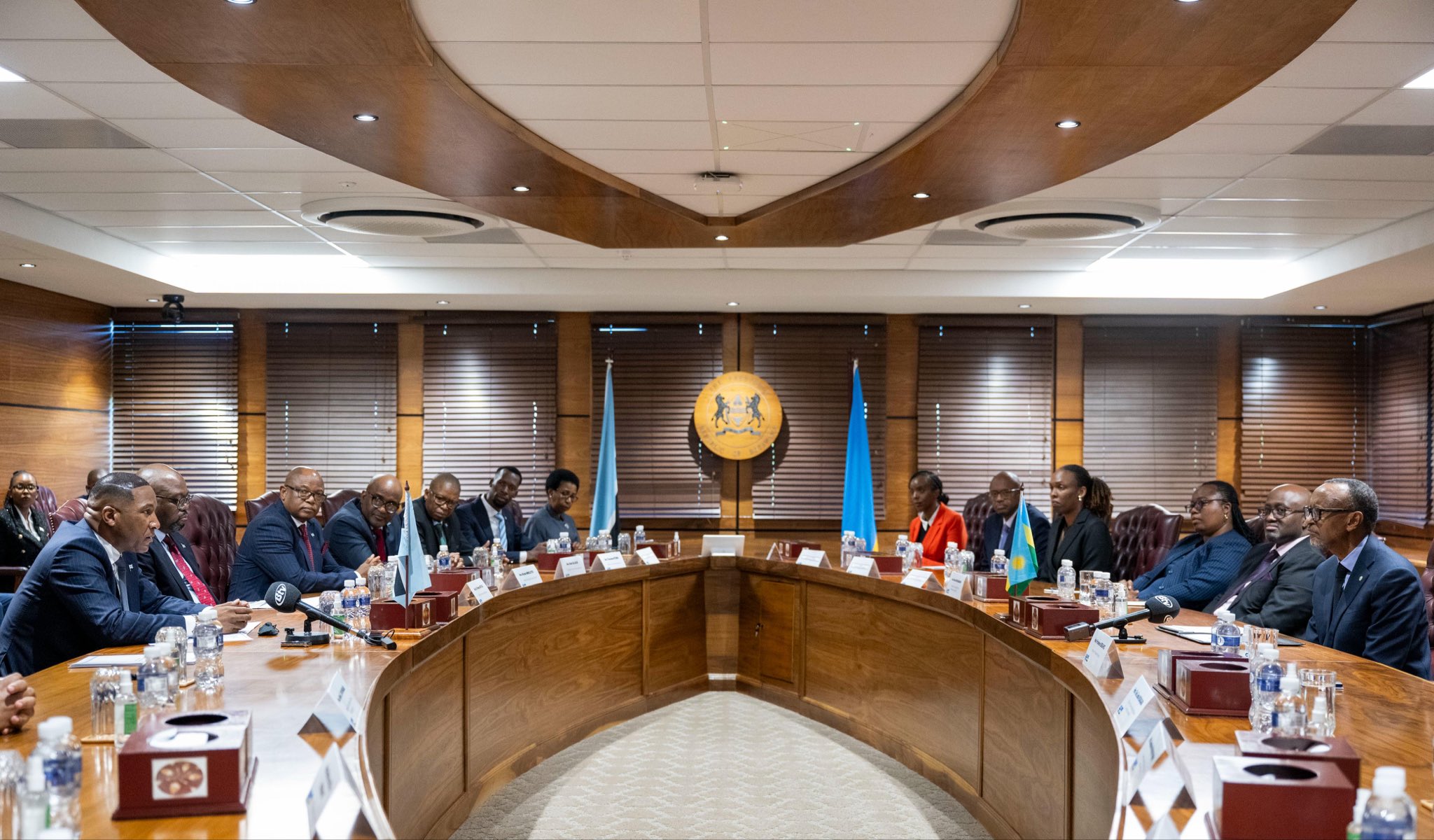
The visit began with a tête-à-tête between the two Heads of State, followed by expanded bilateral talks between their respective delegations. The leaders later oversaw the signing of agreements covering avoidance of double taxation, visa exemption for holders of diplomatic, official, and national passports, air services, health cooperation, and broader economic, trade, and investment partnerships.
Also signed was a cooperation framework between the Rwanda Development Board and the Botswana Investment and Trade Centre, aimed at promoting private sector collaboration and facilitating increased investment flows between the two countries.
In their remarks, both Presidents underscored the importance of moving beyond diplomatic engagement to practical implementation and measurable outcomes.
President Kagame thanked Botswana for the warm reception and reaffirmed Rwanda’s commitment to a results-driven partnership.
“What defines the relationship between Rwanda and Botswana is not only a friendship but also a shared sense of purpose,” Kagame said.
He emphasised the need to remove barriers to trade and investment, highlighting ongoing efforts in areas such as air connectivity, visa facilitation, and taxation frameworks.
He also commended Botswana’s leadership in natural resource management, particularly diamonds, and its efforts to strengthen health security through investment in pharmaceutical capacity, describing them as examples of forward-looking governance that resonate with Rwanda’s own priorities.
President Kagame further noted that cooperation in justice and security had continued to deepen, while new opportunities were emerging in trade and private sector engagement. He stressed that the success of the partnership would ultimately be measured by its impact on citizens’ livelihoods.
“Ultimately, what we agree here must translate into tangible improvements in the lives of our citizens. That is the true measure of success,” he said.
President Duma Boko welcomed President Kagame and his delegation, describing the visit as a moment of strategic realignment between the two countries.
“We did not meet to merely exchange diplomatic pleasantries. We met for strategic realignment, for a reaffirmation of our shared vision,” President Boko said.
He emphasised the importance of swift and disciplined implementation of agreements, noting that both countries were “in a race against time” to deliver results. He called for precision, strict timelines, and continuous innovation in executing agreed initiatives.
President Boko also highlighted the removal of visa barriers by Rwanda, which he said extended visa-free access for Botswana nationals to six months, describing it as an exemplary gesture. He said Botswana would respond with reciprocal measures effective immediately to further ease movement between the two countries.
“Rwanda has done something that had not been done before. And we are most grateful,” the president remarked.
He further noted that the partnership should expand across multiple sectors, including education, health, agriculture, youth empowerment, infrastructure development, and regional connectivity, adding that technology and science should be leveraged to bridge distance and enhance cooperation.
“We must be prepared to pioneer, to lead, to originate innovative approaches that may never have been tried before,” he said.
President Kagame’s visit marks a renewed high-level engagement between the two countries, building on progress made since the inaugural JPCC meeting held in Kigali in April 2022. His last visit to Botswana in 2019 laid the foundation for the institutional framework that is now guiding expanded bilateral cooperation.
The latest agreements are expected to further accelerate economic ties and strengthen collaboration in key sectors, as both countries move to translate diplomatic commitments into practical development outcomes.
Presidents Paul Kagame and Duma Boko witnessed the signing of a series of bilateral agreements aimed at strengthening cooperation between Rwanda and Botswana, as the two countries committed to deepening trade, investment, and connectivity ties.Both Presidents underscored the importance of moving beyond diplomatic engagement to practical implementation and measurable outcomes.The latest agreements are expected to further accelerate economic ties and strengthen collaboration in key sectors, as both countries move to translate diplomatic commitments into practical development outcomes.
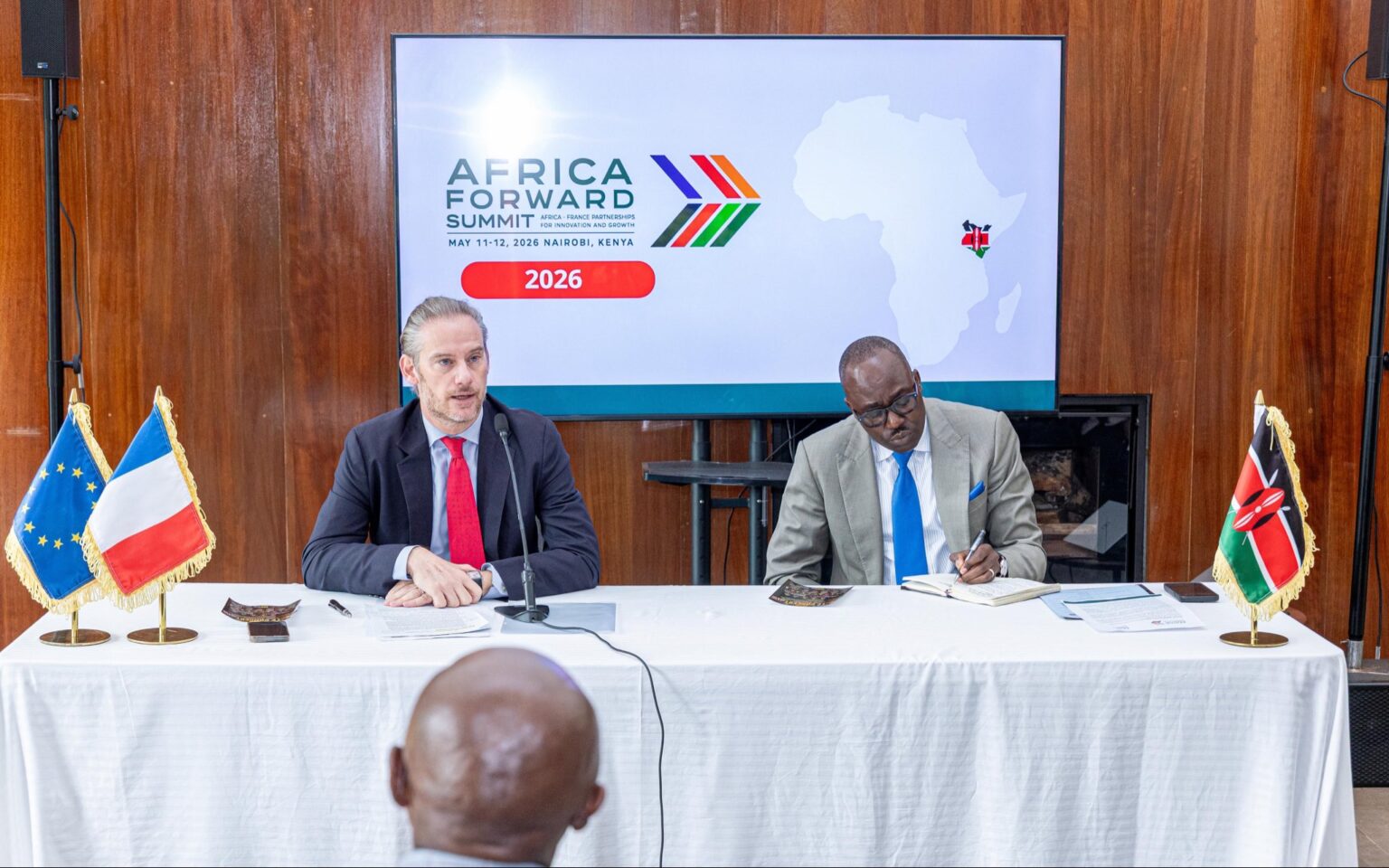
Addressing foreign journalists via videoconference on Wednesday, May 6, Robert outlined the priorities of the summit, which will take place on May 11–12 at the Kenyatta International Convention Centre (KICC) and the University of Nairobi, co-hosted by Kenya and France.
The summit, which marks the first time such a high-level gathering is held in an English-speaking African nation, will host leaders from 30 African nations and over 2,000 CEOs, alongside youth leaders and development partners.
The forum aims to pivot away from the legacy of donor-recipient aid, moving beyond traditional diplomatic engagement to focus on “bankable investments”, projects designed to be commercially viable and attractive to private capital rather than reliant on state grants.
Investment, youth and technology at the centre
Robert said the summit will focus heavily on investment and financing mechanisms for African economies, bringing together governments, private sector actors, and financial institutions, including African multilateral banks and global partners such as the World Bank and the African Development Bank.
“The first priority is how to stimulate investment and improve financing for African economies through concrete results,” he said, adding that the private sector will play a central role in shaping outcomes.
Youth engagement will also be a key feature of the summit. Around 500 young leaders from across Africa are expected to take part in a dedicated dialogue with President Emmanuel Macron and Kenyan President William Ruto.
Discussions will focus on artificial intelligence, technology, and the role of young Africans in global decision-making.
The summit will also include roundtables on artificial intelligence, agriculture, health, rural development, and energy access, reflecting what organizers describe as a “results-driven development agenda.”
Rwanda is expected to feature prominently in the discussions on artificial intelligence, with President Paul Kagame set to co-chair a high-level roundtable on AI, underscoring the country’s growing role as a continental leader in digital innovation and technology-driven development.
The cultural and creative industries will also receive attention, with internationally recognised Rwandan artist Sherrie Silver expected to participate in discussions highlighting the role of African creativity in economic transformation and youth empowerment.
Culture, sports and creative industries as economic drivers
Robert highlighted culture and sports as emerging pillars of economic cooperation between Africa and France, describing them as “business tools” for inclusion and development.
France, he said, has increasingly supported cultural and creative industries in Africa since 2017, helping to connect African entrepreneurs with French companies and expand cultural production across the continent.
He pointed to the expansion of African content production through media partnerships, including the acquisition of MultiChoice by French media group Canal+, which he said would strengthen the distribution of African creative content both within Africa and in France.
Sport was also presented as a key development tool, with France positioning major international sporting events, including the 2024 Olympics, as part of a broader strategy. Upcoming African sporting events such as the Africa Cup of Nations in East Africa and the Youth Olympic Games in Senegal were cited as examples of growing sports diplomacy and economic opportunity.
Restitution and historical cooperation
The briefing also addressed cultural restitution, a sensitive but central theme in France’s Africa policy.
Robert said France had changed its legislation to allow the return of cultural artefacts and human remains that were proven to have been taken illegally during the colonial period. He cited previous restitutions to countries including Benin, Senegal, Côte d’Ivoire and Madagascar, and said similar requests continue to be processed where legal conditions are met.
He added that France’s approach has influenced similar restitution policies in other European countries.
Peace, security and African-led solutions
On security issues, Robert said France supports African-led solutions to regional conflicts, including ongoing mediation efforts in the Great Lakes region, Sudan and Somalia.
“We are not in the front seat; we are there to support,” he said, emphasising coordination with African Union-led initiatives and international partners.
Responding to questions about France’s evolving role in Africa, Robert stressed that the new approach is based on reciprocity and “win-win partnerships.”
“There is no free lunch. We are there to promote mutual interests and balanced cooperation,” he said, adding that African countries increasingly choose partners based on value, investment quality, and development impact.
The Africa Forward Summit is being positioned by its organisers as a shift away from traditional donor-recipient dynamics toward a unified African market approach, engaging both Anglophone and Francophone countries as part of a single economic space of 1.5 billion people.
According to the summit communiqué, the event will aim to address shared challenges, including food security, digital competitiveness, energy access, health systems, and connectivity, while strengthening Africa’s role in global decision-making structures.
A high-level youth and cultural programme, including a closing concert in partnership with Trace TV, will conclude the summit, showcasing African music and creative industries as part of what organisers describe as Africa’s growing global cultural influence.
The upcoming Africa Forward Summit (AFS) 2026 in Nairobi is expected to redefine Africa–France relations around a more investment-driven, youth-focused and innovation-led partnership, according Jérémie Robert, advisor to French President Emmanuel Macron in charge of African affairs.Ambassador of France to Kenya Arnaud Suquet and Foreign Affairs PS Korir Sing’oei during an editors’ briefing at the French Embassy on April 16, 2026.
The decision, issued on Wednesday, May 6, 2026, overturns a previous ruling by investigative judges on August 21, 2025, which had ordered the closure of the case due to what they described as insufficient evidence linking Kanziga to the crimes.
Richard Gisagara, a lawyer representing civil parties in genocide-related cases in France, welcomed the ruling, describing it as “good news” and asserting that Kanziga would ultimately face justice. Writing on X, he stated: “She will not escape justice.”
France’s National Anti-Terrorism Prosecutor’s Office (PNAT), which has jurisdiction over genocide and crimes against humanity, had challenged the earlier decision, arguing that key evidence and witness testimonies had been overlooked. It called for further investigative steps to be undertaken.
The case dates back to 2008, when civil party organisations filed a complaint in France seeking an investigation into Kanziga, now aged 83, for alleged involvement in genocide and crimes against humanity.
In February 2022, judges had initially ordered the case closed, citing a lack of substantive evidence. That conclusion was reaffirmed in the August 2025 decision, before being overturned on appeal.
Kanziga was evacuated from Rwanda on April 9, 1994, under orders from then French President François Mitterrand. As a result, earlier investigations focused primarily on the first three days of the genocide.
In September 2024, PNAT criticised the scope of the inquiry, noting that it had been limited in duration, narrow in focus, and based on a relatively small number of witness accounts.
Prosecutors have since called for the investigation to be expanded to cover the period from March 1 to April 9, 1994, and have also raised allegations regarding Kanziga’s potential involvement in the planning of the genocide.
Following the 2025 decision to halt the investigation, civil party organisations expressed concern over the judges’ reasoning. They argued that it was inconsistent to conclude that Kanziga was not part of the so-called “Akazu”, an inner circle of family members and close associates of Habyarimana widely alleged to have played a key role in orchestrating the Genocide against the Tutsi, despite evidence suggesting her inclusion.
The organisations also criticised the reliance on testimony from controversial figures, including Gaspard Musabyimana, who was treated as an expert witness despite his known association with RTLM, a media outlet that broadcast hate propaganda during the genocide.
Musabyimana has also been described as having supported genocide denial and the Habyarimana government, including through a publishing house he established in Belgium.
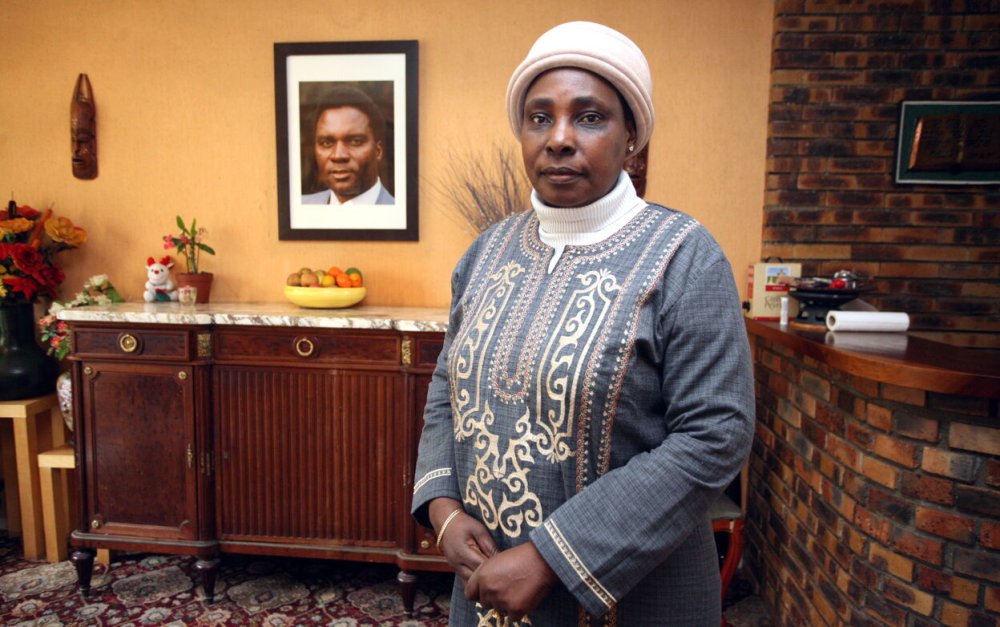
The Paris Court of Appeal has ruled that investigations must continue into the alleged role of Agathe Kanziga, the widow of Juvénal Habyarimana, in the 1994 Genocide against the Tutsi and its preparation.
A potential deal would involve Iran committing to a moratorium on nuclear enrichment and the United States agreeing to lift sanctions, with both sides lifting restrictions on transit through the Strait of Hormuz, it said.
The duration of the moratorium on uranium enrichment remains under negotiation, with an estimated period of 12-15 years, said the report, adding that Iran initially proposed a five-year suspension while the United States demanded 20.
The White House is reportedly close to a deal with Iran on how to end the war