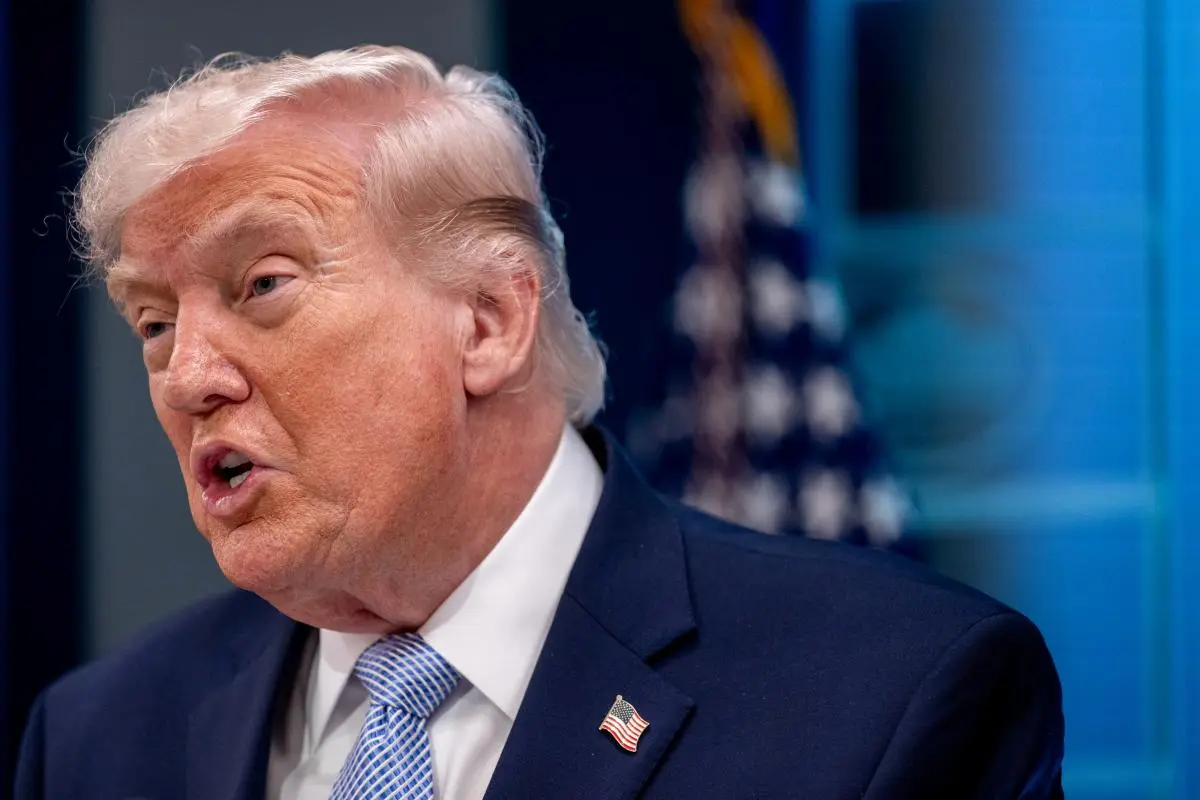
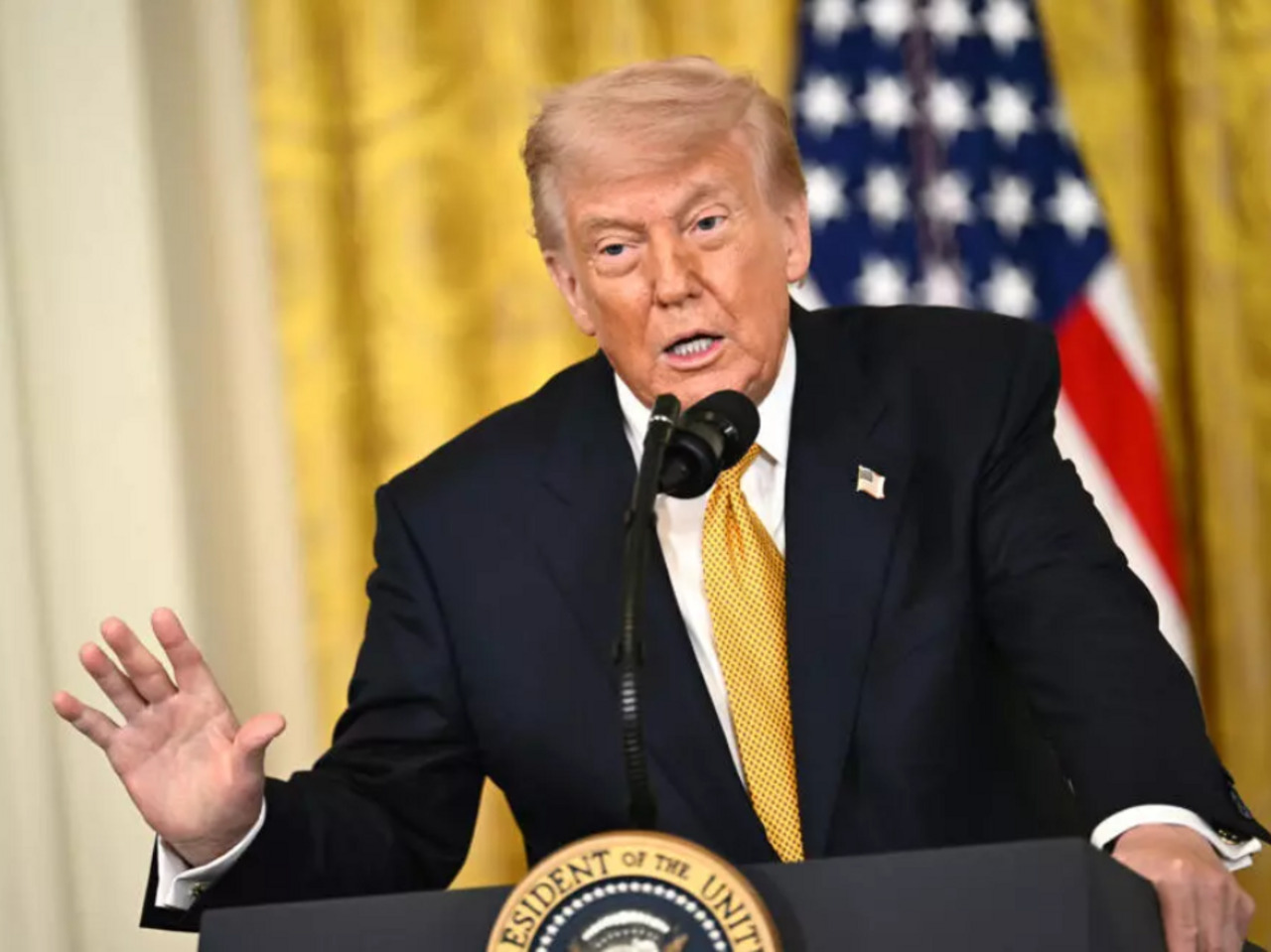
His policies on trade, foreign aid, and immigration have cast a long shadow over the summit’s discussions, leading analysts to describe him as the “elephant in the room” amid efforts by African leaders to find balance in their global engagements.
Although President Trump did not travel to the summit, leaders from all member states are acutely aware of how his administration’s actions have shifted the landscape of U.S. Africa relations.
Under Trump’s leadership, the United States has moved away from traditional broad‑based foreign aid programs toward a more transactional, bilateral approach.
This means that instead of large multilateral development projects involving many countries, Washington increasingly focuses on individual deals with selected nations that offer strategic or economic advantages.
Speaking to Al Jazeera, experts note that this approach has created uncertainty among African leaders.
“There has been a perceptible shift away from broad multilateral engagement toward a more security‑ and deal‑focused approach,” said Carlos Lopes, a politics professor at the University of Cape Town.
As a result, many African states are pursuing closer ties with other global powers including China, Europe, and Middle Eastern partners to avoid over‑dependence on Washington.
One of the more controversial aspects of recent U.S. policy has been cuts to foreign assistance. Historically, the United States has been a major donor to health and development programs across Africa, including initiatives focused on combating HIV/AIDS and improving maternal and child health.
Trump’s budgetary decisions have significantly reduced funding, prompting concern from civil society and public health experts across the continent.
Economically, Trump’s administration also imposed tariffs on imports from several African countries in previous years, affecting key export markets and increasing pressure on nations that rely on trade with the United States. These trade policies, paired with slower aid flows, have pushed African leaders to seek alternative trading partners and development models.
At past AU Summits, representatives have been working to strike a calculated equilibrium between engaging with the United States and deepening ties with other international partners.
Analysts believe that African diplomats will emphasize “strategic ambiguity” engaging the U.S. where beneficial while also strengthening relationships with China, the European Union, and intra‑African bodies such as the African Continental Free Trade Area (AfCFTA).
The concert will take place at BK Arena on March 17, before the tour continues to SunBet Arena in Pretoria, South Africa, on March 20.
Move Afrika blends world-class live music with social impact programs, aiming to create jobs, support youth entrepreneurship, and provide skills training across Africa. The initiative also engages local artists, production crews, and vendors, boosting capacity in host cities while delivering a world-class entertainment experience.
The first Move Afrika in Rwanda, held in December 2023, featured Kendrick Lamar and employed over 1,000 Rwandans, with 75% of the production crew sourced locally. The event showcased African talent including Zuchu, Bruce Melodie, DJ TOXXYK, Sherrie Silver, Ariel Wayz, Kivumbi King, and Bruce The 1st.
The 2025 edition saw EGOT-winning John Legend take the stage at BK Arena, performing hits such as “All of Me” and “Ordinary People” in outfits designed by Rwandan fashion brands Moshions and Tanga. That edition employed 90% local production staff and extended the tour to Lagos, Nigeria.
Move Afrika 2026 promises to continue this tradition, with Doja Cat delivering an electrifying performance while supporting local entrepreneurship and skill development. Tickets for Kigali and Pretoria are [already on sale->https://www.moveafrika.org/tour], with fans encouraged to secure their spots early for one of Africa’s most high-profile music events of the year.
{{Who is Doja Cat?
}}
Born Amala Ratna Zandile Dlamini, Doja Cat is an American rapper, singer, songwriter, and producer who has become one of the most prominent figures in modern pop and hip-hop. Known for her “chameleon” ability to switch between hard-hitting rap and melodic pop, she combines eccentric, internet-savvy personality with bold artistic vision.
The 30-year-old first gained massive attention in 2018 with the viral novelty track “Mooo!”, a DIY music video that showcased her talent for creating viral content. Her 2019 album Hot Pink featured the global hit “Say So”, which topped the Billboard Hot 100 after a remix with Nicki Minaj.
The 2021 album Planet Her solidified her superstar status with hits such as “Kiss Me More” (feat. SZA), “Need to Know”, and “Woman”, earning her a Grammy for Best Pop Duo/Group Performance. In 2023, she pivoted to a darker, rap-focused sound with Scarlet, led by the #1 hit “Paint the Town Red”, and her 2025 album Vie returned to her pop-leaning roots while maintaining her experimental edge.
Doja Cat is also known for her visual artistry, treating fashion and music videos as performance art, and her digital-native approach, often interacting directly with fans on social media. A self-taught musician, she learned to sing, rap, and produce after dropping out of high school at 16, using GarageBand to hone her craft.
With Move Afrika 2026, Kigali audiences will get a front-row experience of one of today’s most innovative and genre-defying artists, combining global stardom with a uniquely African stage experience.
Launched on the sidelines of the 39th AU Summit in Addis Ababa on Thursday, February 12, the platforms, BiasharaLink and Deal House, seek to close what officials described as Africa’s long-standing “execution gap,” where trade opportunities are identified but rarely converted into completed transactions.
The initiative, spearheaded by Kenya’s Ministry of Foreign and Diaspora Affairs in partnership with Real Sources Africa and Equity Group Holdings, positions diplomatic missions as structured commercial pipelines rather than traditional liaison offices.
{{Turning diplomacy into delivery
}}
Speaking at the launch, Kenya’s Prime Cabinet Secretary and Foreign Affairs Minister, Musalia Mudavadi, said the platforms introduce a new model of economic diplomacy anchored in systems, accountability and measurable outcomes.
“BiasharaLink and Deal House represent a new model of economic diplomacy; one that is results-oriented,” Mudavadi said. “It provides a common platform for capturing and organising opportunity. It connects opportunity to execution. Together, the platforms turn diplomacy into delivery.”
Mudavadi noted that while Africa has made significant progress in negotiating trade frameworks, including the AfCFTA, traders and investors still face stalled transactions, fragmented information and weak follow-through.
“This is not a question of political will or commitment,” he said. “It is a failure of systems.”
The new platforms aim to institutionalise how embassies capture, track and convert trade and investment leads, ensuring continuity beyond individual diplomatic postings and creating a structured pipeline from inquiry to execution.
{{Closing the trade execution gap
}}
According to Real Sources Africa founder and CEO, Felix Chege, Kenyan embassies collect an average of 3,500 trade inquiries per month, yet fewer than one percent historically translate into closed deals.
“Our embassies are centres of trust,” Chege said. “But they lacked the infrastructure to transmit inquiries to the right businesses and execute them efficiently.”
BiasharaLink functions as the intake and structuring layer, enabling diplomatic missions, exporters and investors to digitally capture, validate and monitor trade leads. It distinguishes between exploratory inquiries and transaction-ready buyers, supported by due diligence processes and “deal stewards” trained to guide transactions.
Deal House serves as the execution engine, where validated opportunities are matched with counterparties, supported with documentation, and connected to payment and financing solutions. The system integrates escrow mechanisms and trade finance tools to reduce risk for both buyers and sellers.
Chege described the model as “capture, validate and close,” adding that the goal is to build a continental infrastructure leveraging embassy credibility to drive trade, investment and financing.
{{Finance as the lubrication layer
}}
James Mwangi, Group CEO of Equity Group Holdings, framed the initiative as a bridge between policy ambition and commercial reality.
“For years, Africa has had policy frameworks without flow of goods and services,” Mwangi said. “What we are witnessing is a partnership between government and private sector to create an infrastructure that enables people to walk, ride and drive on a trade superhighway.”
He described the platform as “visa-free,” compressing time and distance by connecting buyers and sellers digitally, while reducing reliance on costly physical travel and fragmented networks.
Equity will provide the financing layer, including trade finance, guarantees and payment solutions, to ensure that structured deals become bankable transactions.
“It’s not enough to have a pipeline,” Mwangi said. “You must lubricate the platform by having finance accessible.”
He added that the platform creates equal access for SMEs, women and youth entrepreneurs, reducing gatekeeping and embedding trust through government-backed verification via diplomatic missions.
{{AfCFTA enters implementation phase
}}
The launch comes as the AfCFTA Secretariat prepares for the adoption of remaining legal instruments under the trade pact.
AfCFTA Secretary-General Wamkele Mene said the agreement now provides the regulatory certainty needed to unlock intra-African trade, but warned that execution remains the central challenge.
“In a world moving toward fragmentation and protectionism, Africa is moving in the opposite direction,” Mene said. “We have no alternative but to succeed; we have to build a very strong domestic market.”
He highlighted the AfCFTA’s protocols on digital trade and on women and youth in trade as forward-looking instruments that align with Kenya’s digital approach.
With a market of 1.4 billion people and a combined GDP of $3.4 trillion, Mene said the opportunity is unprecedented, but only if SMEs and young entrepreneurs can access structured trade systems.
The initiative has also received backing from development partners supporting AfCFTA implementation. Mathias Kamp, Regional Director of Konrad-Adenauer-Stiftung, said the launch marks a critical step toward unlocking the bloc’s trade potential.
“The AfCFTA needs to move to the next level. Five years on, the potential remains untapped. I’m convinced that what we are launching today will be a significant step forward in unlocking trade,” he said.
{{From diplomatic hubs to economic hubs
}}
Kenya’s government says the initiative forms part of a broader shift in its foreign policy, which now prioritises commercial diplomacy and diaspora investment.
Mudavadi noted that Kenya recently secured parliamentary endorsement of its updated foreign policy framework, reinforcing predictability and credibility in its external engagements.
“Our diplomatic missions are among Africa’s most valuable assets. They are trusted institutions that already facilitate trade and investment, but today’s economy requires structured pipelines, reliable data, verified partners, and access to finance,” he said.
Officials stressed that while the system begins with Kenya’s 70 diplomatic missions, its ambition is continental, with an invitation extended to other African countries to adopt or integrate into the model.
“The success of this initiative,” Mudavadi said, “will be measured in completed deals, jobs created and enterprises grown. Africa’s next chapter must be written in performance, not promises.”
Asked who is running Venezuela in a Thursday interview with U.S. broadcaster NBC News, Rodríguez said, “I can tell you I am in charge of the presidency of Venezuela, as it’s stated clearly in the constitution of Venezuela.”
She added that her daily workload reflects the seriousness of her role: “From the amount of work that I have… it’s very, very hard work and we’re doing it completely day by day.”
The comment comes more than a month after U.S. forces captured Maduro in Caracas and transferred him to federal custody in New York on narcoterrorism, drug trafficking and corruption charges, where he has pleaded not guilty.
Despite his detention, Rodríguez made a clear legal and political defense of her predecessor, saying: “I can tell you President Nicolás Maduro is the legitimate president… Both President Maduro and Cilia Flores, the first lady, are both innocent.”
Rodríguez, who once sharply criticised the U.S. military operation, has signalled a shift toward cooperation with Washington.
She confirmed receiving an invitation to visit the United States, saying, “We’re contemplating coming there once we establish this cooperation and we can move forward with everything.”
The interview also took place amid an ongoing visit by U.S. Energy Secretary Chris Wright, focused on discussions over Venezuela’s crippled oil industry and potential economic and diplomatic engagement with the interim government.
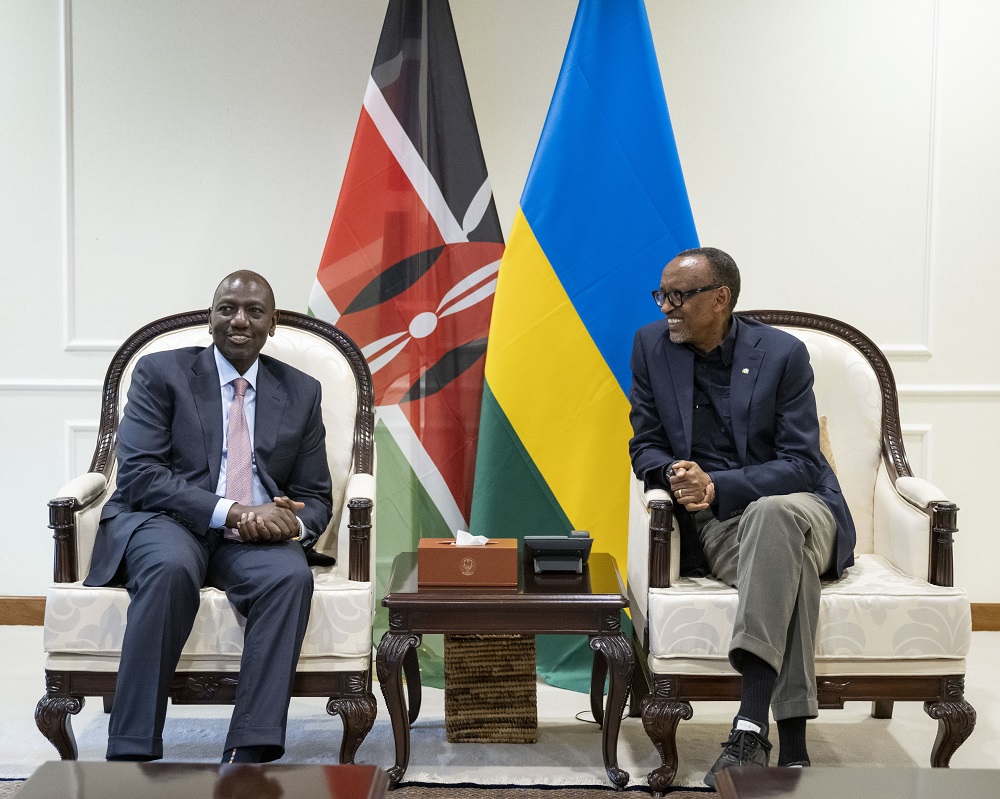
President William Ruto made the announcement during a visit to the northeastern town of Mandera, saying the decision follows years of security assessments and preparations aimed at ensuring the safety of citizens.
The border was closed after a wave of deadly cross-border attacks carried out by al-Shabaab, which said it was retaliating against Kenya’s military presence in Somalia as part of international peacekeeping efforts.
Among the most devastating incidents was the 2013 assault on the Westgate shopping mall in Nairobi, where 67 people were killed. Two years later, gunmen attacked Garissa University College, leaving at least 148 people dead.
Other major attacks included the killing of 28 bus passengers in Mandera County in 2014 and a 2019 hotel siege in Nairobi that left at least 21 people dead.
Kenya subsequently closed the 680-kilometre border with Somalia as a precautionary measure amid threats of further violence. In 2015, the government began constructing a perimeter security barrier along the frontier. However, the project stalled after nearly three years, with only about 10 kilometres of fencing completed at a cost of $35 million.
A previous attempt to reopen the border in 2023 was shelved following renewed militant activity. President Ruto said the renewed plan will see two crossing points reopened under heavy security deployment to prevent infiltration and curb the smuggling of illicit goods, including weapons.
“It is unacceptable that fellow Kenyans in Mandera remain cut off from their kin and neighbours in Somalia due to the prolonged closure of the Mandera Border Post,” Ruto said in a post on X.
He expressed optimism that reopening the crossings would stimulate formal cross-border trade and unlock economic opportunities for communities on both sides of the frontier.
Mandera, which has a predominantly ethnic Somali population, has been one of the areas most affected by insecurity linked to al-Shabaab. Addressing residents, Ruto urged them to support government efforts to combat extremism.
“These al-Shabaab are useless. I want to assure that Kenya will work together with you, just help us combat these criminals and terrorists,” he said.
The reopening marks a significant policy shift and signals Nairobi’s confidence in strengthened security measures along the frontier, even as authorities remain cautious about the persistent threat posed by militant networks operating in the region.
The disclosure was made by the Finance and Economic Planning Minister Yusuf Murangwa during his presentation of the revised national budget for the 2025/26 fiscal year to Parliament on Thursday, February 12, 2026.
Minister Murangwa stated that the construction of the Masaka hospital, where CHUK will move, is now 98% complete.
He confirmed that the relocation of the hospital will begin in March 2026, with the move being carried out in phases, and the entire process is expected to be completed by September this year.
Murangwa explained that the remaining tasks to ensure CHUK’s relocation include finishing the construction work, installing equipment, and preparing the staff, as the new hospital will have double the capacity of the existing one.
“The new hospital is significantly larger than the current CHUK; the current facility has 400 beds, but the new one will have over 800 beds. This requires more modern equipment and staff, which will exceed what we currently have at CHUK. However, as advised, the relocation cannot happen all at once; some services will move first, while others will continue to operate at CHUK to ensure that services remain uninterrupted during the transition,” he said.
“This is a well-thought-out plan, and we expect to begin the phased relocation starting in March, with full completion by September. Some services, such as emergency care, will remain at CHUK for a longer period, but eventually, all services will move. We aim for CHUK to be fully relocated by the end of this year,” Murangwa added.
Major construction work has now been completed, and the remaining tasks include final touch-ups, cleaning, and preparing the landscaping around the hospital.
The hospital is being built by the Chinese company, Shanghai Construction Group Co. Ltd, at a cost of 85 billion Rwandan Francs, (approximately 580 million Chinese Yuan).
The new hospital will have 18 operating rooms, excluding those for maternity cases.
The hospital will also be equipped with advanced medical technology, including four X-ray machines, two anti-rays, MRI machines, radiology services, and other essential equipment.
Rwanda’s goal is to build a healthcare system that serves as a leading medical hub in Africa and promotes medical tourism.
This move will help reduce the number of Rwandans seeking medical treatment abroad, as many of these services will now be available within the country.
The Minister of Finance and Economic Planning, Yusuf Murangwa, told Parliament on February 12, 2026, that the overall cost of financing the new airport has decreased after the government shifted from more expensive commercial borrowing options to concessional funding arrangements.
He made the remarks while presenting a draft amendment to Law No. 018/2025 of June 30, 2025, which sets out the national budget for the 2025/2026 fiscal year.
Bugesera International Airport is one of Rwanda’s flagship infrastructure projects and is expected to play a central role in boosting economic growth and positioning the country as a regional and continental aviation hub.
According to Minister Murangwa, initial financing plans included borrowing nearly $400 million, primarily through commercial financial institutions, which typically charge higher interest rates. However, continued engagement with development partners, particularly the World Bank, resulted in a 95% guarantee on funds allocated for the airport’s construction.
The guarantee has enabled Rwanda to secure significantly lower interest rates and more flexible borrowing terms.
“This arrangement allows us to draw funds when needed,” Murangwa said. “Construction activities are ongoing and will not be interrupted. The key difference is that financing will now be cheaper, and we will access funds based on actual requirements.”
He added that while financing costs for the airport have declined, allocations for other government projects have increased by nearly Rwf 250 billion.
{{Construction progress
}}
In May 2025, Jules Ndenga, Chief Executive of Rwanda’s aviation company, told IGIHE that major works, including the runway, drainage systems, and other critical infrastructure, were completed at the end of 2024. Construction has since continued on terminal buildings and related facilities.
The airport is being built by a consortium comprising Mota-Engil of Portugal, which initiated the project, UCC Holding of Qatar, and Consolidated Contractors Company of Greece. The three firms formed a joint venture known as UMC, which holds the construction contract with the government.
The first phase of the project has created approximately 2,000 jobs, with total employment expected to reach 6,000 once the airport is fully completed.
Beyond direct employment, the project has stimulated local economic activity in Bugesera District. New businesses, including restaurants in areas such as Nyabagendwa and Nyamata that cater to construction workers, have emerged, creating additional jobs and income opportunities for residents.
The airport is scheduled for completion in 2027. Upon conclusion of the first phase, it will have the capacity to handle seven million passengers annually. A second phase, planned for completion in 2032, is expected to expand capacity to 14 million passengers per year.
Middle Eastern carrier Qatar Airways holds a 60% stake in the airport project, which is estimated to cost around $2 billion.
On Thursday, February 12, 2026, the Minister of Finance and Economic Planning, Yusuf Murangwa, told lawmakers that the current law was enacted in 2017 and revised in 2021.
However, he said, recent assessments, including a 2024 safeguards review by the International Monetary Fund (IMF), found legal gaps in the law governing BNR and recommended reforms to address them.
He emphasized that the revision aims to establish a stronger operational framework aligned with the central bank’s mandate, enhance its autonomy in staff management, governance and financial management, strengthen transparency in cooperation, and reinforce accountability.
While some provisions will remain unchanged, others will be revised and new ones added so that BNR’s legal and regulatory framework aligns with governance practices used by central banks worldwide and with international standards.
One major change concerns capital increases from the government. The current law does not clearly provide for recapitalizing BNR when its capital declines. Article 67 of the draft law establishes a clear procedure requiring the government to cover any capital shortfall within six months after receiving BNR’s request.
Murangwa noted that such recapitalization would be rare and used only when it is the sole way for BNR to maintain the financial independence necessary for sustainable operations.
The draft law also protects BNR leaders, staff, agents and decision-making bodies from external interference when exercising their authority or performing their duties. The existing law does not fully guarantee institutional autonomy in implementing BNR’s powers or achieving its objectives. The revised Article 4 strengthens independence for staff, representatives and decision-makers, shielding them from outside influence.
Another proposed change limits the powers that the Board of Directors can delegate to the Governor of the central bank. Supervisory and oversight responsibilities would no longer be transferable to the Governor.
The bill also gives BNR authority to impose administrative sanctions on individuals or legal entities that fail to comply with its regulations, regardless of criminal proceedings, while remaining consistent with other applicable laws.
Regarding governance, the number of Board members would increase to at least 11, selected based on expertise in accounting, risk management, law, technology or other fields relevant to BNR’s work. To strengthen independence, no more than 30% of Board members would be public officials, excluding the Governor, Deputy Governor and one member drawn from academia or research.
The proposal also allows the appointment of non-BNR members to the Monetary Policy Committee and the Financial Stability Committee to reinforce their independence.
The draft law reaffirms that BNR manages Rwanda’s currency, while the authority to change the currency remains with the President of the Republic as provided by the Constitution. BNR would retain an advisory role on currency changes.
Another expected reform expands BNR’s powers in foreign exchange management and protection of other financial assets.
The current law provides limited authority in this area. Given rapid financial sector growth and the increasing range of financial instruments, permitted operations would expand to include currency and other eligible assets such as support for cross-border trade, collateral instruments and a wider range of approved investments.
Murangwa added that, to strengthen financial stability and sound monetary management, the law will also establish a clear timeframe for repayment of loans BNR grants to the government.
Finally, the bill formally establishes an internal audit function within BNR (as provided in Article 63 of the draft law) to enhance oversight, risk management and operational effectiveness.
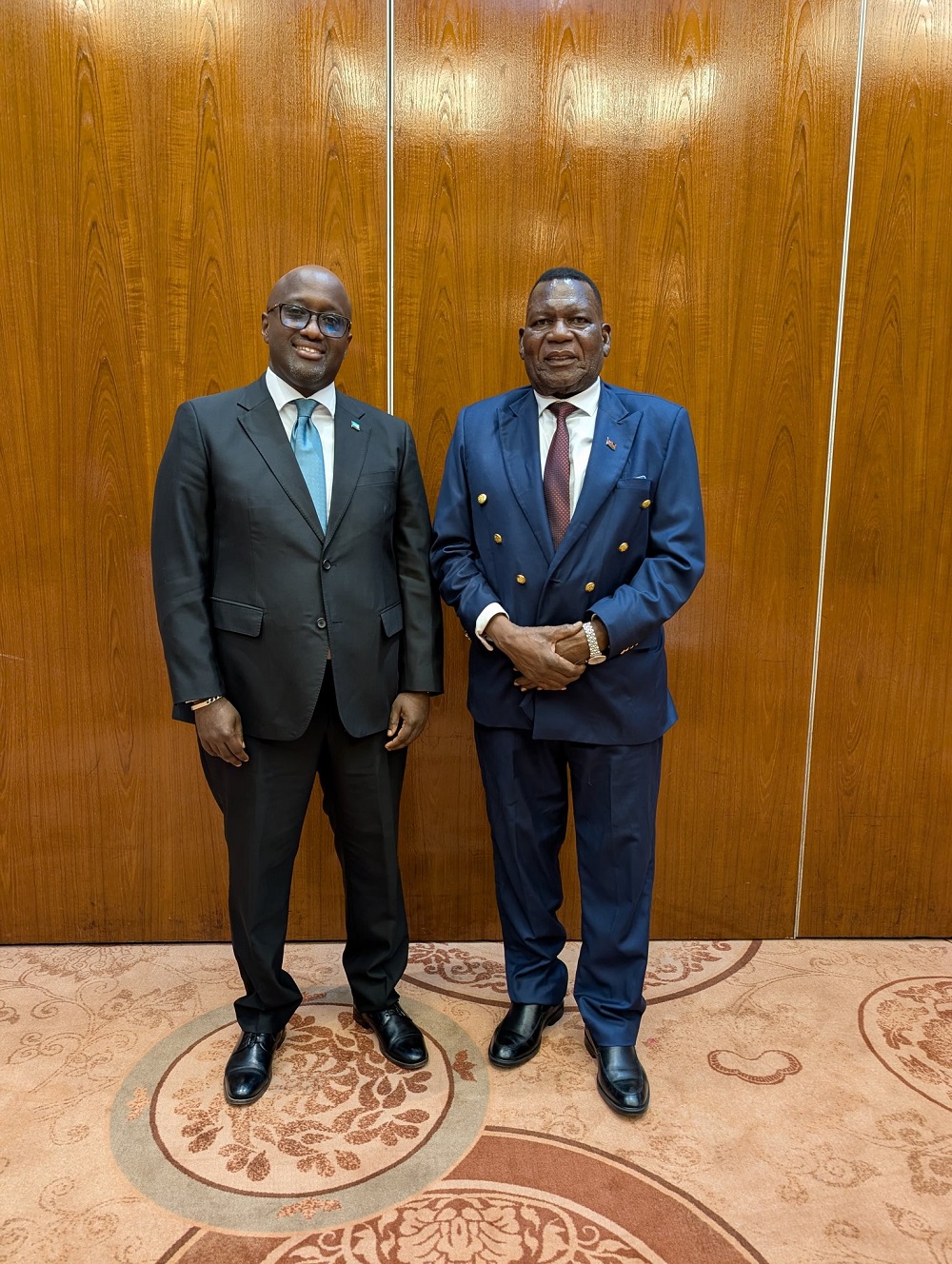
The two-day meeting, attended by foreign ministers from AU members under the framework of the 39th AU Summit, among others elected 10 members of the Peace and Security Council of the AU. Accordingly, Somalia, Democratic Republic of the Congo, Gabon, Uganda, Morocco, Lesotho, South Africa, Benin, Cote d’Ivoire and Sierra Leone are elected to serve the council for a two-year term.
The foreign ministers’ session also discussed discussed the AU’s strategic engagement with the G20, building on the momentum of the summit held in South Africa, and underscored the need for strengthening its cooperation with member states of the group to tap into possible sources of funding and finance the continent’s development programs.
In a concluding remark, Tete Antonio, Angolan Minister of External Relations and outgoing chair of the executive council, underscored the AU’s continued commitment to strengthening continental governance, advancing peace and security, and accelerating the implementation of Africa’s shared development agenda.
The session appreciated the tangible progress on the African Continental Free Trade Area Agreement and specialized agencies, stressing the need for applying innovative financing and inclusion of the private sector, civil society, and philanthropic foundations to accelerate the continent’s development.
The session also underscored the critical importance of AU’s 2026 theme on water and sanitation, framing water as a vital collective resource that must be preserved amid climate change, and as a tool for peace and cooperation.
“The session highlighted the huge gap between required and available investment in water and sanitation in Africa,” Antonio said, noting that 400 million people in the African continent still lack water for their daily livelihood, and over 800 million African people lack basic hygiene services.
The UN Office for the Coordination of Humanitarian Affairs (OCHA) said the allocation from the Central Emergency Response Fund will help more than 90,000 people. Additional funds from other donors are helping to kick-start response efforts.
With the storm raging across eastern and central Madagascar, local authorities have reported 31 people dead, four missing and 35 injured. Preliminary reports indicated that more than 250,000 people have been affected, with nearly 7,000 people displaced.
The office said more than 65,000 homes were flooded, damaged, or destroyed, and about 600 classrooms were rendered partially or completely unusable.
OCHA said the government has called for international support and is leading search-and-rescue, evacuation, shelter and food assistance efforts, including the distribution of some 800 metric tonnes of rice, with support from the world body and partners.
OCHA said the cyclone could affect central and southern Mozambique in the coming days.