According to SA News, the discovery was made by Dr. Massimo Meregalli from Italy and Dr. Roman Borovec from the Czech Republic.
These respected entomologists recently published their research on flightless weevils found in remote parts of the park. These tiny insects live in the soil, hidden under shrubs, and mostly come out at night, making them very hard to find and study. Therefore, their discovery required meticulous fieldwork in the Richtersveld’s challenging environment.
SA News quoted a statement by South African National Parks (SANParks) as saying, “With the support and guidance of Richtersveld National Park Nursery Curator Pieter van Wyk, the researchers explored the remote Armmanshoek Valley, an area not previously surveyed for soil insects.”
“Their efforts resulted in the identification of multiple new species, further confirming the Richtersveld as a hotspot of endemism and scientific importance,” it said.
To honor the park’s importance for conservation and SANParks’ support for research, the scientists named a newly found group and species “Richtersveldiella sanparkensis.”
This is the first insect species to be officially named after SANParks and Richtersveld National Park. The researchers have also previously honored the local culture by naming other groups, Khoisan and Nama, recognizing the long history of connection between the communities and this unique land.
“These discoveries highlight the importance of continued scientific exploration within protected areas and reinforce SANParks’ commitment to conserving not only iconic wildlife and landscapes, but also the often-overlooked species that form the foundation of healthy ecosystems,” SANParks said.
“The naming of Richtersveldiella sanparkensis stands as a lasting scientific tribute to the Richtersveld and SANParks’ ongoing dedication to biodiversity conservation,” it added.
To honor the park’s importance for conservation and SANParks’ support for research, the scientists named a newly found group and species “Richtersveldiella sanparkensis.”
Over the years, BRALIRWA’s involvement in Tour du Rwanda has evolved beyond sponsorship, becoming an integral part of the race’s identity and fan experience.
For the 2026 edition, scheduled to take place from February 22 to March 1, the leading beverage company will participate through its premium beer brand Amstel, which has long been a Gold Sponsor of the race for several consecutive years.
Celebrating performance and authenticity
At the heart of BRALIRWA’s Tour du Rwanda engagement is Amstel 100% PURE MALT, a brand whose values of authenticity, craftsmanship, and consistency align naturally with the discipline and endurance of professional cycling.
As part of its sponsorship, Amstel will once again award the daily stage winners, a tradition that has become a defining moment of each racing day, celebrating excellence, resilience, and achievement on Rwanda’s demanding routes.
Beyond the competitive aspect, BRALIRWA continues to elevate the Tour du Rwanda experience for fans by hosting After-Race Experiences at stage finishes. These moments bring spectators together to celebrate the day’s racing, reinforcing Tour du Rwanda as not just a sporting competition, but a shared national celebration.
Bringing fans closer
In line with its commitment to shared moments and friendship, BRALIRWA, through Amstel, will actively participate in the Tour du Rwanda Social Ride, a unique experience allowing cycling enthusiasts to ride selected race routes ahead of the professional peloton.
The Social Rides will take place on February 26 and March 1, 2026, with participants standing a chance to win exciting rewards. Across the two rides, four sports bicycles—two per ride—will be given away, alongside branded goodies and prizes, making the experience both inclusive and rewarding for cycling fans across the country.
BRALIRWA’s presence will further extend to the Tour du Rwanda Festivals, which will be hosted in four locations nationwide, including: Kigali, Huye, Rubavu, and Musanze.
At each festival stop, Amstel will add to the excitement by giving away one sports bicycle per festival, reinforcing its support for grassroots cycling enthusiasm while celebrating the diverse communities that make Tour du Rwanda a truly national event.
Responsible celebration at the core
As a leading beverage company, BRALIRWA has stated that all Amstel activities during the upcoming Tour du Rwanda 2026 will follow regulatory requirements and responsible drinking guidelines.
Alcoholic beverages will not be sold to persons under 18 or to pregnant women. The company also emphasizes the messages “Drink Responsibly” and “Don’t Drink and Drive,” highlighting its commitment to public safety and responsible consumption.
BRALIRWA’s partnership with Tour du Rwanda continues to blend world-class cycling, fan engagement, and responsible brand leadership, cementing Tour du Rwanda as a celebration that extends far beyond the race itself.
As part of its sponsorship, Amstel will once again award the daily stage winners. BRALIRWA, through Amstel, will actively participate in the Tour du Rwanda Social Ride, a unique experience allowing cycling enthusiasts to ride selected race routes ahead of the professional peloton.
These figures are part of the 2025 annual report released by African Parks, which manages the park in partnership with the Rwanda Development Board. The report highlights the park’s achievements across conservation, tourism, community development, and global recognition.
In 2025, Rwandan nationals and international tourists each accounted for 47 percent of visitors, while foreign residents made up 6 percent.
The park was able to cover its core operating costs through its own revenue, marking a milestone as the first park under African Parks management to achieve operational self-sufficiency.
Besides, Akagera earned international acclaim after being listed among the world’s top 25 must-visit destinations for 2026 by National Geographic. The recognition celebrates over a decade of restoration work that has reestablished the park as a Big Five destination, showcasing Rwanda’s growing presence in global conservation and tourism.
Akagera National Park received nearly 60,000 visitors in 2025.
Wildlife conservation milestones also marked the year. In June, 70 southern white rhinos were translocated from South Africa in the largest movement of its kind under the Rhino Rewild Initiative. Some of these rhinos have already given birth, signaling successful adaptation.
Routine wildlife monitoring continued, with 17 white rhinos and 7 black rhinos darted for tracking, along with elephants and lions. A ground survey counted 70 giraffes, while elephant identification projects documented 92 individuals, representing about 75 percent of the park’s estimated 142 elephants.
Tourism infrastructure expanded with the opening of Wilderness Magashi Peninsula, an exclusive retreat overlooking Rwanyakizinga Lake. The new facility strengthens premium tourism offerings and supports the park’s sustainability goals.
Law enforcement and anti-poaching efforts remained effective. Rangers completed over 21,000 field days, covering 134,076 kilometers in patrols. Only five animals were poached inside the park, while collaborative operations outside the park resulted in 135 arrests and 20 prosecutions. The number of illegal fires dropped dramatically, from 13 in 2024 to just one in 2025.
Community engagement and capacity building were a key focus. More than 124,000 community members participated in 30 outreach events, including the Rhino Velo Race, Rhino Foot Race, and Lion’s Cup football tournament. Over 4,000 individuals accessed the Savannah Learning Centre, nearly 2,000 visited the community library, and 4,300 students and teachers participated in school visits. The park also supported 30 local teachers in strengthening eco-clubs focused on biodiversity and climate change.
Community enterprises benefited significantly, generating $555,242 in revenue for approximately 1,200 individuals. Beekeeping cooperatives produced over 17 tons of honey, while fishing groups earned $122,356. Other income came from guiding services, hospitality initiatives, and procurement of goods and services from local businesses, contributing an additional $637,000. Through Rwanda’s Tourism Revenue Sharing Program, $886,379 was allocated for local development projects.
Infrastructure development in 2025 included the completion of the Gishanda Fish Farm Aquaculture Training Centre, fencing of Karenge Bush Camp, maintenance of Ruzizi Tented Lodge, and road upgrades totaling 27 kilometers, bringing the park’s operational road network to 511 kilometers. New ranger facilities, expanded gift shops, and a café kitchen were also completed.
Akagera National Park spans more than 1,200 square kilometers, covering the districts of Kayonza, Gatsibo, and Nyagatare.
Over the past 30 years, Rwanda has made significant efforts to restore the park, which was once heavily impacted by poaching, resulting in the extinction of some species.
In 2025, elephant identification projects documented 92 individuals, representing about 75 percent of Akagera National Park’s estimated 142 elephants.Akagera National Park is home to diverse species including giraffes.
The cemetery was established in 2011 after Remera Cemetery in Gasabo District was permanently closed. Remera had been in use long before 1994, and by the time it closed, 9,525 burials had taken place on seven hectares of land. Since its opening, Rusororo Cemetery has accommodated 13,396 burials across 18 hectares.
Rwandan law sets specific standards for burial plots, including maximum dimensions and spacing between graves, and allows multiple burials in a single grave if the family consents.
Despite these provisions, the remaining space at Rusororo is limited, prompting authorities to explore options for expansion.
According to Anselme Nkusi, the Director of Cons Tech Ltd, which manages the cemetery, “The land we currently have will last about seven to eight months. When additional space is needed, the City of Kigali relocates nearby residents to create more room for burials.”
Cremation has been legally permitted for over ten years as a potential solution to land shortages, but adoption remains low among Rwandans, who are often reluctant to burn the remains of loved ones. Since the law was enacted, only 28 cremations have been performed in Rwanda, primarily by foreign residents accustomed to this practice in their home countries.
Authorities have also considered stacking two coffins in a single grave to maximize space, but cultural sensitivities have made this approach difficult.
“We tried burying two people in one grave with family consent,” Nkusi said. “Some families initially agreed but later withdrew, insisting no additional burial should be added above. This illustrates the challenge of balancing practical needs with cultural preferences.”
Attitudes, however, appear to be shifting. A 2025 study by the Ministry of Unity and Civic Engagement found that 61 percent of respondents agreed that cremation could help address the growing shortage of burial space.
Of more than 12,000 people surveyed, 32 percent strongly supported cremation, 29 percent moderately supported it, while 34 percent opposed it and 5 percent were undecided.
Since its opening, Rusororo Cemetery has accommodated 13,396 burials across 18 hectares.
In a message posted on X on February 13, 2026, President Kagame praised Mottley’s renewed mandate, writing, “Warm congratulations to my sister, Prime Minister Mia Amor Mottley, on her well-deserved re-election.”
He emphasized that Rwanda values the strong friendship between the two countries, grounded in shared principles of self-determination, resilience, and commitment to delivering prosperity and dignity for our people.
“We look forward to further deepening our cooperation in the years ahead.I wish you and the people of Barbados continued success and progress,” he added.
Mottley secured a decisive victory after her Barbados Labour Party won all 30 seats in the parliamentary general elections. She defeated Ralph Thorne of the opposition Democratic Labor Party.
Addressing citizens after her victory, Mottley said her administration was committed to transforming the country, pledging continued progress in healthcare, public security, and transport.
Barbados, a Caribbean island nation covering 439 square kilometres, is known for its advanced tourism sector and its ability to attract foreign investment.
Rwanda and Barbados maintain strong bilateral relations. The two countries have signed cooperation agreements in several sectors, including aviation, paving the way for RwandAir to operate flights to Barbados.
In November 2022, Prime Minister Mottley inaugurated Barbados’ diplomatic mission in Rwanda during an official visit that followed President Kagame’s trip to Barbados earlier that year.
In February 2025, President Kagame held talks with Prime Minister Mottley and Daniel Chapo in Addis Ababa during the 38th Ordinary Session of Heads of State and Government of the African Union.
In a press statement, the members of the Security Council expressed grave concern at escalating violence in the states of Jonglei, Eastern Equatoria and throughout the country, emphasizing that under international law, individuals who order the commission of war crimes may be held accountable.
They expressed their full support for the UN Mission in South Sudan (UNMISS), and stressed that continued constructive cooperation between the host government and UNMISS is essential to sustaining peace and stability, facilitating safe and timely humanitarian access and ensuring the protection of civilians.
While reaffirming their commitment to supporting South Sudan’s peace process and working in partnership with the transitional government to achieve lasting peace and stability in the region, the members of the council called on South Sudanese leaders to engage in genuine inter-party dialogue about potential changes to the 2018 peace agreement, through an inclusive and transparent process.
They also reaffirmed their strong commitment to the sovereignty, independence, territorial integrity and national unity of South Sudan.
The vehicle was handed over to the Rwanda National Police at its headquarters in Kigali on February 13, 2026. The ceremony was attended by the leadership of Rusumo Power Company Limited (RPC Ltd), senior RNP officials, and other distinguished guests.
The donated unit is a MAN Model TGS 31.400 firefighting truck equipped with modern firefighting systems, capable of responding to incidents in standard environments as well as high-rise buildings. It is valued at €759,100 (over Rwf 1.3 billion).
Eric Mpayimana, head of RPC Ltd, said the donation reflects the company’s commitment to supporting communities beyond its core mandate of electricity generation.
“We chose to donate fire trucks to the countries where our power plant supplies electricity, including Burundi and Tanzania, and now Rwanda. This is part of our commitment to providing assistance in case of fire outbreaks so that they can effectively combat fires,” Mpayimana explained.
He added that this donation complements other projects that RPC Ltd is involved in, including building markets, youth centers, and hospitals, which contribute to connecting the people of these three countries.
ACP Boniface Rutikanga, the spokesperson for RNP, emphasized that the truck is a significant contribution to ensuring the safety of people and property, as the existing firefighting vehicles were insufficient.
“This donation increases our capabilities, as we aim to have such vehicles in more locations. The reason for this is the growth of infrastructure, urban expansion, and the increasing need for emergency services. We anticipate more trucks like this as we continue to improve our resources,” ACP Rutikanga said.
He also noted that the donation shows RPC’s awareness of the potential dangers associated with electricity when used improperly.
“RPC provides electricity to homes, but when used incorrectly, it can result in fires. Receiving this firefighting truck means they are also considering the safety of those who will use this electricity in case of accidents,” ACP Rutikanga added.
Rangira Bruno, the Mayor of Kirehe District, where the power plant is located, highlighted that the donation of the fire truck is another important step in RPC Ltd’s ongoing partnership with the government to support the welfare of the community.
The meeting comes as diplomatic efforts intensify to stabilize the country’s volatile east.
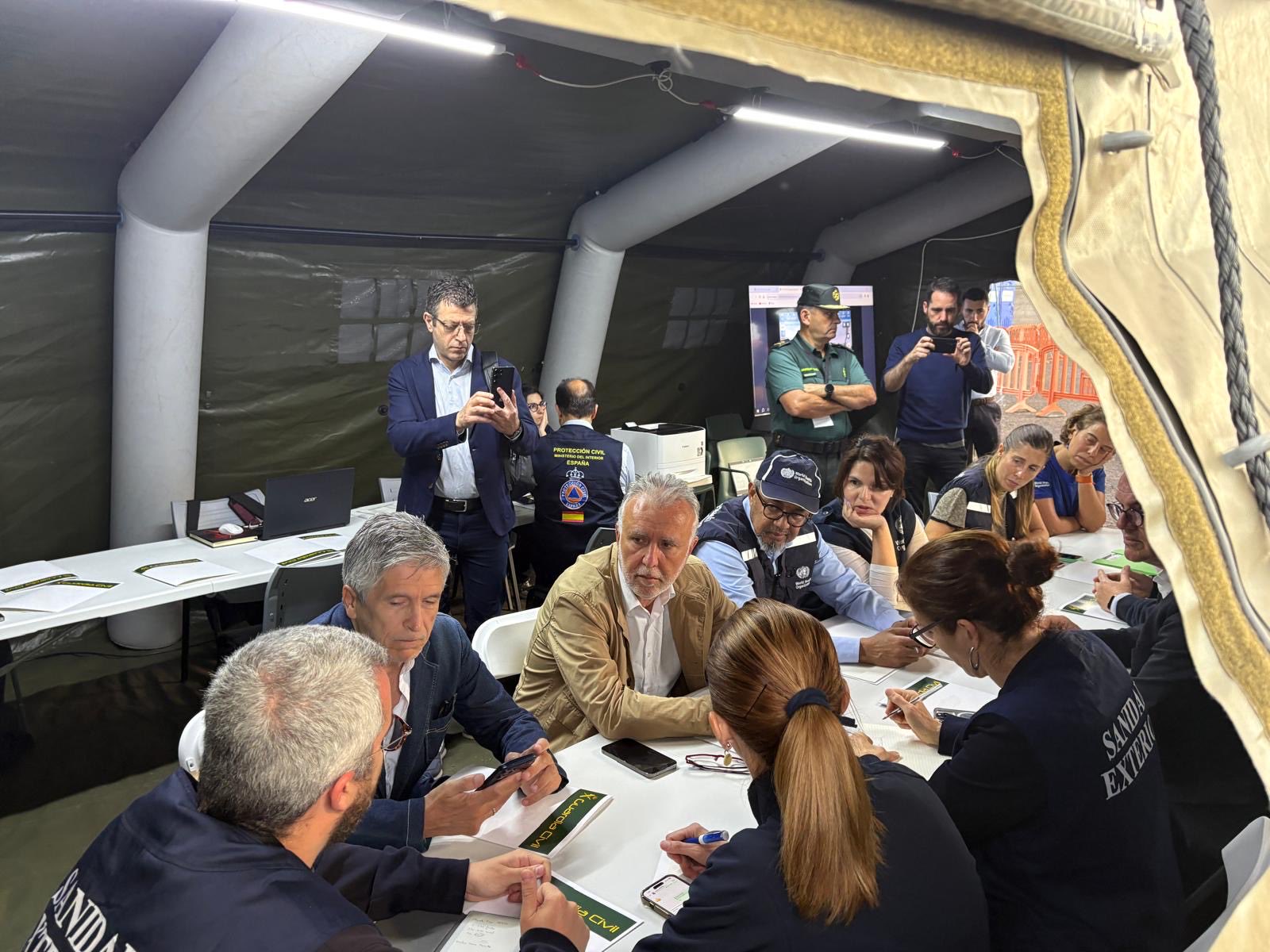
Van de Perre arrived on Thursday in the capital of North Kivu province aboard a helicopter, landing at Goma’s airport since the seizure of the city by the rebel group in January 2025 amid deteriorating security conditions. Her visit comes as part of efforts to operationalize a ceasefire monitoring mechanism envisaged within the broader regional peace architecture.
Following talks with Corneille Nangaa, leader of the Congo River Alliance (AFC), a politico-military coalition allied with the M23, the UN official said discussions focused on “the concrete implementation of the ceasefire monitoring and verification mechanism in line with the agreement signed by the AFC/M23 and the government of the DRC” under the Doha process.
“It is essential that commitments made in this agreement quickly translate into clear, credible and verifiable operational arrangements on the ground,” she said, adding that MONUSCO is mandated by the UN Security Council to support the implementation of a permanent ceasefire and to participate in verification efforts.
She noted that MONUSCO’s support would be provided gradually, depending on confirmed security arrangements and guarantees for UN personnel and assets, stressing that the mission’s actions would remain strictly within its Security Council mandate.
Speaking to the press on behalf of the AFC/M23, the group’s senior official Benjamin Mbonimpa welcomed MONUSCO’s role, saying it was expected to support the process “with logistical assistance” within the ceasefire verification framework. Mbonimpa noted that UN personnel would enjoy full security in areas under AFC/M23 control, while declining responsibility for areas outside its control.
Mbonimpa also said the group had “not been informed or invited” regarding the ceasefire proposed by Angola as part of regional mediation efforts, while accusing Kinshasa of repeated ceasefire violations on the ground.
In a separate statement released Friday, the Congolese presidency said to have accepted the principle of a ceasefire proposed by Angola, “in a spirit of responsibility and de-escalation” to pursue a peaceful resolution to the conflict, reaffirming Kinshasa’s commitment to regional stability and a return to lasting peace.
Angola, which has served as a key mediator in the DRC crisis since 2022, proposed late Wednesday that a ceasefire between the Congolese government and the M23 rebel group take effect on Feb. 18. The proposed date remains contingent on a public declaration of acceptance by the parties, according to Angolan authorities.
However, Kinshasa has yet to clarify whether it agrees to the proposed date for the ceasefire to take effect.
The M23 seized the eastern city of Goma in January 2025 and Bukavu, the capital of South Kivu Province, the following month.
In recent weeks, clashes have been reported near the town of Minembwe in South Kivu, according to local sources.
The summit, taking place from February 14–15, 2026, is being held under the theme: “Assuring Sustainable Water Availability and Safe Sanitation Systems to Achieve the Goals of Agenda 2063.” It marks the pinnacle of the AU Summit and brings together African leaders to deliberate on key political, security and development priorities.
Upon arrival at Bole International Airport, the Prime Minister was received by Ethiopia’s Minister of Peace, Mohamed Edris, and State Minister for Foreign Affairs, Ambassador Berhanu Tsegaye.
This year’s theme places water security at the center of Africa’s transformation agenda. With more than 400 million Africans lacking access to clean water, leaders are expected to discuss sustainable water management and sanitation systems as essential pillars for public health, climate resilience and conflict prevention. The discussions align with Agenda 2063, the AU’s long-term blueprint for inclusive growth and prosperity.
Beyond the thematic focus, the Assembly is expected to address high-stakes political and security issues. Leaders will review the situation in Sudan and South Sudan, deliberate on developments in the Sahel region, and appoint 10 new members to the Peace and Security Council, the AU organ responsible for decisions on peace operations and sanctions.
The summit also marks a leadership transition within the Union, as Angola hands over the rotating AU Chairpersonship for 2026 to Burundi.
On the margins of the summit, Prime Minister Nsengiyumva will attend the second Italy–Africa Summit on February 13, which will assess progress under Italy’s Mattei Plan aimed at strengthening political and economic partnerships with African countries.
On February 15, he is scheduled to participate in the AU High-Level Ad Hoc Committee on South Sudan, where regional leaders are expected to review the evolving security situation, assess progress in the implementation of the peace agreement, and deliberate on coordinated efforts to prevent further escalation of tensions.
In a statement issued on February 13, 2026, the presidency of the Democratic Republic of the Congo said the ceasefire requires both the government and the AFC/M23 coalition to remain in their current positions, halt reinforcements in conflict zones, refrain from repositioning forces for attacks, and stop receiving external support.
The presidency warned that attempts to expand positions or any actions violating the ceasefire monitoring framework, established under an agreement signed in Doha, Qatar on October 15, 2025, would undermine progress already made.
The Angola government proposed that the ceasefire take effect on February 18, two days after Lourenço hosted Tshisekedi alongside mediators appointed by the African Union, including Faure Essozimna Gnassingbé and former Nigerian president Olusegun Obasanjo.
Despite Tshisekedi’s acceptance, the Congolese government has previously been accused of violating ceasefires agreed with the AFC/M23 coalition and breaching signed peace accords, often intensifying military operations to retake lost territory.
Each time Congolese forces reportedly broke ceasefire terms, AFC/M23, citing its principle of “eliminating threats at their source”, responded with force and captured additional areas, including the cities of Goma and Bukavu, among other strategic locations.
On February 12, Olivier Nduhungirehe, Rwanda’s Minister of Foreign Affairs and International Cooperation, expressed skepticism about the Democratic Republic of Congo’s (DRC) willingness to honor a new ceasefire proposed by Angola, noting that Kinshasa has so far shown no political will.
“We can stack peace agreements or ceasefire declarations endlessly, but as long as Kinshasa shows no political will to stop its air and artillery attacks, as long as President Tshisekedi remains fixated on impossible military solution, and as long as the international community continues to turn a blind eye to Kinshasa’s actions, which violate all these agreements, it will be in vain,” he shared on X.
The AFC/M23 coalition has not yet commented on Angola’s ceasefire proposal, though it has repeatedly stated that political dialogue is the only viable path to ending the conflict in eastern DRC.