Japan has launched the first in a new generation of space rockets, hoping the design will make missions more affordable.
The Epsilon rocket is about half the size of Japan’s previous generation of space vehicles, and uses artificial intelligence to perform safety checks.
Japan’s space agency Jaxa says the Epsilon cost $37m (£23m) to develop, half the cost of its predecessor.
Epsilon launched from south-western Japan in the early afternoon.
Crowds of Japanese gathered to watch the launch, which was also broadcast on the internet.
It was carrying a telescope that is being billed by Jaxa as the world’s first space telescope that will remotely observe planets including Venus, Mars and Jupiter from its Earth orbit.
Jaxa said the rocket successfully released the Sprint-A telescope as scheduled, about 1,000km (620 miles) above the Earth’s surface.
Epsilon’s predecessor, the M-5, was retired in 2006 because of spiralling costs.
Jaxa said the Epsilon was not only cheaper to produce, but also cheaper to launch than the M-5.
Because of its artificial intelligence, the new rocket needs only eight people at the launch site, compared with 150 people for earlier launches.
Japan’s other recent space innovations included sending a talking robot to the International Space Station.
The Government of Rwanda through the Ministry of Youth and ICT (MYICT) in collaboration with the National IT Promotion Agency (NIPA) of South Korea has embarked on development of a comprehensive e-Government Master Plan.
The goal of e-Government Master Plan Project is to optimize the efficiency and effectiveness of government-to-government (G2G), government-to-citizen (G2C) and government-to-business (G2B) processes in Rwanda.
This has been revealed during the kick off meeting on e-Government Master Plan Project held on September 10, where Rwanda and experts from NIPA shared best practices on e-Government.
Rwanda adopted the National Information and Communication Infrastructure Policy (NICI Plan) in its third phase from 2011-2015 which will see the development and use of new services acquired during phases one and two; where e-Government is one of pillars in this phase is also a critical focus area in NICI plan.
The Minister of Youth and ICT, Jean Philbert Nsengimana speaking to the press after the kick off meeting stressed that Rwanda achieved a lot in ICT sector but it can also boost the service delivery in Rwanda.
“Our aim is to provide facilities to the citizens in Rwanda to access services without travelling vast distances; with the use of ICT in service delivery will be accessible online or via cell phones and will mainly drive the development of our economy,” Minister Nsengimana says.
Ambassador Hwang Soon-Taik of South Korea to Rwanda hails Rwanda for embracing e-Government; he stressed that “I see how Rwanda is planning and set goals of how to fully integrate e-Government in all services in the country; this is very important and will be a foundation to achieve more as we did in Korea.”
Meanwhile the Government of Rwanda (GoR) has embarked in an ambitious ICT for Development agenda in line with its Vision 2020 that seeks to transform the country into a middle income economy and information-rich knowledge based economy.
To achieve her vision, The GoR has put in place legal and regulatory framework and has invested in developing and rolling out key Information and Communication Technologies (ICTs) such as national fiber backbone, the Kigali Metropolitan network and Wireless Broadband networks that are the most critical enabler of all sectors of the economy.
Through this project, parties will assess the existing e-Government initiatives of the Republic of Rwanda, to identify new opportunities of e-Government initiatives of the Republic of Rwanda.
{Above: Hon Minister of Youth and ICT, Jean Philbert Nsengimana (L) and Ambassador Hwang Soon-Taik of South Korea to Rwanda (R).}
{{With esteemed names in the hypercar world, such as Ferrari, McLaren, Porsche, and to some degree Lamborghini, all vowing for the title as the most outlandish, crazy-fast, technologically advanced supercar on the market, we finally have our first bullet fired. }}
It comes from Porsche, just hours after the official unveiling of the 918 Spyder in Frankfurt: claiming the 918 as the fastest production car to ever lap Germany’s famed Nürburgring. Porsche’s rivals should be a bit worried.
For years now, Porsche has promised the 918 would be the ultimate in performance, yet many thought the plug-in hybrid would likely fall short of the McLaren P1 and Ferrari LaFerrari.
But achieving a 6 minute, 57 second lap time around the legendary 12.8 mile Nürburgring Nordschleife — demolishing the old record of 7:12 set by a Dodge Viper in 2011 — Porsche has proved that the 918 remains everything it promised.
{{An “artificial nose” capable of detecting the odor from germs that lead to blood poisoning could help save many lives and reduce medical costs, a conference heard on Sunday.}}
Scientists who developed the “nose” said it can show within 24 hours whether a patient’s blood has bacteria that cause sepsis, a gain of up to two days over conventional methods.
“The current technology involves incubating blood samples in containers for 24-48 hours just to see if bacteria are present,” said James Carey, a researcher at the National University of Kaohsiung in Taiwan.
“It takes another step and 24 hours or more to identify the kind of bacteria in order to select the right antibiotic to treat the patient. By then, the patient may be experiencing organ damage, or may be dead from sepsis.”
Unveiled at a conference in Indianapolis of the American Chemical Society, the “nose” entails a palm-sized plastic bottle filled with a liquid nutrient that helps bacteria to grow.
Attached to the inside of the bottle is a small array of chemical dots that change color in reaction to the odors released by the telltale bacteria.
The new device can identify eight of the commonest disease-causing bacteria, Carey said in a press release issued by the American Chemical Society.
The device builds on a prototype developed a couple of years ago at the University of Illinois. The earlier model used lab dishes and a solid nutrient material to feed the bugs, which took longer and was less sensitive, the press release said.
Other work in an “artificial nose” has yielded prototypes that can detect forms of cancer in a patient’s breath, and the presence of certain kinds of explosives.
Blood poisoning kills more than a quarter of a million people each year in the United States alone and inflicts treatment costs of more than $20 billion (15 billion euros) annually, according to figures cited in the presentation.
The device “can be used almost anywhere in the world for a very low cost and minimal training,” said Carey.
{{The US space agency (Nasa) has launched its latest mission to the Moon.
The unmanned LADEE probe lifted off from the Wallops rocket facility on the US east coast on schedule at 23:27 local time (03:27 GMT on Saturday).}}
Its $280m (£180m) mission is to investigate the very tenuous atmosphere that surrounds the lunar body.
It will also try to get some insights on the strange behaviour of moondust, which appears on occasions to levitate high above the surface.
In addition, LADEE will test a new laser communications system that Nasa hopes at some point to put on future planetary missions. Lasers have the capacity to transmit data at rates that dwarf conventional radio connections.
LADEE stands for Lunar Atmosphere and Dust Environment Explorer.
Collisionless environment
Its programme scientist, Sarah Noble, says the mission is likely to surprise a lot of people who have been brought up to believe the Moon has no atmosphere.
“It does; it’s just it’s really, really thin,” she told reporters.
“It’s so thin that the individual molecules are so few and far between that they don’t interact with each other; they never collide.
“It’s something we call an exosphere. The Earth has an exosphere as well, but you have to get out past where the International Space Station orbits before you get to this condition that we can consider an exosphere. At the Moon, it happens right at the surface.”
{{A team of doctors from the London School of Hygiene and Tropical Medicine have introduced an innovative, low cost, smartphone that is capable of fixing various eye ailments.}}
The project’s team leader is Dr Andrew Bastawrous, they are currently in Kenya where they are expected to handle 5000 cases.
The equipment used in the study, which has been running for five years and is now in its final stages, is a smartphone with an add-on lens that scans the retina, plus an application to record the data.
The technology is deceptively simple to use and relatively cheap: each ‘Eye-Phone’, as Bastawrous likes to call his invention, costs a few hundred euros (dollars), compared to a professional ophthalmoscope that costs tens of thousands of euros and weighs in at around 130 kilogrammes (290 pounds).
Bastawrous said he hopes the ‘Nakuru Eye Disease Cohort Study’, which has done the rounds of 5,000 Kenyan patients, will one day revolutionise access to eye treatment for millions of low-income Africans who are suffering from eye disease and blindness.
With 80 per cent of the cases of blindness considered curable or preventable, the potential impact is huge.
Data from each patient is uploaded to a team of specialists, who can come up with a diagnosis and advise on follow-up treatment. The results are also compared to tests taken with professional equipment to check the smartphone is a viable alternative.
{{Eye phone}}
Bastawrous says his ‘Eye-Phone’ has proved its worth, and can easily and accurately diagnose ailments including glaucoma, cataracts, myopia and long-sightedness.
Treatments range from prescription glasses and eye drops to complex surgery that is conducted once every two weeks at a hospital in Nakuru, the nearest big town. So far, up to 200 of the 5,000 people involved in the study have had surgery to correct various eye ailments.
{{Uganda Registration Services Bureau (URSB) has developed a Mobile Vital Record System (Mobile VRS) that uses both online and offline technologies to record births and deaths in the country.}}
The pilot study that started in 2010 and currently in 135 government hospitals, helps birth attendants register births by dialling *162# on UTL and *153*162# on MTN free of charge under the supervision of medical head or parish chief for births outside hospital. At least 57% of births are carried out in a hospital.
URSB is mandated to register businesses, civil registrations and collection of non-tax revenue and oversee delivery of birth and death registration services in Uganda.
Bemanya Twebaze, the registrar general URSB, said,“We want a system where census is done every day. Why do we need a periodical census? This programme will help the government to plan for education, health and other needs of the public.”
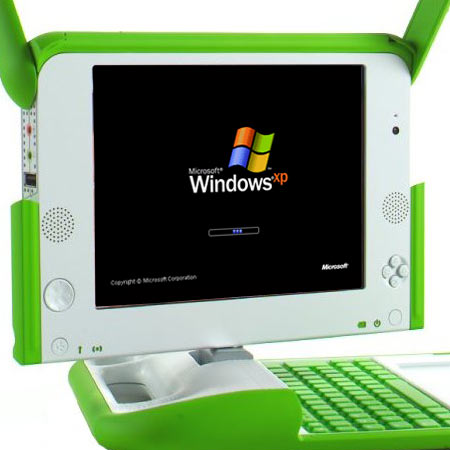
{{Microsoft says that Windows 8.1 — the first major update to it’s radically altered operating system — will arrive as a free update to existing users on October 18.}}
The new update is not another huge re-imagining of Windows in the way that Windows 8 was. Instead, it focuses on a handful of substantial improvements to its touch-friendly user interface, such as improved multitasking and a better Start screen.
More importantly, this update will mark a lot of firsts for Microsoft.
Windows 8.1 will be the first annual, incremental update to add new features to Windows, and it will be the first time new features will be added for free.
Although the company has previously issued “Service Pack” updates for Windows, those mostly consisted of bug fixes and security updates.
There are good reasons for Microsoft’s new approach to updates.
The old strategy made sense in the era of CD-ROMs, but software updates can now more consistently and effectively reach consumers via the internet. It makes sense to roll out upgrades and improvements when they’re ready, instead of waiting for a huge release every three to five years.
And since Microsoft is pushing towards becoming more of a devices and services company, it needs to more tightly the Windows 8 experience.
The easiest way to get people on board with that? Give updates away for free.
It may seem odd that Microsoft is just handing out its market-dominating PC operating system for free, when even Apple still charges for OS X. But times are changing.
Mobile OS updates are always free, and Microsoft built Windows 8 to work just as well on a tablet as on a desktop. Charging for an incremental update would deter a large subset of Windows 8 users from bothering with the update at all.
Instead, when October 18 rolls around, Windows 8 users will have little reason to avoid the prompt to update its system software. It will make computing easier for everyone.
For the first time, Microsoft will offer a free Windows update
{{Samsung Electronics has continued to try and fill every single possible niche with a dedicated product, and has now launched a child friendly version of its Galaxy Tab 3 tablet.}}
Samsung said that the Galaxy Tab 3 Kids was built specifically for children with the educational tools and safety features parents want.
“It’s no secret that kids are using technology more than ever before,” said JK Shin, CEO and Head of IT & Mobile Communication at Samsung Electronics.
“We saw an opportunity to create a device just for kids that provides them with an intuitive, fun and kid-friendly user experience filled with rich, interactive and educational content that parents will love.”
Samsung Galaxy Tab 3 Kids comes pre-loaded with top ranked chidren’s apps and brand new Kid’s Store aimed at driving the educational possibilities of technology for kids.
Pre-loaded content includes educational, games, entertainment and e-book apps. The tablet also offers parents the ability to select the apps they want their kids to have access to using the Application Manager.
The tablet also includes a Time Management feature that allows parents to set specific time periods for use.
When the designated use time is up, a password protected lock screen appears, requiring a parent or adult to enter the password to unlock the device. This tool will help parents ensure the time their children spend on smart devices is balanced.
Technical specifications include a 1.2GHz dual processor, 1GB RAM, 3 megapixel front-facing camera and 1.3 megapixel rear-facing camera.
The Samsung Galaxy Tab 3 Kids will be available in Korea in early September and subsequently available elsewhere.
The Minister of Youth and ICT, Jean Philbert Nsengimana has said that ICT will contribute in making services available in Rwanda where everyone will access them while using technology.
Nsengimana made the remarks Thursday, during an ICT Literacy and Awareness Campaign held at Rusizi District .
The two-day campaign has been organized by the Ministry of Youth and ICT (MYICT) in collaboration with other partners.
During this campaign Government institutions and private companies demonstrated their online and SMS-based services they offer through a two day expo.
Alexia Musanganire, 48, a mother of three said that she learnt how to manipulate the computer during the campaign in Rusizi; she commends the Government of Rwanda for initiating such a program; “I’m able to access different services online and I am able to communicate with friends and family members using technology,” said Musanganire.
The Minister of Youth and ICT, Jean Philbert Nsengimana speaking to the press noted that using ICT will help Rwandans access different services.
“We need to increase the amount and quality of services that are available on technology because they will work as pull factors, they will attract more people; if you know that by just having a phone you can get your civil registration completed without travelling to the sector ‘s office then you realize that a phone is an investment.”
He added, “ICT will facilitate Rwandans in accessing opportunities like jobs and markets. Three measures taken will open a new era of ICT development in Rwanda: it’s all about awareness and education; affordability and making services available.”
During the campaign One Public Access Point of TV set, Computer and internet was opened at Bugarama Sector in Rusizi District.
The purpose of this campaign was to drive the awareness and usage of ICT services, content and applications, to increase the ICT Literacy, educate and train Rwandans and business people on the potential of ICT to drive competitiveness, efficiency, transparency and civic participation.
The government has invested in information and communications technology (ICT). Since the inception of the first national ICT strategy and plan in 2000, Rwanda has significantly transformed the way business and society uses technology.
The Ministry of Youth and ICT in collaboration with other Ministries and various stakeholders in ICT promotion adopted the five-year ICT literacy awareness campaign.
The campaign was officially launched in January in Rulindo District.So far one District per province across Rwanda hosted this campaign.