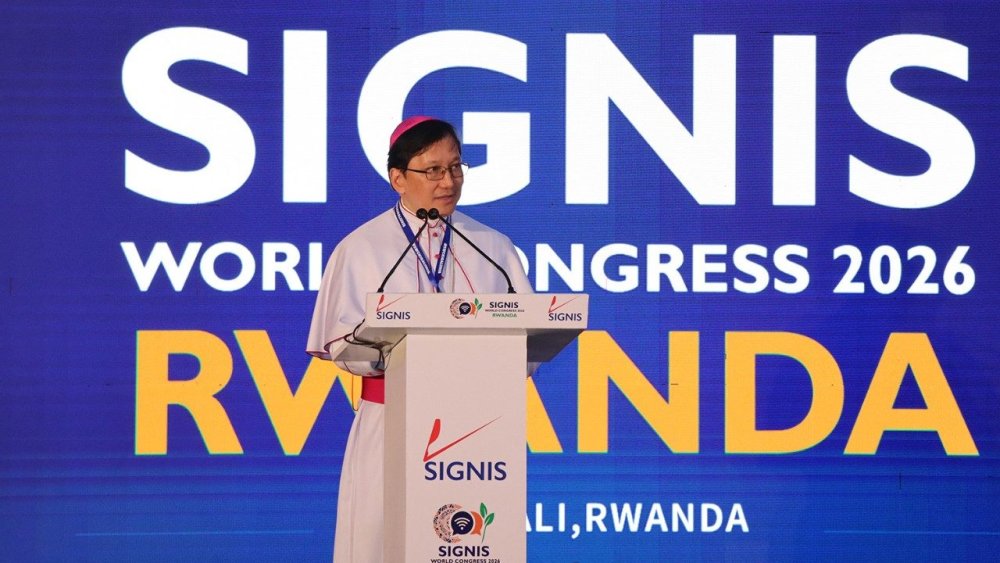
Held under the theme “Digital Communication for Cultural Harmony and Environmental Well-being,” the congress is examining how communication can be used to strengthen relationships, address global challenges and support positive social transformation. In a message delivered on behalf of Pope Leo XIV by Rwanda’s Apostolic Nuncio, Archbishop Arnaldo S. Catalan, the Pope emphasised that digital communication goes beyond sharing information, saying it also shapes culture and influences how people understand the world.
The message, signed by Vatican Secretary of State Cardinal Pietro Parolin, referenced the Pope’s Encyclical Magnifica Humanitas, noting that online platforms have the power to influence collective consciousness.
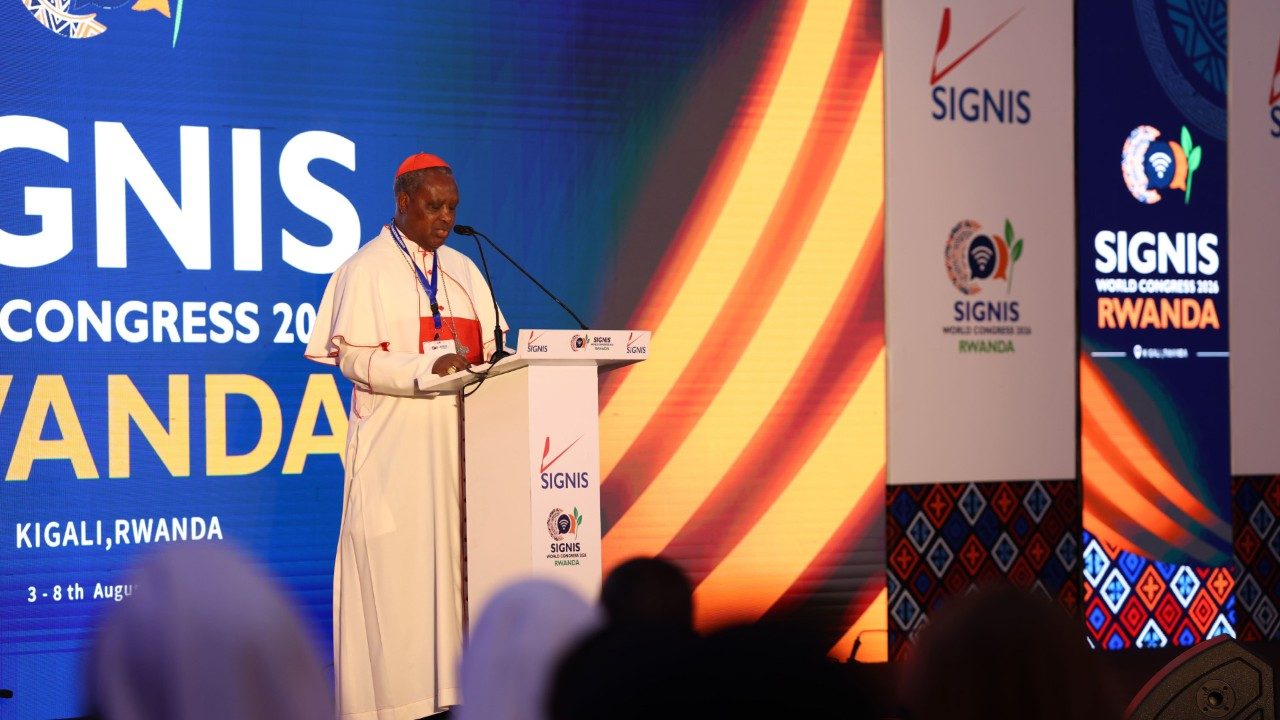
Archbishop Antoine Kambanda, Archbishop of Kigali and President of the Episcopal Conference of Rwanda, called on media professionals to use communication as a tool for healing, reconciliation and promoting solidarity.
Reflecting on Rwanda’s history, particularly the 1994 Genocide against the Tutsi, Cardinal Kambanda warned about the consequences of the misuse of media, which was used to spread hatred and contribute to violence.
He urged participants to use the congress as an opportunity to reflect on the challenges created by harmful communication practices and explore ways of ensuring media serves peace and unity.
Paolo Ruffini, Prefect of the Vatican Dicastery for Communication, highlighted the importance of human connections in an increasingly digital world, saying communication should begin with people rather than technology.
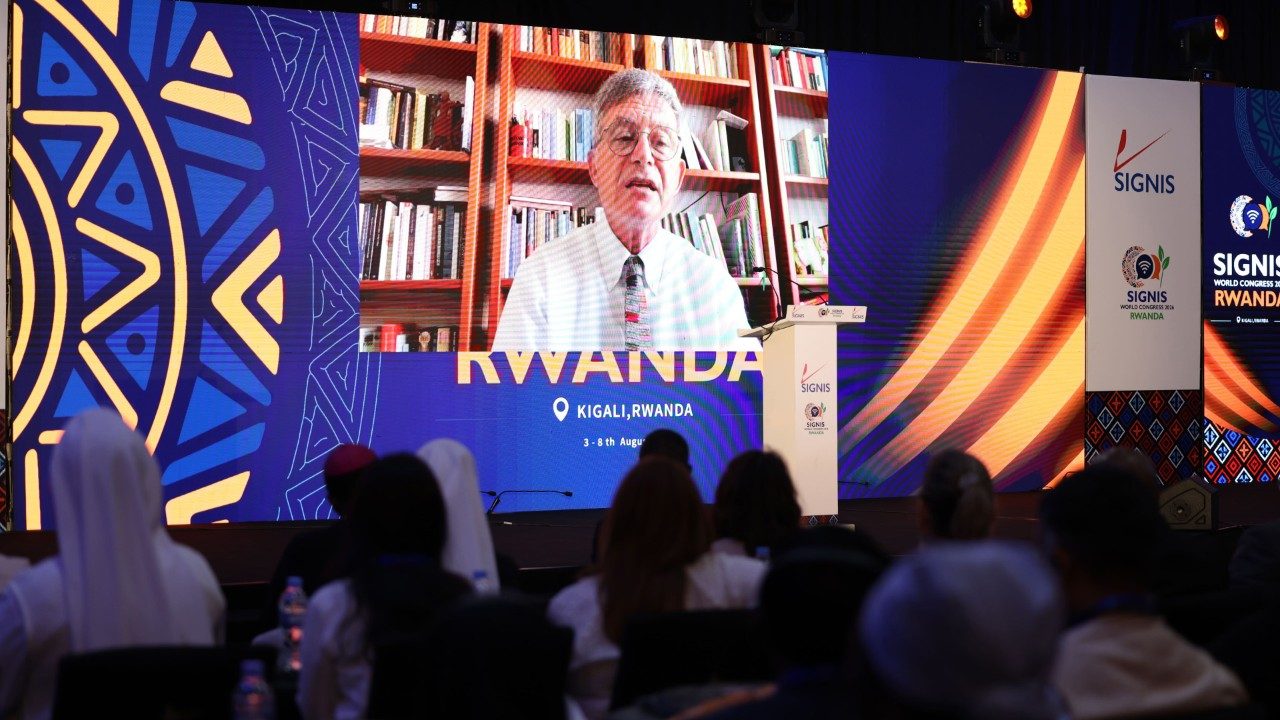
SIGNIS President Helen Osman called for stronger networks among communicators to promote Christian solidarity and unity, while SIGNIS Africa President Fr. Walter Ihejirika urged Catholic media organisations to work together to build credible platforms that serve both the Church and society.
The congress, which runs until August 8, is bringing together Catholic communicators to exchange ideas, strengthen partnerships and discuss the future of communication across cultures and regions.
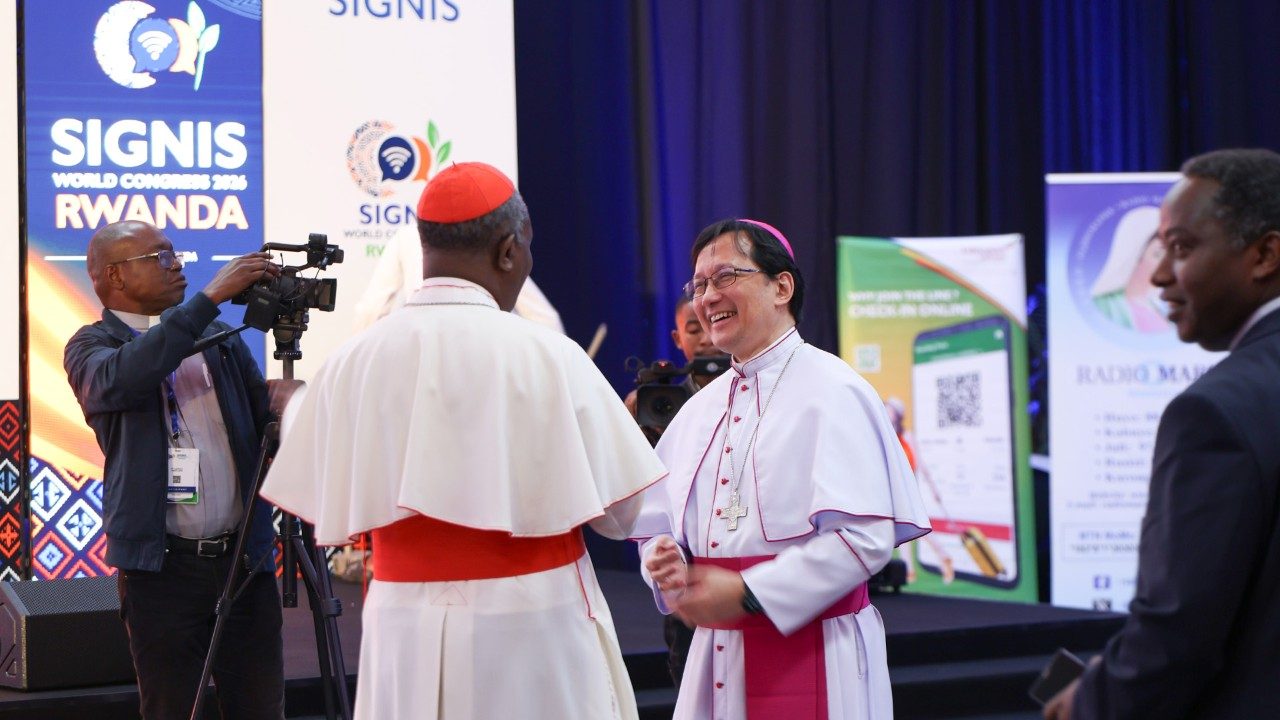
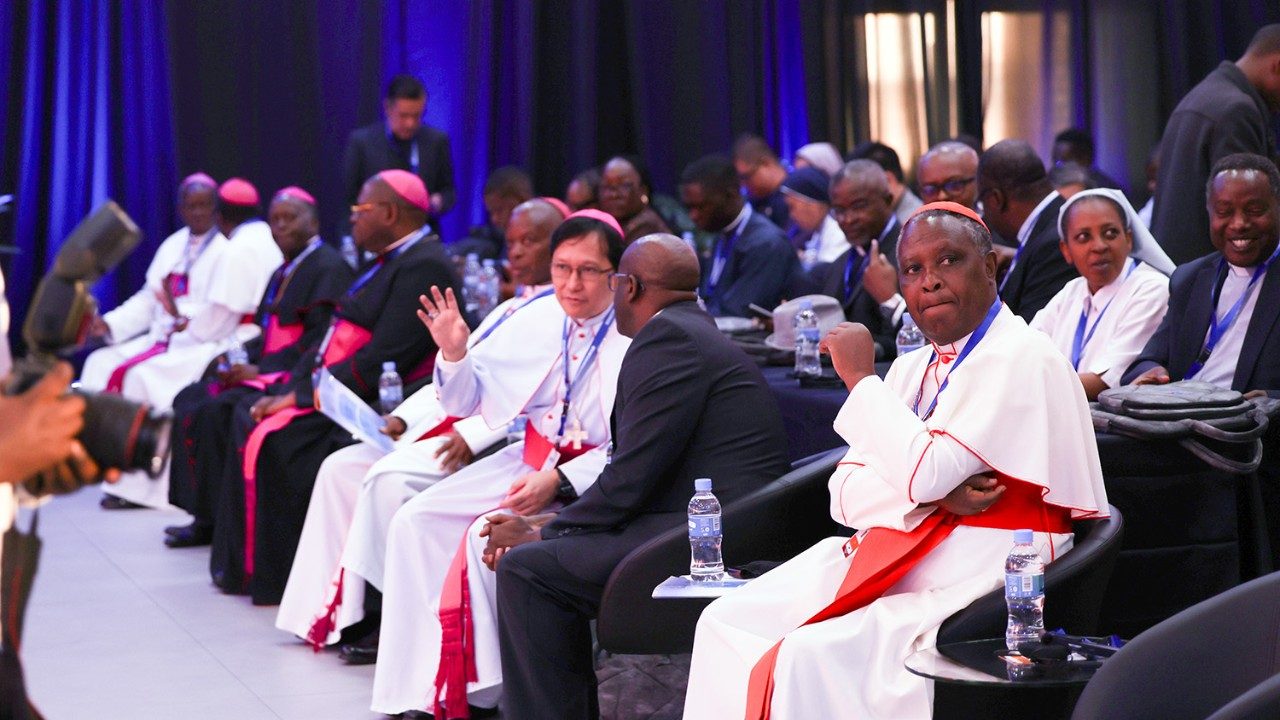
Archbishop Arnaldo S. Catalan delivered Pope Leo XIV’s message calling for digital communication that contributes to cultural harmony and human connection.Archbishop Antoine Kambanda urged communicators attending SIGNIS World Congress 2026 to promote peace, solidarity and reconciliation through responsible media use.Paolo Ruffini called on communicators to remember that communication begins with people, not technology, as SIGNIS World Congress 2026 opened in Kigali.The SIGNIS World Congress 2026 brought together Catholic communicators in Kigali to reflect on the future of media and its role in building harmonious societies.SIGNIS World Congress 2026 opened in Kigali with a call for media professionals to use communication as a tool for unity, reconciliation and social healing.
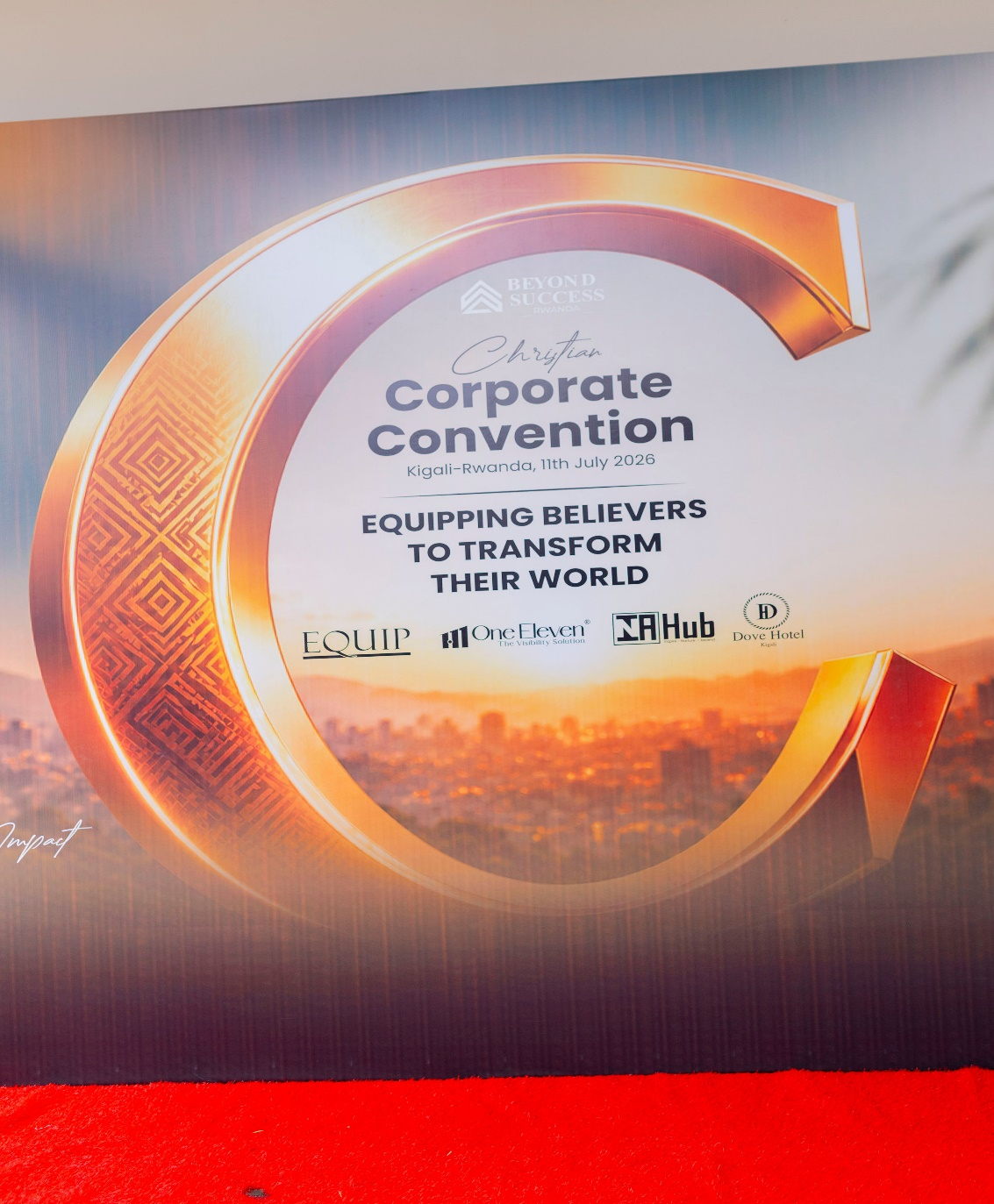
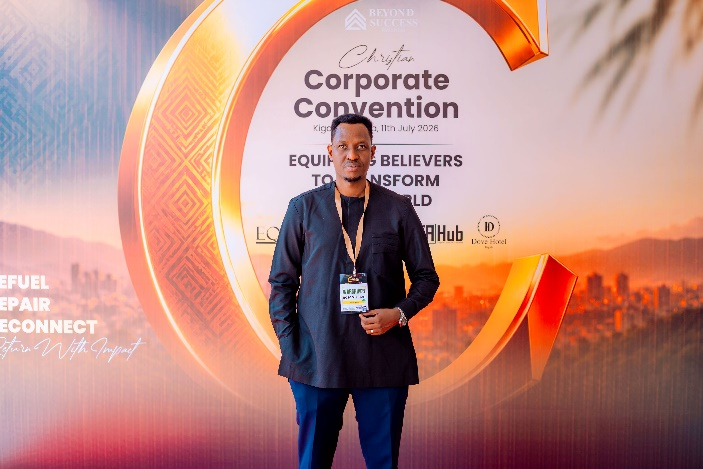
That uncomfortable question sat at the center of the inaugural Christian Corporate Convention, held on July 11 in Kigali and organized by Beyond Success Rwanda under INA Hub.
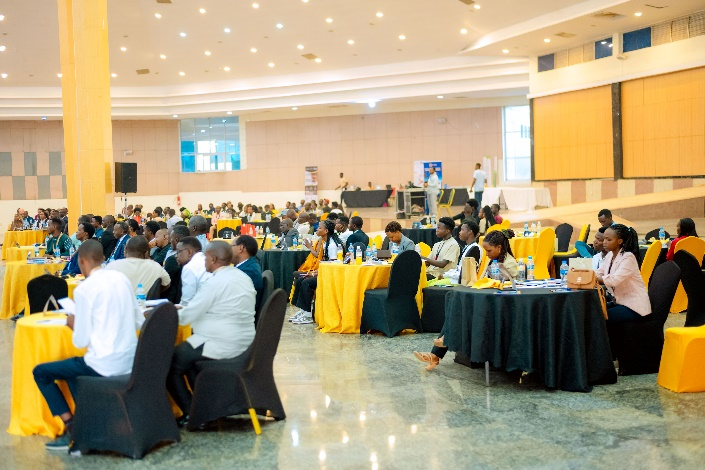
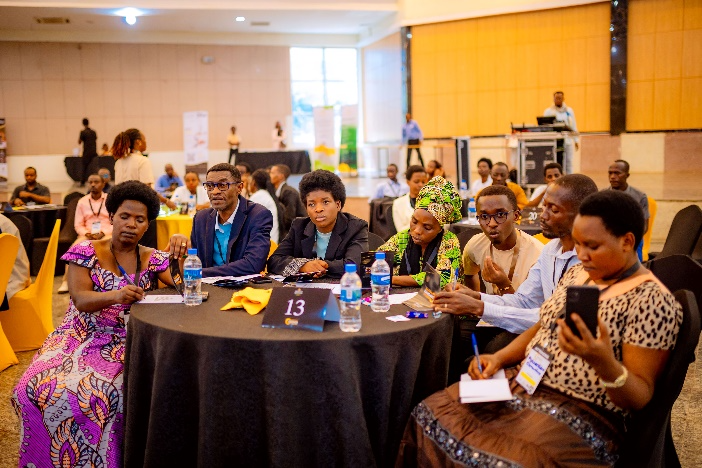
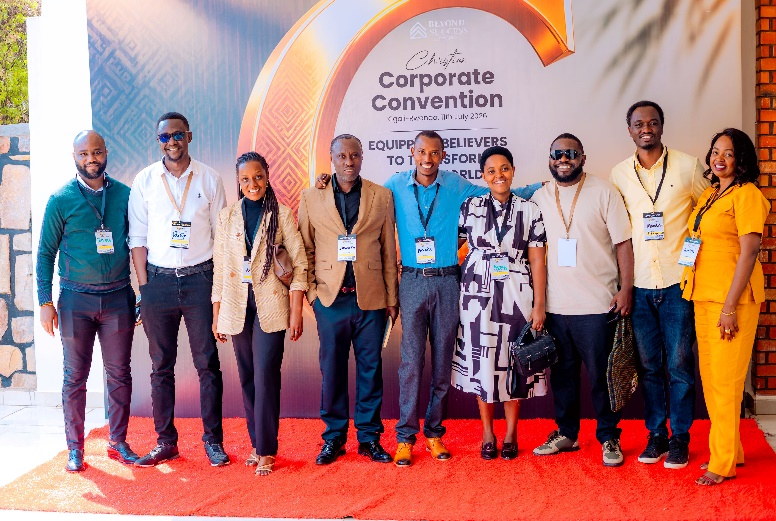
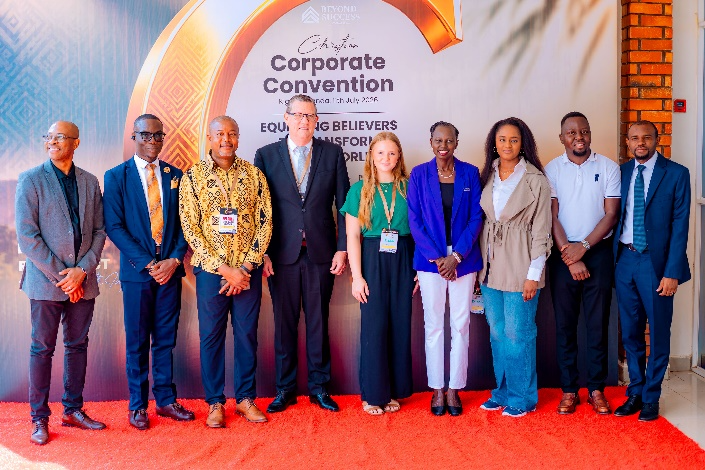
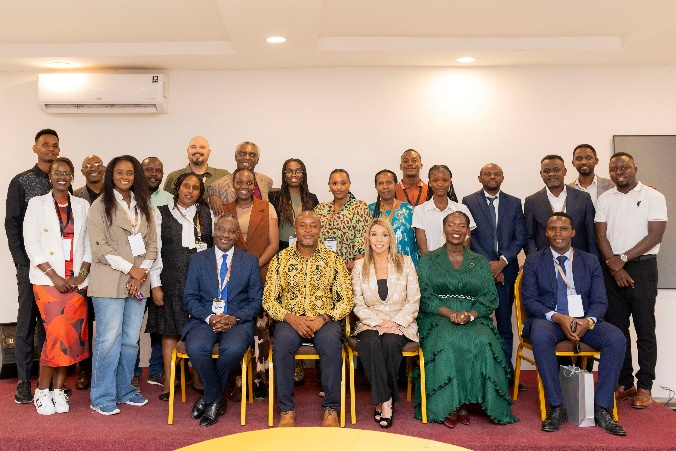
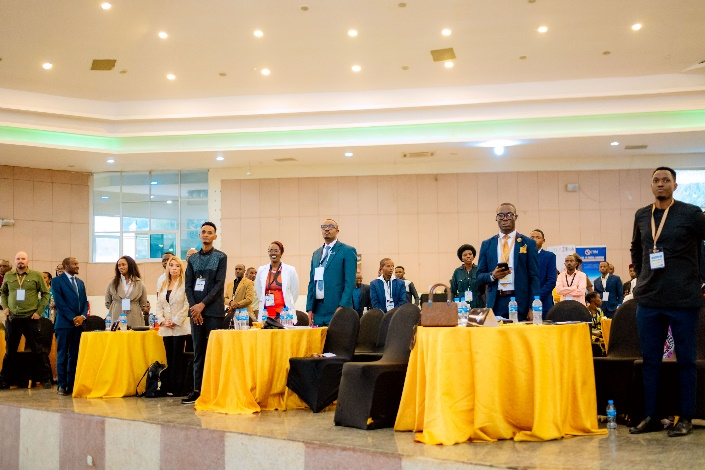
The gathering brought together more than 170 professionals, entrepreneurs, executives and organizational leaders from Rwanda, alongside delegates from Kenya, Liberia, Eswatini, Malawi, Nigeria, Senegal, Burundi and the United States.
They did not come simply to attend another leadership conference. They came for what organizers described as a leadership pit stop. A moment to refuel, realign, reconnect and return better equipped to make a difference where they work and lead.
Unlike most conferences, the Convention was built around a single premise. Knowing your calling and living it out in the workplace are two very different things. Too often, the gap between the two remains unaddressed.
Rather than discussing that reality from a stage, organizers chose to put it on trial.
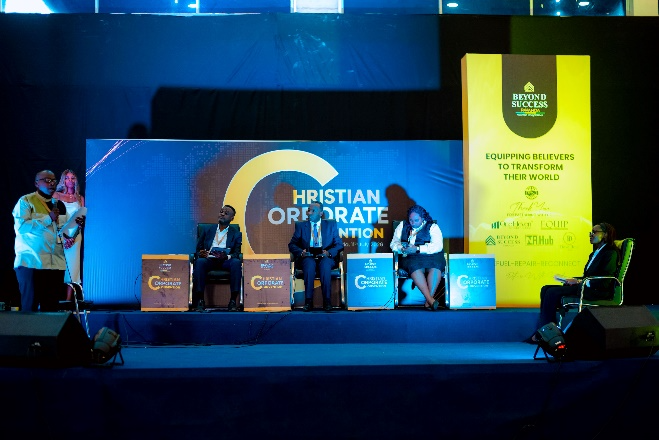
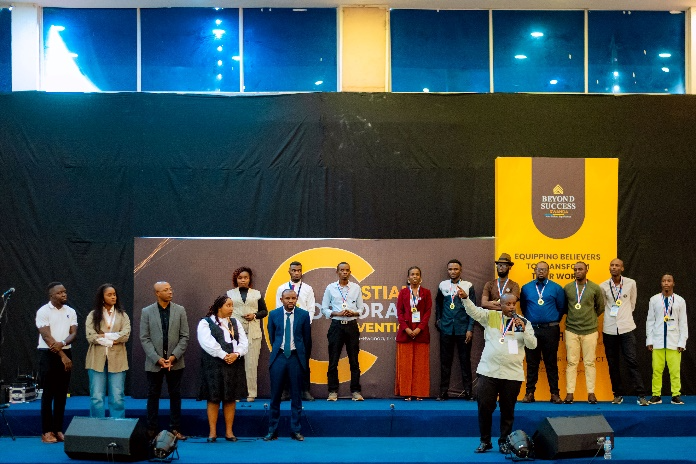
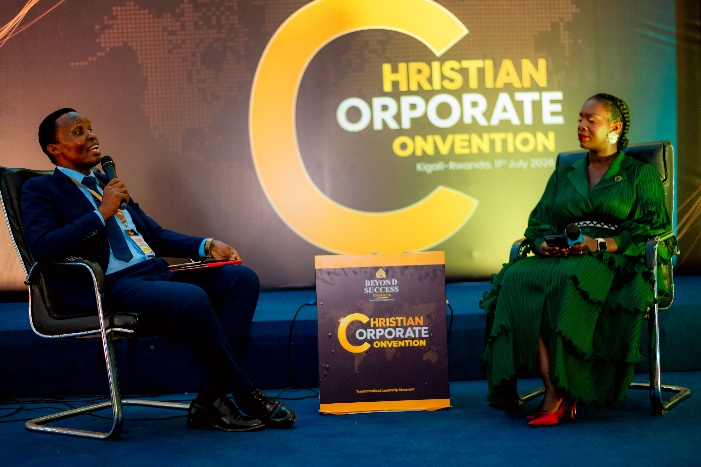
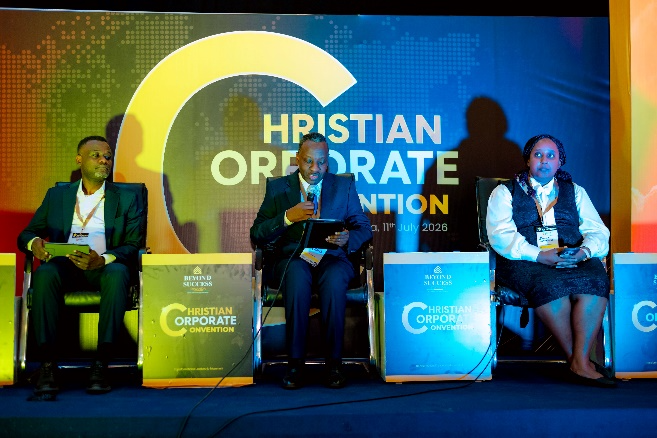
Members of the Kingdom Marketplace Courtroom panel examine the case during a symbolic trial that challenged Christian professionals to reflect on their influence and impact in the workplace.
In one of the Convention’s most iconic sessions, the Kingdom Marketplace Courtroom, the influence of Christian professionals was put on trial.
The charge: Despite occupying positions of authority, expertise, and influence across every sector of society, they had failed to significantly transform the marketplace.
The prosecution presented its case. The defense responded. Witnesses testified. Then the panel of judges, led by Chief Judge Dr. Norman Paul Désiré alongside Mr. Bosco Ruhinda and Mrs. Betsy Sheila from Kenya, delivered its verdict.
Guilty, with mitigating circumstances.
The judges acknowledged the complexity of today’s workplace and the pressures professionals face. Even so, they concluded that difficult environments do not remove the responsibility to lead with integrity, ethical courage, and intentional influence.
Their symbolic sentence challenged every participant to return to their workplace committed to servant leadership and measurable, tangible impact.
It was a theatrical session, but it carried the Convention’s central message.
Leadership is not measured by intentions; it is measured by application.
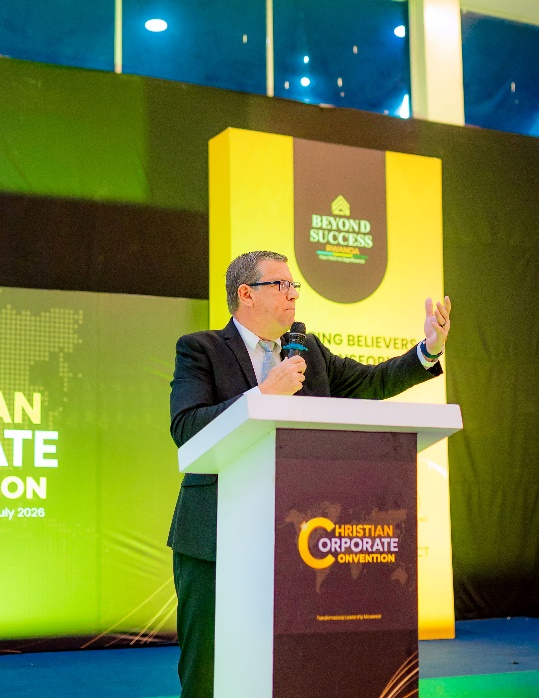
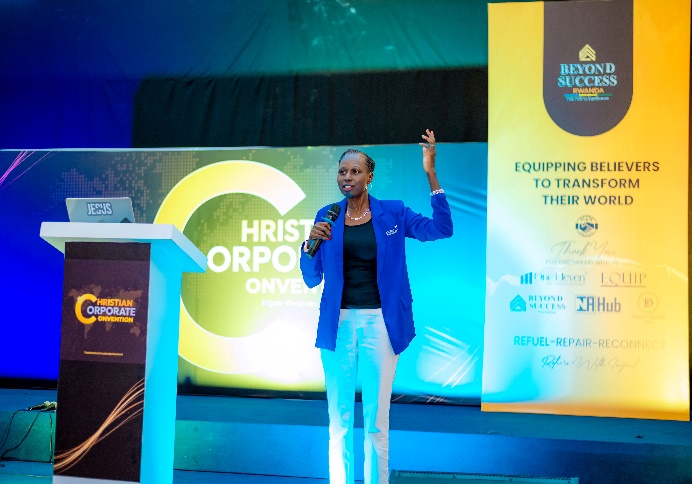
Mr Ray Popham-the vice president of beyond success Global, delivering his keynote address
That same challenge echoed through the keynote address delivered by Ray Popham, Vice President of Beyond Success Global.
He reminded participants that faith was never intended to remain within church walls but should become visible through the way people work, lead and serve.
Quoting fourth-century theologian St. John Chrysostom, he reflected on work as an act of worship.
“You can see this altar lying around everywhere, both in streets and in marketplaces… you invoke the Spirit, not by speech, but by deeds.”
For Popham, the marketplace itself is an altar where professionals worship God through excellence, integrity and service. Every decision, every meeting and every interaction becomes an opportunity to add value and reflect the values they profess.
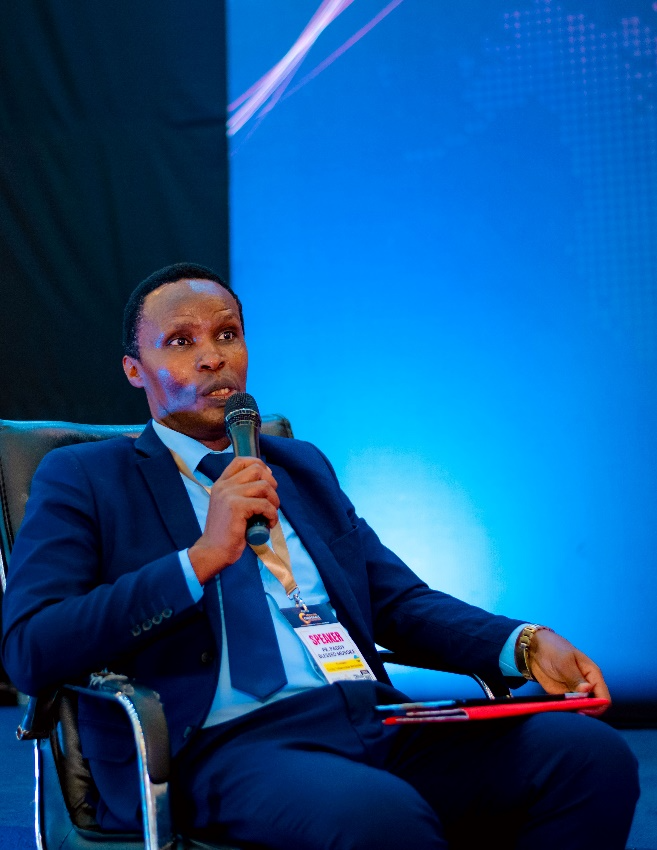
Pr. Paddy Blessed Musoke, leading the legacy chair session
The conversation deepened during the Legacy Chair Conversation with Pastor Paddy Blessed Musoke, with over 16+ years of experience in equipping Christian professionals across Africa.
He observed that Christian professionals are a great but scattered army, often working in isolation. As a result, collective influence is weakened by fragmentation rather than strengthened through collaboration.
He challenged leaders to intentionally build relationships across industries, organizations and sectors, noting that sustainable transformation begins with personal responsibility before extending to teams, institutions and society.
Throughout the day, participants were repeatedly invited to examine not only their organizations, but themselves.
One question, in particular, stayed with many long after the sessions ended. Do people follow you because they want to, or because they have to?
It is a simple question, yet one that strips leadership down to its foundation, reminding every leader that genuine influence is earned through character, trust and service rather than position or authority.
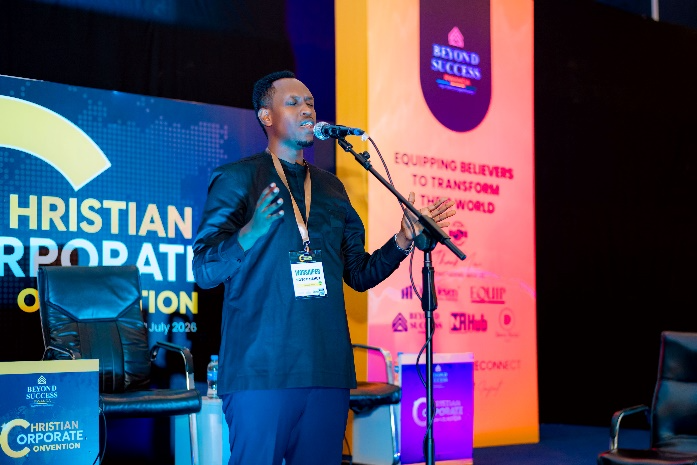
The Convention also featured a worship experience led by renowned gospel artist Bosco Nshuti, creating moments of reflection between the leadership conversations.
VIP participants later gathered for an exclusive Lunch and Learn, where discussions became even more practical, exploring how the day’s lessons could be implemented within businesses and organizations.
Unlike most conferences, however, the Christian Corporate Convention does not end when participants leave the venue.
Those in the VIP experience will now enter a one-month Leadership Coaching Cohort, receiving continued coaching, accountability and practical guidance as they implement what they committed to in their workplaces.
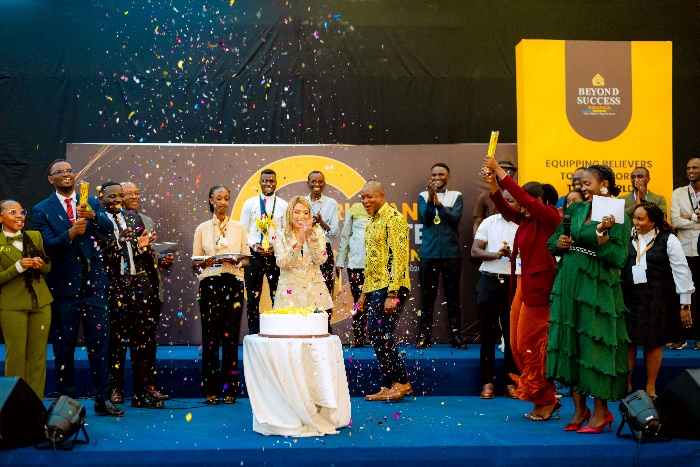
The gathering also marked another important milestone for Beyond Success Rwanda as the organization celebrated five years of equipping individuals to maximize their potential and bring positive impact in their communities through roundtable discussions.
Individuals whose partnership has significantly contributed to the movement’s growth over the past five years were recognized during the celebration.
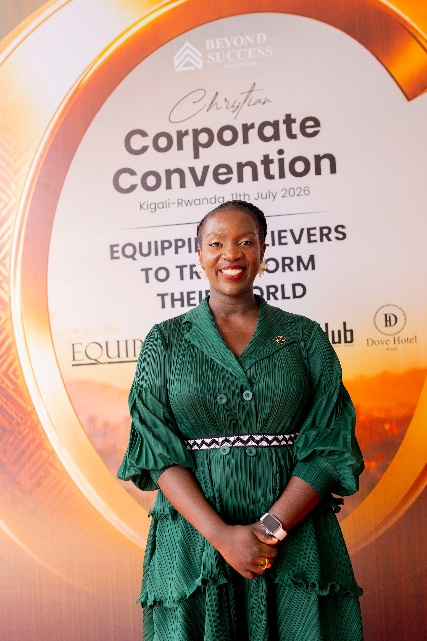
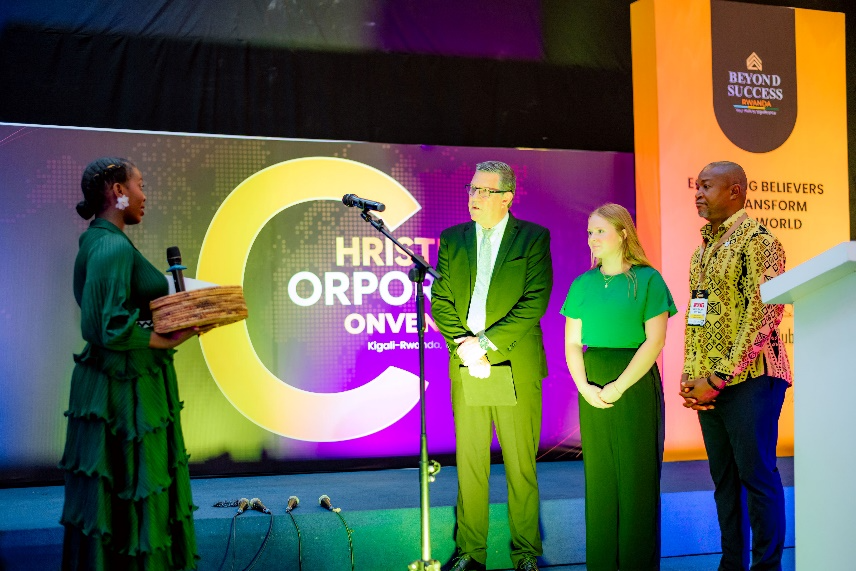
Reflecting on the day’s significance, Country Coordinator Amanda Mihigo described the Convention as the beginning of something much larger than a single event.
“The Convention has come to an end, but the journey is just beginning. We are going back as equipped believers, ready to transform our world. Thank you for believing in this vision and for becoming part of this movement. Now, let’s go back and make a difference.”
That sense of purpose was shared by participants from across the continent.
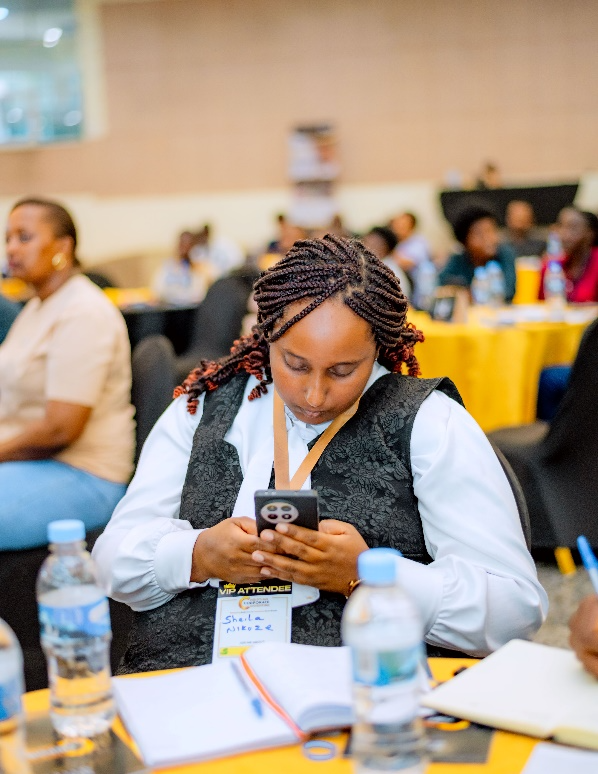
Sheila Nikuze Munyira from Beyond Success Kenya said the Convention reminded her that leadership carries responsibility beyond individual success.
“We came to be recharged, and we leave challenged to become a greater influence in our different spheres of leadership. This experience reminded us to discover our purpose, live it and love it.”
For a first edition, the Christian Corporate Convention exceeded expectations.
Nine countries. More than 170 leaders. A courtroom that challenged its own audience before asking them to change the world around them.
Perhaps the most interesting verdict was not the one delivered from the judges’ bench.
It is the one that will be delivered over the next twelve months, in boardrooms, businesses, government offices, classrooms and communities, as participants return to prove whether the Convention was simply an inspiring event or the beginning of a movement capable of transforming the marketplace.
If the conversations in Kigali are any indication, many will already be counting down to the next Christian Corporate Convention.
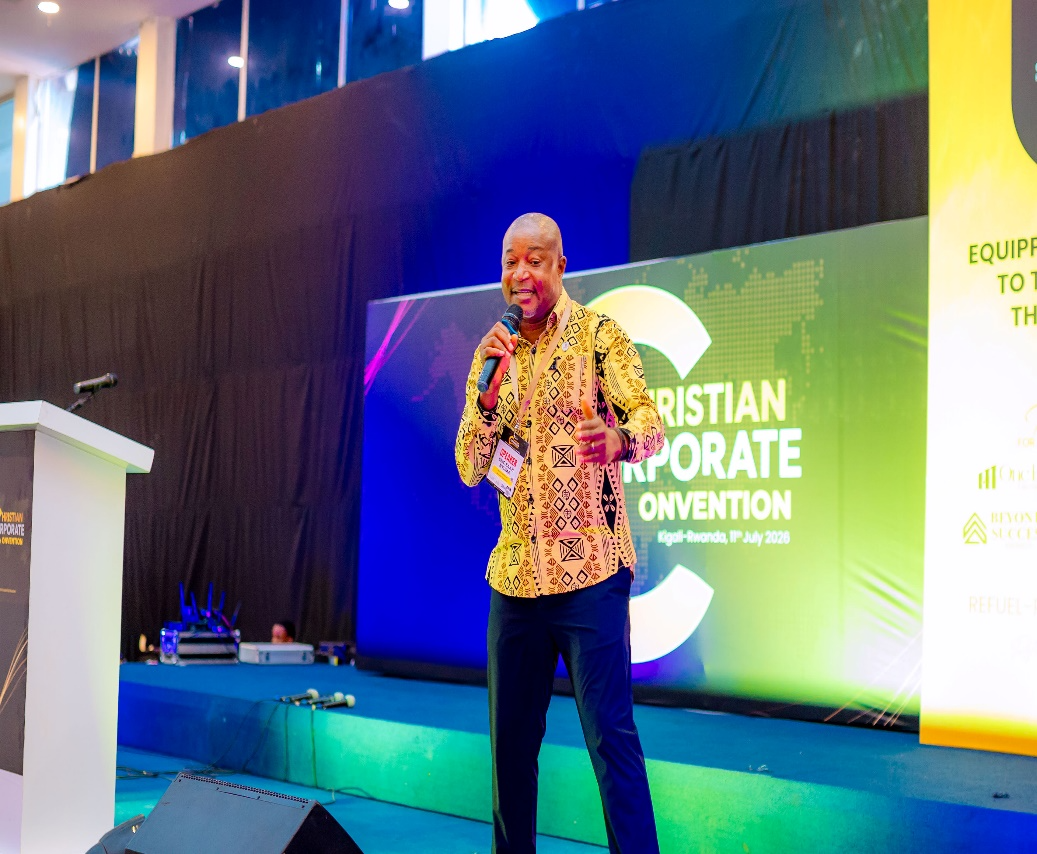
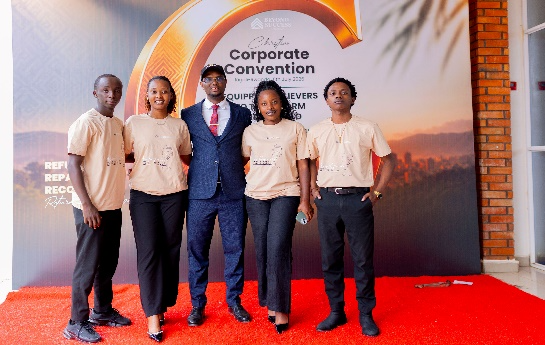
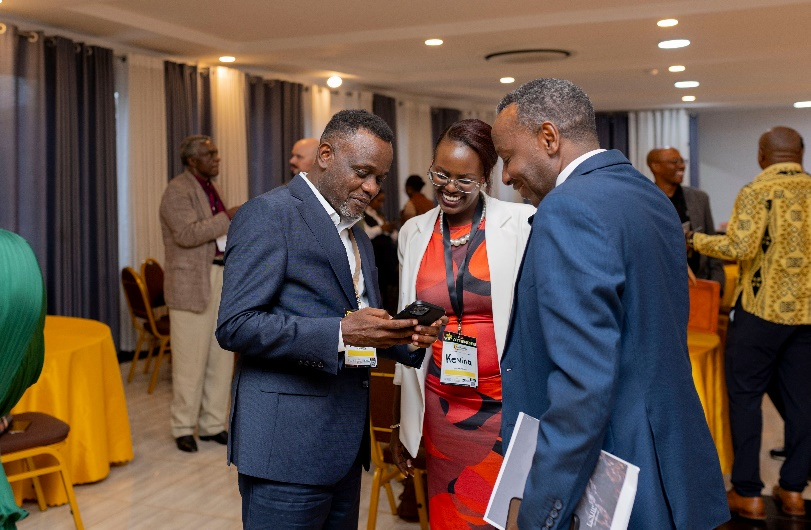
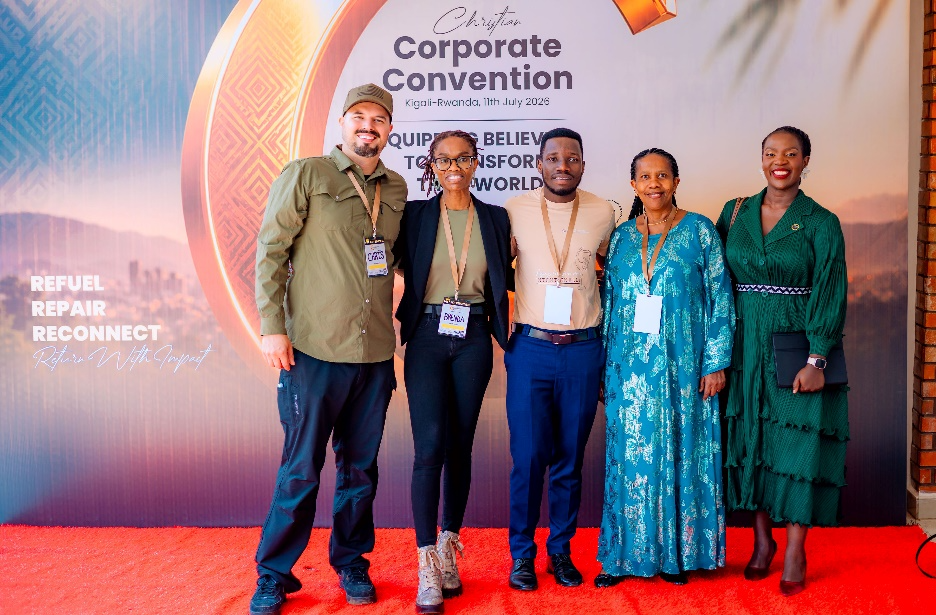
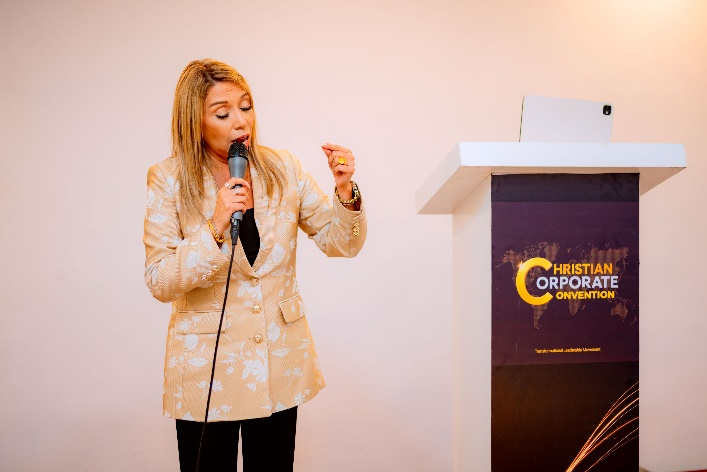
Mr. Eric Saah Nyuma, the Africa Director of Beyond Success, one of the speakers at CCCDr. Betty Ogiel, CEO of Initiative Solutions, one of the speakers in the CCCLeaders from different countries were represented in the Christian Corporate ConventionMrs Nikuze sheila Betsy Mnyira, delegate from Beyond Success KenyaMrs Amanda MIHIGO, the country coordinator of Beyond Success RwandaThe gathering also marked another important milestone for Beyond Success Rwanda as the organization celebrated five years anniversary. osco NSHUTI performing at the Christian Corporate Convention
Organisers say preparations are in their final stages, with confidence that the city is fully ready to welcome international delegates.
Father Professor Walter Chikwendu Ihejirika, President of SIGNIS Africa and Chairperson of the African organising committee, has emphasized that both continental and local teams have been working intensively to ensure a smooth and successful event.
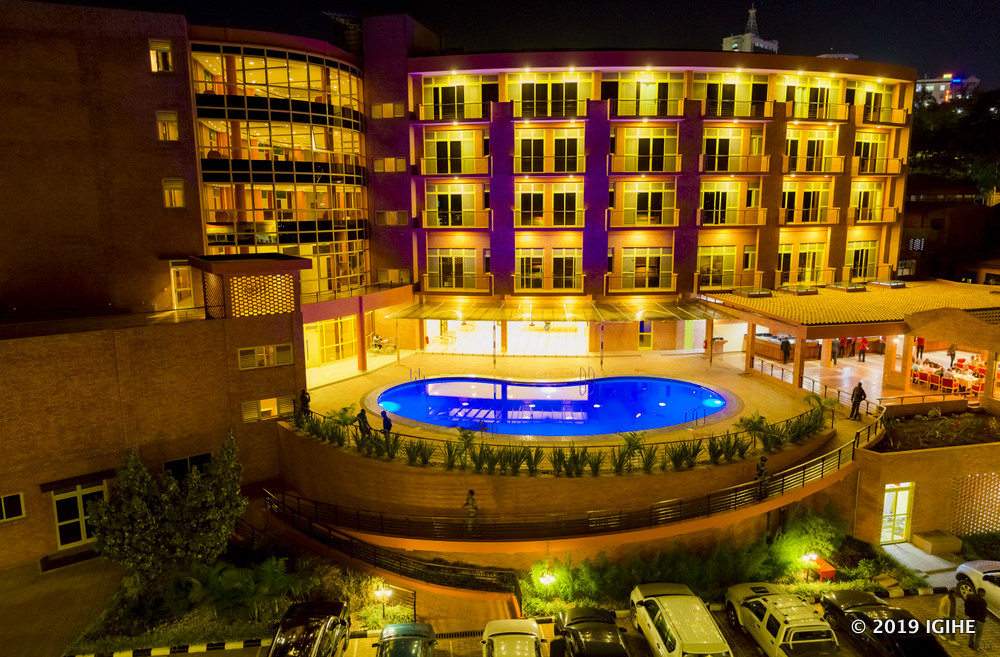
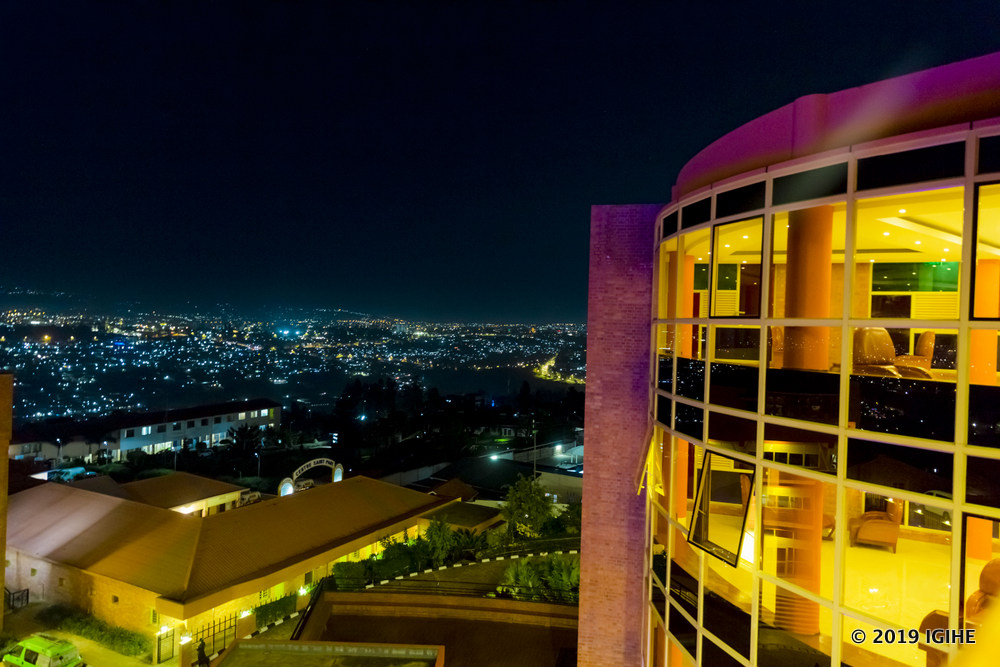
The congress will be hosted at the Sainte Famille Hotel in central Kigali. The venue is expected to accommodate a wide range of activities, including plenary sessions, workshops, exhibitions, and networking forums designed to strengthen global Catholic communication networks.
One of the key priorities for organisers is logistics. Dedicated teams are handling airport reception, accommodation, transportation, and guest coordination.
According to Fr. Ihejirika, the goal is to ensure that participants “experience a smooth arrival and leave with warm memories of Rwanda and its hospitality.”
Registration systems have also been active, and even though official registration closed on 30 June, last-minute participants are still being accommodated through direct contact with the organising committee.
Health and safety have also been part of the preparations. Concerns had been raised following an Ebola outbreak in neighbouring parts of the Democratic Republic of Congo. However, organisers, working closely with Rwanda’s Ministry of Health and the World Health Organization, have reassured participants that Rwanda remains free of Ebola and that no travel alerts have been issued for the country. Authorities insist that there is no cause for alarm for those traveling to Kigali.
The 2026 congress is also expected to engage deeply with contemporary global issues. Its theme—“Digital communication for communion, equity, and environmental well-being”—aligns with recent Catholic reflections on technology and human dignity, particularly in the context of artificial intelligence and digital transformation.
A strong international presence is expected, including senior Vatican officials from Vatican City, cardinals, archbishops, and representatives from major Catholic organisations. These include EWTN, the Conrad N. Hilton Foundation, Catholic Relief Services, and the American Bible Society, among others.
To ease travel, organisers have also negotiated discounted fares with major African carriers, including RwandAir, Ethiopian Airlines, and Kenya Airways. Delegates using these airlines will benefit from promotional codes offering up to 15% discounts.
Beyond formal sessions, the congress is expected to serve as a cultural exchange platform, showcasing Rwanda’s identity, hospitality, and diversity. Organisers say participants will not only engage in professional dialogue but also experience African culture beyond global headlines.
As Kigali prepares for August, the SIGNIS World Congress stands out as both a professional milestone for Catholic communicators and a major international event positioning Rwanda as a hub for global dialogue on media, ethics, and digital transformation.
The SIGNIS World Congress will take place at the Sainte Famille Hotel, a key venue in central Kigali set to host global Catholic media professionals from August 3–8, 2026.Kigali is set to host the SIGNIS World Congress from August 3 to 8, 2026, bringing together Catholic communicators from over 100 countries.Located in the heart of Kigali city, the Sainte Famille Hotel has been selected as the main venue for the upcoming SIGNIS World Congress 2026.
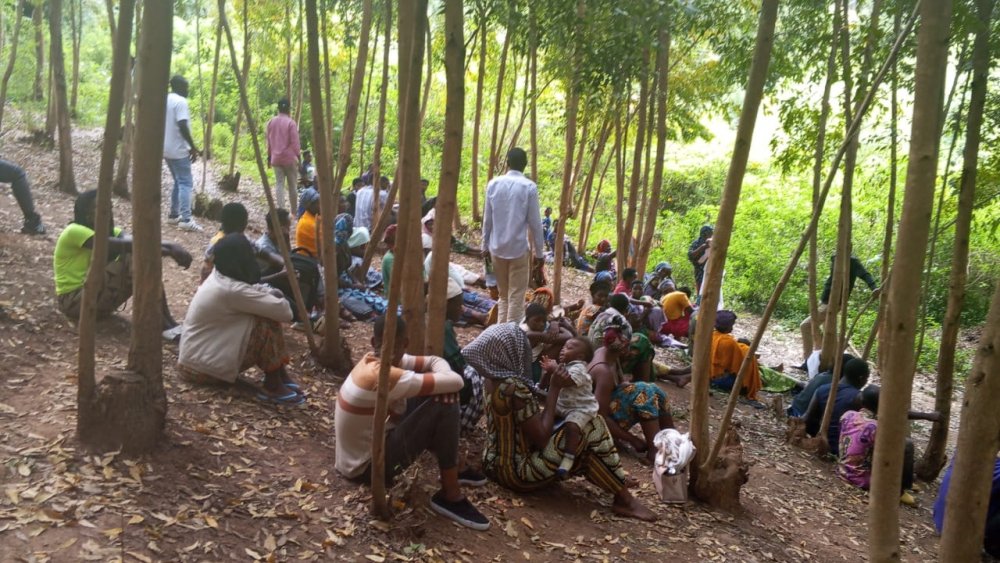
The arrests were made on Friday, June 5, 2026. Of those detained, 46 were found in Kigabiro Sector, Cyanya Cell, inside a forest where worshippers had nicknamed the site “Senga usubizwe” (Pray and be answered).
Among the 46 were 12 men and 34 women, including 10 nursing mothers. Ten students who were preparing for national examinations were also among those arrested after reportedly skipping school to pray, hoping for good results.
Another group of 22 people was arrested in Gahengeri Sector, Kagezi Cell, at Samatare rock site. The area had previously been sealed off by authorities using concrete due to safety concerns, but worshippers reportedly broke through the structure to access the site. Five nursing mothers were among those detained.
The Vice Mayor of Rwamagana in charge of Economic Development, Kagabo Rwamunono Richard, told IGIHE that those arrested were found praying in different illegal locations, with most coming from Rwamagana and others from Kayonza, Nyagatare, and Gatsibo districts.
“Most of them are from Rwamagana, but others came from Kayonza, Nyagatare, and Gatsibo. These are not authorized worship sites. They are forest areas that pose serious risks to their safety. We also found others at Samatare rock, which we had closed because it is dangerous. It is unfortunate that people choose such places to seek God,” he said.
He also accused the group of defying government decisions and damaging infrastructure that had been put in place for their protection.
He cited Samatare cave, where the government reportedly spent over Rwf3 million to secure the site and prevent accidents.
“Our message is that God is not found in caves or forests, and certainly not in places that endanger lives. The government does not allow such practices. Everyone should use recognized places of worship. Churches are available,” he said.
Authorities said the arrested individuals are currently undergoing civic education. They also indicated that the suspects may be required to pay for the damaged infrastructure and could face penalties for defying government directives and mobilizing others to do the same.
In 2024, during the Marburg virus outbreak in Rwanda, the Ministry of Health reported that the first patient was believed to have been infected through bats found in a mining cave near Kigali.
Since then, several cave sites across the country have been closed or reinforced. At Samatare rock, where some of the worshippers were arrested, authorities had previously spent more than Rwf3.3 million reinforcing the site for public safety, before it was damaged again by those accessing it for prayer.
Of those detained, 46 were found in Kigabiro Sector, Cyanya Cell, inside a forest where worshippers had nicknamed the site “Senga usubizwe” (Pray and be answered).
He made the remarks during a press conference held on May 27, 2026, as Muslims across Rwanda celebrated Eid al-Adha, one of the most important holidays in Islam.
Speaking to journalists, Sheikh Sindayigaya was asked about the progress of a request submitted earlier this year by the Muslim community seeking permission for the Adhan to be publicly broadcast through mosque loudspeakers.
The request was presented to Paul Kagame on March 25, 2026, during his meeting with Muslim faithful at BK Arena.
The Mufti explained that the Adhan continues to be recited inside mosques, while loudspeakers remain authorized for the other daily prayer calls except the one performed before sunrise.
“The issue concerns the morning prayer call being broadcast through loudspeakers. The other prayer calls are already allowed to use loudspeakers, but the early morning one remains restricted,” he said.
According to Sheikh Sindayigaya, President Kagame received the request positively and asked relevant institutions to examine the matter further.
During the March meeting, President Kagame encouraged authorities to assess the issue.
The Mufti added that he has since held several discussions with the Minister of Local Government regarding the matter and was informed that authorities are still assessing possible ways forward.
“I have spoken several times with the Minister of Local Government, who was also present during the meeting. We remain in discussions, and he asked us to be patient as they continue examining how it could be implemented,” Sheikh Sindayigaya said.
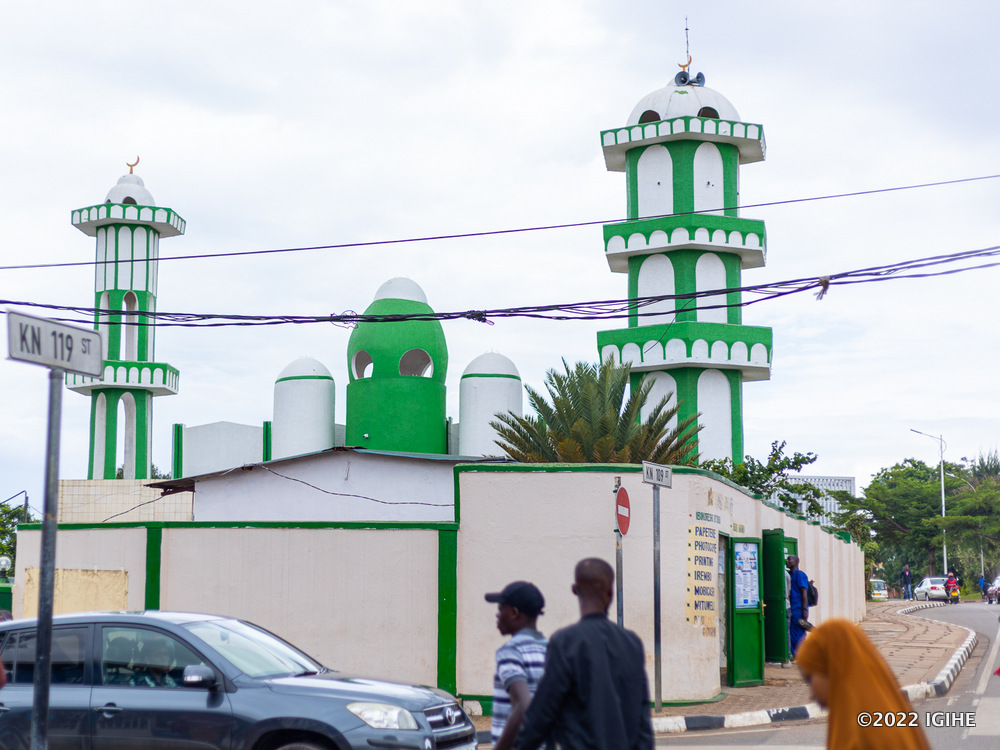
In March 2022, authorities suspended the broadcasting of the Adhan in Kigali, citing Article 267 of Rwanda’s law governing offenses and penalties.
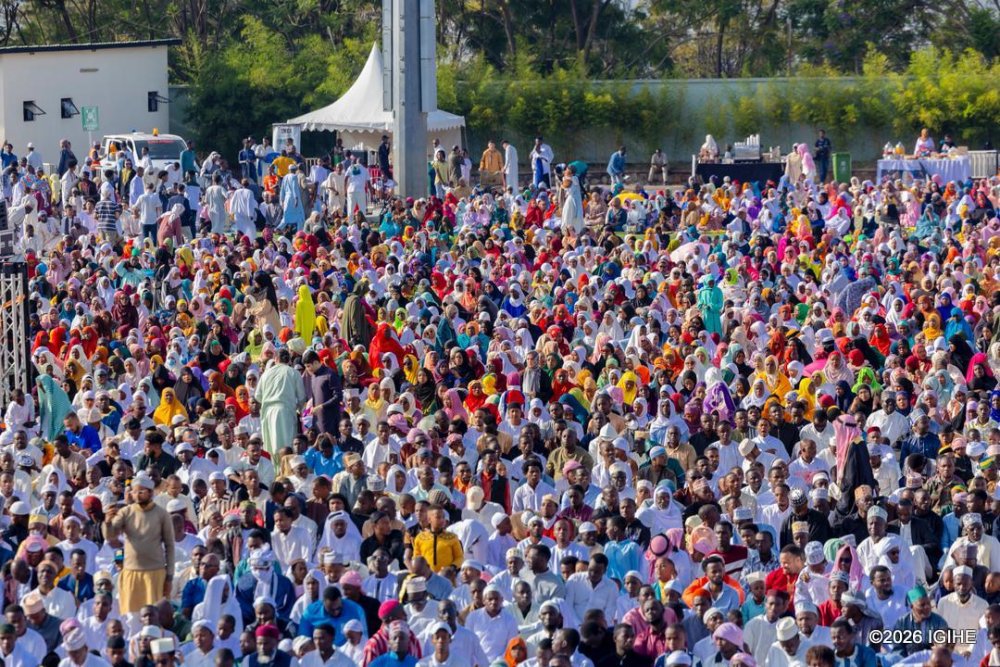
Muslims across Rwanda turned up in a large numbe as they celebrated Eid al-Adha, one of the most important holidays in Islam. The Mufti of Rwanda, Sheikh Sindayigaya Musa, has said discussions with authorities have given hope that the early morning Muslim call to prayer, known as the Adhan, could resume.
Eid Al-Adha is the second most significant festival in Islam and is observed during the month of Dhul Hijjah, the final month of the Islamic lunar calendar. It coincides with the annual Hajj pilgrimage in Mecca, Saudi Arabia, and is celebrated over three days.
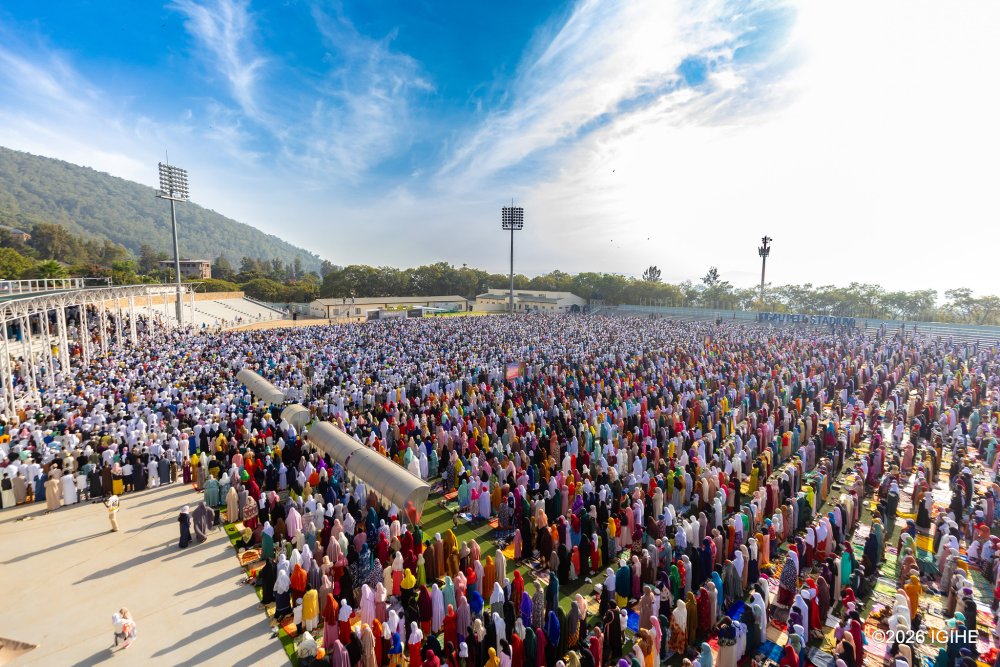
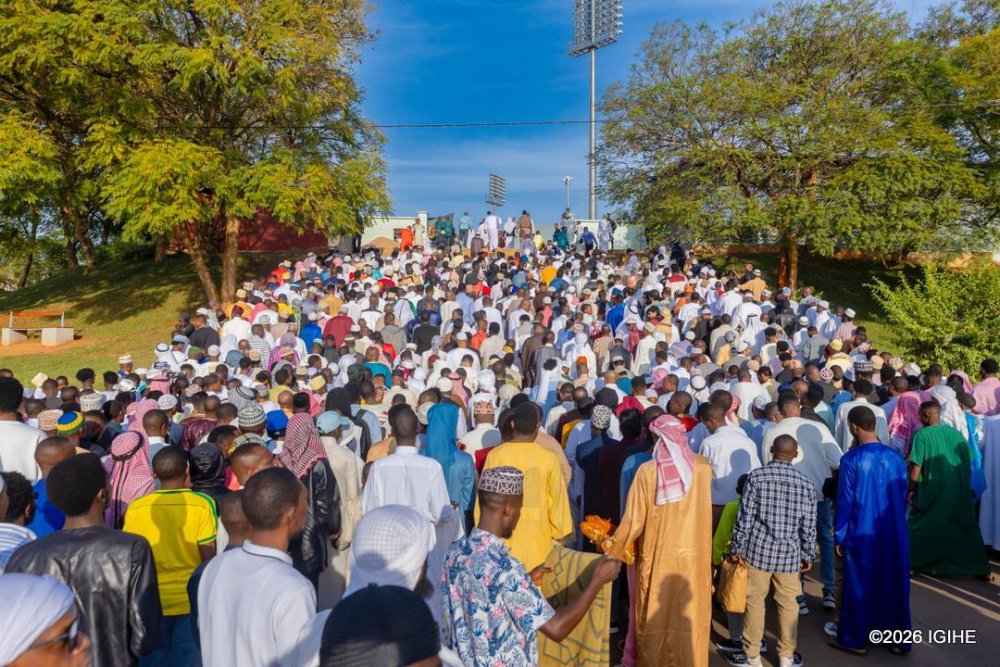
The national Eid prayer was held at Kigali Pele Stadium in Nyamirambo, where large crowds gathered for worship and celebration.
As part of the traditions surrounding the holiday, animals are sacrificed in remembrance of Abraham’s faith, with the meat shared among families, neighbours, and those in need as an act of charity and solidarity. This year, preparations included around 1,894 cattle and 1,183 goats and sheep across the country.
Religious leaders emphasised that the essence of Eid goes beyond ritual practices, focusing instead on generosity, unity, and compassion. Sheikh Nshuti Assouman, speaking on behalf of the Rwanda Muslim Community (RMC), said preparations for the celebrations were well organised and encouraged Muslims to extend kindness to all people, regardless of faith.
“What we ask is that people show generosity and charity, because this is a day of sacrifice. I encourage Muslims to extend this kindness to all Rwandans,” he said.
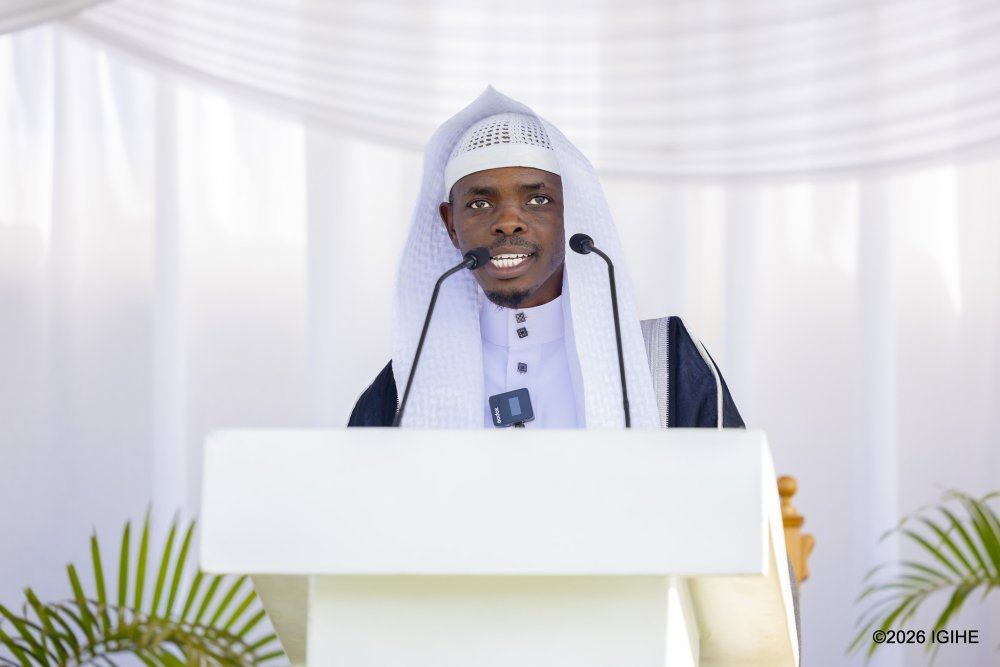
The Mufti of Rwanda, Sheikh Sindayigaya Mussa, also called on Muslims to strengthen unity and continue engaging in good deeds throughout the blessed days of Eid.
He noted that the first nine days of Dhul Hijjah, along with Eid day itself, are spiritually significant periods for reflection, worship, and acts of kindness.
“These are blessed days. When you do good, you are richly rewarded,” he said.
He further reflected on the example of Prophet Abraham, highlighting lessons of faith, devotion, and obedience to God.
The Mufti also highlighted ongoing community efforts, including the construction of a mosque in Itunda, Kicukiro District, Kanombe Sector, which is nearing completion and reflects the spirit of collective contribution among Muslims in Rwanda.
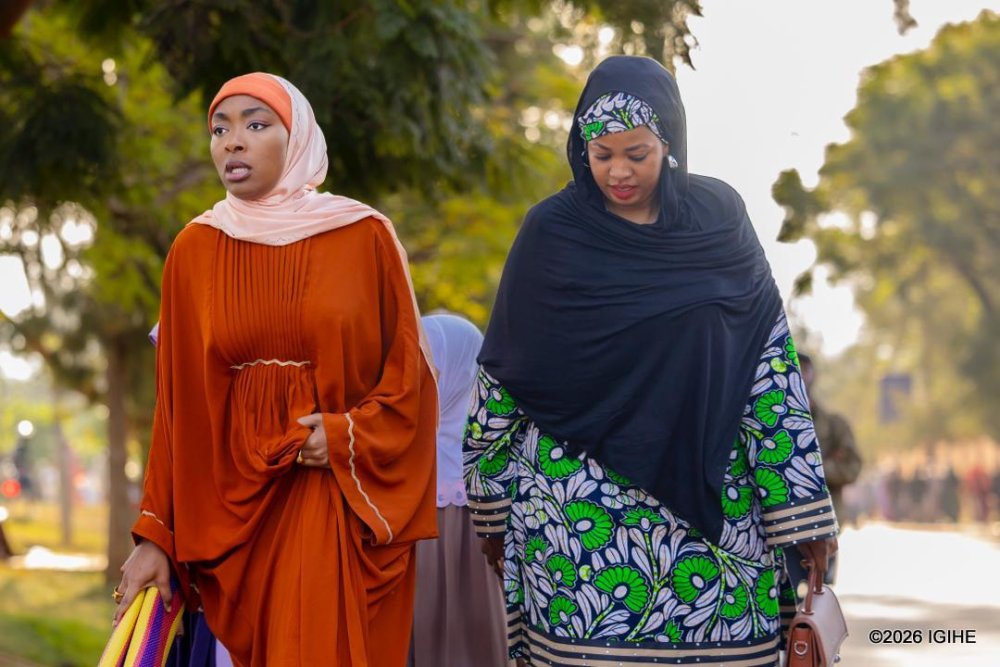
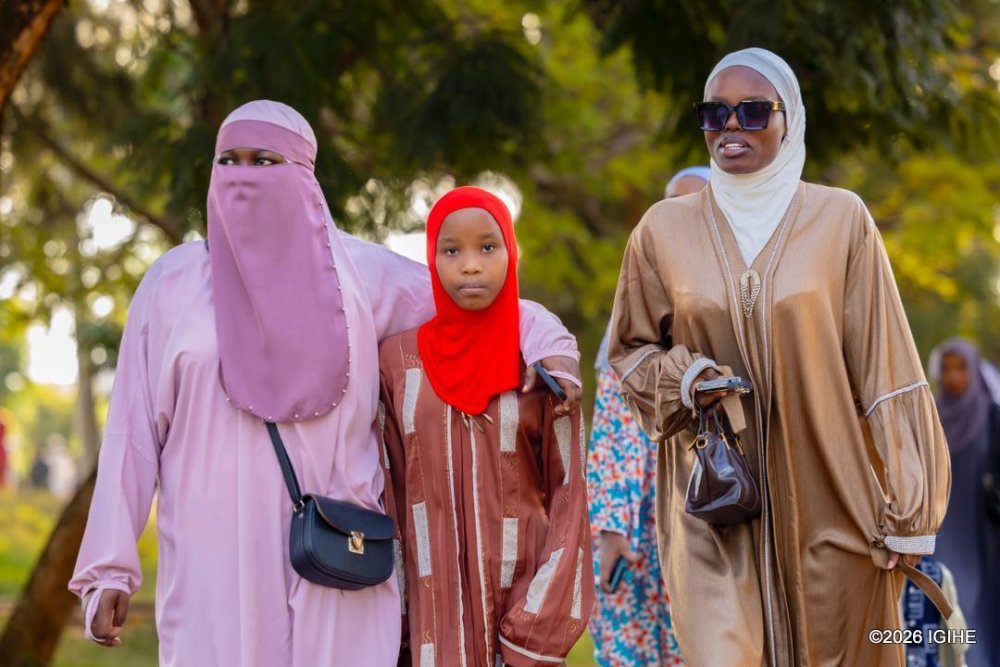
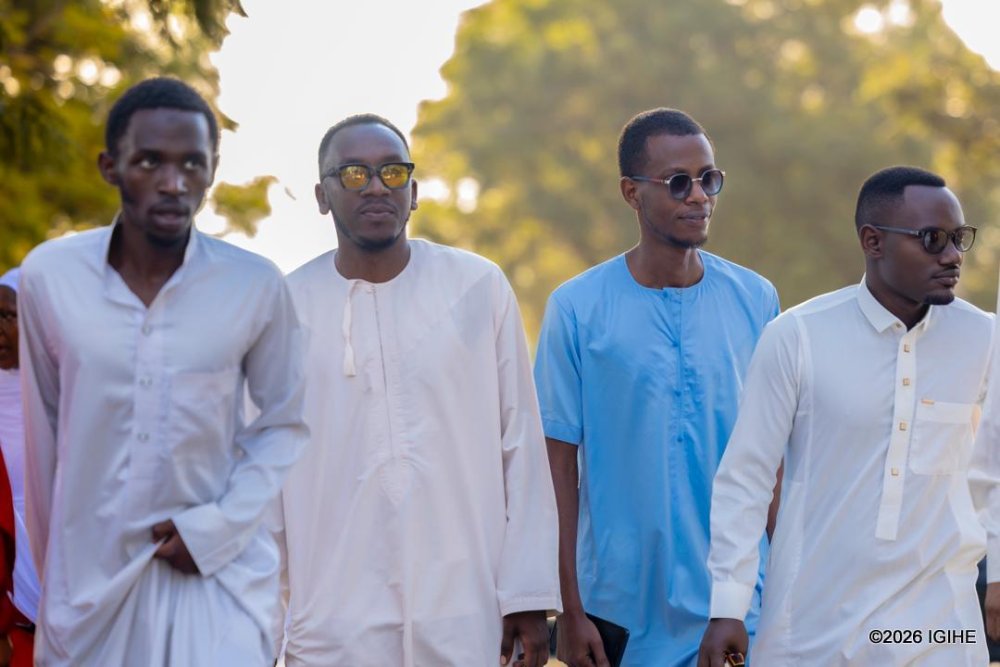
Parents were elegantly dressed for the occasion.Children were also not left out.Fathers brought their children to pray.Eid al-Adha is marked by widespread happiness and celebration.Youth turned out in large numbers for the Eid prayer of sacrifice.This day is the second most significant in Islam.Kigali Pelé Stadium was packed as Muslims gathered from various regions for Eid Al-Adha prayers.Men gathered and prayed in their allocated area.The national Eid prayer took place at Kigali Pelé Stadium.Kigali Pelé Stadium was packed as Muslims from various regions gathered for the Eid sacrifice prayer.The Mufti of Rwanda, Sheikh Sindayigaya Mussa, called on Muslims to continue showing love and selflessness.
The call was made at the end of a three-day retreat held in Gatsibo District from May 18 to 20, 2026.
The gathering brought together 59 leaders from AER member churches and Christian organizations, including pastors and senior representatives, to reflect on the role of faith-based institutions in promoting national unity, values and sustainable development.
Discussions focused on several themes, including “Ndi Umunyarwanda,” Pan-Africanism and self-reliance, with participants exploring how churches can contribute to social cohesion and national progress.
AER President Anfred Gatabazi said the retreat aimed to evaluate the alliance’s progress in aligning church programs with Rwanda’s Vision 2050 goals.
“We invited representatives from the Pan-Africanism Movement to help our pastors better understand programs such as Ndi Umunyarwanda and their importance,” he said. “We also resolved to strengthen gender equality in churches, fight violence against girls and encourage church leaders to address harmful social behaviors while increasing awareness of national programs among believers.”
Ada Darlene Kiyange, head of AER’s Family Development Commission, said participants also discussed ways churches could strengthen financial independence through income-generating initiatives.
“We reflected on how to promote the values of Ndi Umunyarwanda and a spirit of love for Africa so that Christians develop a stronger sense of identity, unity and shared responsibility,” she said.
Prof. Emile Rwamasirabo of the Pan-African Movement Rwanda said churches have an important role to play in promoting a culture of cooperation and solidarity among Africans.
“We want to see a shift in mindset that encourages collaboration and mutual support,” he said. “Churches can help shape that change by teaching values that reject division and hatred.”
Participants at the retreat also agreed to reinforce good governance within AER institutions by promoting transparency, accountability and integrity.
They further resolved to expand income-generating projects aimed at reducing dependence on foreign aid and strengthening self-reliance among member organizations.
The retreat concluded with a commitment to integrate the values of “Ndi Umunyarwanda” and Pan-Africanism more deeply into church programs and community activities, while aligning annual plans with national strategies such as NST2 and Vision 2050.
Founded in 1992, the Evangelical Alliance of Rwanda brings together 91 churches and Christian organizations across the country.
The gathering brought together 59 leaders from AER member churches and Christian organizations.
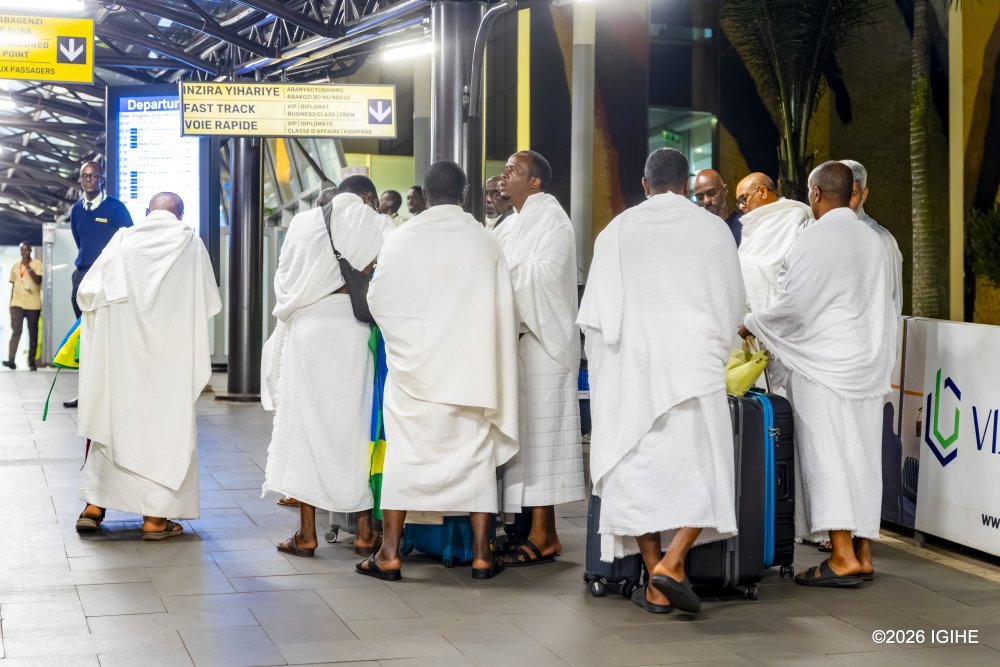
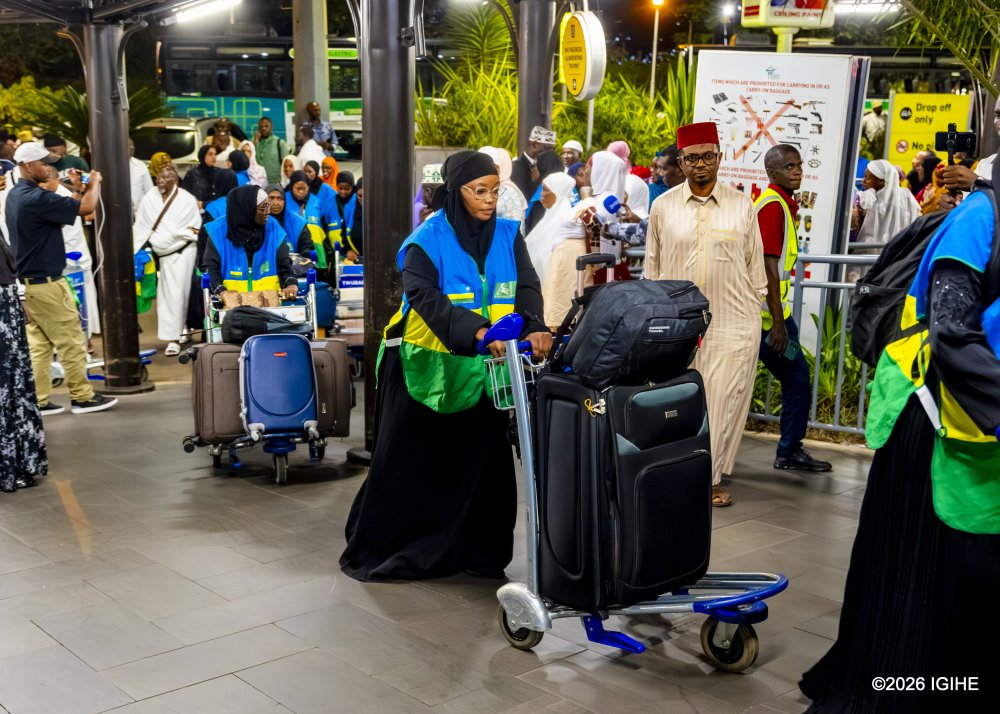
Among the pilgrims, 62 traveled aboard a RwandAir flight, while the remaining 10 traveled separately after receiving tickets from the Saudi Arabian Embassy.
Performing Hajj is considered a religious obligation for every Muslim who is financially able to undertake the journey. The pilgrimage costs around $7,800 per person and represents the fifth pillar of Islam.
The other pillars include believing in one God and that Prophet Mohammed is His messenger, praying five times a day, giving charity, and observing the holy month of Ramadan through fasting.
Before departure, the pilgrims — both men and women — were encouraged to respect all rituals associated with the pilgrimage and remain committed to prayer throughout the journey.
The Mufti of Rwanda, Sheikh Sindayigaya Mussa, urged the pilgrims to pray for Rwanda’s continued peace and development.
“Stay united, pray for the country so it continues to enjoy security and progress, pray for the nation’s leaders, and also remember those who have not yet had the opportunity to go to Mecca so they may one day make the pilgrimage as well,” he said.
Sheikh Sindayigaya also praised the role of RwandAir in making the journey easier for pilgrims.
He explained that before the partnership with the airline, travelers from Rwanda often had to transit through Dubai, spending long hours on connecting flights and waiting at airports, with total travel time sometimes reaching 15 hours.
“Now the journey takes only about three and a half hours. There is less fatigue, no risk of losing luggage, and no long delays because they travel directly to their destination,” he said.
One of the pilgrims, Wibabara Assouma, expressed excitement about fulfilling one of Islam’s key religious obligations.
“As God said, this is holy land. When you pray there with faith, there is hope that your prayers will be answered. Above all, you fulfill an important pillar of Islam, and you do not return spiritually the same way you left because your soul is purified,” she said.
Over the past three years, since RwandAir began working with the Muslim community in Rwanda, the airline has transported 227 pilgrims to Mecca, including this year’s group of 62 travelers.
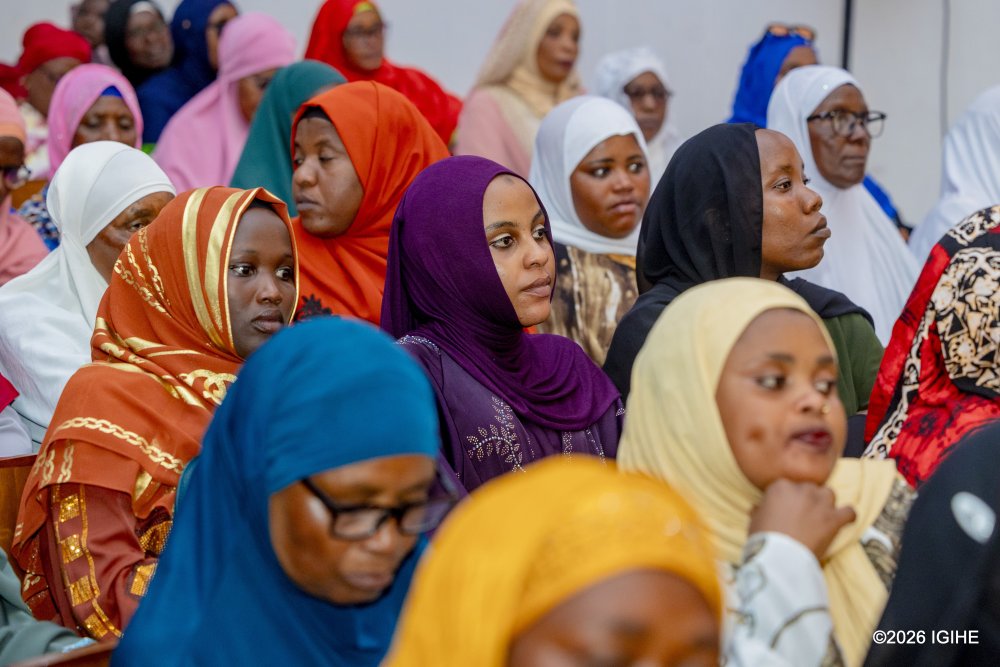
Families and relatives bid farewell to pilgrims leaving Rwanda for the annual Hajj pilgrimage, one of the five pillars of Islam.The Mufti of Rwanda, Sheikh Sindayigaya Mussa, addressed pilgrims before their departure for the holy city of Mecca.Muslim pilgrims departing from Rwanda were encouraged to pray for peace, unity, and national development during their journey to Mecca.Ten pilgrims traveled separately after receiving tickets from the Saudi Arabian Embassy.
Sheikha Fatima affirmed the humanitarian approach of the Founding Father, the late Sheikh Zayed bin Sultan Al Nahyan, and his commitment to the values of giving and development.
This is a hallmark of the UAE community and is carried forward by President Sheikh Mohamed bin Zayed Al Nahyan, whose inspiring vision for development, prosperity, and the preservation of heritage drives the country’s aid ecosystem. An integral part of that vision is the preservation of Arab heritage and Islamic culture.
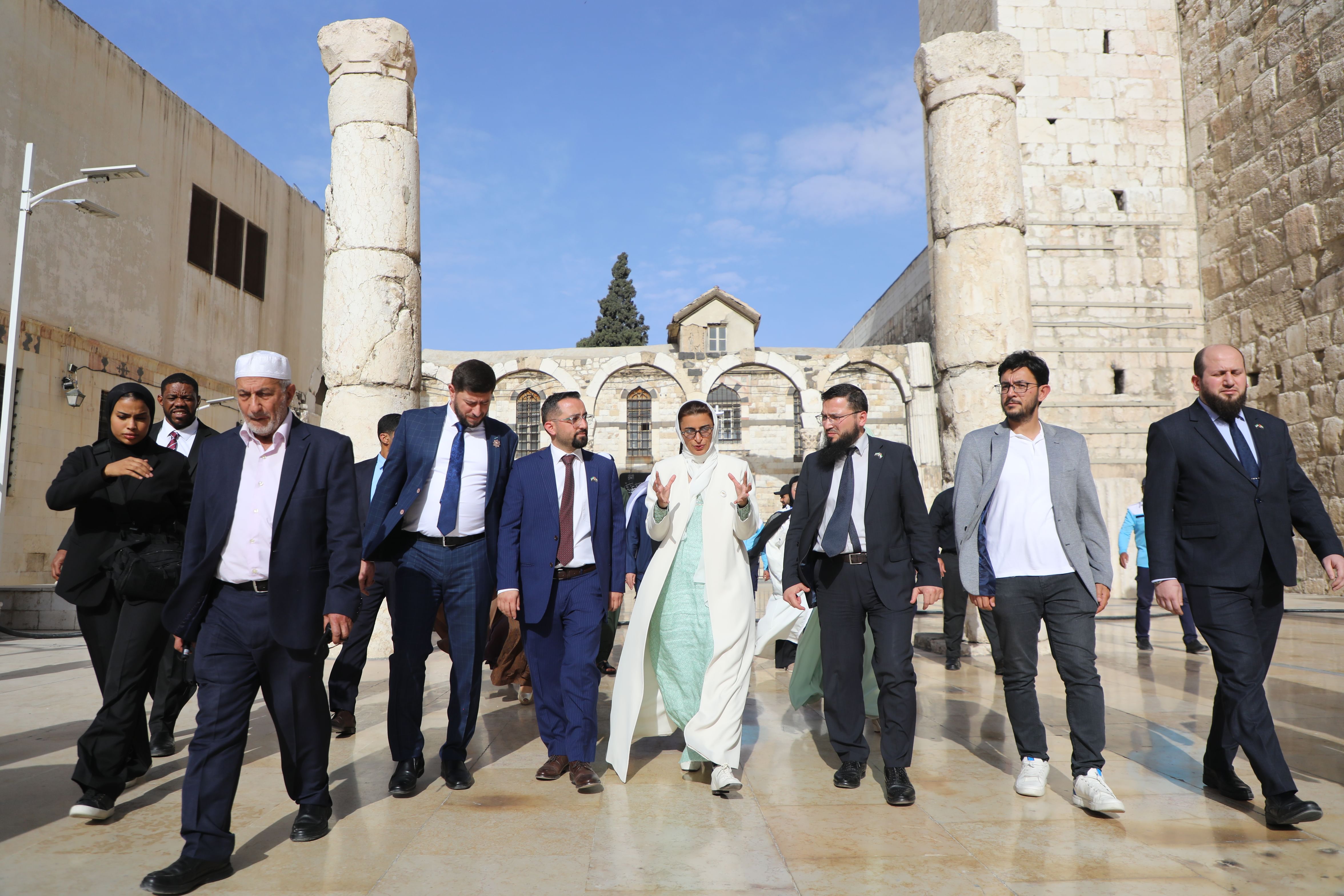
The UAE announcement of restoration of the Umayyad Mosque came during a visit by Noura bint Mohammed Al Kaabi, Minister of State, to the Umayyad Mosque in Damascus, Syria.
Al Kaabi stated, “Syria occupies a unique place at the heart of Arab and Islamic civilisation, and the Umayyad Mosque is one of its most prominent historical landmarks and enduring cultural symbols. The UAE’s announcement of the restoration of this mosque, with the generous support of H.H. Sheikha Fatima bint Mubarak, the ‘Mother of the Nation,’ reflects the importance of our shared heritage and culture, and the UAE’s unwavering support for the Syrian people.”
She emphasised the UAE’s commitment to preserving history and heritage, which is evident in the launch of cultural initiatives aimed at safeguarding Arab and Islamic heritage on the one hand, and rehabilitating cultural heritage in the Arab region on the other. This is part of the UAE’s leading global role and its distinguished record in cultural diplomacy and humanitarian work.
She explained that the initiative to restore the Umayyad Mosque in Damascus will include the structural and architectural rehabilitation of the mosque, as well as the broader revitalisation of the surrounding historical area, in a manner that aligns with the Syrian identity and the economic, cultural, and social fabric of the country.
UAE is set to restore Umayyad Mosque in Damascus with support from Sheikha Fatima
The Archbishop of Kigali and President of the Episcopal Conference of Rwanda, Antoine Cardinal Kambanda, confirmed that the Church is examining the matter following widespread reactions online.
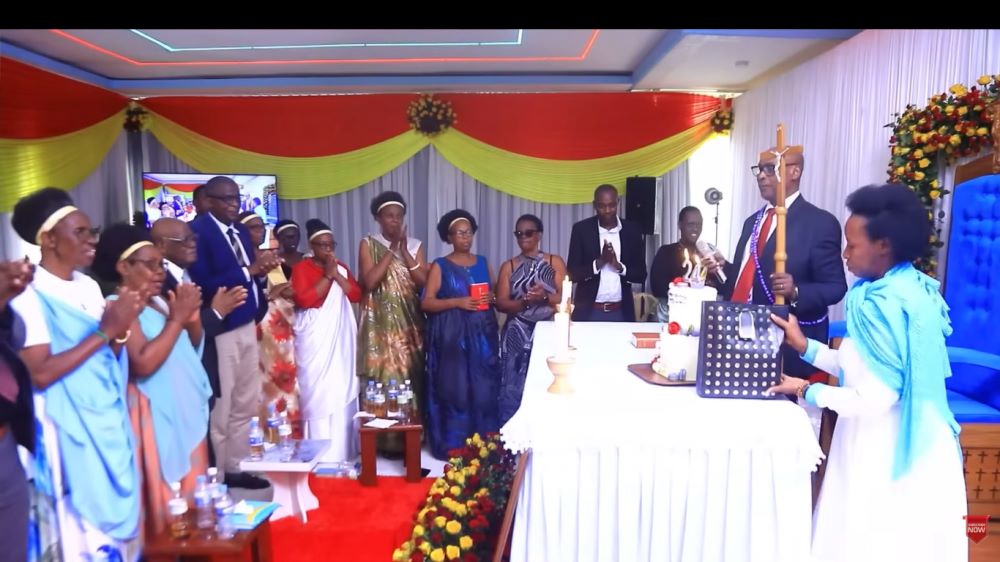
Reports and videos circulating on social media show a group of people gathered, announcing the installation of a leader they refer to as both “Pope” and “Parent of the Chosen.”
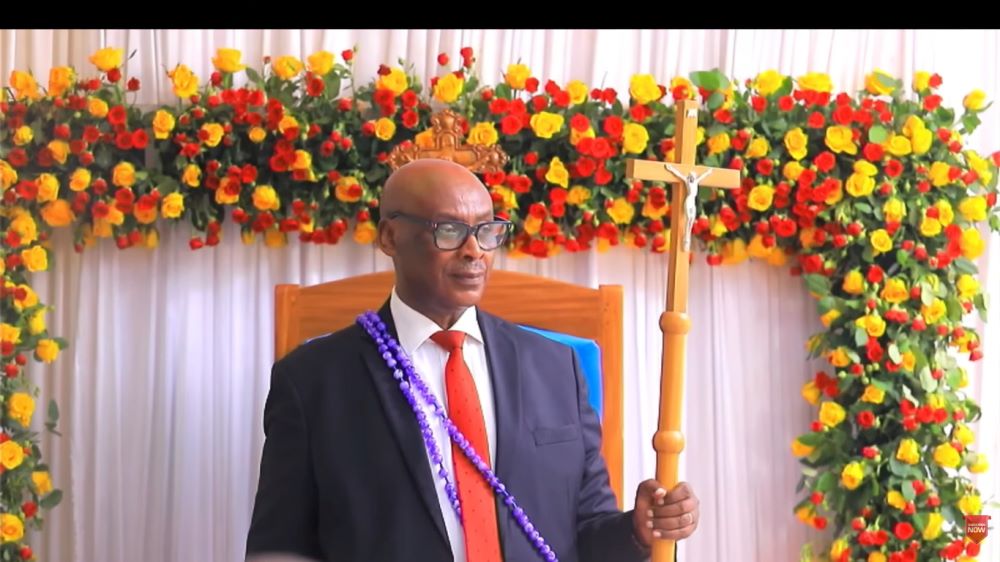
The individual presented as this leader is Faustin Harerimana, who was symbolically handed a staff, a cross, and a Bible, described as the word of God.
Harerimana stated that every baptized Catholic is “chosen,” suggesting that his movement is rooted in that belief. He also claimed to have received a mission, though he acknowledged that some leaders within the Catholic Church in Rwanda do not recognize it.
“Some Church leaders appear to oppose us, though not all,” he said. “This is actually their mission. They should be asking what kind of garment they have given Christians, and whether the wedding feast of the Lamb is being prepared here in Rwanda.”
He added that his group prays for Catholics to understand and follow what they call the message of “the Chosen.”
“We are not struggling in vain,” he said. “We are a prepared people, ready to unite with Christ in a kingdom of love, justice, and peace. At this moment, we pray for our brothers and sisters who do not yet understand us, so they do not set us against the Church. We are not against the Church; in fact, we believe we belong to it fully.”
Harerimana further argued that if all Christians embraced the identity of “the Chosen,” the country would experience greater peace, insisting that such a calling promotes love expressed through actions.
Responding to the development, Cardinal Kambanda told IGIHE that the Church is actively investigating the situation to clarify what has happened.
“We are looking into it to determine what should be done and to clear any confusion,” he said in a brief statement.
Some Catholic clergy have also weighed in. Father Theophile Niyonsenga, currently serving in Spain, noted that while he is unfamiliar with the group, the Church must carefully examine the origins and motivations behind such movements.
He cautioned that if the claims are based on alleged apparitions, the Church cannot rely on such grounds and warned that it could amount to serious doctrinal error.
Father Dominique Mundere, a student in Rome, expressed concern over why the group continues to associate itself with the Catholic Church despite its controversial claims.
Reports indicate that members of the self-proclaimed “Chosen” group are both within Rwanda and abroad, spread across different countries.
This development comes at a time when the Catholic Church in Rwanda recently marked 125 years since its establishment in the country. The Church currently comprises 236 parishes across nine dioceses, with over five million faithful, 1,160 priests and 3,884 nuns.
The group, known as “the Chosen,” claims to have installed their own Pope.The Archbishop of Kigali and President of the Episcopal Conference of Rwanda, Antoine Cardinal Kambanda, confirmed that the Church is examining the matter following widespread reactions online. Harerimana says he is not against the Catholic Church.