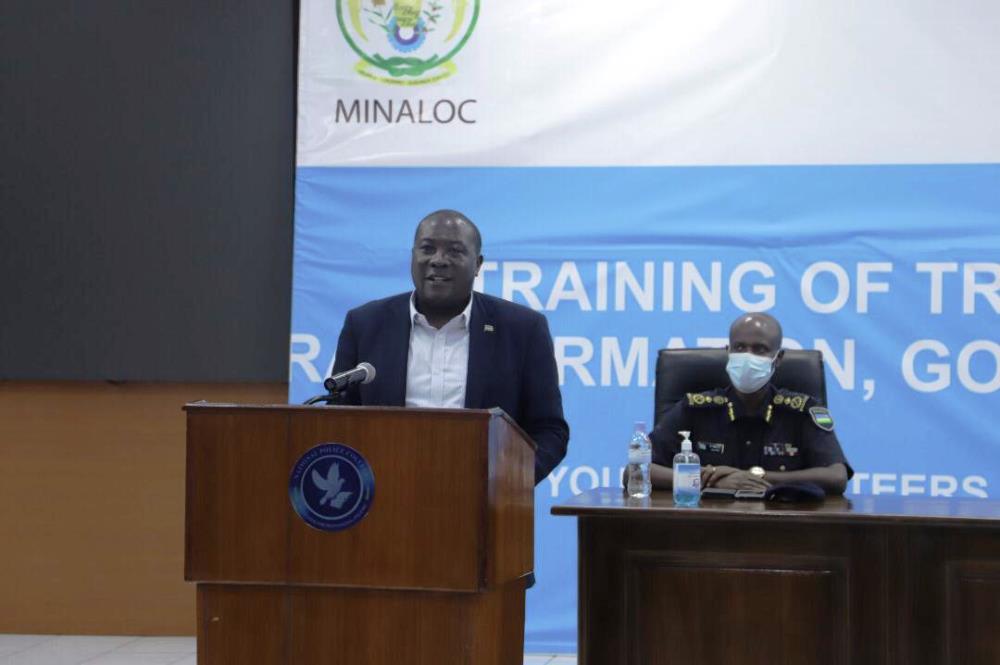
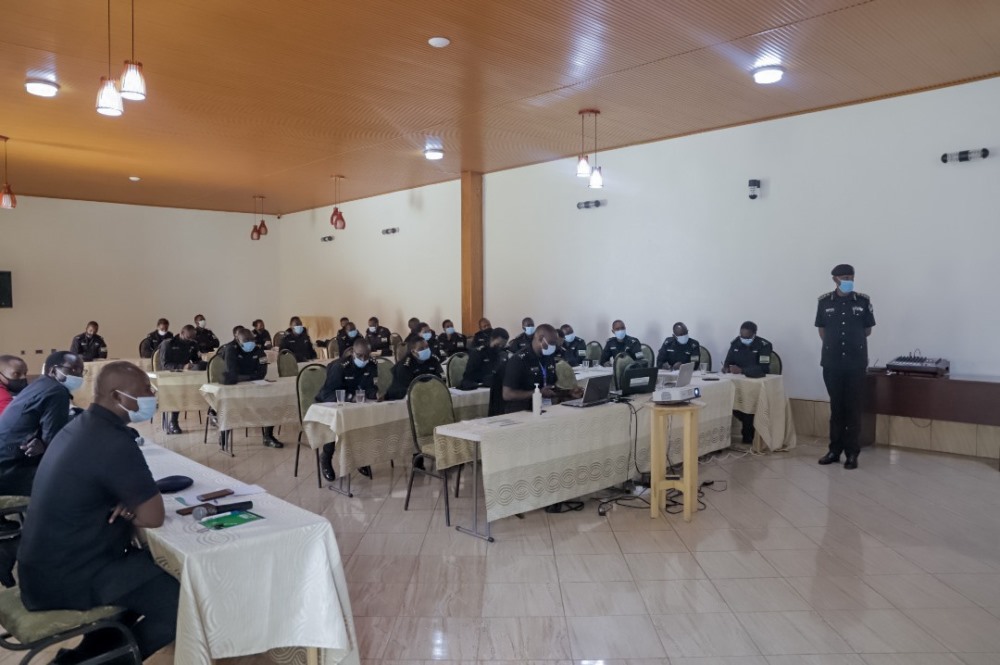
The training being held at the National Police College (NPC) in Musanze District focuses on socio-economic transformation, governance and crime prevention.
It was organized by Rwanda National Police (RNP) in partnership with the ministries of Local Government and Youth and Culture.
It is held under the theme: “The role of youth volunteers in the implementation of governance programmes.”
The official opening of the ToT was also attended by the State Minister in the Ministry of Youth and Culture, Edouard Bamporiki and the Deputy Inspector General of Police (DIGP) in charge of Operations, Felix Namuhoranye.
Minister Gatabazi reminded the youth volunteers, who include district coordinators and members of the RYVCP national committee, that the young people are central to the national development agenda.
“Youth volunteering means sacrifice, courage and being determined to perform general interest activities. It means putting general interests first without any pay. You have demonstrated that patriotic spirit over the years… your role in the national development is invaluable,” Minister Gatabazi told the trainees.
He lauded the role played by the youth volunteers in reinforcing the national response to the pandemic of Covid-19.
“This training is meant to equip you with more knowledge and skills to successfully achieve your objectives,” said Minister Gatabazi.
He added that Rwanda prioritizes security as the firm foundation for sustainable development and that the youth must be active in security related matters to assure that every Rwandan and people living in Rwanda are safe and secure.
On his part, Minister Bamporiki educated the youth volunteers on the role of Ndi umunyarwanda, a programme initiated to build a national identity based on trust and dignity to strengthen unity and reconciliation among Rwandans after they were ruined by the 1994 Genocide against Tutsi.
The statement released last night shows that 63 have caught the virus out of 12522 sample tests.
A total of 1,976,150 have been fully vaccinated while 3,774,373 received the first dose of COVID-19 vaccine since Rwanda began countrywide inoculation program on 5th March 2021.
Coronavirus symptoms include coughing, flu, and difficulty in breathing. The virus is said to be transmitted through the mucous membranes of the respiratory tract.
Rwandans are urged to adhere to COVID-19 health guidelines, washing hands frequently using soaps and safe water, wearing face masks and respecting social distancing.
The two-day training, which concluded this Friday, October 29, at the National Police College (NPC) in Musanze District, was conducted by RNP in partnership with Rwanda Environment Management Authority (REMA).
All the trainees are District Police Civic Education Officers (DPCEO).
The two-day training focused on the protection of environment in accordance with the international standards on hazardous substances and wastes, according to Patrick Umuhoza, a Multilateral Environmental Agreement Officer at REMA.
He said that the officers were selected because of their role RNP plays in human security activities including protecting the environment but also as the institution in charge of environmental law enforcement and working with the community every day.
“Police as an institution in charge of enforcing laws including those established to protect the environment, requires continuous training of its personnel. This training was, therefore, organised to enlighten international laws and agreements on environmental protection. This training brings both institutions to the same understanding against environmental degradation,” Umuhoza said.
He added: “We have been seeing banned products such as plastic bags and other outlawed chemical products and substances being sneaked into Rwanda. Police is at the forefront in fighting these criminal acts. So, it is important that Police officers remain updated on local policies, regional and international treaties to save our ecosystem.”
Commissioner of Police (CP) Bruce Munyambo, Commissioner for Community Policing Department in RNP emphasized that the force will continue collaborating with REMA in upholding environmental protection standards.
CP Munyambo urged the trained to be catalysts in natural conservation through awareness on best environmental protection practices and forging strong partnership with the people to fight practices that degrade nature.
Trainees were also reminded on the environmental degradation acts such as illegal mining, arson, poaching, building in wetlands and use of plastic products, among others.
In addition to these, The Digital Banker recognized Ecobank with the ‘Excellence in SME Banking’ award at its ceremony last night.
Josephine Anan-Ankomah, Ecobank Group Executive, Commercial Banking, said: “Ellevate by Ecobank for women-owned, led or focused businesses is scaling heights in meeting the needs of these traditionally underserved entrepreneurs who have so much to offer to Africa’s commercial and economic development. To win three awards in just one month, highlights Ecobank’s successful positioning as the pan-African bank for SMEs through our comprehensive suite of dedicated solutions.
These awards further consolidate on our recent recognition as ‘African SME Bank of the Year 2021’ in the African Banker Awards.
“The African continent is one of the highest in terms of women entrepreneurs globally, with one in four women starting or managing a business. Ecobank’s specially designed Ellevate programme facilitates women’s businesses innovation and success by providing them with tailor-made relevant financial and non-financial solutions to meet their evolving needs. These include collateral-lite funding; smart cash management; increased access to markets through the development of an online presence in partnership with Google My Business; leadership training programmes; and networking opportunities.”
Since its launch in November 2020, Ellevate has onboarded thousands of new women’s businesses, advanced loans worth US$52.5 million and attracted deposits of US$125 million.
{{Other recent initiatives implemented by Ecobank to support SMEs, include:}}
•MSMEs Training for Financing Programme in partnership with AUDA-NEPAD;
•Collaborating with African Development Bank on Green Climate Fund AFAWA, increasing finance access and capacity building for 400 women’s MSMEs in agribusiness, financing 14 years’ climate resilient activities;
•Launch of the Ecobank eCommerce solution to facilitate the delivery of a dedicated and unique online store enabling SME customers to expand their access to markets by selling their products and service online; and
•Partnering with Microsoft on the Global Skilling Initiative to train, upskill and equip SMEs across sub-Saharan Africa with the vital skills and knowledge necessary to leverage digital tools and achieve their business goals in this increasingly digital world.
{{About Ecobank Transnational Incorporated (‘ETI’ or ‘The Group’) }}
Ecobank Transnational Incorporated (‘ETI’) is the parent company of the Ecobank Group, the leading independent pan-African banking group. The Ecobank Group employs about 14,000 people and serves over 29 million customers in the consumer, commercial and corporate banking sectors across 33 African countries.
The Group has a banking licence in France and representative offices in Addis Ababa, Ethiopia; Johannesburg, South Africa; Beijing, China; London, the UK and Dubai, the United Arab Emirates. The Group offers a full suite of banking products, services and solutions including bank and deposit accounts, loans, cash management, advisory, trade, securities, wealth and asset management. ETI is listed on the Nigerian Stock Exchanges in Lagos, the Ghana Stock Exchange in Accra, and the Bourse Régionale des Valeurs Mobilières in Abidjan. For further information please visit www.ecobank.com
About the Middle East & Africa Retail Banking Innovation Awards 2021
The Digital Banker’s Middle East & Africa Retail Banking Innovation Awards 2021 honour and celebrate the Middle East and Africa’s preeminent retail banking institutions and their distinguished individuals’ contribution to the industry.
The Awards are accolades of excellence and distinction, attributed to outstanding players; and aim to be unbiased objective benchmarks for the industry. They exist to celebrate the world’s most cutting-edge retail banks, SME banks and Wealth Management Units that are pioneering unrivalled standards and capabilities – those that are transforming the industry by setting new milestones in service delivery, digital innovation, product development, payments, technology, customer experience and more
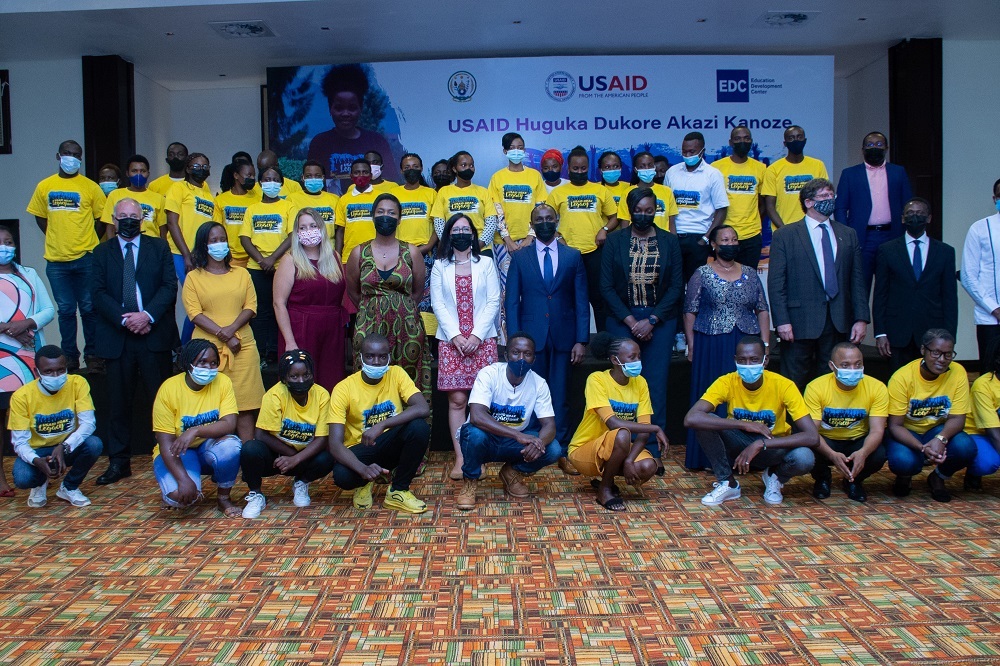
It was revealed on Thursday 28th October 2021 during a ceremony held at Kigali Serena Hotel to celebrate achievements and discuss how to sustain the project’s impact beyond HDAK.
USAID HDAK is a five-year (2016-2021) project, implemented by Education Development Center (EDC) in partnership with 21 Implementing partners working in close collaboration with the Rwanda Private Sector and Government Partners, with an aim to reach 40,000 vulnerable youth in the age bracket between 19 and 30 with market-relevant employability skills and able to create own jobs.
The project has been selecting secondary school leavers who would not earn US$1.5 per day, three years after graduation.
The project has hit the target where 40,097 have so far received vocational skills training during the project’s timeframe.
To date, USAID HDAK has trained over 40,000 youth across 25 districts of Rwanda on work readiness skills using the Work Ready Now & Be Your Own Boss (WRN/BYOB) methodology and provided other employment support interventions, resulting in 70% employment rate, six months following their graduation.
At system level, HDAK has been working with Rwanda Polytechnic and Rwanda TVET Board (RTB) to develop and integrate several skills development materials, tools and approaches to improve TVET and workforce development delivery systems in Rwanda.
As part of its systemic and sustainability approach to youth workforce development, HDAK introduced Youth Development Alliance (YDA) that is locally owned and locally driven in 11 districts.
Additionally, HDAK supported Rwanda Polytechnic and the Private Sector to develop the In-company Instructor (ICI) training materials that facilitates ‘win-win workplace learning’. Among others, HDAK supported the development of TVET Level 2, with a pilot of six new agriculture-based programs in eight Technical and Vocational Education and Training (TVET) Schools.
The districts not covered by the project’s interventions include Karongi, Nyamasheke, Nyagatare, Rusizi and Rutsiro.
As the project’s timespan drew closer to an end and in light of project accomplishments both at youth and system level, HDAK recently conducted series of 5 Learning Review workshops and 4 legacy events held at provincial level that brought together different stakeholders, to collaboratively reflect on and celebrate together the project successes, lessons learned and discuss how to sustain the project’s impact.
Speaking during celebrations at national level; the Chief of Party of USAID HDAK, Alejandra Bonifaz attributed the success to strong collaboration with different stakeholders.
“Acquired skills will be of crucial relevance for the youth to create path for a prosperous future,” she said.
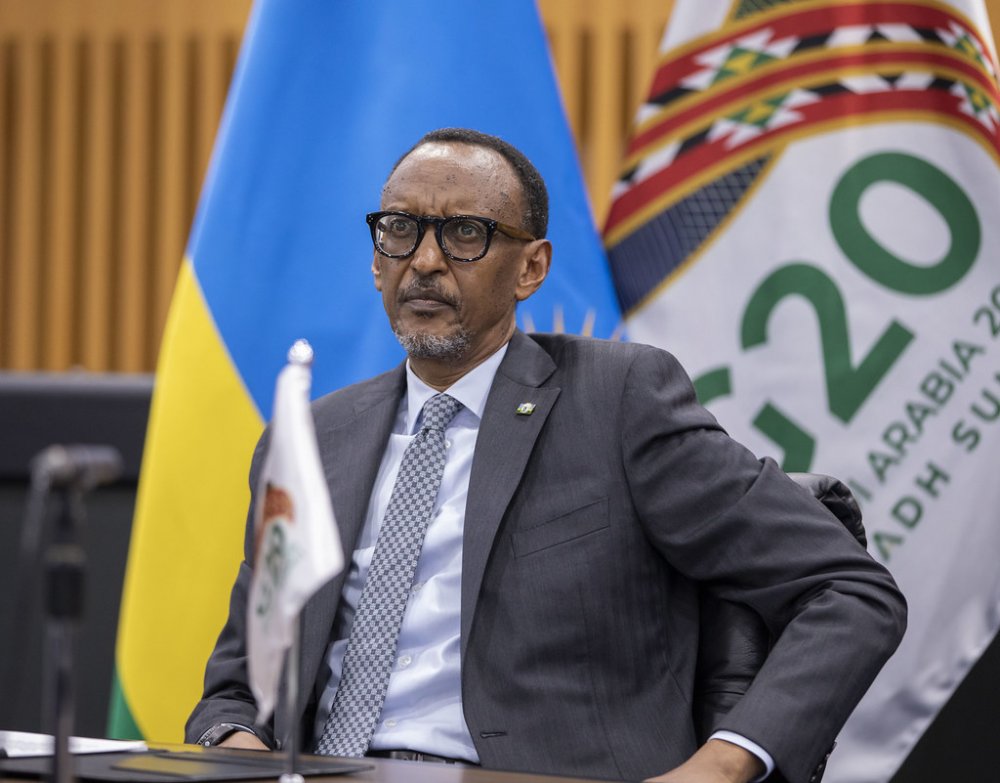
Scheduled on 30th and 31st October 2021, the summit is the first of its kind held in-person since the Coronavirus pandemic emerged.
As DW reported, Finance and health ministers from the Group of 20 (G20) leading and developing economies on Friday called for 70% of the world’s population to be vaccinated against COVID-19 over the next eight months.
Ahead of an in-person meeting of finance ministers in Rome — with health ministers joining via video link — the delegates announced the creation of a task force to better fight the pandemic and kick-start the economic recovery.
The G20 bloc, including countries like the United States, China, India and Germany, accounts for about 60% of the world’s population and over 80% of global economic output.
Chinese President Xi Jinping and Russian President Vladimir Putin are expected to follow the discussions via a video link.
Airtel has worked hard to identify the technical programmes needed to respond to all its material topics and to have a genuine and positive impact on people and communities across Africa. The strategy sets specific goals and commitments, and for each of these, the company has identified exactly how it will achieve them and the milestones along the way. Airtel’s Board and Executive Committee has been integral to developing this strategy which is fully aligned with the Company’s corporate strategy and plans. It has also engaged with stakeholders throughout the development of the strategy and undertook a detailed stakeholder consultation ahead of this launch.
The strategy is delivered through four sustainability pillars: ‘Our business’ which reflects our operations and the expansion of our network, ‘Our people’ which sets commitments around employee engagement, development, diversity and inclusion, ‘Our community’ which details our dedication to improving access to education, and ‘Our environment’ which is focused on reducing the environmental impact of our operations.
The telecom has identified six of the United Nations Sustainable Development Goals to which its work will make a genuine and tangible contribution-they are SDG 4: Quality education, SDG 5: Gender equality, SDG 8: Decent work and economic growth, SDG 9: Industry, innovation and infrastructure, SDG 10: Reduced inequalities, and SDG 12: Responsible consumption and production.
Commenting on the development, Segun Ogunsanya, CEO, Airtel Africa, said: “Today is a significant milestone in Airtel Africa’s journey. Our new strategy provides a solid foundation for us to accelerate change for the communities we serve and the environment in which we operate. We have worked closely with our stakeholders to ensure that this strategy is ambitious, robust and credible. This partnership approach underpins all the work we will deliver through our strategy.”
“We will look to collaborate across the industry, recognising that by working together, we will be able to drive a more significant impact for the people who need it most. We are more committed than ever to ensuring open and honest communication on our progress as Airtel Africa embarks on its long journey towards a more sustainable future,” he added.
{{Goals and commitments}}
The sustainability strategy includes nine goals and commitments, with corresponding programmes that address the business’ material topics (identified through an extensive consultation at the beginning of the year) and enable the Group to continue delivering sustainable growth and uphold the best governance standards:
{{•Data security goal:}} Establish industry-leading data security for our customers through investments in technology and expertise, updated processes and consumer awareness – with focus areas around confidentiality, integrity and availability.
{{•Service quality goal:}} Provide underserved communities with access to reliable networks and connectivity through the rollout of new infrastructure and technology, improved fibre connectivity and capacity – with focus areas on service accessibility, delivery and reliability.
{{•Supply chain goal:}} Ensure all our suppliers are aligned with our sustainability agenda through programmes to increase supplier disclosure and audit ESG performance – with focus areas on enhanced supplier due diligence and ongoing ESG compliance.
{{•Commitments to our people:}} with our ongoing commitment to provide rewarding employment opportunities and to achieve genuine diversity and inclusion at all levels across the business through:
o Delivering equality in our workforce through recruitment and programmes to provide training and advancement for everyone regardless of gender, nationality or disability;
o Providing best practice training and development through upskilling and reskilling initiatives to ensure they can succeed in their future careers. And through supporting female entrepreneurs through training and increasing women’s participation in the technology and engineering sectors;
o Providing the highest standards of health and safety for our employees and contractors through the introduction of a best practice social and health and safety management system, improved policies and full compliance with all legislation and regulation; and,
o Maintaining the highest levels of employee engagement through the introduction of additional channels that provide every one of our people with a voice.
{{•Digital inclusion goal: }} significantly improve digital Inclusion across Africa by driving the penetration of mobile, smartphones and home broadband in rural areas through the provision of retail and support services.
{{•Financial inclusion goal:}} significantly increase financial inclusion in Africa, with particular support for women through the development of affordable financial products to meet the needs of the un- and under-banked, a reliable service and financial confidence and literacy.
{{•Access to education goal:}} helping transform the lives of over one million children through improving access to education – with programmes around connectivity, the provision of zero-rated education content under a five-year UNICEF partnership, connecting 1,400 schools to the internet by 2027, and the adoption and support of schools in all our markets.
{{•Greenhouse gas emissions reduction goal:}} Our ambition is to achieve net zero greenhouse gas (GHG) emissions ahead of the 2050 deadline set out in the Paris Agreement. To do this we must fully identify, measure and reduce our GHG emissions which can only be achieved in partnership with our peers and the wider industry. We will establish and launch a sector leading and credible decarbonisation pathway in 2022, ahead of the publication of our first Sustainability Report.
{{•Environmental stewardship:}} Eliminate hazardous waste from our operations, significantly reduce our non-hazardous waste and minimise our water consumption with programmes to replace damaging materials, expand recycling schemes and build employees’ awareness around the protection of our natural resources.
{{About Airtel Africa}}
Airtel Africa is a leading provider of telecommunications and mobile money services, with a presence in 14 countries in Africa, primarily in East Africa and Central and West Africa.
Airtel Africa offers an integrated suite of telecommunications solutions to its subscribers, including mobile voice and data services as well as mobile money services both nationally and internationally.
The Group aims to continue providing a simple and intuitive customer experience through streamlined customer journeys.
The trio of Rukundo Habumuremyi, 21, Noel Nizeyimana, 24, and Clement Imanishimwe, 26, was at the time disassembling the stolen motorcycle.
The motorcycle was stolen on October 23, in Musanze District, Kinigi Sector, Nyabigoma Cell in Kabeza Village.
It belongs to one Joselyne Uwimana. It was at the time parked in front of her house from where the thieves stole as people were inside the house.
The District Police Commander (DPC) for Musanze, Chief Inspector of Police (CIP) Speciose Kayitesi said that the suspects were arrested due to information provided by a local resident.
“They hid the motorcycle in Kimonyi sector, where it was recovered and the three suspects arrested red-handed attempting to disassemble it to sell the spare parts,” CIP Kayitesi said.
She thanked the resident, who shared the information leading to the recovery of the motorcycle and arrest of the prime suspects.
The DPC further said that the victim’s quick reporting of the theft helped the Police to swifly respond.
The DPC urged the young people to channel their energies in lawful businesses instead of wasting their future in criminal activities and spending years in prison.
The suspects were handed over to RIB for further legal process.
Article 166 of law determining offences and penalties in general states that, any person convicted of theft is liable to imprisonment for a term of not less than one (1) year and not more than two (2) years and a fine of not less than Rwf1 million and not more than Rwf2 million, a community service in a period of six (6) months or only one of these penalties.
In article 167, the penalty for theft doubles if the act was carried out at night or by more than one person.
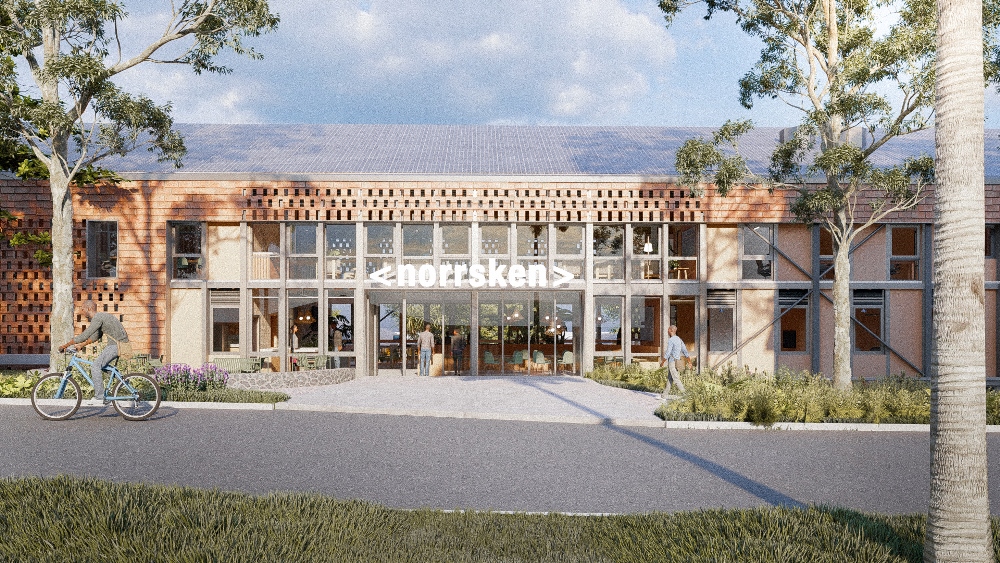
The Norrsken Foundation is a Swedish non-profit, non-religious and non-partisan foundation that supports and invests in entrepreneurs that have a positive impact on society by working with the world’s greatest challenges, such as poverty, famine, environmental issues, mental health, and discrimination. They run an award-winning hub and co-working space in Stockholm and are now expanding to Kigali.
Norrsken East Africa is located on the old premises of the Ecole Belge in Kigali and is set to offer co-working space to over 1,000 entrepreneurs. By putting entrepreneurs, creatives, and corporates in the same place, Norrsken aspires to facilitate business growth and networking for East Africa’s top startups.
The HealthTech Hub Challenge, which kicked off on 20th October 2021, is a competition aimed at identifying up to 30 of the most promising startups in Africa working in cardiovascular health, breast cancer, and virtual care, who will all win a full year subsidy to sit at The HealthTech Hub (HT Hub) Africa.
The HealthTech Hub Africa is a new HealthTech accelerator based in Kigali, Rwanda. Its mission is to help governments and startups collaborate on technology-enabled innovations that strengthen health systems in Africa. By doing so, it aims to support local authorities to tackle the largest health challenges in low-income and underserved populations.
They will also get to participate in the 2022 HealthTech Innovation Program, a program that includes capability-building opportunities, partner match-making with the public and private sectors, and mentorship and opportunities to test and validate their solutions in the public health system.
The overall winner and two runner-up startups will each receive the financial support required to further develop their solutions. The first-place winner will receive US$ 30,000, the second will receive US$ 20,000 and the third-place winner will receive US$ 5,000.
The HealthTech Hub Africa will be launched at a prestigious event in Kigali on December 2nd, 2021. The launch will feature the winners of the HealthTech Hub Challenge together with the Novartis Foundation, Norrsken East Africa, and other partners.
According to Pascal Murasira, the Managing Director of Norrsken East Africa, the hub is designed to accelerate the development of innovative solutions not only beneficial for Rwanda but also the region as well.
“We are so excited to be launching the HealthTech Hub challenge and hosting the HealthTech Hub Africa at the Norrsken Kigali House. It will be the first space where HealthTech startups can work together and collaborate, which will revolutionize the industry by cutting down the cost of care and democratizing access to quality care in the region,” he said.
The Novartis Foundation focuses on advancing data and Artificial intelligence (AI)-driven approaches to population health – transforming health systems from being reactive to proactive, predictive, and preventative. All of its initiatives are co-created, locally owned, data-driven, and aim to narrow health inequities while improving health outcomes for all.
{{Application process}}
The HT Hub Challenge is open to startups with less than US$ 2 million in prior funding and with solutions with evidence of validation and positive impact in the domains of breast cancer, cardiovascular health, and/or virtual care. Teams must have a minimum of two people, and those with a more positive gender balance will be prioritized. Applicants will need to apply through the HealthTech Hub Africa website at: https://www.norrsken.org/hthubafrica
{{What you should know about HealthTech Hub Africa?}}
The HealthTech Hub Africa is a new HealthTech accelerator based in Kigali, Rwanda. Its mission is to help governments and startups collaborate on technology-enabled innovations that strengthen health systems in Africa. By doing so, it aims to support local authorities to tackle the largest health challenges in low-income and underserved populations.
The hub is located at the Norrsken East Africa House in Kigali, Rwanda, and will host up to 30 startups. These startups will have access to a program that includes capability-building opportunities, partner match-making with the public and private sectors, and mentorship and opportunities to test and validate their solutions in the public health system. The first cohort of startups will be those involved in the fight against cardiovascular diseases and breast cancer, and in developing virtual health and care solutions.
The Novartis Foundation founded the hub in partnership with Norrsken East Africa.
{{The evolution of the HealthTech Hub Africa }}
In early 2020, the Novartis Foundation collaborated with the Harvard Global Health Institute, Massachusetts Institute of Technology, and other organizations to plan a Data Science & AI Summit in Kigali, Rwanda with the aim of inspiring, teaching, and connecting innovators in the HealthTech community within Africa.
Due to the COVID-19 pandemic, the planned physical event turned into a series of webinars and publications that explored the role of artificial intelligence in the COVID-19 response in low-resource settings. In 2021, this initiative scaled up into the HealthTech Dialogue Hub, which aims to support the exchange of technology-enabled innovations that strengthen health systems in low-and middle-income settings. Establishing a health-focused tech hub in Africa to deliver on these objectives was a logical next step.
{{Mission}}
The HealthTech Hub Africa mission is to support technology innovations that are tackling public health system challenges in Africa. The hub plans to host up to 30 startups, initially from East Africa. It will help them refine, test, validate and scale up their solutions in their country, in Africa, and possibly even beyond.
It also aims to strengthen the local HealthTech network by creating more opportunities for collaboration and exchange between policymakers and innovators who are working to use these breakthrough technologies to overcome major population health challenges. African HealthTech innovations from low-and middle-income countries may have the potential to ‘leapfrog’ high-income country health systems, where barriers to innovation are often higher.
{{Official launch}}
The HealthTech Hub Africa will be launched at a prestigious event in Kigali on December 2nd, 2021. The launch will feature the winners of the HealthTech Hub Challenge together with the Novartis Foundation, Norrsken East Africa, and other partners.
The Novartis Foundation focuses on advancing data and Artificial intelligence (AI)-driven approaches to population health – transforming health systems from being reactive to proactive, predictive, and preventative. All of its initiatives are co-created, locally owned, data-driven, and aim to narrow health inequities while improving health outcomes for all.
{{ More about the Norrsken Foundation}}
Norrsken Foundation is a non-profit organization founded in 2016 by the co-founder of Klarna, Niklas Adalberth, with the aim of helping entrepreneurs solve some of the world’s most pressing challenges. Norrsken is non-religious and non-political — and has a strong belief in effective altruism.
The Foundation runs the award-winning hub Norrsken House in Stockholm, Sweden, and in 2021 Norrsken is opening Africa’s biggest hub for entrepreneurs in Kigali, Rwanda. The Foundation successfully incubated Norrsken VC – a €100 million impact VC fund investing in the best entrepreneurs that solve societal issues using technology.
Norrsken East Africa is supporting this initiative by hosting the HealthTech Hub in their House, located in Kigali, Rwanda. Here, the top startups will have a physical space to work alongside other leading health tech entrepreneurs and will have access to other opportunities provided by other supporting partners.
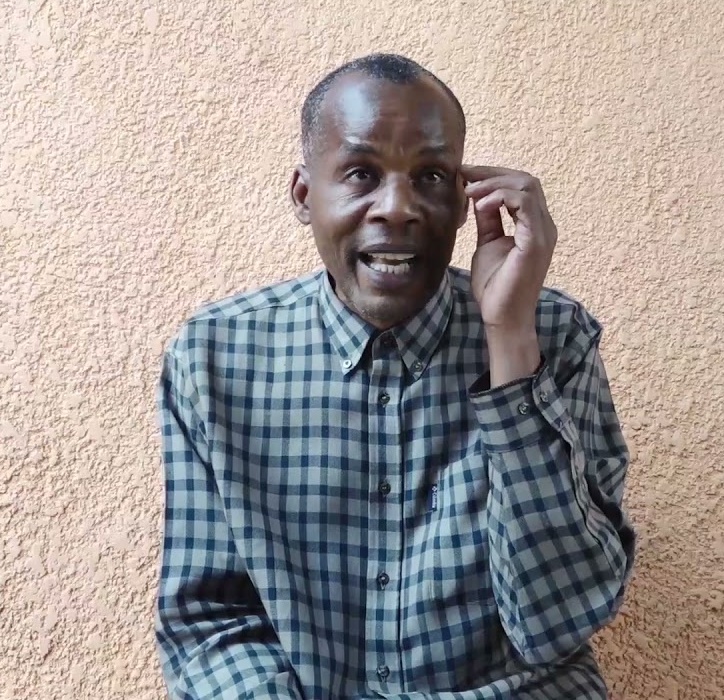
RIB has revealed that the man is suspected to have committed the crimes at different times through talk shows aired on YouTube.
He has been arrested after declining to abide by law enforcers’ warning to stop series of similar talk shows.
RIB had summoned Hakuzimana early September 2021 for interrogation and returned home. It is said that he was warned against his abusive words that could result into to crimes.
He is detained at RIB Post in Kicukiro as investigation is underway to transfer his files to the Prosecution.
Before his arrest, Hakuzimana released a publication entitled ‘A project for peace on Rwanda, Rwandans and the Great Lakes Region’. He explained that the region has lacked peace since RPF took power.
Hakuzimana said that power should be shared to attain peace noting that ‘Rwanda is undergoing bad governance’. He made a list of individuals who should be part of the cabinet including himself.
Some of individuals on the list include Genocide deniers like Father Thomas Nahimana and Faustin Twagiramungu among others.
Hakuzimana,53, resides in Uwingenzi village, Kivugiza cell, Nyamirambo sector of Nyarugenge district. He was born in Musanze district, Northern Province to Jean Bosco Nzariturande alias Mwarabu and Nyiraherekeza.
He has been airing talk shows on his channel dubbed ‘Rachid TV’.
Appearing in one of most recent talk shows, the man said that commemoration of the 1994 Genocide against Tutsi should stop.
He also stated that commemoration of the Genocide borne no fruits for the past 27 years.
Following series of Hakuzimana’s talk shows, members of the public used social media platforms to file complaints wondering why RIB did not launch investigation to hold him accountable.