The incident happened on Sunday 20th February 2022 in Kirehe village, Rwesero cell of Kagano sector as the young girl returned home from Rwesero business center where she worked as a sewing intern.
The executive secretary of Kagano sector, Jérôme Niyitegeka has told IGIHE that the young girl returned home soon as it started raining and hit by lightning nearby her father’s home.
Uwera was a student at APEKA School located in Kagano, four kilometers away from home.
Last year, lightning killed a woman and husband in the same district while sleeping.
Those arrested are Vincent Nkuriza and Emmnauel Mushinzimana.
The duo allegedly stole the motorcycle, TVS RF 415P on February 14, in Nyamate, Bugesera District after ambushing and assaulting one Alex Mushinzimana, a taxi-moto operator, at about 8:30pm.
The Southern region Police spokesperson, Superintendent of Police (SP) Theobald Kanamugire said that the arrest of the suspects followed a theft complaint filed by the victim and information provided by residents of Runda, during investigations.
“A resident of Muganza reported a person, who was looking for someone to buy a motorcycle. The resident suspected that the motorcycle was stolen and called the Police. They first arrested Nkuriza with the motorcycle,” SP Kanamugire said.
“Nkuriza then led Police officers to his accomplice, Emmanuel Mushinzimana, who was also taken into custody.
This is the third stolen motorcycle to be recovered this week in which scores have been arrested.
Article 166 of law determining offences and penalties in general states that; any person convicted of theft is liable to imprisonment for a term of not less than one (1) year and not more than two (2) years and a fine of not less than Rwf1 million and not more than Rwf2 million, community service in a period of six (6) months or only one of these penalties.
In article 167, the penalty for theft doubles if the offender committed the crime through burglary, climbing or possession of keys other than the owner; the theft is carried out during the night or the theft is carried out by more than one (1) person.
The program is entitled Feed the Future Rwanda Kungahara Wagura Amasoko (“prosper while expanding markets”) and is designed to inclusively and sustainably boost economic growth. The activity plans facilitation of US$300 million in new investments into Rwanda’s high-value agricultural export sector, which includes coffee, tea, horticulture and spices, and livestock products such as dairy and hides.
The activity will work with and through the Government of Rwanda, the private sector, and civil society to facilitate an inclusive and resilient policy and regulatory environment and mobilize public and private investment toward increased high-value agricultural products.
During the launch in Kigali, USAID/Rwanda Mission Director Mr. Jonathan Kamin has said that the goal of this activity is to achieve at least 12 percent annual growth in targeted agricultural commodities exported at a national level, an increase of income of 50 percent to 75 percent for at least 100,000 households and US$300 million value of private investments mobilized by and through Government of Rwanda agencies.”
Presiding over the launch, the Minister of State in the Ministry of Agriculture and Animal Resources (MINAGRI), Dr. Jean-Chrysostome Ngabitsinze said: “Partnerships with the private sector and civil society organizations to reach a huge number of exporters across a number of high-value agricultural products is critical. Joining efforts and collaboration with USAID projects, other donors supporting the sector as well as other local stakeholders is encouraged.”
The U.S. Feed the Future Rwanda Kungahara Wagura Amasoko is expected to achieve US$300 million in private investment and commitments mobilized by and through GOR agencies as a result of U.S. Government support; 168% increase in value of targeted agricultural commodities exported at a national level and 50% increase in income for at least 127,000 households, including women and youth, through participation in agricultural export value chains and services.
It also seeks to achieve at least 30 new or adapted agricultural enabling environment policies analyzed, consulted on, drafted or revised, approved, and implemented with U.S. Government assistance; and 500 firms accessing agriculture-related investment as a result of U.S. Government support.
U.S. Feed the Future Rwanda Kungahara Wagura Amasoko is implemented by a consortium led by RTI International with partners J.E. Austin Associates, Dalberg Advisors, LixCap, and Vanguard Economics.
{{About USAID}}
USAID is the world’s premier international development agency and a catalytic actor driving development results. USAID’s work advances U.S. national security and economic prosperity, demonstrates American generosity, and promotes a path to recipient self-reliance and resilience. www.usaid.gov
{{About U.S. Feed the Future }}
Feed the Future is America’s initiative to combat global hunger. Led by the U.S. Agency for International Development, Feed the Future draws on the agricultural, trade, investment, development, and policy resources and expertise of multiple U.S. federal departments and agencies. www.feedthefuture/gov
The reflection session which took place on Friday 18th February 2022 at Kigali Convention Centre, was held under the theme, “Celebrating four decades of Oxfam’s work in Rwanda.”
For the past four decades, Oxfam has been working to support Rwanda’s development efforts through implementing humanitarian response, reconstruction, gender justice, participatory governance and sustainable livelihoods programmes.
Oxfam’s core mission in Rwanda evolved through the years but remained focused on fighting poverty and inequality while ensuring that poor women, men, and youth it served enjoy equal rights and benefit from fair and inclusive development.
The reflection session gathered various stakeholders including public institutions which continue to work with Oxfam closely, local organizations who have been implementing Oxfam’s programmes on the ground, International Organizations, private businesses and enterprises, faith-based organizations, and selected members of the communities that Oxfam has been serving.
The Executive Director of Oxfam International, Ms. Gabriela Bucher who attended the reflection session virtually mentioned: “I believe most of you know that from April 2022, Oxfam’s presence in Rwanda will reduce significantly as we will relocate our offices to be hosted by a local organization while we significantly downsize our staff. Despite this, we have committed to ensure that we honor and follow through our commitments to donors as well as to communities we serve.”
In her speech, the Regional Director of Oxfam for Horn, East and Central Africa region, Ms. Parvin Ngala, said: “You have proved that Oxfam’s vision and values can be shared, and we are indeed not working alone. Together we are stronger, and we can make poverty and inequality stories of the past for the younger generations.”
As requested by Oxfam’s regional director, participants to the reflection session committed to continue supporting the linear team of Oxfam staff which will remain on the ground ensuring continuation of projects’ implementation between 2022 and 2025. This team will be implementing five projects and will be housed in the premises of a local organisation starting April 2022.
Oxfam believes that although it is closing in Rwanda, the fight against poverty and inequality continues as the country recovers from the global pandemic as well as its effects on the economy.
The railway will follow the track from Tanzania through Rwanda to Burundi and the Democratic Republic of Congo (DRC). The project conceived in 2009 took formal shape in 2018 when Rwanda and Tanzania signed implementation agreements.
The topic was also discussed at the European Union (EU) – African Union (AU) Summit that took place on 17th and 18th February 2022 in Belgium.
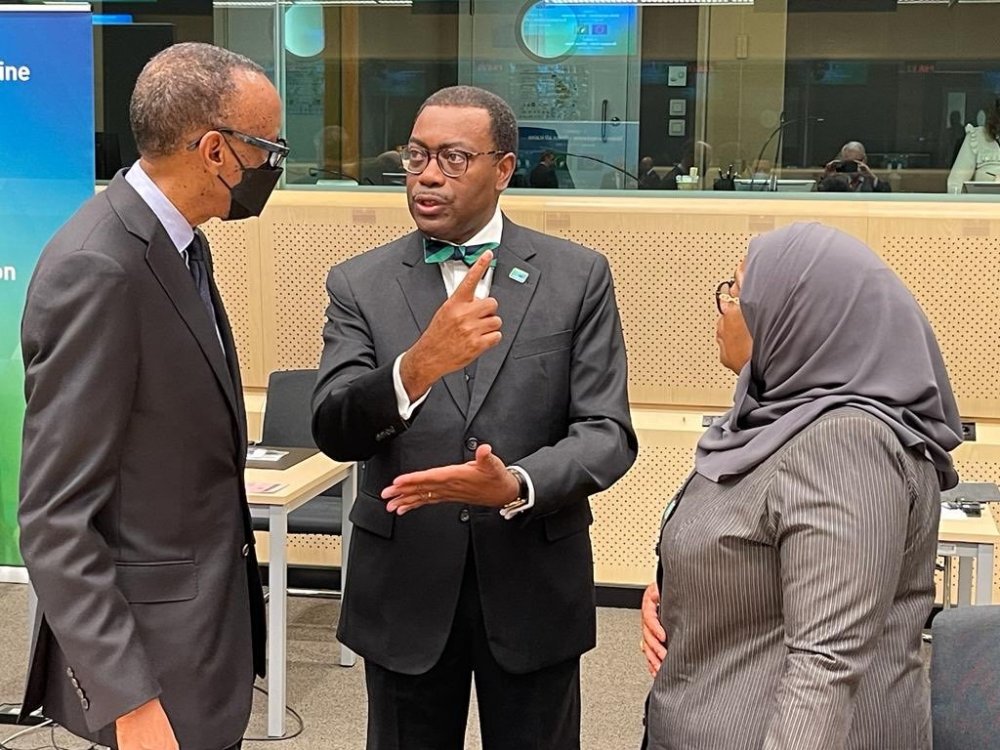
The President of AfDB, Adesina has via Twitter handle shared a picture where he appeared along with Kagame and his counterpart of Tanzania, Samia Suluhu with a description that they are working together to advance the railway project.
“At EU-AU Summit in Brussels: Working with President @PaulKagame of Rwanda and President @SuluhuSamia of Tanzania to advance regional railways project linking Tanzania, Rwanda, Burundi and DRC. With their remarkable vision and leadership, we will get it done!” he tweeted.
Initially, the project was to be implemented between Tanzania and Burundi where the railway had to follow the track from Kigoma to Gitega in Burundi covering 240 kilometers.
In May 2018, Rwanda and Tanzania agreed to restructure the project to start the track from Isaka to Kigali using electric train.
Of the total US$ 2.3 billion estimated cost to complete the 532-km railway; Tanzania shall meet US$ 1.3 billion while US$ 1.2 billion is required on Rwanda side.
Once completed, Rwanda plans to build an extra part of the railway leading to Bugesera International Airport and Rubavu district bordering with Goma town in DRC.
The long awaited railway linking to Rwanda to neighboring countries is expected to give relief to traders catering for expensive cost of land cargo transport.
The railway on Rwandan side will follow the lowland through Ngoma, Kirehe, Bugesera to Kigali city at headquarters of Dubai Ports in Kicukiro district.
It is said that landmarks landmarks for Isaka-Kigali railway passage have been erected from Rusumo to Ndera in Kigali city. Rwanda is raising funds while construction of the railway is underway on the side of Tanzania.
Once approved, she will replace Dr. Mankeur Ndiaye whose term as the head of Multidimensional Integrated Stabilization Mission in CAR (MINUSCA) will end on 28th February this year. It is reported that the UN Security Council is in final processes of appointing her successor.
The name Rwanda’s Ambassador to the UN, Rugwabiza has been submitted to the five permanent member states by the Under-Secretary-General of the Department of Peace Operations (DOP), Jean-Pierre Lacroix.
Africa Intelligence has reported that only China has not yet given its approval but expected to do so in the coming days.
Once approved, Amb. Rugwabiza will arrive in Bangui towards the end of March 2022. This means, Ndiaye’s stay should be prolonged for few weeks while waiting for Rugwabiza to take up her role. Ndiaye has been in office since February 2019 but was not willing to stay on for additional term.
On 22nd February 2022, he will travel to New York to present the General Secretariat’s report on CAR to the security council, a prelude to Lacroix’s visit to Bangui from 25th to 28th February 2022.
If confirmed, Rugwabiza’s appointment will cement Rwanda’s rise to prominence within the mission. Since June last year, the mission’s police component CP Christophe Bizimungu , the former Commander of Rwanda Police Academy located in Musanze, Northern Province. He replaced French citizen Pascal Champion. Among others, the humanitarian coordination office has been managed by Rwandan Vedaste Kalima since January 2021.
Rwanda has 1660 soldiers and police force comprised of 459 since the mission began in 2014.
Rwandan soldiers have been protecting CAR’s president’s office since 2015.
Amb. Rugwabiza was born on 25th July 1963. She has been serving as Rwanda’s ambassador to UN since 2016. Rugwabiza holds both Bachelor and Master’s degree in Economics.
For eight years, Rugwabiza worked for Swiss multinational company Hoffmann-La Roche, first as the head of commercial development and marketing for Central Africa in Yaoundé and then as regional director in Ivory Coast.
In 2002, Rugwabiza was named Rwanda’s ambassador in Switzerland and Permanent Representative to UN Headquarters in Geneva.
Between 2005 and 2013, Rugwabiza held the position of Deputy Director-General of the World Trade Organization (WTO).
From 2013 to 2014, she was appointed the Chief Executive Officer of the Rwanda Development Board and later served as Minister for East African Community since 2014.
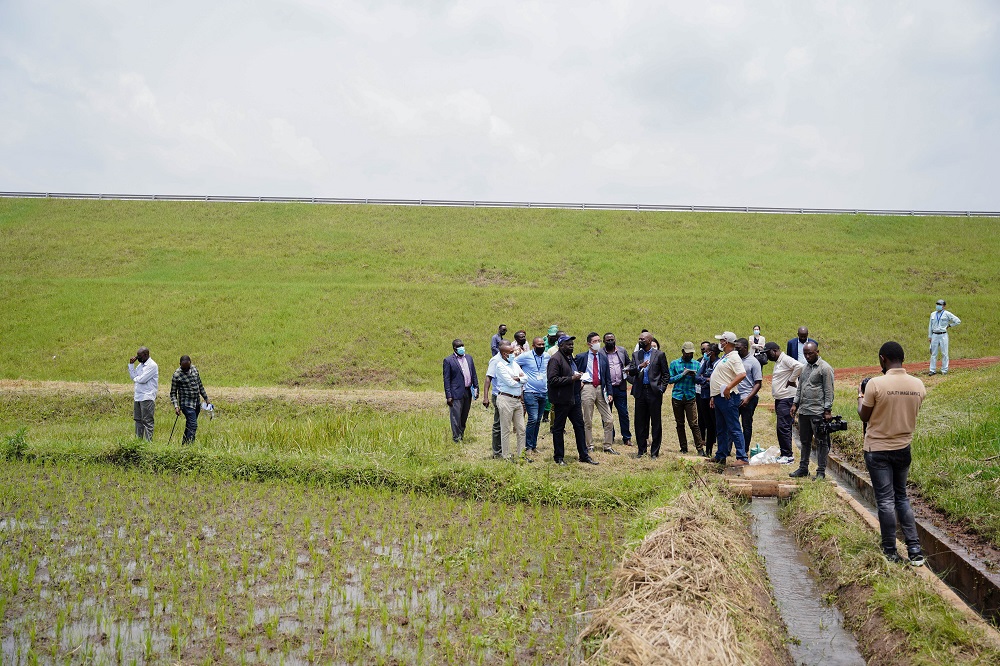
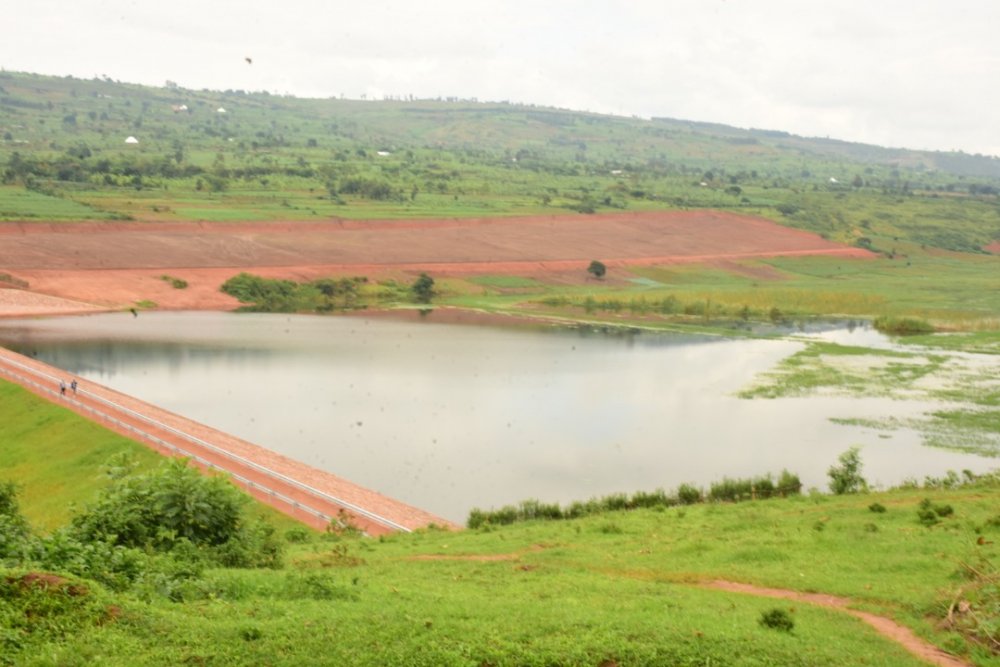
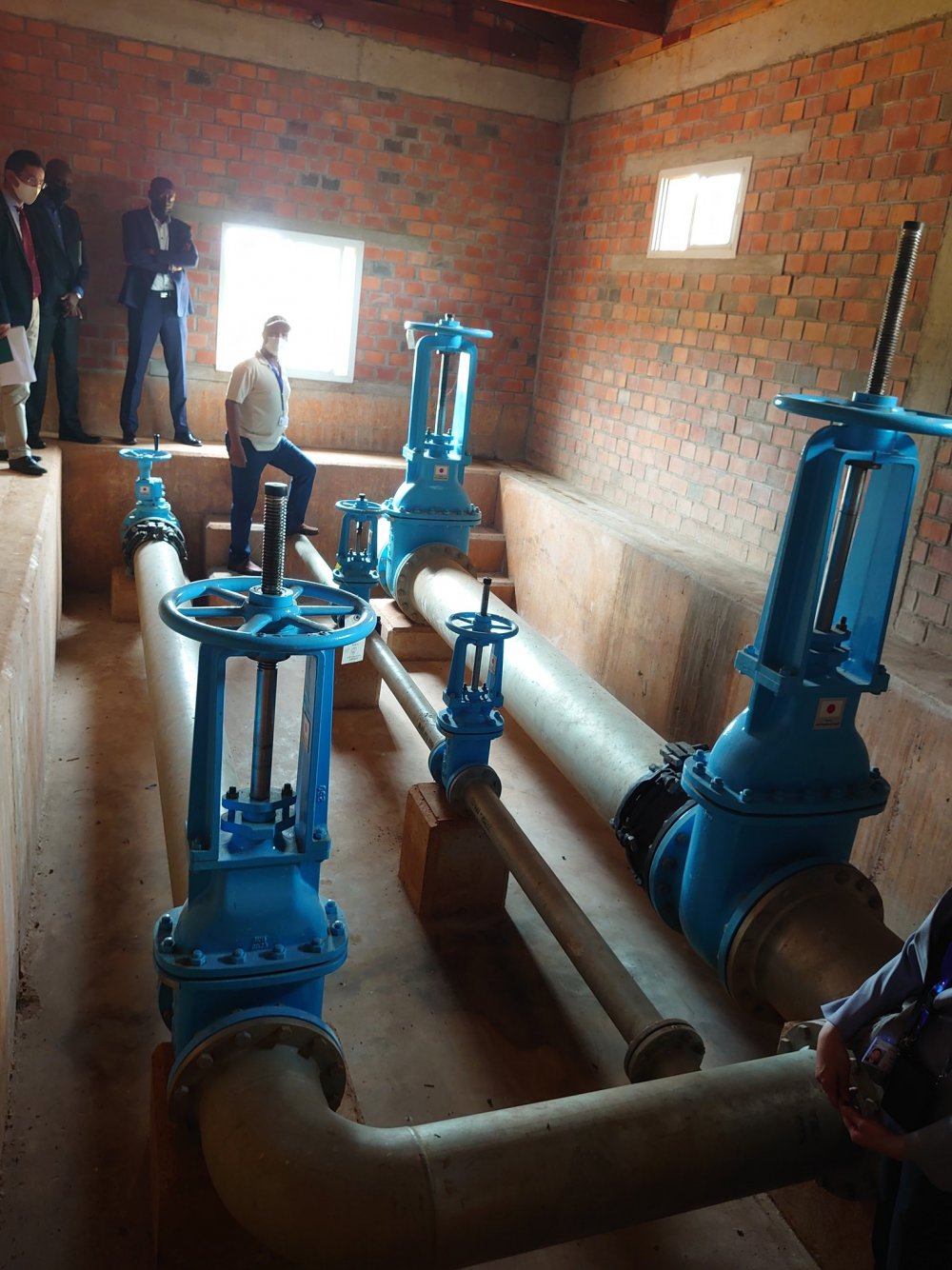
During implementation of the project, two dams including Cyimpima and Gashara were rehabilitated. They are an addition to a newly created Bugugu dam and 23.5 – kilometer water pipe built between 2019 and 2020 all at a cost Rwf21 billion.
JICA also started six-year capacity building project in 2019 to equip farmers with best agricultural practices and educate them on proper use of infrastructures made available.
Three years after inauguration, the project is promising to yield big as 1300 farmers exploiting the marshland have started doubling their produce.
Before the rehabilitation, farmers used to grow rice on 260 hectares. With irrigation infrastructures put in place, they extended agricultural activities on 340 hectares which helped them to increase the produce from 3.5 tons to 6 tons with optimism to reach 7 tons in the near future.
The increase in yields is mainly attributed to wetland’s efficient management and modern irrigation which they had lacked before.
The latter is an addition to training programs where these farmers are equipped with modern farming techniques, ways to preserve the environment, post-harvest handling techniques and skills to properly maintain infrastructures.
Besides, farmers generate huge returns from treatment of the marshland’s water sold to companies excavating stones for road construction nearby the marshland. Farmers have revealed that the business generated Rwf7, 000,000 for the past nine months.
The project aims at enhancing the quality of local rice and reduce the percentage of imported rice which currently stands at 48%.
Farmers operating in the wetland’s renovation has started uplifting their living standards.
Olive Mukashema grew rice on 50 acres but expanded her activities on a hectare, thanks to irrigation infrastructures made available. She has seen yields increasing and generates Rwf2 million from six tons per season.
“I did not apply best farming techniques until the project intervened. I grew crops expecting low yields particularly during the dry spell but the irrigation infrastructures help us to increase the produce and expand activities, “she narrated.
Mukashema shares thoughts with Théogène Zirimwabagabo who also affirms that his produce has doubled to harvest a ton per season. The progress has seen him building a decent house and venturing into livestock farming.
The mayor of Rwamagana district, Radjab Mbonyumuvunyi has said that increased produce has uplifted farmers’ livelihoods and contributed to jobs creation.
The Ambassador of Japan to Rwanda, Masahiro Imai has said that the project reflects good bilateral ties between both countries highlighting that it will play a critical role towards improved wellbeing of beneficiaries.
“That is a special project. Before, farmers didn’t access water for irrigation which negatively affected their farming. Today, they have got relief with the provision of irrigation infrastructures. Besides, farmers have seen their produce doubling and generate returns from the water. It is a commendable progress inducing pride,” he observed.
Japan’s grant aid project to rehabilitate marshlands and create dams was launched in 2019. Farmers in Rwamagana, Gisagara and Ngoma districts are receiving training under JICA’s technical cooperation project expected to be extended to other districts across the country.
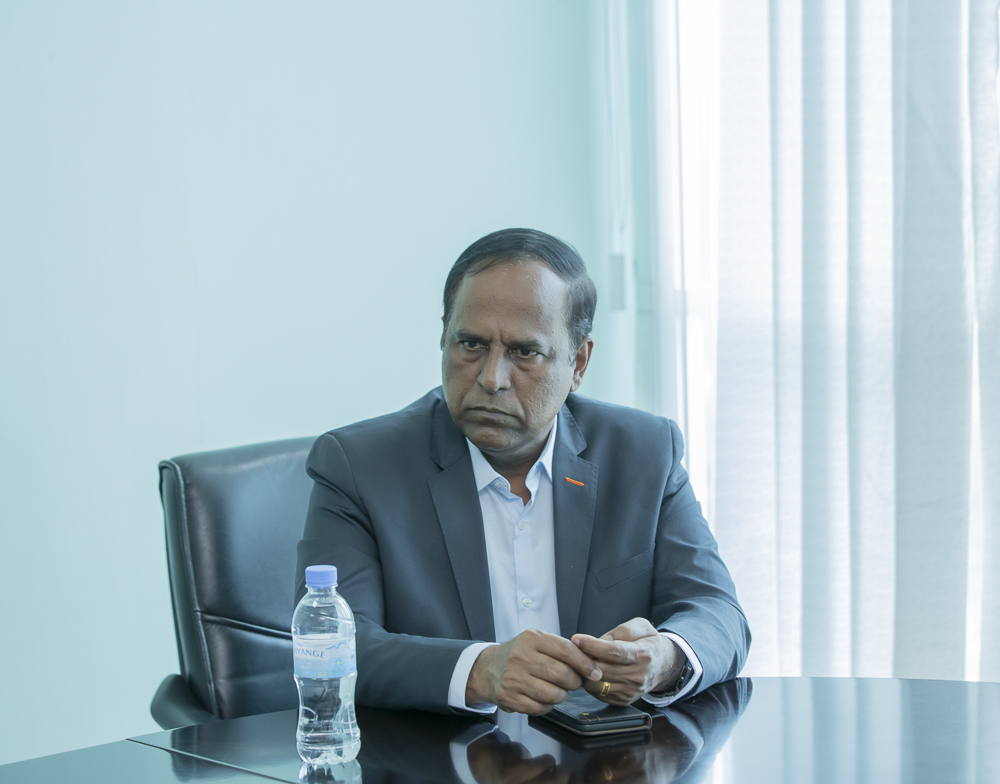
The Indian with expertise in Herbal Medicine arrived in Kigali on Friday 11th February 2022 to assess the feasibility of his activities in the country.
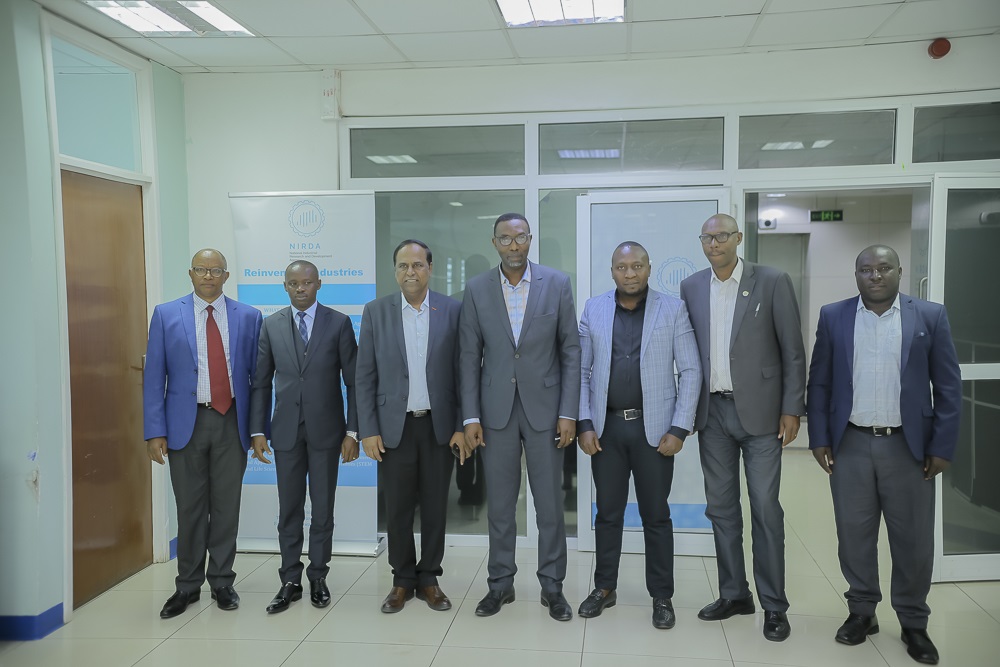
On Friday 18th February 2022, he visited the National Industrial Research and Development Agency (NIRDA) for discussions paving the way for collaboration to promote the use of herbal medicines in Rwanda.
The man who is also the founder of Life Care Phyto Labs-India (LCPR) which produces herbal medicines entered cooperation agreements with different dealers including Bold Regain International operating in Rwanda. The latter supplies nutraceuticals to different countries across the world.
NIRDA is expected to enter agreements with Life Care Phyto Labs-India to train farmers on best practices to grow and preserve medicinal plants.
It shall also facilitate the company to set up plant in Rwanda in collaboration with Bold Regain International.
The plant expected to begin this year will receive some of NIRDA’S equipment that were previously used at its medicinal plants’ laboratory in Huye district.
Among others, NIRDA will provide land suitable for growth of medicinal plants to ensure smooth supply chain of raw products with uncompromised quality.
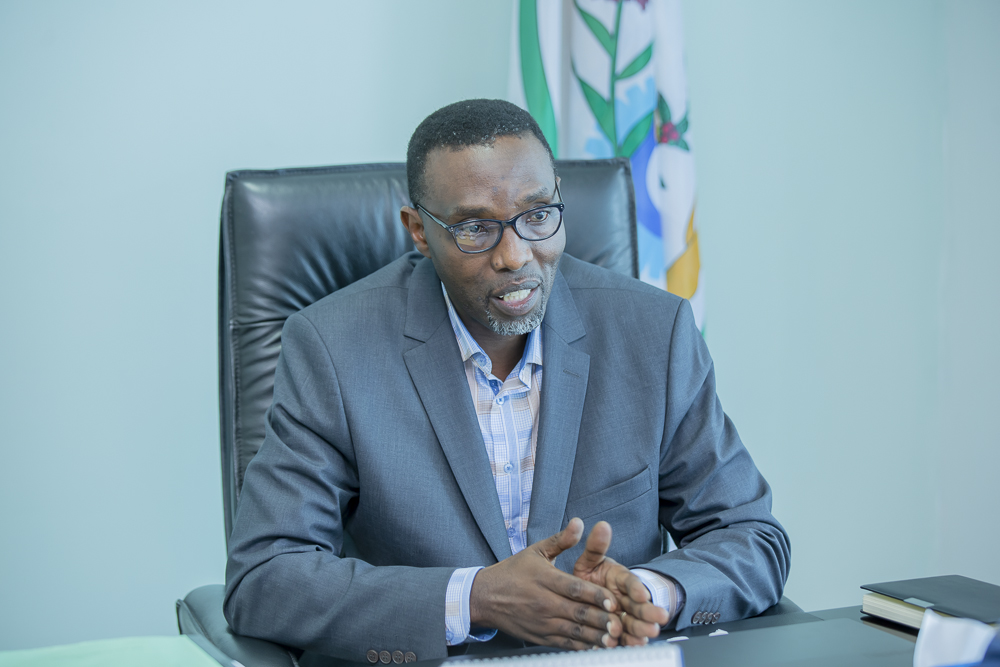
The Director General of NIRDA, Dr. Christian Sekome Birame has said that they are set to cooperate with Dr. Rajendran Aanaimuthu to promote medicinal plants as they are very helpful to humans’ life.
“Herbal medicines are more recommended than drugs produced using chemicals because they might cause side effects sometimes,” he said.
Dr. Rajendran Aanaimuthu expressed delight for the anticipated cooperation with NIRDA highlighting that they will help Rwandans gain knowledge leading them to healthy life and benefit from herbal medicines plant.
“Growing medicinal plants requires a stern process and specific skills. I am proud that I will contribute to the training promoting these activities in Rwanda. Besides, the plant we are set to establish will also benefit from it,” he said.
The CEO of Bold Regain International, Dr. Francis Habumugisha has said that the training will tackle inconsistencies in production of herbal medicines.
“The quality of traditional medicines in Rwanda has not yet reached a desired extent. In some cases, an old woman grinds the herbs with poor hygiene. Besides, the herbal medicine is not tested in laboratory to determine contained substances and the recommended dosage. We will buy medicinal plants grown in proper conditions and might even test farmers’ products at our plant,” he revealed.
{{Who is Dr. Rajendran?}}
Dr. A. Rajendran has an illustrious research career spanning 30 years in herbal research. He did his Doctorate in science and humanities at Anna University, Chennai. Dr. Rajendran has an outstanding experience in Phytotechnology Innovation, Cultivation, Extraction, processing and value addition of herbal medicines, nutraceuticals, Cosmeceuticals and bio agro products.
He has own patent in Aloe vera cold processing technology through the National Research Development Corporation (NRDC) in New Delhi. Dr. Rajendran has been carrying on Research and Development activities in various herbal formulations and has developed several formulations of Medicines, Cosmetic and Nutraceuticals.
On 2015, he launched a company that produces herbal medicines dubbed ‘Life Care Phyto Labs’.
Paul Ndayambaje, 29, alias Ndayari and Jean Damascene Ndayishimiye, 28, alias Kazungu were arrested in Gatsibo Village, Nyamirama Cell of Gitoki Sector with assorted stolen items.
Among the things that were recovered from the two suspected thieves include a motorcycle, three flat television sets, radio set and DVD decoder.
Police also recovered master keys and traditional tools, which the suspects were using in break into houses.
Superintendent of Police (SP) Hamdun Twizeyimana, the Eastern region Police spokesperson, said that the arrest of the duo resulted from good collaboration between the Police, local leaders, community night patrol (Irondo) personnel.
“The local night security patrol saw the two men on a motorcycle at about 3am. Out of suspicion of what they were transporting, they called the Police, leading to their arrest and recovery of the stolen items, handed over to RIB,” said SP Twizeyimana.
The motorcycle had been stolen earlier that night when the duo ambushed one Ildephonse Nizeyimana, assaulted him before stealing it.
They then used the same moto to go to different homes that night where they stole the electronics, which they were caught with.
SP Twizeyimana commended the impact of community policing and Irondo in particular to fight such burglaries.
Article 166 of law determining offences and penalties in general states that; any person convicted of theft is liable to imprisonment for a term of not less than one (1) year and not more than two (2) years and a fine of not less than Rwf1 million and not more than Rwf2 million, community service in a period of six (6) months or only one of these penalties.
In article 167, the penalty for theft doubles if the offender committed the crime through burglary, climbing or possession of keys other than the owner; the theft is carried out during the night or the theft is carried out by more than one (1) person.
The man left a suicide note indicating that he decided to take his life due to mental illness.
The executive secretary of Gisenyi sector, Jean Bosco Tuyishime has confirmed that he was found hanging from a tree.
“The young man hails from Muhanga. In a suicide note left to the foster family, he explained that he was suffering from family-caused mental illness. The body has been taken to Gisenyi Hospital for postmortem even though he apparently committed suicide,” he said.
Tuyishime urged residents to seek support from local leaders for advice or other kinds of support instead of committing suicide.
It is said that the foster family rushed to locate the young man after seeing the suicide note, in which he bequeathed belongings to his friend, but ended up in vain as he was found dead.