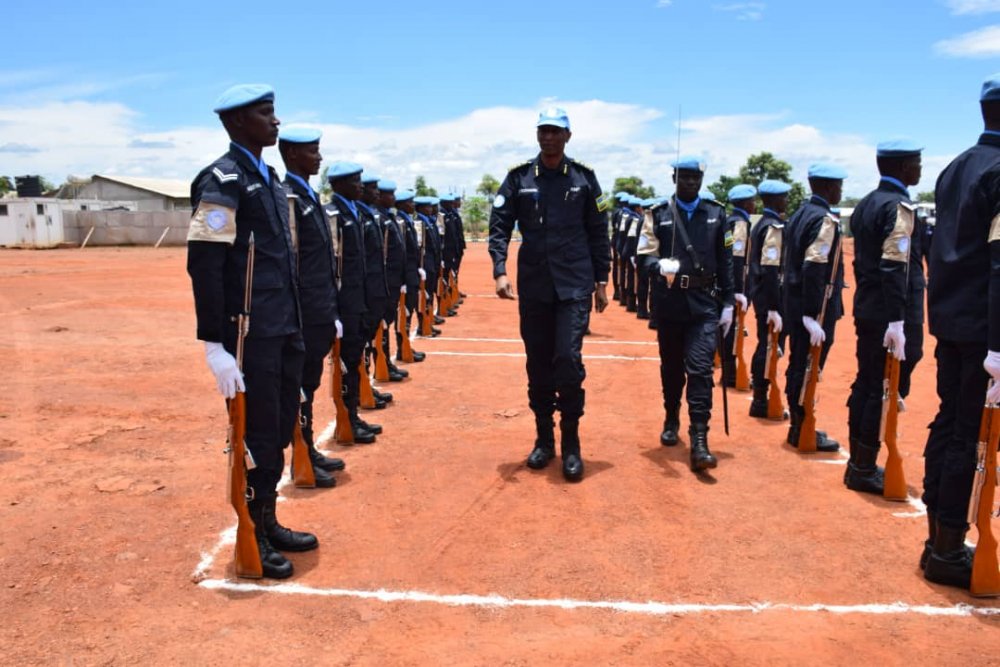
The Rwanda Formed Police Unit (RWAFPU2-7) contingent of 180 officers was deployed in north of the country in April, this year.
CP Bizimungu, who was received by the RWAFPU contingent commander, Chief Superintendent of Police (CSP) Hodari Rwanyindo, thanked them for their sacrifice to contribute to peace in the region.
“Your contribution to restoring peace in this country and to the people of Kaga Bandoro is commendable. Maintain the spirit, commitment and professionalism to accomplish your mission mandate,” CP Bizimungu said.
He reminded them that the commitment, dedication, and discipline they exhibit define the level of trust the local people have in them.
The Police Commissioner further observed that since 2016, when the Rwandan police peacekeepers arrived in Nana Gribizi Province, stability has continued to improve.
“This areas was destabilized by rebel groups but today, people go about their work without any threats. You are here to make sure that the safety and security continues to improve…that is what those under your protection expect from you,” CP Bizimungu said.
Rwanda maintains three contingents in Central African Republic, including two Formed Police Units (FPUs) and a Protection Support Unit (PSU), with combined strength of 460 Police officers.
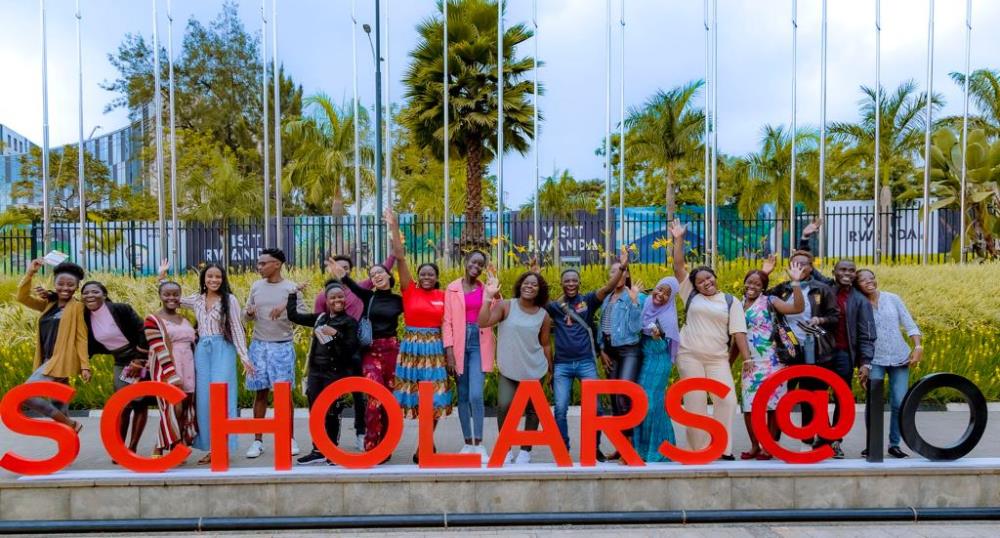
“Through a network of extraordinary partners, the Mastercard Foundation Scholars Program is enabling thousands of bright and deserving young people to accessquality education and develop as leaders who give back to their communities and help to improve the lives of others. Mastercard Foundation Scholars and Alumni are leaders and innovators; activists and entrepreneurs; tackling everything from climate change to health inequity. Their collective impact will be felt for generations to come,” says Reeta Roy, President and CEO of the Mastercard Foundation.
According to a 2020/2021 survey of a sample of Alumni from the Program, 87 percent of secondary-school graduates and 71 percent of university graduates are employed. Where Alumni have become entrepreneurs, they have collectively created over 16,000 jobs. In addition, 40 percent of university graduates say they are now supporting the education of their siblings. Importantly, Mastercard Foundation Scholars unanimously express a strong commitment to giving back to their communities, which is a core principle of the Program. During their education, each person creates or participates in a project, which address a specific challenge in their communities.
“Throughout my journey as a Mastercard Foundation Scholar, it has always been about being a better version of yourself so that you can go back to your community and help others,” says Joanna Gunab, who is now a medical doctor practicing in Northern Ghana. Joanna, a young woman living with a disability, also runs an initiative to support students with basic school necessities.
Another Alumni of the Mastercard Foundation Scholars Program, Faith Kipkemboi, is driving transformation in her native Kenya. She founded a community-based organization, Cactus Mama, to deliver evidence-based, high-quality, and affordable mental health services in remote areas, especially for women. “We hope to create a better Kenya; a healthier Kenya,” she says.
The Mastercard Foundation Scholars Program began with a strong focus on secondary education, working with partners such as CAMFED, BRAC, Forum for African Women Educationalists (FAWE), the African Leadership Academy (ALA), and the Equity Group Foundation (Wings to Fly) to provide young people with access to high school and improve completion rates —particularly for girls.
As more African countries adopt free secondary education policies, the Mastercard Foundation Scholars Program has focused its attention on higher education, where tertiary enrollment rates across the continent remain low. At the same time, the Mastercard Foundation is continuing to improve quality, relevance, and inclusion in secondary education to prepare young people for the world of work.
“Our partnership with the Mastercard Foundation Scholars Program is exceptional and has enabled us to fulfill our vision for the post-secondary school years,” says Ann Cotton, Founder and Trustee of CAMFED International. “Every child matters and the Foundation looks at justice in the broadest possible sense, from the most impoverished [and] marginalized child to the most powerful institution with whom they work. And there is authenticity at every point on that trajectory.”
The Mastercard Foundation Scholars Program has grown into a network of over 40 pan-African and global partners working together to drive inclusion in education. African organizations represent more than 45 percent of this network.
Over the next decade, the Mastercard Foundation Scholars Program will double its reach to support a total of 100,000 young people, 70 percent of whom will be young women. It will also dedicate more attention to the inclusion of disabled and forcibly displaced young people.
Moving forward, the Mastercard Foundation will also continue to support the network of higher education partners to promote innovation and entrepreneurship in ways that enable dignified work for young people in Africa. This is in line with the Foundation’s Young Africa Works strategy, which aims to enable 30 million young people across the continent to access dignified and fulfilling work by 2030.
{{Quotes from scholars and scholars program partners}}
{{Susan Davis, Founding President and CEO, BRAC USA}}
“You interview the Scholars, they all wanted to do something not just for themselves but for the others—others in their family, others in their community…They are very much motivated by an altruistic spirit. And I think that is the power of this transformative approach. I really don’t think there is a better way than investing in young people.”
{{Chris Bradford, Founder and Chairman, African Leadership Academy}}
“Where do I hope the Mastercard Foundation Scholars Program will be in 10 years? I hope that it will have an alumni network that is so vibrant that Scholars from the first classes are choosing to invest in the success of the incoming cohort. That is the single thing that we must get. If we get that right, we will have a metaphor that does not work in most of Africa, but we will have a snowball rolling downhill and gaining momentum in size as it goes.”
{{Arturo Condo, President, EARTH University}}
“The Mastercard Foundation Scholars Program has been a great means for EARTH University to increase awareness of issues of climate change, especially in rural areas, and around agriculture, in Africa. Before the Mastercard Foundation Scholars Program, we had a small percentage of African students in our program who faced different, but connected, climate change challenges compared to Latin America. And for us, it has been a great opportunity to learn more about other realities and also to contribute with the thinking and the learning of the past few decades.”
{{Professor Michael Crow, President, Arizona State University}}
“My hope for the Scholars Program is that by 2030 we have hundreds and hundreds of leader driven networks throughout Africa that are transforming everything.”
{{Patrick Awuah, President and Founder, Ashesi University}}
“The Mastercard Foundation set up this Program that really put everybody on a level playing field, and completely changed the game for those students that (so needed) support. It was very clear to the Mastercard Foundation, that the students—the young people—were the North Star.”
{{Godiolla Akimana is currently a Mastercard Foundation Scholar at the American University of Beirut}}
“Being a Scholar means that I am a transformative leader, devoted to bringing economic and social change in my home country, in my region, and the whole African continent.”
{{Maxwell Aladago, Graduate of Ashesi University, PhD student at Dartmouth College, where he is currently focused on AI research for solving some of Africa’s most pressing challenges}}
“Besides having access to listening ears, the comprehensiveness of the Mastercard Foundation Scholars Program played an immense role in who I have become. By not having to worry about food, the cost of living and books, I had enough quality time to prepare myself for post-graduation life. [I took advantage of] the full benefits of Ashesi’s diverse culture by hanging out with international students. I also benefitted a lot from Scholars’ development initiatives such as the summer internship fund, which sponsored my first internship. Through the internships and from interacting with my colleagues at Ashesi, I learned to engage meaningfully in professional conversations and adapt to new cultures. Goldman Sachs employed me largely because of these qualities, not my technical skills.”
{{Patricie Uwase, Graduate of the University of California Berkeley, State Minister at the Ministry of Infrastructure in Rwanda}}
“I am always reminded of my privilege to have attained the education I have today, and I am forever indebted to everyone who helped me achieve my dream. As international organizations and Africans governments embark on developing the strategies, policies, and practices that will support progress against the SDG’s let them not forget that education underpins it all. And that a dream is what sustains us and keeps us engaged in building a bright future for those who will come after us.”
{{Rahab Wangari, Graduate of Ashesi University and Carnegie Mellon University Africa (CMU-Africa), Founder of Hepta Analytics}}
“With the help of the Mastercard Foundation, I have been able to attain a world class education not only once but twice. This exposure opened doors for me where I met like-minded people who are passionate about solving African problems. It was with these experiences that I launched my own social venture, Hepta Analytics.”
{{About the Mastercard Foundation}}
The Mastercard Foundation works with visionary organizations to enable young people in Africa and in Indigenous communities in Canada to access dignified and fulfilling work. It is one of the largest private foundations in the world with a mission to advance learning and promote financial inclusion to create an inclusive and equitable world. It was established in 2006 through the generosity of Mastercard when it became a public company. The Foundation is an independent organization, and its policies, operations, and program decisions are determined by its own Board of Directors and senior leadership team. It is a registered Canadian charity with offices in Toronto, Kigali, Accra, Nairobi, Kampala, Lagos, Dakar, and Addis Ababa.
Queen Elizabeth II died on Thursday 8th September 2022. Following her demise, King Charles III was formally proclaimed Britain’s new monarch at a meeting of the Accession Council held at St James’s Palace last Saturday.
Queen Elizabeth II will be buried on Monday in Windsor Castle, about 23 miles west of London, alongside her husband and royal predecessors in St. George’s Chapel.
King Charles III is the first born among four children of Queen Elisabeth II. He had been designated as her successor in 2018.
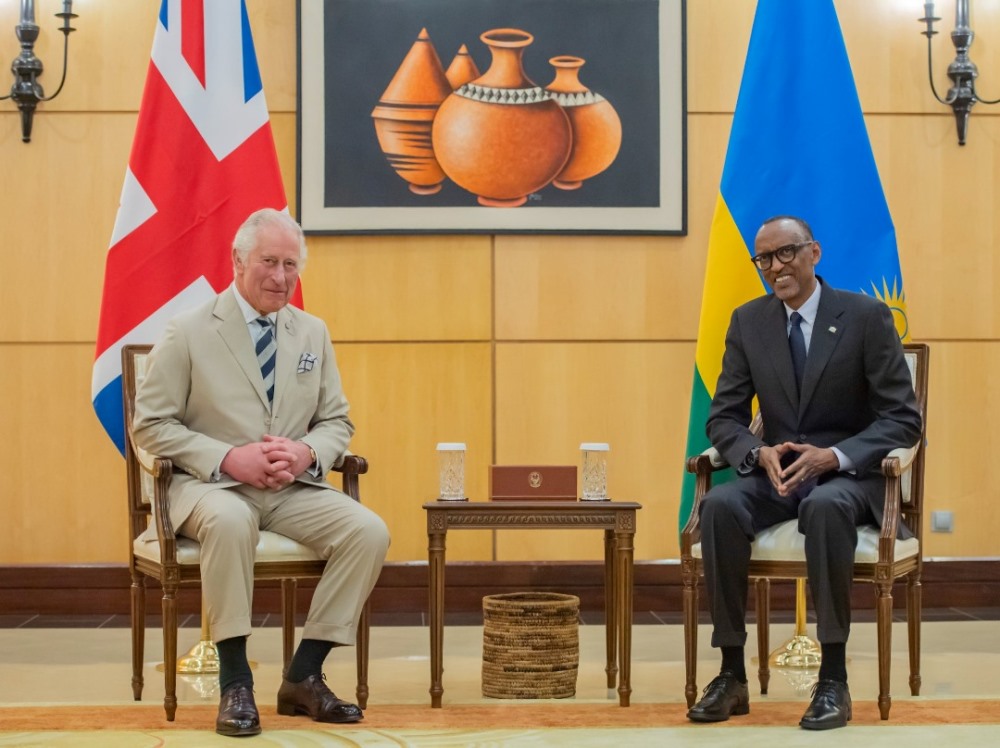
Through a message posted on his Twitter handle, Kagame has also revealed that Rwanda is committed to work with the new King of UK to deliver on Commonwealth agenda.
“I had the opportunity to express through a phone conversation, my sincere condolences to His Majesty King Charles III for the passing of his mother Her Late Majesty Queen Elizabeth II,” he tweeted.
“Rwanda looks forward to working together with King Charles III to move the Commonwealth agenda forward in service of all our citizens,” added Kagame.
President Kagame assumed duties as Commonwealth Chair-in-Office for two-year term in June this year as Rwanda hosted the Commonwealth Heads of Government Meeting (CHOGM).
He replaced the former UK Prime Minister, Boris Johnson who resigned recently.
The Commonwealth is a voluntary association of 54 independent and equal sovereign states. Its combined population is 2.5 billion, of which more than 60 per cent is aged 29 or under.
The Commonwealth spans the globe and includes both advanced economies and developing countries. Thirty-two of members are small states, many of which are island nations.
The Commonwealth Secretariat supports member countries to build democratic and inclusive institutions, strengthen governance and promote justice and human rights.
Its work helps to grow economies and boost trade, deliver national resilience, empower young people, and address threats such as climate change, debt and inequality.
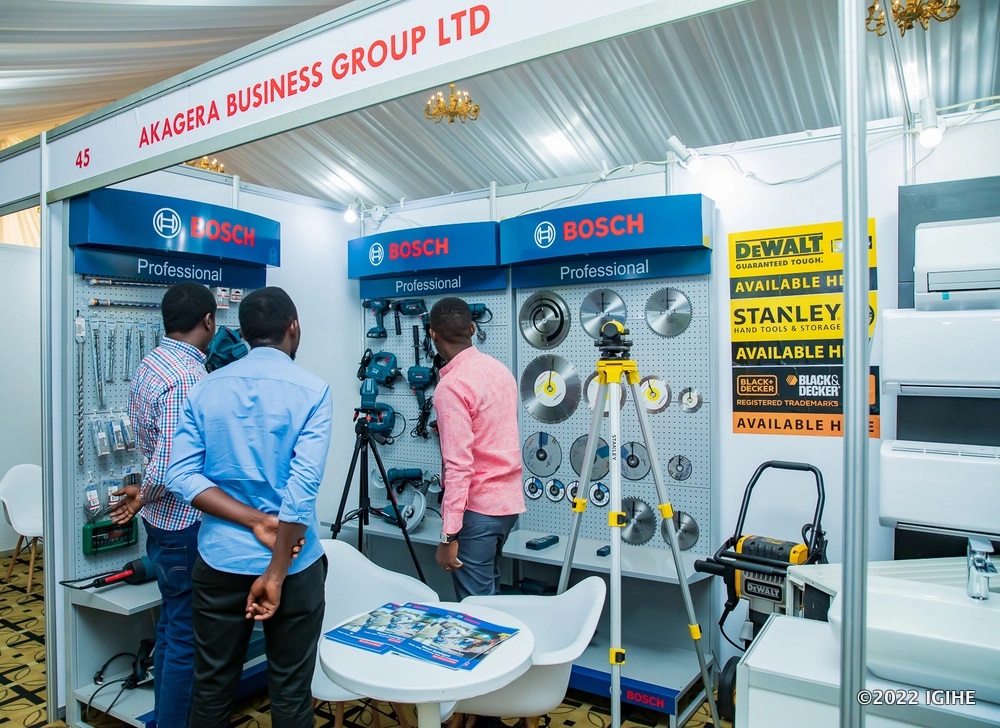
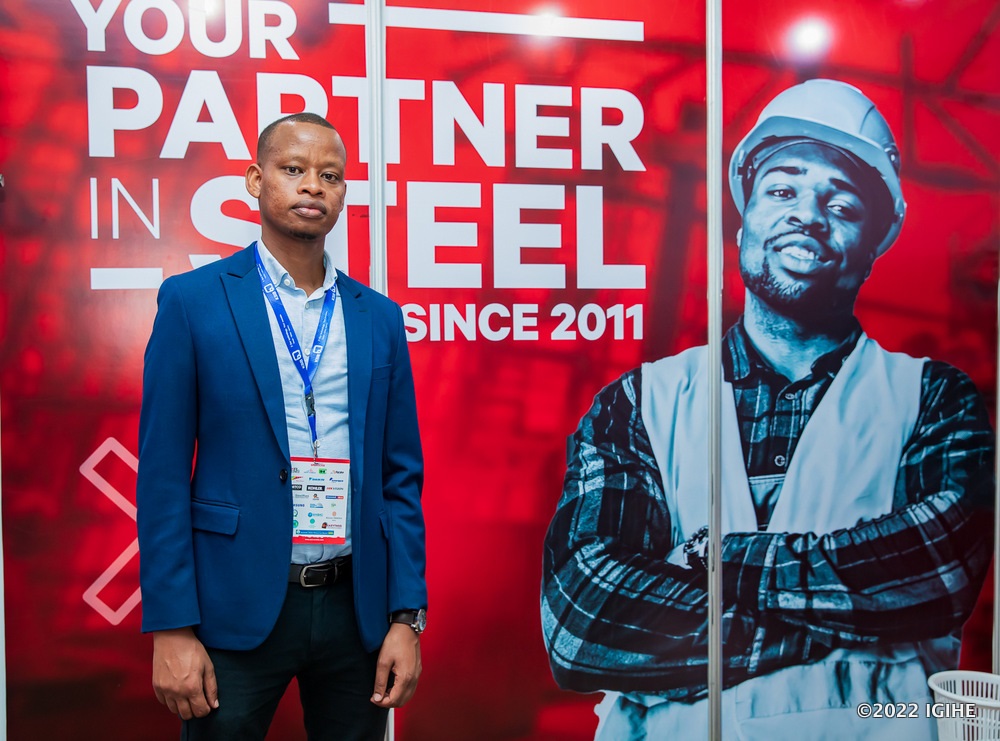
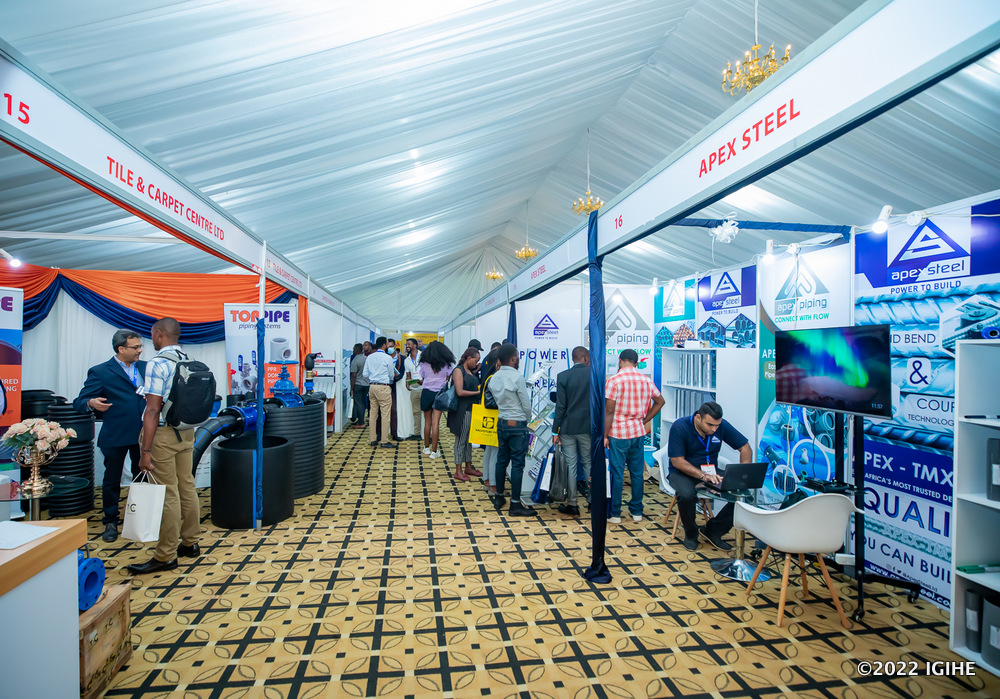
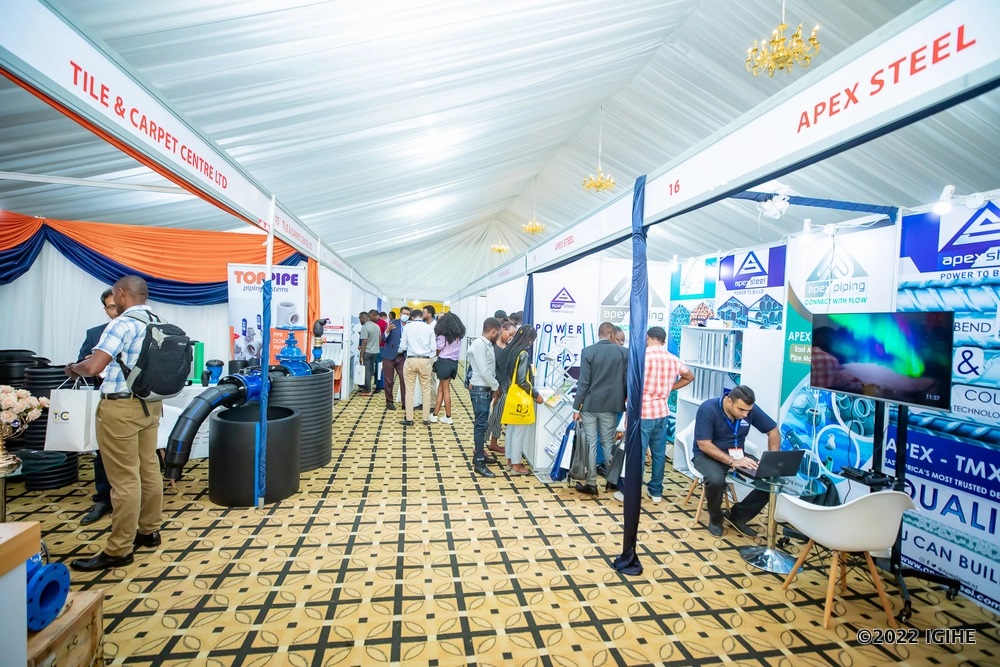
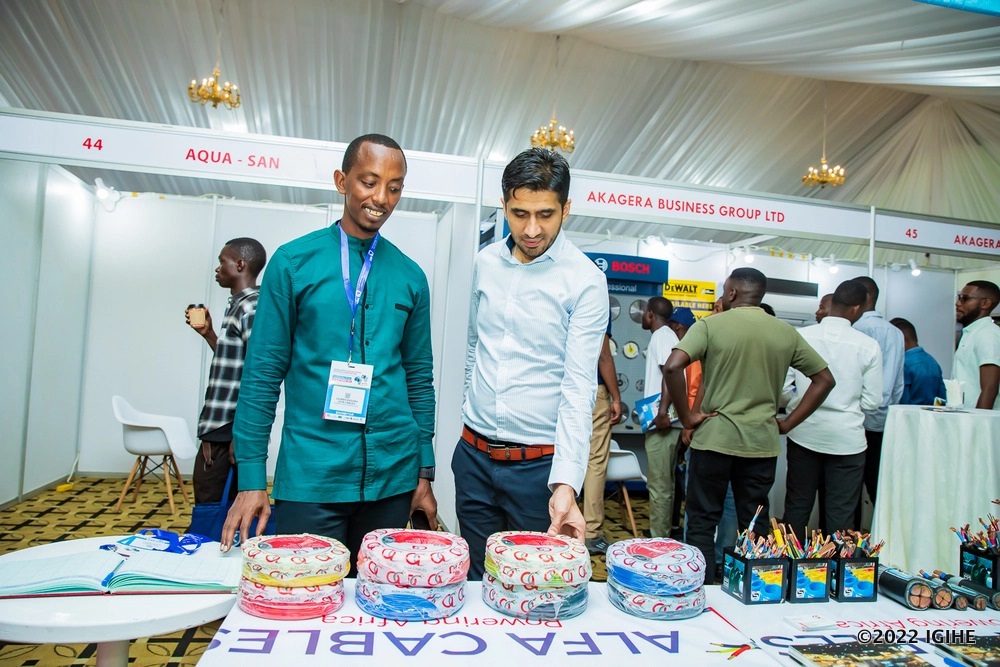
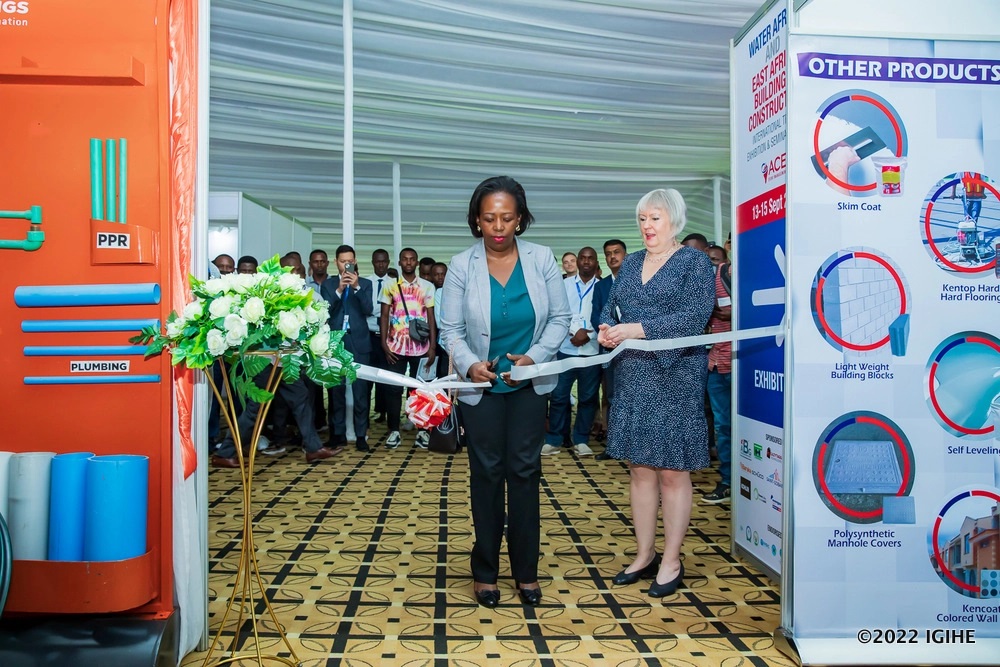
The three-day exhibition kicked off on Wednesday 13th September 2022 at Kigali Serena Hotel.
Dubbed ‘Water Africa and East Africa Building & Construction Exhibition’, the event was organized by ACE Event Management based in the United Kingdom (UK).
It brought together companies producing latest equipment in the areas of water, sanitation and construction.
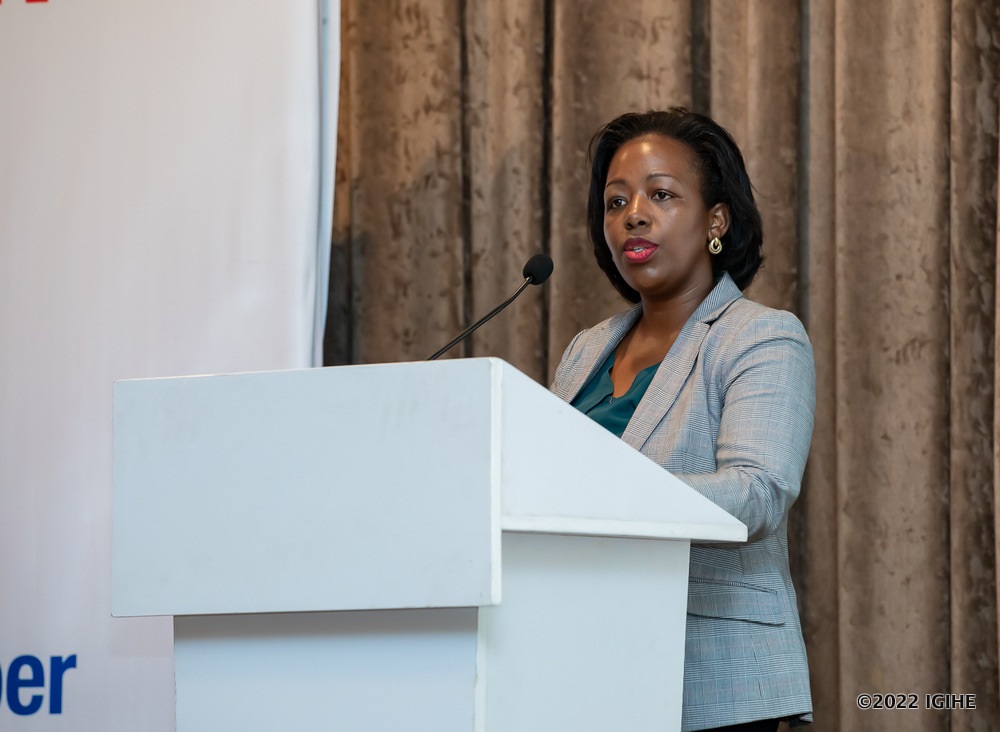
Speaking at the opening ceremony; Marcelline Kayitesi, the Division Manager for Water and Sanitation in the Ministry of Infrastructure (MININFRA) said that Rwanda is rolling out initiatives to fast track universal access to safe water where the exhibition will be helpful to accelerate the good cause.
She underscored that the event bringing together players from the two sectors including water and sanitation as well as housing is held at a time when the world has bold ambitions to achieve universal access to water.
Kayitesi revealed that Rwanda was not left behind considering its goal to meet universal safe water access by 2024.
She said that the exhibition is among activities helping the country to learn from other initiatives and to strengthen self-reliance.
Kayitesi explained that Rwanda is on a good pace and expressed optimism that the country will undoubtedly meet the goals.
She further stated that the event is an opportunity for entrepreneurs to learn from each other to make improvements.
Tracy Fellor, one of organizers of the event explained that the exhibition is aimed at bringing together entrepreneurs to share experience and contribute to the growth of water and sanitation, and housing sector.
John Rutaha, Commercial Manager at SteelRwa which manufacturers roofing sheets in Rwanda said that the exhibition will help them create new connections with potential customers and acquire new skills relevant for the company to expand operations.
Balete A.Matebe, the Managing Director of WILO East Africa Ltd also disclosed that attending the exhibition will help the company expand footprints in Rwanda.
Currently, 86% of Rwandans have access to water while the country targets universal water coverage by 2024 under the National Strategy for Transformation (NST1).
Once completed, it will be the third cement manufacturer in Rwanda after Cimerwa Plc located in Bugarama of Rusizi District in Western Province and Prime Cement Ltd operating in Musanze District in Northern Province.
The two plants don’t have the capacity to meet the demand which results into hiked cement prices.
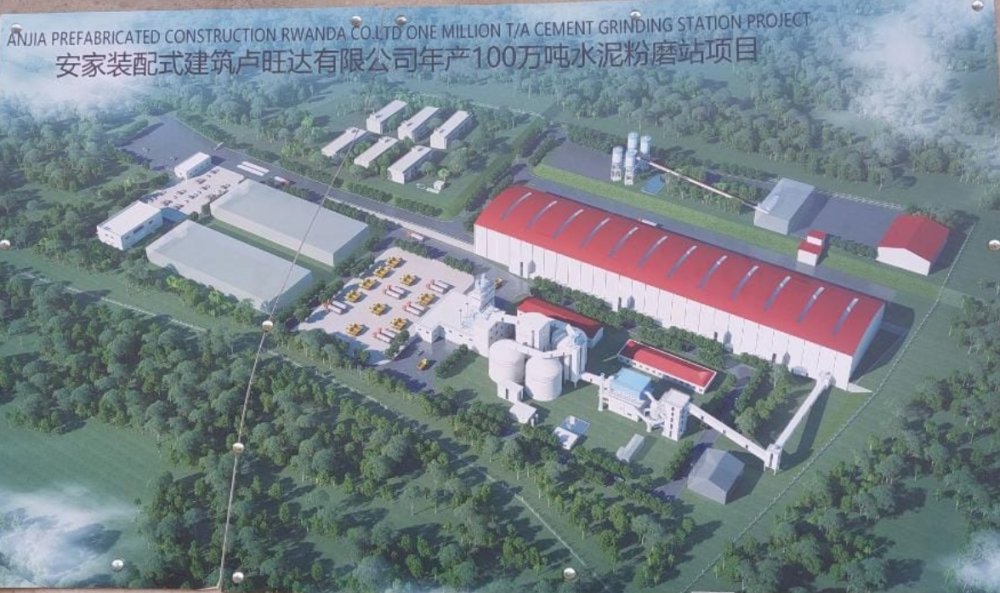
However, the issue is set to get a solution through a project run by Anija Prefabricated Construction Rwanda to build a cement factory in Muhanga Special Economic Zone.
Headquartered in Ethiopia, Anjia Prefabricated Construction runs operations in other countries including the Democratic Republic of Congo (DRC).
The latter is developing a cement factory in Muhanga on 67 hectares expected to manufacture cement and other construction materials.
The management of Anjia Prefabricated Construction has revealed that the plant is expected to produce 1,000,000 tons per year and create over 1200 jobs after completion.
Construction of the plant estimated at US$100 million (approximately Rwf102 billion) have reached advanced stages and expected to be completed in February 2023, according to contractors.
Muhanga District vice Mayor for Economic Development, Eric Bizimana has told IGIHE that construction activities currently stand at 70%.
“The plant is under construction in a place dedicated for factories. Setting up this plant will cement investors’ confidence to invest in Rwanda, particularly in Muhanga,” he said.
“The plant will also contribute to the creation of new jobs and increase the quantity of locally produced cement,” added Bizimana.
This factory also plans to make a special type of cement used to build bridges crossing water bodies.
Products for cement production are expected to be sourced from Rubavu and DRC where the company has another plant.
With the production capacity of 600,000 tons per year, Cimerwa has been in operation since 1984.
Prime Cement also produces 600,000 tons per annum expected to be increased to 1.2 million tons in 2023.
Figures show that Rwanda’s demand for cement was estimated at 800,000 tons before 2020 yet local plants had the capacity to produce only 480,000 tons per year.
The 750 soldiers and 360 gendarmes make up the ninth contingent of Cameroonian troops tasked with carrying out stabilization and peacekeeping mission in the CAR.
The contingent is part of the United Nations Multidimensional Integrated Stabilization Mission in the Central African Republic (MINUSCA), which began protecting civilians in CAR in 2014 under the UN Charter, Assomo said during a ceremony in the country’s East region to award medals to soldiers who underwent special training in the region.
“I urge you to represent your country in the right way,” Assomo said, and demanded the soldiers execute their assignment in strict respect of the rules guiding MINUSCA.
The contingent is taking over from predecessors who spent a year building peace in the war-torn country.
The CAR has been wracked by violence since the Seleka rebels ousted then President Francois Bozize in 2013. The conflict has forced nearly half of the country’s population to migrate and depend on humanitarian assistance, according to the UN.
To better manage traffic in Abuja, traffic lights had been installed at 74 intersections in the first phase of the project in 2015.
A great symbol of China-Nigeria friendship, the project symbolizes “a concrete embodiment of the implementation” of the nine programs of China-Africa cooperation, Cui Jianchun, Chinese ambassador to Nigeria, said at the flag-off ceremony.
“This project will bring a lot of relief to the transportation system of Abuja, will be useful to the country, and will equally impact positively on the social life of local residents,” the diplomat said.
Adesola Olusade, permanent secretary of Nigeria’s Federal Capital Territory (FCT) Administration, said the construction comes at a time when the FCT was in dire need of having its major road intersections signalized for ease of traffic flow and orderliness.
“The era of energy supply through solar is fast overtaking the age-long energy supply through the national grid, which is mostly unreliable. The solar-powered traffic light system in the FCT is just desirable at this moment,” Olusade added.
One of the fastest-growing cities in the world with an equally fast-growing population, Abuja is facing pressure on city infrastructure, including that dedicated to traffic management.
“Today’s event, therefore, could not have come at a better time as we seek to ensure ease of traffic and orderliness on our roads through the provision of traffic control signals at major road intersections,” said Muhammad Musa Bello, minister of the FCT, who pledged to ensure an enabling environment for a hitch-free and successful delivery of the project.
The China Railway No. 8 Engineering Group responsible for the construction work will discover new talents and hone the skills of local technicians in fields such as steel, concrete and electricity, said Jiang Kaifeng, the project manager.
They were arrested on Tuesday, September 13, in Gisenyi Sector, Mbugangari Cell, Rurembo Village, where the goods including second hand clothes and shoes as well as the outlawed non-biodegradable plastic bags, were recovered.
Chief Inspector of Police (CIP) Mucyo Rukundo, the Western Region Political and Civic Education Officer (RPCEO) identified the suspects as Nyobotsimana Bihangamanwa, Uwizeyimana Kesie, and Ndori Safari.
“They were arrested with 101 pairs of shoes, 30kgs of clothes, 3800 pieces of plastic bags, tins of powdered milk, assorted gin including 14 bottles of Simba Waragi and 24 bottles of Savanna; food flavours, and skin bleaching products,” CIP Rukundo said.
He thanked residents, who reported the acts of smuggling and fraud, adding that the smugglers used illegal border points to sneak the goods into Rwanda from DRC.
The suspects were handed over to RIB at Gisenyi station while the goods were handed over to Rwanda Revenue Authority (RRA) in Rubavu.
In article 199 of the East African Community Management Act, which is also applicable in Rwanda, smuggled goods are auctioned.
{{Tax fraud}}
A taxpayer, who commits fraud, is also subject to an administrative fine of one hundred percent (100%) of the evaded tax and a likely imprisonment of between six months and two years.
Manufacturing, use, importation or sale of plastic carry bags and single-use plastic items are prohibited under article 3 of law N° 17/2019 of 10/08/2019 relating to the prohibition of manufacturing, importation, use, and sale of plastic carry bags and single-use plastic items in Rwanda.
In article 10, any person, who imports plastic carry bags and single-use plastic items is liable to the dispossession of those plastic carry bags and such items, and to an administrative fine equivalent to ten times the value of those plastic carry bags and single-use plastic items.
In article 11, a wholesaler of plastic carry bags and single use plastic items is liable to an administrative fine of Rwf700, 000 and dispossession of those plastic carry bags and such items.
In article 12, a retailer of plastic carry bags and single-use plastic items is liable to an administrative fine of Rwf300,000 and dispossession of those plastic carry bags and such items.
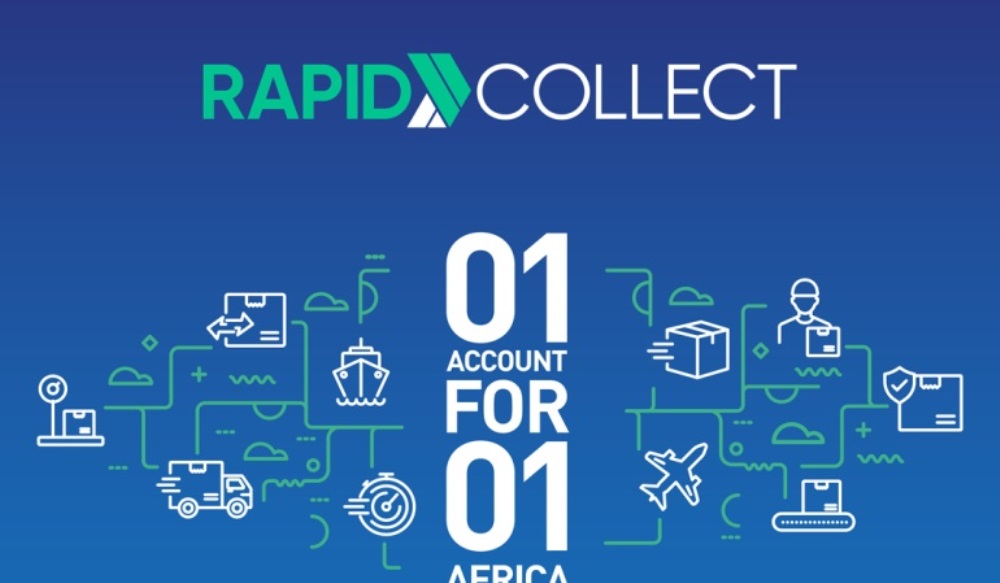
RapidCollect™ caters for the needs of business customers across Africa, as the continent is at a unique point in its history. Immense trade, investment and economic growth opportunities are driven by the African Continental Free Trade Area (AfCFTA)’s creation of a single African market. The Economic Commission for Africa has forecast that the AfCFTA will boost intra-African trade by about 40% .
Commenting on the development; Josephine Anan-Ankomah, Group Executive, Commercial Banking, Ecobank said: “With the African Continental Free Trade Area offering untold trading growth opportunities for Africa’s businesses, it is imperative that the payment and collection infrastructure proactively caters for the needs of our continent’s small and medium sized businesses by facilitating their cross-border trade. Ecobank’s Rapid-Collect™ further advances our determination to remove intra-African trade barriers by providing a fast, innovative, secure, hassle-free and reliable collection solution for our SME customers which leverages the collective scale and strength of our 33-country pan-African network”.
Isaac Kamuta, Group Head, Payment services, Cash Management and client access, Ecobank Group added: “The launch of RapidCollect™ reaffirms our leadership as the Best Bank for Cash Management in Africa. It provides a fast, innovative, secure, and reliable solution for our customers which leverages the collective scale and strength of our 33-country pan-African network. Our customers only need an Ecobank account in their home country – rather than needing an account in every country in which they trade. It removes the delays previously inherent in cross-border business payments and addresses the issues created by fluctuating forex rates.”
Through RapidCollect, Ecobank’s Commercial Banking and Corporate and Investment Banking customers benefit from the convenience of one account to receive business payments hassle-free from across our 33-country network, instant payments into their Ecobank account in their home country and across our network as well as automated reconciliation businesses with capabilities to integrate their billing system.
Among others, customers will benefit from secured transactions via Ecobank’s tried and trusted technology and easier cross-border payments to seize opportunities from the AfCFTA’s continent-wide single market.
RapidCollect™ is available at Ecobank branches and it is already integrated into our digital channels. The solution is subject to the regulations in each country.
{{About Ecobank Transnational Incorporated }}
Ecobank Transnational Incorporated (‘ETI’) is the parent company of the Ecobank Group, the leading independent pan-African banking group. The Ecobank Group employs about 13,000 people and serves over 32 million customers in the consumer, commercial and corporate banking sectors across 33 African countries.
The Group has a banking licence in France and representative offices in Addis Ababa, Ethiopia; Johannesburg, South Africa; Beijing, China; London, the UK and Dubai, the United Arab Emirates. The Group offers a full suite of banking products, services and solutions including bank and deposit accounts, loans, cash management, advisory, trade, securities, wealth and asset management.
ETI is listed on the Nigerian Stock Exchanges in Lagos, the Ghana Stock Exchange in Accra, and the Bourse Régionale des Valeurs Mobilières in Abidjan.