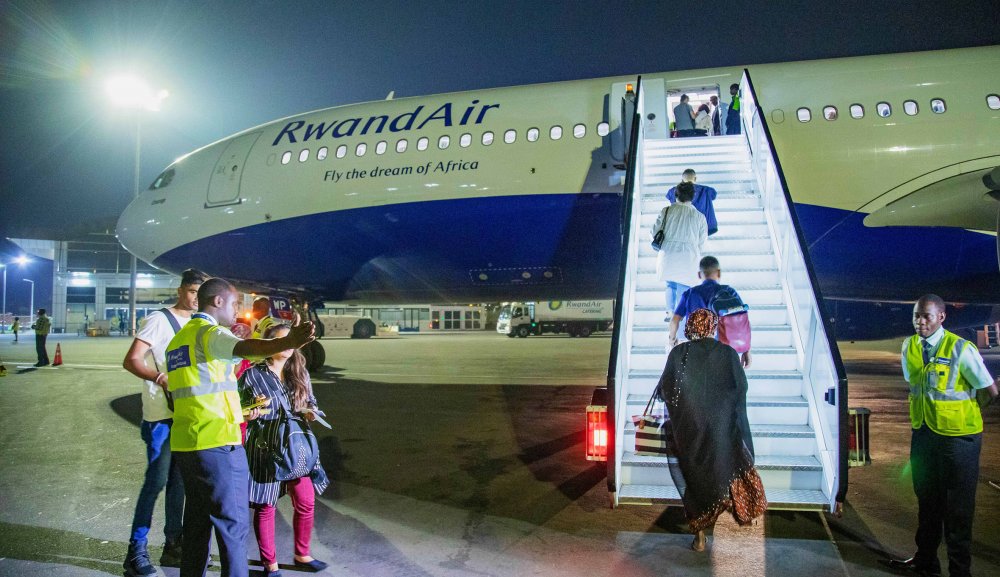
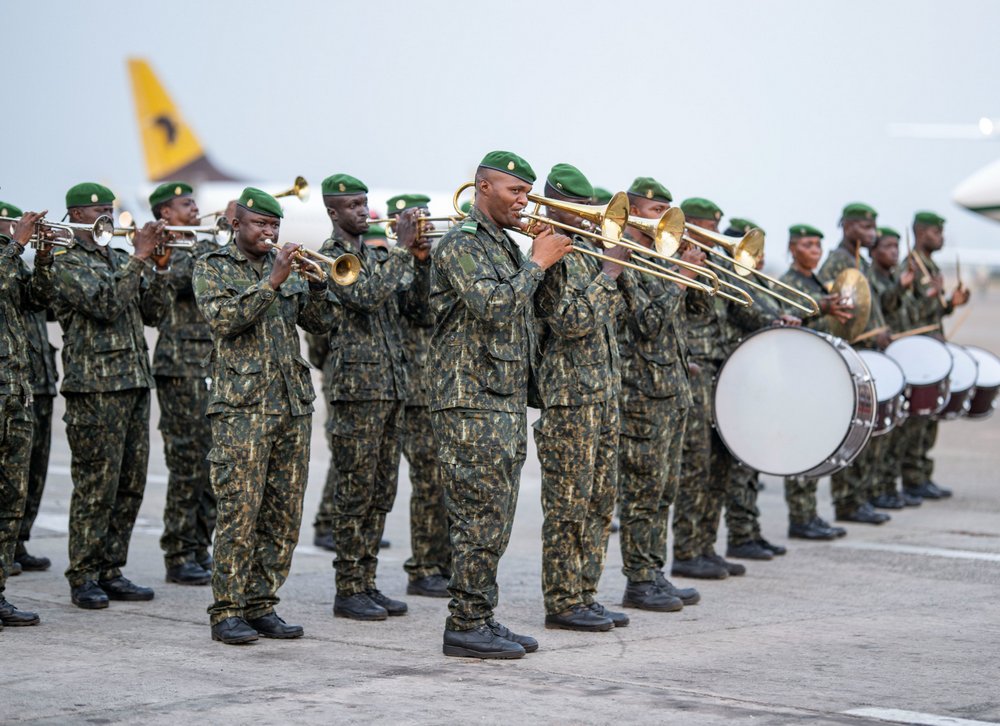
This is a significant step for the future of air transport in Africa. The official signing ceremony to mark the country’s entry into the organization took place on March 30 in Kigali, paving the way for the Rwandan parliament to ratify the air navigation agency’s convention.
The agreement was signed by the president of its Committee of Ministers, Oumarou Malam Alma, and Ernest Nsabimana, the Rwandan Minister of Infrastructure.
This membership will allow Rwanda to benefit from ASECNA’s expertise, network, and technology in assisting with navigation and securing airspace.
This is also a move forward in the process of liberalizing the African sky and implementing the African Single Air Transport Market (MUTAA) by 2063, led by 18 countries, including Rwanda.
By joining ASECNA, Rwanda will become the first East African country to be part of the organization and will be able to benefit from its expertise in air navigation.
This is expected to improve the safety and efficiency of the management of Rwandan airspace, as well as facilitate trade and travel between ASECNA member countries.
The proposed revision of the Constitution of Rwanda, which was originally enacted in 2003 and revised in 2015, suggests conducting the election of Deputies on the same day as the Presidential election.
The objective of this proposed change is to streamline the election process and reduce the time and cost associated with organising separate elections.
The proposal will now undergo analysis by the Conference of Chairpersons, which includes the Bureau of Standing Committees and the Bureau of the Lower House, before it is put to a vote by the plenary sitting.
The synchronisation of both presidential and parliamentary elections is common in many countries globally where the term of office of the President and that of lawmakers are equal.
The draft revision seeks to amend article 75 of the Constitution, which talks about the composition of the Chamber of Deputies and the election of its members. It proposes that the election of 53 Deputies be done on the same day as the election of the President of the Republic.
To ensure that synchronisation of the election of Deputies with the election of the President due in 2024 does not result in a lack of legislature, the Constitution is supplemented with a new transitional provision.
This provides that current Deputies in office at the time this revised Constitution comes into force will continue to serve until the day of the dissolution of the Chamber of Deputies due to elections.
The next election of deputies in Rwanda was due in August 2023, while that of the President of the Republic is due in 2024.
After successfully selling the app to Crucial Compliance, a major player in the gambling industry, Bradford turned his attention to helping young entrepreneurs succeed in business. He has already made a significant impact in the UK and is now working with budding entrepreneurs in Rwanda, located in East Africa.
As a recipient of the Queen’s Young Leaders Award, a Commonwealth award recognizing young people’s leadership and community contributions, Bradford attended a Commonwealth meeting last year in Kigali, the capital of Rwanda.
There, he met with an old friend, Emmanuel Nshimiyimana who introduced him to the Rwanda Opportunities Organization, which supports young people from rural communities in areas such as literacy, writing, entrepreneurship, and ICT.
Impressed by Rwanda’s people and opportunities, Bradford made the decision to expand his philanthropic efforts to the country. He found that the public’s outdated view of Rwanda did not match its current reality. Rwanda is developing into a tech hub with coding academies, business incubators, and various projects.
Bradford is currently involved in multiple initiatives, including counseling for gambling addiction and hackathons with industry companies.
He has observed that gambling addiction is prevalent in Rwanda, particularly among young people in rural communities.
To address this issue, he plans to start offering counseling in Rwanda in the next few months using a digital platform as a therapy tool.
“We are looking to roll it out as a therapy tool that will provide digital counseling to people who might have a problem,” he said. In addition, Bradford’s team is running hackathons with industry companies to help them better understand and address gambling addiction.
Besides, he is a consulting producer for a new movie that features an A-list star and focuses on autism, a subject close to Bradford’s heart.
This was announced during the international conference on “Re-shaping Education for Sustainable Development” which was organized by the UR- College of Education (UR-CE) through its Leaders in Teaching (LIT) Initiative Project, in collaboration with the Mastercard Foundation (MCF) and the UN Sustainable Development Solutions Network (SDSN).
The conference which concluded on March 30th, 2023, brought together researchers, scholars, educators, policymakers, and postgraduate students from different countries to discuss the future of education and how it can be adjusted to meet the needs of the labor market.
According to Prof. Wenceslas Nzabalirwa, LIT Project Academic Lead and Lecturer at the University of Rwanda, education should be centered on technology and labor market-oriented courses. He emphasized the need for teachers to take advantage of technology to revolutionize the education sector in this digital era.
He further stated that the UR is encouraging students, particularly girls, to develop a passion for Science Technology Engineering and Mathematics (STEM) to tap into the opportunities available and bridge the existing gap.
Christina Jerome Shuna, a researcher and lecturer representing Dodoma College of Education in Tanzania, stated that the conference plays a significant role as it serves as a platform to share best practices.
The Vice Chancellor of the University of Rwanda, Dr. Didas Kayihura Muganga emphasized the importance of collaboration among participants from different countries to ensure the provision of quality education to students at early stages.
He stressed the need to invest in education, beginning from nursery education to prepare future academicians.
The conference was attended by participants from more than 15 countries.
Organized by the National Agricultural Export Development Board (NAEB) and the Istituto per la Cooperazione Universitaria Onlus (ICU), with support from the Embassy of the Republic of Rwanda to the Kingdom of the Netherlands, Rwanda’s participation in this prestigious event aims to create long-term commercial ties, by piquing the interest of coffee lovers in the Netherlands and raising the brand’s awareness on the global market.
According to Rwanda’s Ambassador to the Netherlands, Olivier Nduhungirehe, the festival is an excellent event for coffee enthusiasts, significant industry leaders, and many other participants to enjoy the uniqueness of Rwanda’s specialty coffee.
“It is also an excellent opportunity for the country to increase the awareness of the coffee brand [Rwanda Coffee – A Second Sunrise] and to attract more buyers,” he added.
Rwanda is represented by eight Rwandan coffees at the Rwanda Coffee stand (G45), including Baho Coffee, Kanya Coffee, Kivu Belt Coffee, Mountain Coffee, Mubuga Coffee, Nova Coffee, Rwashoscco, and Sake Coffee.
Rwanda’s coffee brand has demonstrated potential for widespread recognition and stood out among other specialty coffee origins in the last three editions of the festival.
Speaking to IGIHE on the first day of the festival, Amb. Nduhungirehe emphasized the importance of the Netherlands as an important market for coffee, as it is the fifth consumer of coffee in the world.
He also noted that the Dutch people drink around four cups of coffee per day, around eight kilograms of coffee a year, and are the third exporter of roasted coffee in the world after Italy and Germany. Besides, they buy green coffee from different countries, including Rwanda.
“They are the seventh buyers of green coffee and where they roast and export to other countries. The partnership is important, and Rwanda is here to showcase our specialty coffee, which is very unique and very well appreciated,” he added.
Laetitia Mukandahiro, representing the ICU at the festival, expressed gratitude to the Government of Rwanda for their support to coffee producers through the embassy in the Netherlands, which enabled them to participate.
Emmanuel Niyomugabo, the Coffee Washing Station Manager at Rwanda Mountain Coffee, expressed his delight in being part of the festival, as it provides them with an opportunity to showcase their products to consumers and enhance their coffee brand’s visibility in the market.
Rwanda’s participation in the Amsterdam Coffee Festival is part of ICU’s Coffee Value Chain Development project, which aims to improve the quality and quantity of coffee produced by smallholder farmers, strengthen coffee processing companies and cooperatives to build more sustainable businesses, facilitate access to finance, and increase visibility on the international market.
The project is working with more than 12,000 smallholder farmers and 20 coffee washing stations across 12 districts of Rwanda.
As Amb. Nduhungirehe revealed, Rwanda exported 466.3 metric tonnes of coffee worth US$2,330,008 from January to December 2022, and the country hopes to increase these figures in the coming years.
The request for repatriation reflects Belgium’s acknowledgement of its colonial past and the violence that characterized it. Belgian scientists have admitted that these remains were collected in a context of violence and oppression, mainly by the military, and should be considered as human remains, not as objects of collection.
Most of these human remains were collected between the late 19th century and the early 1960s, during the colonial period when Belgium colonized the Congo region. The “Home” group hopes that the restitution of these human remains will contribute to healing and reconciliation between countries and within communities, and will put an end to a practice that has been considered morally reprehensible for a long time.
The report emphasizes that the repatriation of these remains must be done with the utmost care and respect for local cultures and traditions. The “Home” group comprises human rights experts, representatives of civil society groups, and members of the scientific community. It was created in 2017 to examine issues of justice and reconciliation related to Belgium’s colonial legacy.
The request for repatriation is an important step towards recognition and reconciliation for crimes committed during the colonial period.
The company attributed the profit to the growth in beer volume, which increased by 5.9%, driven by higher sales of Amstel, Heineken, and Turbo King.
Soft drinks volume also increased by 31.6% versus the previous year, due to the full reopening of the market, events, and the revamping of the non-alcoholic beverages route to consumers.
In total, Bralirwa generated revenues worth Rwf157.6 billion, a 27.6% increase compared to the previous year’s Rwf123 billion.
The company produced 2,318,000hl of beverages in 2022, compared to 2,076,000hl in 2021. Bralirwa’s capital expenditure in 2022 also increased to Rwf29.4 billion, up from Rwf10.4 billion in 2021.
The impressive financial results demonstrate Bralirwa’s continued growth and success in the Rwandan market.
The company has been able to capitalize on the reopening of the market and events, as well as its efforts to revamp its non-alcoholic beverages route to consumers.
The company’s investment in capital and product portfolio expansion positions it well for long-term success in the Rwandan beverage market.
Overall, Bralirwa’s impressive financial results demonstrate the company’s continued growth and success in the Rwandan market, as well as its ability to adapt and grow in a challenging market.
Masaka Hospital was built in 2013 on the funding of the People’s Republic of China.
The government of Rwanda through the Ministry of Health is implementing the renovation and expansion of Masaka district hospital project under the financing of the Chinese Government.
Masaka District hospital is set to be expanded, renovated and be used to house the current Kigali University Teaching Hospital (CHUK).
The groundbreaking ceremony took place on Thursday 30th March 2023.
Despite the groundbreaking ceremony held today, Construction works that have been going on for two months are being undertaken by Chinese firm, Shanghai Construction Group Co. Ltd.
The project is expected to cost Rwf85 billion upon completion.
The project implementation agreement was signed on 6th April 2020, by the Government of Rwanda represented by the Ministry of Finance and Economic Planning, (MINECOFIN), Ministry of Health and Rwanda Housing Authority (RHA) whereas the Chinese Government was represented by the Agency for International Economic Cooperation and the Ministry of Commerce of the People’s Republic of China.
The project expected to be completed by July 2025, includes the scale up of the hospital capacity to receive 2,000 patients per day whereas the number of beds will be increased to 837.
CHUK hospitalizes around 400 patients.
The hospital shall also include the outpatient and emergency building with the emergency, pediatric and infectious departments in the building.
Some technological tools shall also be introduced in the renovated health facility, which includes the Air compressor room, Oxygen Generator Station, radiology department, blood bank and laboratory department, central sterile supply department, ultrasound and functional examination rooms among others.
Premier Ngirente has expressed his gratitude to the People’s Republic of China for partnering with the government of Rwanda on this vital project. He noted that the two countries have a strong foundation, and this project is yet another testament to their excellent relations.
Dr. Ngirente highlighted the significance of the hospital’s renovation and expansion, saying that it will further enhance the capacity to provide advanced healthcare services to the citizens of Rwanda. “Infrastructures like this one are a great contribution to our vision, to develop specialties, subspecialities and train much needed health professionals in a short time,” he remarked.
The Prime Minister also pointed out that similar efforts are being deployed in other projects for different national referral hospitals such as King Faisal Hospital, Kanombe Hospital, and others.
He added that the Masaka Hospital project complements other strategic health services in the catchment area, including IRCAD Africa, the Heart Center, and other projects that will significantly transform lives and the city into a major health hub. “This is our target,” he emphasized.
Dr. Ngirente once again expressed his gratitude to the Government of the People’s Republic of China for partnering with Rwanda in undertaking this important project.
“I hope we shall convene here soon for the inauguration of the hospital,” he said,
eliciting applause from the attendees. The groundbreaking ceremony was a significant milestone in the development of healthcare infrastructure in Rwanda, and all present looked forward to the completion of the project.
The Chinese Ambassador to Rwanda, Wang Xuekun extended his congratulations to the Government of Rwanda and its people on the commencement of the project.
Amb. Wang highlighted the significance of the project, stating that it is one of the largest China-aided projects in Rwanda, to which President Xi Jinping and President Paul Kagame have attached great importance.
He added that the project marks a milestone in health infrastructure cooperation between the two countries.
The Ambassador praised the strong friendship between China and Rwanda that has existed for more than half a century, despite the vast geographic distance between the two countries.
He noted that since the exchange of visits between the two presidents in 2017 and 2018, fruitful cooperation in various fields has been significantly expanded.
Health is a priority direction of their cooperation, and China has already dispatched 22 medical teams and more than 270 Chinese doctors to Rwanda since 1982.
Amb. Wang expressed his appreciation to President Kagame, Prime Minister Ngirente, and other Rwandan leaders for their care and attention.
He also thanked the relevant departments and Chinese companies, including Shanghai Construction Group, for their strong support, kind cooperation, and hard work in making the project possible. Among others, he expressed confidence that they would deliver a quality project to the Government and People of Rwanda in a timely manner.
Amb. Wang also reaffirmed China’s commitment to working with Rwanda to promote the well-being of its people, and to support the development of Rwanda.
He expressed his belief that with their joint efforts, the cooperation in health will make even greater achievements, benefiting both countries and peoples. Amb. Wang wished the project a success and hoped that the cooperation and relation between China and Rwanda would get closer and lead to more tangible results.
The Minister of Health, Dr. Sabin Nsanzimana also commended China for being a close partner in the development of Rwanda’s health sector.
According to released figures, the number of vehicles involved in road accidents has significantly increased in recent years.
In 2020, there were 6,351 accidents but the number increased to 14,591 accidents, and reached a new record in 2022 with 17,179 accidents.
This constant increase in the number of accidents is a hindrance to the profitability of the insurance sector, as pointed out by the Governor of BNR, John Rwangongwa.
This situation is mainly due to the high number of accidents involving motorcycles, which now exceed those involving cars, according to the Vice Governor of BNR, Soraya Hakuziyaremye.
However, despite these challenges, the Vice Governor emphasized that other aspects of the insurance sector were stable and profitable.
It is clear that authorities need to take measures to reduce the number of road accidents in Rwanda. These measures could include awareness campaigns, stricter speed controls, and tougher actions against reckless drivers.
In the meantime, insurance companies in the country will have to deal with these high costs, which could impact insurance premiums and insurer profits.
The EAC’s sub-regional single currency project is still ongoing, but progress has been sluggish. During their recent meeting in Bujumbura, Burundi, the central bank governors discussed this critical issue.
They disclosed that the sub-regional single currency project, in the form of a monetary union, should be implemented in 2024 based on an ad-hoc schedule that extends to 2031.
John Rwangomba, the Governor of the National Bank of Rwanda, has told members of press that the governors were exploring alternative ways to use currency convertibility within the EAC. They are studying a process to enhance effective money transfers between central banks.
However, as the Governor of the National Bank of Rwanda explained, establishing the single currency project is taking time due to various reasons at the EAC level.
Before member countries can unite to establish a single currency, certain measures must be taken, such as economic integration.