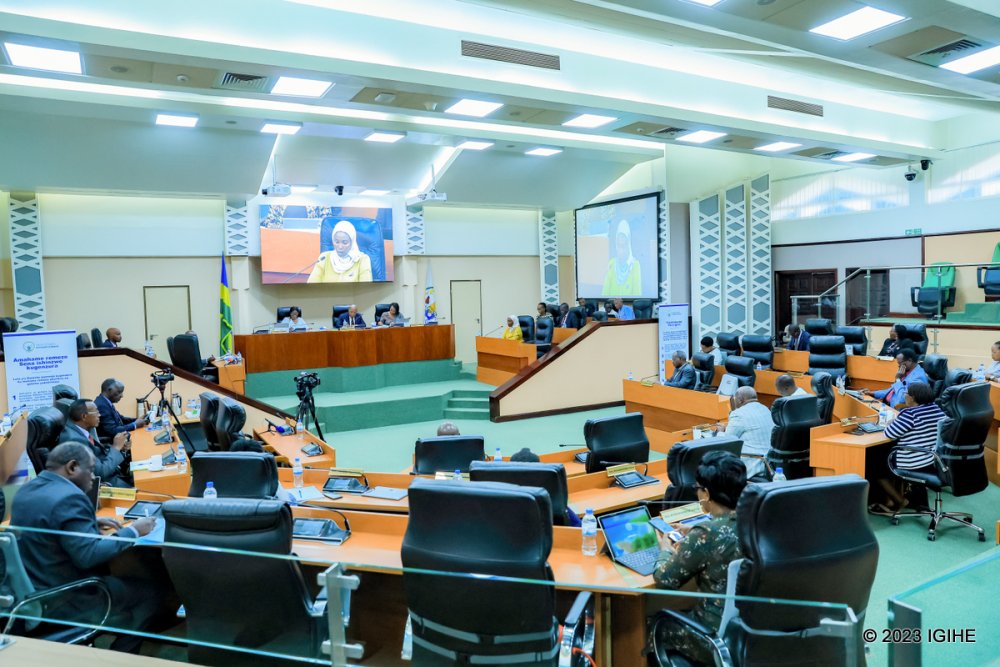
This is the second time that Rwanda has volunteered to self-assess progress in implementing the SDGs since the first VNR presented in 2019.
Held under the theme “Accelerating the recovery from the coronavirus disease (COVID-19) and the full implementation of the 2030 Agenda for Sustainable Development at all levels”, VNR 2023 aims to showcase how countries are progressing in the implementation of SDGs in the aftermath of the pandemic.
The 2023 VNR will focus on five SDG’s: SDG 6 – Clean Water and Sanitation; SDG 7- Affordable and Clean Energy; SDG 9 – Industry, Innovation and Infrastructure; SDG 11- Sustainable Cities and Communities; and SDG 17 Partnerships to achieve the Goal.
The Minister of State in charge of Economic Planning Dr. Claudine Uwera said: “The fifth population and housing census showed increase in life expectancy of Rwandans reflecting the general improvement in lives of Rwandans across various areas.
Although, the Covid-19 pandemic adversely impacted Rwanda’s economy, interventions coordinated by government working with citizens, private sector and partners have minimized the impact and supported continued recovery. Going forward, there is continued need for mobilization of resources and strengthening efforts in partnership with all stakeholders to fully achieve the SDGs.”
At the national level, SDGs are integrated in Long term development aspirations such as Vision 2050 and are tracked and measured through the implementation of the National Strategy for Transformation (NST1) at central and decentralized levels.
It was held in the framework of the existing cooperation signed in August last year in Singapore, formalizing partnership in capacity development as well as fighting and preventing transnational organized crimes.
Inspector General of Police (IGP) Felix Namuhoranye, while welcoming his Singapore counterpart, Commissioner of Police (CP) Hoong Wee Teck, said the visit indicates the importance of the cooperation, commitment and willingness by the two police institutions to jointly counter the evolving security challenges.
He added that the bilateral engagements are inspired and supported by the leadership of the two countries, who laid a strong foundation to easily and freely work together in realization of shared interests.
“This is a testament of friendship and collaboration between our institutions in enhancing mutual support as we strive to make our countries safer.
It is an opportunity to explore actionable measures and strategies geared towards enhancing our partnership,” IGP Namuhoranye said.
The MoU highlights building institutions’ capacity and capabilities in fighting all forms of transnational organized crime, cyber-crime, trafficking in persons, online child sexual exploitation, money laundering, public security and public order; fighting and preventing smuggling and trade in arms, ammunition and explosives, among others.
IGP Namuhoranye reiterated that partnering with Singapore Police Force was deliberate as a reliable, experienced and well established Police Force with vast policing capacities, capabilities and experiences.
“Strong cooperation is vital to counter fast evolving security threats. This visit is, therefore, an opportunity for us to explore ways to jointly optimize our abilities to address and tackle trans-boundary security challenges,” IGP Namuhoranye said.
He pointed out that Singapore Police Force has an extensive range of advanced policing technologies to learn from going forward.
The Singapore Police Chief, Commissioner Hoong, said that the partnership between the two police institutions has further strengthened.
“A strong and constructive partnership will enable our two forces to learn from each other and develop more effective strategies and capabilities to ensure the safety and security of our people,” Commissioner Hoong said.
Notwithstanding that the two countries are situated more than 5000 miles apart, Commissioner Hoong emphasized that they share broad similarities in the policing context such as our community policing strategy.
“In our increasingly complex operational landscape, there are mutual areas of interest such as cybercrime that we can explore.
The Singapore Police Force is glad to have the RNP, a professional and accomplished police force, as one of our valued policing partners.”
Commissioner Hoong later visited Kigali Genocide Memorial where he paid tribute to more than one million victims of the 1994 Genocide against the Tutsi, and the Campaign against Genocide Museum.
He is also expected to visit the RNP operations and training facilities in different parts of the country.
In 2020, preliminary research confirmed the presence of Lithium in Ngororero District, leading to Rwanda’s interest in developing a refinery for the mineral.
Amb. Karitanyi recently revealed in an interview with CNBC that Rwanda already has refineries for gold, tin, and tantalum, and they have plans to establish a Lithium refinery as well. The country aims to collaborate with regional partners to ensure sufficient reserves for the refinery to operate at full capacity.
Until 2020, Lithium was not as widely known or in demand due to its relatively low price. However, its value began to rise significantly as of December last year. In January 2018, a kilogram of Lithium cost US$20.5, but by December 2020, it had dropped to US$9 (Rwf9000). The decrease in value was mainly attributed to increased production coinciding with the COVID-19 pandemic.
Since then, the price of Lithium has experienced a substantial surge. In April 2021, it increased by over 600% and reached US$78,000 (over Rwf78 million) per ton. This surge can be attributed to the growing production of electric vehicles, which rely on large energy-saving batteries that require Lithium. In 2021, 6.6 million electric vehicles were sold, double the number sold in 2020. Experts in the mining field predict that Lithium will continue to be an excellent investment, as it is estimated that over 26 million electric vehicles will be sold by 2030.
Considering these trends, the price of one tonne of Lithium is expected to rise from US$44,090 in 2022 to US$61,520 in 2023. Rwanda’s plans to establish a Lithium refinery align with the increasing demand for the mineral and the potential for significant growth in the electric vehicle market.
[Manzi Finance Ltd ->https://manzifinanceltd.durable.co/]is a licensed financial institution regulated by the National Bank of Rwanda (BNR).
Founded by Rwandan entrepreneur Aloys Manzi from Rulindo, the company aims to support the development of various projects initiated by individuals.
Manzi completing secondary studies in Rwanda and pursued university studies in France, where he obtained a Master’s degree in Accounting.
He furthered his education in the United Kingdom, earning a Master of Business Administration degree and establishing a residence there.
Following his academic endeavors, Manzi worked in hospitals and retirement homes before venturing into entrepreneurship in 2014.
He established a maize-flour production plant in Kayonza and founded the Manzi Fondation, an organization that provides community-based insurance, pays school fees for secondary and university students as well as counseling services.
Besides, Manzi Foundation supports women in Base of Rulindo District by providing interest-free loans to initiate income-generating businesses.
In an interview with IGIHE, Manzi expressed his motivation for these endeavors, stating, “I engage in these activities because I have personally experienced the difficulties people face when applying for bank loans.”
He added, “We encountered similar challenges when we started out and wanted to assist others in overcoming them. Many people seek loans, but the requirements can be daunting, preventing their projects from being implemented without access to financial support. We are committed to working with startups and guiding them towards success.”
Manzi Finance offers loans to beneficiaries, including individuals, based on the nature of their projects. Manzi also expressed the company’s consideration of extending loan services to Rwandans living abroad, recognizing that they too may encounter similar challenges.
He stated, “We are striving to identify members of the diaspora who face similar issues in accessing loans, in order to provide them with assistance. Our services are unique because we prioritize the needs of our customers. We offer consulting services and ensure quick loan disbursal to clients.” Manzi further emphasized their commitment to maintaining ongoing relationships with clients, advising them throughout the loan process and ensuring swift loan disbursement.
Notably, Manzi Finance aims to set itself apart from larger banks by offering a more personalized approach. Unlike many large banks that may fail to follow up with clients, potentially leading to the auctioning of assets in the event of non-payment or project implementation issues, Manzi Finance focuses on client engagement, advising, and prompt loan disbursement.
The interest rate for loans provided by Manzi Finance is set at 22% annually, lower than the rates charged by non-deposit taking lending financial institutions within the same tier, which typically range from 25% to 36% annually.
While initially established as a non-deposit taking lending financial institution, Manzi Finance has plans to expand its services in the future and offer a complete range of banking services to its clients. During the recent launch of Imanzi Finance, five SMEs secured loans of Rwf5 million each, totaling Rwf25 million.
Manzi has also disclosed to IGIHE that farmers are among the targeted beneficiaries of the financial services provided by Manzi Finance.
While the world continues to face unprecedented crises from the social and economic impacts of the COVID-19 pandemic, the African continent has suffered most, said Deputy Secretary-General of the United Nations Amina Mohamed.
“Unmet commitments by the international community to financing climate action and inadequate humanitarian responses have further aggravated the obstacles to the efforts made by Africa and its leaders to implement Agenda 2063,” she said.
According to Mohamed, the UN joined the call by African leaders for the allocation of additional resources to their economies through the International Monetary Fund (IMF), which has been at the center of criticism by several African leaders.
Kenyan President William Ruto, who joined other leaders in calling for reforms of the World Bank and the IMF, said the African continent is subjected to an unfair global debt system, causing countries to pay at least eight times more than their richer counterparts on account of their perceived risks.
“We are not asking for charity. We must have equality in the international system,” Ruto said.
The Head of State made the revelation on Sunday as he received his counterpart of Hungary, Katalin Novák who is on a visit to Rwanda.
Hungary is among countries neighboring Ukraine and hosts over 2 million refugees from the country.
Speaking to members of the press after discussions with Hungarian President Katalin Novák, Kagame was asked to comment on the contribution of Rwanda and Africa in ending the war that has occasioned devastating consequences.
The Head of State said that Rwanda’s possible contribution is little but highlighted that the country can intervene through peaceful dialogues because the war cannot totally solve the problem.
“For us , what we can contribute to is the debate of moving towards peace because there is instability, war in that part of the region but which doesn’t stop an end in that region. It spreads across the world to the extent that it reaches here in Rwanda as it reaches the whole African continent,” he said.
“Now for me, we can contribute to the debate but there is little else we can really do as Rwanda. Since it is just giving an idea towards that, we can always say irrespective of the cause and who is right here, who is wrong there, at the end of the day when the war is up and running there are more wrongs than rights. When you move towards peace and get it then, you start moving towards more rights than wrongs,” added Kagame.
The president highlighted that winning a battle with the means of weapons doesn’t itself guarantee a durable solution.
The United States and European countries continue to supply weapons to Ukraine during the war with Russia.
President Kagame has stated that looking at peace as the end goal should be the main focus instead of keeping powering arms and ammunition, not who defeats the other.
“To keep fighting , powering arms and ammunition of all types in the situation and hoping that one side defeats that other, may take too long first of all, and the damage trail of that is already too costly. So you can imagine what it will look like if you can go for another two or three years. That is why there is a compelling need for those who have power, those involved in the war to really think about what is this give and take process they can be involved in to bring settlement. Inevitably, everyone will have something to give and everyone will have something to gain from that,” he noted.
It has been over 500 days since the Russia-Ukraine war began, inflicting significant devastation on Ukraine. The conflict has resulted in the loss of lives among both soldiers and civilians, while also leaving a trail of destruction across the nation’s infrastructure.
As of March this year, the World Bank reported that Ukraine had suffered approximately US$135 billion in damages to its infrastructure, underscoring the extensive scope of the destruction. To recover and rebuild the damaged infrastructure, Ukraine requires a staggering sum of over US$400 billion.
Besides, the war has had a profound impact on other parts of the world, given that both Russia and Ukraine were among major exporters of essential commodities such as grains and cooking oil. The disruption in these exports has had ripple effects on global markets and supply chains, influencing the availability and prices of these commodities in various regions.
Women Deliver (WD) is a prominent global advocate international that supports gender equality and the health and rights of girls and women in all their transecting identities. 6,000 participants are expected at the Women Deliver Conference in Kigali, Rwanda from 17 to 20 July 2023.
FAO and UN Women will leverage the presence of multi-stakeholders, including high-level policymakers, at the Women Deliver Conference to present their work in supporting women in Agrifood systems and value chains, with a focus on presenting the data, evidence, messages, and recommendations from the global Report on the Status of Women in Agrifood Systems, recently launched by FAO.
Speaking about the upcoming event, FAO Rwanda Country Representative Coumba D. Sow underscored that the forum presents an opportunity for stakeholders to devise ways of unlocking bottlenecks that limit women from maximizing their involvement in Agrifood systems.
“Women’s access to land, inputs, services, finance, and digital technology, which is key to working in Agrifood systems, continues to lag behind men’s. In many countries, there still is much to do to ensure that women own land equal to men and that legal frameworks protect their rights.”
Amidst all these challenges, however, Rwanda has made significant strides in addressing issues limiting women’s involvement in the Agrifood systems, including ensuring gender-responsive land certification and bridging the digital divide gap.
Leading up to the event, The UN Women Country Representative in Rwanda, Ms. Jennet Kem emphasized the importance of the report in creating concrete evidence that will support a gender responsive environment in agrifood systems which is foundational in sustaining global social and economic growth.
“Rural women are key agents of transformational change for the Sustainable Development Goals (SDGs). When women are empowered to equally and actively participate across the entire agricultural value chain, and are equipped with the tools, resources and technologies that catalyze productivity, we begin to witness the emergence of communities thriving through reduced hunger, increased incomes, and climate and economic resilience.” says Ms. Jennet Kem.
“In Rwanda, for example, land titling programs that include women’s names led to increased rural land investment that was nearly twice as large in female-headed households as in men-headed households. Further to that, half of the positions within the government-backed Digital Ambassadors Program are reserved for women to enable them to be advocates within their communities and networks to encourage other women and girls to go online.
As of December 2019, the program had provided digital skills training to 41,980 women, youth, and rural people across 12 districts. An impact assessment reported that 87 percent of those trained reported increased incomes and use of e-government services” Coumba noted.
This joint event reiterates the importance of collective action and collaboration to overcome challenges and seize the opportunities that come with the embedding of gender equality in agrifood systems.
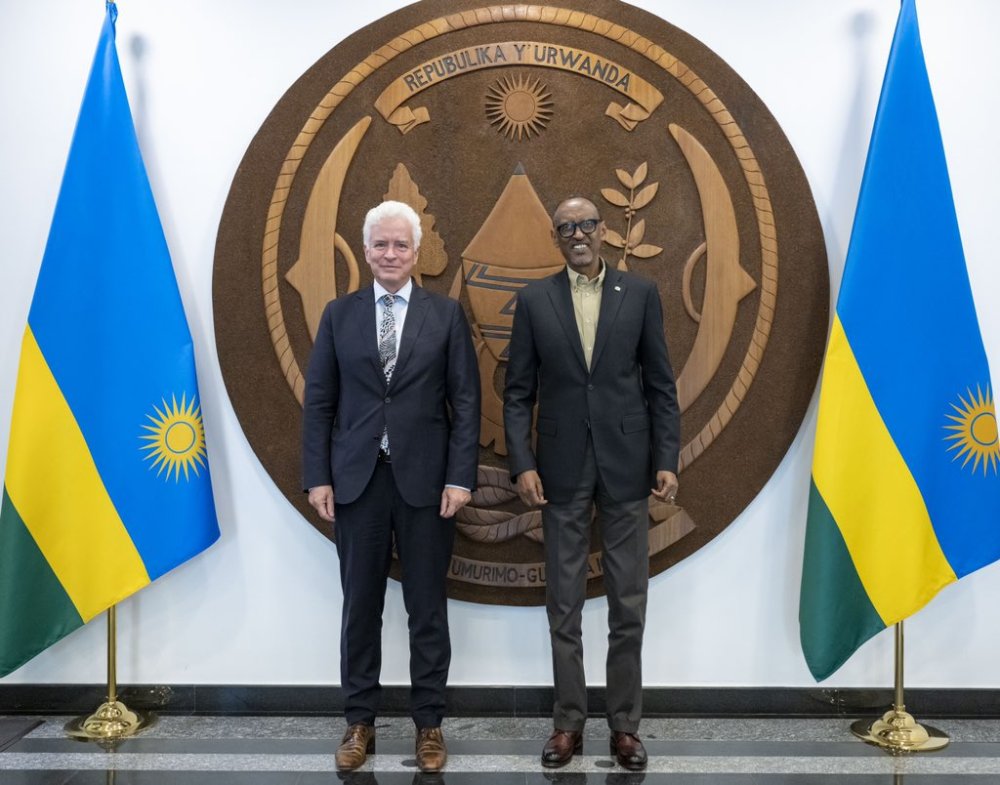
The Head of State made the disclosure on Sunday 16th as he received his counterpart of Hungary, Katalin Novák who has spent days during her visit to Rwanda.
Kagame said that discussions with Katalin Novák focused on making bilateral ties even stronger for the benefit of both countries’ people.
“At this point, I want to mention that Rwanda intends to open diplomatic presence in Budapest very soon,” he stated.
The President disclosed that the aim is to enable the creation of jobs, foster an enabling environment for businesses.
Both countries also signed Memoranda of Understanding (MoUs) on the training of Rwandan experts on atomic and peaceful use of nuclear energy, a Stipendium Hungaricum agreement as well as a loan facility agreement on upgrading of the Karenge water treatment plant in Rwamagana.
Kagame said that the cooperation between Rwanda and Hungary in the field of education is very important where 41 Rwandans have so far received scholarships to study in Hungary universities noting that it was agreed to extend the programme during discussions with Novák.
“We appreciate that. We’ll also be working with Hungary to train Rwandans in the field of nuclear energy, an important component of our future energy plants,” Kagame said.
“Through the new agreements signed, we are committed to build on this shared vision and create mutually beneficial opportunities for the people of Rwanda and Hungary. We appreciate the significant loan provided by Hungary to upgrade the Karenge water treatment plant. We hope to benefit from Hungary’s expertise in water management,” he added.
President Novák who is the first Hungarian President to visit Rwanda said that her country is a doorway to the European Union, just like Rwanda is a doorway to the African continent, that makes the situation of the two countries unique.
“Hungary is bigger in size, but our population is almost similar. We need to focus on how we cooperate based on a mutual respect because that is what we can offer as Hungarians, the respect for you, for your way of life, for your people and for your nation; and that is what we expect also from our allies. It is this mutual respect background which our corporation already lies on and which it is going to fly on in the future as well,” she said.
Hungary recently opened a trade and counselor mission in Kigali. Novák expressed delight that Kagame has also expressed willingness to open diplomatic presence in Budapest and welcomed the move.
Novák who is also in Rwanda to attend the ongoing Women Deliver Conference and she told President Kagame that: “Your Invitation to women deliver proof for our common commitment to empowering women. I thank you for what I have done in this respect.”
Novák also hailed Rwanda’s progress after the 1994 Genocide against the Tutsi owing to President Kagame’s visionary leadership.
Rwanda and Hungary enjoy diplomatic relations in the fields of investment, trade and air transport among others.
The Women Deliver Conference was first established in 2007 in London, UK, in response to alarmingly high rates of maternal mortality. Since then, it has become a platform for advocating for women’s rights and addressing critical issues related to gender equality. Each edition of the conference has focused on specific themes and has achieved significant milestones in advancing women’s health and empowerment.
In 2010, the conference was held in Washington DC, with a primary emphasis on youth engagement. It provided a platform for one hundred young leaders to share their expertise and call upon decision-makers to prioritize the advancement of girls and women’s health and rights.
This event marked an important step in amplifying the voices of the younger generation in shaping policies and programs.
The third edition of the conference took place in 2013 in Kuala Lumpur, Malaysia, where the then Prime Minister of Malaysia, Najib Razak, made a groundbreaking declaration that family planning is a human right. This declaration brought global attention to the importance of ensuring access to reproductive health services and empowering women to make informed choices about their bodies.
In 2016, the WDC held its fourth edition in Copenhagen, Denmark, shortly after the launch of the Sustainable Development Goals (SDGs). The conference underscored the critical role of advancing girls and women’s health and rights across all SDGs to drive progress for all. It served as a platform for discussing strategies to integrate gender equality into the global development agenda.
The fifth edition of the Women Deliver Conference took place in 2019 in Vancouver, Canada, where grassroots advocates and decision-makers connected, leading to over USD 1 billion in global and country-level investments. This event highlighted the importance of gender equality and provided a global spotlight on the challenges and opportunities for women’s empowerment.
Now, Rwanda has become the first African country to host the Women Deliver Conference. The theme for the 2023 conference is “Spaces, Solidarity, and Solutions for Sustainable Gender Equality.” This edition aims to bring together the most powerful voices of the feminist community, representing diverse perspectives and experiences, to find innovative solutions for achieving sustainable gender equality.
Since its inception, the Women Deliver Conference has focused on three main aims: sexual and reproductive health and rights, championing the leadership of grassroots advocates, and connecting advocates with decision-makers while sharing key advocacy strategies. These pillars have been instrumental in driving progress and fostering collaboration among stakeholders dedicated to improving the lives of women and girls worldwide.
Distinguished guests, including top government officials in Rwanda, will grace the conference with their presence. The event is expected to attract over 6,000 in-person attendees at the Kigali Convention Centre, with an additional 200,000 participants from across the globe joining virtually through the conference’s official website or by downloading the WD 2023 mobile app.
The Women Deliver Conference 2023 promises to be a pivotal moment in the global movement for gender equality.
It presents a unique opportunity for participants to exchange knowledge, foster collaborations, and devise strategies that will create lasting impact and advance the rights and well-being of women and girls worldwide.
As the world looks forward to this significant event, all eyes are on Rwanda and the transformative discussions and outcomes it will generate.
According to a report by GALLUP, 44% of employees worldwide, particularly in Africa, experience stress. Therefore, the forum emphasized the importance of integrity, humility, and effective emotion management in leadership roles to alleviate stress among employees and enhance overall productivity.
During the discussions held from July 10th to 11th, 2023, participants explored topics such as good leadership, effective human resource management, and the significance of emotional intelligence in leadership and governance. Renowned pan-African graft crusaders, Prof PLO Lumumba and Dr. Antoine Rutayisire, were among the distinguished speakers at the event.
Prof PLO Lumumba highlighted the need for leaders to establish closer relationships with their employees, remaining humble and providing them with platforms to share ideas. He emphasized that achieving desired productivity and efficiency requires leaders to foster an environment where employees feel valued and can contribute their ideas.
Ambassador Dr. Ron Adam, representing Israel in Rwanda, emphasized the growing importance of ethical leadership. He noted that the forum provided leaders with an opportunity to understand the power of authenticity, intrinsic motivation, and acting with integrity. Participants were encouraged to develop self-awareness and self-management of personal emotions, as well as explore ways to enhance their emotional intelligence.
The forum focused on enhancing the technical capacity of management executives regarding emotional intelligence concepts. Participants learned how to develop and implement these concepts to improve their relationships in both work and personal life. Understanding social and emotional behaviors and their impact on leadership and corporate governance was a key aspect of the discussions.
Steven Karangwa, the Chairman of Rwanda Human Resource Management Organisation, emphasized that failure to control emotions can negatively affect employees’ performance.
He stated that contemporary leadership requirements demand leaders who can motivate, inspire, and foster positive attitudes among employees. Leaders who lack emotional intelligence may experience lower employee engagement and higher turnover rates.
Karangwa further explained that emotional intelligence plays a crucial role in building relationships and fostering effective interactions.
Leaders with high emotional intelligence can handle different situations more effectively, manage stress, and adapt to changes within companies. Additionally, emotional intelligence positively influences physical and mental health. Therefore, developing emotional fitness is essential, especially for leaders who aim to enhance job performance among their teams.
According to the GALLUP report, only 21% of employees worldwide work with dedication, highlighting the need for leaders to address these issues and foster a positive work environment.