Since its inauguration in 2012, YouthConnekt Rwanda has been honouring outstanding youths in the categories of: project manufacturing, agro-processing, Information and Communication Technology (ICT), and other services.
This year, two categories to recognize successful women in entrepreneurship and people with disabilities were also added.
Eligible to apply are Rwandan youths between the age of 16-30, with businesses registered under Rwanda Development Board(RDB) and those that have never been awarded by any of the partners of Youth Connekt Africa.
This however doesn’t apply to the categories of young women in business neither that of People with Disabilities.
To apply for the awards, qualified candidates can pick the application forms from the sector offices or download them at ‘miniyouth.gov.rw’, fill in and submit it to the sector office where their business is operating.
Winners in all categories will be determined from the sector level, district level and national level walking away with prizes worth millions.
YouthConnekt africa was championed by President Paul Kagame and initiated by the the then Ministry of Youth and ICT in 2012 to ‘empower young people and connect them to the public, private sector and civil society for economic opportunities’.
Since its inception, the government of Rwanda has invested more than Rwf2.5 billion in the platform that has created over 36,000 jobs for Rwandan youths, 24,000 policy advocates and trained more 4 million community advocates.
Some of the beneficiaries from YouthConnekt Rwanda are; Dr. Ange Imanishimwe , the leader of Biodiversity Conservation Organization (Biocoor), an apiculture project rearing beers, that has exponentially expanded to 8 hectares preserving biodiversity, specifically animals and plants to generate income and improve community livelihoods.
Nadine Kanyana, the founder of ‘Kanyana World’, a Rwandan clothing company; Clarisse Kayitesi , the CEO saga blessing a maize production company are among other winners.
This year’s awards are a partnership of the Government of Rwanda, United Nations Development Program (UNDP), YouthConnekt Rwanda, and the European Union (EU).
Abdoulaye Bathily made the remarks in a meeting with President of the Libyan Presidency Council Mohamed Menfi in the capital Tripoli, during which he expressed condolences on behalf of the UN after deadly floods swept the city of Derna and other areas, Bathily wrote in a post on X, formerly known as Twitter.
The UN envoy said he emphasized the need for transparency and accountability in the use of resources during the recovery and reconstruction process and proposed the establishment of an inclusive mechanism to oversee the recovery efforts.
Bathily also underlined the urgency for Libya to have unified and legitimate institutions to respond effectively to all challenges facing the country.
On Sept. 10, Mediterranean storm Daniel triggered the worst floods in Libya in decades, which have so far claimed at least 5,500 lives and left another 10,000 missing, according to official statistics.
Oil-rich Libya has been divided for years between rival administrations in the east and west after the fall of the late leader Muammar Gaddafi in 2011.
Rwanda’s Presidency has revealed that the Head of State chaired the council on Sunday 17th September 2023 on his visit to New York in the United States of America (USA) where he went to attend the United Nations (UN) General Assembly.
The meeting discussed innovative and practical solutions towards sustaining Rwanda’s socio-economic progress, as well as regional and global issues of importance to the country.
The meeting was attended by Michael Fairbanks, an economic expert who served as a lecturer at Harvard Business School; the CEO of Rwanda Development Board (RDB), Clare Akamanzi; Minister of Environment, Dr. Mujawamariya Jeanne D’Arc and Senior Economic Advisor to the President, Francis Gatare among others.
Other participants include Scott T. Ford, founder of Westrock LLC who also serves as Board Chairperson of Agaciro Development Fund; Minister of Foreign Affairs, Dr. Vincent Biruta and Ben Melkman, an economic expert.
Dr. Donald Kaberuka; Dr Uzziel Ndagijimana, Minister of Finance and Economic planning, and university lecturer, Dr. Eliane Ubalijoro were among other prominent figures that attended the meeting.
One of the most visible and concerning issues facing Kigali’s public transport system is the overcrowding of buses. Commuters, particularly during peak hours, often find themselves crammed into buses beyond their intended capacity. This phenomenon not only poses serious safety risks but also leads to a host of other problems.
According to the Rwanda Regulatory Authority (RURA), and Rwanda National Police, only 70 passengers are allowed on board in larger buses, whereas only 18 are allowed on smaller ones.
However, there are times when in these larger buses the limit is exceeded by dozens of passengers.
The issue is mainly observed in larger buses during morning and evening hours when people are rushing to or from work. Among the buses that were mentioned include those owned by Jali Transport, Royal Express, Volcano, and Kigali Bus Services (KBS).
We managed to talk to 50 passengers from 5 different bus parks around the city. Thirty of them were totally against overcrowding inside buses, eight weren’t in support of it but believed it’s better than waiting for too long in queues.
Twelve were totally in support of overcrowding of passengers and argued that it should be encouraged.
“We are very uncomfortable with being overcrowded inside buses. Most times, it encourages theft because we are too many and so close to each other that you can’t avoid human contact, making it too hard to realize when someone snatches something out of your pocket. We hope that this issue can be addressed as soon as possible,” said Isaac Nkurunziza, 54.
For Stephanie Mukamusoni, the foremost concern associated with overcrowding in buses is passenger safety.
“Packed buses can become breeding grounds for accidents, especially on Kigali’s narrow and congested roads,” he said.
{{Other passengers’ standpoints: }}
{ {{Juliene Bisa:}} }
“Passengers may struggle to find a secure foothold or seat, making them vulnerable to falls and injuries when the bus stops abruptly or swerves to avoid obstacles. In case of emergencies, such as fires or accidents, an overcrowded bus can make evacuations more challenging, putting lives at risk.”
{ {{Ntambara Michael:}} }
“Overcrowding also has adverse health implications, especially for vulnerable people like older individuals, young toddlers, and pregnant mothers. In addition, the close proximity of passengers increases the risk of the spread of infectious diseases. Poor ventilation in crowded buses can further exacerbate this risk.”
{ {{Laurrette:}} }
“Overpacked buses are less efficient and often experience delays in boarding and disembarking passengers. This inefficiency impacts the overall quality of the public transport system, discouraging its use and forcing some commuters to seek alternative, often less sustainable, modes of transportation. Furthermore, overcrowding leads to discomfort and stress for passengers, making their daily commutes unpleasant experiences.”
{ {{Mukimbiri:}} }
“I totally agree with the drivers who try to board as many passengers as possible. It’s so rude to leave people on the way, and I believe overcrowding buses allows queues to move so fast.”
{ {{Janet:}} }
“I think overcrowding of passengers is bad; however, it’s a good way to address the problem of long lines in the parks.”
{{Drivers’ take}}
One of the bus drivers with over a decade of experience emphasized that passengers encourage drivers to overcrowd.
“As drivers, we want to ensure a safe and comfortable journey for passengers. However, overcrowding is often inevitable when people beg you not to leave them behind. We often have to allow passengers on board when the bus is already full, but this isn’t ideal for anyone,” he said.
Another driver noted that the overcrowding problem is exacerbated by several factors, including a growing population, limited investment in public transport infrastructure, and the lack of alternative transportation options for many residents.
“We need more buses on the road to accommodate the increasing number of commuters. Additionally, investing in dedicated bus lanes and bus rapid transit systems can help ease congestion and improve the overall experience for passengers,” he added.
Drivers also highlighted the safety concerns associated with overcrowding: “Overcrowding can lead to accidents. When the bus is packed beyond its capacity, it becomes difficult to provide safe conditions for passengers whose safety should be a top priority,” said another driver.
The management of Royal Express noted that they strictly encourage their drivers to follow the guidelines.
“There is a limit of passengers allowed on our buses and that number is decided by the Rwanda Utilities Regulatory Agency (RURA) and Rwandan Police, whoever goes against it, there are penalties involved, and our company is no exception.”
They also revealed that “any passenger who may face any problem inside their buses will be compensated, and if it’s as a result of the driver’s mistakes, then they will be held accountable”.
We also tried to ask for a comment from officials from Jali Transport, Kigali Bus Services, Volcano, and RURA, but none of them has commented on the issue by far.
According to the Rwanda Regulatory Authority (RURA), the regulations N° 010/R/TL-TPT/TRANS/RURA/2021 OF 14/12/2021 governing public transport bus services provide the following fines to buses that mistreat passengers:
Exceeding the number of authorized passengers attracts Rwf30,000 fine per extra passenger and that money is paid by the driver not the company.
The fine for mix luggage with passengers is Rwf 100,000 for multi-stops, intercity, cross-border company, competitive licensees, and Rwf 50,000 for one-person company licensee.
Meanwhile, failure to respond to the passenger complaints attracts Rwf50,000 for multi-stops, intercity, cross-border company, competitive licensees, and Rwf20,000 for one-person company licensee.
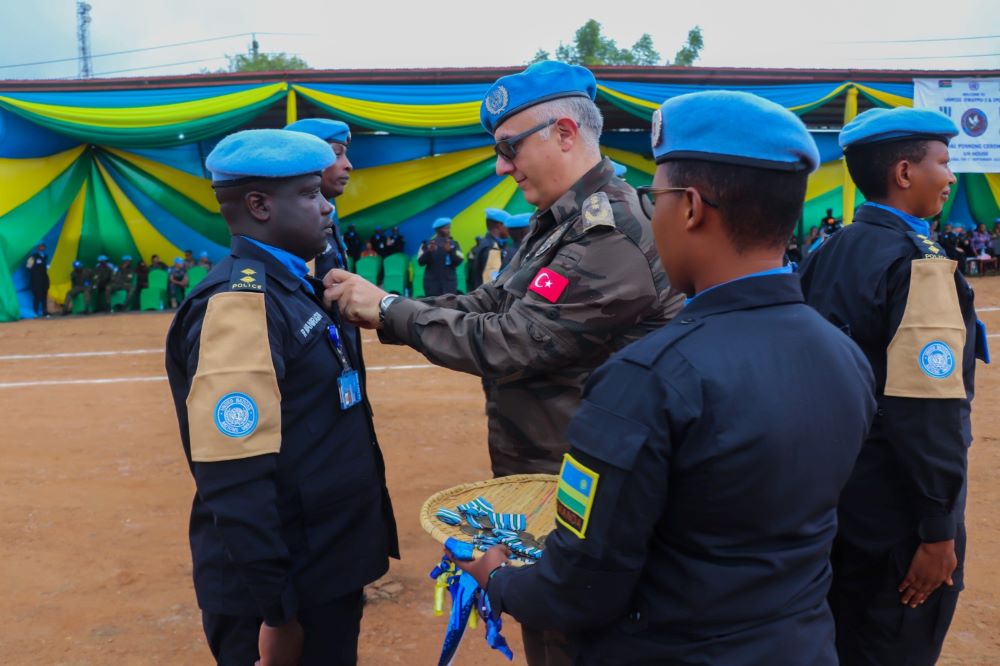
Commissioner of Police (CP) Bruce Munyambo, Commissioner for Community Policing, presided over the graduation of the 10 Police Marine officers and 17 game rangers from Akagera National Park.
It is the first batch of park rangers trained in maritime to reinforce operations against environmental and other crimes in Akagera National Park.
The course focused on provision of First Aid, water survival and rescue, swimming techniques, engine familiarisation and maintenance, boat assembling and disassembling, seamanship and navigation.
CP Munyambo thanked the trainees for successfully completing the demanding training and urged them to put the acquired skills to effective use.
He embarked on the role of Police marine unit fight and prevent crimes, and to ensure the safety of economic and social activities in and around water bodies.
CP Munyambo reiterated Rwanda National Police’s commitment to build the capacity of the marine force to strengthen its operations.
Police Marine is a Rwanda National Police (RNP) unit assigned with various responsibilities which include; ensuring safety and security of water bodies in Rwanda, and raising public awareness against maritime crimes and to prevent loss of lives resulting largely from unlawful and reckless use of water bodies.
Assistant Commissioner of Police (ACP) Elias Mwesigye, the Commanding Officer for Police Marine Unit, said that this is the initial stage for new officers joining the marine unit.
It was organized by Rwanda National Police in partnership with Rwanda Development Board (RDB).
ACP Mwesigye said that equipping maritime skills to Akagera game rangers is because the national park has inland lakes that require rangers to have basic skills to respond where necessary.
The Chief Park Warden of Volcanoes National Park, Prosper Uwingeri, who represented RDB, commended the existing partnership between the two institutions to train the recruited park rangers and other related training programmes.
His arrest has been officially confirmed by the Rwanda Investigation Bureau (RIB).
“It is true that Prof. Harelimana has been arrested,” Dr. Murangira B. Thierry, the spokesperson for RIB has told IGIHE.
Prof. Harelimana had assumed the duties since 2018 prior to his removal on 28th January 2023.
RIB Spokesperson has revealed that his arrest is based on an investigation done about him for some time in relation to offences he suspected of having committed while he was leading the institution.
Prof. Harelimana is suspected of crimes including flouting public tender procedures and abuse of public resources.
“My family was completely surrounded by water. I lost contact with them. I was at the top of the stairs in the house before I could escape and save myself,” Abdul-Qaser told Xinhua.
Abdul-Qaser said that the floods began around 03:00 a.m. local time on Sunday morning (0100 GMT), hitting the outer walls of his house forcefully after two dams collapsed and the water swept away everything in its path and swallowed buildings.
The deadly floods, triggered by Mediterranean storm Daniel, have claimed the lives of at least 5,500 and injured over 7,000 others, Osama Ali, spokesman of the Emergency Department of Libya’s Ministry of Health told Xinhua Wednesday, adding that more than 10,000 people remain missing in the floods, mostly in Derna.
Ali confirmed that the death toll is likely to be much higher, as rescue teams continue efforts to recover bodies.
According to Xinhua correspondent in Derna, the floods destroyed more than a quarter of the city. In the densely populated central area, buildings were submerged or even completely removed from their original locations.
Nizar Al-Hunaid, an actor from Derna, said that he is suffering from enormous physical and emotional pain as he lost his wife and two children in the floods.
“The moment the dam exploded, water poured onto the roof of where I was. In an instant, I lost my family and found myself on the roof of a house four streets away from my own. Next to me were an Egyptian and a child who survived on a fraction of an air conditioner with shocked faces,” Al-Hunaid said.
“In a few seconds, this disaster destroyed everything,” he added.
Khalil Bushiha, a 30-year-old resident of Derna, described the situation in the city as catastrophic.
“I cannot describe what happened. My family and I somehow survived in our three-storey house, which was completely submerged in water before we were able to escape,” Bushiha told Xinhua in his hospital bed.
“Water started to drown the house. My mother and I went out to the street and the neighbors were screaming. Then, the floods threw us into an abandoned house about 200 meters away from our house. I carried my mother, who has leg problems, to the fourth floor until the water dissipated,” Bushiha recalled.
“I left her in that place and returned amid water rising to my shoulders. I passed by the body of a child and placed it on a nearby car. I went to the house of our only neighbor and found her body floating in the water,” he said.
“It’s a miracle that my family and I survived, but we lost many family and friends. We ask everyone to stand with Derna in this ordeal that the country has not experienced since the earthquake in the city of Al-Marj in the 1960s,” Bushiha added.
This collaborative effort is geared towards elevating the skills of Rwandan educators and students, ultimately fostering quality education within the Integrated Polytechnic Regional Centres (IPRCs).
The agreement, inked by Claudette Irere, the State Minister in the Ministry of Education, and Ari Sivula, the Vice Chairperson of Tampere University of Applied Sciences, emerged from a Business Forum organized by Rwanda’s embassy in the Nordic countries, in collaboration with the Association of Rwandans living in Finland, Rwanda Development Board (RDB), and two Finnish companies namely; Finnpartnership and Hills Connect.
Finnpartnership is known for its support of projects in the fields of education and health, while Hills Connect is a company established by Rwandans who graduated and got employed in Finland.
Their shared mission is to attract Finnish investors to Rwanda and establish robust connections between Rwanda and Finnish universities. This concerted effort has already borne fruit with the participation of investors like Block Solutions Ltd and Aion Sigma.
Tampere University offers a diverse array of educational disciplines encompassing technology, health, social sciences, and trade. The recently signed agreement holds the promise of opening doors for Rwandan students to pursue studies in both Finland and Rwanda, with degrees recognized in both nations. Tampere University will also collaborate with vocational schools in Rwanda to enhance the quality of education.
Further bolstering the educational landscape in Rwanda, the State Minister in the Ministry of Education is expected to sign agreements with a company known as Finest Bay Area, founded by Finnish magnate Peter Besterbacka Vesterbacka, renowned as the ‘Mighty Eagle.’
These agreements are poised to pave the way for the establishment of the Education, Entrepreneurship, Entertainment (3E Campus) in Rwanda, aligning with the country’s ambitious vision. This venture into Africa by the company represents an addition to existing presence of other companies from Norway and Indonesia.
State Minister Claudette Irere emphasized that this initiative aligns seamlessly with Rwanda’s vision of job creation and leveraging technology to drive innovation. She expressed her belief that this company will create numerous opportunities for Rwandans, equipping them with international competencies.
The meeting convened entrepreneurs and key figures from the fields of education, health, and information and communication technology (ICT).
Notably, the Catholic University of Rwanda, represented by Bishop Philippe Rukamba, has also signed agreements with Finest Future, an initiative spearheaded by tycoon Peter Vesterbacka, aimed at teaching the Finnish language.
Interested Rwandans will receive virtual language instruction for one hour daily over an eight-month period. Upon successful completion, graduates will receive an automatic scholarship to pursue two-year vocational courses in Finland, entirely free of charge. Following these vocational courses, individuals will enjoy the privilege of continuing their education up to PhD studies, also at no cost.
The meeting, known as ‘Slush,’ typically gathering over 2000 participants, is customarily hosted in Finland. The signed agreements also contemplate the possibility of hosting this impactful event in Rwanda, marking yet another significant milestone in the blossoming partnership between Rwanda and Finland in the realm of education and innovation.
This visionary project is spearheaded by the Rwanda Social Security Board (RSSB) and is aptly named the Kigali Green Complex (KGC). Located at the former premises of the French cultural center near the main roundabout in Kigali City, along the road leading to Payage, KGC aims to redefine the city’s skyline.
KGC is slated to be a remarkable green building, soaring to 29 storeys in height. During a press conference held on September 14th, 2023, the Director General of RSSB, Regis Rugemanshuro, shared his enthusiasm for the project, describing it as an extraordinary addition to the city.
“KGC will be a towering symbol of modernity, boasting eco-friendly features that align with contemporary standards,” noted Rugemanshuro.
As of now, the preliminary planning phase has been completed, and a tender has been issued, inviting construction companies to submit their proposals. Rugemanshuro expressed confidence that the project would likely commence in October, with an estimated completion timeline of 2.5 to three years.
While the exact budget for KGC remains undisclosed due to ongoing negotiations with the construction company, Rugemanshuro stressed that the project aligns seamlessly with Rwanda’s vision of becoming a hub for various services, including technology, economics, health, and sports. He further anticipated that the new skyscraper would attract increased investment to the country.
Upon its completion, KGC is poised to claim the title of Rwanda’s tallest building, surpassing the KCT, Grand Pension Plaza (20 storeys), and Makuza Peace Plaza (15 storeys). On a broader scale, in Africa, the list of tall buildings is currently led by the Carlton Centre in Johannesburg, South Africa, comprising an impressive 56 storeys and towering at a height of 227 meters.
Globally, the reigning champion in the skyscraper race is the Burj Khalifa, located in the United Arab Emirates (UAE), which has maintained its top spot for the past 13 years. This iconic structure stands at an astounding height of 828 meters, boasting a staggering 163 storeys.
As for RSSB, its total assets are estimated at an impressive Rwf2065 billion, equivalent to a remarkable 15% of Rwanda’s GDP, demonstrating its significant role in the country’s economic landscape.
This bloc, originally formed in 1964 by 77 countries from the global South, aimed ‘to articulate and promote their collective economic interests and enhance their joint negotiating capacity’.
It’s worth noting that the G77 has since expanded to include 134 members, with China listed on the bloc’s website, despite China’s claim that it is not a full member.
The summit is set to host over 30 heads of state and government representing nations from Africa, Asia, and Latin America.
Bruno Rodriguez, the Foreign Minister of Cuba, briefed reporters on Wednesday, expressing the expectation that the summit will conclude on Saturday with a statement emphasizing the fundamental right to development within an international order increasingly characterized by exclusivity, injustice, and exploitation.
He further mentioned that a draft of the closing statement highlights the numerous challenges facing developing nations and includes a call for the establishment of a new global economic order.