Albert Seneza, the village leader of Gaseke, recounted that the grenades came to light during the removal of the roof from a dwelling that had remained unoccupied for nearly a decade.
The house had once belonged to a former soldier named Francois, who held the rank of Second Lieutenant during the 1994 Genocide against the Tutsi. It is said that Francois fled to the Democratic Republic of Congo (DRC) and never returned to the area.
The discovery unfolded when a young man involved in removing the roofing tiles spotted two suspicious, bottle-like objects. In a swift response, an elderly woman, the sister of the aforementioned soldier, promptly alerted the village leader, Seneza.
Speaking to IGIHE; Jean Claude Gasore, the executive secretary of Mushubi Sector confirmed that the grenades were found within the residence of an elderly woman who had passed away several years ago. The decision to unroof and dismantle the house was motivated by its age and its location within a high-risk zone.
“It is true that these grenades were found in the house on Friday. Sources reveal that there is an EX-FAR soldier who used to live in the house during the 1994 Genocide against the Tutsi and fled to Congo. It is suspected that he might have left them in their home before fleeing,” acknowledged Gasore.
Nevertheless, the vast majority of us detest taking on agriculture as a profession, yet it’s the main source of food.
During Rwanda Institute for Conservation and Agriculture (RICA)’s recently concluded graduation, Howard Buffett, the Chairman and Founder of RICA, shared a story of a couple of young women he met at a girls’ school in Rwanda who had a negative perception about agriculture.
“I remember the first time Anna and I sat down at the girls’ school here in Rwanda and a couple of young women said; ‘we don’t want to be farmers, we don’t want to be in the field with a hoe, or chasing cows around, we just don’t want to do that,” he recalled.
As a way to convince them, Howard explained to the ladies what agriculture is. “But I told them, that’s not really agriculture today. Agriculture is about science, maths, and technology. It’s about improving lives, feeding people, and taking care of the land and the natural resources so that the next generation can produce even more than what we do today,” he said.
“It’s about transforming your country and its economy, and it’s about supporting farmers to improve their lives,” added Howard.
While there may be others with the same mindset as the ‘young girls’ Howard met, there are also individuals who viewed agriculture as a chance to transform the world and pursued it as a university course.
RICA graduate, Sifa Florence Sangwa grew up in Rulindo village-Rwanda, where agriculture was the main source of income for her family.
Every weekend, she would accompany farmers to the fields and while there, she witnessed firsthand the challenges they encountered.
Although this would have discouraged her from taking a profession in agriculture, it instead motivated her to take the practice very seriously. After all, she was rearing some livestock herself.
“When I was younger, I was given a rabbit as a gift. Unfortunately, its kits were always born sickly, and they died since I didn’t know how to care for them. Furthermore, I used to overdose our hens to death whenever they got sick, thinking it would heal them quickly,” she stated.
Through taking up a course in agriculture, Sifa is now competent to take on any agriculture challenge including those farmers in Rulindo face.
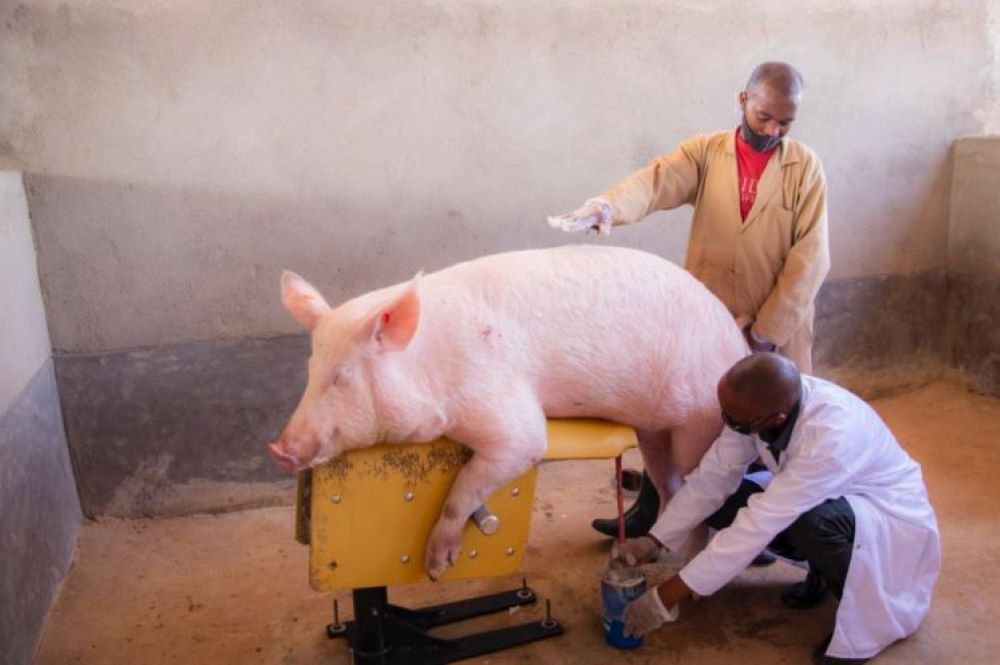
“I am able to carry out various technical skills involved in animal production like Artificial Insemination, veterinary intervention, and animal nutrition skills.
Besides, the teaching mode at RICA acquainted me with problem-solving skills that helped me develop innovative solutions to real-world agricultural problems like climate change, pests and diseases, and adaptability to new technologies in agriculture,” she stressed.
Another graduate, Assoumpta Umwali Ujeneza was drawn to a career in agriculture because of her interest in food processing. During her studies at RICA, she participated in initial cultivation with farmers, which helped her understand the interconnection of many stages in guaranteeing food safety.
She also learned the significance of sustainable and ecologically friendly farming techniques, which will allow her to operate effectively in the agricultural industry and provide advice to others in the food value chain.
On the other hand, Ntihemuka Benjamin’s knowledge of agriculture was confined to what he watched on television. Fortunately, during one of his study tours at ‘Urwibutso enterprise,’ he learned about the ‘banana-value-chain’ and its positive impact on farmers.
He also witnessed the threat ‘agrochemicals’ posed on bees and the entire ecosystem which stirred up his need to pursue a course in agriculture so as to improve people’s lives while at the same time conserving the environment.
“I wanted to address agricultural challenges while conserving nature at the same time,” he explained.
While in his fifth year in high school, Robert Ganza Mpore and four of his friends owned a small-scale farm where they cultivated cucumbers.
With their school acting as subtle customers for their produce, Mpore and friends generated some ‘good’ income from their efforts which led him to come to the conclusion that agriculture is what he should do, hence enrolling in an agricultural institute for his university studies.
“Throughout my studies, I had the privilege of delving into various facets of the agricultural domain, the most notable one being; ‘the subject of agricultural leadership’ which ignited my passion and nurtured my ambitions to pursue this specialization in the future,” he explained.
“Furthermore, the capstone internship at the Ministry of Agriculture and Animal Resources shaped my practical knowledge and skills. This invaluable opportunity provided me with hands-on involvement in the development of agricultural projects and policies,” added Mpore.
Now a graduate with a degree in agriculture, Mpore intends to ‘leverage the skills and expertise cultivated during his tenure at RICA to make a meaningful contribution to the agricultural sector of Rwanda and the African continent at large.’
{{Youth encouraged to embrace agriculture}}
When it comes to choosing study courses at university, reports say that most youth shy away from the profession yet it provides countless opportunities in technology, resource management, food processing, among others.
Benjamin Ntihemuka, a graduate with a Bachelor’s of Science in Conservation Agriculture from RICA, urges the youth to engage in agriculture and exploit the vast wealth it holds.
“The problems and challenges of the agriculture sector make it even suitable for the youth to adventure and find solutions which will turn into multibillion businesses in the future,” he states.
“The world’s population will have doubled by 2050 meaning that food demand will also increase drastically. Technology advancement like machine learning, Internet of Things [IoT], and artificial intelligence will be instrumental in precision agriculture and sustainable production. This is a great opportunity for the youth to create a synergy not only in agriculture but also other sectors that will elevate food production,” he explained.
Robert Ganza Mpore, also a graduate from RICA, sympathizes with those who look down on agriculture saying he was once like that not until he studied agriculture.
“Through studying agriculture, I discovered the tangible connections between Science Technology Engineering and Mathematics (STEM) and agriculture.
I came to recognize that agriculture is not just about farming; it encompasses a multifaceted landscape that employs some of the finest entrepreneurs, communicators, leaders and IT experts who employ cutting-edge technology like unmanned aerial vehicles (UAVs) or drones, skilled mechanics, among others,” he explained.
He thus recommends a foundation for a more informed perspective on agriculture to be laid during early education as a solution to eradicate the mentality that agriculture is a ‘bad profession.’
“Schools should consider integrating agricultural education into their curriculum, fostering practical experiences such as maintaining gardens, thereby enabling students to gain firsthand knowledge of the fundamental principles of agriculture.
By doing so, we can bridge the gap between misconceptions and the rich world of opportunities that agriculture offers,” stated Mpore.
“The same way Gold is excavated from mud and becomes the most valuable mineral, so is agriculture,” says Sifa, a graduate with a Bachelor of Science in conservation agriculture, urging the youth to have a more positive approach to the profession.
She adds that the practice has evolved and is no longer about trolling in the mud. Instead, it is a dynamic and innovative field that offers countless opportunities for growth, learning, and positive change.
“I call upon the young generation of students to know that their positive attitude in agriculture counts a lot. They should venture and invest their time in this sector because it requires technology, innovation, and research that is easily done by young people. This will ensure efficient agricultural evolution and transition, making it easier to optimize production in agriculture,” Sifa explained.
{{A glance at agriculture in Africa}}
According to reports, agriculture contributes 35% to the continent’s GDP in addition to providing livelihood for more than 50% of the population.
Reports further indicate that ‘Africa has the potential to meet not only its own food needs, but also those of the rest world’.
Despite this potential, one in five people faced hunger in 2020 and the number continues to rise as per report published by World Vision in February 02, 2022.
The United Nations (UN) recently warned Global governments that action is needed in order to prevent the next food crisis caused by the pandemic, climate change, production of food that can’t keep up with the increasing consumption, and current agricultural methods and strategies which aren’t sustainable.
Therefore, to address this problem, Howard Buffett together with the Government of Rwanda, founded RICA not only to address long-term challenges of smallholder farmers through conserving agriculture but also change the way that people view agriculture not only in Rwanda, but also in Eastern Africa and the continent at large.
Commenting on the significance of the institute, Howard emphasized the importance of each African country having its own version of a land grant university ‘that would train the next generation of leaders in agriculture to help countries reach their highest potential both in agriculture and across national priorities.’
Land grant universities are colleges or universities that were established 175 years ago in the United States devoted to practical training and sustainable solutions in the agricultural context.
According to Cape Town South Africa, her life was marked by a turbulent journey through addiction, a harrowing suicide attempt, a relentless battle against cancer, and the tragic loss of two young children.
The Mandela family officially announced her untimely demise on Tuesday, following her passing on Monday. Although Zoleka had previously overcome breast cancer, her health took a devastating turn when she was diagnosed with cancer in her liver and lungs. The disease had metastasized, spreading throughout her body, ultimately claiming her life.
The Nelson Mandela Foundation, dedicated to preserving the legacy of the iconic South African leader who passed away in 2013, expressed deep sorrow over the loss of Zoleka Mandela. They extended their heartfelt condolences to her family, acknowledging her as a cherished grandchild of Nelson Mandela.
The foundation lauded her tireless efforts to raise awareness about cancer and her role as a beacon of inspiration for those affected by the disease and for parents who had experienced the profound grief of losing a child. Zoleka had established foundations to support individuals in both of these critical areas.
Zoleka’s early life was a series of profound challenges and tragedies that would have overwhelmed anyone. These difficulties unfolded in the backdrop of her struggle to live up to the extraordinary legacy of her grandfather – a Nobel Peace Prize laureate, the leader of the anti-apartheid movement, South Africa’s first Black president, and a globally respected symbol of positive change.
Zoleka experienced sexual abuse during her childhood and grappled with drug and alcohol addiction from her teenage years onwards. Tragically, her 13-year-old daughter, Zenani, lost her life in a car accident in 2010, caused by a drunk driver. At that time, Zoleka was deep in the throes of addiction and had even attempted suicide.
In a candid interview with The Associated Press in 2013, she admitted the devastating choice she had made: “I hadn’t seen my daughter for 10 days before her passing, and I hadn’t because I chose to use drugs. That’s obviously a reminder that I chose my addiction over my kids and I have to live with that for the rest of my life.”
The immense pain and guilt shook her to the core, leading her to seek help and enter rehab, not just for her own well-being but also for the sake of her surviving child, Zwelami, and in memory of Zenani. Zenani’s tragic death prompted Nelson Mandela, then in frail health, to attend his great-granddaughter’s funeral, marking one of his final public appearances.
Shortly after her daughter’s passing, Zoleka was diagnosed with breast cancer, which necessitated a double mastectomy and grueling rounds of chemotherapy. Tragically, her second son was born prematurely in 2011 while she was undergoing cancer treatment and passed away shortly thereafter. At the time of her passing, she had four surviving children.
In 2013, Zoleka Mandela released her autobiography, titled “When Hope Whispers.” The book delved into the profoundly challenging circumstances of her life, including her unconventional upbringing as a Mandela during the violent era of apartheid in the 1980s, when her grandfather was incarcerated for leading the anti-apartheid movement.
In her autobiography, Zoleka recounted a startling childhood memory: “By the time I was born … my mother knew how to strip and assemble an AK-47 in exactly thirty-eight seconds.” Her struggle with alcohol began at the tender age of nine, eventually spiraling into a daily cocaine addiction. This addiction would later separate her from her own children and become her deepest regret, particularly during the period when her daughter tragically lost her life.
However, Zoleka’s life would ultimately take a different trajectory, concluding with a remarkable chapter of transformation. She emerged as a prominent advocate, not only for cancer awareness but also for road safety, earning widespread acclaim for her efforts in both areas. Even as she battled terminal cancer, her unwavering courage and commitment to her causes were evident.
The foundation bearing her grandfather’s name aptly recognized her as a “tireless activist.” This tribute was particularly fitting, as Zoleka, despite initially feeling daunted by the monumental legacy of Nelson Mandela, ultimately found inspiration in it.
She expressed her hope that her grandfather, wherever he might be, was looking down and thinking, “she has gotten it right, finally.” These words, spoken to the BBC in 2016, encapsulate the journey of a remarkable woman who, in the face of immense adversity, ultimately found her purpose and made a profound impact on the world.
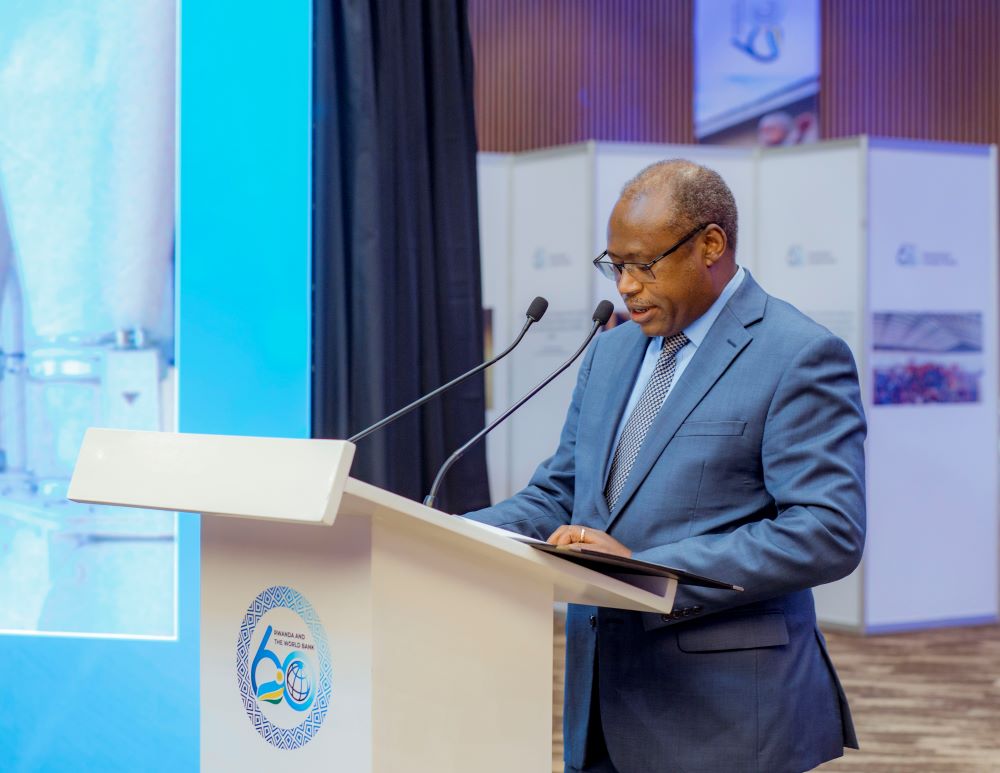
Dr. Uzziel Ndagijimana, Minister for Finance and Economic Planning and Keith Hansen, World Bank Country Director inaugurated a multimedia photo exhibition depicting Rwanda’s development story over the past six decades and joined a conference to reflect on 60 years of partnership.
Rwanda became a member of the World Bank on September 30, 1963. Since then, the bank has provided about 8.2 billion in support of different development programs in Rwanda including human capital, infrastructure, agriculture, resilience, and private sector development. Over the last decade, one million people have lifted themselves out of extreme poverty, capitalizing on a rapidly improving agriculture sector in which the International Development Association (IDA) has been proud to make substantial investments.
“World Bank has had the honor and privilege of accompanying Rwanda in its exceptional journey of building transformational infrastructures and setting up modern institutions that led to one of the most impressive growth performances in the World in recent decades, said Keith Hansen, Country Director for Rwanda, Kenya, Somalia, and Uganda.
“Continuing Rwanda’s remarkable success requires accelerated efforts and collaboration to rebalance its economy away from public investment toward greater reliance on private investment, and the World Bank is committed to continuing supporting the government to attain her targeted sustainable development goals.”
Rwanda tells the world a remarkable story of poverty reduction and development. It has been one of the fastest-growing economies in the world, having generated persistent high growth averaging 7.2% per annum between 2000 to 2019, poverty has declined from 58.9% in 2000 to 38.2% 2016, and inequality has reduced with GINI co-efficient of 0.51 in 2000 to 0.43 in 2016 maternal mortality ratio fell from 1070 per 100,000 live births in 2000 to 203 in 2020, and by 2019, 96% of the population has health care cover, and Rwanda is a leader in gender equality, in innovation, technology, and its investment climate has radically improved.
“World Bank has been a reliable and strategic partner in supporting our country’s development trajectory over the past six decades. Together, we have achieved tangible results in reducing poverty, developing human capital, promoting private sector, increasing access to infrastructure and digital economy, improving agricultural production and commercialization as well as urban development,” said Minister Uzziel Ndagijimana, the Minister of Finance and Economic Planning.
“We also recognize, the knowledge and technical assistances that have helped to design and implement innovative and evidence-based policies and programs which have been important guiding tools that are helping us to achieve our ambitious goals of becoming an upper-middle-income country by 2035 and a high-income country by 2050,” he added.
In collaboration with the Government of Rwanda, the World Bank supported many sectors with significant impact. For instance, Rwanda has rapidly expanded access to electricity from 6% in 2003 to 65% in 2023. In this, the World Bank has mobilized resources, financed generation, transmission, and distribution of power including from renewable sources, helping fuel economic growth.
Marshland and hill-side areas have been developed, irrigation systems expanded, rural communities empowered, post-harvest infrastructures enhanced, farmers trained in modern farming techniques sector policies and institutions strengthened, and innovative approaches such as agricultural finance and insurance have been adopted improving food security and farmer’s incomes raised.
To accelerate human capital development, provision of financial support, technical expertise, data, research have improved access to quality of basic and tertiary education and acquisition of market-relevant skills. Strengthened Vision Umurenge Program has enabled poor and vulnerable households access economic inclusion services.
The World Bank, IFC and MIGA, delivered one of sub-Saharan Africa’s first PPPs in the water sector – Kigali Bulk Water Project, which is supplying 27 percent of the city’s water supply.
In the past 60 years, the World Bank has also produced knowledge, analytical work, and data which has supported the government’s evidence-based development decisions and policies.
“The speed with which Rwanda has successfully achieved major transformations is an evidence that much more can be done to realize the country’s development aspirations,” said Sahr Kpundeh, World Bank Country Manager for Rwanda.
“I would like to reaffirm that Rwanda and the World Bank will continue to work together, as we have for six decades, to further advance the country’s transformation, and to achieve green, resilient, and inclusive development to which Rwanda aspires,” he added.
Volkanofest 2023 is singing a tune of environmental care and awareness, urging each of us to recognize our role in protecting our beautiful planet. Without this cherished Earth, events like Volkanofest would remain a distant dream.
The festival is bringing together a colorful mix of well-known and rising artists from East Africa, who will express their unique tunes and styles, all while waving their flags high. Names like Bushali, Angell Mutoni, Kaya Byinshii from Rwanda, Checkmate Mido from Kenya, Alfa Otim from Uganda, and Dj Bamba & Makaveli from Tanzania are set to grace the stage.
One special feature this year is the ‘Kids Zone’, a fun and engaging area to keep the young ones entertained during the day. Also new is a free yoga session for attendees, offering a moment of calm and reflection amidst the excitement. And for those who love arts and crafts, there will be more vendors this time, showcasing their creativity and providing a broader palette of options compared to previous editions.
This festival also opens doors for local entrepreneurs in tourism, trade, crafts, and other service industries. They get to offer their products and services to the diverse crowd attending the festival, contributing to the growth of the local economy. It’s a blend of enjoyable musical, cultural, and food experiences, which will also, in turn, narrate the story of a community coming together for a bigger cause.
Volkanofest is more than just a music festival. It’s a cultural movement, connecting communities through the universal language of art. Each edition aims to spark imaginations, challenge thoughts, and inspire positive changes, especially regarding our environment.
Volkanofest 2023 highlights the power of creativity in molding a better future, where nature and music dance in harmony. It’s an invitation to not only celebrate music but to also resonate with the cry of nature, urging for more care and understanding.
Almost half of the victims of disasters registered from Sept. 1 to 28 were killed by lightning, which also injured 43 people, while others died due to landslides, the data showed.
In one of the most recent incidents, a mother and her two children were killed after their residential house collapsed on them following heavy rains in the Gasabo District of Kigali, the capital of Rwanda.
The disasters also destroyed nearly 500 houses and 58 hectares of crops, while more than 120 livestock were killed. Also destroyed were 37 classroom blocks.
The data were released days after the Rwanda Meteorology Agency said above-average rainfall of between 20 mm and 120 mm was expected in different parts of the country through Sept. 30. The weather agency asked residents to take preventive measures after warning that the rains would lead to flooding, rainstorms, soil erosion and landslides.
Philippe Habinshuti, the permanent secretary in the Ministry in Charge of Emergency Management, called on Rwandans living in high-risk zones to relocate to safe areas.
The farewell ceremony for the 112 retirees held at the RNP General Headquarters in Kacyiru, was presided over by the Minister of Interior, Alfred Gasana, who lauded their dedication, commitment and sacrifice to serve their country.
It was also attended by the Inspector General of Police (IGP) Felix Namuhoranye, deputy Police Chiefs as well as commissioners and senior officers, who retired before.
Those retiring include pioneers of Rwanda National Police, which was established in June 2000, following the merger of three institutions; Gendarmerie Nationale which was under the Ministry of Defense, the Communal Police under the Ministry of Interior and the judicial Police inspectors under the Ministry of Justice.
“Rwandans are ready to welcome you in your new life to work together in community activities. Your experience, integrity, professionalism and unwavering character will be critical as you work with Rwandans in the national transformation process,” Minister Gasana said.
Although they are out of active service, he urged them to continue working closely with the RNP, other law enforcement and security agencies, and government institutions to continue to strengthen national security and to protect what has been achieved.
He further thanked their families for supporting them during their active service and for bearing the absence of their spouses due to the nature of work.
Minister Gasana also thanked police officers who retired before, for their exemplary and active participation in other national development activities.
IGP Namuhoranye said that RNP has a strong and long term programme to ensure close connection with the retirees to farther the national security agenda as well as ensuring their welfare.
“This collaboration will give confidence to the young people that wish to join the RNP because they will understand the Police as a profession for the young generation to join and retire with dignity.
Continue to be defined by your patriotic spirit to preserve what you strived for,” IGP Namuhoranye said.
He added: “Thank you for your service and contribution to build a professional Police force, for your devotion to duty and country; your dedication and discipline guided your successful service and retirement with honor.”
He particularly thanked His Excellency the President for the visionary and continued guidance and support to RNP and the retired officers.
“You are retiring from active service but your duty to your country continues to fight anything that can affect the security that you fought for.”
Commissioner General (rtd) Emmanuel K. Gasana, who spoke on behalf of the retirees, said that this moment reminds them of the difficult times that the country went through.
“We serve as witness that all would not have been possible without a great leader, who saved the nation from a dark history, from doomsday, from a devastated nation to prosperity,” CG (rtd) Gasana said.
He added: “We are leaving active service but we remain part of this Police family; RNP is in our blood and we are leaving with a life package of discipline, professionalism and the required values.
We will continue to serve and to sacrifice for our country whenever we are required.”
With eKash, the era of waiting for transactions to reflect in one’s account is now a thing of the past, and financial experience is poised to improve significantly.
{{Key Features of eKash:}}
{{• Instant Transactions: }} eKash empowers users with instant money transfers, ensuring your funds are available precisely when you need them.
{{• Secure and User-Friendly: }} eKash is constructed upon a solid foundation of maximum security and compliance, ensuring that your transactions are shielded at every step.
{{• Extensive Network: }} Currently, eKash seamlessly integrates with leading financial service providers, including Ecobank, Zigama CSS, I&M Bank, AB Bank, Bank of Africa, COPEDU PLC, Access Bank Rwanda, MTN MoMo, Airtel Money, with many more expected to join soon!
{{• Recipient Details Verification:}} Users have the opportunity to review and confirm recipient details before finalizing transactions.
{{• Affordability: }} Access to financial services at a minimal cost.
To begin using eKash, simply register through your financial service provider’s USSD/App; for mobile money users, please dial 18211#.
Commenting on this development, Blaise Pascal Gasabira, CEO at RSwitch Ltd, stated, “This launch signifies a momen-tous stride in Rwanda’s quest for a cashless and inclusive economy. We are proud to offer this innovative solution, and we firmly believe that it will simplify digital payments and promote financial inclusion.”
As eKash goes live, individuals are encouraged to embrace this transformative digital payment system, ushering in a new era of convenience and security in financial transactions.
This achievement was made possible through the support of Access to Finance Rwanda, which sponsored the implementation of eKash, as well as the Ministry of Finance and Economic Planning, the Ministry of ICT and Innovation, the Rwanda Information Society Authority, the National Bank of Rwanda, Financial Services Providers, and other stakeholders.
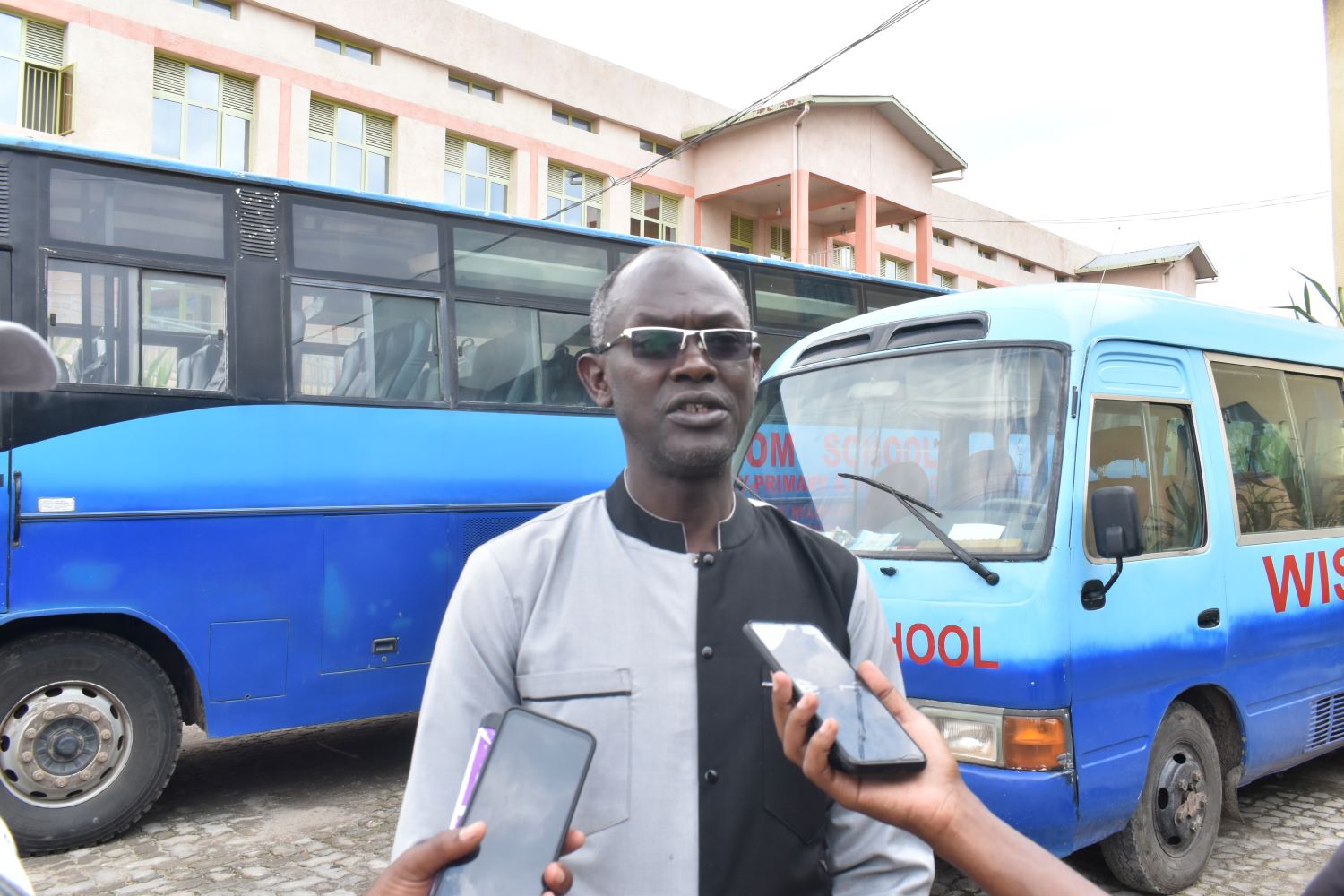
Wisdom School obtained a licence to commence its Associate Nursing Program in the school year 2023-2024.
The program is specially designed to equip budding nursing enthusiasts with the requisite skills and knowledge.
Graduates of this program will find themselves well-prepared to pursue further education at esteemed colleges and universities. The management is enthusiastic about accepting new students across all categories for the 2023/24 school year, underscoring the abundant opportunities awaiting these scholars at globally renowned institutions.
Elie Nduwayesu, the Principal of Wisdom School, emphasized the institution’s commitment to nurturing graduates who not only avoid becoming burdens on their parents and country but also proactively contribute to addressing prevailing challenges.
He remarked, “The shortage of healthcare professionals is a global concern, and we welcome parents and students not only from Rwanda but from around the world to join our school. We are poised to provide them with the education and training they need, and we have the capacity to accommodate them.”
Nduwayesu extended an impassioned invitation to parents, urging them to entrust their children to Wisdom Schools for quality education and training, with a promise not to disappoint those who choose this path.
He stated, “In the realm of education, there are three principal actors: children, parents, and educators. We implore parents not to let this golden opportunity slip away. Bring your children to us; we are educators, we are parents, and we have children of our own. They will soon realize they’ve made the right choice.”
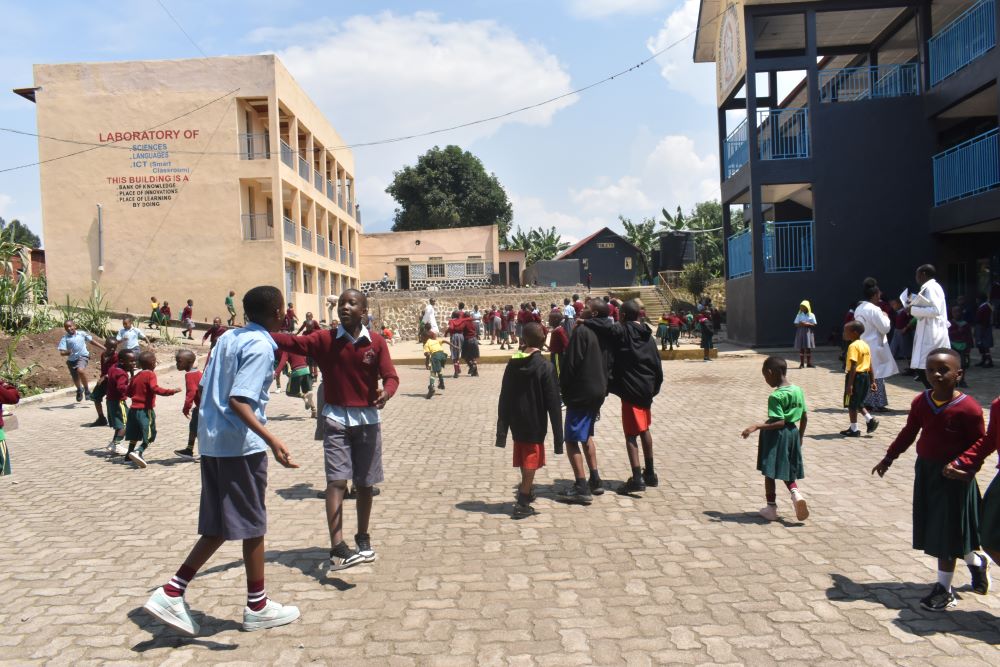
At Wisdom Schools, students have access to a comprehensive educational journey, starting from nursery, progressing through primary and secondary levels, culminating in ordinary and advanced levels in fields such as sciences, nursing, and accounting among others. Graduates emerge with grades that pave their way to higher education, some even securing opportunities to study abroad.
What sets Wisdom School apart is its holistic approach to education. The institution places a strong emphasis on instilling a robust work ethic, fostering care for personal belongings, promoting healthy eating habits through school-grown crops, and providing access to milk from the school’s cattle. Additionally, the serene campus grounds, playgrounds, and abundant recreational facilities create an environment conducive to learning and relaxation.
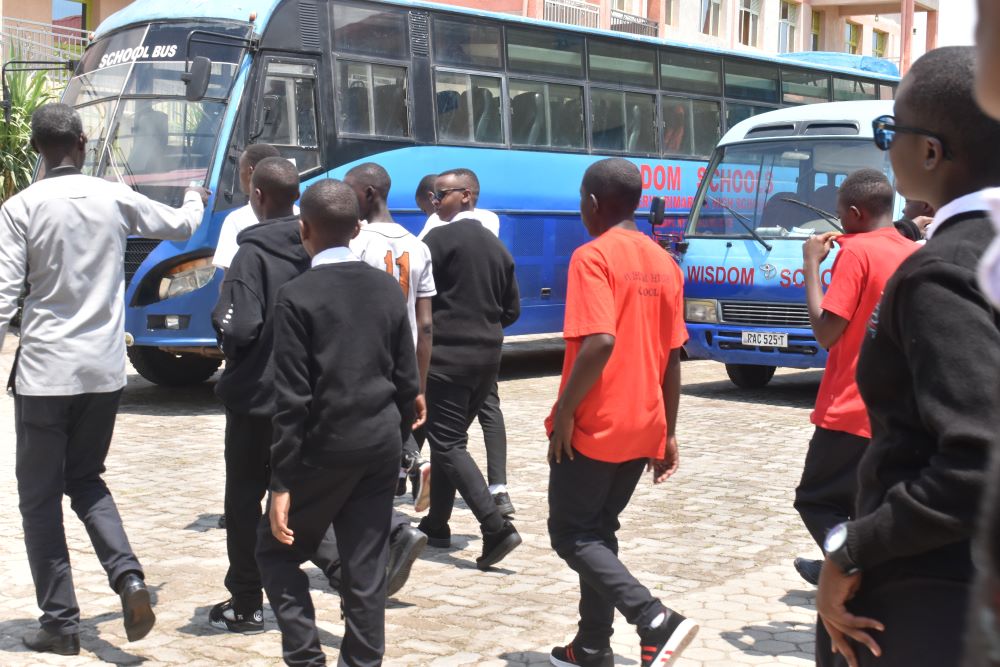
State-of-the-art laboratories empower students to apply their theoretical knowledge practically, enabling them to produce various products, including soaps, paints, and oils, within a single year. Furthermore, the school offers transportation options, facilitating educational field trips that bring textbook learning to life while instilling values of reverence for God and love for their nation.
To uphold discipline and ensure top-notch education, Wisdom School maintains a high standard of conduct among its students, ensuring a delinquency-free environment. Parents are encouraged to visit and witness this commitment firsthand.
Wisdom School International boasts an extensive network of branches across Rwanda, including Kanzenze, Rubengera, Ngororero, Nyamasheke, Runda, Muyumbu, Nyagasambu, Rwamagana, Kayonza, Kabarore, Kiramuruzi, and Nyagatare, in addition to Musanze, Burera, Mukamira, and Rubavu.
Wisdom School warmly welcomes students from diverse cultural backgrounds and offers instruction in various languages, including Kinyarwanda, French, Swahili, English, and Chinese.
Interested individuals can explore further details on the official website at Wisdomschoolsrwanda.com or contact the school directly at 0788478469, 0782407217, and 0784188101 for additional information.
This tale of perseverance and modern forensic science shines a light on the dogged determination of investigators who refused to let a cold case go unsolved.
Lisa Coburn Kesler, a 20-year-old from Georgia, was the woman whose identity remained concealed for over three decades. It was a case that haunted the Orange County Sheriff’s Office in North Carolina, with the circumstances of her death shrouded in mystery.
According to their findings, Lisa had met a gruesome end, a victim of strangulation, in September 1990. Her lifeless body was callously discarded one week later, left on Interstate 40 East near Exit 263 in North Carolina.
Dr. John Butts, the author of Kesler’s 1990 death certificate, had been unable to ascertain the cause of her death. At the time, the forensic applications of DNA were still in their infancy, a far cry from the sophisticated tools available today. Although DNA could confirm identities or establish connections to crimes, it was not yet able to identify an unknown person.
So, how did investigators finally put a name to Lisa Coburn Kesler? The journey was long and arduous. Early efforts involved interviews with potential witnesses and pursuing leads, alongside exhaustive searches through missing persons reports. In their relentless pursuit of answers, the investigators even turned to facial reconstruction to create a model of Kesler’s skull.
However, it was the advent of modern forensic techniques and the unwavering dedication of Dylan Hendricks, an investigator with the sheriff’s office, that breathed new life into this cold case. In 2020, Hendricks sent hair samples collected from the victim to Astrea Forensics, a DNA extraction company with a specialization in identifying human remains. His collaboration with forensic genealogist Leslie Kaufman marked a turning point in the case.
Kaufman’s expertise in genealogy databases and related tools led her to Kesler’s paternal cousins. A breakthrough came when DNA from a maternal relative matched Kesler’s, finally unveiling her identity. Astonishingly, the family had not heard from her in 30 years, leaving her whereabouts a mystery to them as well.
Lisa Coburn Kesler’s life story is shrouded in enigma, with scant information available. She spent most of her life in Jackson County, Georgia, close to Athens, and her mysterious disappearance left a void in her family’s heart for three decades.
According to USA Today, Medical Examiner Clyde Gibbs updated the National Missing and Unidentified Persons System to reflect these new findings and officially closed Kesler’s case. This database, overseen by the US Department of Justice, serves as a critical resource in connecting missing persons cases to unidentified remains.
With Kesler’s remains now identified, Sheriff Charles Blackwood and his dedicated detectives are turning their attention to potential murder suspects. North Carolina does not have a statute of limitations on murder, which means that justice may yet be served, even after more than three decades.
“I am very happy we solved the three-plus-decades-old mystery of this young woman’s identity, and I hope it provides solace to her family members,” Sheriff Blackwood remarked, echoing the sentiments of all who followed this extraordinary journey from anonymity to recognition.
In the end, this story is not only a testament to the power of modern forensic science but also to the unwavering commitment of law enforcement officers who refused to let a cold case go unsolved. It reminds us all that, even in the darkest of mysteries, there is hope for closure and justice.