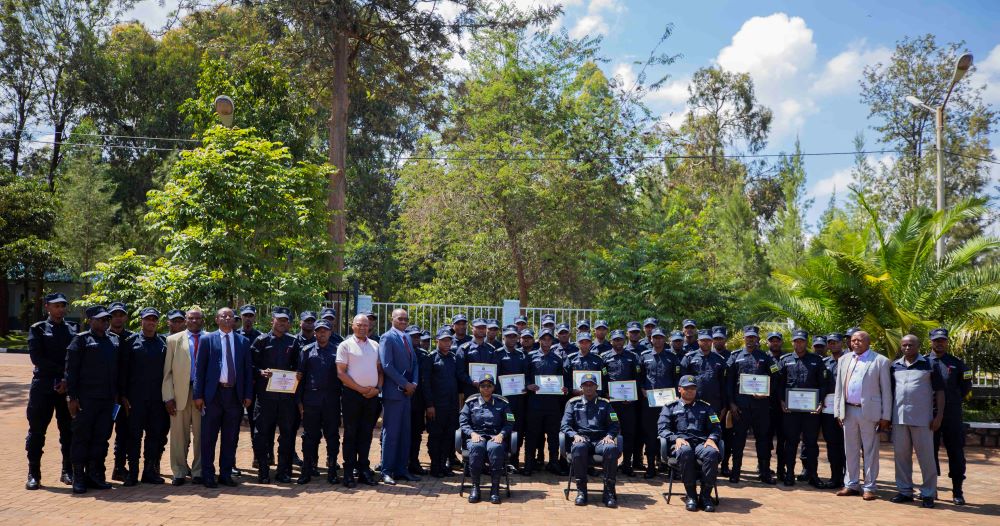
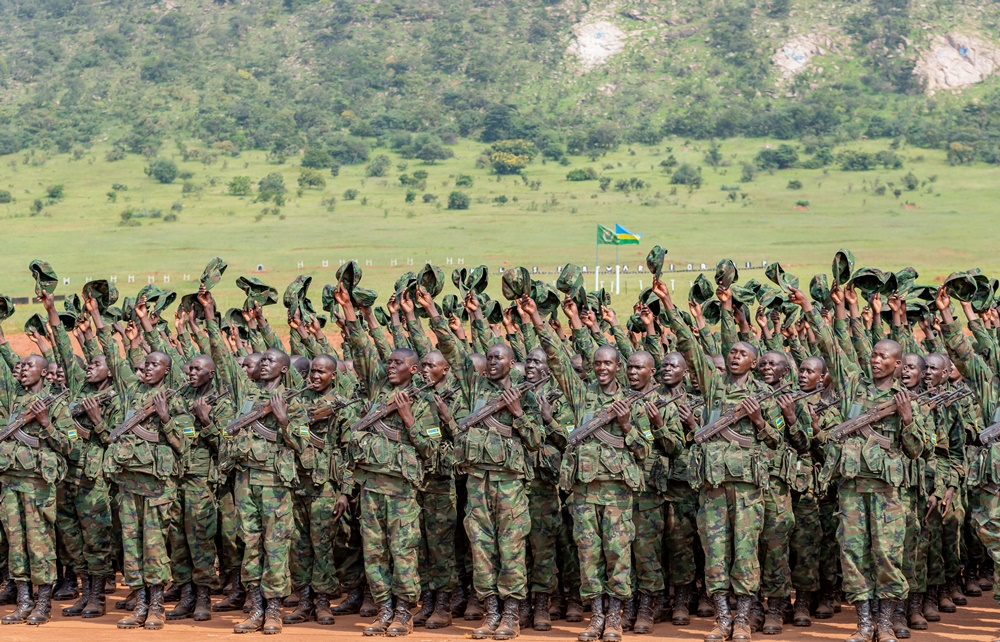
The ToT included the 8th intake of the Instructional Technology Course for 35 junior officers; and Methods of Instruction Course, 6th intake, attended by 53 Non-Commissioned Officers (NCO).
The Inspector General of Police (IGP) Felix Namuhoranye, who presided over the closing of the two courses at the PTS, said that capacity building is among the priorities of Rwanda National Police (RNP) and that training is both a professional and tool used to shape individuals and institutions in all aspects.
He reiterated that training remains a cornerstone for the force to perform its mandate.
“It handles important aspects of the job, clarifies roles and responsibilities, instills the sense of attachment to the organization one works for, increases confidence, contributes to operational success and ability to adopt to various operations,” IGP Namuhoranye said.
He noted that continuous training drives law enforcement agencies to keep ahead of criminals.
The Police Chief challenged the trainees that the acquired skills and knowledge are important for the dynamic nature of their career and that the RNP expects a lot from them as qualified trainers.
“Learning will not stop here; continue with self development. Attachment to training career, discipline and focus will make you good trainers,” he said.
Scheduled to unfold from January 17 to 22, 2024, this voyage will see participants departing from Kigali for Rwandans and a convergence of international participants in Singapore.
Dr. Francis Habumugisha, the CEO of Mega Global Link, underscores the dual purpose of this program—addressing mental health concerns and fostering business acumen.
He highlights the pivotal connection between mental well-being and business success, citing instances where individuals face setbacks due to a lack of a resilient mindset. Dr. Habumugisha emphasizes the urgency of tackling mental health issues, as they can potentially lead to adverse consequences, including suicidal tendencies.
The genesis of this initiative took root in Dr. Habumugisha’s observation of global mental health challenges, particularly prevalent among Rwandan youth grappling with familial conflicts. The ‘Healing and Business Trip’ aims to provide a sanctuary in Singapore for participants to heal emotional wounds, share knowledge, and fortify their professional and educational pursuits.
Rwandan entrepreneurs partaking in the journey will be strategically connected with Singaporean business entities, fostering collaborative investment opportunities. This reciprocal interaction aims to ease investment processes in both countries, encouraging local investors to explore opportunities in Rwanda and other African regions.
Likewise, international participants converging in Singapore will benefit from similar opportunities, creating a global network for collaborative growth and interaction.
The itinerary also includes various activities such as specialized training, water-based exercises, and sauna sessions, allowing participants to enrich their knowledge and engage in recreational pursuits tailored to Singapore’s unique landscape.
The comprehensive package offered by Mega Global Link ensures participants are well taken care of, covering round-trip airfare, meals, and hotel accommodations.
Prospective participants are encouraged to register at https://megagloballink.com/event/ or reach out via phone at +250 788 300 456. Alternatively, they can visit Mega Global Link’s office situated in Kigali City, behind Makuza building.
In Kinshasa, several polling stations visited by Xinhua reporters did not open at 6 a.m., as was scheduled, with long queues in front of the stations.
Local officials from the Independent National Electoral Commission (CENI) at the polling stations said they were still waiting for ballot kits, which are still on their way.
“I have been in this St-Pierre College polling station since 6 a.m., and now it is almost 8:30 a.m., but still no materials to allow us to vote,” Guelord Mbidi, a voter in the commune of Kinshasa, told Xinhua.
In Goma, capital of the eastern province of North Kivu, there were also long queues waiting for the opening of some polling stations, while some other stations have already been in operation.
In the southeast province of Haut-Katanga, witnesses and several local officials reported that electoral materials are still being transported by motorcycles, as the poor condition of roads makes it difficult to transport the materials by regular vehicles.
In Bunia, capital of the eastern province of Ituri, several electoral kits were destroyed by war-displaced people who expressed their anger on Wednesday morning for their exclusion in the electoral process.
Several parts in the eastern part of the DRC, still occupied by rebels, are excluded from holding these elections due to a lack of voter registration.
In a televised message broadcast late Tuesday, CENI president Denis Kadima acknowledged the difficulties involved in deploying the electoral materials in several places across the country.
“We are going to hold the elections on the 20th. Of course the country is vast, with major logistical challenges. We are in the process of putting everything in place,” Kadima said.
Twenty-six candidates for the presidential elections have been registered by the CENI, including the outgoing President Felix Tshisekedi, who is seeking reelection.
Moise Katumbi, former governor of Katanga province, Denis Mukwege, the winner of the 2018 Nobel Peace Prize for his work with rape survivors, as well as Martin Fayulu, who still considers himself the legitimate winner of the presidential election of 2018, are the main challengers facing Tshisekedi.
The electoral law of the DRC stipulates that the candidate who garners the most votes in the first round will become the next president outright, with a five-year term, renewable once only.
According to the official electoral calendar, provisional results are expected on Dec. 31, and the president-elect will be sworn in on Jan. 20 next year.
The French court sentenced him to 24 years in prison on December 20, 2023, for crimes including genocide, crimes against humanity and participation in a conspiracy to prepare the said crimes in southern Rwanda’s Huye District.
While acknowledging the delayed trial due to accusations dating back to 1995, Dr. Gakwenzire emphasized the positive step of sentencing him.
He highlighted that justice had been served and that the verdict marked progress, considering the historical lack of trials against genocide suspects in France from 1995 to 2014.
Despite the potential for an appeal, the focus for IBUKA remains on the acknowledgment of Dr. Munyemana’s guilt. Dr. Gakwenzire noted that French society now recognizes the criminal nature of the convicted individual, raising questions about the delayed legal proceedings.
Dr. Munyemana, also known as the Butcher of Tumba, played a significant role in the Genocide against the Tutsi in Tumba Sector of Huye District, in former Butare Prefecture. Born on October 9, 1955, in Mbare, Gitarama, he studied gynecology in France after completing his education at the University of Butare.
Addressing concerns about potential releases of convicted individuals, Dr. Gakwenzire stressed the importance of discussing such decisions with the convict’s home country and considering the gravity of their crimes. He emphasized the need to learn lessons from such cases and advocated for continued efforts based on examples from the last decade.
Dr. Munyemana’s trial, the sixth in France against Rwandans involved in the Genocide against the Tutsi, commenced on December 13, 2023.
He made the disclosure in a session with the General Assembly of the Lower Chamber of Parliament on December 19, 2023.
Minister Ndagijimana addressed parliamentarians, detailing the country’s active pursuit of funding for the reconstruction of Gisenyi Hospital. Seeking approval from the Assembly, he also presented various loan projects aimed at supporting the nation’s development initiatives.
During the session, concerns surfaced among Members of Parliament (MPs) regarding Gisenyi Hospital’s initial construction in an open area. MP Ntezimana Jean Claude emphasized the urgent need for attention to the hospital, citing its significant patient influx and substantial damage caused by earthquakes.
Expressing observations about the hospital’s current state, MP Ntezimana stated, “When you get there, there is overcrowding in the services we have visited. You can also look at other towns like Rusizi and Huye, although there is patient overcrowding.”
Minister Ndagijimana acknowledged the challenges faced by Gisenyi Hospital, attributing severe damage to earthquakes following the Nyiragongo volcanic eruption in May 2021.
In response, he revealed the government’s plan to relocate Gisenyi Hospital to Rugerero, underlining the necessity for substantial funds. However, specific details regarding the required amount for the hospital’s reconstruction were not disclosed. Despite financial challenges, Minister Ndagijimana assured the plenary session that efforts to secure funding for the project are underway.
Moreover, it was highlighted that Gisenyi Hospital, originally constructed in 1930, faced destruction not only from earthquakes but also from accidents involving large vehicles with malfunctioning brakes colliding with the hospital premises.
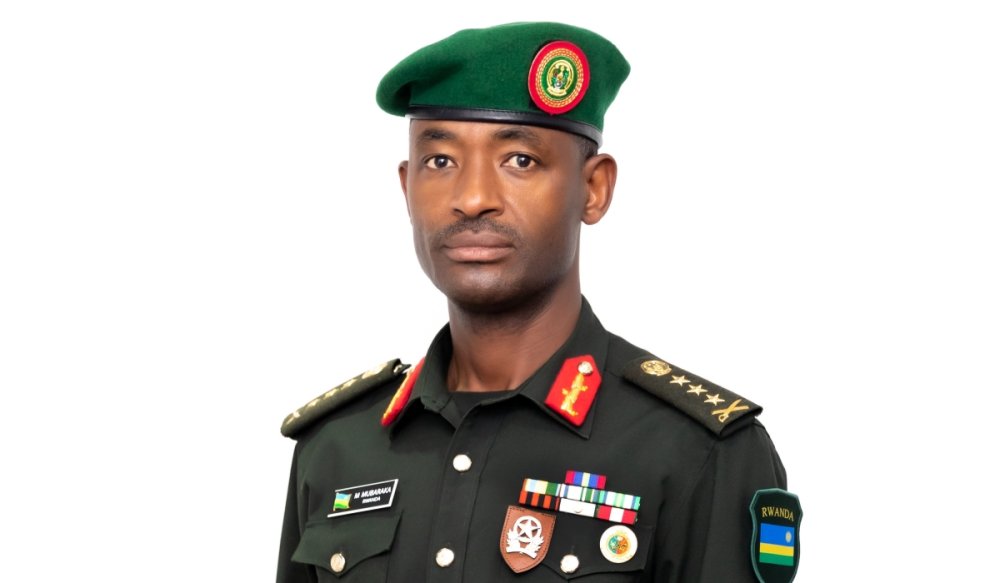
Gen Mubarakh Muganga, 56, took over as the RDF Chief of Defence Staff in June this year, succeeding Gen Jean Bosco Kazura, who had held the position since 2019. Prior to his role as CDS, Gen Mubarakh Muganga had served as the Army Chief of Staff from June 2021.
Gen Muganga holds a Bachelor’s Degree (A0) in Public Administration.
With more than 30 years in the military, Gen Mubarakh Muganga served as 4th Division Commander from 2008-2012, 3ed Division Commander from 2013-2015, 1st Division Commander from 2016-2021 (and the Armed Forces Shop Board of Directors Chairman).
Gen Muganga has undertaken a series of military courses to enhance his knowledge and skills. These include the Cadet Officer Course, which he completed in 1988-1989 in Long, Jinja, Uganda. Additionally, he participated in the Grade 3 Staff Course at CSC Nyakinama, Rwanda.
In 2005, Gen Muganga attended the Command and Staff Course at the Defence Services Command and Staff College in Zambia. His pursuit of academic excellence led him to engage in Defense and Strategic Studies at the National Defense University of PLA, China, in 2012.
Further expanding his expertise, he took the Managing Defence in a Democracy Course in 2006 at the Peace Support Training Centre, Karen, Kenya. Subsequently, in 2007, he participated in the International Peace Support Operations, Senior Mission Leaders Course, and the International Symposium Course, held at the Peace Support Training Centre and the National University of China, respectively.
Gen Muganga’s professional development is also evident in his completion of the African Strategy Course in 2008 at Nasser Higher Military Academy, High War College-Cairo, Egypt. In 2012, he further honed his leadership skills through the Leadership Science & Strategic Management course at Tsinghua University, China. Finally, in 2016, he attended the African Cooperation for Decision Maker Course in Egypt.
Gen Mubarakh Muganga is a recipient of different awards including; National Liberation Medal, Campaign against Genocide Medal, Foreign Campaign Medal, Presidential Inauguration Medal; Combat Action Ribbon, Combat Service Ribbon and Community Service Ribbon.
Ali emphasized Rwanda’s appeal as a destination for investors, citing the country’s conducive business environment and the assurance of safety for foreigners. He underscored the evolving attitude of Rwandans towards online transactions, noting a significant shift in perception over the past seven years.
Reflecting on the journey, Ali stated, “Rwanda is a place where business thrives; foreigners are secure, and the governance is commendable. Attitudes are transforming, especially concerning online commerce.”
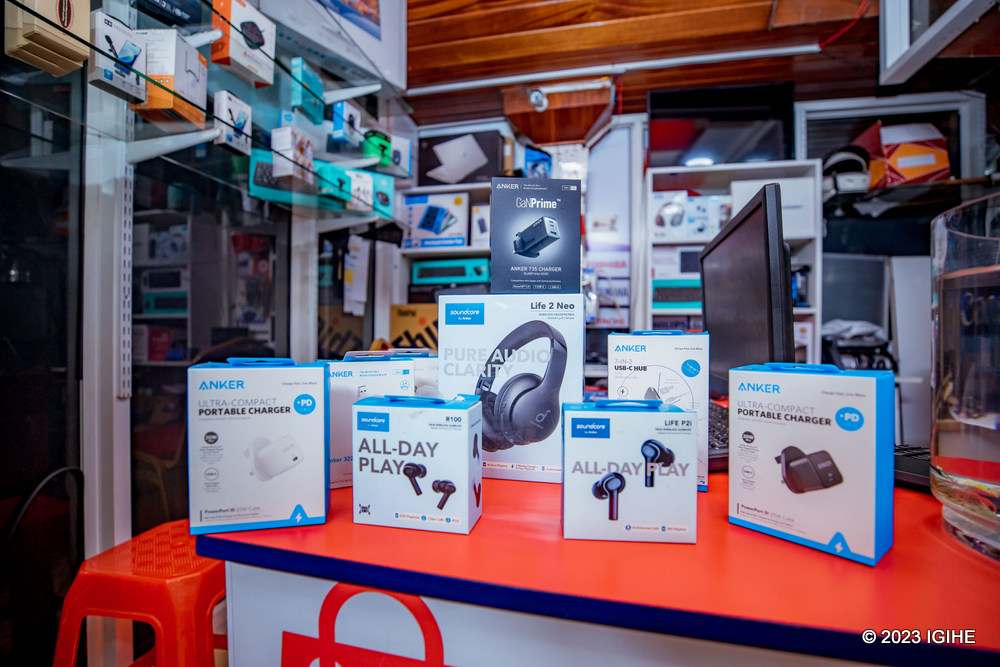
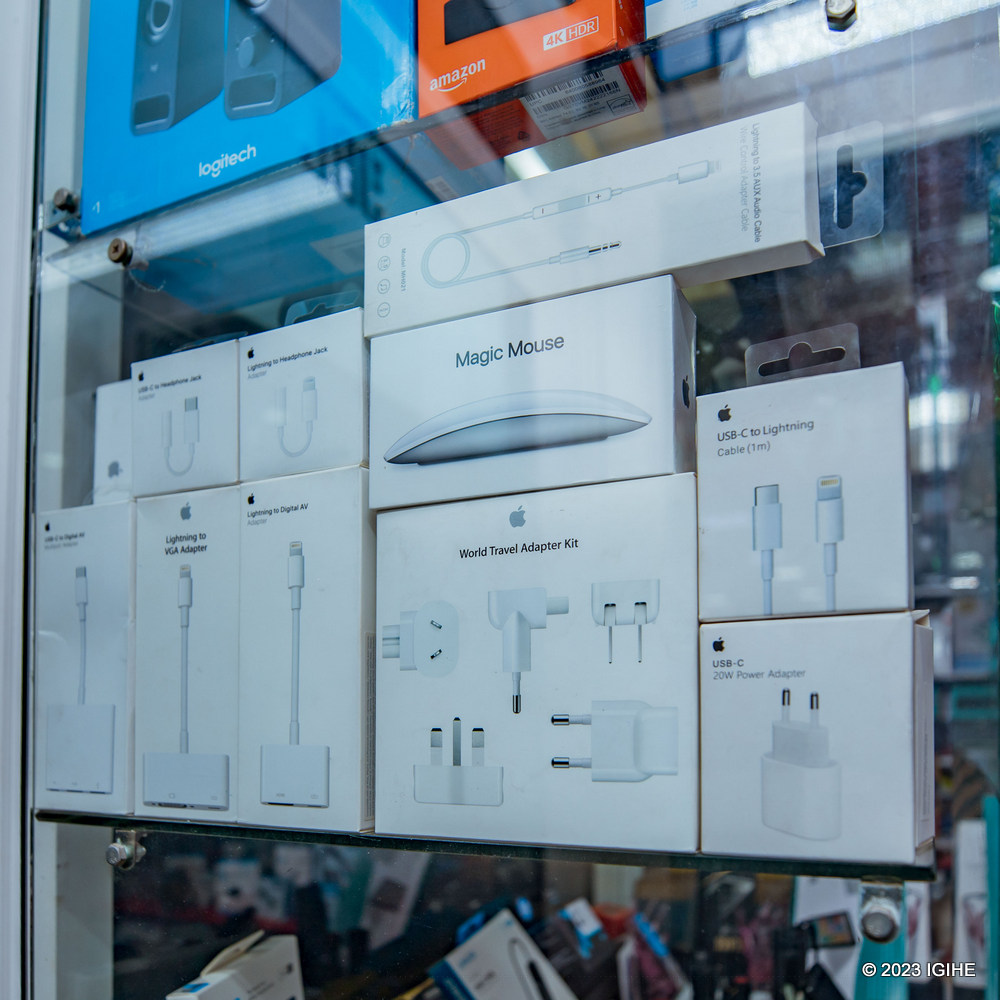
Roots Rwanda, the brainchild of Ali, operates as an online store sourcing products directly from manufacturers, including renowned brands like Apple. To explore their offerings, visit their website at www.rootsrwanda.rw
One distinguishing feature of Roots Rwanda’s service is its flexible payment options. In addition to the conventional cash on delivery and POS on delivery methods, the company provides a payment link for international customers or those without a physical card on hand. This flexibility aims to cater to a diverse customer base.
Furthermore, Roots Rwanda has ventured into the realm of mobile applications, offering a user-friendly experience on both iOS and Android platforms. The mobile app can be accessed via the following links:
{{Android: }} Roots Rwanda on Google Play (https://play.google.com/store/apps/details?id=com.rootsrawanda)
{{iOS:}} Roots Rwanda on the App Store (https://apps.apple.com/in/app/rootsrwanda/id1552627856)
Engaging with Roots Rwanda goes beyond transactions; the company actively connects with its audience through its Instagram page: Roots Rwanda Official (https://www.instagram.com/rootsrwandaofficial/).
Additionally, customers can reach out via WhatsApp or call using the contact numbers 0781308888 or 0792366666.
Roots Rwanda takes pride in its commitment to quality and authenticity. As a DBI Certified company in Rwanda, it exclusively sells original brand-new products with warranties, positioning itself as one of the most trusted online shopping destinations.
Operational insights from Mugeni Mireille, a Roots Rwanda employee, shed light on the company’s customer-centric approach. With approximately 90% of products stocked in their warehouse, Roots Rwanda ensures efficient order fulfillment. Customers can rest assured, making payments only upon receiving their products. The company also offers warranty replacements, underlining its dedication to customer satisfaction.
Roots Rwanda has garnered praise from satisfied customers, such as Niyigena Emmanuella from France, who lauded the platform’s efficiency in sending gifts to friends in Rwanda. Irakiza Karim, another early customer, highlighted the convenience of purchasing a laptop, with prompt doorstep delivery.
Whether accessed at the UTC building, opposite Simba Supermarket, or online at www.rootsrwanda.rw, Roots Rwanda stands as a testament to the evolving landscape of online shopping in Rwanda, offering convenience, authenticity, and customer-focused services.
These electric vehicles are anticipated to surpass the technological features of the current T 5 Hybrid.
The upcoming electric cars boast a remarkable energy efficiency, utilizing 14.5 kilowatts per 100 miles. At a cost of Rwf400 per kilowatt, the energy consumption for this distance translates to Rwf5800. In comparison, the T 5 Hybrid, a cutting-edge model combining electricity and gasoline, has garnered acclaim for its durability, earning a five-star rating. Notably, it uses only six to eight liters of fuel—half the consumption of conventional cars.
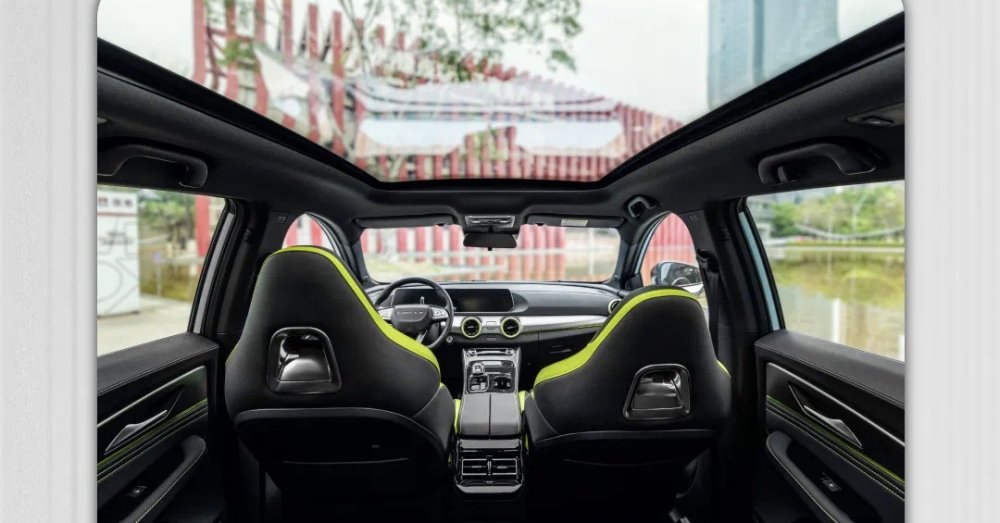
Equipped with advanced safety features, including a robust system for driver protection in accidents and a tire monitoring system displayed on a large screen, the T 5 Hybrid stands out. The vehicle incorporates innovative technology for self-inflating tires, reducing the hassles associated with flat tires. With eight cameras aiding visibility, the likelihood of collisions is minimized. Carcarbaba offers buyers a three-year warranty on the car and a five-year warranty on the battery, promising a replacement in case of battery failure during that period.
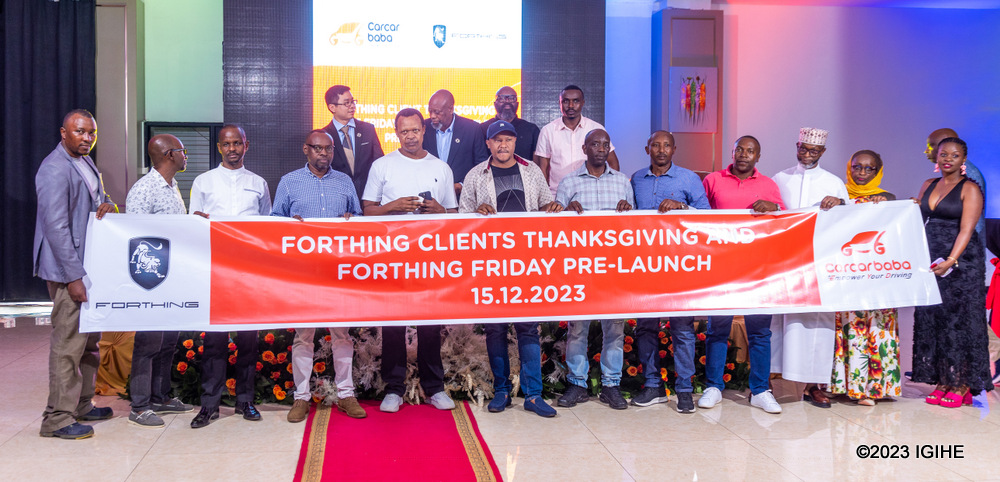
John Mugabo, the Manager of Carcarbaba Rwanda, emphasized the company’s growth, marked by the sale of 150 cars in this year. He projected an ambitious goal of selling 300 cars annually to Rwandans within the next two years, envisioning the establishment of a car assembly plant in Rwanda once this target is met.
Mugabo shared, “We are contemplating the establishment of a car assembly plant in Rwanda. While our plan is well underway, we will wait until we achieve the goal of selling 300 cars a year before launching it.”
Attributing the popularity of their cars to affordability and environmentally friendly features, Mugabo highlighted that Carcarbaba’s vehicles are not only cost-effective but also energy-efficient.
He emphasized that the T5 hybrid, priced at Rwf41 million, outperforms other models in terms of efficiency and cost, with a significant portion of the ordered cars already sold.
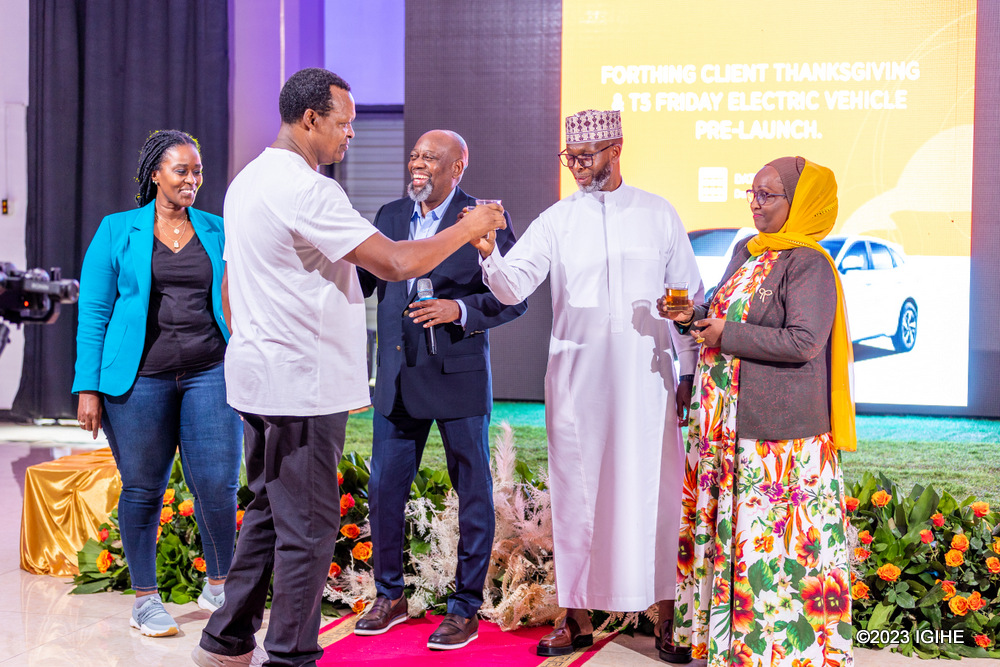
Kakoza Nkuriza Charles, known as KNC and a prominent customer of Carcarbaba, showcased the car’s uniqueness during the event.
KNC praised the vehicle’s adaptability to challenging terrains, emphasizing its fuel efficiency. He expressed a strong demand for more of these cars, particularly appreciating the technology that allows drivers to inflate punctured tires using a specially developed machine.
Carcarbaba, representing various car manufacturers in Rwanda, is led by China’s Dongfeng, a company that achieved remarkable sales in 2021, surpassing 2.77 million cars, including 2.25 million passenger cars and 522,561 trucks.
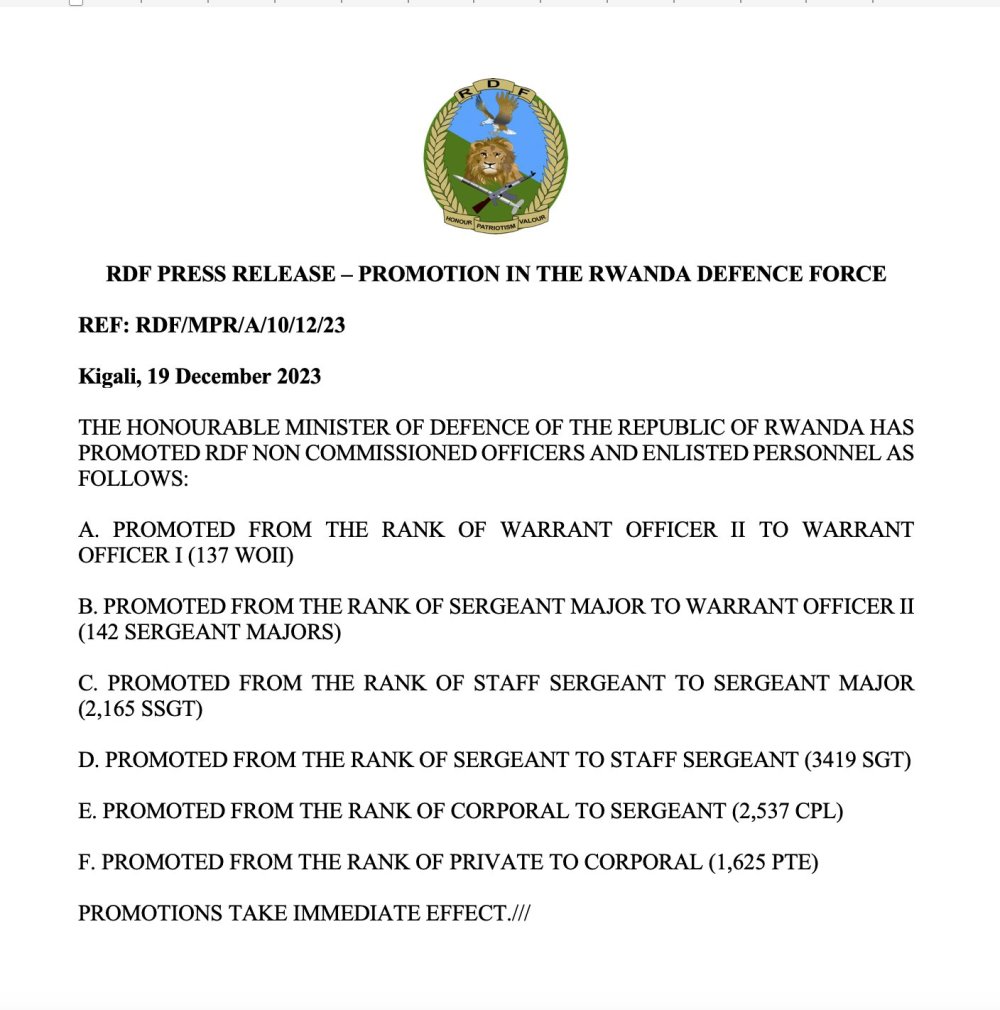
Of these promotions, 137 soldiers have been elevated from the rank of Warrant Officer II to Warrant Officer I, while 142 have been promoted from Sergeant Major to Warrant Officer II.
Additionally, a total of 2,165 soldiers have been promoted from Staff Sergeant to Sergeant Major, 3,419 from Sergeant to Staff Sergeant, 2,537 from Corporal to Sergeant, and 1,625 from Private to Corporal.
These promotions, effective immediately, were declared just one day after President Paul Kagame and the Commander-In-Chief of the RDF elevated more than 700 soldiers to junior officers, senior officers, and generals ranks.
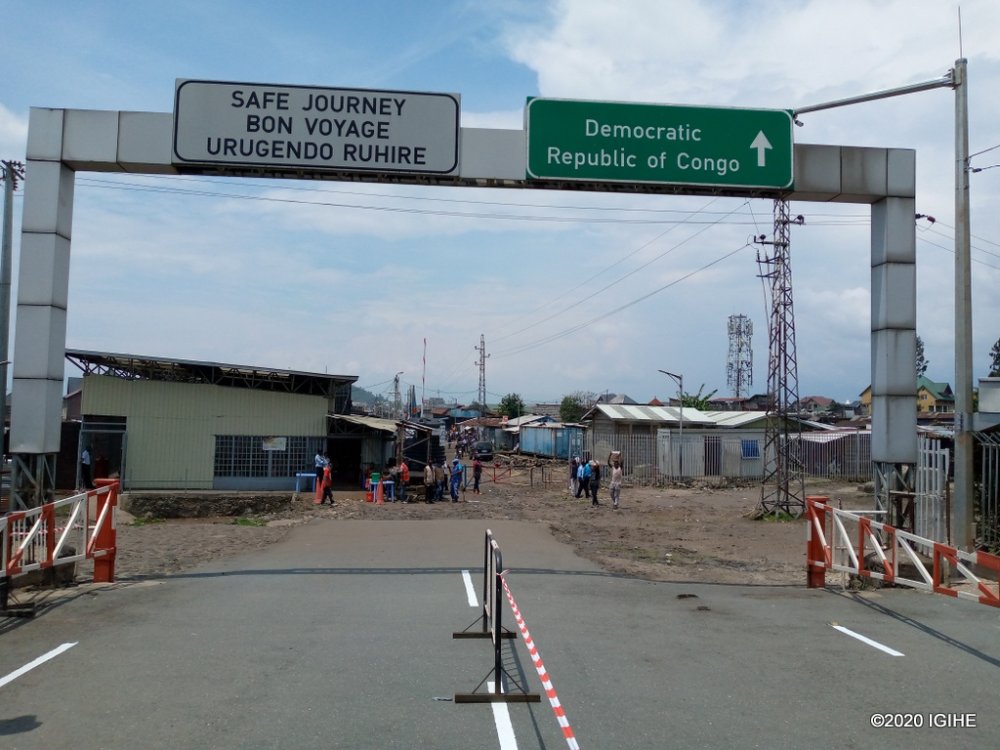
As per the official statement released, the borders will be shut from Tuesday, December 19th, to Wednesday, December 20th, 2023, at 23:59. Roland Kashwantale, the Director General of Migration, has informed airlines, maritime, and land-based transport companies that operations are prohibited during this period, with the exception of foreign entities using international airports.
The DRC shares borders with nine countries, including Rwanda, Burundi, Uganda, Zambia, Angola, South Sudan, Central African Republic, Congo Brazzaville, and Tanzania.
Notably, Rwanda and the DRC share key border points such as Grande Barrière, Petite Barrière, and Kabuhanga in the Rubavu District, as well as Rusizi I and Rusizi II in the Rusizi District.
It is noteworthy that this closure marks a departure from the previous practice of closing borders at 3 pm, a measure implemented in response to tensions between the two countries.