The recently amended General Criminal Law as of April 12, 2023, grants judges the authority to impose sentences smaller than those specified in the previous law of August 30, 2018. For instance, for crimes carrying a life sentence, judges can now reduce the sentence to 15 years, as opposed to the previous minimum of 25 years. Another change allows fines to be reduced to ¼ of the originally stipulated amount, and public interest service can be postponed.
Mr. Maurice Munyentwali, in a talk show dubbed ‘Umuzi w’Amategeko’ (the Root of Law) aired on IGIHE, clarified that the intention behind easing punishments is not to encourage criminal behavior. Rather, it aims to afford judges more flexibility in matching the severity of punishment with the committed crime, as the previous law constrained their discretion.
Noteworthy modifications include an increase in penalties for war crimes and a provision that imposes a life sentence for desertion, unless it is demonstrated that the perpetrator suffered trauma after childbirth while breastfeeding, with approval from a state-recognized doctor or psychologist.
In the case of trading illegal items in Rwanda, including substandard or harmful food, drinks, and medicines, individuals may face imprisonment ranging from three to five years and a fine ranging from one to three million Rwandan francs, or a combination of these penalties.
Furthermore, unlawfully keeping another person’s property may result in imprisonment for six months to two years and a fine ranging from Rwf50,000 to Rwf300,000 .
The RNP spokesperson, Assistant Commissioner of Police (ACP) Boniface Rutikanga called for the usual collaboration and information sharing to prevent anything that can affect the happiness of Rwandans.
“The festive season comes with merry celebrations, mass movement of people and increased traffic flow.
All these should follow the law, guidelines and in respect for the rights of other people,” ACP Rutikanga said.
He reminded drivers to follow traffic regulations and to avoid anything that can lead to road accidents and loss of lives.
“Drivers tend to over speed during this period to scramble for passengers, and sometimes resulting into fatal accidents.
Although the Police with continue its usual road safety, drivers are required to make safer driving or riding choices that guarantees their safety and that of other road users. Gerayo Amahoro should be their guiding principles,” the spokesperson emphasized.
He further cautioned against drunk-driving, using a phone or driving under stress, among others, which result into accidents.
Despite the usual readiness of the force and related operations, he said, the customary partnership with the public should continue to report anything that can affect their security and safer merrymaking.
“Festivities are characterized by happiness in families, Christmas shopping, movements of people joining their loved ones and other merrymaking.
They are enjoyed differently, depending on one’s belief; some go for prayers, others in musical shows and entertainment spots, while others celebrate from their homes. Each of these scenarios should be done in the best way that the person next is not affected.”
He also warned against serving alcoholic beverages to minors, which is punishable by law.
The spokesperson reminded those operating bars to follow the guidelines not to serve alcohol to a visible drunk person.
“Rwanda National Police reassures security and all those celebrating should feel safe. Police in partnership with other security organs is always there to make sure that all people are enjoying and celebrating safely.”
Resolution 2720 demands parties to the conflict “allow, facilitate and enable the immediate, safe and unhindered delivery of humanitarian assistance at scale directly to the Palestinian civilian population throughout the Gaza Strip, and in this regard calls for urgent steps to immediately allow safe, unhindered, and expanded humanitarian access and to create the conditions for a sustainable cessation of hostilities.”
The resolution demands that the parties to the conflict “allow and facilitate the use of all available routes to and throughout the entire Gaza Strip,” and requests the UN secretary-general to “appoint a senior humanitarian and reconstruction coordinator” with responsibility for facilitating, coordinating, monitoring, and verifying in Gaza, as appropriate, the humanitarian nature of all humanitarian relief consignments to Gaza provided through states which are not party to the conflict.
The text demands the “immediate and unconditional release of all hostages,” as well as ensuring humanitarian access to address medical needs of all hostages, and demands the provision of fuel to Gaza at levels that will meet requisite humanitarian needs.
The resolution reiterates its “unwavering commitment” to the vision of the “two-state solution” where two democratic states, Israel and Palestine, live side by side in peace within secure and recognized borders, consistent with international law and relevant UN resolutions, and in this regard stresses the importance of “unifying the Gaza Strip with the West Bank under the Palestinian Authority.”
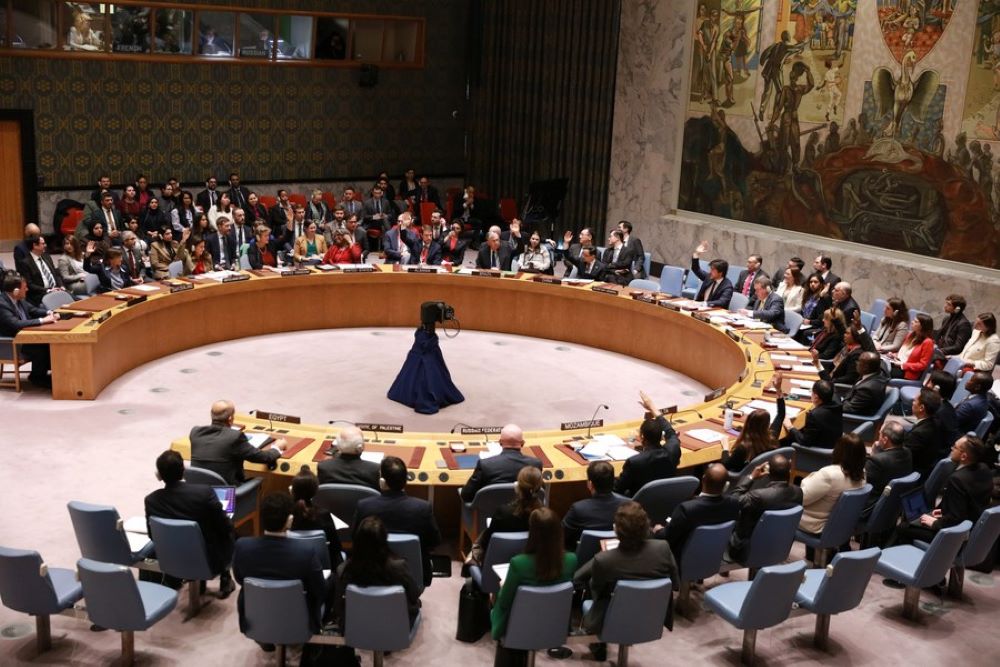
The proposed resolution, presented by the United Arab Emirates, garnered support from 13 council members, while the United States and Russia opted to abstain from the vote within the 15-member council.
The vote followed a U.S. veto of a Russian amendment that would have restored the call for a “suspension of hostilities.”
Speaking after the vote, Dai Bing, charge d’affaires of China’s permanent mission to the United Nations, told the Security Council that given the humanitarian catastrophe in Gaza, the resolution offers “at least a glimmer of hope” for more and faster delivery of aid to Gaza.
He added that “whether this glimmer of hope can be truly felt by the people of Gaza in the midst of this disaster also depends on whether the resolution can be effectively implemented.”
“We expect action to expand humanitarian assistance in Gaza, including by the full use of Karem Shalom and the opening of other crossing points,” the ambassador said, while urging Israel to stop its collective punishment of the population of Gaza and insisting that realization of a ceasefire remains the overriding goal.
Riyad Mansour, permanent observer of the Observer State of Palestine to the United Nations, said after the vote that the Security Council first met to address the crisis when hundreds of Palestinians had been killed by Israel.
“The council is now meeting after over 20,000 Palestinians have been killed, almost half of them children and 60,000 wounded, and two million Palestinians have been forcefully displaced,” he said.
Mansour underscored that the “inhumane and criminal Israeli siege” and the use of vital humanitarian “as a method of war” must end immediately.
“What we are dealing with is an attempt at the destruction of our people and their displacement forever from their land,” he said, adding “this is Israel’s goal, its true objective, no future for Palestinians in Palestine.”
Noting that “death is everywhere” in Gaza, Mansour said that the resolution is intended to alleviate the untold suffering and pain being borne by civilians. He welcomed the provision to establish a UN mechanism to accelerate the provision of humanitarian relief consignments and call for its rapid implementation.
“This resolution is a step in the right direction. It must be implemented and must be accompanied by massive pressure for an immediate ceasefire,” he said.
The latest vote on the resolution came after a four-day delay, driven by hopes of averting a U.S. veto.
Ultimately, after a week of tense negotiations, a revised text emerged that the United States had indicated it would not oppose as of Thursday night.
The original language, which called for an immediate ceasefire, was substituted with a call for “urgent steps” to allow humanitarian aid into Gaza and “create the conditions for a sustainable cessation of hostilities.”
On Dec. 8, the United States exercised its veto power to block a Security Council resolution that had called for a ceasefire in Gaza. The same resolution secured passage on the UN General Assembly floor with overwhelming support, garnering 153 votes in favor and only 10 against. In a separate instance, a resolution advocating for “humanitarian pauses” was approved by the Security Council in November, with the United States choosing to abstain from voting.
“I spoke with Mark Rutte to thank the Dutch government for its decision to start preparing the initial 18 F-16 jets for their delivery to Ukraine,” Zelensky said on social platform X, formerly known as Twitter.
Zelensky said that he also discussed with Rutte the developments in the Russia-Ukraine conflict, the situation in the Black Sea, and Ukraine’s current military needs, including artillery, drones, and air defense.
Zelensky and Rutte agreed to continue joint work on security guarantees for Kiev and discussed the next meeting on Ukraine’s Peace Formula.
After the conversation, Rutte wrote on Twitter that certain criteria must be met before F-16 delivery to Ukraine can take place, including requirements for personnel and infrastructure.
The Netherlands, along with Denmark, Norway and Belgium have pledged to transfer F-16 jets to Ukraine to help the country upgrade its combat aircraft fleet amid the conflict with Russia.
The F-16 training center for Ukrainian pilots opened in Romania last month.
The committee said in a statement that the review of the bid is scheduled for Dec. 26.
Turkish President Recep Tayyip Erdogan signed Sweden’s NATO accession protocol and submitted it to the parliament in October.
For ratification, the bill needs to be approved by the commission before being put to a full parliament vote.
After Russia launched its military operation in Ukraine in February 2022, Sweden and Finland submitted applications to join NATO in May.
Türkiye approved Finland’s membership to NATO in March but has slow-walked Sweden’s accession, demanding the Nordic country to further address Ankara’s security concerns.
The two new provinces, Cassai-Zambeze and Cubango, will be formed from the current provinces of Moxico and Cuando Cubango in eastern Angola. This will increase the number of provinces from 18 to 20.
According to the Facebook page of the Presidency of Angola, the proposal to change the administrative division received a positive evaluation from the Council of the Republic, guided by President Joao Lourenco, in the national capital of Luanda.
As per information from the official website of the Angolan government, the current provinces of Moxico and Cuando Cubango are the two largest in the country in terms of area.
Additionally, Angola will elevate 161 communes and urban districts to the category of municipalities in 2025, increasing the total number of municipalities from 164 to 325.
Adao de Almeida was quoted by local media as saying that the strategy to implement the new provinces and municipalities will prioritize the preparation of the general state budget, human resources, and infrastructure.
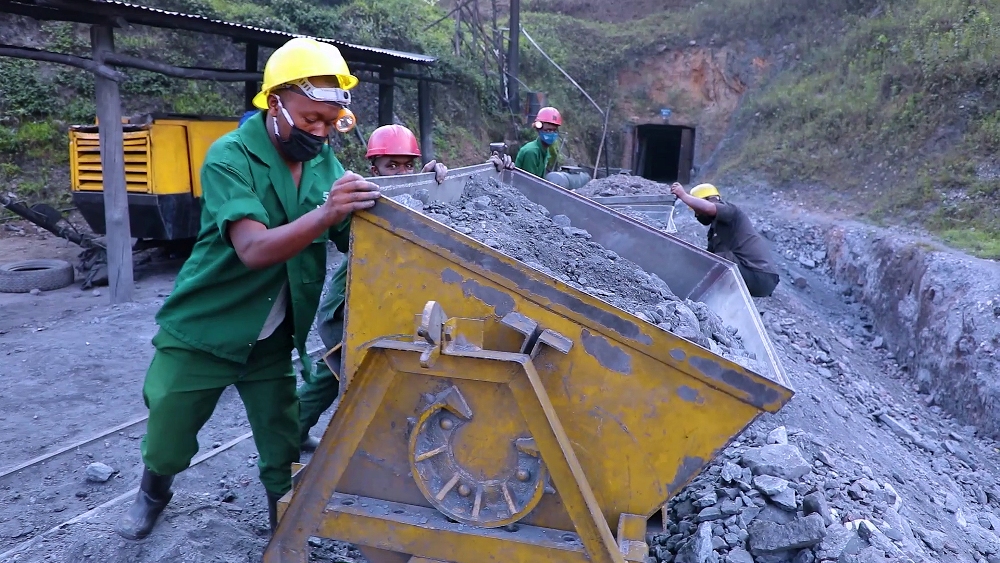
Rwanda possesses valuable minerals such as Cassiterite, Wolfram, Coltan, Gold, Lithium, and Gemstones (Amethyst, Sapphire, Beryl, and Tourmaline). In recent years, the revenue generated from these minerals fluctuated, with a significant increase observed in 2020 and 2021, reaching $733 million and $516 million, respectively.
This growth is attributed to research, the identification of new mining sites, and collaboration with investors to enhance production. Mechanization within mining companies has also contributed to the upswing. However, despite these positive developments, a substantial amount of production is still lost due to the export of unprocessed minerals.
According to Ambassador Yamina Karitanyi, the CEO of RMB, exporting minerals without value addition results in significant losses, including taxes and the loss of valuable precious stones. For instance, the export of unprocessed gold containing copper or crude Coltan with additional minerals like niobium leads to a 44% loss in revenue.
To address this issue, the Gasabo Gold Refinery was established in 2017 with an investment exceeding Rwf5 billion. Although it currently operates at 30% of its capacity, processing 28.8 tons per year, the facility aims to increase the value of gold before export.
Additionally, plans are underway to construct processing plants for Lithium and Wolfram, aligning with Rwanda’s vision to add value to all minerals before export. RMB is working with investors to achieve this goal, emphasizing the importance of building more processing plants.
Furthermore, there are plans to construct plants to manufacture needed equipment, including Dynamites used in the mining sector. Amb. Karitanyi highlighted the high cost of imported dynamites and proposed local production to reduce expenses.
Rwanda envisions becoming self-sufficient in producing materials essential for mining, with a long-term plan to establish a factory within the country.
Despite the current inability to achieve this, a system has been created to provide miners with affordable supplies.
In the pursuit of increasing mining production and reaching a revenue target of at least US$1 billion this year, RMB emphasizes the importance of enhancing the entire mineral value chain, adopting modern equipment, and ensuring adherence to legal regulations in the mining sector.
Ongoing surveys are being conducted to provide accurate information on the quantity of minerals in Rwanda, with previous estimates indicating a substantial value of approximately $154 billion, largely untapped since the colonial period.
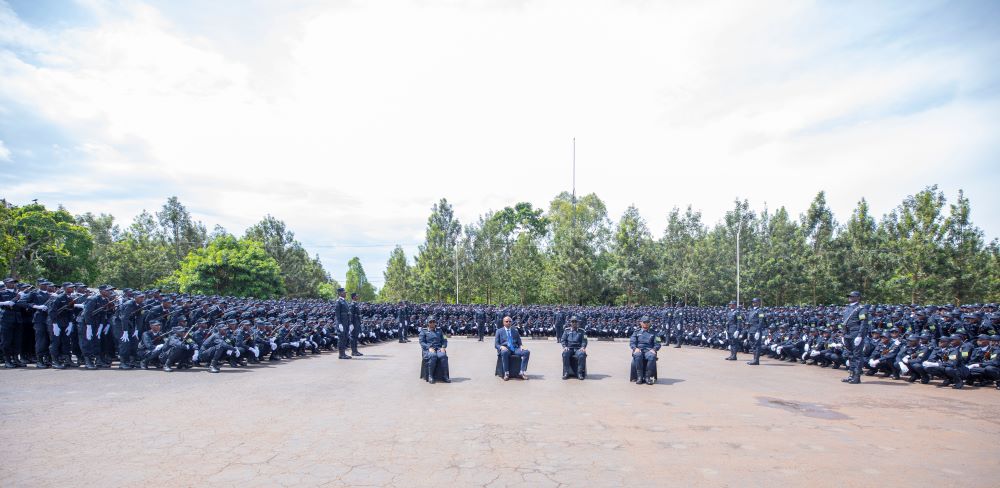
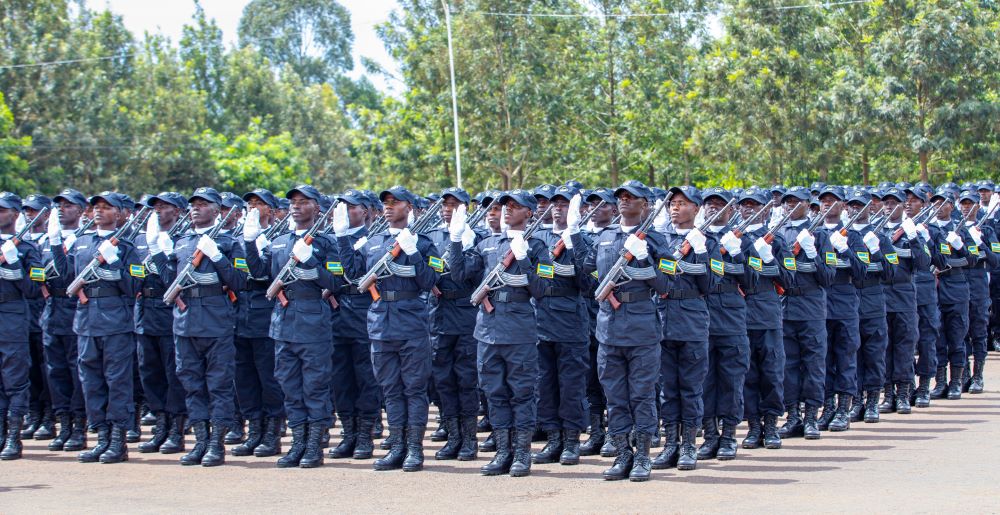
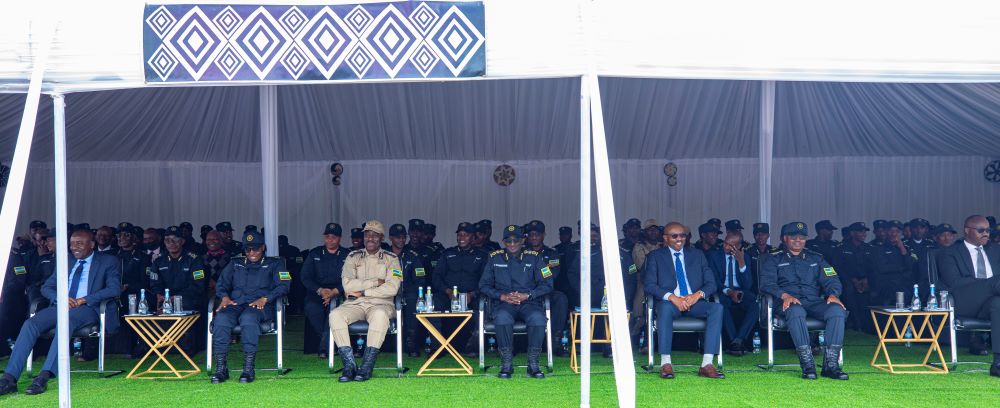
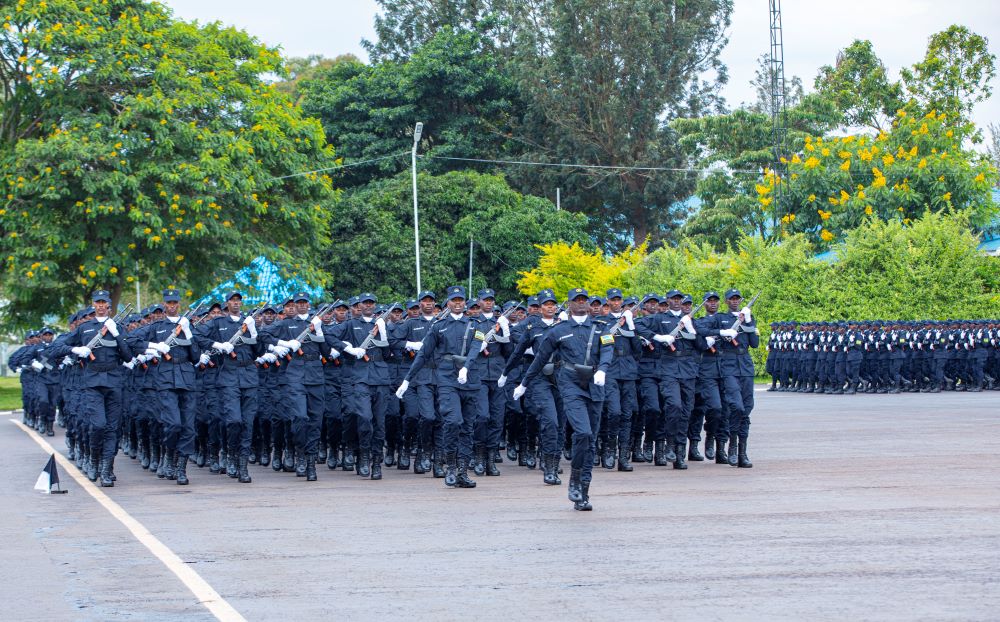
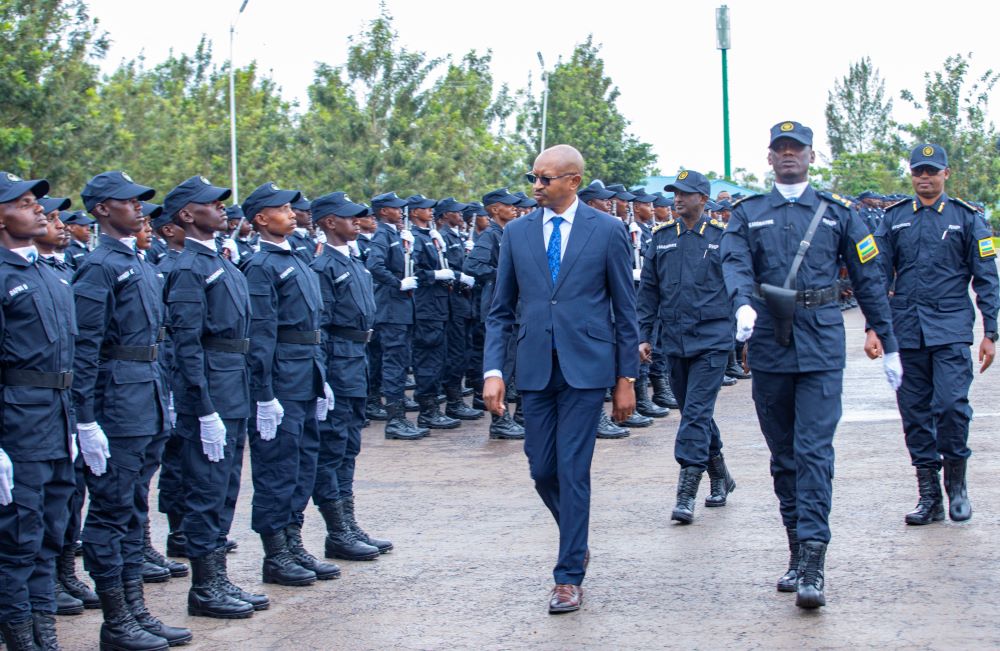
At least 1998 are Police officers while 74 are prison wardens. Some 1930 new officers were trained at the PTS while 142 others were trained at the National Police College (NPC) where they are enrolled in different bachelors programmes such as Law, Information Technology, Languages and Professional Police Studies (PPS).
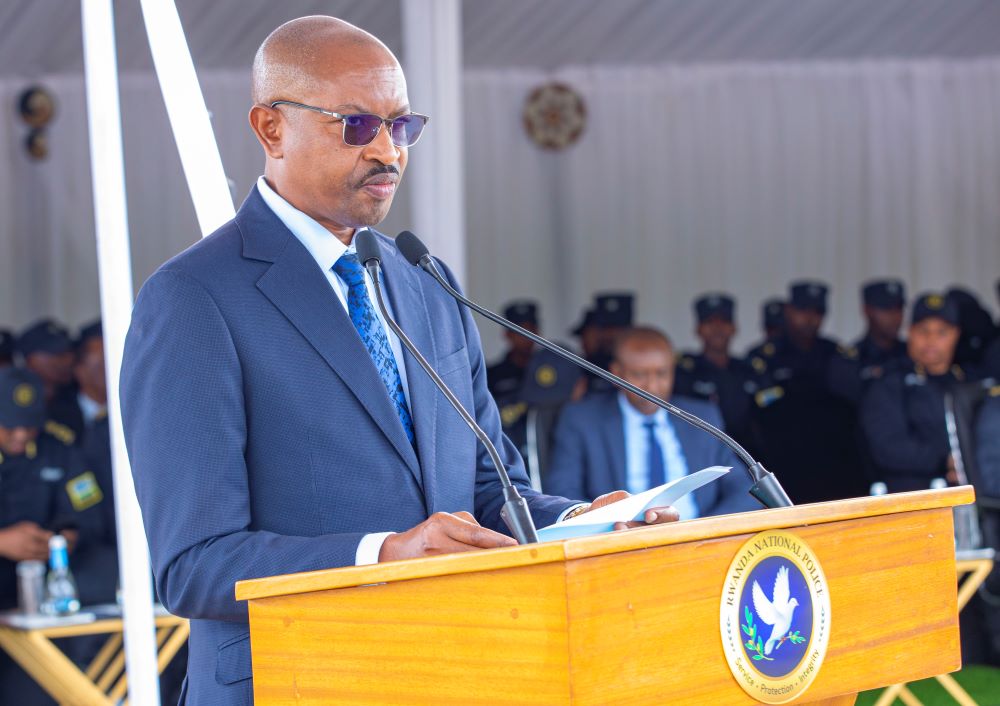
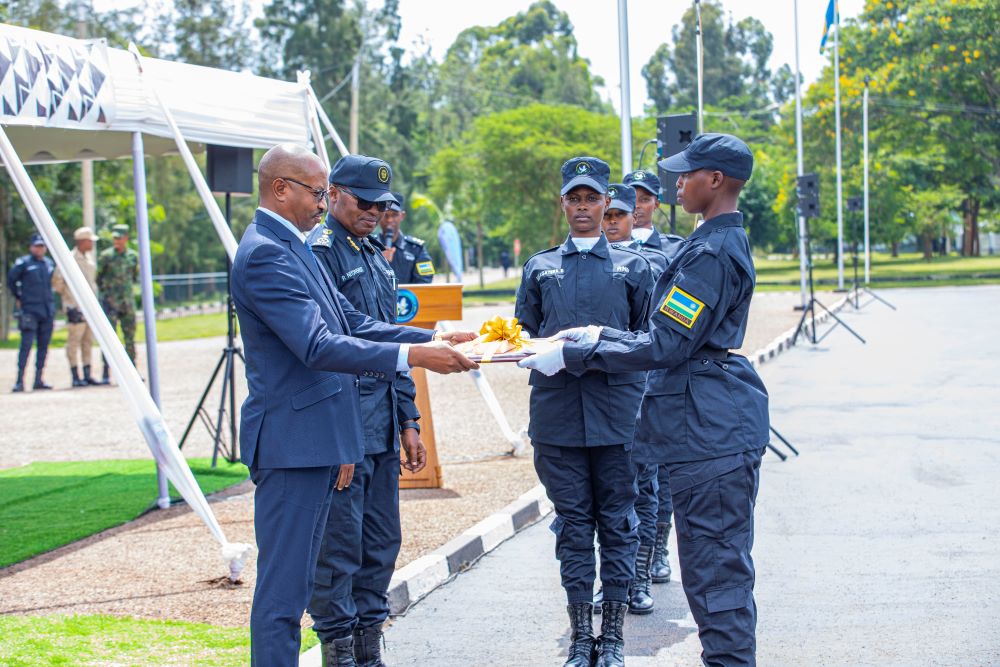
The Minister of Interior, Alfred Gasana, who presided over the pass-out, conferred on the new officers the rank of “Police Constable.”
He thanked them for making the right choice and applauded parents for encouraging their children to join the Police force to serve their country.
“Rwandans expect a lot from you, and it’s easy, because you are joining your elders, who have been performing the same duties.
“The training you have acquired is a great foundation to build on, so that you can do the work that awaits you,” Minister Gasana said.
He urged them to always be polite, professional, work as a team, not to be compromised in their duties and to serve as proud Rwandans.
The Minister commended the RNP for the good work, actively engaging in human security activities, all which keeps Rwandans safe, and also shares the fruits of security with friends of Rwanda in different parts of the world where they are deployed in security and peacekeeping operations.
Despite the good security in the country, the Minister observed that there are still crimes such as theft, assault often caused by excessive abuse of alcohol, trafficking and abuse of narcotic drugs, road accidents.
These, he added, will be effective addressed through strengthened collaboration between security organs and the citizenry.
Minister Gasana pointed out that criminals are constantly changing the ways and tactics of committing crimes, including the use of technology.
This requires the force to continuously build its capacity including recruitment, training, acquired modern equipment and working professionally, he said.
As we enter into the festive period, the Minister called for the usual community policing spirit to prevent anything that might affect celebrations and the well-being of the people.
He called on Rwandans and the young people in particular, to avoid alcoholism and other related behaviors; noise pollution and acts that can effect beliefs of others or cause insecurity.
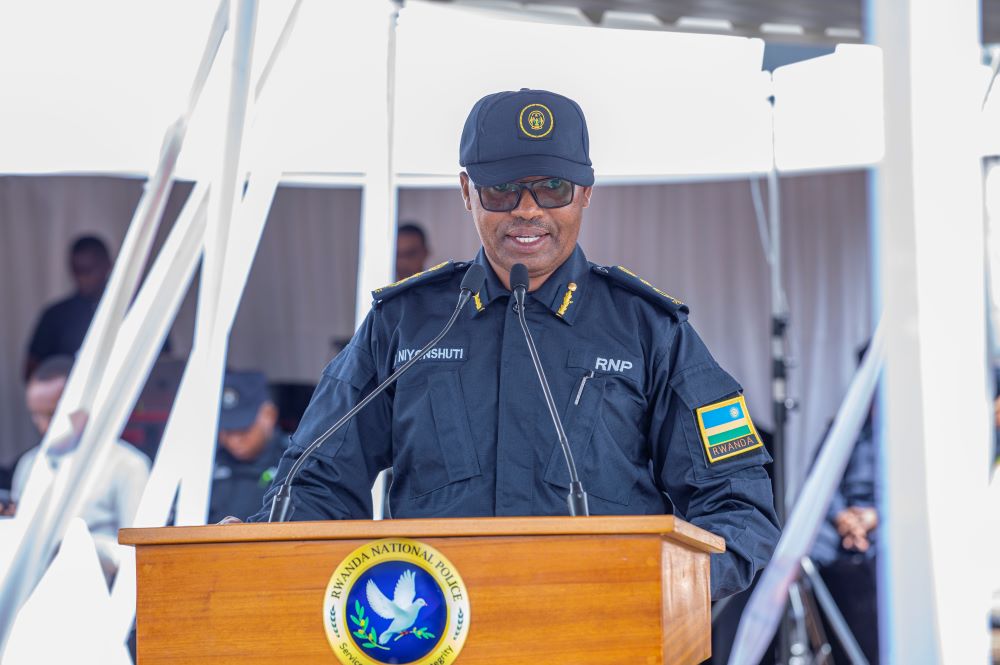
The Commandant of PTS, Commissioner of Police (CP) Robert Niyonshuti said the nine-month course equiped the officers with skills at arms, drills and duties, public order management, community policing, Police operations, martial arts, First Aid, and road safety, among others.
As part of the RNP community development activities, the Commandant said that the school paid health insurance premium for 1000 people, and planted over 230, 000 trees as part of the national environmental protection programme.
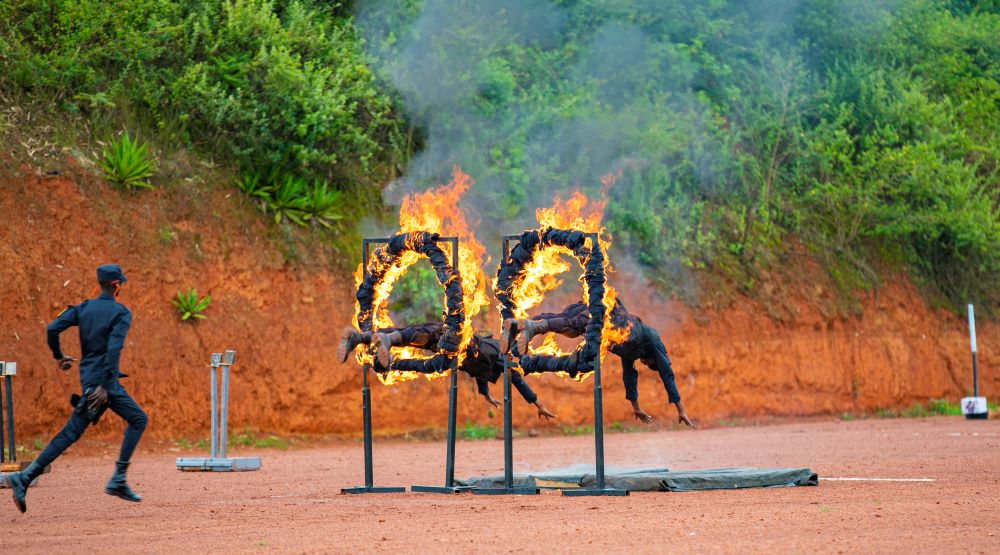
The pass-out was also characterized by demonstrations in martial arts, shooting and public order management.
An outpost of the Central African Armed Forces (FACA) in the village of Nzakoundou in Ngaoundaye, a sub-prefecture of Lim-pende was attacked early on Thursday by armed men, causing 22 deaths, including 21 civilians and one FACA member, besides several other injuries, according to Ernest Bonang, a Ngaoundaye official.
The village is located about 35 km from Ngaoundaye.
The death toll is expected to rise as several injuries were serious and there were missing persons.
During the national mourning period, the Guinean flag will be at half-mast throughout the country and in Guinea’s embassies and diplomatic representations abroad, Doumbouya said in an address on public television on Wednesday.
“In these moments of pain and sadness, my thoughts are with the bereaved families affected by these unbearable losses,” he said, assuring the injured and homeless of all his support and that of the people of Guinea.
At least 18 people were killed and more than 200 others were injured in a major fire that broke out Sunday night at a large fuel depot in the commune of Kaloum, the Guinean capital of Conakry, authorities said.