Duclert’s dedication to researching this topic becomes apparent as the thirtieth anniversary of the Genocide against the Tutsi approaches, as reported by Le Point on January 11, 2024. As the Director of the Center for Sociological and Political Studies Raymond-Aron and an expert in the Dreyfus Affair, Duclert shifted his focus to the Genocide against the Tutsi in 2016 after initially concentrating on the Armenian genocide.
Under Emmanuel Macron’s presidency in 2019, Duclert was appointed to lead the Commission for Research on French government’s official archives regarding Rwanda and the 1994 Genocide against the Tutsi. The commission’s 2021 report brought to light France’s heavy responsibility in the tragic events.
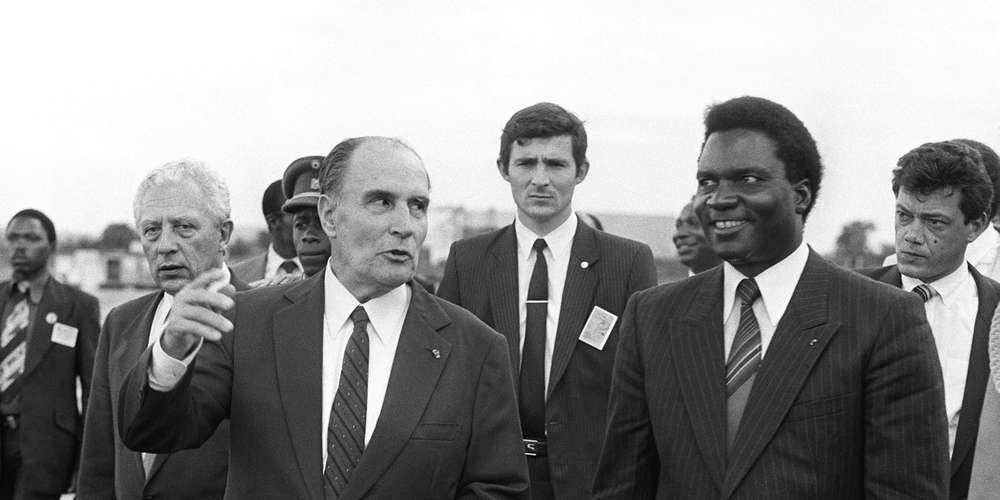
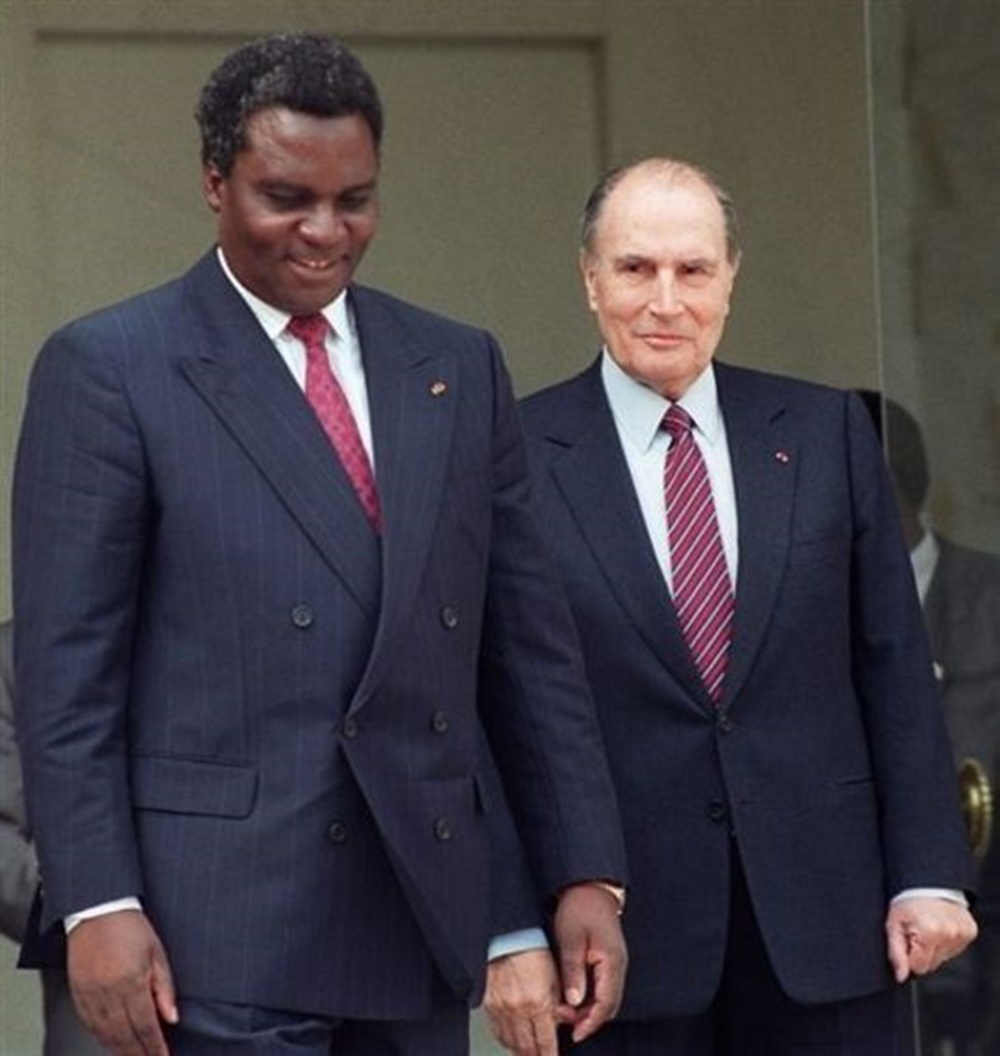
In his recent book, titled ‘Le grand scandale de la Ve République’ translated as “The Grand Scandal of the Fifth Republic,” Duclert exposes France’s distinct policy toward Rwanda. He identifies Mitterrand’s major mistake as a deliberate ignorance of the genocide’s planning and influence on the implicated government, citing purported valid reasons.
Duclert emphasizes that France’s presence in Rwanda since 1962 contradicts the perception of it being the ‘Switzerland of Africa.’ Instead, he reveals a country governed by a regime prone to discrimination, corruption, and violence.
One crucial aspect highlighted by Duclert is the cooperation between the French and Rwandan armies, which took various forms, intensifying between 1990 and 1993 with the deployment of French troops to Rwanda. He contends that France’s involvement extended beyond the military realm to the political arena, with between 10,000 and 30,000 Rwandan soldiers trained during this period.
Duclert argues that France was in a position to intervene before the climax of the genocide but failed to do so. He points out that fundamental questions were avoided, and the responsibility for non-recognition of the genocide lies with France.
Regarding the Rwandan Patriotic Front (RPF), Duclert outlines France’s perspective, criticizing Mitterrand’s regime for perceiving the RPF as an enemy despite warnings. Even when the genocide was identified early on, French operations Amaryllis and Turquoise generated confusion and conflicting orders rather than actively aiming to halt the genocide.
Duclert’s scrutiny extends to French actions in the Bisesero region, where contradictions arose in perceptions, further complicating the response to the genocide.
In June 2021, the Duclert Commission visited Ibuka and other organizations representing survivors of the Genocide against the Tutsi.
Duclert expressed his commitment to continue seeking the truth even after the end of his work, stating that his report provides a solid foundation for understanding the events.
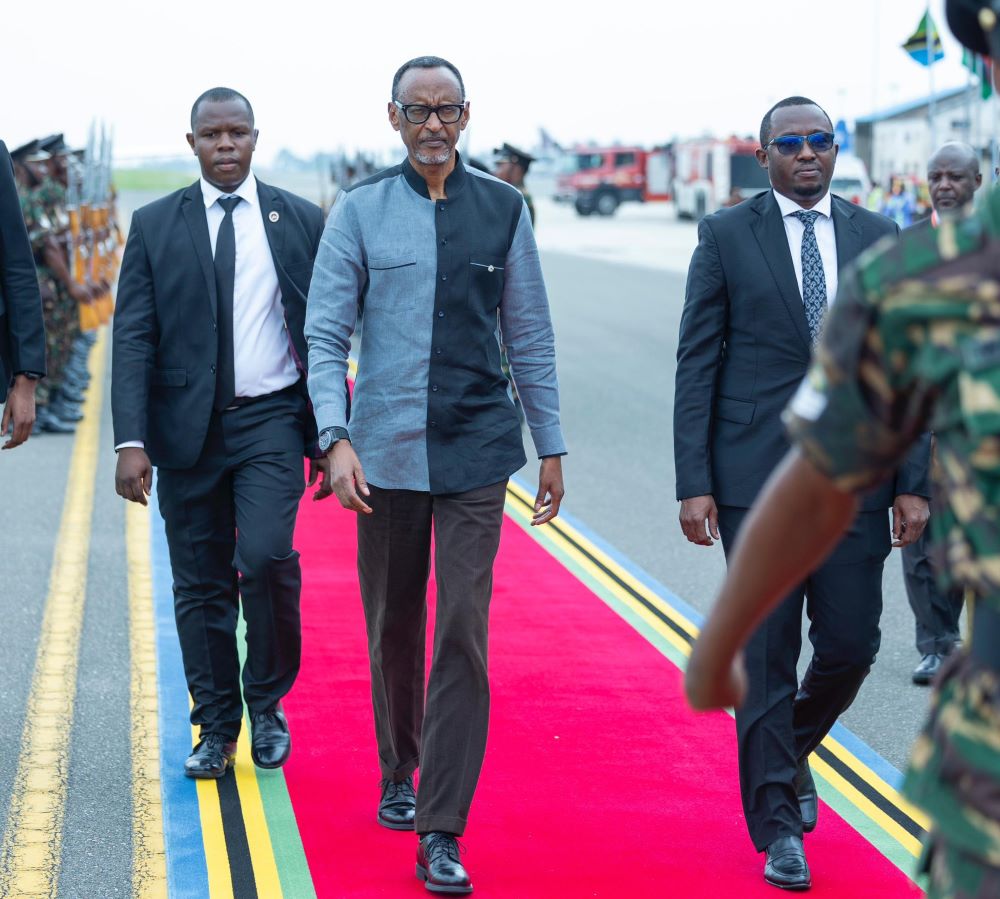
The Head of State arrived in Zanzibar on Friday, January 12, 2023, coinciding with the day of the celebratory event.
The ceremony is expected to witness the participation of notable figures, including the President of Zanzibar, Dr. Hussein Ali Mwinyi and Tanzanian President, Samia Suluhu Hassan.
Situated in the Indian Ocean, Zanzibar comprises a group of islands and is an integral part of Tanzania, boasting an area of 1,554 square kilometers and a population exceeding 800,000.
The historical Zanzibar Revolution occurred on January 12, 1964, leading to the overthrow of the Arab government by the majority of the black population on the island. Subsequently, Zanzibar and Tanganyika merged to form the United Republic of Tanzania.
The relationship between Rwanda and Tanzania encompasses various sectors, with a significant focus on trade. Rwandans frequently utilize the port of Dar es Salaam, and Rwandan products find their way to the Tanzanian market.
Cooperation extends beyond trade to areas such as technology, communication, the movement of people and goods, education, and the regulation of medicines, reflecting a robust partnership between Rwanda and Tanzania.
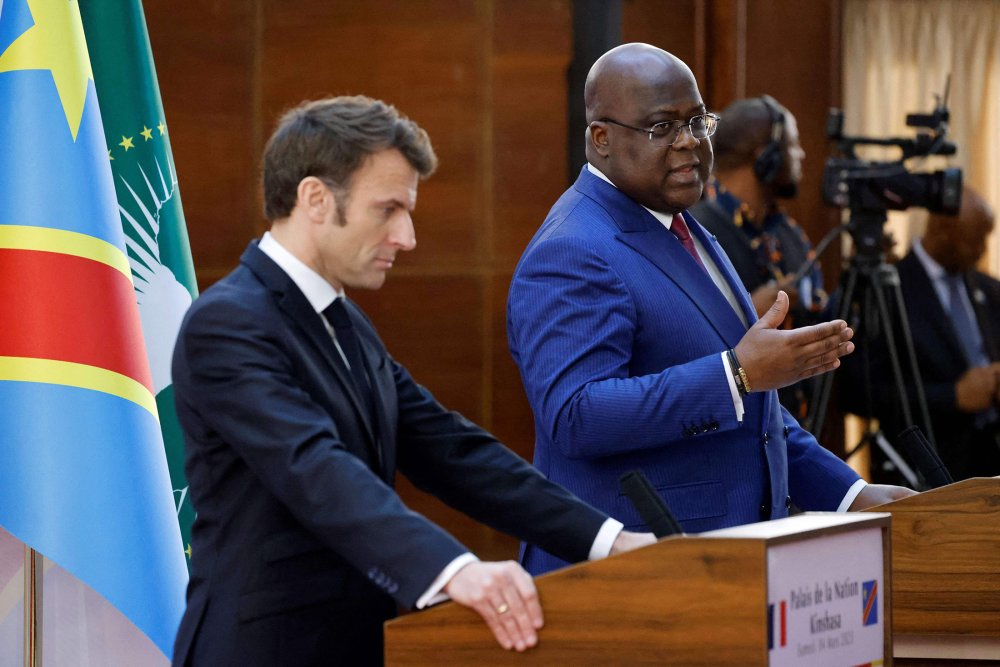
On January 11, 2024, the French government stressed the importance of Tshisekedi taking action to restore peace in the long-troubled eastern region of the DRC. The French government, on Thursday, declared its support for regional initiatives aimed at achieving a peaceful and sustainable resolution to the current crisis in the East of the Democratic Republic of Congo.
Simultaneously, the Belgian government, while acknowledging Tshisekedi’s victory, reminded him of his responsibility to actively contribute to resolving the conflict with M23, ultimately establishing lasting peace and security. Belgium urged the Congolese authorities to approach the matter with openness and a constructive mindset.
The joint appeal from France and Belgium comes at a time when Tshisekedi is seeking support to counter M23, an armed group operating in North Kivu. Despite M23 expressing a willingness for dialogue on multiple occasions, it has also cautioned that it will continue to defend itself if Tshisekedi pursues a military solution.
The Congolese government, however, has consistently favored military approaches over dialogue, leading to increased tensions and persistent instability in the region. This stance, despite international calls for negotiation and the pursuit of sustainable solutions, has drawn criticism from various global actors who argue that an inclusive, dialogue-oriented strategy is essential to address security and development challenges in eastern DRC comprehensively.
During the trial, Twagirayezu maintained his innocence, claiming to have been in the Democratic Republic of Congo (DRC) at the time of the genocide. However, the court, while acquitting him, took into consideration contradictory statements by witnesses accusing him of involvement in the genocide in the former Gisenyi Prefecture.
Following Thursday’s verdict, the NPPA officially expressed its dissatisfaction with the judgment and signaled its intention to appeal. Twagirayezu, aged 56, faced serious charges of participating in mass killings and the extermination of Tutsis in the former Commune Rwerere, now part of the Rubavu District in the Western Province.
Extradited from Denmark in December 2018, where he had been a naturalized citizen since 2004, Twagirayezu faced a potential life sentence, as requested by the prosecution.
Twagirayezu was accused of orchestrating attacks at the Catholic Parish of Busasamana, where over 1,000 out of more than 3,000 Tutsis who sought refuge there lost their lives.
Before the Genocide against the Tutsi, Twagirayezu, who headed the Dutabarane Foundation in Denmark, worked as a teacher at Majyambere Primary School in Busasamana.
Professor Ogechi Adeola holds a Doctorate in Business Administration and a Master of Business Administration from Alliance Manchester Business School, United Kingdom.
She earned a Bachelor of Law degree from the University of Nigeria and obtained a Barrister at Law certificate from the Nigerian Law School, after which she was called to the Nigerian bar.
Professor Adeola is the immediate past Head of Department of Operations, Marketing and Information Systems at the Lagos Business School (LBS), Pan-Atlantic University, Nigeria and the Academic Director of LBS Sales Academy. She previously held the position of Associate Dean of Business Administration at the University of the People, California, USA, where she currently serves as a Business Administration Advisory Board member.
She is an Independent Non-Executive Director at Cornerstone Insurance Plc, Nigeria, and she served as a member of the Board of Directors at the University of Kigali until her appointment as Deputy Vice Chancellor-Academic. She possesses over 28 years of relevant work experience in industry and academia. Before transitioning to academia, she had spent over a decade in various roles within Nigeria’s financial sector, starting her career at Citibank Nigeria.
Professor Adeola’s pursuit of professional excellence is evident in her completion of executive education programs at globally renowned institutions, including Harvard Business School, The Wharton School of the University of Pennsylvania, Stanford University’s Graduate School of Business, London Business School, and Cranfield School of Management.
She further enhanced her pedagogical skills through specialised training in case teaching and teaching innovation programs of Harvard Business Publishing Education, IESE Business School, Spain, the Global Business School Network (GBSN), and Teaching the Practice of Management joint program of the Association of African Business Schools and the Gordon Institute of Business Science, University of Pretoria, South Africa.
Her interdisciplinary research interests span marketing strategy, sustainability, tourism, and gender studies, with a particular focus on projecting the dynamics of African business concepts and practices. She has authored, co-authored, edited and co-edited over 120 academic and practitioner articles, books, conference papers, and business and marketing case studies.
Her scholarly contributions have been published in top-tier journals with ABS 3, 4, and 4* rankings from the Chartered Association of Business Schools (ABS), including the Industrial Marketing Management, Tourism Management, Annals of Tourism Research and Journal of International Business Studies. Her co-authored papers also won Best Paper Awards at international conferences in 2016-2019, consecutively, and the prestigious Emerald Literati Award for Outstanding Paper in 2022.
The January 2024 Alper-Doger Scientific Index ranks her as the No. 1 scientist in Nigeria for Marketing, No. 6 scientist for Business and Management in Nigeria, and among the top scholars in Africa for both fields. SciVal (Elsevier) also ranks her among the top 100 authors in Nigeria across all subject areas from 2020 to 2023.
Beyond research, Professor Adeola is renowned for her teaching and mentoring. She has led Marketing sessions on the full-time and Executive MBA programs, the Owner Managers Program, and customised and open enrollment seminars at Lagos Business School, since 2010.
Additionally, she has delivered marketing sessions for the Women Entrepreneurship & Leadership for Africa (WELA) program by the China Europe International Business School (CEIBS) in Lagos, the MSc program at the University of Ghana Business School, and the PhD program at the University of Professional Studies Accra (UPSA).
She has served as an External Moderator (MBA Program) at the University of Free State Business School, South Africa, and as an External Examiner (PhD program) at Kwame Nkrumah University of Science & Technology (KNUST), Ghana; Gordon Institute of Business Science (GIBS), South Africa; and Strathmore University, Kenya. She was a 2016 Visiting International Fellow at the Open University Business School, UK, a 2017 Paul R. Lawrence Fellow, USA, and serves as a Series Editor for the Palgrave Series on Marketing in Emerging Economies.
In consultancy, Professor Adeola has offered her expertise in strategic marketing and brand management, intra-regional advisory, and gender equity services to numerous organisations. As part of the Alpha Team at the Centre for Global Enterprise, USA, she provided virtual consultancy to international companies, including the London Taxi Company, UK (2015); Texas Capital Bank, USA (2018); and Dusit International (Dusit Thani), Thailand (2021).
She is a Consultant for Afreximbank, focusing on the African Sub-Sovereign Governments Network (AfSNET) Initiative, and also provided consulting services to the Gordon Institute of Business Science (GIBS) on the 2022 ‘Building Africa Report’ focused on women’s inclusion in the Cement, Concrete & Construction industry. In 2022, she served as the National Consultant for an International Labour Organization project promoting women’s economic empowerment in Nigeria. Additionally, she is the founder of the Digital Business Tutelage for Women Empowerment in Africa Initiative (DBTWEAi), a non-profit platform designed to enable young African women to unlock their potential.
Her contributions to women’s empowerment were recognised with the prestigious Female Achievers Recognition Award in March 2022, co-hosted by American Corner in Lagos and in June 2023, she was honored with The Peak Performing Woman of the Year 2023 Award in the Super Achievers category for Executive Education by The Peak Performer. Professor Adeola is a Fellow of both the Institute of Strategic Management, Nigeria and the National Institute of Marketing of Nigeria.
University of Kigali is still admitting new students for the January 2024 Intake! Apply now! Please call +250 788303386 /+250 789009221 /+ 250 788669642 or apply online via: mis.uok.ac.rw/apply
Thirty-four health zones and more than 2,200 hectares of cultivated land were impacted by the floods, said the WHO Regional Office for Africa based in Brazzaville, the Congolese capital, noting that it had allocated 100,000 U.S. dollars for the deployment of first responders.
According to the press release published in late December 2023 by Congolese Prime Minister Anatole Collinet Makosso, the number of affected people by the floods far exceeded those of past years.
According to experts cited by local media, the precipitation recorded is twice the usual average. The water level of the Oubangui River, a major tributary of the Congo River, reached a record-high water level in the 2022-2023 period.
The water level of the Congo River, which separates Brazzaville and Kinshasa, the capital of the neighboring Democratic Republic of the Congo (DRC), has reached 6.2 meters above sea level, just below the 1961 record of 6.26 meters, according to the DRC authorities cited by local media.
In the DRC, at least 300 people were killed in recent deadly floods caused by heavy rains, the DRC government said last Friday.
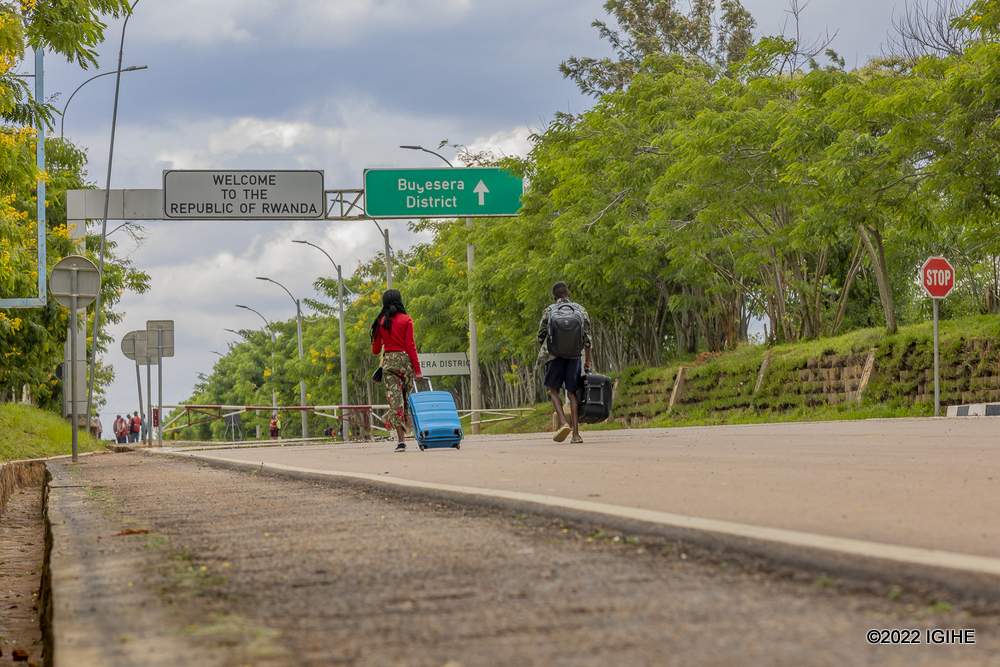
News about Burundi’s decision to close borders with Rwanda started circulating on the evening of Thursday 11th January 2023.
The Government of Rwanda has through a statement indicated that it learnt about the decision through the media and condemned the decision which hinders regional cooperation and integration.
“The Government of Rwanda has learned through media reports of the unilateral decision by the Government of Burundi to again close its borders with Rwanda,” reads part of the statement.
“This unfortunate decision will restrict the free movement of people and goods between the two countries, and violates the principles of regional cooperation and integration of the East African Community,” concludes the statement.
Rwanda-Burundi borders were last closed between 2015 and 2022.
Since then, both countries embarked on a new journey to normalize ties , even though Burundi insisted that it needs coup plot suspects who fled to Rwanda returned home.
However, Rwanda indicated that it would be against ratified international refugee convention.
Speaking at the opening of the Sober Club Competition at the University of Rwanda, a project aimed at supporting youth initiatives discouraging drug use, he disclosed that on November 11, 2023, a Friday, he spent over 14 hours hopping between bars and drinking with friends.
Formerly a parliamentarian, Dr. Mbonimana mentioned that he typically refrained from alcohol on working days but indulged on weekends, keeping it discreet. On the mentioned Friday, not being invited to a meeting of senior officials and deputies, he took the opportunity to drink excessively.
In the evening, around midnight, he and his friends contemplated heading home after a day of bar-hopping in Kigali.
Despite his friend’s suggestion to sleep off the alcohol where they were, Dr. Mbonimana, who possessed an service card, decided to drive home at 2 o’clock in the morning. This reckless decision could have proved fatal due to the difficult conditions of the dirt roads, even for a sober person.
His friend’s concerns materialized when Dr. Mbonimana’s car overturned, leaving him stranded in a trench. Some passing motorists ignored him, while others came to his aid and alerted the National Police. When the police arrived, he was disoriented and unable to use his service card, leading to an argument with the officers.
Subsequently, he was handcuffed, taken to Busanza Police Station, and later transferred to the Road Safety Department headquarters. ACP Gerard Mpayimana, the Commissioner for Traffic and Road Safety, informed him about a fine of Rwf150,000, but the investigation into the accident kept him detained for approximately eight hours. Videos and photos of the incident circulated on social media, prompting various leaders to comment on his behavior.
In response to the public scrutiny, Dr. Mbonimana decided to quit drinking. He wrote a resignation letter to fellow parliamentarians, which he submitted on November 14, 2023. Despite suggestions to embrace his last days of drinking, he pledged to President Kagame that he would never repeat such actions. Determined to turn his life around, he committed to sharing his story and highlighting the negative impact of alcohol.
Dr. Nzabonimana emphasized that his decision to quit drinking was solidified after a message addressed to him by President Kagame during ‘Unity Club Intwararumuri’ meeting, where he provided comfort and advice.
He now advocates for young people to avoid relying on alcohol as a solution to problems, urging them to focus on education, set goals, choose positive friendships, take care of their health, and work towards a better future.
The Democratic Alliance, in a statement on January 10, labeled the deployment as “reckless,” expressing concerns about the South African National Defence Force’s (SANDF) capability to effectively combat insurgency. The Democratic Alliance’s Kobus Marais, who is the Shadow Minister of Agriculture, Land Reform, and Rural Development, emphasized that the SANDF lacks the necessary capacity and prime mission equipment for anti-insurgency operations.
Marais called on President Cyril Ramaphosa to rescind the decision and recall the troops, citing potential risks to the lives of uniformed forces. The SADC mission, led by South Africa and supported by troops from Malawi and Tanzania, aims to counter the M23 rebels, whom the Congolese government views as a terrorist movement.
Military experts have raised concerns about the intervention brigade’s effectiveness, pointing out the need for proper air cover, transport, and air elements. The familiarity of the M23 rebels with the challenging terrain in eastern DR Congo poses additional risks. Marais noted that the withdrawal of the United Nations mission after more than 20 years in the region highlights the difficulties faced in hostile terrain.
Accusing President Ramaphosa of a political decision without considering the military’s technical capabilities, Marais criticized the African National Congress (ANC) for misplaced priorities. The SADC mission was initiated in May 2023 following accusations by President Felix Tshisekedi that the East African Community (EAC) mission was passive in addressing the rebels. The EAC mission withdrew its troops in December 2023, leading to criticism of Tshisekedi for undermining peaceful regional initiatives through political dialogue.
The announcement was made during a meeting on the program’s implementation in Karongi District on January 10, 2024. Officials and development partners from Karongi District attended the event.
This Cabinet-approved program, established in November 2022, seeks to expedite the process of lifting individuals out of poverty. The decision to revamp the system arose from concerns that the previous approach led some recipients to become dependent on continuous support, hindering their efforts to improve their lives independently.
Under this new program, citizens not only receive assistance but also actively engage in defining their role. They are required to sign a performance contract outlining how the aid will be efficiently utilized to propel them toward a brighter future.
One significant change is the collaboration between government institutions and non-governmental organizations. This partnership aims to prioritize vulnerable residents identified by the government, ensuring a more coordinated and impactful approach.
According to Nyinawagaga, the monitoring process has been strengthened to prevent the abuse of support. The government will assess factors such as children’s school attendance, potential conflicts at home, and help resolve disagreements within households.
Théophile Niragire, the Vice Mayor of Karongi District in charge of economic development, stated that while 36,000 households in the district require assistance, the program will initially focus on 9,184 households. The district engaged with these households individually to understand their specific needs for poverty alleviation.
Over 5,000 households expressed a desire for cattle, while more than 900 households identified their need for livestock. Additionally, 643 households highlighted their interest in vocational training, and 294 households specified a need for vocational training along with the related equipment.
Partnerships with non-profit organizations and faith-based organizations are being sought to support the initiative.
Nyinawagaga highlighted that nationally, 900,000 households require support, with the initial plan to assist 315,000 households. The program will be implemented across 30 districts in the country.
With an annual expenditure of Rwf67 billion on households’ poverty alleviation, Rwanda is set to invest over Rwf130 billion in two years to lift these households out of poverty. This figure excludes interest-free loans and guarantees provided to beneficiaries, as well as the contributions from development partners.