In a statement released on Saturday, February 3rd, Makolo responded to the Foundation’s comments, which had specifically criticized President Kagame’s speech at the National Prayer Breakfast held on February 1st in the United States. During his address, President Kagame emphasized the crucial role of unity, reconciliation, and forgiveness in the healing process of Rwanda’s wounds, serving as the foundation for the nation’s progress post-genocide.
The Human Rights Foundation, known for advocating for Paul Rusesabagina, convicted of terrorist acts linked to the MRCD/FLN group (a terrorist organization accused of carrying out attacks in the South and East of Rwanda), questioned President Kagame’s presence at the event, deeming it inappropriate.
In response, Yolande Makolo asserted that the Human Rights Foundation distorted historical realities and diminished Rwanda’s progress. She conveyed that the Foundation’s portrayal of the nation’s history and advancements over the past 30 years makes them appear as lacking insight. According to Makolo, they have little to offer in terms of lessons, and she encouraged them to attentively consider President Kagame’s speech for valuable insights.
Beyond their support for Rusesabagina, the Human Rights Foundation also extended an invitation to him, recently pardoned by President Kagame. Rusesabagina rejected the presidential pardon, asserting that his release was facilitated by the Foundation based in the United States. He claims to persist in pursuing his “evil plans,” posing a threat to the security of Rwanda.
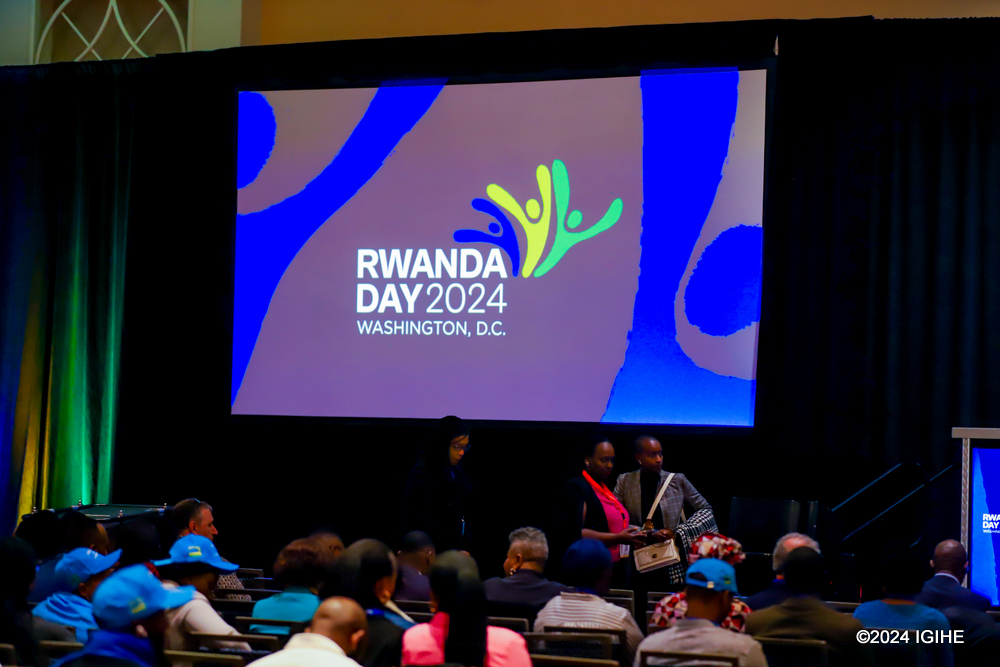
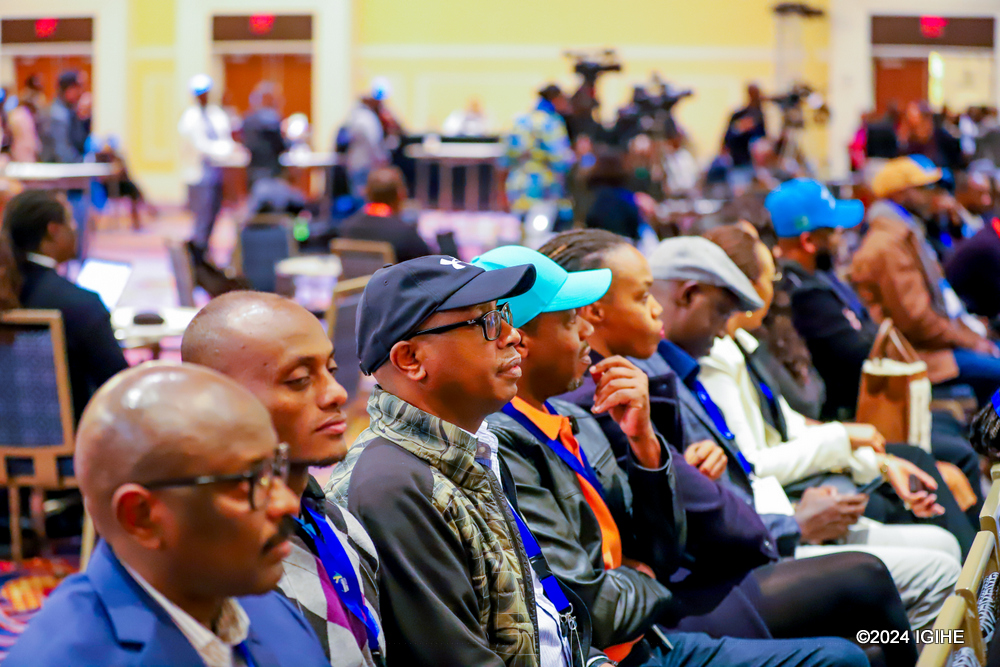
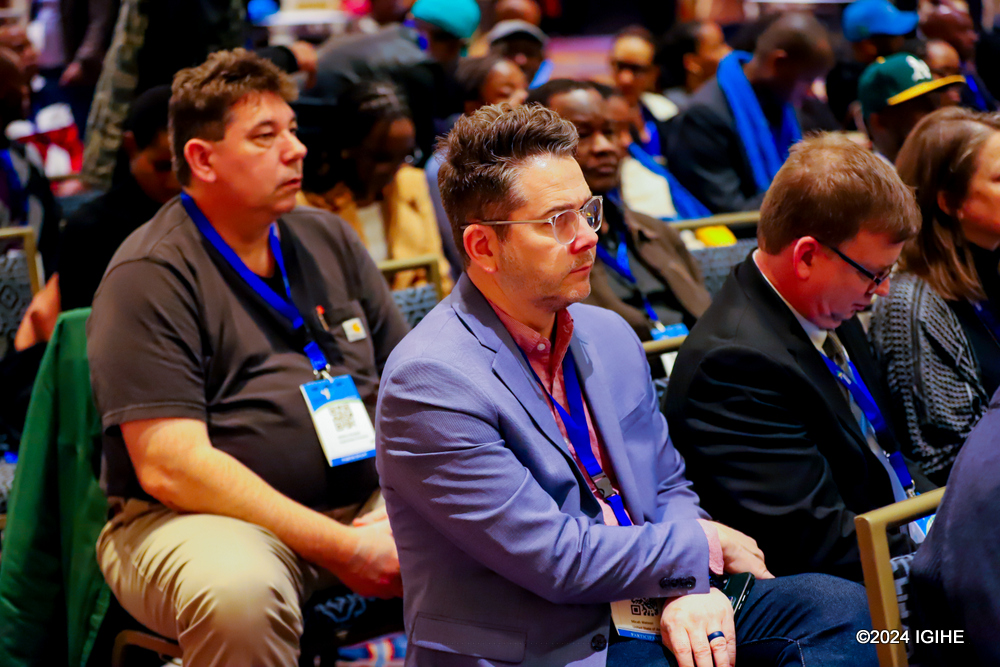
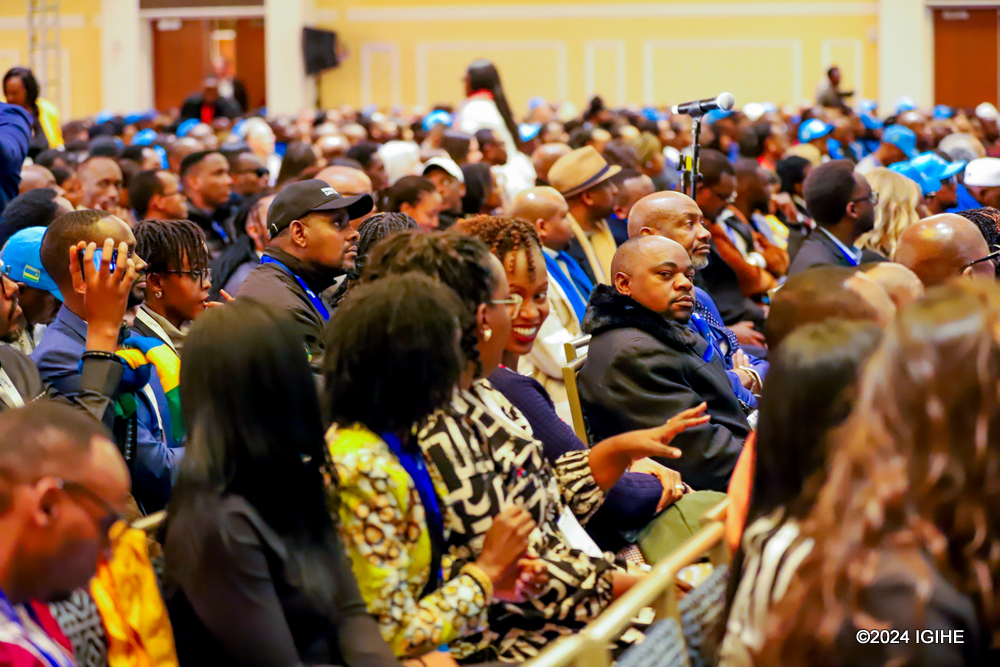
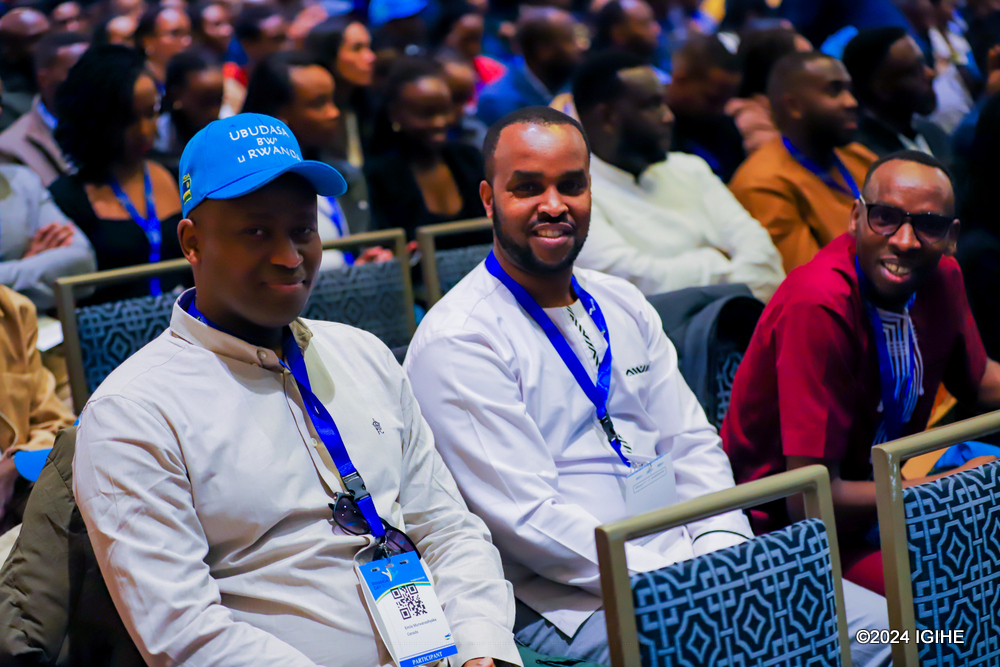
The conference marking the commencement of an extraordinary day for the country, drew participants from the United States, Europe, and various regions, including numerous Rwandans from around the world.
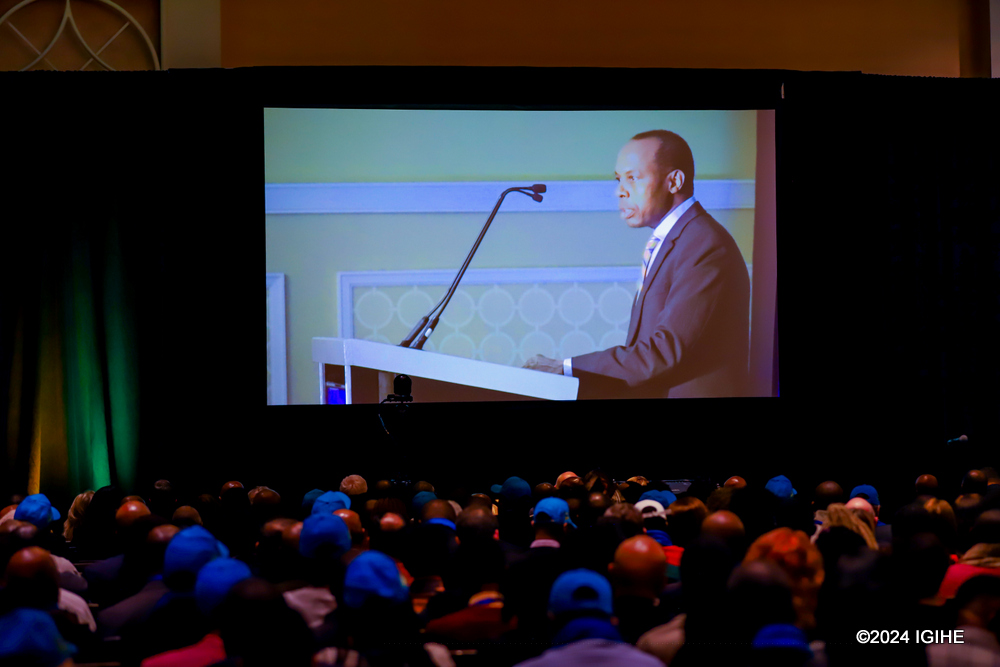
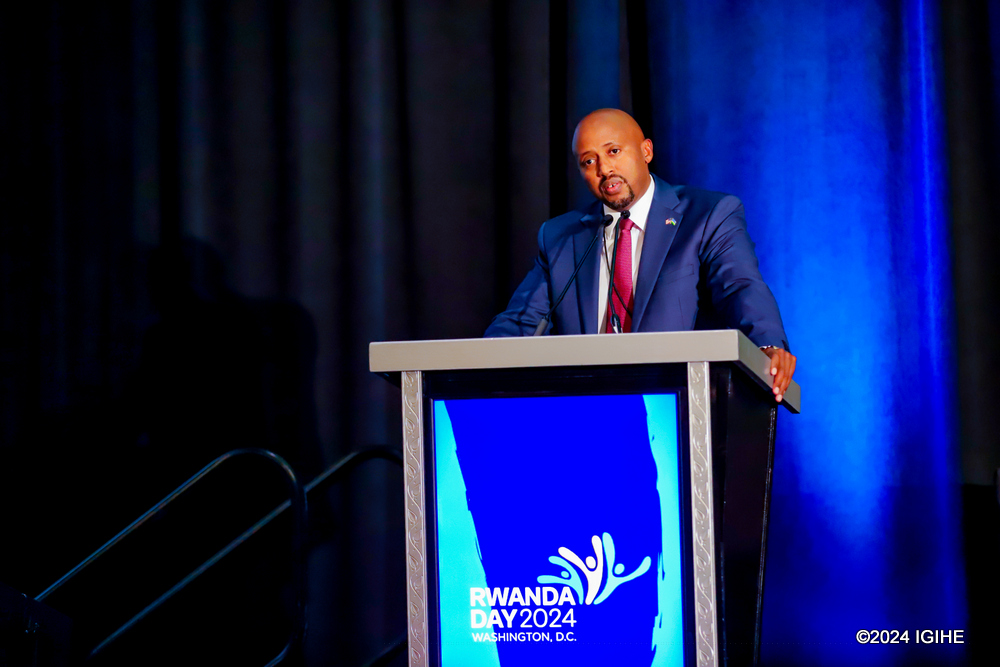
During his address, Francis Gatare, the CEO of RDB, acknowledged the impact of the Covid-19 pandemic on Rwanda’s economy, aligning it with the challenges faced by many nations. However, he underscored that through substantial government efforts, Rwanda’s economic activities have not only returned to pre-pandemic levels but have surpassed them.
In 2022, the economy witnessed an impressive growth of 8.2%, with the tourism sector rebounding by 51% compared to the pre-Covid-19 period. Gatare confidently affirmed that the future of Rwanda and its economy is promising.
Actively encouraging investors to participate in Rwanda’s economic landscape, he highlighted sectors like mining that present significant opportunities for growth.
The conference featured discussions on economic topics and capacity development, engaging participants from the Rwandan diaspora and those residing in the country.
Notable speakers included Charity Kabango, co-founder of Entrepreneurial Solutions Partners; Pascal Murasira, director of Norrsken Africa; Jeanne Mubiligi from PSF, and Shawn McCormick, director of Trinity Metals Rwanda.
The International Monetary Fund (IMF) foresees a 7.5% growth in the Rwandan economy in 2024, reinforcing the positive economic trajectory for the country.
It has been the first protest by Malta’s farming sector since 1982, which was organized by the Active Farmers Association and supported by other sectors in the food chain.
Protesting farmers attached banners to their tractors, reading “No farmer, eat synthetic,” “EU kills its own farmers” and “Green deal? No deal,” to show their support for peers in other European Union (EU) countries like Belgium, France and Germany.
Maltese farmer Pauline Pisani told Xinhua that “unless Maltese farmers stood up for their rights, no one will.”
Farmer Karmenu Vassallo said: “We’re here because we’re fed up with working for nothing. Our costs have increased but we’re forgotten. Without us, there will be no food on the table”.
Prime Minister Robert Abela showed up at the protest and talked with the farmers, but did not make any statement.
“We already finding it difficult to compete with larger European producers because they have much more land than us,” said Malcolm Borg from the Active Farmers Association.
He said that food producers from third countries do not have to adhere to as stringent regulations as those imposed by the EU, therefore they have lower production costs.
He also blamed the state aid rules imposed by the EU, which frequently hinder national governments from aiding farmers in need. Furthermore, he called for a relaxation of these rules, allowing governments greater flexibility to support and enhance the competitiveness of their agricultural sectors.
One of the suspects was on the list of major traffickers of the outlawed skin whitening oils and creams, according to Superintendent of Police (SP) Bonaventure Twizere Karekezi, the Police spokesperson for the Western region.
The second suspect, a woman, he added, had turned her house located in Mushoko Village, Rwaza Cell, in Rugerero Sector; into a store for the illegal cosmetics smuggled into Rwanda from the Democratic Republic of Congo (DRC) through porous borders.
“The anti-smuggling unit in Rubavu had credible information on the house in Rugerero used by identified major supplier of bleaching products, which he sneaks into the country from DRC.
The owner of the house was arrested at the scene and the ringleader was traced and taken into custody shortly after,” SP Karekezi said.
He added that these are some of the operations aimed at breaking chains of supply.
Last year in June, a man suspected of being part of the group that traffics the outlawed skin bleaching cosmetics was also arrested in City of Kigali, Nyarugenge District.
Article 266 of the law determining offenses and penalties in general, states that any person, who produces, sells, or prescribes harmful products; cosmetics or body hygiene substance or any other products derived from plants, commits an offence.
Upon conviction, he/she is liable to imprisonment for a term of not less than one year and not more than two years and a fine of not less than Rwf3 million and not more than Rwf5 million or one of these penalties.
FAO said that global cereal production was seen on track to an all-time high of over 2.83 billion tonnes last year, up 1.2 percent from 2022. The increases were attributed to strong growing conditions, expanded land use, and improved efficiency.
This allows the global cereal stocks ratio to climb to 31.1 percent for the 2023-24 growing season, up from 30.9 percent for 2022-23, providing downward pressure on prices.
FAO’s overall food price index was down one percent in January compared to December and it was 10.4 percent below levels from the same period of last year.
Prices for grains and cereals, the largest component in the index, declined by 2.2 percent.
Meanwhile, meat prices were 1.4 percent lower than the level in December thanks to strong output from major producers. Sugar prices rose 0.8 percent amid worries that heavy rain in Brazil, the world’s leading sugar producer, could cut production.
Despite higher demands from Asian markets, FAO said dairy prices remained almost unchanged compared to the previous month thanks to higher output elsewhere.
Prices for vegetable oils rose by a modest 0.1 percent, but remained 12.8 percent below levels from a year earlier, said FAO.
Upon reaching the hotel, the person in charge greeted him, inquiring about his food preference. Nsengiyumva shared his choice, emphasizing the need for prompt service due to pre-existing plans. To his dismay, more than an hour passed with no sign of his meal. Frustrated, he sought out the attendant, who admitted, “I’m sorry, I forgot; let me see how I can expedite it.”
Disheartened, Nsengiyumva left the hotel, the disappointment lingering as he proceeded with his plans. This unfavorable encounter triggered reflections on past instances of subpar service in various establishments, prompting him to scrutinize the service industry further.
Experiencing similar letdowns in subsequent days, he felt compelled to address the issue. Thus, ‘Supra Events’ was born, a company aimed at enhancing services in tourism and hospitality. Nsengiyumva expressed his motivation, “After witnessing recurrent service lapses and hearing complaints about the waiting department in Rwanda, it became apparent that there’s a knowledge and training gap.”
Concerned about the insufficient delivery of services, he decided to contribute by bolstering the skills of those working in the sector. He explained, “Supra Events’ is geared towards inspection, training, capacity building, and other initiatives to elevate service standards.”
Observing the contrast in service provision abroad, Nsengiyumva highlighted the discrepancy. “In Europe, one person can efficiently serve 30 people, whereas in Rwanda, ten workers often struggle to do the same.”
Conducting a thorough examination of service delivery in the hospitality sector, ‘Supra Events’ identified gaps in knowledge among the workforce. Nsengiyumva emphasized the center’s commitment to training, stating, “We want to bridge the gap by imparting knowledge from experts in the field, fostering professionalism among the youth.”
Recognizing the economic significance of the tourism and hospitality sector, Nsengiyumva cited statistics from Rwanda Development (RDB), where the country earned $247 million in the first half of 2023.
Additionally, Rwanda Convention Bureau (RCB) reported a $91 million revenue boost in 2023, attributable to international conferences and events hosted by Rwanda.
The delegation led by Alhaji Sarjoh Bah, director of conflict management within the Political Affairs, Peace and Security Department of the AU Commission, said the AU will ensure there is no security vacuum in Somalia as preparations begin for Phase Three drawdown of a further 4,000 troops by June.
“We remain committed to ensuring that, number one, we stick to the timelines of the drawdown. Of course, we have had two extensions in the last two drawdowns,” Bah said in a statement issued in Mogadishu, the capital of Somalia. “And so, except in situations of force majeure, we remain determined and resolute in ensuring that by Dec. 31, 2024, we will have completed the drawdown.”
The focus of the AU team’s engagements was to outline the modalities for a seamless transition of security responsibilities from the AU Mission in Somalia (ATMIS) to Somali security forces and post-ATMIS security arrangements.
During the meetings, the delegation reflected on the lessons learned from both Phase One and Two drawdowns, the forthcoming Phase Three in June, which requires a further drawdown of 4,000 troops, and the subsequent phase after ATMIS ends on Dec. 31.
Bah stated that the AU will be flexible and consider any challenges that may arise for a seamless transition and to ensure there are no security gaps. “We want to ensure that the configuration, whatever it looks like, whatever its posture, whatever its mandate, is informed by a very comprehensive security assessment that focuses on the threats and other variables,” Bah said.
The AU delegation also engaged with UN officials, international partners, ambassadors from ATMIS Troop Contributing Countries, and representatives from civil society.
The delegation will submit a report to the African Union Peace and Security Council and the UN Security Council. The document will outline the parameters for a post-ATMIS security configuration in January 2025.
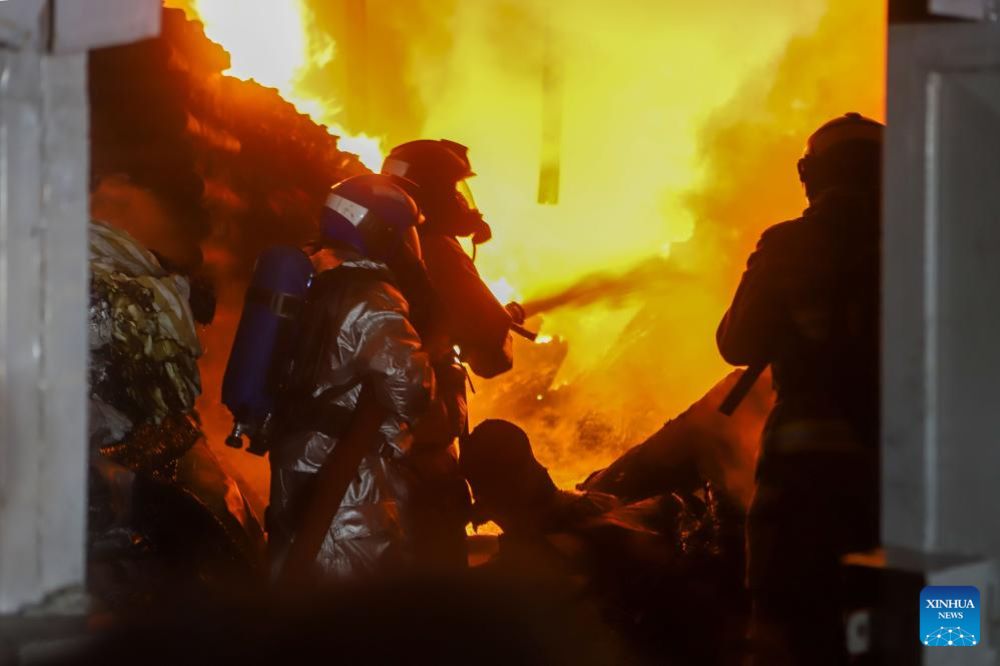
Government Spokesman Isaac Mwaura said the fire, which started at around 11:30 p.m. Thursday local time (2030 GMT), was caused by a truck loaded with gas cylinders that exploded, igniting a huge fireball that spread to a warehouse and a neighborhood nearby.
A flying gas cylinder hit a garments and textiles warehouse, burning it down, Mwaura said in a statement.
He said the fire also damaged several vehicles and commercial properties, including many small and medium-sized businesses, in the Embakasi neighborhood.
“Sadly, residential houses in the neighborhood also caught fire, with a good number of residents still inside as it was late at night,” Mwaura added.
Embakasi police commander Wesley Kimeto confirmed the death toll, saying one adult and a minor had died in the hospital, and that the number of casualties may increase later.
A video posted on social media showed a huge fire raging close to blocks of flats.
The Kenya Red Cross Society said a total of 271 individuals have been successfully evacuated to several health facilities in Nairobi.
The latest incident came after a fire broke out on Tuesday night near a local stadium in downtown Nairobi, injuring four people.
HWPL is conducting ‘Peace Educator Training’ for educators from various countries to cultivate peace citizens with qualities such as gratitude, consideration, sacrifice, forgiveness, and respect based on love. This program aims to train experts in peace education who can instill the values of peace in individuals.
This peace teacher training, starting on January 26, 2024, is scheduled to run until February 24, 2024, with five sessions held at 9 p.m. Korean time over approximately five weeks. Conducted through online ZOOM meetings, the training involves around 50 participants, including professors, principals, teachers, researchers, organization leaders, and students from primary, secondary, and tertiary institutions in Cameroon, Rwanda, Burkina Faso, Sudan, South Sudan, Burundi, Myanmar, Vietnam, India and Laos.
HWPL Peace Education is an education that fosters citizens of peace with the value and spirit of peace. values and spirits based on peace. There is no place under heaven and earth that is more beautiful and better to live in than the Earth.
However, many people are suffering from war, famine, a gap between the rich and the poor, environmental pollution, and more all over the world due to human greed and selfishness. Such reality that humanity faces still remains a problem to be solved and is being passed on to the future generations.
Therefore, HWPL proposed peace education as a way to leave a beautiful world of peace as a legacy for the future generations and is implementing the “Peace Educator Training Program” worldwide, targeting educators, to equip them with the knowledge of 12 curricula regarding the meaning, values, and qualifications of peace, enabling them to teach these concepts to students.
Training a rising generation as citizens of peace is more important than anything else to transform the future of the global community into a better world. In order for such future leaders to be born, education must be provided to students at school on topics such as peaceful attitudes, values, and experiences so that they can practice them in society.
The HWPL Peace Education curriculum is divided into two parts: Part 1 and Part 2. Just as everything in nature possesses unique forms and characteristics, their harmonious integration creates a beautiful landscape. Understanding the principles of ‘respect for diversity and harmony’ and ‘cooperation and coexistence,’ inherent in nature, can lead the human world to progress within the realms of harmony and beauty.
In Part 1, participants learn about the process where individuals with diverse backgrounds, including different races, religions, cultures, nationalities, ideologies, and appearances, come together to form orderly and harmonious relationships. They also delve into the true meaning and value of peace.
In Part 2, students learn practical ways to live harmoniously not only with their families and neighbors but also with people from all around the world and local communities. This part focuses on nurturing the right values and character needed to peacefully coexist with others as peace citizens, resolving all issues amicably.
Currently, there are 1,633 HWPL Peace Educators in 65 countries, actively implementing peace education and spreading a culture of peace worldwide.
Gafurafura Claver, aged 47, was pulled out alive on Thursday, having been trapped under a steep rock for 28 hours. Unfortunately, his friend, Niyonsaba Eric, aged 43, was retrieved lifeless on the same day the incident happened.
Dr. Nahayo Sylvère, the Mayor of Kamonyi District, confirmed to IGIHE that one of the victims was rescued alive.
He urged residents to avoid engaging in illegal mining and quarrying, particularly during the rainy season, emphasizing the importance of preventing the loss of life.