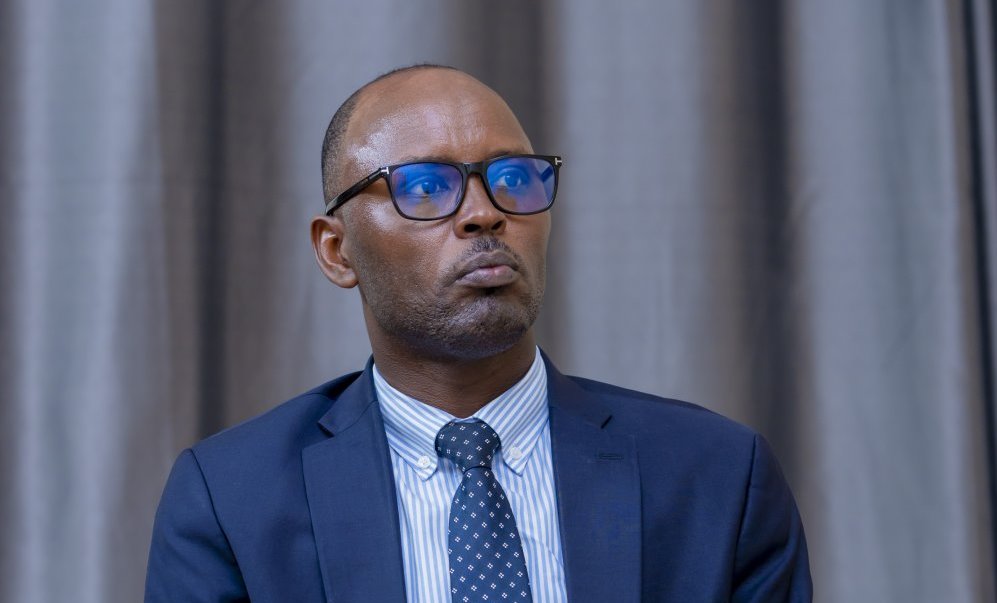
Considering these new tactics, Dr. Murangira warned Rwandans to be cautious.
He revealed, “They use many tricks. The first trick they use is to promise something extraordinary to the person they want to take. These people use names that are not theirs. There are those taken by their friends. […] So trusting your friend not to harm you is a trap that some fall into.”
He further elaborated on the false narratives created by traffickers, “There are also those trafficked by their friends, convincing them how well they know them. […] saying ‘I am in Dubai’, and they show you pictures saying that you too can find a good job there, showing you pictures of themselves in nice houses and cars, making you think that is the life they live.”
RIB reports indicate that a significant number of Rwandans trafficked abroad are deceived via social media, with the majority being young people who are less likely to critically analyze the risks.
Victims are promised lucrative jobs or scholarships, and women are often enticed with promises of marriage to foreigners. Upon arrival, they face dire situations including forced organ harvesting, sexual exploitation, forced labor, and begging.
Dr. Murangira stressed, “We cannot say it is only uneducated people; even well-educated people are trafficked. People in established households are lured away from their homes with promises of good jobs that can support their families.”
He also highlighted the tactics used to isolate victims, “Then there is another thing they tell them: ‘Make sure you do not consult anyone. If you consult, you’ll see that things will not work out for you.’ What they want is for you not to consult anyone so that someone does not tell you, ‘But have you thought about it? Are you not being trafficked?’”
Dr. Murangira further discussed how traffickers erode trust between victims and state authorities, “Another thing I want to tell people, these people who go to traffic them promising them jobs, they instill distrust between the person being trafficked and the state or security agencies. The distrust I’m talking about is when they tell you, ‘Make sure you don’t talk to those people lest they deny you opportunities tomorrow.’’
RIB’s advice is to be wary of too-good-to-be-true opportunities, especially when documentation is rushed or advice is discouraged.
In the last five years, RIB reported that 314 Rwandans were trafficked abroad, with 82 being rescued.
Women make up 77% of the victims, predominantly young people between 18 to 30 years old.
Most trafficking victims are sent to Arab countries, which is also where many repatriated Rwandans are rescued from.
The commemoration, held annually on April 7th, is a time for reflection and remembrance, attended by leaders from around the globe and friends of Rwanda. It serves as a somber reminder of the past atrocities and a commitment to preventing such horrors from occurring again.
In an interview with the South African Broadcasting Corporation (SABC), Mbeki highlighted the significance of this event not only as a personal commitment but also as a critical lesson for all Africans.
He acknowledged the invitation from President Paul Kagame and expressed his belief in the importance of commemorating the Genocide against the Tutsi.
Thabo Mbeki emphasized the lessons it offers for preventing similar tragedies and the importance of unity and preservation of life to avoid conflicts leading to genocide.
His acknowledgment of South Africa’s past failures to intervene or prevent the 1994 Genocide against the Tutsi and his critique of certain policies reflect his outspoken nature on various issues.
His leadership, spanning from 1999 to 2008, and his tenure as Vice President under Nelson Mandela, have been marked by moments of controversy, including his stance on the conflict in the Democratic Republic of Congo (DRC) and interactions with the Rwandan Patriotic Front (FPR) in the early ’90s regarding arms sales.
Thabo Mbeki’s planned participation in the 30th commemoration underscores the ongoing importance of remembering the Genocide against the Tutsi and the broader implications it holds for peace and unity in Africa and beyond.
Under the High Patronage of King Mohammed VI of the Kingdom of Morocco, the 2nd edition of GITEX Africa will take place from 29-31 May 2024, under the authority of the Moroccan Ministry of Digital Transition and Administration Reform and hosted by the Digital Development Agency (ADD).
The 2nd blockbuster edition follows its pioneering debut in 2023, rated by the attending tech community as the world’s best tech launch event. The intense global interest in exploring diverse tech themes is now powering GITEX Africa’s growth, fuelling momentum in a maturing digital ecosystem while turbocharging a big tech rush into one of the world’s most exciting and dynamic markets.
GITEX Africa 2024 shall welcome thousands of attendees from across the continent for large scale discourse and future-focused collaborations, while accelerating tech’s massive advances across diverse industries, from cloud and IOT, cybersecurity, digital health, and future finance, to consumer tech, telecoms, and the great hype of artificial intelligence.
Dr Ghita Mezzour, the Moroccan Minister of Digital Transition and Administration Reform, met with organisers in Morocco recently as plans ramp up for the development of an expanded purpose-built venue to accommodate the surge in global exhibitor demand.
“The success of the 1st edition of GITEX Africa Morocco highlights our continent’s enthusiastic embrace of the digital revolution and Morocco’s commitment to strengthen South-South cooperation in the digital field, as well as its contribution to the international promotion of the African continent in accordance with the High Royal Vision of His Majesty King Mohammed VI, may God assist Him.” said Dr Mezzour.
“Our ambitions are growing as we look ahead to the 2nd edition in the beautiful city of Marrakech. We’re excited about making GITEX Africa Morocco even more remarkable and look forward to hosting a diverse and impactful African and international tech presence.”
Mr. Mohammed Drissi Melyani, the General Director of ADD, added: “The Kingdom of Morocco successfully hosted the first edition of GITEX Africa Morocco in 2023, which showcased Africa as an emergent continent in the digital economy. The 2nd edition in 2024 is another opportunity to enhance and support Africa’s digital transformation progress and boost the competitiveness of the continent’s digital ecosystems.”
{{World Future Health Africa debut accelerates continent’s digital health revolution }}
GITEX Africa is organised by KAOUN International, the overseas affiliate of Dubai World Trade Centre (DWTC), which organises GITEX GLOBAL in the UAE, the world’s largest and most trusted tech and start-up event. The expansion of Africa’s powerhouse tech showcase is amplified by the debut of the co-located World Future Health Africa, accelerating the continent’s ascending tech-fuelled digital health revolution.
World Future Health Africa is held under the auspices of the Moroccan Ministry of Digital Transition and Public Administration Reform, the Moroccan Ministry of Health and Social Protection, and the Digital Development Agency.
Trixie LohMirmand, CEO of KAOUN International, organiser of GITEX Africa and World Future Health Africa, said: “This sequel of GITEX Africa this year follows the upbeat trend of tech discovery we created last year in its inaugural edition.
“The global community is experiencing the growing energy, curiosity and demand for digital advancement from Africa which is outpacing that of matured developed continents. The depth and breadth of tech showcase, including the much-hyped AI in society and business at GITEX Africa shall be an eye-opening experience fostering great knowledge sharing and collaboration opportunities between the public and private sectors, and amongst businesses across the world.”
The 2nd edition of GITEX Africa will welcome returning exhibitors following their hugely successful participation at the show’s momentous debut in 2023. Multinational majors including Epson, Honeywell, Kaspersky, and Lexar are among those back for a second round of future-focused collaborations reviving a tech-enabled African investment race.
Neil Colquhoun, Vice President of Epson Europe and the Middle East, said: “Epson is delighted to announce its participation for the second consecutive year at GITEX Africa 2024. Epson’s technology offering will focus primarily on a range of sustainable, energy-efficient solutions and products that address the pressing concerns of many industrial sectors, as well as small and medium-sized enterprises in the region.”
UAE-headquartered Presight, the Middle East’s leading big data analytics company powered by generative AI, and part of G42, a global leader in creating visionary AI, will also return: “Africa has been our focus; it’s the newly emerging continent for the digital workforce and digital transformation,” said Thomas Pramotedham, CEO of Presight.
“Presight has multiple digital transformation programmes with several African governments, and in 2024, we aim to contribute even more to the continent’s thriving tech ecosystem. Our goal is to make a positive societal impact using our big data analytics capabilities powered by generative AI. With GITEX Africa playing a key role, we’re excited to be part of discussions shaping the continent’s digital transformation journey.”
Bertrand Trastour, General Manager, France and North, Central and West Africa of global leading Cybersecurity company, Kaspersky, added: “GITEX Africa is a very important platform for Kaspersky as it allows us to inform our customers and partners about our growth strategy and potential.
“Digitalisation is a high priority in African markets, and cybersecurity is the foundation for this successful transformation. Kaspersky provides the most comprehensive cybersecurity for the growth of our customers’ businesses, regardless of their sector, scenario or assets.”
Moroccan headliners advancing tech and innovation across the region are also returning to GITEX Africa 2024, including Maroc Data Centre, Zen Networks, Dataprotect, and Mohammed VI Polytechnic University (UM6P), the show’s official R&D partner.
“UM6P transcends the traditional boundaries of R&D, embodying a powerhouse of innovation and entrepreneurship for Africa and beyond,” said Yassine Laghzioui, CEO of UM6P Ventures and Director of Entrepreneurship and Venturing at UM6P.
“We are excited to elevate our role at GITEX Africa, not merely as a leading R&D collaborator but as a beacon of innovation. Our partnership with GITEX Africa underscores our dedication to driving progress in science, technology, and investment realms.
Added Laghzioui: “We aim to nurture and scale DeepTech ventures across Africa through our targeted entrepreneurship and venturing programs, moving beyond Morocco’s borders. GITEX Africa offers an unparalleled opportunity for UM6P to forge strategic partnerships, showcasing our ground-breaking initiatives in diverse sectors such as HealthTech, BioTech, AgriTech, and GreenTech. These efforts stem from UM6P’s innovation labs and from our extended ecosystem, poised to tackle the continent’s pressing challenges.”
{{Regional start-up, VC investment surge on high revs at North Star Africa}}
GITEX Africa 2024 will feature an elevated North Star Africa start-up showcase, converging the largest curation of award-winning start-ups and scale-ups ever seen in the African continent. The most ambitious and forward-thinking entrepreneurs and founders will collaborate with African and global accelerators and investors to scale business opportunity in a region that is tipped to raise US$10 billion in VC funds by 2025.
North Star Africa is extending its far-reaching footprint to all ends of the world’s second largest continent and beyond, spurring investors to seek out and uplift the next potential unicorns solving Africa’s biggest challenges.
There’ll be more awards too, with globe-trotting innovative companies battling for start-up supremacy at the Supernova Challenge, Africa’s most coveted and valuable start-up pitch competition, with a prize pool of US$100,000 up for grabs across six categories.
Representative Mike Gallagher sponsored the bill, stating that its aim is to address concerns over national security posed by TikTok, which is owned by ByteDance, a company based in China.
Last week, Members of the House Commerce and Energy Committee introduced the bill unanimously, all 50 showing their desire for bipartisan support, hoping that the United Nations will endorse it, as it would then become an international law.
Following the committee vote, Representative Frank Pallone remarked that once the bill becomes law, Americans may be prohibited from using TikTok, and measures could be taken to censor it.
He said, “This bill will enable action against TikTok and allow Americans to continue using other platforms without fear of being manipulated or censored by foreign adversaries.”
It is expected that if this bill becomes law, ByteDance will be forced to sell TikTok within three months, or risk having the platform banned in the United States.
ByteDance insists that despite what the representatives claim, TikTok will not be banned, as the purpose of this bill is to regulate it.
They said, “This bill will have implications for regulating TikTok in America. The government risks depriving 170 million Americans of their rights under the First Amendment to freely express themselves.”
The company suggests that if this bill becomes law, they will seek legal action against the U.S. government’s attempt to regulate TikTok, but the State Department has indicated it will not yield.
After passing the House of Representatives, the bill will now move to the Senate, where President Joe Biden is expected to support it once it reaches his desk for signing into law.
The discussions between President Kagame and Minister January Makamba were also attended by other officials from both sides, including Rwanda’s Foreign Minister, Dr. Vincent Biruta, and the State Secretary for Regional Cooperation in the Ministry of Foreign Affairs, Gen (Rtd) James Kabarebe.
Minister January Makamba began his four-day visit to Rwanda on Tuesday, March 12, 2024, with the goal of reinforcing the friendship and cooperation between Rwanda and Tanzania.
In a recent press conference, he emphasized that the two countries are inseparable friends and partners in various sectors, including transportation, technology, agriculture, and more.
Makamba highlighted Tanzania’s commitment to facilitating Rwanda’s use of the Dar es Salaam port for cross-border trade, emphasizing the importance of smooth trade operations through the port.
This visit follows several others made by the leaders of the two nations in recent times.
On November 2, 2023, President Kagame had discussions with his Tanzanian counterpart, Samia Suluhu Hassan, who was in Rwanda for the World Travel & Tourism Council (WTTC) Forum.
This was after President Kagame’s visit to Tanzania in April of the same year, which followed President Suluhu’s visit to Rwanda in August 2021.
During President Suluhu’s visit, the two countries signed five agreements in areas including technology and communication, human and goods mobility, education, and pharmaceutical regulations.
Rwanda and Tanzania have a history of collaboration, especially in trade, as Rwandans use the Dar es Salaam port and Rwandan goods are also sold in Tanzania.
In March 2015, Presidents Kagame and Museveni met in Kigali at a gathering of alumni from Ntare School in Uganda, where they pledged financial support for the construction of Ntare School Rwanda Chapter.
President Kagame, who attended this high school in Uganda from 1972 at the age of 15 until he was 19, committed to contributing 100 million Rwandan Francs.
Museveni, who attended the school from 1962 to 1966, pledged to contribute $200,000.
Speaking at a dinner for the alumni association held at the Kigali Convention Centre on March 8, 2024, President Kagame informed the members that Museveni had quickly fulfilled his pledge, taking the opportunity to thank him.
He said, “I want to thank the President of Uganda, Kaguta Yoweri Museveni, for bringing us together in the name of Ntare School, and for making a significant contribution. You may remember from our last meeting here, he committed to contribute towards building the school and he delivered in a short time. We built upon that.”
President Kagame proposed that parts of Ntare School, including dormitories, laboratories, and sports fields, should be named after alumni who have performed exceptionally well.
However, the President clarified that he and Museveni should not be among those honored, as they have already had many things named after them. He said, “Museveni and I have been fortunate to have many things named after us, I want us to be excluded from this.”
He continued, “Set criteria, let those in Uganda choose the names; two, three, four, five, or six, and do the same on the Rwandan side, we will use these names as a perpetual reminder of the cooperation between both sides.”
The construction of Ntare School Rwanda began in 2019. It is expected to be inaugurated in 2024, having cost 6 billion Rwandan Francs for construction. The school will have the capacity to accommodate 1,100 students, contain 5 laboratories, and 35 classrooms.
The ceremony was held at Save campus on 7th March 2024 in Gisagara District. Chancen International is the first private student financing operator that aims to provide fair and affordable access to education finance , particularly targeting students from low-income earning families using Income Share Agreement (ISA) model.
The university enrolls many beneficiaries of CHANCEN International Rwanda, of whom the majority are girls.
This event was marked by various messages aimed at promoting the progress of women and girls in particular, highlighting achievements and considerable efforts the country has made to ensure their advancement.
Nancy Karake, Community Manager at CHANCEN International Rwanda, expressed the significance of organizing this Women’s Day event, emphasizing the importance of gender equality in this year’s curriculum and the substantial involvement of girls in CUR.
She said, “Out of the students we support here, 62% are girls, and the university itself has a significant female population. The reason we chose to celebrate this day here is because there’s a time when you step into the campus, you feel like there’s no progress being made for you as a woman or a girl. And the theme of this year’s curriculum is to encourage women to participate in sustainable development.”
She continued, “It means that whether a woman lives in a rural area or in the city, she contributes to the country’s development. Because being outside of Kigali doesn’t hinder progress in gender equality and what contributes to the nation. We need to have the confidence that wherever you are as a woman, progress is possible.”
The Rector of the Catholic University of Rwanda, Father Ntaganda Laurent, said that 73% of the students are girls and that they have increased since they started working with CHANCEN International Rwanda.
He said that the administration of this university is also planning ways to help these girls who are studying here in large numbers to get a job while they are still in school and after.
CHANCEN International Rwanda is an international institution that provides student financing through a model called Income share agreement (ISA), especially for girls, where they make up 6O% of all beneficiaries.
While the mother organization-CHANCEN eG is based in Germany, CHANCEN International has been operating in Rwanda since 2018, and it also operates in other African countries such as Kenya, Ghana, and South Africa.
So far, CHANCEN International in Rwanda has assisted over 3000 beneficiaries and supports students in various universities across the country.
Minister of Information and National Orientation Mohammed Idris relayed the president’s directive while speaking to the media in Abuja, the Nigerian capital, emphasizing the need for a unified effort among security agencies to rescue the victims.
The minister underscored the government’s commitment to exploring options with international partners while refusing to negotiate with criminal gangs.
Gunmen abducted at least 287 students in an assault on schools Thursday in the northwestern state of Kaduna, prompting security forces to launch a search and rescue operation. This followed an earlier abduction of women in the northeastern state of Borno in late February. Both incidents have sparked nationwide concerns.
Security forces have launched search and rescue operations in response to these assaults, with assurances from Idris that efforts are underway to ensure the safe return of the victims.
The Kaduna incident, which followed an armed intrusion into the state’s Kuriga town by a gang of gunmen, is said to be one of the largest mass abductions from a Nigerian school in recent years.
While no specific armed group has claimed responsibility for this latest incident, it echoes a similar mass kidnapping that occurred about a decade ago in April 2014. Back then, more than 200 schoolgirls were abducted from their dormitories in the northeastern state of Borno by the Boko Haram terror group.
The African Development Bank (AfDB) electricity workshop brought together electricity regulators from 21 African countries in northern, eastern and southern Africa to discuss ways to reduce the percentage of the population without access to electricity.
Mohamedain Seif ElNasr, chief executive officer of the Regional Association of Energy Regulators of Eastern and Southern Africa, said Wednesday that more than 300 million people in the region are not connected to the national electricity grid. “We need to tap the abundant geothermal, solar and wind resources in order to enable households and businesses to benefit from renewable electricity.”
He noted that harmonized electricity laws and regulations will allow the trade of electricity between countries with surplus production to those with deficits and result in increased access to reliable electricity across Africa.
Solomon Sarpong, senior energy economist at the AfDB, said that countries in Africa should cooperate in the development of their electricity generation capacity, given that some of the green energy sources are transboundary. He suggested that countries should endeavor to attract private investment in the energy sector to augment public resources in the exploitation of renewable energy sources.
Lee Okombe, senior research and policy analyst at Kenya’s Energy and Petroleum Regulatory Authority, said that Africa lags behind the rest of the world in access to electricity despite its abundant energy sources.
He added that one avenue to reduce the gap of the population without access to electricity is the harmonization of electricity tariffs across Africa, which will promote competition in the energy trade.
South African Deputy President Paul Mashatile made the appeal at the Global Entrepreneurship Congress Africa (GEC+Africa) taking place in Cape Town, the legislative capital of South Africa, from Wednesday to Thursday.
GEC+Africa is a gathering of entrepreneurs and leaders from more than 50 African nations committed to advancing entrepreneurial activity throughout their own countries.
Hosted by the South African Department of Small Business Development, the two-day event is attended by more than 1,500 delegates, including representatives of small, medium and micro enterprises (SMMEs), investors, policymakers and representatives of organizations.
While delivering the keynote address, Mashatile said the congress came at the right time for Africa.
“This GEC+ Africa congress is timely and extremely important given the current global economic situation, especially the African continent’s continued efforts to reinvent itself as a more influential actor in shaping the global agenda,” he said.
The deputy president noted that Africa is a continent overflowing with untapped potential, a hub of innovation and invention waiting to be reawakened.
“As a continent, we need to rise to a level where we have well-integrated production networks, are equally participating in global trade, and are rapidly improving our export mix,” said Marshatile.
“As policymakers, we have to create an enabling environment for our entrepreneurs,” he stressed. “It is critical that as policymakers, we create a more supportive policy environment.”
Marshatile suggested that leaders should ensure that the core foundations of the digital economy are in place, including digital infrastructure, digital skills, cybersecurity capabilities, and affordable and accessible data.
He also called for the elimination of red tape to facilitate cross-border trade for African entrepreneurs.
The deputy president also emphasized the need to enhance governance systems, such as combating corruption, improving macroeconomic management, and resolving disputes through negotiation rather than violent conflict.
“This event should serve as a call to action for this generation of African leaders to do the work and leave a lasting legacy of economic growth, regional integration and overall African prosperity,” he added.
South African Minister for Small Business Development Stella Ndabeni-Abrahams also addressed the gathering, calling on governments to create enabling policy frameworks to effectively support entrepreneurship on the continent.
“Besides making policy, governments must lead and direct their respective entrepreneurship eco-systems,” said Ndabeni-Abrahams. “To effectively co-ordinate the eco-system, the government must also provide strategic leadership.”