“The current agricultural season of 2023/2024 has not performed according to expectations due to the El Nino-induced drought. As a result, more than 80 percent of our country received below-normal rainfall,” Mnangagwa said during a state of the nation address at the State House in Harare, the capital.
“By this declaration, I also call upon all Zimbabweans of goodwill, including those in the diaspora, the international community, United Nations agencies, development and humanitarian partners, international financial institutions, the private sector, churches and other faith-based organizations, as well as individuals, to generously donate towards ameliorating this state of national disaster,” Mnangagwa said.
He said that preliminary assessments show that Zimbabwe needs more than 2 billion U.S. dollars for various response interventions.
Zimbabwe has put a total of 1,728,897 hectares under maize crop and other cereals, which should have guaranteed a bountiful harvest, the president said.
“We expect 868,273 metric tonnes from this season’s harvest, hence our nation faces a food cereal deficit of nearly 680,000 metric tonnes of grain,” he said. “This deficit will be bridged by imports.”
“Top of our priority is securing food for all Zimbabweans. No Zimbabwean must succumb to, or die from, hunger,” Mnangagwa said.
Zimbabwe has an annual cereal requirement of 2.2 million tonnes for both human and livestock consumption.
Due to drought, the country’s cereal production is expected at around 800,000 tonnes in the 2023/24 summer cropping season, according to the agriculture ministry.
“Today, the 3rd of April, I have submitted to the Acting Speaker of the National Assembly, Hon. Lechesa Tsenoli, my letter of resignation as both the Speaker of National Assembly and a Member of Parliament of the Republic of South Africa,” Mapisa-Nqakula said in a statement. “The resignation is effective immediately.”
“I have made this conscious decision in order to dedicate my time and focus to deal with the recently announced investigation against me by our country’s law enforcement agencies,” she said.
Mapisa-Nqakula, a 67-year-old veteran of the ruling African National Congress (ANC) party, has been facing corruption allegations that she solicited a cash bribe of about 2.3 million rands (about 120,000 U.S. dollars) from a former military contractor while she was defense minister between 2016 and 2019.
The speaker took “special leave” from her parliamentary position on March 21 after an early morning raid by a special investigations unit on her Johannesburg home.
Last week, she launched an urgent court bid to block her possible arrest, but a judge at the North Gauteng High Court in Pretoria dismissed her application Tuesday.
Citing court papers, local media reported Tuesday that Mapisa-Nqakula may face 12 corruption charges for allegedly soliciting bribes amounting to a total of 4.5 million rands during her tenure as the defense minister.
In her late Wednesday statement, Mapisa-Nqakula stressed that her resignation was “in no way an indication or admission of guilt regarding the allegations” being leveled against her.
“I believe that, at the right time, I will have the opportunity to thoroughly address these allegations as and when they have been formally brought against me in the appropriate forums, at which time I will clear my good name,” she said. “I maintain my innocence and am determined to restore my good reputation.”
“Given the public trust entrusted in me as the Speaker of our National Assembly and the need for me to protect the image of our organization, the African National Congress, I have an obligation … to step down from my office,” she added.
Mapisa-Nqakula also noted that she had informed the ANC leadership of her decision and she remains a “dedicated member” of the party.
In a statement issued later Wednesday, the ANC confirmed that it had officially received Mapisa-Nqakula’s resignation letter.
“In her resignation, Comrade Nosiviwe Mapisa-Nqakula highlighted her intention to protect the reputation of our organization, the African National Congress, after dedicating more than 30 years of service,” said the statement. “We value her commitment to maintaining the image of our organization, as it reflects our principles of organizational renewal that promote proactive responsibility-taking among members, rather than waiting for instructions to step aside.”
Alain Mukuralinda, the Deputy Spokesperson for the Rwandan Government, addressed these claims in light of comments made by the DRC’s Deputy Prime Minister and Minister of Foreign Affairs, Christophe Lutundula, who accused Rwanda of meddling in the DRC’s internal affairs during an interview with France24.
Mukuralinda criticized the DRC’s stance as undermining the Nairobi and Luanda peace processes, emphasizing that such denials only serve to divert attention from the significant threat posed by the FDLR.
This group, known for spreading hate speech, genocide ideology, and violence, consists of individuals responsible for the 1994 Genocide against the Tutsi.
Despite the DRC’s claims that the FDLR is merely an excuse used by Rwanda, Mukuralinda highlighted the Rwandan government’s consistent calls for the DRC to expel the FDLR from its territory—a request that has been met with resistance and counter-accusations of Rwanda’s support for the M23 rebel group.
Furthermore, Mukuralinda pointed to evidence from various United Nations expert reports indicating collaboration between the DRC’s armed forces (FARDC) and the FDLR, including the provision of weapons and battlefield support.
This, according to Mukuralinda, exemplifies the DRC officials’ tendency to adhere to unfounded claims to mask their leadership failures in ensuring their citizens’ security.
The Rwandan government maintains its support for the Nairobi and Luanda peace agreements, advocating for the resolution of conflicts in Eastern Congo through peaceful means.
This stance underscores the importance of acknowledging and addressing the root causes of instability in the region, rather than perpetuating a cycle of denial and accusation that hampers peace efforts.
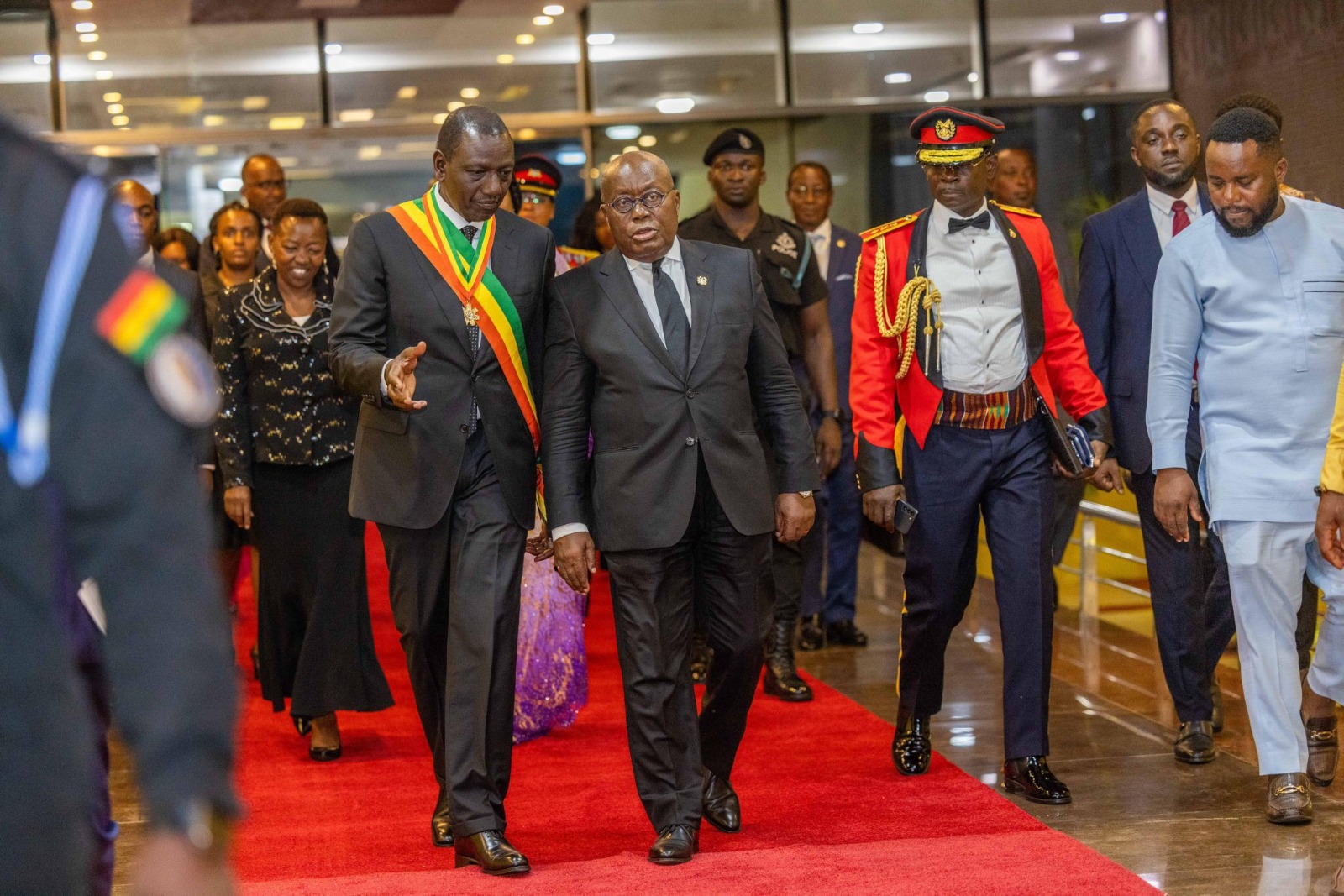
Kenyan Head of State, William Ruto, secured Ghana’s crucial vote for Odinga, during his visit to the West African country on Wednesday, April 4, 2024.
President Ruto, in his address after holding talks with Akufo-Addo, said Kenya will in turn support Ghana’s candidature for the Secretary General of the Commonwealth.
“Your Excellency, my dear brother, I thank you most sincerely for accepting to support Kenya’s candidature for the position of the Chairperson of the African Union Commission (2025-2028) which has been initiated following comprehensive stakeholder-engagement across government,” Ruto said during the Kenya-Ghana Joint Media Briefing at Jubilee House, Accra.
“On our part, I have assured His Excellency that Kenya will support the Republic of Ghana for the candidature of Hon Shirley Botchwey, Minister of Foreign Affairs and Regional Integration, for the position of Secretary General of the Commonwealth for the period 2024-2029,” he added.
President Ruto further affirmed that Kenya’s bid for the coveted AUC seat is informed by the country’s leading role in enhancing and sustaining the Pan-African agenda in terms of independence and sovereignty, peace and security, development and prosperity, as well as sustainability and climate action.
“We hope to work with all as we try to achieve Africa’s 2063 agenda,” President Ruto stated while referring to Africa’s development blueprint to achieve inclusive and sustainable socio-economic development in a period of 50 years.
Akufo-Addo’s endorsement comes weeks after Rwanda’s President Paul Kagame, Yoweri Museveni of Uganda, Tanzania’s Samia Suluhu and Salva Kiir of South Sudan threw their weight behind Odinga’s candidacy.
Kagame announced his support for the 79-year-old former Kenyan prime minister days after their meeting in Rwanda.
“It’s no secret. I told him Rwanda would support him. I wish him well,” Kagame said in an interview with Kenya’s NTV, broadcasted on March 12.
Kagame heaped praise on Odinga, citing his previous work as the African Union High Representative for Infrastructure Development.
“He [Odinga] did a good job at that. He had a full grasp of it,” Kagame said.
“Not only will we support him to be there, but also when he is there, we will support him for Africa to succeed,” he added.
Odinga is seeking to succeed Chad’s Moussa Faki in elections slated for February 2025.
The leader of the Azimio la Umoja – One Kenya coalition in Kenya received a major boost in March after the African Union Executive Council unanimously resolved that candidates for the position of the next chairperson of the AU Commission would be nominated by the Eastern African regional States
So far, only Odinga and former Somali Foreign Minister Fawzia Yusuf Adam have announced their candidacy for the top AU role.
Adam, who joined the race in February, is aiming to become the second woman to lead the continental body after South Africa’s Nkosazana Dlamini-Zuma, who served between 2012 and 2017.
Data from Rwanda Biomedical Center, RBC, reveal a significant prevalence of new HIV infections among the youth, with at least 35% of new cases found in individuals aged between 15 and 21.
On April 2, 2024, members of the Senate’s Committee on Social Affairs Human Rights informed the General Assembly that the HIV epidemic among youths aged 19 to 24 across 14 visited districts is concerning.
The committee’s chairperson Umuhire Adrie stated, “We found that HIV is indeed increasing among the youth. Discussions with various sectors revealed that perhaps due to successful treatment efforts and the provision of free medication, the youth, particularly those between 19 and 24, are seeing a rise in new infections.”
She highlighted that a youth center established to offer advice and condoms operates only once a week, serving a very limited number of individuals in need.
“The youth center exists, but it’s not open every day. We’ve pointed out the limited capacity of these health facilities where, even though available, they operate just once a week because if not, the room is used for other purposes.”
“The doctor providing these lessons isn’t solely dedicated to this task; they also serve in other capacities. While the policy behind the youth center is commendable, the content, method, and frequency of the education, and the number of youths it can actually help, are inadequate compared to the need.”
Senator Uwera Pelagie expressed concerns over the availability of medications and preventive materials for the youth.
“Are there enough supplies considering our only methods are condoms and abstinence? So that at least those up to 21 years old who need them can access them as desired? And I believe more awareness campaigns are necessary to further encourage youths to opt for these prevention methods.”
Umuhire clarified that the youth center is fully equipped with condoms and post-exposure prophylaxis pills for unprotected sexual encounters with suspected HIV-positive partners.
Senator Nsengiyumva Fulgence noted that while these centers are underutilized, placing them in schools could yield better outcomes.
“This reproductive health and HIV prevention center, if placed within schools, could address the issue more effectively. It’s true that not everyone attends school, but in the long term, ensuring all children attend school could integrate these lessons from primary to university levels.”
A national survey on health and living conditions shows that 4.5% of girls and 10.1% of boys had engaged in sexual activities before the age of 15, with some having children before reaching this age.
Vice President of the Senate Nyirasafari Esperance remarked that people are beginning to view HIV as less of a concern than other diseases, given its reduced fatality rate.
“While it may not be as deadly, the medication comes with its own set of challenges and costs, which could be allocated to other important needs. And those on treatment have limitations on what they can do.”
She argued for the youth counseling center on reproductive health and HIV prevention to operate daily, advocating for a multi-faceted approach to combatting the disease.
“I support incorporating these topics into school curriculums, even if we can’t establish a specific center like we did for girls, at least dedicating known times for discussions on reproductive health to ensure children are well-informed.”
The senators also suggested that the Rwandan family should proactively discuss HIV/AIDS with their children, rather than leaving them to learn from the media or potentially misleading sources.
Currently, the Rwandan government aims by 2030 for 95% of its citizens to have been tested for HIV, 95% of those on medication to adhere to their treatment, and for 95% to achieve viral load suppression.
News of the arrest of 82-year-old Mbonampeka Stanislas was reported by Echo d’Afrique, which disclosed that he was arrested on March 28, 2024, and is now detained in a prison located in Haren, north of Brussels in Belgium.
Mbonampeka resided in Ndera, where he allegedly committed his crimes by leading the Interahamwe militias that killed Tutsis in a seminary, the CARAES hospital, and the parish.
Stanislas Mbonampeka hails from the former Ruhengeri Prefecture. He joined the military, then left to study at the University of Butare.
He is a son-in-law of Mbonyumutwa as he married his daughter Marie Claire Mukamugema.
He also served as the Minister of Justice before the Genocide against the Tutsi.
Mbonampeka was a member of the PL party but later aligned with a rebel faction known as PL Power, which collaborated with the MRND and CDR parties, both of which played roles in the Genocide against the Tutsi.
Dr. Philbert Gakwenzire, President of IBUKA, an organization advocating for the survivors of the Genocide against the Tutsi, expressed satisfaction with the arrest of Mbonampeka Stanislas.
He noted that they had been anticipating his arrest and prosecution for his actions, despite him having evaded justice for 30 years.
Dr. Gakwenzire stated, “It’s something we have been waiting for a long time, as the arrest warrants were issued long ago, and Belgian investigators had visited Rwanda some time ago. We were waiting to see when it would happen because we know there could be excuses made about their age, claiming they are too old, which has become like a song to them.”
Dr. Gakwenzire mentioned that Mbonampeka played a role in planning and overseeing the Genocide in the area that was formerly Rubungo commune, especially around the parish, the seminary, and nearby areas.
He emphasized their readiness to receive justice after many years of the suspect being in hideouts.
Dr. Gakwenzire revealed that Mbonampeka had been known to be in Belgium for some time despite using various tactics to evade detection.
He often pretended to be in France, where he had a known address, but did not stay there long, instead residing in Belgium in an undisclosed manner to mislead authorities.
Dr. Gakwenzire noted that it had been over five years since they had known about his whereabouts in Belgium.
“It had been a while since we knew exactly where he lived, house by house. It has been about five years or slightly more, which is why the documents could be prepared and the process to arrest him initiated.”
He expressed concerns about Mbonampeka’s age being used as a defense, similar to what happened with Félicien Kabuga, but trusted in the judiciary’s capability.
“The concerns are there, but we trust in the judicial system’s capability, as it is in their hands now. Those who committed Genocide, wherever they are, must know that even if they are old, the crime does not age, and they will be pursued at any time. Old age should not be an excuse, we will provide information and trust that justice will be served.”
The Belgian prosecution recently announced that it has 49 cases yet to be tried, even 30 years after the Genocide was halted.
Dr. Gakwenzire urged the Belgian justice system to exert more effort in arresting those who are still at large to be held accountable for their actions.
He also called on the survivors of the Genocide against the Tutsi to maintain courage and resilience during this 30th commemoration of the Genocide against the Tutsi that Rwanda is about to enter.
Xi congratulated Prabowo on winning the election and asked Prabowo to relay sincere greetings and best wishes to President Joko Widodo.
Recalling the rapidly developing and fruitful bilateral ties over the past decade under the guidance of the two heads of state, Xi said both sides have made the Jakarta-Bandung High-speed Railway an exemplar of high-quality bilateral cooperation and entered a new stage of building a community with a shared future.
China views its relations with Indonesia from a strategic and long-term perspective, and is willing to deepen all-round strategic cooperation with Indonesia, Xi said.
He said China will work with Indonesia to build a China-Indonesia community with a shared future that has regional and global influence, so as to bring more benefits to the two peoples and contribute to regional and world peace, stability and prosperity.
Xi said the key to successful China-Indonesia relations is to adhere to strategic independence, mutual trust and mutual assistance, win-win cooperation, and fairness and justice.
Xi said China and Indonesia are both representatives of major developing countries and emerging markets. In the past, the two countries have always supported each other in the cause of national independence and development, he said, while in the future, the two countries should also unite in good faith to set an example of win-win cooperation and shared development, and become a pacesetter for South-South cooperation.
The two sides should firmly follow the development path suited to their own national conditions, firmly support each other in safeguarding sovereignty, security and development interests, and understand and support each other on issues concerning each other’s core interests and major concerns, according to Xi.
Xi said China is willing to maintain close exchanges with Indonesia, share experience on governance, strengthen synergy of development strategies, further promote the construction of the “Two Countries, Twin Parks” and the Regional Comprehensive Economic Corridor, and continue to deepen maritime cooperation.
He added that China is ready to strengthen cooperation with Indonesia on poverty reduction and eradication, and provide support in this regard.
Noting that at present, momentous changes not seen in a century are accelerating across the world, Xi said the two sides should actively practice the Five Principles of Peaceful Coexistence, vigorously promote the Bandung spirit of solidarity, friendship and cooperation, promote an equal and orderly multi-polar world and inclusive economic globalization that benefits all, strengthen multilateral coordination, and safeguard the common interests of developing countries.
Xi said China is ready to work with Indonesia to uphold ASEAN unity and centrality, maintain an open and inclusive regional architecture, and build a closer China-ASEAN community with a shared future.
Prabowo conveyed President Joko Widodo’s sincere greetings to Xi, and said he is delighted to make China the first country he visits after being elected.
China is a major influential country, and the two countries always respect each other and treat each other as equals, he added.
He expressed admiration for the great achievements made by the Chinese people under the leadership of President Xi. He said he is willing to learn from the experience of the Communist Party of China and deepen exchanges on governance.
Prabowo noted that China is a strong partner of Indonesia, and Chinese enterprises have participated in-depth in Indonesia’s economic growth and contributed to Indonesia’s national development in recent years.
He said that he supports the development of a closer relationship with China and will continue the country’s friendly policy toward China, adhere to independence and stick to the one-China policy that is always pursued by the Indonesian government.
Prabowo added that Indonesia and China will firmly support each other’s core interests, promote the comprehensive and high-quality development of bilateral relations, and implement the important consensus of building a community of shared future between the two countries.
The new Indonesian government is willing to actively strengthen the alignment of the development strategies of the two countries and push for more cooperation results in various fields such as economy, trade and poverty alleviation to further benefit the two peoples, Prabowo said.
He said he appreciated that China has always upheld fairness and justice in international affairs, especially on the Palestinian question, adding that Indonesia is willing to strengthen coordination and cooperation with China on international and regional affairs, and make a greater contribution to South-South cooperation.
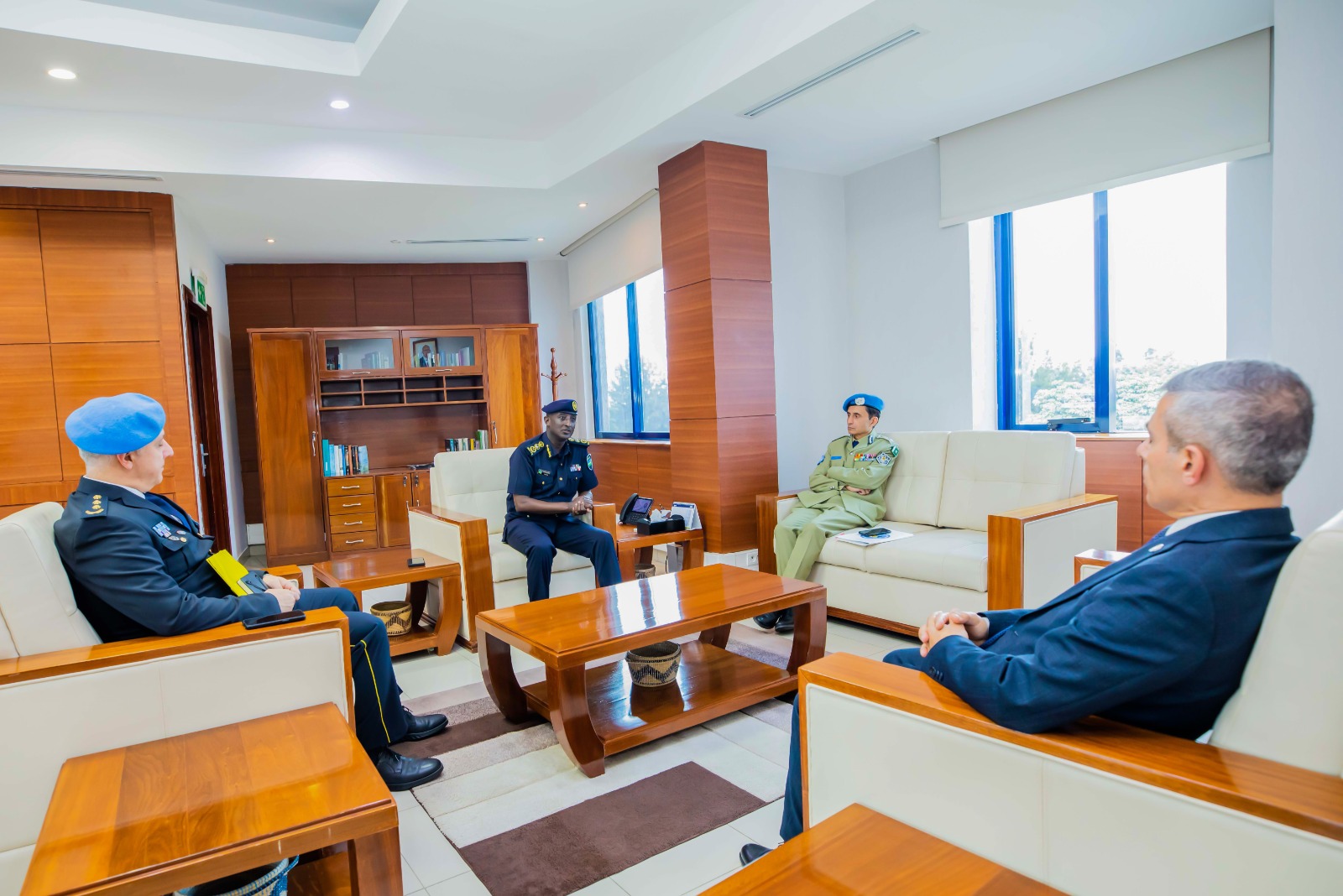
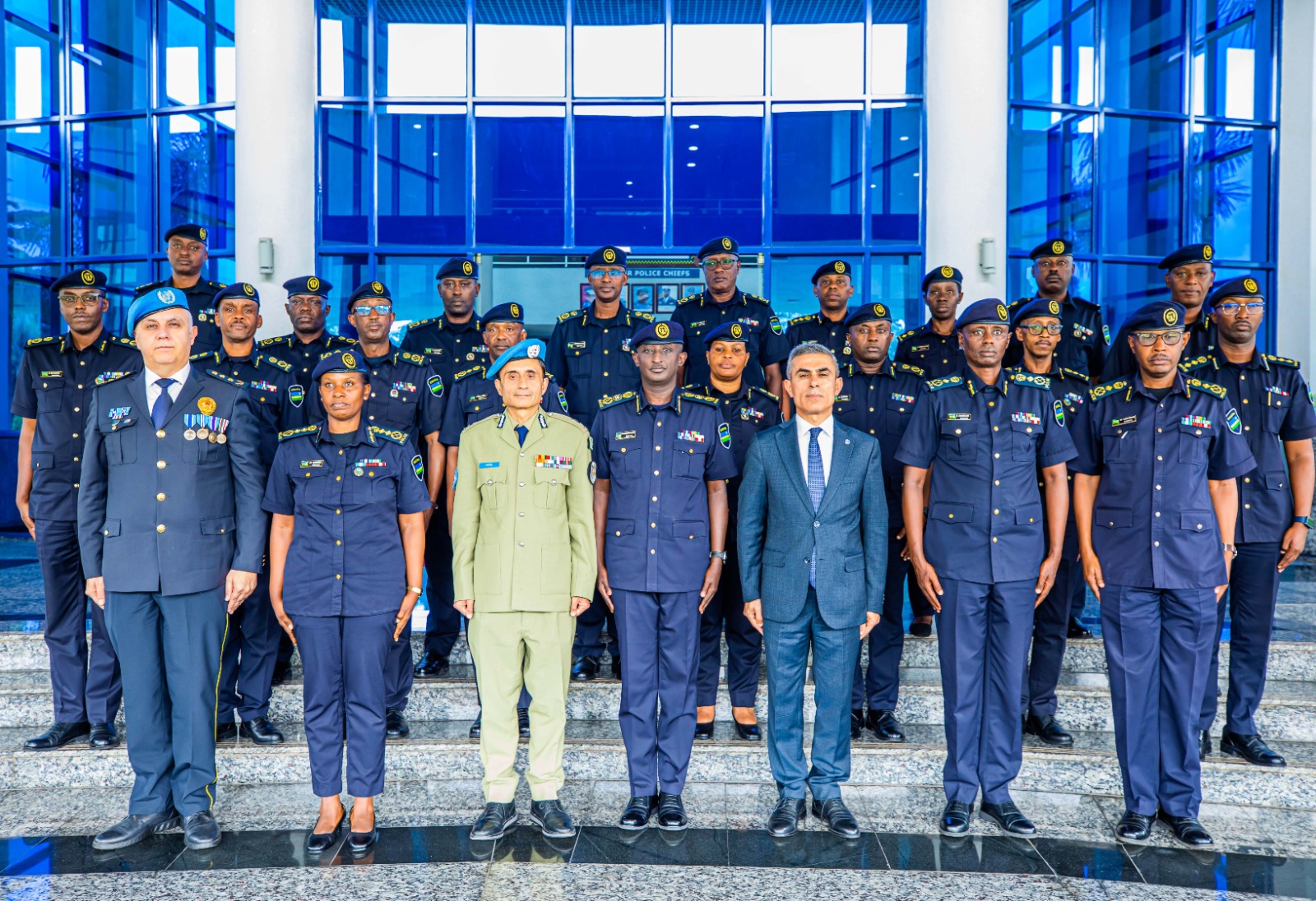
Police Commissioner Shahkar and his delegation including the Chief of Recruitment and Selection, Ata Yenigun, and the Chief of Staff for the UN Mission in South Sudan (UNMISS), Murat Isik, are in Rwanda to discuss further partnership in peace operations.
Rwanda, which started its peacekeeping operations in 2005, is currently the leading Police contributor to the UN peace operations with the total strength of 1133 peacekeepers; and the leading contributor of female Police peacekeepers.
The Police peacekeepers are deployed in South Sudan, Central African Republic, Abyei, Haiti as well as professional posts in CAR (Head of Police component) and New York.
IGP Namuhoranye, during the meeting, thanked Police Commissioner Shahkar for visiting Rwanda to exchange ideas and share experiences on peace support operations.
“Rwanda’s participation in peace operations is a commitment born out the international community’s failure to intervene and save lives of innocent civilians during the 1994 genocide against the Tutsi in Rwanda 30 years ago,” IGP Namuhoranye said.
He added that Rwanda remains committed to contribute towards protection of civilians in danger wherever and whenever required, either under the UN flag or on bilateral arrangements like in Cabo Delgado region in Mozambique where Rwandan security forces are engaged in counter terrorism operations.
“Rwanda National Police has invested in training, personnel management, acquisition of policing equipment and developed operational capabilities necessary to fulfil our mission mandates in line with UN standards and procedures,” the Police Chief said.
He added: “A well trained and equipped force is always ready to be committed for deployment in a very short time on request.”
Police Commissioner Shahkar lauded Rwanda’s transformation process to rise out of the ashes of the 1994 Genocide against the Tutsi. He further thanked Rwanda’s contribution to international peace and particularly for embracing the global call to deploy women to international peace duties.
Rwanda maintains a female-dominated Formed Police Unit (FPU) contingent under the UN Mission in South Sudan.
“Globally, national Police institutions have challenges and always difficult to spare good and professional officers for international duties abroad. Rwanda’s participation shows how committed to dedicate its few resources to international peace,” said the UN Police Chief.
He pointed out that the environment in UN missions is becoming extremely challenging in terms of safety and security, which should be kept under card especially during pre-employment training.
Commissioner Shahkar further said that as policing becomes more hi-tech, the UN is also shifting to focus on use of technology as well as welcoming specialized units to dealing with the evolving mission challenges.
The UN Police Chief and his delegation will also visit the Police Training School (PTS) Gishari, which hosts the peacekeeping pre-deployment training centre, and Counter Terrorism Training Centres (CTTC).
The case, reported by WIS10 NEWS, sheds light not just on individual suffering but on the broader, disturbing reality of racial inequity within healthcare that continues to prevail.
The specific instance of racial bias in healthcare, as seen in Evans’ story, is not an isolated phenomenon.
“I remember just reading that letter over and over again,” said Evans, 29, of Philadelphia, who shared the notice in a TikTok video to educate other patients. “How could this happen?”
It is part of a longstanding pattern of disparities where Black Americans disproportionately face higher risks of conditions like kidney failure.
The controversy centers around the use of a flawed eGFR calculation that, based on unfounded racial assumptions, inaccurately overestimated kidney function in Black patients. This significant error delayed critical diagnoses and treatments, and unjustly extended waiting periods for organ transplants for many Black patients.
The correction of over 14,000 Black kidney transplant candidates’ wait times by the United Network for Organ Sharing is an unprecedented attempt to ameliorate past wrongs. Yet, it also prompts a deeper reflection on the extent of racial bias in medical diagnostics and treatments across the board.
The sluggish pace at which these racial biases are being addressed is alarming. Although recent measures to eliminate race from medical algorithms and risk assessments are steps in the right direction, they also highlight the systemic nature of the problem. The reliance on race-based algorithms underscores a broader issue of institutional practices rooted in racism that can have widespread detrimental effects on minority patients.
The situation calls for a comprehensive review and overhaul of medical practices that incorporate race as a factor. The healthcare industry and regulatory authorities must ensure that medical care and diagnostics are based on scientific evidence and the individual health requirements of patients, not on antiquated and harmful racial stereotypes.
“Health equity scholars have been raising alarm bells about the way race has been misused in clinical algorithms for decades,” said Dr. Michelle Morse, New York City’s chief medical officer.
The efforts to rectify the injustices faced by Black kidney transplant candidates, while laudable, underscore the grim reality that racism remains entrenched in many aspects of our lives, despite ongoing efforts to eradicate it.
This scenario emphasizes the urgent need for continued action against racism in healthcare. The fight for a truly equitable healthcare system, where no person’s health is jeopardized by systemic biases, is far from over.
As the narrative around the eGFR recalculations shows, addressing health inequities faced by Black individuals and other minorities is not only a matter of fairness but also a critical, achievable goal.
It is high time for sweeping reforms to address and prevent such inequities from arising in the future.