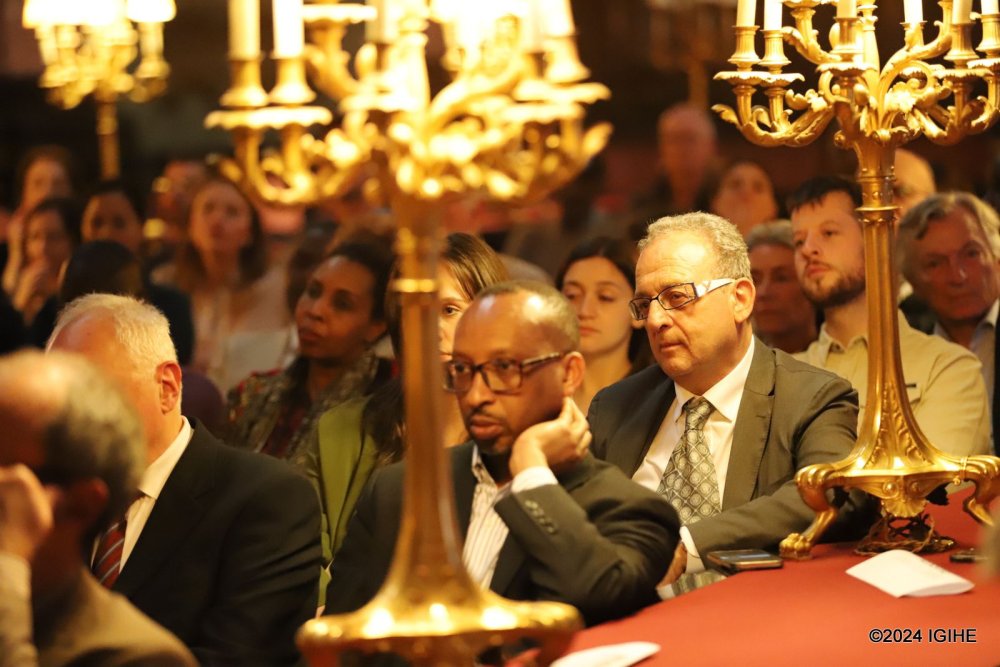
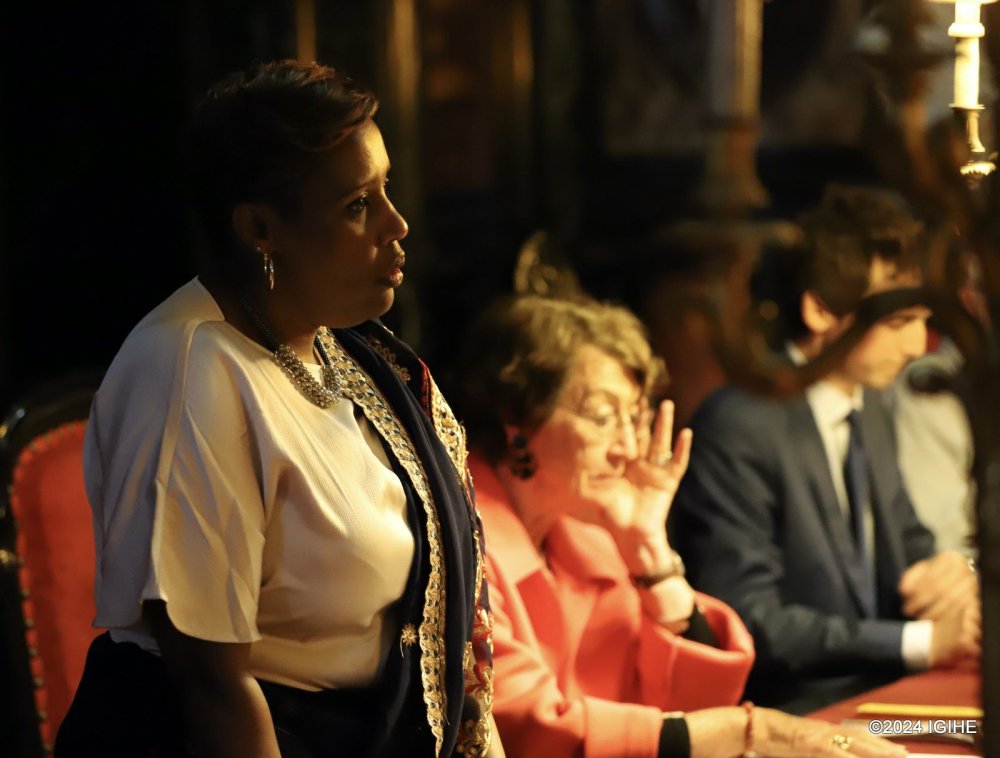
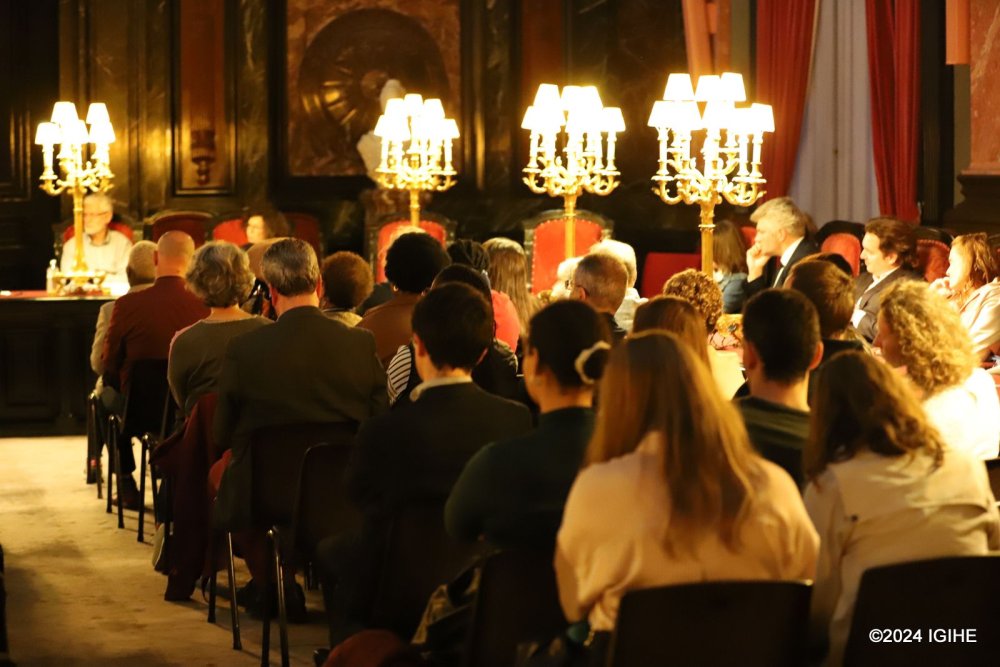
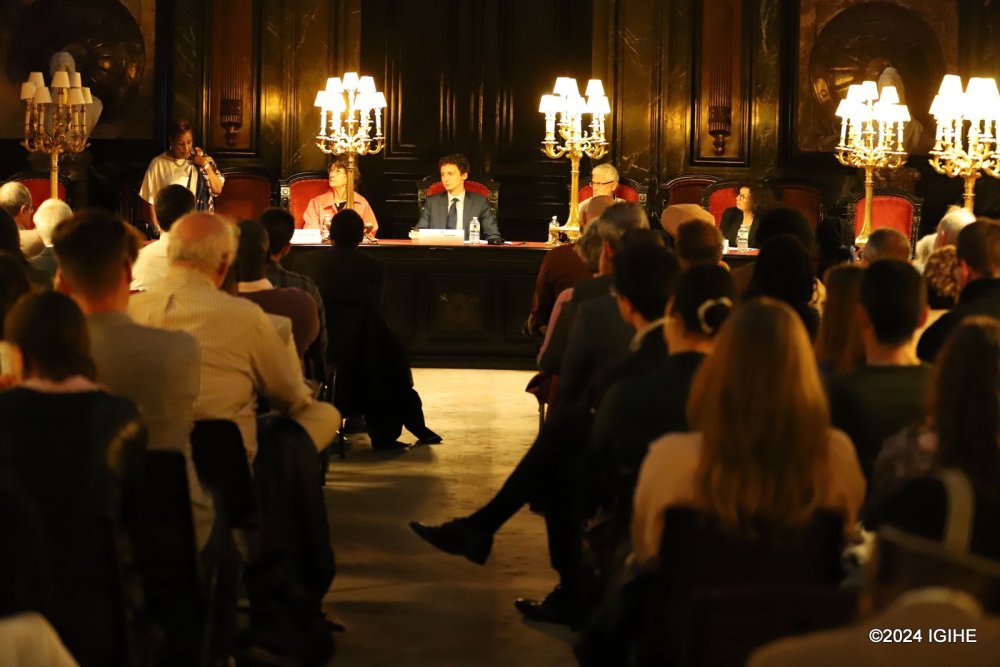
The closing of the 12th intake, which lasted for six-month, was presided over by the Inspector General of Police (IGP) Felix Namuhoranye. It was also attended by the Director General of CAR National Police, Controller-General, Bienvenu Zokoue.
The highly demanding course equips trainees with the required skills to confront contemporary security challenges especially in counter terrorism operations, VIP protection, quick reaction, and related timely intervention.
IGP Namuhoranye commended course participants for the discipline and determination that guided them to successfully complete the training.
He also thanked the CAR officers for the courage and right attitude to train and create good rapport with their fellow trainees.
“This kind of joint training is a true indicator of our continuous willingness to working together and building brotherly relations between CAR and Rwanda. This has only been possible thanks to the guidance and strong foundation set by leadership of our two countries,” IGP Namuhoranye said.
He pledged further sustainable and productive collaboration between Rwanda and CAR law enforcement agencies.
Gen. Zokoue appreciated the good relations between Rwanda and CAR as well as good collaboration between enforcement agencies in the two countries.
“The good cooperation between our two countries paved way for our 33 officers to be trained here to attain the required skills especially against terrorism, to ensure security,” Gen. Zokoue said.
He particularly reminded the CAR trainees of their duty to extend the acquired knowledge and skills to their colleagues back home, and to protect the people of CAR and their property against any security threats.
In a statement on Friday, KQ Managing Director and CEO Allan Kilavuka disclosed that the two employees were arrested by the Military Intelligence Unit at the airline’s airport office in Kinshasa a week ago.
According to the Kenyan national carrier, the military cited missing customs documentation on valuable cargo that was to be transported on a KQ flight on April 12, 2024, as the reason for the arrest.
“Kenya Airways [KQ] confirms that on Friday, April 19th, 2024, two of our employees at our Airport office in Kinshasa were arrested and continue to be detained by the Military Intelligence Unit known as Detection Militaire des Activities Anti Patrie [DEMIAP].
During their arrest, their phones were seized, and all access to them has been denied. On April 23rd, 2024, Kenyan embassy officials and a few KQ staff were allowed to visit them but only for a few minutes,” KQ said.
Kilavuka lamented that attempts to secure the release of the staffers have proved futile as the authorities continue to ignore court orders regarding the matter.
“On April 24th, 2024, KQ filed an application in the Military Court for the two to be released unconditionally. The court heard the matter on April 25th, 2024, and granted KQ’s request that the two staff members be released to allow due process. Despite the court orders, the military intelligence unit is still holding them incommunicado, yet these are civilians being held in a military intelligence facility,” the CEO said.
The CEO has denied any wrongdoing on the part of the Kenya Airways employees whom he insists had not cleared the cargo to be airlifted.
“The cargo was not on the airside for transportation and, therefore, not in the possession of KQ as the logistic handler was still completing documentation before handing it over to KQ. This cargo was still in the baggage section undergoing clearance when the security team arrived and alleged that KQ was transporting cargo without customs clearance.
“All efforts to explain to the military officers that KQ had not accepted the cargo because of incomplete documentation proved futile,” Kilavuka lamented.
He maintained that Kenya Airways adheres to international best practices in handling and transporting cargo.
“We have stringent processes and compliance checks known as ‘Ready for carriage’ to ensure any cargo ferried on our flights meets all the statutory requirements across our destinations. All our logistics partners MUST comply with these measures before KQ accepts any cargo,” he added.
“We are perturbed by this action targeting innocent staff and consider it harassment targeting Kenya Airways’ business. KQ continues to cooperate with the investigating agencies and is working with the relevant Government entities in both DRC and Kenya to ensure this matter is resolved.”
The event held at the Memorial Complex of Tuskulėnai Peace Park in Vilnius marked the first commemoration in Lithuania and the whole Baltic States of the genocide which claimed the lives of more than one million people in Rwanda.
In attendance were representatives of the Lithuanian government, the diplomatic community and Rwandan nationals living in Lithuania.
The commemoration event dubbed ‘Kwibuka30’, began with the lighting of candles, which the organisers of the anniversary said represented the ever-shining lights of the more than one million victims of the genocide.
The candle lighting ceremony was led by Arūnas Bubnys, General Director of the Lithuanian Genocide and Resistance Research Center, Vytautas Pinkus, Head of the Global Affairs Group of the Ministry of Foreign Affairs, Olivier J.P. Nduhungirehe, Ambassador of Rwanda to Lithuania (with residence in The Hague) and Professor Justinas Žilinskas of the University of Vilnius.
During the commemoration, Ambassador Nduhungirehe recounted that the 1994 Genocide against the Tutsi was planned and committed by Rwandans against Rwandans, by an extremist regime against a part of the population.
He, however, pointed that the atrocities were enabled by the failures and silence of the international community, mainly the United Nations Secretariat, the UN Security Council and individual western powers that were historically and economically linked to Rwanda.
The ambassador also acknowledged the apologies made by Western powers for their inaction in stopping the intended extermination of members of the Tutsi community in Rwanda in 1994 by the Hutu-led regime.
“In the aftermath of the genocide, individual powers, through parliamentary commissions, as well as political and academic debates, tried to understand their own failure in Rwanda in 1994. A number of Heads of State and Government of those countries came to Rwanda after the genocide to admit responsibility and present their apologies, in a form or another.
“The UN, on its part, did the same, and on 15th December 1999, its ‘Report of the independent inquiry into the actions of the United Nations during the 1994 genocide in Rwanda’ concluded that ‘the international community did not prevent the genocide, nor did it stop the killing once the genocide had begun’”, the ambassador stated.
He said memorial sites erected by some of the countries continue to raise awareness of the Genocide against the Tutsi.
“I take this opportunity to thank European and North American countries that erected, on their soil, memorials to honour the victims of the genocide against the Tutsi in Rwanda, namely France, Belgium, the United Kingdom, the United States, Canada, Switzerland, Italy, the Netherlands and Germany. We hope, in order to raise more awareness, to erect more genocide memorials in Europe, especially in the Baltic States”, he stated.
He also called for deliberate efforts to include lessons on the Genocide against the Tutsi in school curriculums, similar to the way the genocide of European Jews during World War II is taught in schools.
“Beyond memorials, and as requested by the UN General Assembly resolution, we believe that it would be important for Lithuania and for your respective countries, to consider including lessons on the genocide against the Tutsi in Rwanda in your schools’ curricula,” he added.
“Indeed, we have noticed that in many countries in the world and in Europe in particular, young generations don’t know much about this tragedy. We therefore find it important that as the Holocaust is taught in schools, so should be all genocides established by international jurisdictions or recognized by the international community, in particular the 1994 genocide against the Tutsi in Rwanda.”
The commemoration event was organised by the Embassy of Rwanda to Lithuania, which has its residence in The Hague, in collaboration with the Ministry of Foreign Affairs of Lithuania and the Genocide and Resistance Research Centre of Lithuania.
Rwanda marks ‘Kwibuka’ every April 7 and the event lasts for 100 days of the 1994 Genocide against the Tutsi.
The spokesperson for Rwanda Investigation Bureau, Dr. Murangira B. Thierry, told IGIHE that “the doctor, a citizen of the Democratic Republic of Congo, was practicing his profession in Rwanda.”
Reliable sources informed IGIHE that this was not the first time the doctor had committed such acts, as “those who know him mentioned another girl he had done this to, but she chose not to file a complaint and ignored the incident.”
The doctor has been arrested and is being investigated for the crime of sexual assault. This offense is punishable under Article 134 of the law which determines crimes and penalties in general.
If found guilty, he could face a prison sentence of not less than ten years but not more than fifteen years and a fine of between 1,000,000 and 2,000,000 Rwandan Francs.
The event, organized by the International Corrections and Prisons Association (ICPA), will be held between October 26th and 31st, 2025.
Evariste Murenzi, the Commissioner General of Rwanda Correctional Service (RCS), signed a Memorandum of Understanding (MoU) to host the conference during an event presided over by ICPA President Peter Severin in Istanbul, Turkey, on Thursday, April 25.
The prisons boss is attending a five-day ICPA conference on technology in corrections and innovation in prison infrastructure, which kicked off on Monday, April 22.
“The signed Memorandum of Understanding between RCS Commissioner General Evariste Murenzi and ICPA President Peter Severin is an indication of the trust that the global corrections association has in Rwanda to host the mentioned conference from October 26th to 31st, 2025,” the department said in a statement.
ICPA is a non-profit association for prison professionals founded in 1998 with a mission to promote and share ethical and effective correctional practices to enhance public safety and healthier communities worldwide.
It is a non-governmental organization in Special Consultative Status with the Economic and Social Council of the United Nations (ECOSOC).
Rwanda will be the second African country to host the ICPA AGM and conference after Namibia, which hosted the event in 2014.
The conference brings together more than 900 participants drawn from different parts of the world and aims to recognize outstanding progress and excellence with respect to its mission, particularly in prisons/corrections achievements which advance humanitarian, environmental, and professional corrections and prisons approaches.
Safety of Rwanda Bill, which sought to declare Rwanda a safe destination for asylum seekers after the Supreme Court declared the scheme unlawful, faced strong opposition from the Labour Party and human rights groups.
The groups argued that the safety of the migrants could not be guaranteed in Rwanda with the Lords pushing for amendments to ensure the legislation had “due regard” for international and key domestic laws, including human rights and modern slavery legislation.
The Supreme Court judges had earlier ruled that there were substantial grounds for believing “asylum seekers would face a real risk of ill-treatment by reason of refoulement [return] to their country of origin if they were removed to Rwanda”.
Steve Valdez-Symonds, Amnesty International UK’s refugee and migrant rights director, shared similar sentiments, arguing that the refugees were not safe in Rwanda.
“The Supreme Court looked at it all very carefully and concluded Rwanda did not have a system in place to protect refugees,” Valdez-Symonds said.
After a sustained parliamentary ping-pong the [bill sailed through on Monday->https://en.igihe.com/politics-48/article/reprieve-for-sunak-as-uk-finally-passes-bill-to-send-asylum-seekers-to-rwanda] after Prime Minister Rishi Sunak stuck to his guns on plans to deter vulnerable migrants from making dangerous crossings to the UK using small boats.
Sunak, while defending the bill, argued that the scheme would help break the business model of criminal gangs who exploit the migrants.
The Lords allowed the legislation to pass without further amendments. It received the royal assent today paving the way for the first flight of migrants to depart to Rwanda in July.
In light of the debate about the safety of Rwanda we sought to know the experiences of the foreigners living in Rwanda as the country continues to rebuild itself after the 1994 Genocide against the Tutsi, which claimed the lives of more than a million people.
Most of the foreigners we spoke to including students and entrepreneurs all agreed that Rwanda is a safe country governed by the rule of law.
“I have been in Rwanda for about a year now. If you’ve been to other parts of the world and other parts of Africa, you haven’t experienced this. It’s a very unique and beautiful part of Africa. It’s an extremely safe part of Africa. Coming from the South and being in other African countries, you cannot compare what we have in Rwanda,” South African business executive Firhaan Brood said.
Leila Drameh, a Gambian studying at Kigali Independent University, said, “Rwanda is a safe country. There are rules and regulations that govern the country…Hearsay doesn’t really work. People should be factual.”
Watch the video below to discover more about Rwanda:
Statistics from the Rwanda Development Board (RDB) show that the Meetings, Incentives, Conferences and Exhibitions (MICE) recorded a significant growth of 52 percent in 2023 generating revenue of $95 million (RWF 122 billion).
The country hosted 65,000 delegates compared to 35,161 in 2022.
The 73rd FIFA Congress held on March 16, 2023, was one of the notable events held in the capital Kigali. The event brought together more than 1,500 delegates representing 211 FIFA members, head of Confederations and other global players in football.
During the 4th and the first-ever elective FIFA Congress held in Africa, Gianni Infantino was re-elected FIFA President to serve for four more years.
The Women Deliver 2023 Conference (WD2023) was held in Kigali from 17-20 July 2023, where more than 5,000 delegates gathered to advance gender equality.
Additionally, the Giants of Africa Festival took place in Kigali from 13– 19 August 2023. The event brought together more than 300 African youth from 16 countries, who participated in an intensive series of basketball clinics and leadership workshops designed to help them pursue their dreams.
The countries that were represented included Kenya, Tanzania, Nigeria, Burkina Faso, Ivory Coast, Rwanda, the Democratic Republic of Congo, Senegal, Somalia, Uganda, Botswana, Ghana, South Sudan, Morocco, Cameroon and Mali.
Rwanda also hosted two other major entertainment events in 2023: the Trace Africa Music Awards and Festival, which brought together music, fashion, and arts, giving young and creative talents a global stage to showcase their skills; and The Move Afrika by Global Citizen, which was headlined by the globally renowned artist Kendrick Lamar.
Other notable events were World Travel & Tourism Council (WTTC), Basketball Africa League, Ironman, Cybertech Africa 2023, International Conference on Learning Representation, Africa Health Agenda International Conference, International Congress on Conservation Biology, Mobile World Congress, Global Anglican – GAFCON, nclusive Fintech Forum, Segal Family Foundation and the 19th Kwita Izina Ceremony.
Norrsken African Week Meeting, TIME 100 Summit + Awards, Unleash Rwanda and the Kigali International Peace Marathon were also among notable events hosted in Rwanda in 2023.
RDB, in an annual report unveiled on Wednesday, April 24, 2024, affirmed that the events are a testament to the Rwanda Convention Bureau commitment to position Rwanda as a premier and preferred destination.
“Events such as the 73rd FIFA Congress Meeting and the World Travel and Tourism Council (WTTC) Global Summit, which were hosted on the African continent for the first time, underscore Rwanda’s competitive advantage and brand recognition,” RDB stated.
The Kenyan Red Cross has been at the forefront of the emergency response, conducting over 188 rescues since the rains began. However, the scale of the flooding has overwhelmed local government efforts, particularly in the capital city of Nairobi, where roads were shut down and residential areas remain inundated.
Senator Edwin Sifuna of Nairobi expressed the city’s desperate situation on social media, stating, “The situation in Nairobi has escalated to extreme levels. The county government for all its efforts is clearly overwhelmed. We need all national emergency services mobilized to save lives.”
He highlighted the plight of residents trapped on rooftops in the informal settlement areas, sharing distressing visuals of the affected locals.
The Kenya Red Cross Society reported rescuing 18 people who were stranded by floodwaters in Nairobi’s Mathare 4A neighborhood. The organization continues to perform life-saving operations across the country, striving to reach those cut off by the floods.
Infrastructure has also taken a significant hit, with two major highways out of Nairobi experiencing severe disruptions due to the floods.
The Kenya Urban Roads Authority has had to partially close four major roads and has issued warnings for others, urging motorists to exercise caution.
“The traffic police and our technical team are on the ground to direct traffic and enhance the safety of motorists,” the Authority stated.
In response to the risk posed by the unstable conditions, Kenya Railways has suspended all commuter train services across the country. “We are compelled to take these precautionary measures because the safety of our customers is always of paramount importance to us,” said a spokesperson for Kenya Railways.
The Kenya Meteorological Department has issued warnings for “heavy to very heavy” rainfall in several parts of the country, indicating that the weather is expected to continue its harsh pattern in the coming days. The department’s latest forecasts predict ongoing rainfall, which could exacerbate the already dire situation.
As Kenya grapples with this natural calamity, the need for a coordinated national response becomes increasingly critical, with agencies and communities calling for immediate action to mitigate further loss and ensure the safety of its citizens.
In a broadcast titled ’30 Years Is Enough!’ aired on national radio and television from April 15, 2024, Major General Ekenge openly stated that over the past 30 years, the FDLR has played a significant role in the deaths of Congolese people.
He said, “The FDLR attacks Congolese people, kills Congolese people; in the over ten million killed in the past 30 years, FDLR has a significant percentage in causing these deaths.”
These remarks contradict those of the Minister of Communication and Spokesperson of the RDC government, Patrick Muyaya, who organized the program and claimed that the FDLR no longer exists because its fighters have returned to Rwanda following military operations against them.
Major General Ekenge highlighted the seriousness of these terrorist activities, having been involved in operations against the FDLR, including ‘Operation Amani Kwetu’ and Sokola, serving as the spokesperson in North Kivu until his promotion in 2022.
While some members of the DRC government distance themselves from it, Major General Ekenge is well aware that the FDLR is still active and has been reinforced, having attended a meeting at the Rumangabo military camp on February 3, 2022.
This meeting, which included Gen Pacifique Ntawunguka (Omega), leader of the group, and officers from the national army, discussed ongoing issues.
As the military spokesperson in the region, Major General Ekenge attended other meetings, including those held in Pinga on May 8 and 9, 2022. The FDLR, along with other notorious groups like Nyatura, APCLS, and NCD-R, agreed with the government to assist in combating M23.
Based on a meeting held on June 19, 2022, General Omega and Lt Gen Constant Ndima Kongba, then governor of the region, agreed that each fighter from a special FDLR unit called CRAP would be paid 300 dollars monthly while engaged in combat in the Kibumba group in Nyiragongo territory.
The United States listed the FDLR as a terrorist organization in December 2001 after it attacked tourists in Uganda’s Bwindi National Park, resulting in eight deaths, including two Americans.
Various reports, including those by United Nations security experts monitoring the situation in the DRC, have shown that the FDLR is one of the groups greatly troubling the local population due to its role in abuses and harassment of the Congolese people.
Due to these harmful activities, the RDC military has been urged to cease all cooperation and support for this group. Regional leaders have also demanded that its fighters leave North Kivu and return to Rwanda, or else face military action.
Following this pressure, RDC government representatives at talks in Luanda, Angola, in March 2024, agreed to plan the dismantling of the FDLR, promising Rwandan representatives and the mediator (Angola) that they would outline how this would be accomplished.
However, there is skepticism about the DRC government’s commitment to this promise, as evidenced on March 25, 2024, when the Minister of Foreign Affairs, Christophe Lutundula, leading the Congolese delegation in Luanda, told reporters he had no information about the FDLR.
Lutundula stated, “A year ago, on behalf of the President and government, I told the UN and African Union that Congo asks the international community, any country with information about the FDLR, to reveal their locations and then help us eradicate them. It’s not a lie, but we haven’t received any response.”
Major General Ekenge continues to expose the FDLR’s ongoing killing of Congolese people, but when it comes to the government, it appears they lack information about this group that is significantly involved in the ongoing conflict in the region.
There is no doubt that the RDC military is complicit in the wrongdoing committed by FDLR fighters, as it has been providing them with support and weapons since 2000.
These buildings were located in Cyahafi cell, Gitega sector, Commune Nyarugenge in Kigali, known as ‘Gakinjiro’. Today, this area is part of the Kora cell, Gitega sector in the Nyarugenge district.
The 69-year-old witness, on April 24, 2024, explained that during the genocide, he lived about 100 meters from AMGAR in Cyahafi, but was taken to these buildings with the help of George Rutaganda, the Vice President of the Interahamwe.
He stated, “The Interahamwe at AMGAR were in two groups; some were originally there, while others had fled from Kicukiro after the Inkotanyi took over. George Rutaganda also came from Kicukiro. I didn’t know most of them, but I knew Rutaganda, who miraculously told everyone I was a Hutu, their brother, warning that anyone who touched me would face problems.”
He further described that the Interahamwe had marked him for execution, but he managed to bribe them with a significant amount of money on April 15, 1994, to spare his life when they found him hiding at home.
The presiding judge asked if Rutaganda had charged him money to take him to AMGAR, to which he replied that he hadn’t, although Rutaganda owed him money, deciding not to collect it.
Regarding the Interahamwe in AMGAR, the witness noted, “They were there, they slept there. Sometimes five came, other times three, all armed. Below AMGAR, I could hear them digging and burying those they killed. They referred to it as the Interahamwe Headquarters.”
The witness told the court that he once asked Rutaganda if he would be held accountable for the people being killed and buried in pits behind AMGAR. Instead of responding, Rutaganda brought corrugated sheets to cover the area to prevent further scrutiny.
He shared that he informed fellow mechanics at the AMGAR ‘Centre-ville Auto’ garage about the killings and burials, highlighting that Emmanuel Nkunduwimye, especially, often wore military attire and carried a gun.
Nkunduwimye fled Rwanda in 1994 to the Democratic Republic of Congo, moved to Kenya in 1995, and then to Belgium in 1998, where he was arrested in 2011. His trial is expected to conclude in June 2024.