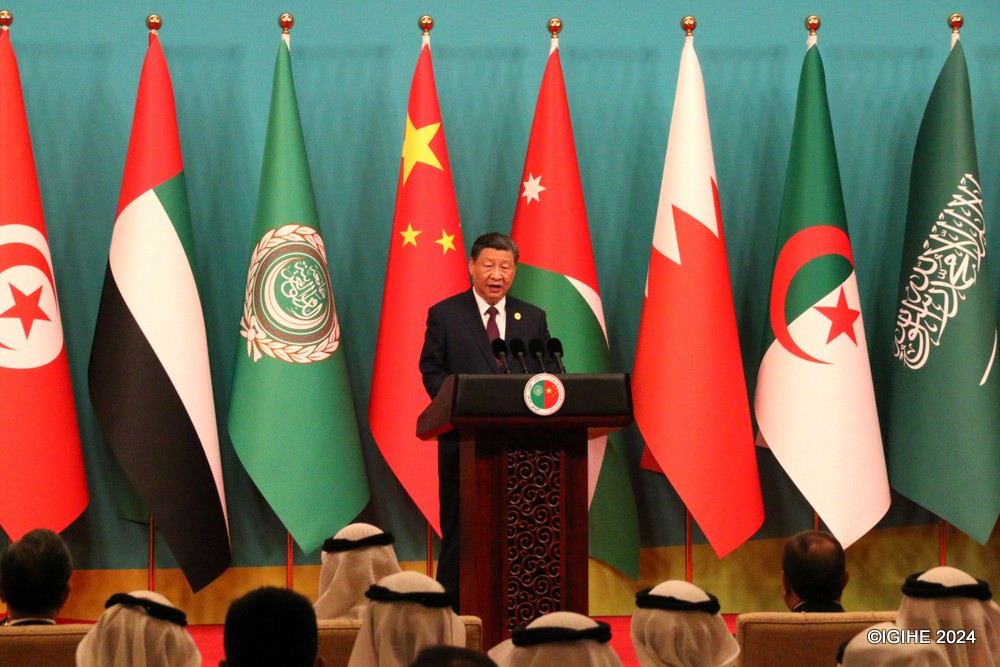
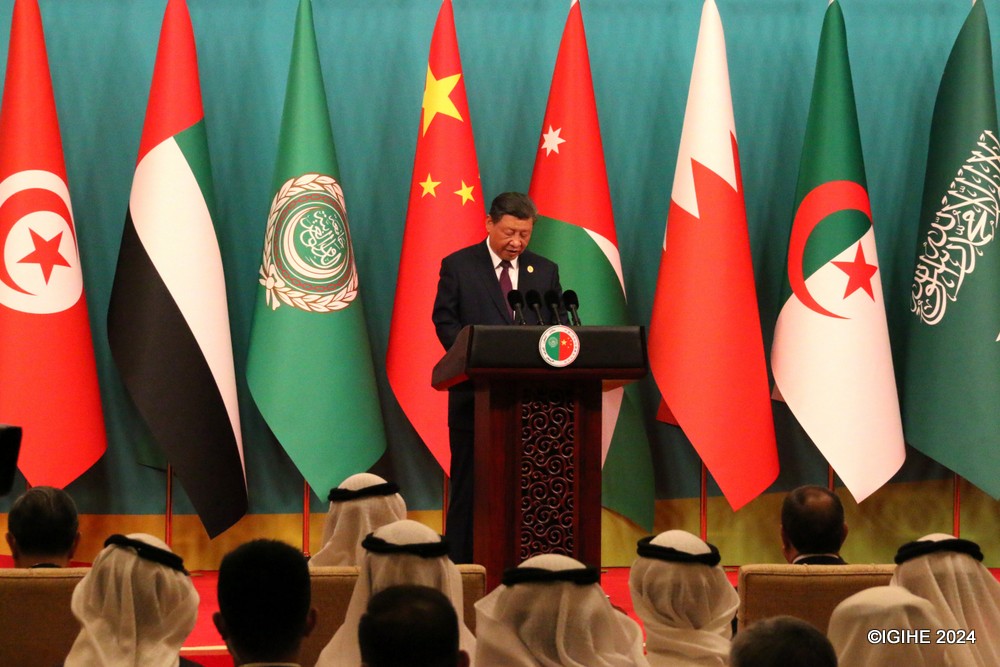
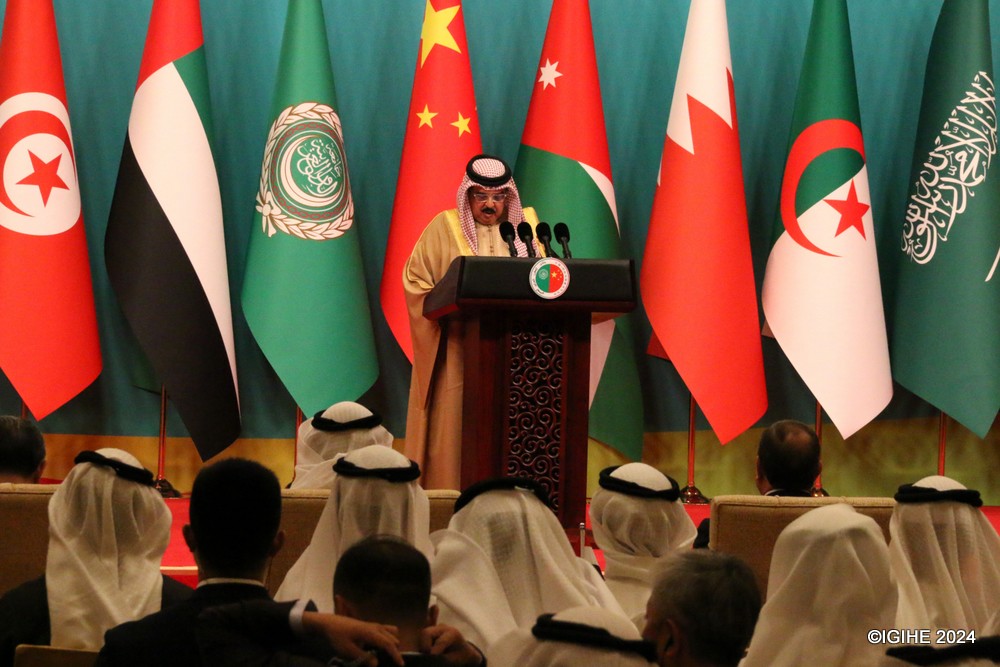
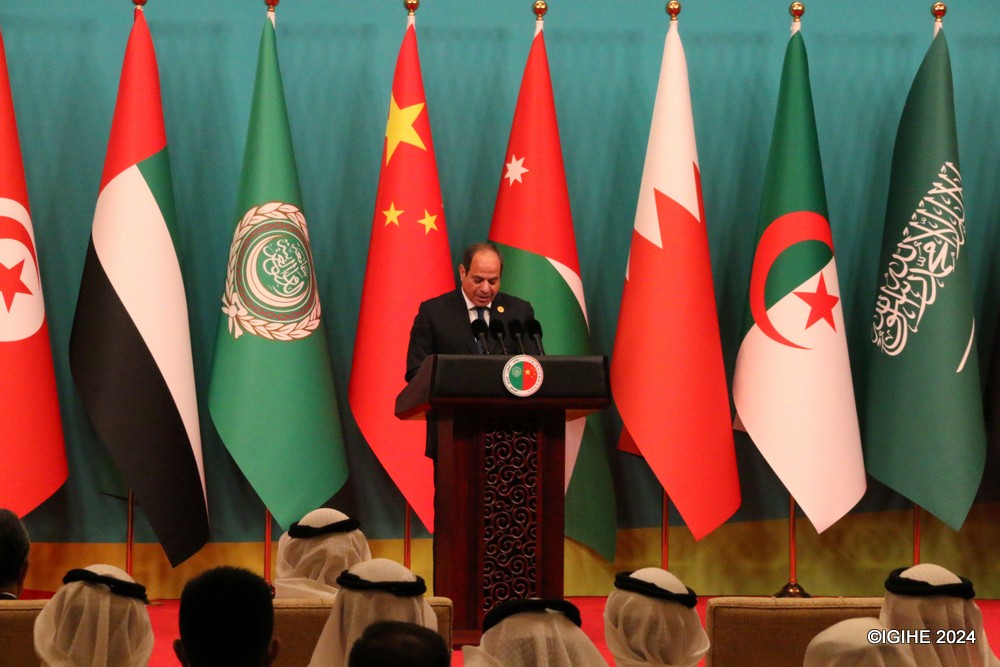
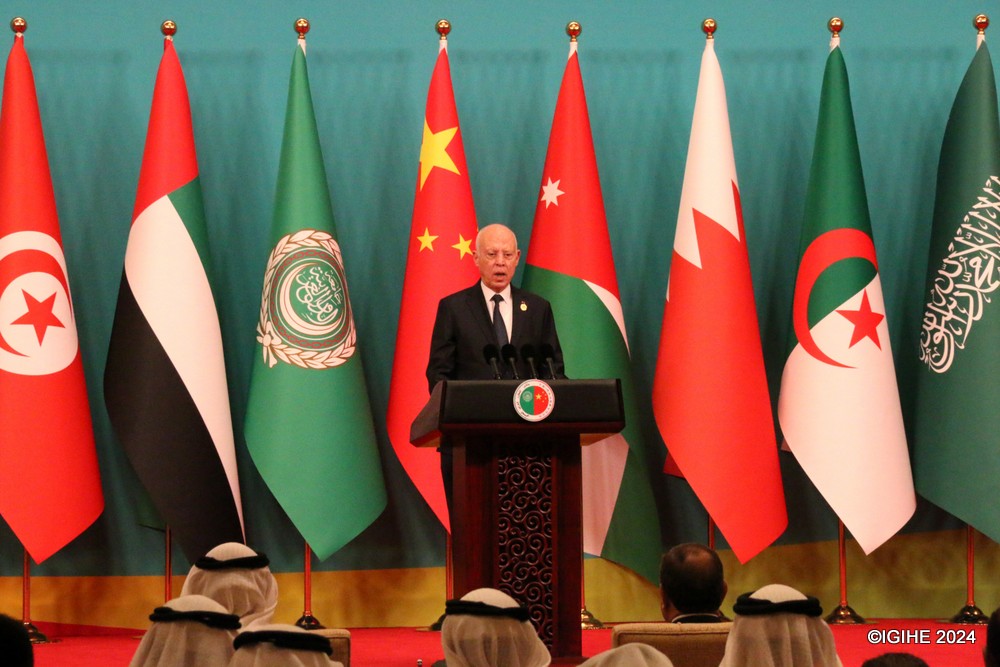
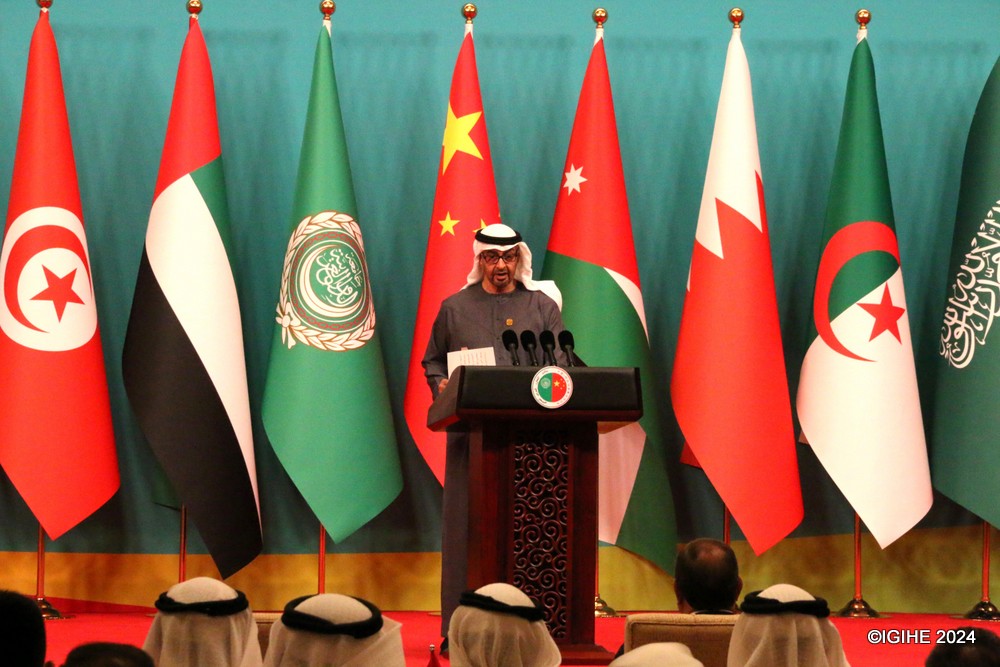
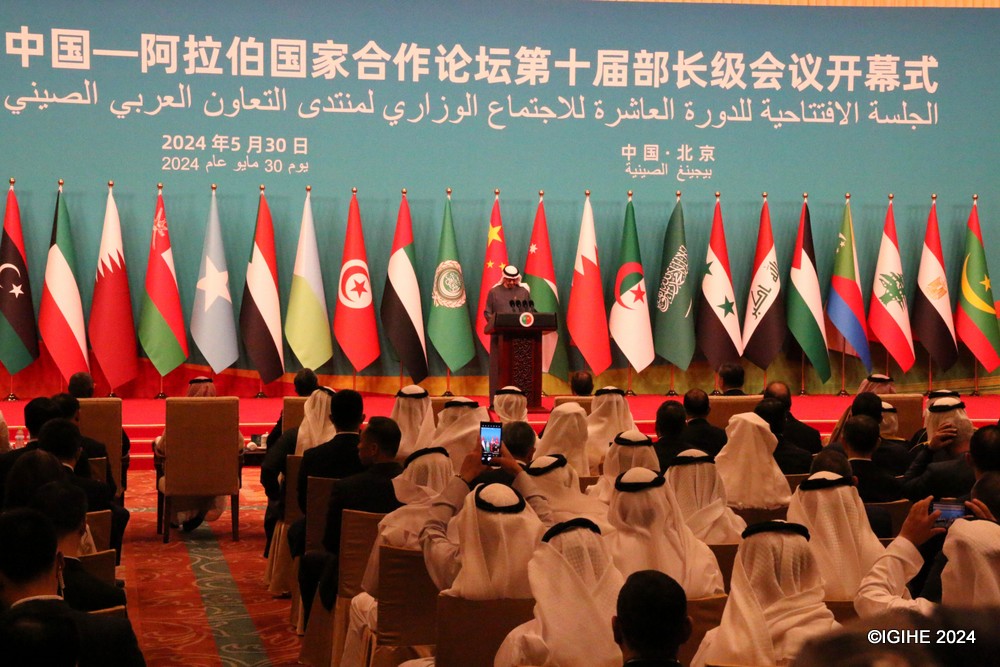
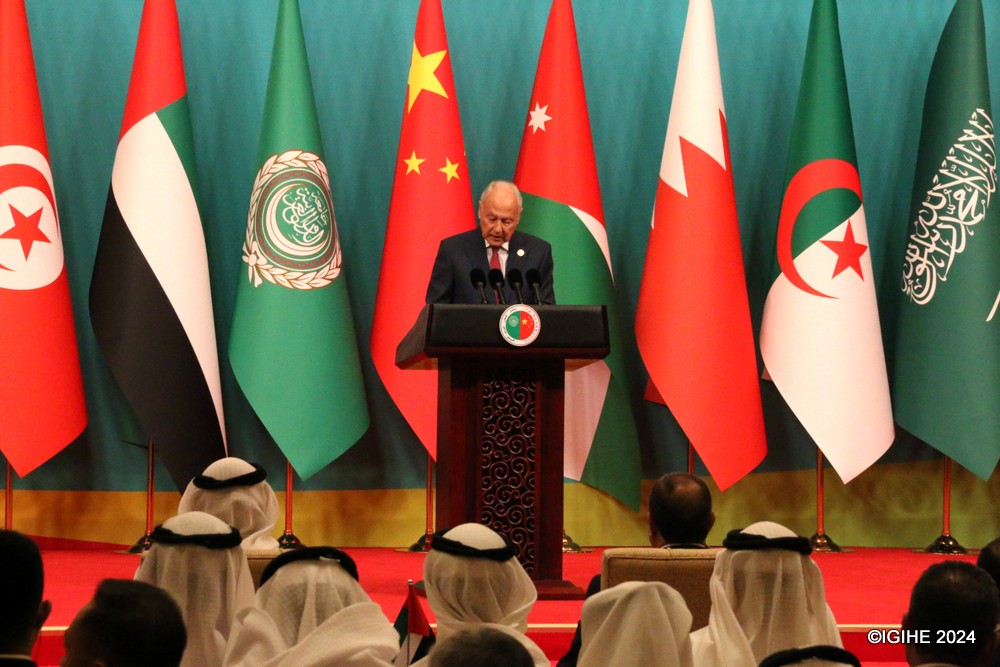
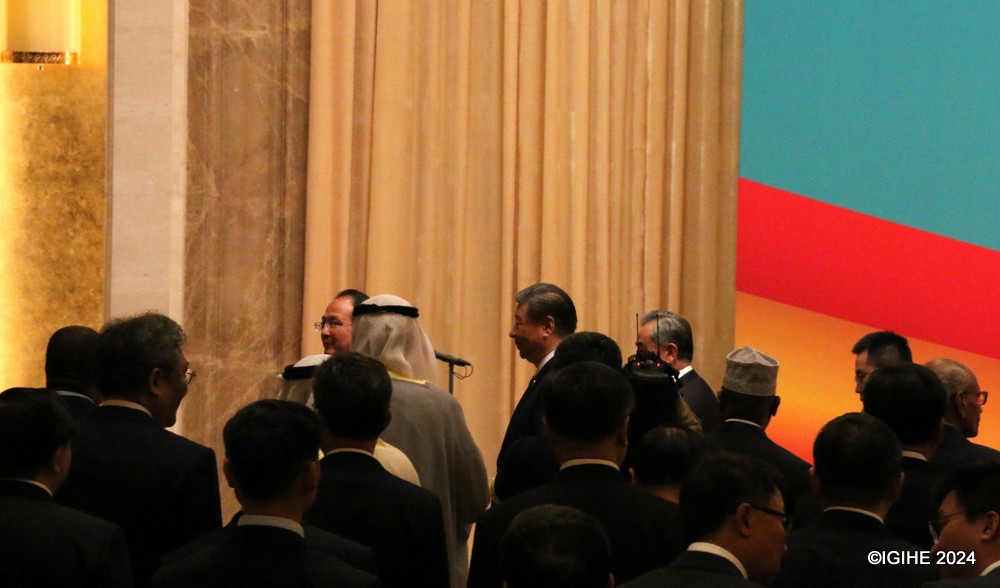
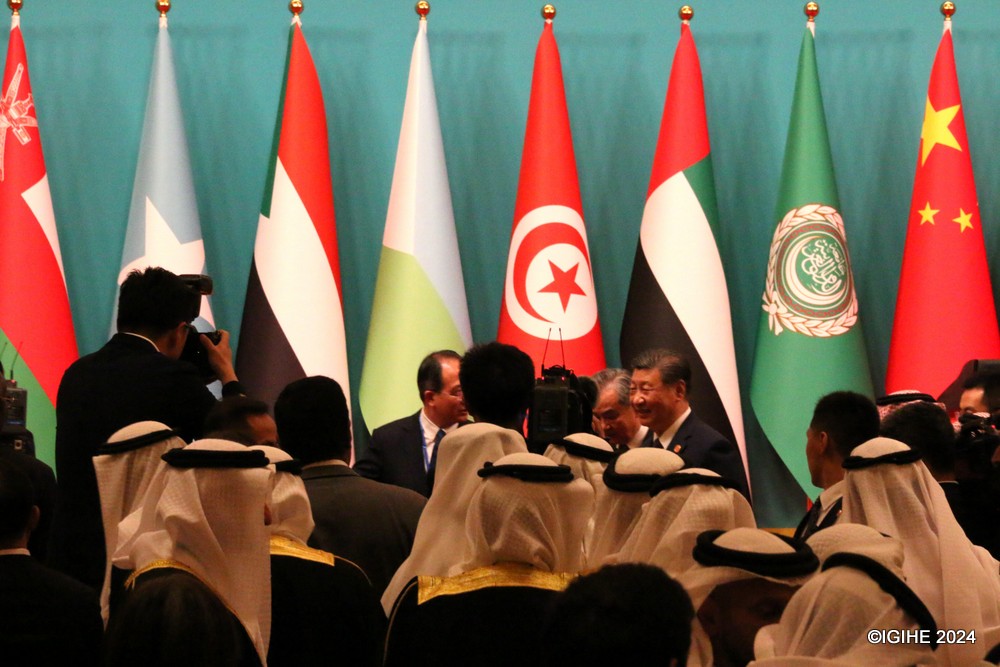
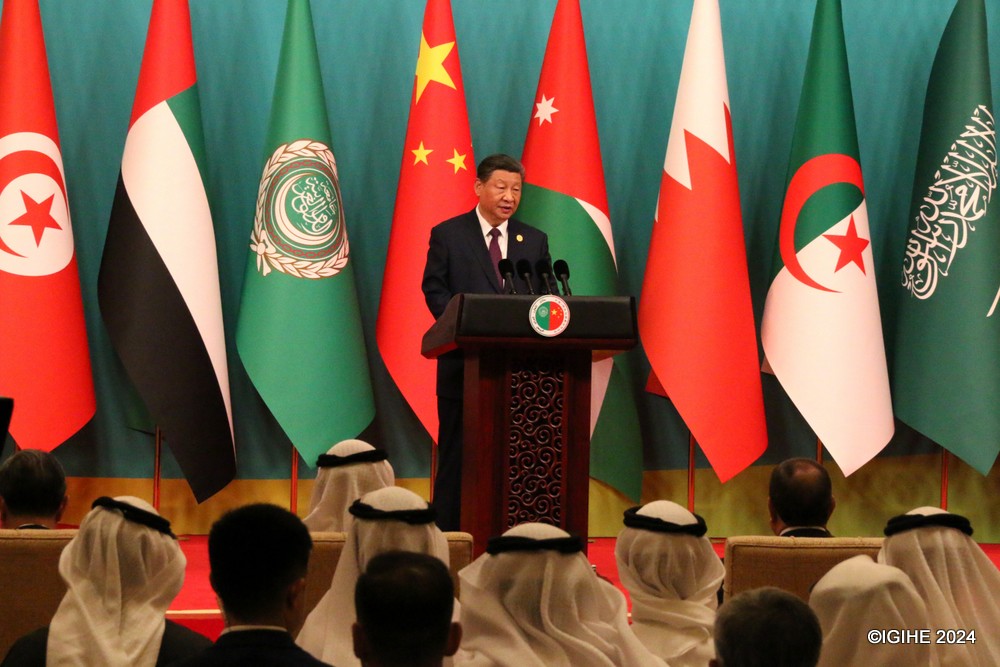
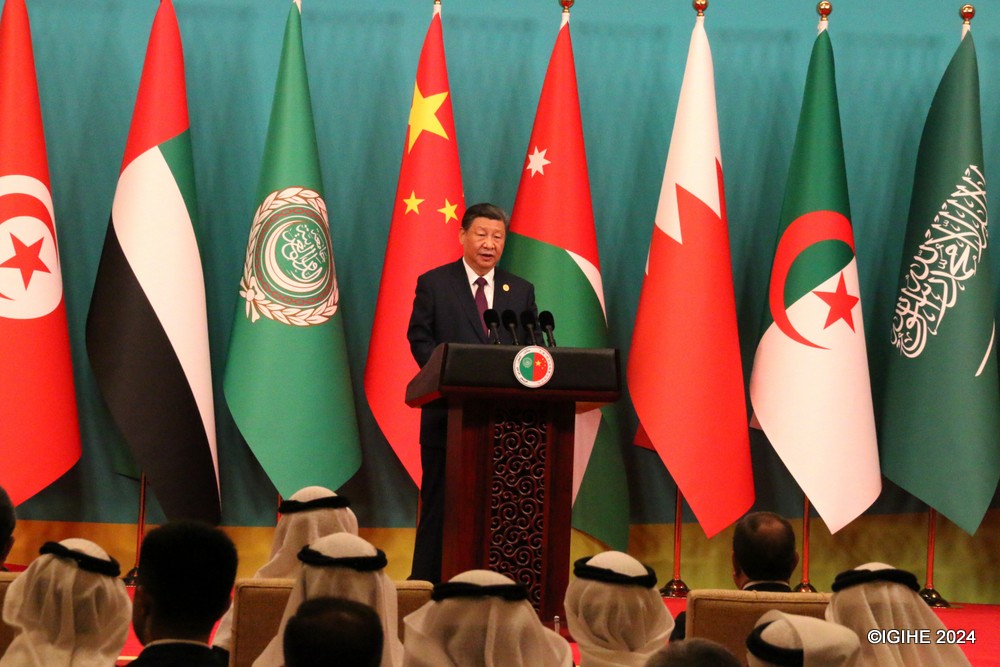
He made the disclosure at the opening ceremony of the 10th Ministerial Conference of the China-Arab States Cooperation Forum at Diaoyutai State Guest House in Beijing on May 30, 2024.
As he delivered remarks, President Xi highlighted the historical ties and ongoing partnership between China and Arab nations, rooted in the ancient Silk Road and shared struggles for national development.
“The friendship between the Chinese and Arab peoples is deeply rooted in our friendly exchanges along the ancient Silk Road, in our joint struggles for national liberation, and in our win-win cooperation in promoting national development,” he stated.
Reflecting on the ongoing Palestinian-Israeli conflict, President Xi reiterated China’s steadfast support for the establishment of an independent State of Palestine “that enjoys full sovereignty based on the 1967 borders and with East Jerusalem as its capital.”
“War should not continue indefinitely. Justice should not be absent forever. Commitment to the two-state solution should not waver at will,” he asserted.
In a significant move, he announced additional financial support to alleviate the humanitarian crisis in Gaza. “On top of the previous RMB 100 million yuan of emergency humanitarian assistance, China will provide an additional RMB 500 million yuan [approximately US$70 million] of assistance to help ease the humanitarian crisis in Gaza and support post-conflict reconstruction,” President Xi declared.
President Xi further committed to donating US$3 million to the U.N. Relief and Works Agency for Palestine Refugees in the Near East.
The Israel-Palestine conflict resurfaced last year after Hamas attacks on October 7 killed about 1,200 Israelis. Despite over 70 years of unresolved conflict and more than 130 UN resolutions, the war has reignited international divisions. China and Arab states support Palestinians, while Israel faces growing criticism, especially after striking Rafah in southern Gaza. On Monday, the Gaza Health Ministry reported the death toll from Israeli attacks since last October has reached 36,050.
The opening ceremony of the ministerial conference saw the participation of Arab leaders, including King Hamad bin Isa Al-Khalifa of Bahrain, Egyptian President Abdul Fatah El-Sisi, Tunisian President Kais Saied, President Mohamed Bin Zayed Al-Nahyan of the United Arab Emirates, and Secretary-General Ahmed Aboul Gheit of the League of Arab States.
The leaders reaffirmed their stance on legitimizing Palestinian rights and establishing an independent Palestinian state. They also called for continued efforts to coordinate for lasting peace.
Among others, President Xi highlighted broader themes of cooperation and a shared future between China and Arab states. He shed light on the progress made since the first China-Arab States Summit in 2022 and announced plans for the second summit in China in 2026.
“China is satisfied with the progress we have made in delivering on the Summit’s outcomes. It will work with the Arab side to enhance the role of the Summit in providing strategic guidance for continued leapfrog growth of China-Arab relations,” he said.
Emphasizing mutual respect and shared goals, President Xi outlined five cooperation frameworks to build a China-Arab community with a shared future. These frameworks include innovation, investment and finance, energy cooperation, economic and trade ties, and people-to-people exchanges.
“Building a China-Arab community with a shared future is a strong statement of our common desire for a new era of China-Arab relations and a better future for the world,” he remarked.
President Xi also addressed the importance of global governance and multipolarity.
“The entire humanity shares one common future, which has become an inevitable trend. But deficits in governance, trust, peace, and development are getting wider. This calls on us to improve global governance under the principle of ‘planning together, building together, and benefiting together,’” he stated, expressing China’s readiness to work with Arab nations to champion an equal and inclusive global order.
Speaking during Kenya’s National Prayer Breakfast on Thursday, May 30, President Ruto said that as a “responsible steward,” there was no way he could spend the colossal amount on the trip, insisting, “I am not a madman”.
According to the Kenyan Head of State, his friends offered the plane after he decided to travel on Kenya Airways (KQ) to the US upon learning that it would cost the taxpayers at least Ksh70 million on a chartered flight.
“I am a very responsible steward believe you me. There is no way I can spend Ksh200 million in fact it cost the republic of Kenya less than Ksh10 million because I am not a madman,” President Ruto defended himself.
“When I was told the cheapest plan was Ksh70 million I told my office, go and book Kenya Airways so when some friends of mine heard that I was going to travel Kenya Airways, and I have built a big reputation as a country, some friends told me how much are you willing to pay? I said I’m not willing to spend more than Ksh20 million they said bring Ksh10 million we give you the plane.”
He emphasized that as president, he was committed to leading from the front in implementing the government’s austerity measures to cut spending.
“Look at me Kenyans, look at me again. I must lead from the front as I tell others to tighten up their belt mine must be where to begin. So relax and the debate must end because I am that responsible and it is going to be that way,” Ruto added.
“My plan is that in 3 years we must have a balanced budget.”
President Ruto’s choice of a luxurious private jet for his trip to the US drew mixed reactions with a section of Kenyans questioning his commitment to cutting government spending by state officers.
Upon his return to the country after the four-day visit, he was forced to clear the air, explaining that travelling on the private jet was way cheaper than travelling on Kenya Airways, the country’s national carrier.
“Fellow Kenyans, I have noted concerns on my mode of transport to USA. As a responsible steward of public resources and in keeping with my determination for us to live within our means and that I should lead from the front in so doing, the cost was less than travelling on KQ,” President Ruto said in a post on X last Sunday.
The local media had reported that State House Kenya charted the luxurious aircraft from Dubai-owned RoyalJet company for the president and his delegation’s trip to the US. According to KTN News, the cost of hiring the jet is about $1.5 million (about Ksh200 million).
The US government had earlier denied reports that it paid for the aircraft the Kenyan delegation used for the US trip.
“Just to be clear: The United States of America did not pay for President Ruto’s jet to the US,” a spokesperson for the US embassy in Nairobi told the press.
Since assuming office in September 2022, President Ruto has imposed several austerity measures including banning non-essential travel by state officials over financial constraints.
The president has also introduced new taxes on various goods and services, even as he and his deputy, Rigathi Gachagua, insist that they inherited a “dilapidated” economy from the former administration of President Uhuru Kenyatta.
President Ruto was accompanied by various government officials, members of the opposition, and representatives from the creative economy to the US on May 20. He was the first African leader to make a state visit to the White House in 16 years since Ghana’s John Kufuor visited in 2008.
But after winning election after election for 30 years, the ANC, now led by President Cyril Ramaphosa, is facing its biggest challenge since taking power in 1994. This potentially marks a watershed moment for one of Africa’s most powerful nations and a major test for South Africa’s still-fledgling democracy.
Polling ahead of Wednesday’s election shows that, for the first time, the ANC could fall below 50% of the vote. Although the party would still likely end up controlling the presidency, currently held by its leader Cyril Ramaphosa, it would be forced to enter into a coalition with smaller parties. These smaller parties blame the ANC’s current direction for the nation’s profound problems.
In the years after apartheid ended with the first free, democratic election in 1994, many voters credited the ANC with improving life for South Africans — especially for the black majority that gained basic rights. International sanctions that had hampered the economy were lifted, and the gross domestic product surged.
This year, a record 51 opposition parties are on the national ballot attempting to unseat the ANC. Some of them are new parties, while others are campaigning on specific issues like closing the borders, or appealing to specific ethnic groups. According to the Electoral Commission of South Africa, 27.79 million South Africans aged 18 and above have registered for the elections this year, up from 26.74 million in 2019.
According to the Electoral Commission of South Africa, 27.79 million South Africans aged 18 and above have registered to vote in this year’s elections, up from 26.74 million in 2019.
The Democratic Alliance, the second-largest party in the 2019 election, is campaigning on a platform of combating widespread corruption and revitalizing the economy. Party leader John Steenhuisen has urged voters to oust the ANC to “rescue” the country, calling this “South Africa’s most consequential election in post-democratic history.” However, the party faces the perception of being predominantly supported by white voters.
The ANC is also challenged by the Economic Freedom Fighters, a party founded about a decade ago. Its core supporters are young people, including many black university students concerned about racial inequality. With polls indicating around 11% support ahead of Wednesday’s election, EFF leader Julius Malema has criticized the ANC’s platform for lacking ambition.
A newcomer to the political scene is uMkhonto weSizwe, or the MK party, named after the ANC’s former paramilitary wing. Formed last year by former South African President Jacob Zuma as a breakaway from the ANC, the MK party faces the obstacle of Zuma’s ineligibility to run for office due to a criminal conviction for contempt of court. Nevertheless, his face will appear on the ballot alongside his party.
As the nation heads to the polls, the ANC faces unprecedented challenges, and the outcome of this election could reshape South Africa’s political landscape for years to come.
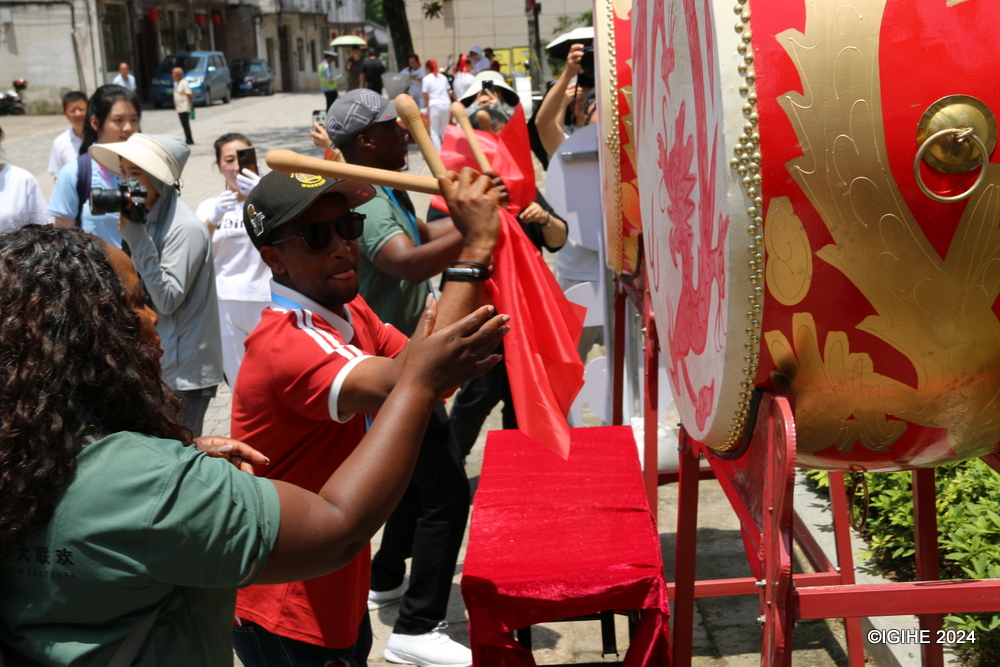
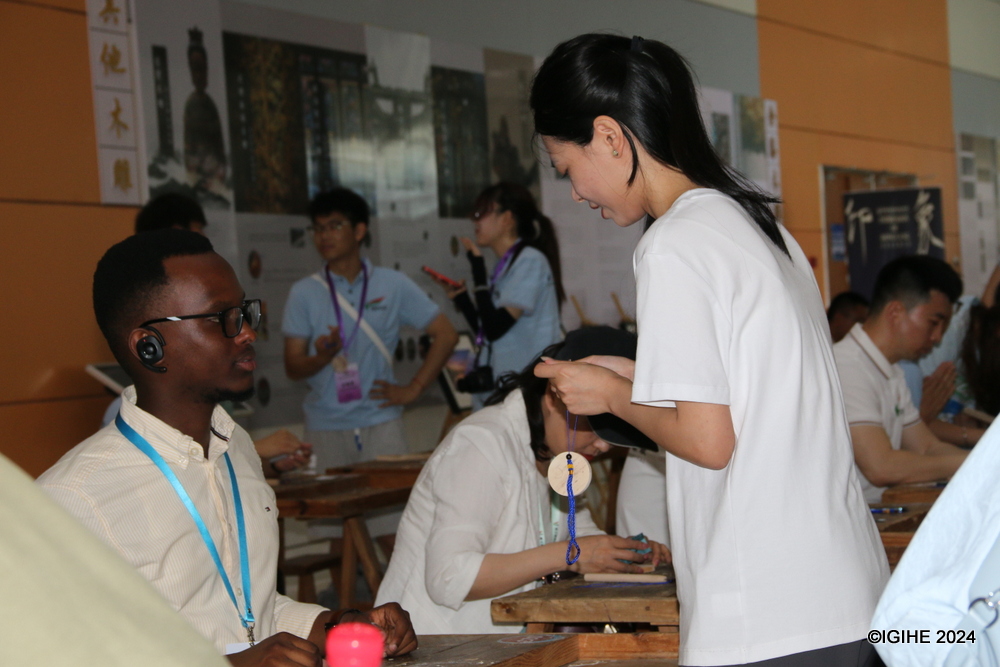
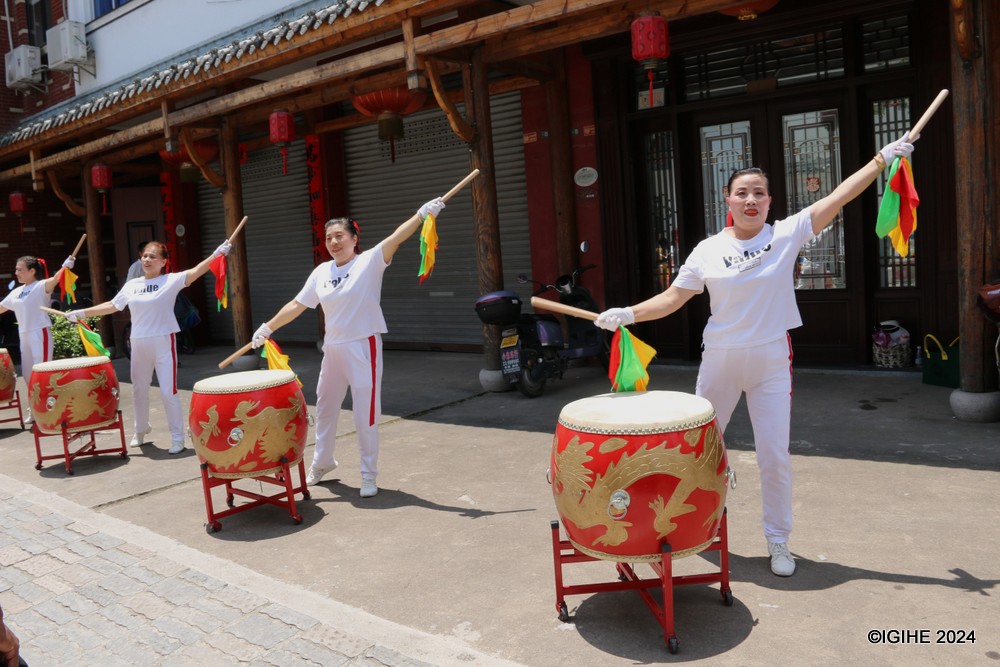
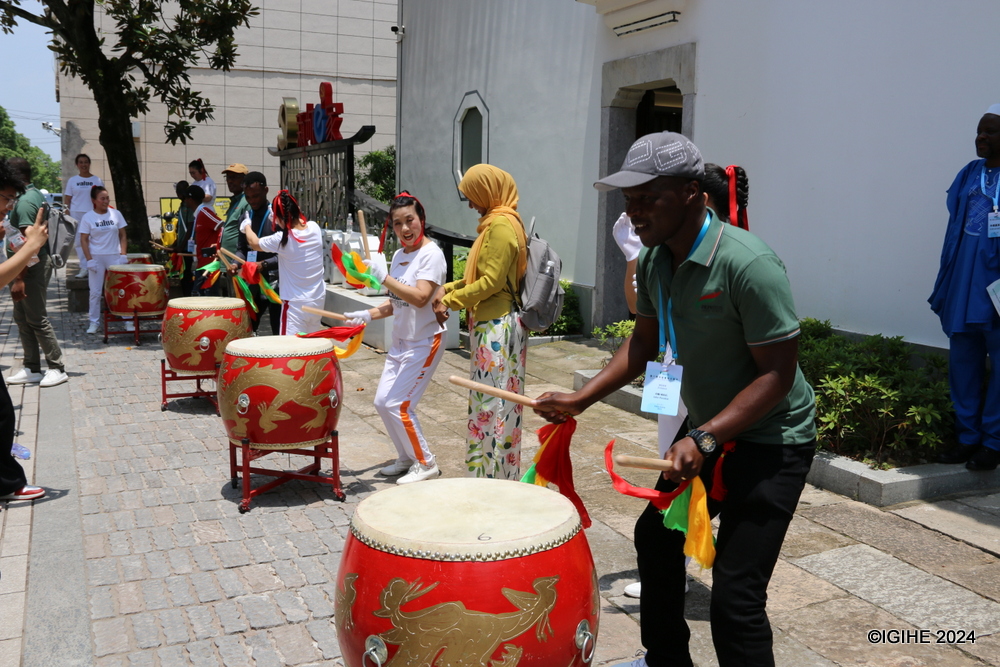
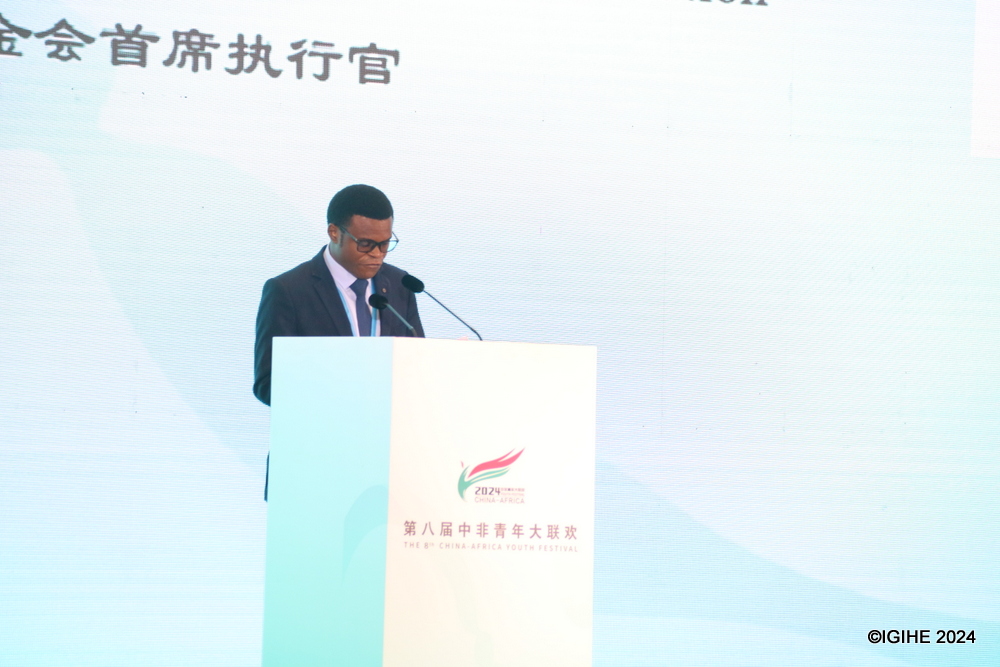
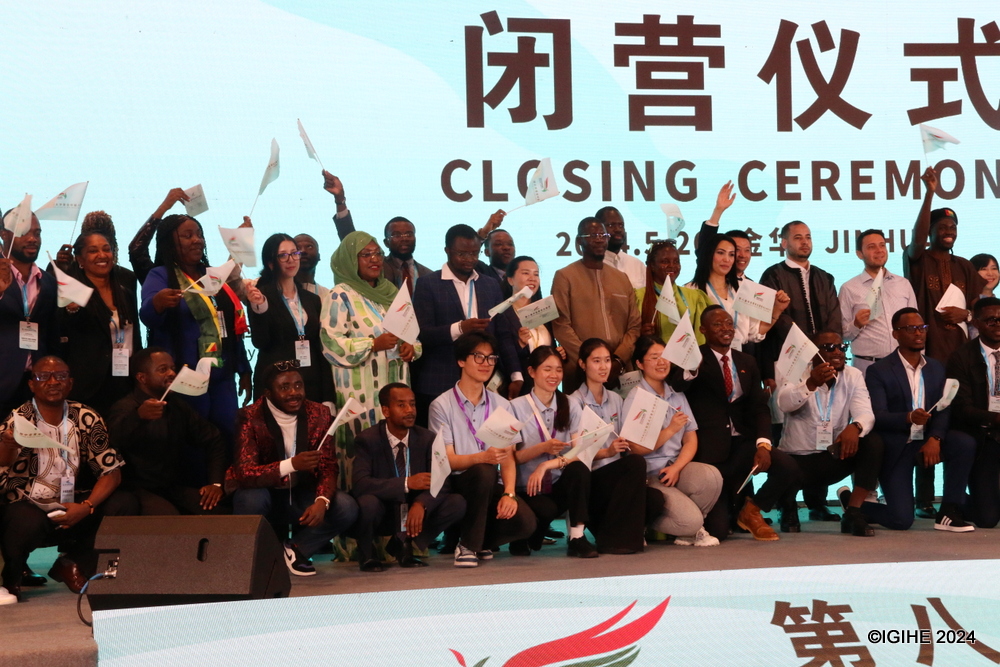
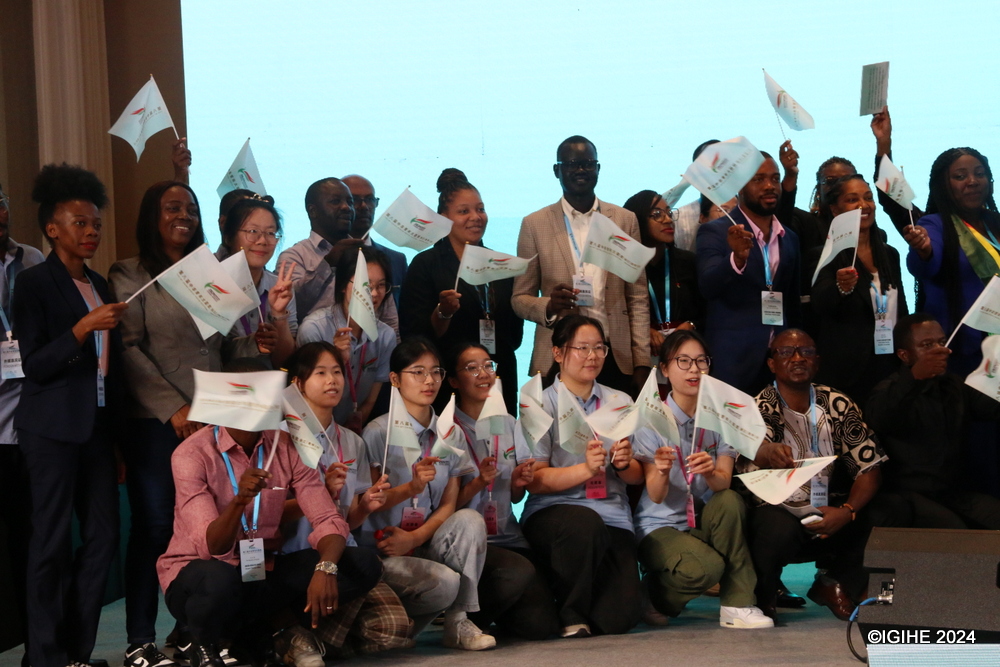
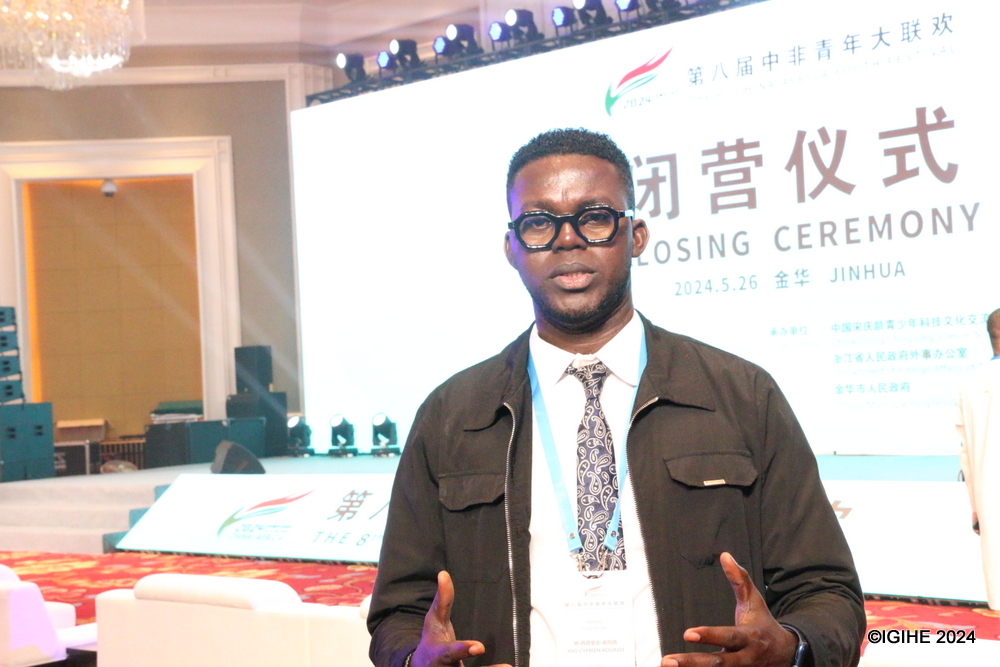
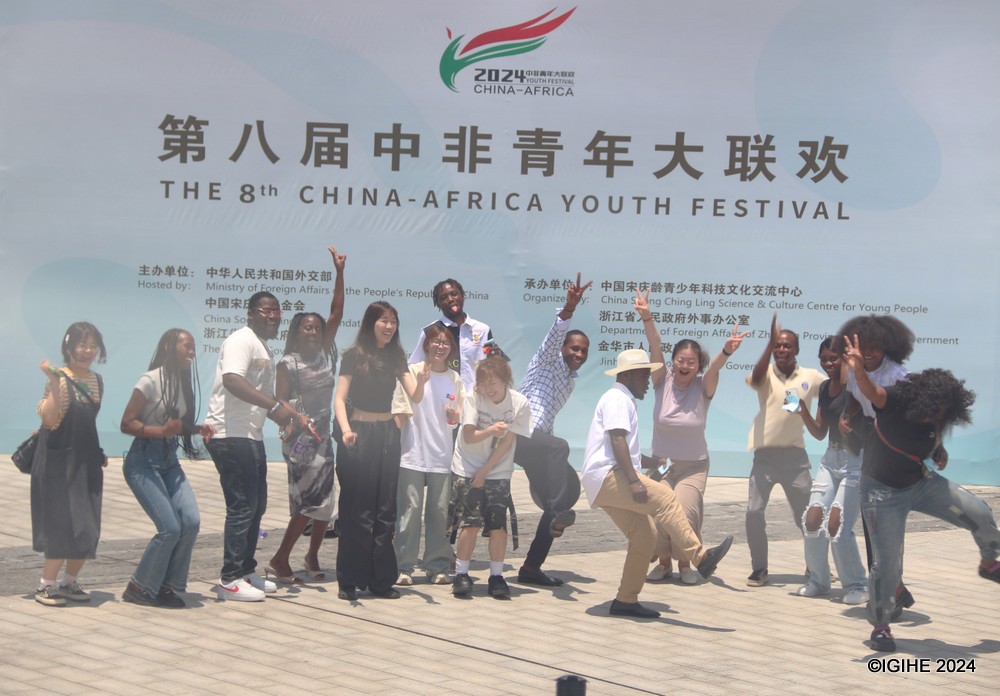
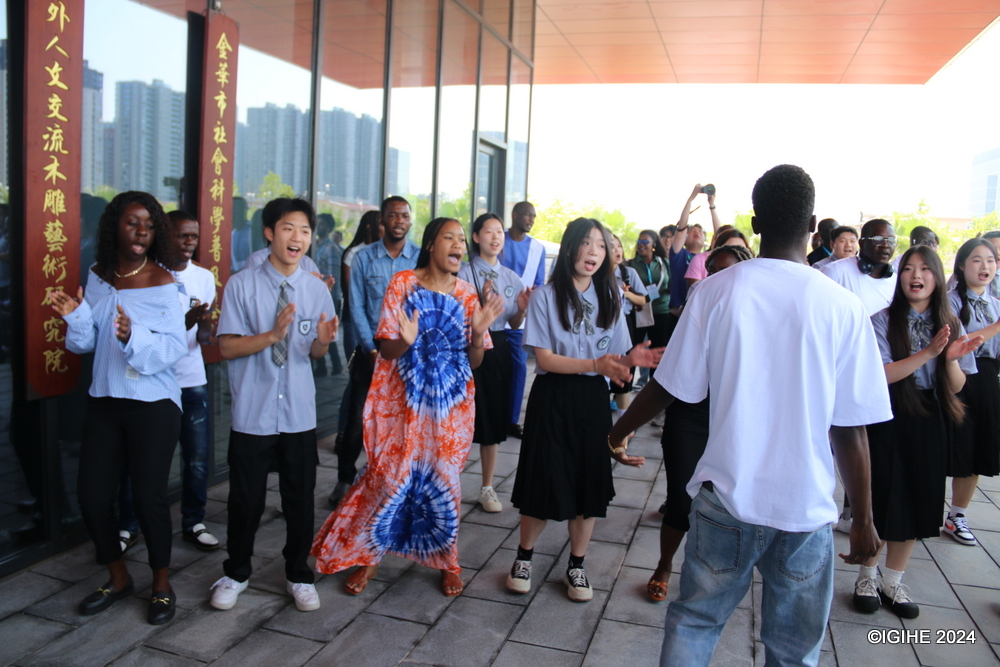
Speaking to IGIHE, following the closing ceremony of the festival held from May 20th to 26th, 2024, the youths expressed their commitment to strengthening China-Africa relations.
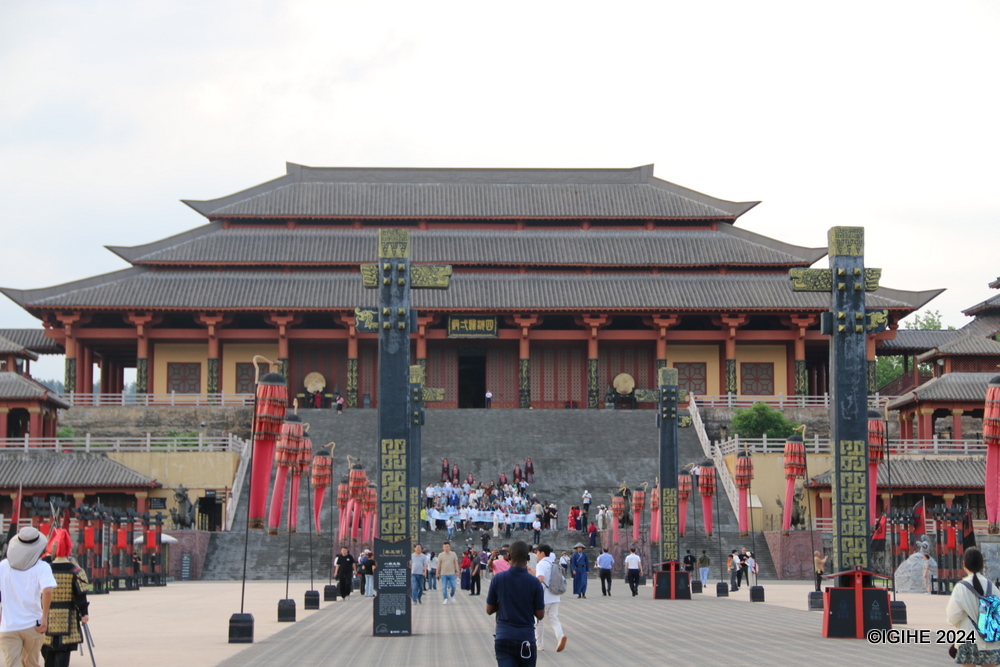
The event which took place in Ruyi Hall of Your World International Conference Center in Yiwu County, Zhejiang Province, brought together Chinese officials and youth representatives from Africa and China.
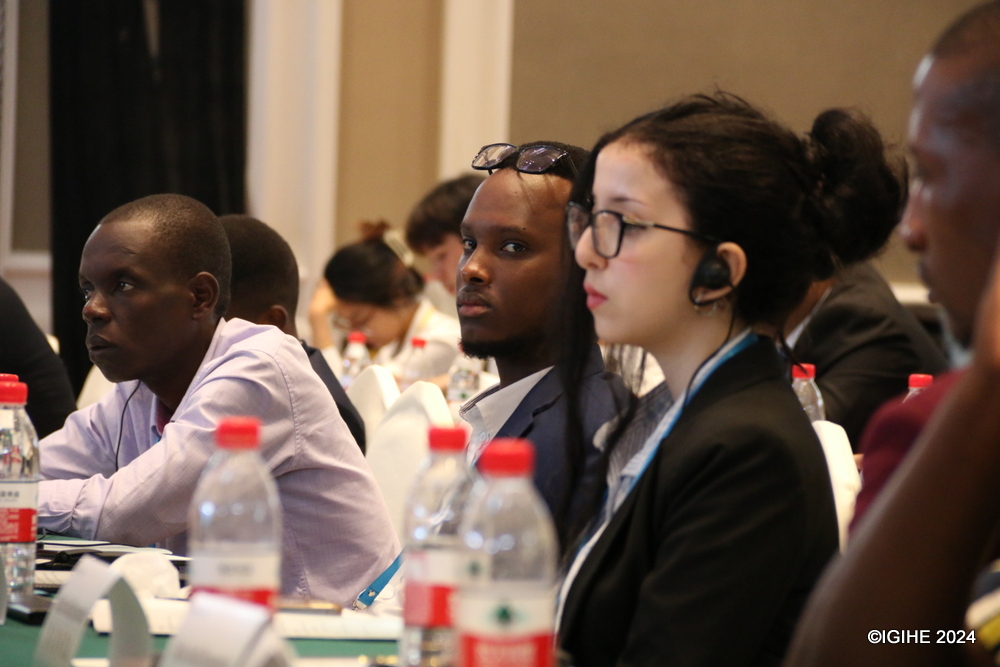
A total of 64 youths from 52 African countries, including Rwanda, participated in the festival organized under the framework of the China-Africa Cooperation Forum (FOCAC).
The event also attracted nearly 30 African journalists participating in a four-month media exchange program organized by the China International Press Communication Center (CIPCC).
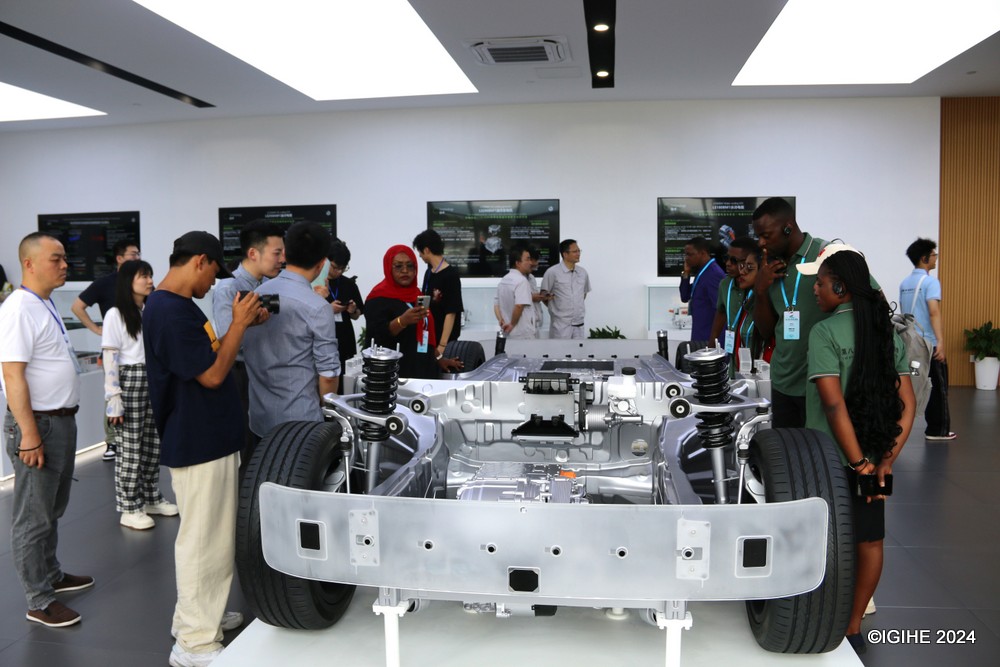
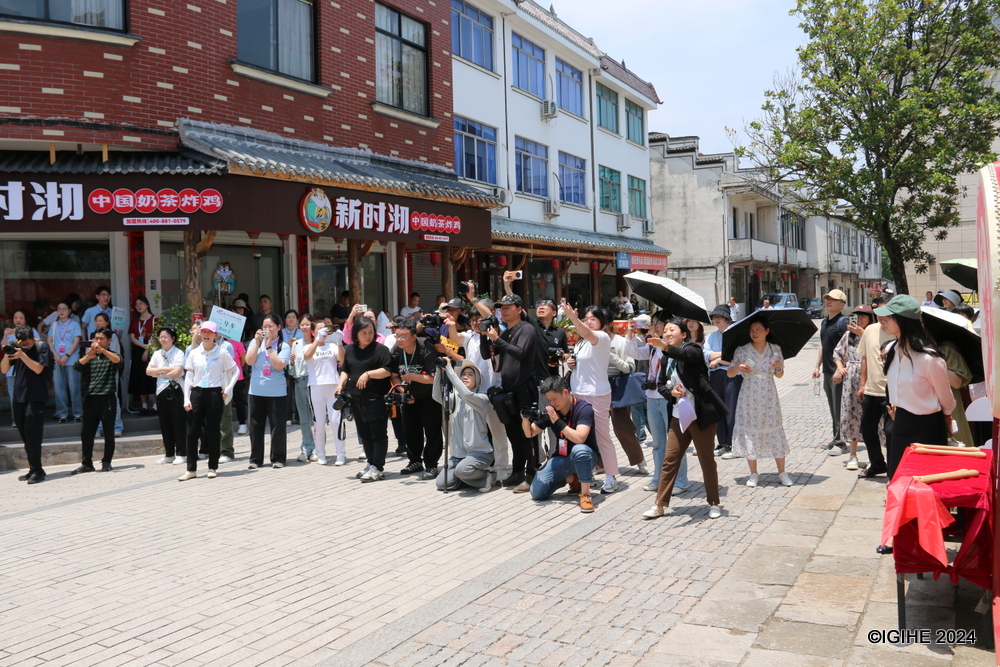
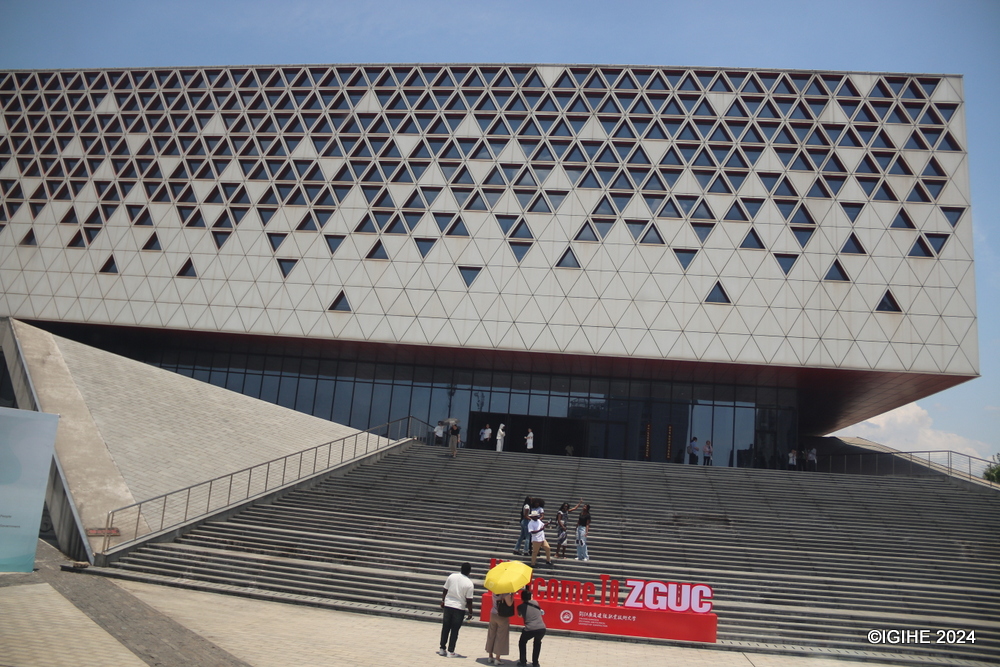
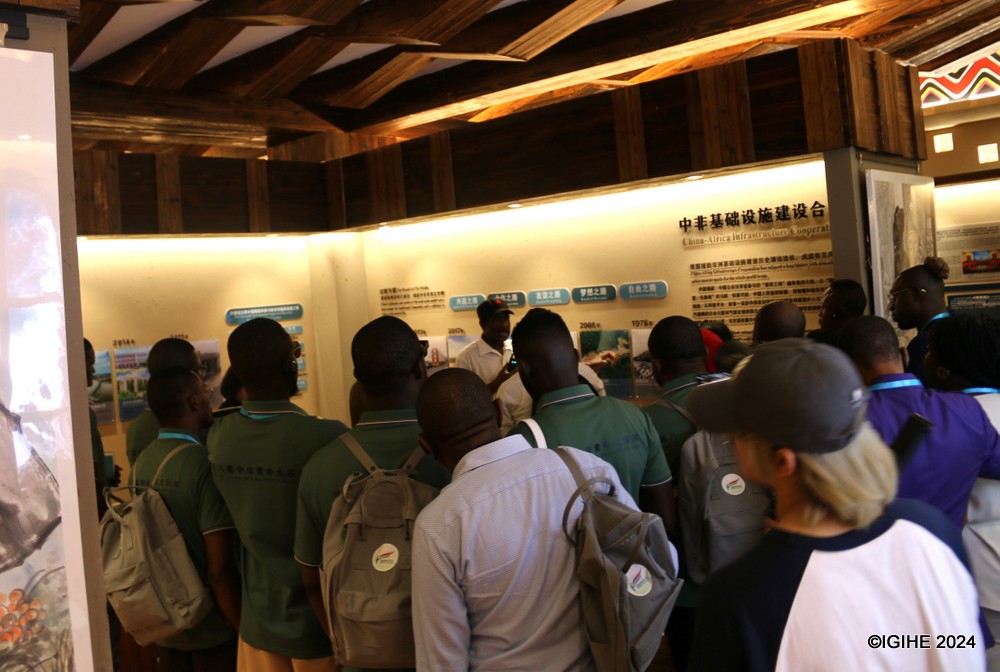
Throughout the festival, the youths visited significant sites such as the Common Prosperity Belt in Jindong, explored Chinese rural culture, toured the China-Africa Museum at Zhejiang Normal University, and visited Leapmotor, a new energy vehicle manufacturer.
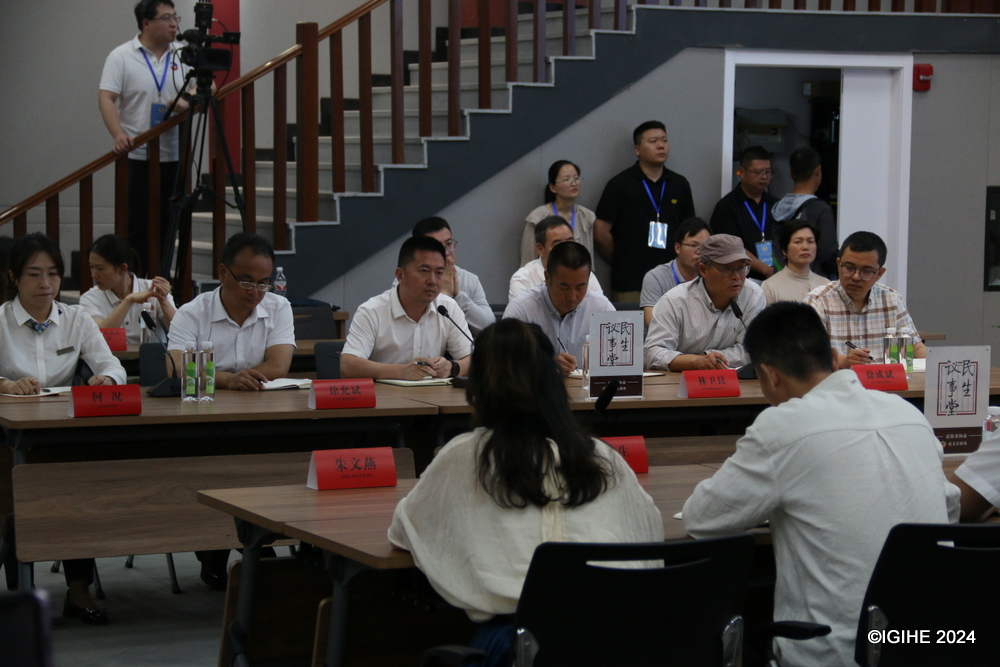
In addition, they experienced traditional Chinese performances by the Zhejiang Wu Opera, visited the People’s Livelihood Conference Hall of the CPPCC, Hengdian World Studios, Yiwu International Trade Market, and Zhejiang Guangsha Vocational and Technical University of Construction.
This immersive experience allowed them to witness firsthand the rapid development and cultural richness of China.
{{Consolidating gains}}
Ghislain Niyonzima, a representative from Burundi who works with a travel agency shared his insights.
“Observing how China has developed its country, despite still working to achieve envisaged modernization, is impressive and inspiring. This teaches us a lesson about not being complacent, regardless of our achievements,” Niyonzima said.
He emphasized the importance of maintaining the gains achieved in China-Africa cooperation and highlighted the suitability of Chinese democracy in addressing people’s needs.
“We should learn from China’s homegrown solutions, which are suited to their people’s needs, to develop our own countries and ensure these values are deeply rooted in our culture as well,” added Niyonzima.
Danny Vassyli Mugisha, a Rwandan representative was particularly struck by China’s development over the past 40 years.
“A lot has been achieved in different aspects of development. From technological advancements to conserving the culture, everything is a source of inspiration. I also learned a valuable lesson from the commitment and discipline of the people of China, seeing how they have been able to go through tough times and succeed in just a few years. This is what I am taking with me home,” Mugisha noted.
Mugisha observed that the role of the youth is of great significance in consolidating gains attained through China-Africa cooperation, especially considering that the majority of people in Africa are young.
“People like me, who have had the opportunity to participate in such cultural exchanges, should share experiences with a view to uphold the rich legacy and strengthen bonds between China and Africa,” he said.
{{Poverty eradication}}
Cyprien Kouassi from Ivory Coast had a different impression about China until he got an opportunity to attend the festival, where he witnessed its development, political system, and overall progress firsthand.
“My view has changed. My message to African youth is that they must understand that poverty should not be a barrier, as China has demonstrated that it is possible to eliminate it,” he noted.
In 2021, China declared the eradication of extreme poverty, lifting 770 million people out of poverty since 1978 and establishing a moderately prosperous society.
{{Warm hospitality}}
Kouassi also appreciated Chinese hospitality, which he described as integral to the Asian country’s identity.
“Chinese hospitality has greatly impressed me. Since our arrival, the assistance of young volunteers who were with us, all the way from Beijing through Yiwu, has been impeccable,” he shared.
Kouassi emphasized that this mentality should be ingrained in African hearts so that such warm reception can be emulated in their countries.
“China has shown that everyone knows what hospitality is and they put it into action through the reception extended to us. Here, hospitality is among the major aspects making China’s unique identity,” he added.
Burundian Niyonzima also expressed his gratitude for the warm reception and hospitality, which has left him with indelible memories of his stay in China.
{{Rich legacy}}
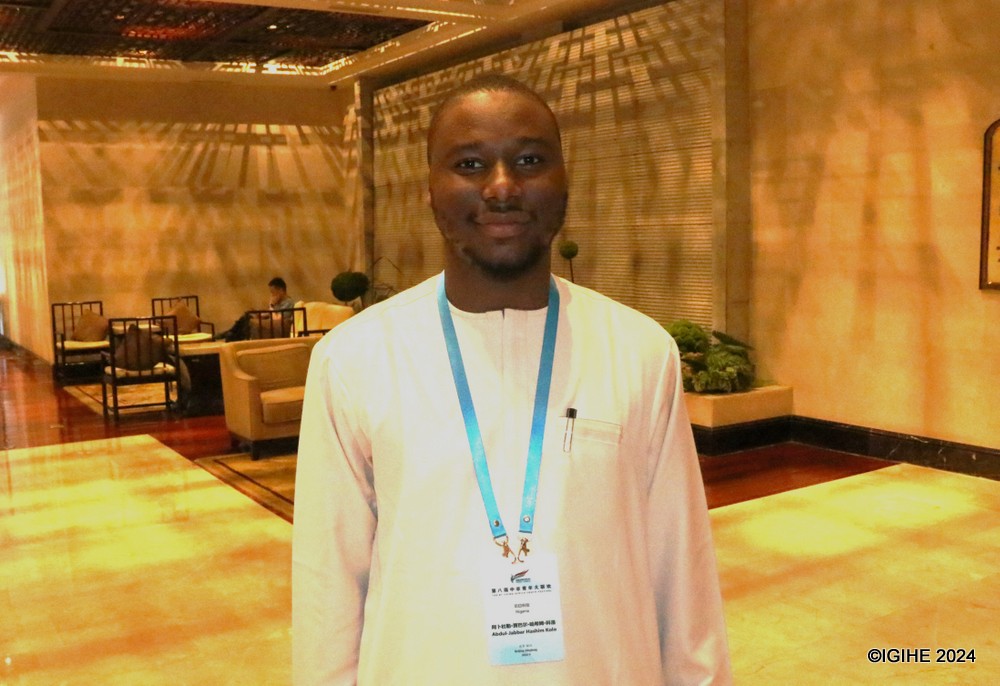
Abdul Jabbar Hashim Kolo, a lawyer from Ateef Law Firm in Nigeria, was equally impressed and excited about what he saw in China.
“Even before coming to China, the whole world’s attention has been on what China has achieved in terms of development over the last forty years. But coming here, I have witnessed that seeing is better than hearing,” he noted.
Kolo highlighted that besides development, economic growth, and prosperity, he had also been able to appreciate China’s very rich culture.
“I have participated in activities of arts and crafts, wood carving, and minimal pottery as well, which are very similar to those in Africa. However, China has gone an extra mile by integrating it into educational institutions, allowing people to perfect their art,” added Kolo.
He expressed delight at the flourishing tourism sector of China, infrastructure, and manufacturing, all offering lessons worth replicating.
On furthering Africa-China cooperation, Kolo stressed the need for “a platform to see how we can continue this dialogue going forward so that the door remains open not only for African participants and China but also for Africans to communicate with each other.”
{{Governance lessons}}
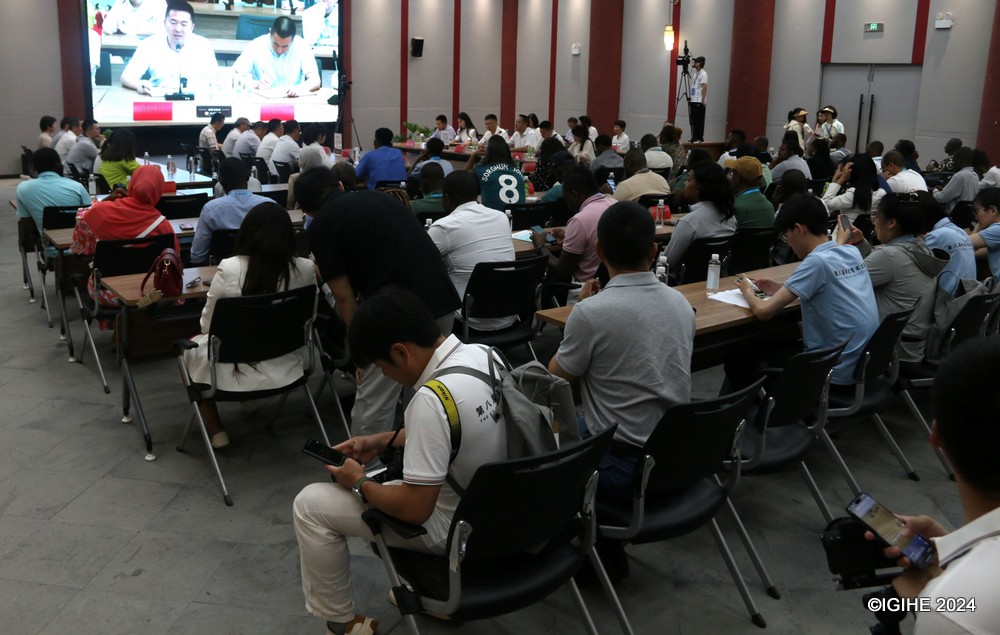
During their visits, the youths also attended a session of the Representative Discussion Station of the Wuyi County-level Committee of the Chinese People’s Political Consultative Conference (CPPCC).
At the Wuyi People’s Livelihoods Consultative Hall, participants discussed a proposal to construct commercial streets.
The discussion included leaders and business representatives to ensure the project’s implementation meets community needs without setbacks.
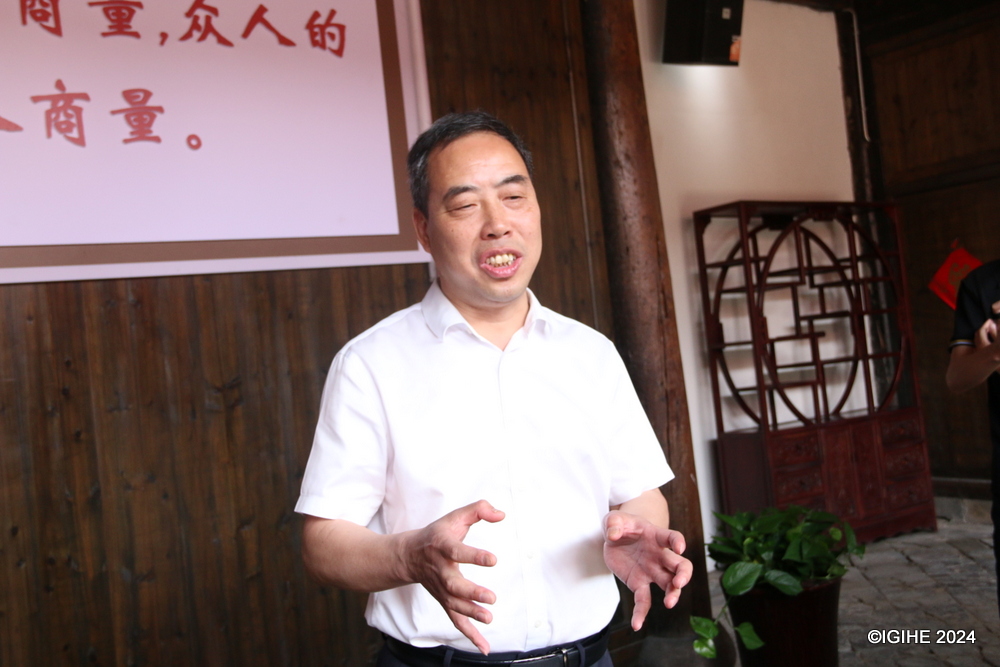
According to Li Yangyong, Chairman of the Wuyi Committee of the CPPCC, these consultations are part of the CPPCC model and involve several stages, including research and engagements with relevant stakeholders.
The agreed-upon resolutions are forwarded to higher authorities, with the hope of endorsement, considering the thorough consultations and research conducted beforehand.
While the Two Sessions address major national issues, the CPPCC consultations in Wuyi focus on the daily lives of villagers.
Nigerian Kolo disclosed that he appreciated the discursive nature of the CPPCC consultations, as well as their approach to involving people in development and preparing for future challenges.
“They didn’t just come and build it; they made the community understand what they were doing. This creates a sense of ownership of the project within the community and gives insight into the intentions of the people, making it easier for them to embrace and support the project,” he noted.
Kouassi from Ivory Coast also indicated that Africa should learn from the political system of China, which is designed to address the needs of the population through decentralization, from the central leadership of CPC in Beijing to a small village in Wuyi. “I mostly liked the structure that ensures that people’s problems are accurately represented,” he noted.
With a population of 1.4 billion, Africa is the continent with the youngest population worldwide, with over 400 million aged between 15 and 35.
Tanzanian Joseph Brighton Malekela, Chief Operations Officer of the Africa-Asia Youth Foundation, called on the youth to learn and understand the history behind the enduring friendship between China and Africa marked by solidarity and cooperation spanning centuries for them to carry the legacy forward.
{{Fruitful cooperation}}
Liu Hongwu, Director of the Institute of African Studies at Zhejiang Normal University, highlighted that Africa made enormous contributions to the development of China and observed that China is always committed to supporting developing African countries.
Liu reminisced about the fact that 80% of the global south are developing countries and stressed the need for joint efforts and ventures for the Chinese and African dreams to materialize.
China, the world’s second-largest economy, has been a major contributor to African development through different initiatives, notably through the Belt and Road Initiative (BRI), which continues to drive remarkable progress in Africa, forging strong ties between China and African nations, while fostering economic growth and cooperation across the continent.
Experts project that by 2040, the BRI could increase the world GDP by $7.1 trillion annually, benefiting world trade by overcoming the frictions caused by inadequate infrastructure.
Over 50 African countries have joined the BRI, embracing the rewards of improved infrastructure, reduced unemployment, and expanded trade opportunities. Driven by the BRI, Chinese companies have undertaken awe-inspiring infrastructure projects in Africa.
Over the period of 23 years, they have constructed or upgraded more than 10,000 kilometers of railways, nearly 100,000 kilometers of roads, approximately 1,000 bridges, and 100 ports. These transformative projects have not only enhanced trade but have also created over 4.5 million jobs, breathing new life into African communities.
The management of the state’s agency responsible for the procurement and distribution of medicines and medical supplies indicates that agreements have been made with over 16 types of drug manufacturers, including those within Rwanda, the region, and various continents, to supply Rwanda directly.
Towards the end of 2023, the government intensified efforts to source medicines and medical supplies directly from manufacturers without intermediaries. Medical expert Prof. Stephen Rulisa stated that this initiative will lower healthcare service costs, noting that sometimes 10% of the costs were a significant burden on citizens due to the services provided.
Dr. Abel Dushimimana, the Head of the Association of Private Importers of Medicines and Medical Supplies, mentioned that they have begun organizing themselves to explore ways to also approach these manufacturers.
The Minister of Health, Dr. Sabin Nsanzimana, noted that since the government started direct negotiations with manufacturers, there have been instances where costs have decreased by up to 50%. He assured private importers that they will also benefit from these opportunities.
Rwanda imports between 3,000 to 4,000 different types of medicines and various medical supplies, with an annual cost exceeding 100 billion Rwandan Francs.
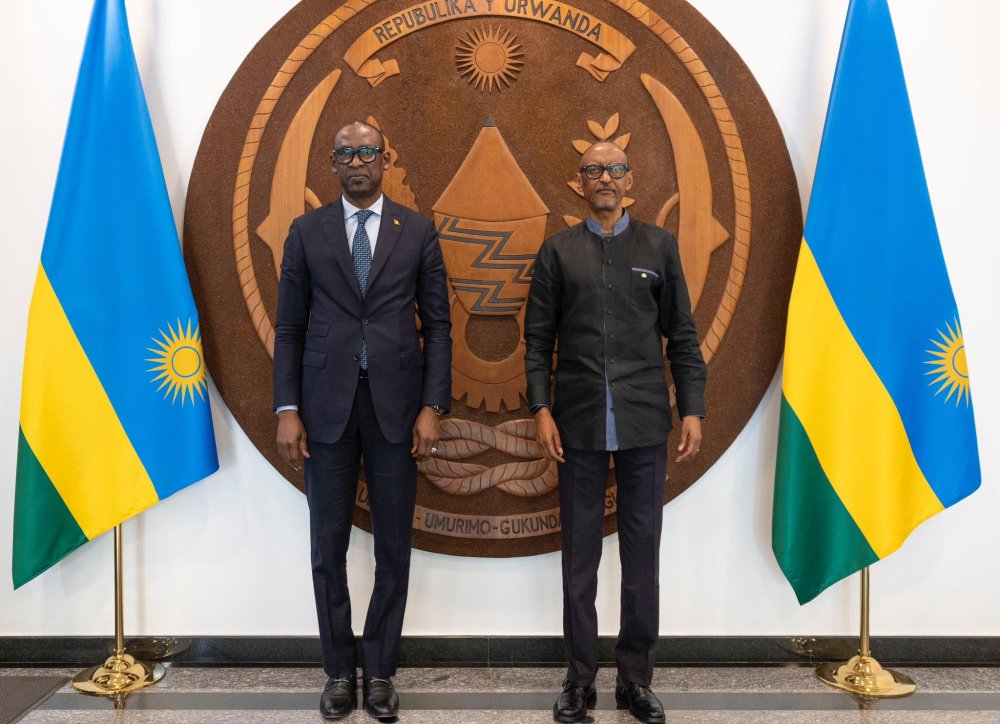
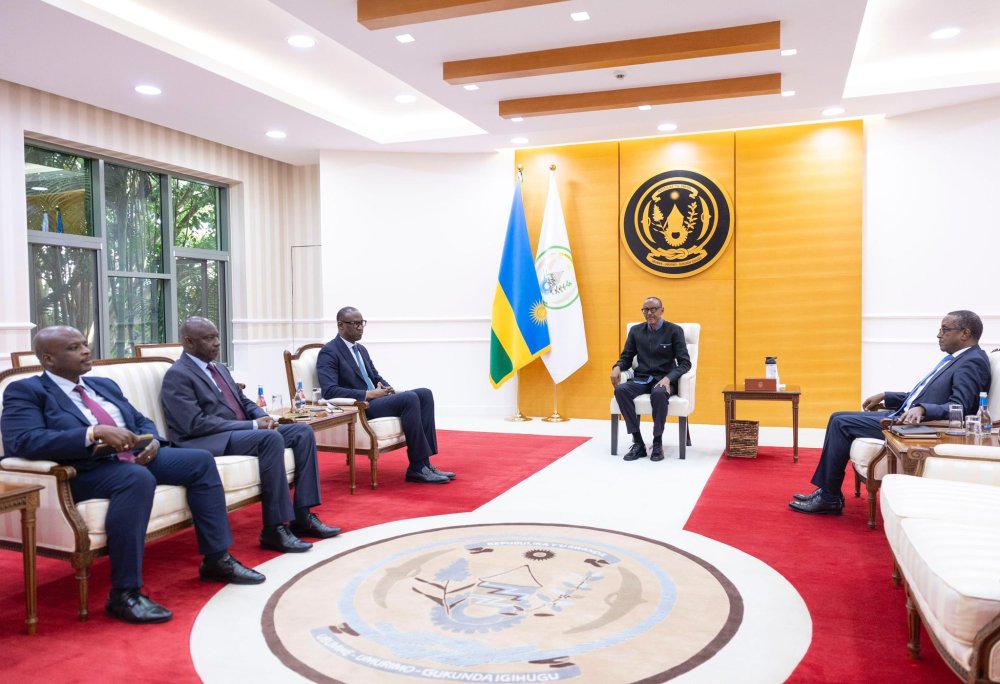
Rwanda’s Presidency has stated Kagame met with Minister Abdoulaye Diop on the evening of Monday, May 27, 2024, at Village Urugwiro. The meeting was also attended by Rwanda’s Minister of Foreign Affairs, Dr. Vincent Biruta.
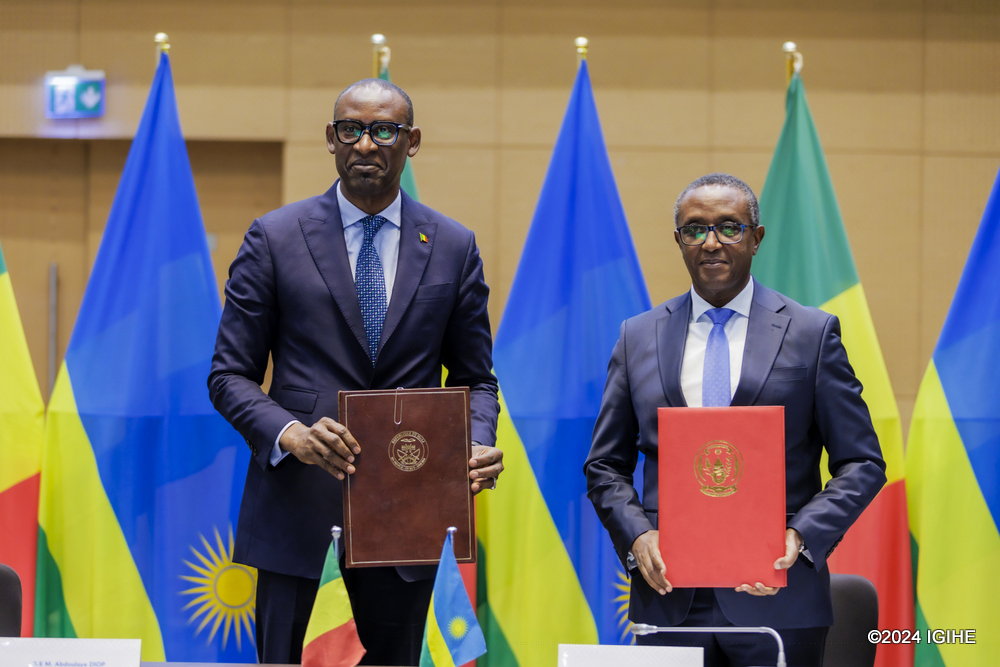
The discussions between President Kagame and the Minister of Foreign Affairs of Mali followed the signing of 19 agreements between the two countries earlier that Monday. These agreements covered various sectors including health, security, agriculture, technology, culture, and investment promotion.
The agreements were signed following a three-day meeting that took place from May 25-27, 2024, involving a delegation of leaders from both Rwanda and Mali.
Rwanda’s Minister of Foreign Affairs, Dr. Vincent Biruta, noted that since Mali opened its embassy in Rwanda in February 2017, significant progress has been made, including the signing of agreements in various fields in 2023. These agreements laid the foundation for enhanced development-focused cooperation between the two countries.
Minister Diop expressed confidence that the ongoing collaboration between Rwanda and Mali will continue to yield substantial benefits.
Rwanda and Mali have a history of cooperation in various sectors, including an agreement on air transport that allows aircraft from both countries to use each other’s international airports.
Dr. Biruta highlighted the progress made since Mali opened its embassy in Rwanda in February 2017, noting that several agreements were signed in 2023, laying the foundation for further cooperation.
The 19 agreements signed on May 27, 2024, cover various sectors, including health, security, agriculture, technology, culture, and investment promotion. Dr. Biruta expressed confidence that a joint committee from both sides would work together to implement these agreements effectively.
He also mentioned that additional agreements are in the pipeline and will be signed in the near future.
Minister Biruta emphasized that the meeting also provided an opportunity to discuss security issues in different parts of Africa, fostering a culture of dialogue on peace and security.
Mali’s Foreign Minister, Abdoulaye Diop, praised the strong relationship between Rwanda and Mali, which benefits both countries and their citizens.
He mentioned that the agreements signed on Monday include cooperation in justice, mining, oil and gas, agriculture, fishing, environment, climate change mitigation, tourism development, higher education, transportation, and the movement of people and goods.
Diop noted that the current activities of both countries indicate that Rwanda and Mali will continue to reap significant benefits from this positive relationship.
He stated that with the goal of building a peaceful, independent, and strong Africa, Rwanda and Mali share a good political relationship and expressed confidence that the resolutions made will lead to increased activities between the two countries.
The first meeting of the joint committee to discuss the signed agreements and related projects is scheduled to take place in Mali in the near future.
Rwanda and Mali already cooperate in various sectors, including an air transport agreement allowing aircraft from both countries to use each other’s international airports.
In 2022, Malian military leaders visited Rwanda to learn from the experience of the Rwanda Defense Forces, agreeing to formalize this cooperation shortly after. In 2017, Mali’s Minister of Justice visited Rwanda and announced the establishment of a mediation body to resolve citizens’ disputes.
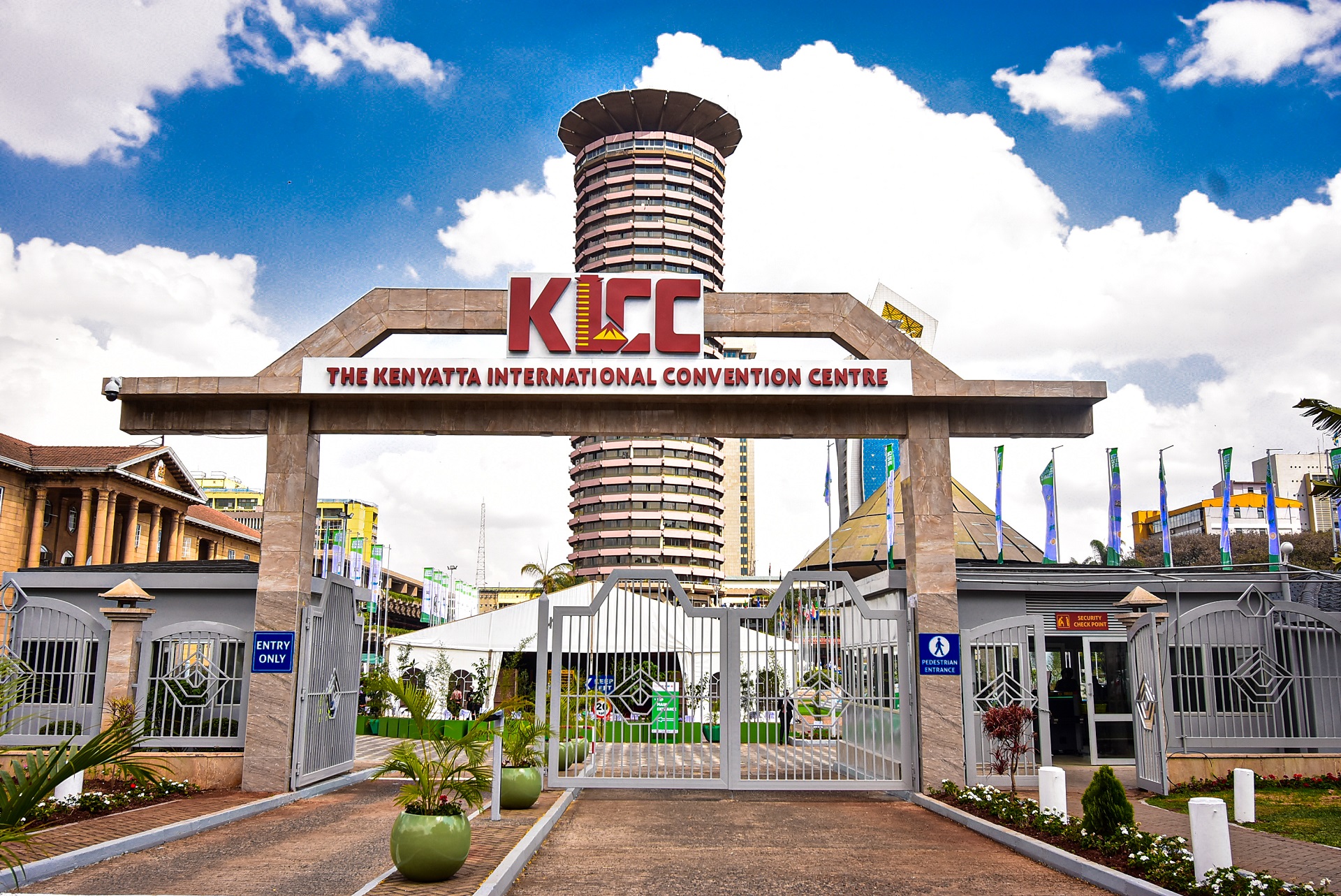
The 59th Annual Meeting of the Board of Governors of the African Development Bank and the 50th Meeting of the Board of Governors of the African Development Fund will take place at the Kenyatta International Conference Center in Nairobi, Kenya, from May 27 to 31, 2024.
President Kagame is scheduled to participate in a presidential dialogue on Wednesday, May 29, on the topic “Africa’s Transformation, the African Development Bank Group, and the Reform of the Global Financial Architecture.”
The discussions will also feature Presidents William Ruto (Kenya), Faure Essozimna Gnassingbé (Togo), Emmerson Dambudzo Mnangagwa (Zimbabwe), and Joseph Nyuma Boakai (Liberia).
Other participants include Mohamed Younis Menfi, President of the Presidential Council of the State of Libya, Joaquim Alberto Chissano, the former President of Mozambique, and Moussa Faki Mahamat, Chairperson of the African Union Commission.
The panel discussion will follow the opening speech by Akinwumi Adesina, the president of the African Development Bank Group, and a keynote address by Muhammad Al Jasser, the chairman of the Islamic Development Bank.
During the dialogue, the leaders are expected to share their experiences on Africa’s transformation, financing Africa’s transformation, and present actionable strategies, policies, and interventions to fast-track the transformation of their countries for the benefit of their citizens.
“Financing Africa’s transformation is intimately intertwined with the need for reform of the global financial architecture. As Africa’s premier financial institution, the African Development Bank has a crucial role to play in driving the continent’s voice in these discussions,” ADB said in a statement.
The Annual Meetings comprise Member States’ invitation-only sessions, closed bilateral meetings, as well as events open to all attendees, including the press. They provide a forum for Bank Group Governors to share their experiences with managing a mounting burden of public debt, which has surged following the global economic shocks of the last few years.
The meetings also offer a forum for the delegates to examine the African Development Bank’s contribution to Africa’s socio-economic transformation.
About 3,000 delegates are expected at the event. The attendees include representatives of bilateral and multilateral development agencies, leading academics and non-governmental organizations, civil society, and the private sector.
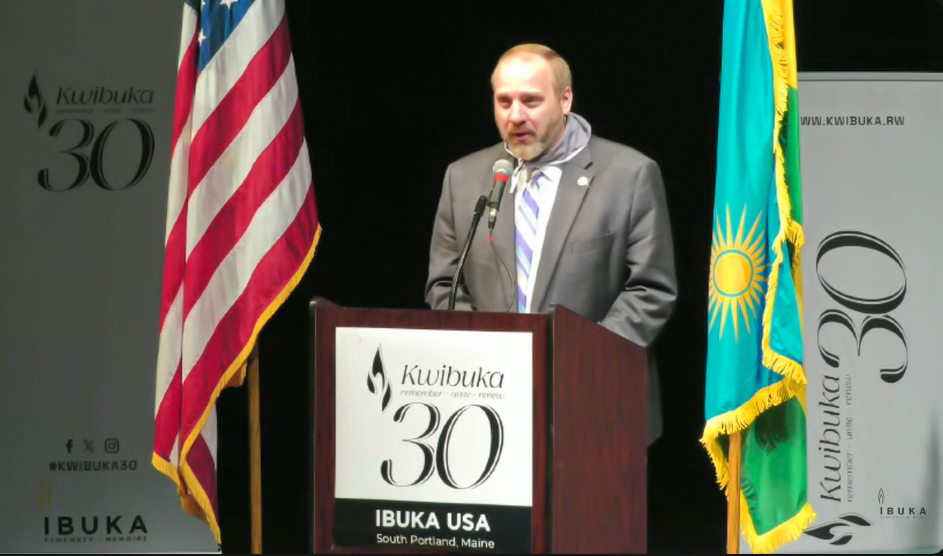
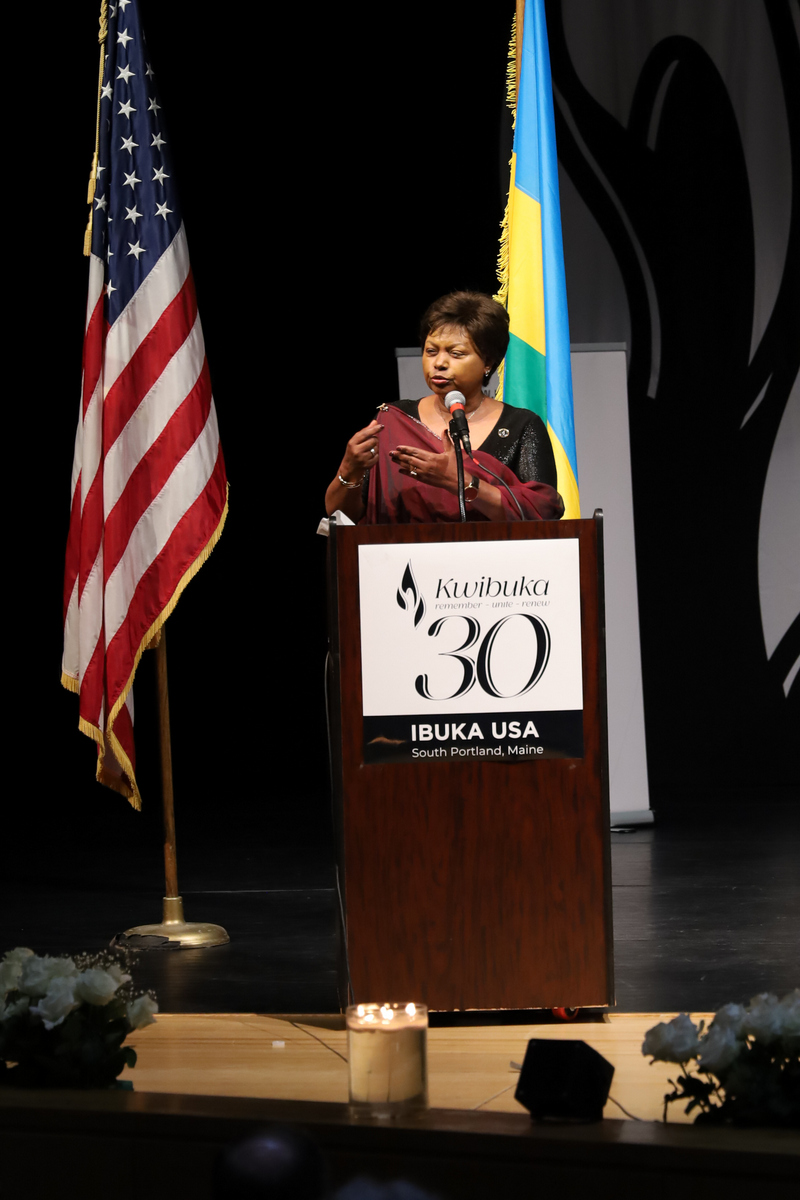
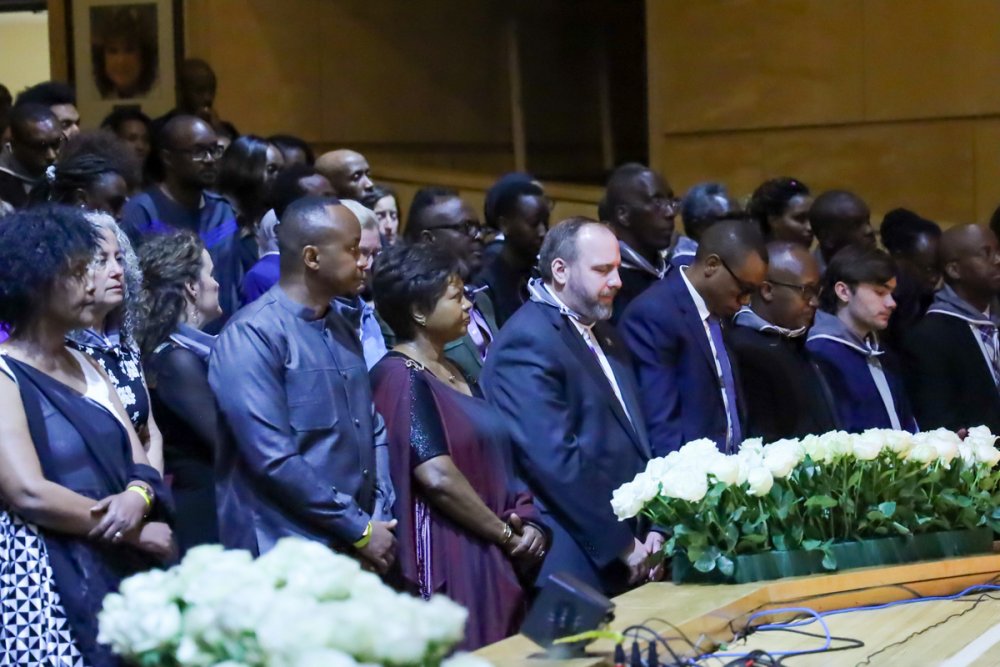
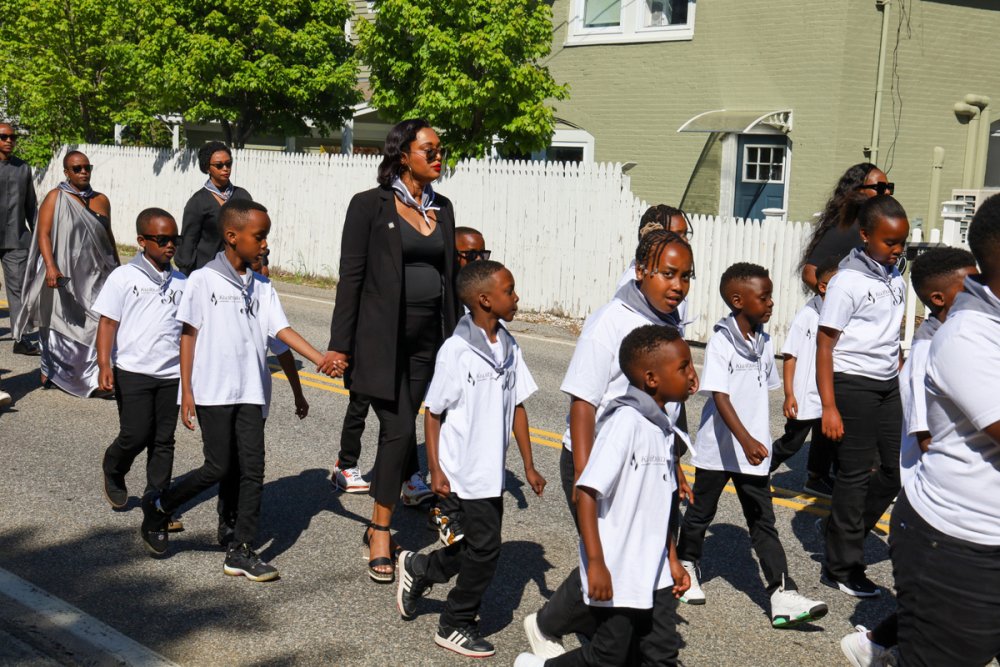
The event was organized by IBUKA-USA, the American branch of the Association for the Interests of Genocide Survivors, in collaboration with the Rwandan community in Maine.
Discussions focused on various initiatives for rebuilding Rwanda and fostering global cooperation. The devastating impact of the Genocide was highlighted, alongside measures to prevent such atrocities from recurring.
It was stressed that combating and confronting genocide denial and minimization is not solely a Rwandan responsibility but a global imperative. Such harmful ideologies must be eradicated to safeguard humanity.
Nishimwe Consolée, a survivor of the 1994 Genocide, emphasized the importance of hope and resilience despite challenges.
She said, “No matter the hardships you face in life, never lose hope, because losing hope is the beginning of defeat.”
South Portland Mayor Misha C. Pride expressed solidarity with Rwandans, stating, “We stand with Rwandans, honoring the victims and survivors of the Genocide against the Tutsi, and we pledge to remain vigilant against discrimination and dehumanizing rhetoric that could lead to such a tragedy again.”
Governor Janet Trafton Mills of Maine criticized the international community for inaction during the 100 days of the Genocide, describing it as a deeply saddening and inexplicable situation.
She said, “Trying to understand how this happened, how a Genocide could unfold over 100 days while the world watched, is a profoundly distressing reality that we still grapple with.”
She stressed that this should serve as a lesson for people to fully understand the significance of the phrase ‘Never Again.’
Rwanda’s Ambassador to the United States, Mathilde Mukantabana, praised the RPA forces led by President Paul Kagame for halting the Genocide.
Ambassador Mukantabana highlighted Rwanda’s self-reliance, with Rwandans uniting, which has been the foundation of the country’s development over the past 30 years.
She said, “The phrase ‘Never Again’ will only be fully realized when people unite and strive to make it a reality.”
Yehoyada Mbangukira, leader of the Rwandan community in America and a senior official at Sonoma University, urged educational institutions to preserve Genocide-related stories, stating, “Remembering and preserving history is honoring those who perished and the survivors of the Genocide.”
The commemoration event also addressed the lasting effects of the Genocide against the Tutsi, including trauma and mental health issues among survivors and their children, and explored ways to continue addressing these issues.
The Auditor General conducts annual audits of all institutions that use public funds to ensure they are used efficiently.
The findings are compiled into a report highlighting any misuse or mismanagement of state resources. This report is then presented to Parliament, which takes further action. For instance, the Public Accounts Committee (PAC) summons the institutions identified for poor management to publicly explain the discrepancies.
One might wonder, “What happens next?” The answer lies in the vigilance of other government institutions that oversee the use of public funds.
The Auditor General scrutinizes all institutions associated with public fund usage, focusing on three main areas: accounting records, adherence to laws and regulations, and value for money [ensuring that expenditures match the financial outlay].
Historically, local government entities, particularly districts, have frequently been cited for financial mismanagement. However, the 2023 Auditor General’s report indicates significant progress in rectifying these issues.
According to the report, for the fiscal year ending June 30, 2023, the districts and Kigali City were allocated Rwf1,127 billion. The Auditor General examined how these funds were utilized and whether the accounting records accurately reflected their use.
The 2023 report shows that 25 out of 27 districts and Kigali City, representing 92.5%, had no significant issues in their accounting records, a notable improvement from previous years. In 2022, only 12 districts were found to be without issues, while in 2021, none met this standard.
Beyond accounting, significant strides were also made in other areas. For instance, in the 2022/2023 fiscal year, six districts were found to be compliant with fund management standards, up from zero in 2021.
Minister of Local Government, Jean Claude Musabyimana, attributed this progress to various initiatives, including peer learning programs, collaborative efforts among financial oversight personnel, timely provision of necessary documentation to auditors, advisory support, and capacity building.
“As the Ministry of Local Government, we commend everyone involved, including districts and partners, for their role in achieving this milestone. Our government remains committed to accountability as a path to development,” he said.
Improvements were also noted in the implementation of the Auditor General’s recommendations, with an average implementation rate of 67% in 2023, up from 65% in 2022 and 56.5% in 2021.
Nyaruguru District led with an 84% implementation rate, while Ngoma was the lowest at 46%.
Additionally, there was a reduction in the number of districts summoned by the PAC, with only six districts appearing in 2023 compared to previous years. These districts were Burera, Nyagatare, Rulindo, Muhanga, Ngoma, and Rubavu.