The appointment followed the end of the term of the current president, Sahle-Work Zewde, after six years of service as the country’s head of state.


The appointment followed the end of the term of the current president, Sahle-Work Zewde, after six years of service as the country’s head of state.


The RNP spokesperson, Assistant Commissioner of Police (ACP) Boniface Rutikanga said that some people, who engage in such illegal cross-border trade tend to be violent to Police officers involved in enforcement operations.
“There are people, especially in borderline districts, who form groups to engage in smuggling and drug trafficking, and are sometimes violent,” ACP Rutikanga said.
He added: “On Monday, October 7, at about 5 a.m, Police officers foiled a gang of eight smugglers in Nyacyonga Village, Rusiza Cell of Bugeshi Sector, Rubavu District, who had sneaked goods into Rwanda from the Democratic Republic of Congo (DRC).
The group dropped the goods and fled back into the same direction. However, they regrouped, crossed back into Rwanda armed with stones and other objects, attacked the Police officers so as to rescue their seized goods.
Despite warnings including shooting in the air to disperse the group, it became more violent and in the process one of them was fatally shot.”
The spokesperson reiterated that such illegal cross-border and smuggling can also be the source other criminal activities like drug traffickers, arms smugglers and people that would want to harm Rwandans.
“It has been observed that some parents engaged in smuggling and drug trafficking activities also involve their children. In any case, stop when you are stopped and don’t be violent towards security organs conducting enforcement operations,” ACP Rutikanga advised.
He lauded the impact of the public in fighting cross-border crimes and called for strengthened partnership against smuggling, drug trafficking and other illegal cross-border activities.


The attack, considered the deadliest in Israel’s history, involved militants storming Israeli communities and targeting multiple sites, including a music festival where at least 370 people were killed. More than 250 individuals were captured and taken as hostages to Gaza, many of whom remain captive a year later.
Hamas launched missile attacks on Israel, stating that the assault was in response to the continued Israeli occupation of the Palestinian territories, the blockade of the Gaza Strip, the expansion of illegal Israeli settlements, threats to the status of the Al-Aqsa Mosque, and the plight of Palestinian refugees and prisoners. In retaliation, Israel began bombing the Gaza Strip the very next day.
Monday’s anniversary featured memorials and vigils, including a moment of silence at Kibbutz Reim, where the music festival massacre occurred.

AFP reports that families of the victims, still grappling with the trauma of the attacks, were overwhelmed with emotions as President Isaac Herzog met with the crowd. The publication highlighted that the Israeli head of state began the commemoration with a moment of silence at 6:29 a.m, the exact time the attack started at Kibbutz Reim.
In Tel Aviv, families of hostages and supporters rallied before dawn, holding banners and placards bearing the pictures of their loved ones and calling for their release.

The October 7, 2023, attack initiated a devastating conflict between Israel and Hamas, which has since expanded to Lebanon, with Israel also fighting Hezbollah forces.
The conflict has left Gaza in ruins and resulted in significant loss of life and displacement. The ongoing conflict continues to affect the region, with daily rocket fire and airstrikes between Israel and Hamas forces in Gaza, as well as clashes in Lebanon.
In fact, on the day of remembrance of these deadly attacks, Hamas and Hezbollah fired rockets at Tel Aviv in continuation of hostilities, with Israeli attacks reported to have killed at least 12 people across Gaza.
The commemoration comes amid escalating tensions between Iran and Israel, marked by a significant missile exchange.
On October 1, 2024, Iran launched approximately 200 ballistic missiles at Israel, targeting areas such as Nevatim Airbase and regions north of Tel Aviv. Iran cited this attack as retaliation for Israel’s alleged assassinations of key figures linked to Hamas, Hezbollah, and the Iranian Revolutionary Guard, including Ismail Haniyeh (Hamas political leader), Hassan Nasrallah (Hezbollah leader), and Fuad Shukr (Hezbollah senior commander).
During the latest assault, Israel’s air defenses intercepted the majority of the missiles. In response, Israeli Prime Minister Benjamin Netanyahu has vowed retaliation, escalating regional tensions further. The U.S. has also pledged support for Israel in dealing with the aftermath.


This prestigious event will bring together global tea industry stakeholders to discuss innovations, sustainability, and the future of tea production and trade in Africa.
From the rolling hills of the Northern, Western and Northern regions where tea is grown, to the vibrant marketplaces in Kigali, tea has long been woven into the fabric of Rwandan agriculture and economy. This October, Rwanda will elevate its status in the global tea industry by hosting this high profile event.
NAEB’s Chief Executive Officer Mr. Claude Bizimana said that Rwanda is honored to once again host the Africa Tea Convention following the successful 2nd African Tea Convention in 2013.
“Rwanda is happy to showcase its high-quality tea industry, which is built on good governance, modernized processes, and the adoption of advanced technologies. This convention provides a unique opportunity to engage, share insights, and shape the future of Africa’s tea sector,” he said.
With a legacy of quality tea production and a vision for sustainable growth, Rwanda has placed itself as the ideal host for this prestigious gathering of global tea industry stakeholders.
To be held under the theme, ‘Harmony in the Cup: Promoting Tea for People and the Planet,’ this tea’s exhibition reflects the urgent need for the tea sector to adapt to rapidly changing global markets, consumer preferences, and environmental realities.
As climate change continues to challenge traditional farming practices, African tea producers, particularly in East Africa, are seeking solutions to ensure both the sustainability and competitiveness of their industry. This discussion will be key at the convention.
The convention will serve as a crucial platform for discussing how technology and sustainable farming methods can revolutionize tea production, increase yields, and improve quality while minimizing the environmental footprint.
As global consumers grow increasingly conscious of where their food and beverages come from, the demand for ethically produced and environmentally friendly tea is on the rise.
Delegates will have the opportunity to explore how African tea producers can capitalize on this trend by adopting sustainable farming practices that not only reduce carbon emissions but also improve soil health and conserve water resources.
From modernizing production techniques to using cutting-edge technology for quality control, African tea producers stand to benefit from advancements that can increase efficiency and improve profitability.
The convention will feature exhibitions showcasing the latest tools and technologies designed to enhance every stage of the tea value chain, from cultivation to packaging.
George Omuga, Managing Director of EATTA, emphasized the importance of unity in the tea industry. “It reflects our commitment to sustainability, climate resilience, and the socio-economic contributions of tea to Africa.” he said.
“We are grateful to the Government of Rwanda, RTA and sponsors for their unwavering support in organizing this event. This convention is a platform not only for dialogue but also for celebrating the African tea industry’s achievements,” he explained.
This event will undoubtedly shine a spotlight on the country’s own tea industry, which has grown significantly over the years. Rwanda’s reputation for producing high-quality tea, especially black tea, has made it a key player in the global market.
Beyond the immediate economic benefits of the convention, hosting such a significant event further cements Rwanda’s position as a hub for agricultural innovation and trade in Africa.
This year’s event will also underscore the critical role tea plays in Africa’s economic development.
“Tea is not just a crop; it’s a lifeline for millions. “The tea industry provides employment opportunities, uplifts rural communities, and contributes significantly to GDP and foreign exchange earnings.” said Omuga.
For Rwanda, the 6th Africa Tea Convention and Exhibition is not just an opportunity to share insights and foster collaborations but also a chance to showcase its commitment to sustainable agriculture and position itself as a leader in the future of the African tea industry.
As the world turns its attention to Kigali on October 9, 2024, the conversations and connections made during the convention will play a pivotal role in shaping the future of African tea for decades to come.
For more information and registration for the event, visit www.africateaconvention.com


In an announcement made public on Sunday, RGB called on leaders of faith-based organizations to enforce these safety measures in places of worship and urged worshippers to adhere to the guidelines to prevent the spread of the virus.
The guidelines include promoting awareness among congregants about the risks of the Marburg virus, setting up handwashing stations with soap and water or appropriate sanitizers, and conducting temperature checks for everyone entering churches and mosques.
Additionally, the guidelines call for the safe administration of Holy Communion to prevent transmission, advising against physical contact with individuals showing symptoms of Marburg, touching their belongings or the body of someone who has died from the virus.
Conducting farewell rituals for the deceased in churches or mosques has been prohibited. The guidelines also discourage large gatherings or funerals that could increase the risk of transmission.
According to the Ministry of Health, as of Sunday, 12 people had died from the Marburg virus out of the 49 reported cases. Twenty-nine individuals are receiving treatment, while eight others have recovered.
Marburg is a highly contagious disease that causes severe fever and can be fatal. It is caused by a virus and shares initial symptoms with other illnesses, such as malaria and typhoid.
The primary symptoms of the Marburg virus include high fever, severe headaches, muscle pain, extreme fatigue, vomiting, and diarrhea.


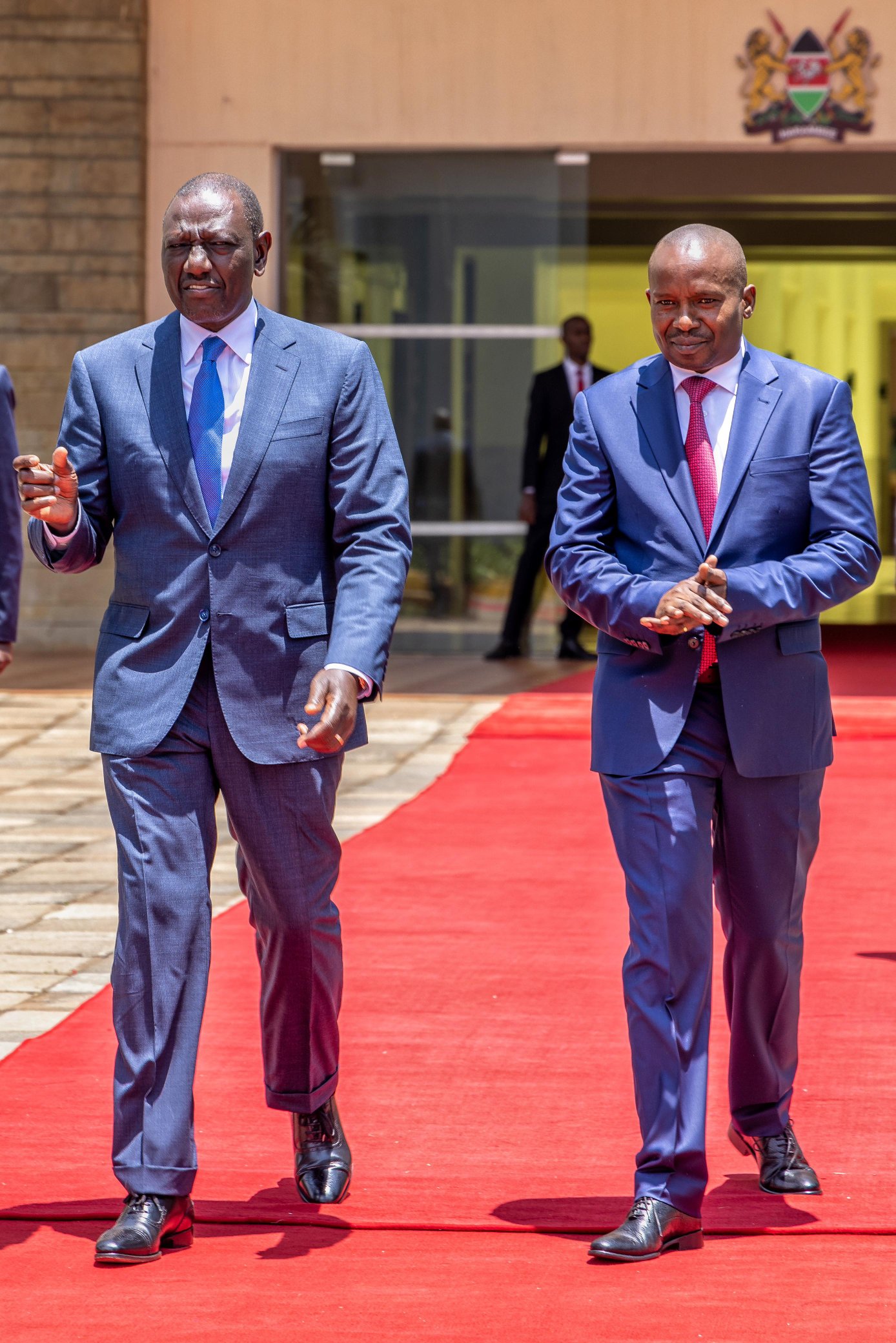
The besieged Kenyan second-in-command, widely reported to have fallen out with his boss, William Ruto, pleaded with the Head of State to pardon him if he and his spouse, Dorcas Rigathi, had done anything to offend him.
“I want to say to my brother President William Ruto, if, in our zeal to work, I have wronged you, please find it in your heart to forgive me. If my spouse, in her duties with the boy child, has wronged you in any way, please find it in your heart to forgive her,” Gachagua pleaded during a church service at the National Prayer Altar in Nairobi.
Gachagua also made a similar passionate appeal to members of Parliament in an attempt to make amends ahead of the consideration of his impeachment motion.
In an apparent reference to his controversial remarks that the government was like a company where those who voted for the current administration hold more shares than others, Gachagua pleaded with Kenyans to pardon him, insisting that he did not mean to cause ethnic divisions but intended to appreciate those who voted for him and Ruto into power.
“Probably, you find that in appreciating our people and the support they gave the president and I, our utterances made you feel uncomfortable; we did not mean bad; we were appreciating the people who voted for us. If you feel that we rubbed you the wrong way, please find it in your heart to forgive me,” he further appealed.
Gachagua is facing ouster two years after assuming office in a joint ticket with President Ruto.
The impeachment motion, tabled in Parliament on Tuesday, October 1, 2024, lists 11 grounds for his removal from office.
Among the charges are allegations of dividing Kenyans along ethnic lines, undermining President Ruto’s administration, and other state agencies.
Other charges include amassing wealth illegally, bullying, and intimidating state officers. In one incident, Gachagua allegedly intimidated a contractor to divert materials meant for the construction of a public road to tarmac a private road leading to his beach resort in Kenya’s coastal region.
Parliament approved the motion to table and debate it after garnering signatures from 291 MPs. Public participation for the motion was conducted on Friday and Saturday ahead of the debate on Tuesday.
The motion must garner the support of 233 MPs, representing two-thirds of the total 349 MPs, before being transmitted to the Senate for consideration.
Gachagua, who brought in significant votes for Ruto from Kenya’s populous Mt. Kenya region in the August 2022 election, insists that he is innocent. He has dismissed the impeachment plot as a political witch hunt.


Muhoozi was cautioned by the US Senate Foreign Relations Committee that any further provocation would be “very problematic” and met with “a serious response.”
In posts on X on Friday, Muhoozi gave Ambassador Popp an ultimatum to issue a personal apology to his father by Monday October 7 at 9 am.
Muhoozi claimed that the ambassador had exhibited undiplomatic behaviour, accused him of disrespecting President Museveni, and warned of a “serious confrontation.” The tweets have since been deleted.
The US Senate Foreign Relations Committee responded directly to the deleted posts, emphasising that any further escalation could lead to significant consequences.
“Any further confrontation will be very problematic & met with a serious response,” the committee stated, clarifying that the US Ambassador and the US mission in Uganda engage with the Ugandan government on a non-partisan basis to foster stronger ties between the American and Ugandan people.
{{Genesis}}
The root cause of Muhoozi’s online tirade remains unclear. However, speculation suggests it may have been triggered by an alleged letter from Ambassador Popp, reportedly advising President Museveni against seeking re-election in 2026 due to concerns about Uganda’s stability and the broader region.
Meanwhile, the US government also imposed sanctions this week on four Ugandan police officers over human rights violations. The officers are Bob Kagarura, Alex Mwine, Elly Womanya, and Hamdani Twesigye.
President Museveni, once considered a vital ally to the West for regional security, has indicated his interest in extending his presidency beyond its current 40-year span. Muhoozi had previously signaled a desire to succeed his father but has recently called on his supporters to back Museveni’s continued rule.
In response to the escalating situation, US State Department spokesperson Matthew Miller addressed the sanctions imposed on the four Ugandan police officers for “gross violations of human rights,” including torture and inhumane treatment.
Miller reaffirmed that the United States remains dedicated to working with the Ugandan authorities on a broad array of issues and remains committed to upholding justice and accountability for human rights violations worldwide. This includes denying travel visas to individuals with a record of abuse.
The US Embassy in Uganda reiterated Miller’s remarks, stating that the embassy, Ambassador Popp, and the US government continue their usual operations and collaborations with Ugandan officials.


On Saturday 5, during a closed-door meeting of Heads of State, Tshisekedi was represented by Bestine Kazadi, Minister of Francophonie. This has been widely viewed as a deliberate and tactical move to avoid a possible meeting with his Rwandan counterpart Paul Kagame.
Tshisekedi also missed the heads of state luncheon at Petit Palais. In the early afternoon, he was seen at the airport, with close associates noting that he was unhappy and frustrated by Macron’s handling of the DRC-Rwanda crisis.
A DRC representative was quoted as saying that Macron’s diplomacy disappointed his boss, because despite having a positive meeting with Tshisekedi, Macron later delivered a speech that did not meet his expectations.
Congolese officials returning from Paris were angry, claiming that Macron was trying to appease Kagame and that the events in Paris felt more like a “Rwanda summit,” given that the OIF is led by Rwandan Louise Mushikiwabo.
Meanwhile Macron has revealed that he had planned to bring together President Paul Kagame of Rwanda and his DRC counterpart for interactive discussions but this did not happen.
During a presser marking the end of the two-day summit, Macron expressed his commitment to resolving the issues between Rwanda and the DRC. However, Macron explained that Tshisekedi declined an opportunity where a possible meeting with Kagame would happen, citing the strained relations between Rwanda and the DRC.

When asked by a journalist whether France was continuing its efforts to mediate between Rwanda and the DRC, Macron confirmed this and mentioned that he had met with Félix Tshisekedi on October 4 and with Paul Kagame on the morning of October 5.
The French President revealed that in these meetings, he informed both leaders that France and La Francophonie desired peace and security to return to eastern DRC.
DRC officials described the Friday with talks Tshisekedi as positive but expressed their desire for Macron to take a stronger stance in favour of the DRC.
“We understand that Macron wants to mediate, but if that’s the case, he should not be biased. He condemned Rwanda, which is good. But we are asking him to go further and impose sanctions,” Tshisekedi’s representative said
He added that the DRC expected Macron to fully support their position, much like he had with Morocco in its dispute with Algeria.
Throughout the summit, Macron emphasized that France and the OIF were urging both the DRC and Rwanda to continue the Luanda dialogue to achieve peace. He also mentioned that he had conveyed this message to both Kagame and Tshisekedi during their meetings.
“We are clear that France calls for the dismantling of the FDLR and all other armed groups in the DRC, and for hate speech to cease. We also urge political dialogue with M23 and other political actors to pave the way to peace,” Macron said.
During the talks between Macron and Kagame on Saturday, which lasted over an hour, Jeune Afrique reported that Kagame presented Rwanda’s position on the issues with the DRC, stating that Rwanda was open to dialogue aimed at resolving the conflict.
Rwanda’s position on the matter remained unchanged, insisting that the DRC must sever ties with and dismantle the FDLR, while Rwanda would also scale back its security measures.
{{Macron calls for FDLR’s dismantling, M23’s return to negotiations}}
President Macron urged the disbanding of the FDLR, a rebel group operating in eastern DRC, and called for the M23 to return to political negotiations with the DRC government.
The plan to dismantle the FDLR has been a key point in discussions between Rwandan and DRC ministers since they met in Luanda in March 2024, with Angola as a mediator.
While it was anticipated that on September 14, 2024, the delegations from both countries would sign Angola’s plan for dismantling the FDLR, the DRC representatives rejected it, despite the known collaboration between DRC forces and the FDLR in fighting M23.
A ceasefire between the M23 and the DRC government forces is another major issue in Luanda talks, although M23 has expressed that it is not bound by these decisions, as it has not participated in the negotiations.

M23’s absence from the talks was prompted by the DRC government’s refusal to engage with them. The group was excluded from the Nairobi talks led by the East African Community, with the DRC accusing them of reigniting conflict, despite M23 denying the accusations.
Angola recently urged DRC representatives to agree to talks with M23, but the DRC again rejected this, stating that it would not negotiate with a group it labels as a terrorist organization.
After the failed talks on September 14, it is expected that Rwandan and DRC delegations will reconvene in Luanda later in October 2024. This was confirmed by Angola’s ambassador to the UN, Francisco José da Cruz, on September 30, 2024.

In a recent media address, the minister stated that the use of shared helmets by pillion passengers, especially those showing symptoms, could increase the risk of spreading the virus. He urged individuals exhibiting symptoms to avoid motorcycles and seek emergency help from the ministry immediately.
“People have asked us whether it’s possible to contract the virus from using a taxi motor helmet that has been worn by someone else. If a person is showing symptoms, especially high fever, painful headache, or muscle aches, they should not be getting on a moto or wearing a shared helmet. Doing so could increase the risk of spreading the virus.
“What you should do instead is call the emergency helpline so that we can assist you and prevent the virus from becoming life-threatening,” Dr. Nsanzimana advised.
He called for increased hygiene in the sector, including the cleaning of helmets before use as a precautionary measure.
“As for the helmet itself, there is no immediate concern. However, as a precaution, anyone using a shared helmet should clean it before use,” the minister added.
Dr. Nsanzimana noted that hygiene practices had proved successful in containing previous outbreaks, such as COVID-19.
“During COVID-19, we adopted practices of maintaining hygiene—not just with the helmets but also in public spaces like seating areas, toilets, and other high-contact surfaces. We must continue to be vigilant, especially in places where someone with the virus might have been, to avoid contracting it through direct contact,” he added.
He argued that imposing stricter measures, including suspending the use of the popular means of transport, was not “necessarily the solution.”
“Stopping the use of taxi motors isn’t necessarily the solution; instead, we should encourage people to use them in a safe and hygienic manner,” he added.
“The Rwandan government has made it a priority to fight every outbreak using all available resources to avoid harsher restrictions. Our goal is to manage the situation alongside normal activities without resorting to uncomfortable measures.”
Meanwhile, the minister announced on Sunday that Rwanda had initiated vaccination trials for Marburg. The initial phase targets healthcare workers directly involved in treating patients, as well as individuals who have contracted the virus.
The Ministry of Health indicated that the country had received 700 vaccines on October 5, 2024, and various agencies had already assessed them, allowing individuals on the list of those at high risk of infection to start receiving these vaccines.
“The vaccines arrived [in Rwanda] last night, and they have been verified by the relevant authorities here in Rwanda and the National Immunization Program, who have assessed them and are preparing them so that today we can begin vaccinating those who are most at risk of this outbreak,” Dr. Nsanzimana stated.
Rwanda has so far confirmed 46 cases, 12 deaths, and five recoveries from Marburg disease. Cumulative tests conducted have surpassed 1,700.


Dr. Thierry Roels, U.S. Centers for Disease Control and Prevention (CDC) Country Director in Rwanda, confirmed that the shipment of the consignment was completed on Friday, October 4, 2024.
“The U.S. government has completed an initial shipment of therapeutic and vaccine doses to support Rwanda in the first days of its response to the emergence of the Marburg virus in Kigali,” Roels said on Saturday, October 5, 2024, without revealing the number of doses delivered.
Roels indicated that the U.S. government is working closely with international partners and Rwanda’s Ministry of Health to initiate clinical trials for evaluating investigational countermeasures. The U.S. is also considering additional shipments that would supply the trials.
The delivery of the consignment comes days after Rwanda’s Minister of Health, Dr. Sabin Nsanzimana, confirmed plans to roll out therapeutic clinical trials for the vaccination and treatment of the highly contagious disease.
Among the vaccines being evaluated is one developed by the Sabin Vaccine Institute, a non-profit organization based in Washington, D.C. Early-stage human trials have demonstrated that the vaccine is safe and triggers an immune response.
On Saturday, the Sabin Vaccine Institute announced the delivery of approximately 700 doses to Rwanda for a trial targeting frontline workers, including healthcare professionals.
“In response to a request from the government of Rwanda and the Ministry of Health to support its ongoing Marburg outbreak response, we have provided an initial shipment of 700 investigational Marburg vaccine doses to be used in a trial targeting frontline workers. We dispatched the shipment within seven days of first being contacted for assistance, thanks to our many partners,” the organization said in a statement.
“We are prepared to supply additional vaccines pending a request from Rwandan officials and authorization from BARDA, which is funding our current research and development efforts.”
In addition to vaccination efforts, Gilead Sciences, an American biopharmaceutical company based in Foster City, California, announced on Thursday that it would donate approximately 5,000 vials of its antiviral drug, remdesivir, to Rwanda for emergency use in response to the outbreak.
Rwanda has so far confirmed 46 cases, 12 deaths, and five recoveries from Marburg disease. Cumulative tests conducted have surpassed 1,700.
Initial symptoms of Marburg virus disease include high fever, severe headache, muscle and joint pain, and fatigue, followed by gastrointestinal symptoms such as nausea, vomiting, and diarrhea. As the disease progresses, it can lead to severe hemorrhaging, organ failure, and shock.
To prevent infection, health experts recommend maintaining strict hygiene practices, including frequent handwashing and avoiding contact with personal items or bodily fluids of individuals showing Marburg-like symptoms.