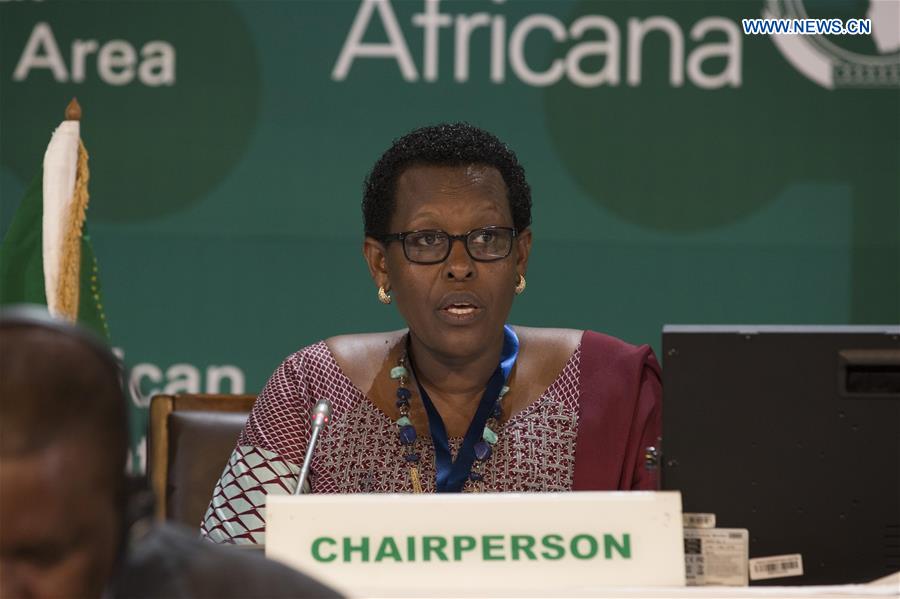
Some key Peace and Security priorities such as the protection of civilians in conflicting situations will be featured on the program of the AU Peace and Security Council during the month of May.
“Some of the peace and security priorities we have identified this month include: financing Africa’s peace through the AU peace fund; protection of civilians in conflict areas by encouraging more African countries to endorse the Kigali Principles on Protection of Civilians in conflict situations; addressing security impediments to free movement of people; as well as promoting and reporting the role of women in peace and security in Africa” said Tumukunde.
Rwanda will also preside over a Ministerial session on the security situation in the Sahel region. The objective is to ensure that there is harmonization and ownership of initiatives by African countries in the Sahel region. The session will also discuss security and migration in Africa.
The PSC is a vital organ of the African Union and is mandated to take decisions on matters of peace and security on the African continent. Last month, the PSC designated 7th April as the AU day of Commemoration of the 1994 Genocide against the Tutsi in Rwanda.
Each member of the Council holds the chairmanship on rotational basis for the month. Rwanda will take over from Nigeria, which chaired the PSC in April. Rwanda was re-election for another two years to the PSC in January 2018.
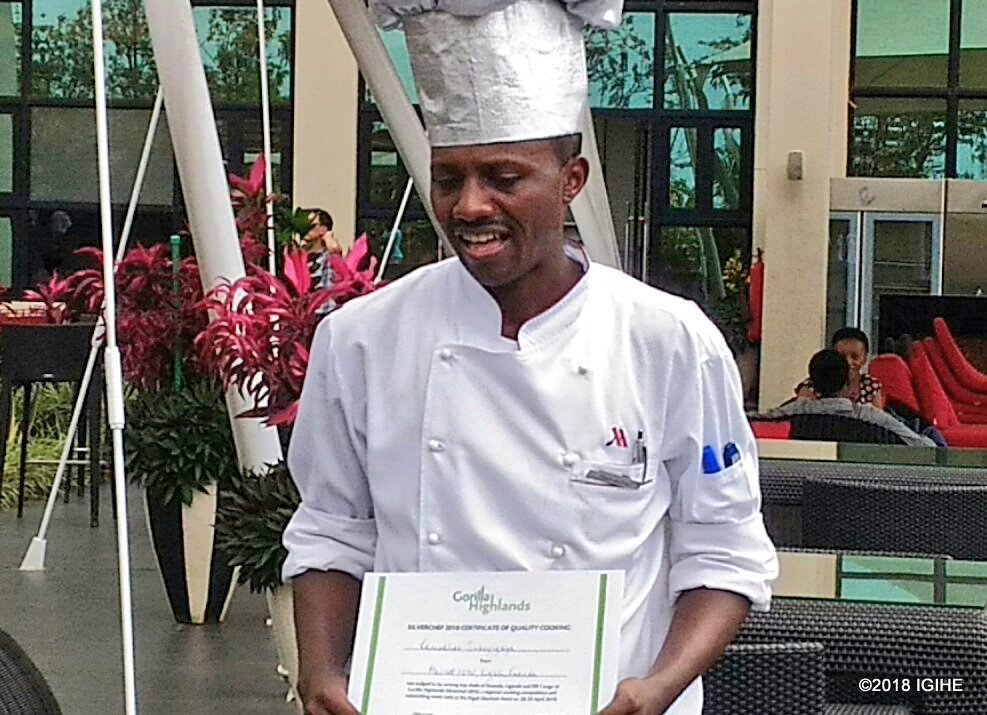
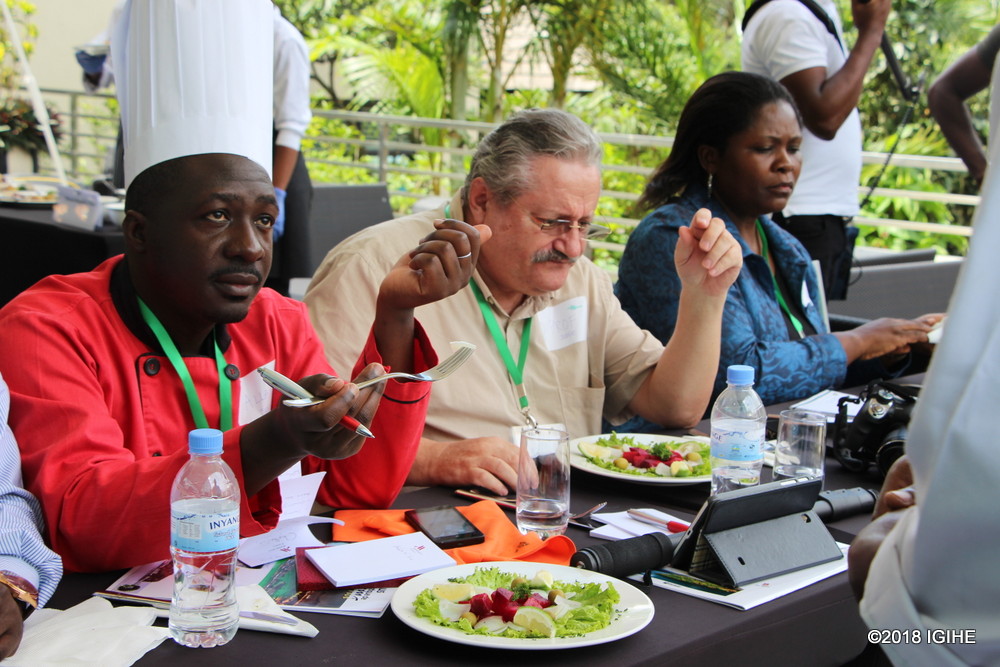
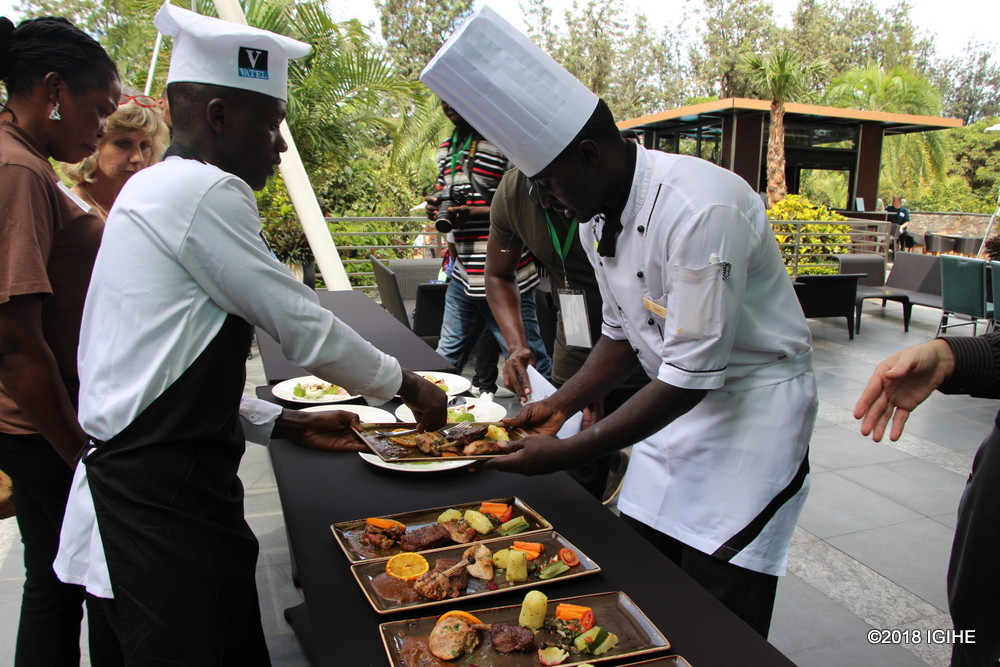
Sindayigaya was awarded with a trip to Uganda’s Bwindi impenetrable national park after outshining other seven chefs from each of Rwanda and Uganda and one from the Democratic Republic of Congo (DRC).
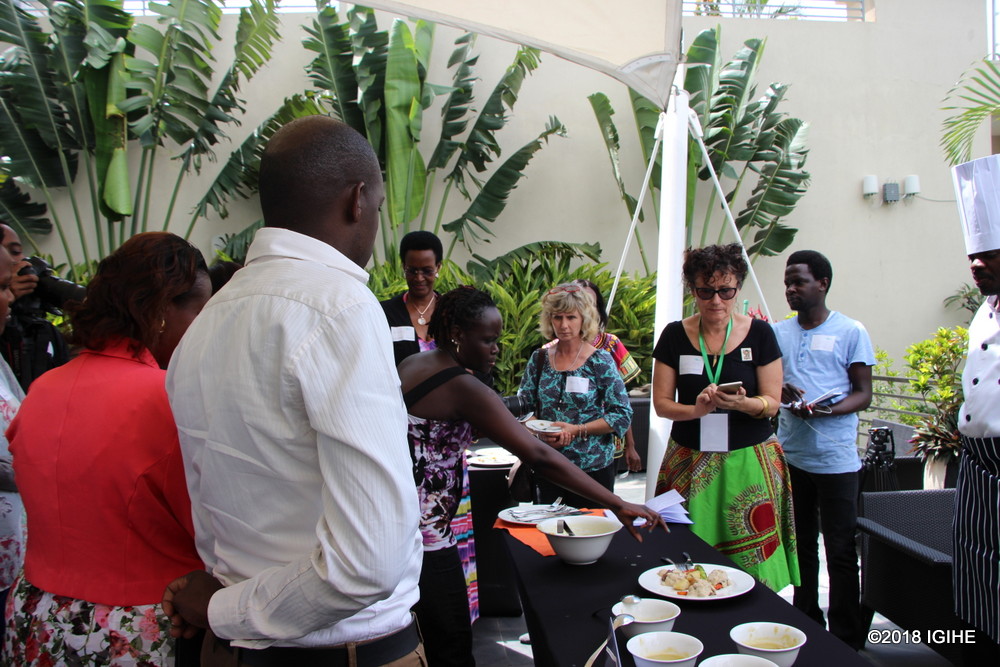
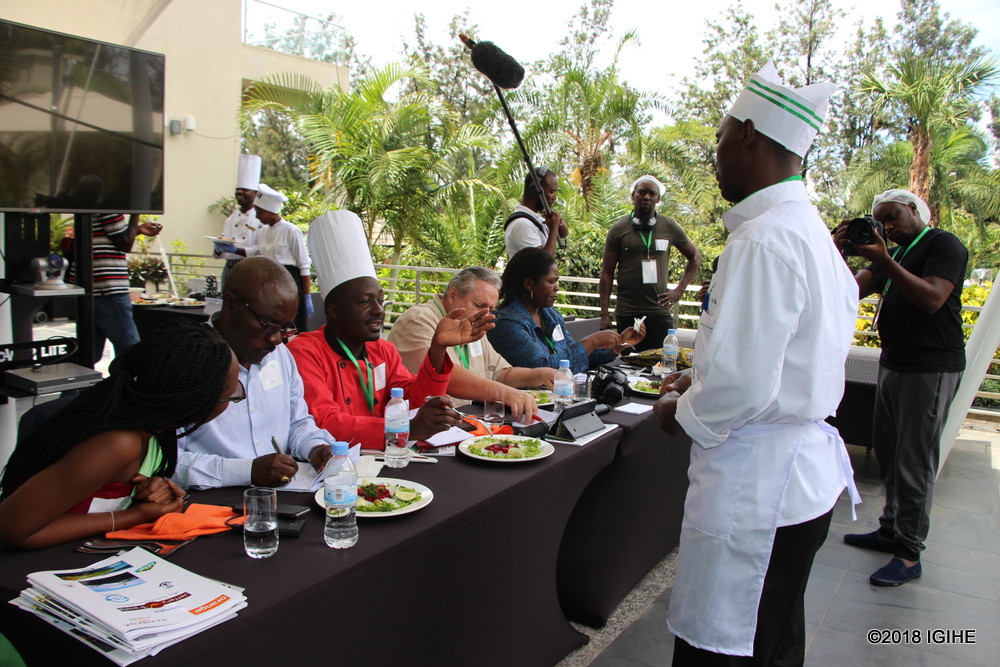
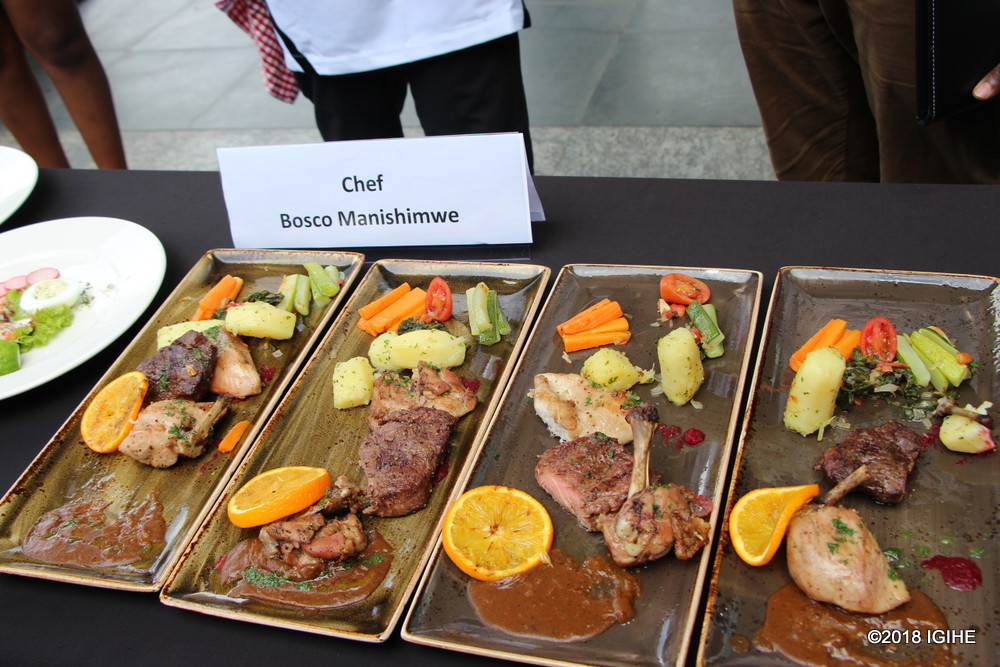
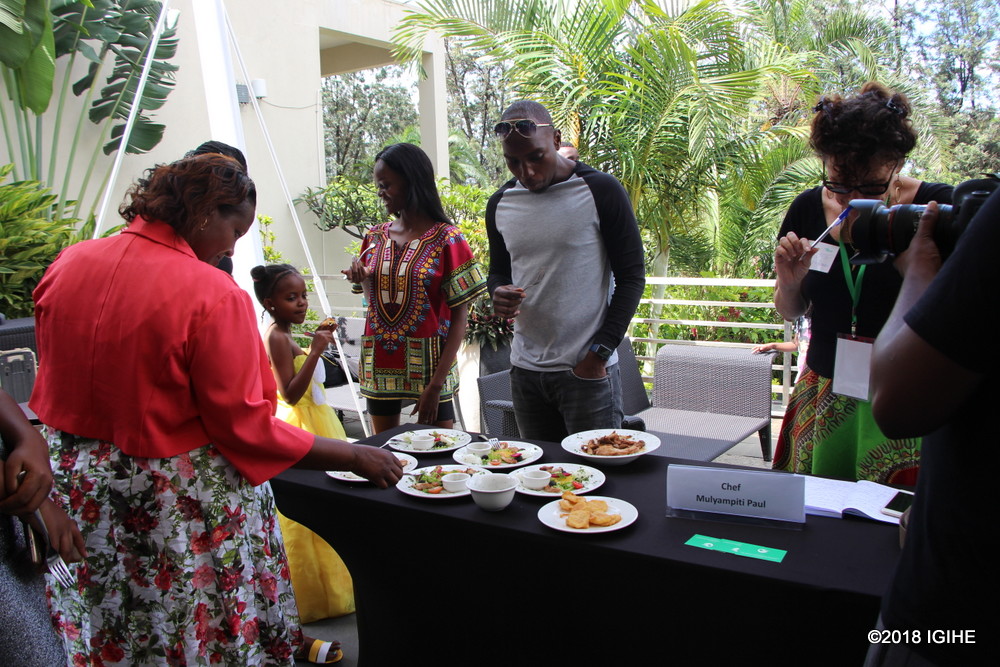
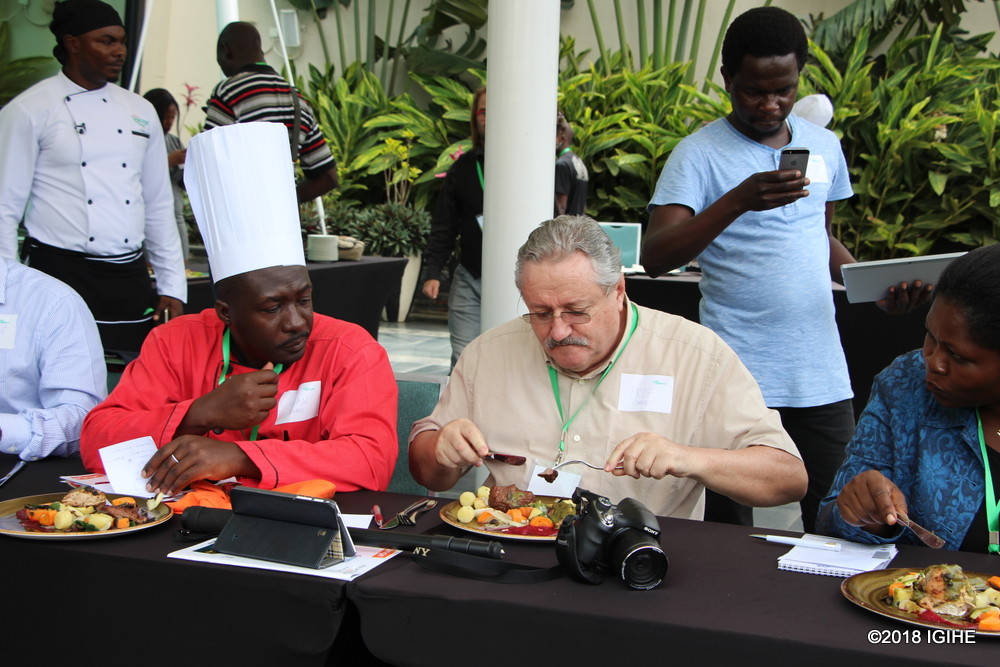
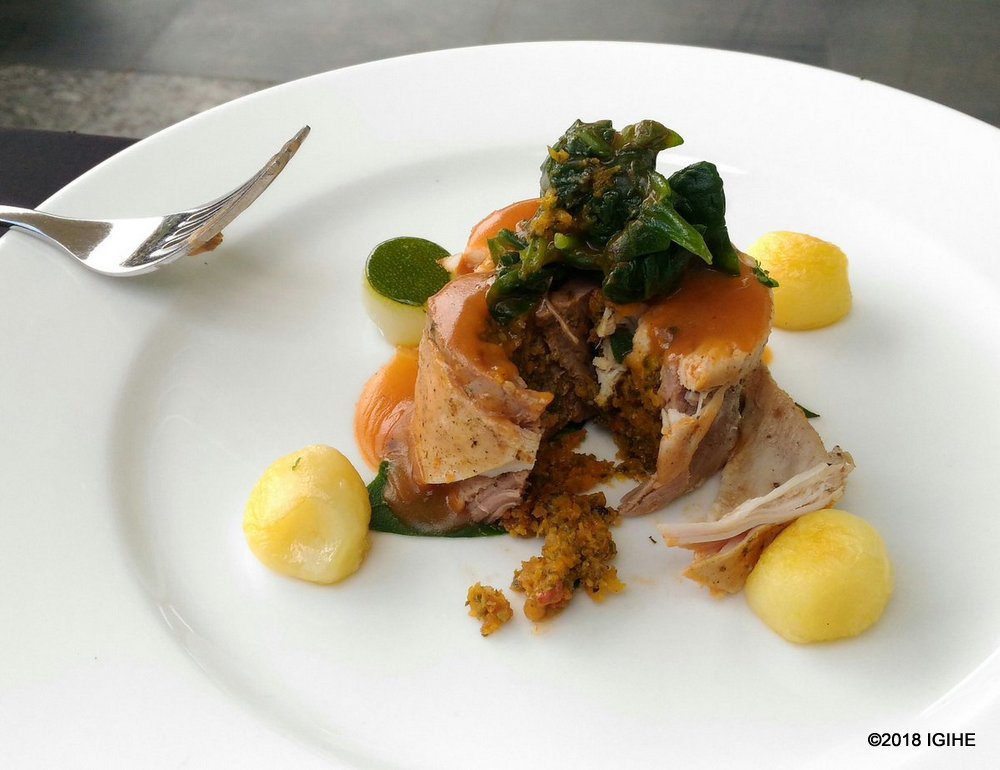
Organised by Gorilla Highlands, the 4th edition of Silver Chef competition was held at Marriot Hotel over the last weekend whereby every chef was provided with different food items and required to prepare two types of meals, one with and another without meat. They all got to know the present items on the kitchen spot.
The jury tasted each chef’s dishes on Saturday and announced on Sunday that Mr. Sindayigaya Ramadhan had emerged the best chef.
Chef Rama as he is widely known had also won the second prize at the same competition in 2017.
In an interview with IGIHE prior to the competition, Sindayigaya, who usually specialises in Italian cuisine at the Marriott’s Cucina Restaurant, had expressed confidence to win the competition adding that besides the appreciation accorded to the winner, the competition also helps them showcase their abilities and build up their fame.
“This competition puts us in touch with other chefs from different countries to share skills as we learn from one another. It also markets us broadly because it attracts many people,” he said.
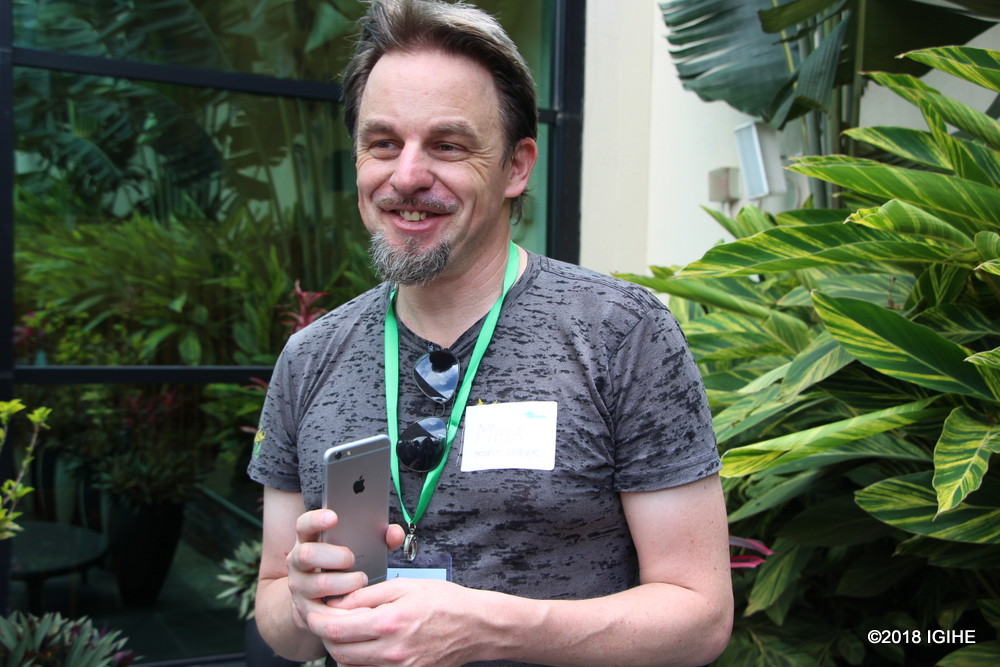
Gorilla Highlands Managing Director, Miha Logar, said the competition which had come to Rwanda for the first time intends to bring together chefs and other tourism practitioners in the three countries in order to build up synergies and develop the industry.
Mr. Logar said much as every country has its specific activities in tourism, they all share gorilla population, therefore bringing together DRC, Rwanda and Uganda will showcase the region’s tourism potentials and attract many visitors.
All other chefs were recognised with certificates of participation. Those include Mukungu Akimu from Grand Legacy Hotel in Kigali and Jean Bosco Birindwa from Ihusi Hotel in Goma, DRC, who were recognised as the best Ugandan and Congolese chefs respectively.
Others are Manishimwe Jean Bosco from Lake Kivu Serena Hotel in Gisenyi, Rwanda; Musasa Marcellin Tshite from Virunga Lodge in Volcanoes National Park, Rwanda; Odeke Silver from Cephas Inn in Kabale, Uganda; Otim Amos from Protea Hotel in Kampala, Uganda; Emmanuel Murwanashyaka from ParkInn by Radisson in Kigali, Rwanda; Sam Mbabazi from Bunyonyi Overland Resort in Kabale, Uganda and Paul Mulyampiti from BirdNest Resort in Lake Bunyonyi, Uganda.
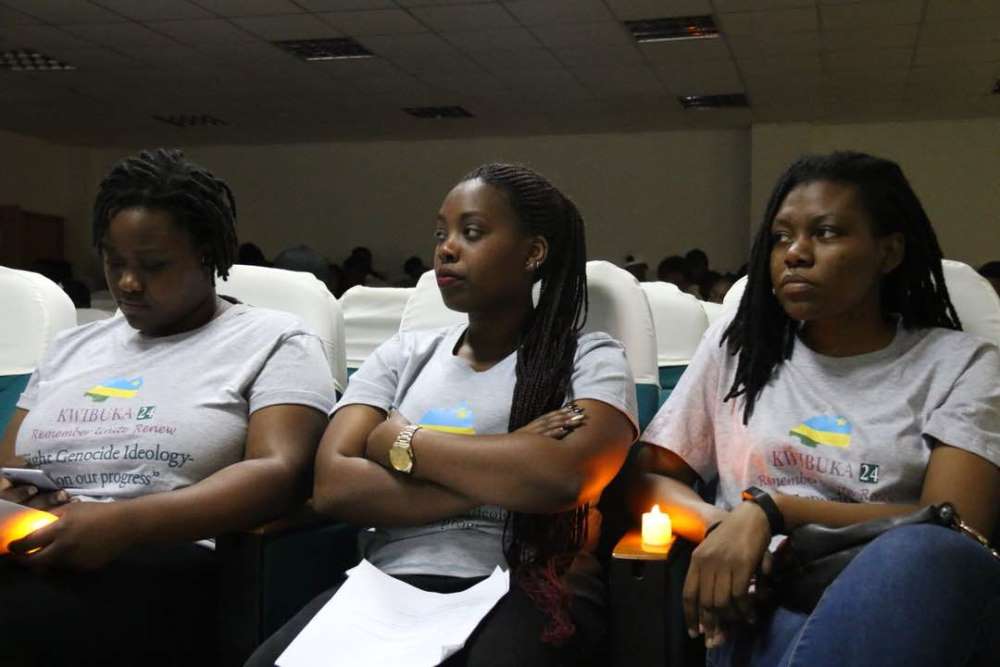
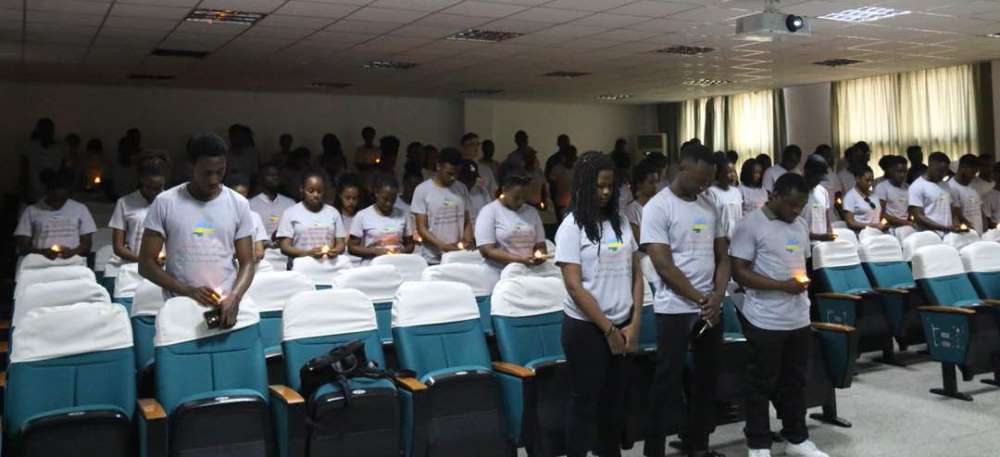
At the event that took place yesterday, the students were joined by hundreds of friends to learn from Rwanda’s genocide history.
The President of Rwandan students’ community at Ningbo University, Benjamin Kirenga thanked the participants at the event and said that Rwanda has suffered a lot in the past.
He said that it is important to commemorate, honour the memory of the victims and being in solidarity with survivors.
“The commemoration of the genocide against the Tutsi is a special annual programme showing this horrible segment history of our country. In Rwanda, people were killed because of the heinous politics of discrimination, divisionism and hatred that led to the genocide against the Tutsi,” he said.
During the ceremony, youth shared message of peace, hope, history and renewal through poems, songs and guitar playing.
A majority at the event were Rwandan students who were born after the genocide.
“Though we were born after the genocide, we should remember and get to know what happened during the genocide, fight against its ideology and make Rwanda a peaceful country,” said 20-year-old Munezero Inema.
At the event, participants lit candles as a sign of hope for the future.
Ndagijimana yesterday presented the Budget Framework Paper and the midterm budget estimates to Parliament, outlining Government’s economic policies over the medium term that help lay the foundations of the next fiscal budget.
Under the next fiscal year, according to Ndagijimana, government will continue to promote import substitution and diversify exports with the aim of reducing the exposure to external shocks and imbalances over the medium term.
“The implementation of Made in Rwanda policy will continue to play a key role in narrowing the current account deficit in the short to long run and help to consolidate private sector domestic activities, create jobs and boost economic growth,” he said.
Domestic revenues, both tax and non-tax are projected at Rwf1508.7 billion representing 62% of the total 2018/19 budget.
Under the next year budget, the external grants are estimated at Rwf396.3 billion equivalent to 16% of total budget while external loans are projected at Rwf400.9 billion representing 16% of total budget.
Domestic loans are projected at Rwf137.7 billion representing 6% of total budget. On the expenditure front, the recurrent budget is projected at Rwf1,305.7 billion.
Development expenditure is estimated at Rwf897.1 billion while net lending is projected at Rwf190 billion which will be used to finance key government projects such as construction of Bugesera airport, expansion of Rwandair operations among others.
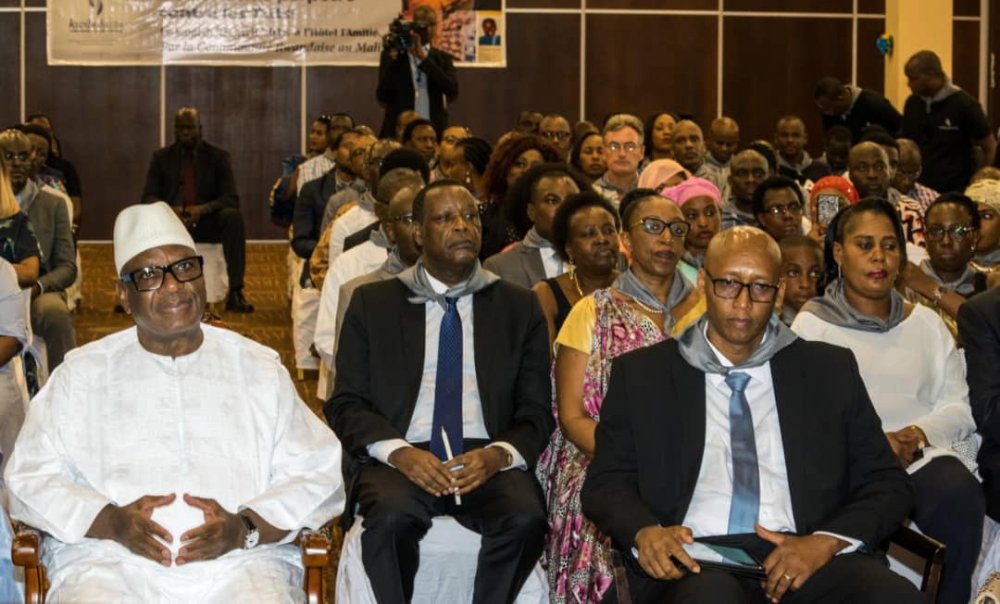
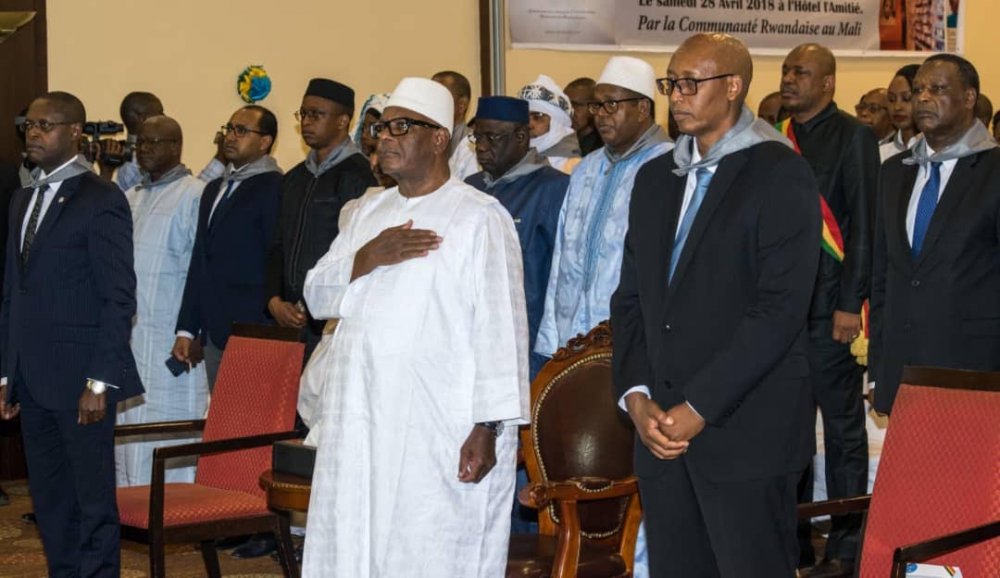
The event that took place in Mali capital city, Bamako was attended by over 2500 people.
At the event also was the African Union High Representative for Mali and Sahel, Pierre Buyoya, the Deputy Special Representatives of the United Nations Multidimensional Integrated Stabilisation Mission in Mali (MINUSMA), Mbaranga Gasarabwe.
Speaking at the event, the president of Rwandan community in Mali explained that the genocide committed against the Tutsi in Rwanda was systematically planned.
He said that Tutsi faced adverse atrocities. He revolved around the reason for commemoration saying that it is an opportunity to remember the hardships which slain victims faced.
The Ambassador of Rwanda in Mali, Dr Mathias Harebamungu said that commemorating the genocide committed against the Tutsi is not intended to draw sympathy from the World but remembering precious lives so brutally taken.
He thanked the Malian government through President Keita for standing with Rwandans in different ways.
President Keita saluted the bravery of Rwandans in overcoming dark history and becoming a role model country in Africa.
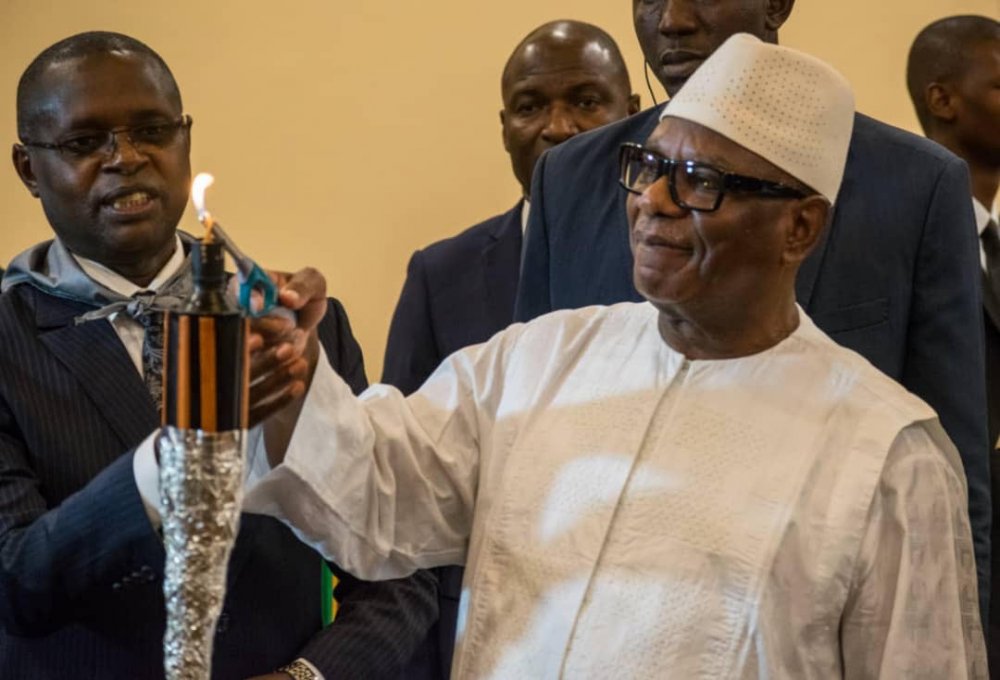
In the event, President Keita and Ambassador Harebamungu light the the flame of remembrance.
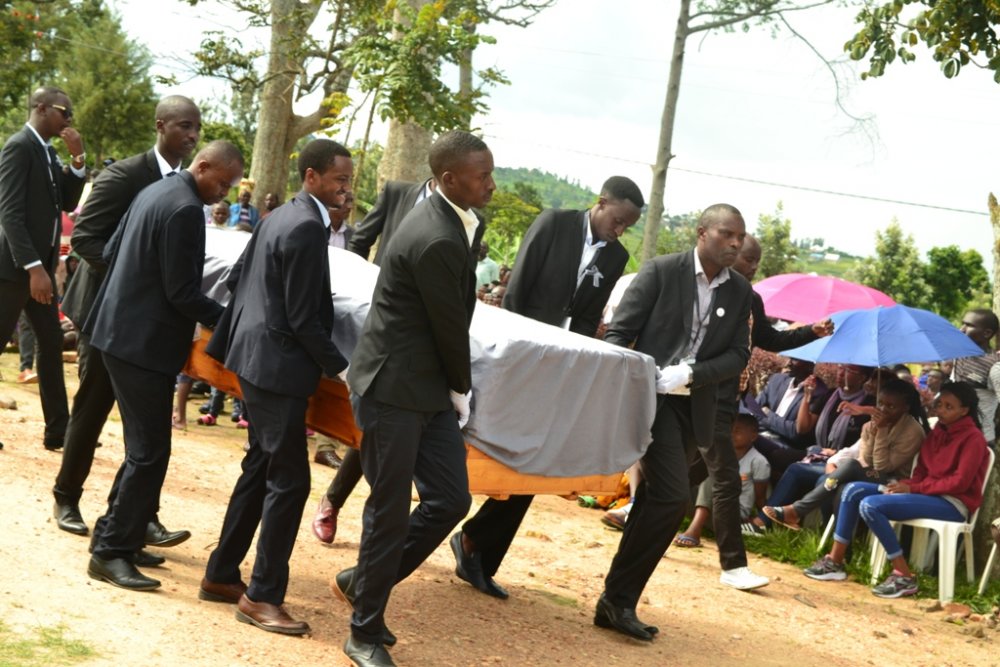
This was announced on Sunday in Ruhango District while commemorating the victims of the 1994 genocide against the Tutsi and giving decent burial to 124 remains of the genocide victims.
Speaking at the event, the president of survivor association in Amayaga region, Alexis Rusagara said that survivors have different problems including shelters.
“Among problems survivors face include houses which need rehabilitation and others which need to be reconstructed. We should save our relatives from houses that could collapse on them,” he said.
The houses which need urgent rehabilitation were constructed between 1996 and 2004.
In Ntongwe sector alone, 80 houses need rehabilitation as twenty families need new shelters. Also in Kinazi sector, 50 houses need renovation as 25 will be newly constructed.
Speaking at the event, the Minister of Local Governance, Francis Kaboneka said that the government has taken into account the problem of shelters for genocide survivors.
“Shelter problem is being discussed. The government is putting together resources for our relatives to get shelter. This is an exercise that will be done very soon,” he said.
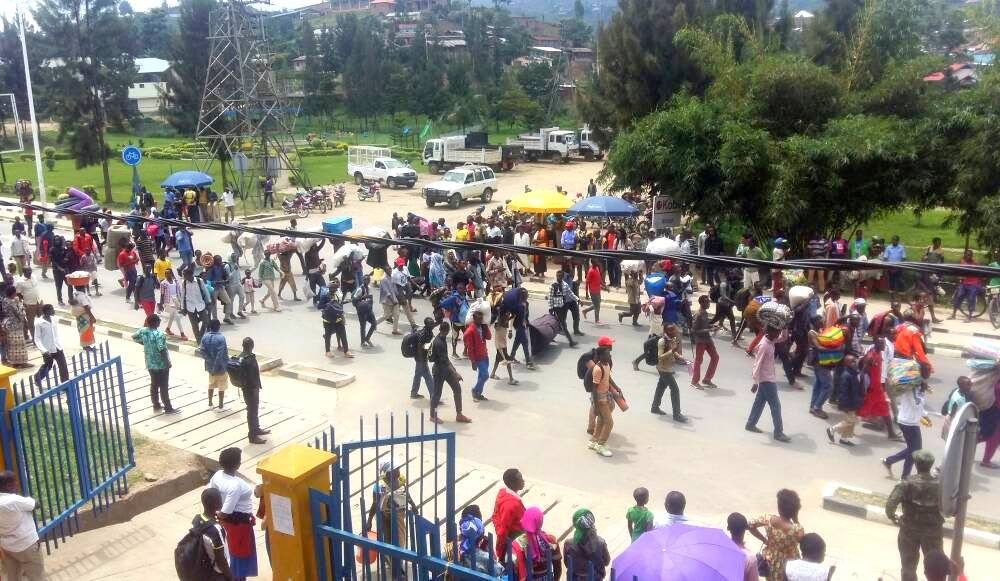
In February, Refugees in Kiziba demonstrated, some marching out of the camp and camped at UNHCR offices in Karongi protesting over reduced food rations.
According to Police, the protests turned violent and left five dead and others including police officers injured.
According to MIDIMAR, preliminary findings about the cause of the protests have established that a core issue was the refugees’ executive committee, which was established to help in the management of the camp, but instead mobilized them to protest.
“The committee has been mobilising refugees to revolt against government officials and partner institutions, denying them access to the camp, and causing disorder among the refugees, thereby rendering the camp and its surroundings unsafe,” reads MIDIMAR statement issued on Monday.
The statement says that MIDIMAR has, pursuant to Ministerial instructions N0 0I/2017 of 3 November 2017 on conduct of elections in refugee settings, decided to dissolve the refugees’ executive committee with immediate effect, as one of the measures to restore law and order in the camp and its surroundings.
The Ministry has also directed that violent, unruly and provocative conduct in the camp is unlawful and must stop immediately to restore peace, law and order, as well as allow for dialogue to resolve any existing or emerging challenges.
MIDIMAR said that the Government of Rwanda is duty bound to provide safety to all Rwandans and refugees the country hosts.
The Ministry called on all refugees to cooperate in restoring normalcy in the camp, and noted that any person attempting to interfere with the process will be in violation of the law and will be held to account.
MIDIMAR said that the Government of Rwanda will continue to work with various partners, including UN agencies, to improve the well-being and protection of all refugees living in Rwanda.
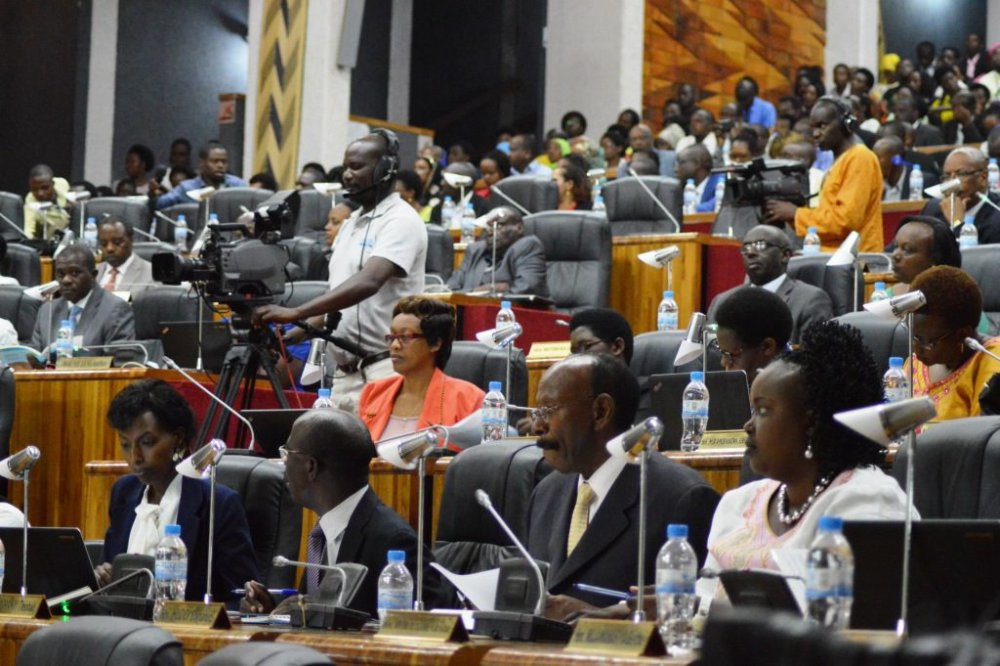
Presenting the report to both chambers of the Parliament today, Auditor General, Obadiah Biraro said that 50% of the 165 public entities and projects considered in the financial and performance audits received unqualified audit opinion and urged lawmakers on holding accountable everyone misusing the public funds.
Among the 165, there were 139 budget agencies and projects representing 86.4% of the reported Government Expenditure of Rwf2,200,199,963,530 for the year ended June 30, 2017, compared to 85% for the year ended June 30, 2016.
Overall, the level of wasteful expenditure resulting from diversion of public resources and unsupported transactions has reduced from Rwf17,634,265,933 in the previous report which had considered 139 public entities and projects with 85% of the reported government expenditure in the year ended June 30, 2016.
Biraro said, however, that the cases of unsupported, wasteful and unauthorized expenditure and fraudulent transactions in different public entities are still high and require urgent management attention.
The report indicates that 109 contracts worth Rwf206,817,279,066 were delayed while 27 contracts worth Rwf45,866,655,835 were abandoned. Idle assets worth Rwf22,320,539,989 in 147 cases were also revealed.
Citing an example of halted Kalisimbi project which aimed at enhancing electronic communications and broadcasting services, Biraro said the idle drilling materials at Kalisimbi site including water tanks and pipes should be sold out to recover some funds out of the Rwf2.7 billion that was already invested in the project.
He said 13 institutions have recurrently appeared in the reports as the poorest managers of the public funds with Water and Sanitation Authority (WASAC) leading the row.
{{WASAC again!}}
With only 59% of water generation billed in 2016/2017, WASAC registered a whopping Rwf20 billion loss and kept equipment stock worth Rwf1.9 billion while the expenditure was also poorly accounted for, according to Auditor General Biraro.
“WASAC has poor financial statements and we failed to give our opinion. They are poorly performing. The management of WASAC should change. This institution should work as a government business enterprise as it is mandated,” he said.
{{REG}}
Citing Gishoma Peat Plant worth Rwf40.5 billion but produced power for only four months and stopped, Biraro also slammed Rwanda Energy Group for having five out of 33 power plants which lie idle, only six plants produce above 50% while other 22 produce below 50% of the initially planned capacity.
{{RRA}}
The report pins Rwanda Revenue Authority (RRA) on failure to recover Rwf3.5 billion lost in VAT fraud with a minimal follow up standing at 13% only despite the use of Electronic Billing Machines (EBM), the technology that Biraro says hugely cost the country.
RRA was also slammed for lack of bank reconciliation with Rwf84.5 billion found on different six suspense accounts.
Rwanda Agricultural Board wrecked Rwf90 million in losses resulting from 225 tonnes of seeds of maize which perished in stores while farmers are always decrying insufficient seeds.
Rwanda Bio-Medical Centre was touted for improvements in the public funds management but also slammed for delaying delivery of over Rwf3 billion to hospitals for 240 days, causing poor health services.
Other institutions found with poor accountability include Rwanda Social Security Fund (RSSB), Rwanda Education Board (REB), Rwanda Transport Development Authority (RTDA), University of Rwanda and Workforce Development Authority (WDA), among others.
{{Lawmakers on tougher penalties}}
In their reaction on the report that was approved by a Bicameral House, lawmakers touted the Office of the Auditor General for the insightful report and vowed to push for tougher penalties against those who embezzle the public funds.
MP Athanasie Nyiragwaneza said “There is need for tougher measures to punish those involved in these cases of public funds mismanagement and to curb the future losses.
Théoneste Begumisa Safari urged the justice sector to be more serious with crimes related to public funds mismanagement, saying that it is sad to see embezzlement suspects unclearly released or even given so trivial penalties when they are convicted.
Théobald Mporanyi suggested a harsher scrutiny of the proposals from public entities which appear in the Parliament every year to seek budget, saying that they should first be asked to account for the previous budget before receiving another one.
“This is the 10th report I have heard of since I got in Parliament. Rwanda has done a lot in the last 24 years but what is really failing us in public funds management? The Parliament should adopt measures whereby we deny budget to an institution until it justifies how it spent the previous budget,” he said.
Auditor General Biraro reminded legislators to do their best for the recovery of the public funds fraudulently spent because “If there is no cost of failure, there is no fear of failure.”
The returning contingent was headed by Assistant Commissioner of Police (ACP) Bosco Rangira.
It was also replaced by the same number, which also left earlier in the day under the command of ACP Emmanuel Karasi.
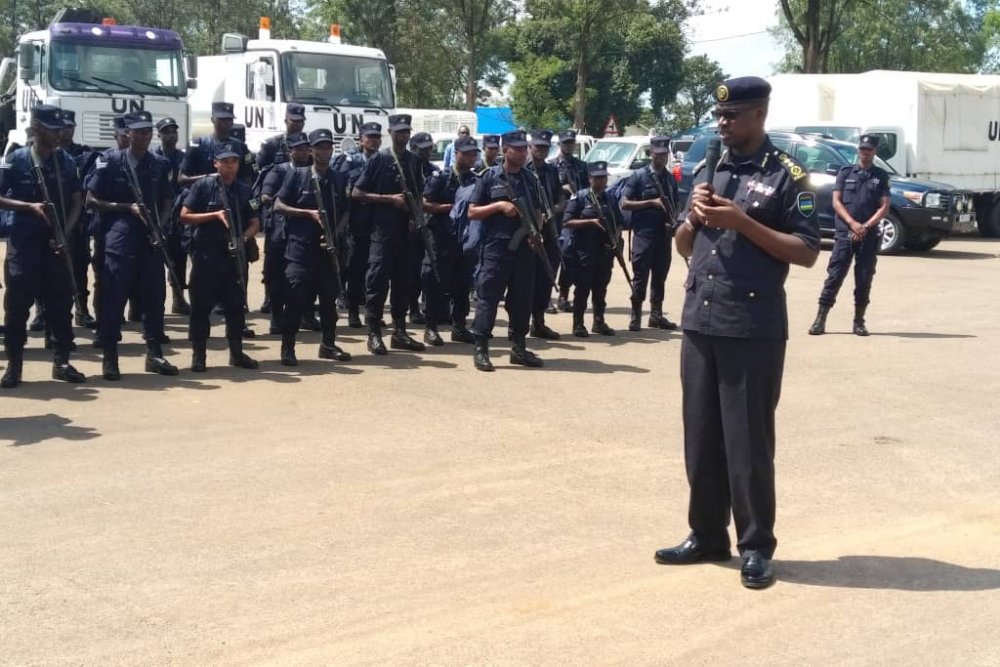
Prior to their departure, the newly deployed FPU contingent was briefed by the Deputy Inspector General of Police (DIGP) in charge of Operations, Dan Munyuza, who gave them an insight of the mission demands.
“You have been trained well and equipped with the right ideology and skills to facilitate you execute the mission effectively and efficiently,” DIGP Munyuza told the officers.
He reminded them that their conduct while on or off duty should reflect the image of their country and the force.
He said: “Serve with commitment and discipline, it is what Rwanda stands for and it is what you must project while out there.”
“Remember, you will always be identified by the Rwandan flag you bear on your uniform, but you should also be defined by your positive results.”
DIGP Munyuza also spoke at length about discipline and integrity as a pillar to effective delivery of the mission mandate.
Meanwhile, the contingent that returned last evening was received at Kigali International Airport by Commissioner of Police (CP) John Bosco Kabera, who hailed them for the work well done.
He urged them to share the experiences acquired with their colleagues back home.
In an interview, ACP Rangira said that their tour of duty was successful throughout but noted that the peace restoration process is still underway, a reason there was a rotation of peacekeepers.
“Generally, the people of South Sudan are appreciative of the work done by Rwandan peacekeepers. Through the mission we worked closely with other peacekeepers deployed there,” said ACP Rangira.
Currently, RNP maintains about 1200 peacekeepers in different peacekeeping missions.
An all-female contingent was also generated and will soon be deployed in South Sudan, which will increase the numbers of RNP peacekeepers in all missioms to close to 1400.
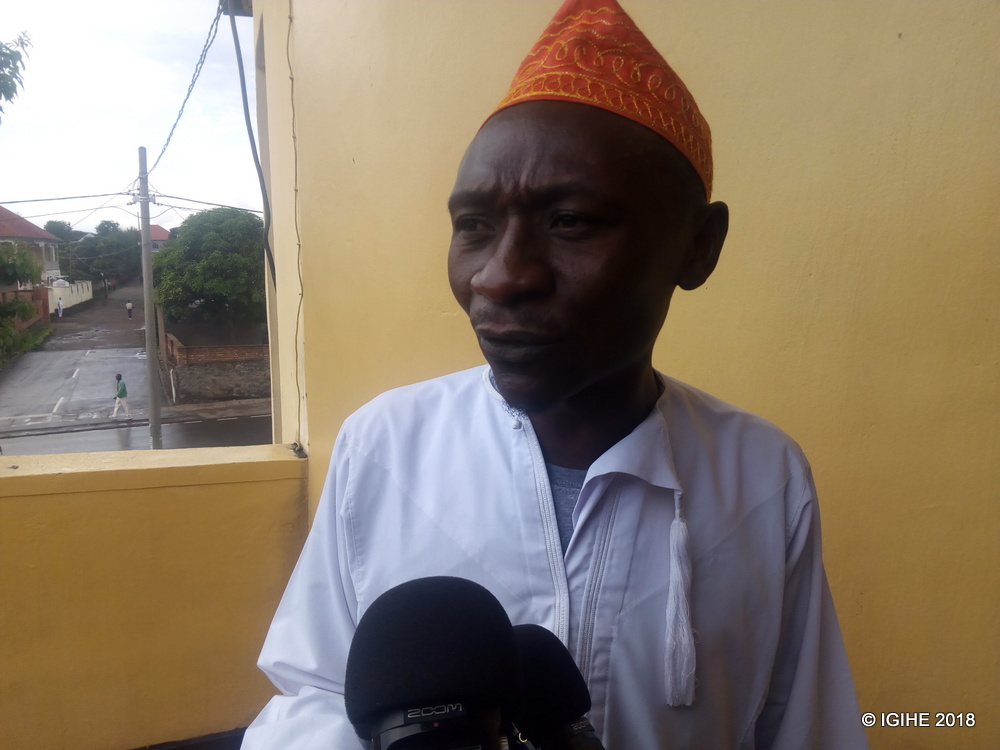
Kagabo says in sharp contrast to his father who committed genocide, Kagabo who was 15 years old in 1994, then working as a house-help, saved lives.
Kagabo’s father, Yuri Baritima was a local government leader at the time of the genocide which he perpetuated, found guilty on trial and is serving life in prison.
At the time of the genocide, Kagabo was a caretaker at a house that belonged to a man who rarely came by, spending much of the time at his second home.
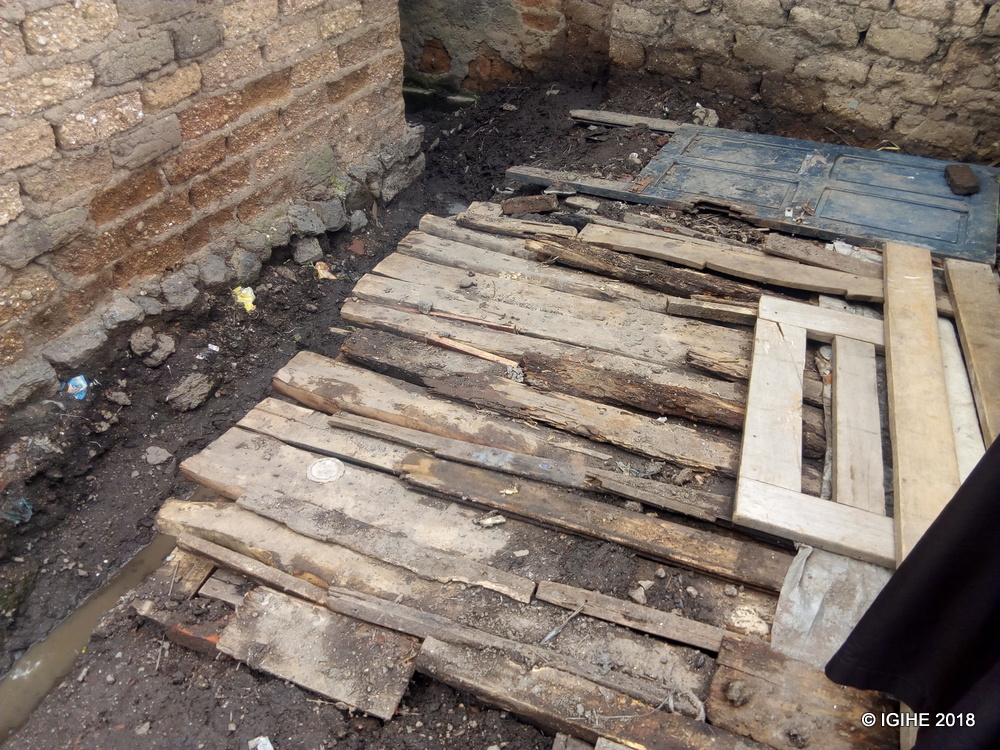
In the compound was an excavation which Kagabo used to hide twelve people who were being hunted.
The garbage pit had ample space for all the twelve which he covered on top, taking them meals from there on a daily basis.
Later on, Kagabo took eleven of them to another place and remained with one woman, Donathille Murekatete whom they fled together to the Democratic Republic of Congo.
According to Kagabo, he did all the best to save innocent lives.
“I was very young but had no room for hate as my father was. I had to protect those who were being hunted at the same time being vigilant so that my father who was a leader in local government would not guess that I was protecting people or guess that I did not agree with his mission,” he explains.
Murekatete, one of survivors who were saved by Kagabo thanks him for the outstanding activity.
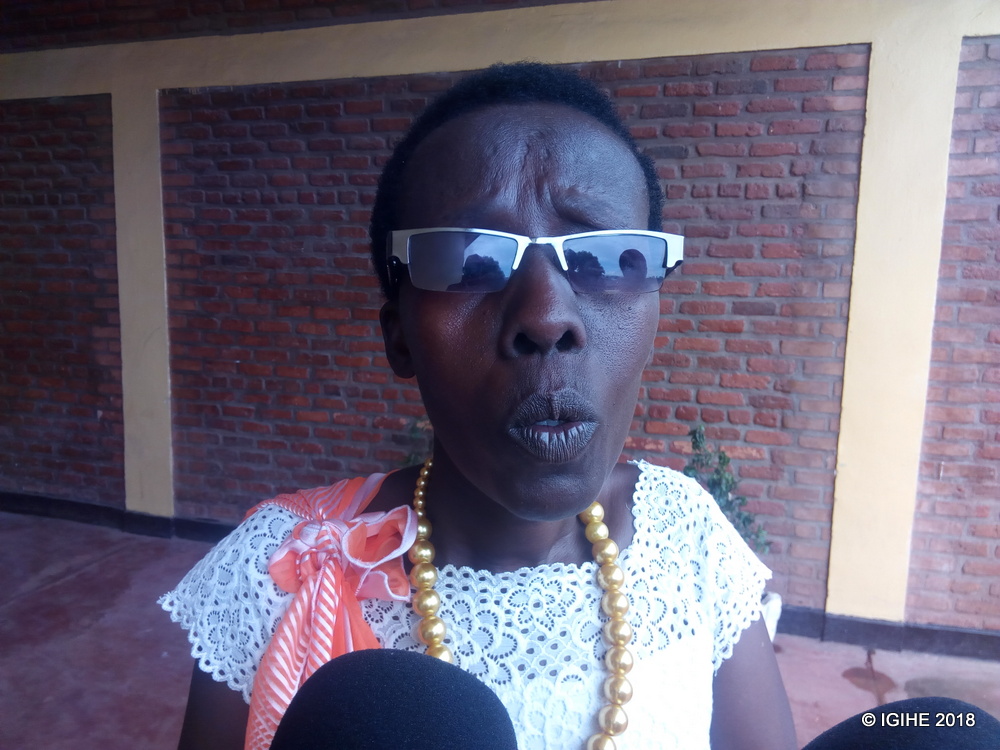
“Kagabo saved me and my family, he protected us and we were in a place where killers used to cross, but could not guess that we were in,” she says.
Speciose Mukarurangwa, who survived in the region and the president of IBUKA in Gisenyi Sector requested to list Kagabo among pact protectors.
“Based on his activities, I think that he would be listed on the list of pact protectors. It was not such easy because he was a child who would have obeyed his father, but did the contrary and saved people,” she says.
Kagabo is now married to a survivor woman. They live in Gisenyi.
On Sunday, all twelve people who were saved by Kagabo visited and promised him a gift as a pact between them.