The drugs worth over Rwf1 million, according to Police in Gicumbi, were seized in varied operations in the last two months.
They include 258 litres of crude gin locally known as Kanyanga, 123 dozens Chief warage, 104 litres of Blue sky and 60 dozens Chase vodka, all banned gin and packed in plastic bags.
Plastic bags were also banned in Rwanda, and trafficking, manufacturing, selling and using them is punishable by law.
Other disposed of drugs include cannabis, locally made illicit drinks as well as illicit raw materials used to distill locally made substances, which were also seized during the same operations.
While addressing hundreds of residents, who turned up to witness the destruction exercise, Inspector of Police (IP) Jean de Dieu Nkuranga thanked them for their involvement in reporting drug dealers.
“All these drugs were seized because you were brave and responsible to report the dealers, many of whom were also arrested,” IP Nkuranga, who is the commander of Butaro Police station, told the residents.
“These drugs come from our neighboring countries and traffickers use routes in your communities; there are also other psychotropic substances that are distilled locally in your neighbourhoods. We will continue to count on you to report such people so that they are arrested,” he added.
He noted that police will not take chances because they are threats to community safety, family harmony and development.
“All drinks must have standards, dealers must be licensed and with the standard mark. Any liquid substance that contains more than 0.5 percent of methanol in its composition not supposed to be taken because it is harmful to the health,” said CIP Nkuranga.
Eugide Ndayisaba, the executive secretary of Butaro sector urged the residents to desist from consuming and producing such psychotropic substances, and share information about whoever is involved to prevent causing ill health to unwitting drinkers.
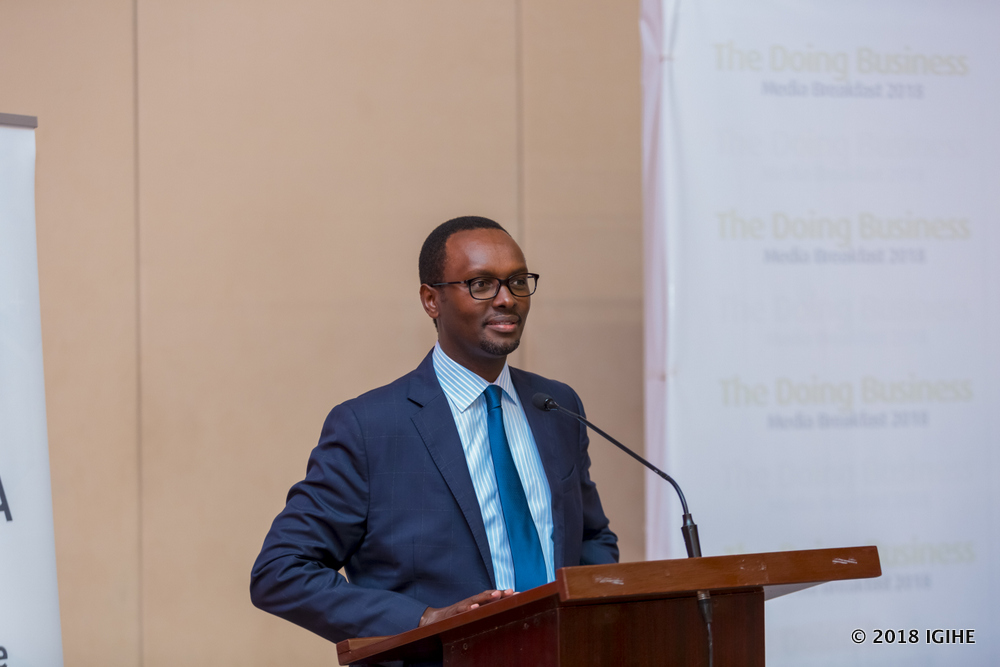
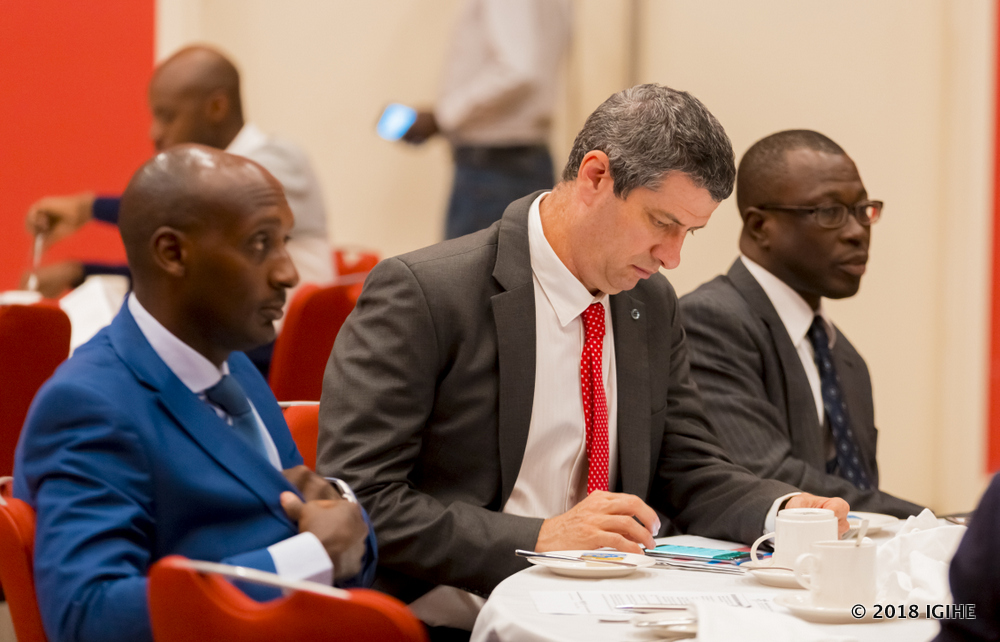
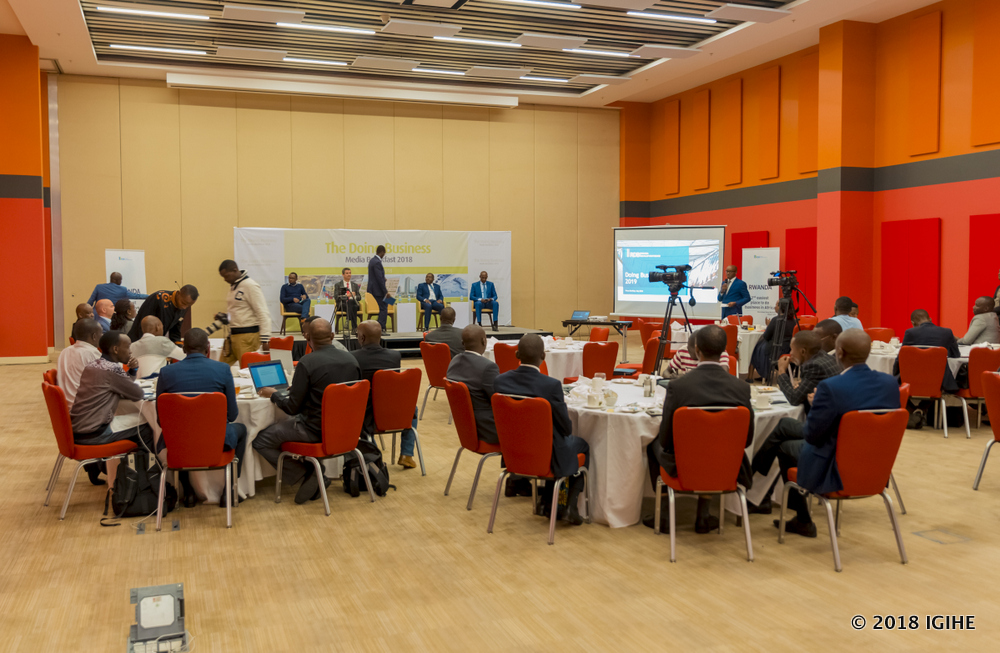
With the hugest number ever implemented in such a span of time compared to 52 reforms that were previously implemented in the last 15 years, Rwanda can only expect to improve in the next World Bank Doing Business ranking 2019 from the current 41st globally and second in Africa.
Speaking at a press briefing on Friday, RDB’s Chief Operations Officer Emmanuel Hategeka said the major reforms have reduced bureaucracy in construction, amount of time for electricity provision for investors, time exporters spend at customs and legal backlog, among other issues affecting the business climate.
“Ten years ago, the Government embarked on a strong agenda to transform our business environment in order to boost investment and private sector growth. One of the key tools that we relied on to guide this transformation is the World Bank Doing Business global report. Through strong leadership and consistent commitment to reforming the business environment, Rwanda implemented numerous business reforms over the last ten years”, said Hategeka.
The Doing Business report is a flagship World Bank publication which measures the relative ease of doing business across 190 economies, using a set of 10 indicators that track the entire lifecycle of a business such as what it takes to start, run and grow a business in a given country through the lens of business operators.
Reaffirming Rwanda’s vision to become competitive among the best globally, Minister of Trade and Industry, Vincent Munyeshyaka committed the Government of Rwanda to more reforms to make business environment increasingly competitive for local businesses and foreign investors alike.
“We must remain engaged with our private sector, understand the reforms needed for further growth and dynamism in the sector and uncover opportunities that will unleash the full potential of our private sector,” he said.
Munyeshyaka urged all institutions mainly RDB to double efforts for further improvements in business sector, saying that Rwanda has high ambitions as do many other economies, making the space of global trade and investment extremely competitive.
“As such, we must always ensure that our nation is able to compete among the best,” said the Minister.
Areas that require improvement include dealing with construction permit and getting electricity where Rwanda was ranked 122nd and 117th globally in Doing Business 2018. The power outage exceeding five minutes was also raised as an issue but as part of the solution, Rwanda Utilities Regulatory Authority has adopted a regulation to administer fines for power outages exceeding 10 minutes.
{{Major reforms implemented}}
Noting that all the reforms are crucial, Hategeka said that some are more notable and those include a software application that can be installed on any electronic device to replace the electronic billing machine (EBM) in processing value added tax (VAT) invoices. This system will eliminate the cost implications of buying an EBM that has often ignited outcry among business community.
In dealing with construction permits, buildings are now categorized according to the nature and magnitude of the anticipated risk and this therefore determines which projects must undergo a full or partial Environmental Impact Assessment (EIA). Geotechnical studies for buildings that fall in category DB as not exceeding 200 square meters and two floors has been eliminated, as well as topographic surveys for all types of buildings.
Another reform in dealing with construction permits is the removal of the requirement to fill a form notifying the One Stop Center at RDB of the commencement date of the project. Water connection now also takes two weeks, down from the previous 30 days.
Getting electricity connection has also improved, reducing the number of days from 34 to 20. The recently launched automated system also records and monitors power outages, improving transparency in the reliability of supply of energy in Rwanda.
In paying taxes, it now takes five hours to file for VAT since the introduction of the automatic VAT reconciliation online process. This advancement comes with the reduction of tax audit procedures and the opportunity to correct erroneous information entered after the deadline date.
As the Government of Rwanda is also focused on reducing the trade deficit by increasing exports, certain reforms such as the issuance of an online certificate of origin, the introduction of a risk based approach in inspection of exports, joint inspection of both exports and imports by agencies, and extension of working hours at Gatuna and Rusumo borders were introduced to reduce time and cost implications for investors.
In enforcing contracts, a new law on civil, commercial, labor and administrative procedures was passed with a provision for small claims procedures. Another reform includes a law limiting the grounds for adjournment for unforeseen and exceptional circumstances. On resolving insolvency, a new law particularly in relation to out of court voluntary mechanisms and individual bankruptcy was passed.
RDB also announced more key reforms in the offing including online auctions through a platform on which properties under auction can be viewed, bids entered and payments made; electronic titling to upgrade of the land administration system, just to mention but a few.
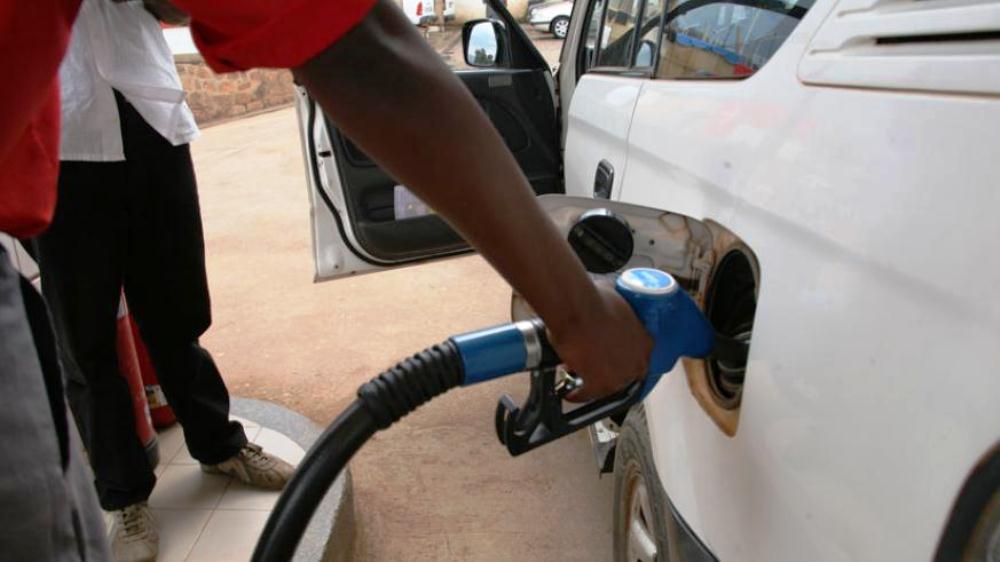
Pump prices increased to Rwf1,065 from Rwf1,048 and Rwf1,005 from Rwf994 per litre of petrol and diesel respectively.
The new prices take effect from this Friday 4th May, according to a statement signed by the regulator’s Director General, Lt. Col. Patrick Nyirishema.
The new prices represent an increase of Rwf23 for each litre of petrol and Rwf43 for diesel going by prices that had been set in January when the tariffs had also increased by Rwf11 per a litre of petrol and Rwf12 for diesel.
Wenger’s departure at the end of the season triggered sadness among Arsenal’s fans world-wide, as he had gone on too long and not been able to deliver another title or finally win the Champions League that he craved so badly.
Diego Costa killed Arsene Wenger’s last hope of a glorious Arsenal farewell as his goal sent Atletico Madrid through to the Europa League final 2-1 on aggregate on Thursday.
The 68-year-old Arsene Wenger admitted that he was “very, very sad” to be leaving Arsenal on the back of a Europa League semi-final defeat at the hands of Atletico Madrid.
As fans took to twitter their disappointment, President Kagame among others gave his take on the departure of the coach who had been Arsenal’s coach for 22 good years.
“My take on my beloved Club Arsenal- a very good one at the game and a very good coach like A.Wenger, this should not have been the kind of ending of an era. The coach is leaving and club trophy-less it was long coming! I am still a committed fan going forward. Blame the owners”, reads President Kagame’s tweet.
“As I had said way back and just as a good observer…Something fundamental needed to change at/about the club. But if anything changed it was not the right one. All the best to all involved! We still need Arsenal to go back where it belongs- up there among the best in the game!” He added.
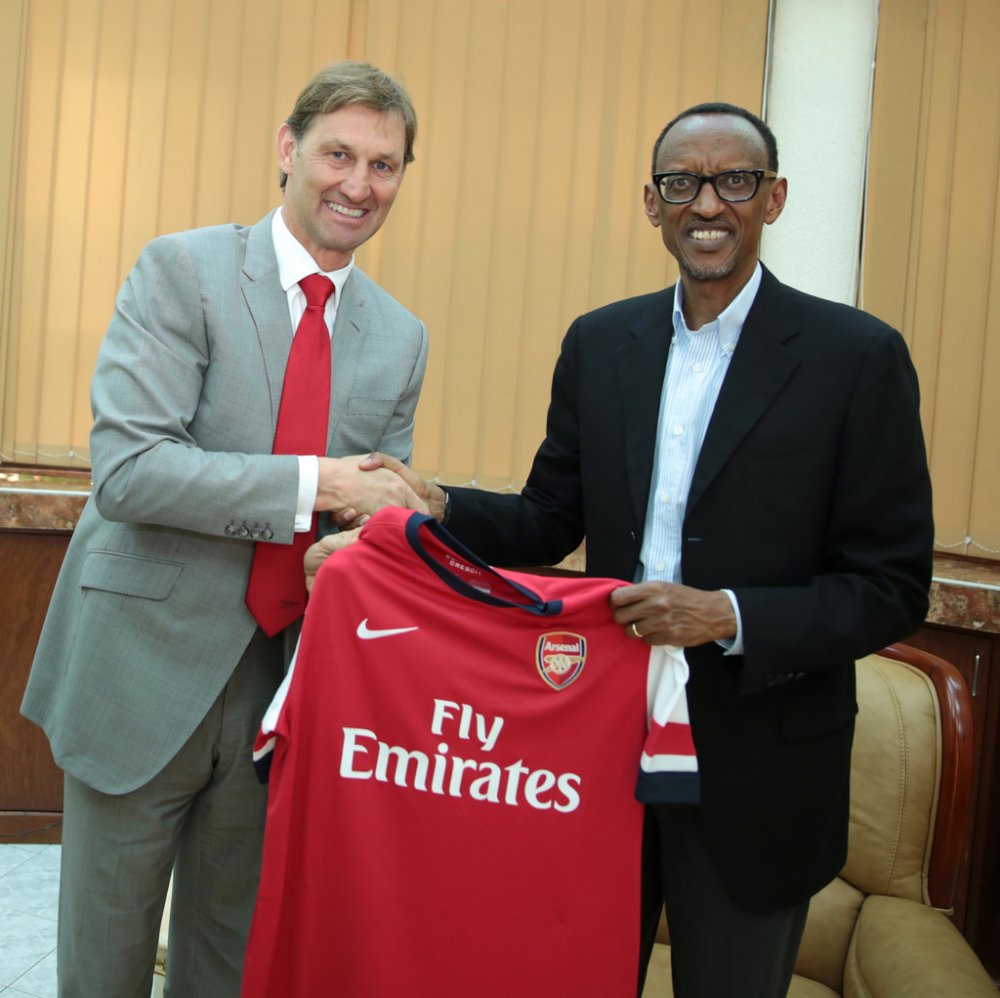
In 2007, when President Kagame who is a devoted Arsenal fan since 1996 was celebrating his 50th anniversary, Coach Arsene Wenger gave him Arsenal Emirates’ Flag with signatures of all players at the time.
Also in 2013, President Kagame was spotted in Arsenal’s stadium, where the team scored 2-0 against Napoli in UEFA Champions league.
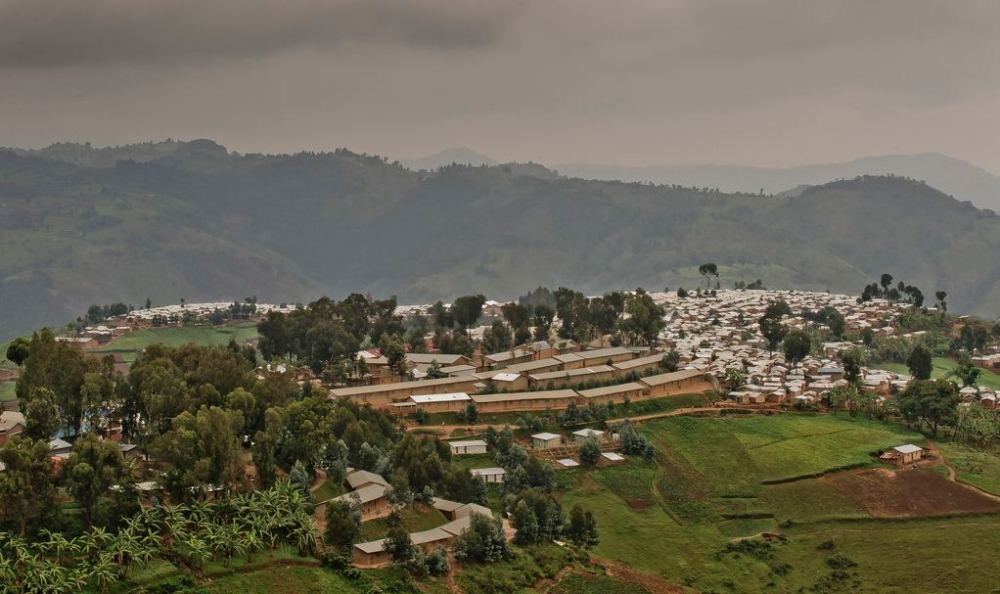
The statement by UNHCR also calls Rwandan Authorities to avoid tensions that could lead to further loss of life.
The call follows Wednesday death of one refugee who succumbed to injuries due to confrontation with Police Officers.
UNHCR says that Police patrols are reportedly facing provocations by refugees and calls for clarification.
UNHCR’s Country Representative, Ahmed Baba Fall said that during confrontations, one refugee was injured and died upon arrival at Kibuye Hospital. He said that the circumstances surrounding the incident are to be clarified.
“UNHCR is deeply saddened and concerned by this tragedy and share its empathy with the family and other members of the refugee community,” says Ahmed.
“UNHCR urged at several occasions the refugees to respect local laws and express grievances through dialogue, while calling on authorities to handle the situation with calm and restraint” he says.
UNHCR says that on April 20th, UNHCR was made aware of the deployment of a large number of Police officers in and around Kiziba camp.
The Ministry of Disaster Management and Refugee Affairs (MIDIMAR) informed UNCHR that the increase in the number of police officers is due to the rise of tensions in the camp and they are there to ensure security and safety of refugees, staff and host communities
MIDIMAR reiterated that there is no operation and that the Government of Rwanda will continue to promote the rule of law, law enforcement and justice for all.
The statement says that UNHCR recognizes that the RNP has the right to patrol on all the territory of Rwanda and is calling upon the refugees to stay calm.
As the demonstrations started in February, where refugees were claiming insufficient food rations and being denied other rights, UNHCR says that is advocating with donors to address the gaps in humanitarian funding and urgent needs of refugees.
To date, UNHCR’s 2018 appeal for USD 98.8 million to support refugees in Rwanda is only funded at 13%.
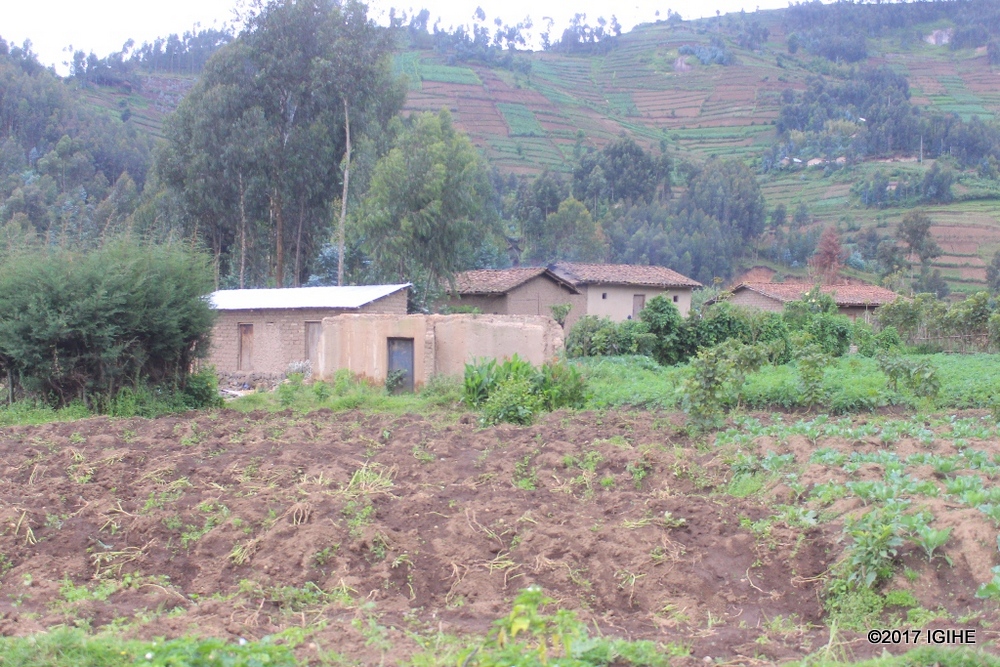
Among properties damaged are houses, over 4000 hectares of crops, bridges, roads among other infrastructures.
Speaking in a post-Cabinet Meeting press conference yesterday in Kigali, the Minister of Local Governance, Francis Kaboneka said that the government has committed to support families who were affected by disasters.
He said that the government continues to call upon those living in high-risk zones to relocate before they are affected by disasters.
“We encourage Rwandans to relocate, where it is necessary we can use other means; when we do this it doesn’t imply that the government hates its people, it is a way to save their lives,” he said.
Using an example, Kaboneka urged people to understand why leaders ask them to relocate.
“On April 2nd night, ten families in Ngororero District were asked to relocate. The day they relocated, all the houses in the area were destroyed by floods,” he explained.
He said that in Western Province, a total of 500 houses were registered and leaders requested their owners to relocate. Until April 4th, 115 houses of them had been destroyed.
“When leaders come telling you that there is a problem, people should understand, they should implement because it is in their benefits,” he said.
“As leaders who have the responsibilities to protect our people, sometimes, we do it by force so that we save lives,” he noted.
He said that they registered houses which can put lives of people in danger and a number of them were relocated. He said that if the exercise had not been conducted, the problem would have taken another level.
The Minister of Environment, Dr. Vincent Biruta said that the heavy rains continue in North-West and South-West of the country until May 10th. In other parts of the country, he said the rain will be moderate.
“My message is that as the rain continues, we encourage people to follow the weather forecast,” he said.
“More measures are needed to be put in place in partnership with people, but mostly we urge them to abide by leaders’ advice,” he added.
He urged people to put in place measures like water harvesting, planting trees and parents take care of their children so that they will not be victims of the floods.
The Cabinet Meeting on Wednesday discussed strategies and mechanisms that will continue to support those affected by disasters and to fast-track repair of damaged properties.
The Cabinet Meeting resolved to strengthen efforts to mitigate natural disasters in the long term with special emphasis on environmental protection, infrastructure development and maintenance, organized settlement as well as improved agriculture practices.
According to MIDIMAR, among the disasters that claimed many lives include thunderstorm which claimed 36 and landslides which claimed 42.
Nsengiyumva was speaking yesterday in a post-cabinet conference, at the office of the Prime Minister which was detailing measures taken to deal with recent disasters caused by heavy rain and flooding.
The Cabinet Meeting on Wednesday resolved to strengthen efforts to mitigate natural disasters in the long term with special emphasis on environmental protection, infrastructure development and maintenance, organized settlement as well as improved agriculture practices.
Nsengiyumva said that the heavy rains damaged crops and claimed over 180 lives.
“We estimated the value of damaged properties and established that they are over Rwf4 billion, this is a serious problem to people who have been affected,” he said.
He said that the government will establish ways to support those whose crops were damaged and left in critical situation.
“We will support families through government’s disaster relief emergency’s fund, we have foods stuffs like maize and beans which we use to support them through the partnership with the Ministry of Disaster Management and Refugee Affairs and Districts. The fund currently has over 7000 metric tonnes of maize and over 4000 tonnes of beans,” he explained.
According to the Minister of Environment, Dr. Vincent Biruta, heavy rains continue until May 10th this year in some parts of the country and urged people to be aware of the weather forecast.
Sadly though, not a lot of people pay attention to what they put on their mouth (oral care) until they begin to suffer some type of pain or discomfort. If you aren’t mindful of what you eat and drink, you can risk your oral health. Here are some of the things we do that expose us to Ill oral health.
{{Biting on hard surfaces with your teeth}}
I know a lot of people who use their teeth as a cork opener, and a hard wire cutter. The teeth may seem indestructible, but it actually can get damaged. It can pull or get chipped if used wrongly. The teeth are for soft food only.
{{Consuming excessive soft drinks}}
Soft drinks taste good, and they can be addictive, but the truth is that they have a lot of sugar and acidic content that can wear off the teeth enamel over time.
{{Chewing on lozenges}}
They are good for soothing sore throats but most have some sugar added. If you happen to chew them, they coat your teeth just as regular candy would. So, be sure to brush your teeth afterward to avoid cavities.
{{Chewing on ice}}
It’s very fun to do it, however, it’s a dangerous habit that can ruin your teeth. Allow your frozen drinks and food to defrost before consuming them to avoid weakening or chipping your teeth.
{{Tongue piercing}}
While it may seem like a fashion statement, you pose the risk of infection. Also, metal consistently rubbing against your gum can weaken the gum.
{{Eating a lot of starchy food}}
Starchy foods like potato chips, yam, plantain, etc can cause harm to the teeth when they stay in there longer than necessary because of their nature. After you eat them, they are broken down into acids, so unless you brush thoroughly or floss, you risk teeth damage.
{{Grinding the teeth}}
It’s a crazy habit, but one so many people do — sometimes, unconsciously, especially in their sleep. Over time, this habit can wear the teeth and even cause pain. It is best to wear a mouth guard at night if you suffer this problem.
Keep your teeth safe. You may not get another.
{{Source: www.elcrema.com
}}
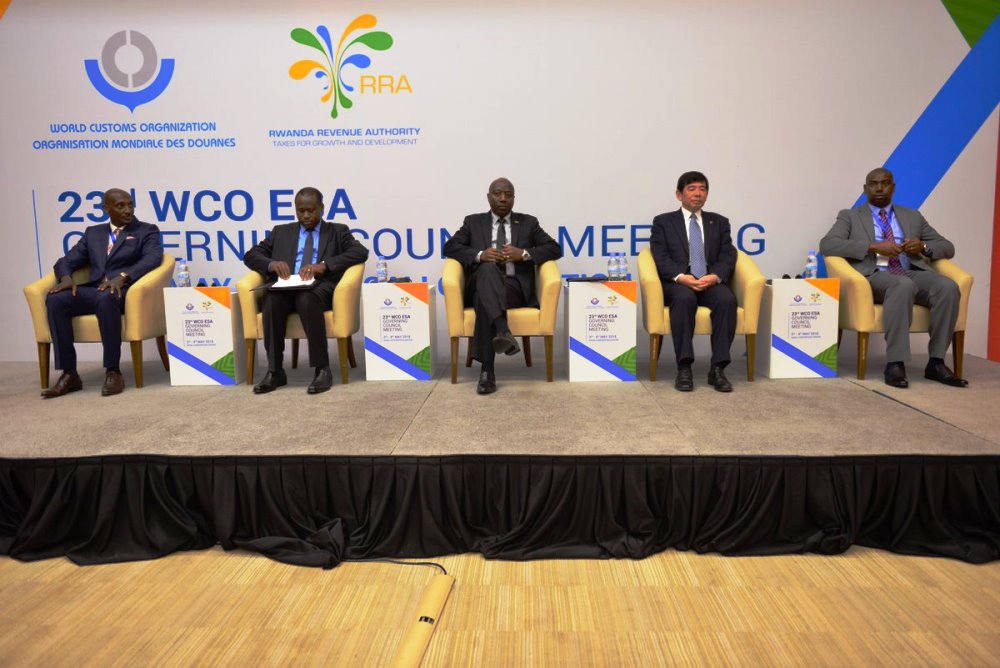
Ngirente was speaking on Thursday while opening the 23rd Governing Council of the World Customs Organization – East and Southern Africa Region (WCO-ESA) that is taking place in Kigali.
WCO-ESA is a 24-member country organization which mission is to provide leadership in the WCO East and Southern Africa Region in the areas of sustainable customs capacity building and change management.
Speaking at the event Ngirente said that the meeting comes at an opportune time following recent launch of the African Continental Free Trade Area (AfCFTA) by African Union leaders.
He said that Africans deserve a continent which is developed and influential on global affairs, a move which will be facilitated by Customs organisations.
“Africa we want and deserve, is an Africa that is: developed, strong, united, trade with each other, resilient and influential on global affairs. To realise this, we must deepen our regional integration and boost economical abilities. Customs organisations will play a key role,” he said.
He said that the government of Rwanda hails the role of the World Customs Organization – East and Southern Africa Region in providing capacity building leadership and managing innovations in the areas of sustainable customs.
Ngirente urged on continued capacity building with modern methods of conducting customs activities to officers in charge of collecting and managing customs.
“Though a lot has been done in building the capacity of officers in charge of collecting and managing customs in East and Southern Africa Region, equipping them further with modern methods of conducting customs activities including application of IT needs to continue,” he added.
He said that equipping staff in customs with modern methods of conducting customs activities is key as Countries work against issues that do with cross border such as security, illegal importation of illicit drugs, human trafficking and trading in counterfeits.
“I urge all delegates to deliberate on these issues aiming at providing tangible measures. Special focus must also be put on modernisation of customs by ensuring that all World Customs Organization tools and packages are effectively utilized,” he urged.
The WCO East and Southern Africa Region consist of 24 Member Countries which are Angola, Botswana, Burundi, Comoros, Djibouti, Eritrea, Ethiopia, Kenya, Lesotho, Madagascar, Malawi, Mauritius, Mozambique, Namibia, Rwanda, Seychelles, Somalia, South Africa, South Sudan, Swaziland, Tanzania, Uganda, Zambia and Zimbabwe.
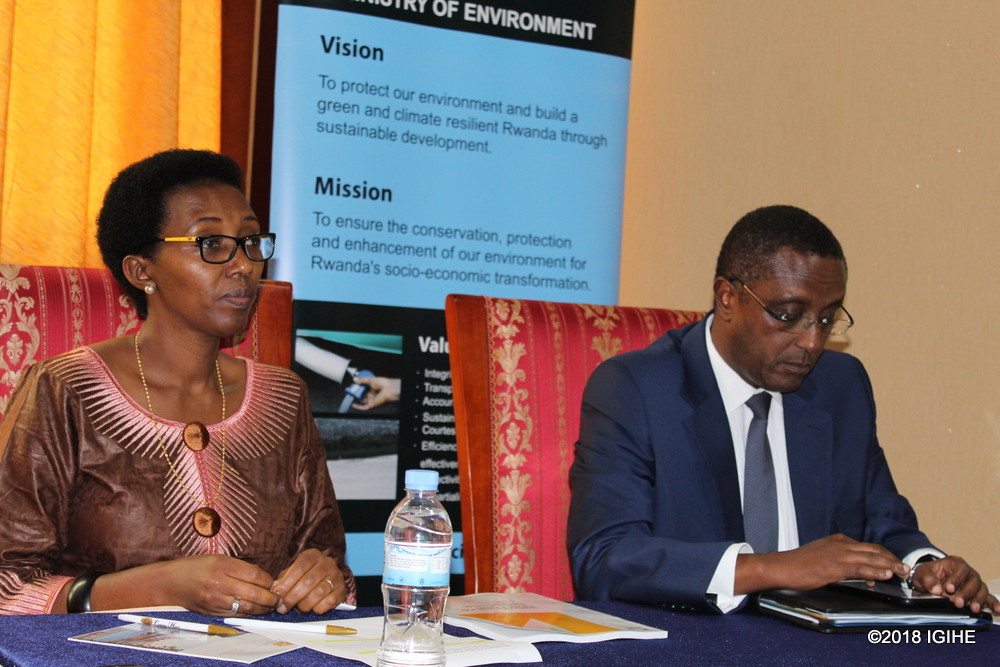
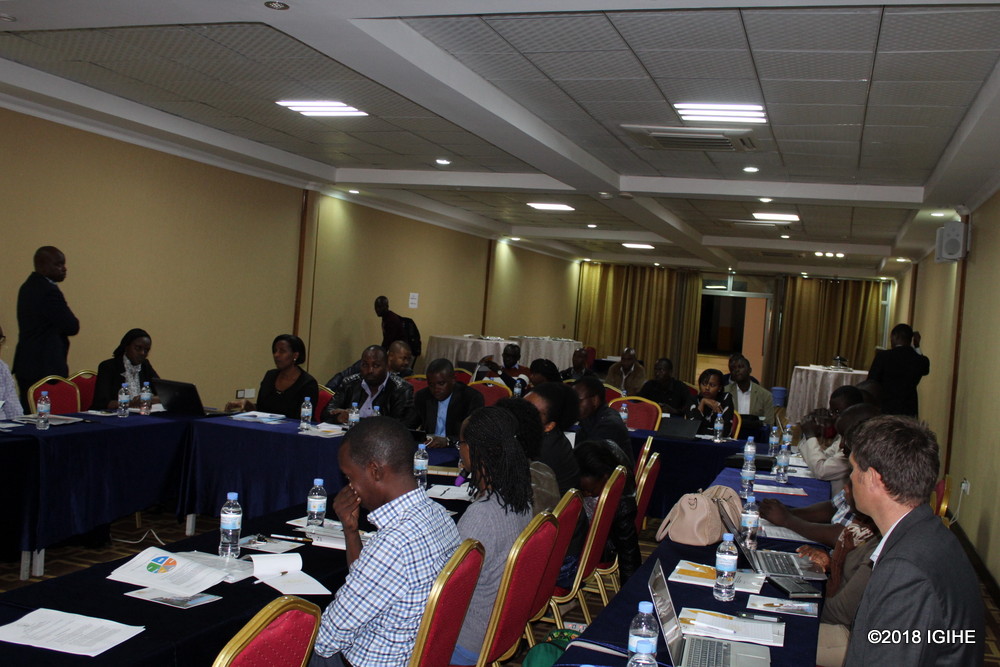
This was discussed during REMA’s launch of a study on Inventory of Sources of Air Pollution in Rwanda. The study looked at the current trends and situation of Air Pollution across the country, proposing a set of recommendations to beat pollution, calling for collective efforts to tackle the challenges brought by poor air quality.
The study indicates that vehicle emissions are the leading cause of air pollution in Kigali and other urban areas, where domestic biomass cook stoves from wood, charcoal and open fire burning in fields are the primary contributors to poor air quality in both residential and rural areas.
It also showed that 95,2% of the cars in Rwanda were at least ten years old, 56,6 % were made before 1999 and 77,2% were made before 2000.
The REMA Director General Eng. Collette Ruhamya, said that the government had put in place policies that guide public vehicles in Kigali but that worn-out cars and heavy-load vehicles that enhance poor air quality are still an issue yet to solve.
“If we had wider roads, then all those heavy-weight cars that emit pollutants would not have to pass in Kigali, because when they pass through the city in a great numbers, they pollute the atmosphere and skies”, she noted
“It is troubling that a three month study conducted in Kigali last year found that particulate matter concentrations in the city occasionally exceeded World Health Organisation guidelines”, Minister of Environment, Dr Biruta Vincent said
The Minister of Environment added that it was reassuring to note that the high concentrations of these pollutants, which were largely attributed to vehicle emissions, were greatly reduced during holidays and car-free days.
“This clearly demonstrates that we must continue to clean up our transport sector and look to new, cleaner technologies and innovative policy measures to reduce air pollution”, he added
Among the strategies and policy recommendations that were taken to address air pollution, it was agreed that cars would be given an age test, where new cars would be taxed at 20%, and old ones (above 10 years) would be taxed at 80%.
If the car is 10 years old and above, it will be taxed on 80%; between 9-10 years, it will be taxed on 75%; between 8-9 years, it will be taxed on 70%; between 7-8 years, it will be taxed on 65%, between 6-7 years, it will be taxed on 60%; between 5-6 years, the car will be taxed on 55%; between 4-5 years, the car will be taxed on 50%; between 3-4 years, it will be taxed on 40%; between 2-3 years, it will be taxed on 30 %, and the car between 1-2 years, will be taxed on 20%.
From the research made, 2,227 deaths were attributed to ambient air pollution in 2012 across the country, whereby the number of hospital admissions for acute respiratory infections in health centres increased from 1,682,321 in 2012 to 3,331,300 in 2015.