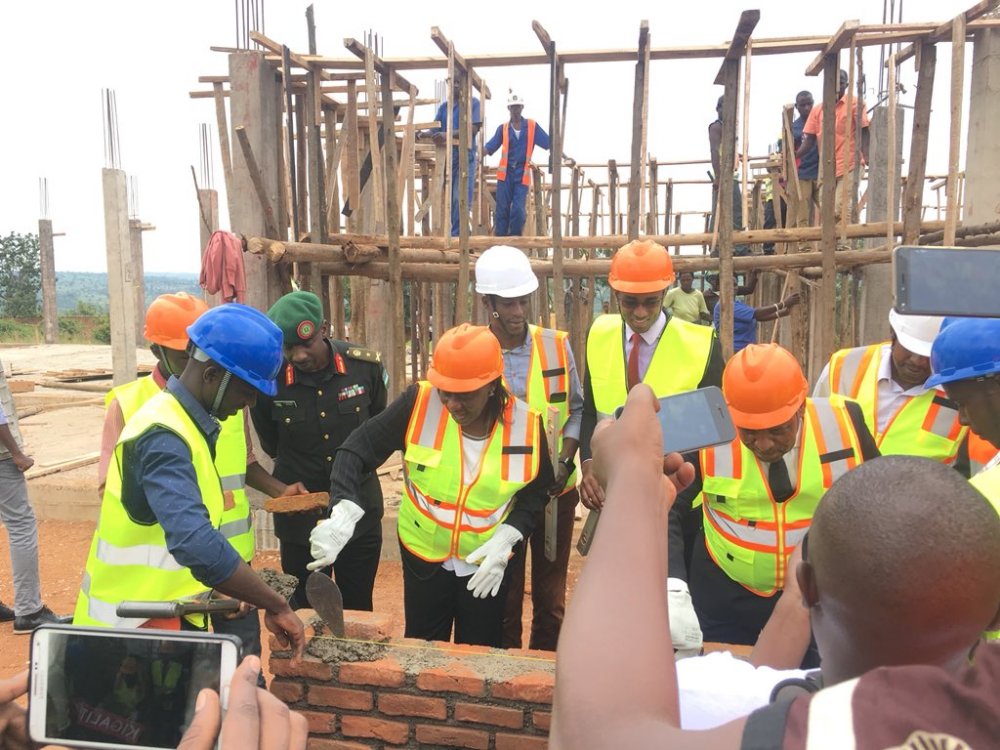
The construction works of the centre that will receive 500 women was launched yesterday and are expected to be completed by December 2018.
Worth Rwf2.9 billion, the centre will also train women on vocational skills.
“This centre will have been completed by December. The current one has old premises and receives one gender. We also need to rehabilitate girls and women. We will also train them in vocational skills so that they will be able to create businesses to support their well-being,” said Aimé Bosenibamwe, the Director General for National Rehabilitation Service.
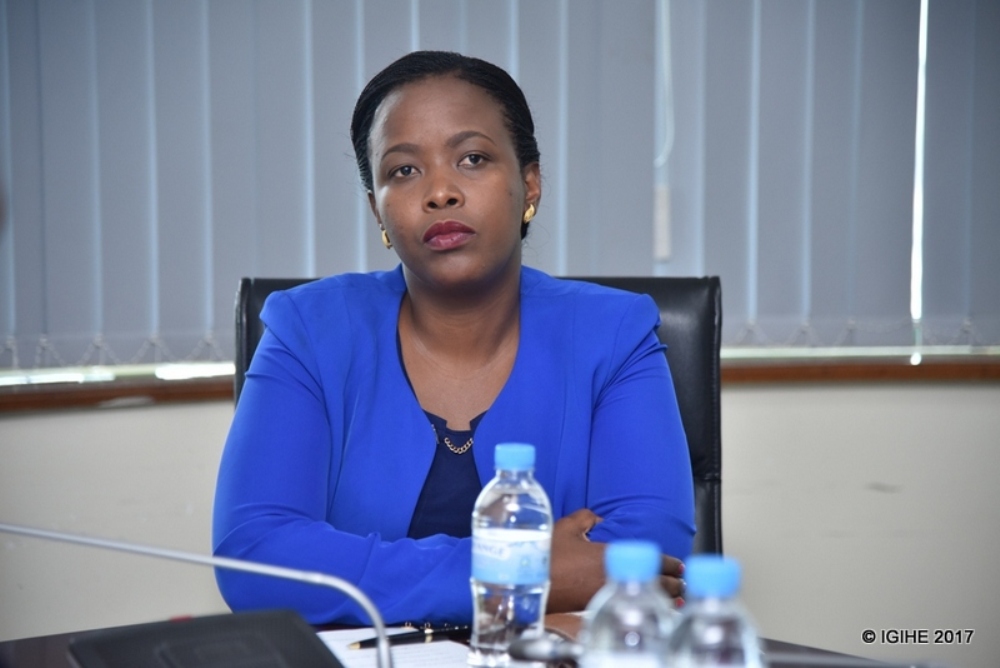
Speaking at the event, the State Minister for Socials Affairs in the Ministry of Local Governance, Dr. Alvera Mukabaramba said that the number of street women is smaller than that of male and added that they were committed to ensure no one will remain on the street.
“In other categories, the number of female has been higher than that of male, but for street cases, it is so smaller, but we whatever number is there, we need to curb, rehabilitate and trained them so that they develop themselves and the country,” she said.
A study by National Rehabilitation Service shows that there is a total of 2000 street children and the target is to get them off the streets in two years.
One of the entrepreneurs is a twenty-three year old Samantha Ahirwe, the head of Posh Creative, a handicraft company that weaves shoes and handbags.
The university graduate in Civil Engineering started business in 2017. The idea came from ill-treatment and domestic violence she observed women in her community were experiencing for being dependents on the household heads.
“Those women usually depended on their husbands. I thought of doing something that could help them contribute to financial growth of their families. That’s where I started making designs of shoes. I approached these women, trained and then employed them,” she explains.
Currently, Ahirwe permanently employs five women and one part time woman and man. All employees are paid depending on production capacity. She says that the whole business is worth between Rwf3.5 and Rwf4 million.
She says that she started her business using the money she got from a paid training she attended in US.
Ahirwe says that currently, she is focused on company branding by using social media.
“The main challenge I faced is visibility and market access,” she says. She says that they import all raw materials from Kenya.
Like Ahirwe, different young entrepreneurs running start-up businesses have shared entrepreneurship experiences.
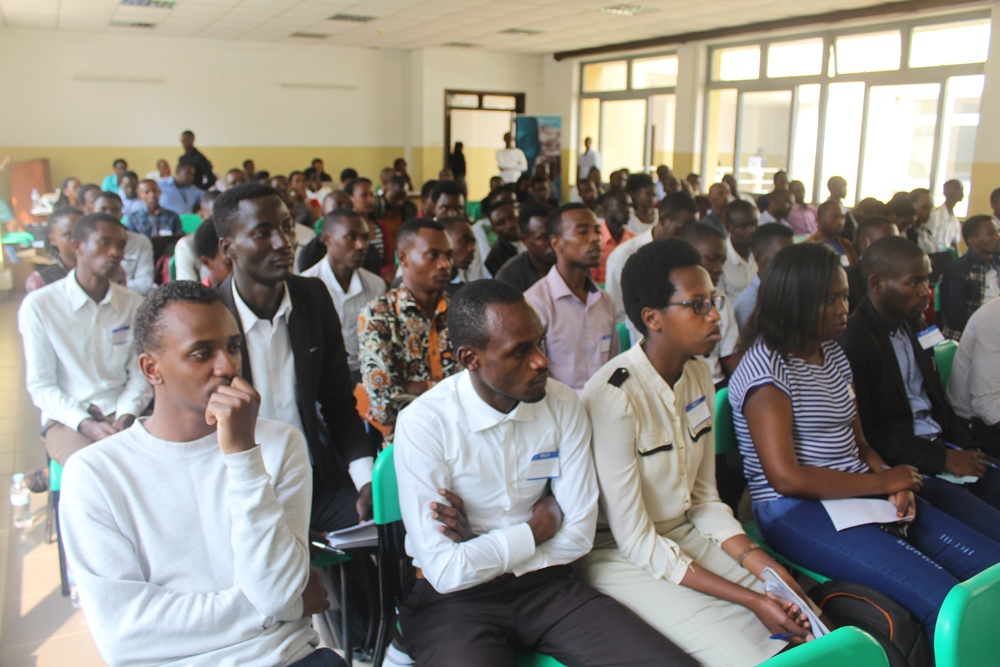
A one day seminar that brought together students from University of Rwanda and youth in business in Kigali on Wednesday, youth were made aware of the many opportunities in the communities they live.
Ahirwe urged youth to avoid fear of starting business when they have ideas.
Alexandre Nshimiyimana another young entrepreneur making soap and body lotion from avocado was awarded by Rwanda Development Board as outstanding young entrepreneur in 2017.
Another was a twenty-two year old Yvette Ishimwe, the entrepreneur behind Iriba Water Group, a company that distributes clean water in Kayonza District.
Each young entrepreneur has own success story. For example, Ishimwe was awarded by Queen Elisabeth II for her impactful project.
For the Burera District based Nshimiyimana, having a successful business does not need to be established in urban area.
“When investing, you don’t need to think that the successful business will be established in Kigali, you need to invest in business that solves societal problems,” he said.
Ishimwe urged students to concentrate on one business idea and ensure that it is effectively implemented despite challenges.
According to Ishimwe, she was inspired by challenges her family faced after relocating from Kigali to Kayonza Distirct.
“We found ourselves settled in a community where you could hardly find clean water. We used to pay Rwf300 for one Water Can,” she said.
“So, with those challenges, I sat down and browsed on internet different water treatment systems which led me to successful business. So, that’s why I urge you to turn all challenges around you into businesses,” she urged.
Scovia Mutesi, the head of These Numbers Have Faces, an organization that empowers young entrepreneurs which also organized the seminar said that discussions help students with business ideas realize ways to shape them into businesses.
“Many people have business ideas and need to be taught on ways they can be implemented. Though they are university students, some might have profitable businesses,” she said.
Marie Aimée Niyonshuti a first year student in University of Rwanda’s College of Science and Technology said that discussing with successful people helps them to open their minds about business sector and realize opportunities.
“They told us challenges faced and ways they overcame them. So, I learnt from them how to run a successful business and most particularly for female how to overcome gender disparity,” she said.
Through organisation’s yearly Accelerator Academy programme, different youth are trained on business plan and are linked with investors.
Akamanzi will be presented the doctorate during the university’s spring convocation ceremonies that will take place on June 11th, 12th and 13th 2018.
In the ceremony, Akamanzi will be awarded along other ten individuals who have made their mark in the fields of law, art, Indigenous rights, journalism, nanoscience, business and philanthropy.
According to the university, the honorands join more than 5,600 students who will receive their degrees and diplomas.
{{About Akamanzi}}
An international trade and investment lawyer, Clare Akamanzi received a Master in Public Administration from Harvard University’s Kennedy School (HKS). She received awards for academic excellence and distinguished contributions to the HKS community.
Akamanzi also holds an LLM (with distinction) in International Trade and Investment from the University of Pretoria as well as an LLB (Honors) from Makerere University, Uganda.
During her international career, Akamanzi has worked as a commercial diplomat in London and a Trade Negotiator at the World Trade Organization in Geneva.
In 2012, she was named Young Global Leader of the World Economic Forum, and a year later was selected as one of Africa’s Top 20 Leading Women in Economic Development by Forbes.
On the agenda of the ceremony, Akamanzi will address the John Molson School of Business on June 13.
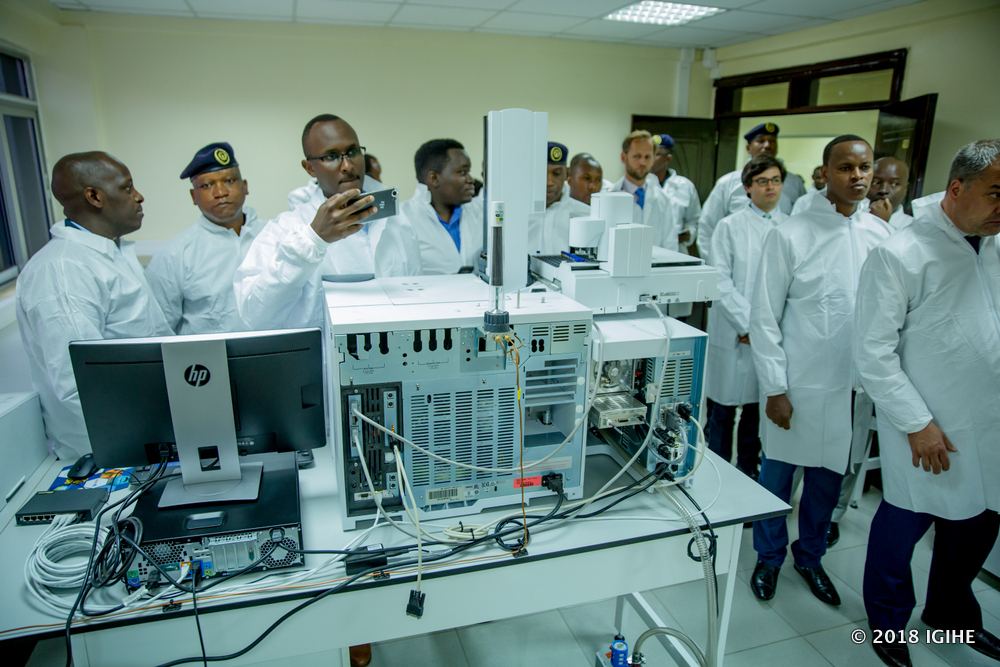
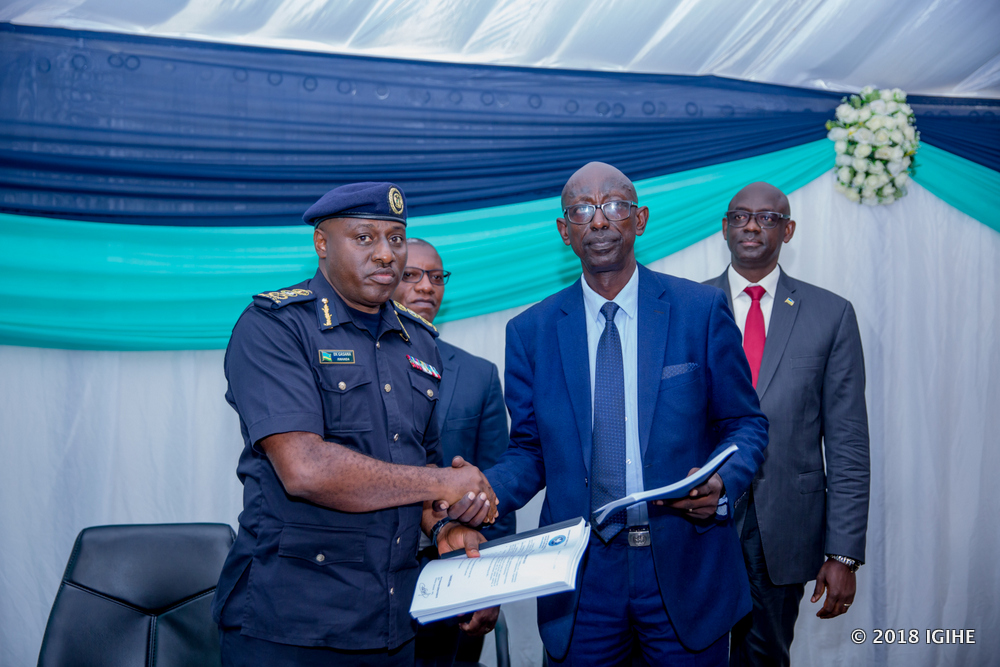
The laboratory that has been operating under Rwanda National Police (RNP) was operationalized Thursday and started to function as an independent institution.
The Rwanda Forensic Laboratory was handed to its officials in a ceremony held at its headquarters in Kacyiru and presided over by the Minster of Justice, Johnston Busingye.
The Director of the Laboratory, ACP Dr François Sinayobye said that previously, they have been providing few services.
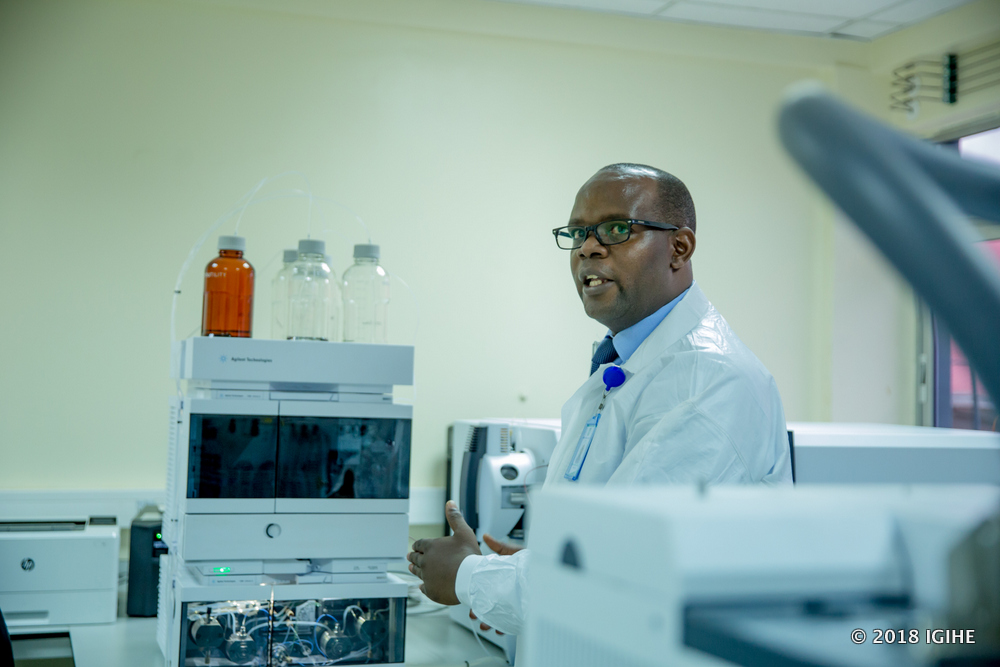
He said that the laboratory has been upgraded and is able to conduct DNA tests which facilitate to establish the evidences with findings from the scene of crime. It is able to test family relationship among other services.
“The aim is to support justice by providing scientific and reliable evidences. The laboratory has skilled employees and are ready to contribute to justice with reliable evidences, professionalism and impartiality,” he said.
The laboratory is capable to deal with physical evidence, biological evidence and chemical evidence, DNA samples, document examination and fingerprint analysis.
The laboratory will offer among others toxicology and ballistics services. Toxicology is a test done on a person who, for instance, is poisoned while ballistics are tests that involve arms and explosives.
The chemical evidence division will identify and analyze poisons or drugs and their effects on the body; chemicals on different crime scenes like fire accidents or arson. On such scenes, investigators seek to identify whether there is presence of fire accelerants, which help the investigator to conclude for a fire accident or arson.
Police Inspector General, Emmanuel Gasana said that since RNP was formed in 2000, different changes have been conducted and led to the establishment of such laboratory.
“We are pleased with having this laboratory along the journey of constructing strong justice system,” he explained.
Minister Busingye said that though the launched laboratory does not have all services, but those available are the first to be offered in Rwanda.
“Evidences like those for gender based violence cases, family relationship, poison among others are available like it is done in other countries,” he said.
“Today we celebrate this milestone. Foreign forensic laboratories were costing the country in terms of time and resources,” he added.
Prosecutor General, Jean Bosco Mutangana said that there have been facing challenges like forensic evidences which they used to conduct from German and were costly. He said that at least they need to conduct 800 forensic tests every year and needed to wait above two months to receive the results, things which used to delay justice.
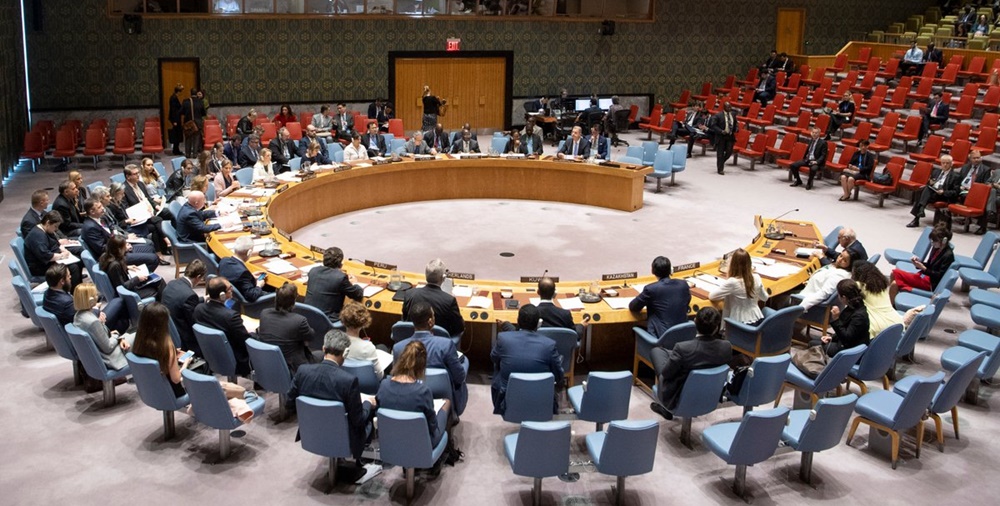
Rugwabiza made the remarks Wednesday at the United Nations Security Council (UNSC) which convened a meeting reviewing the work of the MICT.
In her remarks with stern message, Rugwabiza highlighted the lack of transparency and accountability of the MICT procedure for early releases.
She said that Rwanda has not opposed the potential early release and has released genocide convicts more than any other country.
“Rwanda is not opposed to the principle of potential early releases and there is not a single country or international jurisdiction, anywhere in this world that has reduced sentences and released genocide convicts more than Rwanda,” she said.
“The problem lies with the lack of transparency in the process and criteria considered in decisions of early releases. These convicts haven’t shown any remorse, the decisions are made by one person, the President of the MICT, with no obligation of accountability,” she explained.
She said that the decisions are not communicated to the government of Rwanda, as the survivors and government learn about them through the media.
Meanwhile, ICTR through Meron has acquitted Protais Zigiranyirazo, Justin Mugenzi, Prosper Mugiraneza, Gen. Augustin Ndindiriyimana and Major François Xavier Nzuwonemeye.
He also reduced sentence for masterminds of the genocide including, Colonel Théoneste Bagosora from life sentence to 35 in appeal trial that he (Meron) was presiding.
He also reduced sentence for Col.Anatole Nsengiyumva and Capt. Ildephonse Nizeyimana. Currently, Nsengiyumva who is known for being among masterminds of the genocide against the Tutsi in former Gisenyi Prefecture has been released.
Rugwabiza underlined that a number of those released before the end of their sentences have since regrouped in an association denying the 1994 Genocide against the Tutsi.
“They do so with no consequences because they are released with no conditions. The mechanism and its current President will not be able to escape this daunting legacy,” she said.
{{Recommendations to UNSC}}
Rugwabiza recommended the UNSC to urge the ICTR to put in place clear rules of procedures and criteria of early release and be requested to apply them transparently.
She said that such rules should include conditionalities to prevent genocide convicts benefiting from early releases from engaging in activities promoting genocide ideology and denial.
{{Reactions from UNSC members}}
Ethiopia Ambassador to the UN, Mahlet Hailu Guadey noted that Rwanda’s concerns on early release of persons convicted of genocide and crimes against humanity cannot be overlooked.
Guadey emphasized that in the process leading to early releases, it is important that other judges are consulted and Rwanda consulted particularly on the implication.
The US Ambassador to UN, Mark A. Simonoff encouraged the MICT to respond to concerns with early releases, noting that some individuals have subsequently denied as being responsible for their crimes.
“This denial undermines the fight against impunity. The US also recognizes and encourages the practice of consultations before early releases,” Simonoff said.
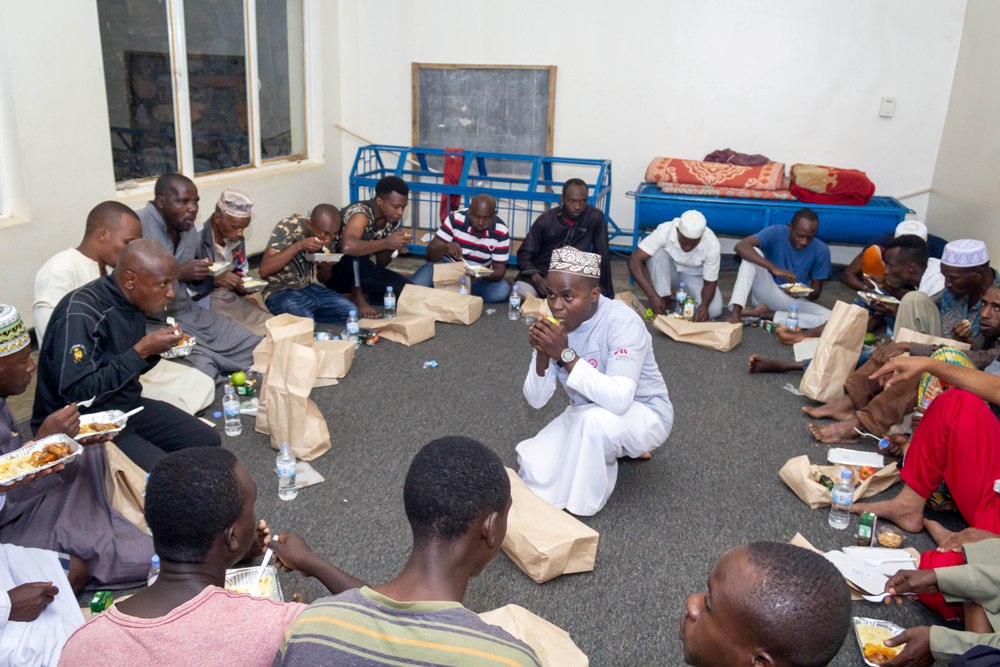
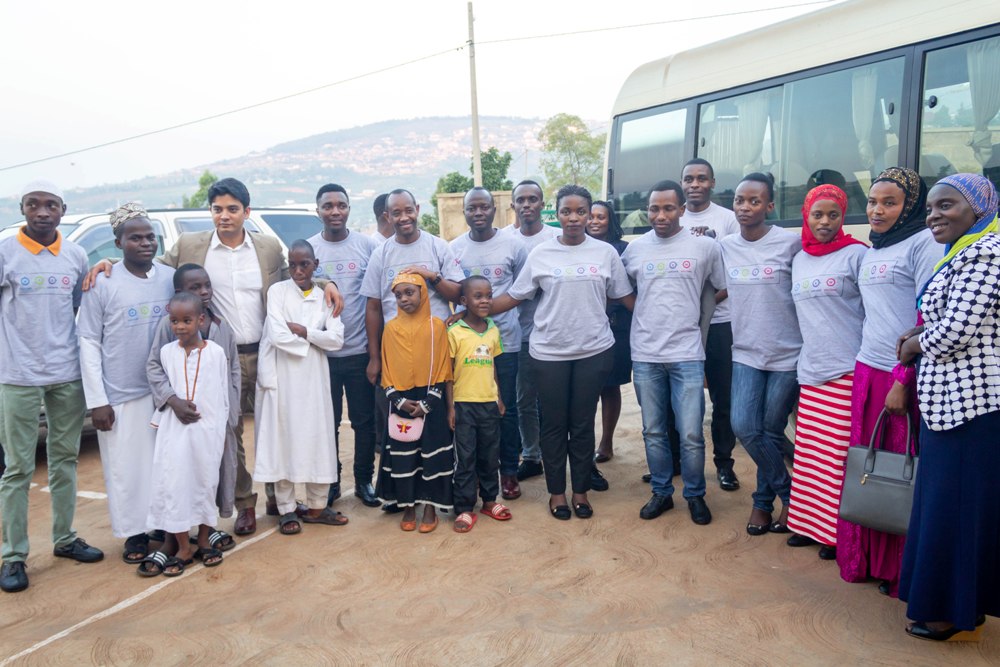
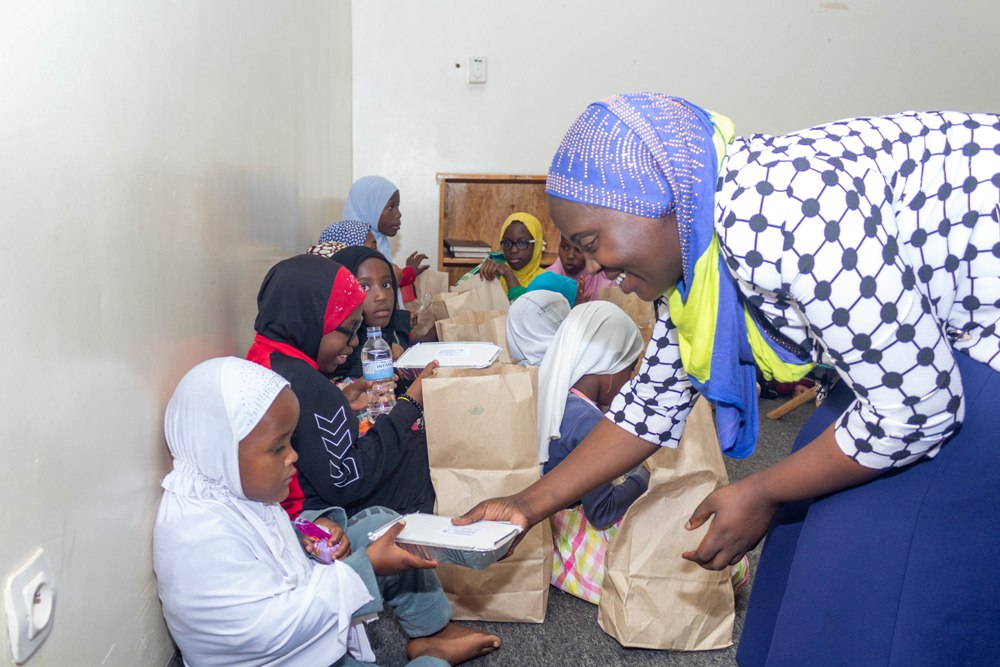
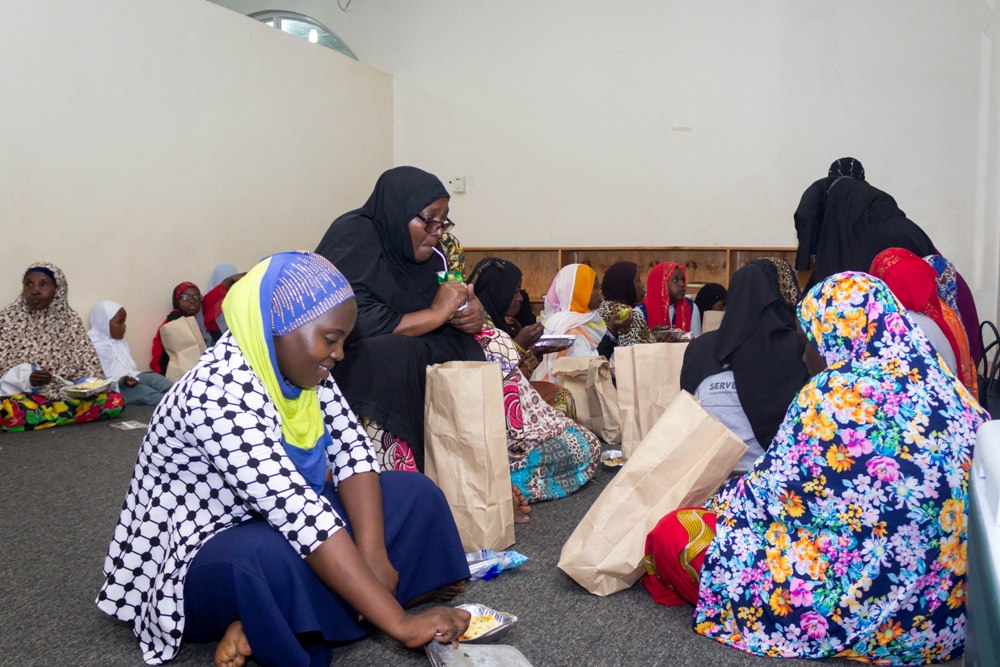
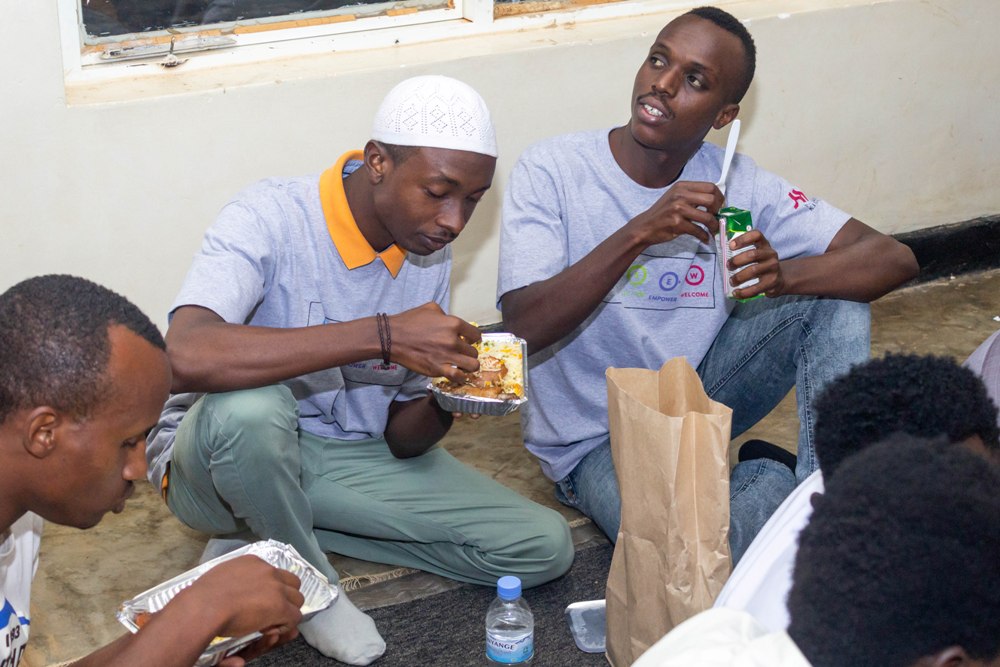
The feasts sharing held on Wednesday as part of the Kigali Marriott’s spirit to serve the community saw the hotel’s 21 employees joining the Muslim community at Mar’wa Rah’Man Mosque in Rwarutabura, Nyamirambo Sector.
Kigali Marriott’s Human Resource Manager Aisha Nante Mambo, who led the delegation to Nyamirambo, told IGIHE that they chose the mosque in Rwarutabura because there are members who do not have the privilege to enjoy festivities like Ramadhan.
“In line with Ramadhan, we saw that the best way to serve the community is to share iftar with the Muslim community. Some of our associates who pray from this mosque told us that there are women and families who do not have enough to share iftar; so instead of taking the meal to the city where everyone can afford, we decided to share with the people who are really in need,” she said.
Encouraging everyone especially Muslims to keep supporting the disadvantaged, Mrs. Mambo said, “Being a Muslim myself, we should not stop giving and supporting one another.”
Imam of Mar’wa Rah’Man Mosque, Sheikh Daoud Niyigena appreciated Kigali Marriott’s support for the iftar, saying that the selection of beneficiaries considered most their members in need.
“We really appreciate Marriott Hotel for sharing iftar with us. It is a support and good gesture as they join us to share the meal. The one who gives iftar to somebody receives additional rewards from Allah. We are very happy and pray Allah to give you rewards for the support,” he told the visitors quoting in part the Prophet Mohammed.
Millions of devout Muslims around the world observe the holy fasting month of Ramadhan every year. For this year, the month started on May 17 and is expected to end on June 14. During the month, Muslims observe fasting and break it at sunset.
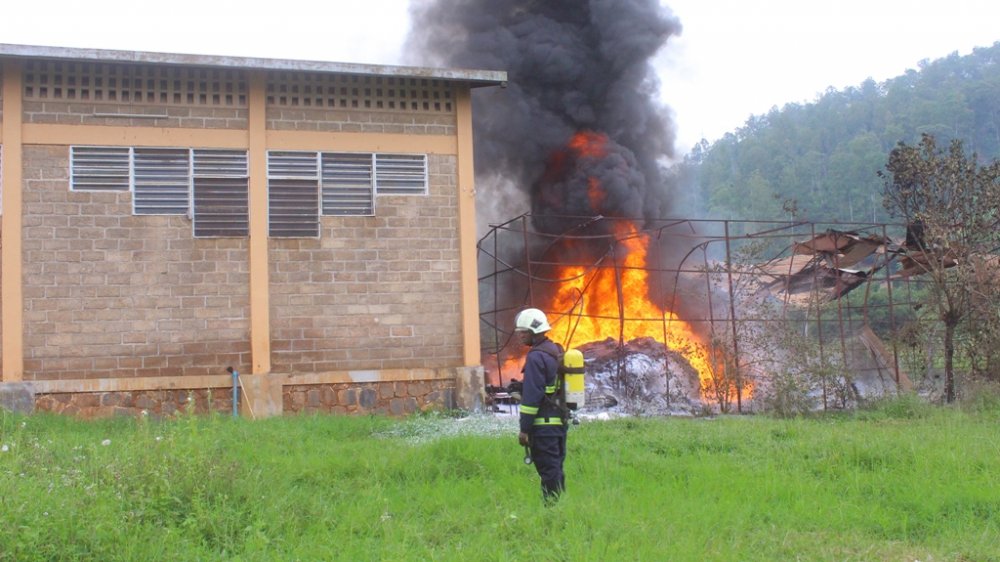
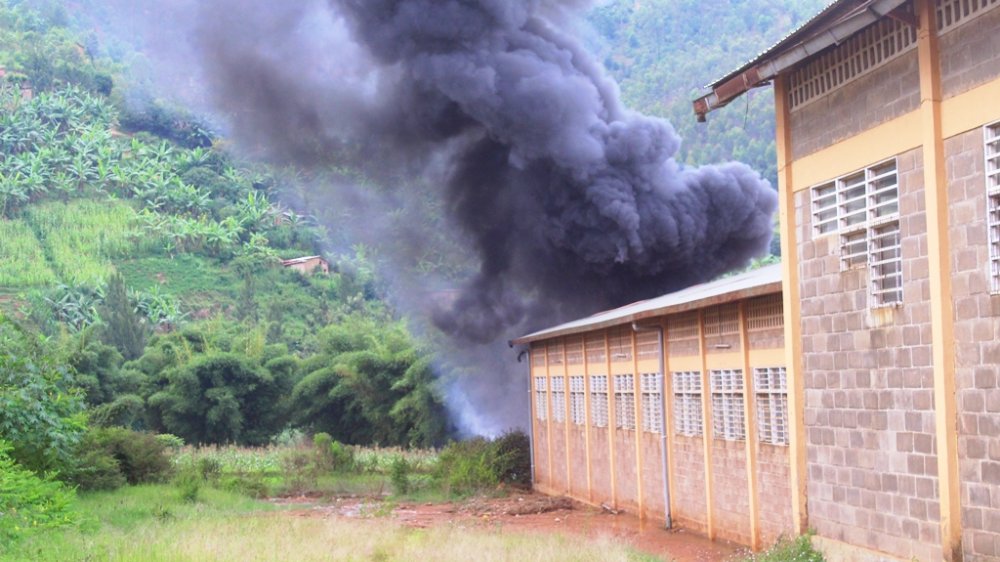
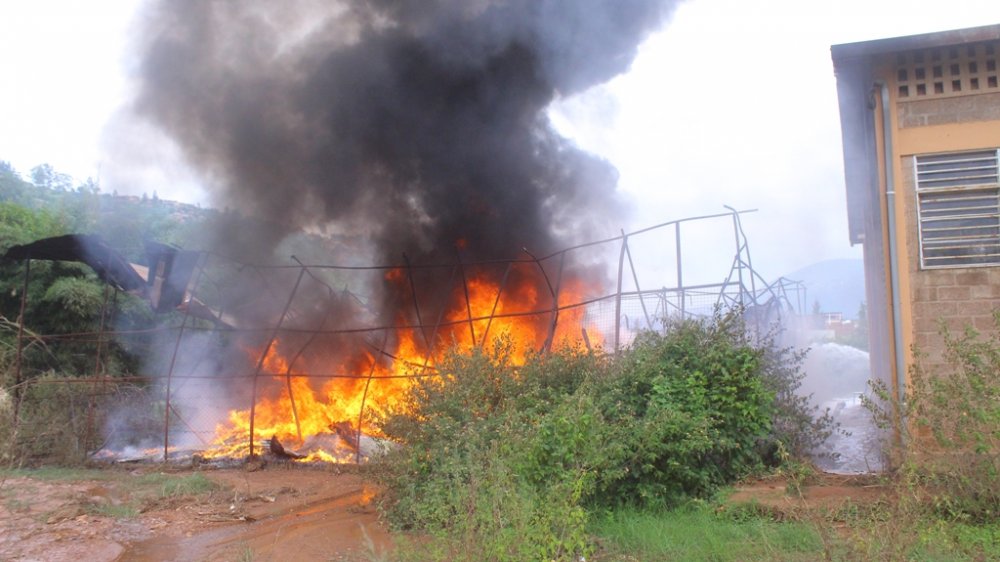
According to witnesses, the fire at the plant located in Gatsata Sector of Gasabo District was started by a security guard.
Witnesses told IGIHE that the plant’s guard started fire when he was trying to harvest honey from nearby hives and the fire transmitted to the plastic raw materials which the plant was using to make shoes locally known as ‘bodaboda’
The Plant Manager, Samuel Maina told IGIHE that the fire gutted a total of 90 tonnes worth Rwf197 million. He also said that the fire was started by the guard.
“Though it is not easy to calculate the value of all damages, I can confirm that 90 tonnes of plastic raw materials worth Rwf197 million were burnt down,” he said.
Police intervened to extinguish the fire, but most of properties had been razed down.The guard has been arrested as investigations get underway.
“I will not go back on my word. Our mandate ends in 2020,” Nkurunziza said in a speech in front of supporters and diplomats in the central Gitega region.
The constitution, approved on May 17 by a majority of voters around the densely-populated central African country in a referendum, allows Nkurunziza to run for office twice more in seven-year terms from 2020.
“History is being written in the centre of the country at Gitega, the head of state Pierre Nkurunziza has just put his signature to the new constitution of Burundi,” the official presidential Twitter account announced at 10:30 am
The former rebel leader first came to power in 2005 after a bloody civil war between ethnic Tutsis and Hutus.
The call was made yesterday when the Minister of Justice and Attorney General, Johnston Busingye was meeting RIB senior officials at RIB headquarters in Kimihurura.
Speaking to the media after the meeting, RIB Secretary General, Col. Jeannot Ruhunga said that the bureau still has some challenges including a small budget that hampers the institution from successfully meeting their targets.
“For us to successfully execute our responsibilities, we need some basic requirements. That’s why we requested him advocacy for increased budget so that it can help us attain our mission,” he explained.
“We receive many people, but have a small place. We need more offices for investigators. Currently they are fused in few offices and don’t work comfortably,” he added.
Speaking to journalists after the meeting, Busingye said that RIB started on the good note. He commended the institution for the achievements and promised Government support on the few challenges reported such as small workplace among others.
Busingye called on RIB leaders to embrace team work, timely sharing of information and professionalism in delivering on their mission and objectives.
He acknowledged that the institution has a big staff with few offices and promised them on extended place.
“They have 50 office rooms with a big staff which needs a least 90 office rooms. Under the partnership with other institutions, we promised them more office space activities,” he said.
“Budget issue is common, but aspects which can affect implementation of their mission shall be seriously considered,” he said.
Rwanda Investigation Bureau has powers to arrest and detain suspects in criminal cases; restrict access to an area or set up a roadblock for the purposes of maintaining security, preventing and detecting crimes.
The order dated May 30th 2018 says that along the process, the US Department of Transportation gave interested people 21 days to file objections to the Order. The office said that if no objections were filed, all further procedural steps would be deemed waived, and the Department would enter an order which would make final the findings and conclusions of the Order.
“We make final our findings and conclusions as stated in the Order and award to ‘RwandAir’ Limited Liability Company the foreign air carrier permit with associated conditions attached to the Order (and attached as the Appendix to the present order),” reads the order.
However, the order shall become effective on 61st after the day it was submitted to the President for review.
“Unless disapproved by the President of the United States under 49 U.S.C. §41307, this order shall become effective on the 61st day after its submission for section 41307 review or upon the date of receipt of advice from the President or his designee under Executive Order 12597 and implementing regulations that he or she does not intend to disapprove the Department’s order under that section, whichever occurs earlier,” reads the Order issued by Brian J. Hedberg, US Director Office of International Aviation.
Once RwandAir is authorized, according to the Order, will be able to engage in scheduled foreign air transportation of persons, property and mail from points behind Rwanda via Rwanda and intermediate points to a point or points in the United States and beyond.
It will also engage in scheduled foreign air transportation of property and mail between the United States and any point or points.
RwandAir will also engage in charter foreign air transportation of persons, property, and mail between any point or points in Rwanda and any point or points in the United States, and between any point or points in the United States and any point or points in a third country or countries, provided that, except with respect to cargo charters, such service constitutes part of a continuous operation, with or without a change of aircraft, that includes service to Rwanda for the purpose of carrying local traffic between Rwanda and the United States.
Currently, RwandAir has 26 destinations and 12 aircrafts.