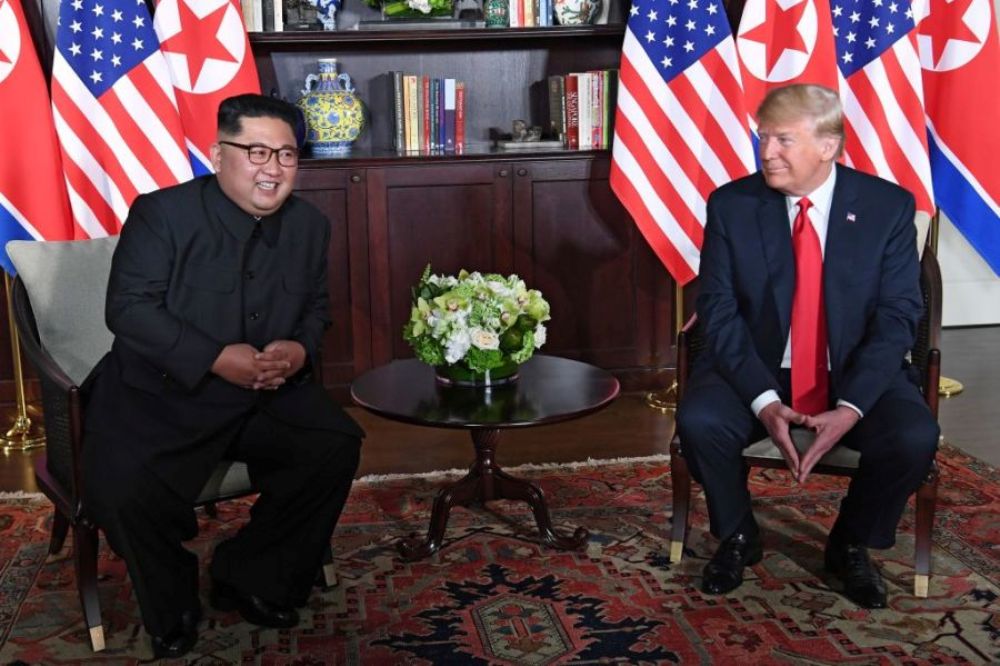
The signed document includes a pledge from Mr Kim to rid the Korean peninsula of nuclear weapons.
Mr Trump later said the US would suspend its military exercises that have infuriated North Korea, which analysts see as an apparent concession.
It was the first time a sitting US president met a North Korean leader.
The pair shook hands, held talks together and ate lunch accompanied by advisers.
It caps a remarkable turnaround for the two, who only last year were engaged in angry threats.
{{What did they agree?}}
The summit centred on nuclear disarmament and reducing tensions.
The agreement said the two countries would co-operate towards “new relations” while the US would provide “security guarantees” to North Korea.
On nuclear weapons, Mr Kim “reaffirmed his firm and unwavering commitment to complete denuclearisation of the Korean peninsula”.
Observers say the document lacks substance, in particular on how denuclearisation would be achieved.
But in a media conference after, Mr Trump went further, unveiling details not in the agreed text.
• The US would suspend its “provocative” war games it holds with South Korea, he said, while he added he wanted to see US troops withdrawn from the South. Analysts have said this is a major concession
• On denuclearisation, he said that Mr Kim had agreed to it being “verified”, a key US demand ahead of the meeting
• Mr Trump said Mr Kim had also agreed to destroy a “major missile engine testing site”
• But he said sanctions would remain in place for now, and argued “we haven’t given up anything”.
Several reporters asked whether Mr Trump had raised the issue of human rights with Mr Kim, who runs a totalitarian regime with extreme censorship and forced-labour camps.
The US president said he had, and would not retract his description of Mr Kim as “talented”.
“Well, he is very talented,” Mr Trump said. “Anybody that takes over a situation like he did at 26 years of age and is able to run it and run it tough. I don’t say he was nice.”
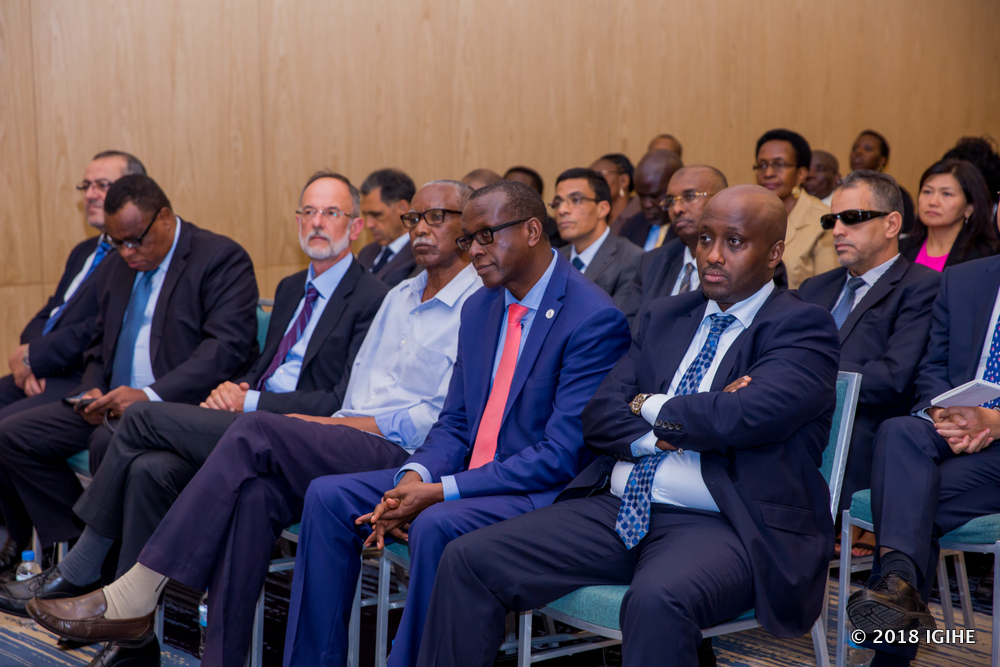
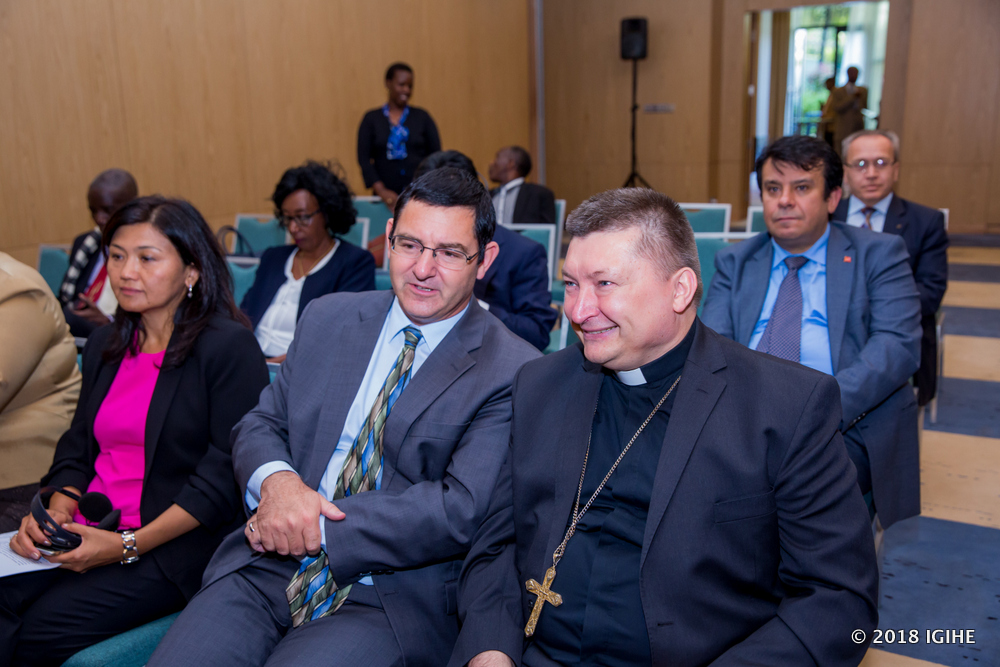
Nduhungirehe was speaking yesterday in the 1994 genocide against the Tutsi commemoration event that brought together members of diplomatic corps in Kigali.
The event was organized under the theme, ‘The contribution of the International Community in Peace building, Justice and Reconciliation in Post-Genocide Rwanda’
Nduhungirehe called upon diplomatic corps to help in revealing the truth including archives about the genocide against the Tutsi different governments keep.
“The truth would help to continue to remember the genocide and to prevent the future generations from falling back in such errors,” he said.
He called upon advocacy from members of the diplomatic corps so that countries shielding genocide suspects would arrest them and face justice.
“We hope that you have visited different genocide memorials around the country and have discussed with genocide survivors and learnt its effects. We hope advocacy from you,” he said.
He called upon international communities to act on Theodor Meron and International Criminal Tribunal for Rwanda (ICTR)’s early release of genocide convicts.
“We call upon the states and international organisations you are representing to step up efforts in stopping the decisions by Theodor Meron which encourage impunity than good justice. Early release of genocide masterminds is abusing international justice,” he said.
Speaking at the event, the Executive Secretary of National Commission for the Fight Against the Genocide (CNLG), Jean Damascène Bizimana said that international organisations failed to act against the genocide as proven by different documents of before and after the genocide.
In his remarks, the Dean of Diplomatic Corps and South African High Commissioner to Rwanda George Nkosinati Twala requested foreign envoys to join hand with Rwandans in fighting the genocide ideology.
“The time for breaking the silence has come. The culture of impunity will not continue unchallenged,” he said.
He said that countries should stand against the deniers and trivializers of the genocide perpetrated against the Tutsi.
“We should arrest and extradite to Rwanda genocide suspects, it is worthwhile that some countries have started to act on it,” he said.
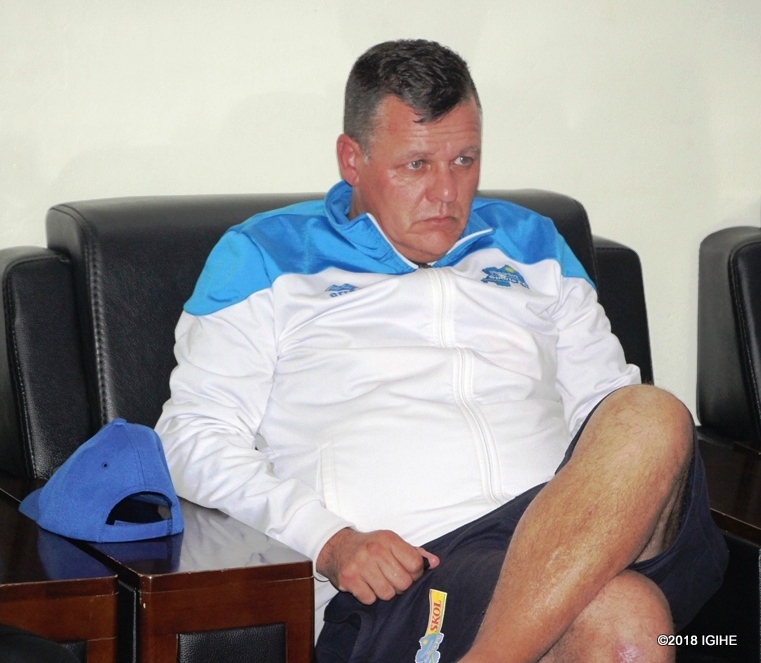
“Ivan Minnaert is no longer the head coach. He has been dismissed due to poor results and issues that have arisen in the dressing room for some days,” the club’s website statement reads.
The club website says the assistant coaches have also been indefinitely suspended.
“Assistant coaches Romami Marcel and Jeannot Watakenge have been indefinitely suspended.”
Yesterday, the trio did not participate in the team’s drills as only goalkeepers’ coach Ramadhani Nkunzingoma was present.
Last week, Rayon Sports lost the game between Amagaju FC and players immediately filed a complaint to the club’s president Paul Muvunyi requesting him to sack coach Minnaert.
In the letter, players were accusing the coach of being behind poor results and cultivating misunderstanding in the club.
The development follows weekend two-week suspension of the team Captain, Eric Ndayishimiye commonly known as Bakame over what they called betrayal of the team.
Minnaert is fired only two months after signing a one-year and half contract that would end in June 2019.
On June 6th, the UN Security Council unanimously adopted the Resolution 2419 (2018) to “consider ways to increase the inclusive representation of youth for the prevention and resolution of conflict”, considering the crucial role of youth in “building sustainable peace”, “promoting a culture of peace” and protecting youth from violence and conflict at the same time.
As this resolution’s recognition of the increasing role of youth with its influence in peace-building, the two-day event that was led by the International Youth was advocating peace to nationals.
At the event citizens, especially students, wrote letters with the contents advocating efforts of peace by their national leaders. According to the IPYG, 20,006 peace letters were written and collected in two days of the event through youth participation. The IPYG further said that the letters will be delivered to the two leaders of the two Koreas when they reached 150,000 in number.
As a backbone of the youth-led advocacy campaign for peace-building, the IPYG introduced “the Declaration of Peace and Cessation of War (DPCW)” with 10 articles and 38 clauses, which stipulates peaceful dispute settlement, disarmament, religious and ethnic freedom, and spreading a culture of peace.
Ms. Park Min-Jeong, a participant, said, “Although there was a vague fear of reunification, I have come to think about positive aspects and expectation that reunification will be achieved in this era by seeing the inter-Korean summit.”
“I realized that I should be aware of the issues of the international community to join in peace activities that will end the war in our times,” she added.
“The future of Korea is youth. If young people are interested in reunification, and take the lead for it, we can achieve peace on the Korean Peninsula. The start can be a letter of heart. We will work hard so that youth can be more interested in and lead the peaceful reunification,” said Mr. Peter Jung, General Manager of the IPYG.
The IPYG has initiated a youth network for peace with 851 youth organizations in 110 countries around the world. The IPYG says that the “Peace Letter” campaign has also been held globally and the letters advocating peace-building in their countries will be delivered to their national leaders.
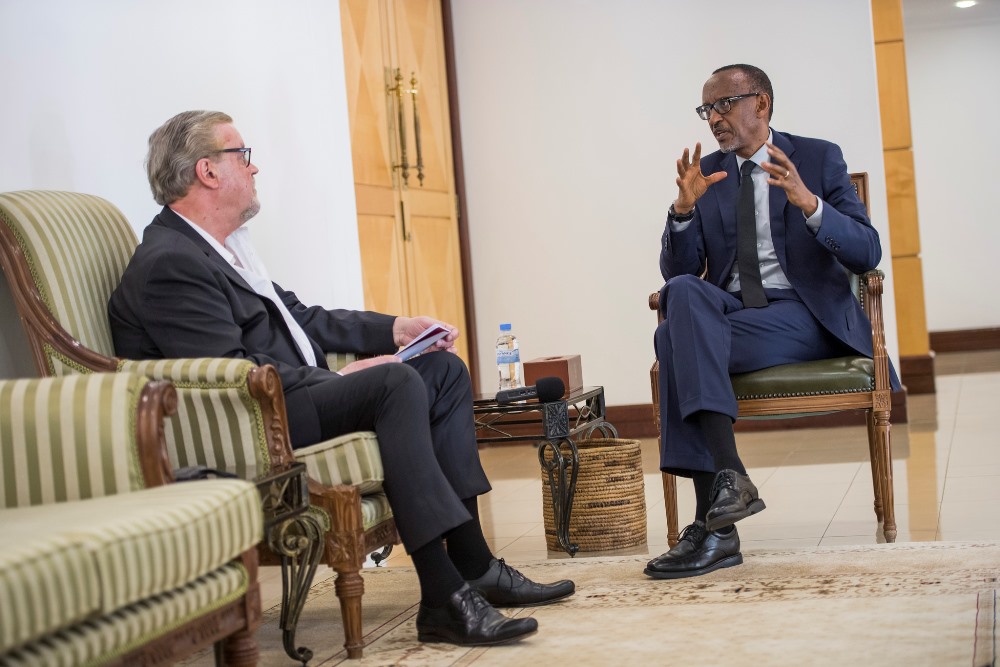
Television host, Producer and comedian, Ellen DeGeneres is an icon in the US. But on this morning in May, as she and her wife get out of a long meeting with President Kagame at Urugwiro Village, the Office of the President; she confesses to feeling small in her white sneakers and black jeans. Like many other celebrities before her, Americans and Brits, she has become an ambassador of “Visit Rwanda”, now a campaign that Arsenal Football Club will wear on its sleeves starting in August. There is no doubt that, at 60 years old, the leader of Rwanda has not lost his charm.
With a soft-spoken voice that gives each of his words more weight; Paul Kagame leaves a mark and impresses, intimidates and scares, charms and sways opinions, depending on how one chooses to see it. To this man – who came to power after the Genocide against the Tutsi which took the lives of 15% of the then Rwandan population in a hundred days – democracy is more about health, education, development, and equal treatment than it is about polls.
Rwanda’s success is obvious: the country has managed to achieve maximal social progress from very few resources. The 98.7% with which he won the last elections will always surprise those who still question such unanimity in a country with centralized political power since the 16th century. Paul Kagame knows this and has decided that is none of his business. His conviction is that he is presiding over a country with a unique destiny. Kagame, who is also the Chairperson of the African Union, received us in a lounge at his office in Kigali – sober, hyperactive, connected technologically and environmentally friendly.
{{Jeune Afrique: During the election of Emmanuel Macron, in May 2017, you told JA that France’s attitude towards Rwanda would not change as long as France did not change its attitude towards Africa in general. And that if you had any advice to formulate for the new president it would be to face history. One year later, where are we?}}
{{Paul Kagame:}} This is not something that can change overnight. It requires a whole process. The fact that President Macron and I have met several times in a year; every time with productive discussions on security and development across Africa, areas in which France has a role to play, is an important development. President Macron has introduced a new era both at home and in France’s relations with the rest of the world including Africa. This has helped and has changed in comparison with the neo-colonial stances in the past. I don’t have any guarantees but this new attitude is promising and must be encouraged.
{{Emmanuel Macron and you have apparently decided to leave out the conflictual issues, especially the French inquiry into the attack of 6 April 1994, whose conclusions are still pending and as part of which seven Rwandan citizens, including your Minister of Defense, James Kabarebe, are indicted since 2010. Is true reconciliation possible under these conditions?}}
Our position on this issue is known and repeating it once more won’t give us any results. Our bilateral relations are going in the right direction, without any unnecessary publicity and I want to believe that this will help unlock this specific aspect. However, this doesn’t mean that we don’t give this issue its due consideration.
{{Due to lack of approval on your part, France has not had an envoy to Kigali for three years. Isn’t it time to fill this vacancy?}}
As I said, everything is connected, including that. Is it a matter of weeks or month? We shall see. The bottom line is that we are headed in the right direction – which is the case.
{{Your Minister of Foreign Affairs, Louise Mushikiwabo, is a candidate for the position of the Secretary-General of the International Organisation of La Francophonie, with France’s support among others. Who had the idea for this candidacy? Yourself?}}
No. Not specifically. The idea came from a group of people from diverse backgrounds, concerned about the future of Francophonie. As the president of a country which, despite having issues with France, never stopped being a member of this organization; I found the idea worth considering. Louise is an African, fluent in both French and English. If Francophonie wants to open up to diversity and reach out beyond its narrow circle of countries, she is the ideal candidate.
{{The election will take place in five months at Evran, in Armenia. Do you plan to seek support from your peers? }}
Louise Mushikiwabo has and will get all my support, and that of other African Heads of State.
{{For those who, specifically in France, continue to see you as an Anglophone Tutsi who came from Uganda to destabilise the francophone area of influence, this candidacy is an aberration…}}
What is aberrant is to believe, in 2018, that Rwanda belongs to anyone other than Rwandans themselves. People or the lobbyists you are talking about are hostages of their own past. It is not up to us to liberate them from it.
{{How far are you with the African Union reform process you have been heading for the last two years? }}
My peers gave me that mandate before I even became the Chairman of the Union, and the fact that they recognized the necessity of an in-depth reform was already an excellent starting point. My job since then was simple: to talk to and listen to them, taking into account their ideas, to move towards independence, and restore our organisation’s credibility.
Independence is first financial: the level of funds raised from member countries dedicated for prevention and intervention capacity of our peacekeeping forces have never been as high as it is today. The same for funds dedicated to reducing the AU commission’s dependence on foreign aid.
This was followed by economic independence: the African Continental Free Trade Area (AfCFTA) was finally signed in March in Kigali; it was a historic achievement.
{{Except that Nigeria, the continent’s biggest economy, still refuses to join…}}
Whatever the case: 44 of 54 member countries of the AU already signed the agreement establishing AfCFTA. Others still need time to think and adapt, but they will join. It is in their interest and in the interest of the continent they belong to.
{{Your working methods are problematic to some. You are accused of lack of consultations, of establishing secrecy around the steering committee, and for your apparent wish to move quickly. Do you think you can manage an institution as political and bureaucratic as the AU the same way you manage Rwanda? }}
I am of course aware of the very political nature of the AU. But the desire to move quickly is not a bad idea, as long as we don’t do things in an abrupt manner. In my opinion, going slowly has never been a virtue. For the rest, I have never stopped communicating, producing reports, holding meetings with African leaders on reform matters. Each time, it is well received. If some, after having approved, criticise me behind my back, it is not my problem; it is theirs. This big reform of the AU is not Kagame’s business alone, it is every one of us business. Everyone should play his/her part.
{{In 1994, the then OAU appeared totally passive during the Genocide against the Tutsi in Rwanda. If such a scenario was to reoccur today, would the AU be well positioned to intervene? }}
I don’t know. The world is a strange place sometimes, and Africa is part of it. In 1994, it was not only the OUA; it was the entire international community that failed us. What we are doing today, is to make sure that the AU gets the minimum capacity required to act and prevent such events.
{{The internal situation in Burundi remains very concerning. What would you recommend as Chairperson of the AU and as a neighbour? }}
I don’t have a specific prescription to offer Burundi. First and foremost, it is up to Burundians themselves to solve their own problems, even though the latter have some implications on our own security. The same for DR Congo. My role as AU Chair is to build on efforts to help solve such crises, not to act on behalf of those directly concerned.
{{Do you think, as many observers do, that the Arusha accord on Burundi has come to a dead end?}}
Maybe. I don’t know.
{{Whatever the case, the power-sharing based on ethnic quotas has never been an option for you…}}
As everyone knows, that was not the choice that Rwandans made for themselves.
{{Is there any France-Angola-Rwanda common tripartite initiative regarding DR Congo?}}
If the initiative is there, it does not involve these three countries only. The region, Africa, but also the United States, Europe, China, Russia are all concerned by what is taking place in DR Congo. The stability of this country concerns its neighbors, the neighbors of its neighbors, and their external partners. In this regard, the congolese situation has impacts on Angola and Rwanda, as neighbors, and France as a partner with economic interests in the central African region. But speaking of a ‘hostile axis’ made up of these three countries points to either fiction or a pretext to deviate attention from the real problems.
{{Angola’s President João Lourenço has been clear: Presidential elections have to take place on December 23rd, without Joseph Kabila. Would you say the same?}}
But this is what the Congolese themselves have agreed! Neither President Lourenço nor I are party to the Saint-Sylvestre Political Agreement. All we want – as concerned neighbours who could potentially be affected- is for this agreement that was concluded between Congolese to be respected by its signatories.
{{Officials in Kinshasa are very particular when it comes to their sovereignty. Isn’t that an attitude you would understand?}}
Definitely. But these same officials should also ensure that the problems facing their country do not interfere with their neighbours’ sovereignty. If DR Congo implodes, Rwanda risks being overwhelmingly affected.
{{Recently, in late April in Kigali, opposition leader Moïse Katumbi publicly defied Joseph Kabila. Was this the right place to make those declarations?}}
If you mean that it would have been better for Moïse Katumbi to make these remarks in his own country, I agree. But am I responsible for the fact that he has not returned to his country? Is Kigali the only place where he expressed himself that way? Katumbi’s problems concern only him, Congo and the Congolese President. For the rest, he was not here by invitation of the Government of Rwanda’s but as an official guest of the Mo Ibrahim Foundation, which organised the awarding ceremony of their prize in Kigali. The agreement between this foundation and the host countries of the ceremony stipulates that the latter has the right to invite whoever they want. For what reason would we forbid Katumbi to enter Rwanda? Katumbi might be persona non grata in his country but, as far as I know, that is not the case in Rwanda or anywhere else. He travels around the world, and it is only when he comes to Rwanda that it becomes a problem.
{{In South Africa, Cyril Ramaphosa succeeded to Jacob Zuma with whom you didn’t have a great relationship. Is this good news for Rwanda?}}
It’s good news for South Africa first and foremost. But also for Rwanda, in light of the context, you have just described.
{{Former General Kayumba Nyamwasa, who is one of the main opposition, is a refugee in this country, where he carries out his political activities. Do you intend to discuss this case with President Ramaphosa?}}
We will see. I don’t think it is a good idea for any state to harbour a fugitive and allow him to try to destabilize his home country. Therefore, we will continue to let the South African Government know that they need to deal with that case, without making it a prerequisite for our relationship with them to move forward.
{{There were a lot of reports in the media about a possible secret deal between Rwanda and Uganda, on one hand, and Israel, on the other, for paid relocation to your country of African migrants whom Israel wanted to get rid of, before Israeli Supreme Court forced the government of Benjamin Netanyahu to stop it. What is your say on this case?}}
It is simple and clear. On one hand, our relations with Israel are excellent; on the other, Rwanda was the first country that decided to grant visa on arrival to all African nationals. In this context, the discussion we had with Israeli officials was as follow: if they wanted – for reasons that only concerns them – to expel African migrants, Rwanda intended to host some of them, instead of seeing them drown in the Mediterranean, being sold as slaves in Libya or abandoned in the Sinai Desert. These migrants could temporarily stay in Rwanda, find another host country, return to their home countries, or settle here permanently. This entire process had to be carried out in strict compliance with the international humanitarian law, and there was never any other financial condition to Israel than the normal cost of handling transport and the establishment of the infrastructure to receive those refugees. The controversy that took place was purely internal within Israel, between those who supported the expulsion and those who successfully opposed it. We were absolutely not involved in that. To imagine that Rwanda has been trying to make money on the back of human misery is nonsense and an insult.
{{Do you agree with the transfer to Jerusalem of the American embassy in Israel?}}
I don’t have to agree or disagree. It’s neither my business nor Rwanda’s.
{{President Donald Trump has produced some offensive tweets about Africans which angered a lot of them. Do you share their indignation?}}
Again, I don’t have any opinion to share. Africa and Rwanda have to manage their own affairs in relation to their interests, without worrying about such comments. We still have a tendency to concern ourselves about what is being said from outside instead of remaining true to who we are. For a long time, Rwandans were at the receiving end of a lot of offenses. It is not in the power of Africans to stop them. It is however in their power not to deserve them.
{{At a symposium in the United States in March, you responded to Ian Bremmer, a political scientist, who was interviewing you:}} {“The less attention other parts of the world pay to Africa, the better for Africa”.} {{What did you mean?}}
The less the world cares about us, the more we become able to take care of ourselves. We must understand that the time for babysitting is over and that we will never develop as long as we feel we have a never-ending need for European, American, Asian or other babysitters. Especially, because this babysitting always implies an entrenched form of paternalism. Whenever I hear some of your fellow journalists pitching their judgments and advice with an authority inversely proportional to their expertise, I wonder.
{{When you repeat that it was not your intention to amend the constitution to run for another term in 2017 but it was the will of the people, do you realise how hard it is to believe?}}
No doubt. But I don’t mind, because the truth is hard to keep hidden. If Rwandans didn’t want me to stay for another term, then what happens to those who abuse their powers, have poor governance and a poor track record and persist on staying in power despite all those things; would have happened to me as well. Instability, violence, toppling. I know very well that some have blamed the international community for putting pressure on President Kabila and Nkurunziza and not on me. But is there instability in Rwanda and stability in Burundi and Congo? To ask that question is to answer it. Finally, in Rwanda, just like in Congo or Burundi, it is only the people who can decide the future they want for their country. Rwandans opted for continuity, and anyone can bear witness to the peace we enjoy here. Give me an example of one country where the leader clings to power against the will of the people and which, despite all that, remains stable. I can’t name one.
{{The constitution allows you to run for two more five-year terms at the end of this, which ends in 2024. When will your successor’s time come?}}
When those same Rwandans who asked me to continue will say that the issues that they asked me to tackle have been solved, namely: security, health, poverty, economic growth, etc. Those are the determining factors and not the term limit measure decided arbitrarily and in most case from outside.
{{You told us, a year ago: “This term will probably be my last one.” Would you say the same today?}}
Yes. But allow me to clarify this: I never imagined myself being the president of this country. If that was my intention, I would have become President in 1994, when we crushed the genocidal government. Who could have stopped me back then? RPF? Pasteur Bizimungu? No one. Circumstances and Rwandans are the ones that put me in this position six years later. Circumstances and Rwandans are the reasons why I was elected and re-elected. In 2017, the people didn’t give me an unending term, they just wanted to have more time, a time for the transition. Why would it be so hard to believe?
{{For the last two decades, criticism against you has not changed: you stifle all political debates and freedom of expression, that the country is a police-state, that you and your party have all the power …Aren’t you bothered by that repetition?}}
I have learned to live with those kinds of criticism, just like my successor and the successor of my successor will have to live with it as well.
I no longer feel that I need to convince those repeating it that they are wrong or that they are misleading people, that would be a waste of time. What matters, is that we are totally convinced that we are doing the right thing, that it’s our right to do so and we are happy with the results. They are free to think that Rwanda is not a normal country, and maybe it isn’t and that it was better during Habyarimana’s regime and before. Everyone is free to choose their path; as for us, we will not divert from the one we have chosen.
{{Three months ago, your government closed a thousand revival churches and a hundred mosques across Rwanda. Have you declared war on religion?}}
Certainly not. The problem is the following: First, the number. Even though in Kigali only, 700 places of worship were closed, there are dozens of others still open. It’s obviously too many. Freedom of worship should not lead to such excess. Moreover, there were continuous complaints by residents about sound pollution coming from those churches day and night as well as the issue of security for the residents caused by churches that don’t meet the standards. Finally, numerous cases of extortion of funds, racketeering, family crisis caused by activities of extortionist pastors. It was necessary to put an order in that proliferation of churches and uphold rules regulating their establishment and functioning. That’s what we did.
{{Why is the former prime minister and now opponent, Faustin Twagiramungu, who lives in Belgium, still being denied a Rwandan passport? He is not a former genocidaire, and you have always declared that every Rwandan could return to their country.}}
That’s right. But what exactly is your question? Mr. Twagiramungu needs a passport, to live where? In Belgium, where he is a national and is obviously comfortable? In that case, he doesn’t need a Rwandan passport to come here: a visa will be granted to him upon arrival. To live in Rwanda? In that case, he will get his passport in Kigali. It’s that simple.
{{A personal question: I heard you took a DNA test. What was it for?}}
It was supposed to be confidential, but, well, I will tell you: It was simple scientific curiosity, nothing more.
{{What came out of it?}}
A complex genetic mixture: African, European, Asian, Tutsi, Hutu…
{{Interesting, for someone who is sometimes portrayed as the archetype of “Tutsi Power”!}}
Which just shows how these racism whims can’t hold up to a DNA test. I am a human being who treats others as human beings, regardless of whether some believe in the creation of humans and others in their evolution. That is who I am.
The President of one of the leading global economies will visit Rwanda following a State Visit of President Paul Kagame last year.
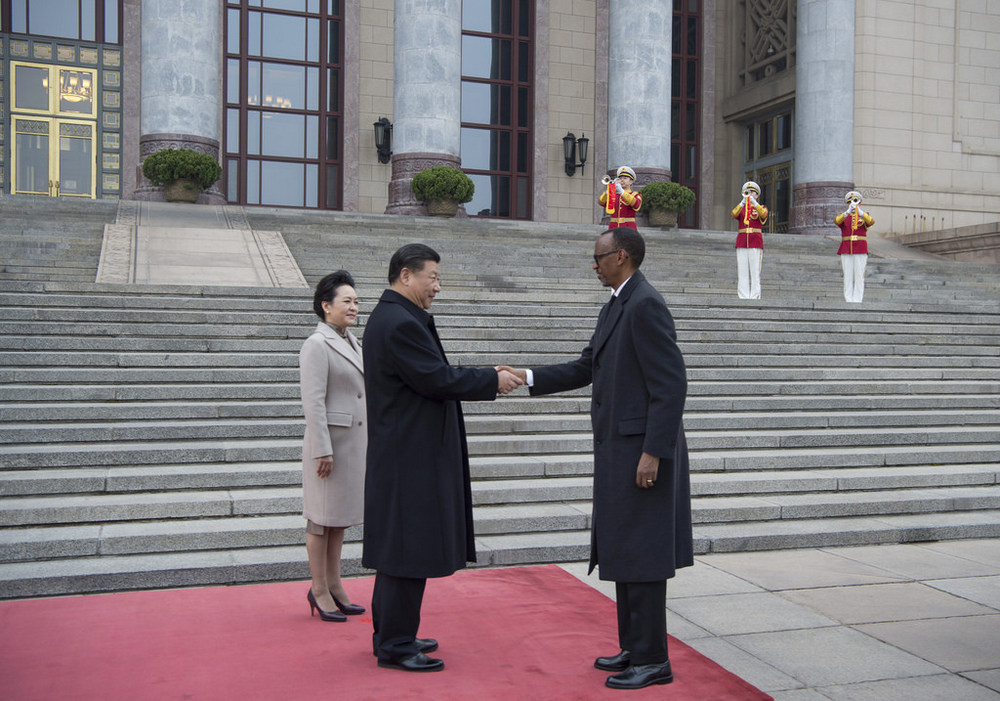
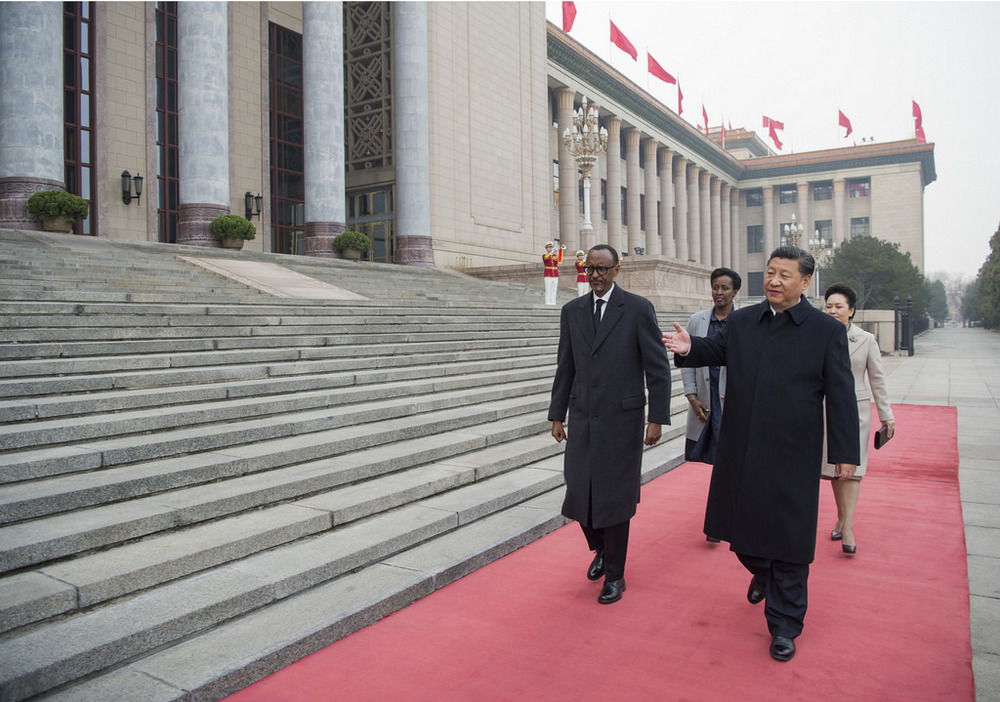
Kagame visited China in March 2017 and was welcomed by President Xi Jinping and held discussions which took place in ‘Great Hall of the People’.
Though no official statement from both countries has been made yet, sources say Jinping will arrive in Rwanda in July.
China is among the top contributing countries to the development of Rwanda in different sectors including trade, healthcare, education and infrastructure development.
RwandAir, National Carrier plans to launch flight services between Kigali and Guangzhou, China early next year.
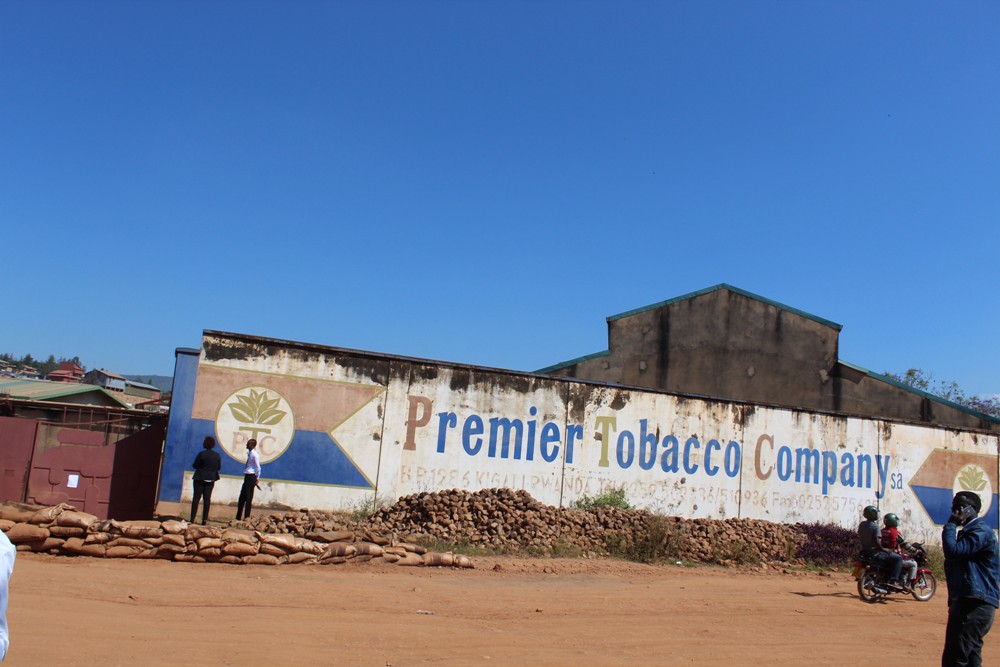
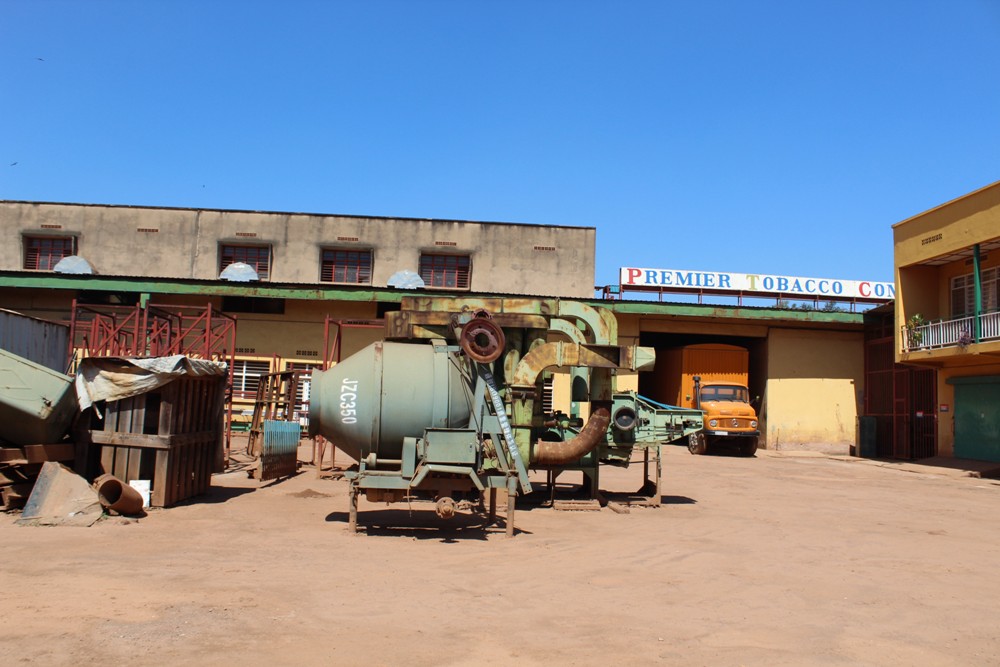
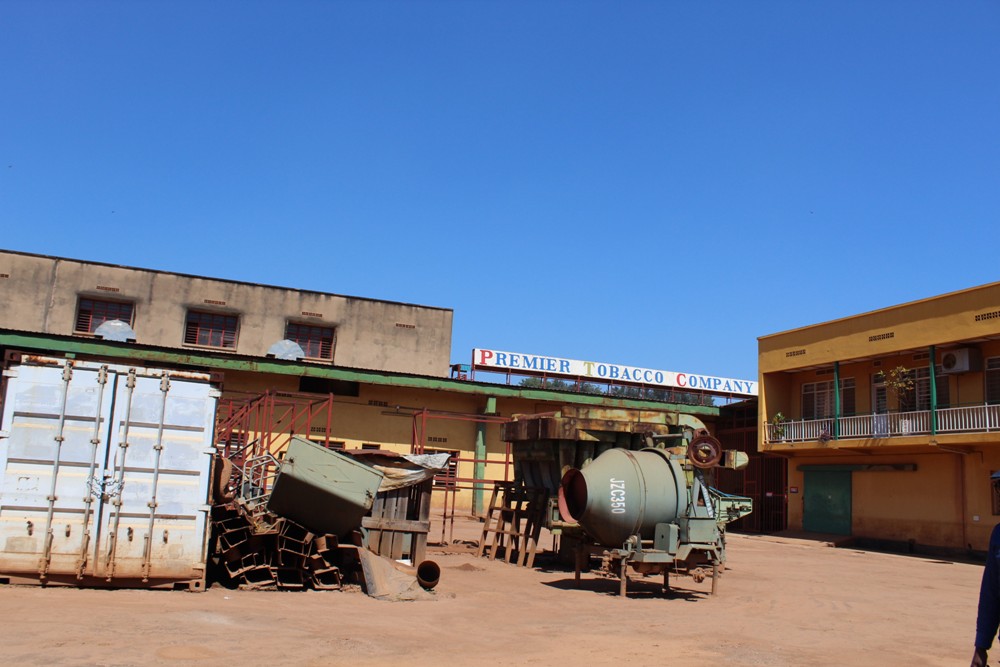
Premier Tobacco Company Ltd (PTC) belongs to the family of late mogul Assinapol Rwigara.
The auction was scheduled today and interested buyers were present at the factory’s premises located in Gikondo industrial area in Kigali but Bailiff Védaste Habimana who chairs the auction announced the postponement.
Habimana first asked if there had been anyone from Rwigara’s family but none displayed the presence despite the presence of the family’s son. Anne Rwigara who is usually the coordinator of the family’s business was absent.
“The auction is not taking place today because the leadership of PTC was not contented with the property valuation; we have therefore postponed until next Monday at 11.00am in order letting PTC use its legal rights of opposing the valuation. PTC is allowed those rights and they will have given us their valuation by then,” said Habimana.
Media asked Habimana the value that was rejected by PTC and he said, “That is all I had to tell you, those who wanted to buy in the auction and journalists that I am seeing here. The available information is all that, no more.”
The auction of unspecified number of tobacco processing machines will also take place at the factory in order to recover the balance on tax arrears amounting to Rwf6 billion evaded in the period spanning from 2012 to 2017, according to RRA.
The auction of the factory’s machinery follows yet another of March 28 in which the factory’s tobacco amounting to 7,195 cartons were auctioned at Rwf512 million to Murado Business Ltd.
At the auction, however, the Rwigara family was not contented with the Rwf512 million, saying the tobacco had a value of around Rwf1 billion but Bailiff Habimana who presided over the auction said all was in line with the laws.
Anne Rwigara said the auction was conducted illegally and had earlier tried to challenge the seizing of the tobacco stocks and other properties in Nyarugenge Commercial Court which ruled in favour of RRA.
Speaking to IGIHE immediately after the previous auction, RRA Commissioner General, Richard Tusabe had said that RRA would auction more Rwigaras’ properties to recover the balance on the tax arrears.
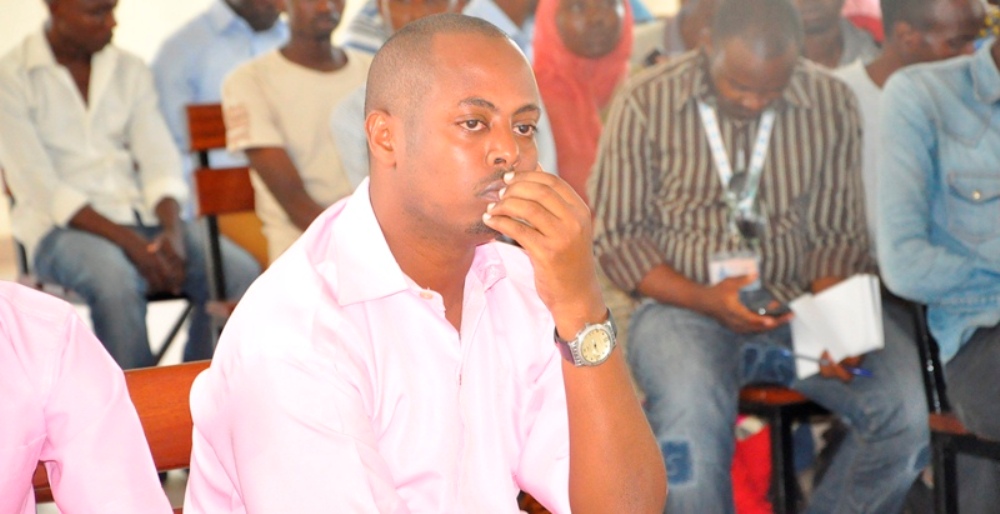
In May, the Supreme Court adjourned Kizito’s appeal hearing to June 11th because his co-accused Jean Paul Dukuzumuremyi had no lawyer.
At 9:00am, Kizito and his lawyer, Antoinette Mukamusoni arrived at the court and the court clerks told them that their case has been transferred to the Court of Appeal and the decision was communicated to the Prison officials.
Speaking to IGIHE, the Judiciary Spokesperson, Harrison Mutabazi said that the case has been transferred as stipulated by legal procedures.
“It is true, it has been moved. There are cases in Supreme Court that are being transferred to the Court of Appeal, the same with Kizito’s case,” he said.
He said that they are yet to set the next hearing date, but assured that the court will soon start operations and Kizito’s case will be among those to start with.
On February 27th 2015, the High Court in Kigali found Kizito guilty of the crimes of formation of a criminal gang, conspiracy against the established government or the President of the Republic and conspiracy to murder.
The court sentenced him to ten years in prison which he appealed.
Kizito co-accused, former Journalist Cassien Ntamuhanga who had been handed 25 years in Prison later escaped, and Jean Paul Dukuzumuremyi.
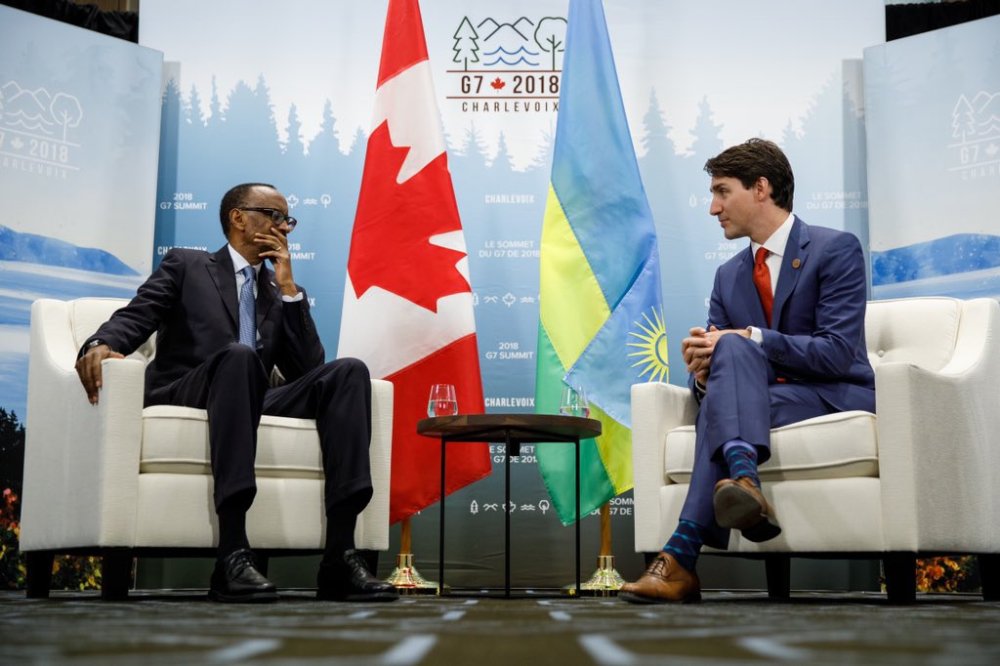
Through his Twitter Account, Trudeau said that he was pleased to welcome Kagame in Canada. He said that they discussed the issues affecting both countries.
“Canada and Rwanda have deep ties and I was pleased to welcome President Paul Kagame to our country this weekend. Thank you for a very good discussion on fighting plastic pollution, and a variety of issues affecting our countries,” reads Trudeau’s tweet.
Speaking about ‘climate change and the importance of ending plastic pollution’ in the G7 Summit on Friday, Kagame said that plastic bags were banned ten years ago in Rwanda and brought great benefits to national environment.
He said that policy has also served to make citizens more aware of the importance of managing natural resources.
“When citizens understand what is at stake and how their behaviour can make a measurable difference, they become the most effective part of the solution. Involving and empowering citizens laid the groundwork to begin phasing out other single-use plastic products,” he said.
The incident took place in Kinamba Village, Pera Cell, Bugarama Sector on Sunday midnight.
According to Rusizi District Acting Mayor, Leoncie Kankindi, one victim died instantly while another one succumbed to injuries in Hospital.
The deceased are Claude Ngirimana 30 and Abdoul Sinamenye 32.
At the incident, eighteen-year-old Rachel Tumukunde from Nyange Village was injured and is now at the health Centre, Centre de Santé Islamique.
Kankindi told IGIHE that the shooters are yet to be identified.
“Two have died. We are yet to know shooters, but security personnel have started investigations,” said Kankindi.
The similar incident also took place in Bugarama sector last year when a man threw a grenade in a crowd of people who were in a pub, left one dead and eight injured.