Only 28 coffee lots, which won accolades during the recent Cup of Excellence competition were sold to the highest bidders in this auction that attracted 87 coffee business dealers from around the globe.
According to the results report of this online auction, Twumba Coffee attracted the highest bid of USD41.22 (about Rwf 50,550) per Kilogramme. The bid was offered by Maruyama Coffee Co. Ltd from Japan. Twumba coffee which was also the first winner of the recent cup of excellence competition has also scooped the second top bid of USD40.12 (FRW 35,2014) per kilogramme. The bidder for this coffee is Campos Coffee, an Australian company that buys and sells coffee.
Twumba Coffee Washing Station fetched $48,757.45 (Rwf42.7 million) from 1,200 Kilogrammes, followed by Mayogi Cooperative, which reaped $9,976 (Rwf 8.7 million) from 480 Kilogrammes. All 28 lots (24.2MT) realized USD 359,226.7 (FRW315.2 million).
This auction was organized by the Alliance for Coffee Excellence (ACE) in partnership with National Agricultural Export Development Board. ACE is a New York-based organization that advances excellence in coffee through its flagship Cup of Excellence competition and auction.
Gerard Mutagengwa of Twumba Coffee Washing Station said that the auction gave him morale and determination to continue ensuring high standards of farming and coffee processing.
Eng. Eric Ruganintwali, the Quality and Regulations Division Manager at NAEB and Coordinator of Rwanda Cup of Excellence said that the auction is considered to be a reward of the efforts farmers make in order to produce these unique coffee lots.
“The internet auction system creates transparency and openness on how coffee is sold, hence increasing the confidence to the coffee owner and demystify the misunderstanding held about coffee auction process,” he said.
“The biggest proportion of the money raised during the auction will go directly to the farmers to boost their revenues and encourage them to continue producing high quality coffees,” Eng. Ruganintwali revealed.
Remains of eight victims of the 1994 Genocide against the Tutsi have been found in a house of a resident in Mizingo village, Nyirabigogo Sector, Rubavu District, discovered by people who were emptying a toilet in the house of Jean Baptiste Hakomerimana. The house belonged to Boniface Bizimana prior to and during the genocide.
Kanzenze Sector Executive Secretary Monique Nyiransengiyumva told Radio Rwanda that the remains were discovered Saturday last week.
“Remains of eight victims have been found in that latrine. On seeing them, the householder immediately informed us,” she said.
One of the survivors in that area, Charles Sebikumi said that among the remains, he was able to identify his aunt but said many more were killed from there than the remains that have been discovered.
“There was an infamous barrier where all Tutsis from their hideouts in the forests were brought and killed. Residents declined to report and help us to know the whereabouts of our people who were killed. That is why we must keep on searching,” he said.
Kanzenze Sector authorities have appealed to people who lived in the sector as well as any other people who may know where the remains of Tutsis who were killed in the genocide were buried to report so that they also are given befitting burial.
Nsabimana who has been in this position for three years, announced Sunday that he wants to pursue further studies.
President of Rubavu District Advisory Council, Lambert Dushimimana, told IGIHE that he got Nsabimana’s resignation letter and admitted that there were certain problems with his job.
“In fact, he resigned and we have received the letter of his resignation. However, he resigned willingly. We are going to see what the law says. But he wrote to the advisory council, so we must respond to his request in not more than 30 days,” he said.
However, Mr Dushimimana said that in his responsibilities as an executive, there are some areas where he performed poorly. So, according to him Nsabimana might have realised that he is not able and decided to quit. Nsabimana resigns amid reports of problems among suppliers who complained of unfair payment and those who accused Rubavu District of refusing to pay them.
The remarks were made on Sunday, by Rwanda Senate President Bernard Makuza as he officially opened the second National Congress of the Pan African Movement Rwanda themed as “Making Pan African Movement relevant to the people of Rwanda and Africa”.
Makuza said it was high time Africans changed the mindsets and emancipate themselves from the colonial thinking and thinking they can’t achieve big things on their own.
As an example, Makuza reminded the participants of the viral video by the US Television CNN released in February this year showing the slave trade as in Libya where one African was being sold between US$300 and 800 to work as slaves and this was done by their fellow Africans.
Besides, the recent numbers by the International Organization for Migration indicate that from 2014 to July 2018, 168000 Africans had died in the Mediterranean Sea on their way to Europe to seek a better life.
Bernard Makuza said, “It is very much sad for us all to see our fellow Africans being sold as mere merchandise, while others are made to wander on the sea and most of them finally lose their lives.”
Makuza said that mindsets that Africa should be dictated what to do by somebody else should change.
“The time we wasted is enough and will never get back to us but we can predict own future starting by changing the mindsets by preserving our self-esteem, stop always waiting for donors and know our worth,” Makuza noted.
“This will be possible only we change mindsets and know that Africa should not slow in its journey for transformation. We should be aware that the hands that kept us lagging behind are still present.”
Senator Tito Rutaremara said that Africans should understand that their brains work like those of other people from elsewhere in the world.
Rutaremara gave China as an ample example of a country that is developing fast while its elite and intellectuals don’t know foreign languages like English and French which are believed by many Africans to be the elite’s languages.
He said: “Having an “Africa first” mind is fighting for yourself because in the coming 15 or 20 years, Africa will be lagging behind if mindsets are not changed. Others will be running on the way to settle on Mars Planet whereas we will be fighting to settle in Sahara Desert while we have the same brains as theirs.”
One of the youths that particaipated in the second Pan African Movement Rwanda congress, Clememce Mbabazi urged fellow youth to valorize the African culture and customs if they wish to have the African continent with a firm foundation.
“We, youth don’t give much value to the African culture. You will find us most interested in fashions, movies, music from outside Africa while we even don’t know our history. We don’t know a lot on African traditions. The first change needed is to value our cultures,”explained Clemence Mbabazi.
The African Union member countries have set the agenda 2063 which aspires to see Africa self-reliant in all its citizens’ aspects of life.
Speaking at the opening of a meeting preceding the third annual workshop in Kigali, Rwanda Revenue Authority (RRA) Commissioner General Richard Tusabe said that business is constantly changing in both public and private companies. Thus, as auditors, they should always understand business.
“We have realized that the whole world is running fast in technology. That speed is a critical and trending problem. Auditors also need to be aware of protectionism, cyber-attacks and data theft. These are the things you should watch closely.”
Mr Tusabe said that auditing is practiced everywhere in the world and it is in that regard that the institute is in charge of bringing together those in the profession to examine current trends and what they help institutions.
“When you look at where we are in the development of our country, there is no way you can keep up this speed and boost the economy and development without adequate auditors in both public and private companies.”
Gerald Nyangezi, the president of the Association of Internal Auditors of Rwanda said that as people who seek to build professional auditing, an annual meeting is held to remind themselves their responsibility in governance, how they may help in different ways within their companies to achieve good leadership and ensure its beneficiaries are taken into consideration in different programs.
“When we pioneered this idea to establish this institute, there was a problem of skills and capacity among the practitioners of this profession. They would graduate with average skills but without professionalism.”
Currently, Rwanda counts about 60 professional auditors while in general, 500 practice this profession.
“Nursery, primary and secondary school teachers applying for loan will also attach a notified diploma which will inform of their education background before deciding on whether they may be eligible for loans. Any teacher that doesn’t have a teaching qualification will be given a loan repayable before and not beyond 31/12/2019”.
The statement further says that when the teacher’s savings outweigh the amount of loan they are applying for, they may be allowed the loan to be repaid within the designated time because when they quit job, those savings can still repay the loan.
Furthermore, according to the statement, any teacher without a teaching qualification who has been already given the loan to be repaid by 31 /12/2019, while the amount of loan they were given is bigger than their savings will not be eligible to further loan but an overdraft.
This decision will come into force starting 20 September 2018.
The statement follows another statement by Rwanda Education Board on September 23 asking all district mayors to inform unqualified teachers that the deadline for them to have obtained the required teaching qualifications will expire with academic year 2019.
This decision is based on the presidential decree no 24/01 as of 24/11/2016, guaranteeing status for teachers in nursery, primary and secondary schools. Article 52 explains the deadline for teachers that are not professional to have completed short-term courses that allow them to have teaching qualifications.
UMWALIMU SACCO was established in 2006 with the initiative of his Excellence President Paul Kagame to cater for the welfare of teachers. It was licensed in 2008 by National Bank of Rwanda (BNR) to operate as a Financial Institution offering different financial services to its members.
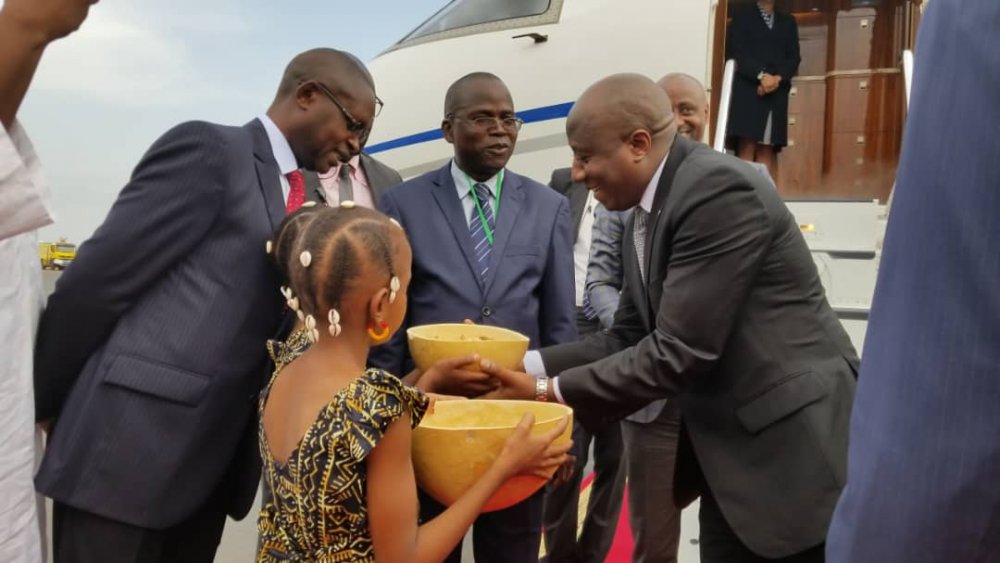
In a tweet, the Office of the Prime Minister, announced that Dr. Ngirente arrived in Bamako, the Capital City of Mali where he was received by Malian Prime Minister, Soumeylou B. Maiga.
Aged 73, Keita won presidential elections with a 67%, defeating his rival, Soumaila Cisse, whom he had also defeated in 2013.
Before ascending to presidency, Keita served as Mali Prime Minister from 1994 to 2000 and served as a Member of Parliament from 2002.
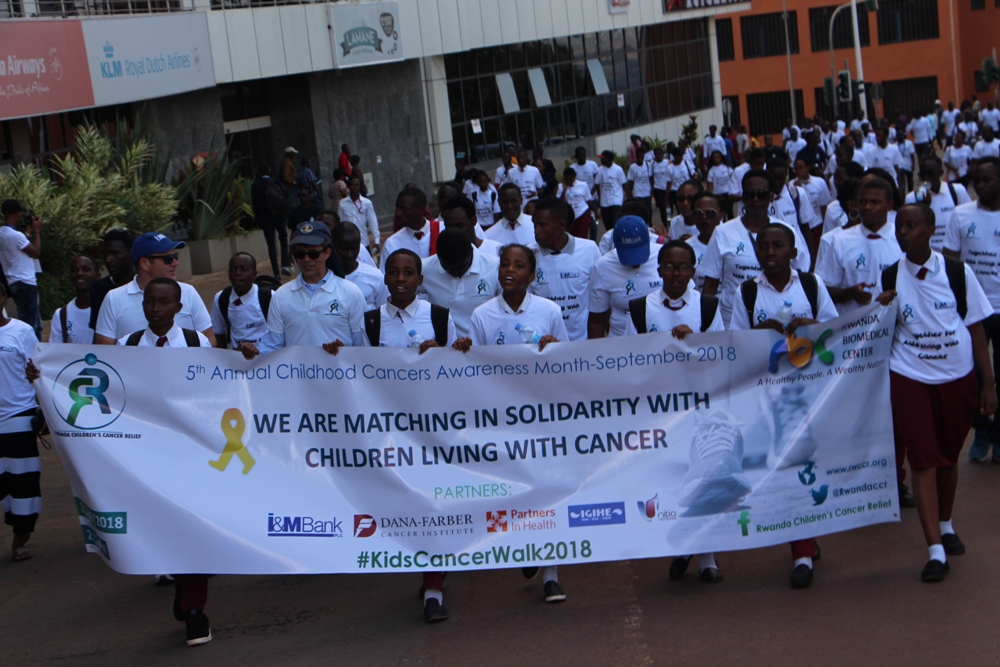
The experts made this remark Friday during a campaign to fight cancer among children, which was preceded by a walk from CHIC premises to the Car Free Zone.
The specialists said that everyone can get cancer regardless of their age; children or adults. However, children can fully recover from cancer if they are treated early.
Rwanda Children’s Cancer Relief (RCCR) Executive Director, Jean Claude Mutabazi said that often children inherit cancer from their parents while others acquire it because they have not been cared for early enough.
“Some cancers are triggered by the fact that someone in the family suffered from cancer before while others are caused by parents behavior. If you are pregnant and smoke or drink alcohol, the baby is at risk of getting cancer.”
He added that parents should be suspicious when their children develop ulcers or bleed from the nose.
Dr. Cyprien Shyirambere, a pediatrician and director of the Cancer department at Butaro Hospital, said that there are many types of cancers affecting children but the most common here in Rwanda is cancer of the kidneys that usually affect children between 1 and 7 years. However, he noted that chances are high when childhood cancers are detected at an early stage because they can be treated successfully.
Cancer of the kidneys can to be successfully treated at 70%. That means that out of 10 children, 7 can be successfully and go back to school.”
He said.
He further reminded that children cancer is real and it doesn’t regard age, capacity and background, or diet.
Karen Bugingo who suffered from cancer when she was 19 years old says that she is now fully recovered. She appeals to parents to take their children to the hospital early enough because if she was not treated early, she wouldn’t have recovered.
US ambassador to Rwanda Peter Vrooman said that cancer should not divide people but its patients should be better cared for.
“We are related to cancer patients. That should not separate but unite us. For children, treatment seems to be difficult because they are more pain sensitive or medicines are expensive.” He said, adding that everyone should conduct a campaign to help them.
Karen Bugingo in collaboration with RCCR are fund-raising for 50 children suffering from cancer from Butaro hospital to who they will give health insurance and transport fares. There are no tangible figures of children who die of cancer in the country but in 2017, Butaro hospital recorded about 500 children who were successfully treated for the cancer of kidneys.
In an effort to find solutions to achieve sustainable peace, the participants discussed their roles and actionable plans in relation to the enactment of the international law for peace, the development of peace education, the promotion of a culture of peace as well as religious harmony.
On the last day of the 3-days summit, the host organization, Heavenly Culture, World Peace, Restoration of Light (HWPL) held sectorial conferences for members of youth and women organizations, religious leaders, and media.
{{The Role of the Youth and Women in Realizing Peace on the Korean Peninsula and in the World
}}
Organized by International Peace Youth Group (IPYG), an affiliated group of HWPL, the youth session titled ‘The Role of the Youth in Spreading a Culture of Peace for the Realization of World Peace’ had an agenda of the support and the participation of youth for the ‘Peace letter campaign’.
Peace letter campaign is one of the peace projects of IPYG to urge the government to support the implementation of the international law for peace based on the Declaration of Peace and Cessation of War (DPCW).
Mr. Herculano Amaral, Coordinator of International Rotary Club of Dili Lafaek in Timor-Leste, introduced the result of the peace letter campaign. “Last year, IPYG members of Timor-Leste Branch met the former president and introduced about HWPL and IPYG’s activities. And this year, our team convey the documents of the DPCW and a peace letter to the cabinet of the president. The movement is intended to get support from the president of our country and also those who involved in the decision making.”
In particular, this year’s conference also aimed to call for the support for the peaceful reunification on the Korean Peninsula. According to the General Director of IPYG, Mr. Young Min Chung, IPYG has made progress within Korea. The Declaration of Unification of Korea, declared by Chairman of HWPL in 2010, stated the need for the two leaders of Korea to listen to the voices of the Korean citizens. To achieve this, thousands of youths in Korea have written peace letters to President Moon to voice their support for the unification. At the same time, hundreds of political leaders from around the world wrote letters to urge the leader of North Korea to talk to HWPL for the peace of the Korean peninsula.
In the same vein, “2018 Worldwide Women’s Peace Conference” was held by International Women’s Peace Group (IWPG) affiliated with HWPL to share the progress of its peace activity such as women’s peace education and plant peace campaign and to discuss the role of women leaders to bring peace in the world as well as to the last divided nation, Korea.
On the topic of the conference, Former First Lady of Croatia, Dr. Tatjana Josipović said, “The only legitimate and reasonable politics is to search for the permanent peace, without any violence. Women in the creative fields of activities can contribute to the implementation of peace influencing other people to advocate the DPCW to become a binding legal instrument. I think the provisions of the DPCW should be not only a moral obligation but to be binding rules for all world leaders. Our voice must be heard from political institutions, art scene, sports fields, classrooms, and media to warn humanity that we must do everything to stop wars and violence once forever.”
{{4th International Religious Leaders’ Conference: Spreading the Culture of Seeking a Trustworthy Scripture to Realize the Era of Peace
}}
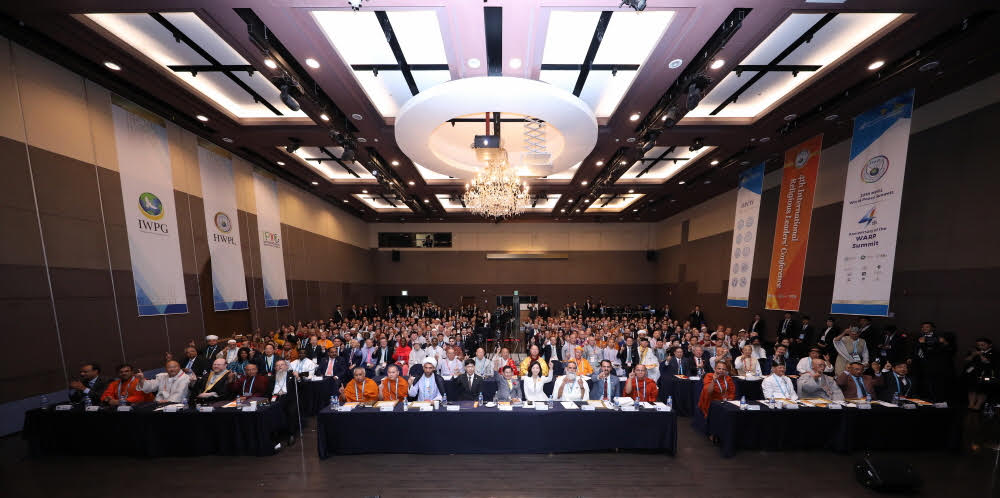
World religious leaders from 20 different denominations gathered together to promote the culture of peace among religions and seek for the dedication of faith leaders to realize peace. For this, the members of ‘Solidarity of Religions’ Peace Committee’ were appointed as a role of spreading the culture of seeking a trustworthy scripture.
The Most Rev. Wattegama Dhammawasa Nayaka Thero, President of Sri Subodharama International Buddhist Center in Sri Lanka, said, “Even though my place is peaceful right now, we cannot be completely free from conflicts deeply. Religious extremists do not practice their own religion and some hold strongly to their own religious views, hence conflicts and misunderstandings occur due to this discrepancy. Therefore, I could agree the goal of HWPL that we should find out the most trustworthy scripture that can overcome the differences of ideologies among religions to achieve world peace.” stressing the need for the religious harmony based on a trustworthy scripture.
Speaking about the need of the comparative studies of the scripture, Chairman of HWPL said, “Why do people need the scripture? It is because the scripture leads the righteous way for people. Thoughts or wisdom of one’s own can’t be defined as a scripture. At this time, the comparative studies of scripture are the most urgent since it is the definite way for the religions to become one.”
{{2nd Conference for Global Peace Media Network: International Peace Media Community, “Peace Initiative”
}}
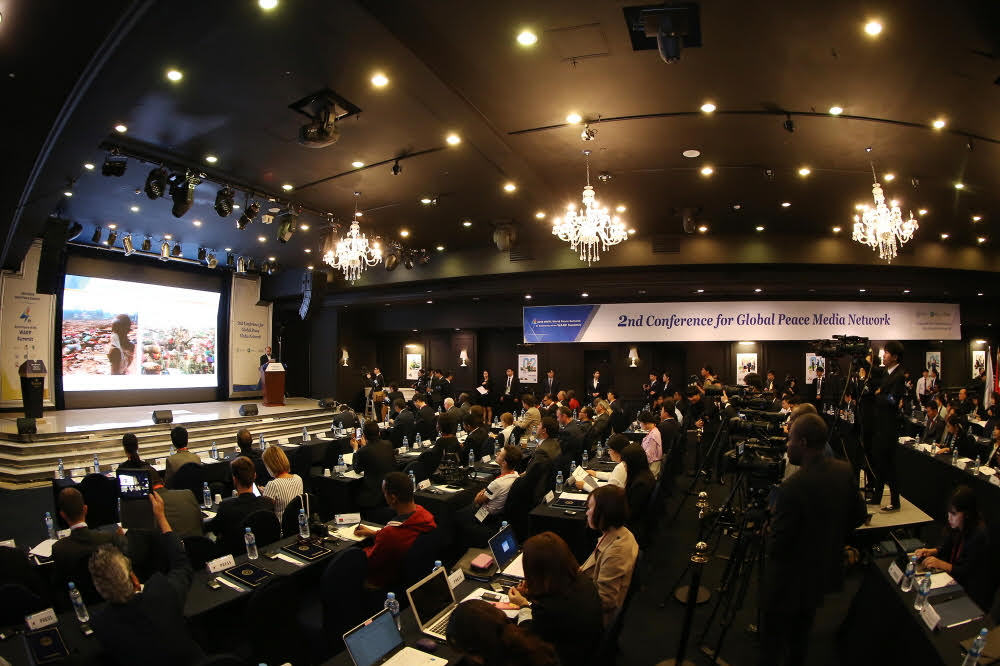
Journalists and representatives of media outlets from about 30 countries took part in the conference for global peace media network where the peace media platform ‘Peace Initiative (PI)’ launched.
‘Peace Initiative’ is designed by the ideas of the journalists around the world in order to spread the news of peace and promote peace journalism with protecting the freedom of the press. To forge the cooperative partnership for ‘PI’, participated representatives of media outlets and HWPL signed an MOU.
Ahead of the addresses from the journalist, Former President of Tunisia and Bishop of Poona diocese delivered the messages on the significance of the role of media to promote peace in the mind of people and the society.
As a special speaker, H.E. Dr. Moncef Marzouki, Former President of Tunisia, emphasized the mission of the media. “As a human rights activist, I know how much I owe to the independent press that has always unveiled the violations of the dictatorship in Tunisia and the Arab world and thus contributed largely to the Arab Spring. Today there is a new mission. In the face of the surge of hatred, rumors and false information that infect social networks, only honest and serious journalists are the guarantors of the truth, which is the essential condition for peace in hearts and minds. I am sure you will live up to the immense task ahead and wish you good luck in this vital mission.”
Mr. Avtandil Otinashvili, Editor in Chief of Newsday in Georgia, said “We journalists should let the whole society know about the peace-building efforts of various sectors of the society. By raising awareness of peace through news reporting, we can stop those innocent people, especially youth from losing their lives in the futility of war. I believe it is our noble duty and responsibility as a journalist.”
“In this context, I am glad that HWPL and journalists from different countries considered the need to create a ‘Global Peace Media Network’ in order not only to inform the population about the existence of conflicts but also to outline ways to resolve them. We are confident that the content called ‘peaceinitiative.net’ will become the platform that will prepare and disseminate information on the subject of peace, which, in turn, contributes to establishing peace on our planet.” he added.
The conference concluded that the participants signed “Joint Statement on Media Cooperation for Press Freedom and Global Peace” which contained the mutual assistance and cooperation to foster global peace through sharing peace-related news, to report to help protect human rights as well as democracy, and to take joint action onto inhumane atrocities.
The host of this summit, Chairman Man Hee Lee of HWPL participated in each session and delivered his message to the attendees, the peace-builders. “We founded HWPL for the security and peace in the world. However, HWPL cannot achieve world peace and the cessation of war by itself. Power of an individual is merely that of one person. However, if these individuals gather, we can foster great strength. If we abide by the DPCW of 10 articles 38 clauses, we can achieve peace. For this very reason, everyone should acknowledge and promote the DPCW. Let every one of you become one and achieve peace. We are one!”
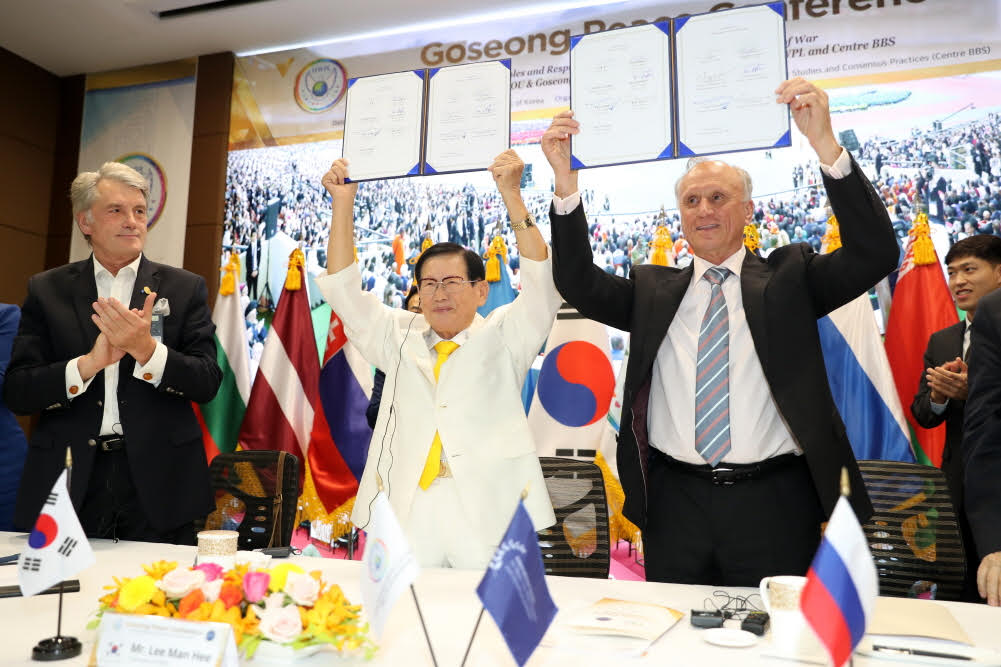
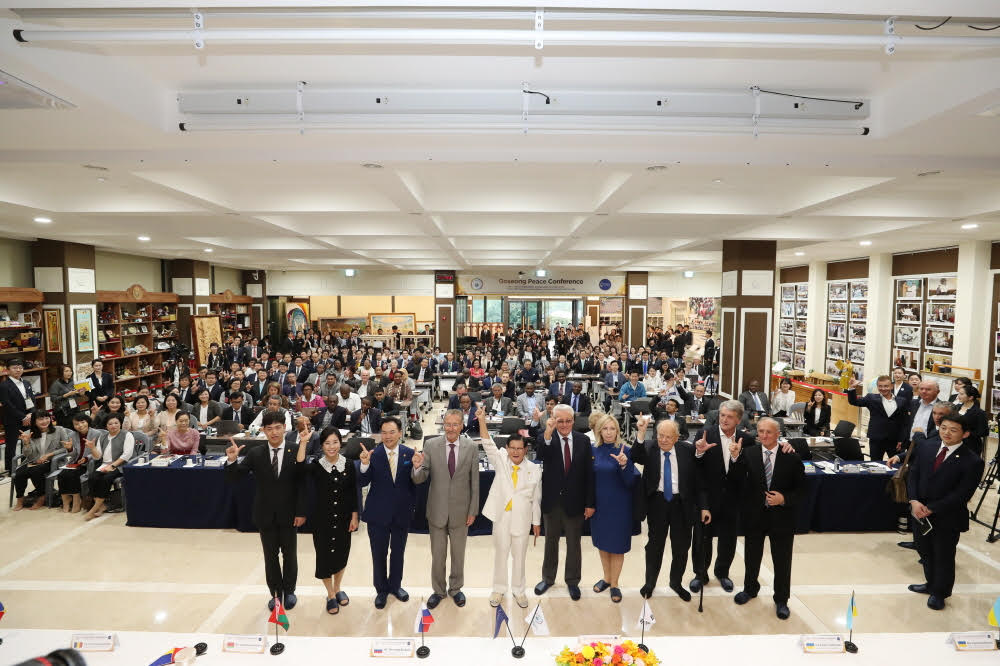
‘Goseong Peace Talk’, which was jointly organized with International Centre for Black Sea-Baltic Studies and Consensus Practices (Centre BBS), sought the means of collaboration for the implementation of peace project suggested by Centre BBS and the establishment of the international law for peace based on the DPCW.
Topics of the talk on the roles and responsibilities of global leaders for cessation of war were as followed: Fundamental solution for the cessation of war; Cooperative measures to develop the DPCW into a legally binding document; Cooperative measures to achieve peaceful unification of the Korean Peninsula; HWPL’s cooperation for Centre BBS’s ‘World Peace Order Project’.
Regarding the main topic of the meeting, the Declaration of Peace and Cessation of War (DPCW), Mr. Pravin H. Parekh, President of Confederation of Indian Bar, highlighted the principles of the DPCW and its value.
“The DPCW reaffirms the principle of equality of national sovereignty and encourages the State to promote international peace in consultation with other countries on the premise of mutual respect, equal rights and self-determination rights of all people. Also, it mentions all the elements that can cause war and conflict and tries to prevent it from evolving. Based on this declaration, HWPL is making a real war-ending peace activity with family of peace.“
The peace talk concluded with the presentation of ‘Goseong Agreement’ and MOU between HWPL and Centre BBS to advance their collaborative efforts for peacebuilding in the world as well as in the Korean Peninsula.
The ‘Goseong Agreement’ was written in conforming with the joint action to present the DPCW to UN for its adoption, to support the peaceful reunification of the two Koreas, and to form the sustainable relationship to fulfill world peace.
Viktor Yushchenko, Former president of Ukraine, said “If a country is attacked, no one is safe, because we are one. What we are going to talk about is solidarity. We need to get the signatures of a million people because it can bring many people to affirm the solidarity. I think Chairman Lee of HWPL is doing great work to gain support from many people in various countries. We are becoming one. The work we are doing is the way we unite.”
The members of Centre BBS, expressing regret over the division of the Korean Peninsula caused by the Cold War, had a deep discussion on the ways to support and cooperate to end the decades-long division of the peninsula.
The countries of the Black Sea region that experienced the Cold War since the 2nd World War have continued their efforts towards freedom of the people, democracy, and self-determination. The ‘Belavezha Accords’ of December 1991 virtually disbanded the Soviet Union in its 69-year history and laid the foundation for democracy in Eastern Europe today.
The majority of Centre BBS including Ms. Iryna Vereshchuk, H.E. Gennady Burbulis, H.E. Viktor Yushchenko, H.E. Stanislaw Shushkevich, Hon. Emil Constantinescu, and H.E. Petru Lucinschi, attended this peace talk, was the leaders of Eastern Europe who led the ‘Belavezha Accords’.