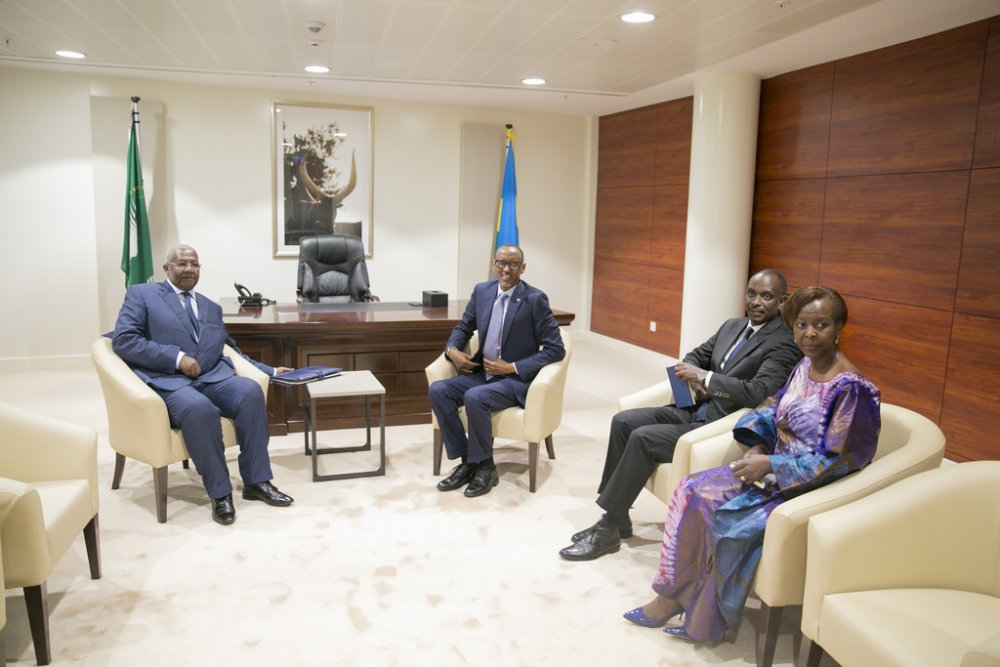
According to Uganda High Commission in Kigali, Rwanda, Hon. Kutesa delivered a special message from President Yoweri Museveni to his counterpart.
A lot more has not been announced on what constituted the ‘special message’.
Mr. Kutesa had earlier on Thursday met with Dr. Richard Sezibera and congratulated him upon his recent appointment as Minister of Foreign Affairs, Cooperation, and East African Community.
They discussed issues of bilateral interest and pledged to work closely to broaden and deepen cooperation between Uganda and Rwanda.
Dr. Sezibera replaced Louise Mushikiwabo, who was on 12 October 2018 unanimously elected by the Heads of State and Government of the Organisation Internationale de la Francophonie (OIF) member countries as the next OIF Secretary-General.
The meeting of the two came after a number of Rwandans were caught and arrested, tortured and later released while others are still detained in Uganda.
The latest was Patrick Niyigena, 38, a businessman who was first kidnapped in Uganda, tortured as he was injected substances he has not yet known.
In March this year, President Kagame held a visit to Uganda and met his counterpart Museveni with whom they discussed security issues and bilateral relations. Museveni said then that, “There is no fundamental problem between Uganda and Rwanda.”
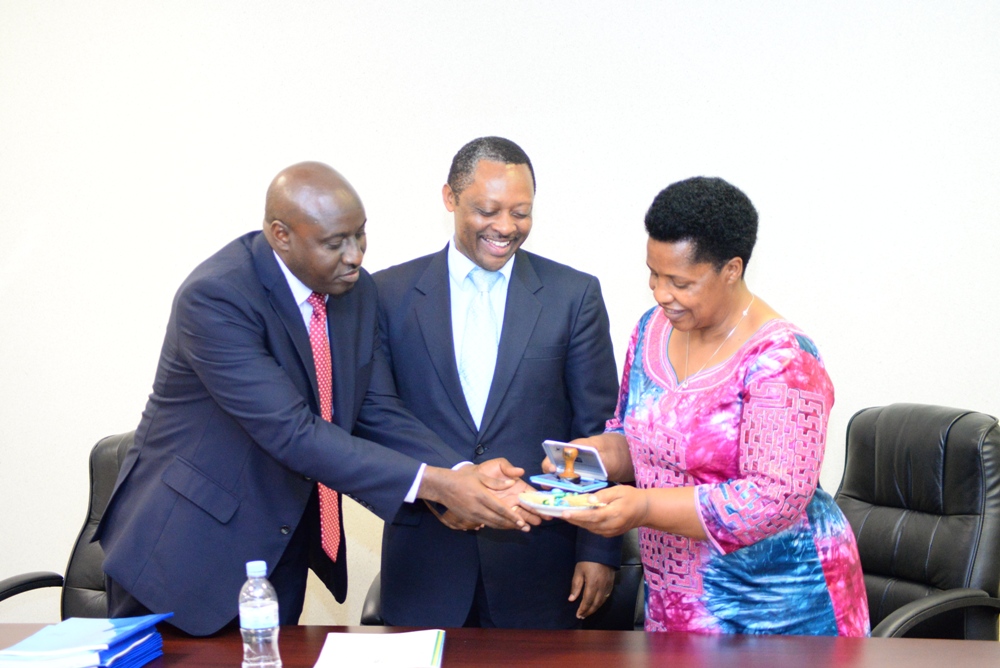
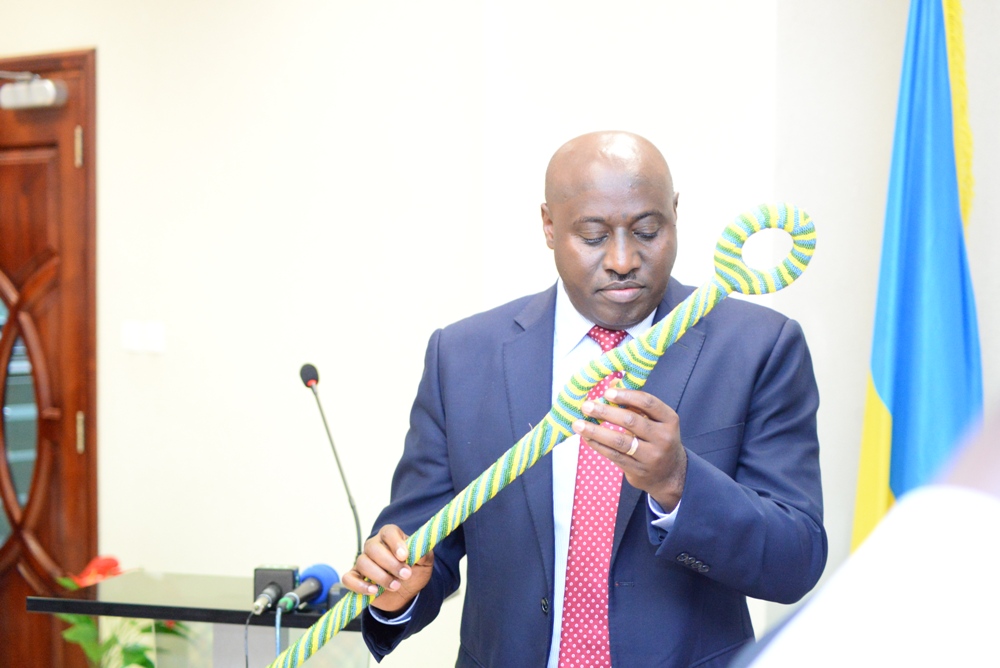
Gasana made the remarks as he took over the office, during a ceremony where he received office instruments from Marie Rose Mureshyankwano who had been at the helm of the Province since October 2016.
CG Gasana was appointed South Province Governor after serving for 10 years as the Inspector General of Police.
CG Gasana urged his workmates to leave their comfort zone and cooperate with each other to achieve their common goals to get the Province more developed and improve citizens’ welfare.
The outgoing Governor, Rose Mureshyankwano said a lot has been achieved in the last two years, but the new Governor will have to work hard on the unfinished projects aimed at developing the Province.
These include reducing extreme poverty prevailing at 16.9%, the peat power project in Gisagara District, the tarmac road from Ngoma-Huye-Kibeho to Gisagara, the sorghum beer factory in Kamonyi and Nyabikenke Hospital in Muhanga District.
The handover ceremony was officiated by the new Minister of Local Governance, Prof. Anastase Shyaka.
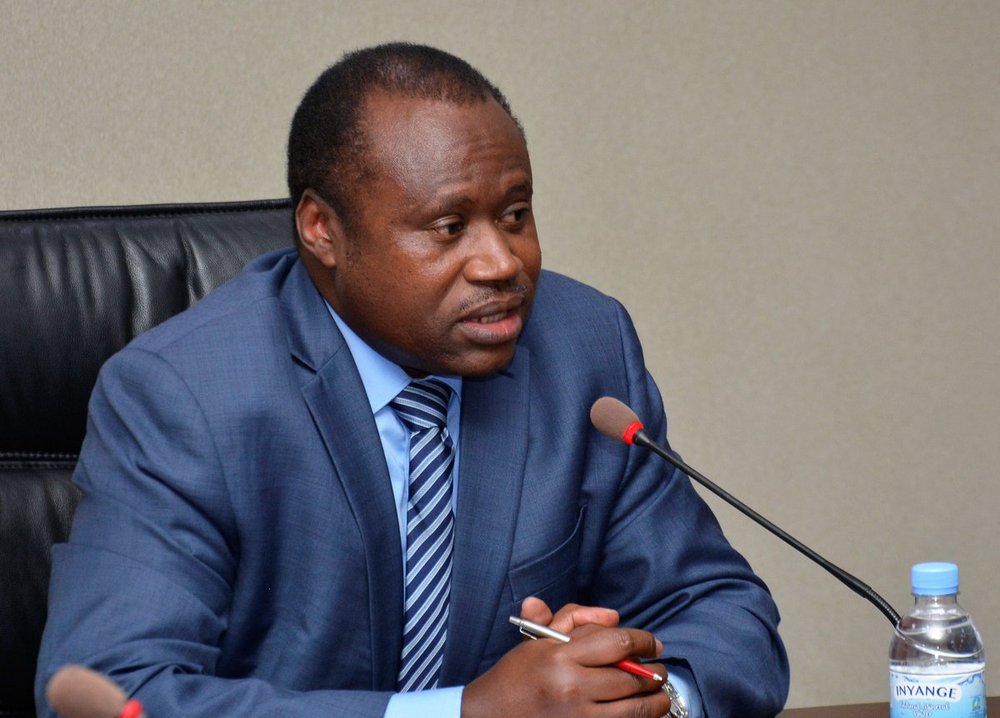
Nyamagabe District Mayor Bonaventure Uwamahoro says that he has got wind of their resignation, but has not yet seen their letters.
“I have learned about it but I have not yet seen the letters,” he said.
He added that in order for a district secretary executive to resign, the process first goes through the Advisory Council to confirm or reject the request. Meanwhile, a division manager may resign after writing a letter to the District Mayor and getting feedback, he said.
The duo has resigned shortly after they were put in jail on embezzlement charges after which they were tried and found not guilty. They resumed their jobs thereafter.
Twayituriki was put in jail on June 17, 2018, for falsifying official documents with the intent to earn un-deserving per diem.
Later on July 3, 2018, Nyamagabe Intermediate Court ruled that he be released on bail for illness issues among others.
Jean Bosco Ngabonziza the district division manager, was jailed on September 6, 2018, along with two other Nyamagabe District staffs including an accountant and a development affairs officer who are also accused of embezzling government funds.
On September 21, 2018, Kagarama Court in Kicukiro District ruled that Division Manager Jean Bosco Ngabonziza and the two other staffers be released because the accusations against them were groundless.
Minister Ndagijimana said this while officiating at the ongoing 14th Africa Development Fund (ADF) midterm review in Kigali. He underscored that it was crucial for the Fund to sustain its support to Africa’s development journey.
“Africa offers more opportunities for investments than ever before,” Dr. Ndagijimana said.
Minister Ndagijimana further made a call towards increased contributions to Africa Development Fund to finance Africa’s Development Agenda.
Africa together with the rest of the world has committed to the Sustainable Development Goals (SDGs), whose achievement requires significant investments, especially in Africa and other developing countries.
A recent analysis by the International Monetary Fund shows that achieving the SDGs will require spending additional $520 billion by low-income countries, many of which are in Africa, in many sectors, including infrastructure.
“It is evident that a significant replenishment of the ADF is needed more than ever before, and I call upon all the contributors to the Fund to consider this new context, and support the African development agenda, which is beneficial not only for Africa but also for the rest of the World,” Ndagijimana said.
ADF is the concessional financing window of the AfDB that provides low-income Regional Member Countries with concessional loans and grants, guarantees as well as technical assistance for studies and capacity building in support of projects and programs that spur poverty reduction and economic development. It has cumulatively invested $45 billion over its 40 years of operations on the African continent.
Since 1974, AfDB has cumulatively approved 98 loans and grants amounting to US$ 1.65 billion to Rwanda of which, 97% were financed through the concessional ADF window. The largest share of this support has been allocated to infrastructure – mainly transport and energy (31.7%), agriculture (24.9%), and the social sector (17.1%).
In the last 2 decades, Rwanda has made good progress in these sectors and ADF has its share in these achievements: In the energy sector, access to electricity increased from about 2% in 2000 to 48% today; agriculture grew by 5% on average, and the economy grew at an average of 8%.
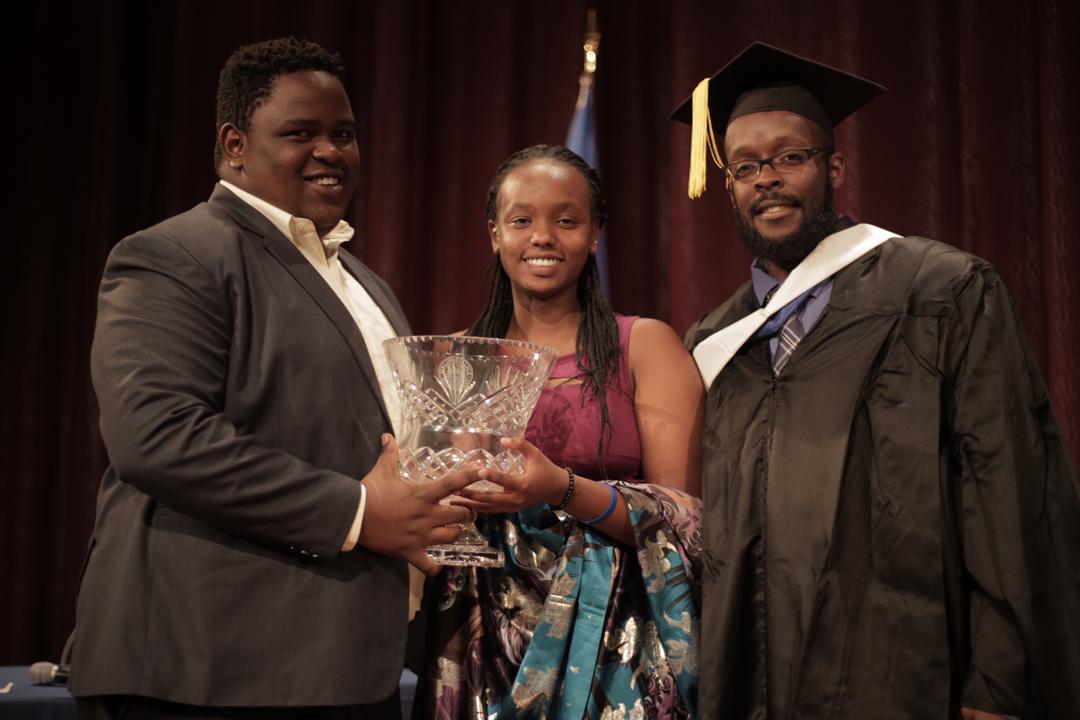
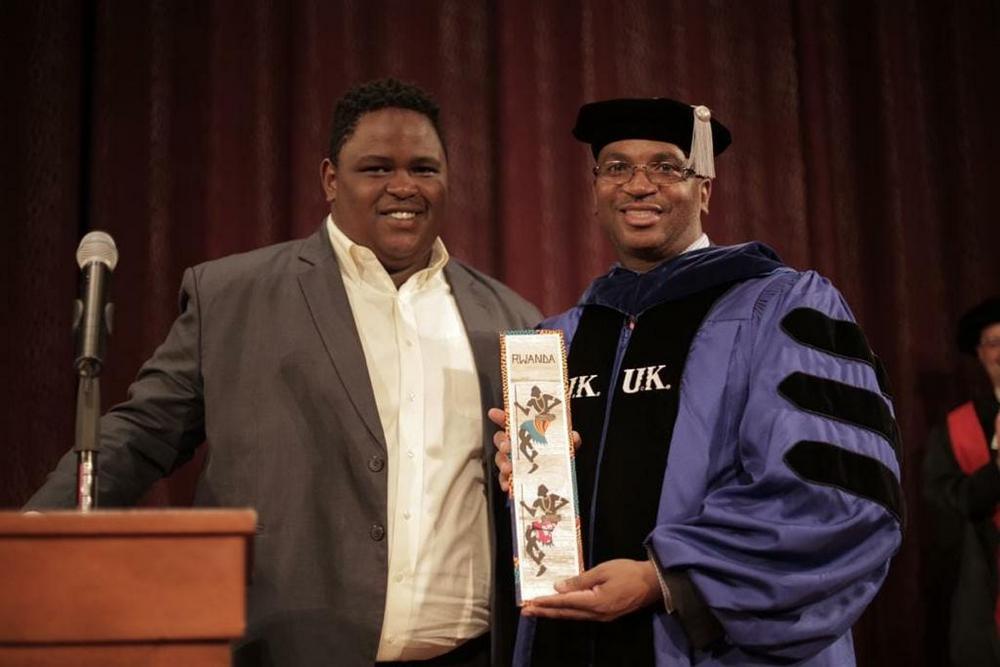
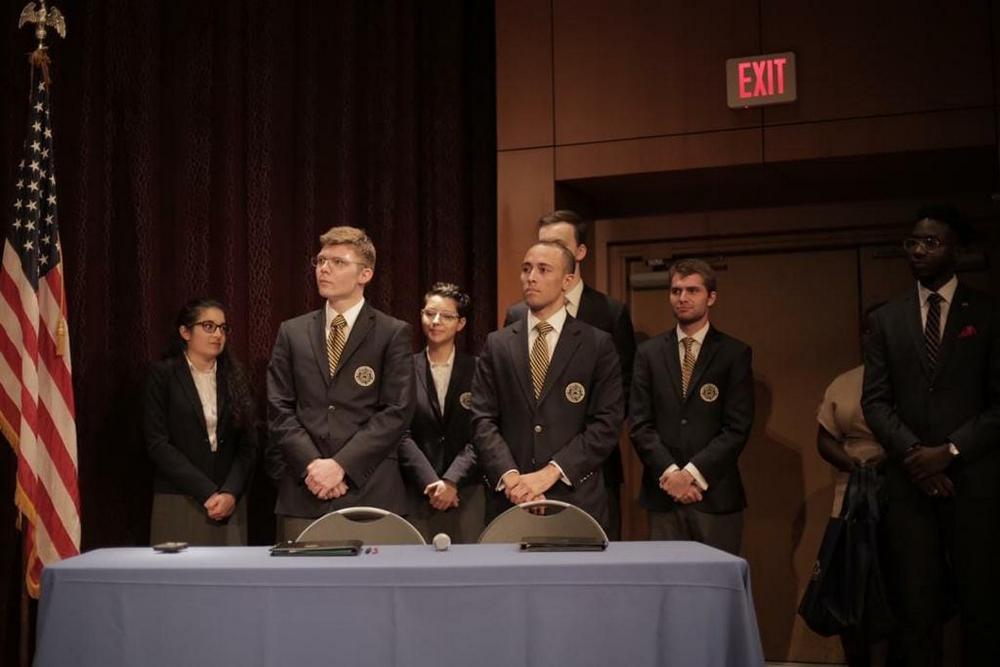
The Rollins Cup being in its 11th edition has seen past contestants for the trophy, from the world-renowned Oxford and Cambridge universities.
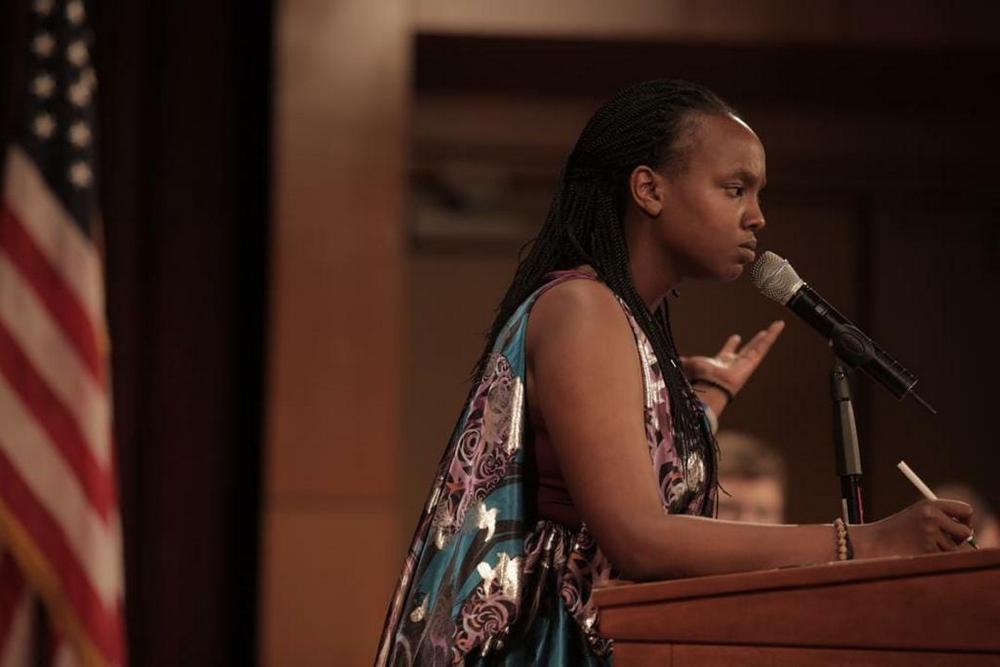
On the winning Rwandan team were Mekha Rousseau Ndayisenga and Kellia Kaneze, a student at Wellspring Academy. They argued against the motion that “The US should intervene/invade in cases of Genocide”.
The team is one of two that are currently touring universities & colleges across US states as part of iDebate Rwanda’s “Voices from a Post-Genocide Generation” tour.
Jean-Michel Habineza, founder of iDebate Rwanda and the brain behind the tour which is currently in its 4th edition, says that through public lectures, presentations and debates, the tour aims at creating awareness about the 1994 genocide against the Tutsi, but also at helping people understand that mass violence doesn’t happen overnight, and that everyone can play a role in making sure it doesn’t occur by recognizing early signs and working to stop them.
“The tour highlights how mass violence affects not only those directly caught in its crosshairs but also the post-conflict generation on many levels; and emphasizes how the debate in Rwanda is being used to cultivate a culture that counters some of the socio/cultural factors that allowed for the genocide to occur,” Habineza says.
Habineza added that through debate, young people understand that their voice matters and that they can use it to question harmful rhetoric and be agents of change.
This year’s tour will see the two iDebate Rwanda delegations go to 24 universities in 15 states. Jean-Michel’s team will be the first to return, arriving on November 1st, 2018.
Apart from the US Tour, iDebate Rwanda’s other programs include the year-long Kigali Debate League, the East African Debate Championship and an end-of-year camp called the Dreamers Academy.
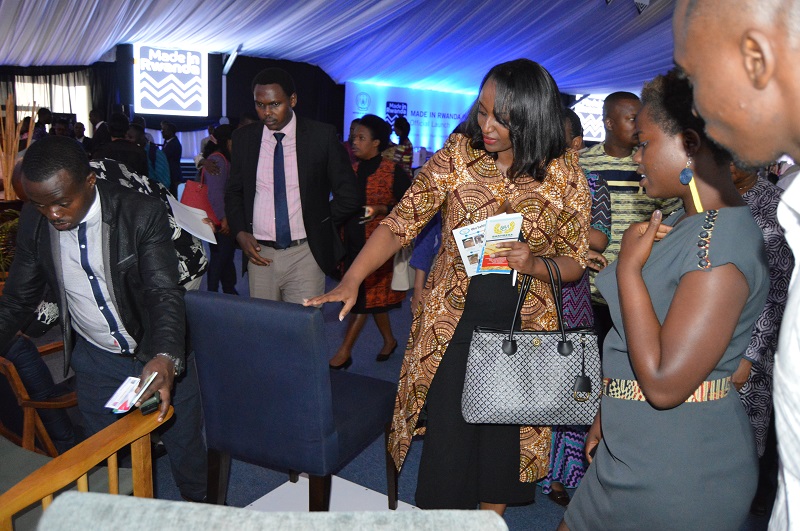
This was revealed by the Minister of Trade and Industry, Soraya Hakuziyaremye who was speaking Thursday, in a workshop with private entities in an event to officially launch Made In Rwanda Policy and Made in Rwanda Logo where she also revealed that the increase in domestic production reduced the country’s imports by 4%.
The launch will be followed by the fourth Made in Rwanda Expo from November 28, to December 11, 2018.
Soraya said that a research conducted in 2015 indicated that an increase in domestic production will be based on promoting domestic markets.
Industrial Development Policy Specialist at MINICOM, Telesphore Mugwiza said that developing Made in Rwanda will require that people change their attitudes.
He said Rwanda exports increased from $559 million to 944 million in 2017.
The rankings were made according to national football teams’ performances in October.
Rwanda played two matches of which they lost one and drew in another. Rwanda has not won a single game from March this year.
The best place Rwanda has attained from the start of this year is 122nd which was in March.
Worldwide, Belgium is ranked top, followed by France with Brazil sitting third while Croatia is fourth.
In Africa, Tunisia is ranked first, ranked 22nd in the world, followed by Senegal (25th in the world). Nigeria is ranked third being 44th worldwide, DRC raked fourth (ranked 46th in the world) while Morocco is fifth and 47th worldwide.
In the region, Uganda leads ranked 79th worldwide followed by Kenya (105th) with Tanzania being ranked 136th while Burundi is 142nd.
The highest Rwanda was ever ranked by FIFA was 64th in March 2015 with the lowest being 178th which was in July 1999.
Rwanda’s export earnings from minerals are projected to reach $600 million this fiscal year, from $399 million in 2017/18, according to RMB, with a projection to earn $800 million in 2020 and $1.5 billion in 2024.
With most of the Rwandan mining being artisanal, poor mining and washing techniques, have seen most companies using ground washing where they recover less than 50 percent.
According to RMB, among the challenges facing Rwanda’s mining industry is exporting unprocessed minerals at low prices.
Dr. Emmanuel Munyangabe, Chief Operations Officer at RMB, says seven years from now, Rwanda will be able to fully process its minerals before exporting.
“According to our plan, it may take seven years from now when Rwanda will be able to export fully processed minerals,” he said.
Rwandan rocks are endowed with coltan, gemstones, granite, cassiterite, wolfram among other minerals.
The first Rwandan mineral processing factory was founded in 1983, processing cassiterite. Having stopped processing for some time, investors are rebuilding it to start refining and processing minerals by the end of this year.
Dr, Munyengabe said RMB has projects to process coltan in the factory based in Bugesera District. The institution is also looking for investors who would work to process the gemstones and other minerals.
“We want to be processing all minerals in Rwanda. We will be exporting only fully processed minerals to the international market,” he said.
The two-day FIFA Council Meeting kicks off on Friday at Kigali Convention Centre to end on Saturday.
Rwanda was chosen to host the 8th FIFA Council Meeting during the FIFA’s first meeting of the year held in Bogota, Colombia in March this year.
The meeting will bring together over 100 delegates from different confederations across the world to discuss issues concerning the development of football.
Hours before the meeting kicks off, President Kagame has received Gianni Infantino, President of the Federation Internationale de Football Association (FIFA), though Office of the President, Village Urugwiro what marked the discussions between the two.
It was not the first time for President Kagame to meet the world football governing body President Infantino as the two have met more than once either in Rwanda or abroad.
In July 2017, Kagame was received by Infantino and visited the World Football Museum, located in Zurich, Switzerland.
This followed the visit conducted by Gianni Infantino to Rwanda in February 2017 when Kagame promised him that Rwanda was ready to host all football activities FIFA would request Rwanda.
Infantino has praised President Kagame for his support to football as he sponsors different football competitions including the Council of East and Central African Football Associations (CECAFA) interclub competition dubbed ‘CECAFA Kagame Cup’.
The FIFA Council Meeting will discuss plans to revamp the Club World Cup and introduce global nation’s league according to reports.
The annual Club World Cup, which features seven teams would be expanded to 24 teams and moved to once in every, four years, according to proposals.
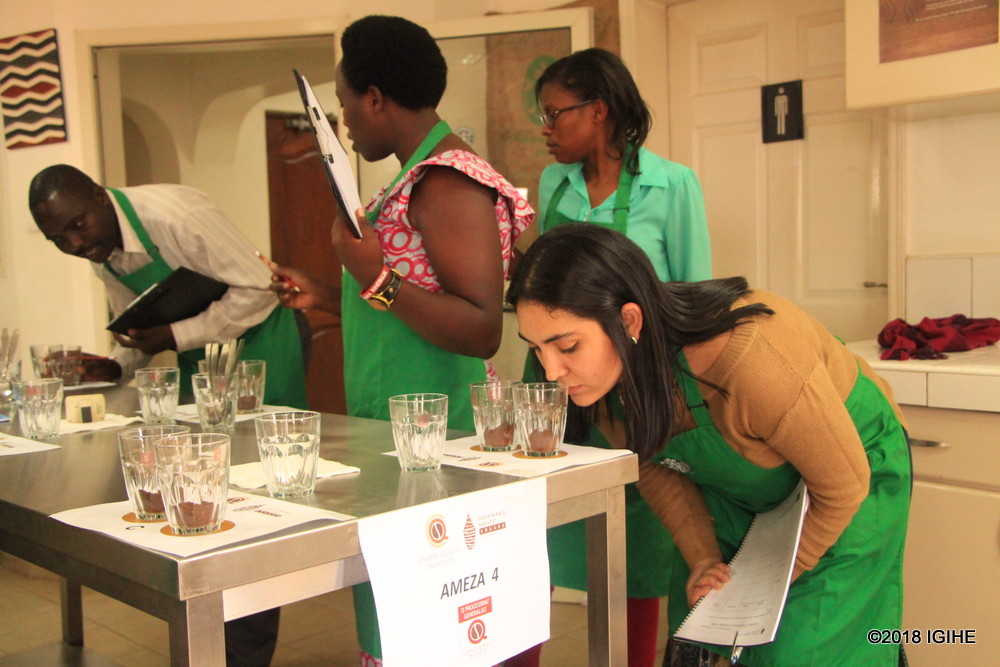
Christine Condo, the East Africa Regional Director for SH-R expressed “It’s of great pride for Rwanda to be the first African country to host this training. We are delighted to enable NAEB [National Agricultural Export Development Board] staff as well as other trainees to receive a certificate that will permit them to transfer this knowledge to others in the coffee sector.”
Much of the coffee-growing world is limited by a lack of knowledge of coffee processing methods, which is often left to experimentation. For many producers, knowing how to process, taste, and produce quality coffee can make the difference between receiving a fair price or one below market.
CQI provides the only program that certifies competencies around coffee processing. It seeks not only to improve the quality of coffee and the lives of people who produce it, but also to standardize procedures, increase competitiveness, and reduce risks.
Since its initial launch in 2017, the Q Processing Program has been changing the way coffee is processed around the world, offering three distinct levels (Generalist, Professional and Expert) to empower the consuming side of the coffee value chain to safely and consistently process quality coffee.
Yimara Martinez, the first woman to be certified as a CQI Q Processing instructor, led the first generalist course at the Starbucks lab in Kigali. She shared “I am very proud to be in Rwanda. Being the daughter of Colombian coffee growers, I never imagined to have the opportunity to travel and share knowledge with people from other continents, wonderful people, who make the same effort and have the same love and dedication to produce coffee and improve coffee quality in the world.”
By the end of the three-day course, the participants will understand the differences among processing methods based on the anatomy of the coffee cherry as well as comprehend the subtlety and complexity of coffee processing as one of the main factors affecting coffee flavor.
Imanishimwe Gisele a participant and representative from the Abakunda kawa ya Rushashi cooperative in Gakenke district stated “as a coffee farmer, the quality of coffee translates to money because if the coffee is of poor quality, it attracts a low price or sometimes may fail to get a buyer at all. That being said, if you control the quality of coffee, in the end it will taste and smell good and in turn attract a good price on the international market. Professional farming is done with a goal to generate income and be profitable.”
According to Condo, “After this training, coffee processors will have acquired new skills that enable them to improve the quality of their coffee hence increasing the price and making Rwandan coffee more popular and appreciated on the market.”
Sustainable Harvest Rwanda started operations in Rwanda in 2018, sponsored by Bloomberg Philanthropies, with an aim of empowering women coffee farmers and their families by training them on coffee farming professionalism and help them network with coffee buyers.
Sustainable Harvest Rwanda now partners with 75 coffee farmers cooperatives from 13 Districts and has trained more than 30,000 women since it started its operations in Rwanda.