From January to October 2018, disasters mostly caused by the heavy rains, floods, landslides and lightning took 234 lives and injured 268 people; destroyed 264 houses, 9412 ha of cropland, and killed 797 livestock among other damages.
The Ministry of Disaster Management and Refugee Affairs revealed the numbers in a press conference on the International Day for Disaster Reduction (IDDR), which is marked on October 13 each year.
This marked the launch of the IDDR week that runs from October 13 to 19, 2018 with a theme; “Mitigating Disasters to Reduce Economic Losses.”
Launching the DRR Week, the Minister of Disaster Management and Refugee Affair, Hon. DE BONHEUR Jeanne d’Arc reminded Rwandans that disaster risk reduction requires everyone’s efforts.
“The disaster risk mitigation activities require more unified efforts. From individuals to the public and private institutions, NGOs and other partners should take part in execution of disaster mitigation mechanisms in place. Specifically, we invite Rwandans to respect all disaster mitigation measures in place,” she said.
Minister De Bonheur further asked Rwandans to join hands in disaster mitigation measures like tightly fixing the roofs of their houses, leaving the disaster high risk zones, recovering and digging new water canals.
The call was made by the Rwanda Defence Force First Division Commander, Maj. Gen. Mubarak Muganga, during a meeting that brought together Kirehe District local authorities that included village, cell, sector and district leaders.
Kirehe District local authorities that included village, cell, sector and district leaders.
Kirehe District is located in Rwanda’s Eastern Province bordering Tanzania.
Maj. Gen. Mubarak Muganga warned Rwandan citizens who cross through porous borders to Tanzania to hunt wild animals and collect firewood and timber and said they disturb both the neighboring and their country’s security as the animals hunted may be infected by diseases that could be introduced to Rwanda.
“There are Rwandan citizens who go and disturb the neighboring country. They go hunting the wild animals there and others go looking for firewood. We will not tolerate that because they are causing chaos in the other country,’’ he said.
“Those animals they go hunting usually have different diseases which they may be infected with and later transmit them to our population. Another thing, you do not have a right to go to hunt and burn timber in another country. Whoever is caught will be punished, we will no longer tolerate those behaviors,” he added.
Maj. Gen. Muganga reminded residents of Kirehe District that they have a good and prosperous country and what they go looking away can be found in Rwanda.
The Spokesperson of the Rwanda National Police in the Eastern Province, ACP Benoit Kayijuka said tougher punishments await those who sell drugs in Rwanda imported from foreign countries and asked them to stop it.
The US$2 million facility was sponsored by the Korea International Cooperation Agency (KOICA) and implemented by Rwanda Development Board (RDB).
The school is in line with the Kigali Innovation City, a US$1.9 billion flagship that seeks to see Rwanda become a knowledge-based economy in line with the government 7-year development programme (2017-2024), according to the school is located in the premises of Integrated Regional Polytechnic Centre (IPRC) Kigali.
“The school will focus on providing audio-visual production skills and creating mobile applications that meet international standards,” explains Felix Siboniyo, Public Assets Division Manager at RDB.
Siboniyo explains that the school will support entrepreneurs with projects that need to be developed through the use of ICT.
The school will hence help people with film making projects, audio visual documentaries as it is equipped with modern audio visual studios, tools and experienced lecturers from South Korea.
Initially, trainees will not pay tuition fees. Those with basic film making skills will apply, sit for an exam and successful candidates commence training in January 2019.
The school will pioneer with about 200 trainees with cohorts that will be trained for between three months and one year, earning a certificate on completion.
Felix Siboniyo says that the school will enable Rwanda to increase the number of jobs created in the cinema industry as “it will train people in script writing and acting.”
Siboniyo further added the trainees will also benefit from RDB’s “Rwanda Film Office” a project that will bring internationally celebrated movie stars and producers, to film their movies in Rwanda.
The school is equipped with modern filming facilities estimated to have cost US$ 2 million. Three Rwandan trainers are undergoing training in South Korea.
Kigali Innovation City is a US$1.9 billion flagship project that seeks to make Rwanda a knowledge-based economy in line with the 7-year Government Programme from 2017 to 2024.
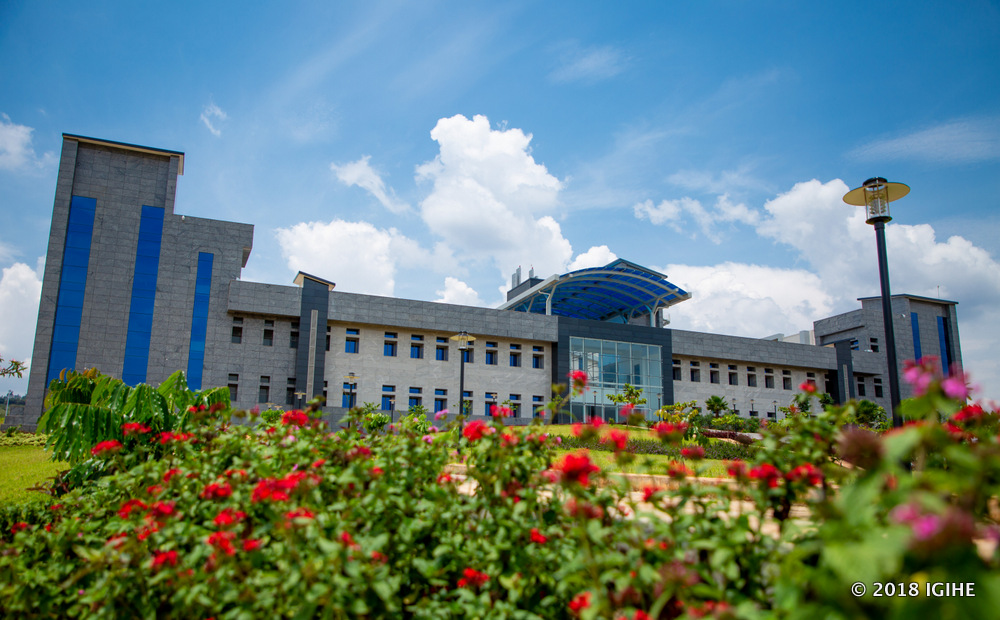
The CMU-Rwanda construction activities took three years under a US$ 10 million project implemented by Rwanda Development Board. It was financed by the African Development Bank which offered a US$ 8 million support and the rest by Government of Rwanda.
Currently, the varsity offers two Masters Degree programs; in Electrical Computer Engineering and Information Technology where students can specialize in Software Engineering, Cyber Security, IT Entrepreneurship, Energy Systems, Telecommunications, Business, anong others.
For the students to be admitted in the university, they are required to have excellently passed in his/her bachelor degree studies in IT-related fields like Computer Science and Electrical Engineering in addition to good mathematics, programming and English. Students with mechanical engineering degree can be admitted after sitting an exam prepared by the University.
The new building has modern lecture and tutorial rooms equipped with technology that enables tele-education where lectures can be accessed from any part of the world.
The building has servers which will store the University digital information and for other interested institutions.
The campus has an auditorium with capacity of 500 seats with plans underway to add an entertainment hub for students in the second phase.
CMU Masters degree programme students in USA pay US$48,000 for tuition fees while students at Kigali Campus pay US$16,000. Rwandans students are required to pay US$8,000 which is sponsored by the Rwandan Government.
The Director of Carnegie Mellon University-Africa, Prof. Vijayakumar Bhagavatula commends the partnership between the University and Government of Rwanda. He said Rwanda invited the varsity to operate in the country and has accepted to receive other students from all over Africa.
Prof. Vijayakumar Bhagavatula, who has now lectured at CMU for 40 years, says that the Masters degree offered at Carnegie Mellon University-Africa are at par in standards with those of Pittsburgh in Pennsylvania in the USA.
“These are CMU degrees and not CMU-Africa degrees because students here are given the same courses and they have to be approved by CMU at Pittsburgh. We are just a campus here; we are not online because we have a faculty here on the ground. We are fully here,” he emphasizes.
“We came here on the invitation of the Rwandan Government and started the CMU-Rwanda but now we are CMU-Africa. Though we have more Rwandan students, the university is for the entire African continent. We have students from 15 African states,” he explains.
On the seven years CMU has been operating in Rwanda and the seven months he has personally been in Rwanda, Prof. Vijayakumar Bhagavatula says that; “all indications are that there is a great relationship between CMU and Government of Rwanda. We are very impressed by the support we have received. The students are all doing very well and those graduating are getting good jobs and it is all very positive.”
The Public Assets Division Manager at Rwanda Development Board, Felix Siboniyo showed journalists around the new building.
“This new CMU building will accommodate about 500 students when it opens in January 2019,” Siboniyo revealed.
Siboniyo also said that 70% of construction tools used in the process were made in Rwanda including materials from the East African Granite Industries (EAGI), a Rwandan industry based in Nyagatare District.
{{Carnegie Mellon University building In Pictures
}}
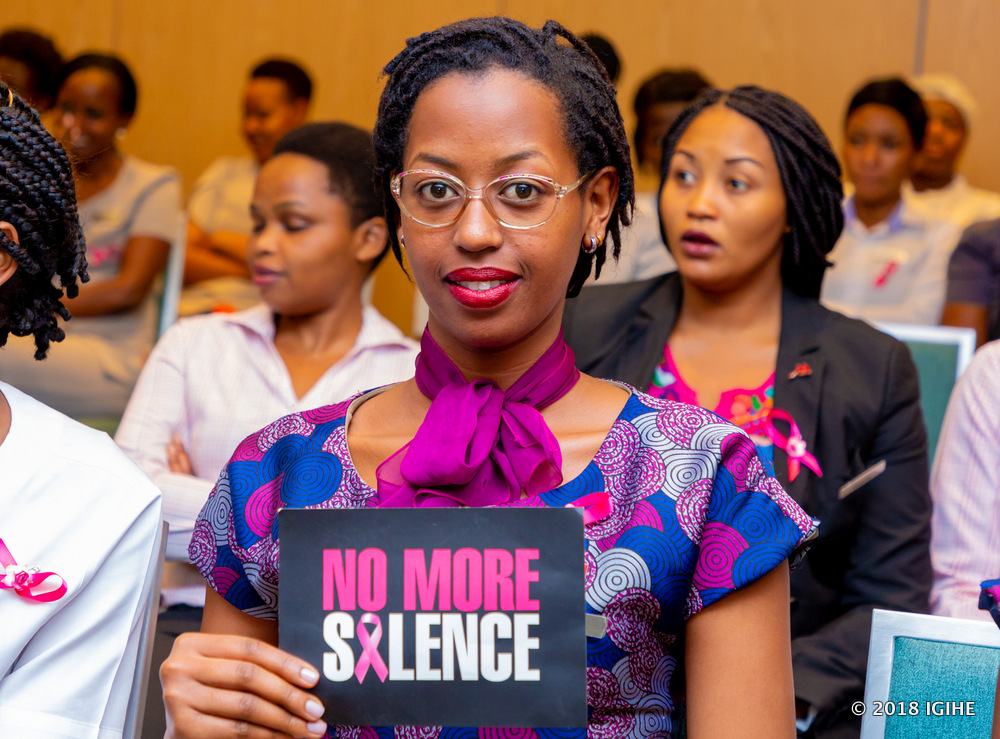
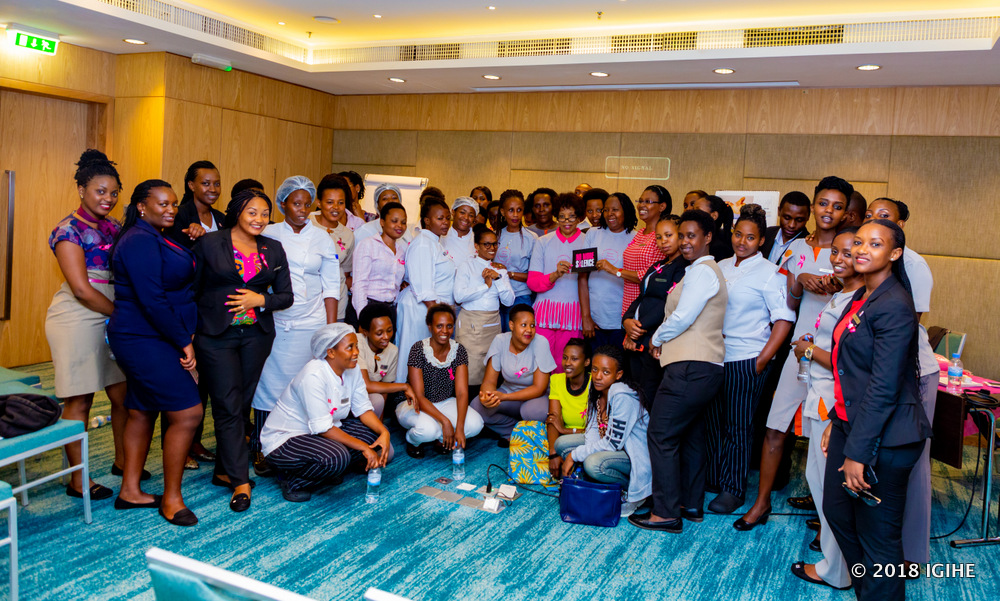
The Senior Human Resource Manager at Kigali Marriott Hotel, Mary Asiimwe told IGIHE that the activity was in the hotel’s program to sensitize its staff on taking care of their health.
“Our workmates and guests are all people who can get cancer and be affected by it. It’s important for them to know that when they do, they seek and get medical help. We highly value, at the Kigali Marriott Hotel, the health of our staff members, hence campaigning and facilitating ways in which they can learn more about their health status because it’s directly linked to their delivery at both a personal and professional level,” she said.
Christa Nkurunziza, a staff at the hotel commended her employer for preparing the activity which helped them gain knowledge on breast cancer. She highlighted that she now knows that not only women can be infected with the breast cancer but it can attack men as well.
“I learned that I should always do regular medical checkup and educate youth about breast cancer and let them know that it does not attack a single group of people,” said Nkurunziza.
The Director and founder of the Breast Cancer Initiative East Africa, Philippa Kibugu-Decuir, revealed that the idea of founding this organization came after her sibling died of cancer for lack of proper and timely treatment.
“I decided to make my humble contribution. As a breast cancer survivor, I teach people on the dangers of breast cancer and how they can avoid it,” she explained.
In her message to the Kigali Marriott Hotel staff, Kibugu sensitized them to take care of their health by avoiding excess consumption of alcohol, tobacco and obesity which are risk factors to cancer. She also reminded them to regularly conduct medical checkups to know how their health stands.
On October 20, 2018, staff from Kigali Marriott Hotel will participate in the annual walk against breast cancer organized by BCIEA.
This initiative which is part of United Nations Word Food Programme (WFP) aims at delivering cash transfers through a monthly stipend of Rwf7500 to each household in the camp, with an aim of improving food and nutrition security among food insecure households.
The just concluded three week registration and activation exercise rolled out by Equity Bank targeted close to 20,000 household heads of Burundian refugees in the camp. Mahama becomes the last refugee camp in Rwanda to have cash-based transfers rolled out and for the first time.
During a visit to Mahama Camp to witness the ongoing process, Equity Bank Managing Director Mr. Hannington Namara said that the bank has already put in place convenient means of availing the allocated funds to the registered beneficiaries.
“We are pleased to have successfully rolled out the registration process and look forward to disbursing the first cash allocation to the registered residents,” he said.
He added that they have already put in place an agency network with close to 20 Equity Bank agents in Mahama camp to facilitate withdrawal of cash.
The money is given in place of maize, cooking oil, and salt deemed to be sufficient for a month.
Every family member is given Rwf5400 per month except for infants below 6 months old because they are cared for exclusively.
Mahama Refugee camp manager Goretti Murebwayire said that this intervention will enable refugees avoid wastage of foodstuffs they were given and resold.
“They used to receive maize and sell it outside the camp. Giving them cash will help them get what they need without necessarily selling what they have been given,” she said.
Equity Bank has over the last three years registered and disbursed to over 14,500 households in Gihembe, Nyabikenke, Kigeme, Kisiba and Muhombwa camps in Rwanda. Mahama camp remains the largest refugee camp with a population of 70,000 refugees. It is the youngest camp in Rwanda and the sixth to roll out WFP/UNHCR cash through Equity Bank.
This amount was revealed Friday in a meeting the ministry held with heads of district committees in charge of management of abandoned properties to assess the implementation of the program to authorize individuals inherit and manage abandoned properties, as provided by the law.
Statistics from the ministry indicate that 1,166 abandoned properties have been recorded. They are comprised of 353 houses, 47 plots of land, 11 pastures, 77 forests, 674 gardens, one fuel station and 4 factories.
Of all the assets, only 10.30% is tapped mainly from renting houses, gardens, and tea plantations.
MINIJUST says money collected is kept on different bank accounts; one for property owners and an ordinary account for property maintenance.
The properties are mainly located in Gasabo, Kicukiro, Nyarugenge, Rubavu, Nyaruguru, Gicumbi, Muhanga, Ngororero and Kirehe districts.
Meanwhile, the ministry further added that some properties are returned to their rightful owners in case they show up.
Abandoned property is referred to as the property left behind (often by a tenant) intentionally and permanently when it appears that the former owner (or tenant) does not intend to come back, pick it up, or use it. Examples may include possessions left in a house after the tenant has moved out or autos left beside a road for a long period of time, to patent rights of an inventor who does not apply for a patent and lets others use his invention without protest. One may have abandoned the property of contract rights by not doing what is required by the contract. However, an easement and other land rights are not abandoned property just because of non-use.
The main objective of the NIRDA Open Calls Program is to introduce firm-level innovations, which improves the ability and capacity of Rwandan enterprises to compete in strategic national and international markets.
NIRDA’s Director General Kampeta Sayinzoga observes that it is time for industries and enterprises across the country to adopt technology.
In a press conference on Thursday Kampeta said that NIRDA will support entrepreneurs to increase their industrial production.
“We want to help small firms so that they can grow to a higher level and generate more products,” she said. Sayinzoga says NIRDA is going to open doors to industries and their development starting from ordinary banana beer brewers. They will also support selected tailors who won in recent competitions.
Sayinzoga says that tailors who accepted to change working style will also be given sewing machines that they applied for.
However, she added that they are required to work in cooperatives for higher productivity and NIRDA will support the building of capacities.
Kampeta said that “Open Calls Program is a new way of providing existing firms with technology, equipment and capacity. Every year, we will be selecting different value chains based on the newly confirmed technology.” She said.
She added that private enterprises through a NIRDA online platform apply and for capacity building support.
Sayinzoga further says that apart from local banana beer brewers who were offered this opportunity last year, NIRDA will also support those who competed and won in recent competitions.
NIRDA also has its NIRDA Applied Research and Development program which involves need-based, collaborative research geared toward industry in the private sector.
This second focus of NIRDA is aimed at introducing, promoting and embedding industry within the Rwandan context.
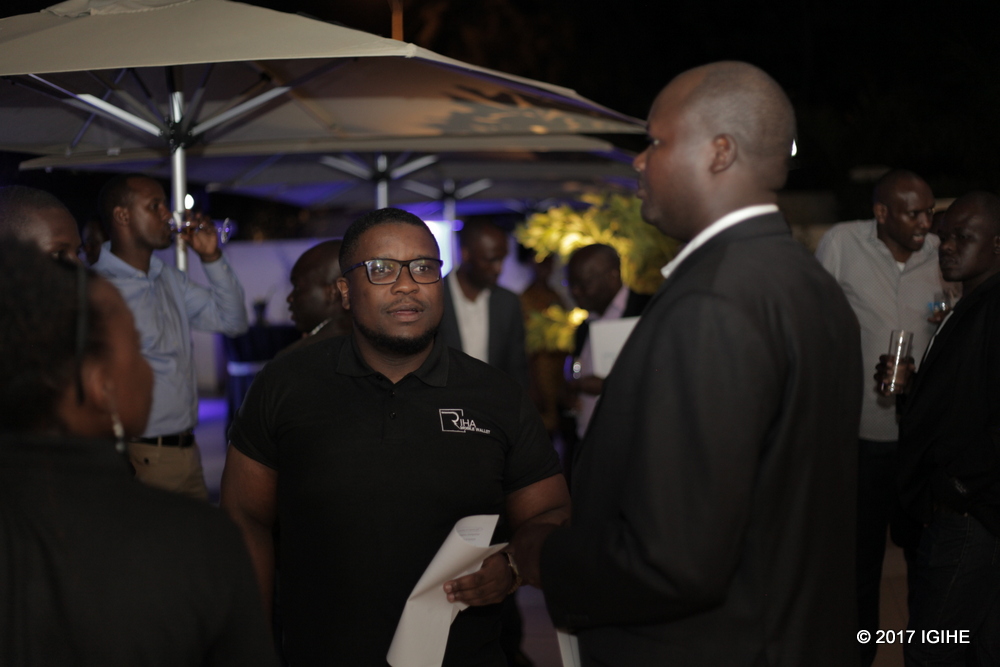
Riha Payment System Ltd is the first company in Rwanda to be granted such permission. The sandbox regulatory framework was put in place to allow testing of innovative payment products to fast-track the rollout of the Rwanda cashless economy.
Riha solution is a lifestyle consumer and merchant/retailer engagement platform that combines seamless payments and rewards all in one.For consumers, it’s a single destination wallet for all their transaction accounts to seamlessly pay, transfer funds, and collect loyalty & rewards from their preferred merchants or brands.
The wallet also allows consumers to manage personal finances through a series of machine learning algorithm which help them spend smarter. For Retailers, it’s a future proof of payment acceptance platform with the abilityto create a truly personal buying experience for the consumer. With the Wallet, merchants can identify, understand and engage with customers while building relationships that drive value.
Riha Mobile Wallet is all about the value addition that mobile technology can unlock across the payment and retail spectrum.
A select group of users will be able to download and use our System starting November 2018 and an official public launch is scheduled for first quarter of 2019 after the official License has been issued.