HVP Gatagara Center was the first center in Rwanda that was established to cater for children with mental disabilities.
On 29th November 2018, when Ecobank celebrated its Annual Day, the bank’s staff and directors here in Rwanda, visited Brothers of Charity at HVP Gatagara Center and laid a foundation stone at the location where the two-room apartment will be established.
Ecobank’s managing director in Rwanda, Alice Kilonzo-Zulu, said that every year, Ecobank dedicates one day to interact with residents and support them.
Ecobank staff said that it was in that regard that they chose to join children with mental disabilities to show them some love.
This year’s theme is “Supporting young lives in Africa”.
“We are here not just to donate, but to interact, listen and understand the challenges behind,” Kilonzo said at the Ecobank Day event.
She added, “They talked to us and told us many of the challenges they have including lack of money to pay teachers their salaries. They mentioned many problems but we will help them with accommodation,” she added.
Ecobank Day was first launched in 2013. This time around, the day has been celebrated in 33 African countries where the bank operates from. Activities included helping vulnerable populations.
Kilonzo further said that “It is imperative that the institutions in Rwanda contribute to the development of our host countries and help citizens, especially the needy because as a bank, we cannot just invest in doing business, but also continue supporting communities.”
The director of HVP Gatagara, Ndera branch, Elissam Salim Ntibanyendera thanked Ecobank for the support.
Ecobank’s staff also gave foodstuffs and game kits.
He said it is necessary to design and implement programs to ensure food security, adequate access to clean water supply, sanitation and hygiene.
Dr. Ngirente made the remarks in his note address at the Global Event on “Accelerating the End of Hunger and Malnutrition at Bangkok, Thailand on 28th November this year.
The three-day conference was organized by the International Food Policy Research Institute (IFPRI) in partnership with World Food Programme (FAO).
According to the 2018 report on the State of Food Security and Nutrition in the World, the number of hungry people in the world increased to 821 million in the year 2017.
In Africa, Dr. Ngirente said, “the same report indicates that the prevalence of undernourishment affects more than 256 million people, equivalent to 21% of the population,” adding that “These findings are not different from the 2017 FAO report that shows that about 27.4% of Africans were considered severely food insecure, which is considerably higher compared to other regions of the world.”
Currently, stunting and malnutrition rates at 35% among children as Dr. Ngirente highlighted.
Dr. Edouard Ngirente shared some initiatives that Rwanda has put in place as he spoke of Rwanda’s experience in its commitment towards ending hunger and under-nutrition by 2025, and all forms of malnutrition by 2030.
Among them, the Crop Intensification Program has helped Rwanda attain a growing trend in food crop production at 8% annual average in 2017, accounting for 20% share of total agriculture sector contribution to GDP.
Dr. Ngirente also said that more than one million hectares of land has been consolidated and agriculture inputs subsidized to increase affordability and uptake while “today, over 900,000 hectares of progressive terraces and more than 100,000 hectares of radical terraces were developed.”
{{Strategies}}
Strategies Rwanda has adopted to tackle malnutrition, as Prime Minister Ngirente said include a joint venture between the Government of Rwanda and Africa Improved Foods Ltd (AIF), in producing baby nutritional foods babies between six and 24 months as well as pregnant and lactating mothers from poor households.
“These Fortified Blended Foods are currently supplied over 14,000 women and more than 100,000 children in vulnerable categories,” he said.
Over 58,000 voluntary community health workers were deployed in all villages to closely follow-up malnutrition cases and conduct awareness campaigns on improved maternal, infant and young child feeding practices.
Since 2006, Rwanda established and supported One Cow per Poor Family Program known as Gira Inka Munyarwanda which has seen more than 300,000 cows distributed to poor families with the target being to ensure every poor household owns a cow to produce milk for home consumption, generate family revenues for extra milk sold and produce manure that supports food production for the family.
Besides, Rwanda’s Government introduced One Cup of Milk Program in which so far, over 70,000 school children in poor areas are enrolled. “Milk supply in school has not only improved the nutritional status but also increased school attendance,” Ngirente said.
“To completely eliminate hunger and food insecurity, in Africa Agenda 2063, our continent committed to make nutrition a priority. This will be achieved by consolidating the modernization of our agriculture and agro-business through scaled-up value addition and productivity.” Prime Minister Ngirente said.
IGIHE has learned that Migambi is now in a critical condition, where he has been admitted at Bugesera District Hospital in Nyamata. He is also not able to utter a word because his right cheek is swollen.
It is said that the victim and the woman were caught in Ngeruka Sector but are from Kamabuye Sector.
Bugesera District authorities say the woman’s husband had been tipped off about that plan and tracked them until he caught them red-handed.
Bugesera District Mayor, Richard Mutabazi told IGIHE that “It’s true. That happened. We were informed of the fact that someone had been caught red-handed committing adultery and fought with the husband of the woman with whom they were having sex, who ended up chopping his tongue.’’
He confirmed that the man’s tongue was chopped off, and investigation has begun to identify whether no other people might have been involved, because, he says, it is not clear how one person chopped the other man’s tongue.
He urged residents to be honest and avoid conflicts and other issues that may lead to family conflicts.
The promiscuous woman is in custody at Ruhuha Rwanda Investigation Bureau (RIB) along with her husband who is allegedly suspected of chopping off his neighbor’s tongue.
Ndayizera was arrested last week with another man suspected to have handed him the dynamite.
Ndayizera who resides in Muhanga District was presented to media today Wednesday, 28th November at RIB headquarters in Kimihurura, Kigali.
Speaking to members of local and international media, Ndayizera denied all the charges against him saying “I know nothing about those dynamites.”
The Spokesperson of the Rwanda Investigation Bureau (RIB), Modeste Mbabazi said Ndayizera was arrested in Nyamirambo, Kigali last week after he had received the dynamite.
Terrorism is punished under article 19 of the antiterrorism law. It stipulates that any person who attempts, takes part or supports terrorism acts commits a crime and upon conviction, he shall be liable to a penalty of not less than 15 years of imprisonment but not more than 20 years.
Smuggled foodstuff seized include 122,493 kilograms of rice and maize flour, 1,714 boxes of biscuits and 22,823 liters of cooking oil.
From July 2017 to June 2018, RRA seized 11,849 dozens and 4007 liters of alcoholic drinks while the Authority snatched 9086 dozens and 6,787 liters of nonalcoholic beverages.
Second hand clothes, known as chaguwa, seized were 233,300 kilograms and 1,5286 pairs of new kitenge clothes.
August 2017 and June 2018 dominate as months in which most illegal products were seized as each month saw at goods worth Rwf95 million seized while the least quantity of commodities were seized in February and March 2018 with each month having seen smuggled goods less than Rwf25 million seized.
Rwanda Revenue Authority reveals that all smuggled goods seized were found with people carrying them while others were seized being transported on 603 bicycles, 270 motorcycles and 186 cars.
The Acting Head of the Anti-Smuggling Unit at Rwanda Revenue Authority, Faustin Niyigaba said that smuggled products seized include medical products though they rate at less than 5 percent of all smuggled goods seized.
Most of pharmaceuticals seized include Paracetamol and Coartem drugs among others that are smuggled mostly through Rubavu and Rusumo Borders.
Last year, a search to identify public workers who needed support for affordable residential housing was announced. Rwanda Housing Authority (RHA) says it is a comprehensive program that will as well benefit private sector workers earning at least Rwf200,000 per month.
In an exclusive interview with IGIHE, Leopold Uwimana, the Affordable Housing Division Manager at the Rwanda Housing Authority, said that public workers looking for houses are welcome.
“We started with public workers, but it is a program for every Rwandan citizen. We know that what is necessary is that applicants must have a way to pay back, but we counted over 6000 public workers,” he said.
RHA indicates that about 7113 workers, including those from private institutions and 800 individuals, have shown interest.
Uwimana further states that “Someone who is eligible for a house and pays back in installments at a minimum interest rate of 10%, is the one earning Rwf200,000 and Rwf1.2 million.
He said Rwf250 million will be injected in the ‘Affordable Housing Fund’. So far, he said, only Rwf150 million has been donated by the World Bank, but the government hopes that the fund may be operational in the next two months.
In linking workers to investors, Ndera Affordable Housing Project in Ndera Sector, Gasabo District, has already produced housing master plans for over 1700 houses for those who registered earlier.
The project is part of partnership agreements between BRD (Rwanda Development Bank), and Palmeraie Development Group, signed in 2016, when Moroccan King, Mohamed VI visited Rwanda.
In August 2018, BRD announced that the houses will be built in floors, including one house with two living rooms and one room for the laundry which will cost between Rwf27.3 and Rwf32.76 million.
The beneficiaries will pay for 5% of the shelter value as first installment a monthly payment of 40% of their monthly income.
Construction projects are expected to begin in January 2019.
According to RHA, today there is a plan to establish a system by which people may apply for houses online which will be done through Irembo website.
For Rwandans earning less than Rwf200,000 per month, Uwimana said that RHA encourage investors like Rwanda Social Security Board (RSSB), to build a large number of affordable housings for rent and not for sale.
Rwanda has a great deal of investment opportunities in constructing houses for rent, and the government is helping investors to acquire land, and link them to buyers.
After leading the Company through several years of sustained growth and development, the current Managing Director of Bralirwa Plc, Mr. Victor Madiela leaves two and a half years in light of having accepted a new position at Heineken – Bralima brewery in Kinshasa/DRC as Managing Director.
In this role, Merid will be responsible for the expansion of leadership position in beer and soft drinks through a vibrant brand portfolio and an optimized route to market, while driving a lean cost base leading to an improved financial performance.
Merid joins Bralirwa Plc from Heineken Ethiopia where he started in January 2014 as a Sales Director. During the past five years, he has successfully built a new Sales and Trade Marketing team, grew volume and nearly doubled market share in Africa’s most competitive market. With the company’s aim to become the undisputed number 1 in Ethiopia, Merid’s success comes from his relentless focus on Excellent Outlet Execution (EOE), his vast experience on route to market and his motivational leadership style.
Prior to joining Heineken, Merid started his career in the beverage world with Coca-Cola SABCO in Ethiopia in 1999 where he spent 7 years working in different positions in Sales & Marketing with growing responsibilities. From 2007 till 2014, Merid held several commercial regional roles in the Coca-Cola Central East & West Africa Business Unit.
Mr. Victor has been the Managing Director of Bralirwa Plc, since September 2016. He leveraged recent investments, implemented an ambitious cost-saving programme, introduced successful innovations (Primus Citron and Amstel 100% malt) and applied a more efficient route to market which all resulted in significant top line and bottom line growth. Bralirwa’s leadership in the Rwandan beer market was significantly reinforced by an increasing market share. Victor has also led the preparation for the local production of Heineken in Rwanda which will take place end of 2018.
BRALIRWA Plc is a Rwandan company producing and selling beers and soft drinks, founded in 1957 with the construction of a brewery located in Gisenyi. Since 1971, BRALIRWA Plc is a subsidiary of the Heineken Group, which holds 75% of the shares.
A study conducted by a Philippine Professor Severino Paypa in the book “Healing Wonders of Charcoal”, indicates that charcoal can be used to relieve pain, stop the spread of microbes, nausea, and vomiting, remove gallstones and bile duct stones and many other diseases.
The study of further shows that charcoal also prevents the venom from animal bites including dogs and snakes that may spread throughout the body and chemicals toxins.
To get more information about this medicine, IGIHE talked to Samuel Semahame Nyakarundi, an expert in general health who invested in researching herbal medicine.
Nyakarundi who founded and runs Zirumuze, a cooperative that specializes in the production and distribution of traditional medicines says that charcoal heals, but not any kind of charcoal is used in medicine.
“Charcoals are different and so are all the ones we use for cooking because of the types of trees they are made from and it is often hard to tell which is which. The charcoals that treat diseases are the ones from the white variety of eucalyptus also known as ‘maideni’,” he says.
He adds these are the ones they regularly prescribe for those who need them at Zirumuze, but before using it, they track their entire journey even from before they are burned.
{{How is charcoal used?
}}
Nyakarundi explains that for charcoal to possess the healing ingredient, it must first be activated. This is done by putting charcoal in a saucepan or other cooking utensil and heat it as much as possible.
Like all other medicines, charcoal iis taken in doses. They also advise patients on how to use them at the right dosage whether orally or externally.
“For instance, when someone suspects that they have been poisoned, they may come to us here at Zirumuze and cure them using charcoal, but then they have to do it in not later than 24 hours from the time the poison entered their body,” he explains.
Aside from poisoning, Zirumuze also uses charcoal to treat and protect kidneys lest they lose the ability to purify the blood.
If you suspect that you have one of the above-mentioned illnesses, you are advised not to take charcoal instantly, but consult Zirumuze Cooperative so that specialist doctors test and diagnose you and if they find out what you really need charcoal treatment, they will prescribe it for you.
Zirumuze is based in Kigali on the ‘La fraicheur’ road in front of Muhima textile market, Nyabugogo in a new building for associations (Amashyirahamwe) opposite to WASAC.
They also work from Musanze’s foodstuffs market, room 69 and in Rubavu bus station room 14.
You can also call them on the following phone numbers: 0788863221, 0784647369, 0783072727, 0784647166, 0784647265 or email them at [nyakasamyy@gmail.com->nyakasamyy@gmail.com], [info@zirumuze.com->info@zirumuze.com]. You can also visit their website at: [www.zirumuze.com->www.zirumuze.com]
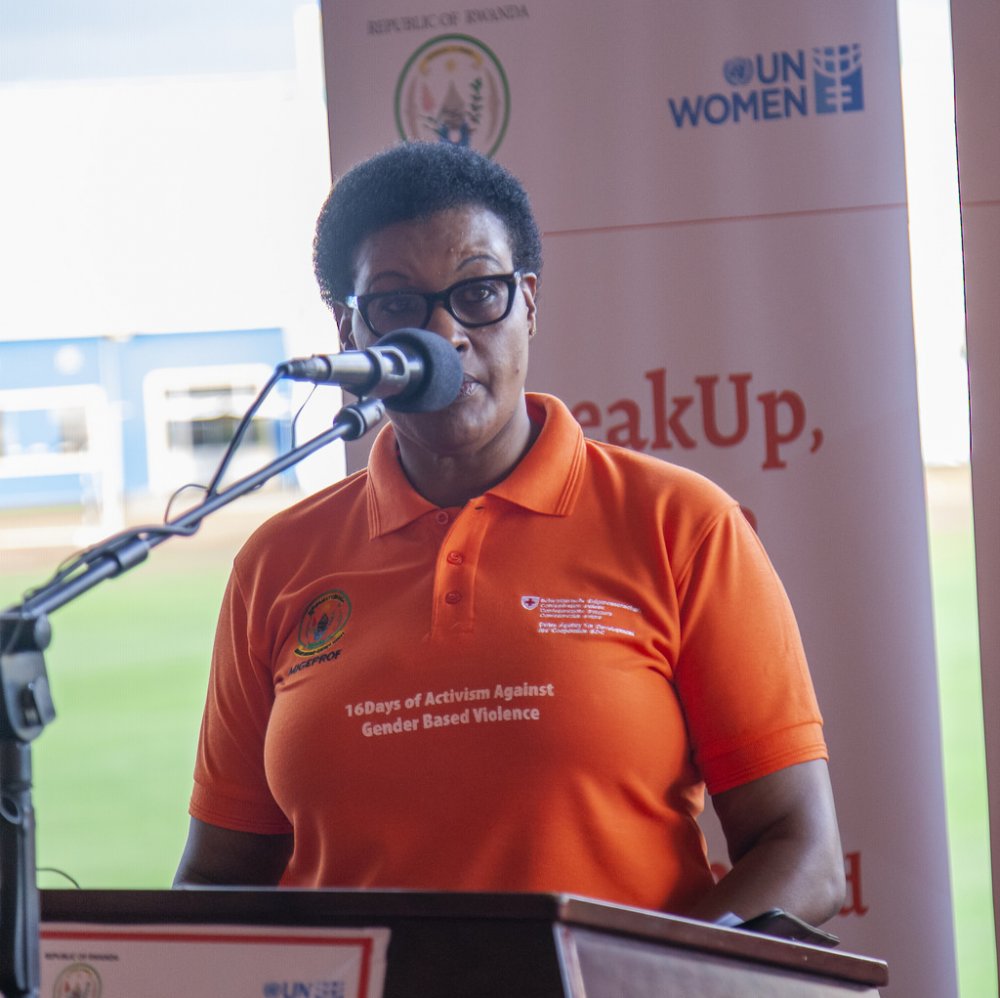
Mukabalisa made the remarks on Sunday as the Ministry of Gender and Family Promotion launched a 16-day campaign of activism against gender-based violence.
Statistics by the National Public Prosecution Authority indicate that the authority received 2996 cases of defilement between July 2017 and June this year.
This is after 17000 children between 15 and 19 years’ old were impregnated in 2016.
Mukabalisa said the numbers sound horrible which calls for a collective part in the fight against gender-based violence.
“Different reports indicate that the number of unwanted pregnancies among teenagers keeps increasing in both urban and rural districts, which is sad. We should not sleep and feel at ease while our children’s lives are under this threat. If nothing is done, our country would be heading to nowhere. It requires our cooperative hands to fight gender-based violence,” she said.
Mukabalisa added that parents should take part in fighting GBV by talking to them about reproduction.
She, however, criticized the youth who don’t listen to parents’ advice and succumb to peer pressure and irresponsible behaviors including watching pornographic films among others.
The Minister of Gender and Family Promotion, Solina Nyirahabimana urged parents especially those with children who were defiled never to keep that information to them or trying to resolve that problem by a mutual understanding with suspected defilers.
“Some parents hold private talks with those who violate their children and sometimes want their underage daughters to be married to criminals and keep away from justice. No agreements should be made over such crime committed,” said Minister Nyirahabimana.
The Secretary-General of the Rwanda Investigation Bureau (RIB), Col. Jeannot Ruhunga emphasized that a recent survey found some parents to victims of gender-based violence had chosen to resolve the problem in good understanding with the offenders.
Col Ruhunga said that this results in the victim’s trauma and irrigates the culture of impunity which must end.
The revelations were made by the Minister of Environment, Dr. Vincent Biruta on Monday as he inaugurated the 4th High-level policy dialogue for Africa Green Growth Forum 2018 slated to start on Tuesday, 27th to 30th November this year in the Green Growth with a theme that goes as “For a Green and Climate Resilient Rwanda.”
The forum organized by the Ministry of Environment with the United Nations Development Programme attracts about 1000 participants including politicians, business people, economists from Africa along with visitors who have come from all corners of the globe.
Minister Biruta said, “Rwanda’s Green Growth and Climate Resilience Strategy was created in 2011 and remain a ground-breaking piece of policymaking.”
Biruta said that to implement the strategy, the Government has introduced the Green Fund (FONERWA) “to be the vehicle through which resources for climate and environmental change initiatives are mobilized and invested. The fund has seen a positive return on these investments.’’
“It has created more than 140,000 green jobs, protected tens of thousands of hectares of land against the impact of climate change, and with the support of our development partners, mobilized more than 150 million dollars for strategic green growth,” Minister Biruta explained.
“This has led to the development of Green Villages across the country, which some of you will visit on Friday, a Resource Efficient and Cleaner Production programme which is supporting the private sector to save money and the environment, and the greening of local government development plans,” he added.
The UN Rwanda Resident Coordinator, Fodé Ndiaye commended for the step made in promoting the green economy that ensures businesses don’t destroy the environment.
“I would like to praise the outstanding initiative the Ministry is spearheading to coordinate the implementation of the Green Growth and Climate Resilience Strategy and to integrate green growth into policymaking and planning, as well as institutional development,” Mr. Ndiaye said.
Rwanda is a member of the Climate and Clean Air Coalition to Reduce Short-Lived Climate Pollutants (CCAC) that aims to catalyze rapid reductions in short-lived climate pollutants to protect human health, agriculture and the environment.
After the United Nations Climate Change Conference, COP 21, that was in Paris in 2015, Rwanda committed to enhancing green growth projects. Rwanda signed the Paris Agreement on Climate Change in April 2016.
Rwanda has a demonstrated track record of environmental protection, evidenced through the ban on plastic bags, conservation of its natural heritage through a series of national parks and protected areas, landscape restoration and the planting millions of trees every year.
In terms of green growth, the Paris agreement signing by Rwanda in 2016 found, 6,807 households having had improved access to off-grid energy thanks to investments made by FONERWA and private sector partners.