The baby girl who was born with health complications was born at Kabgayi Hospital where her mother checked-in to give birth on January 6th, 2018.
After giving birth, the mother was admitted at the hospital and on the morning of January 10th at around 6am, medics called her to breastfeed the baby in the room from where the baby was being treated but the baby was nowhere to be seen.
According to investigations, when the medics got out from the room, the mother secretly took the baby out and dumped her in pit latrine.
The Police Spokesperson for the Southern region, Chief Inspector of Police (CIP), Bonaventure Karekezi said: “After she threw the baby in the pit, the mother came back crying and told her mother that her baby had been stolen from the medical room.”
“The mother of the suspect called in the doctors who afterwards called Police but other women in the Hospital continued pressing and accusing her of killing her own child,” CIP Bonaventure Karekezi added.
CIP Karekezi said that people at the hospital and neighboring communities started searching for the baby and that is when some of them heard it crying in a nearby pit at about 10:30am.
The Fire and Rescue Brigade was called in and working with residents, they rescued the baby alive at about 11am.
The baby is now still being treated by medics at Kabgayi Hospital while the mother was placed under custody.
The rescue took about 15 minutes according to ACP Jean Seminega, the Commanding Officer of the Fire and Rescue Brigade at Rwanda National Police (RNP) who also said “this is a despicable and heartless act,” wondering “what kind of mother does that.”
Seminega commended the residents for the quick response to search for the baby and facilitating the rescue which was successful.
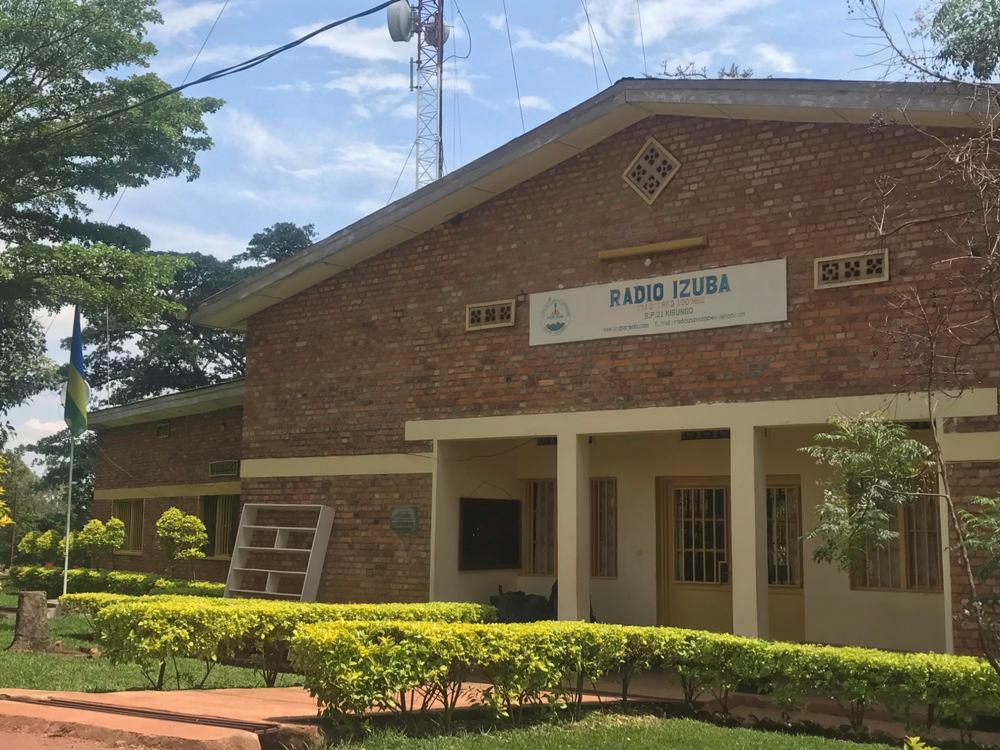
Izuba TV first aired on Friday, January 11th, 2018 at about 3pm on Channel 102 on Star Times and with no subscription fees paid to watch it. It started playing music and movies but it will soon start airing shows related to rural community development. in no long time to come.
Izuba TV, the first Community TV in Rwanda and a sister television to Radio Izuba will work be focusing on community social life with headquarters in Ngoma District in Eastern Province where Izuba Radio has been operating from since 2004. when it opened.
Speaking to IGIHE, the Director of Izuba TV, Alphonse Muhire Munana said Izuba TV has promotion of the community development life as the major editorial line.
“It is a sister TV to Izuba Radio. They both work aiming at improving lives of community members and community development. Izuba TV’s specialty is that it is the first community TV station in Rwanda and operatimng from outside Kigali. It s daily editorial line will focus on citizens’ daily lives,” Muhire Munana said.
“We won’t much focus entertainment and sports only not ignoring the big number of Rwandans needing that. We want to link the agriculture, social welfare, child education, child growth and daily life of the Rwandan citizen in general with local the low governance organs as always as they always go hand in hand,” he added.
Izuba TV is coming to Rwandan market for business or to compete with other TV stations already in Rwanda according to Muhire Munana.]
“It is Radio Izuba’s continuing job as the first community radio station that opened in Rwanda. With 14 years in the media industry, the media house has been built on a durable foundation,” he said.
All journalists of Radio Izuba have been trained and they are the ones to work start with Izuba TV.
“We will add other journalists as shows increase or when we need other knowledge,” he said adding that the TV will be accessed across the country.
The spokesperson for Traffic and Road Safety Department, Senior Supt. Jean Marie Vianney Ndushabandi said the operations target motorcyclists without driver’s license, transport authorization permit; those, who are not registered in cooperatives as well as those violating other varied traffic related rules
“If we have to save lives, we have to make sure that every bit of the road safety standards is respected,” SSP Ndushabandi said.
“When you park in the middle of the road or dangerous place to pick or drop a passenger; when you don’t go for riding lessons through which you acquire a driver’s license and you instead use your basic riding skills; or when you ride on high speed, make u-turn in a wrong or dangerous area, you are putting lives of other road users at risk, and these operations are meant to prevent such deadly behaviours,” he added.
Majority 30 percent of road injuries and deaths registered last year were either caused or involved taxi-moto operators, according to statistics as written by RNP website with statistics indicating that most motorcycles used in criminal acts like transporting thieves or stolen items, trafficking drugs and snatching people’s valuables are those that are not registered in cooperatives
SSP Ndushabandi said that continuing operations will also be extended to motorists.
“We started with motorcyclists today but the operation will also be extended to other groups of motorists such as special hires, public service vehicles, private owned and trucks. We want to ensure that every road user understands and respects traffic rules and regulations,” he said.
Reverien Ngendahimana from the Rwanda Federation of Motorcycle Cooperatives ( FERWACOTAMO), said that they are working with RNP, Rwanda Utility Regulatory Authority (RURA) and Rwanda Cooperative Agency (RCA) to ensure that the motorcycle transport business is “organized and safety for all.”
“It’s a policy that every motorcyclist has to belong to a certain cooperative; this helps in monitoring and control and at the same time easier to identify errant members involved in criminal acts or whose behaviors and actions on road put the life of other people at stake,” Ngendahimana said.
With the ongoing installation and registration of all taxi-motos, the federation and Police say it will now be easier to track any motorcycle implicated in any criminal act or violation of traffic rules.
This is because motorcycles registered in cooperatives are being fitted with GPS, and Police appeals to members of the public to always be quick to memorise or note down the number plates of the motorcycle they see or suspect to be involved in any wrongful act.
This makes it easier to trace it back to the owner and to identify the person that was using it that very day or night it was implicated in the unlawful act.
It’s the second time in a row that the Asian nation has come out on top in the index, which is revised quarterly.
Japan retains its top spot as the world’s most travel-friendly passport thanks to the document’s access to 190 countries.
South Korea edged up the ranking from October’s index to join Singapore, offering access to 189 jurisdictions, thanks to a new visa-on-arrival agreement with India.
That the top countries in the list are all Asian — along with other significant movers from the region — shows that many Asia nations are “sustaining a high comfort level with mutually beneficial economic migration,” Parag Khanna, the founder and managing partner of FutureMap in Singapore, told Henley & Partners.
Elsewhere in the region, China jumped almost 20 places in just two years, from 85th in 2017 to 69th this year.
European countries also performed favorably, with European Union member states (along with Norway and the US) filling in the places behind the top three nations — although the UK continues to drop down the rankings, along with the US.
The two held a joint-first position in 2015, according to a press release from the firm.
Henley & Partners’ Group Chairman Christian Kalin, who created the Passport Index, says the ranking is a bright spot in an increasingly isolationist world.
“The general spread of open-door policies has the potential to contribute billions to the global economy, as well as create significant employment opportunities around the world,” he said.
“South Korea and the United Arab Emirates’ recent ascent in the rankings are further examples of what happens when countries take a proactive foreign affairs approach, an attitude which significantly benefits their citizens as well as the international community.”
The index, compiled by global citizenship and residence advisory firm Henley & Partners, says it bases its ranking on “exclusive” data from the International Air Transport Association (IATA), and “is enhanced by extensive, ongoing research by the Henley & Partners Research Department.”
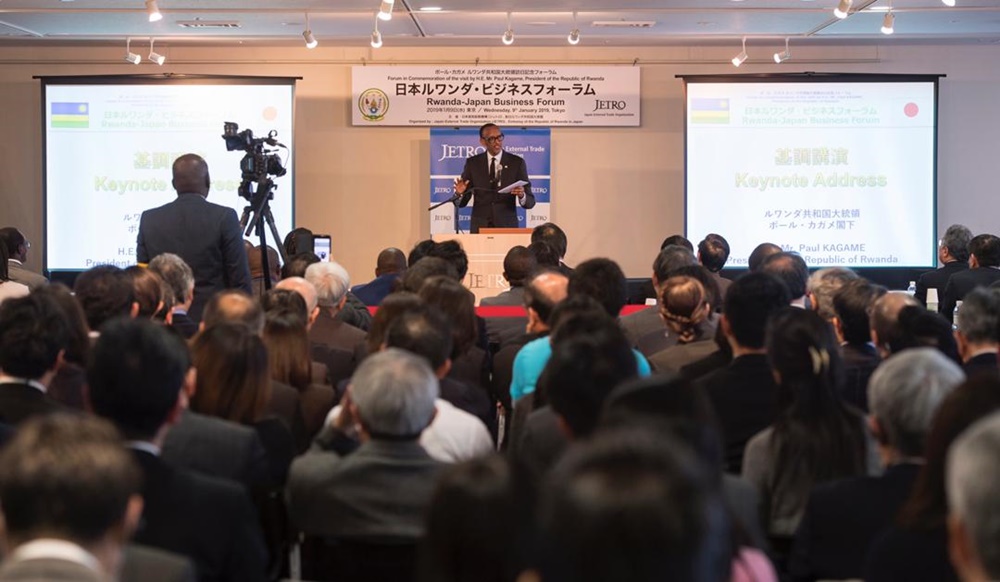
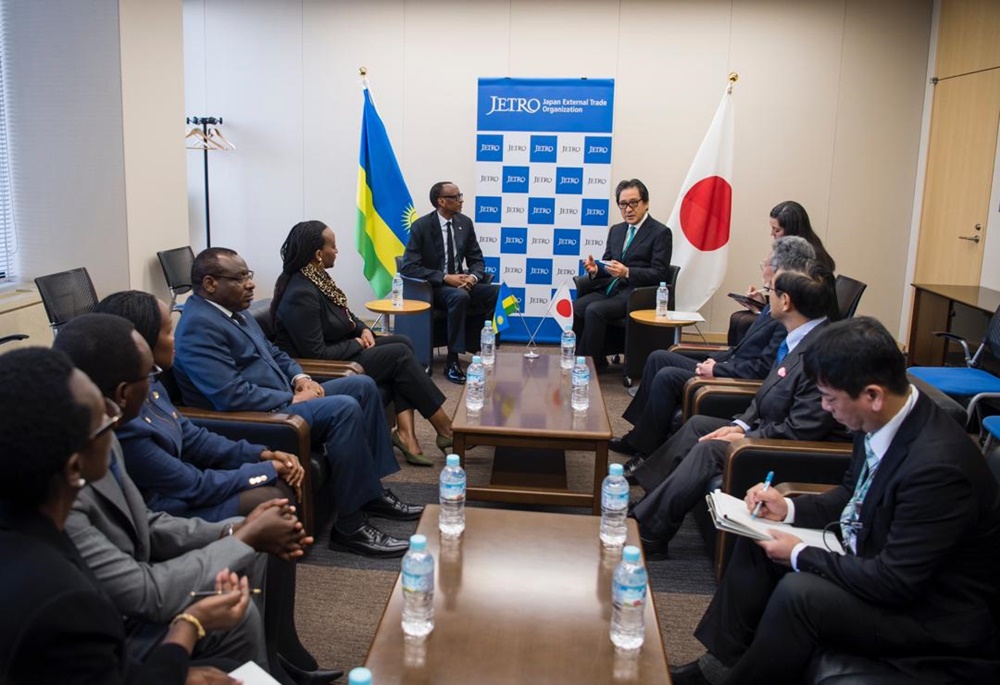
President Kagame was speaking at the Rwanda-Japan Business Forum organized by the Japan External Trade Organization (JETRO), on the second day of his official visit in Japan.
“Africa’s middle class is increasing year in, year out; there is increasing urbanization in Africa moving faster than probably other continents. Africa has different kinds of resources starting with our own people and the natural resources that we have,” President Kagame said.
He noted that between the natural resources and the people, the innovation and technology, there was no problem that was not going to be addressed to provide the continent with the solutions it wants. “Africa and Rwanda have simply no other choice but to keep adding value to what we are doing.”
President Kagame also welcomed and encouraged Japans to do more business in and with Rwanda.
“We are trying to catch up, and we are being helped to by these developed countries and people with whom we work. Doing business, the kind of different investments that we have to make together are very critical,” Kagame noted
Last Year, Rwanda Development Board chief executive Clare Akamanzi said the number of Japanese investments in Rwanda has gone up from three to 19 in the last five years, with the portfolio expected to grow further.
“However this doesn’t mean that everything is where we want it to be. We have to do more every time and that’s why when people kept saying that we have to listen, to pay attention to businesses from Japan, I completely agree with them,” he added.
President Kagame said Rwanda cannot be complacent that has done enough despite the glowing results from studies, experience and data show that tremendous progress is being made.
“That’s a good story but it always tells us that we have to do more.”
“I want to assure you that the Government of Rwanda will continue to do our best, to provide a conducive and supportive environment for successful ventures.” President Kagame guaranteed.
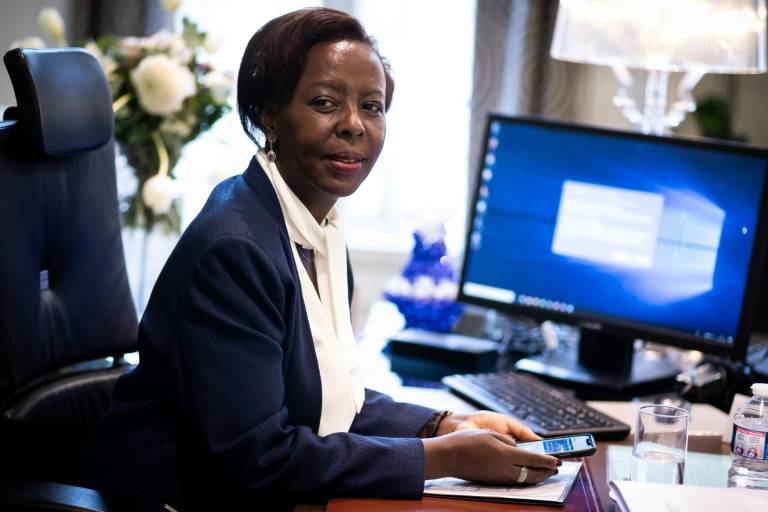
In an interview with Boursorama, a leading source of financial and economic information in France, Mushikiwabo re-iterated her future goals for La Francophonie, where she said that she would like to see French as the language of the Internet.
{{Extracts of the Interview
}}
{{Q:}} Your election as Secretary General marks the coming of an African leader, after Canada’s Michaëlle Jean, at the head of the La Francophonie (OIF). Is it unavoidable when we know that Africa holds 80% of the growth in the number of Francophones in the world?
{{A:}} Africa is a driving force of La Francophonie. It is a natural even normal that Africa is at the head of La Francophonie. That said, I am also aware that La Francophonie goes far beyond Africa. As the Secretary-General, I will do my best to make everyone feels at home in our organization.
{{Q: }} Your candidacy was strongly supported by France while you are very close to Rwandan President Paul Kagame. At the head of La Francophonie, how will you guarantee your independence?
{{A:}} I am also a professional. I work for La Francophonie. I represent La Francophonie. I will put all my energy into this organization. From now on, I am no longer the Rwandan Minister of Foreign Affairs. Any action, any decision, any activity of La Francophonie, I will execute as the secretary general of La Francophonie.
{{Q: }} Rwanda has replaced French with English as a compulsory language at school. Is this compatible with the direction of La Francophonie?
{{A: }} Rwanda is a French-speaking country. It is also an English speaking country. It is also a Swahili-speaking country and first and foremost, we speak Kinyarwanda, our national language. We are a multilingual country and I think that the fact that the Rwandan president does not really speak French – he begins to speak French, very happily – is confused with the importance of the French language in the country. French is the foreign language most spoken by Rwandans and the importance of the French language will grow. In Rwanda, we believe very much that this coexistence of languages does not necessarily cause problems.
{{Q:}} This is what French President Emmanuel Macron defends: the defense of French in a Plurilingualism framework. Is this the future of La Francophonie?
{{A:}} The French language has no complex compared to English. But the world today is such that it is beneficial for the French to speak other languages. We go much further with several languages. We are more fortunate in employment and training with more languages. I really do not mind.
{{Q:}} What are your goals as the head of La Francophonie?
{{A:}} I would very much like to see the French language as the language of the internet. With the proportions of young people in the French-speaking world, it’s very feasible. But there is still work to be done, I do not delude myself. Digitalism can be used as an asset for employment issues. When we go through the francophone area, we hear, “La Francophonie, what is it for me?” These are legitimate questions. All that is digital concerns the youth, so I think we can combine very well the digital aspect and the interest of the youth.
{{Q: }} Critics point to a “dispersal” of OIF… Is a refocus necessary?
{{A: }} There is indeed a debate that’s needed. Criticism is legitimate: we do a lot of small things and we should refocus, bring several activities together under clear themes, well defined: the economy, the influence of language.
{{Q: }} The OIF now has 88 members, including some countries that have a distant relationship with French. Should the membership criteria be reviewed?
{{A:}} Why not? I find that the fact that many countries which have very little to do with the French language wanting to become members of La Francophonie, a sign of attractiveness, which is a very good thing. Only, I think we must also be observant of our space, our activities, and our values. We can create a system of members who have a status more or less different from the full members. But it is up to the member states to decide.
This development follows an aviation agreement signed on Monday between Transportation and Intelligence Minister Israel Katz and Rwandan Ambassador Joseph Rutabana.
“The open sky agreement has led to a significant increase in flights to and from Israel,” Katz said, according to a religious news source Srugim. “The agreement opens Israel to hundreds of airports around the world,” and at the cheapest prices, Katz added.
The agreement outlined that each country can operate up to seven scheduled flights between Ben Gurion Airport and the capital of Rwanda, Kigali.
Rwanda and Israel established diplomatic relations soon after the former Belgian colony gained independence in July 1962, but those ties were severed later in 1973 after the Yom Kippur War when most African states – under Arab pressure – broke relations with Israel. With the reestablishment of ties in October 1994, Rwanda sent an ambassador to Israel but had to close the embassy because of budgetary constraints some six years later.
The embassy was reopened with Rutabana’s appointment as ambassador in the summer of 2015. Israel is represented in Rwanda by a nonresident ambassador operating out of Addis Ababa, the capital of Ethiopia.
The model was reportedly stabbed to death by a 23-year-old house-boy, named Antoine Niyireba. Social media was awash with news of her tragic death yesterday, around 9pm and later confirmed by Rwanda Investigation Bureau spokesperson Modeste Mbabazi.
Born in Kenya, the deceased was the general manager of popular fitness centre in Kigali, WakaFitness. She was set to walk down the aisle next month, as her wedding invitations indicated.
The alleged killer’s whereabouts are still unknown.
As it can be seen on her twitter wall, Alexia had been working with several institutions including RwandAir.
In different interviews she once gave, she described herself as one who liked naturalism and who did not favor make-up. Her favourite star was Ne-Yo. She preferred romantic movies to action-packed ones. All in all, Mupende was a simple human who loved God and aspired to ‘be closer to him’. Her tragic death leaves a lasting mark on many.
Uwera studied at Namasagali College and St Lawrence in Uganda and later moved to Rwanda where she took up a course in Business Information and Technology.
Of the total investments registered in 2018, an estimated 26% represents export oriented projects. Across sectors, manufacturing, mining, agriculture and agro-processing accounted for 57% of investments registered. Other sectors that attracted significant investments were tourism, healthcare, business services and ICT.
The largest share of the 2018 investment registrations or 49%, was posted by domestic investors, while Foreign Direct Investment registrations represented 47% of the total. Joint ventures (local and foreign investors) represented the balance of approximately 4% of all investments registered during the year. In comparison, in 2017, domestic investment registrations accounted for 28% of the total, while foreign investment registrations represented 62% and joint ventures the remaining 10%.
Some of the largest investors during 2018, who registered expected investments over US$ 70 million, included: Emerald Park ltd; Millennial Construction Ltd; Rwanda Innovation Fund; Jali Transport; and Mara Phones.
Other notable investment projects registered during the year included: Andela Software Development’s Rwanda based Pan African Hub; a first Coltan/Tantalum refinery by PRG from Macedonia; new local production of a global beer brand – Heineken in Rwanda by Bralirwa; a large scale fertilizer blending plant in Rwanda by OCP from Morocco; a steel rolling mill by MasterSteel from Rwanda; a mosquito bed nets production plant by Vision Garments from Rwanda; a steel manufacturing plant by AARSAL STEEL from India; a mineral smelting company by Luna Smelter of Rwanda; hospitality development around Lake Kivu by GEMS of Rubavu; and mobility solutions development by Volkswagen.
Project registration values reflect each investor’s projected five (5) year estimation of operating and capital investments to be made, regardless of whether financed by equity or debt. Historically, registered projects typically take 3 years on average to become fully operational.
Commenting on the investments registered in 2018, RDB Chief Investment Officer, Guy Baron said that “In the last 8 years, registered investments in Rwanda jumped from US$ 398 million in 2010 to slightly over US$ 2 billion in 2018. Last year, we passed the US$ 2 billion milestone, for the first time in the country’s history. This is evidence that Rwanda is being seen increasingly as a great place to do business, innovate and establish a hub from which to access the continent’s tremendous opportunities. The increased investments registered are a direct result of the initiatives that the Government of Rwanda, through RDB, has put in place to continuously make Rwanda an attractive destination for investment. In fact, this year, Rwanda was proudly ranked the 29th easiest place to do business in the world and the 2nd easiest place to do business in Africa.”
In terms of investor facilitation, RDB operates a One Stop Centre for investors. The Centre provides information and services to guide investors through the key steps of starting a business such as registration, licenses, immigration, land, utilities, environmental clearances as well as tax and mortgage registration services.
In addition, RDB offers all investors Aftercare Services, which provide assistance in ensuring that business projects are implemented free of avoidable impediments. Via these services, RDB helps investors to resolve simple and complex challenges they may encounter along the way and provides any guidance required. RDB has also introduced investor engagement platforms such as the quarterly ‘CEO Forum’ where RDB senior management meets and engages with business leaders. Another important platform, ‘Investor Open Day’, aimed at resolving issues faced by investors, is offered every Friday and open to walk-ins. During 2018, 163 of 209 or 78% of investor issues recorded by Aftercare Services were expediently resolved.
The promotion is valid on all Qatar Airways flights booked from 7 – 16 January 2019 for travel between 7 January and 20 May 2019. Passengers who book during the promotion period can take advantage of 20 per cent discount on fares and will also receive 50 per cent bonus Qmiles and Qpoints in Economy Class and double Qmiles and Qpoints in Business.
Qatar Airways Chief Commercial Officer, Mr. Ehab Amin, said: “We are delighted to invite all our passengers to start planning their next trip with this exciting global promotion offering extensive discounts across all cabin classes on all flights. No matter where passengers choose to travel, when they experience a new destination first-hand, they become the author of their own unique story. With this new promotion, passengers can easily choose their next adventure and are truly spoilt for choice with Qatar Airways’ ever-expanding global network of more than 160 destinations.
“We are also committed to bringing people from around the world to Doha, not only to experience our five-star gateway Hamad International Airport during transit, but also to make Qatar a holiday destination of choice for our passengers.”
To take advantage of this offer, passengers can visit [www.qatarairways.com/en- rw/homepage.html->www.qatarairways.com/en- rw/homepage.html] or any Qatar Airways sales office, or contact their nearest travel agent.
Qatar Airways has a modern fleet of more than 200 aircraft flying to business and leisure destinations across six continents. The airline recently launched direct services to Gothenburg, Sweden; Mombasa, Kenya; and Da Nang, Vietnam. It has a host of new destination launches planned for 2019, including Valletta, Malta and Isfahan, Iran, to name just a few.
Qatar Airways Cargo, one of the world’s leading international air cargo carriers, serves more than 60 freighter destinations worldwide via its world-class Doha hub and also delivers freight to more than 160 key business and leisure destinations globally on more than 200 aircraft. The Qatar Airways Cargo fleet includes two Boeing 747-8 freighters, 15 Boeing 777 freighters and eight Airbus A330 freighters.