The remains have been found as Water and Sanitation Corporation (WASAC) employees dug a waterway to provide safe water to residents from Plage and Kavura villages.
Ildephonse Munyarukundo who was digging the water channel has told IGIHE that the remains have been found in few centimeters that they immediately alerted officials.
The Executive Secretary of Kigabiro sector, Egide Hanyurwimfura has told IGIHE that they will identify relatives of those victims before according them a decent burial.
“They were digging a waterway when they found the remains. We worked together to exhume them. We are going to identify if there are close relatives before burying the victims decently,” he revealed.
According to neighboring residents, there was a roadblock set up by Interahamwe to kill Tutsi during the 1994 Genocide against the Tutsi in the area where the remains have been exhumed.
Pink Mango C&D is expected to provide 7,500 jobs to Rwandans by the fifth year and cumulative export earnings of US$ 20 million over the next five years.
Pink Mango C&D is also expected to build capacity and encourage skills transfer to 500 workers of local garment cooperatives who will also benefit from some of their supply contracts through an outsourcing model.
Speaking after the signing, RDB Deputy Chief Executive Officer and Chief Operating Officer, Emmanuel Hategeka said: “The investment of Pink Mango C&D will upskill Rwandans giving them access to productive jobs and hence ensuring a better standard of living. Secondly, the investment will not only enable us to increase our exports but also reduce imports of clothing.”
“We have been using fiscal measures to progressively discourage the importation of second-hand clothes because it was hurting the growth of the domestic textile and garment industry. Therefore, we are attaining a double objective by signing this deal,” added Hategeka.
Pink Mango C&D establishment will support the build-up of a garment industry ecosystem attracting other players in dyeing, knitting, and weaving as well as accessories suppliers to open up shop in Rwanda.
Hategeka noted that the move is an exciting addition to this growing industry.
Gordon Gu, the Director of Pink Mango C&D Garments said: “I am very appreciative of RDB’s investor facilitation and the vision to develop the country and we want to be a part of it. We are glad this business makes economic sense for the country and we will ensure that Rwandans work in good conditions.”
Ms. Maryse Gallagher, a business partner with Mr. Gordon Gu in Pink Mango C&D on her part said, “This is an exciting day to see the conclusion of this investment deal in Rwanda and I thank the Government for the enabling environment and incentives that will make our products competitive in the global market.”
Witt-Gruppe part of the Otto Group, a leading specialist chain in fashion and garments retail trade in Europe, will source products from the new factory.
Speaking at the signing ceremony, Jacques Bathiat, the Witt-Gruppe Commercial and Operations Director said: “One of the main concerns of our group is the conditions in which the products are manufactured, which includes the treatment of workers. I am very impressed with the way Pink Mango C&D treat their workers and how they are going to operate here.”
Pink Mango C&D enters Rwanda’s market shortly after the signing of cooperation agreements by another Chinese firm ‘Jiangyin BaoRui Textile’ with Apparel Manufacturing Group (AMG) running operations in Rwanda.
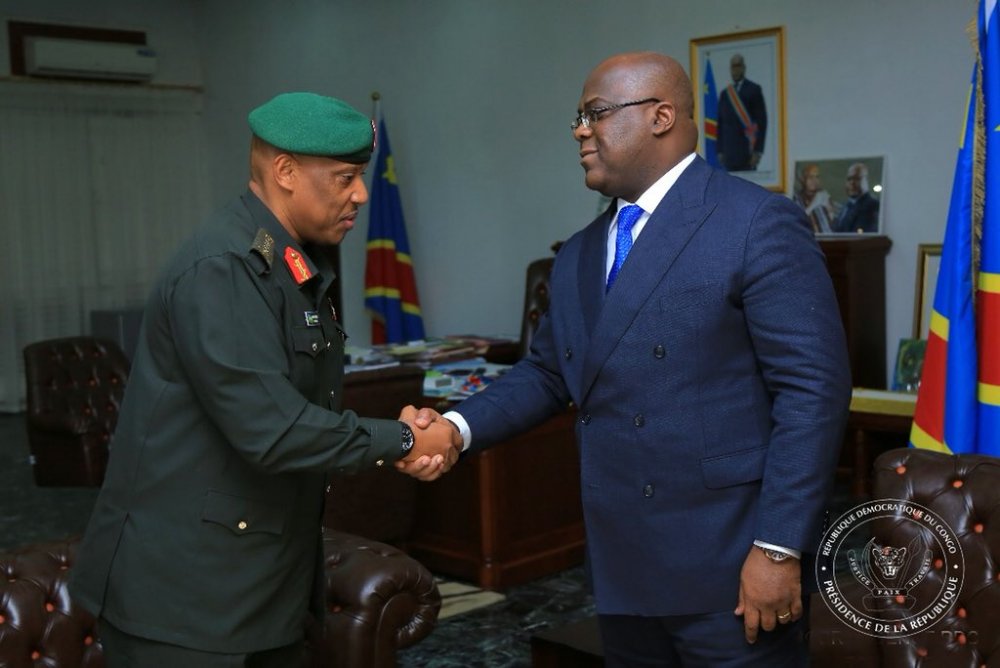
After holding talks, Gen Nyamvumba said the visit was meant to hail Tshisekedi for his willingness to promote DRC-Rwanda military cooperation and delivering greetings from his counterpart President Paul Kagame.
“We have come to honor Félix Tshisekedi, laud his willingness to promote military cooperation and convey greetings from the President of the Republic of Rwanda,” he said.
DRC Defense Chief of Staff, Lieutenant General Célestin Mbala Munsense said both countries have to strengthen cooperation to maintain peace.
“We are neighbors and need to improve both countries’ military cooperation to jointly uphold security. We assure citizens of preserving peace to realize development in the region,” he revealed.
Rwanda and RDC enjoy good relations. Towards the end of last year, DRC soldiers (FARDC) arrested FDLR spokesperson, Laforge Bazeye Fils and Lt Col Theophile alias Abega the chief spy in FDLR at Bunagana border as they returned from Uganda.
They were all deported to Rwanda where they are tried on committing crimes related to terrorism.
Residents learned about her death today morning. She was living with two nieces.
Witnesses say that the body of Nyirabarigira had wounds in the head.
The Executive Secretary of Nyamata sector, Innocent Mushenyi has told IGIHE that they have learned about the tragedy and investigations have got underway.
Bugesera district vice mayor for social affairs, Yvette Imanishimwe has told IGIHE that two people are suspected to have committed the crime.
“It is true that a woman who lived with two nieces has been killed. Two men suspected to have killed her have been arrested and being held at Rwanda Investigation Bureau station in Nyamata,” he said.
He also urged them to improve their operations promising them government support where necessary.
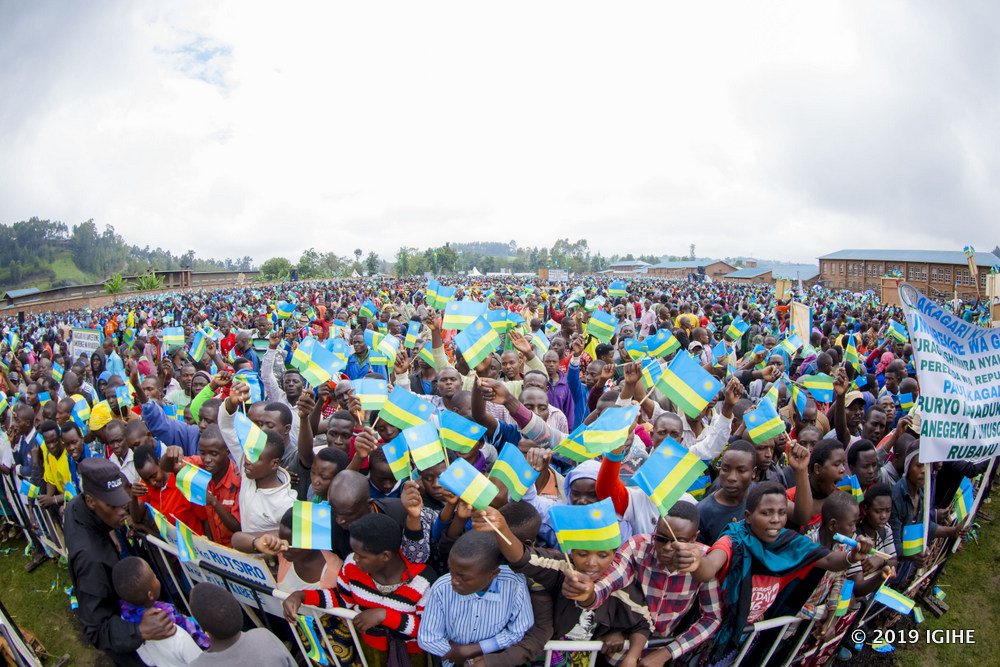
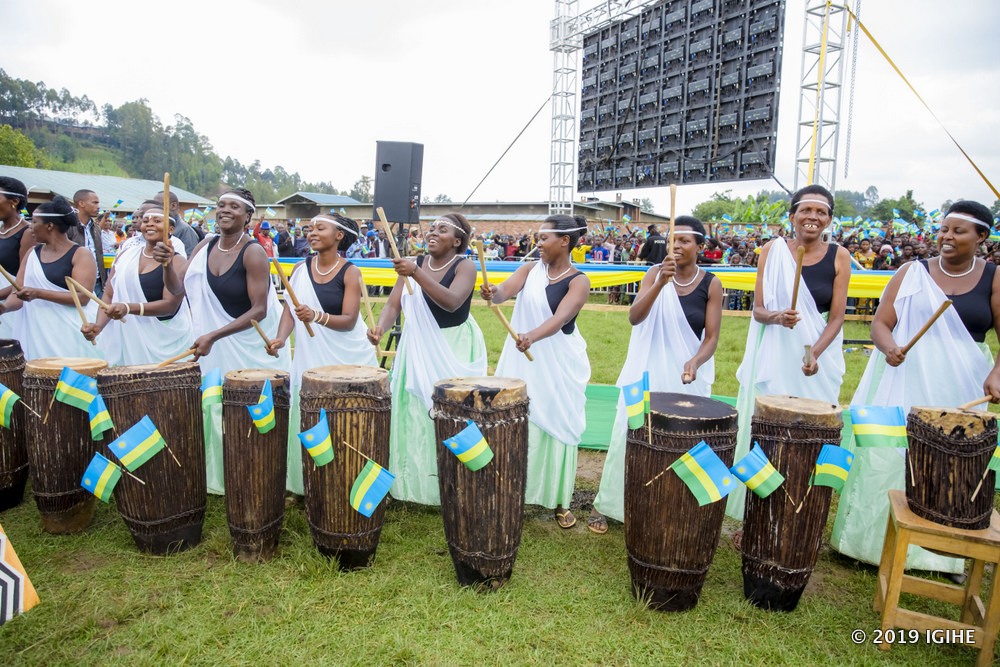
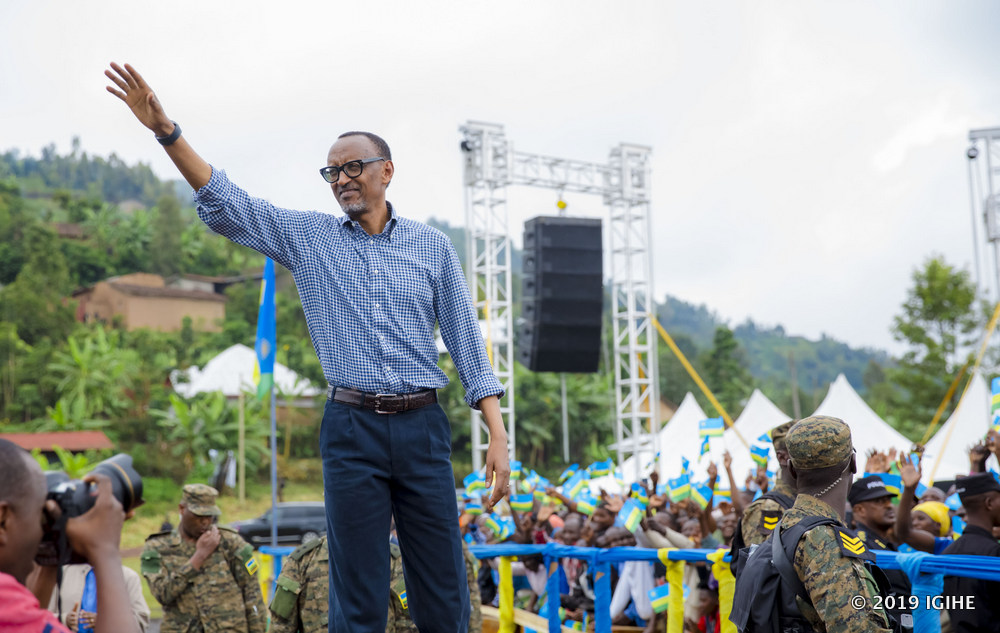
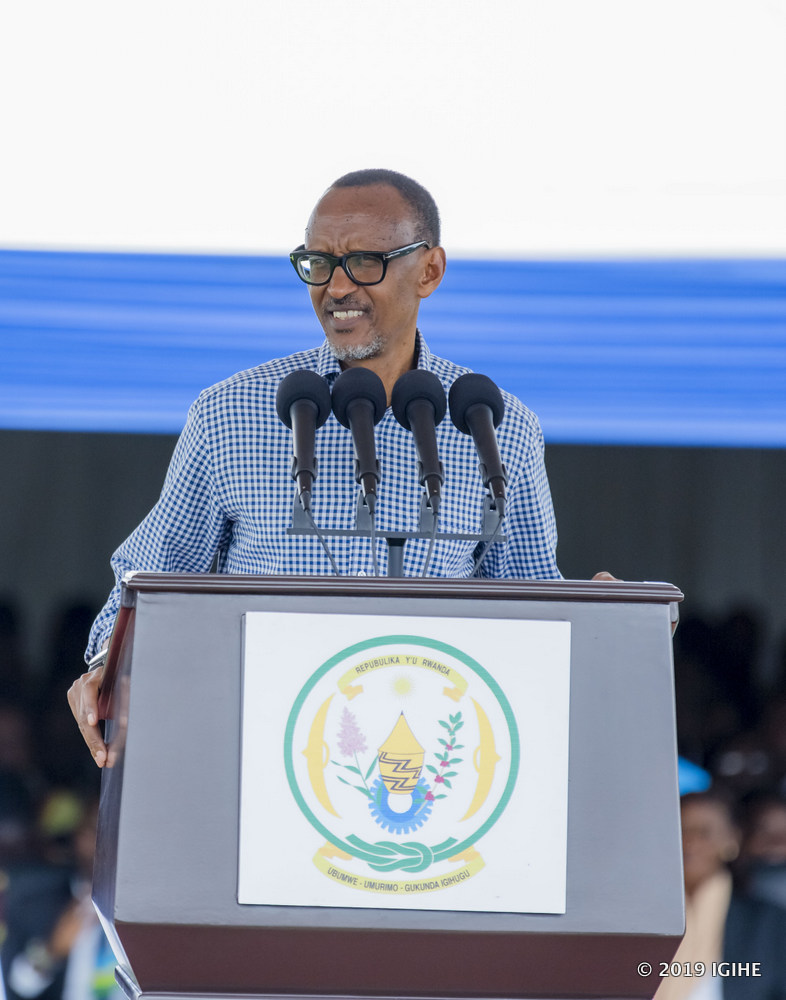
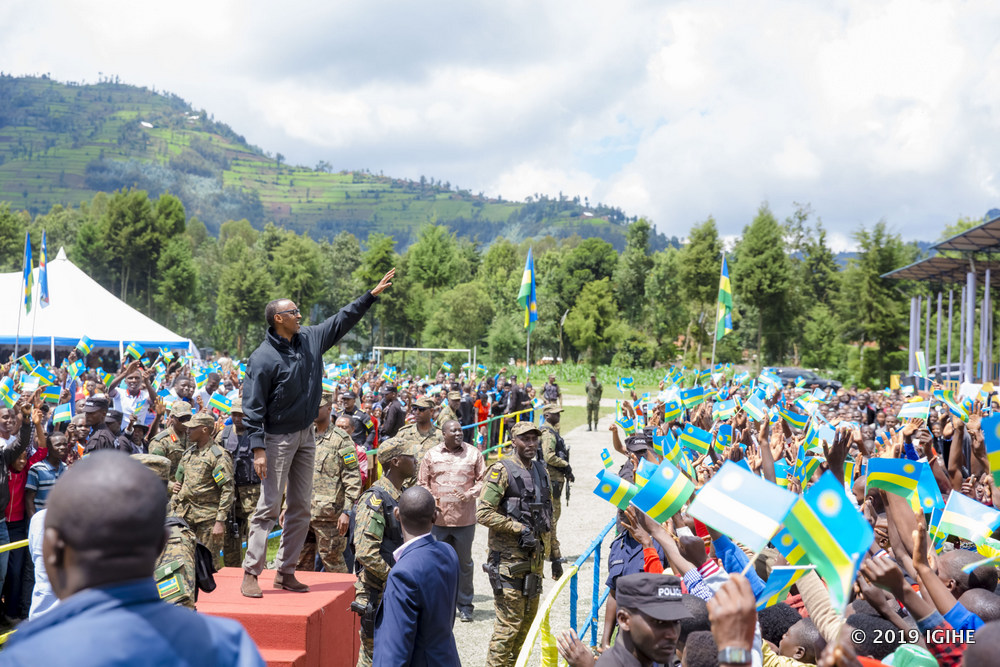
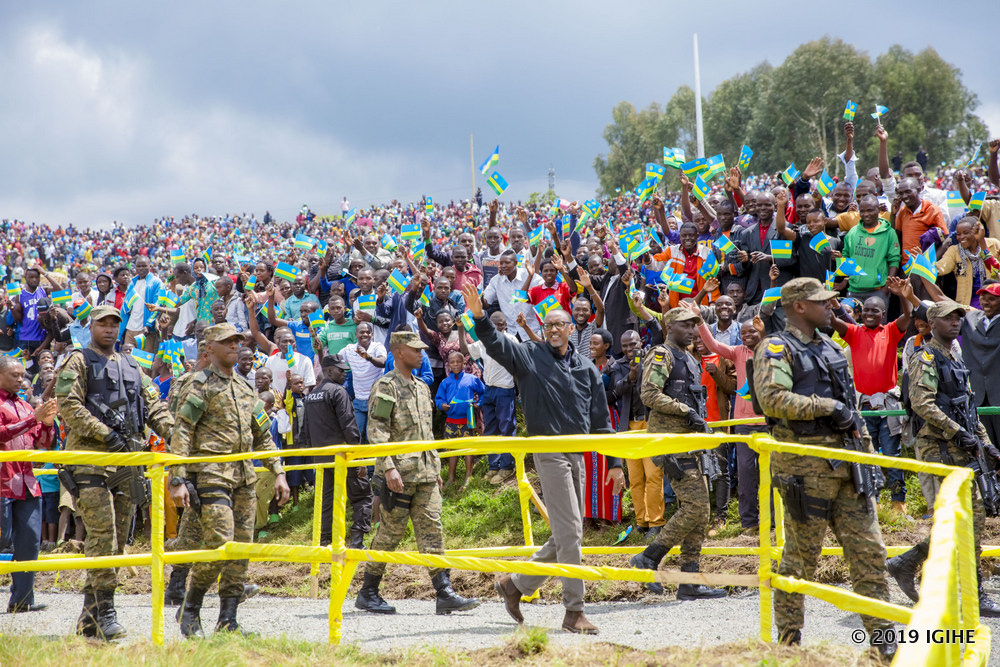
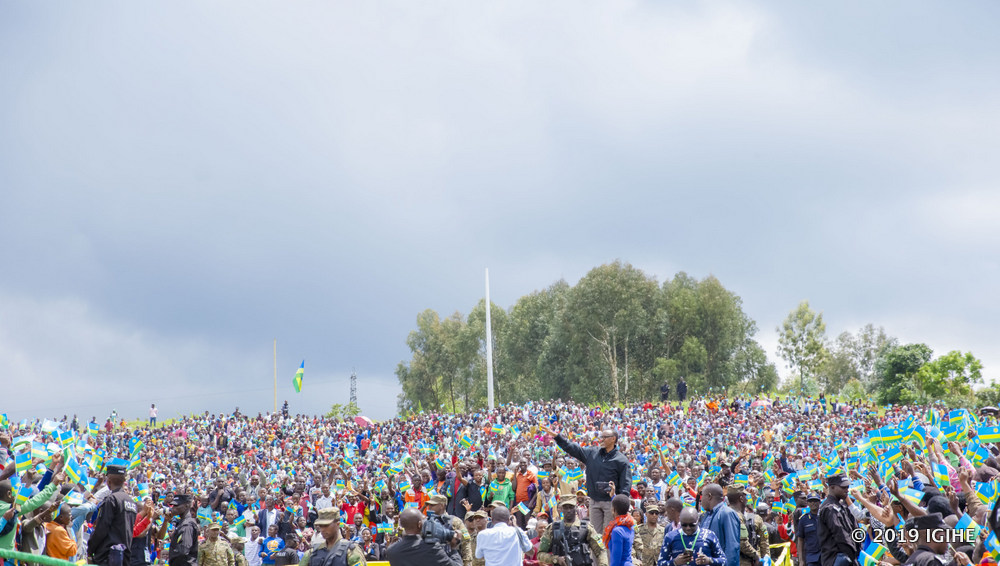
Kagame made the request today as he met residents of Rubavu and Rutsiro districts, Western Province that convened at the football playground in Nyundo sector on the third day of the citizen outreach program.
He was last in Rubavu during presidential campaigns in 2017. President Kagame told residents that they did what he wanted that they deserve what they want in return.
“You wanted security and development. We must provide them, by all means, rooting on collaboration with citizens and all leaders understanding that it is their duty to serve citizens,” he said.
President Kagame explained that both Rwanda and DRC can work together to make good use of available opportunities to further progress as long as they enjoy good relations.
“Starting with opportunities of having neighbors, there is Goma town; there are other parts of that country and many people. When there is a presence of a large number of people, it is a market, you are also a market,” he addressed the crowd that welcomed him.
“If there is cooperation, interchange of what is not available on one side and free movements of people, they gain improved benefits. But no one goes to neighbors without fixing own issues. That means it is our market in Rubavu and other neighboring areas after working and finding a market inside. In that case, we have the foundation to work with others,” added Kagame.
He explained that the government intervenes through ensuring security, good relationships between countries and easing free movement.
Kagame highlighted that such area remains a priority and is the reason why Rwanda exempted visa for Africans to facilitate people coming to Rwanda.
He reminded leaders to solve existing problems. He pointed out on the issue of roads needed to be constructed, health centers and the problem of the telephone network in some areas of Rubavu.
Kagame said he is going to follow up the network problem to be fixed.
He told residents that the Government shall keep making security a priority because it is the enabler of other development activities.
“Whoever wants to destabilize our security must think twice before,” he said.
The mayor of Rubavu district, Gilbert Habyarimana said president Kagame’s visit was a blessing to Rubavu residents, explaining that the district is committed to becoming a hub for trade and tourism by 2024 highlighting that “Medical services have expanded with health centers in all sectors. The district has hotels and other facilities that can accommodate 3000 guests in one night while private investments continue to grow among others.”
The Minister of Local Government (MINALOC), Prof Shyaka Anastase said Rubavu residents love President Kagame because he fulfills his promises that development activities continue to expand.
He explained that the budget allocated for development projects in Rubavu district has doubled to Rwf 9.5 billion up from Rwf 4 billion of the previous four years.
This was said by Brigit Helms, the Vice President of Technical Services at DAI, a global consultancy firm that supports development programs in more than 150 countries, at the launch of her book “Access for All” in Kigali on Thursday.
The American author, who has more than 30 years of experience in finding innovative private sector solutions to development problems in over 35 developing countries in Africa, Asia and Latin America, said that Rwanda has proved that through good leadership, it is possible to include people at the bottom of the pyramid in the development process without leaving anybody behind.
“Rwanda has proved to us that there is enormous potential and that a lot can be achieved when there is good leadership doing all the right things,”
“The country is safe and it has improved on many indicators such as doing business, attracting investment and ensuring access to basic services for all. I can say that every time you look at what Rwanda is doing, you get a feeling that the Government of Rwanda has really been doing a lot,” Helms said.
Helms, considered a global authority in the fields of financial inclusion, development finance, and economic growth, said that over the years, Rwanda has shown that countries on the development path can make things happen through efficiency, proper allocation of resources and formulating appropriate policies that do not exclude people in the lowest levels of poverty.
“I think Rwanda is the only country that has more than five pages in my book because of the many examples that I picked from Rwanda which other developing countries could learn from,” Helms said.
In the 353-page book which focuses on how developing countries can build inclusive economic systems together with development partners, Helms highlighted the example of Rwanda which she said has taken a comprehensive approach to policy reform and formulation.
“Implementing policies that leveled the playing field, shrewdly tilting the playing field in the desired direction, and even occasionally taking control of key economic functions allowed Rwanda to jump more than 100 places in the World Bank’s Doing Business rankings between 2008 and 2015,” an excerpt from Helms book reads.
In the book, the Author also highlights a number of initiatives and national priorities started by the Government of Rwanda including Vision 2020 among others, which have seen the country triple Gross Domestic Product (GDP) from $216 per person in 2000 to $703 in 2016, as well as reforms that tremendously improved doing business.
The book also touches on a number of pro-financial inclusion policies and e-government services which have ensured that people equitably have access to services.
With a high percentage of the people with Identity Cards (87 percent) being able to open accounts or register sim cards to use for mobile money transactions, Rwanda has been able to achieve financial inclusion at the level of 89 percent since 2016. The growth is attributed to mobile money transactions.
The author also mentions Rwanda as the first country to adopt performance standards for drones in 2018 which saw the Rwandan government collaborate with a Silicon Valley startup Zipline to start delivering blood to patients in far-flung parts of the country.
In the book, which was officially launched in the US at the end of 2018, Helms argues that there is a wave of companies and people interested in doing social good through business including millennials coming up with startups, institutional investors, corporates, and donors, which provides a major opportunity to alleviate poverty around the world.
However, these funds need to be targeted in the correct way in order to have a real impact on people at the bottom of the pyramid – creating financial inclusion and ‘access for all.’
The author further argues that there are two key ways out of poverty, which are access to services and jobs.
During the launch in Kigali, Helms discussed in depth the content of the book and solutions it recommends that can lead to inclusive economic growth so that fewer and fewer people are left behind as economies develop and expand.
Panelists at the launch discussed how developing countries can leverage technology to create more jobs, particularly what is being done in Rwanda, as well as the challenges brought about by technological disruption.
Among the speakers on the topic “Access for All in a Digital Economy: The role of digital access in fostering inclusive & sustainable economic growth” was Henri Nyakarundi, the CEO of ARED Rwanda, a solar solutions company, Sangwa Rwabuhihi, the General Manager of Westerwelle Startup Haus Kigali, a Kigali-based startup house and Prof. Alfred Bizoza of University of Rwanda.
Others included George Rubagumya, the Country Director of Liason and Leonard Rugwabiza, the Economic Advisor at the Ministry of Finance and Economic Planning (MINECOFIN), who also highlighted the progress Rwanda has made in creating jobs as well as challenges and opportunities.
The book was published in partnership with DAI, which works on the frontlines of global development, transforming ideas into action and action into impact.
Mukashyaka was arrested on Wednesday at Gisenyi Rwanda Investigation Bureau (RIB), station.
The spokesperson of RIB, Modeste Mbabazi has said that investigation is underway to summon more workers involved in the misallocation of the funds.
“She is detained over Rwf 192 missing in Rugerero Sacco branch. An investigation is on course to hold accountable more conspirators,” he said.
IGIHE has learned that Mukashyaka concealed theft committed by workers she supervised providing a false report to the National Bank of Rwanda.
In January 2019, residents went to withdraw their money from Sacco Rugerero and found no money on their accounts.
A cashier, Didier Mutuyeyezu, was immediately arrested and is currently detained in Gisenyi prison.
Following the issue, the National Bank of Rwanda conducted an audit establishing that Rwf 192 went missing.
When audit reports revealed the misappropriated money, some workers of the SACCO; Patrick Mugabo, Prudencienne Kanyamuneza and Tite Gakuba disappeared.
The president has said this yesterday as he met with Musanze and Nyabihu residents on the second day his citizen outreach program he is holding in Northern and Western Province.
President Kagame highlighted security is paramount especially in Musanze district receiving a large number of tourists visiting Virunga National Park which is home to gorillas.
“Tourists cannot go to unsafe places. Our security is where we draw a red line. Whoever crosses this line will face consequences. You should not allow anyone from inside or outside the country to jeopardize our security. That is the red line that must not be crossed for us to work and realize the progress we want,” he said.
President Kagame requested citizens to embrace such mindsets and collaborate with security officials to attain it.
He called on residents to improve cleanliness and address malnutrition noting that: “Solving the issue of cleanliness and malnutrition does not require us to wait for outside help. It is a question of mindset. We will keep working to address the challenges you face and look for the resources required to solve them. What I ask of you is your involvement and to work even harder.”
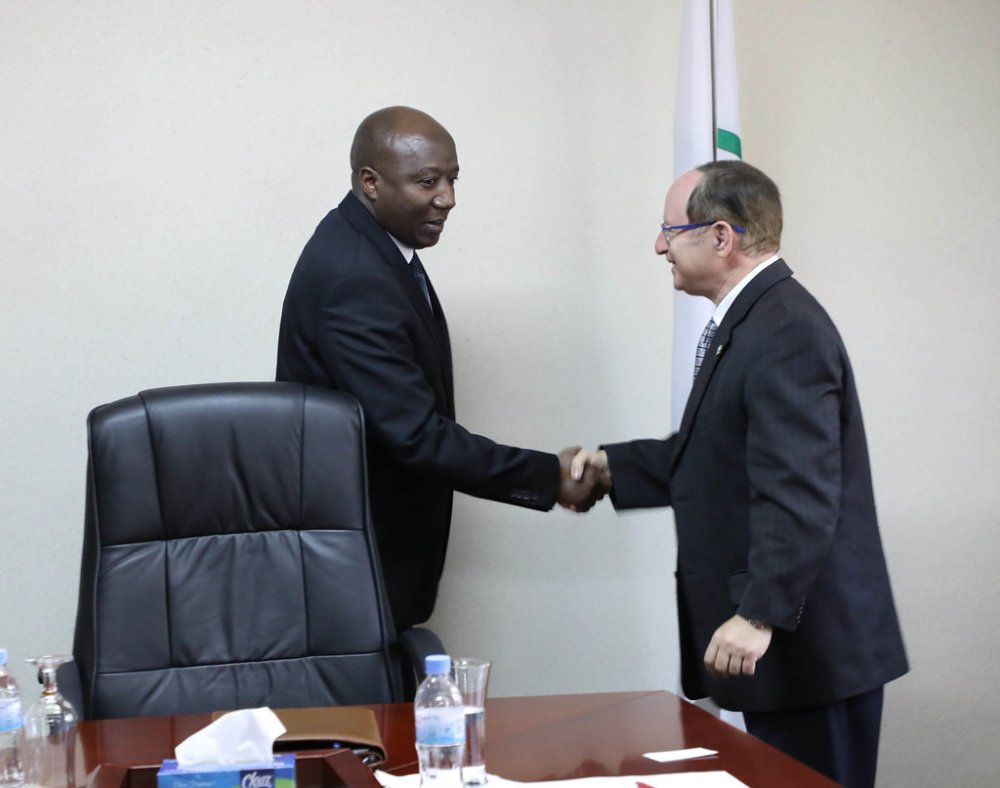
Their discussions focused on strengthening the existing excellent relations between the two countries and enhancing cooperation in different sectors including Agriculture, Trade and Investment, Air Services, Capacity Building, Cybersecurity, and Counter-Terrorism.
Amb Adam appreciated the visionary leadership of Rwanda and mentioned that the Israeli Embassy in Rwanda will help to materialize the investment projects in the pipeline as well as linking more Israeli business operators to investment opportunities in Rwanda.
Prime Minister Ngirente commended the Rwanda- Israel cooperation and reiterated the commitment of the Government of Rwanda to further advance the existing relations between the two countries, pledging full support to any potential investments by Israeli companies in Rwanda.
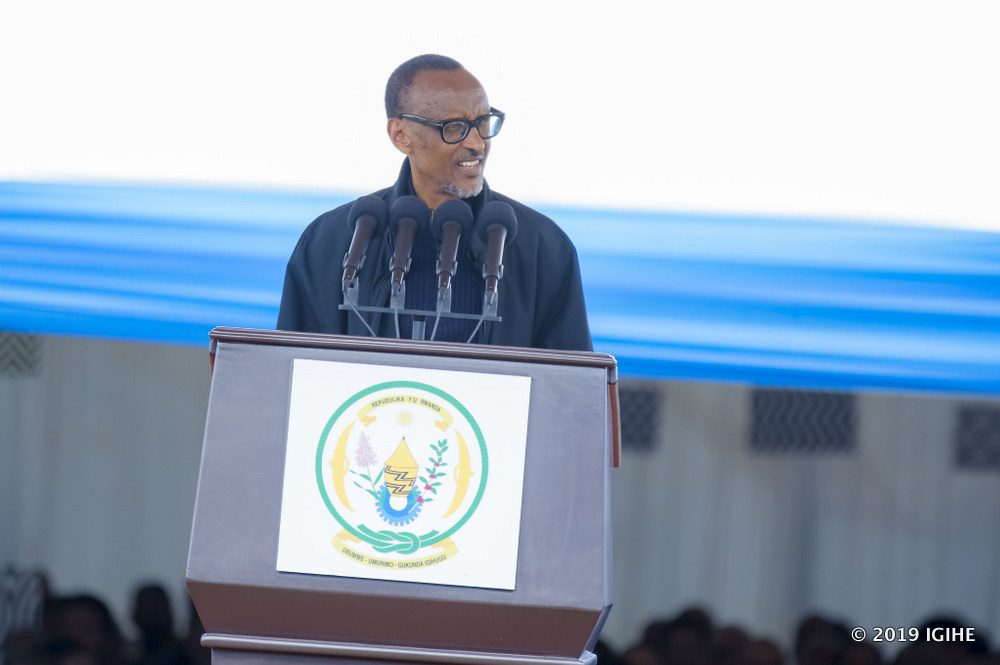
The president made the pledge as he met residents of Musanze and Nyabihu district at the stadium of the University of Rwanda College of Agriculture, Animal Sciences and Veterinary Medicine, (UR-CAVM) in Busogo as part of ongoing citizen outreach program.
“My commitment to you is to hold accountable those who are not delivering. Next time I visit, you can hold me accountable for it,” said Kagame.
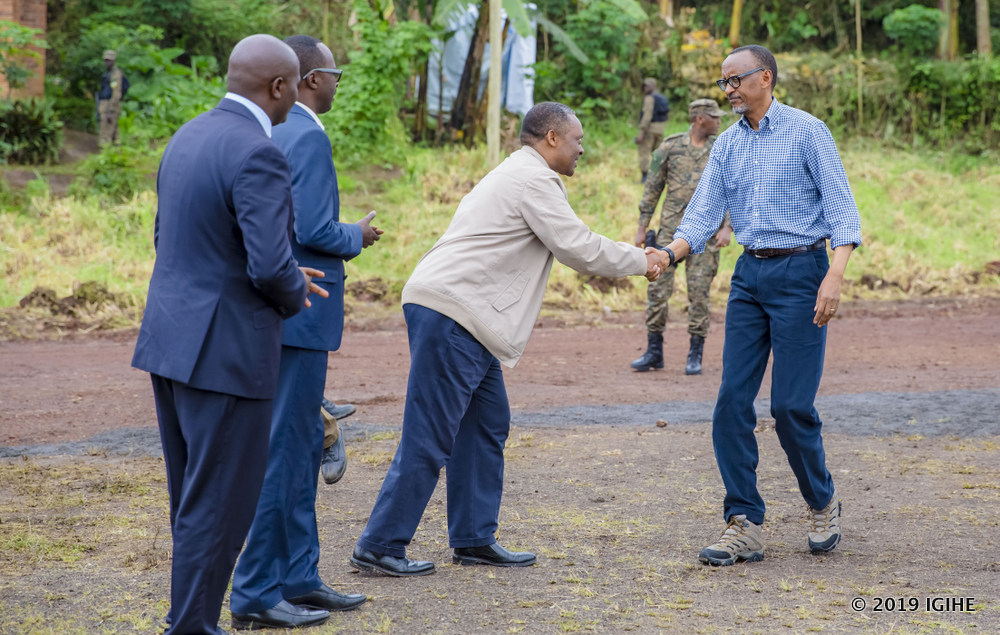
As he arrived at the meeting place, President Kagame held exclusive discussions with leaders before greeting thousands of residents convened in Busoga to welcome him.
He later told them that asbestos roofing sheets covering roofs of UR-CAVM buildings was among issues discussed.
“The first people who are responsible are leaders, it does not absolve citizens from their role in solving their problems but solutions start with leaders. All have been mentioned. Let me start with the issue of the buildings covered with asbestos roofing sheets. We took the decision ten years ago. That is why I summoned leaders to discuss because it is the first thing appearing when you get here,” he said.
Kagame highlighted that reasons for some issues are attributed to the budget problems even those who forgot the situation noting that it is a matter of mindsets.
“The issues we are discussing here are not new and they are not insurmountable. We discuss them, we agree on how they will be solved but when you come back you find the problem has not been solved or has gotten worse.
The issues of hygiene and malnutrition have been also talked about for many years. Solving the issue of cleanliness and malnutrition does not require us to wait for outside help. It is a question of mindset,” he said.
During the interactive session, citizens raised concerns on the poor performance of milk collection centers, problems of seeds shortage, and areas in need of electricity among others.
President Kagame promised a solution but requested them to combine efforts and play an active role in development activities.