On Wednesday, President John Magufuli of Tanzania through his country’s national television noted that the more than 400 kilometers long railroad will facilitate transport not only for Tanzania and Rwanda but also Burundi and the Democratic Republic of Congo.
He further clarified that a study of the project was completed and that both countries are looking for funds for its implementation.
Rwanda and Tanzania will share costs for the construction of the 532 kilometer railway, with Rwanda’s funding starting from Rusumo to Kigali which will also have a short jut to Bugesera International Airport.
In Rwanda, the railroad will be 138 kilometers long while in Tanzania it will be 393 kilometers. It is budgeted to cost 3.6 billion US dollars where Tanzania will incur 2.3 billion US dollars while Rwanda will invest 1.3 million US dollars.
Tanzania will spend 5 million US dollars per kilometer while Rwanda’s cost will be 9 million US dollars per kilometer, the higher cost attribute to the hilly topography.
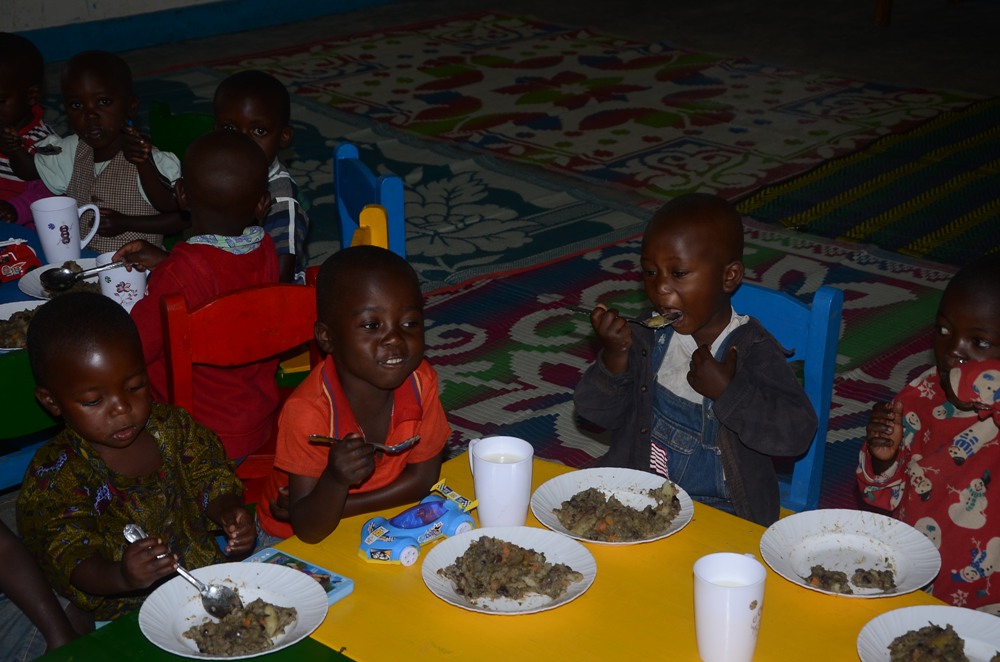
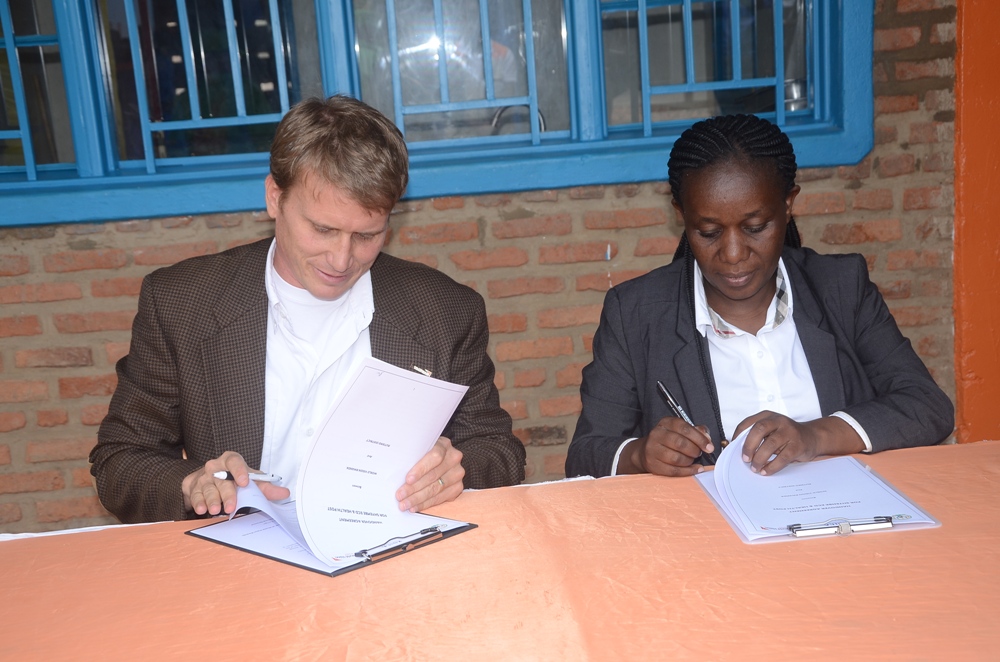
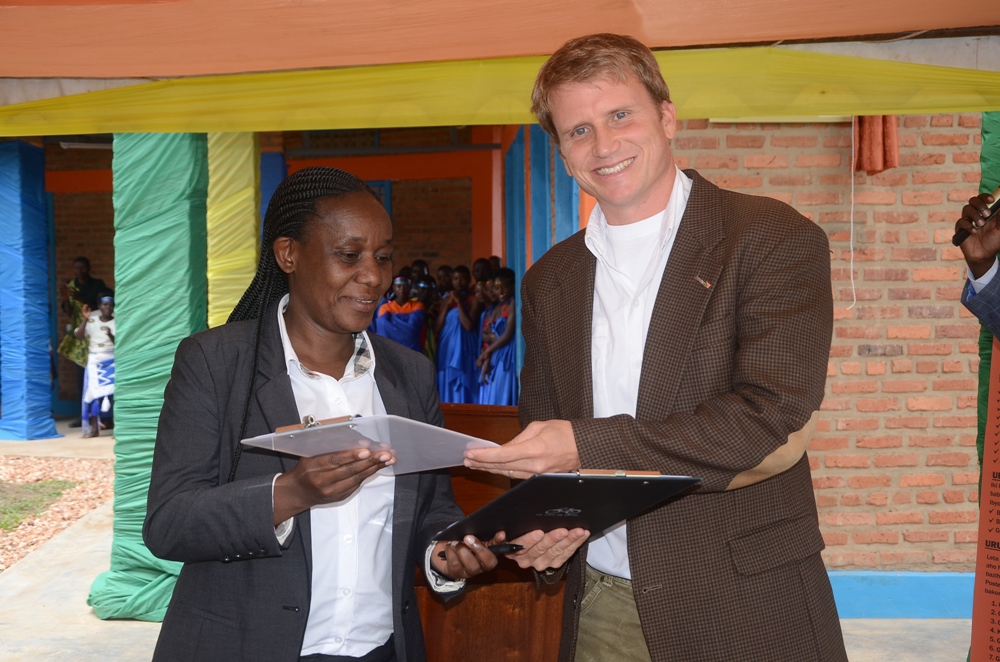
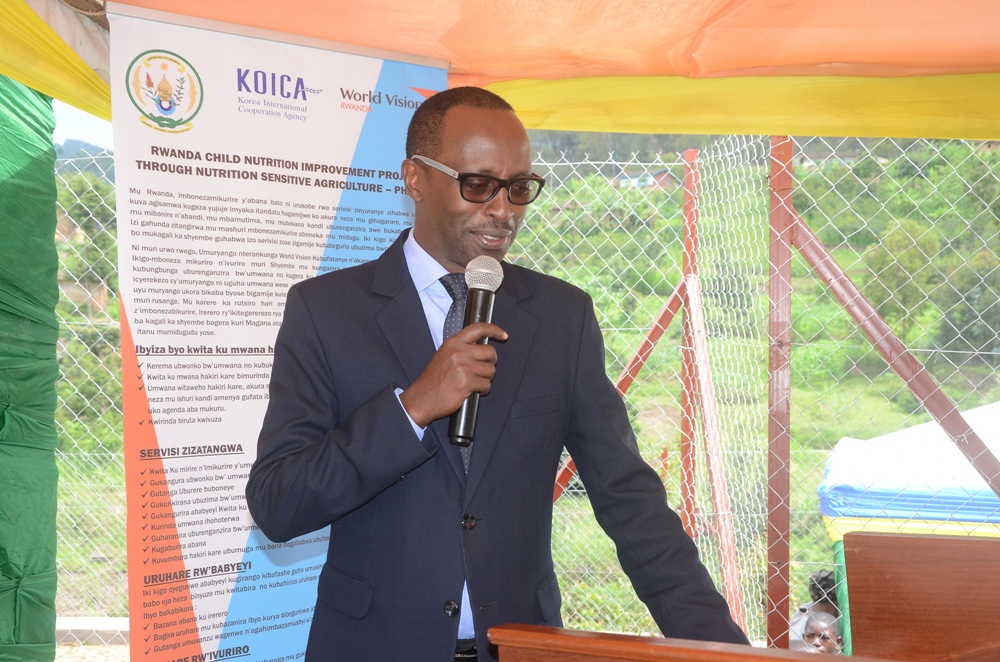
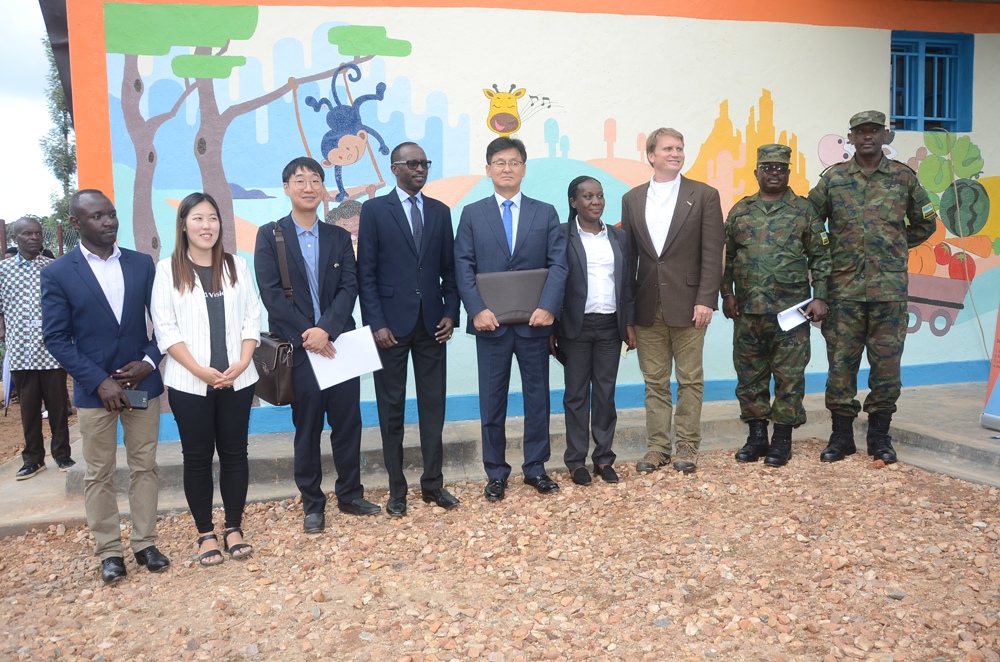
This was announced on Thursday, 28th November at the inauguration of the new Shyembe early child development center in Gihango sector. The center will support 4680 families through improved dietary practices.
This center was built by South Korean investors in partnership with World Vision.
Ndizihiwe Emeline, a resident of Rutsiro District expressed her gratitude saying that this center will help care and supervise children during the day and that it comes as a solution especially for disadvantaged families in Shyembe who had to walk for four hours before to Murunda Hospital whenever their children were sick.
“Our children spent the day wandering in the neighborhood with no supervision at all. This center will care for them and provide them a better diet every day. It also saves us the time we spent walking to Murunda Hospital whenever our children fell sick.”
The Ambassador of South Korea to Rwanda, Kim Eung-Joong says that caring for children is building a strong foundation for the future of the country.
He promised that South Korea will continue to support Rwandans in every way possible.
“The benefits of caring and supervising the growth of children include the certainty of a better future for the country. I am convinced this center will contribute to a healthy community.”
Rutsiro District Mayor, Ayinkamiye Emmerance says that the district is facing a high prevalence of stunting in children and that they aim at uprooting it through early child development centers.
“Our district still has a huge problem of children stunting counting 49% of malnourished children as part of the 38% recorded countrywide. We aim at changing these statistics and plan on establishing early child development centers in every sector as a solution to malnutrition and stunting”
Currently, Rutsiro district counts 10 early child development centers where children stay during the day and where they are educated and offered healthy diets.
There are also 1134-day care centers that also offer early child development services.
The National Early Childhood Development Program (NECDP) predicts that by 2024, every sector in Rwanda will have at least one Early Child Development Center as Rwanda transitions towards malnutrition and stunting-free generation.
Others appointed o ambassadorial posts are Rwamucyo Ernest, the Ambassador of Rwanda to Japan and Mukangira Jacqueline, the Ambassador of Rwanda to the Republic of India.
Lieutenant General Kamanzi was appointed Force Commander of the United Nations Mission in South Sudan on 6 April, 2017 by United Nations Secretary-General António Guterres. In May this year, he bid farewell to the forces he commanded after a two-year term. Before the UNMISS, Lt Gen. Kamanzi was the Force Commander of the United Nations Mission in Darfur (UNAMID) from 2016, and the Commander in Chief of the Field Army from 2012 to 2015.
Lt Gen Frank Mushyo Kamanzi was born on March 31st, 1964 and graduated from Makerere University in Uganda, with a major in Agriculture. He also graduated with a Master’s degree from the National Defense University in Washington, United States.
Rwamucyo who was appointed Ambassador of Rwanda to Japan has previously served as the Ambassador of Rwanda to the Republic of India for six years and eight months starting from April, 2013. He also served as the Ambassador of Rwanda to the United Kingdom from February, 2010 to April, 2013. During this period, he also acted as the representative of Rwanda in Ireland.
Before all that, Rwamucyo worked as an expert at the United Nations Development Programme from April,2007 to January, 2010. He was also in charge of Economic Planning in the Ministry of Finance and Economic Planning (MINECOFIN) from 2004 to April, 2007.
55-year-old Mukangira Jacqueline who was appointed as the Ambassador of Rwanda to India previously served as Rwanda Ambassador to Sweden in 2007. She also worked in the Ministry of Foreign Affairs, a Member of Parliament and a senator 2012 where she chaired the senatorial research committee.
Rwanda maintains a flawless relationship with these countries where for example, it has been partnering with Japan for the last 50 years in areas including education, agriculture, water sanitation and distribution, technology and many other sectors.
The relationship between Rwanda and Japan is mainly founded on the economy, commerce, loans and grants and technology trainings frequently offered in Japan.
On the other hand, Rwanda’s relationship with Russia has been ongoing for 56 years based on a letter sent by Soviet Union (URSS) in 1962 commending the diplomatic relationship between these two countries just a day before the independence of Rwanda.
The Russian Federation collaborates with Rwanda in areas such as education, military operations, technology, investment and tourism. His Excellency, President Paul Kagame travels frequently to Russia for diplomatic talks with His Excellency, Vladimir Putin, the President of Russia. In July, 2018, the Minister of Foreign Affairs in Russia, Sergey Lavrov was in Rwanda where he had talks with President Paul Kagame.
Similarly, to the relationship between Rwanda, Russia and Japan, the relationship between the Republic of India and Rwanda is all the more flourishing especially in investment where Indian investors remarkably contribute to the economy.
In 2017, Rwanda Development Board (RDB) reported that the Republic of India is the third country after Portugal and the United Kingdom that made a remarkable investment in Rwanda.
Before 2017, 66 Indian-owned businesses including Airtel, Zinc Hotel and Mahatma Gandhi University recorded a net worth of $317. Rwanda is currently home to 3000 Indians who are involved in activities like technology, the automotive sector and industries among others.
Oscar Kerketta is the first Ambassador of India to Rwanda. He resides in Kigali and was appointed in September, 2018.
Full statement:
We are now in the rainy period and experiencing heavy downpour in different parts of the country. Whereas this, to some extent, is good for farmers and alike, it brings risks to motorists, which requires extra attention and precaution measures.
It is always advisable to take extra caution when it is raining or after it has rained. Besides dealing with heavy downpour, drivers also have to contend with likely strong winds, which call for one to exercise extra caution when driving in such weather conditions.
In case you are driving or riding in the rain, it would be safer to anticipate how to deal with wet roads as well as poor visibility that characterize such weather; as usual your car should be in good condition with head and tail lights, brakes, turn signals, and windshield wipers working. Ensure that tires are in good shape and properly inflated to contend with the slip. Tire treads should also be the proper depth to provide good traction on wet roadways.
Turn on headlights when it’s raining to challenge the low visibility and fog. Rain impedes visibility. This signals the equally affected motorists coming from behind and those from the opposite direction.
As usual, drive in your lane, go slow, give each driver space, don’t enter flooded roads, stay alert and pull-over where necessary; exercise extra caution when overtaking because heavy rains and fog can affect your visibility leading to head-on collision.
When driving under such weather conditions, you don’t have to move at 40km per hour or 60km per hour just because the traffic signpost grants that speed; it comes back to your individual responsibility to set your rules below the set maximum speed as the weather dictates. Be a responsible driver and always take safer decisions when on road.
Apart from banks, there are other institutions in Rwanda that promote online money transfer including Airtel Rwanda, Mobicash Rwanda Ltd, MTN Rwanda RSwitch Ltd, Visa Rwanda Ltd and Bank of Kigali IKOFI.
Online money transfer made it easier to send money anywhere across the country and abroad without the need to travel or send it through the post at the risk of the money never reaching the recipient. Not only does it prevent the loss of money mid-transfer, it is also a solution to the economy of the Central Bank of Rwanda that can easily track the flow of money within the country and can cut on the expenses incurred in making new banknotes and coins that range between Rwf 1.5 billion and Rwf 2 billion every year.
The Central Bank Governor, John Rwangombwa told IGIHE that with different awareness campaigns about online money transfer, people understand more how life-changing it can be. “Online money transfer started in Rwanda earlier in 2011, but only 0.3% of the country’s economy. Today, it has skyrocketed to 34.6% and we intend to reach 80% by 2024. There is a need for a collective effort in educating people about the benefits of online money transfer and sharing that technology so that it can benefit a larger portion of the Rwandan population.”
The 2018/2019 Central Bank of Rwanda report shows that online money transfer has reached 34.63% as of July 2019 from 30% in 2018. A typical example can be observed on POS machines which use increased to 41.4% on a 10,000-population sample from 30% in 2018.
{{Remarkable achievements}}
The Central Bank of Rwanda report 2018/2019 also shows a comparison in online money transfer between July 2018 and July 2019 where the use of POS machines increased by 39% from 2198 purchased to 3046.
Virtual POSs, Near Field Communication, and Mobile POS online transfer methods, have been introduced to contributing to a 32% increase in POS machines use from 12, 959 units in July 2018 to 17,048 units in July 2019.
The number of times POS machines have been used increased by 40% reaching 2.2 million times, leading to an increase in money transfer of 18% and facilitating the transfer of up to Rwf 10 billion. The number of ATM machines increased by only 2% from 382 to 390.
The number of times ATM machines were used increased by 2% reaching 9.7 million times mainly due to the Central Bank of Rwanda and the government’s effort in promoting cashless transfers. The amount of money withdrawn on ATM machines increased by 4% reaching Rwf 551 billion.
Last year, the amount of money transferred online increased by 32% from Rwf 1563 billion to Rwf 2058 billion while the number of mobile banking users increased by 52% reaching 192,145. The number of internet banking users increased by 13% reaching 79,079 in July 2019.
The value of the money that was transferred using mobile banking increased by 46% from Rwf 43 billion in July 2018 to Rwf 63 billion, in July 2019.
{{Way to go
}}
Governor Rwangombwa says there is still a long way to go in achieving total cashless transfers in Rwanda but given that a large proportion of the Rwandan population is youth, it will be easily achievable.
Using online money transfer entails a lot of benefits including safety and fewer risks of fraud and theft while it would be hard to recover physical money.
It also helps business owners to control the flow of their expenses and income, tax payment, in buying electricity and TV subscription to mention a few, from the comfort of their homes.
Among the obstacles to the completion of a cashless economy are that some mobile and online banking applications are not compatible with each other.
There is also the issue that the economy of Rwanda has built its foundation on physical money transfer that it becomes harder to change mentalities. Many business owners in rural areas are still clinging to the traditional transfer methods leading to a 1% loss in the country’s GDP. Other obstacles include that some areas of the country are off-grid or have no cell towers yet and therefore cannot use POS machines yet.
High transfer fees also figure among the issues, online money transfers face.
Governor Rwangombwa says that in 2017, MTN Rwanda introduced a new form of mobile payment where business owners acquire a number and buyers can pay through mobile money using it, with no charges whatsoever.
He added that there is hope that Rwanda will eventually reach the 80% goal in online money transfer use through continuous education and through the introduction of improved technology.
In a report that was shared this Thursday, 28th November, BK Group Plc recorded a Rwf 10.4 billion net profit in the third trimester that is equal to a 66.6% growth comparing to Rwf 6.3 billion reported in 2018.
Diane Karusisi, BK Group Plc, Chief Executive Officer says that all subsidiaries of BK Group Plc including Bk Capital, Bk General Insurance, Bank of Kigali and Bk TechHouse recorded profit in 2019.
“The Bank offers preferential rates on loans to entrepreneurs and business owners in a bid to contribute to the development of the country. We have recorded an increase in profit of 20% and an 80% profit increase in BK General Insurance. Combining all our subsidiaries, there was a 27% profit increase only by September, 2019”
This profit is also partly due to very low non-performing loans with a growth from Rwf 30.1 billion to Rwf 651.1 billion coupled with IKOFI services that continue to help farmers easily access financial services.
Dr. Karusisi added that the Bank strives to reduce its cost of operations in order to generate sustainable value for shareholders and customers and bigger profit on shares.
In BK Insurance, profit escalated to Rwf 1039 billion in the third quarter of 2019 compared to Rwf 559 million in 2018. BK TechHouse recorded a Rwf 788 million net profit in 2019 compared to Rwf 458 million in 2018 while BK Capital recorded a 27% growth.
To this date, Bank of Kigali owns 28% of all banking services in Rwanda. On this Thursday, BK Group Plc also welcomed Rohit Dhawan who joined the team as the Chief Information Officer in September 2019.
Mutemberezi Fulgence, a resident of Rubavu district who was also detained in Kisoro had established a restaurant business ten months ago in Uganda and got arrested this week by Ugandan authorities.
“When I showed up to work on Monday, police officers and soldiers were surrounding the area saying they were looking for Rwandans. I was captured too, taken to prison and the following day, I was brought to court with many other Rwandans where we were accused of being in Uganda illegally. This was not true because I had papers allowing me to be there but they took them and shredded them to pieces.”
She continued saying that her money was taken by the police officers when she was arrested but when she asked for it at her release, they refused to give it back.
“I had 10 note bundles when I was arrested, but when I asked for it upon my release, they said I have no right to take Ugandan Shillings to Rwanda. I left more than two million Ugandan Shillings at the station. It is considered a sin to step on Ugandan territory as a Rwandan and anyone who considered it should just know it is a very bad idea.”
Musabyimana Angelique, a resident of Nyabihu district said “Rwandans are treated like garbage in Uganda. I have been working in a salon for a year now but even the Ugandans I work with despise me. I once overheard a Ugandan soldier saying that if he was given a chance to have all the Rwandans living in Uganda in one room, he would pour gasoline on them and burn them. I have never felt the same way ever since.”
She said that when she was arrested, the police officers asked her for money but she refused to give it to them. Then, they forcefully took her mobile phone and asked her for her mobile money PIN code which she did not give. They took the phone anyway and when they brought it back, there was no money left on her account and they had replaced her SIM card with a non-functioning one.
“I asked them where was my money and they replied, I had nothing to claim as long as I was on Ugandan territory. Even if we were released, we are scared for the lives of hundreds of other Rwandans who are still being chased and tortured in Uganda”
Those who were released talked about how they were tortured and accused of hate crimes they never committed because anything that happens in a territory occupied by Rwandans in Uganda is blamed on them. All their belongings were stolen and their crops destroyed because they were told they had no right to own anything in Uganda. Some of them were also separated from their families.
Musanabera Clementine from Musanze district is married and have been living in Uganda for 19 years now. She says she was forcefully separated from her husband and her two children.
“On Monday night, we heard people banging on our door and when my husband opened, they told him to hand over the Rwandan sleeping in his house. He explained I had papers allowing me to live in Uganda but they would not listen. They forced me out of the house, naked, and my husband threw me a dress as they dragged me with them and threw me in a police truck with other Rwandans they had captured. They imprisoned us and released us today and said we were forgiven but I cannot live without my children.”
The released Rwandans say that as days go by, Rwandans continue to be inhumanely treated in Uganda and even those who purchased lands and houses are despises by Ugandans who reproach them daily of invading their territory. They strongly advise Rwandans who ever had even a slight thought about going to Uganda, to forget about it since they are unwanted.
The screening of the movie was organized by the Embassy of Rwanda in the United States and will happen on the 6th December, 2019 at the Arent Fox LLP in Washington DC. There will be a reception and a plot summary session from 5:30 P.M to 6:30 P.M that will be followed by the screening from 6:30 P.M to 8:00 P.M.
Before the 1994 Genocide against Tutsi happened, the third battalion of the RPA made of 600 soldiers was sent to guard opposition leaders residing in Kigali in regard of the 1993 Arusha Peace Treaty.
This documentary film recounts the bravery and sacrifice the 600 soldiers showed as they were getting outnumbered by the enemy and their journey towards the liberation of the country. The film was written and produced by Richard Hall; an Emmy Award winning Television Producer based in Los Angeles and brought to the screen by Great Blue Productions and Kigali-based ‘A WIZE Media’ of Annette Uwizeye.
Richard Hall says this documentary film gives a memorable lesson about the values to champion not just as soldiers but as human beings and that it is one way of paying tribute to the soldiers who made the Liberation of Rwanda, a reality.
It shows the unity that reigned between the 600 RPA soldiers and the Tutsi families they rescued. Throughout the movie, different rescue mission throughout Kigali are shown including the rescue of nearly two thousand Tutsi who were about to be executed at Saint Paul church between the 16th and 17th June, 1994. Escorted by RPA soldiers, these families passed by Kinamba, Gisozi and through Batsinda and were brought to Kabuye which was already an RPA Camp.
The movie also gives an account of Sergeant Theogene, one of the ‘600’ soldiers who rescued many families from his village with the help of his comrades and the distressing journey they had to bring them to safety including dodging bullets and passing by barriers guarded by the Interahamwe militia.
The last bit of the movie shows the chronicles of St Andre where RPA soldiers rescued hundreds of Tutsi families and brought them to safety amidst flying bullets and bombing by the enemy.
The ‘600’ premiered in Kigali from the 5th to the 14th of July at the Century Cinema.
This event happened on this Wednesday, 27th November in Mayange sector, Bugesera district as part of an initiative started by Rwanda Correction Service (RCS) and the National Unity and Reconciliation Commission (NURC) with the aim of linking genocide convicts to their victims and promote national reconciliation.
This event gathered citizens from Mbyo cell, Ubumwe n’Ubwiyunge village. Among the convicts were Musabyimana Elia who admitted to have killed 17 Tutsis and apologized for his crimes.
Government officials including the Executive Secretary in the National Unity and Reconciliation Commission, Ndayisaba Fidele, Rucagu Boniface and Mark Kabandana from the National Elders Forum as well as CP Jean Bosco Kabanda from RCS also attended the event.
Musabyimana Elie, a resident of Musenyi sector, Bugesera district is one of the convicts who publicly apologized for his role in the genocide against Tutsi.
“I am ashamed for my deceitful ways and for executing the plans of genocide ideologists. I killed men, women and children and I humbly ask for apologies especially to Muhire Emmanuel for killing his father, his big brother, his three children and his little brother. I apologize to Gatete for killing his sister and to all the families I caused sorrow to, just because they were Tutsi.”
Musabyimana who is currently serving his sentence in Bugesera prison regretted his actions and the unbearable pain he caused to the victims. He also expressed regrets for not telling the truth before and for putting a permanent stain on his country, Rwanda.
Muhire Emmanuel whose family was exterminated during the genocide said that when Musabyimana came to apologize, he found it so difficult to forgive him but after attending reconciliation talks, he took the resolution to accept his apologies.
“Even if my entire family was decimated, I understand that forgiveness is the only way to healing and from the bottom of my heart, I accept his apologies.”
NURC Executive Secretary, Fidele Ndayisaba says there are still problems of unrecovered remains of genocide victims and that make the reconciliation process difficult.
“Some people are still not willing to provide information on where the victims were dumped. We are requesting genocide convicts to step forward and say where the remains of their victims are so that they can be given a decent burial”
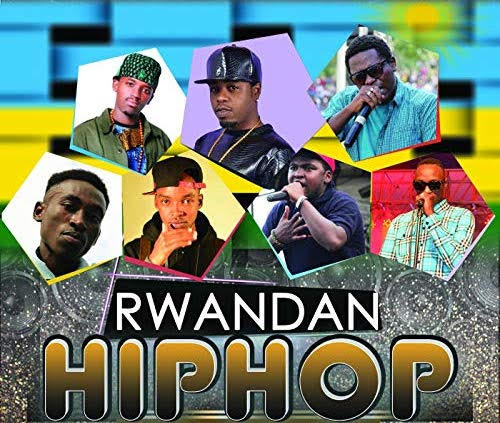
“Hip-Hop is a cultural art form with four main elements: rapping, deejaying, breaking (dance), and graffiti art, co-existing and allowing artists to maximize their individual expression,” says Teta in the McGill International Review.
It originated in the streets of New York in the 1970s as a movement of resistance against societal negligence. According to Msia in All Africa, Hip-hop was introduced into Africa with the rise of cable TV and the return of Senegalese living abroad carrying the latest hip magazines and music.
That was in the 1980s, the same decade in which DJ Berry pioneered it in Rwanda.
DJ Berry, real name: Abdul Aziz, worked on the national radio where he was known for rapping and dancing breakdance. Later, he would exile in Goma, Democratic Republic of Congo and continued his music.
He relocated to Germany where he produced the song “Hey You” which would attain some popularity on radios in Uganda. He returned to Africa in 1990 and passed on six years later, in 1996. One year before his departure, the Rwanda National Television was introduced.
The 1995 introduction of the Rwanda Television popularized many foreign Hip-hop artists among Rwandans.
Among those artists, one can mention Tupac Shakur and MC Solaar. This planted the seed of this music among many young Rwandans who would, later on, sprout with a mastery of the form of music.
In an interview I had with Jay Polly, one of the lead Rwandan Hip-hop artists, he said, “Yeah, of course, in 1998, there were still the feuds between BIG and Tupac, and the East Coast-West Coast hip hop rivalry was still going on in America. So, we followed all of that news. I got interested a lot to follow those people, to know who they were, to know how it was done.”
That shows an important role that cable televisions played in teaching and inspiring a new generation of artists in Rwanda as only two years later the first Rwandan Hip-hop song would be produced.
In 1997, KP Robinson and MC Monday produced “Peaced Up”, and that became the first Hip-hop song to be released in Rwanda, by Rwandans.
That also means that MC Monday is one of the pioneers of the form of music in Rwanda. 1999 saw the rise of another major act, the rise of MC Mahoni Boni.
MC Mahoni Boni, who most artists and followers of the Rwandan Hip-hop crown as the king and pioneer of Hip-hop in Rwanda, started singing in 1999 with his single titled “Malariya ni Indwara Y’icyorezo Kandi Yica”, according to The New Times.
The year 2003 launched a new music group KGB (Kigali Boys) comprised of artists Rurangwa Gaston, a.k.a Skizzy, the late Hirwa Henry, a.k.a H-Wow and Manzi Yvan, also known as MYP.
In an interview I had with Skizzy, he said, “KGB started in 2003, at school, at APAPE. In high school, we studied in the same class. Then, we started the group. We went to a recording studio in Kenya and recorded our first album. We recorded songs that came to be liked such as “Abakobwa b’I Kigali” and “Ndagukunda.”
Then, we continued working with Rwandan local recording studios and producers, including J P and Pastor P.” Then, only three years later, Riderman, real name: Emery Gatsinzi, just another major artist in Rwanda, took the country by storm.
In January of 2006, he joined a group named UTP Soldiers that included NEG The General and MIM. They entered the recording studio for the first time on the 11th of January that year. Riderman would release his first single in 2007 called “Turi Muri Party”.
Tuff Gong rose to fame in 2008 and became the most influential Hip-hop music group in Rwanda.
On the founding of Tuff Gong, its founding member Jay Polly had this to say, “Tuff Gong started in 2008; after that, all of us came to meet because for me I grew up with Green P. Our producer was called Lick Lick. He too, that time, lived in the same neighborhood with Green P. That is how the connection started.
Then, because he was in that neighborhood and knew Green P and The Ben, I came to know Lick Lick. Lick Lick studied with Bull Dog in the same class. You understand where the connection came from. We connected.
Fire Man joined later because he grew up with Bull Dog in the same neighborhood, in Kanombe. Finally, P Fla came from where he was (in the US). But they told us that he had the same style as ours. It is Lick Lick who connected us. We connected and started Tuff Gong that way.”
The same year of the rise of Tuff Gong saw the rise of another vital musician, Diplomate. Diplomate, real name: Nuur Fassasi, released his first song “Umucakara w’Ibihe” in a collaboration with Young Junior. According to The New Times, for his poetic, metaphorical, and history-packed verses, some of his fans called him Rwanda’s upcoming Snoop Dog.
A decade that followed saw a rise to fame of many more Hip-hop artists. Among them, one can mention K8 Kavuyo, Pacson, Jay C, White Monkey and younger upcoming artists such as DA Strix Junior. In 2013 and 2014, Riderman and Jay Polly won the Primus Guma Guma Superstar Contest respectively.
With songs full of messages to the youth such as Bull Dogg’s “Pay Attention” which tackles the use of savings, blood tests for HIV, Hepatitis, and other diseases, as well as on the effects of drug abuse, Hip-hop in Rwanda has been on the core of positive change among the youth. However, Rwandan Hip-hop artists did not achieve this tremendous contribution in a millisecond.
Instead, it took over two decades, from the beginning of Hip-hop on the streets of New York in the 1970s to the introduction of this form of music in Senegal in the 1980s, the same year it was introduced in Rwanda.
With its most popular artists being its old generation, what the new generations are doing to keep the wheels turning becomes such an important conversation that we need to have.