The Basketball Africa League is Africa’s premier men’s basketball league scheduled to begin in October 2019.
The league was created in a partnership between the National Basketball Association (NBA) and FIBA with sponsorship from the Jordan Brand and Pepsi.
Rwanda is hosting qualifiers for BAL 2020 in Kigali where 8 teams from East Africa will be competing.
Among the 8 teams that are currently competing in Kigali are Patriots BBC in Team A which represents Rwanda in the championship, JKT from Tanzania, University of Zambia Pacers and GNBC from Madagascar.
Team B includes City Oilers from Uganda, Ferroviario de Maputo from Mozambique Kenya Ports Authority from Kenya and Cobra Club from South Sudan.
Patriots BBC started the championship with a 94-88 win against GNBC from Madagascar and qualified for the semi-finals.
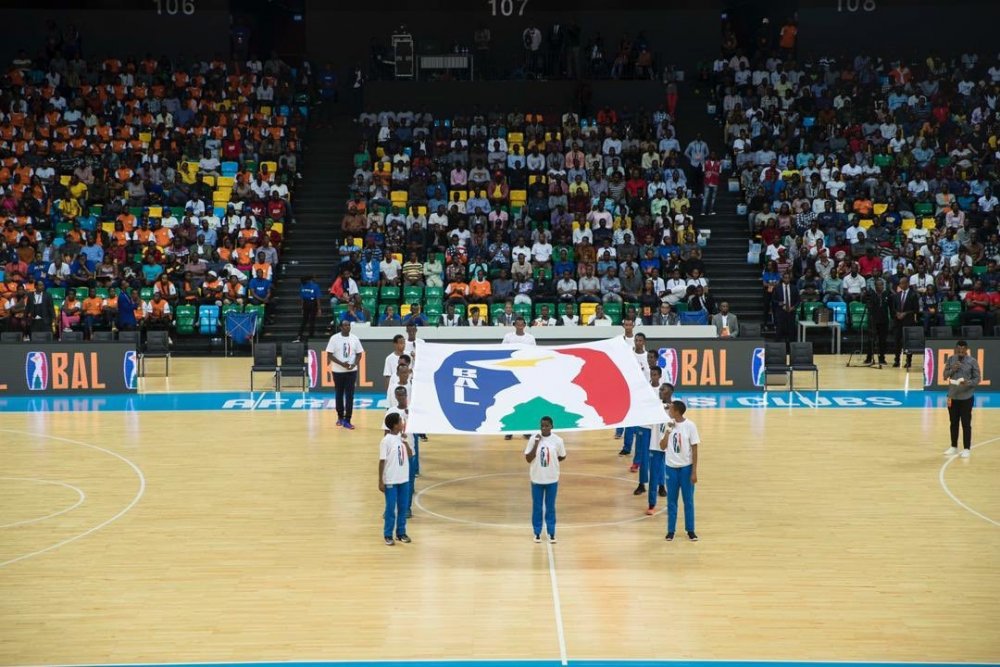
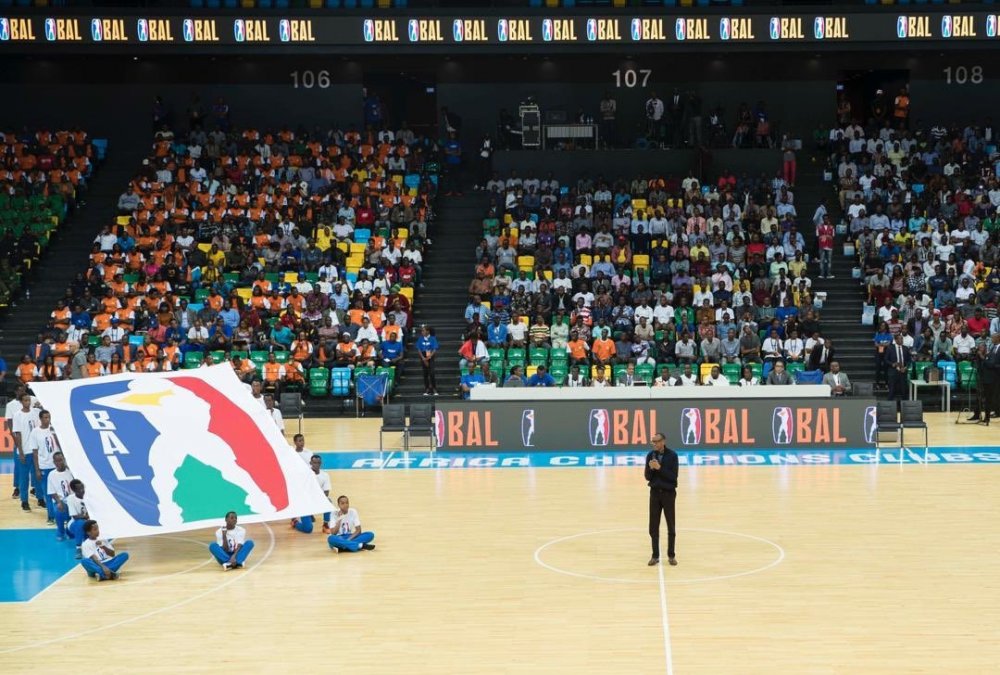
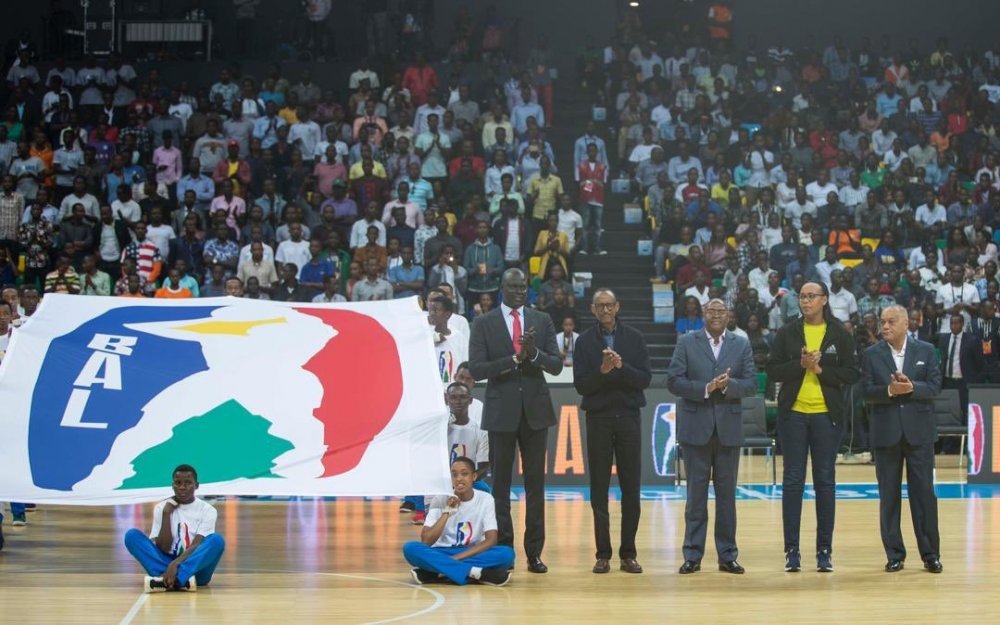
Before the game started, President Kagame unveiled new BAL logo in an event that brought together the president of FIBA Africa, Anibal Aurelio Manave, Amadou Gallo Fall, BAL president, Aurore Mimosa Munyangaju, the Minister of Sports, FIBA Africa Secretary General Alphonse Bilé, President of the South Sudan Basketball Federation Luol Deng and Nigerian Basketball Player, Olumide Oyedeji.
President Kagame commended FIBA and NBA initiative to create BAL championship.
“We are particularly honored that this very important basketball championship starts in Rwanda.”
He thanked those who took part in involving Rwanda in the championship. “BAL is a complement to the multitude of talents in Africa. We are proud of shaping players who will represent us across the world.”
BAL logo symbolizes the richness, diversity, and authenticity of Africa, and embodies African basketball on the world stage. It depicts a basketball player taking a jump shot and has a green, yellow, red and royal blue background. The logo also symbolizes the Pan-African footprint the league will have.
The red and royal blue colors connect to the logo of the NBA and denote love, energy, strength, and confidence while the yellow and green colors denote the hope for a better future in Africa, joy, and wisdom.
The basketball player taking a jump shot represents the strength, skill, and talent that will be showcased by African players in the inaugural BAL season that will start in March 2020.
Amadou Gallo Fall, BAL president says that the championship will foster a competitive spirit and promote a Basketball heritage in Africa.
“BAL logo has the particularity of depicting the amalgam of richness, authenticity, and diversity typical of Africa and represents the African continent on a global scale.”
The inaugural regular season of BAL will feature twelve teams from Africa and will take place in Cairo in Egypt, Monastir in Tunisia, Dakar in Senegal, Rabat in Morocco, Lagos in Nigeria and Luanda in Angola with Kigali hosting the first-ever BAL Finals.
During the championship, players will only use kits of NIKE and Jordan brands. NBA and FIBA also sponsored the championship in terms of financial support, training players, trainers and referees and building infrastructures that will be used during BAL.
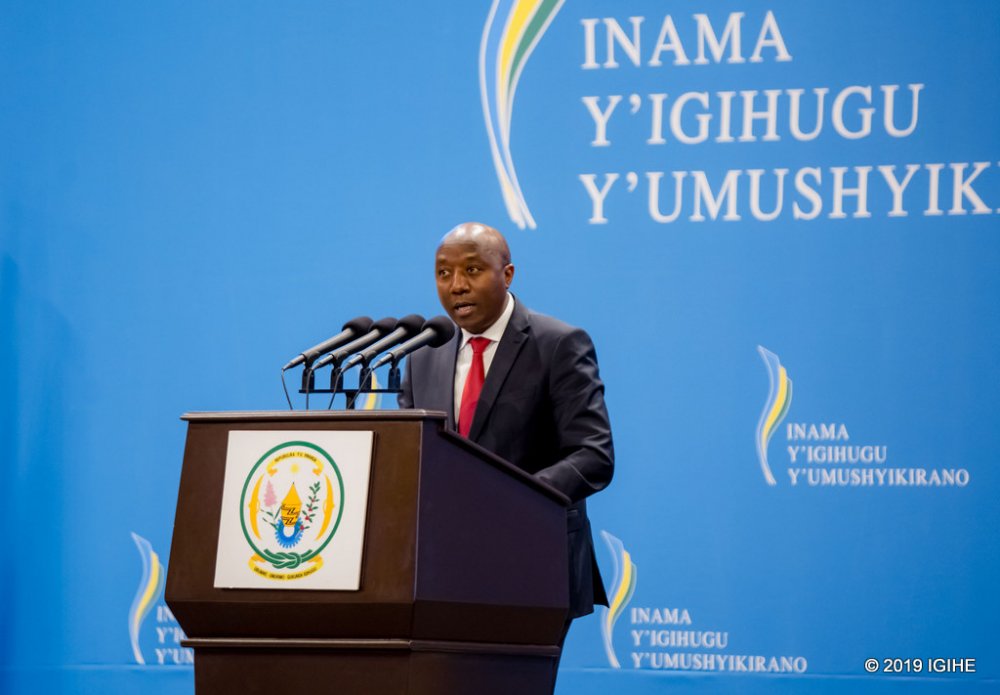
He talked about various topics regarding the performance of different sectors in the country including safety net programs where he explained that the VUP program has had a much bigger coverage increasing from 244 to 416 sectors.
“The number of households currently covered under VUP is 158,554”. He also talked about the state of infrastructures, the quality of education, Rwanda’s journey to recovery after the 1994 genocide against Tutsi among others.
On strengthening Umurenge SACCO, the Prime Minister reported about non-performing loans, that Rwf 2.25 billion has already been paid upfront while Rwf 1.9 billion are progressively paid on SACCO accounts.
Also, Rwf 607,433,902 have been recovered from public servants. In audit and inspection of SACCOs, 267 branches have been audited, 143 were assessed for risk and 85% were recommended by the Central Bank of Rwanda to Micro-Finance Institutions (MFIs).
On establishing post-harvest infrastructure 24 maize warehouses have been established in Muhanga, Nyagatare, Gatsibo, Ruhango, Nyanza, Kayonza, Kirehe, and Musanze while 15 maize dryers have been provided in Nyagatare, Kayonza, Gasabo, Gatsibo, and Ngoma. In addition, 16 maize drying shelters have been completed across the country.
Ngirente also talked about the elimination of malnutrition and stunting where 86,531 children between 6-24 months received fortified blended food while 19,099 pregnant and lactating women received fortified blended food as well.
On improving the quality of education, 1,853,029 textbooks have been printed and distributed to schools while 1993 trainers have received additional training in ICT, pedagogy, and English.
Finally, on the preservation of genocide memorial sites, Ngirente reported that rehabilitation of Ntarama Memorial Site has been 100% completed and 4640 bodies and other genocide physical evidence were conserved. On digitalizing Gacaca documents, Ngirente said that currently, 45 million pages have been scanned.
The first day of the dialogue focused on two key topics under the themes “Driving double-digit growth” and “Engaging families for community resilience.”
“Driving double-digit growth” was about the choices, values and principles Rwandans have championed to achieve economic growth over the past two decades and particularly in 2019.
The second theme “Engaging families for community resilience” addressed hindrances in the health and education sectors through national and locally driven solutions.
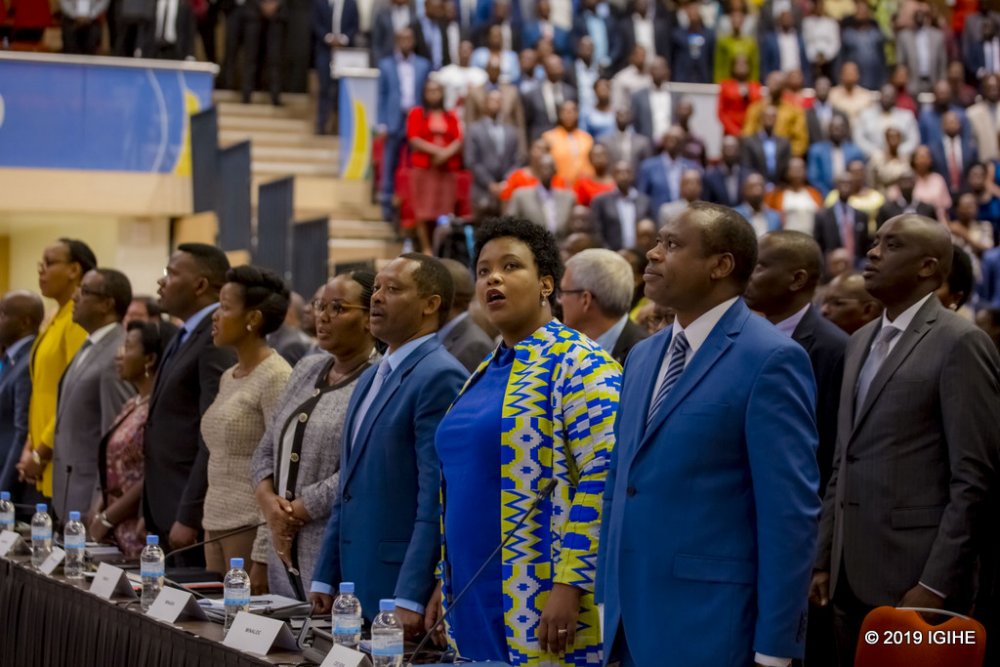
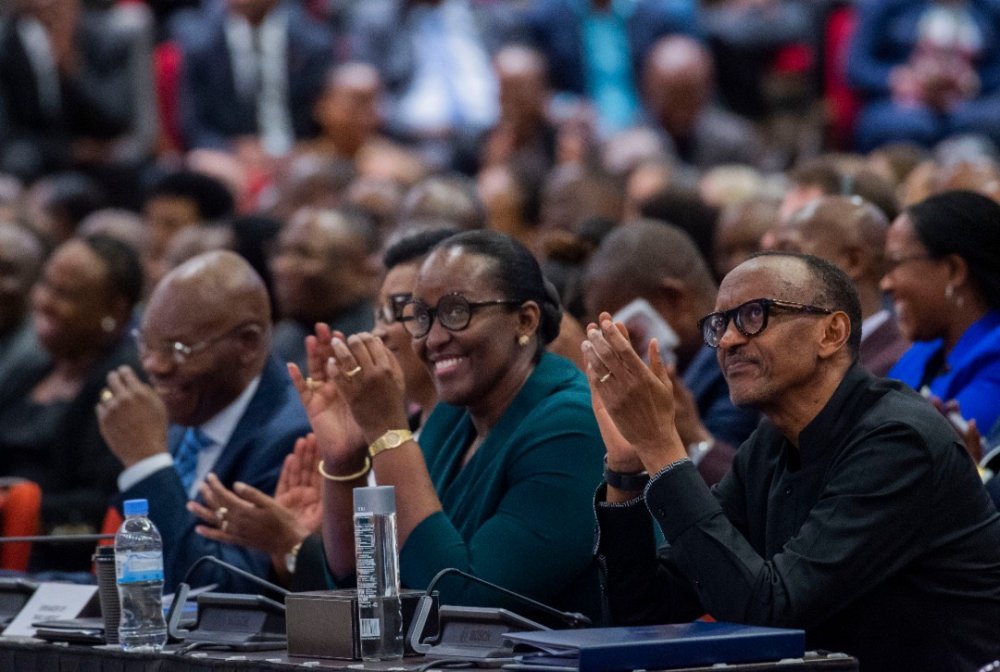
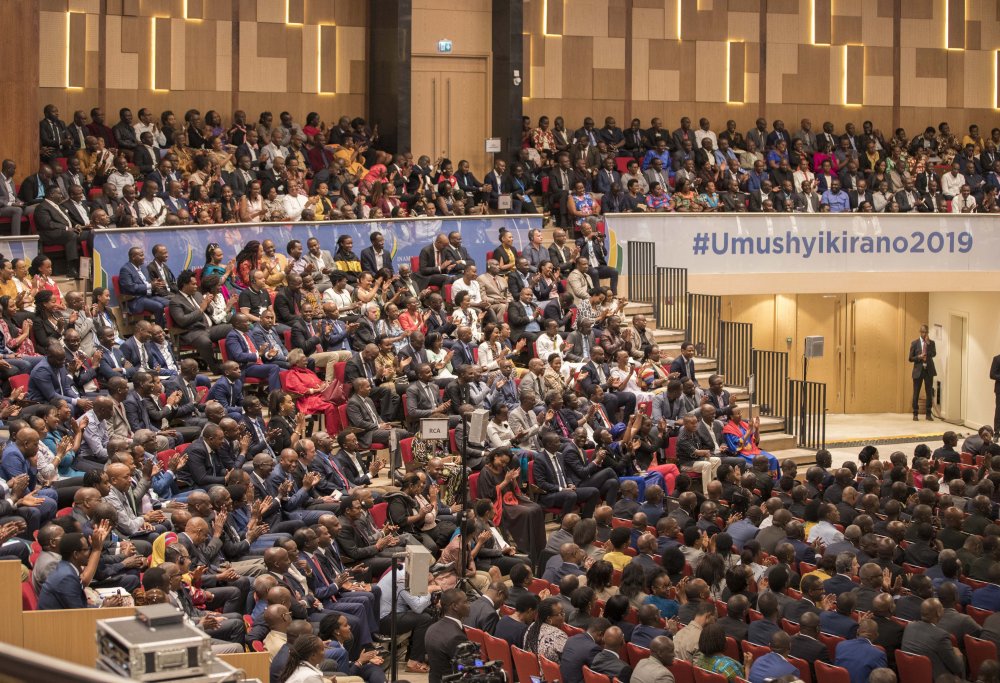
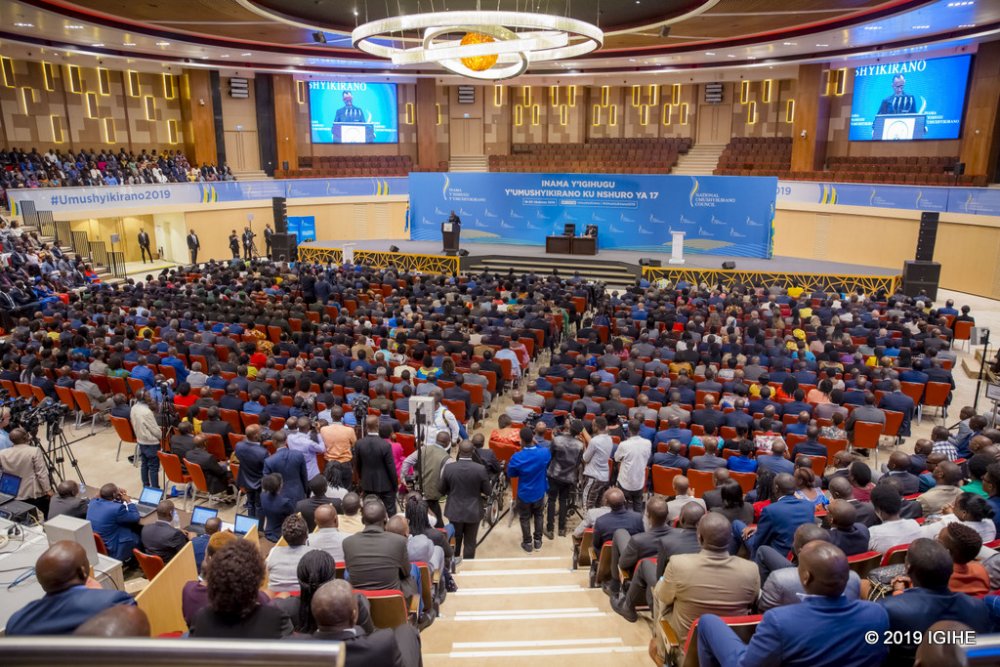
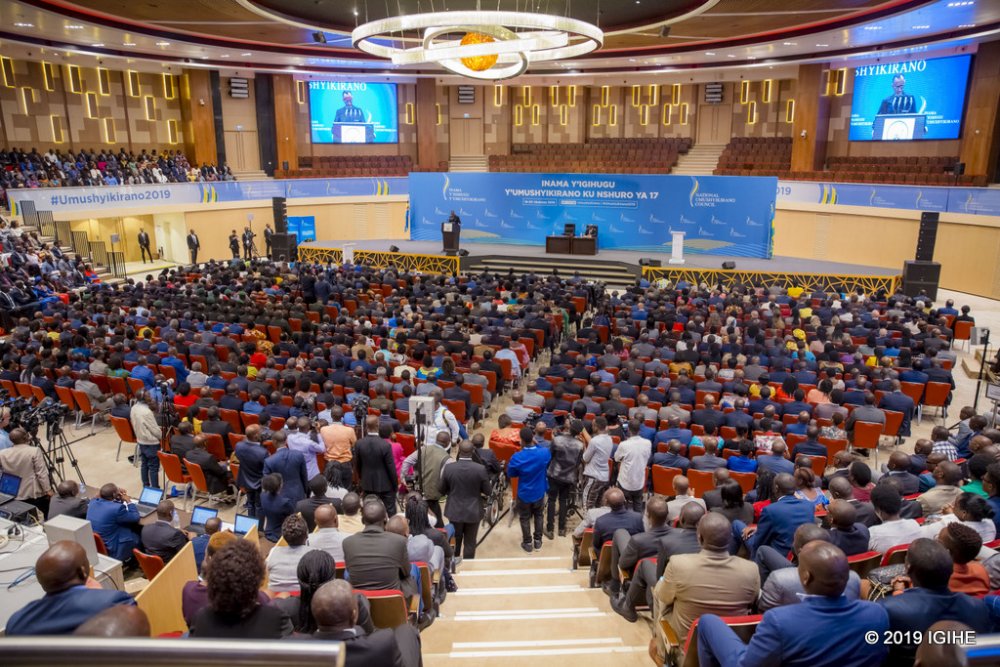
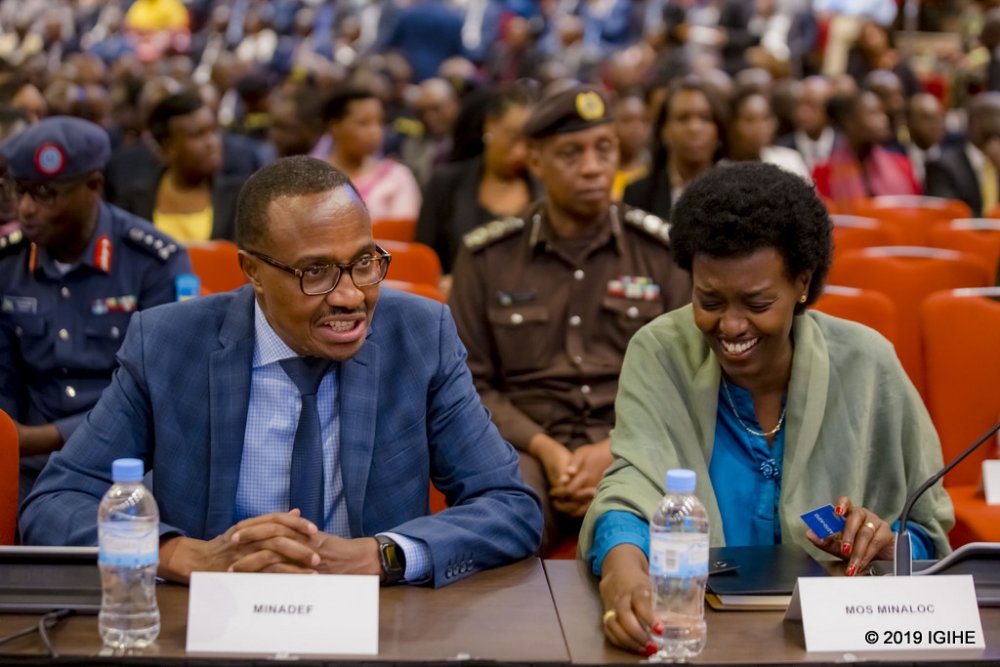
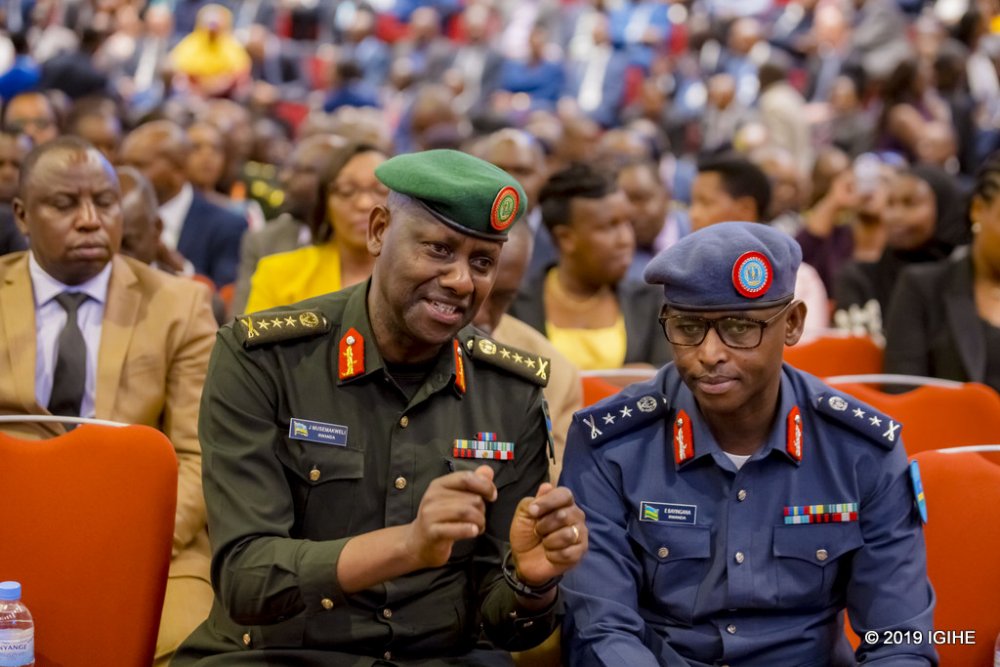
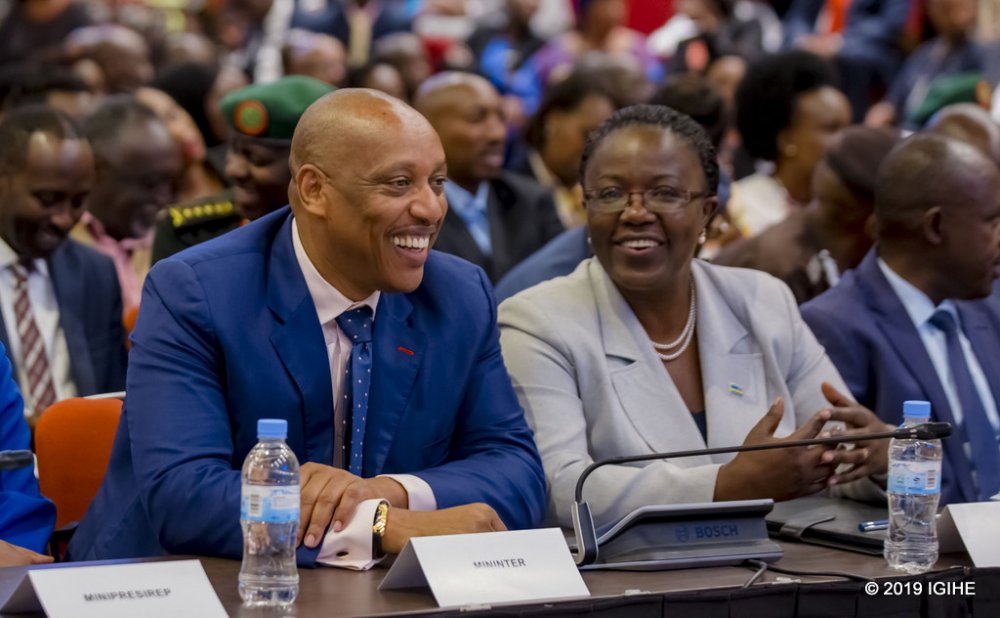
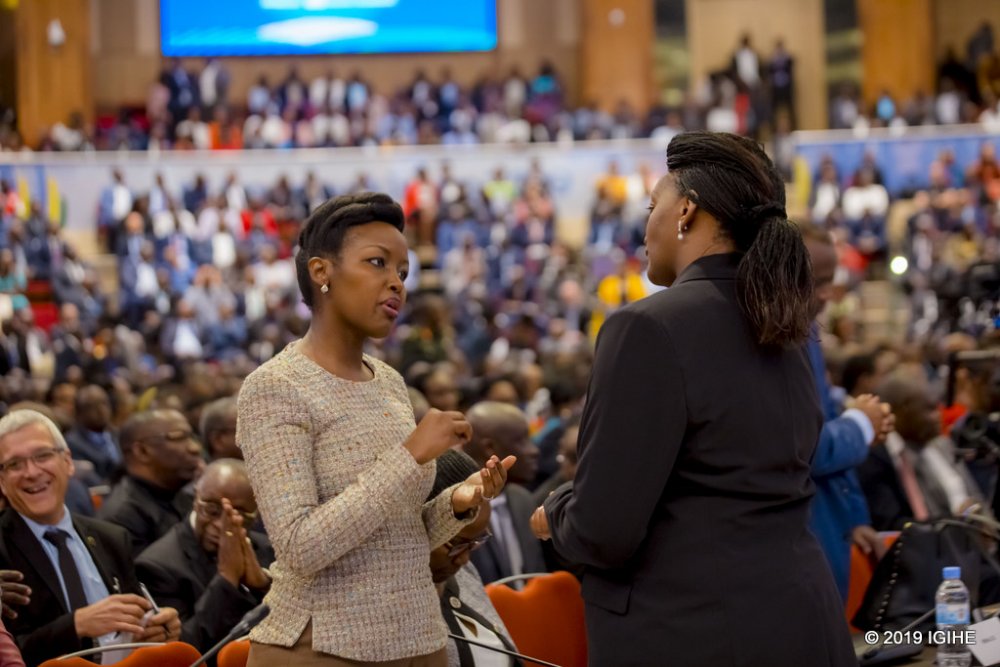
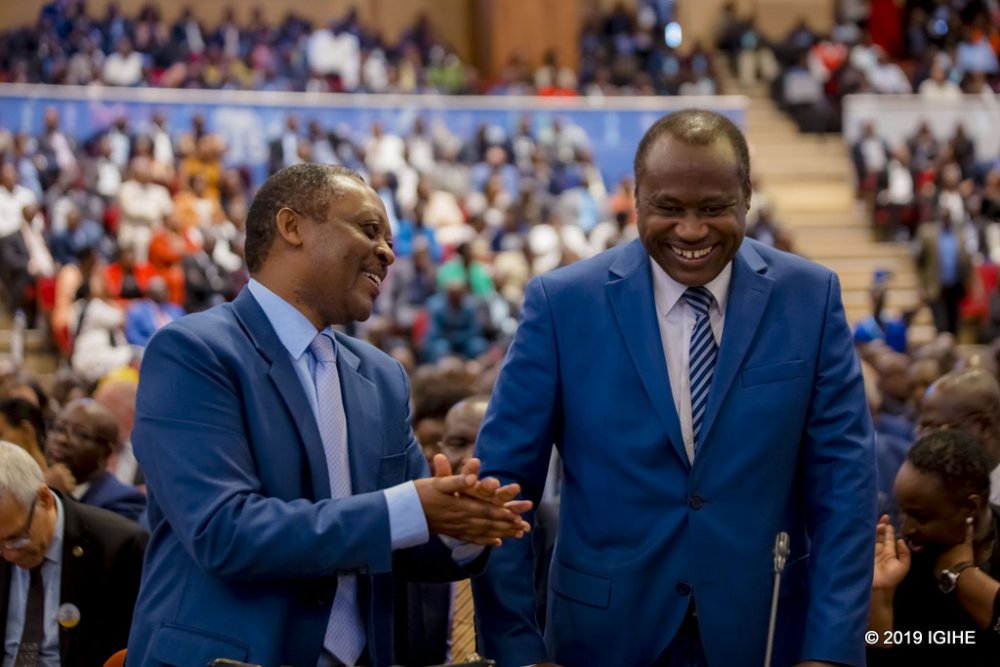
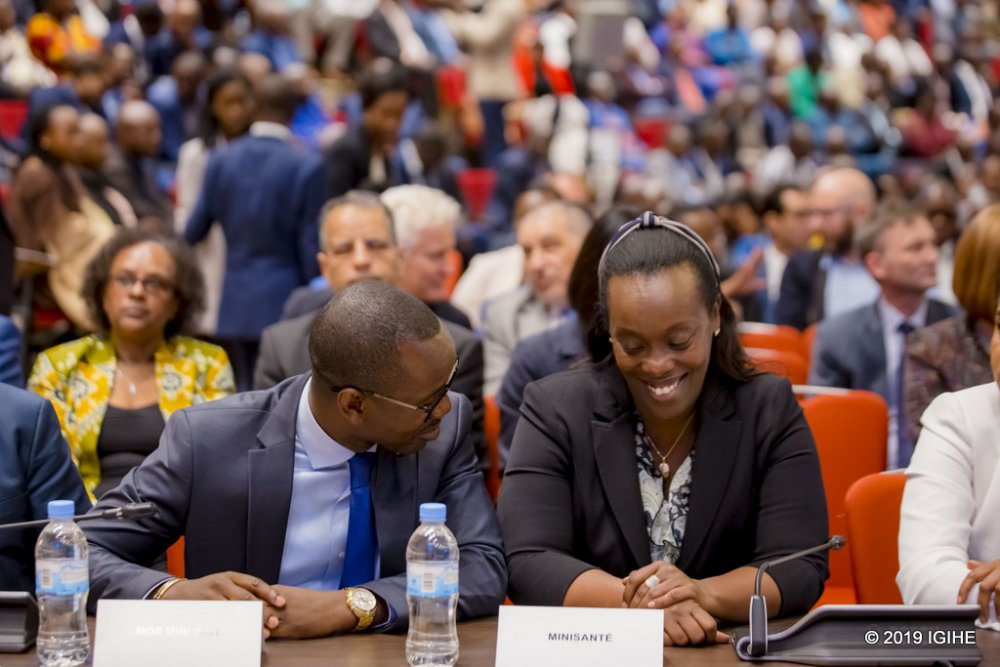
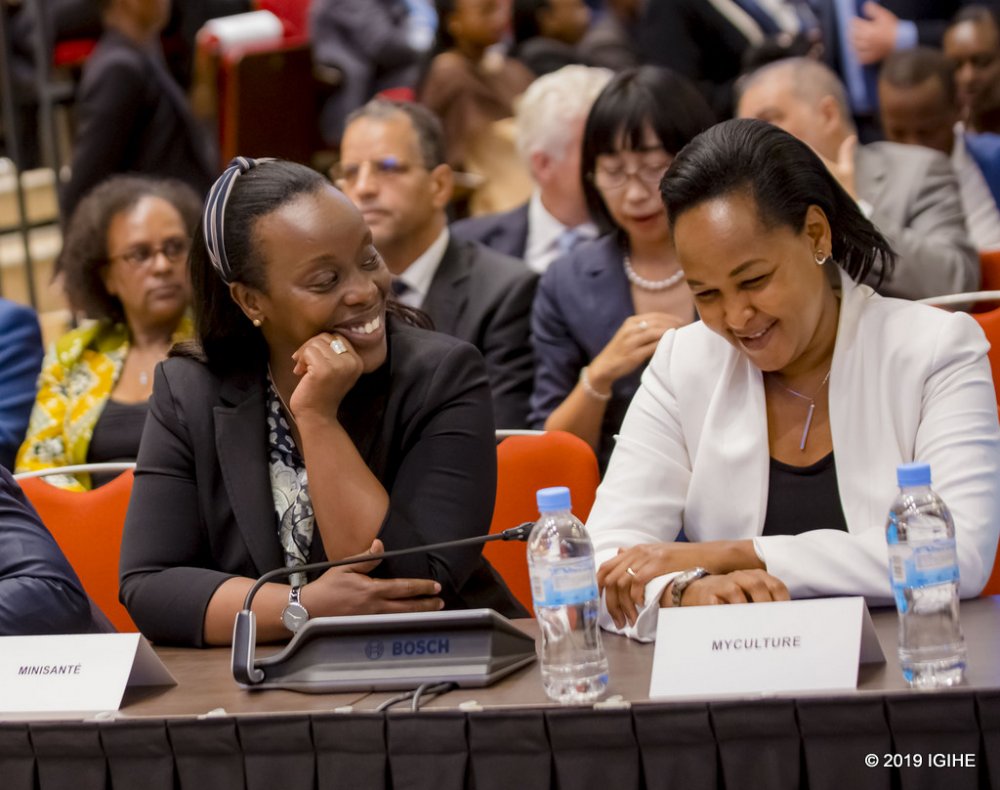
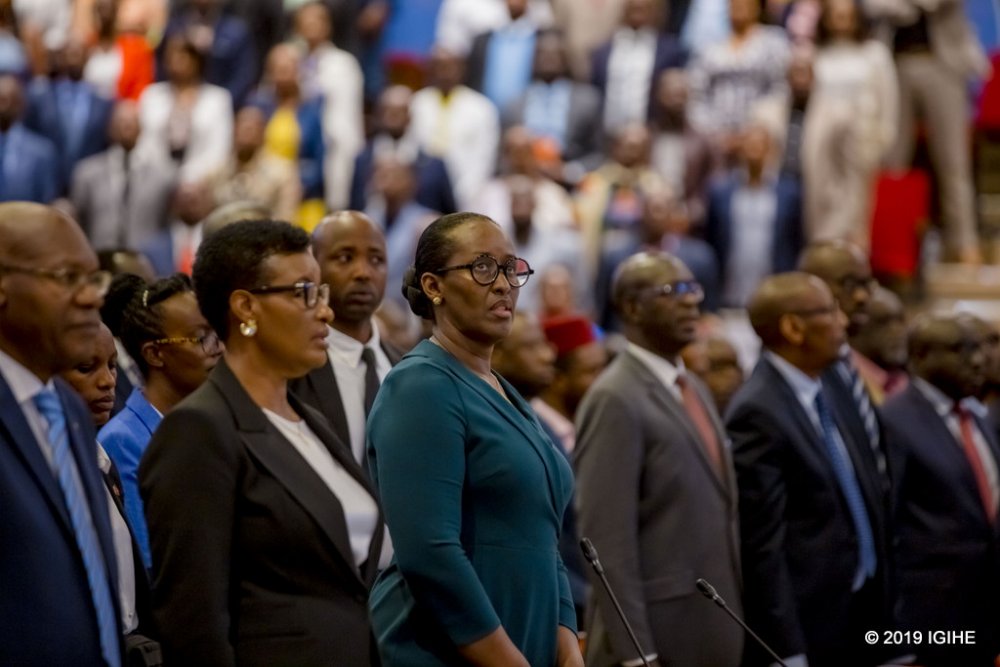
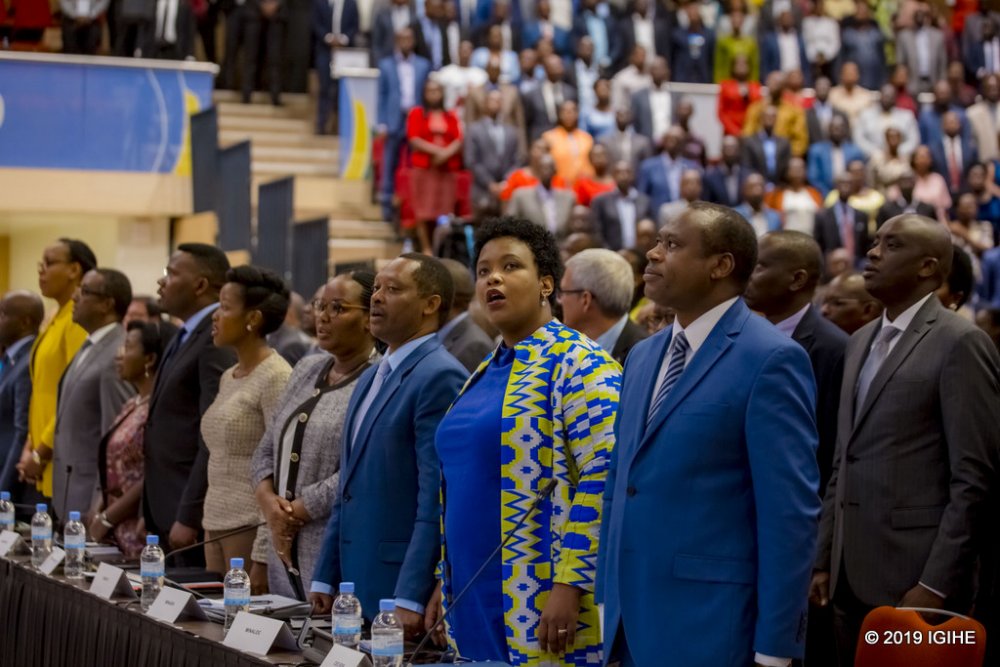
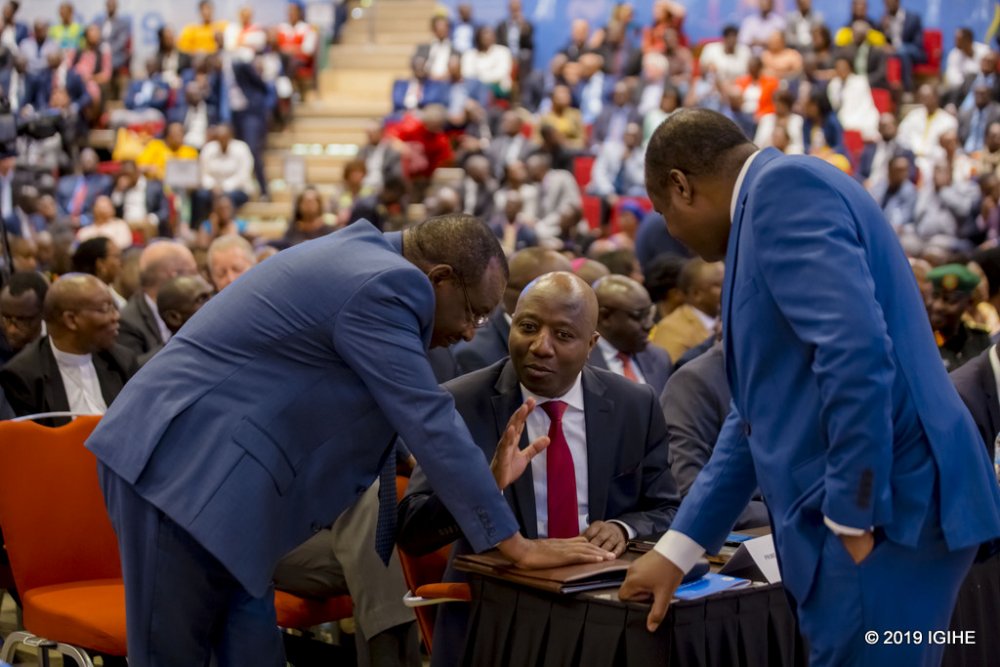
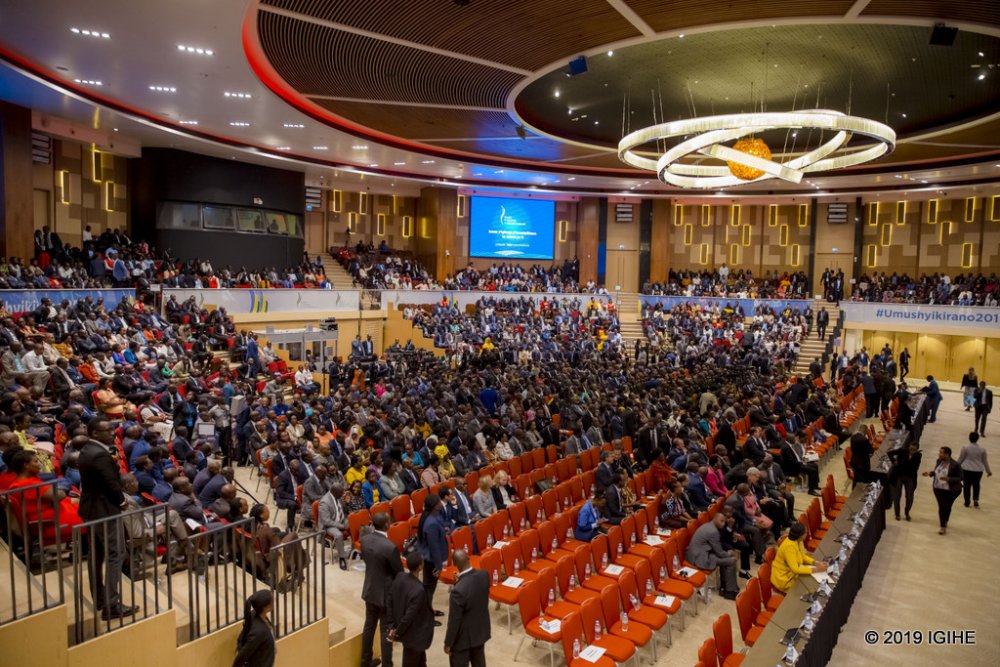
The dialogue brings together members of the cabinet parliament, representatives of the Rwandan diaspora, local government, the media, the diplomatic community, and local government officials among others.
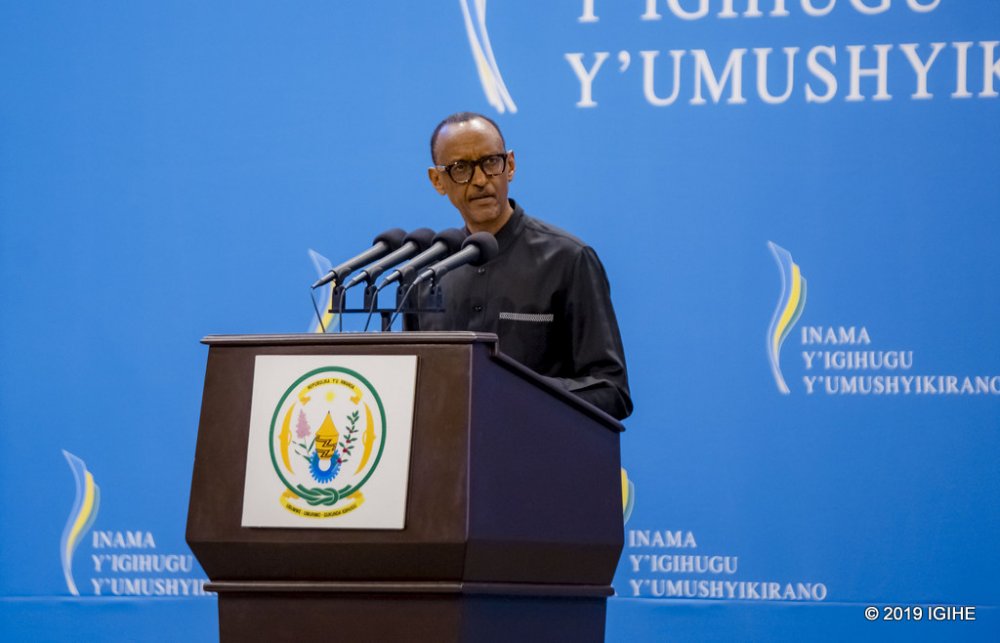
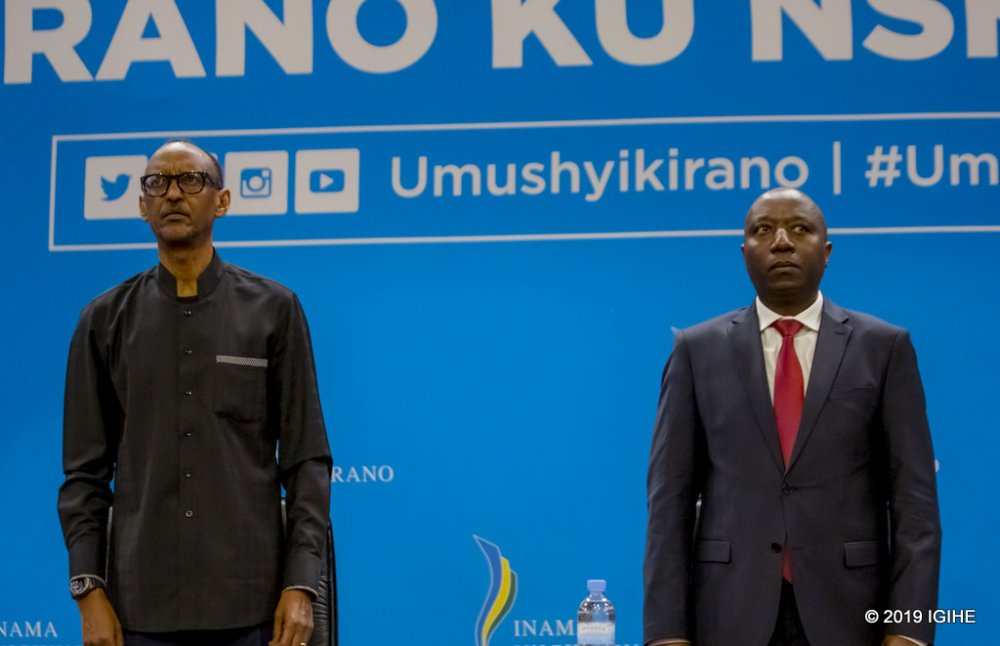
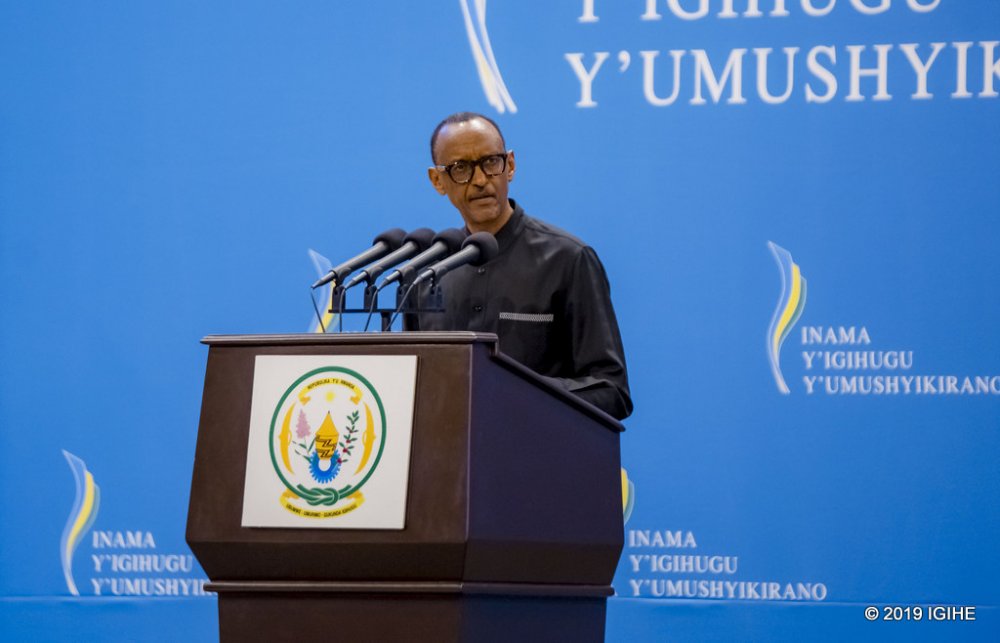
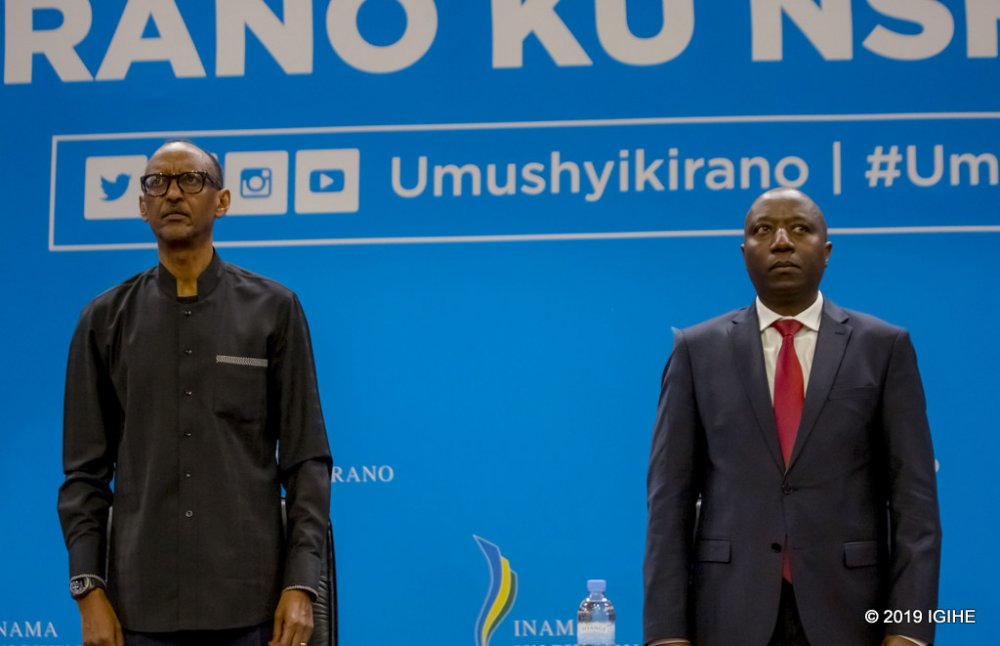
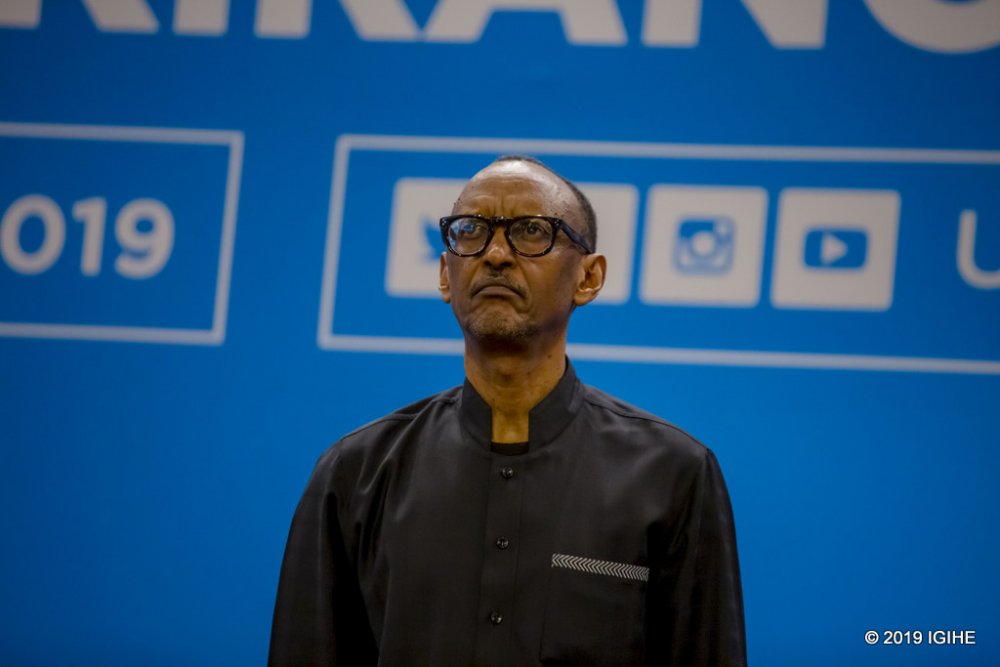
President Kagame started the dialogue with the State of the Nation address thanking everyone for the role they have played in the development of the country. “The country is doing well. You have all contributed to this.”
About the ongoing evacuation of residents from wetlands, President Kagame condemned the ineffective communication between leaders and citizens and the inability of leaders to inform citizens about the country’s policies.
“As a leader, how do you permit citizens to build and live in wetlands and provide them with land titles?”
He stated that the issue will soon be resolved where residents with land titles will be compensated.
In the country’s gradual process of expanding freedoms equally for all people and promoting gender equality, Rwanda has made strides in giving an equal platform to women to contribute to the development of the country.
President Kagame commended the role women have played in the development of Rwanda over the past two decades and urged them to keep being the pillars of growth.
“It will be very pleasant the day the position I have been elected for will be occupied by a woman.”
About security, President Kagame called opposition leaders for peaceful discussions and to settle differences that might have occurred in the past.
He warned terrorist groups based abroad that they will not keep walking in all impunity and that they will eventually face justice.
“We have made efforts to convince Rwandans around the world to come back home, have conversations and settle our differences but for those who have chosen to disturb the peace of Rwandans especially terrorist groups, they will be dealt with very soon.”
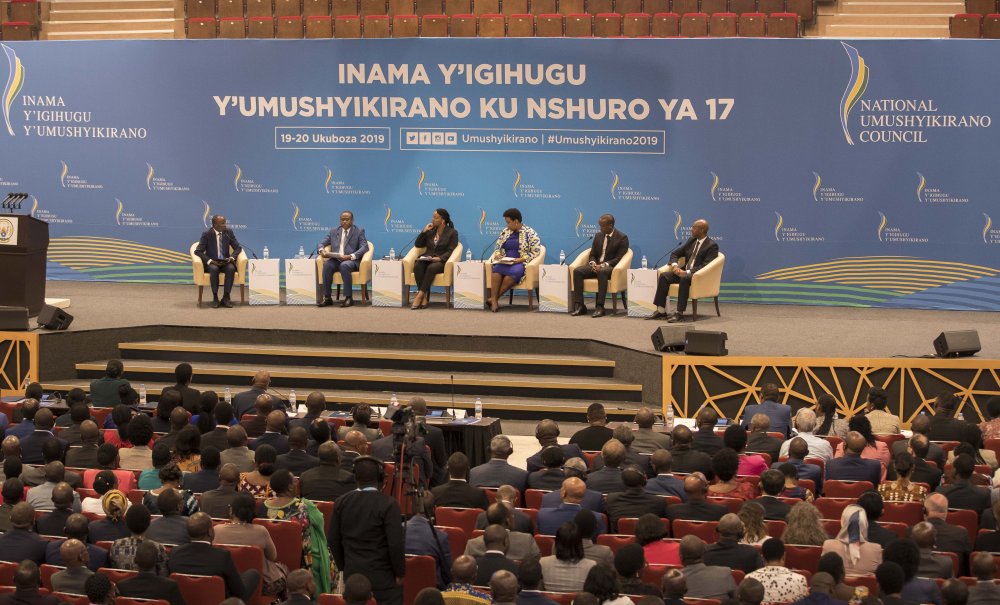
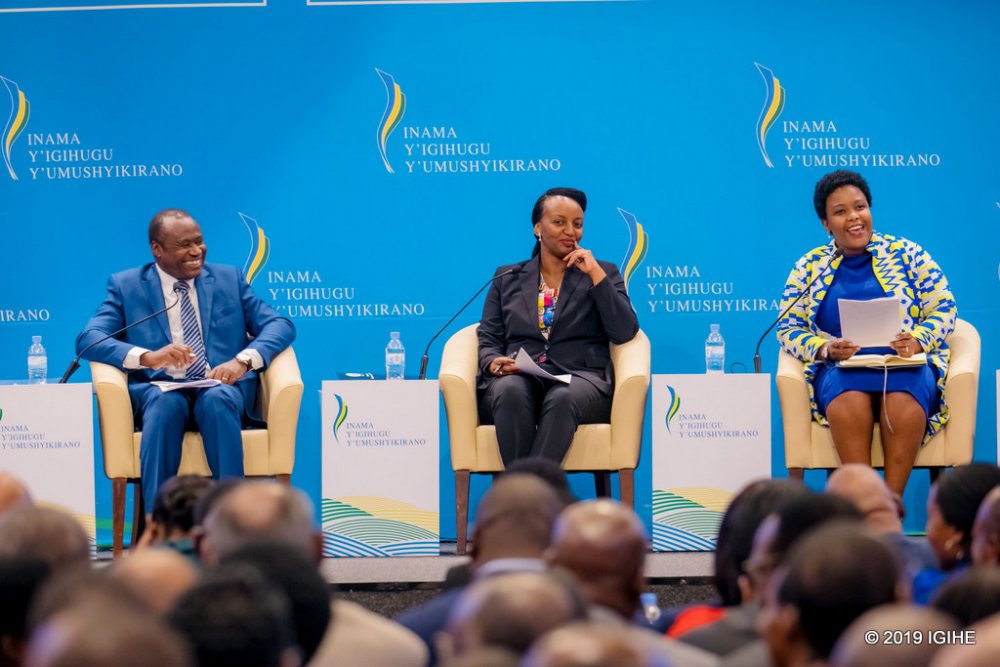
The dialogue proceeded with a panel discussion under the theme “Driving Double-Digit Growth’ moderated by Dr. Ildephonse Musafiri, Executive Director of the Strategy and Policy Council (SPC) in the Office of the President.
Panelists included Uzziel Ndagijimana, Minister of Finance and Economic Planning, Soraya M. Hakuziyaremye, the Minister of Trade and Industry, Clare Akamanzi, RDB Chief Executive Officer, Yusuf Murangwa, the Director General of the National Institute of Statistics of Rwanda (NISR) and businessman Eric Rutayisire.
Minister Ndagijimana reported that over the last 18 years, Rwanda’s economy has been growing on an 8% rate annually and is in the top 5 countries in the world with a well-performing
economy.
“Growth has been inclusive and life expectancy rose from 49 to 67 years. In the last two decades, Gross Domestic Product (GDP) grew by 4 times and GDP per capita grew three and a half times.”
Clare Akamanzi, RDB Chief Executive Officer says the country looks forward to setting a climate for all types of businesses to thrive.
“We envision a ‘Vision 2050 where if a baby called Keza is born today, she will have started a business that employs people with a fair wage.”
She said the Government of Rwanda has made business environment reforms a top national priority.
“Today, registering a business takes less than 6 hours and we can only hope it will get better with time.”
On driving double-digit growth, Murangwa says through agriculture, the service sector, and industries, the economy of Rwanda is performing very well.
“As reported by NISR, The
Rwandan economy grew by 12.2% from April to June this year mainly due to improvement in agriculture, the service sector, and industries.”
In the past decade, the Government of Rwanda implemented inclusive strategies to develop Small and Medium Enterprises (SMEs).
“We approached our business reforms strategy through the lens of small business. We needed to understand what it would take for small business to efficiently operate within the country at minimal costs.”
On promoting exports of Made in Rwanda products, Minister Soraya Hakuziyaremye said the government of Rwanda has started initiatives to support businesses in Rwanda to export goods.
“We are supporting companies to export more of their products and services through different initiatives such as Export Growth Fund (EGF), which is open to development finance institutions to invest in the facility to support the growth of the export sector.”
Eric Rutayisire, a Rwandan technology entrepreneur who founded Charis UAS, a company that provides solutions in agriculture, environment, health using drone technology said that the possibilities to what Rwanda can achieve are endless and urged young Rwandans to contribute to the development of the country by creating more businesses.
“For us, the sky is not the limit. It is only a viewpoint. We want to bring Rwanda to the world with our drones.”
In a bid to allow Rwandans across the country to participate in the dialogue, ‘Umushyikirano2019’ includes a question session where from different sites, citizens address their concerns. For this year’s dialogue, citizens gathered at sites in Rubavu, Nyagatare, Nyamagabe, Bweyeye in Rusizi and Intare Conference Arena.
Mukiza Willy Maurice, son of Major General Ntawunguka Pacifique nicknamed “Omega” the head of FDLR-FOCA terrorist group urged his father to return to his country and contribute to its development.
Mukiza is a fresh civil engineering graduate from the University of Rwanda. He thanked the Government of Rwanda for offering scholarships to him and his siblings despite the identity of their father.
“My brother is studying on government scholarship in China and my sister as well in Ghana pursuing a degree in pharmacy. I also recently graduated from the University of Rwanda. My father is in the Democratic Republic of Congo conspiring against Rwanda even though this country has offered us anything we could ever dream of. We are safe and have equal chances as all Rwandans. I am asking my father to please come back home so that we can all work towards development.”
Young entrepreneurs, especially in the agriculture sector, expressed their concerns about lack of storage for harvested crops which rot as they are being exported. Eugene Mukeshimana said that CCE Business Group, a business he co-founded lost Rwf 800,000 worth of goods in the past due to lack of storage. President Paul Kagame ordered that he shall be refunded the amount in its entirety.
Geraldine Mukeshimana, the Minister of Agriculture and Animal Resources says the Government of Rwanda will continue to boost agricultural exports through different initiatives to support farmers including National Agricultural Export Board (NAEB) cold storage units that support farmers that halt the spoilage of fruits and vegetables and solves the problem of poor quality of fruits and vegetable production in Rwanda.
About accelerating, poverty eradication, rural growth, and social protection, Anastase Shyaka, the minister of local government said that following guidance from last year’s dialogue, the local government has started issuing VUP loans to the poor with a 2% interest rate.
“Over the last two months, 100,000 people have applied for VUP loans and among which 25,000 loans have been approved and 7,000 disbursed.”
On supporting people with disabilities, Diane Gashumba, Minister of Health said that some of the social barriers people with disabilities face have been reduced.
“We have established qualified health institutions to support people with disabilities including Rilima, Gahini and Gatagara health centers which provide health care programs. For disadvantaged people, we are still finding ways to provide prosthesis but we still have a long way to go in this field.”
The draft laws; one establishing a financial intelligence centre and another on prevention, detection of money laundering, financing terrorism or proliferation of weapons of mass destruction—were tabled before parliament by Uwera Claudine, Minister of State in charge of Economic Planning at the Ministry of Finance and Economic Planning.
Both bills seek to tackle money laundering – a financial crime that involves generating money from criminal activities such as drug trafficking or terrorist funding.
The Parliament’s Chamber of Deputies approved the relevance of the two bills.
Uwera said that the draft law on prevention, detection of money laundering, financing terrorism or proliferation of weapons of mass destruction comes to replace the law on prevention and punishment of money laundering and terrorism financing which was enacted on August 31, 2018.
The purpose, she said, is to cover the gaps identified after comparing the law in force against international standards.
“The law will strengthen our financial sector and accelerate plans to make the country an international financial centre,” she said.
The current law, she said, does not punish the proliferation of weapons of mass destruction and lacks essential provisions on preventing money laundering and supporting terrorism.
In addition, it lacks the requirements needed to detect suspicious client [such as in bank], inspecting an asset owner in order to ascertain whether they obtained assets lawfully or not.
“Also, the punishments are very lenient compared to the criminal act,” she said.
Another point which she said is important is that article 4 of the law of 2018 provides that financial intelligence is done by a unit in charge of another institution in charge of fighting money laundering and financing terrorism.
It also provides that the responsibilities and operations of that unit are determined by the prime Minister’s Order, which also determines the institution in which such unit should be.
“This is contradicting with the establishment of the special centre which is independent in its operations as experts advised,” Uwera said.
Uwera told lawmakers that due to its mission, the government has decided to establish the Financial Intelligence Centre as an independent body as opposed to a centre attached to the central bank.
Some MPs said that the bill, once enacted, should be able to contribute effectively to recover the assets from illicit owners, and those funding terrorism contending that there should be tougher punishments imposed on the culprits in order to deter them.
MP Diogene Bitunguramye said; “The parliamentary committee which will scrutinize the law should ensure that it considers mechanisms through which the assets that the guilty party accumulated over time are accessed and seized from them because the aim is to weaken them.”
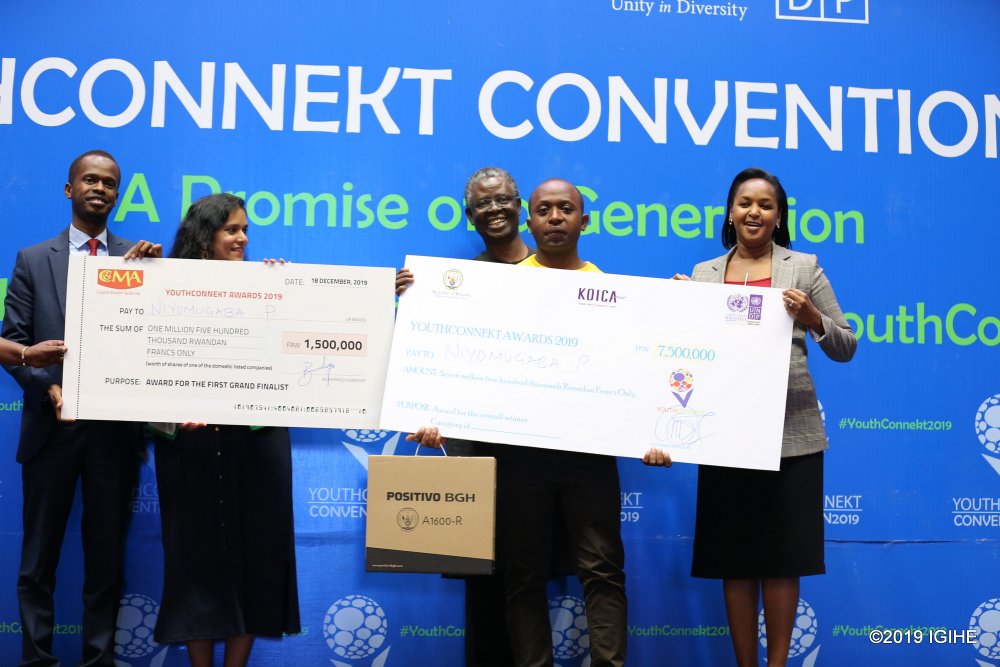
Niyomugaba Pierre, a resident of Nyamagabe District who presented the project was awarded Rwf 7.5 million and shares in the Capital Market Authority (CMA) with a value of Rwf 1.5 million.
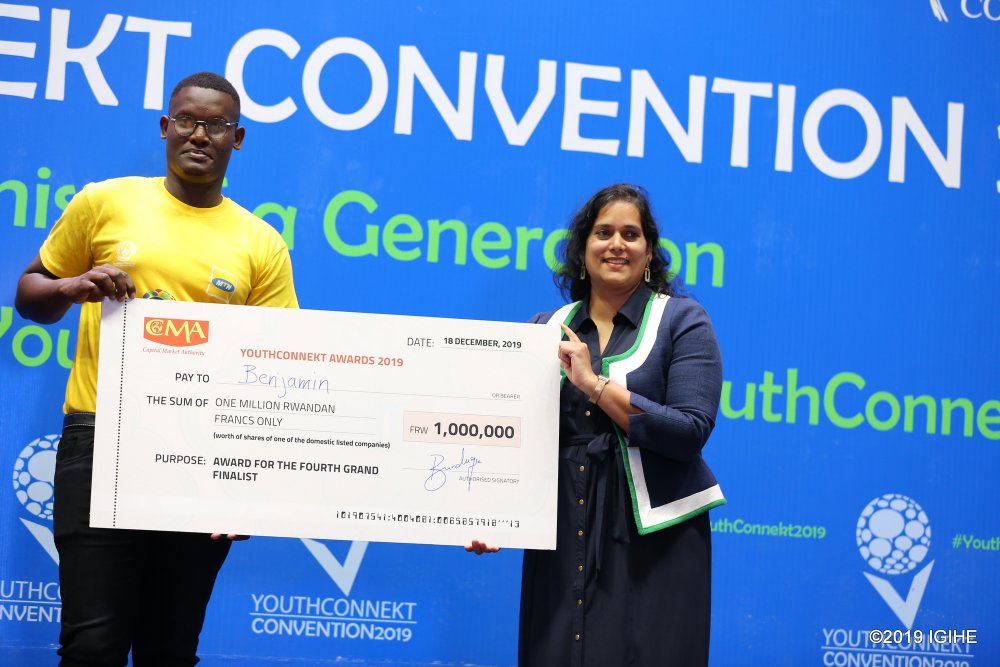
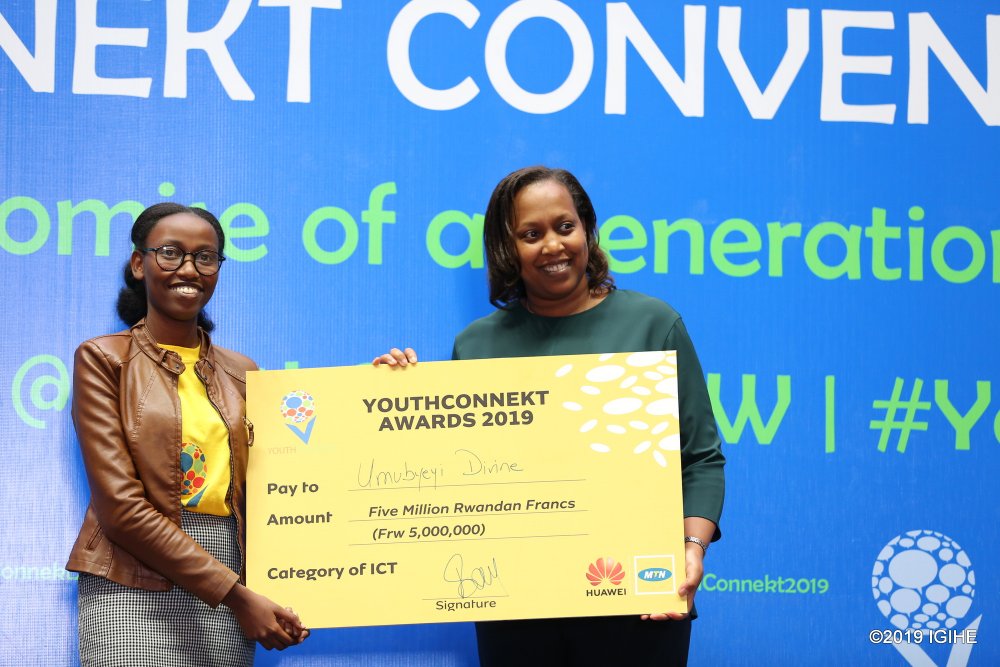
The three projects that followed were awarded Rwf 5 million each with the second contestant winning an additional Rwf 1.3 million shares in CMA, the third Rwf 1.2 million shares and the fourth Rwf 1 million shares. Niyomugaba Pierre also received a brand new Positivo BGH laptop.
The awards were given on Wednesday, December 18th, 2019 as part of the annual National Dialogue ‘Umushyikirano2019’.
YouthConnekt this year, brought together more than 3000 Rwandan youth from across the country at Intare Conference Arena.
Niyomugaba has founded ‘Natural Harvest’, a firm specialized in the cultivation of lemongrass, eucalyptus, patchouli, and geranium which he uses in making perfumes and repellents for insects including termites, cockroaches, bedbugs and mosquitoes.
“For farmers who face the problem of termites that damage crops, the oil I make works as an insecticide and is efficient in repelling all types of insects. The oil is mixed with water to fight against insects such as cockroaches and bedbugs.”
To prepare a liter of eucalyptus-based oil, he uses 50 kilograms of eucalyptus leaves. In one day, he produces 20 liters valued at Rwf 52,000 while Patchouli oil costs Rwf 90,000.
The second prize was rewarded to a group of people that created a networking website for employers and job seekers and the third went to makers of chairs and tables from old tires. The fourth prize was won by a fashion designer.
The four projects won at the national level after competing and winning at the district level. Each was awarded Rwf 1.5 million.
Since the launch of YouthConnekt in 2012, more than 20,000 youths from across the country have attended including more than 505 who have been trained in entrepreneurship.
So far, 180 youths have been awarded during YouthConnekt competitions and were financially supported to implement their projects.
President Kagame started the dialogue with the State of the Nation address thanking everyone for the role they have played in the development of the country. “The country is doing well. You have all contributed to this.”
About the ongoing evacuation of residents from wetlands, President Kagame condemned the ineffective communication between leaders and citizens and the inability of leaders to inform citizens about the country’s policies.
“As a leader, how do you permit citizens to build and live in wetlands and provide them with land titles?”
He stated that the issue will soon be resolved where residents with land titles will be compensated.
In the country’s gradual process of expanding freedoms equally for all people and promoting gender equality, Rwanda has made strides in giving an equal platform to women to contribute to the development of the country.
President Kagame commended the role women have played in the development of Rwanda over the past two decades and urged them to keep being the pillars of growth.
“It will be very pleasant the day the position I have been elected for will be occupied by a woman.”
About security, President Kagame called opposition leaders for peaceful discussions and to settle differences that might have occurred in the past.
He warned terrorist groups based abroad that they will not keep walking in all impunity and that they will eventually face justice.
“We have made efforts to convince Rwandans around the world to come back home, have conversations and settle our differences but for those who have chosen to disturb the peace of Rwandans especially terrorist groups, they will be dealt with very soon.”
The call followed an incident that happened on Monday, in Gasanze Cell, Nduba Sector where two men were arrested with 40 dead chicken.
According to Chief Inspector of Police (CIP) Marie Gorette Umutesi, the Police spokesperson for Central region, people who were on neighborhood night patrol commonly known as “Irondo ry’Umwuga” became suspicious and stopped two men who were carrying two sacks at midnight.
“The suspects identified as Emmanuel Mugabonake, 23 and Oscar Bagaragaza, 38 were caught having two full sacks of dead chickens which were supposed to be served to people as they are owners restaurants,” CIP Umutesi said.
The spokesperson added that, the suspects have a restaurant in Gasanze commercial center where they were going to cook those dead chicken for their clients.
CIP Umutesi warned people against those substandard meats, saying they are dangerous and poisonous for human lives.
“Besides being poisonous, they were about to be cooked and served in dirty place with poor hygiene and sanitation as it was confirmed by local leaders who inspected their restaurant and temporarily closed it,” she explained.
Residents were urged to be careful with meat and food they are served in different restaurants and consider hygiene before taking anything.
“We urge people that before taking any meal in restaurants, they should consider hygiene and always ask the kind of meal they are going to be served in order to prevent anything that can affect their lives. We also urge them to always report people who serve expired or substandard food,” CIP Umutesi emphasized.
“There are set standards related to the meat business including transportation and packaging, which must be followed.”
The Ministerial Order n°013/11.30 of 18/11/2010 on transport and trade of meat, particularly article 2 stipulates that “…the transport of fresh chilled or frozen meat for food purpose shall be carried in such a manner to not be seen from outside. The meat shall be properly covered and protected against the sun, rain, mud, dust, and flies.”
Article 3 of the same order states that motor-vehicle transportation of fresh, chilled or frozen, non-packed meat shall use closed vans, separate from the driver, internally covered with galvanized brass or any other stainless material.
At its upper part, the van shall be provided with rails to facilitate the handling of meat. In addition, its interior layout shall allow daily cleaning using water with detergent.
However, Me Athanase Rutabingwa, Chairman of the Board of Directors at BRD says that even though she has been nominated, the proposal has not yet been implemented.
Usually, the procedure dictates that BRD CEO is nominated by the Board of Directors or stakeholders.
If the decision is approved, Kampeta will replace Eric Rutabana who has served as BRD CEO since December 2017.
BRD began its operations in 1967, as a long-term financial services provider, with the financing geared towards national development projects. As of April 2011, the total asset valuation of the bank was approximately US$122 million (RWF:72 billion), with shareholders’ equity of approximately US$42.3 million (RWF:25 billion).
Besides the Government of Rwanda, different institutions in Rwanda own shares in the Bank including Rwanda Social Security Board, National Agricultural Export Development Board (NAEB) and private institutions. There are also foreign institutions including the Belgian Government.
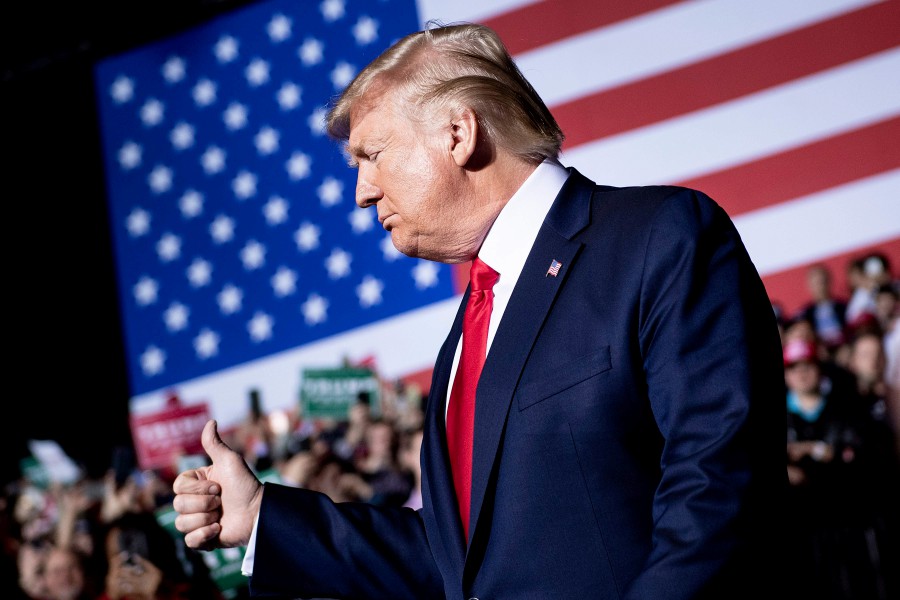
Trump is only the third United States president to be impeached. No president has ever been removed from office via the impeachment process.
The landmark votes on Wednesday set up a likely January trial in the Republican-controlled Senate, where Trump is expected to be acquitted.
As politicians move to the trial phase, here’s what to expect next:
{{1. On what charges was Trump impeached? }}
Trump has been impeached on charges that he abused his power in office and obstructed Congress during the impeachment investigation.
Democrats accuse Trump of pressuring Ukraine to open an investigation into the president’s political rival and former vice president, Joe Biden, who is also a frontrunner in the 2020 Democratic presidential race.
They also charge that the president obstructed their investigation by refusing to comply with subpoenas and directing members of his administration to do the same.
The impeachment inquiry, launched in September following a whistle-blower complaint, was centred on a July 25 phone call during which Trump asked Ukrainian President Volodymyr Zelenskyy to open an investigation into Biden and his son, Hunter, who had served on the board of a Ukrainian gas company. There has been no evidence of wrongdoing by the Bidens.
Trump also wanted Zelenskyy to investigate a debunked conspiracy theory that Ukraine, not Russia, interfered in the 2016 US presidential election.
At the time of the call, the Trump administration was withholding nearly $400m in Congress-approved military assistance from Ukraine.
Citing testimony by current and former US officials, Democrats also accuse Trump of leveraging a White House meeting that Zelenskyy wanted in exchange for the investigations.
{{2. What is a Senate trial?}}
The articles of impeachment are now expected to be sent to the Senate, where senators will consider evidence, hear witnesses and vote to acquit or convict the president. The chief justice of the US Supreme Court presides over the trial.
A two-thirds majority vote is required in the 100-member Senate to convict and remove a president from office. A conviction appears unlikely in the case of Trump.
The Senate is made up of 53 Republicans, 45 Democrats and two independents who caucus with the Democrats. At least 20 Republicans would have to vote with all Democrats and the two independents to remove the president from office.
Senate Majority Leader Mitch McConnell has indicated that he would like swift proceedings, but the president has said he would not mind a robust trial, with testimony from a number of witnesses, including Biden and the whistle-blower whose complaint led to the impeachment inquiry.
On Tuesday, McConnell appeared to reject the Democrats’ request for new witnesses in the trial, saying the Senate would not “do House Democrats’ homework for them” or go on a “fishing expedition” after the House impeachment process.
Senate Democratic leader Chuck Schumer has said he wants to hear from four additional witnesses, including acting White House Chief of Staff Mick Mulvaney and Trump’s former National Security Adviser John Bolton.
McConnell said on Tuesday he hopes to meet Schumer soon to determine the next steps. He added that he is “optimistic” that Republicans and Democrats can agree on a “phase one” of the trial, which would include the presentation of the case and defence.
“We’ll see at that point whether there are 51 members of the Senate who want to take one of two directions – either going in the direction of witnesses or going in the direction of voting on the articles of impeachment,” McConnell was quoted by Reuters News Agency as saying.
But following Wednesday’s impeachment votes, Pelosi said she would wait, for now, to send the articles of impeachment to the Senate.
US media have reported that some House Democrats are urging Pelosi to withhold the transmittal of the articles until the “appropriate time”.
Pelosi on Wednesday evaded questions about when she plans to send the articles to the Senate.
“It would have been our intention” to send the articles to the Senate, but “we’ll see what happens over there,” Pelosi told reporters.
“We cannot name managers until we see what the process is on the Senate side,” Pelosi said, referring to members who will serve as House prosecutors in a Senate trial. “So far we have not seen anything that looks fair to us”.
Withholding the articles of impeachment may give the Democrats leverage when it comes to setting the procedures for the trial.
Pelosi said Democrats will make a decision on next steps as “a group”.
{{3. When will a Senate trial take place?}}
Once the Senate receives the articles of impeachment, a trial can begin.
No firm date for a Senate trial has been set, but McConnell has said it will be the chamber’s “first order of business” upon returning to Washington, DC, in the new year.
Senate Democrats have proposed a trial plan that would see proceedings begin on January 6. Presentations by House managers, who would effectively work as prosecutors, would begin on January 9 under this plan. It is unlikely that Senate Republicans would agree to the Democrats’ exact proposal.
McConnell is scheduled to address impeachment on the Senate floor on Thursday at 9:30 am (14:30 GMT).
{{4. Who would become president if Trump was removed? }}
In the unlikely event that the Senate convicts and removes Trump from office, Vice President Mike Pence would become president and complete Trump’s term, which ends on January 20, 2021.
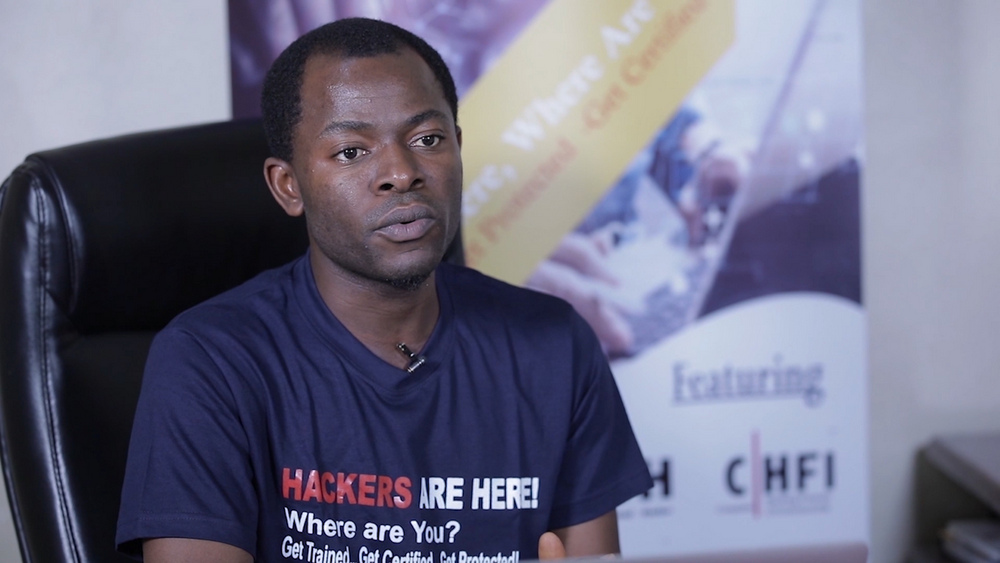
It is against this background that ESSOKA Corporation has introduced the ESSOKA Cybersecurity Division (ECSD), with the purpose of promoting a more proactive and adaptive professional approach in the fight against cybercrimes, using a framework of education and services through International Standardized Cyber Security Training Programs.
The ECSD operates under Cyber4Africa by African (C4A) Project, created to empower Africans with the ability to secure their own cyberspace through one of the leading technocratic virtuoso development programs that have over 29 International licenses in information technology, communication technology, and cybersecurity.
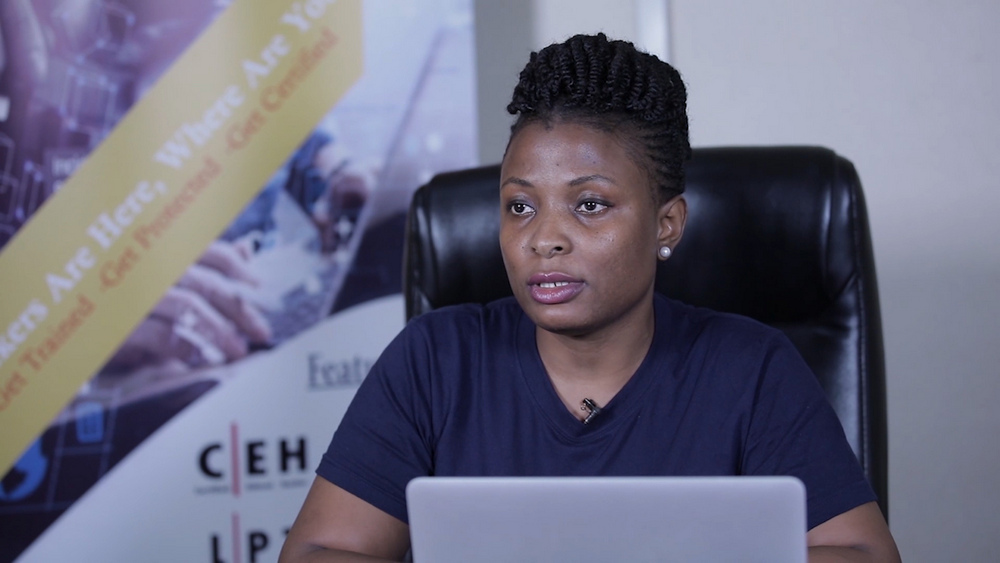
Dr. Coach Achu Gustave, the ECSD Corporate/ Cyber Strategist, and Instructor says they want to squarely address cybersecurity issues despite the current education challenges in Africa. “The kind of education given in Africa is currently the main challenge to training; the academia education is not what Africa needs right now, because school-based and state-regulated provision cannot respond as rapidly and flexible as industry-standard education can, to technological changes as the in-company training that is strategically and well-integrated.
He adds that expertise needs to be directed not by abstract and theoretical knowledge but by a more practice-based curriculum.
Dr. Achu explains that the main purpose of the C4A project designed for Africa is to train the most advanced technocrats in cybersecurity using a work-based exhaustive certification framework that covers the fundamental core, advanced threats and industrial standards in information technology, communication technology, and cybersecurity.
“We have put in place programs to train individuals in offering cyber services in Africa. These programs focus on training that will establish state, industry and cybersecurity experts to improve Africa’s capacity to prevent, defend and respond to cybercrime without any need to call on Chinese or Arabic countries for support. ”
“At ECSD, we provide a comprehensive development path that delivers the most outstanding cybersecurity practices from Africa to the rest of the world, using international standardized cybersecurity training programs, partnerships, certification and services that address cybersecurity challenges and needs in partnership with EC-Council, Microsoft, Cisco, CompTIA, and many more.”
Dr. Achu encourages whoever is interested in IT programs and cybersecurity to join these programs, in order to secure Africa’s cyber services and having them secured by Africans. He says that the ultimate goal is to have a cyber-security system for Rwanda provided by Rwandans.