The Minister in an interview with the media said that there is a big financial gap to fill due to unforeseen expenditures especially in the health sector where there is need for the purchase of adequate equipment needed to test and treat coronavirus patients. “We also intend to keep offering the much-needed assistance to vulnerable households in Rwanda which were highly affected by the crisis.”
Ndagijimana said that Rwanda’s economy will grow by 5.1% instead of the formerly projected 8.1%.
“Tax revenues will considerably reduce given that most businesses are on hold during the lockdown as well as the import and export of goods. On another note, unforeseen expenditures will cause a drop in our Gross Domestic Product (GDP). We recorded an increase in GDP by 9.4% in 2019 but with the support of the IMF, we have revised our figures and we expect GDP growth at only by 5.1%.”
The government of Rwanda recently announced the International Monetary Fund (IMF) Executive Board has approved a $109.4 million (Rwf 104 billion) grant to address the challenges posed by COVID-19 pandemic.
The aid will be drawn under the Rapid Credit Facility (RCF). It is a zero-interest, long term loan which will be paid back over a period of 10 years starting from the five and a half years to come.
Currently, the government of Rwanda is negotiating for aid with the African Development Bank (AfDB) to bridge the financial gap brought about by coronavirus.
Ndagijimana stated that funds from IMF will not impact economic progress since it is a long-term loan which will be paid back five and a half years from now. He said that a thorough analysis was done to assess repayment capabilities before requesting for the loan.
Currently, 89 people have tested positive for coronavirus in Rwanda while the number of patients has reached over a million globally.
The Chief Executive Officer of BK Dr. Diane Karusisi said that the intervention is meant to overcome financial difficulties occasioned by the coronavirus outbreak and reduce the strain on small businesses and individuals with an income flow that was also negatively affected.
“To our customers who want to continue servicing their facilities, the Bank will waive all late payment penalties on all Term loans (loans with monthly installments), including BKquick loans as well Credit card penalties for the months of March, April and May 2019,” Karusisi explained.
For customers who wish to continue servicing their facilities, the Bank will waive all late payment penalties on all Term loans (loans with monthly installments), including BKquick loans as well Credit card penalties for the months of March, April and May 2019.
For further assistance or advice, customers can reach out to their relationship managers or branch business managers.
In addition, Bank of Kigali has donated Rwf 282,000,000 to the government of Rwanda to support vulnerable families and communities affected by the crisis.
Bank of Kigali continues to provide banking services at all its branches but advises customers to use digital channels during transactions to stem the spread of coronavirus.
BK stands ready to support speedy economic recovery in Rwanda.
With the prevailing circumstances, I am reminded of the vanity of worldly riches. I, every morning, look at my car just parked there, no where to go to. But even the proud owners of jets cannot fly them. Air spaces are all shut. Every country is nursing its citizens and fighting an unseen tiny but wildly devastating enemy.
I am confined to a room. The designer clothes, shoes and perfumes in my wardrobe have all become useless and serving no purpose.
The work engagements and meetings that always steal my time with God and family have all come to a complete naught.
The merrymaking, the evening drink with friends (how I miss my cold Miitzig), are all nothing now. All that you and me need today is food and air to breathe. We just want to be alive. Nothing else is really important.
But you should have hope in God. He is keeping you alive for a purpose. God will enable scientists and political leaders to steer us through this. Otherwise, on our own, our energy, we cannot.
People with energy and vigour have all become helpless. All of a sudden. Here in Kigali, the hard-hit families by the lockdown have to be fed. No matter whether able-bodied or not. It is not a bad thing to feed them. But it takes us back to realize the vanity and emptiness in world possessions.
Uncle Tommy, I have learned that where you are, the government food distribution plan, as a response to the lockdown, is also out. And I understand that for the first time your government leaders are going to categorize people according to their incomes–as rich, poor, needy, etc.
This is something we did in Rwanda many years ago using a community participatory approach called UBUDEHE. The government of Rwanda knows the status of each household with a certain degree of accuracy.
In times like this, it becomes an easy task for government to identify how to support the most vulnerable through either direct financial support (executed under Vision Umurenge Program) or which able-bodied but unemployed youth to recruit in construction works of public infrastructures, among others.
The categorization is as well important in identifying most vulnerable families for which government pays medical insurance and tuition fees at university.
Uncle, I think there are many experiences and lessons we can share during and after episodes like this.
For, at the end of it all, it is we, the ordinary people, that either sink when things go haywire, or swim to the shores when all is well crafted.
These actions that involve the ordinary people; their views, their needs, their satisfaction, their commitment to sharing experiences and their willingness to embrace and enhance change are what is making Rwanda unique, adaptive and personifying hope.
By the way, do you get time to exercise from home? Please do. Keep fit. Walk around the house and take short runs in the compound. It is good for your health. Boosts your immunity and helps to avoid DVT [Deep Venous Thrombosis] or blood clots on the legs.
Well, I do not have much more to write.
But I continue to beseech you uncle, to continue joining us in prayer and never to relent in observing the guidelines given out during the lockdown. I say this because I know if you do not rest at home, you may end up Resting In Peace.
Victims reported the assault to local media on March 2nd, 2020.
Military spokesperson Lt Col Innocent Munyengango told IGIHE that investigation is ongoing and that the military court will follow up with the proceedings to ensure justice is served.
Lt Col Munyengango said that crimes committed by a Rwanda Defense Force (RDF) soldier cannot be tolerated and that the three suspects will be prosecuted as stated by the law.
“Their court hearing will be public and will be conducted where the crime was committed.”
Patient zero was identified in Rwanda on March 14th, 2020 and since then the number has grown to reach 84.
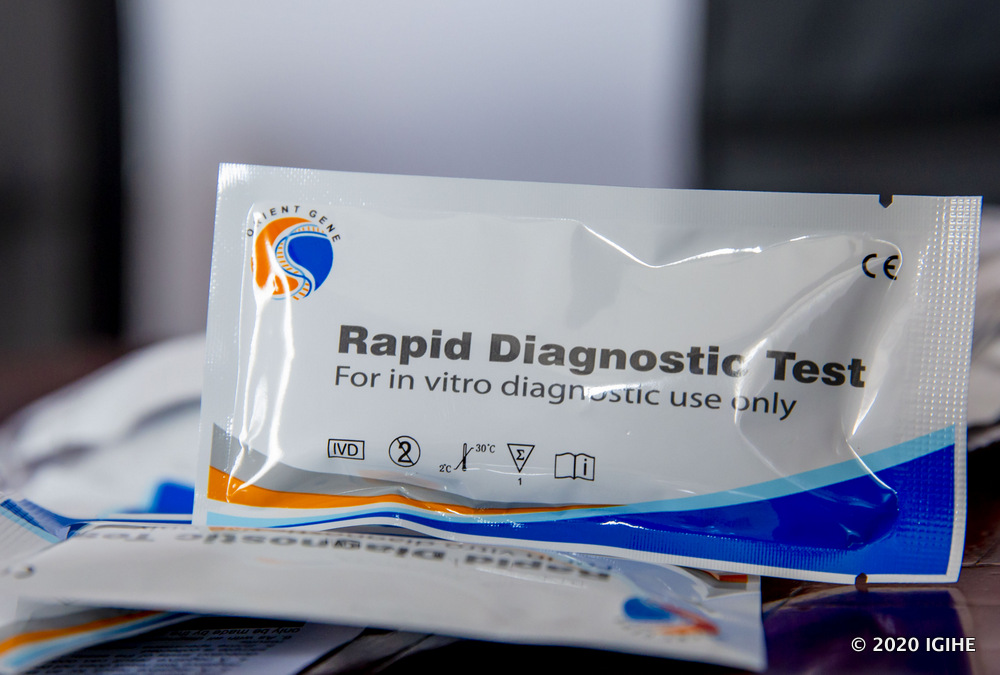
Pink Mango C&D administration stated that the rapid test kits will come in handy since results are available between 5 to 10 minutes.
Ndemezo Denis, Pink Mango C&D Executive Director said that 1000 additional test kits will soon be shipped to Rwanda. “China used rapid diagnostic test kits to stem the spread of coronavirus and today no new cases of the virus have been identified. We expect the same results for Rwanda and that life will go back to normal as soon as the virus is contained.”
Ndemezo said that the private sector needs to support the government of Rwanda during this critical period and help counter the economic effects posed by the outbreak.
Dr. Nsanzimana Sabin, Rwanda Biomedical Center (RBC) Director General confirmed that RBC received the donation from Pink Mango C&D.
“We are in desperate need now more than ever of test kits and protective equipment for coronavirus treatment. The donation from Pink Mango C&D was more than valuable to us.”
After coronavirus spread in China towards the end of 2019, the country has injected countless resources and invested in treating infected patients and preventing new infections. The ministry of industry and ICT in China has recently announced that 98.6% of industries and institutions in China have reopened business after a 3-month long lockdown.
Vice-Minister of Industry and Information Technology Xin Guobin reported that major industries and pharmaceutical companies have resumed operations while 76% of SMEs have reopened business as well.
The already isolated, nuclear-armed North quickly shut down its borders after the virus was first detected in neighbouring China in January and imposed strict containment measures.
Pak Myong Su, a director of the North’s central emergency anti-epidemic headquarters, insisted that the efforts had been completely successful. “Not one single person has been infected with the novel coronavirus in our country so far,” Pak told AFP.
“We have carried out preemptive and scientific measures such as inspections and quarantine for all personnel entering our country and thoroughly disinfecting all goods, as well as closing borders and blocking sea and air lanes.”
Nearly every other country in the world has reported coronavirus cases. Aside from China, South Korea endured one of the worst early outbreaks.
Recorded cases of infection across 188 countries now exceed one million, and these include 51,718 deaths, according to an AFP tally on Thursday based on official country data and World Health Organization figures.
Experts have warned that North Korea is particularly vulnerable to the virus because of its weak healthcare system, and defectors have accused Pyongyang of covering up an outbreak.
The top US military commander in South Korea, General Robert Abrams, said on Thursday that Pyongyang’s assertion that it had no cases was “untrue”. “I can tell you that is an impossible claim based on all of the intel that we have seen,” Abrams told VOA News.
The North’s military was locked down for 30 days in February and early March over the epidemic, he said. “They took draconian measures at their border crossings and inside their formations to do exactly what everybody else is doing, which is to stop the spread,” he added.
According to a tally by Johns Hopkins University released on Thursday, at least 1,000,036 infections have been recorded after cases doubled in the past eight days. It took 75 days to log the first 500,000 cases around the world.
Around 22% of total cases were reported in the United States, while Italy and Spain have each reported 11% of global cases. China, where the virus emerged in December, accounts for 8% of total cases.
The global fatality rate has now risen above 5% of all reported cases, with the UK, the US and Spain among countries reporting a spike in fatalities in recent days.
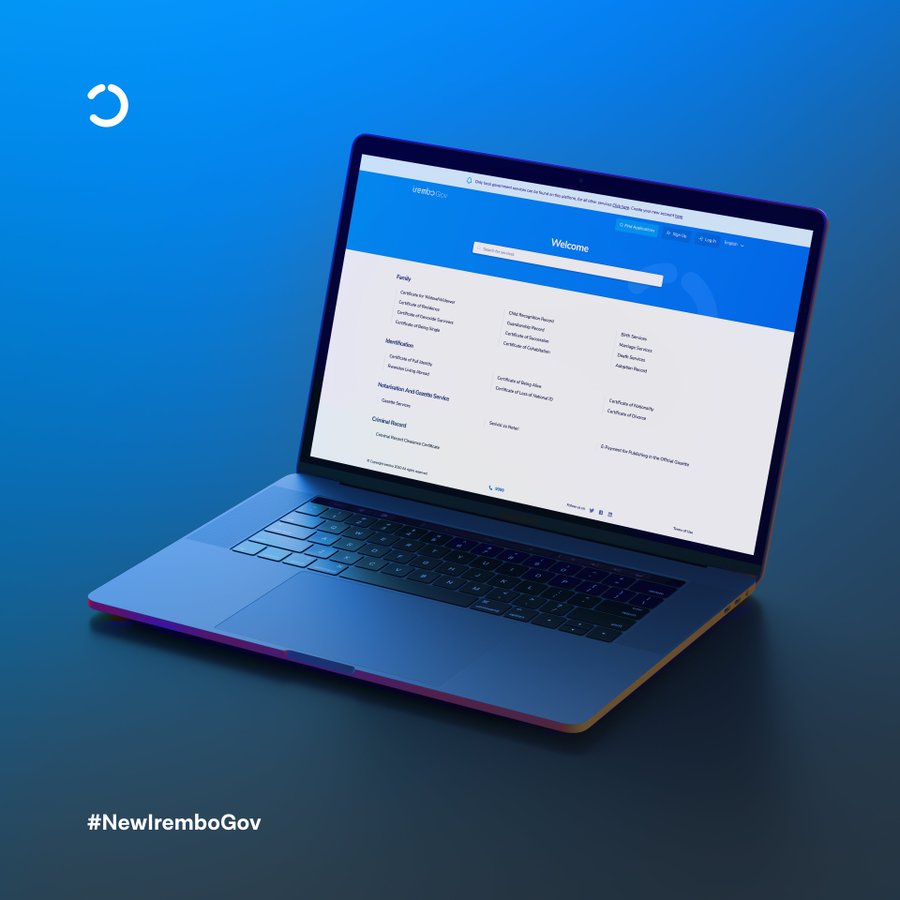
Irembo announced on Thursday that they made more new changes to this service to improve user’s experience.
In a tweet, Irembo said: “We are excited to introduce IremboGov 2.0, an all-new redesigned & reengineered e-government service platform, which has started with 22 Local Govern’t services.”
“This also kicks off a phased migration of all services to the new platform, to be done in the next few months.”
The process takes only three steps and a fee of Rwf1200, payable digitally via Mobile Money or any other digital payment system.
This new way takes only one day to receive the certificate, but if Prosecution, the issuing institution, has a lot of requests it can take three days maximum, according to the service level agreement between Irembo and Prosecution.
The economic impact of the COVID-19 pandemic is rapidly unfolding, with the near-term outlook deteriorating quickly. This has given a rise to significant fiscal and external financing needs. The authorities have acted fast by putting in place measures to help contain and mitigate the spread of the disease.
The RCF funds will support the authorities’ efforts by backstopping the decline in international reserves and providing financing to the budget for increased spending aimed at containing the epidemic and mitigating its economic impact. This additional IMF financing also ought to help catalyze further assistance from the international community, preferably in the form of grants.
The IMF continues to monitor Rwanda’s situation closely and stands ready to provide policy advice and further support as needed.
Following the Executive Board’s discussion of Rwanda, Mr. Tao Zhang, Deputy Managing Director and Acting Chair, issued the following statement:
“The COVID-19 Pandemic has ground Rwanda’s economy to a halt, creating an urgent balance of payments need. To contain and mitigate the spread of the virus, the government swiftly implemented measures that have affected all sectors of the economy. With uncertainties surrounding the duration and spread of the pandemic, the economic fallout could intensify further.
“The IMF emergency support under the Rapid Credit Facility will help with COVID19-related pressures on trade, tourism and foreign exchange reserves, and will provide much-needed resources for health expenditure and for households and firms affected by the crisis. It should also help to catalyze donor support.
“A temporary widening of the budget deficit is appropriate to mitigate the health and economic impact of the pandemic. Spending should be well-targeted and cost-effective to not crowd-out other priority areas. Once the crisis abates, the fiscal adjustment path should be adjusted to preserve debt sustainability in the medium-term. Contingency plans should be prepared given the uncertain outlook.
“Monetary policy needs to be data-driven and the central bank should stand ready to provide additional liquidity support if warranted. A flexible exchange rate should be maintained as a shock absorber.
The National Bank of Rwanda has taken various measures to help maintain the health of the financial sector and should continue to show flexibility, while encouraging prudent loan restructuring and stepping up reporting requirements.
“Additional donor support is critical to close the remaining financing gap, ease the adjustment burden, and preserve Rwanda’s development gains over the last two decades.”
• Supporting health organizations – Facebook continues to partner with organizations like health agencies and NGOs who are actively using its platforms to share accurate information about the situation, including on Pages. To help bolster and extend these efforts, the company is also providing ad credits to the World Health Organisation (WHO)
• Supporting global health organisations in fundraising – As people come together on Facebook for this critical relief effort, we’re supporting the UNF/WHO COVID-19 Solidarity Response Fund Facebook Fundraiser with $10M in matching donations. We’re also working with the CDC Foundation to launch a Facebook Fundraiser in the coming weeks, and we will also match up to $10M.
• Providing educational pop-ups on top of search results:
• Medical Supply Hoarding/Coronavirus Ad and Commerce Policy Changes – Our ongoing work to limit the spread of misinformation and harmful content about the virus also applies to advertising. We launched a new policy prohibiting ads for products that refer to the coronavirus in ways intended to create a panic or imply that their products guarantee a cure or prevent people from contracting it, this includes claims related to false cures or prevention methods — like drinking bleach cures the coronavirus — or claims that create confusion about health resources that are available. We are also temporarily banning advertisements and commerce listings that sell medical face masks
• Limiting misinformation and harmful content – Our global network of third-party fact-checkers are continuing their work in reviewing content and debunking false claims that are spreading related to the coronavirus.
• Removing Harmful Health Misinformation: We will also start to remove content with false claims or conspiracy theories that have been flagged by leading global health organizations and local health authorities that could cause harm to people who believe them. We are doing this as an extension of our existing policies to remove content that could cause physical harm. We’re focusing on claims that are designed to discourage treatment or taking appropriate precautions. This includes claims related to false cures or prevention methods — like drinking bleach cures the coronavirus — or claims that create confusion about health resources that are available. We will also block or restrict hashtags used to spread misinformation on Instagram, and are conducting proactive sweeps to find and remove as much of this content as we can
• On Instagram – We’ve moved WHO and other authoritative sources to top of Search, so people can easily find the most accurate information. We’ll also no longer allow people to search for COVID-19 related AR effects, unless they are developed in partnership with a recognized health organization
• Facebook Groups – We are focused on connecting people with authoritative sources and reducing the spread of harmful misinformation, including in Groups. Anyone who searches for Coronavirus related groups is directed to credible information from health organizations. We already reduce the distribution of any groups that repeatedly share false news, and we are also starting to remove coronavirus related groups and pages from the recommendations we show people
• Creation of the Business Resource Hub – Supporting businesses being affected – directly or indirectly – by the recent outbreak of COVID-19, the Hub features resources and recommendations to help small businesses stay connected to customers and keep their business on track. It also includes quick and easy access to credible and accurate information about COVID-19 to help small businesses and the communities they serve, stay informed.
Commenting on the ongoing efforts in East Africa, Facebook’s Head of Public Policy for East and Horn of Africa, Mercy Ndegwa said:
“We are committed to partnering with governments, technology companies, and civil society to respond to the immense challenges presented at this time, with new cases confirmed in Kenya, Ethiopia and Rwanda, this is an ever evolving situation, where we will continue to provide support to the relevant bodies locally. We also encourage all users to check the facts via official public health agencies before sharing messages that have been forwarded to them, and to engage directly with trusted and official sources for important information.”