Sauna and massage are among the prohibited services in this period when the country is fighting and preventing the pandemic of novel Coronavirus
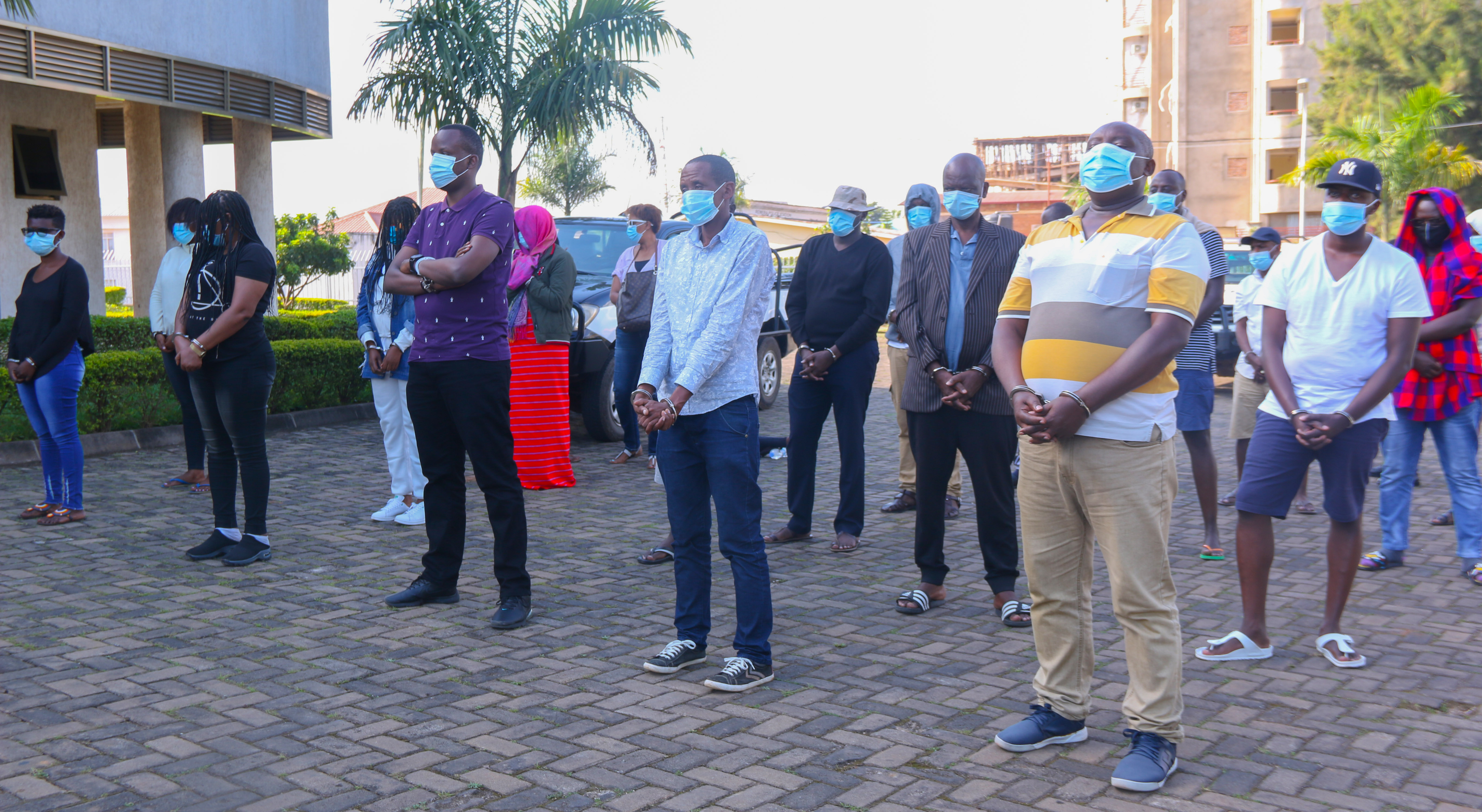
The violators were paraded to the media Sunday afternoon at Remera metropolitan.
Among those arrested are Raymond Bizwinayo, the hotel proprietor, Christopher Tuyishime, the manager and Alexis Nyiridandi, who is in charge of the Sauna.
Bizwinayo distanced himself from the unlawful acts, arguing that Sauna and massage services were under different management although they were operating within the same facility.
Tuyishime said that Sauna and massage services were opened the same day the government opened hotels and other hospitality establishments.
Nyiridandi alleged that the gym section remained closed as directed by the government and feigned knowledge that Sauna and massage were still closed since salons were also given green light.
Alexandre Kanyambo, one of the arrested clients narrated that he was called by a friend informing him of a place open to Sauna and massage services.
“I left Gacuriro to Remera, joined my friend to the hotel where we were caught. I wasn’t aware that these are among the prohibited services, but now I know I breached the government directives to be in a congested place like Sauna,” said Kanyambo.
To Uwase, another suspect, she argued that as she was jogging that evening, she had a smell of Sauna as she went passed the hotel.
“I followed the Sauna smell to Lebanon hotel, I was arrested inside with other people, few minutes after I had entered,” said Uwase.
Rwanda National Police (RNP) spokesperson, CP John Bosco Kabera said that the actions were contrary to the “outlined and clear government directives and guidelines” meant to prevent the spread of Coronavirus.
“Sauna and massage parlour are among the prohibited services in this period. These people were in the same room where, if one of them was infected with the virus, he or she could have infected others; it was risky and unlawful,” said CP Kabera.
He added: “At this level, we expect everyone; owners and managers of business facilities, and the public in general to be at the peak of positive response. But of course, we still have such people whose actions hamper the government response to the problem in our midst, and putting lives of other people at risk.”
“These people came from different areas of Kigali, met in one place and no one knew the status of the other.
We want to repeat this; whoever breaches the directives will be arrested and we continue to thank some members of the public for the partnership and reporting such serious violations.”
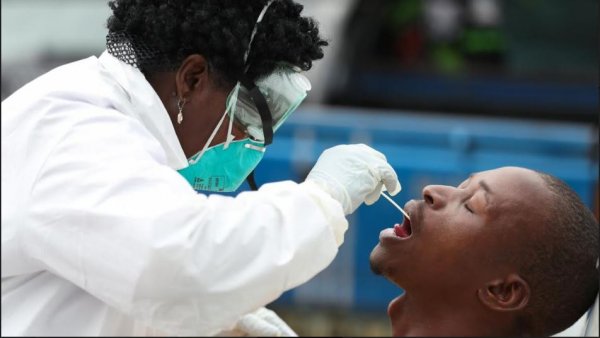
Out of the 1,400 people who were tested on Sunday, only two tested positive for the virus, bringing the number of confirmed cases to 327 of which 237 have recovered.
Since the first the coronavirus case was reported in Rwanda in March, the country has conducted 58,477 tests.
The suspects identified as Ismael Niyiduha, 32, Emmanuel Ahishakiye, 20 and Emmanuel Nizeyimana were arrested on Thursday following information on the alleged theft.
Chief Inspector of Police (CIP) Hamdun Twizeyimana, the police spokesperson for the Eastern region, said that police officers received credible information on theft, suspected thieves and where the materials were hidden.
“The person in charge of the construction site reported that there are some missing materials. He reported that the stolen materials were taken to a welding workshop belonging to Niyiduha,” said CIP Twizeyimana.
He added: “Indeed, assorted construction materials were recovered from the workshop and the Niyiduha arrested. Police later arrested Ahishakiye, who transported those stolen materials and Nizeyimana, the guard of that site, who sold them.”
“Law enforcement organs, local leaders and residents are working together to break the whole chain and to recover other materials still missing.”
Theft, under article 166 of the penal code, attracts an imprisonment of between one and two years and a fine of Rwf1 million to Rwf2 million, a community service of not more than six months or one of the two penalties.
Félicien Kabuga was one of the world’s most wanted fugitives, believed by authorities to have been responsible for underwriting the 1994 Rwandan genocide and providing the hundreds of thousands of machetes that ethnic Hutu marauders used to slaughter at least 800,000 citizens. But until his dramatic capture on May 16, in a dawn raid, Kabuga had been living in hiding for 26 years in Kenya, Germany, and, recently, in France.
Here, for the first time, Serge Brammertz, the man behind the manhunt, describes how it worked and why it succeeded.
If Brammertz did not already exist, Hollywood might have imagined him. For years, the Belgian who had helped track down Bosnian Serb war criminals Radovan Karadžić and Ratko Mladić as well as investigate the Hezbollah operatives allegedly responsible for assassinating Lebanese Prime Minister Rafik Hariri had been known in human rights circles as something of an Indiana Jones of international justice.
With his salt-and-pepper hair and tailored suits, the 58-year-old prosecutor had a knack for making a lasting impression. And Saturday, May 16, 2020, was no exception.
At 6:30 a.m., as Brammertz manned the phone at his home in The Hague, a phalanx of armed gendarmes flew through the door of a third-floor apartment in a Paris suburb and arrested Kabuga, 84, who will soon face Brammertz in court, most likely in Tanzania.
Hunting génocidaires (the perpetrators of genocide) had largely become an analog business in a digital world. Investigators waited for tips from informants. Then they set off to do the shoe-leather work of canvassing suspected hideouts and interviewing potential accomplices.
Brammertz helped change all that in 2016, when the U.N. Security Council named him chief prosecutor of an important body with a forgettable name: the International Residual Mechanism for Criminal Tribunals. He applied the tools of the counterterrorism trade including cell phone geolocation, “pattern of life” intelligence, and sophisticated, big-data-crunching analytical tools to hunting war criminals.
Brammertz’s mandate was to finish the work of both the International Criminal Tribunal for the former Yugoslavia and the International Criminal Tribunal for Rwanda. It fell to him to round up and prosecute fugitives from two of the most bloody and shameful episodes of the past half-century. And few targets loomed larger than Kabuga, who had a $5 million U.S. bounty on his head.
Colonel Èric Emeraux took part in the raid. “After 26 years as a fugitive,” he said, “when you find 20 members of the gendarmerie, plus prosecutors, in your flat on a Saturday morning, you understand it is the end of the game.” Emeraux, as the head of France’s Office for Combatting Crimes Against Humanity, Genocides and War Crimes, worked closely with Brammertz. (Emeraux moonlights as the electronic dance music composer Matthias Ka.)
The French colonel explained that despite two months of intensive investigation, his team wanted proof positive that they had the right man. So, the minute Kabuga was nabbed, a police technician swabbed the inside of the old man’s cheek and raced the genetic material to a forensic lab, where the DNA was compared against a 2007 sample from Germany Kabuga’s last-known location.
Two hours later they had a match and Brammertz had his man. (Kabuga’s lawyer has said that his client should be presumed innocent, and that he wants to be tried in France, not before the U.N. tribunal based in Tanzania. The next hearing is on May 27th.)
{{Vanity Fair: Kabuga was formally indicted in 1997, but has been a wanted man since the Rwandan genocide ended in July 1994. Do you think he was surprised to be caught after all this time?}}
Serge Brammertz: If you have been living quietly in the middle of Paris, I imagine you are probably surprised when after so many years you’re finally arrested. This investigation is still ongoing, but I am personally convinced that he has been in that apartment for many years. And, you know, he was rarely seen by neighbors. He very rarely went out for walks. So, he was living the quiet life of a retiree.
{{It is hard to imagine a man whose face has been on most wanted posters for decades with a bounty on his head living in Paris, or any metropolis.}}
Well, you know, when Radovan Karadžić went into hiding, he changed his identity. He became Dr. Dabić. He lost, I think, 20 kilos. He changed his physical appearance, growing a long white beard. He changed his accent and was living in the open and working as a healer.
And he even went on TV shows using his new identity without anyone knowing that he was the most wanted war criminal from the former Yugoslavia. So, each fugitive has a different story.
{{When you became chief prosecutor in 2016, you changed how the fugitive-tracking team operated. Tell me about that and how you homed in on Kabuga.}}
For a long time, the tracking team’s focus was on working with informants, different human sources who [simultaneously] would report that Kabuga was in Gabon, Madagascar, or Burundi, which obviously couldn’t be the case. So, we tried to change this reactive way of investigating to become proactive, focusing on analysis and collection. We started assembling and analyzing telephone data, financial and immigration records, travel plans, and so on. As we became more data driven, it allowed us to concentrate our investigation on Western Europe.
{{What was your starting point?}}
The last place we were one hundred percent sure Kabuga had been was in Germany back in 2007. He was there under a different identity and had surgery. His son-in-law [Augustin Ngirabatware] was arrested in September that year.
[He was subsequently convicted and sentenced to 30 years for genocide and crimes against humanity.] Kabuga was with him in Germany, but this was not discovered until later.
Last spring, we were convinced that he never left Europe. Three months ago, based on analysis of travel movements, we narrowed it down to the U.K., Belgium, and France. And after looking at the most recent data we had collected, we concluded that it was highly likely that the specific area in France we had identified [Asnierès-sur-Seine] was the hiding place.
{{What kind of tools did you use to pin him down?}}
Cell-tower analysis, phone number analysis, and other technical tools. We got very, very close down to a number of streets in this particular area. And then the French who had been providing information as part of our task force put this fantastic operation together by locating the apartment and, once the apartment had been located, setting up a very successful operation.
At a time when nationalism is ascendant, Kabuga’s capture appeared to require considerable international coordination and cooperation.
Definitely. We are a tribunal. We cannot do wiretaps, surveillance, and financial investigations. We relied on our partners at Interpol, Europol, and the police services in the U.K., France, Belgium, the Netherlands, Switzerland, and Luxembourg. They collected information that we requested at the national level, which we then put into our analytics system. That allowed us to narrow our focus.
{{Did the pandemic make this operation more challenging?}}
Yes and no. It is difficult to set up surveillance on an empty street in the middle of a lockdown. People are looking and it looks quite suspicious. So, one definitely has to be much more careful in the use of surveillance techniques. On the other hand, we took advantage of the lockdown. It paused the movements of persons of interest his support network. We could determine who was likely with him in this place, which only confirmed our working hypothesis.
Actually, we were anxious for rapid intervention an arrest to take place before the lockdown was over, and he or the people around him started to move.
[Col. Emeraux recounted that his men had actually mounted a camera in a vehicle parked on Kabuga’s street, which they monitored remotely using iPhones. “We could see the street without being in the street,” he said, adding that the French had initially planned on arresting Kabuga on Tuesday, May 19. But, it seems, cabin fever was setting in among his circle of protectors. “We were geolocating the family’s phones and we saw them moving. So, in coordination with Brammertz, we moved up the operation to Saturday, fearful he might leave.”]
{{It sounds like you had a stroke of luck in the unluckiest of times.}}
I’ve seen it with other fugitives we have arrested. There are years of investigation and then there’s this one phone call to this one person where you get this one number that makes the entire case. Luck is important.
{{Is it fair to say that you adopted tactics, techniques, and procedures from the counterterrorism world like “pattern of life” analysis and applied them to the hunt for suspected war criminals?}}
Yes. Our methodology, technology, and the way of investigating was very, very similar. We know that nowadays, everyone knows what kind of technologies can be used and that [those involved] are extremely careful about what they say on the phone or do online. That’s why you really need to use different analytical methods.
As the U.S. did in the hunt for al-Qaeda chief Osama Bin Laden and other high-value targets, you didn’t necessarily go after Kabuga, you went after those around him.
Exactly. In the early days, the tracking team would follow leads provided by a number of so-called informants. But what we had learned with Mladić, definitely, and it’s absolutely the case with Kabuga, is that you have to go for the fugitive’s support network.
We identified close to 20 persons of interest, which we reduced to five or six by the end. And by zooming in on what they were doing, where they were going, how they were communicating, well, it led us to conclude that he was almost certainly in that specific area. We could also see that persons of interest were rarely traveling to Africa, were mainly moving in Western Europe, and the majority of them were living and had residence in France, Belgium, and the U.K.
{{Twenty-six years is a very long to remain at large. What have you learned about his tradecraft?}}
Kabuga had more than 20 different identities and three different passports. When he was arrested, he was using another identity. So we believe there were four passports [in all] from different African countries. And the problem is that these passports were not fake or stolen. They appear to have been delivered by competent authorities with the correct stamps on them. That’s probably the result of corruption or other forms of interference.
{{It sounds like he had friends in high places.}}
What we have learned with Karadžić, Mladić, and now Kabuga is that in the early years after they’re indicted or are on the run, they still have a lot of supporters because they were standing for some political idea.
That was certainly true of Mladić and the military. And it is obvious that in the first few years, Kabuga had strong support from his political allies, many of them refugees in other countries.
But over time these fugitives cannot rely on a broader network. And their network becomes much, much smaller. In the end, the only thing they can rely on is their family.
{{Before his arrest, did you consider Kabuga the world’s most wanted war criminal?}}
If you ask any victim or survivor of the genocide in Rwanda, I think everyone would mention Kabuga as being the most wanted person—the man they most want to see in court because of the role he played.
For an international prosecutor, it is very important to stay in close contact with survivors and victims. For the rest of us, this was something that happened 26 years ago. But for those survivors and victims, their lives stopped 26 years ago. Those massacres of their lost ones are still today at the center of their life.
I would say the same of the mothers of Srebrenica who I met so many times. You cannot bring back their loved ones. You cannot change their difficult situations. But you can provide some form of relief by bringing to justice those who are responsible for their suffering.
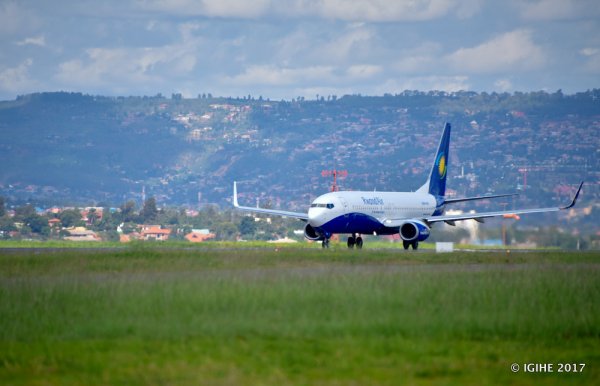
The CEO of the airline Yvonne Makolo said that the airline will direct the funds in sustaining operations and expanding the airline as flights resume after a lull occasioned by coronavirus pandemic.
“We are looking at both, sustaining operations and expanding the airline but for now we are waiting to see if skies will reopen and we resume flying,” She said.
RwandAir grounded flights as part of the measures to contain the spread of COVID-19 and only recently launched cargo flights in the region and beyond as an alternative as passenger flights remain suspended.
Last month, RwandAir announced that they would cut employees’ salaries by between 8 percent and 65 percent while the top management team forfeited their salaries. Makolo said the airline has not laid off any staff.
“We have not laid off any staff and we don’t hope to do so,” Makolo said, adding however that fully restoring operation will depend on the subsiding of COVID-19.
RwandAir recently resumed cargo flights to and from Guangzhou, China, flights from Mwanza, Tanzania, to Brussels as well as London in a bid to rake in revenue from the growing demand of goods.
Makolo said the plan is working out well with the demand for cargo shipment on the increase as many countries continue to impose travel restrictions to contain the spread of Coronavirus.
President Paul Kagame said the government would consider investing more money in the airline to sustain its operations last month.
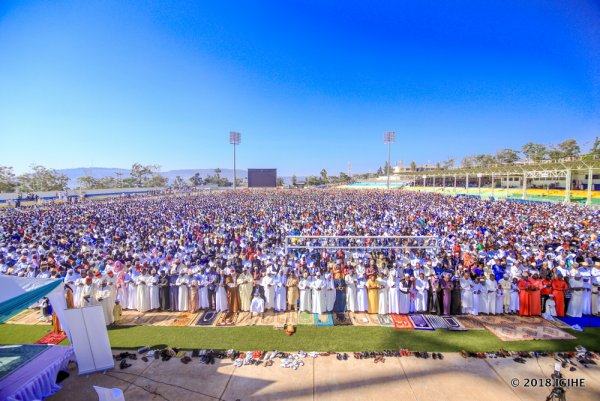
A statement signed by the Mufti of Rwanda, Sheikh Salim Hitimana, informs Muslims that the prayer of the Feast of Iddil-El Fitri will be aired on Rwandan Television from 7 a.m.
This means that prayers will be held at home as the country continues to observe COVID-19 prevention guidelines.
The operation was conducted by the Police and local leaders to fight the increasing cases of illegal fishing and use of destructive fishing gears.
Chief Inspector of Police (CIP) Hamdun Twizeyimana, the Police spokesperson for Eastern Region, said all the suspects were fishing illegally at night in Lake Karaba and were using destructive fishing nets called Kaningini, which catch and kill even the young fishes.
“We have arrested the six people, who were doing illegal and dangerous fishing practices that affect fish growth and lead to fish depletion, especially when using such fishing gears that net and kill even the juvenile fish,” he said.
He advised people involved in these unlawful activities to refrain and warned of that operations are continuous.
“These operations are continuous and aim at arresting anyone that breaches laws and regulations governing fishing in Rwanda. Those who violate the law will face the wrath of the law,” CIP Twizeyimana warned.
CIP Twizeyimana further urged fishing cooperatives and communities living along the lake to report anyone they suspect to be involved in illegal or criminal activities in the waters.
“Conduct your fishing business in a legal and responsive way; report those who break the law including smugglers and drug traffickers,” he urged.
The law N°58/2008 of 10/09/2008 determining the organization and management of aquaculture and fishing in Rwanda provides that the right to fishing in public waters is only granted by a competent authority, which issues fishing licence.
Any person, who engages in fishing activities without authorisation shall be liable to a fine ranging from Rwf50, 000 to Rwf200, 000 and an imprisonment of 3 to 6 months or one of them and dispossession of the equipment used.
Article 11 outlaws use of “poisonous substances aimed at stunning, weakening or killing fish; applying explosives; using electromagnetic procedures or electrocution; flashing water with an aim of capturing fish; fishing where water organisms are reproduced.”
As the Minister of Defence in the Interim Government during the genocide, Bizimana was indicted by the United Nations International Criminal Tribunal for Rwanda in 1998. He was charged with thirteen counts of genocide, complicity in genocide, extermination, murder, rape, torture, other inhumane acts, persecution, cruel treatment and outrages upon personal dignity, all in relation to crimes committed during the 1994 genocide.
Among the crimes charged, Bizimana was alleged to be responsible for the murders of former Prime Minister Agathe Uwilingiyimana and ten Belgian United Nations peacekeepers, and for the murder of Tutsi civilians throughout Gisenyi, Ruhengeri, Butare, Kibuye and Cyangugu prefectures.
This confirmation of death is the result of an exhaustive investigation by the Office of the Prosecutor combining advanced technology with extensive field operations, and involved exceptional cooperation with partner authorities in Rwanda, the Republic of the Congo, the Netherlands and the United States.
Late last year, the Office conducted DNA analysis on previously-obtained samples of human remains from a grave site in Pointe Noire, the Republic of the Congo. Subsequent investigations and comparative DNA analysis by the Office over the last several months ruled out that the remains were those of any other person.
The Office further verified additional evidence concerning the circumstances of Bizimana’s death. Accordingly, the Office confirms today that Augustin Bizimana is deceased. It is believed that he died in August 2000 in Pointe Noire.
The Office expresses its particular appreciation to the Netherlands Forensic Institute and the United States Armed Forces DNA Identification Laboratory for their critical technical support and assistance in this matter.
With the arrest of Félicien Kabuga last Saturday and today’s confirmation, the Office of the Prosecutor has now accounted for two of the three major fugitives indicted by the United Nations International Criminal Tribunal for Rwanda (ICTR).
The remaining major fugitive is Protais Mpiranya, former commander of the Presidential Guard of the Rwandan Armed Forces, and the Office continues to actively pursue him. The Office is also actively pursuing the five other fugitives indicted by the ICTR, Fulgence Kayishema, Phénéas Munyarugarama, Aloys Ndimbati, Ryandikayo and Charles Sikubwabo.
The Office of the Prosecutor calls on all UN Member States to intensify cooperation in order to bring the remaining fugitives to justice.
{{1) The capture of Kanombe airport and Kanombe camp, a fatal blow to the genocidal government}}
On Saturday May 21, 1994, RTLM urged to “kill Dallaire”. The FAR fired on UNAMIR HQ. On May 22, 1994, Kigali Airport and Kanombe camp were taken by the RPF Inkotanyi who chased away the killers. The capture of the Kanombe airport and military camp is one of the great successes of the campaign against genocide undertaken by the RPF Inkotanyi.
The same day Theodore Sindikubwabo wrote to President Mitterrand that his troops had withdrawn from the airport because of insufficient ammunition. He thanked him for the support “so far” and asked him for urgent help. He also phones her.
{{2.Tutsi massacre at Kigeme Hospital, Nyamagabe}}
Kigeme Hospital is located in Nyamagabe District, Gasaka Sector in Kigeme Cell. On April 7, 1994, the killers started to massacre Tutsi in Mudasomwa Commune.
Kigeme Hospital started to receive 8 wounded staff of EMUJECO in Mudasomwa and more injured people from Kitabi tea factory. On April 13, 1994, several wounded Tutsi from Rukondo commune, where the Tutsi had taken refuge at ADEPR Maheresho, started to arrive at the hospital. The injured people were so many that the hospital was obliged to call back staff who were on leave as well as students from the Groupe Scolaire Kigeme who were doing internship to help the injured.
During that time, although those who were injured were helped, some of them were taken away secretly to be killed after being treated. In addition, there was a car that used to come at night and take Tutsi who had been brought in for treatment and falsely claimed to have taken them to Murambi to keep their security but they were killed at Mwumba roadblock.
On May 22, 1994, on Pentecost day at around 6 am, Interahamwe attacks from Mudasomwa, center of Kigeme, Gatyazo and other places came. They carried Tutsi who were still alive along with their caterers and some Tutsi doctors who worked there and took them near the hospital’s kitchen to be killed. Those who survived were hidden in the corners and under the beds, especially in the private rooms because the attackers did not enter inside.
After killing them, Prefect Bucyibaruta Laurent accompanied by Bourgmestre Semakwavu and Captain Sebuhura Faustin came. Those who survived the attack were taken in a car to Murambi where many Tutsi were killed and among those taken there were injured people with wounds and yet they knew that they would not get doctors there or food.
So far the victims killed in the hospital with their identities are about 29 but the death toll is more than that because the identities of injured people who were brought on a daily basis were not known.
Those who were involved in the killings included Twagiramungu Edson, who was the director of the hospital, Philip, who was a businessman in the center of Kigeme, Zimbabwe was the driver of the Anglican Archbishop Kayumba Normand, Gasana venuste was a businessman, Kamugi Christophe, Mukono son of Karamage, Kibuye, Munyentwari Rodrigue, Mutiganda Evariste, Ngoga of Gasarenda, Mbiligi, Munyenkware, who was sentenced by the Gacaca and died in Prison, Minani, Nyiraneza, some of the guards who include Karuranga David, the Interahamwe, and the Hutu population.
{{1. Tutsi massacre at Nyamirembe – CND, Kamonyi}}
In early May, the killers came up with a plan to kill people who had not yet been killed and then said that peace was restored and that they would no longer kill women and girls because they had no race. At that time, many Tutsi, mostly women and children, came out of hiding, from their homes and bushes for about two weeks and some started to carry out household activities in the homes of their hosts, others started going to Kayenzi church.
The killers gathered Tutsi at a place called CND at about 4 pm. Victims were first raped by all killers one by one and then KANUSU and his brother both sons of KARAGIZO suggested that there was a good way of torturing them using an ironing machine as they had done it to the Tutsi at the University of Butare.
Hence, they took ironing machines with charcoal, LINI heated them up, and started burning their private parts like the breasts, the thighs and the genitals. While burning them, they were accusing them of illegal possession of firearm and a radio which they use to communicate with Inkotanyi and that their parents used to go to Kinihira and so on.
Because of pain, some of the girls and women, like MUKAMANZI Eularia and Atharia, daughter of MUNYANKINDI, admitted that they had all of those and they first took them to Eularia’s house and dug up in the garden but they could not find any gun and again took them to Atharia’s home in Gaji, where they also didn’t find any.
As the killers walked with the girls that night, they were naked and the whole body was suffering from iron machine injuries. After missing the guns at Atharia’s home, they decided to kill them at Munyankindi’s house. They dumped them in the Toilet at that house.
Some of the victims at the scene were identified as MUKAMANZI Eularie, Atharia, KANAKUZE, MUKANYONGA, Rosette and others.
Many Tutsi were killed that day but the above mentioned ones were very tortured. The perpetrators included KANUSU and his brother and LINI were in a big attack but those were at the forefront.
{{CONCLUSION }}
The genocide against the Tutsi was planned and carried out by the government. That plan continued to be implemented across all zones under the criminal Government’s control.
Done at Kigali on May 22, 2020
{{Dr. BIZIMANA Jean Damascène
Executive Secretary
National Commission for the Fight Against Genocide (CNLG)
}}
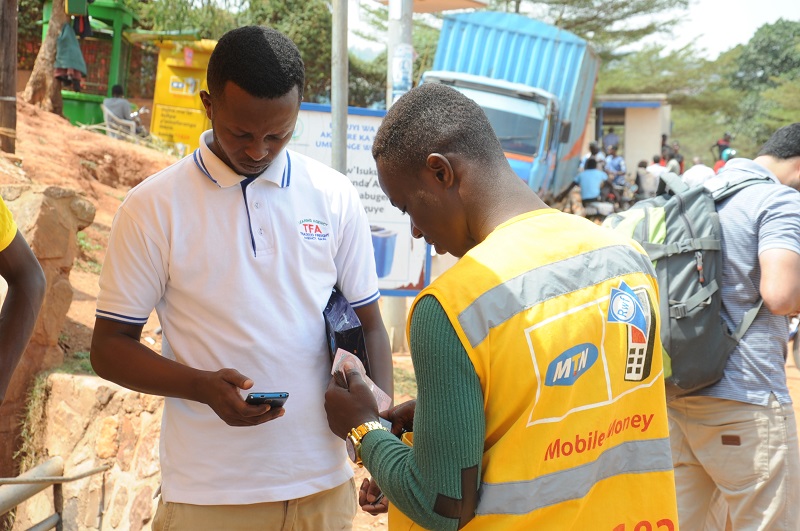
Statistics suggest that hand-to-hand payments have declined significantly these days as one of the means in taking caution against coronavirus transmission.
In March, the National Bank of Rwanda, (BNR), confirmed that within three months from March 19, 2020, no fee will be deducted from a person who withdraws money from a bank account to a Mobile Money account or from a Mobile Money bank account to reduce the risk of coronavirus infection.
According to a report by Insight2impact in collaboration with RURA, in the first week of the Stay Home program the number of transactions via mobile telephones reached 1.2 million, up from 600,000 in the previous week of Stay Home.
In the last week of April 2020, 1.8 million people transferred money through mobile telephone technologies in Rwanda.
From March 9 to March 15, a total of Rwf10.7 billion was transferred, and in the week ending March 22, the amount hit Rwf 24 billion.
The report shows that although the vast majority of people who transfer money through mobile phone technologies are men, women have also increasingly using the platform, registering 31% but in the fifth week of Stay home it was 36%.