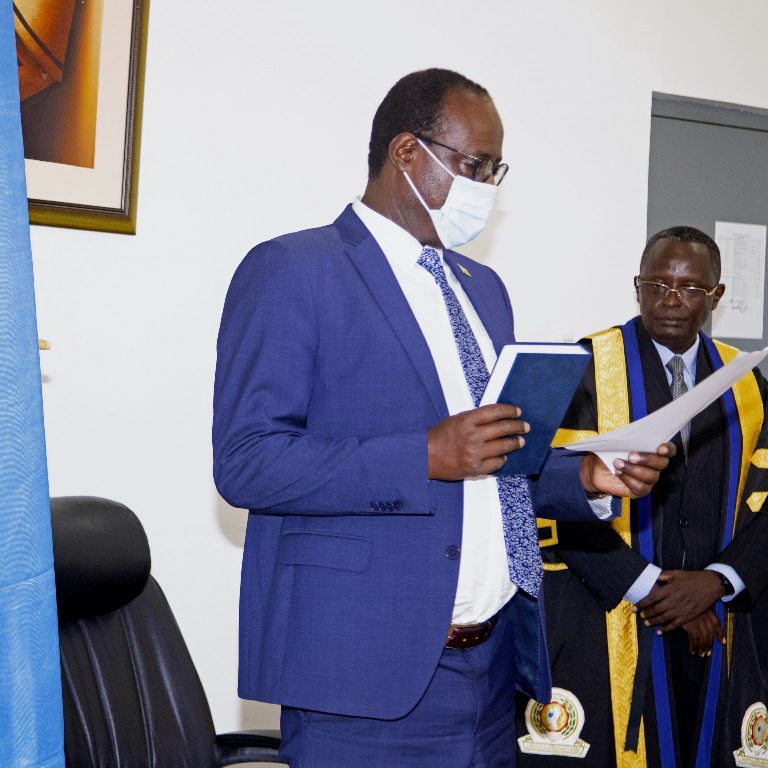
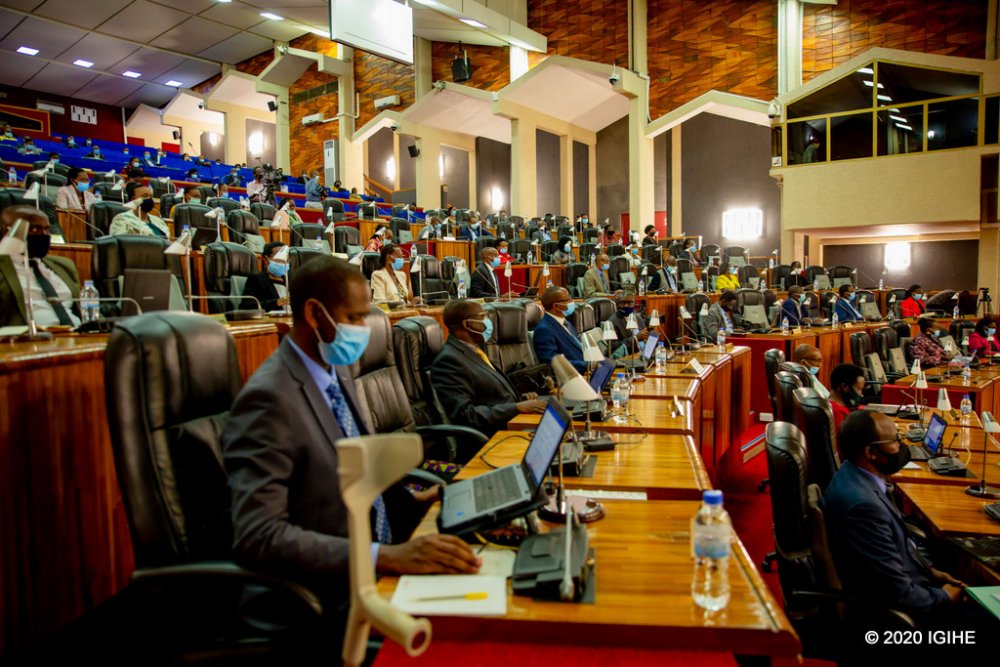
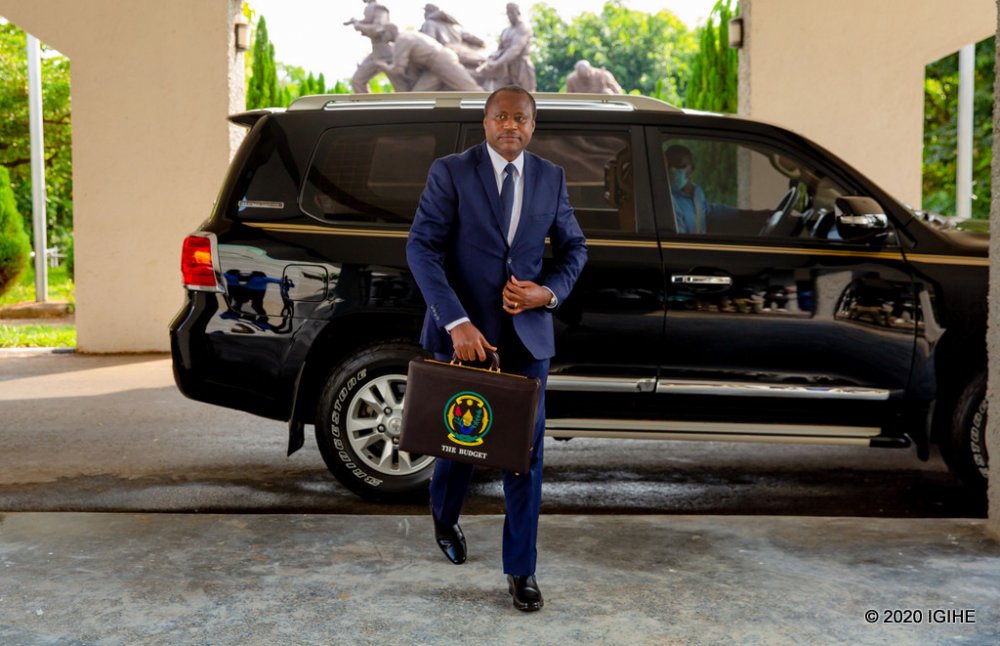
He was sworn in on Tuesday at the EALA General Assembly held online led by Parliament Speaker Martin Ngoga.
“Under the Treaty establishing the East African Community, under article 48 the Minister responsible for EAC Affairs, the Assistant Minister or Deputy Minister or Minister of State responsible for the EAC Affairs from each Partner State is an ex-officio member of the EALA,” a statement from the Ministry of Foreign Affairs said.
Under Rule 5 of EALA Rules of Procedure, a member shall not take a sit in the Assembly before taking the oath or affirmation of allegiance to the Treaty.
After the swearing-in, Prof Nshuti was immediately appointed to chair the EAC Council of Ministers.
Seasoned academic and politician Prof. Nshuti Manasseh bounced back in the cabinet on April 30 after over 12 years after he was dropped, replacing Amb. Olivier Nduhungirehe at the Ministry of Foreign Affairs as State Minister in charge of the East African Community.
Professor Nshuti holds a Master of Business Administration in Accounting, a Ph.D. in Economics [Finance], and a Master of Business Administration in Accounting from Aberdeen University in Scotland. He also holds a Bachelor of Commerce from Makerere University.
Prof. Nshuti has more than 23 years of experience in education and administration of universities and colleges.
Chief Inspector of Police (CIP) Sylvestre Twajamahoro, the Police spokesperson for the Southern region, identified the smugglers as Innocent Celestin Bizimana, 32, and Venuste Bagayuwitunze, 64.
He said that the minerals were seized from the duo in two separate operations.
“Bizimana and Bagayuwitunze work together in illegal trade of minerals. Following information that they had brought new mineral consignments, targeted operations were conducted and the 363kgs minerals, combine, were recovered in their respective houses in Nteko Cell, Busanze Sector,” CIP Twajamahoro explained.
It is said that the minerals were sneaked into Rwanda recently from a neighbouring country, through an illegal border point.
CIP Twajamahoro warned people who are involved in illegal mining, smuggling and trade activities.
“These are fraudulent dealings aimed at tax evasion. Minerals are supposed to be tagged before they are transported by licensed dealers or companies,” he said
“The law is clear; for you to deal in mineral trade you have to be licensed or given authorization documents. The vehicle transporting the minerals should also bear supporting documents and minerals must be tagged to trace their originality,” the spokesperson said.
He further observed that such unlawful activities involving “unnecessary movements and illegal cross-border” in this period can be the source COVID-19 infections. Borders are closed as one of the government devised measures to contain the pandemic of COVID-19.
The government also advises against unnecessary movements in this period of the pandemic.
Article 1 of the Ministerial Regulations No 001/Minifom/2011 relating to fighting smuggling in mineral trading stipulates that nobody is allowed to purchase or sell minerals without commercial registration.
Article 3 forbids “importation of minerals into Rwanda without proper documents indicating their origin and the weight at origin, given by the right authorities.”
These minerals have to be with required trade documents, and to be certified and tagged by competent authorities.
Equally, article 4 provides that transportation of minerals outside mining licensed areas—concessions and permits perimeters—is only allowed, when the consignment shows the source mine, its value and when it has the right tag.
Article 54 of the law on mining and quarry operations, states that “any person, who undertakes mineral or quarry exploration, exploitation, processing or trading without a licence commits an offence”
Upon conviction, the offender is liable to imprisonment for a term of between two and six months and a fine of not less than Rwf1 million and not more than Rwf5 million or only one of these penalties.
The court also orders confiscation of any seized minerals or quarry in storage, trading or processing without a licence.
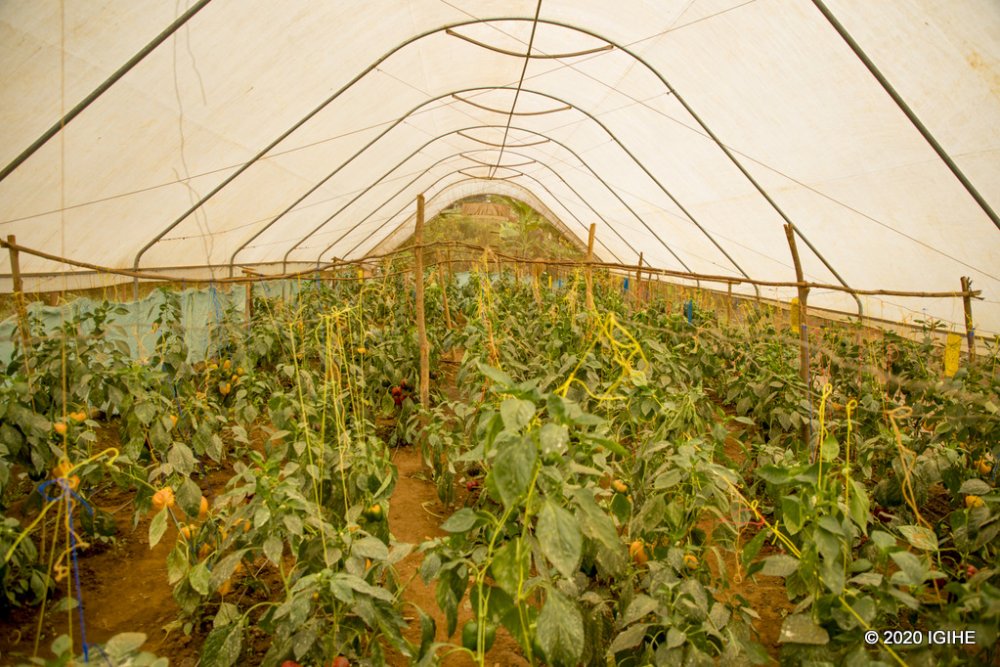
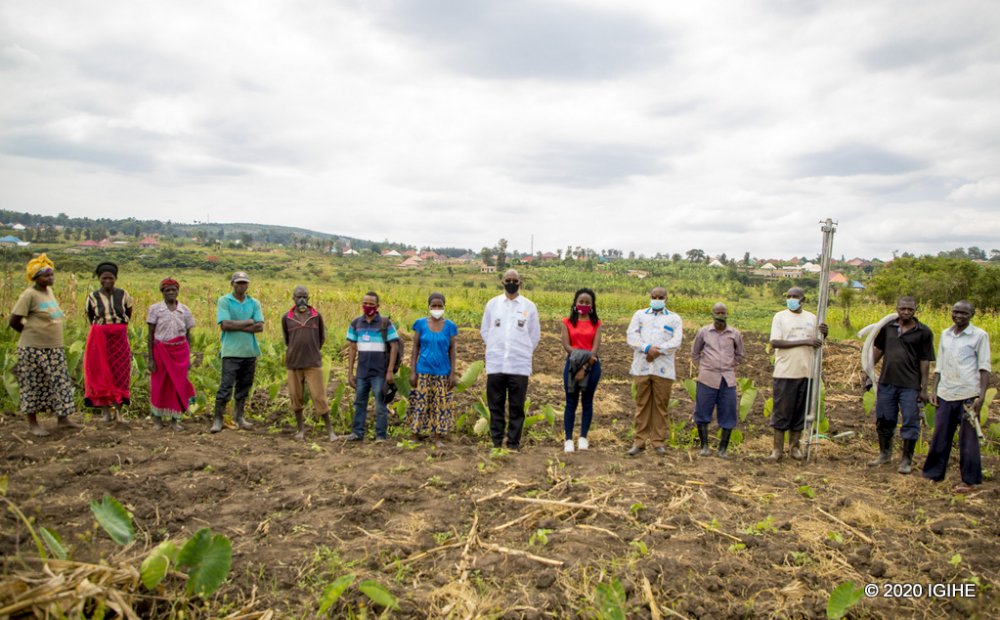
KOTINGOZA was formed in 2007 after bringing together three cooperatives that were growing different crops with the main goal of fighting hunger.
Farmers that were previously using traditional farming methods for the past 13 years were usually hit hard by droughts.
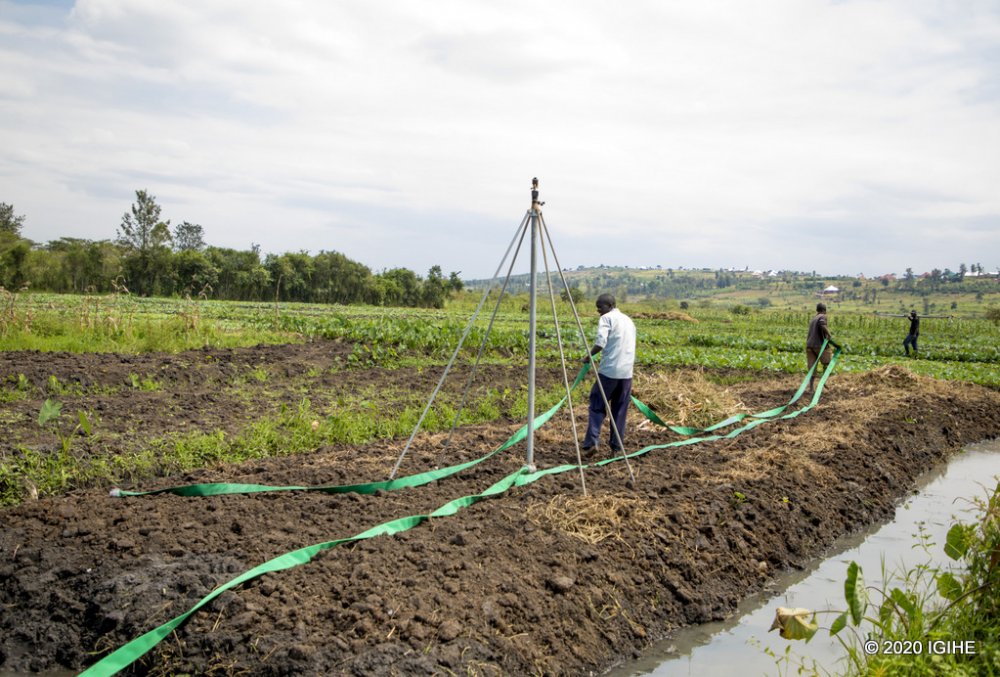
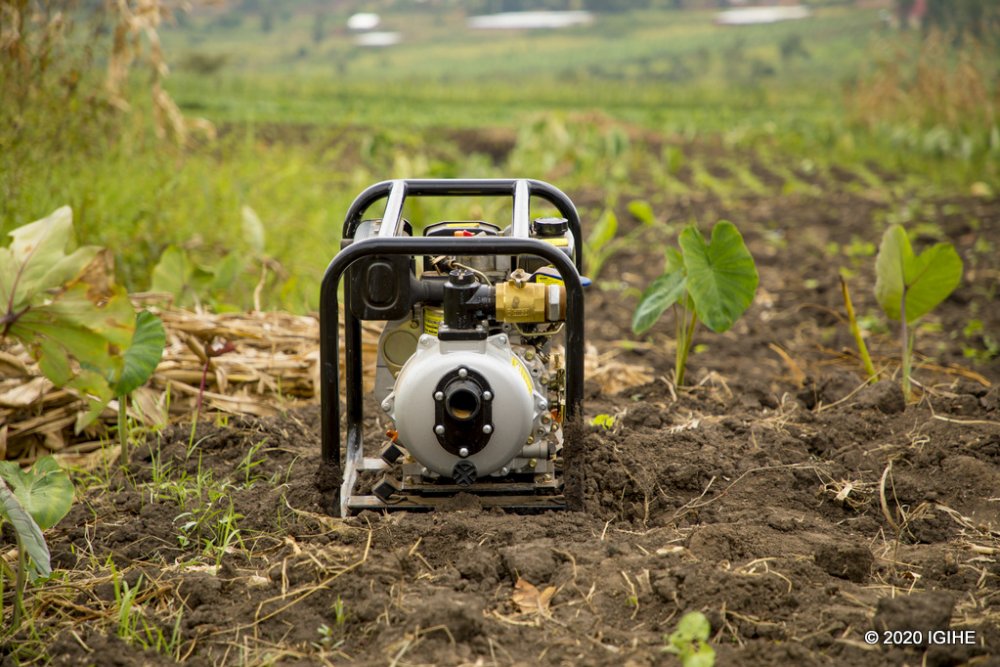
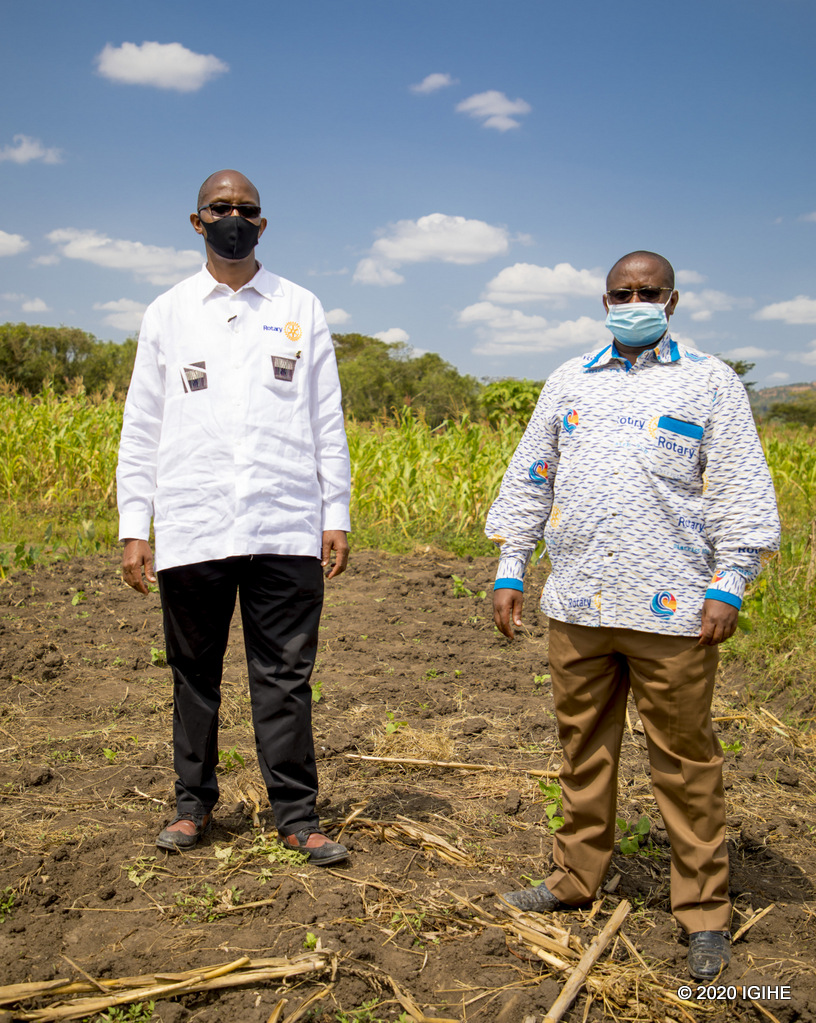
In early 2020, the Rotary Club of Kigali Mont Jali donated three modern irrigation machines to KOTINGOZA.
The Rotary clubs bring together people with a heart to help solve the world’s problems, fight ignorance and poverty, improve access to clean water, resolve conflicts, fight epidemics and eradicate rabies through vaccination, and to help those in need.
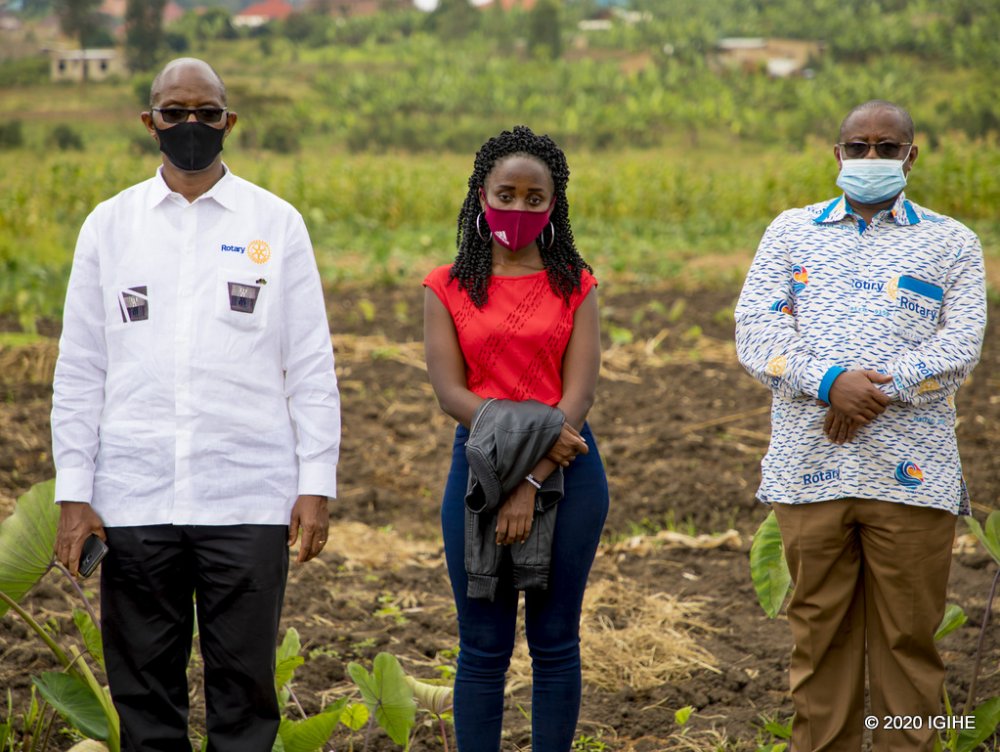
Gérard Handika, the president of Rotary Club Kigali Mont Jali told IGIHE that they assisted KOTINGOZA Cooperative through a project to support farmers’ cooperatives known as Africa Development Promise (ADP).
“We chose this cooperative because it has a clear growth purpose. This is part of the Rotary programs among which is included rural development and child and maternal health care, more so in this case since the majority of this cooperative members are women (68%). The method they were using for watering was archaic and difficult. With the machines provided to them, they will be able to increase their productivity with less hardship,” he said
Handika urged them to continue to work together and develop broad and practical projects.
The irrigation machines that were provided by the District 9150 through Rotary Club Kigali Mont Jali to KOTINGOZA, have a value of $ 3,000, equivalent to about Rwf 2.8 million.
Rotary Club Kigali Mont Jali was founded in 1999, with more than 20 members. It is one of the six in Rwanda including Musanze, Kigali Virunga, Kigali Doyen, Gasabo and Butare.
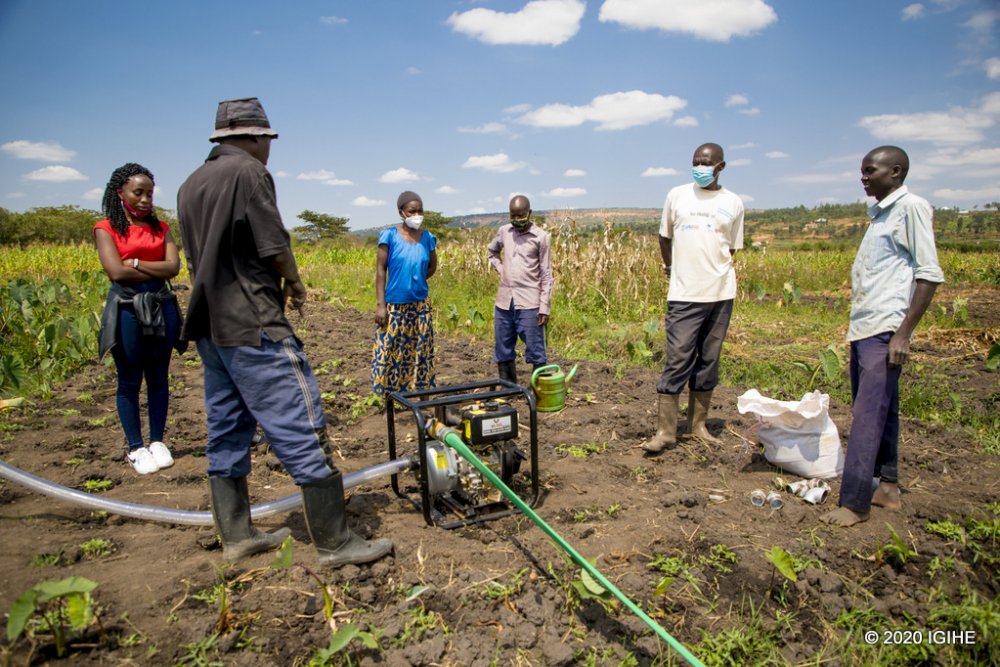
KOTINGOZA’s activities are monitored by the ADP and they are also in charge of training the members on how to use the irrigation machines.
Parfaite Mukeshimana, ADP coordinator said that 15 farmers were initially trained; they will be helping others to use the machine.
“We help farmers by providing them with training and irrigation equipment. Once we get to the field and do needs assessment, we make a report and start looking for people who can help them,’’ she said
ADP started its operations in Rwanda in 2014, working with five women farmers’ cooperatives in Bugesera.
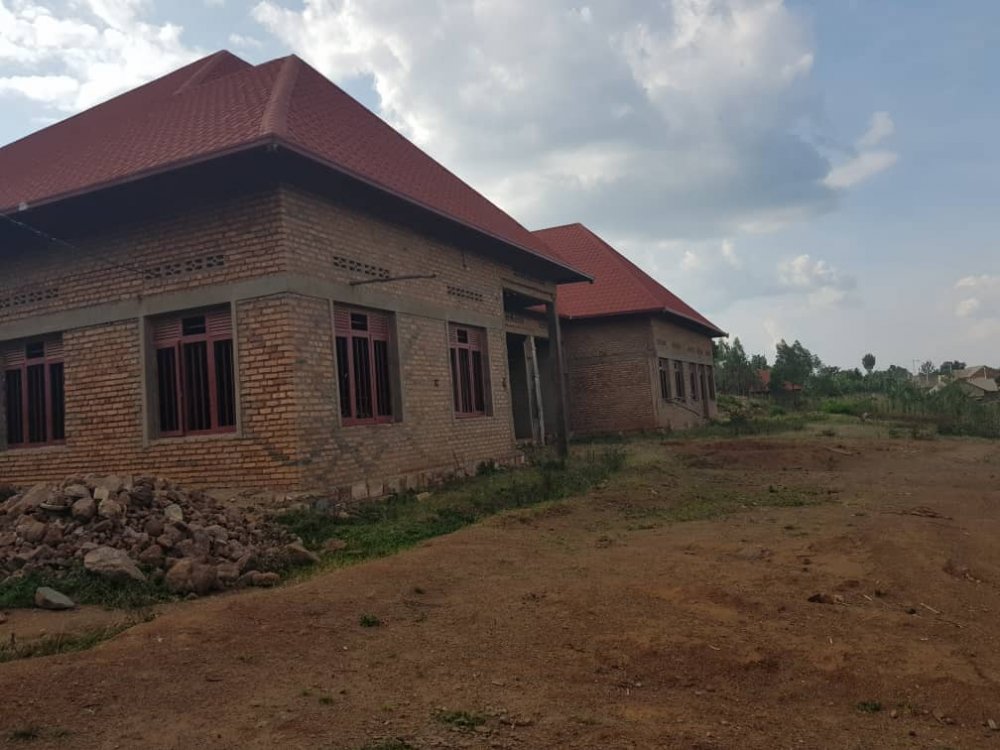
In 2015, the Rukomo Sector Council passed a resolution requiring every household in the sector to pay Rwf5000 for the construction of the new sector office with spacious office room, conference and events facilities. Residents willingly contributed for the cause; financially and in kind with some offering labour. Five years down the road, however, there is nothing to show for the efforts.
Some residents and village leaders who spoke to IGIHE said it was unfortunate that the community came together and did a good job in contributions but have been kept in the dark about the progress, not getting an iota of information as to why there has been a lull in the construction activities.
According to Habanabakize Jean Baptiste, the reason why this issue is unresolved is that this Sector’s leaders are always changed and once a new leader comes in, the issue is restarted.
Rukomo Sector Executive Secretary Karangwa Edouard said they are also disturbed by working in a small office area.
The mayor of Nyagatare District, Mushabe David Claudien, told IGIHE that the construction of the Sector Office began as a community project after the government wanted to help; they conducted a study and they found that the money they had requested for the completion of the building was very little that it had to be reconsidered.
The mayor, however, has not given any concrete explanation to the public that pooled resources to construct the sector offices for better services. The question is, “What is the problem?”
It ranked in the top four in the Report’s political empowerment category, in recognition of the high proportion of Rwandese women lawmakers and ministers.
The country, therefore, seemed a natural fit for a 2018 pilot program of the African Development Bank’s Coding for Employment initiative, with Nigeria, Kenya, Côte d’Ivoire, and Senegal.
The Coding for Employment flagship program is establishing 130 ICT centers for excellence in Africa, training 234,000 youths for employability and entrepreneurship to create over 9 million jobs.
Hendrina C. Doroba, Manager in the Education, Human Capital and Employment Division at the Bank, explains how Rwanda is empowering women in technology.
{{How has the government of Rwanda enabled women to pursue careers in technology, and STEM in general?}}
The government of Rwanda has been a foremost champion of women in ICT and in the fields of science, technology, engineering and mathematics (also known as STEM), by driving initiatives like the establishment of the Carnegie Mellon University-Africa campus, for which the Bank provided funding. Students from 17 different countries pursue highly specialized ICT skills at the Africa campus.
The country also hosts the African Institute of Mathematics (AIMS) which is now recruiting balanced cohorts of women and men. Lastly, the Bank-funded University of Rwanda College of Science and Technology has for many years produced women leaders in the ICT sector in Rwanda and globally.
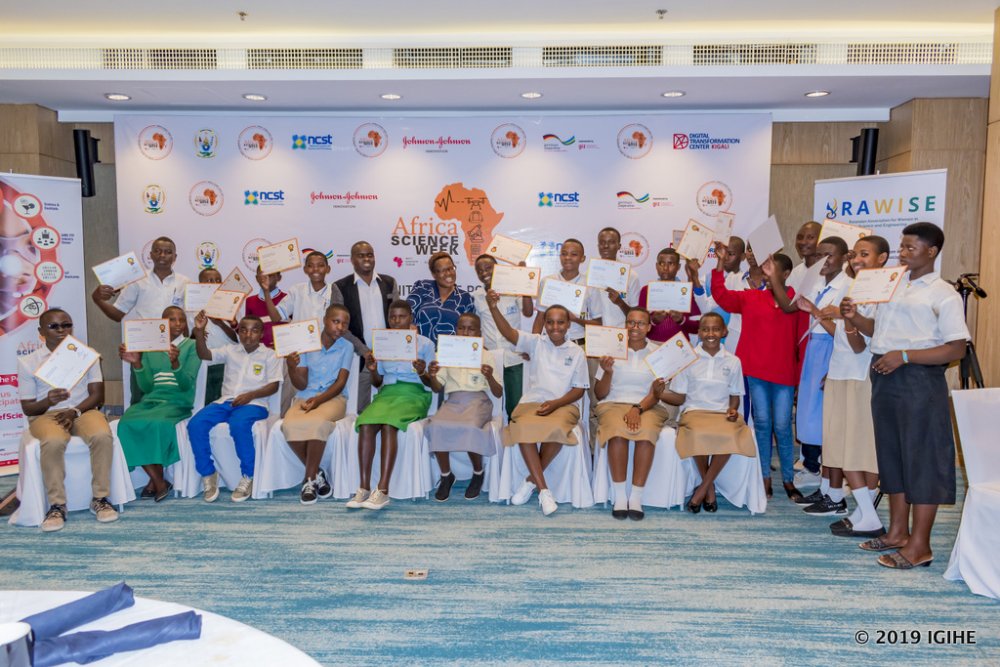
Rwanda’s government also supports initiatives such as the Miss Geek Rwanda competition, an initiative of Girls in ICT Rwanda, which aims to encourage school-age girls, even those in remote areas, to develop innovative tech or business ideas and to generally immerse themselves in ICT. The Miss Geek initiative has now been rolled out in other countries in the region.
{{What role has the Bank played in supporting Rwanda’s digital strategy, especially in relation to women?}}
The strategy of the Bank’s Coding for Employment center of excellence in Rwanda has been to join forces with the Rwanda Coding Academy through a grant agreement to support the school’s activities, like ICT equipment, teacher training and career orientation. The Rwanda Coding Academy started in January 2019 and has so far enrolled one cohort, which is now going into their second year.
Besides the Rwanda Coding Academy, the Bank’s Coding for Employment program held a two-day masterclass for girls and young women entrepreneurs at the 2018 Youth Conneckt summit, where over 200 beneficiaries were trained in using digital tools to amplify their businesses.
The session was attended by women entrepreneurs as well as students from girl schools in Kigali, including those from White Dove School, which is an all-girl school fully dedicated to training in ICT. The masterclass culminated into a pitching exercise from various groups who presented their ideas to a panel of judges.
{{What lessons can other African countries learn from Rwanda’s approach to the 4IR, in particular the role of women?}}
The government of Rwanda has been a trailblazer in using innovation to improve public services across the country using the e-governance platform Irembo, to bring government services closer to citizens. In addition, the government is driving national digital skilling campaigns by championing digital ambassador programs and platforms such as Smart Africa, which has organized the annual Transform Africa summit since 2013.
Still, gender equality remains a concern, and gender gaps are evident even in schools. Rwanda’s ambitions extend to piloting the Kigali Innovation City, also Bank-funded, to serve as the country’s knowledge and innovation hub by attracting new businesses and incubating ideas.
At the same time, the country has created a business environment which is pro-entrepreneurship and welcomes global inventors to test their ideas and concepts. Zipline, a company which uses drones to deliver medical supplies in remote areas, is one example.
Lastly, Rwanda promotes women leaders in the ICT and innovation sector. The country’s Minister of ICT and Innovation is a woman, as is the CEO of the Irembo platform. Appointments such as these are helping to dispel the myth that women are not as capable as men in ICT.
{Distributed by APO Group on behalf of African Development Bank Group (AfDB).}
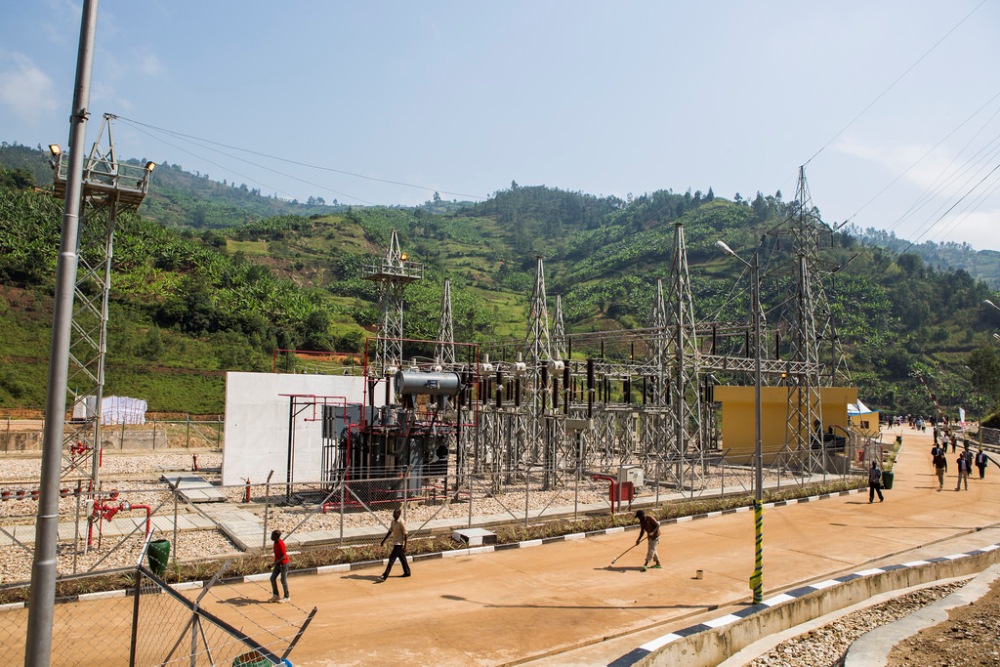
Minister Ndagijimana said construction of the Mamba-Rwabusoro-Rilima power line will continue, transmitting electricity that is generated from the Hakan power plant, located in Gisagara District.
Construction of the Kigoma-Ngozi power grid that interconnects Rwanda-Burundi, and Shango power grid that interconnects Rusumo-Bugesera will continue.
The government has also committed to providing electricity to 240 development sites and where important services are provided, including markets, educational institutions, and business centers.
In the 2020/21 budget, a project to provide electricity to the people across the country will be allocated Rwf 34.2 billion; the Kigoma-Ngozi power line project linking Rwanda and Burundi is worth Rwf9.9 billion.
Also set on the agenda are a project to build a power line connecting Rwanda to the Democratic Republic of Congo worth Rwf5.5 billion and Mamba-Rwabusoro-Rilima power line project worth Rwf 13.3 billion
Dr. Ndagijimana said that construction work on the KV 220 Mamba-Rwabusoro-Rilima power line with a length of 79.3 km and the 110 KV Bugesera-Gahanga power plant and its affiliates has reached 96.5%.
He added that the construction of a 119-kilometer pipeline with a capacity of 220 KV for Rusumo-Bugesera-Shango construction work is completed at 50%.
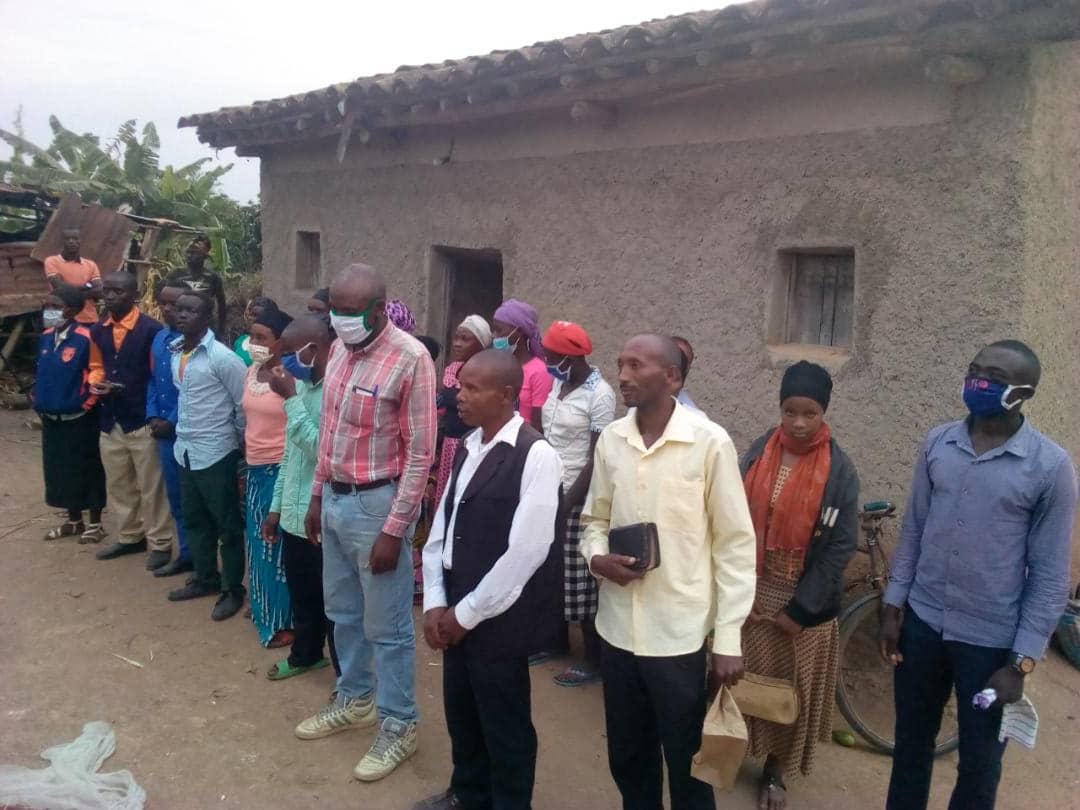
All the suspects are members of ADEPR Church. They include 12 women and 11 men from different parts of the district, who had gathered for prayers.
They were found in the house of one Françine Mukantwari, 60, located in Kibirizi Sector, Mbuye Cell.
Chief Inspector of Police (CIP) Sylvestre Twajamahoro, the Southern Region Police Spokesperson said that besides disregarding the government directives, which partly prohibit mass gatherings including religious services in this period; the room where they were found is very small, they were congested and had no facemasks.
“Local residents called the Police reporting serious violations. Indeed, we found 23 people congested in a tiny room praying, with no facemasks. Some of them had traveled from the neighboring sectors.
In any case where one is infected with Coronavirus, it was very easy to infect all others who were in the same room,” said CIP Twajamahoro.
The suspects, he said, were isolated at Kibirizi Police Station for further management.
CIP Twajamahoro warned against breaching the government orders and derailing efforts to combat the pandemic of COVID-19.
“People should understand that such prohibited gatherings don’t only put their lives at stake but also those of others in their families and communities, and hampering the government efforts to combat the virus. One infected person can easily infect the whole community, these behaviors shouldn’t be tolerated and should be reported,” the spokesperson said.
CIP Twajamahoro reminded members of the public to also follow other health and hygiene guidelines put in place, especially washing hands, avoiding handshakes and wearing facemasks.
He further warned that whoever breaches the directives meant to contain the spread of COVID-19 will be brought to book.
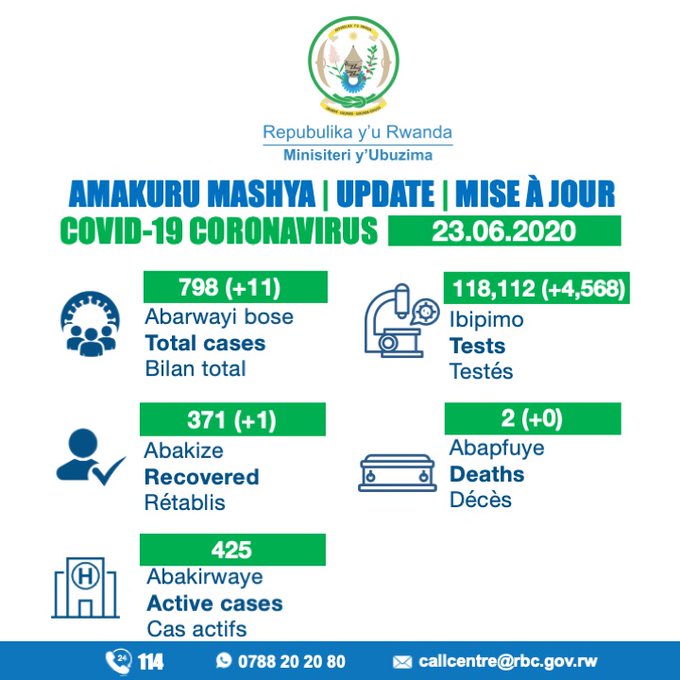
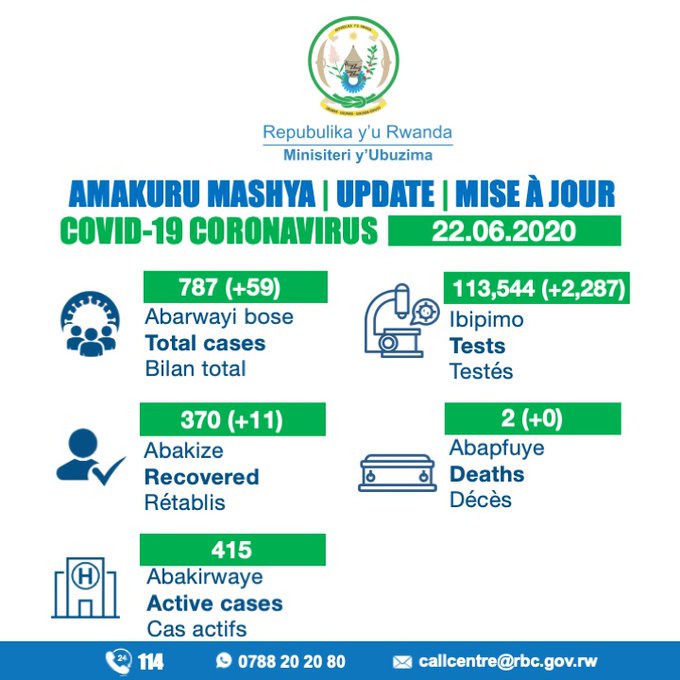
According to the Ministry, Rusumo cluster registered the highest number with 33, followed by Rusizi with 12 cases, Kigali recorded 7, Nyamasheke 4, and Rubavu 3.
The report also talks of a total of 11 new recoveries registered, taking the number of recoveries to 370.
The country’s testing capabilities have continued to improve with a total of 2, 287 tests conducted in the last 24hrs, bringing the total number of tests so far done to 113, 544.
The Director General of Rwanda Biomedical Centre (RBC) Dr. Sabin Nsanzimana said that among the categories of people who tested positive in Kigali were moto-taxi operators after two of them were identified in Kicukiro and Nyarugenge districts.
“Detecting new cases among this category confirms the fears we had earlier on the motorbikes being a risk factor,” Dr. Nsanzimana said.
The other cases in Kigali are linked to previously confirmed cases that were traced.
“We want to encourage people to continue being vigilant. These cases confirm to us that the virus is still among us. We need to continue taking precautions as we also work around the clock to trace and contain the spread,” Dr. Nsanzimana said.
Dr. Nsanzimana said that there are practical precautions that people can take on their part to minimize the risk, including observing social distancing measures and taking safety precautions, including those who use motos as a form of transport.
He also said that the movement of people from one place to another could be a major risk factor for transmission but experts are working to see if indeed there could be a province to province risk for transmission.
The fiscal policy in 2020/21 will be in line with COVID-19 economic recovery plan and National Strategy for Transformation (NST-1) priorities. The focus will be on increasing health-related spending to contain the epidemic and to strengthen the health system, scaling up social protection, strengthening the education sector, as well as supporting private sector through the Economic Recovery Fund.
{{Resources}}
The FY 2020-21 budget will be financed through domestic resources at Rwf 1,969.8 billion representing 60.7% of the entire budget. The remainder of the budget will be funded through external sources at Rwf 1,275.9 billion which accounts for 39.3% of the total budget. These include grants worth Rwf 492.5 billion and loans worth Rwf 783.4.
{{Expenditure}}
Government will spend Rwf 3,245.7 billion in 2020/21. Recurrent expenditure will take up Rwf 1,583.0 billion which accounts for 48.8% of the total budget.
Development projects are projected to consume up to Rwf 1,298.5 billion, which represents 40% of the total budget. Domestically financed projects are estimated at Rwf 703.4 billion, while externally financed projects are projected at Rwf 595.1 billion.
In addition, Net Lending has been allocated Rwf 306.5 billion which accounts for 9.4% of the total budget. Rwf 35.2 billion is allocated to payment of arrears and Rwf 22.6 billion reserved for accumulation of deposits to boost the Government reserves representing 1.1% and 0.7% of the total budget respectively.
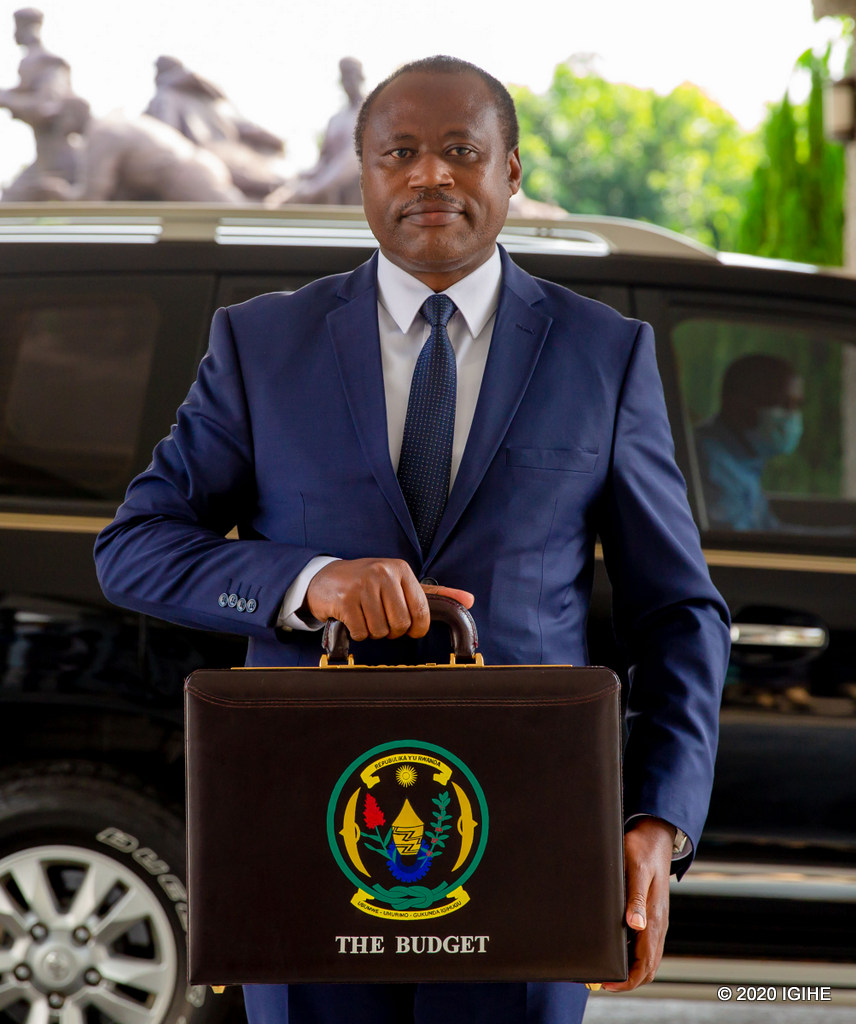
“The share of recurrent budget in the total budget of 2020/2021 reduced by 2.6% compared to 2019/2020, while development budget and net lending increased by 2.6%. This confirms Government’s effort to contain recurrent expenditures and to focus on development spending,” Dr. Uzziel Ndagijimana, the Minister of Finance and Economic Planning said.
{{NST-1 and Resources Allocation }}
Government’s expenditure policies in fiscal year 2020/21 are guided by National Strategy for Transformation priorities and objectives while ensuring appropriate allocation by promoting made in Rwanda to reduce trade deficit and build economic resilience.
To this end, the Economic Transformation pillar takes the lion’s share of the resources at Rwf 1,802 billion amounting to 55.5 % of the total budget. Social transformation will take up Rwf 960.4 billion (29.6%) while Transformational Governance is allocated Rwf 482.7 billion representing 14.9% of the total budget.
In line with NST-1 strategic objectives, some of the priority areas agreed during planning and budgeting consultations formed the basis for resource allocation in 2020/21fiscal year. These include:
Strengthening health system by increasing accessibility to quality health services for all
-* Increasing agriculture and livestock productivity
-* Strengthening Social Protection programs by scaling up coverage.
-* Promote employment through investment in public infrastructure.
-* Support businesses affected by COVID-19 to recover, boost their business and contribute to the national economic growth.
-* Support Made in Rwanda policy to reduce trade deficit and build economic resilience.
-* Promote digital infrastructure and technologies to improve service delivery
-* Improve access to quality education
-* Continue eradication of malnutrition and stunting
-* Strengthen disaster preparedness and management
The 2020/2021 draft finance law conforms to the 2020/21 – 2022/23 Budget Framework Paper that was presented to Parliament on May 21, 2020 and amended to reflect the recommended actions by the Parliament as submitted on June 5, 2020.