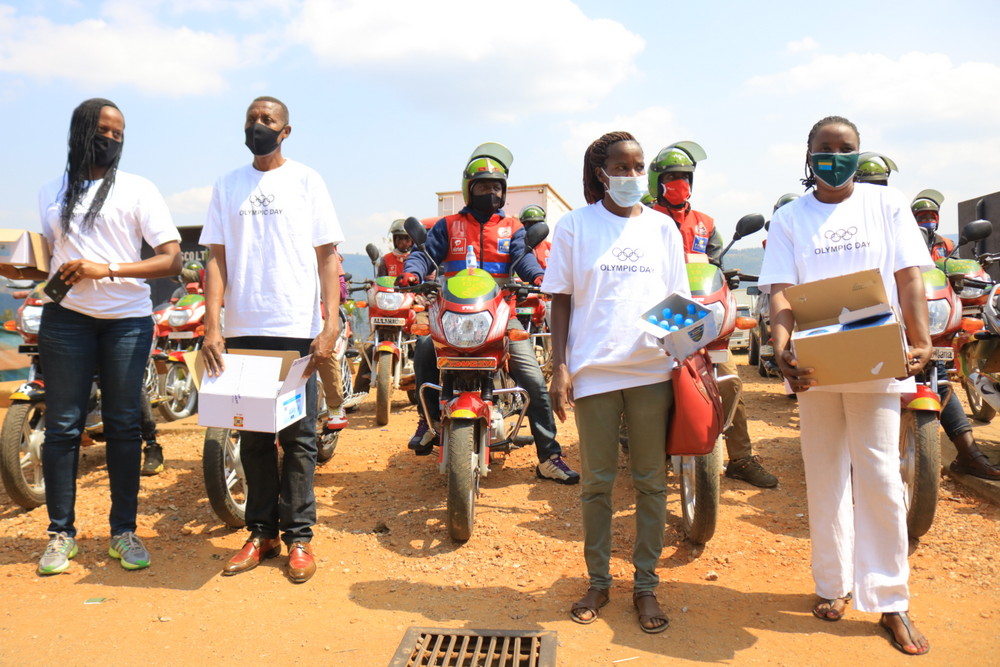
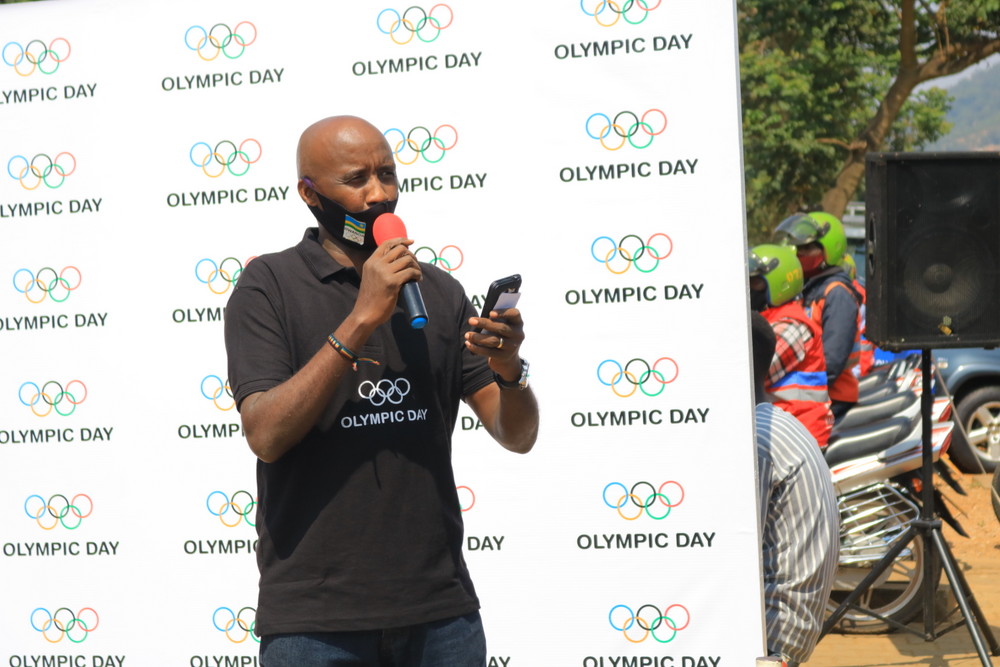
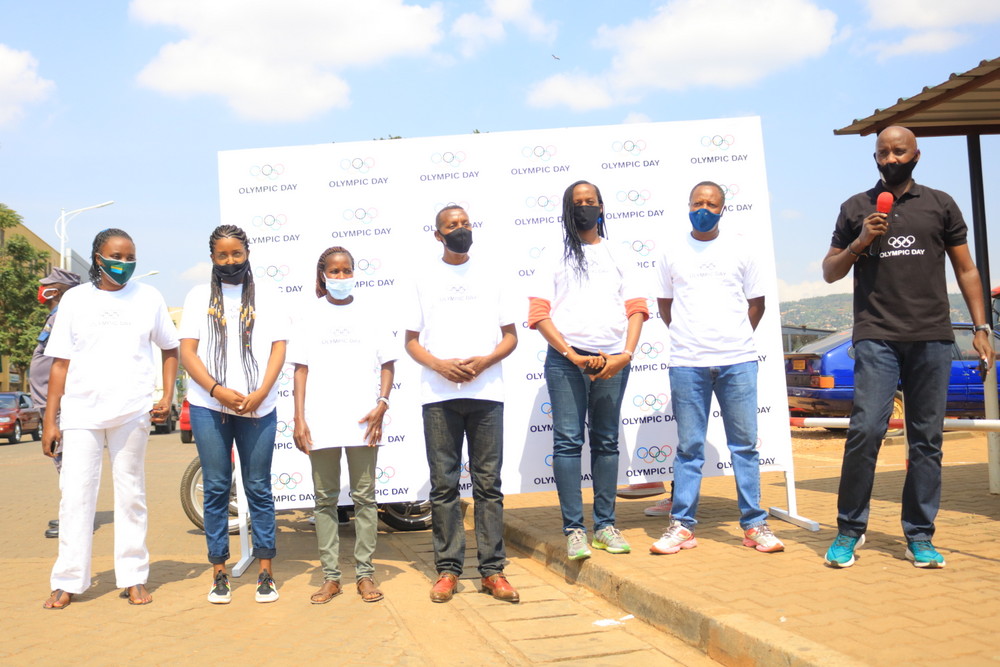
On Tuesday, 23 June the world was celebrating the Olympic Day. The day that is usually characterized by mass sports activities that bring together youth in different competitions. However, this year due to coronavirus it was not celebrated as it was meant to; instead, ROA joined RNOSC in a campaign of prevention against the COVID-19 pandemic.
Alex Sharangabo, who is the Secretary General of the RNOSC and the President of the Rwanda Olympians Association, said that the purpose of this year’s activity was to remind people of the fact that in these days of the pandemic people need to care about each other’s health.
“Since we cannot organize any kind of sports activity due to the pandemic that is affecting all Rwandans, our first plan was to share some of the Olympic values with taxi-motos, contributing in the fight against the coronavirus,” he said
Gervais Munyanziza, representing the Ministry of Sports applauded the initiative of ROA and RNOSC.
“We need to be healthy to do sport, and the organizers of this activity understood that for people to resume normal life it is important to face together this pandemic; let those that received these hand sanitizers today use them to the full purpose they were intended for. Thus, contributing in the victory we will soon be having over the coronavirus.”
Daniel Ngarambe, president of the Rwanda Motorcycle Association (FERWACOTAMO) said that they are pleased to have been thought of in these times. He promised the participation of Taxi-motos in the fight against the Coronavirus.
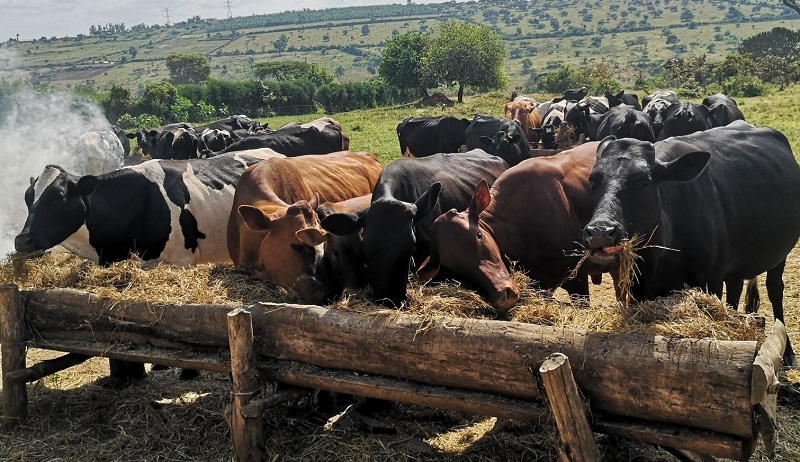
The said districts are Kayonza, Gatsibo and Kirehe districts. The first signs of the disease were observed in cattle in Kahi Cell, Gahini Sector, and also in Kanyinya Cell, Ndego Sector, both in Kayonza District.
The announcement from the Ministry of Agriculture and Animal Resources issued on Wednesday evening state that the livestock whose movements were banned include cattle, pigs, goats, and sheep.
The sectors under animal quarantine are Gahini, Ndego, Mwiri, and Murundi in Kayonza District, Kiziguro, Rwimbogo, and Kabarore in Gatsibo District, and Nasho and Mpanga in Kirehe District.
The farmers in the sectors in question are urged to vaccinate all cows above six months old, according to the directive from the ministry. If a farmer detects any cow with symptoms, they are instructed to report to their veterinarian or nearest local leader.
The foot-and-mouth symptoms include, blisters in the mouth and on feet, drop in milk production, loss of appetite, quivering lips, and frothing of mouth.
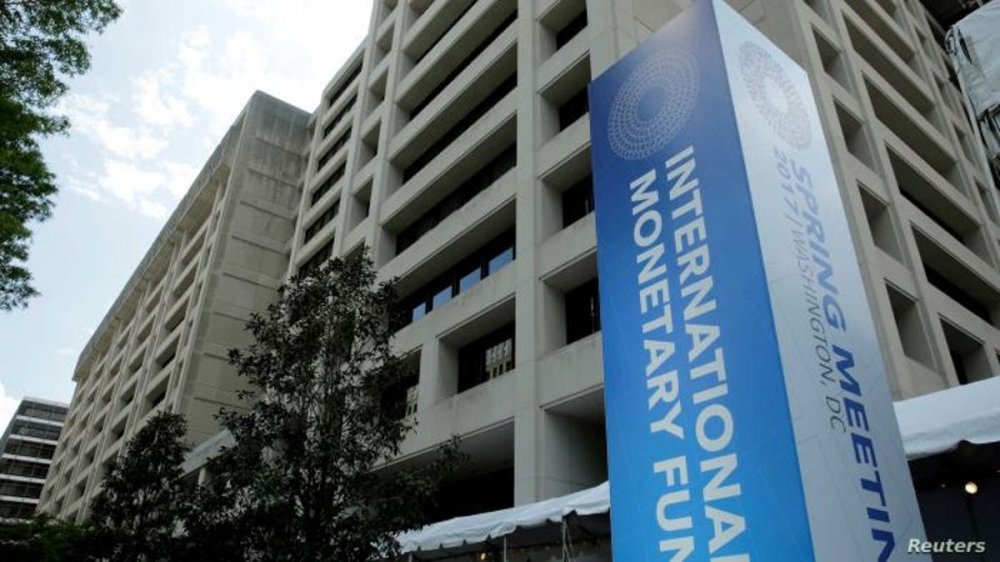
The world economy is projected to shrink to 4.9% below zero in 2020, at a rate of less than 1.9% below zero compared to the IMF’s standstill in April and economic recovery will not be slow.
Gita Gopinath, Chief Economist at the IMF, said that compared to the April forecast, it shows a slowdown in the economy in 2020, and will continue in 2021.
She went on to say that the world economy in two years will lose $ 12 billion due to Coronavirus.
The World Bank released a report this month stating that global gross domestic product by 2020 will fall to 5.2% below zero. Developed countries will be reduced by 7% below zero; of the European Union using the euro will fall by 9.1% below zero.
U.S. gross domestic product will fall 6.1% below zero; the Japanese down 6.1% below zero; the Chinese reach a rate of 1% above zero. Sub-Saharan Africa’s gross domestic product will fall by 5% below zero.
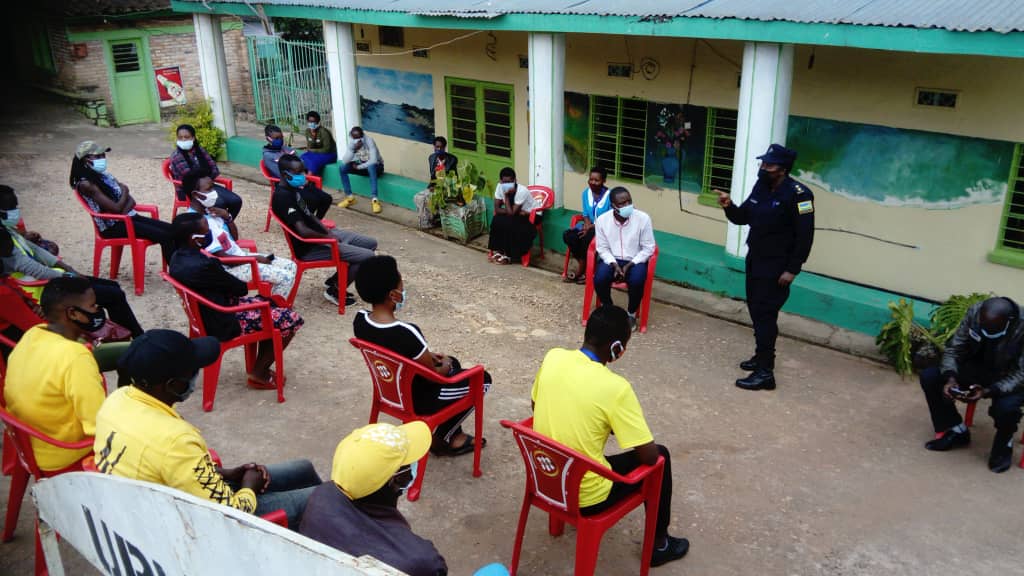
In Huye District, 38 youth volunteers from Huye Sector held a meeting with the Police and local authorities to streamline their outreach and supervision activities on the implementation of the government directives to prevent the spread of the virus.
The meeting was also attended by Inspector of Police (IP) Leonille Mujawamariya, the District Political and Civic Education Officer (DPCEO) for Huye District and Prosper Rwamucyo, the executive secretary for Huye Sector.
The meeting discussed, among others, effective partnership between the youth volunteers, Police and local leaders through community policing; bringing on board new young people into the nationalist organization; the role of youth volunteers in educating and influencing the public on safer practices to prevent the spread of COVID-19 and discipline.
Police and local leaders, during the meeting, recognized the impact of youth volunteers in community policing aspects and particularly educating the public on recommended precautionary measures against COVID-19 such as wearing facemask, washing or sanitizing hands, social distancing and avoiding shaking hands as one of the means through which the virus is spread.
Elsewhere, in Gacurabwenge Sector of Kamonyi District, youth volunteers joined security organs in COVID-19 prevention awareness.
The awareness, which has been going on in different parts of the country, was taken to Gashyushya market where dwellers were sensitized on washing hands regularly wherever they are, to always leave at least one metre distance between two people and to avoid any contact with another person including doing away with the habit of shaking hands and hugging.
Others including wearing the facemask at all times when in public and properly covering the nose and mouth; going home after buying or selling goods to prevent congestion as avoiding loitering and unnecessary movements.
Among those sensitized include over 100 people, who were found in Gashyushya market either without a facemask or wearing it inappropriately.
There are over 300,000 members of youth volunteers across the country.
Their activities range from raising awareness against crimes such as narcotic drugs, human trafficking, corruption and gender based violence; building and renovating houses for the vulnerable people, constructing roads, sensitizing community on proper feeding in an effort to fight malnutrition in children, tree planting exercise, among many others.
The psychotropic substances were seized in Bumbogo and Kimironko sectors. They were disposed of.
Chief Inspector of Police (CIP) Marie-Gorette Umutesi, the police spokesperson for the Central region said that those illicit drinks were seized following a tip-off from residents.
“We were informed that there are some people, who produce and sell illicit brew, we led an operation to seize them. They were seized from three distillers; Marcelline Nyirangendahimana, 42, Naphtali Mbarimombazi, 39, and Patricie Mukamusangwa, 32,” CIP Umutesi said.
She warned the public against the practice but thanked those who continue to work with the Police to identify and arrest drug dealers.
“These substances are unhealthy, they pose a threat to security, as consumers are exposed to untested content brewed from potentially harmful raw materials let alone the lack of hygiene during production,” she said.
She added: “These are harmful substances, seizing and destroying them is in the general interest of ensuring a healthy living, preventing other crimes these drugs bring along especially after consumption such as battery and theft.”
The spokesperson noted that most cases of assault and domestic violence recorded are related to the consumption of such illicit substances.
All drinks with alcoholic content above 45 percent or with unknown alcoholic content are considered as “psychotropic substance.”
Article 263 of Rwanda penal code stipulates that any person who, unlawfully, produces, transforms, transports, stores, gives to another or who sells narcotic drugs and psychotropic substances commits an offense, with a sentence upon conviction, ranging between seven years and life in prison, and a fine of between Rwf20 million and Rwf30 million.
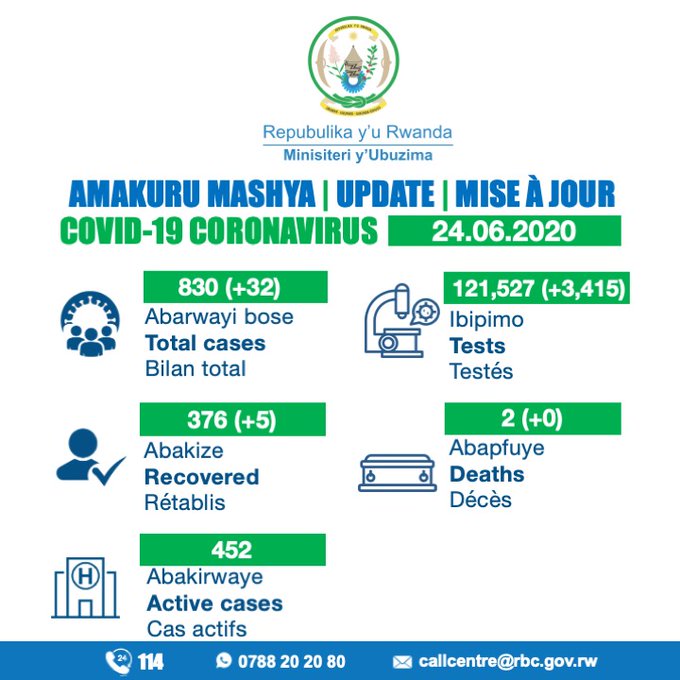
According to the Ministry of Health, Rusizi is followed by Kirehe district with 6, Kigali 3 whereas the Eastern Province district of Nyagatare recorded 1 case. The registered cases are derived from 3,415 tests that were conducted in the last 24hrs across the country, nearly tripling the cases registered on Tuesday.
This brings the total number of cases to 830. There are also 5 new recoveries recorded, bringing the total number of recoveries to 376. Active cases still outnumber recoveries at 452.
With the resurgence of cases in the City of Kigali, dwellers have been cautioned to take care and adhere to set out measures to prevent the spread. With a couple of motorcycle riders testing positive, the Ministry of Health has warned that extra caution should be taken so that the virus does not spill back into communities.
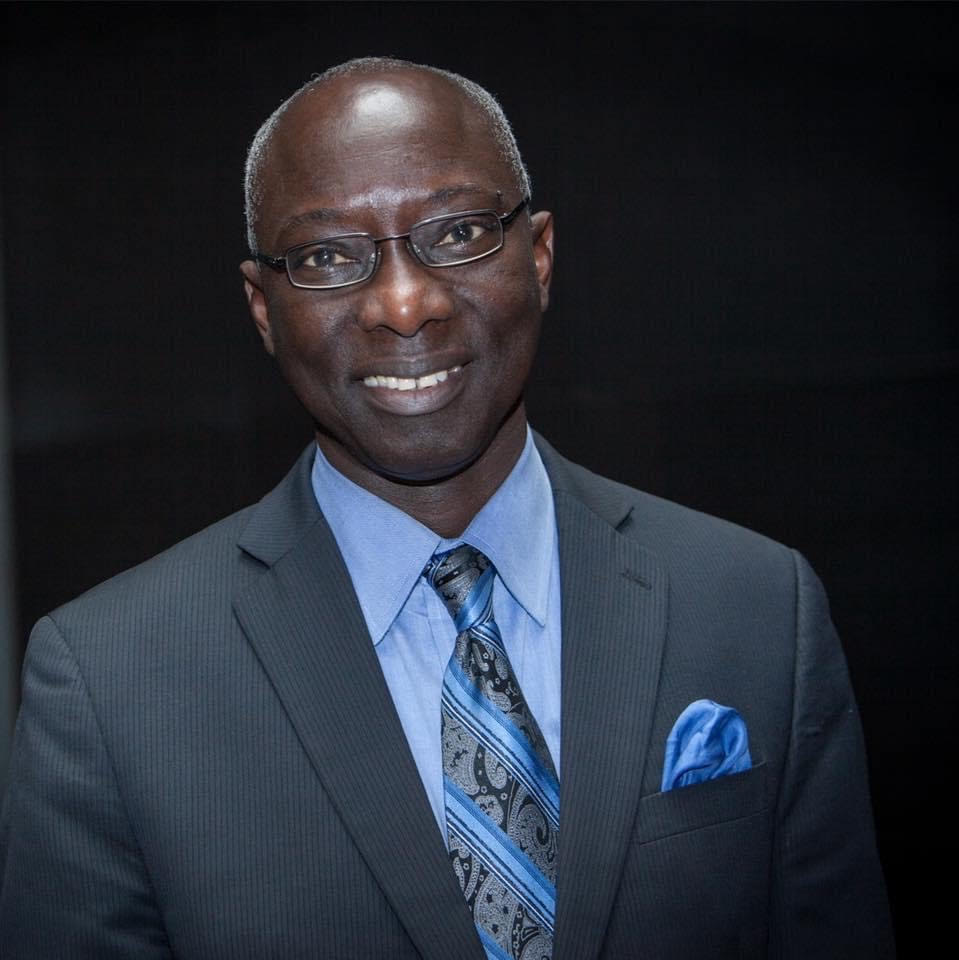
HE Adama Dieng, UN Secretary-General’s Special Adviser for the Prevention of Genocide year marks the 26th anniversary of the genocide against the Tutsi in Rwanda, during which near one million people were killed because of their Tutsi identity. 100 days of horrors with the aim of the perpetrators to exterminate the Tutsi as a Group. They also killed the moderate Hutu and others who opposed the genocide.
I am profoundly humbled to join you to reflect on one of the darkest chapters in human history. It is the occasion to remind ourselves of our collective failure to recognize the warning signs of impending violence, to prevent the deaths of so many, and renew our resolve to prevent such atrocities from happening again.
Remembering the heinous crimes committed in Rwanda means acknowledging the victims and calling attention to the survivors and the struggles they continue to face. We should be inspired by the survivors’ ability to show that reconciliation is possible even after a tragedy of such monumental proportions.
I often say that there is no part of the world that can consider itself immune to the risk of atrocity crimes, by which I mean genocide, war crimes, crimes against humanity. All societies have risk factors related to atrocity crimes to some extent, for example divisions based on ethnicity, race, religion or other grounds, social disparities, discrimination as well as human rights violations. It is how early these risk factors are managed that will determine whether they will escalate into situations of more serious concern or not. We are therefore all responsible for contributing to prevention, whatever our roles or capacities.
Genocide is the most serious crime against the human being. The best way to honor the memory of the victims is to ensure that nothing like this ever happens again. We must all be alert to the warning signs and act quickly while there is still time to do so. One of the key warning signs and a trigger to violence is the spread of hate speech in public discourse and the media that target specific communities, based on their identity, in particular, the most extreme cases of hate speech that have the potential to incite hostility and violence.
The ongoing crisis in many places around the world are a clear reminder to all of us that we are still failing to prevent atrocity crimes. Civilians, including women, children and the elderly continue to be brutally killed, raped, displaced and discriminated against on the basis of their identity. We must ensure that we act swiftly at an early stage to protect those at risk of atrocities.
Building a better society is an endeavor that requires the involvement of all segments of society, all men and women, ethnicities and religions. It requires us to work together towards a collective goal. We know all too well that without peaceful and inclusive societies, we increase the risk of crisis, violence and even atrocity crimes.
We must strive to address inequality, build cohesive society devoid of ethnic or racial divisions, promote good governance. We must also counter intolerance, hatred, and all forms of discrimination. Enjoyment of fundamental rights and freedoms must be guaranteed and protected. If we are short of these values in any parts of the world, then we will continue to grapple with the risk of atrocity crimes and our promise of “Never again” may remain elusive.
Rwanda teaches us this essential lesson. It is no surprise that President Kagame displayed his strong commitment to the African Union Principle of non-indifference – Article 4 of the AU Constitutive Act refers. It is no surprise that Rwanda is a Champion of RtoP …
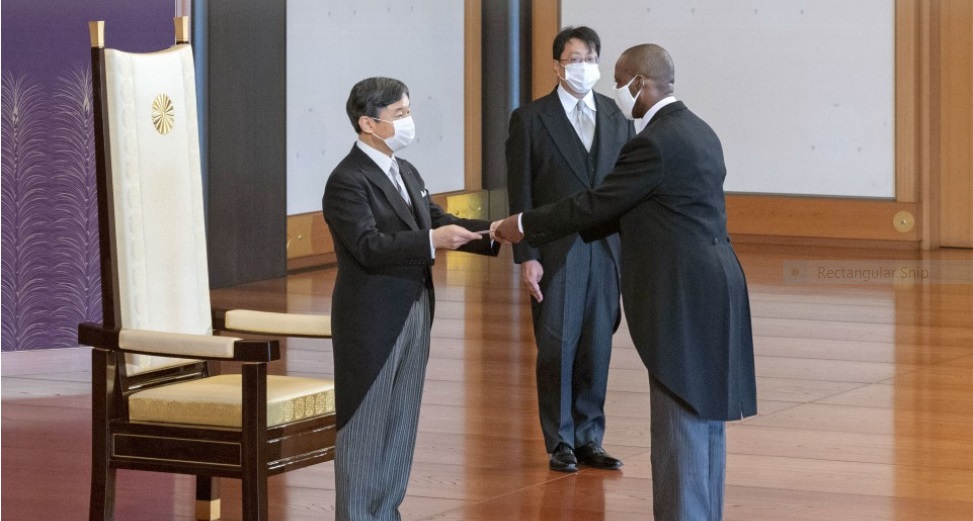
During the ceremony, Ambassador Ernest Rwamucyo conveyed to the Emperor greetings and best wishes from H.E. President Paul Kagame for the Emperor’s good health, happiness and well-being. He also expressed the desire of the Government of Rwanda to further strengthen the already strong relations existing between the two countries.
His Majesty Emperor Naruhito expressed his gratitude to President Paul Kagame for his kind sentiments and requested Ambassador to convey his greetings and best wishes of good health and wellbeing to H.E. President Paul Kagame and Rwandan people for further progress and welfare under His Excellency’s wise leadership. He also wished the Ambassador success in carrying out his duties in a way that contributes to promoting the bilateral relations towards further horizons in diversified areas. The Emperor commended Rwanda for the impressive progress the country has made after the 1994 genocide against the Tutsi.
Ambassador noted that Rwanda overcame post-genocide challenges and is a reconciled, united, peaceful and safe country. He further noted that Rwanda is among the fastest growing economies and added that Japan has been a very supportive and reliable partner in Rwanda’s journey of transformation. He mentioned that Rwanda is also known for mountain gorilla trekking and invited His Majesty to experience this adventure at a time of his convenience.
Ambassador Ernest Rwamucyo conveyed to the Emperor that the people and the Government of Rwanda deeply appreciate Japan’s assistance that has contributes significantly to the socio-economic development of the country.
Also present at the ceremony were the Minister of State for Regional Revitalization, Hon. Seigo Kitamura and Mr. Eric Rubayita, First Counsellor at the Embassy of the Republic of Rwanda in Japan.
EALA on Tuesday elected 12 commissioners – two from each country – in a technologically advanced election to prevent the Coronavirus pandemic. In the by-elections, four deputies will serve in the Assembly’s remaining tenure after the principal committee’s first two and a half term of office ended on June 19.
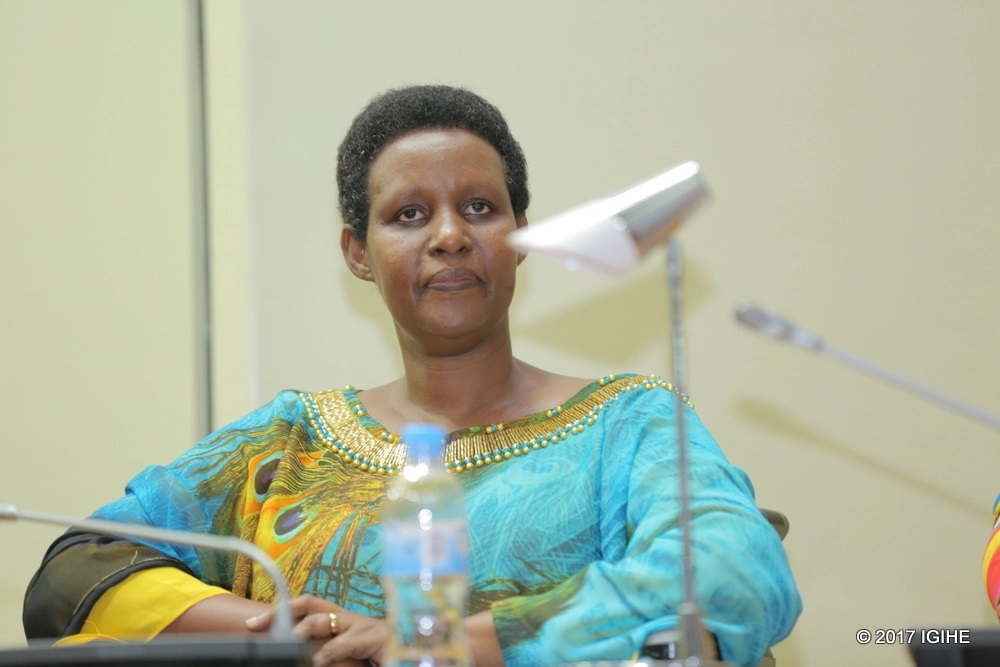
Elected candidates include Oda Gasinzigwa and Dr François-Xavier Kalinda from Rwanda and Dr Oburu Oginga and Wanjiku Muhia from Kenya.
Tanzania has nominated new representatives, Dr. Ngwaru Maghembe and Josephine Lemoyaan, Burundi’s Jean Marie Muhirwa, and Mo Mamo Karerwa. It is the same with Uganda and South Sudan that have appointed new commissioners.
EALA’s rules of procedure stipulate that when a country nominates only two people for the post of commissioner in this parliament, it is immediately counted as elected, but when more than two people are nominated, it requires a secret ballot.
Rwanda, Kenya, Burundi, and Tanzania have agreed on two candidates for the post of commissioner, but Uganda and South Sudan have given several names, leading to elections.
This commission is an important body as it is responsible for overseeing and organizing the activities and programs of the General Assembly, and appointing members of various commissions related to the work of this Parliament.
The commission also briefed the Cabinet on the need for staff to assist the Assembly in its work. It is chaired by the Speaker of Parliament and monitors the budget of the Parliament.
The EALA is the EAC’s governing body, consisting of 62 people, including 54 MPs elected from member states each giving nine, plus eight others from the EAC Ministers in the Member States, the EAC Secretary-General and their lawyer.
On Tuesday Rwanda’s new State Minister for Foreign Affairs and International Cooperation, Prof Nshuti Manasseh, virtually took the oath of allegiance as an ex-officio member of the Assembly.
Gasinzigwa was elected to represent Rwanda at the EALA in May 2017 on behalf of the RPF Inkotanyi, as well as Kalinda François Xavier from the PSD.
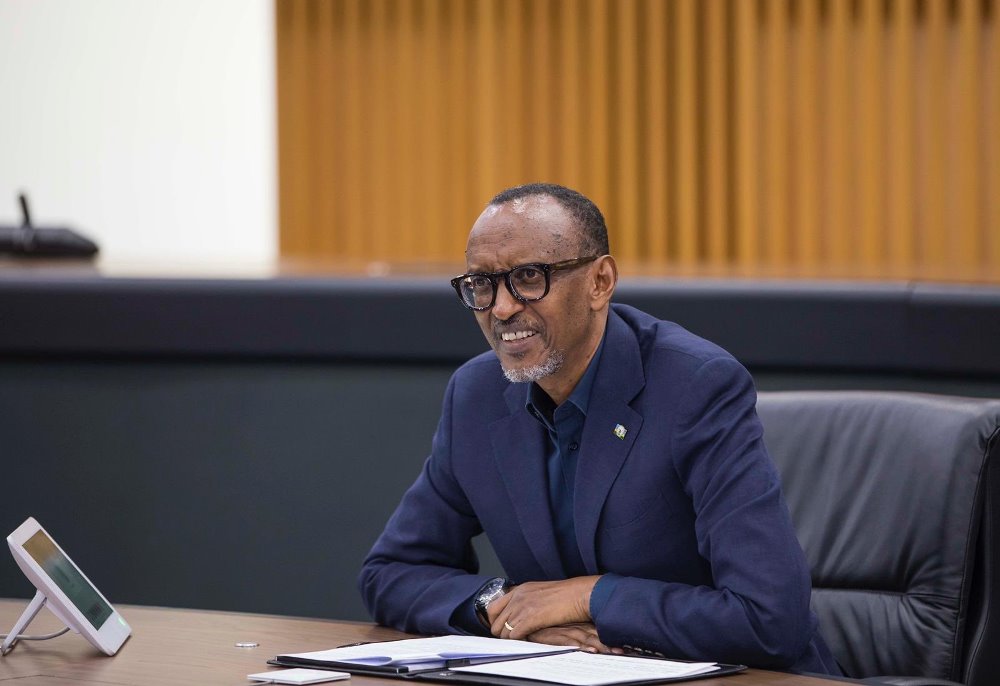
President Kagame made the statement, on Tuesday 23 June, while opening the four-day Corporate Council on Africa (CCA) Leaders Forum.
The summit was held under the theme: “Resilient U.S.-Africa business engagement to drive post-Covid-19 recovery”.
The president encouraged American investors to participate in economic opportunities as Africa emerges out of the Covid-19 recovery process for mutual benefit; showing that there are mutually beneficial opportunities emerging as the continent seeks to recover and get past the pandemic.
The African Union launched a medical supply platform pooling the procurement of essential health items implemented, last week, in partnership with the African private sector. The initiative is spearheaded by business magnate Strive Masiyiwa at the AU’s invitation.
Kagame said that there is still space for American private sector participation in the initiative,saying it is ensuring adequate fiscal space for Africa which is essential for a sustainable public health response as well as to preserve jobs and livelihoods.
“The US has been a strong supporter of development through trade such as with AGOA. As these internal trade obstacles continue to fall, we look forward to strong engagement from American companies and investors working together with African firms,” Kagame said.
Highlighting Rwanda’s recovery outlook, the Head of State said that the local economy prior to the pandemic was strong, stable and with growth in the medium and long term assured.
He said that this gives the government confidence in investing in the recovery of the economy.
CCA, which was established in 1993, promotes business and investment between the United States and African countries.