According to a study by the Goma Volcano Observatory, the eruption will affect more than two million people living on the outskirts of the volcano, especially in city of Goma and Rubavu in Rwanda.
According to the agency, the population growth in Goma has led to some of the people settled on the paths of which these volcanoes may erupt, putting their lives in danger.
The recent volcano eruption was in 2002, caused extensive damage to both the DRC and Rwanda, with Rwanda receiving about 400,000 Congolese refugees; at the time, some houses were demolished on the Congolese side and in parts of Rwanda near Goma.
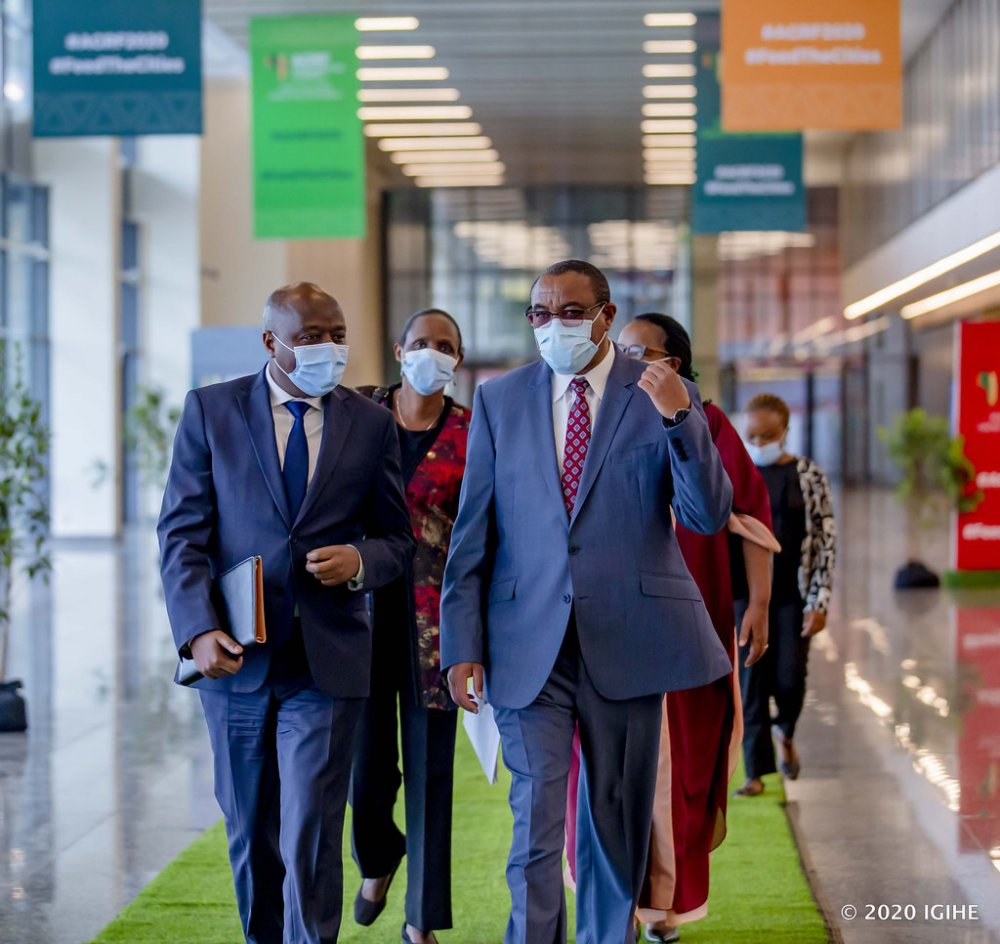
The premier made the remarks on Tuesday when more than 10,000 people attended a virtual conference on agricultural development in Africa, hosted by Rwanda.
Besides the virtual participants, about a hundred people gathered at the Kigali Convention Center to exchange views on the future of the continent.
Dr Ngirente, while officially opening the 10th Summit called on the youth to be given a special place in the development of Africa through agriculture.
“The African continent has a population of 1.2 billion and over 60 percent of the population is under the age of 25. This large number of African youth is the foundation for changing the agricultural sector on this continent, only these young Africans do not see the agricultural sector as an opportunity for profitability and development; so it is important that we continue to highlight the challenges that remain in this regard, attracting young people, especially through the use of technology in agricultural development,” appealed Dr. Ngirente.
Ngirente said Rwanda has set long term development frameworks, rural-urban linkages through integrated development plans which is reflected in a new 30-year development strategy for the period up to 2050 (Vision 2050).
“For this, we are increasing investments in research and innovations. These will generate and disseminate new technologies to boost the overall agricultural production,” Ngirente said.
Ngirente said that specifically 47.2% of the country’s land surface has been allocated for agriculture and livestock in the new revised land use master plan which was launched in September to boost agriculture activities.
He said that there will be increased agricultural production to build a well-functioning rural sector which will support the value chain.
The African Green Revolution Forum (AGRF) Board Chairman also former Ethiopian Prime Minister , Hailemariam Desalegn has hailed Rwanda for taking lead in transforming agricultural growth on the continent.
Desalegn said that Africa’s drive to fuel agriculture at the heart of economic transformation is needed but only a few countries on the continent have managed to invest their resources in this direction.
“Few countries have demonstrated this as well as Rwanda which seems to be recognized by the African Union once again, as a county most on-track with the desired progress in the agriculture sector,” he said.
AGRF says that a $250billion market per year leveraging Urban Food Markets to Achieve Sustainable Food Systems in Africa, is a call to action to rethink our food systems to deliver resilient, better nourished, and more prosperous outcomes for all.
“We need food systems that are equitable, sustainable, resilient, and capable of meeting the global challenges of malnutrition, poverty and climate change as well as be responsive to emerging and unforeseen challenges – such as those posed by the COVID-19 pandemic. We must not relent in our effort to transform food systems for the benefit of everyone,” said Dr. Agnes Kalibata, President of AGRA and Special Envoy to the 2021 UN Food Systems Summit.
The summit is to be held from 8 – 11 September 2020 with over 10,000 participants logging online due to the Coronavirus crisis, and experts expected to discuss this year’s theme “Feeding The Cities Grow the Continent”, in various platforms which will tackle use of agro technology, trade and food chains.
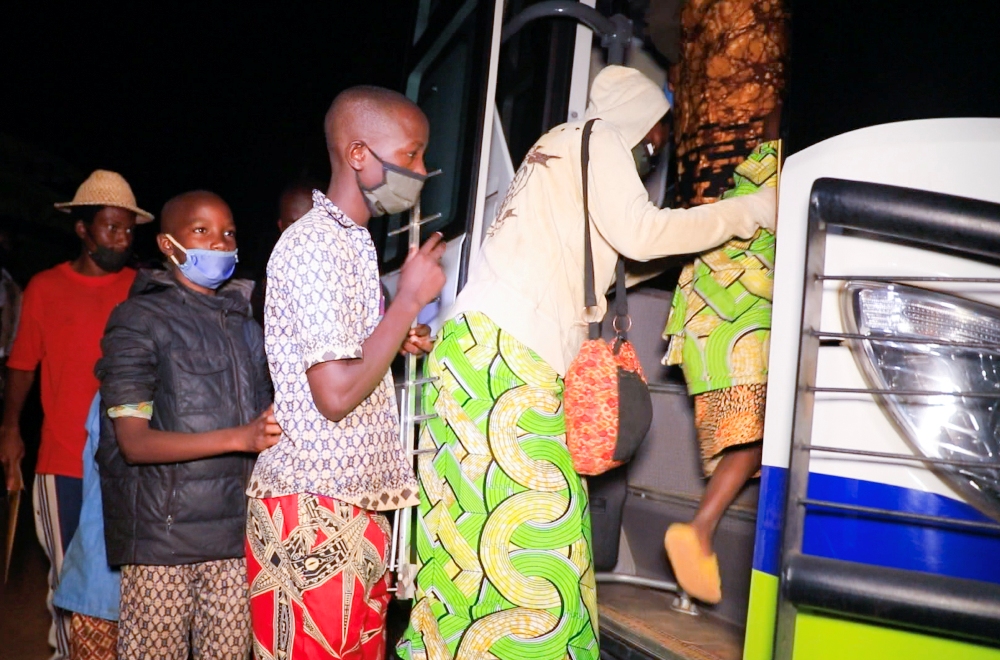
According to Elise Villechalane, the Spokesperson of the UNHCR in Rwanda, technical teams from both countries have been meeting to assess the repatriation process, which has to be agreed upon between Rwanda and Burundi, with the support of UNHCR.
“So far we have 3,637 people who have registered to return home. Over 500 will be transported back home this week. We expect to see more convoys at least every week as more people continue to express the interest to voluntarily return home,” Villechalane said.
Villechalane added that screening activities are ongoing to ascertain those who are ready to voluntarily return home; this includes assessing their health status to see if they need special support, details of where they will go in their home country and the specific needs of each of the refugees.
UNHCR said that pre-departure assessment estimates that over 500 people will be repatriated this Thursday but the final figure will be determined before the D-day as the number of people is expected to increase.
The first group departed last month after sides from Rwanda and Burundi met to agree on the repatriation process. Officials from the Ministries responsible for refugees and military intelligence chief from both sides met to discuss the refugee situation.
Though the repatriation of Burundian refugees to their home country has raised hope of the refugee crisis in the East African region relenting, the UNHCR says it is facing major challenges in regard to the budgetary resources needed support the process.
Calling on the international community and donors to support the process, Villechalane said: “There are more Burundian refugees returning home from different countries, not just the ones in Rwanda Rwanda. There was no budget for this, which means that UNHCR has to find resources by all means so that the refugees can be helped to return home.”
Villechalane also explained that repatriating refugees during the COVID-19 pandemic has turned out to be a strenuous process, since all people who want to return home voluntarily must be tested for the New Coronavirus, as part of the protocol, before they are allowed entry into Burundi.
“We are thankful to the Ministry of Health of Rwanda and Rwanda Biomedical Centre for facilitating this process by conducting tests on refugees who want to voluntarily return home but generally COVID-19 has made it made more difficult for us to carry out this exercise,” she said.
Rwanda is home to some 70, 000 Burundian refugees, 60, 000 of whom are in Mahama Camp located in Kirehe district, Eastern Province. Majority fled the country in 2015 as the country descended into a political conflict triggered by late President Nkurunziza’s decision to seek a third term.
Some Burundian refugees in Rwanda remain reluctant to return home, fearing reprisal attacks, with many accusing President Ndayishimiye of not making assurances on safety.
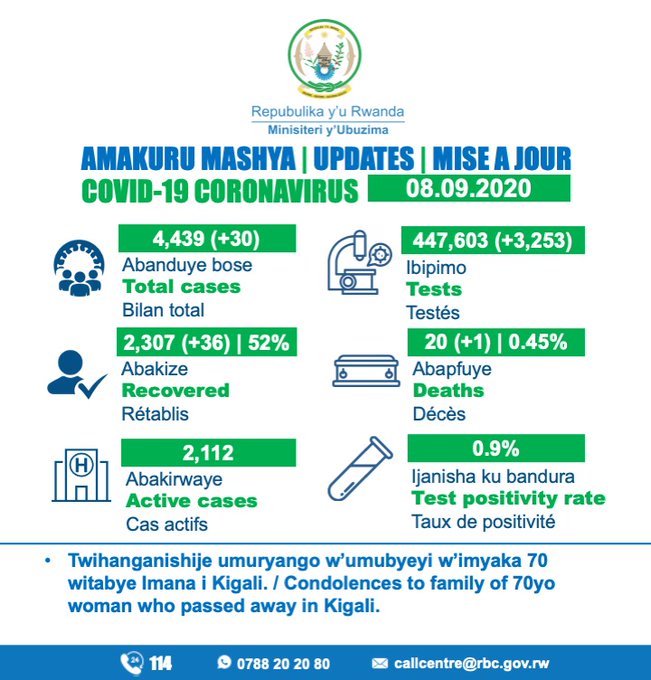
Among the new cases identified were 18 from Kigali testing in high risk groups, Rusizi recorded 4 cases, Kamonyi and Rubavu recorded 2 cases each, while Gisagara, Musanze, Kirehe,and Karongi recorded 1 new case each.
The figures released on Tuesday put the number of confirmed cases in Rwanda at 4,439, while the number of recoveries got to 2307 including 36 new recoveries recorded on the same day, which means the active cases are now 2112 cases.
As of September 8, 447,603 sample tests have been taken so far.
The Ministry of Health continues to encourage people to take more precautionary measures, while there is hope that a COVID-19 vaccine may be available in the near future although in terms of treatment, research may still be lagging behind.
The Minister of Health, Dr. Ngamije Daniel, told reporters on Monday that the disease is present in the country and is becoming more prevalent in various parts of the country, more often than not new case are found from people working in closed up areas.
“So it is something we need to keep on doing because in the coming days, in the next three months the vaccine will be available, people should, therefore, be patient during the waiting time so as not to overly charge our healthcare facilities and allowing them to continue to take good care of them,” said the Minister.
Currently, people who are more affected by the pandemic in Rwanda are those that have been diagnosed with other health conditions such as chronic diseases, as diabetes, high blood pressure or obesity.
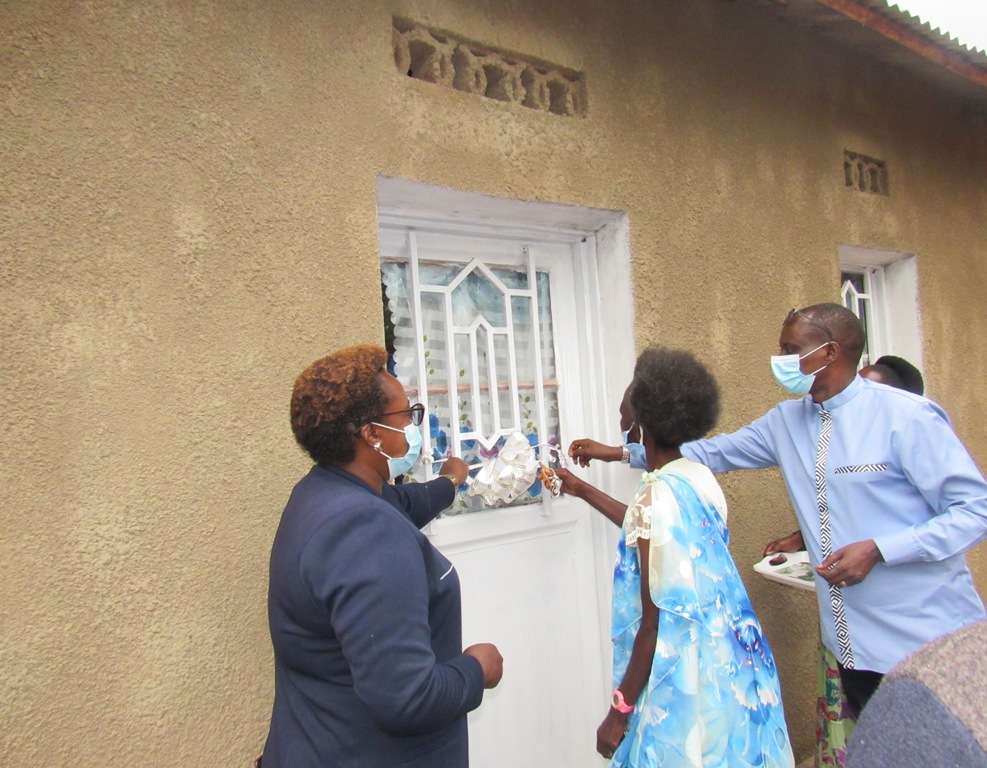
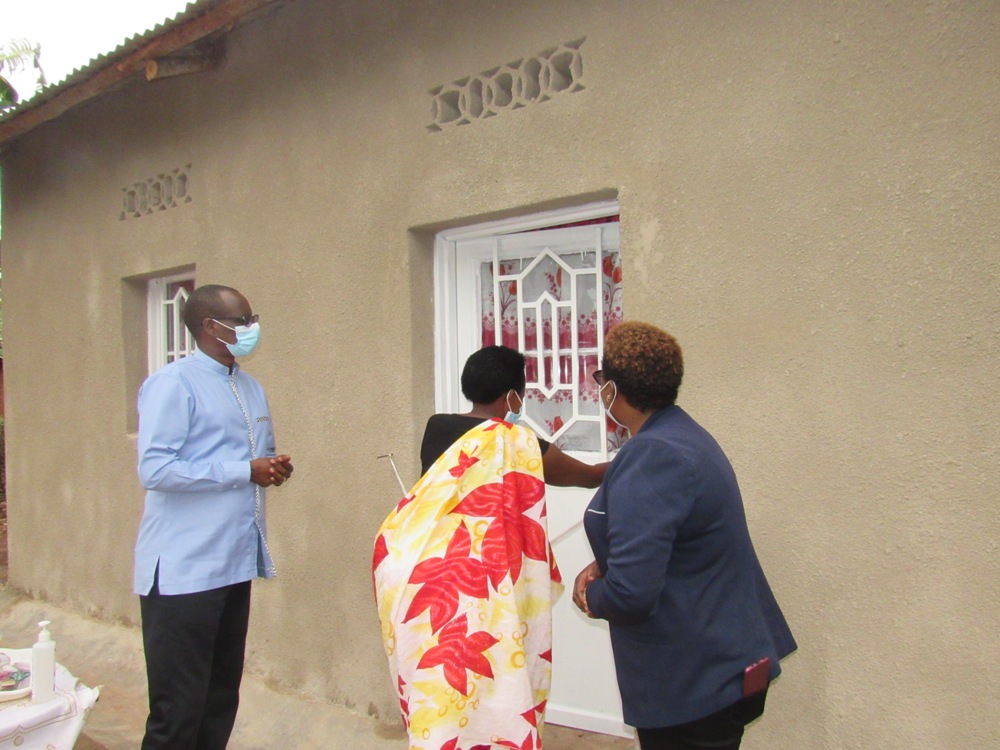
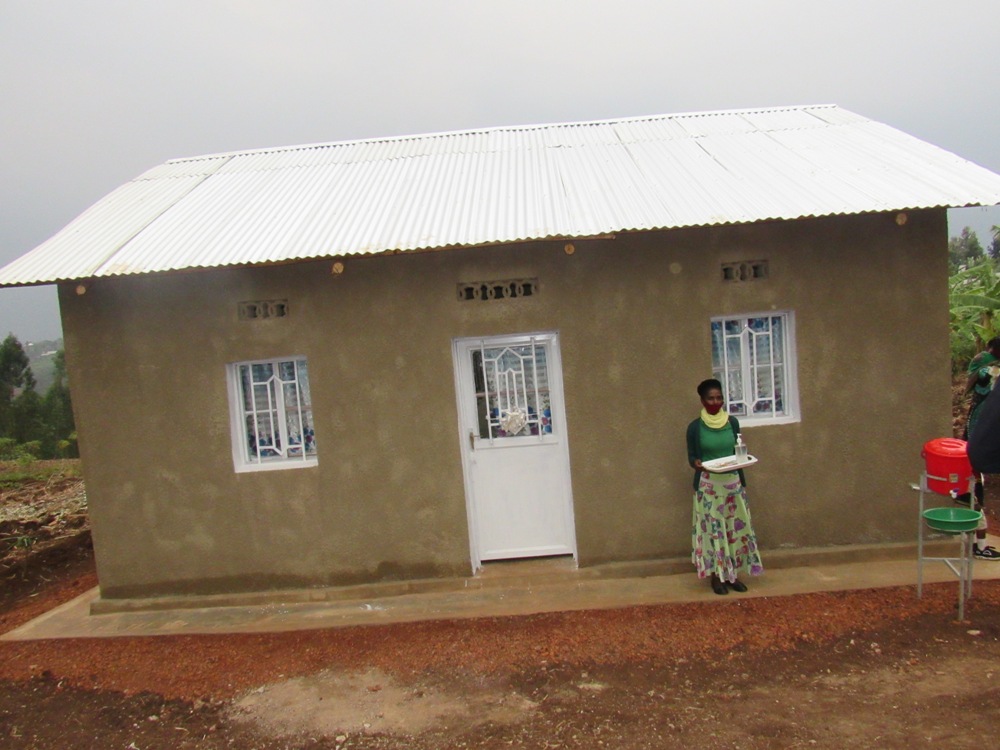
The Mayor of Kayonza District, Murenzi Jean Claude, told IGIHE that during the 2019/2020 financial year, they decided to build 271 houses for families that had been listed as vulnerable and homeless.
He also said that this year they have started building for other 397 families who are living in dilapidated houses that could cause problems at any time.
Mayor Murenzi urged residents to take good care of the houses they were given because they belong to them not the district.
Solange, a 46-year-old woman living with her three children in Nyamirama Sector, said she is happy to receive the house because she had been living a bad life for a long time.
She said that currently, she is fighting to get out of poverty and raising her children well and change their lives.
Mukambuguje Leocadie, 65, a resident of Mukarange Sector where she had been renting for eight years, said she is grateful to the authorities who took care of her until the house was built for her.
Sacca’s director, Valentine Mukamuyenzi, said helping the District accommodate the needy it is an activity they have embarked on to help the vulnerable people.
“Sacca is already doing a lot of work to help street children and their families, especially the needy. This year we have started a program to help more people who are homeless, working with the district to help them. ”
Each residential building, built at a cost of Rwf3 million, has at least three rooms, it includes house chairs, beds, bathroom, toilet, and kitchen.
The Kiss Summer Awards are organized by Radio Kiss FM, one of the famous radio stations in Kigali City and Rwanda. The Kiss Summer Awards20 is given to artists who have made popular songs during the year.
The Kiss Summer Awards are accorded in four categories: Most popular song of the year, Most popular artist, Most popular rising artist as well as the Best Producer of the Year.
SKOL, as the sponsor of these awards, has created a way to win 20 crates of Skol 100% Malt beverages for fans who will vote for the song or artist who will be awarded the prize.
The Head of Media Relations at Skol, Tuyishime Karim, told IGIHE that the winner of each of the five categories would be the one who voted for the award-winning artist and had a lot of likes for his idea of posting on SKOL’s social networking site after voting on KISS FM’s website.
“That is, when you select an artist or song on the KISS FM website, you will immediately come to SKOL’s Facebook page or SKOL’s Instagram, then write in the comment why you believe the artist [or song] has to win that award.”
“If people give you a lot of likes for that reason in the comments, the idea will have many likes, if the wins, you will win five SKOL Malt crates. Five crates are planned for each category, if you have equal likes then you will share those crates. ”
Tuyishime added that “If you pick a song from a certain artist and win the award in a particular category, and you also have a lot of likes, you will win your five crate prizes.”
“It’s the likes from the day you vote until the end [of September 13] as the artist also has to win, they will count his votes from the time they publish until the last day.”
The awards will be presented on September 13, 2020.
In an interview with Xinhua, a Chinese newspaper, Kimonyo said: “We are enjoying the best balance of cooperation with China in our history.”
Two years before the services trade fair, Rwanda and China’s e-commerce giant Alibaba signed an agreement over the Electronic World Trade Platform (EWTP) that helps small and medium enterprises to digitally transact.
Through the agreement, Rwandan products such as pepper and coffee are sold on various Alibaba sites such as Tmall, Taobao, and others.
Rwandan coffee was recently sold to the Chinese market through a joint venture, where 1.5 tones were sold online in a few minutes. The event took place in a 10-minute talk entitled “National Treasure” on May 14, 2020.
Kimonyo added that Rwandan coffee makers and marketers say they continue to receive requests from Chinese companies that want Rwandan coffee.
He went on to say that small and medium enterprises have benefited from setting up a platform that enables them carry out e-commerce, reaching reach large and affordable markets.
He said the creation of a total African market would be made up of over 1.2 billion people, which means that the African continent has opened its markets once and for all.
He also said that China has quickly recovered from this (COVID-19) pandemic, which gives them hope, but also to the world, adding that, the more China grows, the more Africa become prosperous.
They were arrested in separate Police operations conducted in the cells of Murambi and Kanoga in Nyakarenzo Sector.
There has been growing complaints from the local residents over rings of fraudsters, according to Chief Inspector of Police (CIP) Bonaventure Twizere Karekezi, the Police spokesperson of the Western region.
“This is a big group, some of their members were arrested in the previous operations and currently either serving their sentences or still in the prosecution process,” CIP Karekezi said.
“Most of the information is got from the public. They say some people call them claiming to have mistakenly sent them money on their mobile accounts and tell them to urgently wire the money back. Others impersonate telecommunication companies’ workers and demand that their targeted victims change their Mobile Money PIN to the new PIN they tell them,” CP Karekezi explained.
Apparently, the fraudsters formulate Mobile money messages, which they send to the targeted individuals. If you are not vigilant enough, you might indeed think that someone has sent money on your mobile account.
Equally, when these fraudsters get to know your SIM-Card PIN, it becomes easy for them to access you mobile account.
“This new group of 15 people, were arrested based on information provided by their colleagues arrested in the previous operations as well as residents, but there are others that were are still tracking,” CIP Karekezi said.
Previously, the conmen would defraud people with a shiny object saying it’s gold.
“They would call or send messages to people that they found a gold stone weighing 2,000kgs and ask for help to translate the words on it, which they claimed are written in a foreign language.
They would say the gold bar has 1914 written on it and that it was left behind by colonialists. They would try many tricks to entice you until they take your money but the people got to know this method and the fraudsters have continued to change the tricks.”
CIP Karekezi called upon the public to be vigilant and not trust anyone who tells they to “resend” money and to never share their PIN, and other suspicious favours people would ask.
He added that in case anyone reaches out to them with such unclear offers, they should report it to security organs or their local leaders immediately.
All the arrested suspects admitted to the alleged crimes. They were taken to the COVID-19 isolation centre in Kamembe, where they will be handed to Rwanda Investigation Bureau once they test Negative for Coronavirus.
While appearing on Waramutse Rwanda, a morning talk-show on Rwanda Television on Monday, September 7, RNP spokesperson, CP John Bosco Kabera, observed that violations mainly include not respecting the time when everyone should be home as well as not wearing facemask.
“Like it was directed in the recent Cabinet Meeting of August 26, there were changes in movement hours; movements are now prohibited between 7 pm and 5 am.
It has been observed that some people have not adjusted according to this directive, but all relevant entities are working together to enforce and ensure that it’s respected,” CP Kabera said.
He observed that there are four groups of people in relation to compliance.
Those, who fully understand and comply with the directives as issued; those who understand and take responsive steps to facilitate the implementation and enforcement through awareness and information sharing on violators; those who comply because they are forced or penalized; and habitual violators who are penalized but fail to change their behavior.
“The better part is that those who comply and are responsive constitute the vast majority. We urge everyone to fall under this group instead of being forced,” CP Kabera said.
Use of force
While responding to concerns of the Police extreme use of force, which has been making rounds on social media platforms, CP Kabera said that “this is uncalled-for.”
“Police officers are held accountable, right from the one who, insult or verbally abuse members of community; refuses to give a service or respond to an emergency call; up to the one, who used excessive force in the course of their dity,” CP Kabera emphasized.
He added: “When extreme force is used, those implicated or responsible are held accountable after thorough investigations conducted jointly by RIB and the Police. Police officers are Rwandans like others and are not above the law.
The EAC Regional Electronic Cargo and Drivers Tracking System was to be officially launched on August 12, 2020 but it came to a standstill with Tanzania’s request that the process first be enlightened by various EAC bodies, including the Council of Ministers, to get it approved.
After a long wait, the EAC via Twitter said that the technology will be officially launched on September 8, 2020.
The East Africa Community Secretariat and its Partner States will hold a virtual event to officially mark the roll out of RECDTS that will issue jointly recognized EAC COVID-19 digital certificates. Event starts at 12.00PM.
The EAC developed the app with funding from European Union, Global Affairs Canada, Danida, Finland, Netherlands and United Kingdom through TradeMark East Africa and in accordance with the mandate given by the 1st joint ministerial meeting of EAC ministers responsible for Health and EAC Affairs.
The App provides a surveillance system to monitor long distance truckers crew health and enable contact tracing. It allows partner states to electronically share truck drivers’ COVID-19 test results; therefore, minimizing need for multiple COVID-19 tests in a single trip.
The reliance on manual certificates and delayed test results at the borders has been reported as one of the main reasons for costly long delays at border points.
It is expected that RECDTS will contribute to protecting lives, support health related protocols and facilitate safe trade. RECDTS will be in use in all partner states and will eventually be extended to EAC neighboring countries, particularly Democratic Republic of Congo (DRC).
RECDTS will be overseen by the EAC Secretariat, which is supported by four other countries, namely Kenya, Uganda, the Democratic Republic of Congo and Rwanda, and the Nimule border in South Sudan.