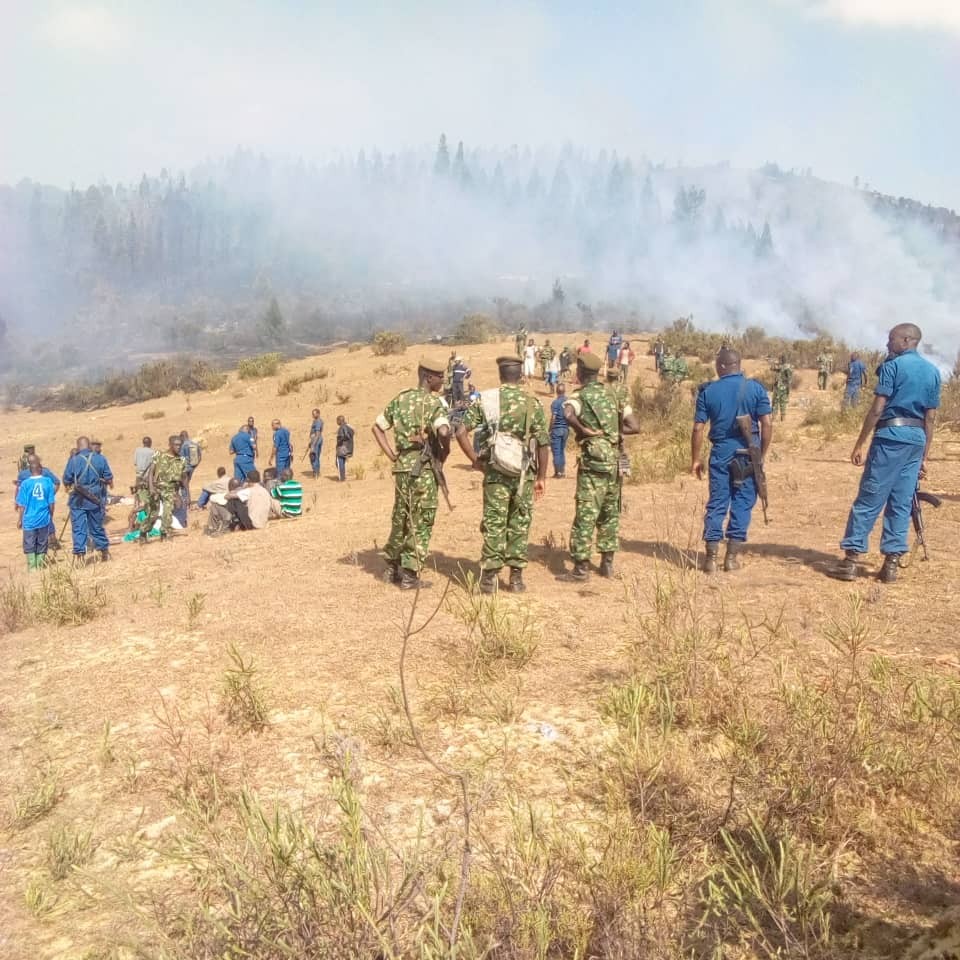
“On 29 September 2020, nineteen (19) Burundian combatants who identified themselves as members of Red Tabara armed group crossed from Burundi to Rwandan territory. The combatants, armed with guns, were apprehended in Nyungwe Forest, Ruheru Sector of Nyaruguru District where they are being held,” the RDF statement reads in part.
The statement further says that Rwanda Defence Force has informed the International Conference on the Great Lakes Region Expanded Joint Verification Mechanism (EJVM) and requested the regional mechanism to verify and investigate the cross-border incident for further management.
In August this year, EJVM facilitated a meeting of intelligence chiefs from Rwanda and Burundi that took place at Nemba One-Stop Border Post in Bugesera District to discuss security issues that have strained the two countries’ relations since 2015.
The meeting was the first known physical high-level meeting that has convened officials from both countries in a while for both sides to discuss the strained relations.
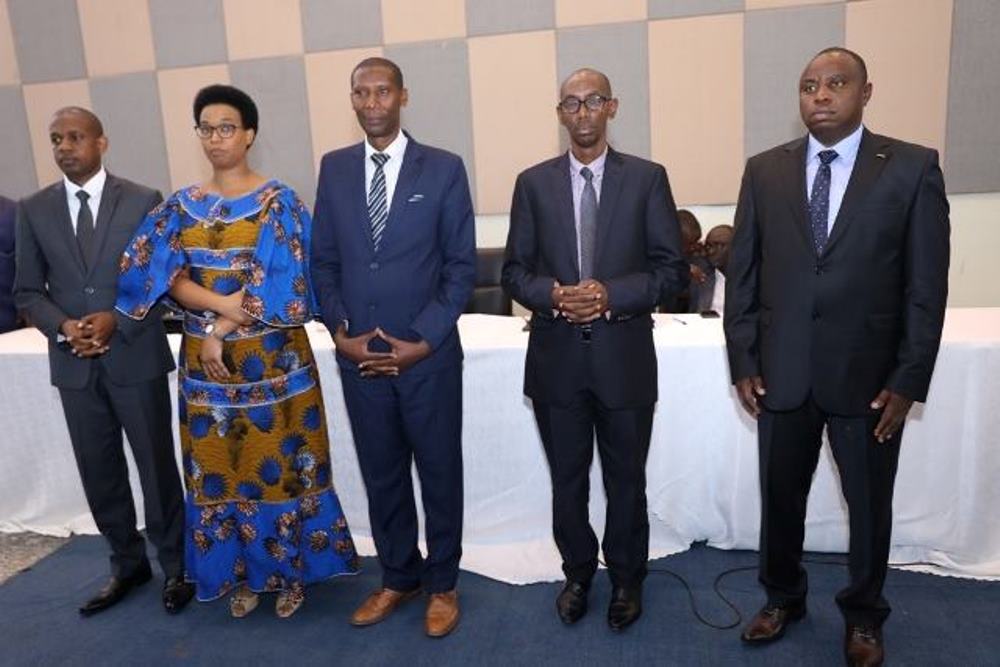
The RGB has decided to suspend the ADEPR leadership after years of wrangles and infighting and allegations of mismanaging the church’s funds.
RGB dissolved the general assembly, the board of directors, the executive committee (bureau) and the arbitration committee and are all supposed to hand over to the interim team on Thursday, October 8.
RGB faults Reverend Ephreim Karuranga, the church’s spokesperson and top-most leader and his team for bad governance, poor performance and cooperation.
“Most of these problems have been around for some time and the leadership did not take steps to resolve them. Governance and functioning continued to be marred by divisionism and disturbing the peace of ADEPR members”, reads the statement in part.
The Governance Board also in its analysis found that the flaws in the laws governing the functioning and management of the staff and property of ADEPR and did not provide a lasting solution to the problems in the church.
Hence, continues the statement, “RGB decided to suspend the church leadership as the problems are taking another turn. This development is in the interest of ADEPR members.”
Headed by Karuranga, the Executive Bureau assumed the leadership of the church on March 17, 2018 following an election.
The 2018 elections followed a nine-month transitional leadership that followed the resignation of Bishop Sibomana and Tom Rwagasana.
The executive committee consisted of the Spokesperson (Karuranga), his deputy John Karangwa, the Secretary General, White Leader Paul; and Jean Paul Ntaganda, who acted as the Financial and Economic Advisor.
The former director of finance and administration, Aurélie Umuhoza was installed interim leader until the new committee is sworn in.
The development was announced in a statement signed by Usta Kayitesi, the CEO of Rwanda Governance Board.
Dr. Uwamariya said this on Friday October 2, in a press conference with the key ministries, including the Minister of Health, Dr. Daniel Ngamije, Minister of Local Government, Professor Anastase Shyaka, Minister of Education, Minister of Trade and Industry, Soraya Hakuziyaremye, and the spokesperson for the Rwanda National Police, Commissioner of Police Jean Bosco Kabera.
Accoeding to the Minister of Education, the work to be done by these universities included extending classrooms to allow for the stipulated distances between pupils, or students, providing hand washing facilities, and generally raising the standard of hygiene.
First to reopen this month will be Universities and secondary schools, although not all Universities and secondary schools will open. Permission to open is dependent on the extent to which an institution is able, or has been able to provide online lessons, and guarantee that students will have the necessary facilities to observe preventive measures.
As well as hand washing areas, the institutions to open have been able to demonstrate that they have the space to keep the stipulated two metres between one student and another.
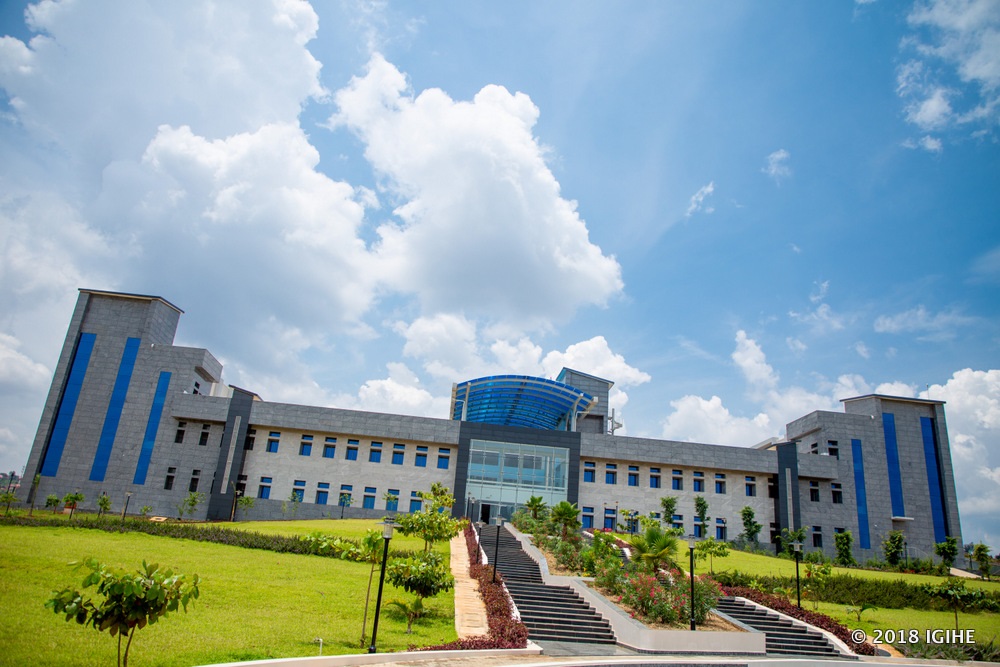
So far, six Universities, among them University of Global Health Equity (UGHE), African Leadership University (ALU), African Institute of Mathematical Sciences (AIMS), Carnegie Mellon University (CMU), have been given clearance to open for students on campus, but also to continue online classes.
Five more Universities, including the University of Rwanda, Mountain Kenya University and Rwanda Polytechnic will be allowed to open but only for students in their last years, third, fourth and fifth years.
This will allow these students to graduate, clearing space for others who come after them. All these institutions will be required to accommodate students at university campuses.
The minister assured universities that were not given the green light to open that their institutions will continue to be evaluated, and allowed to open, as soon they fulfill the criteria for reopening.
For secondary schools other those which follow a foreign curriculum, and study largely online, the plan is to reopen in November. Those that follow a foreign curriculum may open sooner, because much of their teaching was online anyway.
For all institutions, holidays and term times will now be determined not on the basis of the normal education calendar, but on the basis of what is required to protect that population and others, from Covid-19 infection.
As with Universities, priority for secondary schools will be given to pupils in their last years, so that as they graduate, they leave space for younger students. Schools will also be encouraged to prioritize the core subjects.
The incremental normalization of people’s lives largely depends on people’s adherence to preventive measures.
Habiyambere was arrested on Wednesday, September 30, in Nyabitekeri cell of Tabagwe sector with 100 litres of kanyanga.
ANU is a Rwanda National Police (RNP) unit charged with fighting narcotic drugs and psychotropic substances.
The Police spokesperson for the Eastern region, Chief Inspector of Police (CIP) Hamdun Twizeyimana said ANU has been trailing Habiyambere following information from local residents that he is one of the major kanyanga dealers in Nyagatare, supplying local retailers.
“On September 30, a resident shared information that Habiyambere had brought more jerrycans of kanyanga from Uganda, ANU traced and arrested him. The 100 litres of kanyanga in five jerrycans were recovered in the neighbour’s kitchen.
The neighbour, who was out running personal errands, was not aware that Habiyambere was using his kitchen especially at night, as store,” said CIP Twizeyimana.
According to the spokesperson, there was information that Habiyambere also deals in cannabis, although no such narcotics were found during the search.
{{Using children}}
Habiyambere admitted that he sneaks kanyanga into Rwanda from the neighbouring Uganda through illegal border points.
He further disclosed that he uses children or the youth to carry jerrycans of kanyanga from Uganda, in most cases at night, paying them Rwf3,000 per jerrycan delivered to the final destination.
“Trafficking and selling kanyanga is one thing and using children is another, which amounts to child labour, violation of their rights and manipulating them to engage in such drug related crimes for personal gains,” CIP Twizeyimana said.
Kanyanga and other outlawed substances are classified as simple drugs.
Under article 263 of the law relating to offences and penalties in general, anyone convicted for simple drugs faces between seven and ten years in prison and a fine of between Rwf5 million and Rwf10 million.
However, if the crime involves using children, the penalty is life imprisonment and a fine of between Rwf30 million and Rwf50 million.
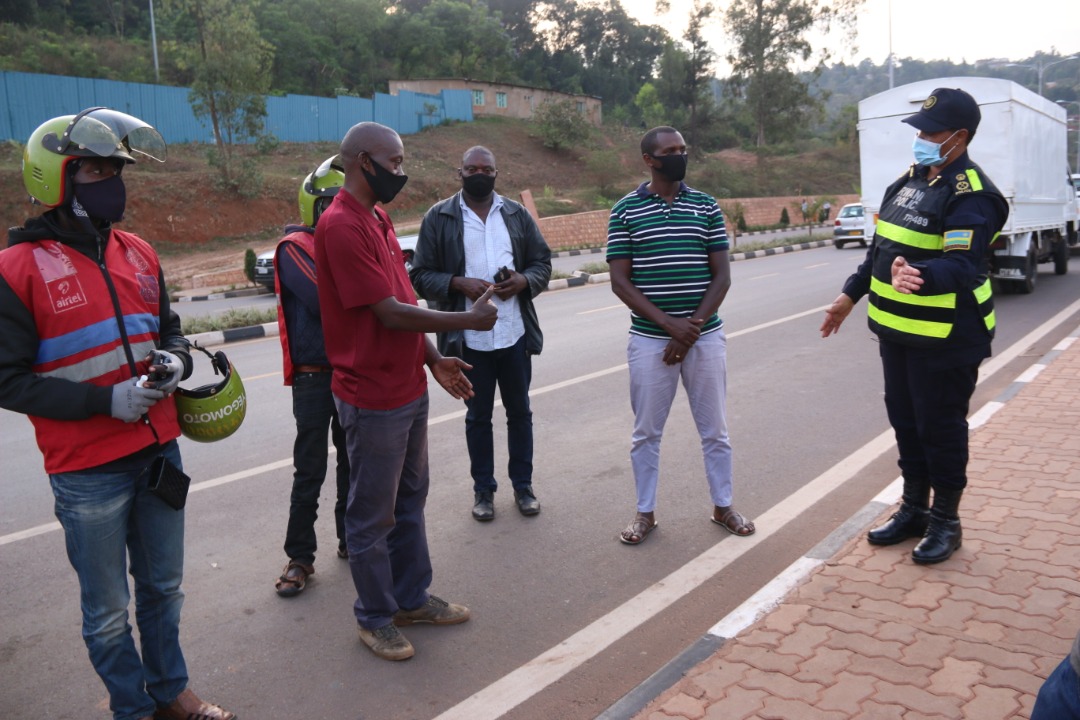
The campaign resumed on the roads of City of Kigali and will be extended to all parts of the country.
Gerayo amahoro campaign was first launched on May 13, 2019, but was halted on the 46th week when COVID-19 broke out in the country.
ACP Teddy Ruyenzi, the Deputy Commissioner in Charge of Administration in the department of Traffic and Road Safety, said that after six months of intensified efforts in fighting Coronavirus, it is evident that people’s zeal to safely use roads has decreased.
She said it is high time the police reminded road users on the disciplines of road usage; harmony, and avoiding mistakes and behaviors that could lead to road accidents.
“We started with motorists, educating and reminding them how to safely drive on a two-lane-same-direction road; that one must drive on the right lane, and only use the left when they are overtaking a slower motorist, but they must then return to the right lane. This is advisable because it helps everyone to drive on their speed without hardships or affecting traffic flow,” ACP Ruyenzi.
She also explained that motorists are being further informed on how to drive at intersections, roundabouts, how to use their head-lights, as well the necessity to respect pedestrian crossing zones.
“We also remind motorists that when they reach roundabouts, they must give priority to those already in the roundabout. We are also looking at safe overtaking and regulating speed, one of the major causes of fatal accidents,” she added.
“For lights, motorists should use high beam only when they are in the dark, and low beam when there is light. When one uses the high, the other drivers might lose sight and this could cause serious accidents,” ACP Ruyenzi further explained.
She also condemned motorists who do not give way for pedestrians especially in their crossing zones.
“Motorists should respect pedestrians’ rights. All vehicles must reduce their speed when they approach pedestrian crossing zones.
We have started with these key points because they are evidently the most violated and in the process making them some of major causes of accidents.
Most of these accidents were due to over speeding and motorist redundancy.
Motorists are urged to avoid mistakes and inappropriate road usage for their own good and the safety of other road users. They are also encouraged to avoid being penalized for preventable reckless and risky behaviors, which now can be detected by the new road technology.
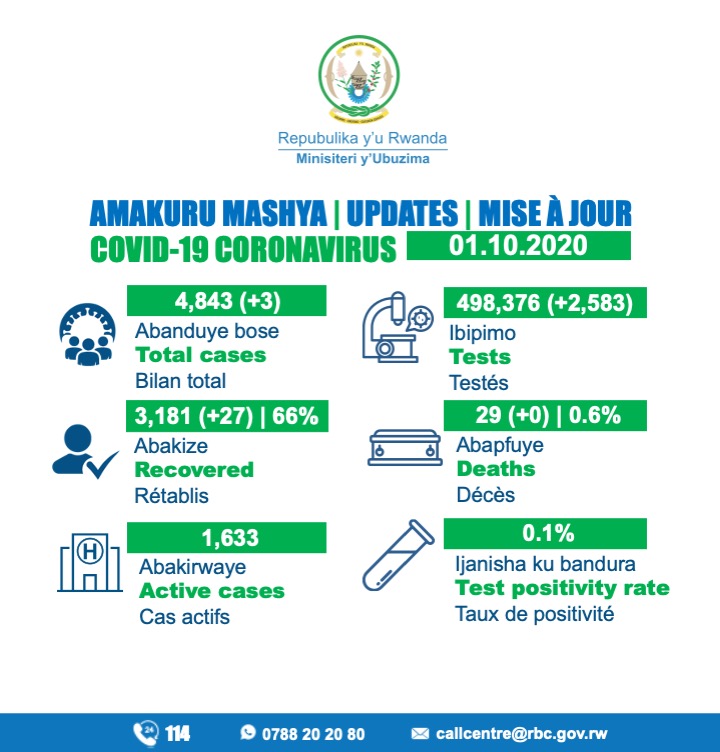
A statement issued on October 1, 2020 states that new patients have been identified in Kigali City, Musanze and Kirehe Districts where one case was for in each of them.
The new cases brought the number of COVID-19 confirmed cases in Rwanda to 4,843, while the number of recoveries is now 3,181. A total of 1,633 people are still receiving medical care in their hospital centers and some in their own homes; about 29 have succumbed to the pandemic in Rwanda.
The number of COVID-19 infections has dropped dramatically with about eleven cases in three days.
So far, the Coronavirus has no cure or vaccine, the medical units only treat the symptoms of the pandemic allowing the human body to build a strong immunity system and hence eliminating the virus in the blood.
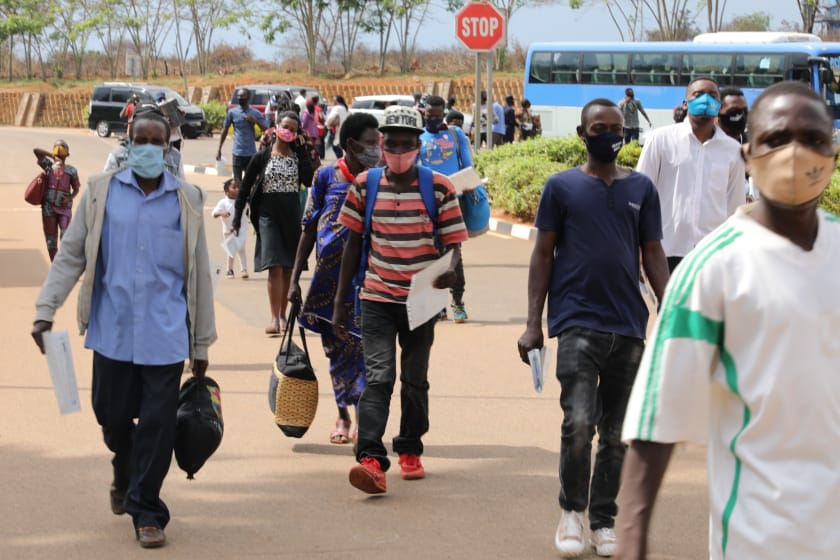
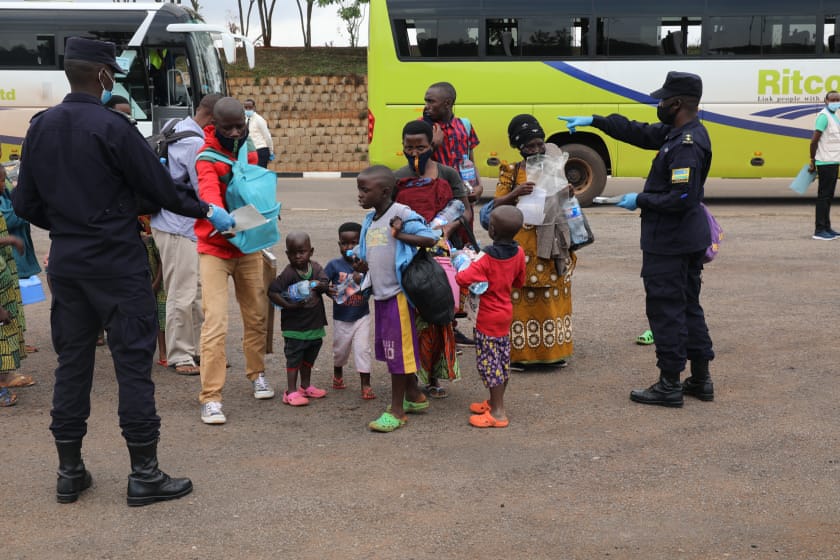
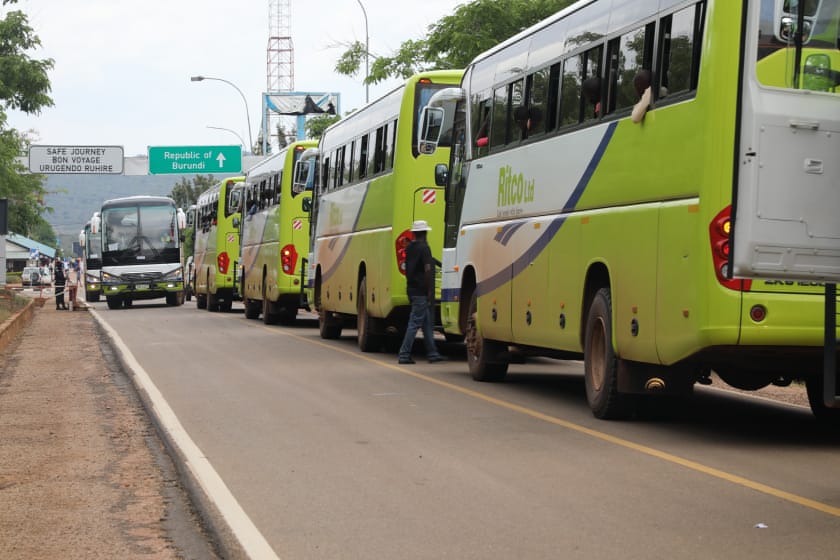
As of Thursday, 595 refugees had returned, including 452 from Mahama camp and 143 from other cities. The other 1,503 returned to their country in three batches.
The ministry said it would continue to help the rest return to their homeland in peace.
The majority of the refugees fled the country following the political crisis that gripped Burundi in 2015 when the then President, the late Pierre Nkurunziza decided to seek a third term, leading to countrywide protests as people opposed the move.
The first batch of refugees returned on August 27 and was welcomed by the President of Burundi, Gen Maj Evaritse Ndayishimiye.
President Kagame said in a twit yesterday that their contribution to the liberation of Rwanda today is the reason the country is where it is in its achievements and current economic development that all Rwandans are enjoying.
“To all patriots of our country and friends who walked this seemingly insurmountable journey that put us where we are today and did us proud today as a nation; we salute you and thank you!!! Dukomerezaho…!!!” Kagame said.
It has been 30 years since the Rwanda Patriotic Army (RPA), the armed wing of RPF-Inkotanyi, launched the liberation struggle to topple the genocidal government, a journey that lasted for four years.
The ‘October 1’ was the start of the four-year journey that was aimed to end social divisions, restore unity, establish a democratic leadership, and defend the sovereignty of the country, among others.
On October 2, 1990, the first commander of RPA, Maj. Gen. Fred Gisa Rwigema was shot dead.
While the army was missing its former commander, that was when the then Maj. Paul Kagame cut short his military studies in the U.S to return and reorganize the fighters and led them until the country was liberated.
The decision was taken reaffirming an earlier decision that was taken on the suspect but rejected by his defense team arguing that Kabuga was not physically fit to stand trial in Tanzania due to his poor health condition.
Kabuga was arrested in Paris in May 2020, ending a manhunt that lasted more than two decades of evading justice for his crimes committed during the 1994 genocide against Tutsi. The 87 year-old suspect was indicted in 1997 on seven criminal counts including genocide.
He is accused of assassination as a crime against humanity, extermination as a crime against humanity, rape as a crime against humanity, persecutions on political, racial, or religious grounds as crimes against humanity in addition to various war crimes
On June 3, the Paris Court of Appeal, responsible for examining the validity of the arrest warrant issued by the Mechanism for International Courts (MTPI), ordered Kabuga’s surrender to international justice under the International Tribunal for Rwanda (ICTR) now the International Residual Mechanism for Criminal Tribunals (IRMCT) based in Tanzania.
Kabuga had appealed this earlier court decision of his transfer to Arusha but the court upheld the defense he is expected to use his health conditions to convince the court to be tried in France and not be sent to the International Criminal Tribunal court in Arusha, Tanzania for trial.
The fake dollar notes were in the denominations of US$100, Police said.
The suspected counterfeiters were arrested separately in Gisenyi town with materials, including a computer, printer and papers, which they were using to produce the fake dollar notes.
Chief Inspector of Police (CIP) Bonaventure Twizere Karekezi, the Police spokesperson of the Western region, said Police first arrested Ngarambe, who identified Nsanzamahoro as his co-conspirator.
“A resident informed the Police that Ngarambe had counterfeit money. Ngarambe was located and arrested in possession of six fake notes of USD100 and 101 other pieces of paper cut in form and size of currency notes, which would be printed into more fake money,” CIP Karekezi said.
He added: “Ngarambe, after his arrest, identified Nsanzamahoro, also a resident in Gisenyi, as his accomplice and who prints the fake money.
Police went to Nsanzamahoro’s house where he was arrested with five notes of $100 and recovered a computer and printer, which they were using to make the fake monies.”
Apparently, the suspects would search dollar notes on the internet, add some colours with the computer before printing them.
All the eleven fake notes had the same serial number.
The serial number corresponds with that found on other fake dollars, which were also seized from a woman arrested in Rubavu District, recently.
CIP Karekezi thanked the resident, whose community policing spirit led to the arrest of the duo, and called for continued partnership and ownership in fighting such high impact crimes, which affect the economy and particularly small businesses, which are mainly targeted.
Article 296 in the penal code says “any person who, fraudulently counterfeits, falsifies or alters coins or bank notes which are legal tender in Rwanda or abroad, notes issued by the treasury with its stamp or brand, either banknotes or alike that have legal tender in Rwanda or abroad, or one who introduces or issues in Rwanda such effects or notes with knowledge that they are forged or falsified, commits an offence.
Upon conviction, he/she is liable to imprisonment for a term of not less than five (5) years and not more than seven (7) years.”