A statement from the ministry on Wednesday said the new cases were found in Kigali: 3, Musanze:19, Nyanza: 11, Rubavu: 4.
Since the COVID-19 outbreak in Rwanda, 5543confirmed cases were found out of 596,686 sample tests taken. Of these, 5137 have recovered, 389 are active cases while 46 people have succumbed to the pandemic.
Coronavirus symptoms include coughing, flu, and difficulty in breathing. The virus is said to be transmitted through the mucous membranes of the respiratory tract.
Rwandans are required to continue to comply with government regulations, especially with frequent washing of hands and water and soap, wearing masks when leaving home or in public.
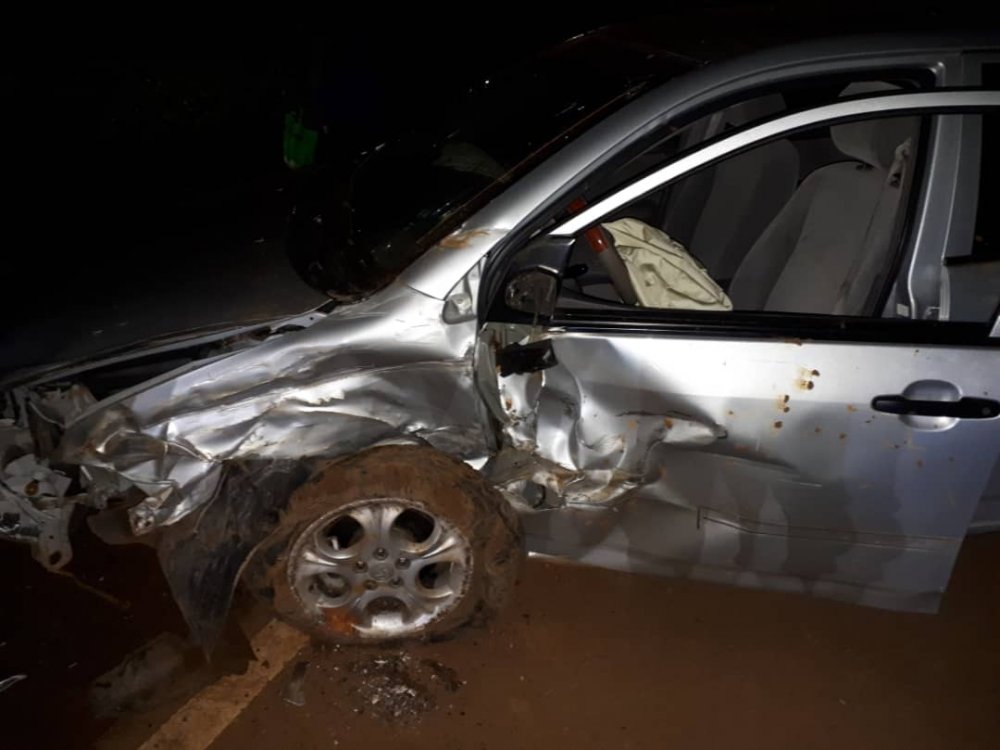
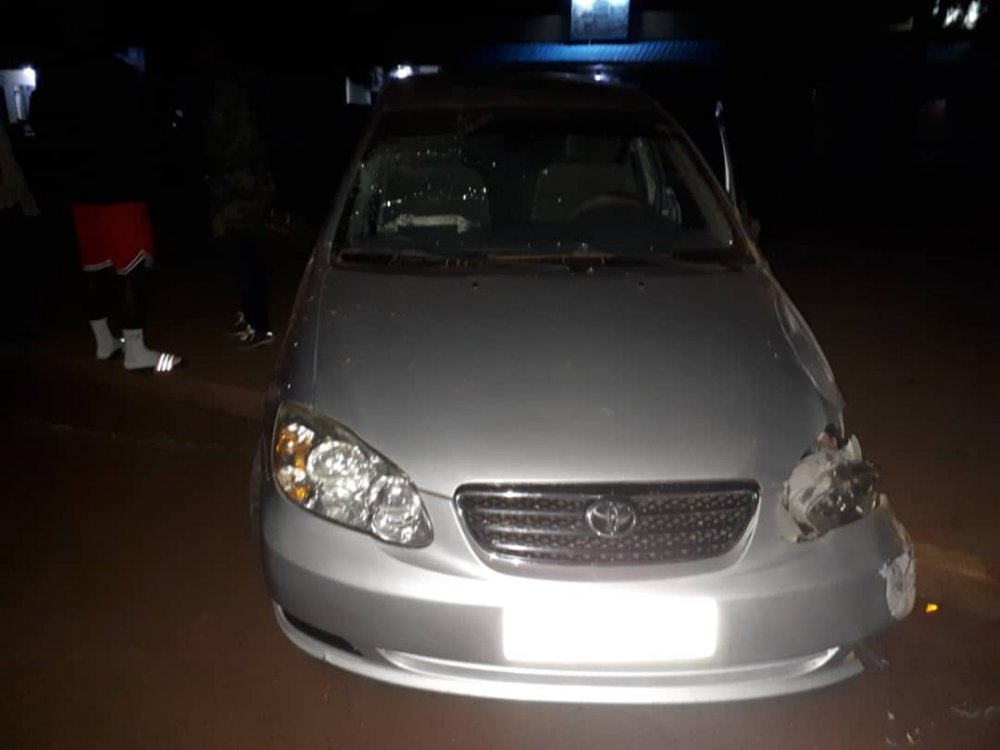
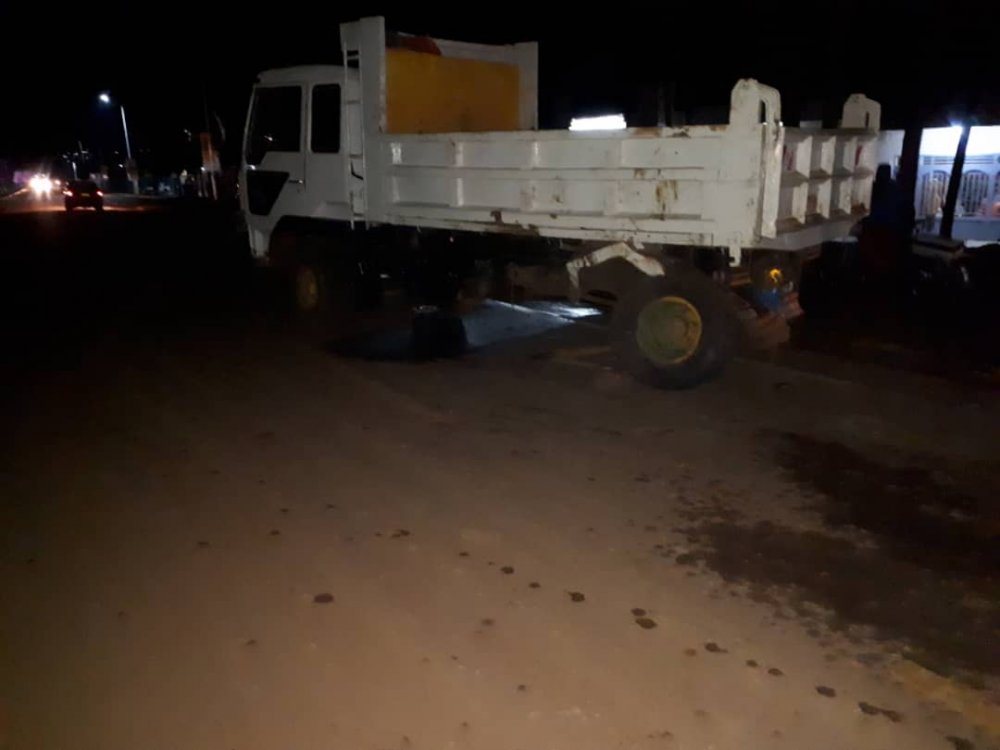
Amavubi national team captain Haruna Niyonzima was involved in a car accident where he is said to have been with his wife.
The accident took place in Nyamata in Bugesera District in the evening on Wednesday on 18 November 2020.
One of the eyewitnesses said that Haruna was driving a van and he tried to avoid hitting a man who was riding a bicycle when he got into a big truck.
The sportsman tried to gain back the control of the car in vain, instead, he was seriously injured in a car crash. He is said to have been with his second wife Niyitegeka Consolée ‘Cassa Rayaan’.
Niyonzima Haruna, the 30-year old football player shot to fame when he was playing for Etincelles in 2004, when he was called up to the National Youth Team.
In 2006 he moved to Rayon Sports, but did not stay there for long, he immediately moved to APR FC in 2007, then to Yanga SC in 2011, this time from 2017 to Simba SC.
In the summer of 2019 he left Simba SC and returned to Rwanda, after six months of playing for AS Kigali, he went back to Yanga SC.
Jean Luc Mutabazi, 28, was arrested after he allegedly duped one of his clients identified as Alphonse Kalisa, 37, with fake bills worth Rwf10, 000, in the denominations of Rwf5, 000.
The Police spokesperson of the Eastern region, Chief Inspector of Police (CIP) Hamdun Twizeyimana, said that on Tuesday morning, Kalisa withdrew Rwf13, 400 from his mobile account to pay water bills.
“Kalisa went to Cogebank branch in Kigabiro to pay the utility bills, but the bank found that two bills in the denominations of Rwf5, 000 (Rwf10, 000) were counterfeit; Kalisa was contained and the branch management immediate called Police at Kigabiro station,” CIP Twizeyimana said.
He added: “Kalisa disclosed to law enforcement organs that he withdrew the money from the agent—Mutabazi. When law enforcement officers located Mutabazi, they found other Rwf90, 000 on him, which he had mixed with other genuine bills amounting to Rwf400, 000. He was immediately taken into custody for the alleged financial crime.”
Security officers are also searching for another person, who allegedly supplied Mutabazi with the fake money the previous day.
The arrest of Mutabazi comes on the heels of increased vigilance, information sharing and operations against individuals who counterfeit or circulate fake currencies.
Article 269 in the law determining offences and penalties in general, says “any person who, fraudulently counterfeits, falsifies or alters coins or bank notes which are legal tender in Rwanda or abroad, notes issued by the Treasury with its stamp or brand, either banknotes or alike that have legal tender in Rwanda or abroad, or one who introduces or issues in Rwanda such effects or notes with knowledge that they are forged or falsified, commits an offence.
Upon conviction, he/she is liable to imprisonment for a term of not less than five (5) years and not more than seven (7) years.”
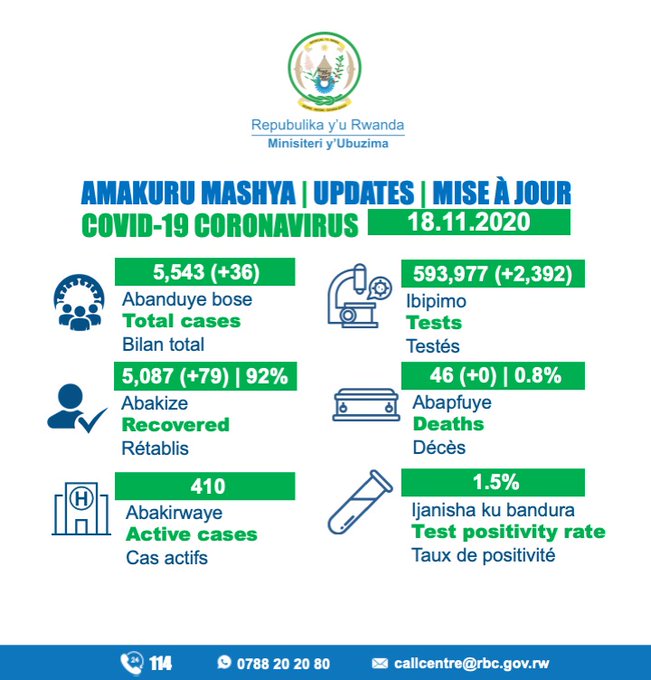
A statement from the Ministry on Wednesday said the new cases were found in Kigali: 7, Gisagara: 9, Karongi: 1, Nyamagabe: 17, Rubavu: 2.
Since the COVID-19 outbreak in Rwanda, 5543 confirmed cases were found out of 593,977 sample tests taken. Of these, 5087 have recovered, 410 are active cases while 46 people have succumbed to the pandemic
Coronavirus symptoms include coughing, flu, and difficulty in breathing. The virus is said to be transmitted through the mucous membranes of the respiratory tract.
Rwandans are required to continue to comply with government regulations, especially with frequent washing of hands and water and soap, wearing masks when leaving home or in public.
This comes after a comprehensive revision of all voice products including Isanzure, Tera Stori, Imirongo Yose, and Byose Combo Packs.
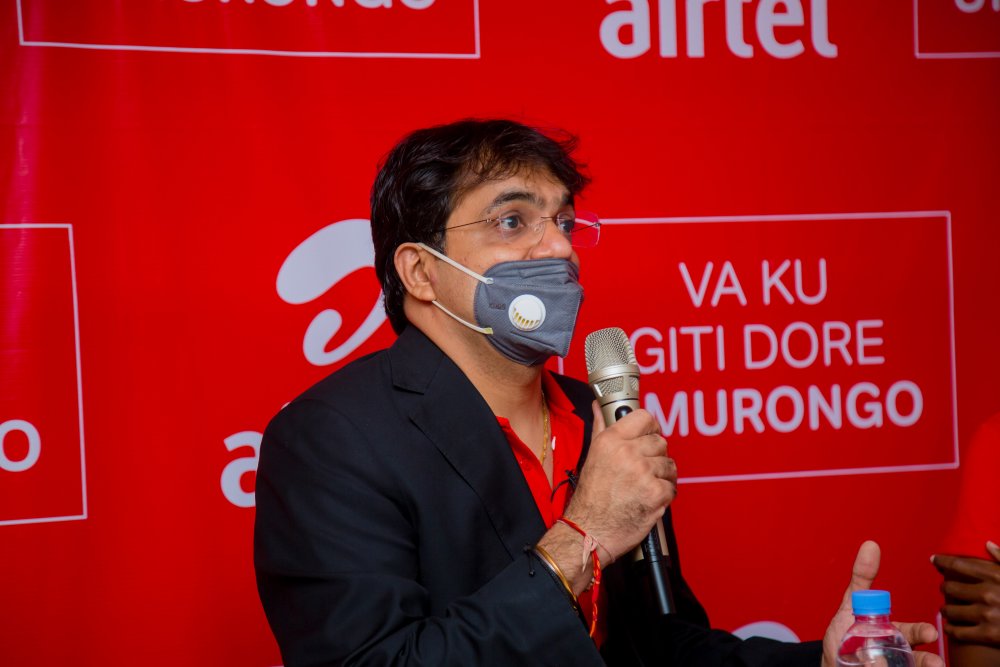
Speaking at the press conference, Airtel Rwanda MD, Amit Chawla “The Campaign, Va Ku Giti, Dore Umurongo is an umbrella campaign that serves to cement our position The Honest Network, bringing to life the ethos of Honesty, Transparency and Freedom to call all networks.”
Airtel’s Flagship voice product, Isanzure is now Open and Honest, open in the sense that all customers can see the same packs regardless of age or usage profile.
Similarly, Tera Stori, another popular product has been further enhanced to offer more minutes so that customers can Talk Freely to Any Network, introducing a higher value pack worth 5,000, offering 3,000 minutes to call Airtel and 500 minutes to call the other network.
Speaking at the launch, Amit Chawla added “We have revised our All-Net Packs, popularly known as Imirongo Yose, offering double the minutes to call all networks. For instance, customers can buy a pack for only 200 RWF offering 20 minutes to call Airtel to Airtel and 20 minutes to call the other network.”
Furthermore, Airtel also launched an All-in-One bundle called Byose, a bundle that combines Voice, Data, and SMS at a single price point. This pack, Amit Said “priced at 15,000 RWF comes loaded with a massive 30 GB of Data, 3,000 minutes of talk time to call customers on Airtel in addition to 500 minutes to call the other network plus 1,500 SMS. I will be bold and confirm that it is impossible for one to find an equivalent bundle with as much value as Byose”.
The announcement was made on Tuesday, a few days after customers indicated that some of Bank of Kigali’s services were no longer available due to technical issues.
“While we were able to recover our Core Banking Service, some key services and channels, partner services remain unavailable,” reads the statement.
“The equipment failure has hampered our ability to speed up the recovery process. Our focus has been to ensure that customers have access to their accounts and we were able to utilise our disaster recovery site to avail the critical services to clients. Branches, AgencyBanking, ATMs, and POS are operating.”
BK assures that their team is working around the clock to ensure that each service that is running is consistent and stable; efforts are to spared to bring remaining services back online as soon as possible.
“Our contact center is available on 4455to answer questions and our teams in branches will provide support to our clients during this difficult period. In addition, we will be sharing update on social media. We sincerely apologize for the inconvenience caused and thank you for your trust and patience.”
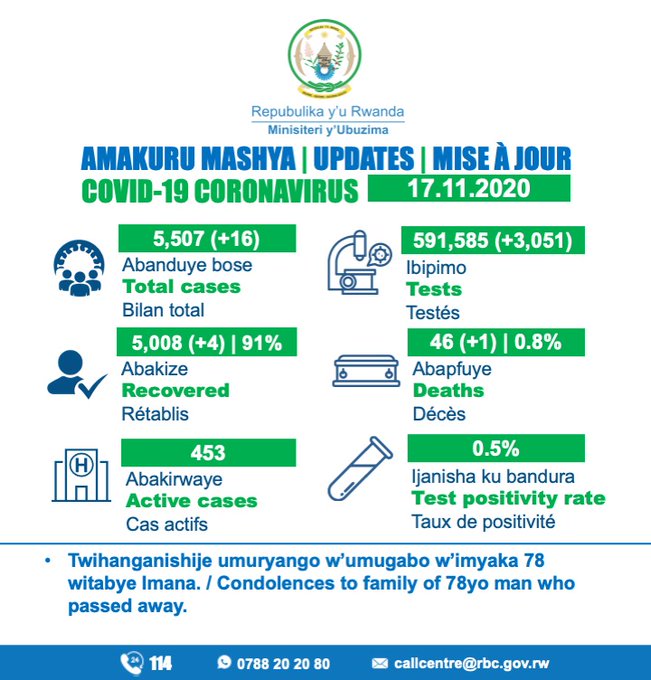
A statement from the ministry said that as of November 17, 2020, four had recovered.
The new cases were identified in Kigali: 3, Kirehe: 2, Muhanga: 1, Nyagatare: 3, Rubavu: 4, Rusizi: 2, and Rwamagana: 1.
In Rwanda, 591,585 sample tests have so far been taken since the outbreak; of these 5507 cases have been confirmed. 5008 are recorded recoveries while 453 were still active cases.
Coronavirus symptoms include coughing, flu, and difficulty in breathing. The virus is said to be transmitted through the mucous membranes of the respiratory tract.
Rwandans are required to continue to comply with government regulations, especially with frequent washing of hands and water and soap, wearing masks when leaving home or in public.
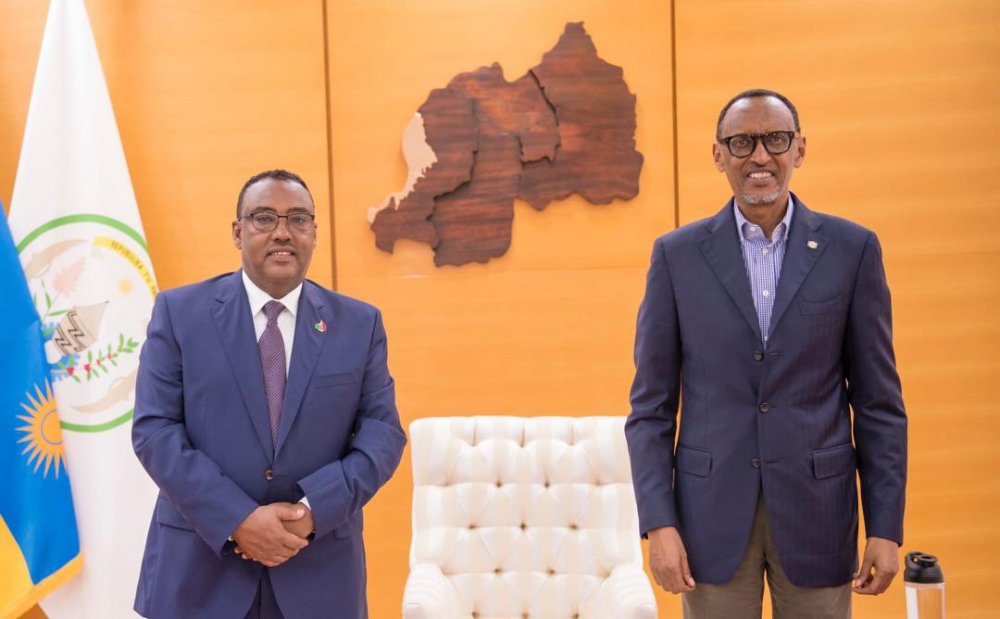
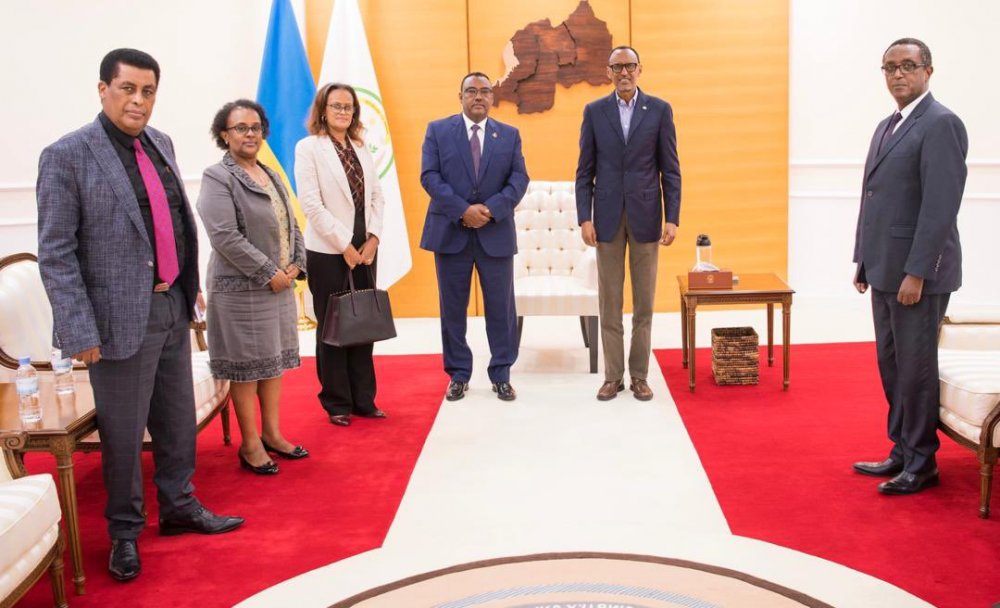
Arriving in Rwanda on Tuesday afternoon, Minister Demeke Mekonnen held talks with the Minister of Foreign Affairs of Rwanda, Dr. Vincent Biruta, in a meeting which was also attended by the Secretary-General of the Office of Investigation and Security (NISS), Maj. Gen. Joseph Nzabamwita.
The purpose of the visit is to discuss with Rwanda the recent security crisis in Ethiopia, where the Government Forces are in conflict with the Tigray province.
In discussions with Minister Mekonnen, President Kagame expressed his desire for peace and freedom to return to Ethiopia in the near future.
A few days after the fighting broke out in Ethiopia, Prime Minister Abiy Ahmed’s administration disagreed with the Tigray Province in the north of the country which also led to the deployment of troops on both sides, now fearing that as long as the situation continues with more civilians will be affected.
{{The origin of the conflict}}
Earlier this month, Abiy accused Tigray soldiers of attacking government military bases.
He also immediately sent troops to the area led by the TPLF, the Tigray People’s Liberation Front. It is a party that has had a strong voice in the country in the past.
Recently, Abiy told National Television that the Ethiopian army had carried out an attack in the province, dismantling a weapons depot near the local capital, Mecca.
Amnesty International said some civilians had been killed by machetes and irons in the Mai-Kadra area, but did not say which side among these was behind the attack.
It is alleged that the attack that took place on Friday made 6 victims.
Last week, the Tigray Army launched a missile strike in Eritrea; since Prime Minister Abiy came to power he has done his utmost to keep Eritrea and Ethiopia live at peace with each other, which also earned him the 2019 Nobel Peace Prize. Eritrea shares a border with the Tigray region.
Tigray’s mayor, Debretsion Gebremichael, said Eritrea had sent troops and mortars to the border to attack the Ethiopian government. He said the bombings in Eritrea were aimed at withdrawing his troops.
The conflict prompted hundreds of locals to flee to Sudan.
Abiy announced on his Twitter account on Monday that his government was ready to receive and calmly relocate refugees to neighboring countries. He assured them of security. The following day he announced that the Ethiopian Army was going to continue “in the final and most important phase” of its military operations.
Since 2018 a bad atmosphere has engulfed the country between Abiy and TPLF leaders. As Prime Minister, Abiy abolished the long-running coalition led by the TPLF, forming a new prosperous party called the Prosperity Party.
Analysts say that has led to the TPLF to the realization that it has to reconcile with the Prosperity Party and share its plans; or else step aside. TPLF chose not to reconcile with the Prosperity Party.
This year when Abiy postponed the election due to the Coronavirus pandemic, Tigray officials rebelled against the decision, and then held their own election. Abiy immediately refused the results of the September polls, which made the atmosphere worse.
In October this year, members of the Ethiopian parliament decided to withdraw funding for the region.
As the tension keeps on growing in the region in a very alarming way, the entire region is likely to be so troubled that a large number of residents will relocate, with an estimated 110 million people fleeing. As many as 25,000 people have now fled to Sudan.
Businesses from across the country have been invited to apply for the virtual business development programmes, which will be delivered in Kinyarwanda and English. AMI will offer both its popular one-month Business Survival Bootcamp programme and a longer six-month Survive to Thrive programme. This opportunity has been made possible thanks to financial support from the Mastercard Foundation’s Covid-19 Response and Resilience Programme.
Commenting on the partnership, Clare Akamanzi, Chief Executive Officer at RDB, said:
“Rwandan businesses of all sizes have been impacted by the COVID-19 crisis. We have seen many innovative responses that have led us to become more self-reliant and put an added focus on practical skills and tools to help businesses get back on their feet, adapt and prepare for growth in the future. Most importantly, businesses don’t need to wait to start making changes. The skills and tools business owners gain can be applied immediately through AMI’s virtual expert-driven learning experience, online platform and Android mobile app. We encourage businesses across Rwanda to take advantage of this free programme.”
Through the agreement with the Rwanda Development Board and with support from the Mastercard Foundation, AMI’s virtual Business Survival Bootcamp and Survive to Thrive programmes will be offered on an ongoing basis from November 2020 to April 2022.
Diederik Wokke, Rwanda Country Manager for AMI, said:
“Since 2014, AMI’s programmes across Africa have created an average of 3.1 jobs per SME and boosted revenue by an average of 19%. With proven results, AMI is well placed to work with Rwandan businesses during this critical time of economic recovery. We’re excited to work with business owners and entrepreneurs to help their businesses thrive, and we encourage them to take advantage of this opportunity by applying today.”
AMI’s Business Survival Bootcamp is a one-month course designed to help businesses make it through the current crisis with access to interactive online workshops, digital tools and guidance, and the opportunity to connect with other businesses. The more in-depth Survive to Thrive programme is a six-month course which enables businesses to innovate, prepare for the future and grow again. The programmes aim to increase the number of businesses that recover strongly from the current crisis, while retaining staff and creating additional jobs, especially for women and young people.
The first Business Survival Bootcamp will begin on 24 November and the first Survive to Thrive courses kick-off at the start of 2021. All programmes will be fully virtual to fit around the schedules of busy business owners and ensure the health and well-being of participants.
“The African Management Institute really helped by connecting us with other entrepreneurs. AMI understood the difficulties we face and shared ideas on how we can survive. We really appreciate the programme,” said Elia Mugume, CEO at TASS Gateway and Travels and past Business Survival Bootcamp participant.
Applications are now open for both the Survival Bootcamp and the Survive to Thrive programmes, and AMI encourages applications and enquiries from Rwandan business owners in all sectors. Businesses and entrepreneurs can apply for the programmes at www.africanmanagers.org/rwanda or by sending their email to +250 787 339 435 via SMS or WhatsApp.
All AMI programmes consist of a combination of interactive virtual sessions, online courses and access to our tools. Examples of these tools are: scenario planning, cash flow forecasting, customer surveying, bookkeeping tools and many more. The one-month Business Survival Bootcamp focuses on scenario planning, risk assessments and cash flow forecasting.
The key topics of the six-month Survive to Thrive programme are scenario planning, financial forecasting, business risk assessment and planning, leading in uncertainty, managing remote teams, identifying opportunities and new customer segments, personal and business habits for growth, adapting operations and HR.
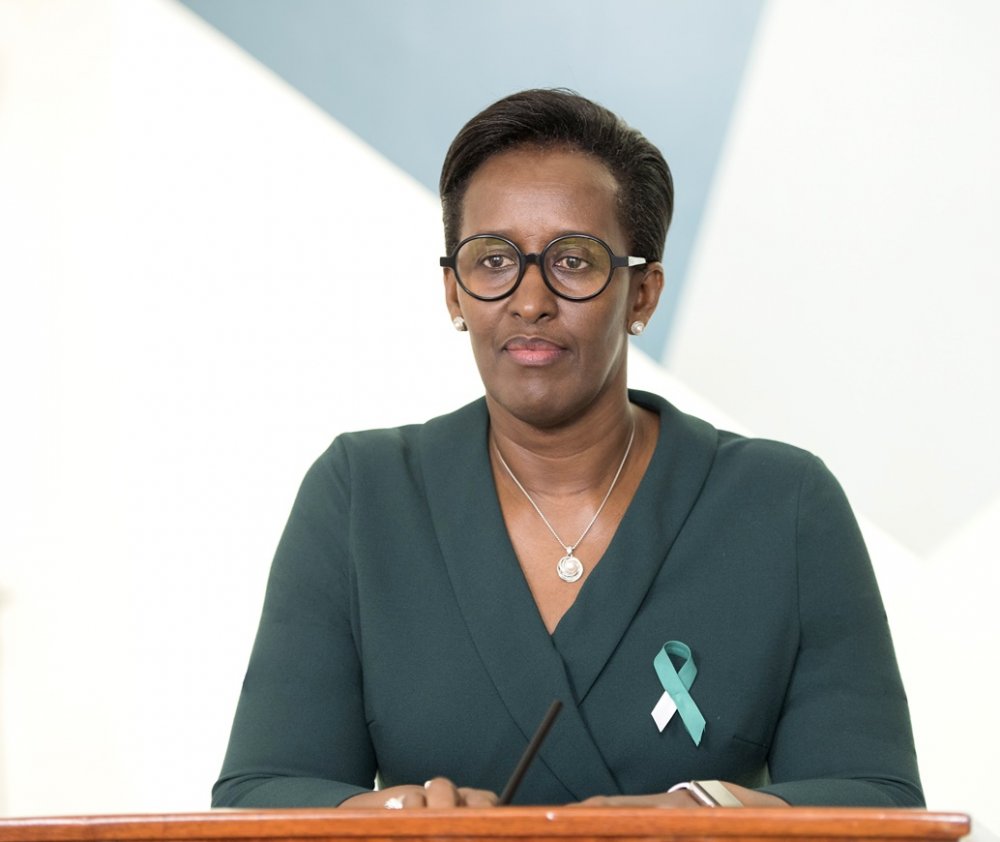
The First Lady made the remarks on Tuesday, November 17, 2020, in a message issued at the Virtual Launch of the Global Strategy to Accelerate the Elimination of Cervical Cancer.
The program was approved by the General Assembly of the United Nations World Health Organization (WHO) 2020, which is co-chaired by 194 countries. It will focus on three areas including prevention, testing, and treatment where it is expected to reduce the risk of new infections by 40% and five million deaths by 2050.
The event was also attended by Tsepo Motsepe, First Lady of South Africa, Princess Dina Mired of Jordan, Dr. Tedros Adhanom Ghebreyesus, Director-General of the WHO, and his deputy Zsuzsanna Jakab among other dignitaries.
Mrs. Kagame pointed out that women in low and middle-income economies are still succumbing to cervical cancer while the world has all it takes to stop it. It is a concern which WHO Director-General also mentioned two years ago, and not much has been done to reverse the trend so far.
“Up to 93% of cervical cancers are preventable, but today, cervical cancer is the second largest killer of women in low and middle-income countries after breast cancer. This is unacceptable when taking into account the available technology, policies, and cost-effective measures for early diagnosis and treatment,” the First Lady said.
This happens at a time when the HPV vaccine, Gardasil 9, has proven to be highly effective if administered before a girl or woman is exposed to the virus but, according to the First Lady, Rwanda is registering a success story since 2011 when the Human Papilloma Virus (HPV) vaccine was introduced in Rwanda.
She said the country implemented the WHO recommendations on screening, treating and vaccinating targeted population groups, and results were commendable, thanks to “the effort between leaders and community health workers at a national and grassroots level.”
“Today, the vaccine is included in the national immunization regimen for children,” the First Lady said.
The First Lady acknowledged the awareness campaigns that in most cases targeted women and girls, and the attention the media dedicated to this cause.
However, Mrs. Kagame said that there are still challenges ahead “that warrant our urgent attention: the critical role and responsibility of men in reducing the incidence of cervical cancer.”
The challenge lies in the fact that HPV is the most common viral infection transmitted through sexual intercourse, yet HPV-related cancers are not as common in men as it is in women who are likely to develop cervical cancer. In this perspective, men tend to behave as if the cancer is a battle that women just, should fight.
“But to this day, there is limited knowledge of HPV among men, which comes with the risk of undermining the progress made so far. This is especially true of cultural settings where women are still striving for their full sexual and reproductive rights,” the First Lady said.
This brought her to a call to men to be active in the prevention of cervical cancer, first of all through understanding their role in protecting their female partners, the most victims.
This also comes with the responsibility “to ensure that at a young age, boys just like young girls are systematically vaccinated. Until then, the best prevention to protect women against this cancer will continue to be the use of condoms.”
WHO estimates that the death toll from cervical cancer has risen from 570,000 in 2018 to 700,000 by 2030, while the death toll has risen from 311,000 to 400,000.
Cervical cancer is ranked second in Africa in terms of the prevalence of women and the number of deaths, with Rwanda, ranked first. Human Papillomavirus (HPV) accounts for 99.7% of all cases of cancer.
After contracting the HPV Virus, bleeding in non-menstruation periods and in the menopause period are some of the symptoms of cervical cancer.
WHO estimates that cervical cancer in Rwanda is 31.9 per 10,000 women, while its mortality rate is 24.1 per 10,000 women, which means 921 deaths.
According to the Ministry of Health, in 2018 new cases of cervical cancer were detected in 362. The disease is more prevalent in women over the age of 45 years.