Nzayisenga Yenos who tipped off the concerned officials through his twitter account has told IGIHE that foot patrol members on 14th December 2020 went to the home of Nkurikiyimana accusing him of abusing a woman in the area.
Upon arrival at Nkurikiyimana’s home around 9pm, patrol agents knocked at the door, beat and injured the him as he got out.
One month after Nkurukiyimana went for medical attention and reported the brutality to Rwanda Investigation Bureau (RIB) with no stern action taken against the culprits, Nzayisenga decided to call for action using his Twitter handle.
Following the tweet, Kamonyi district officials and Rwanda National Police took action and gave a reply to the effect that the six suspects have been arrested and handed to RIB.
“They are suspected of beating and causing head injuries to Nkurikiyimana Enoch,” reads a tweet by Police.
Police explained, the suspects are detained at Gacurabwenge Police Station as investigations get underway.
The violators are required to report to the traffic offices in Muhima not later than January 18.
The list includes 143 vehicles, 66 motorcycles, drivers, riders or owners, who undermined the directives after they were caught in hours when movements are prohibited.
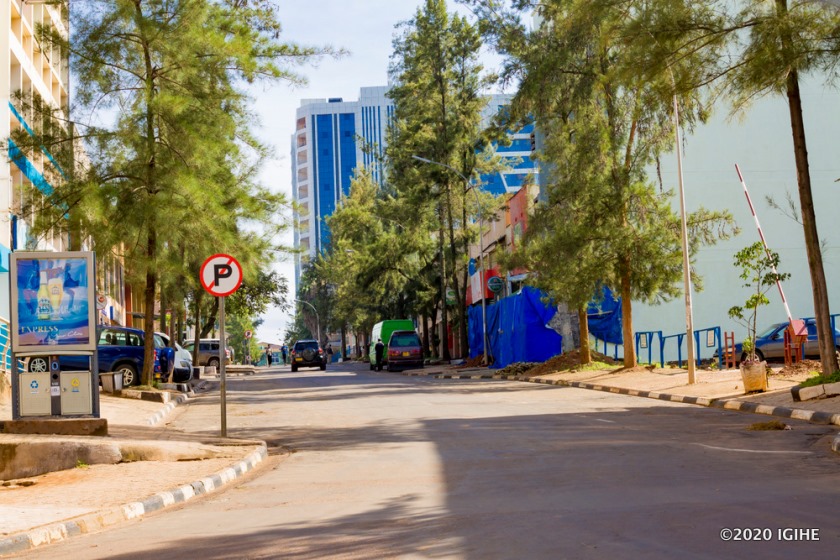
All the violators were registered in City of Kigali between September 25, and December 5, 2020. Movements are prohibited between 8pm and 4am.
RNP spokesperson, Commissioner of Police (CP) John Bosco Kabera warned that operations will commence after January 18, to impound automobiles on the list, whose owners, drivers or riders will not have reported as required.
“Besides moving within prohibited hours, some of them refused to stop at Police check-points while others did not go to centres where they were instructed to go or to park their automobiles. We, therefore, urge everyone on this list, which has been published on the police website, to come forward voluntarily because the next step will be enforcement,” CP Kabera warned.
The provided centres where people are required to go during curfew hours are central grounds used to control movements during prohibited movement hours as well as sensitization centres wide enough for social distancing, where people are educated on the pandemic and safety practices.
CP Kabera warned against “disrespectful behaviours and undermining instructions given by the authority.”
He observed that the directives are meant to ensure the safety of everyone from the pandemic of the COVID-19, and must be respected as well as those charged with enforcing them.
“Speeding away will not save you from being penalized because, in some cases, the violators leave their traffic-related particulars behind or plate numbers are recorded for those who refuse to stop. We also have CCTV cameras on roads, so the advice is; be home by 8pm because undermining instructions by officers enforcing the directives will only make the penalties severe,” CP Kabera warned.
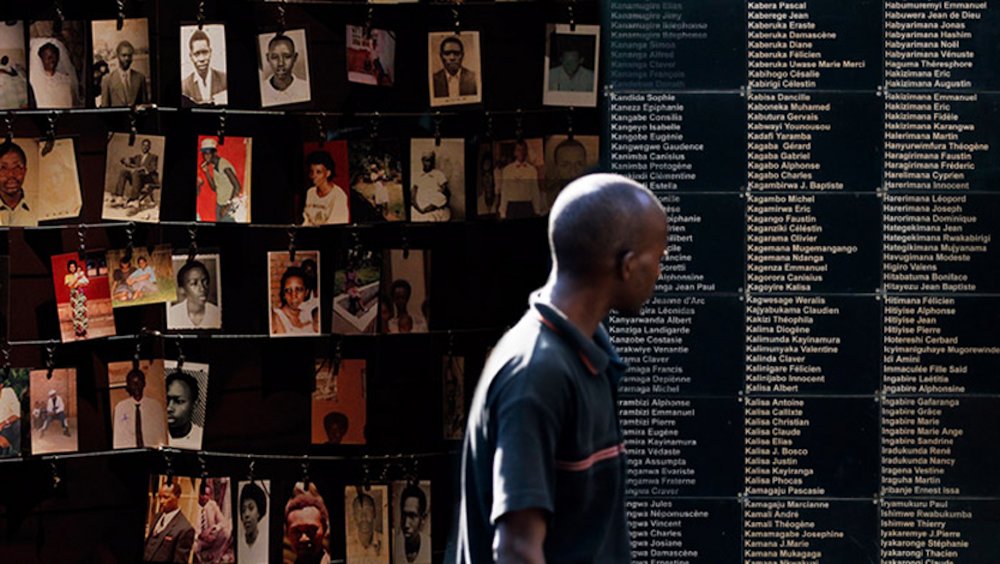
During the 1994 Genocide against the Tutsi, former communes of Muganza, Kigembe, Kibayi and others in the current Gisagara district were home to many Burundian refugees. Some of them are accused of having participated in the genocide.
Bunyenzi Isaïe, a genocide survivor in former Kigembe Commune currently in Nyanza sector has revealed that Burundians conspired with Interahamwe to kill Tutsis.
“Burundians accommodated in this area supported Interahamwe and hunted us from the commune’s office where we had fled. They stoned us with the intention of getting us outside so that they can kill us using spears,” he said.
After the 1994 Genocide against the Tutsi, several cases involving Burundian refugees were handled by Gacaca courts which ordered some of them to pay reparations.
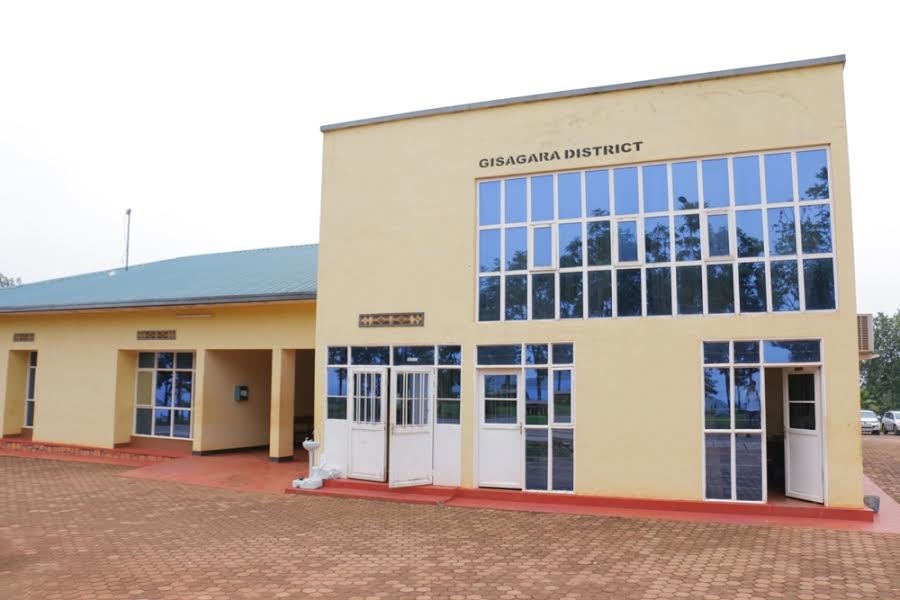
The mayor of Gisagara district, Rutaburingoga Jérôme has explained that Gacaca courts handled over 31,000 cases but pointed out difficulties for cases involving Burundians.
“We have finalized 31,057 cases but we have over 400 pending cases involving Burundian refugees who were accommodated in Gisagara,” he said.
Rutaburingoga thanked Gisagara residents for role in finalizing cases which he considered a great contribution to unity and reconciliation among Rwandans.
“We appreciate the way the exercise to finalize these court cases was handled and residents contribution because there are some victims who forgave offenders who had to pay damages,” he said.
Genocide survivors in different parts neighboring with Burundi have at different times asked for justice to bring to book Burundians who took part in the 1994 Genocide against the Tutsi.
They are often accused to have perpetrated Genocide in Nyakizu, Ntongwe, Kinazi of Ruhango district, Mugina in Kamonyi district, Rilima in Bugesera district; Muganza, Kigembe, Kibayi in the current Gisagara among others.
Speaking to IGIHE towards the end of last year, Faustin Nyakazungu, 77, who lived in former Commune Ntyazo , reflected on neighboring Tutsi killed by Burundian refugees who stabbed one adult woman saying ‘let us see if she can bleed blood or milk as they drunk much milk.’
“I was living in the neighborhood of those Burundians. I am one of people who were not hunted. I know well their deeds. They were characterized by extreme bad characters. They killed an old woman called Nyinawabo Bernadette and another man Jabo Félix. Those killers were with Interahamwe. The old woman was stabbed by a Burundian saying he wanted to find out if female Tutsis bleed blood or milk they drunk. I know many of them,” said Nyakazungu.
In June 2019, the former Rwanda’s Prosecutor General, Mutangana Jean Bosco revealed that the matter of Burundians has been sluggish due to lack of political will.
“We have cases of Burundians who perpetrated Genocide in Rwanda and fled but Burundi showed no political will to help us track those suspects. The issue is persistent. There are many especially in Gisagara, Nyaruguru at the border with Burundi. We issued arrest warrants but got no reply. That’s a problem,” he said.
Mutangana explained that Rwanda is eyeing support from Interpol to arrest the said fugitives.
In August 2019, the Minister of Justice and State Attorney General , Johnston Busingye told parliament that genocide is an imprescriptible crime that files for Burundians suspected for involvement in genocide have been arranged.
“Matters regarding Burundians are often reflected and which goes hand in hand preparation of related files. Action will be taken as relations return to normal but you should know that such cases are imprescriptible,” he said.
The statement signed by the Director General of RURA, Dr. Ernest Nsabimana shows that respective petrol and diesel prices in Kigali should not exceed Rwf 987 and Rwf 962 per liter. New prices are to be effected on 7th January 2021.
The prices are higher comparatively to previous ones where petrol and diesel prices were respectively set at Rwf 976 and Rwf 923.
RURA has attributed the rise to changes in international prices for petroleum products.
The decision to suspend auditions for beauty contest were announced in a statement released last evening following Monday cabinet meeting chaired by Prime Minister, Dr. Edouard Ngirente which prohibited inter-district travels.
“Miss Rwanda organizers would like to inform the general public that auditions expected on 9th January 2021 have been suspended,” reads part of the statement.
The statement further reads that beauty contest organizers attach great relevance to health of participants and Rwandans in general, that it is mandatory to adhere to Government’s measures to contain the spread of COVID-19 pandemic.
Aspiring girls will continue registration while other activities of the contest will be communicated soon.
The beauty contest audition in Rubavu was set for selection of contenders representing Western Province that would continue to other parts of the country on 16th , 23rd and 30th January 2021 respectively in Musanze , Northern Province; Huye, Southern Province and Kayonza in Eastern Province.
Auditions would be concluded in Kigali city on 6th February 2021.
The top 20 contestants to be selected on 20th February 2021 are supposed to head to the boot camp in Nyamata, Bugesera district from 7th to 19th March 2021 where they will proceed to participate in the grand finale slated for 20th March 2021 at Intare Conference Arena in Rusororo.
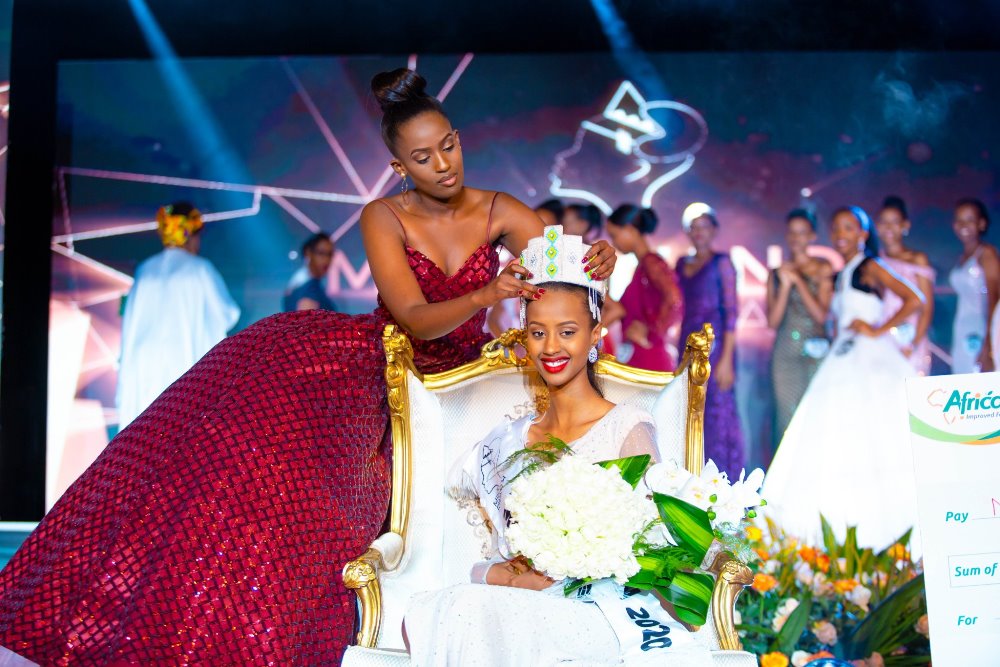
The winner will replace Naomie Nishimwe crowned Miss Rwanda 2020.
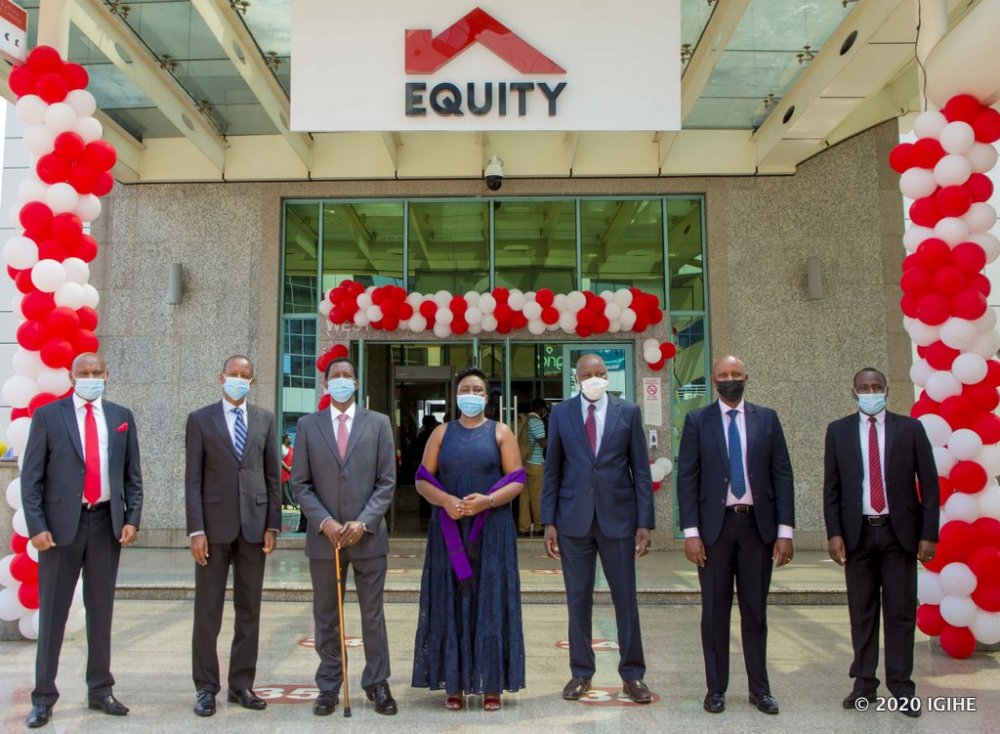
Commenting on the award, Equity Bank Rwanda Managing Director, Hannington Namara said, “We are delighted to be recipients of Bank of the Year Rwanda 2020 award by The Banker. The award affirms our commitment to provide inclusive financial services that transform livelihoods, give dignity and expand opportunities. We have rolled out financial solutions that have enabled our customers to self-service and access banking services 24 hours, 7days in a week, making banking something you do rather than a place you go to.”
The awarding entity, The Banker, also considered the difficult operating environment occasioned by the COVID-19 pandemic and the role banks played in delivering much-needed government funding, as well as providing specific measures themselves.
The Equity Bank contributed 22,225 testing kits worth USD 1.06M to the government of Rwanda in support of national efforts to combat the spread of the virus. The Bank also contributed to efforts of dealing with the negative effects of COVID-19 and helped to create a support programme for small and medium-sized enterprises (SMEs) that were heavily affected by the pandemic. The Bank partnered with Enterprise Partner Solutions and the Mastercard Foundation to set up a COVID-19 Recovery and Resilience programme to support SMEs and their value chains in the tourism and hospitality sector, one of the hardest hit by the pandemic.
The commitment from Mastercard Foundation worth USD 2.5million will be used to provide financial support and technical assistance, with Equity Bank Rwanda as a financing partner. Incubation support will be given to 60 start-ups and another 50 established SMEs will benefit from an accelerator programme.
According to The Banker, the investment which banks have been making in their digital transformation efforts have truly paid off and will continue to reap rewards in the years to come, in terms of lowering service costs, improving customer experience and driving the financial inclusion agenda.
As part of an upgrade to the EazzyBanking App, Equity Bank introduced EazzyPay, an interoperable retail last mile payment platform which eliminates the risks associated with carrying cash. The bank also introduced an instant-opening account mobile-based platform dubbed “Akokanya” which helps customers self-board via an app or USSD. Customers can use Eazzybanking platform to do all their transactions including applying for instant loans.
{{About Equity Bank Rwanda}}
Equity Bank Rwanda began its operations in 2011 and is registered as a commercial bank by the National Bank of Rwanda. The Bank has its Head Office located in Kigali, with a foot-print of 14 branches and is supported by 1503 agents, 1074 merchants and a network of 21 ATMs.
Equity Bank Rwanda is a subsidiary of Equity Group Holdings Plc, a financial services company listed at the Nairobi Securities Exchange, Uganda Securities Exchange, and Rwanda Stock Exchange. In addition to Equity Bank Rwanda, the Group has banking subsidiaries in, Kenya, South Sudan, Uganda, Tanzania, DRC, and a Commercial Representative Office in Ethiopia; with additional non-banking subsidiaries engaged in the provision of investment banking, custodial, insurance agency, philanthropy, consulting, and infrastructure services.
Equity Group has an asset base of over USD 10 billion. With over 14.2 million customers, the Group is one of the biggest banks by customer base in the region.
The Group has a footprint of 335 branches, 52,742 Agents and 35,386 Merchants and 720 ATMs. The Group is the largest bank in market capitalization in East and Central Africa. The Banker Top 1000 World Banks 2020 ranked Equity Bank 754 overall in its global ranking, 62nd in soundness (Capital Assets to Assets ratio), 55th in terms of Profits on Capital and 20th on Return on Assets. In the same year, Moody’s gave the Bank a global rating of B2 with a negative outlook same as the sovereign rating of the Kenyan government due to the Bank’s strong brand recognition, solid liquidity buffers and resilient funding profile, established domestic franchise and extensive adoption of digital and alternative distribution channels. Equity Group Holdings Plc is regulated by the Central Bank of Kenya.
For additional information, visit www.equitygroupholdings.com.
The deceased include four men from Kigali respectively aged 65,64,57, 45 from Kigali city and another man aged 69 from Nyamasheke district.
The statement released last night also shows that 107 new cases have been found.
New cases were found in Kigali: 44, Bugesera: 20, Musanze: 17, Huye: 7, Rusizi: 5, Nyamasheke: 3, Rubavu: 2, Nyamagabe: 2, Muhanga: 2, Ruhango: 2, Kamonyi: 2 and Nyanza: 1.
Rwanda confirmed the first Coronavirus case in March 2020.
Since then, 8955 people have been tested positive out of 745,252 sample tests of whom 6878 have recovered, 1967 are active cases while 110 have succumbed to the virus.
Coronavirus symptoms include coughing, flu, and difficulty in breathing. The virus is said to be transmitted through the mucous membranes of the respiratory tract.
Rwandans are urged to adhere to COVID-19 health guidelines, washing hands frequently using soaps and safe water, wearing face masks and respecting social distancing.
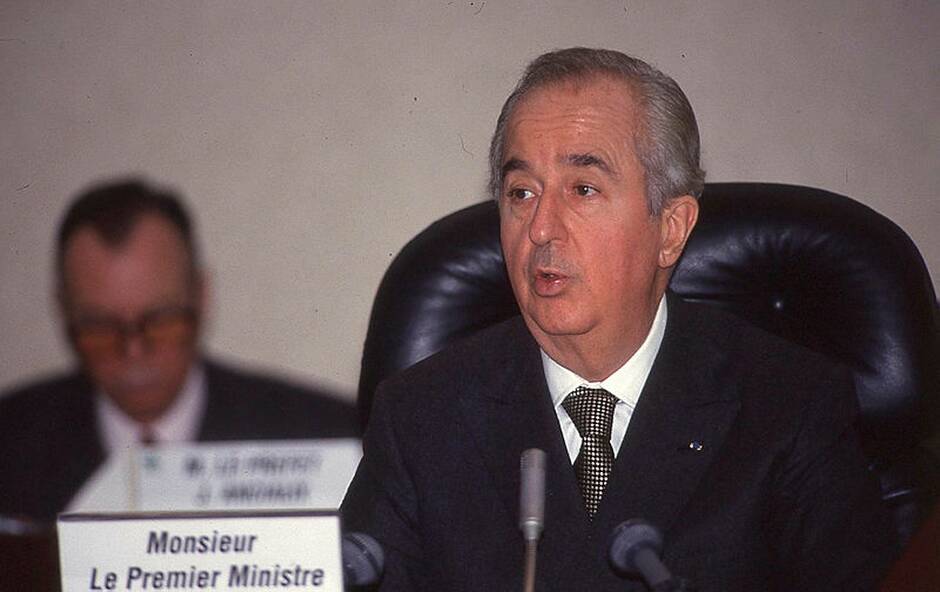
Balladur, a rightwing premier under Francois Mitterrand’s Socialist presidency, said in a statement that he opened access “so that everyone can freely see what were our actions and their results”.
Access will be granted in April, when a panel of historians will submit their findings on France’s role during the 1994 Genocide against the Tutsi which claimed lives of more than 1 million victims.
President Emmanuel Macron commissioned the panel in April 2019 amid claims by Rwandans that France supported genocidaires.
They point in particular to Operation Turquoise, a UN-mandated French force sent to halt the killings in June 1994 but which many experts say had little effect.
In his statement, Balladur, who served as premier between 1993 and 1995, insisted that Turquoise had a mandate to ensure the survival of victims on all sides and discourage violence.
Hugues Hourdin, a former advisor to Balladur, told AFP the documents “will show that neither the government nor the army has anything to blame itself for”.
“Mr Balladur would like to remove all doubts about the actions of the government he led, and purge this debate that has been festering for 25 years,” he said.
France’s Rwanda commission has already had access to the archives of both Balladur and Mitterrand.
Macron’s decision to form the panel was seen as a groundbreaking effort to confront France’s troubled history in Africa.
While Rwanda was never a French colony, successive French governments cultivated close ties after the country’s independence in 1962, including training its top military leaders.
It also signed military deals with the then President Juvenal Habyarimana.
The fact that France denied its role in the 1994 Genocide against the Tutsi has long impaired relations between the two countries.
As former France President Nicolas Sarkozy visited Kigali genocide memorial in 2010, he admitted that his country committed political mistakes in Rwanda which he didn’t explain.
Things worsened during the leadership of President François Hollande until he was replaced by Emmanuel Macron giving hope to shed light into the country’s involvement in genocide.
In 2018, President Paul Kagame visited France on the invitation of his counterpart Macron.
After meeting in Paris with his Rwandan counterpart Paul Kagame, Macron said he supported a bid to appoint Foreign Minister Louise Mushikiwabo as secretary general of the Organisation Internationale de la Francophonie (OIF).
“The Rwandan foreign minister has every competence to carry out this role,” Macron said. “I will support her.”
In April 2019, Macron unveiled the establishment of the commission made of experts in history and researchers analyzing writings kept in archives of the country indicating France activities in Rwanda between 1990-1994 to come up with the truth on the role of France in the 1994 Genocide against Tutsi.
In 2016, the National Commission for the Fight against Genocide (CNLG) released names of 22 France soldiers who took role in the 1994 Genocide against the Tutsi.
Dr. Mpunga made the observation as he explained why the Government has taken stringent measures to contain the spread of Coronavirus.
Since Rwanda confirmed the first COVID-19 patient on 14th March last year, 8848 people have been tested positive out of 741,036 sample tests of whom 6816 have recovered, 1927 are active cases while 105 have succumbed to the virus.
Following the increase of new infections and deaths where half of current death toll was reported in December 2020, the cabinet meeting held on Monday 4th January 2021 has banned public and private transport to and from city of Kigali as well as between different districts.
Among other resolutions, all business establishments including restaurants, markets, shops and malls shall close operations daily by 6pm.
As for transport restrictions, the cabinet meeting decided that travel will only be permitted for medical reasons and essential services. Additionally, vehicles transporting goods will continue to function with no more than two people on board.
Dr. Mpunga explained that there was possibility for tougher measures but the Government considered other aspects of life that would be affected if total lock down is imposed.
“People should understand that we should be in the phase of total lockdown considering the current status of the pandemic. Cabinet resolutions were alleviated because we didn’t want to put Rwandans lives at standstill. We realized that it is not the right time because it would leave people’s livelihoods in critical conditions,” he said.
“The new measures are designed to allow people continue running basic activities where necessary adhering to preventive measures meanwhile doing health assessment on the increase or decrease of the pandemic,” added Dr. Mpunga.
He explained that closing businesses at 6pm is meant to help people return home earlier which can also reduce traffic jam or susceptible accidents as people rush to reach home before curfew hours.
The cabinet meeting has also prohibited movements from 8pm to 4am and decided that inter-district travel will only be permitted for medical reasons and essential services while vehicles transporting goods will continue to function with no more than two people on board.
Dr. Mpunga revealed that permitted medical reasons include medical transfers using ambulances while an individual can take a patient to a health facility with possession of medical test results.
He explained that the decision also concerns people living in the neighborhood of Kigali City returning home every day.
As Dr. Mpunga said, relevant institutions will not prohibit movements for people granted passes.
“Relevant officials will make decision whether a person can be allowed to make inter-district movements for specific tangible reasons. If necessary, an individual will have to go for COVID-19 test before authorization,” he noted.
Concerning employees who had traveled to enjoy festive seasons in different parts of the country, Dr. Mpunga explained that no special arrangement for them because current measures require institutions (public and private) to operate at no more than 30% capacity of staff.
Commenting on new measures, the Minister of Justice and State’s Attorney General, Johnston Busingye has via twitter handle reminded Rwandans to adhere to preventive measures that things otherwise worsen.
“Happy New Year Rwandans. 2021 starts but Coronavirus is biting. 105 have succumbed to the pandemic, half of whom died in December 2020. Not a small number is critically ill. Current Covid-19 news is disappointing. You understand what next if inter-district lockdown is not successful. Let us protect ourselves willingly,” he said.
As he featured in a talkshow on local TV and radio stations, the Minister of Health, Dr. Daniel Ngamije recently on 13th December 2020 said that the high level of complacency and individual behaviours is spreading the virus leading to increase in daily infections, thus derailing the national response efforts.
“The surge in the number of cases in the last two weeks has caused concern; the rate of infections is high, we are now seeing infections in many parts of the country and in various groups of people,” Dr. Ngamije said.
Other factors connected to spread of the virus, include some hotels and restaurants that have been reportedly turned into bars while bars guise as restaurants so as to sell alcohol. Police also revealed that some people conceal bottles of alcohol in envelopes or pour alcohol in cups while some hotels have turned into night clubs.
The Minister of Local Government, Prof. Anastase Shyaka recently said that the partnership between the Police and local authorities created a big impact especially between July and September 2020, which partly gave room for the resumption of some services.
“In October and November, many services resumed, lockdown lifted in all places, but unfortunately people misinterpreted this as an indication that the pandemic has been defeated. They became complacent and started disregarding the safety measures,” Prof. Shyaka said.
He further warned of stringent measures against the so called ’the informed’, elite group and leaders, who violate the prevention measures.
According to Prof. Shyaka, about 9600 hospitality establishments have been closed since March for breaching the national prevention directives, with 347 of them closed between December 1-9, 2020.
Appearing on local TV station towards the end of December 2020, Dr Sabin Nsanzimana, the Director General of Rwanda Biomedical Centre (RBC), related new cases to activities allowed to reopen and complacency against COVID-19 preventive measures.
“Of course, the increase of new patients is related to reopened activities including schools one hand. Secondly, the up surging number is driven by complacency against preventive measures among Rwandan residents. It has been observed that some people relented on some measures including proper wearing of face mask, social distancing. Thirdly, we are assessing the impact of cold weather conditions during this rainy season on spreading the disease,” he said.
Dr Nsanzimana highlighted that attendance to ceremonies for the past three months has also been among causes for increasing cases that people tended to behave as if they were in normal situation.
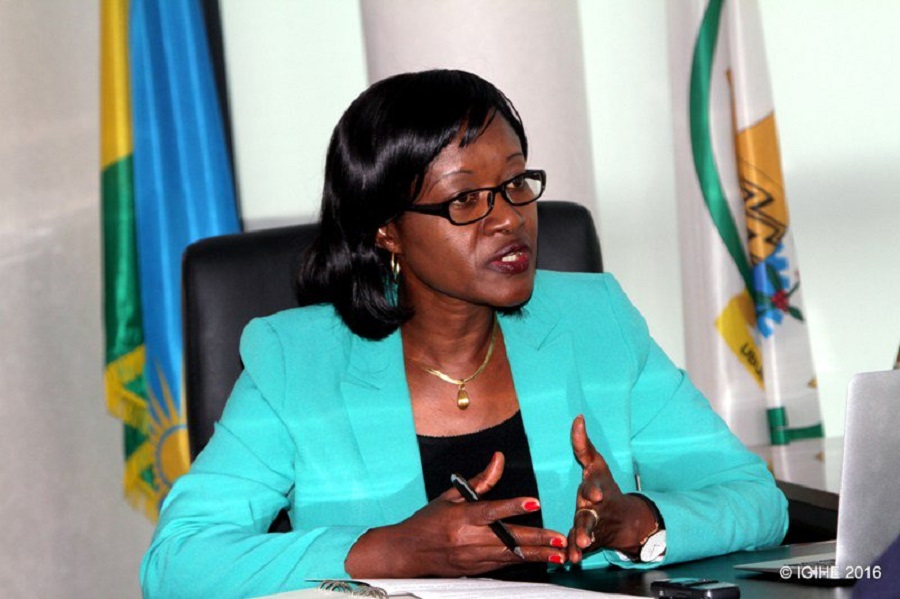
She was appointed during yesterday’s cabinet meeting chaired by Prime Minister, Dr. Edouard Ngirente.
Following the appointment, Mukaruliza has via twitter handle thanked President Paul Kagame for bestowing trust upon her.
“I am humbled and thankful to His Excellency Paul Kagame for the renewed trust and privilege to continue serving my country as strategic advisor in Minaffet,” she said.
Mukaruliza was the mayor of Kigali city between 2016 and 2017.
She also served as Deputy Special Representative of the AU Commission Chairman to Sudan between 2005 and 2008, Rwanda Revenue Authority (RRA) Commissioner for Quality Assurance (Internal Audit and Internal Affairs), Commissioner for Domestic Taxes, Financial Analyst at Bank of Kigali between 1998 and 2001 and National Coordinator of Northern Corridor Projects from July 2013 to February 2016 among others.