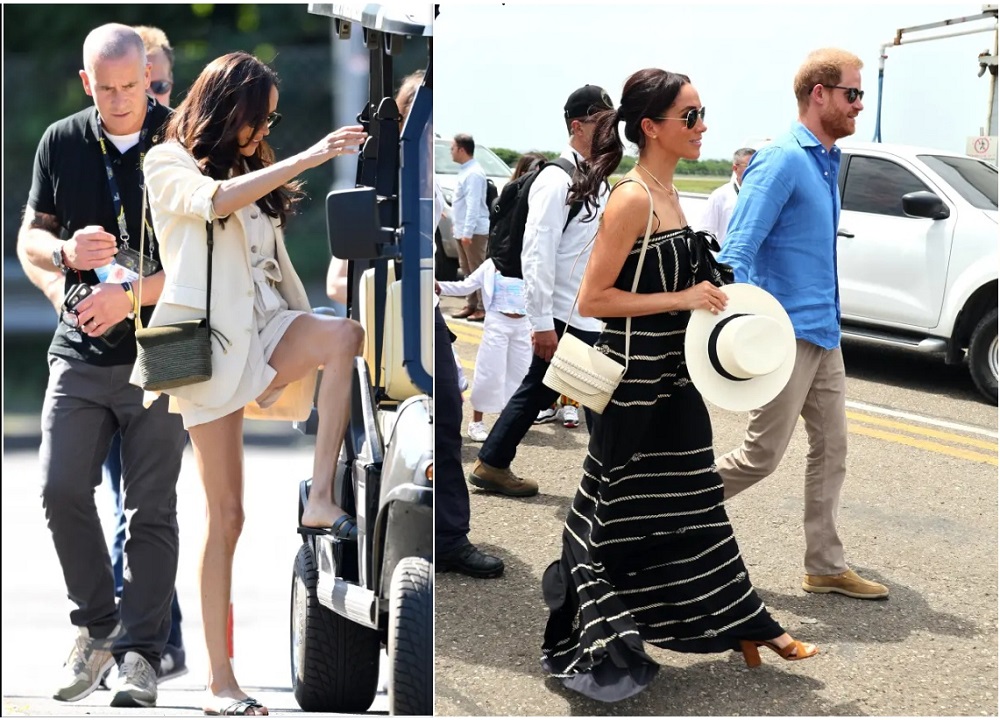
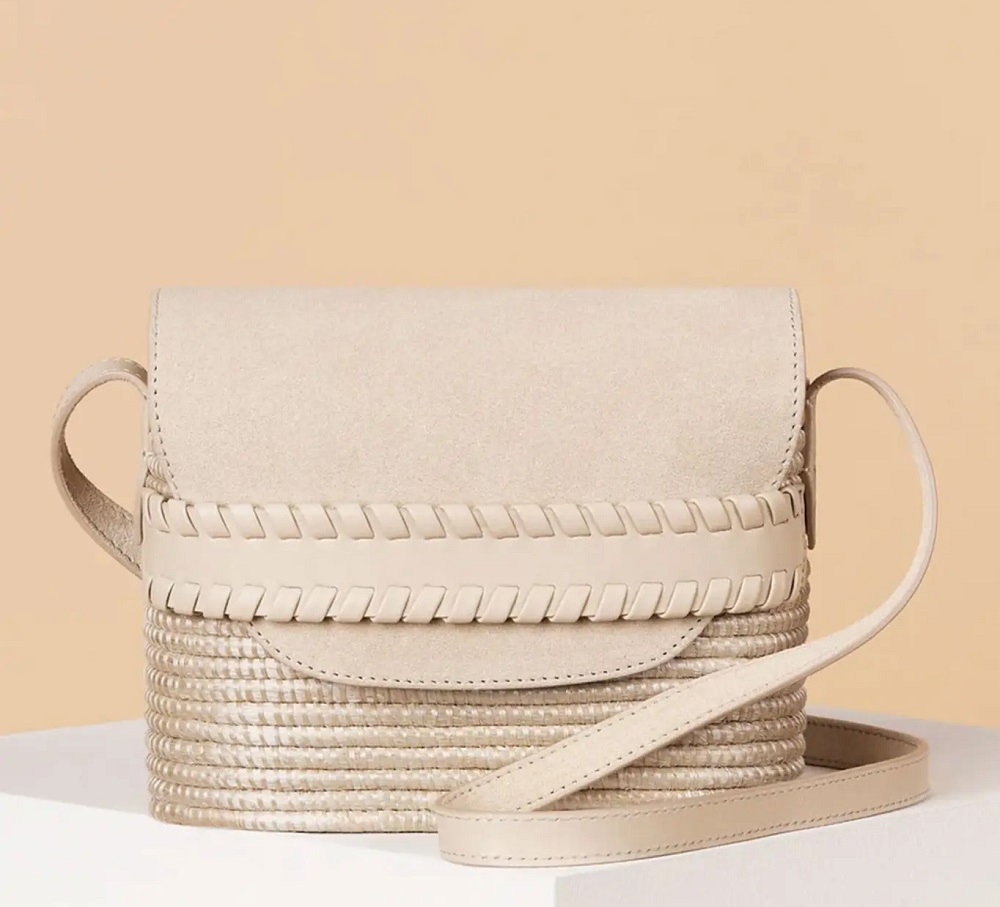
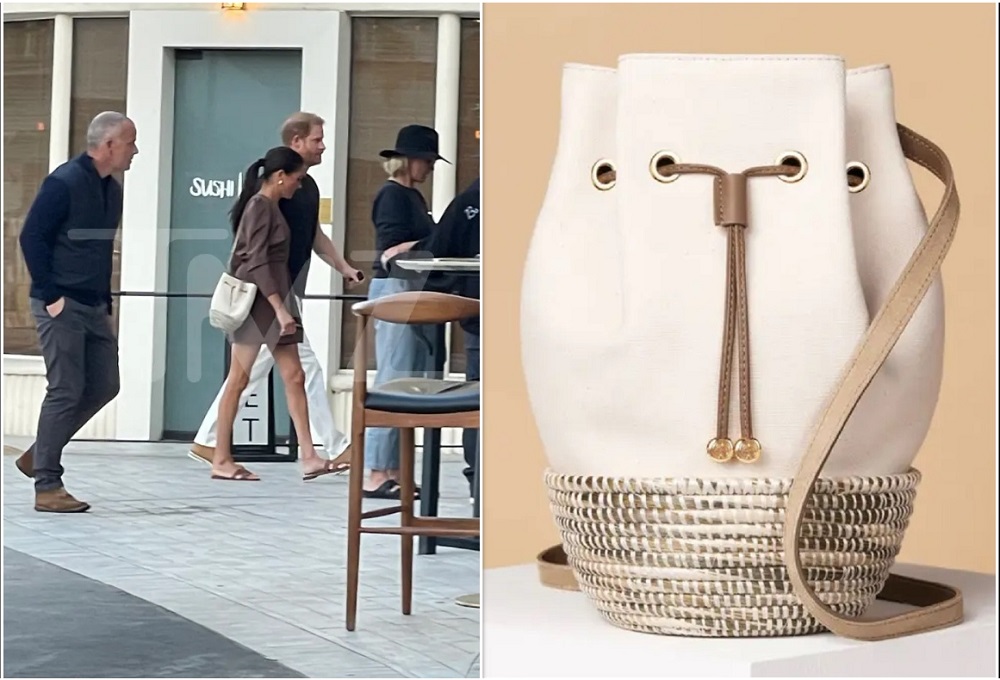
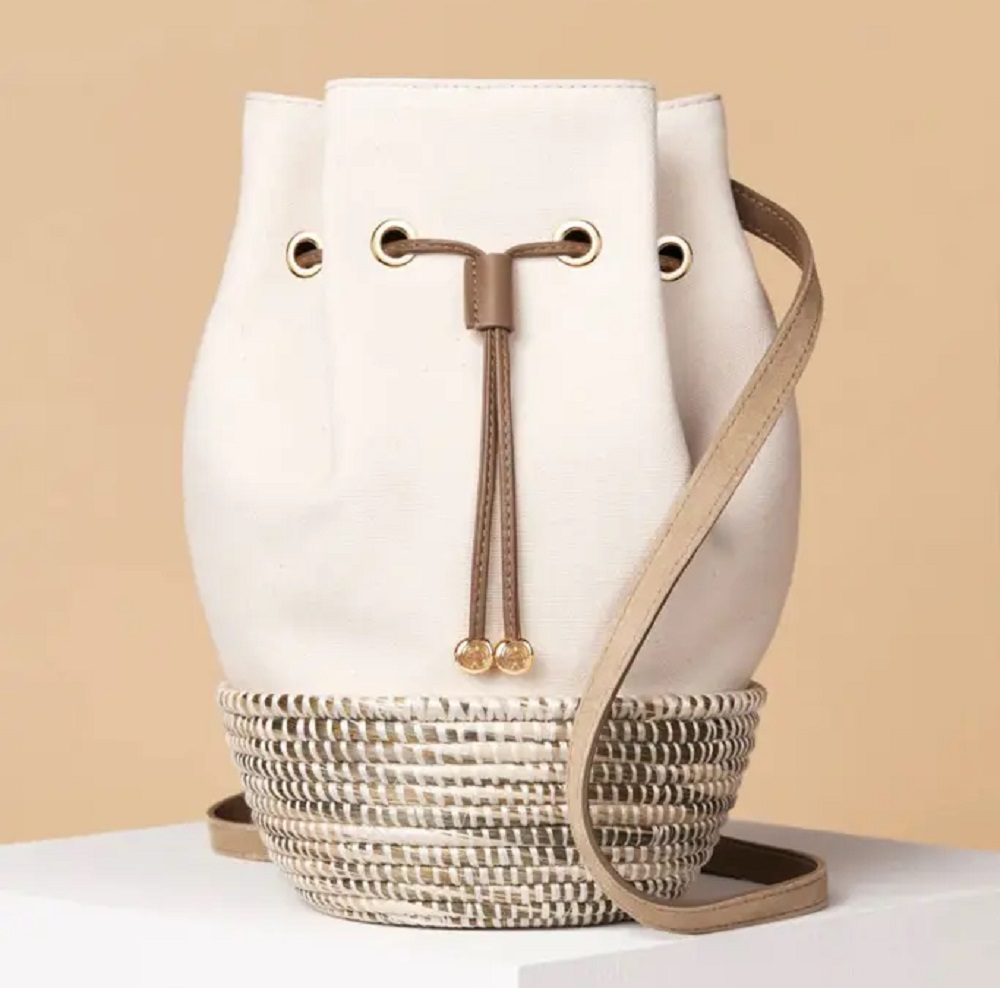
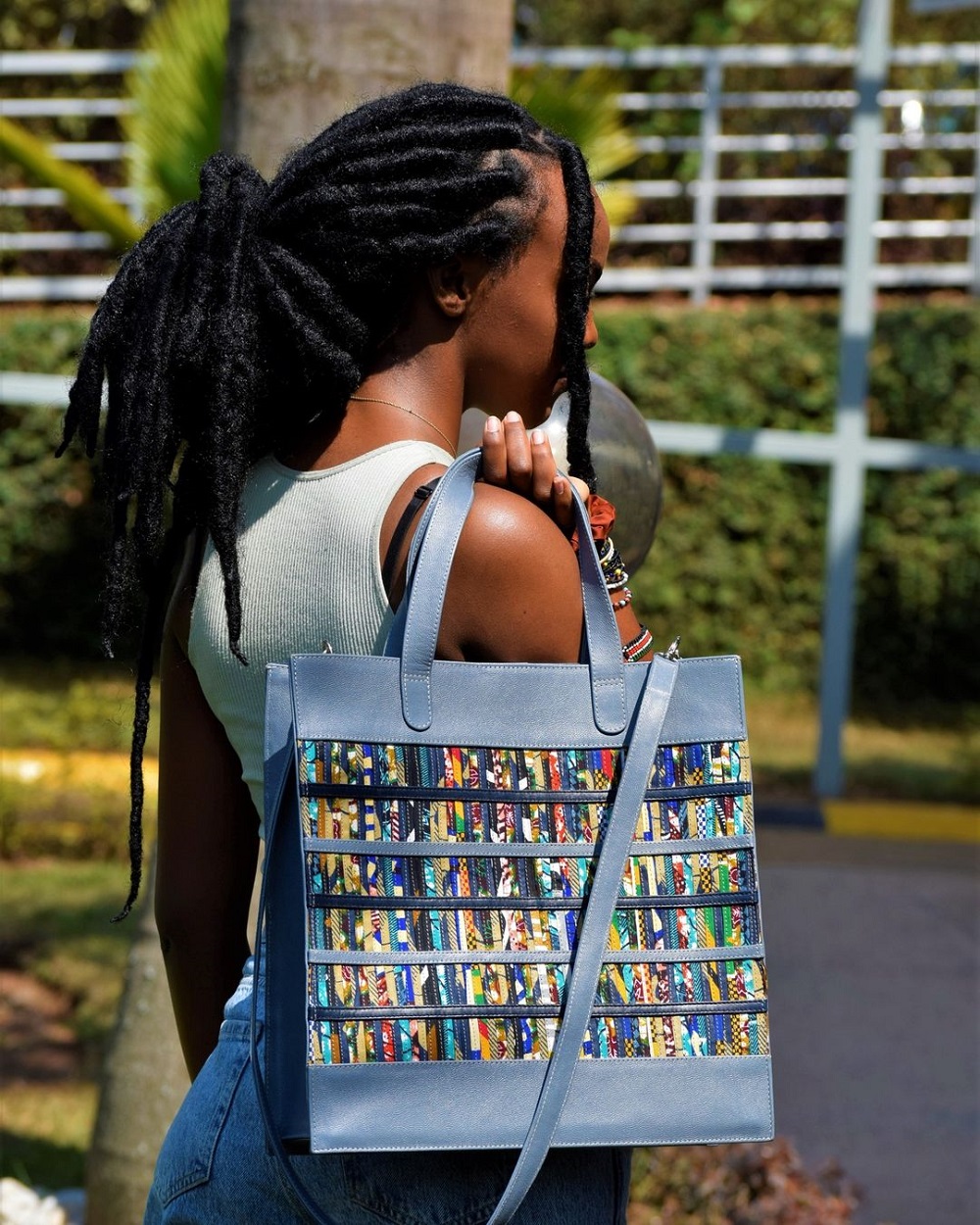
The mother of two told the New York Times that she purchased a stake in Cesta Collective, a company that has been selling these handbags since 2018.
These handbags are woven by women in Rwanda and then sent to Italy to enhance their quality. Meghan Markle revealed that 2023 was the first time she carried a Cesta Collective handbag, during an outing with her husband Prince Harry, Gwyneth Paltrow, and Cameron Diaz.
She shared that she discovered these handbags online, as she spends a significant amount of time on the internet looking for new trends and innovations from around the world.
According to Meghan Markle, what motivated her to invest in Cesta Collective was its alignment with her goal of empowering or supporting female artisans to improve their livelihoods and ensure they receive fair wages.
She stated, “With Cesta Collective, I have begun to understand the number of women whose lives have been transformed through their work, and that is something very valuable to me.”
Erin Ryder, the CEO of Cesta Collective, mentioned that since they started collaborating with Meghan Markle, their products have gained much more attention compared to other successful periods in their business.
Investment is synonymous with Meghan Markle, as she has invested in nearly 10 other companies. Nowadays, wherever Meghan Markle goes, she carries Cesta Collective handbags. During her recent visit to Colombia, she carried various handbags, including the Braided Canvas Tote (priced at $750) and the Crossbody (priced at $750).
Kigali moved four slots from ninth in the World’s Best Awards 2024, behind Morocco’s Marrakesh, Cape Town, Jerusalem, and Dubai respectively. The awards are organized by Travel + Leisure, a travel magazine based in New York City.
The annual award program considers traveller experiences to rank the top cities around the globe. The parameters used to rate the cities include sights/landmarks, culture, food, friendliness, shopping, and value.
In the 2024 edition of the awards, voters described Kigali as a beautiful hub, very organized with friendly and helpful residents.
“Amazingly clean and progressive city! I felt safe walking all over,” wrote a voter. “There is a wide variety of cuisine available and amazing coffee.”
The list was dominated by countries from North Africa, led by Morocco and Egypt. Fez in Morocco took the sixth position, with one respondent said to have described the city as “a treasure trove of culture and history! A must-see if you are in Morocco.”
The much smaller city of Essaouira still in Morocco was ranked number seven, marking its first reappearance on the list since 2021. Tel Aviv in Israel secured the eighth position, followed by Luxor and Cairo of Egypt.
Kigali first featured on the list in 2021 as Rwanda continued to position itself as a premier destination for tourism and high-profile conferences.
In 2023, when Kigali was ranked ninth, the Tourism sector recorded an impressive growth to record $650 million (RWF 832 billion) in revenues. This represented a 35 percent increase in revenue compared to 2022, according to the Rwanda Development Board.
Rwanda welcomed 25,927 gorilla visitors in 2023, marking a 29.4 percent increase recorded in 2022. This is the highest number of visitors received in the country’s history.
The city has also featured in several other high profile rankings including last year when it was recognized as Africa’s premier smart city. Thirty cities participated in the assessment, according to the 2023 African Smart City Index.
In May, the International Congress and Convention Association (ICCA) revealed that Rwanda was named the second most popular destination for international business conferences in Africa for the year 2023.
ICCA’s “Country and City Rankings for 2023” placed Rwanda behind South Africa, which hosted 98 international events compared to Kigali’s 32 events.
Kenya came in third with 29 international events, followed by Egypt and Morocco, which hosted 28 and 26 international conferences and meetings, respectively.
ICCA has its headquarters in Amsterdam, Netherlands and is the global community and knowledge hub for international association meetings industry, offering data, education, communication channels, as well as business development and networking opportunities.
One notable observation from the newcomers was the reserved nature of Rwandans. Unlike the open and expressive communication styles they were used to back home, Rwandans tend to be more reserved and speak less. Marumbo, a poet from Zimbabwe, speculated that this could be influenced by Rwanda’s historical experiences, suggesting that past events might have shaped a more cautious approach to communication.
{{Impact of Weather on Daily Life}}
Another surprising aspect for our visitors was how the local weather affected daily activities. Lily, a volunteer from Germany, mentioned that in her country, all weather is considered suitable for any activity; it’s just a matter of wearing the right clothes. In contrast, she observed that in Kigali, a heavy rain could bring everything to a standstill, a practice that was quite unfamiliar to her.
{{Observational Tendencies}}
Delah Dube, an artist from Botswana, was initially confused by how much she was being observed by locals. In Rwanda, people tend to watch newcomers closely, which can feel unsettling for those not used to such attention. This intense observation is a part of how Rwandans interact with those who are new to their community.
{{Culinary Discoveries and Social Spaces}}
Food was a highlight of cultural exchange, with dishes like chapati, sambusa, and Sombe providing a taste of Rwanda’s culinary diversity. However, the lack of designated hangout spots for youths was a challenge. The visitors noted that Rwanda seems to have fewer casual places for young people to meet and socialize compared to their home countries.
{{Dress Code Adjustments}}
Adjusting to local dress codes also posed challenges for the youths. Rwanda’s dress norms are more conservative, and adapting to these standards required a shift in their usual attire choices, highlighting the cultural importance of clothing in Rwanda.
Through these stories, it becomes clear that cultural shock is not just about large-scale differences but often about adjusting to the subtle nuances of daily life. Despite the challenges, such experiences are crucial for fostering a deeper understanding of global cultures and for personal growth among youths navigating new cultural landscapes.
These experiences highlight the beauty of diversity and the richness that cultural differences bring to our global interactions. While cultural shock can initially be disorienting, it ultimately serves as a powerful catalyst for growth and understanding.
By embracing these differences and learning from them, individuals can gain a broader perspective of the world, appreciating the unique ways in which different communities live, work, and interact.
Through such exchanges, we not only enrich our own lives but also contribute to a more interconnected and empathetic world.
Women and handbags are ‘inseparable’; they have this relationship where not only ‘one complements the other,’ but one where ‘one can’t do without the other,’ just like pen and paper, tea and sugar, or what ‘Radio and Weasel’ sang about in one of their hit songs: bread and butter.
There have been trends of women going ‘braless,’ ‘pantless,’ ‘make-upless,’ and ‘hairless,’ but fashion experts truly doubt they will ever go ‘bagless.’
In fact, researchers have it that six is the average number of bags a woman has in her closet.
Designed in different sizes, from different fabrics and for different occasions, bags play a pivotal role in a woman’s life, not just as an accessory, but a ‘survival kit.’
Just as men’s wallets always have business or ATM cards and currency notes, there are certain items that will always make it to a woman’s bag, regardless of its size.
{{‘Always haves’}}
{{Make-up:}} When it comes to women who have embraced their ‘natural’ looks, we have to give it up to ‘Rwandans.’ I don’t know if it’s because Rwanda is the only country I’ve been to after Uganda, but again, I’ve worked in places where clients are from all walks of life and been to international schools for my education.
So yes, I can confidently say Rwandans rock their natural looks even on ‘big’ events like wedding days.
But hey, makeup is not only foundation, powder, primer, or concealer. Makeup is any product that is used on the face to enhance one’s looks, and this may include mascara, lip balm or lip gloss, lipstick, eyelashes, and eyeshadows.
No matter the size of the bag, a woman of any age is guilty of carrying at least one of those in their bag.
{{Mobile phone:}} If there’s one thing 99.9% of people, men alike, never leave home without, it’s the phone. In brief, mobile phones are like the ‘MTN’ network of Africa, “everywhere you go,” you carry them with their accessories, like earphones, chargers, or power banks, phone cases, among others. However, don’t get the same attention, simply because they can be shared.
{{‘Must haves’}}
I’m ‘tiny’ by nature, if there is such a thing in English, but I enjoy small things.
However, when it comes to bags, I make sure not to buy extremely little ones because there are some things that I know I can’t go without because of my gender, both for safety and sanitary reasons.
I’m not sure what you always take in your luggage, but the following items are essential for every elegant woman.
{{Pocket tissues:}} Along with their kin wipes, pocket tissues should never be left out of a lady’s bag. While you leave home, you never know what you will encounter along the way. For us pedestrians, an angry driver may splash water onto you, or you may spill food on that gorgeous outfit while you have lunch; a wet wipe or pocket tissues will come in to ‘save the day.’
{{Mint or chewing gum:}} When Philip Knight Wrigley, an American chewing gum manufacturer said, “fresh breath, fresh moments,” he didn’t lie. There’s a certain confidence that comes with speaking with fresh breath. It’s similar to how you can freely pose and smile for the camera after brushing your teeth in the morning. If you want to maintain that confidence throughout the day, carry a pack of chewing gum, or just sweets, for after lunch and later in the evening so that you don’t have people ‘turn heads’ when talking to you.
{{Wallet:}} They have recently replaced handbags, where one would just grab their wallet and move. This is not to say that if you are carrying a handbag, you should leave your wallet at home. Due to their size, wallets may fit in almost any bag and should never be forgotten. Not to mention how they help one look classy and organized because they don’t have to empty the bag on the floor when looking for their ID, business cards, or banknotes.
{{Hand cream:}} I know we are past Covid-19 times where we had to wash hands because our lives depended on it, but every now and then, you find yourself having to wash your hands, especially after answering that nature call. A hand cream should come in handy after drying your hands; both as a cosmetic (they help keep your hands free from fine lines) and also boost your confidence (imagine not wanting to shake your colleague’s hands because your hands feel rough and dry).
{{Hand sanitizer:}} Covid-19 did a good job of convincing us to carry these on a daily basis. Whether you were carrying a tote bag or a belt bag for the day, sanitizers were available in all sizes. Although the virus is long gone, germs and bacteria are still there, and carrying a sanitizer with you at all times will help you keep them at bay.
{{Toiletries:}} The list of toiletries is vast, and some may seem unnecessary, especially if you’re not going to a sleepover (e.g., soap, deodorant, toothpaste, toothbrush, and so on). Carrying some like sanitary towels, however, even if you are not on your period, can be a ‘life-saver’ for a friend, colleague, or stranger. So make it a point to carry one with you on a regular basis; they’re not that heavy after all.
{{Sunglasses and an umbrella: }} You may not need to carry these at all times, especially if you own a car and know you won’t be strolling around in the sun. But if you don’t have that luxury and you know the weather can change at any time, having them in your backpack will do you more good than harm.
{{Notebook and a pen:}} My profession allows me to have these most of the time; but, you can develop the habit as well. Journaling has been shown in research to lessen overall levels of depression. According to a 2006 study by Stice, Burton, Bearman, and Rohde, “writing in a journal can be as effective as cognitive-behavioral therapy in reducing the risk of depression and anxiety symptoms.” Even if you use your phone to record important occurrences, a pen and book are still useful because they don’t require a ‘battery’ to function.
{{Phone accessories:}} Although I previously indicated them under things not carried frequently, accessories such as earphones/earbuds, power banks, or chargers should come in handy with their kin; the phone. You don’t want to miss an important phone call or record a once-in-a-lifetime moment because your battery is dead, and no one else uses the same charger as you.
{{Pepper spray whistle: }} I can’t say it ever occurred to me to carry these in my luggage, but after reading Lilian Arjona’s blog, I felt obliged to purchase them one of these days. Women are a vulnerable gender by nature; imagine being attacked as you make your way to your car in the parking lot, or being attacked as you open the door to your house after work; what can help you first, other than pepper spray or a whistle to summon help?
Whichever bag you decide to carry, let it have some of these essentials. “Don’t just add sparkle to your look, add memories and safety.”
{{Give your team the freedom to use their talents:}} Surely you know that each person on your team, even if they may have similar duties, has different abilities which are better off not controlled but given room to grow and do what they do best.
{{Guide them to work together toward a compelling vision:}} If you always want teamwork but cannot achieve it, try having a common vision that everyone in the team understands because nothing brings people together faster than one common goal, and this way each knows how to use their skills to push forward the success of that vision.
{{Lead by example:}} So many times, this little saying comes in and many do not exactly understand it and let alone act on it. If it is work that you should do and you as a leader push it on another, then it is only logical that they will also push it on another and the chaos on the little guy on the team who is given to do their own work and that of their leader. It causes a ripple effect which usually causes a negative effect on the quality of work done.
{{Give them what they need to be successful:}} You cannot make an omelet without breaking eggs. Then why would you expect your team to perform their tasks if you have not provided what they need to do them? Surely, you may not be able to provide all they want but at least meet their needs before.
{{Earn their respect and give them yours: }} It is easy for someone in a leadership position to look down on their team members but try to remember that you respecting them can go a long way in how they respond to you, your ideas or vision, and even them respecting you too. Mutual respect can increase productivity and your value as a leader who can invoke respect from your team.
Leading a team correctly is a big responsibility in the sense that you are in a position in which you can affect each team member’s life, career, and personal physical and mental health.
It was a late afternoon involving several men in slate-blue suits, students wearing casual, elegant businesswomen absorbed in their work, as concerned waiters were delicately pouring drinks into glasses. It was all very convivial, I thought, chuckling.
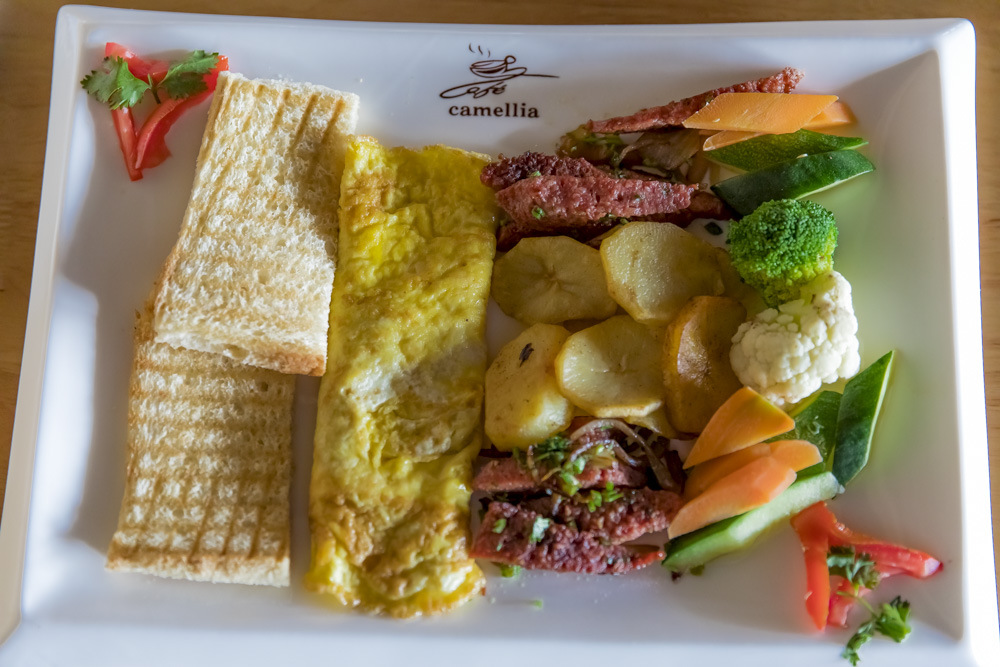
Opposite my seat, was a business lady having an executive breakfast. Quite appetizing, should I say. A beef sausage, fried eggs on toast, spinach, and some mushroom. Nearby, an absorbed student was having coffee, in a paper cup, like me. An Expresso, I think. Ah, the joy of these. The coffee here is hot, not scalding hot, just at the right temperature.
“Can you taste the cocoa nibs?” asked the barista, Alex in evangelical tones. “Yes, I can,” I said, startled. I had almost forgotten the barista across me from the bar. “How about the crème?” Alex asked. “Heavenly,” I said because, at that moment, I truly could be in heaven.
The crêpes I had ordered along helped things along, plus the tiny square of banana cake, offered to accentuate the beverage’s flavors.
“Are you still hurrying up?” he asked concerned. “Unfortunately, yeah,” I answered. I had a meeting with my boss in the next ten minutes.
Suddenly drinking my double mochaccino when on deadline felt like self-sabotage. “Maybe you can pass by later,” Alex said sympathetically. “We can argue again on what’s best, your Mochaccino or my classic Café Latte.” He laughingly added. I laughed back. Alex and I always have this everlasting debate on which is better, his preferred drink or mine. Each day, we both come up with new arguments and I seriously doubt if we’ll ever win it.
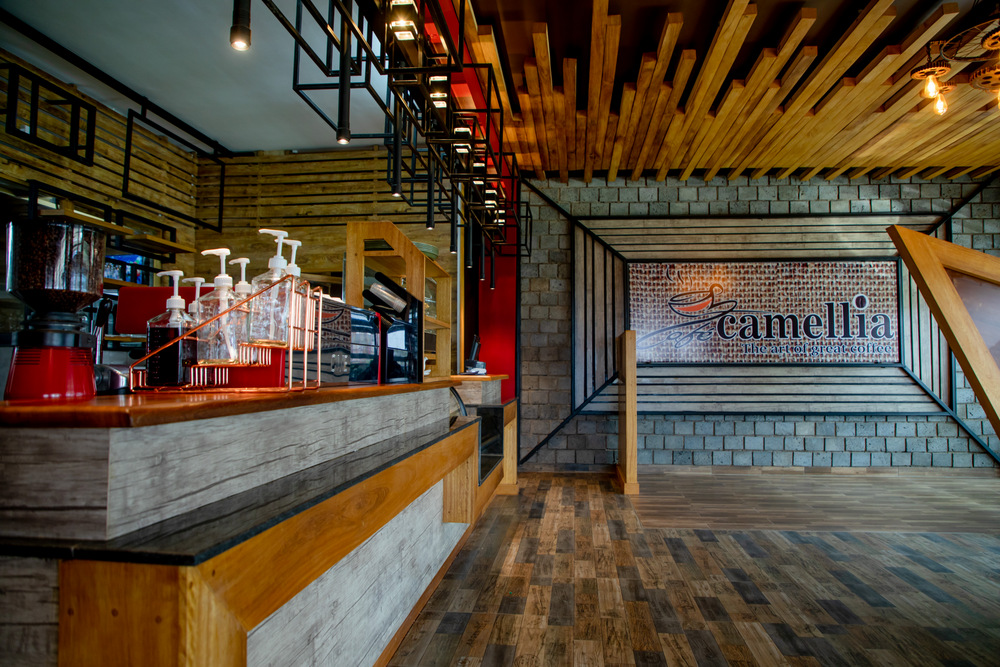
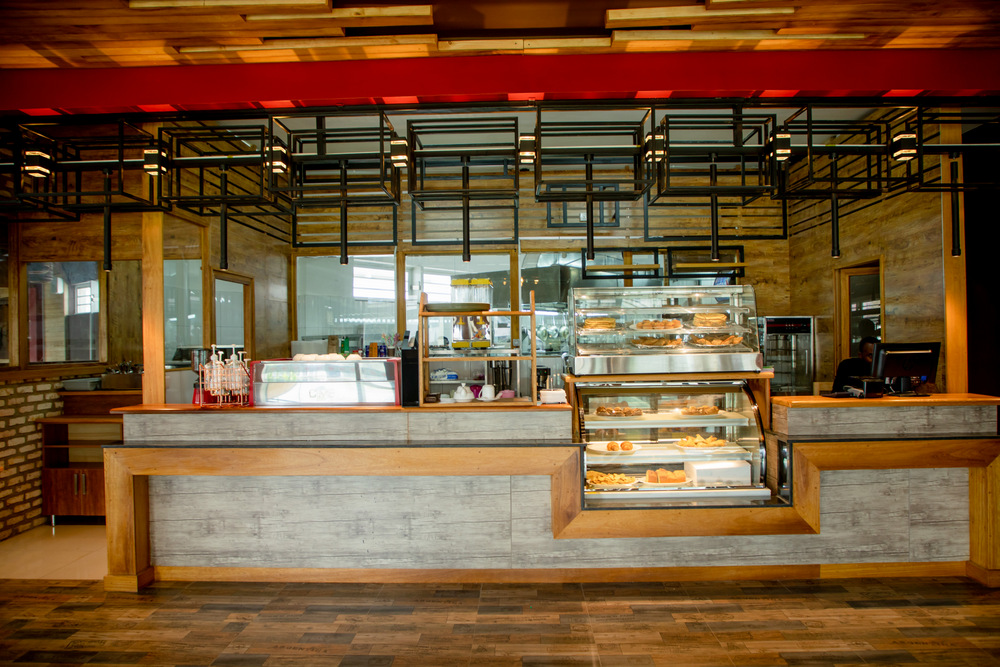
Upstairs, inside MIC shopping mall, on the top floor which overlooks King’s College Chapel, has to be one of the best spots in all Camellia branches.
If you’ve had a busy week, there’s nothing quite like a large mug of their Breakfast tea or coffee while you enjoy the stunning view, perhaps watching the students, cyclists or simply passers-by.
Those feeling peckish can try the giant marinated quarter chicken or the traditional beef goulash, which never seems to decrease in size. If you’ve got a sweet tooth, there’s a selection of tempting crepes and pancakes (the maple syrup pancake stack is divine). For those who want a well-earned treat, Camellia also offers a selection of pastries, such as Black Forest Cakes, delicate Carrot Muffins and Vanilla cakes, perfect for any day in Kigali.
And then there’s the Coffee. Absolutely spellbinding. A lifesaver for some of us. Worth trying sometimes – especially if Alex is your Barista.
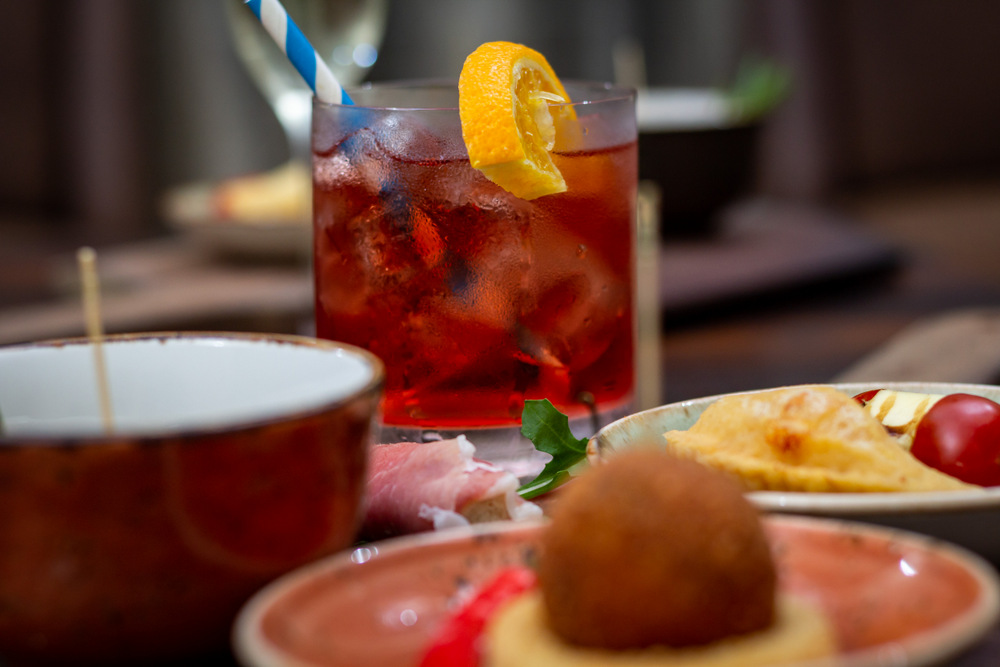
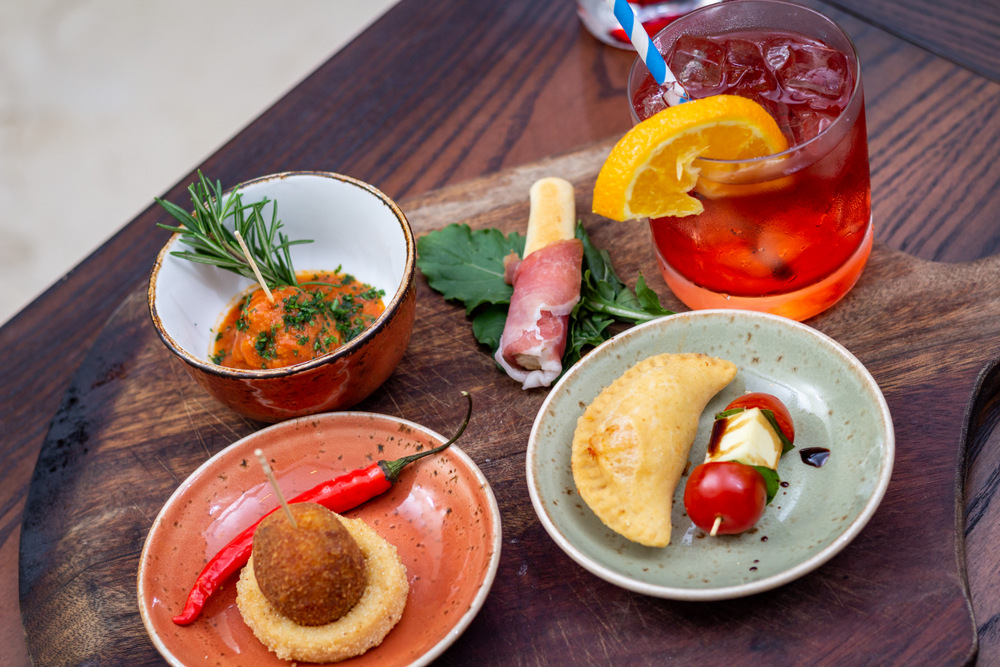
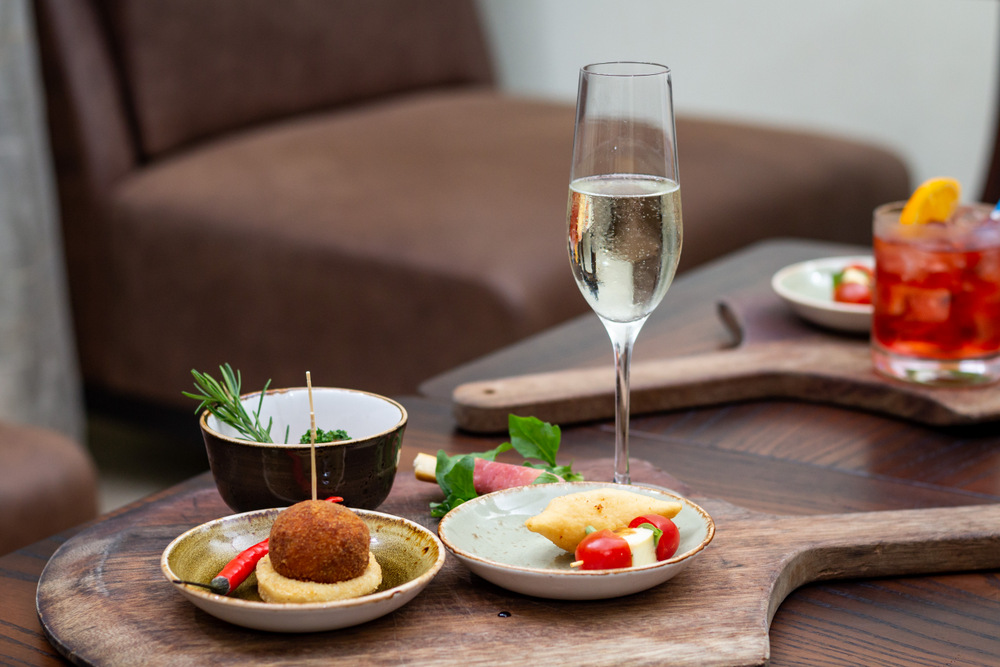
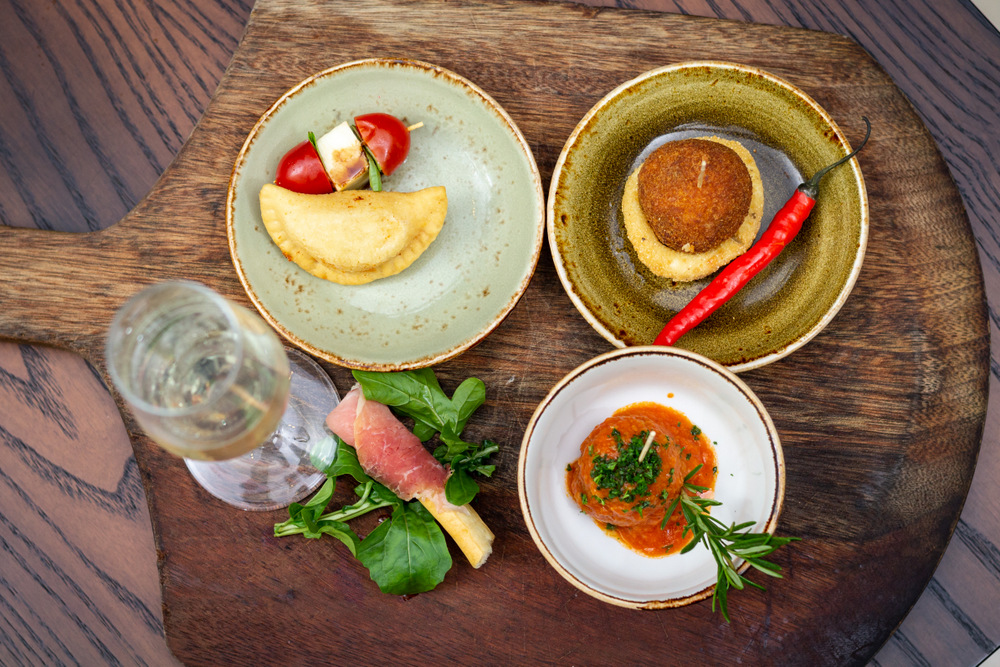
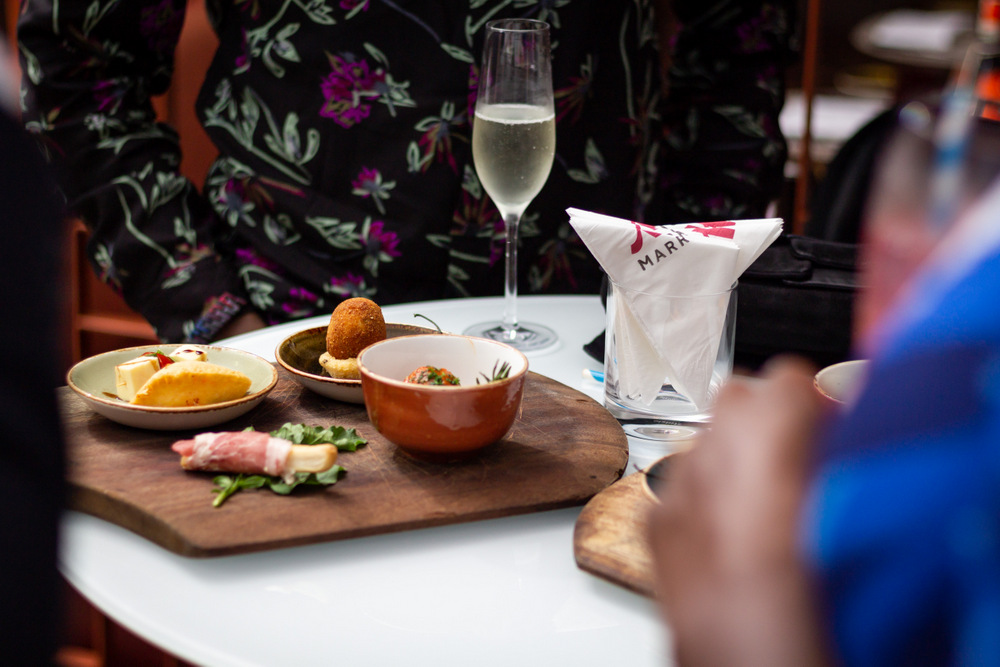
Just a while ago I ordered a glass of Negroni Sbagliato. Upon its arrival came this savory selection of appetizers, posing a real problem for me. It’s seven o’clock in the evening and a four-course dinner awaits me later tonight. I have no intentions of spoiling my appetite. On the other hand, turning down food in Kigali Marriott with the glorious recommendation my friends gave me could make me regret this in a near future.
Placing my cocktail back on the table, I admire the plates again. They are silently staring back at me, tempting my taste buds, with their enticing aromas floating around me. Hints of rosemary sneak up and touch my nose, then dance away; beckoning me to come a little closer.
I want to send back the food. But then again I would love just a bite.
Next to the calamari and Arancini, little snacks bait me with their brilliant red and yellow looks. Leaning down I smell the bouquet of earthy, fresh tomatoes and garlic.
Aperitivo is derived from the Latin word, aperire, meaning opening. The pre-dinner drink and spread of food are meant to awaken the taste buds and stir up the stomach juices.
Occurring after work between the hours of 6 pm and 8 pm, the aperitivo beckons one to indulge their senses in preparation for dinner ahead.
While some places keep it simple, only offering bowls of olives, nuts and chips; Kigali Marriott offers dishes that could contest with those of a four-course dinner. Freshly fried Arancini, delicious calamari, platters of meats and cheeses, and marinated vegetables. Still, competing with dinner itself, the hotel offers an elaborate buffet, testing one’s willpower not to overindulge.
One thing is for sure: An alluring scene awaits you in Kigali Marriott! Be sure to try Cucina Restaurant’s fresh and flavorsome favorites that bring the heart of Italy to Kigali.
The sessions take place at the Cucina Restaurant, where the five-star hotel serves both original Italian dishes and signature à la carte options.
“Italy is known for its food, arts, and wine, and at Kigali Marriott, we’ve brought all these fantastic things together in Picasso nights. The idea is to have a place where guests can walk around easels, and paint while waiting for their food to be served. We just hope to bring the best of Italy to Kigali!” says Alyson Hayes, Assistant Director of Food and Beverage at Kigali Marriott Hotel.
With a growing number of hotels, bars and restaurants serving up “learning experiences” along with their happy hour fare, Kigali Marriott Hotel decided to indulge guests through the ‘Picasso Nights’.
“I invite everyone to participate because there is no judging, it is just enjoying the evening and delighting your senses. As you are using your creative sense, your touch, your feel with having your tastes spoiled by our chefs, I promise you there is no better way to treat yourself,” invites Hayes.
While sipping wine and other beverages, participants are walked through the process of producing a work of art by an Instructor.
“This isn’t your typical paint class, this is a paint party; A night out doesn’t have to mean standing around in a crowded bar; you can have your fun painting while sipping on a drink, eating or just having some time out with your friends, ” says Artist Rigobert Uwiduhaye, an artist/instructor who guided guests at the Picasso night.
Uwiduhaye observed that the sessions are incredibly stimulating — and more importantly, fun. Never before had he tapped into his penchant for art in this way.
“I get to help guests at Kigali Marriott have an affordable night out, and I’m so happy I can help people enjoy their leisure time out with their friends,” added Uwiduhaye.
Those who attended the event did their own painting, following the example of the instructor.
Kigali Marriott Hotel also offers a delectable weekend brunch and a range of Theme Nights which feature Indian, Asian, and African foods at the Soko Restaurant.
From Mojito Madness to Ladies Night to Variety nights, guests can also find a fun-filled and lively atmosphere at the hotel’s Iriba Bar and Terrace, with most evenings offering spectacular drinks specials.
The Kigali Marriott Hotel’s Iriba Bar and Terrace has provided a fitting spot for such an experience. Launched this Friday, the two-day ‘Coffee Xperience’ welcomed coffee lovers in a cozy and lively atmosphere, encouraging people to appreciate the intricacies of a great-tasting cup that not only appeals to the senses but more importantly, soothes stressed souls craving for some laid-back moments.
The event presented a series of delightful activities such as Coffee tasting, coffee art lessons, all guided by various expert baristas together with the main coffee supplier of Kigali Marriott hotel, Question Coffee. The Coffee Xperience also involved coffee-flavored desserts and cakes conceived by the hotel’s artistic chefs.
“The Coffee Xperience was inspired after seeing how the public warmly welcomed the International Coffee Day celebration we held last September,” says Alyson Hayes, Assistant Director of Food and Beverage at Kigali Marriott Hotel.
Hayes also observed that the event was a way of extending the fun of most coffee lovers who were attending the African Fine Coffees and Exhibition that was taking place in Rwanda from February 13-15, 2019.
“The Rwandan Coffee is a brew that is continuously evolving in the country and its high-quality is what attracts and delights both foreigners and Rwandans. This event is the hotel’s way of bringing together coffee lovers with our partners, Question Coffee and 1000 Hills Distillery for an unforgettable experience. Everyone is welcome to come to the hotel and enjoy all we have to offer.” Hayes added enthusiastically.
With the state-of-art service model, guests enjoyed even more as they mingled in a relaxing environment.
The ‘Coffee Xperience’ took place on 15th and 16th February, and was a relish to many.
Kigali Marriott Hotel is located in the City Centre not far from Kigali City Council offices. The five-star hotel is a part of Marriott International which is present across 127 countries and territories with more than 6,700 properties globally.
To support and drive the rapid growth of its African portfolio, Radisson Hotel Group has reinforced its development team with the introduction of senior development professional Ramsay Rankoussi, Vice President, Development, Middle East, Turkey & French Speaking Africa. Ramsay has been with Radisson Hotel Group for over 5 years, initially overseeing the growth of the company in the Middle East & Turkey and now leading the development activities across French Speaking Africa. He is supported by Erwan Garnier, Director, Development French & Portuguese Speaking Africa. Together, they seek to accelerate the introduction of all Radisson brands in the region with a focus on key capital and economic cities.
Also joining the Group’s African development team is Caryn Venter, Coordinator, Development, Sub-Sahara Africa. The new organizational structure follows the recent appointment of Frederic Feijs who leads operations as Regional Director Africa – French Speaking Countries for Radisson Hotel Group and William McIntyre, the Group’s Regional Director, Africa, overseeing the remaining Anglophone markets in Sub-Sahara Africa. Both will play a significant role in strengthening the group’s network in their regions and will increase operational synergies, for the greater benefit of owners.
Ramsay Rankoussi, Vice President, Development, Middle East, Turkey & French Speaking Africa said, “I am thrilled to be expanding my geographical focus, to include French-speaking Africa. We have ambitious plans for this important market and it is imperative that we have the right resources in place to support our growth. This means communicating effectively with owners and investors, as well as providing first class levels of expertise as we establish long-term relationships with our business partners in this market. We are proud that each of our development team members fits this criterion for success.”
“We will continue to execute our five-year strategy with our expanded team, creating scaled hotel growth in key cities and resort locations across Africa during 2019,” said Andrew Mclachlan, Senior Vice President, Development, sub-Saharan Africa, Radisson Hotel Group. “With a focus on scaled growth in key locations across Africa, we can offer guests multiple hotels across different brands and market segments, at various price points and improved local hotel performance with strong local procurement and cluster select services in the same city.”
Mclachlan continued, “Cape Town, Johannesburg and Lagos are our three gateway cities in sub-Saharan Africa where we aim to have scaled growth and an ambition of up to ten hotels within the same city. Dakar, Abidjan, Douala, Luanda, Nairobi, Dar es Salaam and Addis Ababa are proactive cities, where we aim to have between three and five hotels due to size of economy, market, long-term fundamentals and supply and demand opportunities. We expect our future growth to arise from existing hotel take-overs and new build hotels.”
“With economic headwinds in some African markets, we have identified opportunities to exploit our vast knowledge and experience in converting unbranded, underperforming hotels or underperforming office or apartment buildings and reposition them to the right brand and market segment within the Radisson Hotel Group brand portfolio. In addition, we are not ignoring the smaller cities and larger towns across Africa where we’ve identified potential to penetrate the market with either our midscale Park Inn by Radisson brand or upscale Radisson.”
Radisson Hotel Group plans to open a further five hotels across Africa in 2019, pushing the African portfolio to more than 50 hotels in operation before year-end. These openings include the first Radisson Blu hotel in Casablanca, which is the Group’s second hotel in Morocco, scheduled to open within the next six months, as well as their first hotel, and the countries first internationally branded hotel in Niger, with the opening of Radisson Blu Hotel Niamey in Q2 this year.
“Our strategy will most certainly reinforce our presence in key markets across Africa as we continue to focus on delivering on our expanding pipeline,” concluded Mclachlan.