However, the pace of reduction in child mortality has slowed by over 60 percent since 2015, the “Levels & Trends in Child Mortality” report said.
An estimated 4.9 million children died before their fifth birthday in 2024, including 2.3 million newborns, and most of these deaths were preventable with proven, low-cost interventions and access to quality health care.
Newborn deaths accounted for nearly half of all under-five deaths, reflecting slower progress in preventing deaths around the time of birth, the report said.
Leading causes among newborns were complications from preterm birth and complications during labor and delivery, it said, adding that infections, including neonatal sepsis and congenital anomalies, were also important causes.
For the first time, the report estimated deaths directly caused by severe acute malnutrition, finding that more than 100,000 children aged 1 to 59 months died from it in 2024.
Child deaths remain highly concentrated geographically. In 2024, sub-Saharan Africa accounted for 58 percent of all under-five deaths, followed by Southern Asia with 25 percent, according to the report.
“To accelerate progress and save lives, UNICEF calls on governments, donors and partners to make child survival a political and financing priority, to focus on those at highest risk, strengthen accountability and invest in primary healthcare systems,” Farhan Haq, deputy spokesperson for the UN secretary-general, said at a daily briefing.
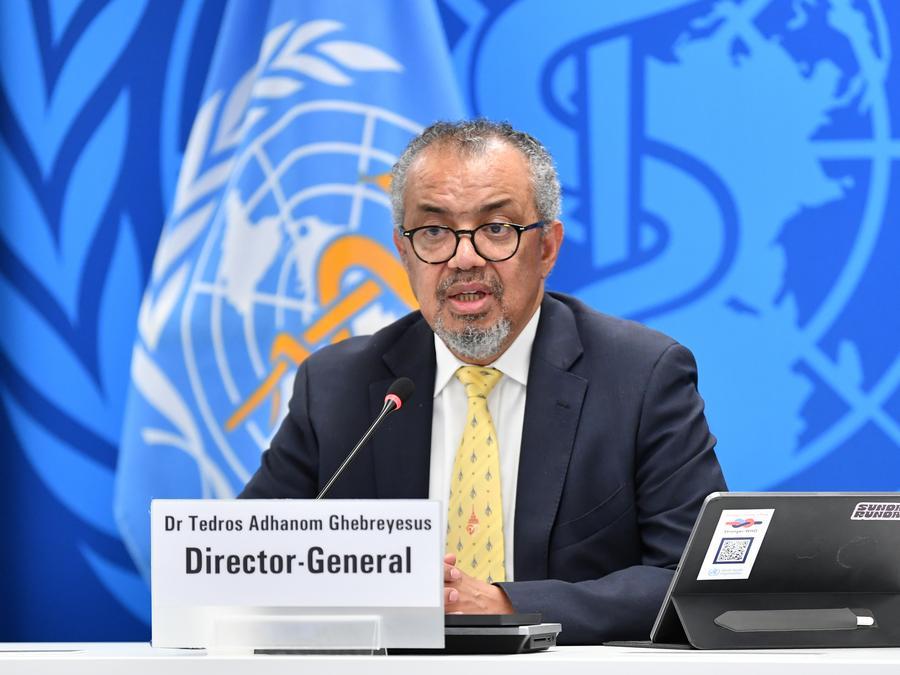
He said in a social media post that Argentina communicated this decision through a note addressed to the United Nations Secretary-General on March 17, 2025.
In accordance with the Vienna Convention on the Law of Treaties, the withdrawal takes place one year after that notification.
“Our country will continue to promote international cooperation in health through bilateral agreements and regional forums, fully safeguarding its sovereignty and its capacity to make decisions regarding health policies,” Quirno said.
The Argentine government announced the decision to withdraw from the global health body in February last year.
Presidential spokesperson Manuel Adorni told a press conference at the time that President Javier Milei had instructed the Argentine foreign minister to withdraw the country’s participation in the UN specialized agency.
The spokesperson said that the decision “gives the country greater flexibility to implement policies adapted to the context and interests that Argentina requires, as well as greater availability of resources, and reaffirms our path towards a country with sovereignty also in matters of health.”
President Javier Milei had instructed his foreign minister to withdraw the country from WHO
The study followed 65 patients who underwent root canal treatments for apical periodontitis (an infection at the tip of the tooth’s root).
What the researchers found was surprising: over the two years following treatment, patients showed improved blood sugar control.
Their glucose levels dropped, which is especially significant for those at risk of developing diabetes. In addition to this, cholesterol levels improved, and inflammation markers which are linked to heart disease also dropped.
So, what does this mean for our overall health? The research points to the idea that bacteria from dental infections can enter the bloodstream, triggering inflammation throughout the body.
Dr. Sadia Niazi, a senior lecturer in Endodontology, explained: “Root canal infections can allow bacteria to enter the bloodstream. Once there, these microbes may contribute to inflammation that raises the risk of heart disease and diabetes.”
This makes the case for treating dental infections more seriously not just for preserving your teeth, but because they might be contributing to other serious health issues. The study’s findings really emphasize that oral health is closely connected to overall well-being.
The researchers used a technique called nuclear magnetic resonance (NMR) spectroscopy to track the improvements in blood sugar, cholesterol levels, and inflammation markers. It turns out that when you treat a tooth infection, you’re not only fixing a local problem, you’re making a positive impact on systemic health too.
Dr. Niazi also highlighted that dentists and general healthcare providers should work more closely together to monitor how oral health affects patients’ broader health. She shared:
“Our findings show that root canal treatment doesn’t just improve oral health, it may also help reduce the risk of serious health conditions like diabetes and heart disease.”
These services, which are generally unavailable in provincial hospitals, often require patients to travel to Kigali, where specialized professionals provide such treatments.
The surgery was performed by a team of experts from Germany. These specialists examined 40 people and performed surgeries on 25, including 17 individuals who received plastic surgery to correct various body deformities.
The event began on March 8th, with an expected end date of March 17th, 2026. However, it was concluded on March 13th due to the passing of one of the specialists’ child.
Among the patients treated were those with hypertrophic scars. Augustin Sibomana, who had a raised scar on his chest, was one of the beneficiaries of body contouring surgery.
“I had previously visited Kanombe Hospital but I was told that surgery was not possible because the scar might return. I am grateful to the Ministry of Health for thinking of us and sending these specialists. After the surgery, I feel much better and am hopeful that things will continue to improve,” he said.
Benimana Joyeuse, who had suffered from an enlarged abdomen for five years, expressed her gratitude to the specialists after her surgery. “I am so happy because I didn’t have the money to go to Kigali for treatment.”
Dr. Laura Thomara, who led the surgical team, mentioned that some of the patients had scars from previous burns. “We have shown our colleagues working here how they can treat such patients.”
Osée Ntavuka, the founder of Rwanda Legacy of Hope, an organization that has been bringing international specialists to Rwanda for 14 years to provide plastic surgery services, stated that over 8,500 patients have benefited from these services.
“When we come, we bring our own equipment. Here at Kibuye Hospital, we brought equipment worth 45 million Rwandan Francs, and after we finish, we will leave it for the hospital.”
Jean Claude Muhirwa, the head of the surgery department at Kibuye Referral Hospital, thanked the specialists for their knowledge and noted that the new equipment was different from what they normally use.
“This new equipment adds to what we already have here at Kibuye Referral Hospital, and it will help us deliver better services.”
Over the past 10 years, Kibuye Referral Hospital has seen a growth in the number of specialized surgeons, now totaling around 30, not including those who come temporarily.
The surgeries were performed by a team of experts from Germany. The specialists diagnosed 40 patients and performed surgeries on 25, with 17 receiving plastic surgery to address various body deformities.
Published in the Journal of the National Cancer Institute, the research led by Australia’s Adelaide University identified consistent differences between male and female cancer patients in both survival and treatment toxicity, a university statement said Monday.
Researchers found female patients had a 21 percent lower risk of death than male patients but a 12 percent higher risk of severe toxicities.
These sex-based differences were largely consistent across 12 advanced solid tumor types as well as treatment modalities including chemotherapy, targeted therapies and immunotherapy, suggesting they stem from underlying biological mechanisms, not just drug-specific effects, the researchers said.
The study provides some of the clearest evidence yet that biological sex is a key predictor of outcomes in cancer care, said lead author Natansh Modi.
“Sex is a fundamental biological factor that influences immune function, drug metabolism, body composition and tumor biology,” said Modi, lecturer at Adelaide University.
The findings have important implications for how drugs are evaluated and prescribed, strengthening the case for routinely reporting and acting on sex-specific evidence in clinical research, the authors said.
The study analyzed data from more than 20,000 cancer patients across 39 clinical trials supporting U.S. Food and Drug Administration approvals between 2011 and 2021, and spanned advanced solid tumor types including lung, colorectal, melanoma, and breast cancers.
Researchers found female patients had a 21 percent lower risk of death than male patients but a 12 percent higher risk of severe toxicities.
The review included 29 randomized controlled trials involving more than 2,700 preterm and full‑term neonates. It showed that infants who received sucrose just before or during the needle insertion probably experienced less pain than those who received no intervention, water, or only standard comfort care. Sucrose was found to lower pain scores during the procedure and for up to one minute afterward.
Dr Mariana Bueno from the University of Toronto, the lead author of the review, said: “Newborn babies undergo frequent needle procedures in hospital without any pain relief or comforting measures, even though older children and adults rarely have these procedures done without pain care.
The evidence shows that a small amount of sucrose given just before the procedure is a simple, fast, and effective way to reduce that pain. Our review helps clinicians use this evidence more confidently and consistently in practice.”
The review also found that sucrose appeared to be more effective than the use of pacifiers alone for reducing pain. However, evidence comparing sucrose with other comforting measures such as skin‑to‑skin care was limited.
Importantly, no studies reported harmful side effects such as gagging or pauses in breathing when sucrose was used in the small amounts required for pain relief.
Researchers emphasized that sucrose can be given orally in very small doses and that this simple intervention could help inform clearer clinical guidelines for neonatal pain management worldwide.
New research indicates that sugar helps relieve pain in newborns during venepuncture.
At the opening of the forum on March 9 , Rwanda’s Ambassador to Sweden, Diane Gashumba, welcomed the visiting delegations.
“I want to take this moment to thank the delegation from the Baltic and Nordic countries. You are welcome to the Land of a Thousand Hills and a thousand opportunities.”
During the forum, the Minister of State for Primary Health Care at the Ministry of Health, Yvan Butera, highlighted the remarkable progress Rwanda has achieved in maternal and newborn health.
According to him, thanks to the joint efforts of the government and its partners, the country has made significant advances in recent years.
“Rwanda, together with its partners, is proud of the remarkable progress achieved in maternal and newborn health, and we are ready to take the next step forward with partners who share the same ambitions.”
The minister noted that maternal mortality has declined significantly, while 98% of births now take place in health facilities with skilled health providers, reflecting the country’s strong commitment to safe delivery.
Progress is also visible in childhood vaccination. Today, 94% of children aged 12 to 23 months are fully vaccinated with basic antigens, and 98% receive key vaccines such as BCG.
Rwanda has also strengthened access to healthcare through its health insurance system. More than 90% of the population is covered by community-based or private health insurance schemes, allowing citizens to access quality healthcare services without facing heavy financial burdens.
Minister Butera invited Nordic and Baltic countries to strengthen their collaboration with Rwanda in order to accelerate progress in the health sector.
“Rwanda is not only one of the fastest-improving health systems in Africa, but also a transparent and corruption-free environment where investments generate a real impact on people’s lives.”
For his part, Rwanda Development Board (RDB) CEO Jean-Guy Afrika highlighted the country’s advances in pharmaceutical regulation and life sciences.
He noted that the Rwanda Food and Drugs Authority (Rwanda FDA) has reached World Health Organization (WHO) Maturity Level 3, demonstrating its ability to consistently and effectively regulate medical products according to internationally recognized standards.
Afrika also emphasized Rwanda’s ambition to become a regional biotechnology and vaccine manufacturing hub, notably through the establishment of facilities by BioNTech.
These infrastructures aim to produce vaccines locally in Africa, strengthen the continent’s health security, and improve access to innovative vaccines while reducing reliance on imports during future health emergencies.
During the forum, Dr. Albert Tuyishime, Head of the Diseases Prevention and Control Department (HDPC), also shared Rwanda’s experience in building an African bio-manufacturing and vaccine innovation ecosystem.
Drawing on the country’s effective responses to various outbreaks, he highlighted several key lessons, including the importance of strong public policies, effective regulation, innovation, and research to support vaccine development.
According to him, these efforts are closely linked to health security and emergency preparedness.
On this occasion, Rwandan officials invited investors from Nordic and Baltic countries to explore opportunities in Rwanda’s Life Sciences sector, a rapidly expanding field in the country.
A group photo of Rwandan officials and Nordic-Baltic delegations at the second Rwanda–Nordic and Baltic Business Forum in Kigali.Rwanda’s Ambassador to Sweden, Diane Gashumba, welcomed Nordic and Baltic delegations to Kigali at the opening of the business forum on March 9, 2026.Minister of State for Primary Health Care, Yvan Butera, addressed participants, highlighting Rwanda’s achievements in maternal and newborn health.Jean-Guy Afrika, CEO of Rwanda Development Board, shed light on Rwanda’s progress in pharmaceutical regulation and life sciences.Participants at the forum explored Rwanda’s health sector innovations and potential for collaborative projects.Delegates from Nordic and Baltic countries engaged in discussions with Rwandan officials on investment opportunities in health and life sciences.
The program is being implemented in partnership with the Rwanda Biomedical Center (RBC), targeting more than 140,000 households across nine sectors in the Gasabo, Kicukiro, and Nyarugenge districts.
The affected sectors include Masaka in Kicukiro; Kanyinya and Mageragere in Nyarugenge; and Rutunga, Gikomero, Rusororo, Ndera, Jabana, and Kinyinya in Gasabo.
The campaign was launched in Masaka Sector, which has over 30,000 residents. Kicukiro District, where Masaka is located, has reported more than 115,000 malaria cases, making it the district with the highest number of infections.
Alfred Nduwayezu, Masaka Sector Executive Secretary, attributed the high malaria rates to local environmental factors, including marshlands used for rice cultivation and areas with stagnant water.
He explained: “When we track the data, the increase in malaria cases is linked to the local environment — there are marshes, rice fields, and water accumulation. RBC and its partners recognised the problem and approved indoor spraying in our sector to help address it.”
In Masaka, around 20,000 households are expected to receive the insecticide treatment.
Nduwayezu added that, in collaboration with partners, the sector has implemented measures to curb malaria and reduce infection rates, particularly during and after the rainy season when cases typically spike.
Léopold Ruzibiza, Programs Manager at Strive Foundation Rwanda, said previous interventions, including mass testing, clearing bushes, and other measures, had limited impact. Indoor spraying was therefore chosen as the most reliable method.
He emphasised the importance of residents following proper procedures during spraying:
“Residents must vacate their homes, remove all belongings from the rooms, and allow health workers to mix and apply the insecticide at the approved dosage. Houses are then sealed for two hours.”
Residents are being urged to cooperate fully, as the campaign is being carried out by trained health workers.
In October and December 2025, the campaign will expand to 28 sectors most affected by malaria in the Gisagara, Nyanza, Bugesera, Kirehe, Rwamagana, and Nyagatare districts, covering 1,031,676 residents.
According to the Rwanda Biomedical Center (RBC), malaria claimed over 150 lives nationwide between 2024 and 2025.
The person applying the insecticide must wear full protective clothing to prevent exposure to its harmful effects.The program is being implemented in partnership with the Rwanda Biomedical Center (RBC), targeting more than 140,000 households across nine sectors in the Gasabo, Kicukiro, and Nyarugenge districts.Léopold Ruzibiza, Programs Manager at Strive Foundation Rwanda, urged residents to actively cooperate in the insecticide spraying campaign.Alfred Nduwayezu, Masaka Sector Executive Secretary, attributed the high malaria rates to local environmental factors, including marshlands used for rice cultivation and areas with stagnant water.
Hassan Sibomana, Director of the Vaccine Programmes Unit at the Rwanda Biomedical Center (RBC), told The New Times that Gardasil 9 protects against nine HPV types, compared with the previous Gardasil 4, which covered only four. The additional strains allow broader prevention of HPV-related cancers.
The vaccine is administered in one or two doses depending on age, with two doses recommended for women 29 and older. Sibomana stressed that Gardasil 9 is safe, highly effective, and comparable in safety to its predecessor.
Currently, the rollout is limited to the four districts to monitor the vaccine’s effectiveness and acceptability before expanding nationwide. Once more doses are available, Gardasil 9 will be accessible at health facilities in the targeted areas, and communities will be informed.
“With broader coverage, we can accelerate the elimination of cervical cancer. Our target is 90% vaccination coverage, 70% of women screened, and treatment for 90% of those who test positive,” Sibomana said.
Rwanda has already achieved high HPV vaccination rates among 12-year-old girls, with more than 95% of districts reporting over 90% coverage. The Gardasil 9 rollout aligns with World Health Organization guidelines that extend HPV vaccination to adults, including women who were not covered when the program began in 2011.
The new vaccine is administered in one or two doses, depending on age, with two doses recommended for women 29 and older.
Long COVID is a condition where symptoms of COVID-19 persist for weeks or months after the initial infection has cleared.
People with Long COVID often experience fatigue, shortness of breath, and “brain fog,” even if their initial illness was mild.
New research in mice sheds light on why coronavirus infections can have longer-lasting effects than influenza.
In the study published by European Medical Journala, researchers compared the long-term impact of coronavirus with influenza A on the lungs and brain.
Both viruses caused lung inflammation, but coronavirus led to ongoing tissue damage, including scarring, abnormal repair, and persistent activation of inflammatory and clotting pathways.
Influenza, by contrast, triggered a strong early immune response followed by effective lung repair, helping explain why breathing difficulties are more common after coronavirus infection.
The study also found that coronavirus affected the brain, even though the virus itself was not present there. Mice infected with coronavirus showed early microbleeds and sustained brain inflammation.
Changes in gene activity suggested blood vessel problems, immune system overactivity, and disrupted signaling in areas controlling hormones and sensory processing.
These changes mirror neurological symptoms reported by people with long COVID, such as fatigue and cognitive difficulties. Influenza did not produce these brain effects.
The findings suggest that long COVID is not just about lingering virus, but rather ongoing immune activation, blood vessel damage, and impaired tissue repair.
The research also points to lasting effects on how organs communicate, including the lung-brain connection.
While mouse studies cannot fully replicate human disease, these insights could help scientists develop targeted treatments to reduce inflammation, prevent lung scarring, and protect the brain.
Further clinical studies are needed to confirm these mechanisms in people, but this work helps explain why coronavirus can leave a longer-lasting mark on the body than influenza.